
Alcohol Excise Taxes in Connecticut: A Case for an Increase
|
|
|
- Alexina Brianne Marsh
- 10 years ago
- Views:
Transcription
1 Alcohol Excise Taxes in Connecticut: A Case for an Increase Center for Science in the Public Interest Alcohol Policies Project 1875 Connecticut Avenue, NW, Suite 300 Washington, DC March 2004

2 Budget Deficits and Alcohol Excise Taxes in Connecticut Entering fiscal year 2005, Connecticut faces a revenue shortfall of up to $84.8 million. 1 In response, the state government has cut education funding, raised tuition mid-year for state universities, and laid off state workers. The state faces continued decreases in revenues, and the deficit will likely grow. By law, since Connecticut must maintain a balanced budget, it must cut services, increase revenues, or both. Raising alcohol excise taxes, last done in 1989, provides one rational, politically popular means of providing needed new state revenues. In his state of the State address, Governor John Rowland (R) proposed increasing alcohol taxes by 10 percent to help close the state s budget gap. In addition to providing an estimated $2.0 million in FY and $4.4 million in FY in revenue, 2 raising alcohol taxes may help reduce rates of alcohol-related problems, particularly among underage drinkers. Public opinion polls show that a strong majority support raising alcohol taxes, especially when the money is earmarked for alcohol prevention and treatment programs. This report compares Governor Rowland s proposal to several other alcohol-tax increase options. Regardless of the amount of increase, revenues raised would inevitably lower the state s budget deficit or provide funds for state prevention programs and/or other public services. In the interest of simplicity, this analysis does not consider all wines. It considers only still wines from large wineries, since the state of Connecticut imposes different excise tax rates on still wines from small wineries and on sparkling wines. We do not include them. Higher Alcohol Taxes Would Increase Prices and Reduce Alcohol Problems Research from the National Institute on Alcohol Abuse and Alcoholism (NIAAA) reports that increasing beer taxes effectively reduces alcohol problems. 3 Evidence is so strong on this matter that the National Academy of Sciences recently recommended that states increase alcohol taxes as one key approach to reduce underage drinking. 4 Many studies have demonstrated other beneficial consequences of increasing alcoholic-beverage taxes, especially on beer: Higher beer taxes would likely lead to higher prices 5 and reductions in the quantity and frequency of drinking among youth, 6 who are among the most price-sensitive consumers. Higher beer taxes would reduce traffic-crash fatality rates, especially among young drivers, 7 and result in fewer cases of some types of crime. 8 For every ten percent increase in the beer excise tax, the probability of severe violence towards children decreases by 2.3 percent. 9 According to researchers at the U.S. Centers for Disease Control and Prevention, a beer-tax increase of $0.20 per six-pack would reduce gonorrhea rates by 8.9 percent and syphilis rates by 32.7 percent. 10 Public Opinion, Public Costs Sixty-nine percent of Connecticut residents support a ten percent increase in the alcohol tax. 11 In a national survey, 82 percent of adults favored an increase of five cents per drink in the tax on beer, wine, or liquor to pay for programs to prevent minors from drinking and to increase the availability of alcohol treatment programs. 12 In - 1 -

3 surveys on alcohol excise taxes conducted in several states, results have consistently shown that between 76 and 80 percent of respondents either believe that increasing alcohol taxes is good or acceptable, 13 or support an increase in state alcohol excise taxes. 14 In 1998, the estimated economic cost of alcohol abuse in the U.S. exceeded $184 billion. That cost equals roughly $683 for every man, woman and child living in the U.S. 15 The cost to Americans of underage drinking alone totals nearly $53 billion. 16 Each year, the federal government spends nearly $1.0 billion on alcohol prevention services for people of all ages, less than two percent of the annual cost of alcohol use by youth alone. 17 States and their taxpayers, including those in Connecticut, bear a substantial portion of those costs. Connecticut residents spend more than $473 million on alcohol-related healthcare costs. 18 The average alcoholrelated fatality costs the public $4.1 million: $1.3 million in monetary costs and $2.8 million in quality of life losses. 19 In 2002, the state reported 3,376 cases of gonorrhea, 20 a number that would decline with an increase in alcohol taxes. Alcohol and Tobacco Tax Comparison Governor Rowland has also proposed raising excise taxes on cigarettes from $1.51 per pack to $2.05 per pack. At its current rate, however, the excise tax on a pack of cigarettes in Connecticut dwarfs the tax rates for a six-pack of beer and a bottle of wine, and is 70 percent greater than the tax on a bottle of liquor (Graph 1). Graph 1. Tax Rates per Common Purchase Units for Alcoholic Beverages vs. Cigarettes 21 $1.60 $1.40 $1.51 $1.20 Connecticut Excise Tax Rate $1.00 $0.80 $0.60 $0.89 $0.40 $0.20 $0.00 $0.11 $0.12 Six-Pack Beer 750 ml Wine Bottle 750 ml Liquor Bottle One Pack Cigarettes Product - 2 -

4 Revenues collected from alcohol and tobacco excise taxes in the state also vary greatly. At $251.5 million, revenues from the cigarette excise tax totaled nearly six times the revenues from alcohol excise taxes ($42.5 million) in FY (Graph 2). 22 Although the cigarette tax contributes significantly to state revenues, less than 20 percent of adults smoked cigarettes in By contrast, almost two-thirds of people over the age of 18 consumed alcohol in 1999; 24 yet alcohol taxes make up much less of the state s revenue collections. Graph Alcohol Excise Tax Revenues vs. Cigarette Excise Tax Collections 25 Product Beer Wine Liquor Cigarettes $6,431, $23,144, $10,527, $251,495, $0 $50,000,000 $100,000,000 $150,000,000 $200,000,000 $250,000,000 FY Revenues Collected The Governor s proposal to increase taxes on alcohol and cigarettes would net the state an estimated $41.9 million total in additional revenues for the current fiscal year. 26 Governor Rowland s Alcohol-Tax Increase Proposal According to his Midterm Economic Report, the Governor suggests raising excise taxes on all alcoholic beverages by ten percent. That very modest increase would go into effect on April 1, The tax on a six-pack of beer would rise a mere penny, from $0.11 to $0.12; on a bottle of wine from $0.12 to $0.13; and on a bottle of liquor, from $0.89 to $0.98. Those increases would net the state an estimated $2.0 million more in revenue. That amount would more than double for the next full fiscal year, up to $4.7 million. Other Tax-Increase Strategies Governor Rowland s tax proposal presents one alternative by which the state can raise taxes and gain much-needed revenue. Other options to increase alcohol taxes include: 1) indexing the current tax rates for inflation since 1989, the last time taxes on alcoholic beverages were increased; 2) matching Connecticut s beer and - 3 -

5 wine tax rates to the average tax rate of all states; and 3) equalizing Connecticut s rates to the highest rates of its surrounding states. We address each of these issues and then include a few more tax-increase options. Effects of Inflation on Tax Rates and Revenues Generally, alcohol excise tax rates have not increased to compensate for the effects of inflation. As a result, real tax rates have declined over most of the post-war period. This erosion of real tax rates has contributed to overall declines in real revenues and real beverage prices over time. 27 Inflation has decreased the value of alcohol excise taxes in Connecticut since they were last raised in The current excise tax on beer, at $0.20 per gallon, now has a real value of only $0.13 per gallon; the $0.60 per gallon tax on wine is now worth $0.40 per gallon; and the $4.50 per gallon rate on distilled liquor is now worth $3.03 per gallon. Indexing for inflation since 1989, the tax on beer, now $0.20 per gallon, would be $0.30 per gallon today; on wine, currently $0.60 per gallon, the tax would be $0.89 per gallon; and on liquor, now $4.50 per gallon, it would be $6.68 per gallon. Had the tax rates on beer, wine, and liquor been indexed for inflation since 1989, the state would have collected more than $59 million in revenues in 2003, an increase of some $19 million (Table 1). Table 1. Alcohol Tax Rates and Revenues Have Eroded, Due to Inflation Current Current Tax Rate, FY Product Tax Rate at Eroded Value* Revenue Revenue if Tax Indexed for Inflation since 1989 Beer $0.20 $10.53 million $0.13 $15.73 million Wine $0.60 $6.43 million $0.40 $9.60 million Liquor $4.50 $23.14 million $3.03 $34.56 million Total $40.10 million $59.53 million * In 1989 dollars. Connecticut s Alcohol Excise Taxes Compared to the Average of All States Connecticut s beer and wine tax rates fall below the average tax rates of all U.S. states, while the liquor tax exceeds the state average (Table 2). Table 2. Connecticut s Alcohol Excise Tax Rates Compared to the U.S. Average Product Connecticut State Average 28 Beer $0.20 $0.26 Wine $0.60 $0.78 Liquor $4.50 $3.92 If Connecticut merely raised current beer and wine taxes to equal the average state rate for each of those products, while leaving the liquor tax at its current rate, the state would gain a modest $4.5 million more in revenue, bringing the total expected revenue to more than $44.6 million. In comparison, raising alcohol tax rates on beer, wine, and liquor by merely a penny per drink would generate more than $13.4 million in new revenue for the state

6 Alcohol Excise Taxes in Connecticut and Neighboring States Although Connecticut s beer and wine excise tax rates remain below the state average, beer and wine taxes in Connecticut meet or exceed those in neighboring states, Rhode Island, Massachusetts, and New York (Table 3). Table 3. Connecticut s Alcohol Excise Tax Rates Compared to Neighboring States 29 Product Connecticut Rhode Island Massachusetts New York Beer $0.20 $0.10 $0.11 $0.125 Wine $0.60 $0.60 $0.55 $0.19 Liquor $4.50 $3.75 $4.05 $6.44 Estimated Revenue Gains Due to Proposed Alcohol-Tax Increases Table 4 shows Connecticut s potential revenue gains and changes in consumption estimated from proposals to increase alcohol excise tax rates. For these cases, we define a standard drink serving as 12 ounces of beer, 5 ounces of wine, and 1.5 ounces of liquor. Table 4. Projected Revenues and Consumption Changes Due to Alcohol Tax-Increase Proposals Projected Current New Tax Projected Increase Revenue Projected Product Tax Rate Rate Consumption Proposal Increase for Revenue (millions) Full Fiscal Year Governor s Proposal* Penny per Nickel per Double Current Rate Dime per Percent Decrease in Consumption Beer $0.20 $0.22 $1.0 million $11.6 million 52.6 gallons % Wine $0.60 $0.66 $0.64 million $7.1 million 10.7 gallons % Liquor $4.50 $4.95 $2.3 million $25.4 million 5.1 gallons % Total $3.9 million $44.1 million 68.4 gallons % Beer $0.20 $0.31 $5.7 million $16.3 million 52.4 gallons % Wine $0.60 $0.92 $3.4 million $9.8 million 10.7 gallons % Liquor $4.50 $5.35 $4.3 million $27.4 million 5.1 gallons % Total $13.4 million $53.5 million 68.2 gallons % Beer $0.20 $0.73 $27.1 million $37.7 million 51.6 gallons % Wine $0.60 $2.20 $16.8 million $23.2 million 10.6 gallons % Liquor $4.50 $8.77 $21.4 million $44.5 million 5.1 gallons % Total $65.3 million $105.4 million 67.3 gallons % Beer $0.20 $0.40 $10.3 million $20.9 million 52.2 gallons % Wine $0.60 $1.20 $6.4 million $12.8 million 10.7 gallons % Liquor $4.50 $9.00 $22.5 million $45.7 million 5.1 gallons % Total $39.2 million $79.4 million 68.0 gallons % Beer $0.20 $1.27 $53.7 million $64.2 million 50.6 gallons % Wine $0.60 $3.80 $33.1 million $39.5 million 10.4 gallons % Liquor $4.50 $13.03 $42.2 million $65.3 million 5.0 gallons % Total $129.0 million $169.0 million 66.0 gallons % * Numbers may not exactly match with the Governor s budget proposal because we used revenue and consumption data from FY in our calculations

7 Higher Taxes Will Cause Only Modest Price Changes Alcoholic-Beverage Prices Compared to Other Products Prices for off-premise alcoholic beverages 30 have risen more slowly than for all other consumer products combined. The consumer price index (CPI), which measures the price value of products, illustrates this fact. Between 1983 and 2003, the CPI growth for all products was 18 percent higher than for beer, 33 percent higher than for wine, and 13 percent higher than for liquor. 31 The alcohol excise tax factors into product price. The failure to keep alcohol taxes at appropriate levels has contributed to the relative decline of alcoholic-beverage prices. Artificially low prices are not a boon to consumers or public health. Cheaper alcoholic-beverage prices lead to higher consumption and more alcohol-related problems. Raising taxes on those products can help reduce consumption while providing funding for much-needed treatment and prevention programs. Although alcoholic-beverage producers have raised prices on their products several times within the past year, that amount does not fill the gap in price created by eroded tax values. As opposed to excise taxes, industrydriven price increases do not directly contribute funds to state revenues. It doesn t take dramatic increases in price to reap public health gains. States will feel modest positive effects of tax-driven price increases, even with relatively small changes. Minimal Price Rises Expected Governor Rowland s proposal would increase prices on the common purchasing units of alcoholic beverages by modest amounts a mere penny for a six-pack of beer and a bottle of wine, and less than a dime for a fifth of liquor. Other increase proposals would similarly affect prices. Considering that alcohol-related crashes alone cost an average of $0.70 per drink, 32 raising the price of a six-pack of beer or a bottle of wine by a penny seems little to pay for the economic toll that alcohol-related problems take on society. Table 5 illustrates the estimated rise in prices for each type of alcohol-tax increase. For instance, an average consumer who purchases a six-pack of beer a week would likely spend about one cent more per week on a six-pack under Governor Rowland s proposal. Under the most aggressive tax-increase proposal, a dime per drink, the price of a six-pack per week would rise by about $0.65. Those would be tiny additions, especially considering that the average Connecticut resident (including heavy drinkers who consume most of the beer) drinks no more than a six-pack of beer per week. 33 In fact, 40.6 percent of Connecticut residents do not drink at all

8 Table 5. Price Increases for Various Tax-Increase Proposals Price Increase* per Increase Product Proposal Governor s Proposal Penny per Nickel per Double Current Rate Dime per Purchasing Unit (six-pack of beer, 750 ml bottle of wine or liquor) Standard (12 oz. beer, 5 oz. wine, 1.5 oz. liquor) Beer $0.01 $0.002 Wine $0.01 $0.002 Liquor $0.09 $0.006 Beer $0.07 $0.01 Wine $0.05 $0.01 Liquor $0.18 $0.01 Beer $0.32 $0.05 Wine $0.27 $0.05 Liquor $0.91 $0.05 Beer $0.12 $0.02 Wine $0.10 $0.02 Liquor $0.96 $0.06 Beer $0.65 $0.11 Wine $0.55 $0.11 Liquor $1.82 $0.11 *Includes a 7.5% mark-up on the tax increase. Young, D.J. & Bielinska-Kwapisz, A. (2002). Alcohol Taxes and Beverage Prices. National Tax Journal. LV(1):

9 Notes CSPI used the following equation to calculate the projected volume consumed and revenue generated from potential increases in Connecticut s alcohol excise tax rate: V 1 = V o (1 + PE (PI/CP)) Where: V 1 = projected volume consumed V o = 2001 volume consumed PE = price elasticity PI = price increase (including a 7.5 percent mark-up) CP = current price The price increase assumes a 7.5 percent mark-up (a conservative estimate 35 ) on the tax increase. The current price (CP) was obtained by calculating that an average six-pack of beer costs $4.86 or $8.65 per gallon. These numbers represent total retail sales of beer divided by the total volume of beer sold in the U.S. This same method can be localized using Connecticut data, if available For this report, we used a price elasticity of -0.30, from a study in NIAAA s 10 th Special Report to Congress. 36 Although the study applied this value specifically to beer consumption and revenue, we used this value for all beverage types, to provide conservative estimates of the projected revenues. Applying different elasticities to wine and liquor would result in slightly different estimates of consumption decreases and revenue gains. References: 1 Office of the State Comptroller. Wyman says budget deficit steady at $84.8 million. Press Release. February 2, Online: Accessed 2 March Governor Rowland estimates the deficit at $41 million: FY Midterm Economic Report of the Governor, February 4, Online: Accessed 10 February FY Midterm Economic Report of the Governor, February 4, Online: Accessed 10 February National Institute on Alcohol Abuse and Alcoholism (2000). 10th Special Report to the U.S. Congress on Alcohol and Health. NIH Publication No Rockville, MD: U.S. Department of Health and Human Services, ch Institute of Medicine. National Academy of Sciences. (2003). Reducing Underage ing: A Collective Responsibility. September Young, D.J. & Bielinska-Kwapisz, A. (2002). Alcohol Taxes and Beverage Prices. National Tax Journal. LV(1): Coate, D. & Grossman, M. (1988). The effects of alcoholic beverage prices and legal drinking ages on youth alcohol use. Journal of Law and Economics. 31(1): Ruhm, C.J. (1996). Alcohol policies and highway vehicle fatalities. Journal of Health Economics. 15(4): Saffer, H. & Grossman, M. (1987). Beer taxes, the legal drinking age, and youth motor vehicle fatalities. Journal of Legal Studies. 12(2): Cook, P.J. & Moore, M.J. (1993). Economic perspectives on reducing alcohol-related violence. In: Martin, S. E., ed. Alcohol and Interpersonal Violence: Fostering Multidisciplinary Perspectives. National Institute on Alcohol Abuse and Alcoholism Research Monograph No. 24. NIH Pub. No Rockville, MD: The Institute, pp Markowitz, S. & Grossman, M. (1998). Alcohol regulation and domestic violence towards children. Contemporary Economic Policy. 16(3): Chesson, H., Harrison, P., & Kassler, W.J. (2000). Sex under the influence: The effect of alcohol policy on sexually transmitted disease rates in the United States. Journal of Law and Economics. (XLIII): University of Connecticut. The UConn Poll: Connecticut residents support millionaire s tax and sin taxes as a way to balance budget; Public reluctant to cut spending on key state issues. Press Release. March 4, Harwood, E.M., Wagenaar, A.C. & Zander, K. M. (1998). Youth access to alcohol survey: Summary report. Princeton, NJ: Robert Wood Johnson Foundation. Online: 13 Montana Statewide Survey, MEA-MFT, Billings, Montana. December Online:

10 14 The Robert Wood Johnson National Alcohol Opinion Poll (The Oregon Coalition to Reduce Underage ing). February Online: 15 National Institute on Alcohol Abuse and Alcoholism (2000). 10th Special Report to the U.S. Congress on Alcohol and Health. NIH Publication No Rockville, MD: U.S. Department of Health and Human Services, ch Levy, D.T., Miller, T.R. & Cox, K.C. (1999). Costs of Underage ing. Prepared by the Pacific Institute for Research and Evaluation in support of the Office of Juvenile Justice and Delinquency Prevention, Enforcing the Underage ing Laws Program. 17 Levy, D.T., Miller, T.R. & Cox, K.C. (1999). Costs of Underage ing. Prepared by the Pacific Institute for Research and Evaluation in support of the Office of Juvenile Justice and Delinquency Prevention, Enforcing the Underage ing Laws Program. 18 Ensuring Solutions to Alcohol Problems. Online: Accessed 15 January Taylor, D., Miller T.R. & Cox, K.C. (2002). Impaired driving in Connecticut. Prepared by the Pacific Institute for Research and Evaluation for the National Highway Traffic and Safety Administration. Online: Accessed 28 October Connecticut Department of Public Health. Online: Accessed 24 February Connecticut Department of Revenue Annual Report. 22 FY Midterm Economic Report of the Governor, February 4, Online: Accessed 10 February Connecticut Department of Public Health. A Quick Look at Smoking in Connecticut. 24 Substance Abuse and Mental Health Services Administration. (1999). Percentages Reporting Past Month Use of Alcohol, by Age Group and State: National Household Survey on Drug Abuse. Office of Applied Studies. 25 Connecticut Department of Revenue Annual Report. 26 FY Midterm Economic Report of the Governor, February 4, Online: Accessed 10 February National Institute on Alcohol Abuse and Alcoholism. (2000). 10th Special Report to the U.S. Congress on Alcohol and Health. Chapter 6. NIH Publication No Rockville, MD: U.S. Department of Health and Human Services. 28 Connecticut Department of Revenue and the Center for Science in the Public Interest. As of January 1, Online: 29 Connecticut Department of Revenue and the Center for Science in the Public Interest. As of January 1, Online: percent of alcoholic beverages sold are purchased for off-premise consumption. Source: Adams Beer Handbook, U.S. Bureau of Labor Statistics, Taylor, D., Miller, T.R. & Cox, K.C. Impaired Driving in Connecticut. Prepared by the Pacific Institute for Research and Evaluation for the National Highway Traffic and Safety Administration. Online: Accessed 28 October We calculated the 0.94 ethanol gallons of beer consumed per capita in Connecticut in 2000 to be ethanol gallons consumed per week, per capita. Using a conversion factor of 0.045, as suggested by the report s authors, we found that state residents consumed 0.40 gallons of beer per week, per capita, which is less than the amount of beer ( gallons)in a sixpack of beer. Nephew, T.M., Williams, G.D., Yi, H., Hoy, A.K., Stinson, F.S. & Dufour, M.C. (2002). Surveillance Report #62: Apparent per capita alcohol consumption: National, state and regional trends, NIAAA report. August Nephew, T.M., Williams, G.D., Yi, H., Hoy, A.K., Stinson, F.S. & Dufour, M.C. (2002). Surveillance Report #59: Apparent per capita alcohol consumption: National, state and regional trends, NIAAA report. September Young, D.J. & Bielinska-Kwapisz, A. (2002). Alcohol Taxes and Beverage Prices. National Tax Journal. LV(1): Leung, S.F. & Phelps, C.E. (1993). My kingdom for a drink? A review of estimates of the price sensitivity of demand for alcoholic beverages. In: Hilton, M.E. & Bloss, G., eds. Economics and the Prevention of Alcohol-Related Problems. NIAAA Research Monograph No. 25. NIH Pub. No Bethesda, MD: National Institute on Alcohol Abuse and Alcoholism:

Alcohol Excise Taxes in Maryland: A Case for an Increase
 Alcohol Excise Taxes in Maryland: A Case for an Increase Center for Science in the Public Interest Alcohol Policies Project 1875 Connecticut Avenue, NW, Suite 300 Washington, DC 20009 March 2004 Budget
The Effects of Price on Alcohol Use, Abuse and Consequences
 The Effects of Price on Alcohol Use, Abuse and Consequences Frank J. Chaloupka Director, ImpacTeen, University of Illinois at Chicago www.uic.edu/~fjc www.impacteen.org Prepared for the National Academy
Responses to Misleading and Inaccurate Beer Industry Propaganda on Excise Taxes
 Responses to Misleading and Inaccurate Beer Industry Propaganda on Excise Taxes Forty four percent of the retail price of beer is now consumed by taxes. The ʺ44 percentʺ calculation deceptively includes
A M A S T E R S P O L I C Y R E P O R T A Nickel a Drink Tax Increase How Will California s Alcohol Industry Be Affected?
 A M A S T E R S P O L I C Y R E P O R T A Nickel a Drink Tax Increase How Will California s Alcohol Industry Be Affected? By Katherine Puliafico For the Marin Institute Mills College Public Policy Program
Raising Alcohol Excise Taxes: An IOM Strategy to Reduce Youth Alcohol Use
 Raising Alcohol Excise Taxes: An IOM Strategy to Reduce Youth Alcohol Use Texans Standing Tall We Are Catalysts for change by educating the public and policy makers on the #1 drug problem in Texas: Underage
INTEROFFICE MEMORANDUM
 INTEROFFICE MEMORANDUM TO: PROFESSOR YINGER FROM: KEITH DEVEREAUX, LIZ SIMONHOFF SUBJECT: ALCOHOL TAX IN THE STATE OF NEW YORK DATE: 5/4/2009 Background With a projected $15.4 billion budget shortfall,
INCREASING ALCOHOL TAXES
 37 INCREASING ALCOHOL TAXES TO FUND PROGRAMS TO PREVENT AND TREAT YOUTH-RELATED ALCOHOL PROBLEMS Increasing Alcohol Taxes to Fund Programs to Prevent and Treat Youth-Related Alcohol Problems Written and
Prevention Status Report 2013
 The Prevention Status Reports (PSRs) highlight for all 50 states and the District of Columbia the status of public health policies and practices designed to prevent or reduce important health problems.
Rep. Terese Berceau s Beer Tax Proposal
 Rep. Terese Berceau s Beer Tax Proposal 2009-10 Wisconsin has a serious alcohol problem We lead the nation in moderate to heavy alcohol consumption among pregnant women We have the highest adult binge-drinking
State Alcohol Taxes & Health:
 State Alcohol Taxes & Health: A Citizen s Action Guide ACKNOWLEDGMENTS In assembling this Guide to Alcohol Taxes and Health, we relied on stories and data that were shared freely by many busy individuals
A conversation with CDC s Alcohol Program, September 5, 2014
 A conversation with CDC s Alcohol Program, September 5, 2014 Participants Robert Brewer, MD, MSPH Epidemiologist; Lead, Excessive Alcohol Use Prevention Team (Alcohol Program), Division of Population Health
Drinking in America: Myths, Realities, and Prevention Policy
 U.S. Department of Justice Office of Justice Programs Office of Juvenile Justice and Delinquency Prevention Drinking in America: Myths, Realities, and Prevention Policy Myths About American Drinking Alcohol
Frank J. Chaloupka, Ph.D., Michael Grossman, Ph.D., Henry Saffer, Ph.D. between alcohol price and alcohol consumption
 The Effects of Price on Alcohol Consumption and Alcohol-Related Problems Frank J. Chaloupka, Ph.D., Michael Grossman, Ph.D., Henry Saffer, Ph.D. The most fundamental law of economics links the price of
Colorado Substance Use and Recommendations Regarding Marijuana Tax Revenue
 Colorado Substance Use and Recommendations Regarding Marijuana Tax Revenue Substance addiction and abuse is Colorado s most prevalent, complex, costly and untreated public health challenge. It is an issue
THE EFFECTS OF ALCOHOL EXCISE TAX INCREASES ON PUBLIC HEALTH AND SAFETY IN TEXAS
 THE EFFECTS OF ALCOHOL EXCISE TAX INCREASES ON PUBLIC HEALTH AND SAFETY IN TEXAS Megan C. Diaz, MA Frank J. Chaloupka, PhD David H. Jernigan, PhD Report prepared for March 2, 2015 Table of Contents Executive
Substance Abuse Prevention Dollars and Cents in Arkansas: A Cost-Benefit Analysis
 Substance Abuse Prevention Dollars and Cents in Arkansas: A Cost-Benefit Analysis February 2010 Office of Alcohol and Drug Abuse Prevention Division of Behavioral Health Services, Arkansas Department of
Enforcement of Zero Tolerance Laws in the United States
 Enforcement of Zero Tolerance Laws in the United States 1 S.A. Ferguson, 1 M. Fields, and 2 R.B. Voas 1 Insurance Institute for Highway Safety, Arlington, Virginia, USA 2 Pacific Institute for Research
Liquor Wine Beer Other taxes
 6-Feb-5 State Alcohol Excise Tax Rates 205 State Tax Rate ($ per gallon) Sales tax applied? Liquor Wine Beer Tax Rate Sales tax Tax Rate Sales tax ($ per gallon) applied? ($ per gallon) applied? Alabama
How Does. Affect the World of a. Child?
 How Does Affect the World of a Child? Because we are constantly updating our web pages to incorporate the most recent statistics, there may be some differences between the statistics in our published documents
 June 2006 Dear Traffic Safety Partners: The Wisconsin Department of Transportation, Bureau of Transportation Safety is pleased to provide you with a copy of the 2003 Wisconsin Alcohol Traffic Facts book.
Underage Drinking. Underage Drinking Statistics
 Underage Drinking Underage drinking is a serious public health problem in the United States. Alcohol is the most widely used substance of abuse among America s youth, and drinking by young people poses
What You Don t Know Can Harm You
 A L C OHOL What You Don t Know Can Harm You National Institute on Alcohol Abuse and Alcoholism National Institutes of Health U.S. Department of Health and Human Services If you are like many Americans,
Alcohol Awareness Month October 2013. Chad Asplund, MD, FACSM Medical Director, Student Health Georgia Regents University
 Alcohol Awareness Month October 2013 Chad Asplund, MD, FACSM Medical Director, Student Health Georgia Regents University Alcohol Statistics According to the Office of Juvenile Justice and Delinquency
Distance Limitations Applied to New Alcohol Outlets Near Universities, Colleges, and Primary and Secondary Schools
 Policy Summary Distance Limitations Applied to New Alcohol Outlets Near Universities, Colleges, and Primary and Secondary Schools This policy summary is excerpted from: The 2013 Report to Congress on the
The Benefits of a Creating a Healthy Work Environment
 Eaton County Substance Abuse Advisory Group (ECSAAG) Barry-Eaton District Health Department The Benefits of a Creating a Healthy Work Environment This presentation includes: Harmful affects of alcohol,
Control State vs. Open State. North Carolina Alcoholic Beverage Control Commission Control - Service - Revenue Since 1935 www.ncabc.
 Control State vs. Open State North Carolina Alcoholic Beverage Control Commission Control - Service - Revenue Since 1935 www.ncabc.com Prohibition On May 26, 1908, by a referendum vote of 62% to 38%, North
States Ranked by Alcohol Tax Rates: Beer (as of March 2009) Ranking State Beer Tax (per gallon)
 States Ranked by Alcohol Tax Rates: Beer (as of March 2009) Ranking State Beer Tax (per gallon) Sales Tax Applied 1 Wyoming $0.02 4% 2 4 8 10 Missouri $0.06 4.225% Wisconsin $0.06 5% Colorado $0.08 2.9%
The High Cost of Excessive Alcohol Consumption in New Hampshire. Executive Summary. PolEcon Research December 2012
 The High Cost of Excessive Alcohol Consumption in New Hampshire Executive Summary PolEcon Research December 2012 New Futures Introduction Excessive alcohol consumption is the third-leading preventable
Success Stories : Measuring successful community. action in alcohol abuse prevention
 MILES D. TOWNES & JOHNETTA L. DAVIS Success Stories : Measuring successful community action in alcohol abuse prevention Introduction In 1998, the United States Congress passed legislation allocating $25
Source: Minnesota Student Survey, Key Trends Through 2007, Minnesota Departments of Corrections, Education, Health, Human Services and Public Safety.
 Underage Drinking in Minnesota The Consequences of Drinking Outweigh the Experience. What s the Big Deal? Underage alcohol use is a big deal and directly related to criminal behavior and serious social
Executive Summary. 204 N. First St., Suite C PO Box 7 Silverton, OR 97381 www.ocpp.org 503-873-1201 fax 503-873-1947
 Executive Summary 204 N. First St., Suite C PO Box 7 Silverton, OR 97381 www.ocpp.org 503-873-1201 fax 503-873-1947 On Whose Backs? Tax Distribution, Income Inequality, and Plans for Raising Revenue By
FEDERAL GRANTS TO STATES AND LOCALITIES CUT DEEPLY IN FISCAL YEAR 2009 FEDERAL BUDGET By Iris J. Lav and Phillip Oliff
 820 First Street NE, Suite 510 Washington, DC 20002 Tel: 202-408-1080 Fax: 202-408-1056 [email protected] www.cbpp.org February 4, 2008 FEDERAL GRANTS TO STATES AND LOCALITIES CUT DEEPLY IN FISCAL YEAR 2009
AZERBAIJAN. Lower-middle Income Data source: United Nations, data range 1999-2006
 AZERBAIJAN SOCIOECONOMIC CONTEXT Total population 8,406,000 Annual population growth rate 0.6% Population 15+ years 76% Adult literacy rate 98.8% Population in urban areas 52% Income group (World bank)
TAJIKISTAN. Recorded adult (15+) alcohol consumption by type of alcoholic beverage (in % of pure alcohol), 2005
 TAJIKISTAN SOCIOECONOMIC CONTEXT Total population 6,640,000 Annual population growth rate 1.3% Population 15+ years 61% Adult literacy rate 99.5% Population in urban areas 25% Income group (World bank)
Key trends nationally and locally in relation to alcohol consumption and alcohol-related harm
 Key trends nationally and locally in relation to alcohol consumption and alcohol-related harm November 2013 1 Executive Summary... 3 National trends in alcohol consumption and alcohol-related harm... 5
Employee Alcohol Abuse: Is It Costing Your Government Money? A Report on the Impact of Employee Alcohol Abuse on Governments. September 18, 2003
 Employee Alcohol Abuse: Is It Costing Your Government Money? A Report on the Impact of Employee Alcohol Abuse on Governments September 18, 2003 This report was produced by the Metropolitan Washington Council
The$Burden$of$Excessive$Alcohol$ Use$in$Wisconsin$
 ! THE$BURDEN$OF$EXCESSIVE$ALCOHOL$USE$IN$WISCONSIN!!!!!!!!!!!!!!!!!!!!!! The$Burden$of$Excessive$Alcohol$ Use$in$Wisconsin$ March!2013,!Revision!1!!! Penny!Black,!University!of!Wisconsin!Population!Health!Institute!
THE DISTRIBUTIONAL EFFECTS OF AN INCREASE IN SELECTED FEDERAL EXCISE TAXES. Staff Working Paper. January 198? The Congress of the United States
 THE DISTRIBUTIONAL EFFECTS OF AN INCREASE IN SELECTED FEDERAL EXCISE TAXES Staff Working Paper January 198? The Congress of the United States Congressional Budget Office This study was prepared at the
Morbidity and Mortality among Adolescents and Young Adults in the United States
 Morbidity and Mortality among Adolescents and Young Adults in the United States AstraZeneca Fact Sheet 2011 Authors Robert Wm. Blum MD, MPH, PhD William H. Gates, Sr. Professor and Chair Farah Qureshi,
2009-10 STATE AND LOCAL GOVERNMENT TAX AND REVENUE RANKINGS. By Jacek Cianciara
 2009-10 STATE AND LOCAL GOVERNMENT TAX AND REVENUE RANKINGS By Jacek Cianciara Wisconsin Department of Revenue Division of Research and Policy December 12, 2012 TABLE OF CONTENTS Key Findings 3 Introduction
State of Washington Substance Abuse Prevention and Mental Health Promotion
 State of Washington Substance Abuse and Mental Health Promotion Policy Consortium Advising Groups Department of Early Learning Department of Health, & Community Health Department of Social and Health Services
Employee Handbook of the Royal College of Physicians of Ireland. RCPI Policy Group on Alcohol. 2014 Pre Budget Submission
 Employee Handbook of the Royal College of Physicians of Ireland RCPI Policy Group on Alcohol 2014 Pre Budget Submission September 2013 Contents 1. Introduction... 3 2. Recommendations... 5 3. Effect of
1. Youth Drug Use More than 40% of Maryland high school seniors used an illicit drug in the past year.
 1. Youth Drug Use More than 4% of Maryland high school seniors used an illicit drug in the past year. Any Illicit Drug Alcohol Marijuana Ecstasy Cocaine Percentage of Maryland and U.S. high school seniors
Alcohol Facts and Statistics
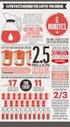 Alcohol Facts and Statistics Alcohol Use in the United States: Prevalence of Drinking: In 2012, 87.6 percent of people ages 18 or older reported that they drank alcohol at some point in their lifetime;
BEING IN SHAPE TO RIDE
 Riding a motorcycle is a demanding and complex task. Skilled riders pay attention to the riding environment and to operating the motorcycle, identifying potential hazards, making good judgments and executing
Jobs and Growth Effects of Tax Rate Reductions in Ohio
 Jobs and Growth Effects of Tax Rate Reductions in Ohio BY ALEX BRILL May 2014 This report was sponsored by American Freedom Builders, Inc., a 501(c)4 organization. The author is solely responsible for
COMPREHENSIVE TOBACCO PREVENTION AND CESSATION PROGRAMS EFFECTIVELY REDUCE TOBACCO USE
 COMPREHENSIVE TOBACCO PREVENTION AND CESSATION PROGRAMS EFFECTIVELY REDUCE TOBACCO USE Tobacco control programs play a crucial role in the prevention of many chronic conditions such as cancer, heart disease,
Canterbury District Health Board s
 Canterbury District Health Board s POSITION STATEMENT ON ALCOHOL This position statement is consistent with the position statements of Nelson Marlborough, West Coast, Canterbury, South Canterbury, and
Driving under the influence of alcohol or
 National Survey on Drug Use and Health The NSDUH Report December 9, 2010 State Estimates of Drunk and Drugged Driving In Brief Combined 2006 to 2009 data indicate that 13.2 percent of persons aged 16 or
Policy Summary. Dram Shop Liability
 Policy Summary Dram Shop Liability This policy summary is excerpted from: The December 2015 Report to Congress on the Prevention and Reduction of Underage Drinking Dram Shop Liability Policy Description
Michigan League for Human Services. Proposal A, School Aid, and the Structural Deficit
 Michigan League for Human Services November 2004 Proposal A, School Aid, and the Structural Deficit This year marks the 10 th anniversary of the passage of school finance reform, known as Proposal A. Proposal
OHIO COUNTY. Demographic Data. Adult Behavioral Health Risk Factors: 2007-2011
 Prepared by the Department of Health and Human Resources Bureau for Behavioral Health and Health Facilities OHIO COUNTY February 14 Behavioral Health Epidemiological County Profile Demographic Data Ohio
For NSDUH, the Northeast includes: Connecticut, Maine, Massachusetts, New Hampshire, New Jersey, New York, Pennsylvania, Rhode Island, and Vermont.
 Collective Action Issue Brief #4: MARIJUANA USE IN NEW HAMPSHIRE WHAT WE KNOW In New Hampshire, adolescent and young adult marijuana use is a significant concern. Rates of marijuana use among New Hampshire
Macomb County Office of Substance Abuse MCOSA. Executive Summary
 Macomb County Office of Substance Abuse MCOSA Executive Summary This report marks the second data profile of alcohol and illicit drugs burden in Macomb County. The first report produced in 2007 detailed
Colorado s 2005 Tobacco Tax Increase, Cigarette Consumption, and Tax Revenues
 Colorado s 2005 Tobacco Tax Increase, Cigarette Consumption, and Tax Revenues Tobacco Program and Evaluation Group University of Colorado at Denver and Health Sciences Center Theresa Mickiewicz, MSPH Arnold
Youth Drinking Rates and Problems: A Comparison of European Countries and the United States
 Youth Drinking Rates and Problems: A Comparison of European Countries and the United States Bettina Friese and Joel W. Grube Prevention Research Center Pacific Institute for Research and Evaluation Introduction
Vermont PRAMS Data Brief
 Prenatal Counseling part 3 Alcohol, Tobacco & Drugs This is a report on the Pregnancy Risk Assessment Monitoring System (PRAMS), a survey conducted on a sample of Vermont women with live births since 2001.
Teenage Alcohol and Drug Abuse Jesse Bales Theo Edwards Kyle Kiesel Adam Stahl Types of Alcohol
 Teenage Alcohol and Drug Abuse Jesse Bales Theo Edwards Kyle Kiesel Adam Stahl Types of Alcohol Gin: a colorless alcoholic beverage made by distilling or redistilling rye or other grains. Vodka: originally
NORTH CAROLINA GENERAL ASSEMBLY LEGISLATIVE FISCAL NOTE
 NORTH CAROLINA GENERAL ASSEMBLY LEGISLATIVE FISCAL NOTE BILL NUMBER: SHORT TITLE: SPONSOR(S): House Bill 1429 (House Finance Committee Substitute, as amended) Financial Responsibility Act Representatives
Facts and Figures on the Middle-Class Squeeze in Idaho
 Facts and Figures on the Middle-Class Squeeze in Idaho For hard-working, middle-class families all over the country, life during the Bush presidency has grown less affordable and less secure. President
Alcohol Units. A brief guide
 Alcohol Units A brief guide 1 2 Alcohol Units A brief guide Units of alcohol explained As typical glass sizes have grown and popular drinks have increased in strength over the years, the old rule of thumb
Running head: TIME FOR A CHANGE 1. Time for a Change: Legalizing Marijuana in the State of Texas. Ronald Cummings.
 Running head: TIME FOR A CHANGE 1 Time for a Change: Legalizing Marijuana in the State of Texas Ronald Cummings Excelsior College TIME FOR A CHANGE 2 Time for a Change: Legalizing Marijuana in the State
Focus Area 6: Mental Health, Alcohol, and Substance Abuse
 Focus Area : Mental Health and Mental Disorders Alcohol Abuse Substance Abuse Autism Spectrum Disorders Exposure to Trauma 119 WORK GROUP ON MENTAL HEALTH, ALCOHOL, AND SUBSTANCE ABUSE Co-Chairs Barbara
A JOINT RESOLUTION OF THE SENATE AND THE HOUSE OF REPRESENTATIVES OF THE STATE OF MONTANA REVISING THE OFFICIAL
 SJ00.0 SENATE JOINT RESOLUTION NO. INTRODUCED BY B. TUTVEDT A JOINT RESOLUTION OF THE SENATE AND THE HOUSE OF REPRESENTATIVES OF THE STATE OF MONTANA REVISING THE OFFICIAL ESTIMATE OF THE STATE'S GENERAL
Traffic Safety Facts Research Note
 1 Traffic Safety Facts Research Note DOT HS 811 218 November 2009 Fatal Crashes Involving Summary Fatalities from crashes involving young drivers have accounted for just under one-fifth of all fatalities
Control and sale of alcoholic beverages, for the year ending March 31, 2013 Released at 8:30 a.m. Eastern time in The Daily, Thursday, April 10, 2014
 Control and sale of alcoholic beverages, for the year ending March 31, 2013 Released at 8:30 a.m. Eastern time in The Daily, Thursday, April 10, 2014 Beer and liquor stores and agencies sold $21.4 billion
Twelve Ounces of Prevention: A Look at Alcohol Use by Erie County Youth
 ][ Strengthening our community through increased awareness and accountability ][ Vol.5 Issue 1 Spring 2013 Inside the Report Frequency of Use Age of First Use Attitudes About Alcohol Use Drinking Under
Special Report Substance Abuse and Treatment, State and Federal Prisoners, 1997
 U.S. Department of Justice Office of Justice Programs Bureau of Justice Statistics Special Report Substance Abuse and Treatment, and Prisoners, 1997 January 1999, NCJ 172871 By Christopher J. Mumola BJS
SMOKING TOBACCO: SMOKING
 TOBACCO: SMOKING One in 4 adults in Guam is a smoker. Among youth, 1 in 5 smokes. Guam s smoking rate is higher than most US States and Territories; this has remained unchanged since 2001. T O B A C C
Control and sale of alcoholic beverages, for the year ending March 31, 2012 Released at 8:30 a.m. Eastern time in The Daily, Thursday, April 11, 2013
 Control and sale of alcoholic beverages, for the year ending March 31, 2012 Released at 8:30 a.m. Eastern time in The Daily, Thursday, April 11, 2013 Beer and liquor stores and agencies sold $20.9 billion
THE FILIPINO AS THE QUINTESSENTIAL DRINKER: A Study of Alcohol Drinking Patterns Among Filipinos. Maritona Victa Labajo
 THE FILIPINO AS THE QUINTESSENTIAL DRINKER: A Study of Alcohol Drinking Patterns Among Filipinos Maritona Victa Labajo Purpose of the Study To examine the available literature on and observations about