
Detecting Big Structural Breaks in Large Factor Models
|
|
|
- Holly Gray
- 10 years ago
- Views:
Transcription
1 Detecting Big Structural Breaks in Large Factor Models Liang Chen Juan J. Dolado Jesús Gonzalo First Draft: May 2010 his draft: September 2013 Abstract ime invariance of factor loadings is a standard assumption in the analysis of large factor models. Yet, this assumption may be restrictive unless parameter shifts are mild (i.e., local to zero). In this paper we develop a new testing procedure to detect big breaks in these loadings at either known or unknown dates. It relies upon testing for parameter breaks in a regression of one of the factors estimated by Principal Components analysis on the remaining estimated factors, where the number of factors is chosen according to Bai and Ng s (2002) information criteria. he test fares well in terms of power relative to other recently proposed tests on this issue, and can be easily implemented to avoid forecasting failures in standard factor-augmented (FAR, FAVAR) models where the number of factors is a priori imposed on the basis of theoretical considerations. Keywords: Structural break, large factor model, factor loadings, principal components. JEL codes: C12, C33. We are grateful to a co-editor, two anonymous referees, Dante Amengual, Manuel Arellano, Stephane Bonhomme and Soren Johansen for insightful comments, and to Atsushi Inoue for helpful discussions on his related but independent research. We also thank seminar participants at Aarhus, CEMFI, Conference in Honour of Sir David F. Hendry (St. Andrews), ESEM 2011 (Oslo), and Workshops on High-Dimensional Econometric Modelling (Cass Business School) and ime Series Econometrics (Zaragoza) for suggestions. Financial support from the Spanish Ministerio de Ciencia e Innovación (grants ECO and Consolider-2010), Comunidad de Madrid (grant Excelecon) and Bank of Spain (grant ER program), is gratefully acknowledged. Dept. of Economics, Universidad Carlos III de Madrid. [email protected] Dept. of Economics, Universidad Carlos III de Madrid. [email protected] Dept. of Economics, Universidad Carlos III de Madrid. [email protected] 1

2 1 Introduction Despite being well acknowledged that some parameters in economic relationships can be subject to important structural breaks (e.g., those related to technological change, globalization or strong policy reforms), a standard practice in the estimation of large factor models (FM, hereafter) has been to assume time-invariant factor loadings. Possibly, one of the main reasons for this benign neglect of breaks stems from the important results obtained by Stock and Watson (2002, 2009) regarding the consistency of the estimated factors by principal components analysis (PCA hereafter) when the loadings are subject to small (i.e., local-to-zero) instabilities. hese authors conclude that the failure of factor-based forecasts is mainly due to the instability of the forecast function, rather than of the different components of the FM. As a result, their advice is to use full-sample factor estimates and subsample forecasting equations to improve forecasts. However, the main emphasis placed on local-to-zero breaks has been subsequently questioned. For example, by means of a Monte Carlo study, Banerjee, Marcellino and Masten (2008) conclude that, in contrast to Stock and Watson s diagnosis, the instability of factor loadings when big (i.e., not local-to-zero) breaks occur is the most likely reason behind the worsening factor-based forecasts, particularly in small samples. Likewise, when discussing Stock and Watson s research on this topic, Giannone (2007) argues that "...to understand structural changes we should devote more effort in modelling the variables characterized by more severe instabilities...". In this paper, we pursue this goal by providing a precise characterization of the different conditions under which big and small breaks in the factor loadings may occur, as well as develop a simple test to distinguish between them. We conclude that, in contrast to small breaks, big breaks should not be ignored since they may lead to misleading results in standard econometric practices using FM and in the potential interpretation of the factors themselves. A forerunner of our paper is Breitung and Eickmeier (2011, BE henceforth) who were the first to propose a proper testing procedure to detect big breaks in the factor loadings. heir test relies on the idea that, under the null of no structural break (plus some additional assumptions), the estimation error of the factors can be ignored and thus the estimated factors can be treated as the true ones. Consequently, a Chow-type test can be implemented by regressing each variable in the data set on both the estimated factors using the whole sample and their truncated versions from the date of the break onwards. Focusing on the joint statistical significance of the estimated coefficients on the truncated factors, their test compares the empirical rejection frequency among the individual regressions to a nominal size of 5% under the null. In our view, this approach suffers from two limitations: (i) the overall limiting distribution of their test remains unknown when testing for the equality of all the elements of the loading matrix in both subsamples; 1 and (ii) it lacks non-trivial 1 With the notation used below in (1)-(2), the limiting distribution of the rejection frequencies for the joint hypothesis A = B is not known, although the individual tests for the hypothesis α i = β i have known limiting distributions. 2

3 power when the number of factors is chosen according to some consistent estimator of r. his last problem can be serious. For example, as explained further below, a FM with r original factors where the loadings of one of them exhibit a big structural break at the same date admits a standard factor representation with r + 1 factors without a break. Hence, if the number of factors were to be chosen as r + 1, instead of r, their testing approach would fail to detect any break at all when in fact there is one. Our contribution here is to propose a simple testing procedure to detect big breaks in FMs stemming from a single source which does not suffer from the previous shortcomings. We focus on breaks in the loadings though we also provide a procedure to detect whether the breaks originate from the loadings or from factors themselves. In particular, we first derive some asymptotic results finding that, in contrast to small breaks, the number of factors is overestimated under big breaks, a result which was also used by BE (2011). We argue that neglecting these breaks can have serious consequences on the forecasting performance of some popular regression-based models using factors, where their number is a priori imposed. Likewise, under big breaks, it may be difficult to provide a structural interpretation of the estimated factors when they are chosen according to some consistent information criteria (see Bai and Ng, 2006b, and Chen, 2012). Our proposal relies upon a very simple regression-based testing procedure. As sketched earlier, the insight is that a FM with big breaks in the loadings can be re-parameterized as another FM with constant loadings but a larger set of factors, where the number and the space spanned by the latter can be consistently estimated by PCA under fairly standard assumptions. Hence, rather than directly testing for whether all the elements of the loadings matrix are stable, which will suffer from an infinite-dimensionality problem as the number of variables in the panel data set grows, one can test if the relationships among the larger finite-dimensional set of estimated factors are stable. Specifically, our procedure consists of two steps. First, the number of factors for the whole sample period is chosen as r according to Bai and Ng s (2002; BN henceforth) information criteria, and then r factors are estimated by PCA. Next, one of the estimated factors (e.g., the first one) is regressed on the remaining r 1 factors, to next apply the standard Chow est or the Suptype est of Andrews (1993) to this regression, depending on whether the date of the break is treated as known or unknown. If the null of no breaks is rejected in the second-step regression, we conclude that there are big breaks and, otherwise, that either no breaks exist at all or that only small breaks occur. Further, on the basis of the rank properties of the covariance matrix of the estimated factors in different subsamples, we also provide some guidance on how to distinguish between breaks stemming either from the loadings or from the data generating process (DGP hereafter) of the factors. his difference is important since the latter may lead to reject the null of constant loadings when it is true, implying a misleading interpretation of the source of the break. After completing the first draft of this paper, we became aware of a closely related paper by Han and Inoue (2012, HI hereafter) who, in an independent research, adopt a similar approach to 3

4 ours in testing for big breaks in FM. he two approaches, however, differ in some relevant respects. In effect, rather than using a simple regression-based approach to avoid the infinite-dimensionality problem as we do here, HI (2012) test directly for differences before and after the break in all the elements of the covariance matrix of the estimated factors. We will argue below that, despite the fact that the HI tests use more information than ours, both tests generally exhibit similar power. Indeed, our regression-based test based on the Wald principle, which behaves much better in general than the Lagrange multiplier (LM hereafter) tests for detecting structural breaks, is even more powerful than the corresponding HI s test for small sample sizes, such as N = = 50. One additional advantage of our simple linear-regression setup is that it amenable to use many other existing methods for testing breaks, including multiple ones (see, e.g., Perron, 2006, for an extensive review of these tests). he rest of the paper is organized as follows. In Section 2, we present the basic notation, assumptions and the definitions of small and big breaks. In Section 3, we analyze the consequences of big breaks on the choice of the number of factors and their estimation, as well as their effects on standard econometric practices with factor-augmented regressions. In Section 4, we first derive the asymptotic distributions of our tests and next discuss, when a big break is detected, how to identify its sources. Section 5 deals with the finite sample performance of our test relative to the competing tests using Monte-Carlo simulations. Section 6 provides an empirical application. Finally, Section 7 concludes. An Appendix contains detailed proofs of the main results. 2 Notation and Preliminaries We consider FM that can be rewritten in the static canonical form: X t = AF t + e t where X t is the N 1 vector of observed variables, A = (α 1,..., α N ) is the N r matrix of factor loadings, r is the number of common factors which is finite, F t = (F 1t,..., F rt ) is the r 1 vector of common factors, and e t is the N 1 vector of idiosyncratic errors. In the case of dynamic FMs, all the common factors f t and their lags are stacked into F t. hus, a dynamic FM with r dynamic factors and p lags of these factors can be written as a static FM with r (p + 1) static factors. Further, given the assumptions we make about e t, the case analyzed by BE (2011) where the e it disturbances are generated by individual specific autoregressive (AR hereafter) processes is also considered. 2 We assume that there is a single structural break in the factor loadings of all factors at the 2 Notice, however, that our setup excludes the generalized dynamic FM considered by Forni and Lippi (2001), where the polynomial distributed lag possibly tends to infinity. 4

5 same date τ: X t = AF t + e t t = 1, 2,..., τ, (1) X t = BF t + e t t = τ + 1,..., (2) where B = (β 1,..., β N ) is the new factor loadings after the break. By defining the matrix C = B A, which captures the size of the breaks, the FM in (1) and (2) can be rewritten as: X t = AF t + CG t + e t (3) where G t = 0 for t = 1,..., τ, and G t = F t for t = τ + 1,...,. As argued by Stock and Watson (2002, 2009), the effects of some mild (local to zero) instability in the factor loadings can be averaged out, so that estimation and inference based on PCA remain valid. We generalize their analysis by allowing for two types of break sizes: small and big. In contrast to the former, we will show that the latter cannot be neglected. o distinguish between them, it is convenient to partition the C matrix as follows: C = [Λ H] where Λ and H are N k 1 and N k 2 matrices that correspond to the big and the small breaks, and k 1 + k 2 = r. Accordingly, we can also partition the G t matrix into G 1 t and G 2 t, such that (3) becomes: X t = AF t + ΛG 1 t + HG 2 t + e t (4) where Λ = (λ 1,..., λ N ) and H = (η 1,..., η N ). hroughout the paper, tr(σ) and Σ = tr(σ Σ) will denote the trace and the norm of a matrix Σ, respectively. For a finite dimensional vector v, we write v = O p (1) (v = o p (1)) when v = O p (1) ( v = o p (1)). [ π] denotes the integer part of π for π [0, 1]. Once the basic notation has been established, we next provide precise definitions of the two types of breaks. Assumption 1. Breaks: (a) λ i λ < for all i. N 1 Λ Λ Σ Λ as N for some positive definite matrix Σ Λ. (b) η i = (N ) 1/2 κ i and κ i κ < for all i. he matrices Λ and H are assumed to contain non-random elements. Assumption 1.a yields the definition of a big break. It also includes the case where λ i = 0 (no break) for a fixed proportion of variables as N. As will be shown, this type of breaks will lead to inconsistency of the estimated factors and the overestimation of r. Assumption 1.b, in turn, provides the definition of small breaks which are characterized as being of order 1/ N, so the true factor space and r can be both consistently estimated under such breaks. If we only focus on the consistency of the estimated factors, the definition of small breaks can be relaxed to η i = O(N δ 1 δ 2 ) with 5

6 δ 1, δ 2 0 and δ 1 + δ 2 0. As shown by heorem 1 of Bates et al. (2013), the estimated factors using PCA are still consistent for breaks with such sizes, although at a slower convergence rate than min( N, ). However, as argued in the Introduction, we are concerned with the number of factors as well, and such breaks will possibly lead to overestimated number of factors. herefore, our assumption for small breaks is more stringent. Remark 1. Bates et al. (2013) considers instabilities in the factor loadings such that: A t = A + h N u t, where h N is a scalar which depends on N and, and u t is a vector of possibly random disturbances. hey propose conditions about h N and u t under which the PCA estimator of the factors are still consistent. In the case of structural breaks, they assume h N = 1 whereas u t is vector of O(1) elements (say u t = 1(t > τ) where = ( 1,..., N ) ) that do not depend on N or after the break date τ. Unlike our definitions, they characterize the size of breaks as the number of nonzero elements in, i.e., the number of variables having breaks in their factor loadings. For the consistency of the estimated factors, their conditions allow at most N δ (δ < 1) variables to have breaks ( N i=1 i = O(N δ )). By contrast, for the consistency of the estimated number of factors using BN s (2002) method, only a fixed number of variables are allowed to have breaks ( N i=1 i = O(1)), when N/ converges to some nonzero constant. o compare these conditions with our definitions, notice that when N δ variables are allowed to have breaks, we have N 1 N i=1 i i N 1 N i=1 i 2 = O(N δ 1 ) = o(1) when δ < 1. On the other hand, our Assumption 1.a for big breaks implies that 1 Ni=1 N λ i λ i converges to a positive constant. In this sense, the big breaks defined in our paper have larger sizes than those considered in Bates et al. (2013), under which the estimated factors are proved to be consistent. As for the small breaks, our Assumption 1.b implies that N i=1 η i = O(1) when N and have the same order, similar to the conditions of Bates et al. (2003) which also allows the number of factors to be consistently estimated. o investigate the influence of breaks on the number and estimation of factors, some further assumptions need to be imposed. o achieve consistent notation with the previous literature in the discussion of these assumptions, we follow the presentation of BN (2002) and Bai (2003) with a few slight modifications. p t Σ F p π Σ F as for some positive definite matrix Σ F where π τ = lim Assumption 2. Factors: E(F t ) = 0, E F t 4 <, (N ) 4 E F t 8 <, 1 F t F and 1 τ F t F t Assumption 3. Factor Loadings: α i ᾱ <, and N 1 A A Σ A, N 1 Γ Γ Σ Γ as N for some positive definite matrix Σ A and Σ Γ, where Γ = [A Assumption 4. Idiosyncratic Errors: he error terms e t, the factors F t and the loadings A satisfy the Assumption A, B, C, D, E, F1 and F2 of Bai (2003). Assumption 5. Independence of Factors and Idiosyncratic Errors: [F t ] and [e t] are two mutually independent groups, and 1/ F t e it = O p (1) for each i = 1,..., N. 6 Λ]..

7 Assumptions 3 and 4 are standard in the literature on FM allowing for weak cross-sectional and temporal correlations between the errors. In our specific setup, Assumption 3 excludes the case where a new (old) factor appears (disappears) after the break since this event would imply that Σ Γ becomes singular. However, this is not restrictive since we could always envisage any potential factor as having non-zero, albeit small, loadings in either of the relevant subsamples. Assumption 2, in turn, is a new one. Since factors and factor loadings cannot be separately identified, we have to assume that DGPs with breaks in the loadings, which can be reabsorbed by transformations of the factors, should not be included in the alternative. In Section 4.4, we will discuss how to differentiate between breaks in the factor loadings and breaks in the dynamics of the factors. Different factors are allowed to be correlated at all leads and lags. Assumption 5 on the independence among the different groups is stronger than the usual assumptions made by BN (2002). Notice, however, that we could have also assumed some dependence between these groups and then impose some restrictions on this dependence when necessary. Yet, this would complicate the proofs without essentially altering the insight underlying our approach. hus, for the sake of simplicity, we assume them to be independent in the sequel. 3 he Effects of Structural Breaks In this section, we study the effects of structural breaks on the estimation of both the number of factors based on the information criteria (IC, henceforth) proposed by BN (2002) and the factors themselves through PCA. Our main finding is that, in contrast to Stock and Watson s (2002, 2009) consistency result for the true factor space under small breaks, the factor space estimated by PCA is inconsistent, and that the number of factors tends to be overestimated under big breaks. 3.1 he estimation of factors Let us rewrite model (4) with k 1 big breaks and k 2 small breaks in the more compact form: X t = AF t + ΛG 1 t + ǫ t (5) where ǫ t = HG 2 t + e t. he idea is to show that the new error terms ǫ t still satisfy the necessary conditions for (5) being a standard FM with new factors F t = [F t G 1 t ] and new factor loadings [A Λ]. Let r be the selected number of factors, either chosen by some prior knowledge or by using some consistent estimator such as the IC of BN (2002). Notice that r is not necessarily equal to r. Let ˆF be times the r eigenvectors corresponding to the r largest eigenvalues of the matrix XX, where the N matrix X = [ X 1, X 2,..., X ], Xt = [X t1, X t2,..., X tn ], ˆF = [ ˆF1, ˆF 2,..., ˆF ]. hen we have: 7

8 Proposition 1. For any fixed r (1 r r + k 1 ), under Assumptions 1 to 5, there exists a full rank r (r + k 1 ) matrix D and δ N, = min{ N, } such that: ˆF t = DFt + O p (δn, 1 ) for t = 1, 2,...,. (6) his result implies that ˆF t estimates consistently the space of the new factors, F t, but not the space of the original factors, F t. Let us next consider two cases. First, when k 1 = 0 (no big breaks), we have that G 1 t = 0, and F t = F t, so that (6) becomes ˆF t = DF t + O p (δ 1 N, ) (7) for a r r matrix D of full rank. his just trivially replicates the well-known consistency result of BN (2002). 3 Secondly, in the more interesting case where k 1 > 0 (big breaks exist), we can rewrite (6) as ( ) Ft ˆF t = [D 1 D 2 ] + o p (1) = D 1 F t + D 2 G 1 t + o p(1) (8) G 1 t where the r (r + k 1 ) matrix D is partitioned into the r r matrix D 1 and the r k 1 matrix D 2. Note that, by the definition of G t, G 1 t = 0 for t = 1, 2,..., τ, and G 1 t = Ft 1 for t = τ + 1,...,, where Ft 1 is the k 1 1 sub-vector of F t that is subject to big breaks in their loadings. herefore (8) can be expressed as: ˆF t = D 1 F t + o p (1) for t = 1, 2,..., τ, (9) ˆF t = D 2 F t + o p (1) for t = τ + 1,..., (10) where D 2 = D 1 + [D 2 0], 0 is a r (r k 1 ) zero matrix, and D 2 0 when r > r. Hence, since D 1 D 2, this implies that, in contrast to small breaks where D 2 tends to 0 due to the local-to-zero properties of the elements of H (see Assumption 1.b), under big breaks the estimated factors ˆF will not be consistent for the space of the true factors F. Accordingly, as will be discussed below, imposing a priori the number of estimated factors to be used as predictors or explanatory variables in standard factor-augmented models may lead to misleading results. o illustrate the consequences of having big breaks in the factor loadings, consider the following simple Factor Augmented Regression (FAR) model (see BN, 2006a): y t = a F t + b W t + u t, t = 1, 2,..., (11) where W t is a small set of observable variables and the r 1 vector F t contains the r common 3 Notice that, for the estimator ˆF defined here, r has to be smaller or equal to r for (7) to hold. 8

9 factors driving a large panel dataset X it (i = 1, 2,..., N; t = 1, 2,..., ) which excludes both y t and W t. he parameters of interest are the elements of vector b while F t is included in (11) to control for potential endogeneity arising from omitted variables. Since we cannot identify F t and a, only the product a F t is relevant. Suppose that there is a big break at date τ. From (9) and (10), we can rewrite (11) as: where D 1 D 1 = D 2 D 2 = I r, or equivalently y t = (a D 1 )(D 1F t ) + b W t + u t for t = 1, 2,..., τ, y t = (a D 2 )(D 2 F t) + b W t + u t for t = τ + 1,..., where a 1 = a D 1 and a 2 = a D 2, and ũ t = u t + o p (1). y t = a 1 ˆF t + b W t + ũ t for t = 1, 2,..., τ, (12) y t = a 2 ˆF t + b W t + ũ t for t = τ + 1,..., (13) If the number of factors is a priori known to be r = r, then D1 = D 1 1, D 2 = D 1 2. If we assume D 1 D 2, it follows that D 1 1 D 1 2 and thus a 1 a 2. herefore, using the indicator function 1(t > τ), (12) and (13) can be rewritten as y t = a 1 ˆF t + (a 2 a 1 ) ˆFt 1(t > τ) + b W t + ũ t, t = 1, 2,...,. (14) A straightforward implication of the previous result is that if we were to impose the number of factors, on a priori ground, therefore ignoring the set of regressors ˆF t 1(t > τ) in (14), in general the estimation of b will become inconsistent due to omitted variables. Remark 2. Interestingly, there are many examples in the literature where, for theoretical or practical reasons, the number of factors is imposed as a prior. For example, to name a few, a single common factor representing a global effect is assumed in the well-known study by Bernanke, Boivin and Eliasz (2005) on measuring the effects of monetary policy in Factor Augmented VAR (FAVAR) models, as well as in the risk analysis in portfolios of corporate debt by Gourieroux and Gagliardini (2011) where a single factor is supposed to capture a latent macro-variable. Likewise, two factors are a priori imposed by Rudebusch and Wu (2008) in their macro-finance model. Notice that a similar argument will render inconsistent the impulse response functions in FAVAR models where the regressand in (11) becomes y t+1 = (F t+1, W t+1 ). Remark 3. Alternatively, if the number of factors is not a priori imposed and it is estimated by the IC of BN (2002), we will show in the next section (Proposition 2) that the estimated number of factors will tend to r+k 1 as the sample size grows. In this case, D 1 and D 2 are (r+k 1) r matrices, and by the definitions of D 1 and D 2, it is easy to show that we can always find a r (r +k 1) matrix 9

10 D = D 1 = D 2 such that D D 1 = D D 2 = I r. If we define ā = a D, (15) then a 1 = a 2 = ā so that (12) and (13) can be rewritten as y t = ā ˆFt + b W t + ũ t, t = 1, 2,...,, (16) so that the estimation of (11) will not be affected by the estimated factors under big breaks if r = r + k 1. Remark 4. Yet, even in this case, the factors themselves may be the direct subject of interest and thus their interpretation can have important implications for structural analysis. For example, a large body of empirical research in financial economics is concerned with identifying the factors that determine asset returns. 4 However, the existence of big breaks may hamper this identification procedure. For instance, if r = 2, a relevant question would be: are there two genuine factors or one factor and one break? Our testing procedure provides a useful tool to disentangle these two cases (see Section 4.4 below). Another area where our testing approach could be useful is in applications where the estimated factors are modeled in a VAR in order to identify the structural shocks driving them (see e.g. Charnavoki and Dolado, 2012). his identification becomes more difficult as the number of factors increases. For this reason, it is very important to determine whether the selection of a large number of factors is due to having several genuine factors or to a break affecting some of them. he insight is that instead of having to identify r + k 1 shocks we would only have to identify r. Summing up, the use of estimated factors as the true factors when assuming that the number of factors is a priori known will lead to inconsistent estimates in a FAR under big breaks. As a simple remedy, ˆFt 1(t > τ) should be added as regressors when big breaks are detected and the break date is located. Alternatively, without pretending to know a priori the true number of factors, the estimation of FAR will be robust to the estimation of factors under big breaks if the number of factors is chosen according to some consistent estimator. Yet, this may hinder the correct interpretation of the estimated factors in terms of observables. As a result, in order to run regression (16), our advice is to avoid imposing the number of factors a priori, unless a formal test of big breaks is implemented. We will illustrate these points in Section 5 by means of simulations in a typical forecasting exercise where the predictors are common factors estimated by PCA. 4 Chen et al (1986) and Shanken and Weinstein (2006) are good illustrations of attempts to interpret the underlying forces in the stock market developments in terms of some observed macro variables. 10

11 3.2 he estimated number of factors BE (2011) have previously argued that the presence of structural breaks in the factor loadings may lead to the overestimation of the number of factors. Yet, since they do not provide a formal proof of this result, we proceed to fill this gap. Let ˆr be the estimated number of factors in (5) using the IC proposed by BN (2002), and ϑ 1 N be the largest eigenvalue of (N ) 1 e t e t. hen, the following result holds: Proposition 2. Suppose ϑ 1 N = O p(δn 2 ) and Assumptions 1 to 5 hold, then: lim P[ˆr = r + k 1] = 1. N, Again, absent big breaks (k 1 = 0), this result trivially replicates heorem 2 of BN (2002). However, under big breaks (k 1 > 0), their IC will overestimate the number of original factors by the number of big breaks (0 < k 1 r) because, as shown above, a FM with this type of break admits a representation without a break but with more factors. In sum, when we use PCA to estimate the factor space and the IC of BN (2002) to estimate the number of factors, the small breaks can be safely ignored, while the big breaks will lead to the inconsistencies of ˆF t and ˆr. 4 esting for Structural Breaks 4.1 Hypotheses of interest and test statistics Our goal here is to develop a test for big breaks. As mentioned above, if we were to follow the usual approach in the literature to test for structural breaks, we would consider the following null and alternative hypotheses in (1) and (2): H 0 : A = B vs. H 1 : A B. However, this standard formulation faces two problems. First, if only small breaks occur, the estimation and inference based on PAC are not affected. hus, we can ignore these breaks. Secondly, and foremost, since A and B are N r matrices, we would face an infinite-dimensional parameter problem as N grows if we were to consider differences in all their individual elements. o solve the first problem, we focus only on big breaks and consider H 0 : k 1 = 0 vs. H 1 : k 1 > 0, where the new null and alternative hypotheses correspond to the cases where there are no big breaks (yet there may be small breaks) and there is at least one big break, respectively. Relying upon the discussion in Section 3.1 about the inconsistency of F for the space of the true factors F when big breaks occur, our strategy to circumvent the second problem is to focus on how the dependence properties of the r estimated factors (using the whole sample) change before and after the potential break date. Since, in line with the standard assumption in FM, the number of 11

12 true factors (r) is considered to be invariant to the sample size, our previous result in Proposition 2 ensures that r + k 1, with k 1 r, is finite-dimensional. o test the above null hypothesis, we consider the following two-step procedure: 1. In the first step, the number of factors to estimate, r, is determined and r common factors ( ˆF t ) are estimated by PCA. 2. In the second step, we consider the following linear regression of one of the estimated factors on the remaining r 1 ones. For example, using the first factor as the regressand, this leads to the regression: ˆF 1t = c 2 ˆF2t + + c r ˆF rt + u t = c ˆF 1t + u t (17) where ˆF 1t = [ ˆF 2t,..., ˆF rt ] and c = [c 2,..., c r ] are ( r 1) 1 vectors. hen we test for a structural break of c in the above regression. If a structural break is detected, then we reject H 0 : k 1 = 0; otherwise, we cannot reject the null of no big breaks. Remark 5. In the first stage, we have recommended to choose r as some consistent estimator of r to obtain the best size and power properties. Although our Proposition 2 is based on the ˆr estimated by the IC of BN (2002), one can also use other procedures to consistently estimate r. For example, Onatski (2009, 2010), Ahn and Horenstein (2013) show that their methods have better finite sample properties than BN (2002) especially when the errors are cross sectionally correlated. hat being said, as will be discussed below, one important feature of our tests is that they do not rely on the correct estimation of r. In the second step, although there are many methods of testing for breaks in a simple linear regression model, we follow Andrews (1993) to define the LM and Wald tests when the possible break date is assumed to be known, and their Sup-type versions when there is no prior knowledge about it. Moreover, since the LM, Wald and LR test statistics have the same asymptotic distribution under the null, we focus on the first two because they are computationally simpler. Define D = V 1/2 Υ Σ 1/2 A as the limit of the matrix D in equation (7), where V = diag(v 1, v 2,..., v r ), v 1 > v 2 >... > v r are the eigenvalues of Σ 1/2 A Σ F Σ 1/2 A, and Υ is the corresponding eigenvector matrix (see Bai, 2003). Define F 1t = D1 F t and F 1t = D 1 F t, where D1 is the first row of D and D 1 is the matrix containing the second to last rows of D. Finally, let the (r 1) (r 1) matrix S = lim Var ( 1 F 1t F 1t ). Following Andrews (1993), the LM test statistic is then defined as follows: L( π) = 1 ( 1 π(1 π) τ ˆF 1t û t ) Ŝ 1 ( 1 τ ˆF 1t û t ) (18) where π = τ/, τ is a pre-assumed date for the potential break, û t is the residual in the OLS 12

13 regression (17), which by construction equals ˆF 1t, and Ŝ is a consistent estimator of S.5 he corresponding Sup-LM statistic is defined as: 1 ( [ π] 1 L(Π) = sup π Π π(1 π) ) Ŝ 1 ˆF ( [ π] 1 1t û t ˆF 1t û t ) (19) where Π is any set whose closure lies in (0, 1). Similarly, the Wald and Sup-Wald test statistics can be constructed as: ( Ŝ 1 L ( π) = π(1 π) ĉ 1 ( π) ĉ 2 ( π)) ( ) ĉ 1 ( π) ĉ 2 ( π) (20) and ( Ŝ 1 L (Π) = sup π(1 π) ĉ 1 (π) ĉ 2 (π)) ( ) ĉ 1 (π) ĉ 2 (π) π Π where ĉ 1 (π) and ĉ 2 (π) are OLS estimates of c using subsamples before and after the break point : [ π]. 6 o illustrate why our two-step testing procedure is able to detect the big breaks, it is useful to consider a simple example where r = 1, k 1 = 1 (one common factor and one big break). hen (5) becomes: X t = Af t + Bg t + e t where g t = 0 for t = 1,..., τ, and g t = f t for t = τ + 1,...,. By Proposition 2, we will tend to get ˆr = 2 in this case. Suppose now that we estimate 2 factors ( r = 2). hen, by Proposition 1, we have: ( ) ( ) ˆf1t ft = D + o p (1) ˆf 2t g t ( ) d1 d 2 where D = is a non-singular matrix. By the definition of g t we have: d 3 d 4 ˆf 1t = d 1 f t + o p (1) ˆf2t = d 3 f t + o p (1) for t = 1,..., τ, (21) which imply that: ˆf 1t = (d 1 + d 2 )f t + o p (1) ˆf2t = (d 3 + d 4 )f t + o p (1) for t = τ + 1,...,, ˆf 1t = d 1 d 3 ˆf2t + o p (1) for t = 1,..., τ, 5 See Appendix A.3 for discussions on the estimation of S. ( ) ( 6 ˆ We can also construct the Wald test as ĉ 1( π) ĉ 2( π) S1 S π + ˆ 2 (1 π) ) 1 ( ) ĉ 1( π) ĉ 2( π) and the Sup-Wald test similarly, where Ŝ1 and Ŝ2 are estimates of S using subsamples. Yet, in all our simulations, the results based on these two methods are very similar. herefore, for brevity, we focus on the ones obtained using the full sample estimation of S, as in (20) and (21). 13

14 ˆf 1t = d 1 + d 2 d 3 + d 4 ˆf2t + o p (1) for t = τ + 1,...,. hus, we can observe that the two estimated factors are linearly related and that the coefficients d 1 d 3 and d 1+d 2 d 3 +d 4 before and after the break date must be different due to the non-singularity of the D matrix. As a result, regressing one of the estimated factors on the other and testing for a structural break in this regression, we should reject the null of no big break. In the case where d 3 = 0, the above argument fails. But since d 1 and d 4 are non-zeros (otherwise D will have reduced-rank), the estimated slope in the first subsample will diverge while it will converge to some bounded number in the second subsample. herefore our test also has power in this case. 7 Likewise, if the break date τ is not a priori assumed to be known, the Sup-type tests will yield a natural estimate of τ at the date when the test reaches its maximum value. In what follows, we derive the asymptotic distribution of the test statistics (18) to (21) under the null hypothesis, as well as extend the intuition behind this simple example to the more general case to show that our tests have power against relevant alternatives. 4.2 Limiting distributions under the null hypothesis Since in most applications the number of factors is estimated by means of BN s (2002) IC, and it converges to the true one under the null hypothesis of no big break, we start with the most interesting case where r = r. o derive the asymptotic distributions of the LM and Wald statistics, we adopt the following additional assumptions: Assumption 6. /N 0 as N and. Assumption 7. {F t } is a stationary and ergodic sequence, and {F it F jt E(F it F jt ), Ω t } is an adapted mixingale with γ m of size 1 for i, j = 1, 2,..., r, that is: ) E (E(Y ij,t Ω t m ) 2 c t γ m where Y ij,t = F it F jt E(F it F jt ), Ω t is a σ algebra generated by the information at time t, t 1,..., {c t } and {γ m } are non-negative sequences and γ m = O(m 1 δ ) for some δ > 0. 1 Assumption 8. sup π [0,1] π Ni=1 N α i F 2 = O p (1). t e it Assumption 9. Ŝ S = o p (1), and S is a (r 1) (r 1) symmetric positive definite matrix. Assumption 10. he eigenvalues of the r r matrix Σ A Σ F are distinct. Assumption 6 and 8 are required to bound the estimation errors of ˆFt, while Assumption 7 is needed to derive the weak convergence of the test statistics using the Functional Central Limit 7 his is the case for the Wald test but may not be true for the LM test, because our Wald test is directly built upon the difference between the estimated coefficients. 14

15 heorem (FCL). Assumption 10 corresponds to Assumption G of Bai (2003), which is required for D p D. Note that these assumptions are not restrictive. Assumption 6 allows to be O(N 1+δ ) for 1 < δ < 1. As for Assumption 7, it allows us to consider a quite general class of linear processes for the factors: F it = k=0 θ ik v i,t k, where v t = [v 1t... v rt ] are i.i.d with zero means, and V ar(v it ) = σ 2 i <. In this case, it can be shown that: for which it suffices that ( ) E (E(Y ij,t Ω t m ) 2 σ i σ j k=m ( ) θ ik = O(m 1/2 δ ) k=m )( ) θ ik θ jk for some δ > 0, which is satisfied for a large class of ARMA processes. Assumption 8 is similar to Assumption F.2 of Bai (2003), which involves zero-mean random variables. Finally, a consistent estimate of S can be calculated by a HAC estimator such as Newey and West s (1987) estimator k=m with a Barlett kernel, which is the one used in our simulations below. 8 Let d denote convergence in distribution, then: heorem 1. Under the null hypothesis H 0 : k 1 = 0 and Assumptions 1 to 10, as N,, we have that both the LM and Wald tests verify where π = τ/ for a given τ; and L( π), L ( π) d χ 2 (r 1) L(Π), L (Π) d ( ) ( ) sup W r 1 (π) πw r 1 (1) W r 1 (π) πw r 1 (1) /[π(1 π)] π Π for any set Π whose closure lies in (0, 1), where W r 1 ( ) is a r 1 vector of independent Brownian Motions on [0, 1] restricted to Π. he critical values for the Sup-type test are provided in Andrews (1993). Remark 6. It is easy to show that heorem 1 still holds when r < r. However, when r > r, the properties of ˆF rt are unknown since the rth eigenvectors of XX may be related to the properties of e t. hus, the asymptotic distribution cannot be derived in a similar way. Yet, as the simulations in Section 5 show, in such an instance heorem 1 still provides a reasonably good approximation for the distributions of our test statistics in finite samples. Moreover, the case where r > r can 8 hough not reported, other estimators, like those based on Parzen kernels, yield similar results in our simulations about the size and power properties of the LM and Wald tests. 15

16 be avoided if, instead of relying on a priori choice of r, practitioners use BN s (2002) IC or other consistent estimators of r, in line with Proposition Performance of the tests under the alternative hypothesis We now extend the insight of the simple example considered in Section 4.1 to show that, under the alternative hypothesis (k 1 > 0), the linear relationship between the estimated factors changes at time τ, so that the proposed tests are able to detect big breaks. Assuming that r < r r+k 1, then the matrix D 1 and D 2 in (9) and (10) become r r matrices. Notice that since r > r we can always find r 1 vectors ρ 1 and ρ 2 which belong to the null spaces of D 1 and D 2 separately, that is, ρ 1 D 1 = 0 and ρ 2 D 2 = 0. Hence, premultiplying both sides of (9) and (10) by ρ 1 and ρ 2 leads to: ρ 1 ˆF t = o p (1) t = 1, 2,..., τ, ρ 2 ˆF t = o p (1) t = τ + 1,..., which, after normalizing one of the elements of ρ 1 and ρ 2 (e.g., the first one) to be 1, implies that: ˆF 1t = ˆF 1tρ 1 + o p (1) t = 1, 2,..., τ, (22) ˆF 1t = ˆF 1tρ 2 + o p (1) t = τ + 1,...,, (23) where ˆF 1t = [ ˆF 2t,..., ˆF rt ] and ρ 1, ρ 2 are both ( r 1) 1 vectors. Next, to show that ρ 1 ρ 2, we proceed as follows. Suppose that γ Null(D 1 ) and γ Null(D 2 ), then by the definitions of D 1 and D 2 and by the basic properties of full-rank matrices, it holds that γ Null(D ). Since D is a full rank r (r + k 1 ) matrix and r r + k 1, then Null(D ) = 0 and thus γ = 0. herefore, the only vector that belongs to the null space of D 1 and D 2 is the trivial zero vector. Further, because the rank of the null space of D 1 and D 2 is larger than 1, we can always find two non-zero vectors such that ρ 1 bρ 2 for any constant b 0. Notice that when r r, the rank of the null spaces of D 1 and D 2 will possibly become zero. Hence, the preceding analysis does not apply in this case despite the existence of linear relationships among the estimated factors. If we regress one of the estimated factors on the others, with ˆρ 1 and ˆρ 2 denoting the OLS estimates of the coefficients using the two subsamples before and after the break, in general we cannot verify that plimˆρ 1 plimˆρ 2. Remark 7. One underlying assumption in the above argument is that one of the elements of ρ 1 and ρ 2 (e.g., the first ones) are different from zero. his assumption is hard to verify since the D matrix depends on Γ and F in a highly nonlinear way, 9 and it is not difficult to find DGPs where 9 By the result of Bai (2003), when r = r + k 1, the (r + k 1) (r + k 1) matrix D = V 1 N ( ˆF F / )(Γ Γ/N), where V N is the diagonal matrix with the first r + k 1 eigenvalues of X X/N. 16

17 this assumption does not hold. his normalization issue makes it really hard to come up with a formal result on the consistency of our test. Instead, we have run a large number of simulations to study the actual power properties of our tests for various DGPs, including the ones where the first elements of ρ 1 and ρ 2 are both zeros. he general finding is that our Wald and Sup-Wald tests are very powerful for all the DGPs we have considered, while the LM and Sup-LM tests may lose power when the normalization issue arises. 10 For this reason, we recommend to use the Wald test in practice. We present some of the representative simulation results in Section 5 but more results are available upon request. Remark 8. Since our tests are based on a linear regression model, many other available methods in the literature can also be applied in our second-stage procedure. For instance, when the break date is not known as a priori, one can use the CUSUM type-test first proposed by Brown, Durbin and Evans (1975), and also Chen and Hong s (2012) test via nonparametric regression. hus, this flexibility allows practitioners to draw conclusions about breaks based on broader evidence than that just provided by a single test. Remark 9. Although our tests have been designed for a single common break at date τ, they should also exhibit powers against other interesting alternatives such as multiple breaks and a change in the number of factors Disentangling breaks in loadings from breaks in factors A potential critique for all available tests of big breaks in FM is that they cannot differentiate between breaks in factor loadings and breaks in the covariance matrix of factors. For illustrative purposes, let us consider a FM with r = 2, where the factor loadings are constant but the covariance ( ) 1 ρ matrix of the factors breaks, such that: E(F t F t) = for t = 1,..., /2, and E(F t F t) = ρ 1 ( ) 1 ρ for t = /2 + 1,...,, with ρ / {0, 1}. If we further assume Σ A = lim N A A/N is ρ 1 a diagonal matrix, then, in view of Bai (2003), we have that ˆF t = F t + o p (1), where ˆF t is a 2 1 vector. In this case, regressing ˆF 1t on ˆF 2t will yield estimated coefficients close to ρ and ρ before and after the break, respectively. As a result, our tests will reject the null of no big break in the loadings while the true DGP has a break in the factors. Although the above example has been excluded by our Assumptions 2 and 7, it could well be that the factor dynamics are subject to structural breaks in practice. For instance, if the factors are interpreted as common shocks to the economy, then it is likely that their volatilities may have 10 Since the LM test is the one more affected by the normalization problem, an interesting issue raised by a referee is whether this problem could be avoided by using max j=1,..., r LM( ˆF jt) where LM( ˆF jt) is the LM test using ˆF jt as the regressand. However, because its limiting distribution is unknown under the null and likely dependent on nuisance parameters, we leave this analysis for our further research agenda. 11 See our online appendix for details. 17

18 decreased since the beginning of 1980s, as evidenced by recent studies on the effect of the Great Moderation (see, e.g., Gali and Gambetti, 2009). Hence, for interpretational purposes, it becomes relevant to identify which is the source of breaks. Assuming that there is only one source of instability and that one break in the FM has been detected at some date τ, one can differentiate between the break in the loadings and the break in the factor dynamics by comparing the number of factors obtained with the whole sample to those in each of the subamples split by τ. o see this, notice that, absent a big break in the factor loadings, the number of factors will be consistently estimated for the whole sample and each sub samples, as long as the factors satisfy: 1 τ τ F t F t p Σ 1 F > 0, and 1 τ t=τ+1 F t F t p Σ 2 F > 0. One important observation is that, when the factors are stationary and the rejection of the null is due to big breaks in the loadings, the true number of factors, r, can be consistently estimated for each of the two subsamples while, for the whole sample, it will be overestimated in light of Proposition 2. herefore, for a given data set, if ˆr = 2 in the whole sample and our test rejects the null with r = 2, it could be that there is one factor and one big break, or two factors with changing correlation, as shown above. In the first case, the estimated numbers of factors in each of the two subsamples converge to 1, while for the latter case it converges to 2. hus, these different rank properties could become the basis of our identification strategy for the source of the break. When both breaks in the loadings and factors exist, our strategy of considering a finite dimensional linear regression still works, but the asymptotic distribution of the proposed test statistics may be different. he reason is that the estimated factors, which are consistent estimators of the true factor space under the null, may also experience breaks in their dynamics. As a result, Hansen s (2000) results imply that the asymptotic distributions of the Wald and Sup Wald tests may change if the dynamics of regressors (the estimated factors in our case) have breaks. We leave this interesting question for future research. 5 Simulations In this section, we first use a simple factor-based forecasting model to illustrate the consequences of ignoring big breaks, as discussed in Section 3. Next, we study the finite sample properties of our proposed LM/Wald and Sup-LM/Wald tests. We pay special attention to the the sizes and the powers when r > r since, as discussed previously, obtaining formal results for this case is very difficult. A comparison with the tests of BE (2011) and HI (2012) is also provided to illustrate the advantages of our tests in term of power. hroughout this section, the potential breaking date is considered to located at half of the sample (τ = /2) and is taken to be a priori known for the 18

19 LM/Wald tests while Π is chosen as [0.15, 0.85] for the Sup-type versions. Finally, the covariance matrix S is estimated using the HAC estimator of Newey and West (1987). 5.1 he effect of big breaks on forecasting In this section we consider the effect of having big breaks in a typical forecasting exercise where the predictors are estimated common factors. First, we have a large panel of data X t driven by the factors F t which are subject to a big break in the factor loadings: X t = AF t 1(t τ) + BF t 1(t > τ) + e t. Secondly, the variable we wish to forecast y t, which is excluded from to X t, is assumed to be related to F t as follows: y t+1 = a F t + v t+1. We consider a DGP where N = 100, = 200, τ = 100, r = 2, a = [1 1], F t are generated as two AR(1) processes with coefficients 0.8 and 0.2, respectively, e t and v t are i.i.d standard normal variables, and the break size is characterized by a range of mean shifts between 0 and 1. he following forecasting procedures are compared in our simulation: Benchmark Forecasting: he factors F t are treated as observed and are used directly as predictors. he one-step-ahead forecast of y t is defined as ŷ t+1 t = â F t, where â is the OLS estimate of a in the regression of y t+1 on F t. Forecasting 1: We first estimate 2 factors ˆF t from X t by PCA, which are then used as predictors in ŷ t+1 t = â ˆFt, where â is the OLS estimate of a in the regression of y t+1 on ˆF t. Forecasting 2: We first estimate 2 factors ˆF t from X t by PCA, and then use ˆF t and ˆF t 1(t > τ) as predictors. ŷ t+1 t = â [ ˆF t ˆF t 1(t > τ) ], where â is the OLS estimate of a in the regression of y t+1 on ˆF t and ˆF t 1(t > τ). Forecasting 3: We first estimate 4 factors (replicating r + k 1 = 4) ˆF t from X t by PCA, which are then used as predictors in ŷ t+1 t = â ˆFt, where â is the OLS estimate of a in the regression of y t+1 on ˆF t. he above forecasting exercises are implemented recursively, e.g., at each time t, the data X t, X t 1,..., X 1 and y t, y t 1,..., y 1 are treated as known to forecast y t+1. his process starts from t = 149 to t = 199, and the mean square errors (MSEs) are calculated by MSE = (y t+1 ŷ t+1 t ) o facilitate the comparisons, the MSEs of the Benchmark Forecasting is standardized to be 1. 19

20 he results obtained from 1000 replications are reported in Figure 1, plotting MSEs against the different break sizes in the above-mentioned range. It is clear that the MSEs of the Forecasting 1 method increases drastically with the size of the breaks, in line with our discussion in Section 3. By contrast, the Forecasting 2 and 3 procedures perform equally well and their MSEs remain constant as the break size increases. Notice, however, that they cannot outperform the benchmark forecasting due to the estimation errors of the factors for the chosen sizes of N and. In line with our previous analysis, the lesson to be drawn from this exercise is that, in case of a big break, imposing the number of factors a priori can significantly worsen forecasts. 5.2 Size properties We first simulate data from the following DGP: X it = r α ik F kt + e it k=1 where r = 3, α ik and e it are generated as i.i.d standard normal variables, and {F kt } are generated as: F kt = φ k F k,t 1 + v kt where [φ 1, φ 2, φ 3 ] = [0.8, 0.5, 0.2], and v kt is another i.i.d standard normal error term. he number of replications is We consider both the LM and Wald tests and their Sup-type versions. able 1 reports the empirical sizes (in percentages) for the LM/Wald tests and Sup-LM/Wald tests using 5% asymptotic critical values for sample sizes (N and ) equal to 100, 150, 200, 250, 300 and We consider three cases regarding the choice of the number of factors to be estimated by PC: (i) the correct one ( r = r = 3 ), (ii) smaller than the true number of factors ( r = 2 < r = 3), and (iii) larger than the true number of factors ( r = 4 > r = 3). 13 Although, for N, 100, BN s (2002) IC very often select 3 factors, there are some cases where 2 and 4 are also selected. Broadly speaking, the LM and Wald tests are slightly undersized for r = 2 and 3, and especially so when r = 4. Yet, the empirical sizes converge to the nominal size as N and increase. his finite sample problem is more accurate with the Sup-LM test especially for small, in line with the findings in other studies (see, Diebold and Chen, 1996). his is hardly surprising because, for instance, when = 100 and Π = [0.15, 0.85], we only have 15 observations in the first subsample. By contrast, although the Sup-Wald test is too liberal for = 100, in general it behaves better than the Sup-LM test (see Kim and Perron, 2009). heoretically, the asymptotic distribution in heorem 1 applies only for r = 2, 3. Yet, the results in able 1 show that this distribution also 12 As mentioned earlier, the critical values of the Sup-type tests are taken from Andrews (1993). 13 Notice that the choice of r = 3 allows us to analyze the consequences of performing our proposed test with the under-parameterized choice of r = 2, where two factors are needed to perform the LM/Wald tests. Had we chosen r = 2 as the true number of factors, then the test could not be implemented for r = 1. 20

21 provides reasonably good approximations for the case r = 4, the only exception being the Sup-Wald test, which is oversized for = 100. o further study how the size of our Wald tests is affected by the selection of r in a more general setup, we repeat the above simulations by generating the idiosyncratic errors in the following way as in BN (2002): e it = ρe i,t 1 + u it + β i 1 h=i J u ht + β i+j u ht h=i+1 where u it i.i.d N(0, 1), β and J control the cross sectional correlation of e it, and ρ controls the serial correlation of e it. he other parts of the DGP remain the same as above, and we consider there different types of e t : (1) only serially correlated (ρ = 0.2, 0.5, 0.7), (2) only cross sectionally correlated (β = 0.2, 0.5, J = 5, 10), (3) both cross sectionally and serially correlated. o save space, we fix N = 100 (similar to the data set in our application) and focus on the role of. 14 he results are reported in able 2 for the Wald and Sup-Wald tests, where two conclusions can be drawn. First, the serial correlations of e t generally have a larger impact on the sizes than the cross-sectional correlations. Second, the size distortions of the Wald tests disappear as the sample size grows. Overall, the Wald tests have correct sizes for r = 4 when = Power properties We next consider similar DGPs as in able 1 but this time with r = 2 and now subject to big breaks which are characterized as deterministic shifts in the means of the factor loadings. 16 he factors are simulated as AR(1) processes with coefficients of 0.8 for the first factor and 0.2 for the second. he shifts in the loadings are 0.2 and 0.4 at time τ = /2. he other parts of the DGP are the same as in able 1. able 3 reports the empirical powers of the LM/Wald and Sup-LM/Wald tests in percentage terms with 1000 replications. As expected, both tests are powerful to detect the breaks as long as r > r = 2, while the power is trivial when r = r = 2. Next, we study the powers of our tests when the argument in Section 4.3 fails, i.e., the first element of ρ 1 and ρ 2 are both zero. he DGPs are constructed as follows: X it = A 1 F 1t + A 2 F 2t + e 1t for t = 1,..., /2 X it = B 1 F 1t + A 2 F 2t + e 1t for t = /2 + 1,...,, where F 1t and F 2t are two AR(1) process defined as above, A 1 N(0, 1), A N(0, 1), B N(0, 1), and e it N(0, 1). Define G 1 t = F 1t 1(t τ), Γ = [A 1 A 2 (B 1 A 1 )], and 14 More simulation results with different N and are available upon request. 15 he only exception is when the errors are all strongly correlated (ρ = 0.7 implies that the errors are even more persistent than two of the factors). In practice, this can be tested since e t can be consistently estimated. 16 he results with other types of breaks, such as random shifts, are similar and available upon request. 21
22 F t = (F 1t F 2t G 1 t ). hen, if r = 3, using results of Bai (2003) it is easy to show that 17 : ˆF t = D F t + o p(1) for t = 1,...,, where D = It then follows from the definition of F t that ρ 1 and ρ 2 should be vectors taking the form (0, 0, a) and (0, b, 0), respectively, with a, b 0. Our tests are applied to such DGPs for r = 2, 3, 4, first using ˆF 1t as the regressand and then ˆF 2t. he results with 1000 replications are reported in ables 4 and 5. First, it is clear that, even for this special DGP, our Wald and Sup-Wald tests exhibit good power in finite samples when ˆF 1t is used as the regressand. Second, although our LM and Sup-LM tests lose power when ˆF 1t is the regressand, this is not the case when ˆF 2t is used as the regressand. Finally, the Wald and Sup-Wald tests strongly dominates the LM and Sup-LM tests in term of power. Many other simulations have been run in which the power of our Wald and Sup-Wald tests are found to be strong and robust. As will be discussed below, the differences between the power of our LM and Wald tests for this DGP can be explained by the fact that the former uses much less information than the latter. herefore, we recommend the use of Wald and Sup-Wald on the basis of their good size and power properties. 5.4 Comparison with the BE test As discussed earlier, the BE test relies on the consistent estimation of the original factors. hese authors construct N test statistics s i for each of the hypothesis α i = β i, but not for the joint hypothesis A = B. heir method have two limitations. First, as we have shown, the big breaks lead to a new FM representation, as in (5), in which the new factor loadings are constant. hus, the BE test will lose power when the number of factors is chosen to be r + k 1, which is quite possible in light of our Proposition 2. On the contrary, our tests will not suffer from this problem when r > r. o compare the performance of our test againts the BE test for the joint hypothesis (A = B), we need to construct the following pooled statistic as suggested by Remark A of BE (2011): Ni=1 s i N r 2N r where s i is the individual LM statistics in BE (2011). his test should converge to a standard normal distribution as long as e it and e jt are independent, a restrictive assumption that we also 17 he matrix D is defined as in Section 4.1 with Σ A and Σ F replaced by Σ Γ and Σ F. 22
23 adopt here for comparative purpose. For simplicity, we only report results for the case of known break dates. We first generate FMs with r = 2, and compare the performances of the pooled BE test with our Wald test under the null. he DGPs are similar to those used in the size study. he second column of able 5 (no break) reports the 5% empirical sizes. In general, we find that both tests exhibit similar sizes. hen, we generate a break in the loadings of the first factor while the other elements of the DGPs remain the same as in able 3 where we study the power properties. he break is generated as a shift of size 0.1 in the mean of the loadings. As before, we consider two cases: (i) the number of factors is correctly selected: r = r = 2; and (ii) the selected number of factors is larger than the true one: r = 3 > r = 2. he third and fourth columns in able 5 report the empirical rejection rates of both tests. In agreement with our previous discussion, the differences in power are quite striking: when r = 2, the pooled BE test is much more powerful while the opposite occurs when r = 3. Notice that, as discussed above, for r = 2, our test will not be able to detect the break whereas, for r = 3, the pooled BE test will be powerless. However, according to our Proposition 2, the use of BN s (2002) IC will yield the choice of r = 3 as a much more likely outcome as N and increase. For example, for this simulation, on average the PC p1 of BN (2002) chooses r = 3 in 94.6% of the cases. he second problem of the BE approach is that, even when r is assumed to be known, their method may falsely reject the null hypothesis α i = β i for some i. o see this, we can use the same argument as in (11) to (13) to show that, in the presence of big breaks, for some variables with constant loadings 18, replacing the true factors by the estimated factors will result in a break in the factor loadings. 5.5 Comparison with the HI test he HI (2012) test is based on the comparison of the covariance matrices of the estimated factors before and after the break. In view of our results in (9) and (10), τ 1 τ ˆFt ˆF t = D 1 ˆΣ1 F D 1 +o p(1), and ( τ) 1 t=τ+1 ˆFt ˆF t = D ˆΣ 2 2 F D 2 + o p(1), where ˆΣ 1 F = τ 1 τ F t F t and ˆΣ 2 F = ( τ) 1 t=τ+1 F t F t. herefore, the HI test is able to detect breaks if ˆΣ 1 F, ˆΣ 2 F Σ F and D 1 and D 2 converge to different limits as N and go to infinity. Specifically, their test is defined as: ( ) C(π) ˆV 1 C(π) where [ 1 C(π) = vech τ τ 1 ˆF t ˆF t 1 τ τ+1 ˆF t ˆF t ], 18 his is possible since our definition for big breaks allows a fixed proportion of variables to have no breaks. 23
24 and ˆV is a HAC estimator of the covariance matrix of C(π) which is either constructed using the whole sample (LM version of the test) or using subsamples before and after the break (Wald version). Basically, the HI test exploits the same insight as our tests in converting an infinite-dimensional problem to a finite one, except that it relies on a different use of the estimated factors. Compared to ours, the HI test uses more information since our LM test only uses the first row (except the first element) of 1 τ τ ˆFt ˆF t, while our Wald test uses all the elements of the matrix except the first one ( 1 τ τ1 ˆF 2 1t ). In principle, it may seem that the use of less information is the price one has to pay to render our testing procedure much simpler than theirs. After all, both steps in our approach can be easily implemented in any conventional statistical software used by practitioners, while HI s test is computationally more burdensome. Yet, our Wald test exhibits very similar power to theirs in all the simulations we have run. HI (2012) reports some simulation results for the power comparisons with our Wald tests under very general DGPs. herefore, to avoid repetitions, we focus only on small samples (N, 100), and compare the (size-adjusted) power curves of HI s and our Wald tests (using the Bartlett kernel) for the following DGP: X it = A 1i F t + e it for t = 1,..., /2, and X it = (A 1i + b)f t + e it for t = /2 + 1,...,, where F t = ρf t 1 + u t, A 1i, u t, e it i.i.d N(0, 1), ρ = 0.8, and b is the break size which ranges from 0 to 0.5. As can be observed in able 7, our Wald test has better power properties than HI s test in all these cases. However, not surprisingly, as N and get large, both tests perform very similarly in term of power An Empirical Application o provide an empirical application of our tests, we use Stock and Watson s (2009) data set consisting of 144 quarterly time series of nominal and real variables for the US ranging from 1959:Q1 to 2006:Q4. Since not all the variables are available for the whole period, we end up using their suggested balanced panel of standardized variables with = 190, N = 109. his more or less corresponds to the case where = 200, N = 100 in ables 1 and 2, where no severe size distortions are found. We refer to Stock and Watson (2009) for the details of the the data description and the standardization procedure. Using various BN s (2002) IC (IC p1, IC p2, PC p1 and PC p2 ) the estimated number of factors ranges from 2 to 6, therefore we implement our test for r = 2 to 6. he Sup-Wald test is applied since no priori break date is assumed to be known. In order to have enough observations in both subamples, we use the trimming Π = [0.3, 0.7]. It corresponds to the time period ranging from 1973:Q3 to 1992:Q3 which includes several relevant events like, e.g., the oil price shocks (1973, 19 his can be seen from ables 5A and 5B of HI (2012). We also have similar unreported simulation results that are available upon request. 24
25 1979) and the beginning of great moderation period in the early 1980s. he graphs displayed in Figure 2 are the series of Wald tests for different values of r, with the horizontal lines representing the 5% asymptotic critical values of the Sup-Wald tests. We find that the Sup-Wald test rejects the null when r = 5, 6. he estimated break date is around (second oil price shock), rather than 1984, which is the only candidate considered by Stock and Watson (2009) as a potential break date in their empirical application with the same data set. One possible explanation for this break date could be the Iranian revolution at the beginning of 1979 and its subsequent impact on monetary policy in the US (see Fernandez- Villaverde et al., 2010). 7 Conclusions In this paper, we propose a simple two-step procedure to test for big structural breaks in the factor loadings of large FM that circumvents some limitations affecting other available tests. In particular, after choosing the number of factors in the whole sample according to BN s (2002) IC and estimating them by PCA, our test relies on a regression of one of the estimated factors on the remaining ones, allowing for a break in the parameters at known or unknown date. LM and Wald tests for the null of parameter stability are applied. We show that our test may have better power than the test of BE (2011) under the alternative of big breaks and, and that it is simpler than the test of HI (2012). Despite using less information than the latter, we show that it is used in a more efficient way, and that our Wald test has better power properties than the HI test when dealing with small samples. Our testing approach can be easily implemented in any statistical package and it is is useful to avoid serious forecasting/estimation problems in standard econometric practices with factors. his could be the case of FAR and FAVAR models, when the factor loadings are subject to big breaks and the number of factors is a priori determined (as is conventional in several macroeconomic and financial applications). In the second step of our testing approach, a Sup-type test is used to detect a break of the parameters in that regression when the break date is assumed to be unknown. As the simulations show, this test performs very well especially when 100. For smaller samples, as it happens with many other Sup-type tests, bootstrap can improve the finite-sample performance of the test compared to the tabulated asymptotic critical values of Andrews (1993), as suggested by Diebold and Chen (1996). It is high in our research agenda to explore this possibility. Moreover, as discussed earlier in Remarks 8 and 9, many other existing methods for testing structural changes in linear regressions can also be applied in our second-stage procedure. Further, our testing approach can allow for multiple big breaks through sequential estimation, like in Bai and Perron (1998, 2003), for locating the candidate break dates. Exploring further this issue remains 25
26 also high in our research agenda. Finally, though a simple testing procedure has been outlined in section 4.4 to identify whether breaks stem from loadings or from the volatility of the factors, we plan to derive other alternative tests based on the rank of the covariance matrix of the estimated factors in different subsamples which can also be extended to test for other sources of parameter instability. 26
27 Appendix A.1: Proof of Propositions 1 and 2 he proof proceeds by showing that the errors, factors and loadings in model (5) satisfy Assumptions A to D of BN (2002). hen, once these results are proven, Propositions 1 and 2 just follow immediately from application of heorems 1 and 2 of BN (2002). Define F t = [F t G 1 t ], ǫ t = HG 2 t + e t, and Γ = [A he proofs of Lemma 1 to Lemma 8 are similar to those in BN (2002). o save space and avoid repetition, we put them in our online appendix ( jgonzalo/wp1.html). Lemma 1. E Ft 4 < and 1 F t F t p Σ F as for some positive matrix Σ F. Lemma 2. Γ i < for all i, and N 1 Γ Γ Σ Γ as N for some positive definite matrix Σ Γ. he following lemmae involve the new errors ǫ t. Let M and M denote some positive constants. Lemma 3. E(ǫ it ) = 0, E ǫ it 8 M. Lemma 4. E(ǫ s ǫ t/n) = E(N 1 N i=1 ǫ isǫ it ) = γ N (s, t), γ N (s, s) M for all s, and s=1 γ N (s, t)2 M for all t and. Lemma 5. E(ǫ it ǫ jt ) = τ ij,t with τ ij,t τ ij for some τ ij and for all t; and N 1 N i=1 N j=1 τ ij M. Lemma 6. E(ǫ it ǫ js ) = τ ij,ts and (N ) 1 N i=1 N j=1 s=1 τ ij,ts M. Lemma 7. For every (t, s), E N 1/2 N i=1 [ǫ isǫ it E(ǫ is ǫ it )] 4 M. ( 1 Lemma 8. E F t 2) ǫ it M. N N i=1 1 Finally, it is easy to verify that N i=1 η i 2 E F t 2 = O(1) and thus the new idiosyncratic errors ǫ t satisfy the necessary condition for the consistency of ˆr (See Observation 1 of Bates et al. 2013). Once it has been shown that the new factors: F t, the new loadings: Γ and the new errors: ǫ t all satisfy the conditions of BN (2002), Propositions 1 and 2 just follow directly from their heorems 1 and 2, with r replaced by r + k 1 and F t replaced by F t. Λ]. A.2: Proof of heorem 1 Under the null: k 1 = 0, when r = r we have ˆF t = DF t + o p (1). Let D (i ) denote the ith row of D, and D ( j) denote the jth column of D. Define ˆF t = DF t, and ˆF kt = D (k ) F t as the kth element of ˆF t. Let ˆF 1t be the first element of ˆF t, and ˆF 1t = [ ˆF 2t,..., ˆF rt ], while ˆF 1t and ˆF 1t can be defined in the same way. Note that ˆF t depends on N and. For simplicity, let π denote [ π]. 27
28 Note that under H 0, we allow for the existence of small breaks, so that the model can be written as X it = α i F t +e it +η i G 2 t. However, since η ig 2 t is O p(1/ N) by Assumption 1, we can use similar methods as in Appendix A.1 to show that an error term of this order can be ignored and that the asymptotic properties of ˆF t will not be affected (See Remark 5 of Bai, 2009). herefore, for the sake of simplicity in the presentation below, we eliminate the last term and consider instead the model X it = α i F t + e it in the following lemmae (9 to 13) required to prove Lemma 14, which is the key result in the proof of heorem 1. Lemma 9. sup π [0,1] 1 π ( ˆF t ˆF t )F t = O p (δ 2 N, ). Proof. he proof is similar to Lemma B.2 of Bai (2003). For details see our online appendix. Lemma 10. Proof. Note that: sup π [0,1] 1 π ˆF t ˆF t 1 π ˆF t ˆF t = Op (δ 2 N, ). 1 = 1 = 1 π π π ˆF t ˆF t 1 π ˆF t ˆF t ˆF t ˆF t 1 π (DF t )(F t D ) ˆF t ( ˆF t F td ) + 1 π ( ˆF t DF t )(F td ) = 1 π ( ˆF t DF t )( ˆF t DF t ) + 1 π D F t ( ˆF t DF t ) + 1 π ( ˆF t DF t )(F t D ). hus, sup π [0,1] sup π [0,1] π ˆF t ˆF t 1 π ˆF t ˆF t π ( ˆF t DF t )( ˆF t DF t ) + 2 D sup ˆFt DF t D sup π [0,1] Since 1 ˆFt DF t 2 = Op (δ 2 N, ) and sup π [0,1] the desired result is obtained. 1 1 π [0,1] 1 π ( ˆF t DF t )F t. π π ( ˆF t DF t )F t ( ˆF t DF t )F t is O p (δ 2 N, ) by Lemma 9, then he next two lemmae follow from Lemma 10 and Assumption 6: 28
29 Lemma 11. sup π [0,1] 1 π Proof. See Lemma 10 and Assumption 6. ˆF 1t ˆF1t 1 π ˆF 1t ˆF1t = op (1). Lemma ˆF 1t ˆF 1t = op (1). Proof. By construction we have 1 ˆF 1t ˆF 1t = 0, and then the result follows from Lemma 11. Let denote weak convergence. F 1t, F 1t, D and S are as defined in the paper (Page 12). hen: Lemma π ( F 1t F 1t E(F 1t F 1t ) ) S 1/2 W r 1 (π) for π [0, 1], where W r 1 ( ) is a r 1 vector of independent Brownian motions on [0, 1]. Proof. he proof is a standard application of Functional CL. For details see our online appendix. Lemma π ˆF 1t ˆF1t S 1/2 B 0 r 1 (π) for π [0, 1], where the process B 0 r 1(π) = W r 1 (π) πw r 1 (1) indexed by π is a vector of Brownian Bridges on [0, 1]. Proof. If we show that for π [0, 1] and 1 π [F 1t F 1t 1 s=1 ] F 1s F 1s S 1/2 Br 1 0 (π) (24) sup π [0,1] 1 π ˆF 1t ˆF1t 1 π [F ] 1t F 1t 1 F 1s F 1s = o p (1), (25) s=1 then the result follows from Lemma 11. First note that = 1 π ] [F 1t F 1t 1 F 1s F 1s s=1 1 π ( F 1t F 1t E(F 1t F 1t ) ) + 1 π ( 1 s=1 ( F 1s F 1s E(F 1s F 1s ) )), hence (24) can be verified by applying Lemma
30 o prove (25), we first define D 1 as the second to last rows of D, and D 1 as the first row of D. D 1 and D1 are defined in the same manner. hen we have ˆF 1t ˆF1t = D 1 F t F td 1 and F 1t F 1t = D 1 F tf t D 1. It follows that: = 1 π ( ) ˆF 1t ˆF1t F 1t F 1t 1 π ( ) D 1 F t F t D 1 D 1F t F t D 1 + D 1F t F t D 1 D 1 F tf t D 1 ( ) 1 π (D = D 1 F t F t ) ( 1 D1 + D 1 D 1) ( ) 1 π F t F t D1. Next, define FF = 1 s=1 F sf s, then: 1 π s ) ( 1 F 1s F 1s s=1 ( ) = D 1 1 π FF D 1 ( ) = D 1 1 π FF D1 D 1 ( 1 π FF ) ( ) ( 1 π D 1 FF D 1 1 π + D 1 FF )D 1 = ( D 1 D 1 ) ( ) 1 π FF Combining the above results gives: D D 1 + D 1 ( 1 π FF ) D 1 ( ) 1 π (D ) 1 D 1 FF 1 π 1 D1 + ( 1 s=1 ˆF 1s ˆF1s ). = 1 π ˆF 1t ˆF1t 1 π [F ] 1t F 1t 1 F 1s F 1s s=1 1 π ( ) 1 π ˆF 1t ˆF1t F 1t F 1t + ( ) 1 F 1s F 1s ( 1 π ( = D 1 Ft F t FF )) ( ) ( D 1 D1 + D 1 D 1) ( 1 π ( Ft F t FF )) D1 + 1 π ( 1 ˆF 1s ˆF1s ). s=1 s=1 30
31 Following similar arguments as in Lemma 13, it can proved that sup π [0,1] 1 π ( Ft F t FF) = Op (1). Moreover, it is easy to check that D = O p (1) and D D = o p (1) (See Bai 2003). Finally, ˆF s=1 1s ˆF1s is o p (1) by Lemma 12. hen (25) holds and we obtain the desired conclusion. heorem 1: Proof. he results for LM and Sup-LM tests follow from Assumption 9, Lemma 14, and Continuous Mapping heorem. For the Wald and Sup-Wald tests, notice that: (ĉ1 (π) ĉ 2 (π) ) = ( τ ) 1 ( τ ) ( 1/ ˆF 1t ˆF 1t 1/ ˆF 1t ˆF1t 1/ t=τ+1 t=τ+1 1 ˆF 1t ˆF 1t ) 1 ( 1/ [ ] (1/ τ ) 1 ( τ ) = ˆF 1t ˆF 1t + I 1/ 1 (1/ τ ) ˆF 1t ˆF 1t ˆF 1t ˆF1t. By Lemma 10 and that D D = o p (1), we have: ˆF 1t ˆF1t ) τ 1/ ˆF 1t ˆF 1t = π 1 τ When τ = (π = τ/ = 1), this implies τ ˆF 1t ˆF 1t = π 1 τ τ F 1t F 1t + o p(1). (26) I r 1 = 1/ ˆF 1t ˆF 1t = 1 F 1t F 1t + o p(1). Notice that E(F 1t F 1t ) = I r 1, because E(F t F t ) = D Σ F D = V 1/2 Γ Σ 1/2 Λ Σ F Σ 1/2 Λ ΓV 1/2 = I r. Applying law of large numbers to (26) gives: τ 1/ ˆF 1t ˆF 1t p πir 1 as N and go to infinity. hen it follows from Lemma 14 that: (ĉ1 (π) ĉ 2 (π) ) S1/2 B 0 r 1 (π) π(1 π) and the limit distributions of the Wald and Sup-Wald tests follow easily. A.3: Consistent Estimator of S We now discuss the consistent estimator of S using the HAC estimator of Newey and West (1987). Recall 31
32 ( 1 that S = lim Var F 1tF 1t ). Notice that E(F 1t F 1t ) = 0 as shown above. First, we define the infeasible estimator of S: where m = o( 1 4 ), w(j, m) = 1 Ŝ(F) = ˆΓ 0 (F) + m w(j, m)[ˆγ j (F) + ˆΓ j (F) ] j=1 j m+1 is the Bartlett kernel, and ˆΓ j (F) = 1 t=j+1 F 1t F 1t F 1t j F 1t j. Since the above estimator is a HAC estimator, it is natural to make the following assumption: Assumption 11. Ŝ(F) S = o p (1). Next we consider a feasible estimator of S where F t is replaced by ˆF t : Ŝ( ˆF) = ˆΓ 0 ( ˆF) m + w(j, m)[ˆγ j ( ˆF ) + ˆΓ j ( ˆF) ] j=1 where ˆΓ j ( ˆF ) = 1 ˆF 1t ˆF1t ˆF1t j ˆF 1t j. t=j+1 then we have the following results: Proposition 3. Assume that Assumptions 1 to 11 hold, under the null H 0 : k 1 = 0, we have Ŝ( ˆF) S = o p (1). Proof. Given Assumption 11, it suffices to show that Ŝ( ˆF) Ŝ(F) = op (1). It is easy to see that: For the right-hand side we obtain that: Ŝ( ˆF) Ŝ(F) m 2 ˆΓj ( ˆF) ˆΓ j (F). sup ˆΓj ( ˆF) ˆΓ j (F) 0 j m 1 sup 0 j m t=j+1 j=0 ˆF 1t ˆF1t ˆF1t j ˆF 1t j F 1t F 1t F 1t j F 1t j 32
33 1 sup 0 j m 1 1 t=j+1 1 ( ˆF 1t ˆF 1t F 1t F 1t ) ˆF 1t j ˆF 1t j + sup ( ˆF 2 1 1t ˆF 1t F 1t F 1t 0 j m 1 t=j+1 ˆF 2 1t ˆF 1t + 1 F 1t F 1t ( ˆF 1t j ˆF 1t j F 1t j F 1t j ) ) 2 F 1t F 1t. ˆF 2 1t ˆF 1t 1 ˆF 4 t = Op (1) by Lemma 5 of HI (2012), and 1 2 F 1t F 1t 4 F t = Op (1) by Assumption 2. Furthermore, ˆF 2 1t ˆF 1t F 1t F 1t ( ˆF 1t F 1t ) ˆF 2 1 1t + ( ˆF 4 1 t F t ( ˆF 2 1t F 1t )F 1t ˆF 4 t + 1 ) 4 F t. It can be proved that 1 ˆF 4 t F t = Op (1/ ) + O p (1/N 2 ) (very similar to heorem 2 of HI, 2012). hen, under the assumption that /N 0, it follows that which implies 1 sup 0 j m ˆF 1t ˆF 1t ˆF1t j ˆF 1t j F 1t F 1t F 1t j F 1t j = O p ( 1/4 ), t=j+1 Ŝ( ˆF) Ŝ(F) = op (1) given that m = o( 1/4 ). 33
34 References Ahn, S. and A. Horenstein. Eigenvalue ratio test for the number of factors. Econometrica. Forthcoming. Andrews, D. (1993). ests for parameter instability and structural change with unknown change point. Econometrica 61(4), Bai, J. (2003). Inferential theory for factor models of large dimensions. Econometrica 71(1), Bai, J. (2009). Panel data models with interactive fixed effects. Econometrica 77(4), Bai, J. and S. Ng (2002). Determining the number of factors in approximate factor models. Econometrica 70(1), Bai, J. and S. Ng (2006a). Confidence intervals for diffusion index forecasts and inference for factor-augmented regressions. Econometrica 74(4), Bai, J. and S. Ng (2006b). Evaluating latent and observed factors in macroeconomics and finance. Journal of Econometrics 131(1-2), Bai, J. and S. Ng (2011). Principal components estimation and identification of the factors. Columbia University, Working paper. Bai, J. and P. Perron (1998). Estimating and testing linear models with multiple structural changes. Econometrica 66(1), Bai, J. and P. Perron (2003). Computation and analysis of multiple structural change models. Journal of Applied Econometrics 18(1), Banerjee, A., M. Marcellino, and I. Masten (2008). Forecasting macroeconomic variables using diffusion indexes in short samples with structural change. CEPR. DP Bates, B., M. Plagborg-Moller, J. Stock, and M. Watson (2013). Consistent factor estimation in dynamic factor models with structural instability. Journal of Econometrics. Forthcoming. Bernanke, B., J. Boivin, and P. Eliasz (2005). Measuring the effects of monetary policy: a factor-augmented vector autoregressive (FAVAR) approach. he Quarterly Journal of Economics 120(1), Breitung, J. and S. Eickmeier (2011). esting for structural breaks in dynamic factor models. Journal of Econometrics 163(1), Brown, R., J. Durbin, and J. Evans (1975). echniques for testing the constancy of regression relationships over time. Journal of the Royal Statistical Society. Series B (Methodological), Charnavoki, V. and J. Dolado (2012). he effects of global shocks on small commodity-exporting economies: New evidence from Canada. CEPR. DP Chen, B. and Y. Hong (2012). esting for smooth structural changes in time series models via nonparametric regression. Econometrica 80(3), Chen, L. (2012). Identifying observed factors in high dimensional factor models. Universidad Carlos III de Madrid, Working paper. Chen, N., R. Roll, and S. Ross (1986). Economic forces and the stock market. Journal of Business, Diebold, F. and C. Chen (1996). esting structural stability with endogenous breakpoint a size comparison of analytic and bootstrap procedures. Journal of Econometrics 70(1), Fernández-Villaverde, J., P. A. Guerrón-Quintana, and J. Rubio-Ramírez (2010). Reading the recent monetary history of the US, Federal Reserve Board of St. Louis Review, 92,
35 Forni, M. and M. Lippi (2001). he generalized dynamic factor model: representation theory. Econometric heory 17(06), Gagliardini, P. and C. Gouriéroux (2011). Efficiency in large dynamic panel models with common factor. U. of oronto (mimeo). Gali, J. and L. Gambetti (2009). On the sources of the great moderation. American Economic Journal. Macroeconomics 1(1), Giannone, D. (2007). Discussion on: "Forecasting in dynamic factor models subject to structural instability" by Stock and Watson. In New Developments in Dynamic Factor Modelling. Bank of England, Centre for Central Banking Studies. Han, X. and A. Inoue (2012). ests for parameter instability in dynamic factor models. North Carolina State University, Working paper. Hansen, B. (2000). esting for structural change in conditional models. Journal of Econometrics 97(1), Kim, D. and P. Perron (2009). Unit root tests allowing for a break in the trend function at an unknown time under both the null and alternative hypotheses. Journal of Econometrics 148(1), Newey, W. and K. West (1987). A simple, positive semi-definite, heteroskedasticity and autocorrelation consistent covariance matrix. Econometrica 55(3), Onatski, A. (2009). esting hypotheses about the number of factors in large factor models. Econometrica 77(5), Onatski, A. (2010). Determining the number of factors from empirical distribution of eigenvalues. he Review of Economics and Statistics 92(4), Perron, P. (2006). Dealing with structural breaks. Palgrave handbook of econometrics 1, Rudebusch, G. and. Wu (2008). A macro-finance model of the term structure, monetary policy and the economy. he Economic Journal 118(530), Shanken, J. and M. Weinstein (2006). Economic forces and the stock market revisited. Journal of Empirical Finance 13(2), Stock, J. and M. Watson (2002). Forecasting using principal components from a large number of predictors. Journal of the American Statistical Association 97(460), Stock, J. and M. Watson (2009). Forecasting in dynamic factor models subject to structural instability. he Methodology and Practice of Econometrics. A Festschrift in Honour of David F. Hendry,
36 Forecasting 1 Forecasting 2 Forecasting Break Size Figure 1: he MSEs of different forecasting methods in the presence of big breaks (see Section 5.1). 36
37 able 1: Empirical Sizes of the Nominal 5% Size ests for Different Choices of r when r = 3. N ˆα 0.05 r = 2 ˆα 0.05 r = 3 ˆα 0.05 r = 4 LM Sup LM Wald Sup Wald LM Sup LM Wald Sup Wald LM Sup LM Wald Sup Wald Notes: he DGP is X it = 3 k=1 α ikf kt +e it where F kt = φ k F k,t 1 +v kt, α ik, e it, v kt i.i.d N(0, 1), and [φ 1, φ 2, φ 3] = [0.8, 0.5, 0.2] (See Section 5.2). 37
38 able 2: Empirical Size of the Nominal 5% Size ests for Different Choices of r when r = 3, and when the idiosyncratic errors are cross sectionally and serially correlated. 38 N = 100, = 50 N = 100, = 100 N = 100, = 200 Wald Sup Wald Wald Sup Wald Wald Sup Wald r = 2 r = 3 r = 4 r = 2 r = 3 r = 4 r = 2 r = 3 r = 4 r = 2 r = 3 r = 4 r = 2 r = 3 r = 4 r = 2 r = 3 r = 4 ρ = 0.2, β = J = ρ = 0.5, β = J = ρ = 0.7, β = J = ρ = 0, β = 0.2, J = ρ = 0, β = 0.2, J = ρ = 0, β = 0.5, J = ρ = 0.2, β = 0.2, J = ρ = 0.2, β = 0.5, J = ρ = 0.5, β = 0.2, J = ρ = 0.5, β = 0.5, J = Notes: he DGP is X it = 3 k=1 α ikf kt +e it where F kt = φ k F k,t 1 +v kt, and [φ 1, φ 2, φ 3] = [0.8, 0.5, 0.2]. e it = ρe i,t 1 +u it+β i 1 h=i J u ht +β i+j h=i+1 u ht, where α ik, u it, v kt i.i.d N(0, 1) (See Section 5.2).
39 able 3: Empirical Power of Nominal 5% Size ests for Different Choices of r when r = 2 and k 1 = 2. N ˆα 0.05 r = 2 ˆα 0.05 r = 3 ˆα 0.05 r = 4 LM Sup LM Wald Sup Wald LM Sup LM Wald Sup Wald LM Sup LM Wald Sup Wald Notes: he DGP is X it = 2 k=1 α ikf kt + e it where F kt = φ k F k,t 1 + v kt, α ik, e it, v kt i.i.d N(0, 1), and [φ 1, φ 2] = [0.8, 0.2]. he shifts in the means of the factor loadings are 0.4 and 0.2 at τ = /2 (See Section 5.3). 39
40 able 4: Empirical Power of Nominal 5% Size ests for Different Choices of r when r = 2, k 1 = 1, and ˆF 1t is used as the regressand. N r = 2 r = 3 r = 4 LM Sup LM Wald Sup Wald LM Sup LM Wald Sup Wald LM Sup LM Wald Sup Wald Notes: he DGP is X it = α i1f 1t+α i2f 2t+e it for t = 1,..., /2, and X it = α i1f 1t+β i2f 2t+e it for t = /2+1,...,, where F kt = φ k F k,t 1 + v kt, α i1, α i2, β i2, e it, v kt i.i.d N(0, 1), and [φ 1, φ 2] = [0.8, 0.2] (See Section 5.3). able 5: Empirical Power of Nominal 5% Size ests for Different Choices of r when r = 2, k 1 = 1, and ˆF 2t is used as the regressand. N r = 2 r = 3 r = 4 LM Sup LM Wald Sup Wald LM Sup LM Wald Sup Wald LM Sup LM Wald Sup Wald Notes: DGP of able 4 (See Section 5.3). 40
41 able 6: Size and Power Comparisons of BE (2011) and our Wald ests at Nominal 5% Size for r = 2. N no break, r = 2 1 break, r = 2 1 break, r = 3 BE Wald BE Wald BE Wald Notes: DGP of able 3. he shift in the mean of the factor loadings is either zero (no break) or 0.1 (break) (See Section 5.4). 41
42 able 7: Power Comparison of HI (2012) and our Wald ests for N, 100 when r = Wald HI Wald Wald HI Wald Break Size (N=50, =50) Break Size (N=100, =50) Wald HI Wald Wald HI Wald Break Size (N=50, =100) Break Size (N=100, =100) Notes: he DGP is X it = A 1iF t + e it for t = 1,..., /2, and X it = (A 1i + b)f t + e it for t = /2 + 1,...,, where F t = φf t 1 + u t, A 1i, u t, e it i.i.d N(0, 1), and φ = 0.8. he reported curves are the size adjusted power curves of our Wald test (blue) and HI s Wald test (red) when the break size b increases from 0 to 0.5 (See Section 5.5). 42
43 8 7 6 r= r= r= r= r= Figure 2: US data set of Stock and Watson (2009), from 1959:Q1 to 2006:Q4. he trimming Π = [0.3, 0.7] is used for the Wald tests with r = 2 to 6 (from top to bottom), and the horizontal lines are the corresponding 5% asymptotic critical values for the Sup-Wald est. 43
Department of Economics
 Department of Economics On Testing for Diagonality of Large Dimensional Covariance Matrices George Kapetanios Working Paper No. 526 October 2004 ISSN 1473-0278 On Testing for Diagonality of Large Dimensional
SYSTEMS OF REGRESSION EQUATIONS
 SYSTEMS OF REGRESSION EQUATIONS 1. MULTIPLE EQUATIONS y nt = x nt n + u nt, n = 1,...,N, t = 1,...,T, x nt is 1 k, and n is k 1. This is a version of the standard regression model where the observations
Standardization and Estimation of the Number of Factors for Panel Data
 Journal of Economic Theory and Econometrics, Vol. 23, No. 2, Jun. 2012, 79 88 Standardization and Estimation of the Number of Factors for Panel Data Ryan Greenaway-McGrevy Chirok Han Donggyu Sul Abstract
The VAR models discussed so fare are appropriate for modeling I(0) data, like asset returns or growth rates of macroeconomic time series.
 Cointegration The VAR models discussed so fare are appropriate for modeling I(0) data, like asset returns or growth rates of macroeconomic time series. Economic theory, however, often implies equilibrium
Overview of Violations of the Basic Assumptions in the Classical Normal Linear Regression Model
 Overview of Violations of the Basic Assumptions in the Classical Normal Linear Regression Model 1 September 004 A. Introduction and assumptions The classical normal linear regression model can be written
FULLY MODIFIED OLS FOR HETEROGENEOUS COINTEGRATED PANELS
 FULLY MODIFIED OLS FOR HEEROGENEOUS COINEGRAED PANELS Peter Pedroni ABSRAC his chapter uses fully modified OLS principles to develop new methods for estimating and testing hypotheses for cointegrating
Assessing the Relative Power of Structural Break Tests Using a Framework Based on the Approximate Bahadur Slope
 Assessing the Relative Power of Structural Break Tests Using a Framework Based on the Approximate Bahadur Slope Dukpa Kim Boston University Pierre Perron Boston University December 4, 2006 THE TESTING
Chapter 4: Vector Autoregressive Models
 Chapter 4: Vector Autoregressive Models 1 Contents: Lehrstuhl für Department Empirische of Wirtschaftsforschung Empirical Research and und Econometrics Ökonometrie IV.1 Vector Autoregressive Models (VAR)...
Selecting the Correct Number of Factors in Approximate Factor Models: The Large Panel Case with Group Bridge Estimators
 Selecting the Correct umber of Factors in Approximate Factor Models: The Large Panel Case with Group Bridge Estimators Mehmet Caner Xu Han orth Carolina State University City University of Hong Kong ovember
Factor analysis. Angela Montanari
 Factor analysis Angela Montanari 1 Introduction Factor analysis is a statistical model that allows to explain the correlations between a large number of observed correlated variables through a small number
Minimum LM Unit Root Test with One Structural Break. Junsoo Lee Department of Economics University of Alabama
 Minimum LM Unit Root Test with One Structural Break Junsoo Lee Department of Economics University of Alabama Mark C. Strazicich Department of Economics Appalachian State University December 16, 2004 Abstract
by the matrix A results in a vector which is a reflection of the given
 Eigenvalues & Eigenvectors Example Suppose Then So, geometrically, multiplying a vector in by the matrix A results in a vector which is a reflection of the given vector about the y-axis We observe that
Marketing Mix Modelling and Big Data P. M Cain
 1) Introduction Marketing Mix Modelling and Big Data P. M Cain Big data is generally defined in terms of the volume and variety of structured and unstructured information. Whereas structured data is stored
1 Short Introduction to Time Series
 ECONOMICS 7344, Spring 202 Bent E. Sørensen January 24, 202 Short Introduction to Time Series A time series is a collection of stochastic variables x,.., x t,.., x T indexed by an integer value t. The
Powerful new tools for time series analysis
 Christopher F Baum Boston College & DIW August 2007 hristopher F Baum ( Boston College & DIW) NASUG2007 1 / 26 Introduction This presentation discusses two recent developments in time series analysis by
Example 4.1 (nonlinear pendulum dynamics with friction) Figure 4.1: Pendulum. asin. k, a, and b. We study stability of the origin x
 Lecture 4. LaSalle s Invariance Principle We begin with a motivating eample. Eample 4.1 (nonlinear pendulum dynamics with friction) Figure 4.1: Pendulum Dynamics of a pendulum with friction can be written
INDIRECT INFERENCE (prepared for: The New Palgrave Dictionary of Economics, Second Edition)
 INDIRECT INFERENCE (prepared for: The New Palgrave Dictionary of Economics, Second Edition) Abstract Indirect inference is a simulation-based method for estimating the parameters of economic models. Its
Mathematics Course 111: Algebra I Part IV: Vector Spaces
 Mathematics Course 111: Algebra I Part IV: Vector Spaces D. R. Wilkins Academic Year 1996-7 9 Vector Spaces A vector space over some field K is an algebraic structure consisting of a set V on which are
Chapter 1. Vector autoregressions. 1.1 VARs and the identi cation problem
 Chapter Vector autoregressions We begin by taking a look at the data of macroeconomics. A way to summarize the dynamics of macroeconomic data is to make use of vector autoregressions. VAR models have become
MATH10212 Linear Algebra. Systems of Linear Equations. Definition. An n-dimensional vector is a row or a column of n numbers (or letters): a 1.
 MATH10212 Linear Algebra Textbook: D. Poole, Linear Algebra: A Modern Introduction. Thompson, 2006. ISBN 0-534-40596-7. Systems of Linear Equations Definition. An n-dimensional vector is a row or a column
Least Squares Estimation
 Least Squares Estimation SARA A VAN DE GEER Volume 2, pp 1041 1045 in Encyclopedia of Statistics in Behavioral Science ISBN-13: 978-0-470-86080-9 ISBN-10: 0-470-86080-4 Editors Brian S Everitt & David
From the help desk: Bootstrapped standard errors
 The Stata Journal (2003) 3, Number 1, pp. 71 80 From the help desk: Bootstrapped standard errors Weihua Guan Stata Corporation Abstract. Bootstrapping is a nonparametric approach for evaluating the distribution
Testing The Quantity Theory of Money in Greece: A Note
 ERC Working Paper in Economic 03/10 November 2003 Testing The Quantity Theory of Money in Greece: A Note Erdal Özmen Department of Economics Middle East Technical University Ankara 06531, Turkey [email protected]
Chapter 6: Multivariate Cointegration Analysis
 Chapter 6: Multivariate Cointegration Analysis 1 Contents: Lehrstuhl für Department Empirische of Wirtschaftsforschung Empirical Research and und Econometrics Ökonometrie VI. Multivariate Cointegration
LINEAR ALGEBRA W W L CHEN
 LINEAR ALGEBRA W W L CHEN c W W L Chen, 1997, 2008 This chapter is available free to all individuals, on understanding that it is not to be used for financial gain, and may be downloaded and/or photocopied,
CHAPTER 8 FACTOR EXTRACTION BY MATRIX FACTORING TECHNIQUES. From Exploratory Factor Analysis Ledyard R Tucker and Robert C.
 CHAPTER 8 FACTOR EXTRACTION BY MATRIX FACTORING TECHNIQUES From Exploratory Factor Analysis Ledyard R Tucker and Robert C MacCallum 1997 180 CHAPTER 8 FACTOR EXTRACTION BY MATRIX FACTORING TECHNIQUES In
BANACH AND HILBERT SPACE REVIEW
 BANACH AND HILBET SPACE EVIEW CHISTOPHE HEIL These notes will briefly review some basic concepts related to the theory of Banach and Hilbert spaces. We are not trying to give a complete development, but
State Space Time Series Analysis
 State Space Time Series Analysis p. 1 State Space Time Series Analysis Siem Jan Koopman http://staff.feweb.vu.nl/koopman Department of Econometrics VU University Amsterdam Tinbergen Institute 2011 State
Eigenvalues, Eigenvectors, Matrix Factoring, and Principal Components
 Eigenvalues, Eigenvectors, Matrix Factoring, and Principal Components The eigenvalues and eigenvectors of a square matrix play a key role in some important operations in statistics. In particular, they
Normalization and Mixed Degrees of Integration in Cointegrated Time Series Systems
 Normalization and Mixed Degrees of Integration in Cointegrated Time Series Systems Robert J. Rossana Department of Economics, 04 F/AB, Wayne State University, Detroit MI 480 E-Mail: [email protected]
On the long run relationship between gold and silver prices A note
 Global Finance Journal 12 (2001) 299 303 On the long run relationship between gold and silver prices A note C. Ciner* Northeastern University College of Business Administration, Boston, MA 02115-5000,
Time Series Analysis
 Time Series Analysis Identifying possible ARIMA models Andrés M. Alonso Carolina García-Martos Universidad Carlos III de Madrid Universidad Politécnica de Madrid June July, 2012 Alonso and García-Martos
Clustering in the Linear Model
 Short Guides to Microeconometrics Fall 2014 Kurt Schmidheiny Universität Basel Clustering in the Linear Model 2 1 Introduction Clustering in the Linear Model This handout extends the handout on The Multiple
The Loss in Efficiency from Using Grouped Data to Estimate Coefficients of Group Level Variables. Kathleen M. Lang* Boston College.
 The Loss in Efficiency from Using Grouped Data to Estimate Coefficients of Group Level Variables Kathleen M. Lang* Boston College and Peter Gottschalk Boston College Abstract We derive the efficiency loss
A Subset-Continuous-Updating Transformation on GMM Estimators for Dynamic Panel Data Models
 Article A Subset-Continuous-Updating Transformation on GMM Estimators for Dynamic Panel Data Models Richard A. Ashley 1, and Xiaojin Sun 2,, 1 Department of Economics, Virginia Tech, Blacksburg, VA 24060;
ECON20310 LECTURE SYNOPSIS REAL BUSINESS CYCLE
 ECON20310 LECTURE SYNOPSIS REAL BUSINESS CYCLE YUAN TIAN This synopsis is designed merely for keep a record of the materials covered in lectures. Please refer to your own lecture notes for all proofs.
What s New in Econometrics? Lecture 8 Cluster and Stratified Sampling
 What s New in Econometrics? Lecture 8 Cluster and Stratified Sampling Jeff Wooldridge NBER Summer Institute, 2007 1. The Linear Model with Cluster Effects 2. Estimation with a Small Number of Groups and
Chapter 2. Dynamic panel data models
 Chapter 2. Dynamic panel data models Master of Science in Economics - University of Geneva Christophe Hurlin, Université d Orléans Université d Orléans April 2010 Introduction De nition We now consider
Please follow the directions once you locate the Stata software in your computer. Room 114 (Business Lab) has computers with Stata software
 STATA Tutorial Professor Erdinç Please follow the directions once you locate the Stata software in your computer. Room 114 (Business Lab) has computers with Stata software 1.Wald Test Wald Test is used
A Unified Approach to Structural Change Tests Based on ML Scores, F Statistics, and OLS Residuals
 A Unified Approach to Structural Change Tests Based on ML Scores, F Statistics, and OLS Residuals Achim Zeileis Wirtschaftsuniversität Wien Abstract Three classes of structural change tests (or tests for
THE FUNDAMENTAL THEOREM OF ARBITRAGE PRICING
 THE FUNDAMENTAL THEOREM OF ARBITRAGE PRICING 1. Introduction The Black-Scholes theory, which is the main subject of this course and its sequel, is based on the Efficient Market Hypothesis, that arbitrages
NOTES ON LINEAR TRANSFORMATIONS
 NOTES ON LINEAR TRANSFORMATIONS Definition 1. Let V and W be vector spaces. A function T : V W is a linear transformation from V to W if the following two properties hold. i T v + v = T v + T v for all
FIXED EFFECTS AND RELATED ESTIMATORS FOR CORRELATED RANDOM COEFFICIENT AND TREATMENT EFFECT PANEL DATA MODELS
 FIXED EFFECTS AND RELATED ESTIMATORS FOR CORRELATED RANDOM COEFFICIENT AND TREATMENT EFFECT PANEL DATA MODELS Jeffrey M. Wooldridge Department of Economics Michigan State University East Lansing, MI 48824-1038
IRREDUCIBLE OPERATOR SEMIGROUPS SUCH THAT AB AND BA ARE PROPORTIONAL. 1. Introduction
 IRREDUCIBLE OPERATOR SEMIGROUPS SUCH THAT AB AND BA ARE PROPORTIONAL R. DRNOVŠEK, T. KOŠIR Dedicated to Prof. Heydar Radjavi on the occasion of his seventieth birthday. Abstract. Let S be an irreducible
NCSS Statistical Software Principal Components Regression. In ordinary least squares, the regression coefficients are estimated using the formula ( )
 Chapter 340 Principal Components Regression Introduction is a technique for analyzing multiple regression data that suffer from multicollinearity. When multicollinearity occurs, least squares estimates
Introduction to time series analysis
 Introduction to time series analysis Margherita Gerolimetto November 3, 2010 1 What is a time series? A time series is a collection of observations ordered following a parameter that for us is time. Examples
Multivariate Analysis of Variance (MANOVA): I. Theory
 Gregory Carey, 1998 MANOVA: I - 1 Multivariate Analysis of Variance (MANOVA): I. Theory Introduction The purpose of a t test is to assess the likelihood that the means for two groups are sampled from the
Time Series Analysis
 Time Series Analysis Forecasting with ARIMA models Andrés M. Alonso Carolina García-Martos Universidad Carlos III de Madrid Universidad Politécnica de Madrid June July, 2012 Alonso and García-Martos (UC3M-UPM)
The Characteristic Polynomial
 Physics 116A Winter 2011 The Characteristic Polynomial 1 Coefficients of the characteristic polynomial Consider the eigenvalue problem for an n n matrix A, A v = λ v, v 0 (1) The solution to this problem
Review Jeopardy. Blue vs. Orange. Review Jeopardy
 Review Jeopardy Blue vs. Orange Review Jeopardy Jeopardy Round Lectures 0-3 Jeopardy Round $200 How could I measure how far apart (i.e. how different) two observations, y 1 and y 2, are from each other?
Factorization Theorems
 Chapter 7 Factorization Theorems This chapter highlights a few of the many factorization theorems for matrices While some factorization results are relatively direct, others are iterative While some factorization
1 Sets and Set Notation.
 LINEAR ALGEBRA MATH 27.6 SPRING 23 (COHEN) LECTURE NOTES Sets and Set Notation. Definition (Naive Definition of a Set). A set is any collection of objects, called the elements of that set. We will most
Orthogonal Diagonalization of Symmetric Matrices
 MATH10212 Linear Algebra Brief lecture notes 57 Gram Schmidt Process enables us to find an orthogonal basis of a subspace. Let u 1,..., u k be a basis of a subspace V of R n. We begin the process of finding
Time Series Analysis III
 Lecture 12: Time Series Analysis III MIT 18.S096 Dr. Kempthorne Fall 2013 MIT 18.S096 Time Series Analysis III 1 Outline Time Series Analysis III 1 Time Series Analysis III MIT 18.S096 Time Series Analysis
LOGNORMAL MODEL FOR STOCK PRICES
 LOGNORMAL MODEL FOR STOCK PRICES MICHAEL J. SHARPE MATHEMATICS DEPARTMENT, UCSD 1. INTRODUCTION What follows is a simple but important model that will be the basis for a later study of stock prices as
Solving Systems of Linear Equations
 LECTURE 5 Solving Systems of Linear Equations Recall that we introduced the notion of matrices as a way of standardizing the expression of systems of linear equations In today s lecture I shall show how
Should we Really Care about Building Business. Cycle Coincident Indexes!
 Should we Really Care about Building Business Cycle Coincident Indexes! Alain Hecq University of Maastricht The Netherlands August 2, 2004 Abstract Quite often, the goal of the game when developing new
Handling attrition and non-response in longitudinal data
 Longitudinal and Life Course Studies 2009 Volume 1 Issue 1 Pp 63-72 Handling attrition and non-response in longitudinal data Harvey Goldstein University of Bristol Correspondence. Professor H. Goldstein
Au = = = 3u. Aw = = = 2w. so the action of A on u and w is very easy to picture: it simply amounts to a stretching by 3 and 2, respectively.
 Chapter 7 Eigenvalues and Eigenvectors In this last chapter of our exploration of Linear Algebra we will revisit eigenvalues and eigenvectors of matrices, concepts that were already introduced in Geometry
Mehtap Ergüven Abstract of Ph.D. Dissertation for the degree of PhD of Engineering in Informatics
 INTERNATIONAL BLACK SEA UNIVERSITY COMPUTER TECHNOLOGIES AND ENGINEERING FACULTY ELABORATION OF AN ALGORITHM OF DETECTING TESTS DIMENSIONALITY Mehtap Ergüven Abstract of Ph.D. Dissertation for the degree
Performing Unit Root Tests in EViews. Unit Root Testing
 Página 1 de 12 Unit Root Testing The theory behind ARMA estimation is based on stationary time series. A series is said to be (weakly or covariance) stationary if the mean and autocovariances of the series
Multiple Linear Regression in Data Mining
 Multiple Linear Regression in Data Mining Contents 2.1. A Review of Multiple Linear Regression 2.2. Illustration of the Regression Process 2.3. Subset Selection in Linear Regression 1 2 Chap. 2 Multiple
Understanding the Impact of Weights Constraints in Portfolio Theory
 Understanding the Impact of Weights Constraints in Portfolio Theory Thierry Roncalli Research & Development Lyxor Asset Management, Paris [email protected] January 2010 Abstract In this article,
1 VECTOR SPACES AND SUBSPACES
 1 VECTOR SPACES AND SUBSPACES What is a vector? Many are familiar with the concept of a vector as: Something which has magnitude and direction. an ordered pair or triple. a description for quantities such
1 Teaching notes on GMM 1.
 Bent E. Sørensen January 23, 2007 1 Teaching notes on GMM 1. Generalized Method of Moment (GMM) estimation is one of two developments in econometrics in the 80ies that revolutionized empirical work in
CAPM, Arbitrage, and Linear Factor Models
 CAPM, Arbitrage, and Linear Factor Models CAPM, Arbitrage, Linear Factor Models 1/ 41 Introduction We now assume all investors actually choose mean-variance e cient portfolios. By equating these investors
Bias in the Estimation of Mean Reversion in Continuous-Time Lévy Processes
 Bias in the Estimation of Mean Reversion in Continuous-Time Lévy Processes Yong Bao a, Aman Ullah b, Yun Wang c, and Jun Yu d a Purdue University, IN, USA b University of California, Riverside, CA, USA
Monitoring Structural Change in Dynamic Econometric Models
 Monitoring Structural Change in Dynamic Econometric Models Achim Zeileis Friedrich Leisch Christian Kleiber Kurt Hornik http://www.ci.tuwien.ac.at/~zeileis/ Contents Model frame Generalized fluctuation
TEMPORAL CAUSAL RELATIONSHIP BETWEEN STOCK MARKET CAPITALIZATION, TRADE OPENNESS AND REAL GDP: EVIDENCE FROM THAILAND
 I J A B E R, Vol. 13, No. 4, (2015): 1525-1534 TEMPORAL CAUSAL RELATIONSHIP BETWEEN STOCK MARKET CAPITALIZATION, TRADE OPENNESS AND REAL GDP: EVIDENCE FROM THAILAND Komain Jiranyakul * Abstract: This study
Similarity and Diagonalization. Similar Matrices
 MATH022 Linear Algebra Brief lecture notes 48 Similarity and Diagonalization Similar Matrices Let A and B be n n matrices. We say that A is similar to B if there is an invertible n n matrix P such that
Masters in Financial Economics (MFE)
 Masters in Financial Economics (MFE) Admission Requirements Candidates must submit the following to the Office of Admissions and Registration: 1. Official Transcripts of previous academic record 2. Two
15.062 Data Mining: Algorithms and Applications Matrix Math Review
 .6 Data Mining: Algorithms and Applications Matrix Math Review The purpose of this document is to give a brief review of selected linear algebra concepts that will be useful for the course and to develop
1 Introduction to Matrices
 1 Introduction to Matrices In this section, important definitions and results from matrix algebra that are useful in regression analysis are introduced. While all statements below regarding the columns
Testing predictive performance of binary choice models 1
 Testing predictive performance of binary choice models 1 Bas Donkers Econometric Institute and Department of Marketing Erasmus University Rotterdam Bertrand Melenberg Department of Econometrics Tilburg
Principle Component Analysis and Partial Least Squares: Two Dimension Reduction Techniques for Regression
 Principle Component Analysis and Partial Least Squares: Two Dimension Reduction Techniques for Regression Saikat Maitra and Jun Yan Abstract: Dimension reduction is one of the major tasks for multivariate
Wooldridge, Introductory Econometrics, 3d ed. Chapter 12: Serial correlation and heteroskedasticity in time series regressions
 Wooldridge, Introductory Econometrics, 3d ed. Chapter 12: Serial correlation and heteroskedasticity in time series regressions What will happen if we violate the assumption that the errors are not serially
Inner Product Spaces
 Math 571 Inner Product Spaces 1. Preliminaries An inner product space is a vector space V along with a function, called an inner product which associates each pair of vectors u, v with a scalar u, v, and
Internet Appendix to CAPM for estimating cost of equity capital: Interpreting the empirical evidence
 Internet Appendix to CAPM for estimating cost of equity capital: Interpreting the empirical evidence This document contains supplementary material to the paper titled CAPM for estimating cost of equity
Panel Data Econometrics
 Panel Data Econometrics Master of Science in Economics - University of Geneva Christophe Hurlin, Université d Orléans University of Orléans January 2010 De nition A longitudinal, or panel, data set is
Statistics in Retail Finance. Chapter 6: Behavioural models
 Statistics in Retail Finance 1 Overview > So far we have focussed mainly on application scorecards. In this chapter we shall look at behavioural models. We shall cover the following topics:- Behavioural
4.5 Linear Dependence and Linear Independence
 4.5 Linear Dependence and Linear Independence 267 32. {v 1, v 2 }, where v 1, v 2 are collinear vectors in R 3. 33. Prove that if S and S are subsets of a vector space V such that S is a subset of S, then
FORECASTING DEPOSIT GROWTH: Forecasting BIF and SAIF Assessable and Insured Deposits
 Technical Paper Series Congressional Budget Office Washington, DC FORECASTING DEPOSIT GROWTH: Forecasting BIF and SAIF Assessable and Insured Deposits Albert D. Metz Microeconomic and Financial Studies
On Marginal Effects in Semiparametric Censored Regression Models
 On Marginal Effects in Semiparametric Censored Regression Models Bo E. Honoré September 3, 2008 Introduction It is often argued that estimation of semiparametric censored regression models such as the
Data Mining and Data Warehousing. Henryk Maciejewski. Data Mining Predictive modelling: regression
 Data Mining and Data Warehousing Henryk Maciejewski Data Mining Predictive modelling: regression Algorithms for Predictive Modelling Contents Regression Classification Auxiliary topics: Estimation of prediction
Comparing Features of Convenient Estimators for Binary Choice Models With Endogenous Regressors
 Comparing Features of Convenient Estimators for Binary Choice Models With Endogenous Regressors Arthur Lewbel, Yingying Dong, and Thomas Tao Yang Boston College, University of California Irvine, and Boston
Centre for Central Banking Studies
 Centre for Central Banking Studies Technical Handbook No. 4 Applied Bayesian econometrics for central bankers Andrew Blake and Haroon Mumtaz CCBS Technical Handbook No. 4 Applied Bayesian econometrics
Continued Fractions and the Euclidean Algorithm
 Continued Fractions and the Euclidean Algorithm Lecture notes prepared for MATH 326, Spring 997 Department of Mathematics and Statistics University at Albany William F Hammond Table of Contents Introduction
The Singular Value Decomposition in Symmetric (Löwdin) Orthogonalization and Data Compression
 The Singular Value Decomposition in Symmetric (Löwdin) Orthogonalization and Data Compression The SVD is the most generally applicable of the orthogonal-diagonal-orthogonal type matrix decompositions Every
How To Prove The Dirichlet Unit Theorem
 Chapter 6 The Dirichlet Unit Theorem As usual, we will be working in the ring B of algebraic integers of a number field L. Two factorizations of an element of B are regarded as essentially the same if
1 Portfolio mean and variance
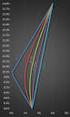 Copyright c 2005 by Karl Sigman Portfolio mean and variance Here we study the performance of a one-period investment X 0 > 0 (dollars) shared among several different assets. Our criterion for measuring
RESULTANT AND DISCRIMINANT OF POLYNOMIALS
 RESULTANT AND DISCRIMINANT OF POLYNOMIALS SVANTE JANSON Abstract. This is a collection of classical results about resultants and discriminants for polynomials, compiled mainly for my own use. All results