
Frontline Staff Training. Presented by Eric Lipp Executive Director of Open Doors Organization
|
|
|
- Brice Johnston
- 10 years ago
- Views:
Transcription
1 Frontline Staff Training Presented by Eric Lipp Executive Director of Open Doors Organization
2 Open Doors Organization Chicago-based nonprofit founded in 2000 Mission to create a society in which persons with disabilities have equal opportunities as consumers Primary Focus Travel and Tourism ODO Director Eric Lipp
3 People-First Language Use "Person-First" terminology such as person who is blind or people with disabilities since this acknowledges them as people first rather than their disability Avoid referring to groups of people by their condition or disability such as the blind or the deaf Never mention someone s disability unless it is relevant
4 Do Say Person with a disability/who is disabled, person with reduced mobility Little person, little people Non-disabled, able-bodied Uses wheelchair, uses assistive device Birth injury, congenital disability Person with a physical disability Person who is deaf/hard of hearing Has a speech disability Person who is blind/has low vision Person with an intellectual, cognitive, or developmental disability Person living with epilepsy/seizure disability Person with a psychiatric disability Don t Say The disabled, handicapped, invalid, physically challenged Midget Normal, healthy Wheelchair bound, confined to wheelchair Birth defect, deformity, deformed Crippled, lame, deformed, invalid, gimp The deaf, hearing impaired, deaf mute Has a speech defect, dumb The blind, blind people, visually impaired Stupid, retard, retarded, slow, subnormal, mentally challenged Epileptic, has fits, spastic Crazy, nuts, loony
5 Myths and Misconceptions Myth People with disabilities make up a small part of the population. Reality In 2010, 19% of Americans 57 million had a disability.* In terms of households, almost 1 in 3 (30%) has a member with a disability. Europe has 80 million people with disabilities as estimated by the European Disability Forum Globally, more than 650 million people have disabilities (10% of population) according to the World Bank. *US Census Bureau, Americans with Disabilities: 2010
6 Myths and Misconceptions Myth People with disabilities are housebound and don t get out much. Reality ODO in 2005 found that 50% of Americans with disabilities eat out at least once per week. 4.8 million adults with disabilities fly every year, spending $2.9 billion on just their own flights. Riverwalk, San Antonio
7 Myths and Misconceptions Myth Americans with disabilities are too poor to be a viable market. Reality In 1996, the Dept. of Labor estimated their disposable income at $176 billion. Current spending power is projected to be $246 billion.
8 Myths and Misconceptions Myth People with disabilities are not technologically savvy and don t use the Internet Reality In 2005 ODO found that adults with disabilities are more likely to book their trips online than the general population.
9 Myths and Misconceptions Myth Most people with disabilities are born that way. Reality Less than 15% of disabilities are congenital or result from birth trauma. Most occur later due to accidents, health conditions and the process of aging.
10 Disability Prevalence By Age 51.8% of Americans 65 and older have a disability, 36.9% have a severe disability
11 65+ Projected US Pop. Growth 78% increase Source: U.S. Census Bureau, 65+ In The US: 2005
12 Defining Disability The U.S. government defines disability as a physical or mental impairment that substantially limits one or more major life activities. Major life activities include such activities as caring for one s self, performing manual tasks, walking, seeing, hearing, speaking, breathing, learning and working.
13 Major Types of Disability Reduced Mobility Hearing Loss Vision Loss Speech and Language Disabilities Cognitive Disabilities Psychiatric Disabilities Medical Disabilities
14 Each Person s Disability Is Unique Disabilities vary widely in severity as does each person s ability to cope with their disability Learning how to function independently takes a lot of training and hard work The type of assistive devices or technology the individual needs to function also differs So does the type and extent of the help each person requires SO ALWAYS ASK FIRST!
15 Hidden Disabilities Many disabilities are not obvious Sensory disabilities may not be noticeable until you interact with the person Medical disabilities are often hidden heart disease, diabetes, asthma, epilepsy Psychiatric disabilities are typically hidden as well but the stress of air travel can worsen some conditions Don t make assumptions about what people can and cannot do
16 Assisting Customers with Disabilities Break down the W.A.L.L. First, Watch. Be observant of customers and their abilities. Then, Ask what you can do to assist the customer. Do not assume what the person's needs are. Third, Listen. Pay attention to what the customer says. If they don t need or want assistance, take "no" for an answer. Finally, Learn. Let the customer know that you understand their needs and respond appropriately. Use the experience to build your knowledge for the future.
17 Common Courtesies Always introduce yourself and ask the customer's name, if you don't already know it. Speak directly to the person with a disability, not their companion or interpreter. Ask, "How may I assist you?" Just Say Hi! As a rule of thumb, if you are ever unsure about what to say or do, just ask. More often than not, a person with a disability will be happy to let you know what they prefer.
18 Common Courtesies Allow the customer to remain as independent as possible. Be considerate of the extra time it might take them to get things done or said. Let them set the pace in walking and talking. When listening to someone who speaks slowly or with great effort, don't pretend to understand. Politely asked him to repeat what you did not understand Ask if writing notes would be okay Follow the Golden Rule Treat someone with a disability the way you would want to be treated
19 Customers Using Wheelchairs Wheelchairs are part of personal space. Never touch or push someone s chair without permission. Don t lean over someone in a wheelchair to shake another person s hand. Never pat a person on his or her head or shoulder. Speak directly to the person in the wheelchair, not to his or her companion. Come out from behind a high counter to provide assistance. Offer a clipboard to write on.
20 Common with Cognitive Disabilities Speak directly to the person Lean in, smile and try to have good eye contact Treat adults as adults. Don t talk down as if you were talking to a child. Be patient and take the time to communicate. You may have to repeat yourself more than once. Unless the person requests it, do not use a wheelchair or cart. Just walk the passenger through the terminal.
21 Children with Autism Children with autism are hypersensitive to lights, noises, crowds and changes of routine When assisting Speak quietly and calmly Never touch the child Be patient and understanding Be aware that the child may be nonverbal Move the family to a quieter area if the child has an emotional outburst
22 Communicating with Persons with Hearing Loss To get the attention of a person who is hard of hearing or deaf, put yourself in their line of sight or tap the person on the arm or wave your hand. Look directly at the person and speak clearly and slowly to establish if the person can read your lips. Place yourself facing the light source and keep hands, food, etc. away from your mouth
23 Assisting Customers with Vision Loss When addressing a customer who is blind, always greet the person and identify yourself and the company you work for. Use a normal tone of voice. People have a natural tendency to raise their voice level when speaking to a person who is blind. Do not touch or grab the person to get his attention. This can be very unnerving. When offering assistance, ask, "May I assist you?" Then follow the individual's instructions.
24 An Exercise to Leave You With! We re going to do a class exercise. Pair up with someone next to you. The person on the left makes a fist. The person on the right has 7 seconds to get the fist open. GO!!
Disability Etiquette
 Disability Etiquette Fear of the unknown and lack of knowledge about how to act can lead to uneasiness when meeting a person who has a disability. Remember: a person with a disability is a person with
People First Language. Style Guide. A reference for media professionals and the public
 People First Language Style Guide A reference for media professionals and the public What is People First Language? People First Language (also referred to as Person First ) is an accurate way of referring
Tips on Serving Customers with Disabilities.
 Tips on Serving Customers with Disabilities. Accessible Schools. Leading the Way. ACCESSIBLE ONTARIO CUSTOMER SERVICE How to Welcome Customers with Disabilities. Did you know that just over 15.5% of Ontarians
Accessible Customer Service. Guide. Providing Services to People with Disabilities
 Accessible Customer Service Guide Providing Services to People with Disabilities January 1, 2012 As required by law under Section 6 of the Accessibility for Ontarians with Disabilities Act, Accessible
Talking Disability. It s important to look past the disability and treat me as a real person. Communicating with people with a disability
 It s important to look past the disability and treat me as a real person. Communicating with people with a disability This communication booklet has been developed in recognition of the fact that how we
Accessibility for Individual Service. Frontier College Customer Service Training Program. www.frontiercollege.ca
 Accessibility for Individual Service Frontier College Customer Service Training Program www.frontiercollege.ca What is a Disability? The Human Rights Code and AODA defines disability* as: a) any degree
Tip cards. Language and communication support. People with a learning disability. People with a sensory impairment. Guiding people and assistance dogs
 Tip cards Language and communication support People with a learning disability People with a sensory impairment Guiding people and assistance dogs People with a mental health problem Asking service users
Communicating with People with Disabilities
 Communicating with People with Disabilities 2005 Acknowledgments This publication is based on a booklet developed as part of the RuralAccess 2000. Contributors Special Thanks goes to the following individuals
Barriers to Communication
 Barriers to Communication There are many potential barriers to communication that must be recognized by those involved especially those in supervisory positions. Possible Barriers: 1. Symbols or words
Tip Cards. Language and communication support. People with a learning disability. People with a sensory impairment. Guiding people and assistance dogs
 Tip Cards Dundee Equality and Diversity Partnership Language and communication support People from minority ethnic communities People with a learning disability People with a sensory impairment Guiding
Chapter 4: Eligibility Categories
 23 Chapter 4: Eligibility Categories In this chapter you will: learn the different special education categories 24 IDEA lists different disability categories under which children may be eligible for services.
Disability Information Cards
 Disability Information Cards Information cards providing brief descriptions of a number of common disabilities, the implications of those disabilities, inclusion tips and direction to websites providing
MEDICAL ASSISTANT : COMMUNICATION WITH PATIENTS.
 MEDICAL ASSISTANT : COMMUNICATION WITH PATIENTS. The most important abilities of a CMA are: the ability to Communicate effectively, with professionalism and diplomacy to all types of patients. Recognize
COMPUTER SUPPORT STAFF TIPS FOR DISABILITY ETIQUETTE
 COMPUTER SUPPORT STAFF TIPS FOR DISABILITY ETIQUETTE COMPUTER SUPPORT STAFF TIPS FOR DISABILITY ETIQUETTE Norman Coombs, CEO EASI EASI: Equal Access to Software and Information 2011 (this document may
EARLY INTERVENTION: COMMUNICATION AND LANGUAGE SERVICES FOR FAMILIES OF DEAF AND HARD-OF-HEARING CHILDREN
 EARLY INTERVENTION: COMMUNICATION AND LANGUAGE SERVICES FOR FAMILIES OF DEAF AND HARD-OF-HEARING CHILDREN Our child has a hearing loss. What happens next? What is early intervention? What can we do to
3030. Eligibility Criteria.
 3030. Eligibility Criteria. 5 CA ADC 3030BARCLAYS OFFICIAL CALIFORNIA CODE OF REGULATIONS Barclays Official California Code of Regulations Currentness Title 5. Education Division 1. California Department
Documents Eligible to Earn Added Authorizations in Special Education (AASE) UPDATED 6/2012
 Documents Eligible to Earn Added Authorizations in Special Education (AASE) UPDATED 6/2012 Credential Held Autism Spectrum Disorders (ASD) Deaf- Blind Emotional Disturbance Orthopedic Impairment Other
Person First Skills? Hovf Are Your. A Self-Assessment. Creating Supportive Environments
 Creating Supportive Environments Hovf Are Your Person First Skills? A Self-Assessment Carol L. Russell You may say that you have heard it all before, and you know everything about the person first philosophy.
CDDH FACT SHEET. Working with people with intellectual disabilities in healthcare settings
 CDDH FACT SHEET Working with people with intellectual disabilities in healthcare settings People with intellectual disabilities have the same right as other community members to access community based
COURSE SYLLABUS Collaboration and Support for Inclusion of Special Students in General Education COURSE DESCRIPTION COURSE OBJECTIVES TEXTS.
 COURSE SYLLABUS Division: Teacher Education Program Area: Special Education Course: SED 5600 Collaboration and Support for Inclusion of Special Students in General Education Course Credit: 3 semester hours
Comprehensive Special Education Plan. Programs and Services for Students with Disabilities
 Comprehensive Special Education Plan Programs and Services for Students with Disabilities The Pupil Personnel Services of the Corning-Painted Post Area School District is dedicated to work collaboratively
Training Resource for Small Businesses and Organizations:
 Training Resource for Small Businesses and Organizations: Accessibility Standards for Customer Service, Ontario Regulation 429/07 Accessibility for Ontarians with Disabilities Act, 2005 (AODA) Introduction
The Thirteen Special Education Classifications. Part 200 Regulations of the Commissioner of Education, Section 4401(1)
 The Thirteen Special Education Classifications Part 200 Regulations of the Commissioner of Education, Section 4401(1) Student With a Disability: A student as defined in section 4401(1), who has not attained
Table 1100.1 Required Assessments and Qualified Examiners by Type of Disability Disability Assessments Required Qualified Examiners
 Table 1100.1 Required Assessments and Qualified Examiners by Type of Disability Disability Assessments Required Qualified Examiners AUTISM School School Professional Licensed to provide a DEAF-BLINDNESS
FINDLAY FOODS (KINGSTON) LTD. HEALTH AND SAFETY POLICY MANUAL TITLE: AODA ACCESSIBILITY STANDARDS FOR CUSTOMER SERVICE POLICY
 AODA Accessibility Standards for Customer Service Policy 41. POLICY 41.01 The mission of Findlay Foods (Kingston) Ltd. is to provide appropriate customer service to individuals with disabilities. 41.02
Chapter 4 COMMUNICATION SKILLS. The difference between verbal and nonverbal communication. The difference between hearing and listening
 Chapter 4 COMMUNICATION SKILLS What You Will Learn The difference between verbal and nonverbal communication The difference between hearing and listening Factors that promote effective communication Barriers
If baby was born 3 or more weeks prematurely, # of weeks premature: Last name: State/ Province: Home telephone number:
 Ages & Stages Questionnaires 4 3 months 0 days through 4 months 30 days Month Questionnaire Please provide the following information. Use black or blue ink only and print legibly when completing this form.
What is cerebral palsy?
 What is cerebral palsy? This booklet will help you to have a better understanding of the physical and medical aspects of cerebral palsy. We hope it will be a source of information to anyone who wishes
Cerebral Palsy. In order to function, the brain needs a continuous supply of oxygen.
 Cerebral Palsy Introduction Cerebral palsy, or CP, can cause serious neurological symptoms in children. Up to 5000 children in the United States are diagnosed with cerebral palsy every year. This reference
Workplace Behavior and Professionalism: Keys for Job Success
 Faculty Workplace Behavior and Professionalism: Keys for Job Success Debra Nickolson Coordinator of Customer Relations Behavioral Health Systems Birmingham, Alabama Satellite Conference and Live Webcast
CHM Leadership Certification Level III, Course #6 Ministry to Children with Special Needs Linda Koh, GC Children s Ministries (Handouts)
 CHM Leadership Certification Level III, Course #6 Ministry to Children with Special Needs Linda Koh, GC Children s Ministries (Handouts) Children are like a box of colored pencils: Some are sharp Some
A Guide for Enabling Scouts with Cognitive Impairments
 A Guide for Enabling Scouts with Cognitive Impairments What cognitive impairments are discussed in this manual? Autism Spectrum Disorder Attention Deficit Hyper Activity Disorder Depression Down Syndrome
Traumatic Brain Injury
 Traumatic Brain Injury NICHCY Disability Fact Sheet #18 Resources updated, March 2011 Susan s Story Susan was 7 years old when she was hit by a car while riding her bike. She broke her arm and leg. She
How Early Can Autism Spectrum Disorder Be Diagnosed and Where To Focus Treatment for My Toddler. Tessa VanKirk, MS, BCBA Stormi Pulver White, PsyD
 How Early Can Autism Spectrum Disorder Be Diagnosed and Where To Focus Treatment for My Toddler Tessa VanKirk, MS, BCBA Stormi Pulver White, PsyD What is Autism Spectrum Disorder (ASD)? Focus on 2 areas:
Curriculum for the Bachelor Degree in Special Education
 Curriculum for the Bachelor Degree in The curriculum for the B.S.c. degree in (12) credit hours are distributed as follows:- No. 1 2 4 Requirements University Requirements Compulsory Elective Faculty Requirements
Olsen-Sottile Insurance Brokers Inc. Human Resources Policy Manual
 Title: Customer Service Standard Last Updated: Dec. 2011 Section: 1 Policy Number: 22 Revision Number: 1 Approved by: Chris Sottile At Olsen-Sottile Insurance Brokers Inc., we are committed to meeting
Traumatic Brain Injury
 Traumatic Brain Injury NICHCY Disability Fact Sheet #18 Updated, July 2014 Susan s Story Susan was 7 years old when she was hit by a car while riding her bike. She broke her arm and leg. She also hit her
Special Education Process
 Special Education Process Special education is intended to provide services to students who have disabilities, and who, because of those disabilities, need help to make progress in the general education
Celebrating All Abilities & Supporting
 Celebrating All Abilities & Supporting A disability awareness and community involvement program by Cerebral Palsy, Inc. (CP) designed to bring invaluable experiences to students throughout Northeast Wisconsin.
DOMAIN Ill: Cognitive Development
 Purpose: To develop new skills, knowledge and the ability to acquire and process new information through play and interaction with others and the environment. The cognitive development domain includes
Activities for the Young Baby
 31 Chapter 5 Activities for the Young Baby (Birth to 6 Months) A new baby does not usually look as though she is doing very much. She spends most of her time eating, sleeping, and resting. But even though
Listen, Protect, and Connect
 Page 1 Listen, Protect, and Connect PSYCHOLOGICAL FIRST AID FOR CHILDREN, PARENTS, AND OTHER CAREGIVERS AFTER NATURAL DISASTERS Helping you and your child in times of disaster. Page 2 As a parent or adult
Question Specifications for the Cognitive Test Protocol
 Question Specifications for the Cognitive Test Protocol Core Questions These are the 6 disability questions to be tested in the interview. All of the other questions in the cognitive test protocol are
Brain Injury: Stages of Recovery
 Brain Injury: Stages of Recovery Recovery after brain injury is a process that occurs in stages. Some people move quickly through the stages, while others make slow, but steady gains. The Rancho Los Amigos'
Cerebral Palsy. 1995-2014, The Patient Education Institute, Inc. www.x-plain.com nr200105 Last reviewed: 06/17/2014 1
 Cerebral Palsy Introduction Cerebral palsy, or CP, can cause serious neurological symptoms in children. Thousands of children are diagnosed with cerebral palsy every year. This reference summary explains
If baby was born 3 or more weeks prematurely, # of weeks premature: Last name: State/ Province: Home telephone number:
 Ages & Stages Questionnaires 6 5 months 0 days through 6 months 30 days Month Questionnaire Please provide the following information. Use black or blue ink only and print legibly when completing this form.
DEAFNESS AND HARD OF HEARING
 DEAFNESS AND HARD OF HEARING Rarely is a person completely deaf, and a hearing loss could fall anywhere along the continuum from totally deaf to partial hearing. The amount of usable (or residual) hearing
A checklist for making campus services welcoming, accessible, and usable
 Equal Access: Universal Design of Student Services Adapted from the University of Washington Publication of the same name (http://www.washington.edu/doit/brochures/academics/equal_access_ss.html) A checklist
Early. Birth to Age Three. Utah s Early Learning Guidelines. Childhood Indicators of Progress
 Utah s Early Learning Guidelines Birth to Age Three Early Childhood Indicators of Progress Adopted with permission from the Minnesota s Early Childhood Indicators of Progress Utah s Early Learning Guidelines
PASS Basics Segment #2 PEOPLE FIRST LANGUAGE. People First Language ADA Service Animals Disability Awareness. In this segment we will cover:
 PASS Basics Segment #2 In this segment we will cover: People First Language ADA Service Animals Disability Awareness 56 PEOPLE FIRST LANGUAGE The words we use in everyday conversation, on the job, at home
Jellow. for the Cerebral Palsy. Antara Hazarika, Kumar Anchal, Priti Thankar, Samraat Sardesai. a study by
 Jellow for the Cerebral Palsy a study by Antara Hazarika, Kumar Anchal, Priti Thankar, Samraat Sardesai Index Understanding the world of CP Modes of communication The need for the product ( product rational)
www.icommunicatetherapy.com
 icommuni cate SPEECH & COMMUNICATION THERAPY Milestones of speech, language and communication development 0-12 Months The rate of children's speech and language development can vary, depending on the child.
Helping your child with Non-verbal Learning Disability
 Helping your child with Non-verbal Learning Disability What is non-verbal learning disability? Non-verbal learning disability (NVLD) is a term used to describe a pattern of strengths and weaknesses in
A Parent s Introduction to Exceptional Student Education. in Florida. Florida Department of Education
 A Parent s Introduction to Exceptional Student Education in Florida Florida Department of Education This publication is produced through the Bureau of Exceptional Education and Student Services (BEESS),
TABLE OF ASSESSMENTS REQUIRED FOR DETERMINATION OF EDUCATIONAL DISABILITIES. Education Handicaps Assessments Required Qualified Examiners
 TABLE OF ASSESSMENTS REQUIRED FOR DETERMINATION OF EDUCATIONAL DISABILITIES Education Handicaps Assessments Required Qualified Examiners INTELLECTUAL DISABILITY Academic Performance Associate Associate
Customer Service and Communication. Bringing service to the next level
 Customer Service and Communication Bringing service to the next level 1 Park Authority Philosophy & Goals Before focusing on customer service, it is first important to understand and reinforce the Park
Cerebral Palsy: Intervention Methods for Young Children. Emma Zercher. San Francisco State University
 RUNNING HEAD: Cerebral Palsy & Intervention Methods Cerebral Palsy & Intervention Methods, 1 Cerebral Palsy: Intervention Methods for Young Children Emma Zercher San Francisco State University May 21,
Before the baby is born
 Understanding your child's behaviour Leaflet for parents Brain Development The brain is a very complex organ and with advances in medical science and equipment such as brain scans (MRIs) we now know much
Unit 3. Effective Communication in Health and Social Care. Learning aims
 Unit 3 Effective Communication in Health and Social Care Learning aims In this unit you will: investigate different forms of communication. investigate barriers to communication in health and social care.
Myths and Facts About People with Disabilities
 Myths and Facts About People with Disabilities Myths are roadblocks that interfere with the ability of persons with disabilities to have equality in employment. These roadblocks usually result from a lack
Administrative Procedure
 Durham Catholic District School Board The Board Administrative Procedure Title: Use of Service Dogs by Students in Schools Procedure #: AP434-7 Administrative Area: Policy Reference: Operations Accessibility
APPENDIX A GLOSSARY OF TERMS AND ABBREVIATIONS
 APPENDIX A GLOSSARY OF TERMS AND ABBREVIATIONS GLOSSARY OF TERMS AND ABBREVIATIONS Special Education Terms/Legal Terms Annual Goals Educational performance to be achieved by a student within one year.
Simple things you can do to help your child grow, develop and learn. An introduction to the Minnesota Early Childhood Indicators of Progress.
 EVERY DAY IS A GREAT DAY FOR YOUR CHILD TO LEARN Simple things you can do to help your child grow, develop and learn. An introduction to the Minnesota Early Childhood Indicators of Progress....p.3...p.4...p.5
Purpose: To acquire language and the ability to communicate successfully with others
 Purpose: To acquire language and the ability to communicate successfully with others The language development and communication domain involves the development of the ability to use language to communicate
If baby was born 3 or more weeks prematurely, # of weeks premature: Last name: State/ Province: Home telephone number:
 Ages & Stages Questionnaires 2 1 month 0 days through 2 months 30 days Month Questionnaire Please provide the following information. Use black or blue ink only and print legibly when completing this form.
Neonatal Abstinence Syndrome. A Guide for Families
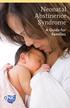 Neonatal Abstinence Syndrome A Guide for Families Contents What is Neonatal Abstinence Syndrome (NAS)?...................... 4 When will my baby show signs of NAS?..................................................
ZOOS GO BLUE. Your Trip to Zoo Atlanta! Sunday, April 6
 ZOOS GO BLUE Your Trip to Zoo Atlanta! Sunday, April 6 Autism Awareness Day at Zoo Atlanta! Going to the Zoo can be a lot of fun. Here are some things you can do to prepare for your exciting trip and make
Technology in Music Therapy and Special Education. What is Special Education?
 Technology in Music Therapy and Special Education What is Special Education? Disabilities are categorized into the following areas: o Autism, visual impairment, hearing impairment, deaf- blindness, multiple
Accessibility Standard for Customer Service: training resource
 Accessibility Standard for Customer Service: training resource Please note: This Training Resource is not legal advice and should be read together with the official language of the Accessibility Standards
CHAPTER 2015-131. Committee Substitute for House Bill No. 71
 CHAPTER 2015-131 Committee Substitute for House Bill No. 71 An act relating to service animals; amending s. 413.08, F.S.; providing and revising definitions; requiring a public accommodation to permit
honor of appearing before you today. My name is Susie Trotochaud from the state of Georgia. I
 Testimony of Susie Trotochaud of Georgia Before the Labor, Health and Human Services, Education and Related Agencies Appropriations Subcommittee of the U.S. House of Representatives Committee on Appropriations
Quick guide to autism
 Quick guide to autism What it looks like and how you can help What is autism spectrum disorder (ASD)? ASD is a lifelong neurodevelopmental disorder We don t know what causes ASD but we do know genetics
A GUIDEG EDUCATION FOR CHILDREN SPECIAL PRESCHOOL TRANSITIONING FROM EARLY INTERVENTION
 A GUIDEG TO PRESCHOOL SPECIAL EDUCATION FOR CHILDREN TRANSITIONING FROM EARLY INTERVENTION 2013 1 Early Childhood Direction Center c/o Women & Children s Hospital of Buffalo 219 Bryant Street Buffalo,
Cerebral palsy can be classified according to the type of abnormal muscle tone or movement, and the distribution of these motor impairments.
 The Face of Cerebral Palsy Segment I Discovering Patterns What is Cerebral Palsy? Cerebral palsy (CP) is an umbrella term for a group of non-progressive but often changing motor impairment syndromes, which
Fainting - Syncope. This reference summary explains fainting. It discusses the causes and treatment options for the condition.
 Fainting - Syncope Introduction Fainting, also known as syncope, is a temporary loss of consciousness. It is caused by a drop in blood flow to the brain. You may feel dizzy, lightheaded or nauseous before
Purpose: To approach the world with a sense of trust and emotional security
 Purpose: To approach the world with a sense of trust and emotional security The social and emotional domain includes the development of trust and emotional security, self-awareness, self-regulation and