
Technical Manuals Online! -
|
|
|
- Stanley Knight
- 10 years ago
- Views:
Transcription
1 A DVENT ) 5 ; K I A H I C K A

2 Information at Your Fingertips Commands at a Glance To Press/Enter This... ACCESSE CODE 1, 2. 1, 2, 8 1, 3!" 1, 3, 9 #$ %& ' ( & & & ' )* +$$, & & & &)' & &)' $& &)' $ -.'$ - / ' 0 &'- -$ 1, 1 ACCESS CODE 1, 7, ACCESS CODE # (ENTER) 4 # (ENTER) 1 2 5! # (ENTER) 1 2 8,1, ACCESS CODE "! # 1,1 ACCESS CODE 0,1 ACCESS CODE $ % 8, 8 &! * (UNDO) * (UNDO) # (ENTER) ' * (UNDO) Your dealer is...

3 ADVENT COMMERCIAL FIRE/SECURITY SYSTEM!! " # $$%&' (!

4 FCC Notices FCC Part 15 Information to the User FCC Part 15 Class B! " # $ % # &' FCC Part 68 ( )* " # + ",#-./ 0 #-. #-.,!1/ "

5 Advent Home Navigator User s Guide i Contents Welcome Section 1 Working with the Advent Security System What You Need to Do What Your Security System Can Do Automatic Lighting Control Automatic Device (Appliance) Control Courtesy Features About Partitions About Zone/Sensor Types What Happens in an Emergency? Using the System When You re Away What if a System Problem Occurs? Security System Basics System Description General Operation Basic System Controls What You Need to Know About this Manual Basic Terms Understanding the Print Styles Section 2 Basic Operation of the System Overview of System Operation General Operation Entering System Access Codes Using the Touchpad Using the Touchpad Buttons Adjusting the Touchpad Display Brightness Adjusting the Volume of the Status Voice Messages. 13 Using Hand-held Touchpads Using Keychain Touchpads How the phone works with the system Operating the System Using a Phone at the Premises 16 Operating the System While Away from the Premises 17 Adjusting the Phone Volume

6 ii Section 3 What to Do During Emergencies Activating Alarms: Police, Fire, and Auxiliary How to Cause an Alarm Canceling (Silencing) an Accidental Alarm How to Cancel Alarms How to Silence a Fire Alarm Manually Resetting Hardwired Smoke Detectors How to Reset Smoke Detectors Preventing Accidental Alarms Common Causes of False Alarms Tips for Avoiding False Alarms Section 4 Using Access Codes Adding, Deleting, and Changing Access Codes Adding an access code Deleting an access code Changing an access code Setting options 29 Using Special Duress (Holdup) Codes How the System Handles Tampering Touchpad Access Code Tampering Remote Phone Access Code Tampering Phone Line Tampering Equipment/Sensor Tampering Section 5 Using Security Protection Turning Security Protection On When You Stay Arming to Perimeter When You Stay In at Night Arming to Night When You Leave Arming to Full Arming with a Window or Door Open (Bypassing).. 39 Instant Arming with No Entry Delay Time (No Delay) 40 Arming Silently (Silent Arm) Turning Security Protection Off Using the No Activity Feature Using Opening and Closing Reports Section 6 Controlling Lights and Devices Controlling Lights Turning All Lights On or Off at Once Turning One Light On or Off Controlling Lights Automatically Controlling Devices (Appliances) Turning a Single Device On and Off Controlling Devices Automatically

7 Advent Home Navigator User s Guide iii Section 7 Using the Chime and Latchkey Features Using the Chime Feature Using the Latchkey Feature Section 8 Automating The System Using Schedules Using Schedules One-Time Schedules Setting Weekly Schedules Section 9 Maintaining Your System Testing the System Automatic Test Features Testing the System Manually Cleaning the System Components Checking and Changing Batteries Dealer Service Information Section 10 Troubleshooting Checking the System Status What the Status or Trouble Beeps Mean Silencing Trouble Beeps What the Error Messages Mean Solving System Problems Checking the Alarm History Viewing the History Buffer Appendix A Planning for Emergencies Planning a Fire Drill or Other Emergency Plan Floor Plan Example Your Floor Plan Appendix B System Menu Map Appendix C Display Error Messages and Meanings Appendix D Advanced Topics Opening and Closing Exception Reports Associating Lights and Devices With Schedules Glossary

8 iv

9 Advent Commercial Burglary User s Guide 1 Welcome Welcome to the Advent security system! This system is designed to automatically detect and respond to various security related conditions such as door/window sensor activation, smoke/heat detector activation, and others. The system is simple and easy to use via touchpad displays and buttons (and telephone touchpads). An abbreviated version the basic operation of the system can be found in the Commands at a Glance table right behind the front cover of this guide. Advent is designed to tell you what you need to know (when you need to know) and to ask for what it needs by way of simple menu displays and selections. This method of communication simplifies your job as a user and makes the information in the manual complete and easy to follow. Advent is a tremendous, user-friendly system designed to simplify your life while providing the optimum in automated security protection.

10 2

11 Advent Commercial Burglary User s Guide 3 SECTION1 Working with the Advent Security System Contents What You Need to Do 4 What Your Security System Can Do 4 Automatic Lighting Control 4 Automatic Device (Appliance) Control 4 Courtesy Features 5 About Partitions 5 About Zone/Sensor Types 5 Monitor Off-Limits Areas of the Premises 5 Protect Private Business Information 5 Set Doors and Windows for Entry/Exit 6 What Happens in an Emergency? 6 Using the System When You re Away 6 What if a System Problem Occurs? 6 Security System Basics 7 What You Need to Know About this Manual 8

12 4 Working with the Advent Security System What You Need to Do You may have installed this security system simply to prevent break-ins and theft and to detect fires. However, your new security system can alert you to many other emergencies. Plus, this security system lets you monitor and control conditions in your building or business even when you are away. As with any new relationship, life with your new security system may seem a bit awkward at first. To effectively use your security system, you need to develop a few simple habits: Check for open doors and windows before leaving. Remember to arm your system and then gather your things and exit before the exit delay time expires. Remember to disarm your system within the entry delay time when you return. Respond to beeps, light indicators, and voice announcements from your system, which may indicate some kind of problem. You will soon become aware of the benefits these few simple habits will bring you and help you incorporate your security system seamlessly into your everyday life. What Your Security System Can Do Your security system provides several options for creating the security and control environment you need on your premises. How you use the system is up to you. Regardless of the features you choose, you will find that your system dramatically enhances your feeling of security. In addition to the standard intrusion and fire system features here are just a few of the ways you can use the special features of your security system. Special Note: Some features of this security system are optional and are available from your security consultant. Automatic Lighting Control You can control lights inside and outside of your building by plugging them into wireless devices called lamp modules. These lights can then be turned on and off using either the system touchpads or your premises phones. In addition, the system automatically turns selected lights on during an intrusion or fire. The system automatically turns selected lights on to scare off the intruder or to help you safely enter/exit. Automatic Device (Appliance) Control You can control the appliances inside and outside of the premises by plugging them into wireless appliance modules. For example, the system can be programmed to automatically turn your coffee pot or other appliance on and off with a schedule.

13 Advent Commercial Burglary User s Guide 5 Courtesy Features The buttons on your hardwire touchpads light up when you first push a button and stay on for 15 seconds after the last button is pushed. This makes it easy to correctly operate your system, even in a dimly lit entrance area. You can control the brightness of the display and dim the light to darken a touchpad in a bedroom while someone is sleeping. You can also operate your system silently. Using this method, you can arm or disarm your system quietly and not disturb others. About Partitions The system can be set up by your security consultant to operate as a multi-partition system. This way the same system could be used to operate separate areas such as duplex or quad homes with each area having its own touchpad, sensors, sirens and so forth. Your commercial system can operate with up to four separate partitions. About Zone/Sensor Types The sensors in your system are made up of different types, and various sensor types react differently. Certain sensors automatically trigger a call to the central monitoring station immediately after being set off, or tripped. Other sensors trigger a call to the central monitoring station only after being tripped twice within a certain time period. Some sensors react silently and other sensors allow you to set entry and exit delays. And there are local-only sensors that sound sirens at the premises but do not send a call for help. The following are some of the useful ways you can use various sensor types. Monitor Off-Limits Areas of the Premises Many areas of your premises can be hazardous to children. Using local-only sensors, you can monitor certain areas such as gates, chemical, and key cabinets. If the gate or monitored cabinet door is opened, a siren beeps. The beeping stops when the gate or door is closed. You can also use this sensor type to alert you to cars approaching from the driveway, to monitor your mailbox so you know when the mail arrives, to serve as a wireless doorbell. Protect Private Business Information You can control accessibility to private documents or money drawers. For example, sensors could be set to beep any time the safe door is opened during business hours. You can also assign up to 100 different system access codes to users. Then, if you choose to receive opening and closing reports from your central monitoring station, you can check employee arming and disarming procedures. If your system is not properly armed, you can be called. And, if normal opening procedures aren t followed, additional people can be notified. If your building has a security gate covering the front door and windows, you may choose to put a sensor on the gate to sound a local siren and scare possible intruders away when the gate is shook. In this case, the central station would not need to be called. If an intruder continues to break in, other sensors protecting the front door and windows would call the central monitoring station.

14 6 Working with the Advent Security System Set Doors and Windows for Entry/Exit Entry and exit door sensors can be set to one of three delays, depending on how accessible your doors are to your system touchpad or Touch-Tone telephone. The delays are set to give you enough time to get in and out of the building, but not allow an intruder to sneak in behind you. You may want a short delay on the door leading from the parking garage and a little longer delay on the overhead garage door. You can have an even longer delay on the driveway gate. Door/window sensors can also be bypassed, so you can arm the rest of your system and leave an open second-floor window unarmed. What Happens in an Emergency? Your security has three panic alarms police, fire, and auxiliary that call for help immediately. They are activated by pressing the appropriate touchpad buttons. Even very young children can learn how to send for emergency help if needed. Police and firefighters will know the exact location and nature of the emergency. When an alarm is triggered, combinations of loud exterior and interior sirens sound and a very realistic voice calls out one of several messages, for example, Fire Alarm or Police Alarm. Your security system can also monitor the normal activity for your premises and call for help automatically if normal activities are not detected. For example, if someone falls and can t move, the system notices that normal activities, such as placing outgoing calls or opening doors and windows, have not occurred for a certain length of time. Your system sounds a lowvolume siren for 8 (programmable) minutes to let you know there may be a problem. If all is well, you can stop the siren by disarming your system. If no one disarms the system during the 8 minutes, your system calls for help. Note: Refer to Planning for Emergencies in the Appendix A for emergency planning details. Using the System When You re Away Off-site operations using any Touch-Tone telephone allow you to control and monitor most of your system features even while you are away. If you are away, for example, you can turn lights and appliances on and off, check for any trouble conditions, and even bypass the sensor on a door to let in an employee, delivery person, or service person. What if a System Problem Occurs? Your system has been designed to keep false alarms and system problems to a minimum. If there is a problem, your security system can diagnose it and then sound trouble beeps to let you know about it. In most instances, your system can alert your central monitoring station of the problem as well. Your system has a backup battery that will secure the premises even during an AC power failure. An optional feature allows your system to alert the central monitoring station if the power is off. The system reports again when power has been restored.

15 Advent Commercial Burglary User s Guide 7 Your system has some precautionary features that allow alarms to be validated or canceled before calling the central station. For example, when an intruder is detected, your system sounds an alarm immediately in an attempt to scare off the intruder. If the alarm verification feature* is on, your system will not initiate a call to the central monitoring station unless a second sensor is tripped within 4 minutes. You can also choose to delay the sounding of exterior sirens for 15 seconds, giving you time to correct an arming mistake before your neighbors are alerted. * - Not available in UL listed installations. Security System Basics System Description General Operation The Advent Security/Fire System features a powerful 25 MHz, 16-bit processor with over a megabyte of RAM, over three megabytes of flash memory, and a built-in 14,400 bps fax/ modem. For more detailed system specifications and applications see separate Advent specification and applications literature. This intelligent security/fire panel supports up to 132 initiating devices such as door/window sensors, heat/smoke detectors, contact closure sensors, and a variety of visual/audible notification signalling appliances such as sirens, horns, speakers, and strobe lights. The system is typically made up of a main control panel, one or more display touchpads and both local and remote initiating/signalling devices. Remote central monitoring station alarm reporting transmits via built-in telephone modem. Advent power and programmability allows for a variety of applications including the following: local protective signaling remote station protective signaling central monitoring station protective signaling proprietary protective signaling emergency voice/alarm communication fire alarm signaling Basic System Controls In general, the system is programmed to automatically detect and respond to security/fire related conditions. Local notification is by way of touchpad displays, sirens, speakers and so forth. Remote notification and reporting is by way of telephone. In addition to automatic detection, the system also responds to display touchpads, Touch- Tone telephones, wireless touchpads, and other manual controls such as manual fire pull stations.

16 8 Working with the Advent Security System What You Need to Know About this Manual Basic Terms Access Code Alarm Acknowledge/ Cancel Monitoring Station Trouble Certain terms are used throughout this guide. Take a few moments to familiarize yourself with the following basic terms and print styles. The system access codes are used to limit system operation to authorized users. Access codes are programmable and are from four to six digits long. An alarm is the system response to any automatic or manually generated security/fire alarm condition. The system indicates alarms by displaying the alarm type on the displays and actuates system alarm sirens and horns (until silenced). An alarm signal is also reported to the remote monitoring station. To acknowledge an alarm is to manually cancel the alarm, silence/turn off sounding sirens or horns and strobes (if any), and reset any activated smoke sensors. The monitoring (or central) station is the 24-hour service equipped to receive and respond to reported alarms. These reports are usually transmitted via coded messages through public telephone lines. The service decodes the report messages and then contacts and dispatches the appropriate emergency personnel. Any system problem/trouble is announced by trouble beeps, displayed messages, and/or voice messages. This announcement indicates that system maintenance is required. (See Glossary in the back of this guide for a complete list of terms.) Understanding the Print Styles Throughout this manual, different styles of print are used for different types of information as follows: Print style Press 2, ACCESS CODE, # Security is Off. Alarm Canceled. Alarm Acknowledge Meaning Buttons you press. Displayed and voice messages. Introduces a new, key word (contained in the Glossary).

17 Advent Commercial Burglary User s Guide 9 SECTION2 Basic Operation of the System Contents Overview of System Operation 10 General Operation 10 Entering System Access Codes 11 Using the Touchpad 11 Using the Touchpad Buttons 11 Adjusting the Touchpad Display Brightness 13 Adjusting the Volume of the Status Voice Messages 13 Using Hand-held Touchpads 14 Using Keychain Touchpads 15 How the Phone Works with the System 15 Operating the System Using a Phone on the Premises 16 Operating the System While Away From the Premises 17 Adjusting the Phone Volume 19

18 10 Basic Operation of the System Overview of System Operation General Operation The chart below shows some basic system actions and the most common ways to perform them. For a complete discussion of these, go to the page number listed. Press this on a To do this Touchpad Hand-held Touchpad Keychain Touchpad Premises Phone Cancel an accidental alarm ACCESS CODE ACCESS CODE #, *, ACCESS CODE See page 21 Activate a police panic alarm A B optional #, *, 8, 8, 8, 8, 8 20 Activate a fire panic alarm E F optional #, *, 9, 9, 9, 9, 9 20 Activate an auxiliary panic alarm C D ) 7 : 1 1) 4 ; optional #, *, 7, 7, 7, 7, 7 20 Disarm to OFF 1, 1, ACCESS CODE 1, 1, ACCESS CODE #, *, 1, 1, ACCESS CODE 37 Arm to PERIMETER 1, 2, ACCESS CODE 1, 2, ACCESS CODE optional #, *, 1, 2, ACCESS CODE 34 Arm to FULL 1, 3, ACCESS CODE 1, 3, ACCESS CODE #, *, 1, 3, ACCESS CODE 35 Arm to FULL with Latchkey 1, 3, ACCESS CODE, 8 1, 3, ACCESS CODE, 8 optional #, *, 1, 3, ACCESS CODE, 8 44 Turn all lights ON 4, 0, #, 1 4, 0, #, 1 #, *, 4, 0, #, 1 40 Turn all lights OFF 4, 0, #, 2 4, 0, #, 2 #, *, 4, 0, #, 2 40 Manually reset smoke sensors View main menus or cancel a menu operation 8, 9, ACCESS CODE 8, 9, ACCESS CODE #, *, 8, 9, ACCESS CODE (*) UNDO ST #, *, * Enter data (DATA)(#) (DATA) BY (DATA), # 11 Check system status 1, 9 1, 9 #, *, 1, 9 56 Silence trouble beeps ( ST #, *, * 58 Check alarm history 1, 0 1, 0 #, *, 1, 0 59 Check event history buffer 7, 5 7, 5 #, *, 7,

19 Advent Commercial Burglary User s Guide 11 Entering System Access Codes The system access codes are used to limit certain system operations to authorized (code holding) users. Access codes are programmable and are from four to six digits long. The system will indicate if and when an access code is required to perform any desired function. When Enter Your Code is indicated, enter the four to six digit access code using the touchpad keypad buttons. System access codes can be added, deleted, or changed. (See Using Access Codes.) Using the Touchpad Using the Touchpad Buttons The touchpad is the primary way to manually operate the system. On multi-partition systems each partition has one or more touchpads. Table 1 contains a list of the buttons and what they do: SECURITY 1 LIGHTS 4 FEATURES 7 UNDO SILENT ARM 2 3 DEVICES 5 6 SYSTEM ACCESS CONTROL ENERGY SCRIPTS 8 9 PHONE ENTER 1 SECURITY MENU 2 SILENT ARM MENU 3 ACCESS CONTROL MENU 4 LIGHTS MENU 5 DEVICES MENU 6 ENERGY MENU 7 FEATURES MENU 8 SYSTEM MENU 9 SCRIPTS MENU 0 PHONE MENU MAIN MENU OR ACCEPT A B C D E F G H I PREVIOUS MENU OR QUIT ) 7 : 1 1) 4 ; DISPLAY BRIGHTNESS POLICE AUX/MEDICAL FIRE PANIC BUTTONS -- PRESS AND HOLD BOTH BUTTONS TO ACTIVATE TURN ALL LIGHTS OFF TURN ALL LIGHTS ON A.DSF Table 1: Touchpad Button Descriptions Button Description (A & B) Police Panic* Causes police panic alarm when both buttons are pressed and held or pressed twice. (C & D) Auxiliary Panic* Causes auxiliary panic alarm when both buttons are pressed and held or pressed twice. (E & F) Fire Panic* Causes fire panic alarm when both buttons are pressed and held or pressed twice. (G) Lights On Turns all controlled lights on when held or pressed twice within 2 seconds. (H) Lights Off Turns all controlled lights off when held or pressed twice within 2 seconds.

20 12 Basic Operation of the System Table 1: Touchpad Button Descriptions (continued) Button (I) Target Description Controls display brightness when pressed and held. 1 Security Displays Security menu. Allows you to do security functions such as arming/disarming, bypassing, and checking system status and alarm memory. 2 Silent Arm Displays Silent Arming menu. 3 Access Control (to be developed) Provides special security functions such as silent arming/disarming. Displays Access Control menu. Offers building access control functions. 4 Lights Displays Lights menu. Allows you to turn controlled lights on and off individually and assign timed light schedules. Lights can be turned on and off all at once by pressing the touchpad Lights On and Lights Off buttons twice. 5 Devices Displays Devices menu. 6 Energy (to be developed) Allows you to turn non-light controlled devices such as fans and others on and off and assign timed device schedules. Displays Energy menu. 7 Features Displays Features menu. Allows you to turn features such as door chime on and off. Also allows you to add, delete, or list lights and devices, change schedules, and view the event log. 8 System Displays System menu. 9 Scripts (to be developed) Allows you to run various system tests, adjust the voice siren volume, and enter the program mode of operation for setting up the system. Displays Scripts menu. Allows you to record and run automatic button-press sequences (scripts). 0 Phone Displays Phone menu. Offers phone test and data communication (downloading) functions. (*) Undo Cancels current operation, if any. Also returns to the previous or Main menu. (#) Enter Displays Main menu if system is idle. The Main menu lists all other menus. The # button also enters or accepts displayed data or selection and skips to the next selection (if any). * To prevent accidental activation, both panic buttons must be pressed and held for more than 2 seconds or pressed twice.

21 Advent Commercial Burglary User s Guide 13 Adjusting the Touchpad Display Brightness When to use: What to do: Both alphanumeric touchpad VFD (blue/green) display character brightness and LCD (yellow) display back-lighting are adjustable. Use this procedure when the display brightness is too dim or too bright for your location. To change display character or back-lighting brightness, 1. Press and hold the touchpad I (target) button for at least two seconds. 2. Repeatedly press and hold the I (target) button to view each of the five brightness levels from off to bright. Leave at the desired setting. Momentarily at full brightness and then stays at the next brightness level setting. What happens: Notes: The display will momentarily change to full brightness and then stay at the last brightness level setting selected. Any system alarm condition or the press of any button temporarily sets the display to full brightness. Adjusting the Volume of the Status Voice Messages What to do: You can change the volume of the status voice messages from the system. There are 9 volume levels, from 0 (silent) to 8 (maximum). To change the status voice message volume, 1. Press 8, Enter 0 though 8 for desired loudness and press #. System Menu, Volume Level (present level). Volume Level (new level) What happens: Notes: Volume remains at the last volume setting. All other (non-status) voice messages remain at full volume.
22 , - ) ; ), 14 Basic Operation of the System Using Hand-held Touchpads If you have a wireless hand-held touchpad, you can use it as a remote control for the security/ fire system. These Hand-held Touchpad buttons Work like these Touchpad buttons ) ; ) 9 ) ;! " % # $ & ' 5 6 ) * ; 2 ) * ; OFF STAY AWAY SECURITY 1 SILENT ARM ACCESS CONTROL 2 3 NO DELAY LIGHTS 4 DEVICES ENERGY A.DSF CHIME STATUS BYPASS ST 0 BY FEATURES 7 UNDO SYSTEM SCRIPTS 8 9 PHONE ENTER A B E F C D ) 7 : 1 1) 4 ; COMMAND G H
23 Advent Commercial Burglary User s Guide 15 Using Keychain Touchpads If you have a Two- or Four-button Keychain Touchpad, your security consultant has customized it to do designated system actions. You may find it useful to write down what the buttons have been set up to do. To do this Press this button(s) (Arm to Full - default) (Disarm - default) Press twice to cancel arming protests. (Toggle All Lights On/Off - default) A.DSF (Arm up one level - default) (Zone Trip - default) (Auxiliary Panic Alarm - default) (No default) (No default) How the phone works with the system You can operate the system using any touch-tone phone as a remote control. This section explains how to Operate the system using a phone at the premises. Call the system while away from the premises. Adjust the phone volume.
24 16 Basic Operation of the System When operating the system using a phone, use the keypad to enter commands just like an alphanumeric touchpad or a hand-held touchpad. These phone keypad buttons Are equivalent to these Touchpad buttons SECURITY 1 SILENT ARM ACCESS CONTROL 2 3 " C D E # $ LIGHTS 4 DEVICES ENERGY A.DSF % F H I & JK L ' M N FEATURES 7 SYSTEM SCRIPTS 8 9 F A H UNDO PHONE ENTER Operating the System Using a Phone at the Premises When to use: When you want to use your premises phone as a control for the system primary partition. What to do: To operate the system using a premises phone, 1. Pick up a Touch-Tone phone. 2. Press #, * to talk to the system. 3. Enter the desired commands just as you would at a system touchpad. 4. Press *, * to quit and hang up. System Hello, Main Menu Goodbye. What happens: Notes: The system answers the phone and responds to numeric commands just as it would to the primary partition system touchpad. You can dial ahead and not wait for menus to be spoken. See also: Using Security Protection 37 Controlling Lights and Devices 43 When to use: What to do: Pausing a Phone Call at the Premises to Operate the System When you are talking with someone on the phone and you want to stop to use the phone as a primary partition system control, then continue talking. To pause your conversation to operate the system with the phone, 1. Press #, * to put the person on hold and to talk to the system. 2. Enter the desired commands just as you would at a system touchpad. 3. Press *, * to quit and return to your conversation. System Hello, Main Menu Goodbye. What happens: The system puts the other person on hold, allows system command entry as usual, and then returns you to your call.
25 Advent Commercial Burglary User s Guide 17 Notes: The other person on the line will not hear anything while the system is being talked to. See also: Using Security Protection 37 Controlling Lights and Devices 43 Operating the System While Away from the Premises When to use What to do: When you want to use an off-site phone to call and control the system primary partition. If you have an answering machine or voice mail at the premises To bypass an answering machine or voice mail and operate the system from an off-site phone,, 1. Pick up an off-site Touch-Tone phone. 2. Dial the premises phone number and wait for the answering machine or voice mail system to answer. 3. Dial *, *, #, #. 4. Enter your ACCESS CODE. 5. Enter the desired commands just as you would at a system touchpad. 6. Press *, * to quit and hang up. Dial Tone System Hello. Please Enter Your Code. Main Menu Goodbye. What happens: The premises answering machine or voice mail answers and is bypassed. The system requests an access code and then responds to numeric commands just as it would to the primary partition system touchpad. Notes: You can dial ahead and not wait for menus to be spoken. If you hang up while in a menu (instead of pressing *, * to quit), the system will automatically hang up (on that end of the line) after four minutes. If you hang up while not in a menu, it will automatically hang up in 30 seconds. See also: Using Security Protection 37 Controlling Lights and Devices 43
26 18 Basic Operation of the System If you don t have an answering machine or voice mail at the premises When you call the system, it needs to know when it should answer the phone. It does this in one of two methods: Ring-Hang-Ring and Ring-Count. What to do: To operate the system from an off-site phone using one of the following: Ring-Hang-Ring-Method 1. Pick up an off-site Touch-Tone phone and dial the premises phone number. 2. Let the phone ring once and hang up. 3. Wait 10 to 30 seconds, dial again and wait for the system to answer. 4. Enter your ACCESS CODE. 5 Enter the desired commands just as you would at a system touchpad. 6. Press *, * to quit and hang up. Dial Tone System Hello. Please Enter Your Code. Main Menu Goodbye. Ring Count Method (Toll Saver) 1. Pick up an off-site Touch-Tone phone and dial the premises phone number. 2. Let the phone ring 12 (programmable) times and wait for the system to answer. Note: The system will answer four rings earlier if an alarm or trouble exists. 3. Enter your ACCESS CODE. 4. Enter the desired commands just as you would at a system touchpad. 5. Press *, * to quit and hang up. Dial Tone System Hello Please Enter Your Code. Main Menu Goodbye. What happens: The system answers, requests an access code, and responds to numeric commands just as it would to the primary partition system touchpad. Notes: You can dial ahead and not wait for menus to be spoken. If you hang up while in a menu (instead of pressing *, * to quit), the system will automatically hang up (on that end of the line) after four minutes. If you hang up while not in a menu, it will automatically hang up in 30 seconds. Contact your security consultant if you want either method enabled or disabled or to change the number of Ring-Count rings. See also: Using Security Protection 37 Controlling Lights and Devices 43
27 Advent Commercial Burglary User s Guide 19 Adjusting the Phone Volume When to use: When you want to adjust the phone volume to your comfort level for hearing. What to do: To adjust the phone volume using a premises or off-site* phone. 1. Pick up a Touch-Tone phone. 2. Press #, * to talk to the system. 3. Press 8 for the System Menu. 4. Press 5 for Phone Volume. 5. Enter a new volume level and press # to accept. 6. Press *, * to quit and hang up. System Hello, Main Menu Phone volume is xx. Goodbye. What happens: Notes: The system answers the phone and responds to numeric commands just as it would to the primary partition system touchpad. You can dial ahead and not wait for menus to be spoken. *If you are calling in from an off-site phone, follow the appropriate instructions for bypassing an answering machine/voice mail or making a direct call. Once you have gained access to the system, follow the instructions above to adjust the phone volume.
28 20 Basic Operation of the System
29 Advent Commercial Burglary User s Guide 21 SECTION3 What to Do During Emergencies Contents Contents Activating Alarms: Police, Fire, and Auxiliary 22 Canceling an Accidental Alarm 23 Manually Resetting Sounding Smoke Alarms 24 Preventing Accidental Alarms 24
30 22 What to Do During Emergencies Activating Alarms: Police, Fire, and Auxiliary Emergency alarms notify you and the system monitoring service in case of an emergency. Although alarms are automatically activated by tripping the various system sensors, you can also manually trigger alarms yourself. This section explains the types of alarms, how to manually activate them, and how the system responds. Police panic alarm This alarm activates both indoor and outdoor sirens. The monitoring service responds by calling the police. Fire panic alarm This alarm activates both indoor and outdoor sirens. The monitoring service responds by calling the fire department. Auxiliary panic alarm This alarm activates the indoor sirens only. The monitoring service responds by calling the service or agency your installer has designated, such as an ambulance. How to Cause an Alarm When to use: What to do: Cause an alarm in the case of an emergency or to test the system. The chart below shows how to cause each type of alarm. You will hear this ON-OFF (progammable) pattern To Cause this alarm From indoor sirens From outdoor sirens Police Fire Auxiliary Press and hold both POLICE buttons. Press and hold both FIRE buttons. Press and hold both AUXILIARY buttons. (steady on) (steady on) (silent) What happens: Notes: In police (burglary) alarms, indoor and outdoor sirens will activate and a police report will be sent to the monitoring service. In fire alarms, indoor and outdoor sirens (and strobes if any) will activate and a fire report will be sent to the monitoring service. In auxiliary alarms, indoor sirens will activate and an auxiliary report will be sent to the monitoring service. If you are testing the system, be sure to notify the monitoring service and instruct them not to dispatch personnel. Panic alarms can also be programmed to be triggered using keychain touchpads, wireless touchpads, pendant panic buttons, and fire pull stations.
31 Advent Commercial Burglary User s Guide 23 Canceling (Silencing) an Accidental Alarm Canceling an accidental alarm turns off the sirens and, in some cases, it also prevents the system from phoning the monitoring service. Police alarm You must cancel the alarm within 5 (programmable) seconds to prevent the system from calling the monitoring service. Fire alarm Even if you cancel the alarm right away, the system still calls the monitoring service. When this happens, call your monitoring service and follow their instructions to prevent the fire department from being dispatched. Auxiliary alarm You must cancel the alarm within 5 (programmable) seconds to prevent the system from calling the monitoring service. Even if you don t cancel the alarm within 5 (programmable) seconds, the system calls the monitoring service. When this happens, call your monitoring service and follow their instructions to prevent the emergency personnel from being dispatched. Silencing an alarm temporarily turn off the sirens; flashing fire strobes (if any) remain flashing. You can only silence fire alarms. How to Cancel Alarms When to use: What to do: During alarms. To cancel an alarm, To Cancel This... Police Alarm Fire Alarm Auxiliary Alarm Enter your ACCESS CODE within 5 (programmable) seconds of the alarm start. Example: 1234 Enter your access code twice: ACCESS CODE, ACCESS CODE within 5 (programmable) seconds of the alarm start. (Example:1234, 1234) Then follow the instructions from your monitoring service to prevent the police or fire department from being dispatched. Enter your ACCESS CODE within 5 (programmable) seconds of the alarm start. Example: 1234 Alarm Canceled. Alarm canceled. Report canceled. Alarm Canceled. Alarm canceled. Report continues. Alarm Canceled. Alarm canceled. Report canceled. What happens: If the report is not aborted, the fire/police department will be dispatched and arrive. See also: Preventing Accidental Alarms 24 How to Silence a Fire Alarm When to use: What to do: Do this during a fire alarm (or test) when you want to temporarily silence the sirens. This makes voice or radio communication easier during a test or an emergency. To temporarily silence a fire alarm, 1. Enter your ACCESS CODE Fire Alarm Silent Sirens will stop sounding. Notes: The alarm is not canceled and alarm reporting continues to the monitoring service. Sirens automatically begin again after 30 (programmable) seconds.
32 24 What to Do During Emergencies Manually Resetting Hardwired Smoke Detectors The procedure described in this section is rarely, if ever, needed because smoke detectors are automatically reset when an alarm is acknowledged or canceled. Manually Resetting a smoke detector following a test or alarm temporarily removes power to all system smoke detectors. This silences and resets sounding (tripped) detectors. How to Reset Smoke Detectors When to use: What to do: Do this to manually reset tripped hardwired smoke detectors following an alarm and once smoke has cleared. To manually reset sounding (tripped) smoke detectors, 1. Press 8, Enter your ACCESS CODE. SYSTEM MENU, RESET SMOKE POWER Smoke Loop Reset. What happens: Tripped smoke detectors will be silenced and reset. Notes: Do not reset smoke detectors until the location of the activated detector is determined and the smoke source removed. See also: Canceling an Accidental Alarm 23 Preventing Accidental Alarms Common Causes of False Alarms Animals Animals usually activate false alarms by passing in front of a motion detector. To solve the problem, ask your dealer about installing animal lenses or adjusting the range and/ or sensitivity of the system motion detectors. Entry/exit delays Most false alarms occur following the entry/exit delay time while users are trying to enter or leave the building. To avoid a false alarm, remember to disarm the system if you are interrupted during the entry/exit delay time. Tips for Avoiding False Alarms Always enter and exit the building within the proper delay time and make sure that the door is fully closed. Make sure all doors leading outside have delay times. If your system is armed to PERIM- ETER and the door has been set to alarm instantly, an alarm will sound even if you open the door for only a moment. Be aware of the system devices and how they operate.
33 Advent Commercial Burglary User s Guide 25 Motion detectors operate by detecting the change in temperature when something passes in front of them. Don t turn motion detectors upside-down to avoid pet movement; they may be activated by rising heat. Check the location of your smoke detectors. Keep in mind that smoke detectors near bathrooms can be activated by steam from a shower, and smoke detectors near your kitchen can be activated by smoke from cooking.
34 26 What to Do During Emergencies
35 Advent Commercial Burglary User s Guide 27 SECTION4 Using Access Codes Contents Adding, Deleting, and Changing Access Codes 28 Setting Options for Access Codes 29 Using Special Duress (Hold-up) Codes 33 How the System Handles Tampering 33
36 28 Using Access Codes Adding, Deleting, and Changing Access Codes An access code is a number that you must enter to use certain functions or make changes to the system. The system prompts you for your code if it is needed. The system automatically has one access code for the primary user. It is the primary access code. You can change the primary access code, but you cannot delete it. In addition to this primary access code, you can create secondary access codes for other users. Adding an access code When to use: What to do: Add an access code to the system whenever you want another family member, guest, or service person to be able to use the system. They will be able to come and go at their own convenience. To add an access code, 1. Press 1, Enter your primary ACCESS CODE. 3. Press Enter new ACCESS CODE and press #. 5. Enter new ACCESS CODE again and press #. Security Menu. Access Code Menu. Enter Your Code. Add Access Code. Code OK. Notes: No two access codes can be alike within the same partition. If there is a problem, make sure the new access code doesn t already exist in the partition. To check the existing access codes, from the main menu select 1, 8, ACCESS CODE, 3 to list access codes (newly added access codes default to authority level 1). See also: Deleting an Access Code 28 Changing an Access Code 29 Deleting an access code When to use: What to do: Delete an access code when you no longer want that code to allow access to the system. To ensure maximum security, delete access codes as soon as they are no longer being used. To delete an access code, 1. Press 1, Enter your primary ACCESS CODE. 3. Press Enter the ACCESS CODE to delete and press #. Security Menu. Access Code Menu. Enter Your Code. Delete Access Code. Code Deleted. Notes: If there is a problem, make sure The access code exists. To check, from the main menu select 1, 8, ACCESS CODE, 3 to list access codes. The access code you tried to delete was the primary access code. The system will not let you delete the primary access code. See also: Adding an Access Code 28 Changing an Access Code 29
37 Advent Commercial Burglary User s Guide 29 Changing an access code When to use: What to do: Change an access code. When you suspect someone has guessed a user s access code. When a user is replaced. On a regular basis (monthly) to ensure maximum security. To change an access code, 1. Press 1, Enter your primary ACCESS CODE. 3. Press Enter the ACCESS CODE to change and press #. 5. Enter the new ACCESS CODE and press #. 6. Enter the new ACCESS CODE again and press #. Security Menu. Access Code Menu. Enter You Code. Change Access Code. Code OK. Notes: Make sure that the new access code doesn t already exist. To check, from the main menu select 1, 8, ACCESS CODE, 3 to list access codes. No two access codes can be the same in the same partition. See also: Adding an Access Code 28 Deleting an Access Code 28 Setting options All access codes are not alike. When you add an access code, you can give each access code the following options: Permanent User The access code will continue working until you delete it. All new access codes are automatically permanent unless you set one of the other two options (day limit/use limit). Day Limit The access code has a time limit. An access code cannot have both a Day Limit and a Use Limit. Use Limit The access code has a limited number of uses before it quits working. An access code cannot have both a Day Limit and a Use Limit. Authority Level The access code will allow the user to use some features, like arming and disarming, but not others, like changing access codes. Using the Access Codes menu in the Security menu, you can (and should) change the options of each new access code to ensure maximum security. When to use: What to do: Permanent User When you want the access code to work for an unlimited amount of time, or when you want to erase the Day Limit or Use Limit of an access code. To create a new permanent access code, add the access code to the system. The new access code is automatically set to Permanent, unless you set a Day Limit or a Use Limit.
38 30 Using Access Codes To erase the Day Limit or Use Limit of an existing access code, set it to Permanent by following these instructions. 1. Press 1, Enter your primary ACCESS CODE. 3. Press Enter the ACCESS CODE to set and press #. 5. Press 1. Security Menu. Access Code Menu. Enter Your Code. Change Access Code Limits. Set to Permanent See also: Day Limit 29 Use Limit 29 When to use: What to do: Day Limit (time limit) When the user will only need temporary access to the system. Examples: test and service personnel. To set a Day Limit for new access codes, first add the access code to the system, then follow the touchpad on-screen menu. To set a Day Limit for an existing access code, follow these instructions instead. 1. Press 1, Enter your primary ACCESS CODE. 3. Press Enter the ACCESS CODE to set and press #. 5. Press Enter the desired number of days and press #. Security Menu. Access Code Menu. Enter Your Code. Change Access Code Limits. Set a Day limit. What will happen: Number of days means the number of days including today until the last day you want the access code to work. The access code quits working at midnight at the end of the last day. Examples: See also: Permanent User 29 Use Limit 30 1 midnight tonight 2 midnight tomorrow 8 midnight on this day next week When to use: What to do: Use Limit When the user will only need to access to the system a limited number of times. Examples: test and service personnel. To set a Use Limit for new access codes, first add the access codes to the system, then follow the on-screen menu.
39 Advent Commercial Burglary User s Guide 31 To set a Use Limit for an existing access code, follow these instructions instead. 1. Press 1, Enter your primary ACCESS CODE. 3. Press Enter the ACCESS CODE to set and press #. 5. Press Enter the desired number of uses and press #. Security Menu. Access Code Menu. Enter Your Code. Change Access Code Limits. Set a Use limit. What will happen: The access code will work a designated number of times, then becomes invalid. Examples: If the Number of uses is The access code quits working when 1 The access code quits working after one use. 5 The access code quits working after the fifth use. Notes: When an access code with a Use Limit expires, the system automatically deletes it. See also: Permanent User 29 Day Limit 30 When to use: What to do: Assigning Authority levels Each access code can have an authority level from 0 (full) to 8 (partial, user progammable). A lower authority level number allows for more features to be used and gives the user more control. A higher authority level number prevents the user from using some features such as special arming, sensor bypassing, etc. When you want a certain access code user to be able to use only designated features. To set an Authority Level for new access codes, follow these instructions. 1. Press 1, Enter your primary ACCESS CODE. 3. Press Enter the new ACCESS CODE and press #. 5. Press Enter the desired authority level and press #. Enter Your Code. Enter New Code Then Press #. Full Authority. Enter an Authority Number Then Press #. Code Set to Authority Level xx.
40 32 Using Access Codes Default Authority Level Definitions The following table lists the default authority level definitions. Remember, a lower authority level means that level has the capability to do more; a higher authority level means that level has the capability to do less. Table 2: Default Authority Level Definitions Authority Level Arm to Level 1 Arm to Level 2 Arm to Level 3 Arm to Level 4 Arm to Level 5 Remote Access Std. Zone Bypass Critical Zone Bypass Zone Test Phone Test Schedule Menu When to use: What to do: Changing Authority Level Definitions The amount you can and cannot do within each authority level can be changed by redefining the definitions of each level. By changing authority definitions, you could make a lower authority level number capable to do less or you could make a higher authority level number capable to do more. When you want to change the capability of an authority level. To change definitions for authority levels, follow these instructions. 1. Press 1, Enter your primary ACCESS CODE. 3. Press Enter the authority number and press #. 5. Press 00# to list authority definitions. 6. Enter the desired authority definition to change and press #. 7. Make the desired changes. Enter Your Code. Enter Authority Number Then Press #. Authority xx. Enter the Item to Change Then Press #.
41 Advent Commercial Burglary User s Guide 33 Using Special Duress (Holdup) Codes When to use: What to do: Duress (hold-up) codes are special access codes that can be programmed by the installer. These codes can be used during an emergency (such as a hold-up) to arm or disarm and cause a silent police alarm. For example, you could cause a silent police alarm if you are forced to enter a code or during a hold-up. To cause a duress (hold-up) silent alarm, Enter your 4 to 6-digit DURESS CODE in stead of your usual access code. System will appear to disarm (or arm) normally, but will respond with a silent police alarm. What happens: The system will appear to disarm but will respond just as in a police alarm except that no local sirens or horns (or status voices) will sound. A police report is sent to the monitoring station and they will dispatch the police. Notes: This type of alarm report cannot be canceled. So, if caused in error, immediately notify the monitoring station. Duress codes are a main cause of false alarms and their use should be limited. Understandably most installers leave these codes unprogrammed. See also: Activating Alarms 22 How the System Handles Tampering The system automatically detect and indicates a number of types of tampering: Touchpad access code tampering - If set up by the installer, four incorrect access code attempts results in a Keystroke Violation/police alarm. Remote phone access code tampering - Four incorrect attempts at entering an access code results in a trouble indication and temporarily disables further access. Phone line tampering - A Trouble indication results if the phone line is cut. Equipment/sensor tampering - Results in a Tamper Trouble indication and/or an alarm. Touchpad Access Code Tampering What to do: The system can be programmed to detect four or more incorrect access code entry attempts during any single session as unauthorized touchpad tampering. If this feature is enabled, the system will respond with a a Keystroke Violation trouble indication and a police alarm. If you know that this was done in error, contact the monitoring service and let them know. To cancel this alarm, Enter ACCESS CODE. Alarm/Report Canceled, Security is Off.
42 34 Using Access Codes What happens: If canceled soon enough - within 5 seconds (programmable) - the alarm will be canceled and the report to the monitoring station stopped. If not canceled soon enough (or at all), police sirens will sound and the monitoring service will dispatch the police. Notes: To be on the safe side, call the monitoring service even if you think you may have canceled the false alarm in time to stop the report. See also: Canceling Alarms 23 Remote Phone Access Code Tampering What to do: Four incorrect attempts at entering an access code during any single operation session results in a Trouble indication. The system hangs up and will not allow further attempts for 24 hours or until the system has been disarmed via an on-site touchpad. Hang up and wait for 24 hours and try again or follow these instructions: 1. Press * to clear trouble indication. 2. Press 1, 1, ACCESS CODE. Trouble beeps stop. Security Menu, Security is Off. What happens: Trouble is acknowledged and further remote phone access is allowed. See also: Silencing Trouble Beeps 62 Canceling Alarms 23 Phone Line Tampering What to do: If the phone line is cut, the system responds with a Trouble indication. To temporarily stop the trouble beeps until the phone line is repaired, or to permanently stop the trouble beeps after the phone line has been repaired, Press * to clear trouble indication. Trouble beeps stop. What happens: If the phone line is still faulty, the trouble beeps will start again in 24 hours. The display continues displaying a flashing * until the trouble is fixed. Notes: Have the phone line repaired immediately and notify the monitoring service of the situation. See also: Silencing Trouble Beeps 62 Testing the Phone 56
43 Advent Commercial Burglary User s Guide 35 Equipment/Sensor Tampering What to do: Tampering with system equipment, sensors, etc. (for example, opening enclosures,) results in a Tamper Trouble indication and/or an alarm. Replace any open system enclosures or sensor covers and follow these instructions: To clear a trouble indication, press *. or To clear an alarm, press 1, 1, ACCESS CODE. Flashing * and trouble beeps stop. Security Menu, Security is Off. What happens: If any covers are still open, the trouble beeps will start again in 24 hours. The display continues displaying a flashing * until the trouble is fixed. See also: Silencing Trouble Beeps 62 Canceling Alarms 23
44 36 Using Access Codes
45 Advent Commercial Burglary User s Guide 37 SECTION5 Using Security Protection Contents Contents Turning Security Protection On 38 When You Stay Arming to PERIMETER 38 When You Leave Arming to FULL 39 Arming with a Window or Door Open (Bypassing) 39 Instant Arming with No Entry Delay Time (No Delay) 40 Arming Silently (Silent Arm) 40 Turning Security Protection Off 41 Using the No Activity Feature 41 Using Opening and Closing reports 41
46 38 Using Security Protection Turning Security Protection On Turning security protection on means arming the system against fire, intrusion, or other emergencies. You can arm the system to one of several levels depending on your needs throughout the day. The table below shows which sensors are active in the various arming levels. Sensors: Active Arming Levels: OFF PERIMETER NIGHT FULL Indoor sensors (motion, etc.) Outdoor sensors (door/window) Environmental sensors (smoke, heat, carbon monoxide, etc.) Notes: * Arming to NIGHT is like arming to FULL, except a few designated indoor sensors remain disarmed (example: the hallway outside your bedroom). This would allow you to walk from your office to another room at night without needing to disarm the entire system. When You Stay Arming to Perimeter When to use: What to do: When you stay indoors but will be active. To arm the system to PERIMETER, 1. Press 1, 2. Security Menu. [Partition Name] Armed to Perimeter. What happens: These sensors will be active: Outdoor (perimeter door and window) sensors that are not bypassed. Environmental sensors (smoke, heat, carbon monoxide). These sensors will be inactive: Indoor (motion) sensors. See also: Arming with a Window or Door Open 39 Instant Arming 40 When You Stay In at Night Arming to Night When to use: What to do: When you stay inside and asleep or inactive except to use designated areas, such as the office or the bathroom. To arm the system to NIGHT, 1. Press 1, 4. Security Menu. [Partition Name] Armed to Night.
47 Advent Commercial Burglary User s Guide 39 What happens: All sensors will be active except those that are bypassed and those designated indoor sensors preset by your security consultant. Notes: Protected windows and doors must be either closed or bypassed in order for the system to arm. See also: Arming with a Window or Door Open (Bypassing) 39 Instant Arming with No Delay 40 Arming Silently 40 When You Leave Arming to Full When to use: What to do: When you leave, and no one is supposed to be in or on the premises. To arm the system to FULL, 1. Press 1, 3. Security Menu. [Partition Name] Armed to FULL. What happens: All (except bypassed) sensors will be active following an initial exit delay. Notes: Protected windows and doors must be either closed or bypassed in order for the system to arm. See also: Arming with a Window or Door Open (Bypassing) 39 Arming with a Window or Door Open (Bypassing) A security system cannot protect an open door or window. When you attempt to turn security protection ON, the system will warn you if a door or window has been left open. However, you may want to arm the system anyway. To do this, you must bypass the open door or window. You can do this automatically for just this time or manually for more than just this time. When to use: What to do: Automatically Bypassing an Open Window or Door When you cannot turn security protection on because the system warns you about an open door/window or faulty door/window sensor. To ignore (bypass) a door or window for this arming session only, 1. Press 1, (DESIRED ARMING LEVEL 1-5), ACCESS CODE. 2. Press 1 to accept open sensor. Security Menu. Zone ### is Open, Press 1 to Accept. Zone ### Bypassed. What happens: The sensor stays ignored (bypassed) only until you disarm the system. Notes: See Manually Bypassing an Open Window or Door for bypassing windows or doors for more than just this one time. See also: Manually Bypassing an Open Window or Door 40 Checking the System Status 60 Solving System Problems 62
48 40 Using Security Protection When to use: What to do: Manually Bypassing an Open Window or Door When you consistently cannot turn security protection on because the system warns you about the same open door or window or faulty door or window sensor. To ignore (bypass) a door or window for all future arming sessions, 1. Press 1, 7, access code. 2. Enter the desired sensor number to be bypassed and press # (Enter). 3. Press # to bypass the sensor. Security Menu, Bypass a Zone. Enter Zone Number. Zone ### Not Bypassed. Press # to Bypass. What happens: The sensor stays bypassed until you un-bypass the sensor using the same method. See also: Checking the System Status 60 Solving System Problems 62 Instant Arming with No Entry Delay Time (No Delay) When to use: What to do: Arming modifiers such as No Delay and LATCHKEY can be added once the system arming level is entered. When you want to arm the system with no entry delay. To arm with no entry delay: 1. Press 1, (DESIRED ARMING LEVEL 1-5), 9. Security Menu. No Delay. What happens: The system will arm as usual but without the normal entry delay. Notes: Do not use this no delay feature if you have to open a protected door in order to enter. See also: Using the Latchkey Feature 48 Turning Security Protection On 38 Arming Silently (Silent Arm) Arming the system silently does so without the accompanying status beeps or voice messages. When to use: When you want to arm or disarm your system without disturbing anyone with status beeps or voice messages. What to do: Arm or disarm the system as you normally would, with one exception: Press 2 (SILENT ARM) instead of 1 (SECURITY) to access the Security menu. What happens: The system works the same as if you used 1 (SECURITY) to access the Security menu, but there are no beeps or voice messages. To turn on the status beeps and voice messages again, arm or disarm the system using the 1 (SECURITY) menu as usual. See also: Turning Security Protection On 38
49 Advent Commercial Burglary User s Guide 41 Turning Security Protection Of f When to use: What to do: When security is not a concern. To turn security protection off, 1. Press 1, 1, ACCESS CODE. Security Menu Security Off What happens: These sensors will remain active: Environmental sensors (smoke, heat, carbon monoxide). These sensors will be inactive: Indoor sensors. Perimeter sensors such as doors and windows. See also: Turning Security Protection On 38 Using the No Activity Feature When to use: What happens: Notes: The system can monitor the activity at the premises and automatically call for help if normal activities are not detected within a defined period of time. For example, if someone falls and can t move, the system will detect that normal activities, such as placing outgoing calls or opening doors and windows, have not occurred for a predetermined No Activity time. The system sounds a low-volume auxiliary alarm to let you know there may be a problem. If all is well, you can stop the siren by disarming your system. If the system is not disarmed within 5 minutes, it calls the central monitoring station. The central monitoring station will send emergency personnel to the premises to check out the situation. Contact your security consultant to enable or disable this feature. Using Opening and Closing Reports When to use: What to do: What happens: The Opening and Closing Reports feature allows pagerholders, system printer (if any), and the central station to be notified whenever the system is armed and/or disarmed. To be notified of any system arming or disarming (business store opening or closing, for example). Opening and closing reports occur without special user input and without regard to any time schedule. Whenever the system is disarmed, an opening report is paged, printed, or reported to the monitoring service. For example, Normal Opening, [source device text or ID], [user code], [partition number]. Whenever the system is armed, a closing report is paged, printed, or reported. For example, Normal Closing, [source device text or ID], [user code], [partition number].
50 42 Using Security Protection Notes: Contact your security consultant if you would like to turn opening and closing reports on or off for any programmed pager, system printer, or for the monitoring service reporting. If so programmed, opening and closing reports (as well as all other system events) are automatically recorded in the system history buffer. (See Checking the History Buffer section for details.) The system can also be set up to report if an opening or closing occurs outside a set schedule. Refer to the Using Schedules section for details on setting up an opening and/or closing schedule. See also: Using Schedules 50 Viewing the History Buffer 64
51 Advent Commercial Burglary User s Guide 43 SECTION6 Controlling Lights and Devices Contents Controlling Lights 44 Turning All Lights On or Off at Once 44 Turning One Light On or Off 44 Controlling Lights Automatically 44 Controlling Devices (Appliances) 45 Turning a Single Device On and Off 45 Controlling Devices Automatically 45
52 44 Controlling Lights and Devices Controlling Lights Lights controlled by the system can be turned on and off manually or automatically. Turning All Lights On or Off at Once When to use: When you want to turn all system controlled lights on or off at the same time. What to do: To turn all controlled lights on or off, 1. Press G (ON BULB) twice rapidly. 2. Press H (OFF BULB) twice rapidly. or 1. Press 4, 0, #, 1 (for on) OR 2 (for off). On Off Lights Menu, All Lights, ON, OFF What happens: Controlled lights will all turn on or off. Notes: Contact your security consultant for adding or removing controlled lights. See also: Turning One Light On or Off 44 Turning One Device On or Off 45 Turning One Light On or Off When to use: When you want to turn a selected controlled light on or off. What to do: To turn selected controlled lights on or off, 1. Press 4, (DESIRED LIGHT NUMBER), #. 2. Press 1 for ON OR 2 for OFF. Lights Menu, [Light Name]. ON, OFF. What happens: Selected controlled lights will turn on or off. Notes: Contact your security consultant for adding or removing controlled lights. See also: Turning All Lights On or Off 44 Turning One Device On or Off 45 Controlling Lights Automatically When to use: What to do: The system can be programmed to turn lights controlled by the system on and off automatically according to a preset schedule. When you want a designated light to turn on or off according to a programmed schedule. To program a light to be schedule controlled, 1. Press 4, [DESIRED LIGHT NUMBER], #. 2. Press 3, [DESIRED SCHEDULE NUMBER(S)], 0, #. Lights Menu, [Light Name]. Schedule number. What happens: Notes: The designated light will turn on and off at the selected schedule times. See Changing Systems Schedules for programming individual schedule times and actions.
53 Advent Commercial Burglary User s Guide 45 See also: Turning One Light On or Off 44 Controlling Devices Automatically 45 Using Schedules 50 Controlling Devices (Appliances) Just like lights, devices (appliances) controlled by the system can also be turned on and off manually or automatically according to a preset schedule. Turning a Single Device On and Off When to use: What to do: When you want to turn a selected controlled device on or off. To turn selected controlled devices on or off, 1. Press 5 (DESIRED DEVICE NUMBER), #. 2. Press 1 for ON or 2 for OFF. Device Menu, [Device Name]. On. OFF What happens: Selected controlled device will turn on or off. Notes: Contact your security consultant for adding or removing controlled devices. See also: Turning One Light On or Off 44 Controlling Devices Automatically When to use: What to do: Just as the system can be programmed to control lights automatically, it can control devices (appliances) automatically as well. When you want a designated device to turn on or off according to a programmed schedule. To program a device to be controlled according to a preset schedule, 1. Press 5, [DESIRED DEVICE NUMBER], #. 2. Press 3, [DESIRED SCHEDULE NUMBER], 0, #. Device Menu, [Device Name]. Schedule number. What happens: The designated device will turn on and off at the selected schedule times. Notes: See Automating the System Using Schedules (Section 8) for programming individual schedule times and actions. See also: Turning a Single Device On and Off 45 Controlling Lights Automatically 45 Using Schedules 50
54 46 Controlling Lights and Devices
55 Advent Commercial Burglary User s Guide 47 SECTION7 Using the Chime and Latchkey Features Contents Using the Chime Feature 48 Using the Latchkey Feature 48
56 48 Using the Chime and Latchkey Features Using the Chime Feature When to use: What to do: When you want a chime sound to alert you whenever someone enters or leaves through a perimeter door. This may be used, for example, during a special event to announce arriving guests, or during the day, to announce personnel and customer exits and entries. To turn the chime feature on or off: 1. Press 7, 1. Features Menu, Chime On (if off) or Chime Off (if on). What happens: Notes: Touchpads and interior sirens will chime whenever a perimeter door is opened or closed. To change which doors (or other selected sensors) chime or what text message is indicated (if any), contact your security consultant. Using the Latchkey Feature When to use: What to do: The latchkey feature pages you if someone doesn t arrive at the premises and disarm the system by a designated time. If programmed to do so, the system will also phone in a report to the monitoring service. When you want to be notified at work (for example) if no one arrives at the premises by a designated time. A. Make sure the latchkey time is set to the desired time. This only needs to be done once. 1. Press 7,2 2. Press # to accept the indicated time or enter the new [DESIRED TIME] (for example, 440 for 4:40), #. 3. Press 1 for A.M. or 2 for P.M. Features Menu, Present Latchkey Time New Latchkey Time A.M. or P.M. B. Arm the system to FULL adding the LATCHKEY arming modifier: Press 1, 3, ACCESS CODE, 8. Security Menu, Full, Latchkey What happens: Notes: If someone arrives at the premises and disarms the system before the latchkey time, nothing happens. If the latchkey time is reached, and no one has come disarmed the system, the system dials your pager phone number and notifies you. To change the programmed pager phone number, contact your security consultant.
57 Advent Commercial Burglary User s Guide 49 SECTION8 Automating The System Using Schedules Contents Using Schedules 50 Setting One-Time Schedules 51 Setting Weekly Schedules 52
58 50 Automating The System Using Schedules Using Schedules Schedules are used to automatically control the system at a predetermined time and day. Schedules can be used for automatically turning system controlled lights and devices on or off. They can automatically arm or disarm the system and also define time periods during which business type openings, closings, and access codes are valid. Each system partition (separate protected area) can have up to 32 programmed (numbered) schedules. Once these schedules are set up they can then be associated with the desired light, device, or access code or combinations of all three. There are two similar, but different schedule types: one-time and weekly. One-time schedules are those that are used only once at a set on- and off-time and then automatically made inactive by the system. Weekly schedules are repeatedly used on certain times and days of the week. These schedules remain active. Both one-time and weekly schedules can have one (or a combination) of five partition/condition types: Inactive, Normal, Holiday A, Holiday B, and Temporary. Inactive (type 0) means no conditions apply (essentially saves the settings, but turns the schedule OFF). Normal conditions (type 1) are those where other conditions (such as Holiday or Temporary) do not apply. Holiday A conditions (type 2) are those where the current date matches a holiday date programmed in the Holiday A list. This list is pre-programmed by the installer. Holiday B conditions (type 4) are those where the current date matches a holiday date programmed in the Holiday B list. This list like the A list is pre-programmed by the installer. Temporary conditions (type 8), when enabled, are special conditions that override all other conditions. Both one-time and weekly schedules can also have one of seven arming types and can also be set as an Open/Close schedule. None/None arming selects no arming action for both ON and OFF transitions. Disarm/Arm selects disarming for the ON transition and arming for the OFF transition. Arm/Disarm selects arming for the ON transition and disarming for the OFF transition. Arm/None selects arming for the ON transition and no action for the OFF transition. Disarm/None selects disarming for the ON transition and no action for the OFF transition. None/Arm selects no action for the ON transition and arming for the OFF transition. None/Disarm selects no action for the ON transition and disarming for the OFF transition. Open/Close defines the schedule as one to be used as the start or the end of an opening and closing time window for reporting if the partition has been armed or disarmed within the time window. This is typically used in businesses with normal open and closed hours. (See Appendix D - Advanced Topics for Opening and Closing Notification By Exception details.)
59 Advent Commercial Burglary User s Guide 51 One-Time Schedules When to use: When a schedule is to be used only one time and then become inactive. What to do: To set a one-time schedule at the desired partition (protection area) touchpad, 1. Press 7, 4, ACCESS CODE. Select Schedule Number 2. Enter desired schedule number, # or press 0, # to list schedules or press 0, 0, # to enable temporary schedules. Set as One-Time (vs Weekly) 3. Press 0 to indicate One-Time (if the system says Schedule Valid on No Days, for example) and press # to accept. Set On-Time 4. Press # to accept present schedule ON-time or enter desired on-time (for example 440 for 4:40) and press #. Enter 0, # for no on-time. 5. Press 1 for A.M. or 2 for P.M. Set Off-Time 6. Press # to accept present schedule off-time or enter desired off-time (for example 440 for 4:40) and press #. Enter 0, # for no off-time. 7. Press 1 for A.M. or 2 for P.M. Set Condition Type 8. Press # to accept present schedule condition type or enter desired type and press #. Enter 0, # for no schedule (inactive) type. Schedule Types are: 1- Normal 2- Holiday A 4- Holiday B 8- Temporary For combinations, for example, enter type 5 for Normal and Holiday B. Set Arming Type 9. Press # to accept present schedule arming type or enter desired arming type and press #. Enter 0, # for no arming type. Arming Types (ON Transition/Off Transition) are: 0- None/None 1- Disarm/Arm 2- Arm/Disarm 3- Arm/None 4- Disarm/None 5- None/Arm 6- None/Disarm Add 8 to the number to also make this an open/close schedule. For example, for arming type 1 as also open/close, enter Press *, * to exit this menu. Features Menu, Schedules. Schedule Number. List of Schedules. Temporary Schedules Enabled. One-Time. Present On-Time. New On-Time. Present Off-Time. New Off-Time. Present Schedule Condition Type. New Schedule Condition Type. Present Arming Type. New Arming Type. Data set for this schedule is indicated. Goodbye
60 52 Automating The System Using Schedules What happens: Any automatic actions (lights, devices, access codes) set to use this one-time schedule will activate just once. Notes: If an off-time is set to be earlier than the on-time, the off-time is understood to be for the next day. One-time schedules are automatically made inactive at the scheduled off-time setting. For setting recurring schedules, see Setting Weekly Schedules. See also: Controlling Lights Automatically 44 Controlling Devices Automatically 45 Setting Weekly Schedules 52 Setting Weekly Schedules When to use: What to do: When a schedule is to be used one time only and then become inactive. To set a weekly schedule at the desired partition (protection area) touchpad, 1. Press 7, 4, ACCESS CODE. Select Schedule Number 2. Enter desired schedule number, # or press 0, # to list schedules or press 0, 0, # to enable temporary schedules. Set as Weekly (vs One-Time) 3. Press 0 to indicate schedule as Weekly (if the system says One Time) and press # to accept. Set Day(s) of Week 4. Enter the desired day(s) of the week to add or remove and press #. 1- Monday 2- Tuesday 3- Wednesday 4- Thursday 5- Friday 6- Saturday 7- Sunday 8- Add All Days 9- Remove All Days Set On-Time 5. Press # to accept present schedule ON-time or enter desired on-time (for example 440 for 4:40) and press #. Enter 0, # for no on-time. 6. Press 1 for A.M. or 2 for P.M. Set Off-Time 7. Press # to accept present schedule off-time or enter desired off-time (for example 440 for 4:40) and press #. Enter 0, # for no off-time. 8. Press 1 for A.M. or 2 for P.M. Features Menu, Schedules. Schedule Number. List of Schedules. Temporary Schedules Enabled. Schedule Set to No Days. Day of Week Present On-Time. New On-Time. Present Off-Time. New Off-Time. continued...
61 Advent Commercial Burglary User s Guide 53 Set Condition Type 9. Press # to accept present schedule condition type or enter desired type and press #. Enter 0, # for no schedule (inactive) type. Schedule Types are the following: 1- Normal 2- Holiday A 4- Holiday B 8- Temporary For combinations, for example, enter type 5 for Normal and Holiday B. Set Arming Type 10. Press # to accept present schedule arming type or enter desired arming type and press #. Enter 0, # for no arming type. Arming Types (ON Transition/Off Transition) are the following: 0- None/None 1- Disarm/Arm 2- Arm/Disarm 3- Arm/None 4- Disarm/None 5- None/Arm 6- None/Disarm Add 8 to the number to also make this an open/close schedule. For example, for arming type 1 as also open/close, enter 9. (See Appendix D for details) 11. Press *, * to exit this menu. Present Schedule Condition Type. New Schedule Condition Type. Present Arming Type. New Arming Type. Data set for this schedule is indicated. Goodbye What happens: Any automatic actions (lights, devices, access codes) set to use this weekly schedule will repeatedly activate on the days and times set. Notes: If an off-time is set to be earlier than the on-time, the off-time is understood to be for the next day. For setting non-repeating schedules, see Setting One-Time Schedules. See also: Controlling Lights Automatically 44 Controlling Devices Automatically 45 Setting One-Time Schedules 51 Appendix D - Advanced Topics 75
62 54 Automating The System Using Schedules
63 Advent Commercial Burglary User s Guide 55 SECTION9 Maintaining Your System Contents Testing the System 56 Automatic Test Features 56 Testing the System Manually 56 Testing the Phone 56 Testing Sensors 56 Testing the Panel Backup Battery 57 Cleaning the System Components 57 Checking and Changing Batteries 57 Dealer Service Information 58
64 56 Maintaining Your System Testing the System The system has both automatic and manual built-in test features. Automatic Test Features The system automatically tests and reports any problems with the following parts of the system: battery The system automatically tests the backup battery voltage and notifies you if it is low. phone Depending on your system configuration and programming, it may automatically test the phone connection to the monitoring service once a week. phone line The system automatically tests line voltage. Testing the System Manually You may also test the system manually when desired. When to use: What to do: Testing the phone connection to the monitoring service After any phone repair or change in your service, such as a second line, a change in area code or prefix, or adding/removing call or monitoring services. After installing a new phone, modem, or other device on the same line. To test phone operation, 1. Press 0, Enter your primary ACCESS CODE. 3. Wait for acknowledgment indication. Phone Menu. Phone Test. Phone Test On The system should report Phone Test Ok. What happens: If the system reports Phone test failure, see Troubleshooting section. When to use: What to do: Testing sensors/inputs Testing sensors allows you to activate any sensor (system input device) and verify its correct operation without causing an alarm. Do this after new sensors are installed or old ones replaced. To test sensors, 1. Press 8, Enter your primary ACCESS CODE. 3. Activate the desired sensor/input device(s). 4. Press 1, 1 and enter your ACCESS CODE (if prompted) to manually end sensor test. System Menu, Zone Test Zone Test On The system should report Zone # Good for the device activated. [Partition Name] Security is Off.
65 Advent Commercial Burglary User s Guide 57 What happens: If the system does not respond to an input device, see Troubleshooting section. If not ended manually, zone test will automatically time-out and end. When to use: What to do: Testing the Panel Backup Battery The panel backup battery can be tested manually, for example, when replaced or following a lengthy power outage. To test the panel backup battery: 1. Press 8, Press UNDO (*) to end the test. System Menu, Battery Test Battery Test XX.X Volts. Goodbye What happens: Battery test voltage should range from 12 to 14 volts. If not, or if Battery Bad is indicated, see Troubleshooting section. Cleaning the System Components When to clean: What to do: At least once a year, or as needed. Use a damp, warm rag and a mild, non-abrasive, water-based cleaning solution to clean all touchpads, enclosures, and housings. Checking and Changing Batteries System module and sensor batteries are automatically and periodically tested by the system. If the system indicates a module or sensor Low Battery message, contact your security consultant. They will replace the module or sensor battery.
66 58 Maintaining Your System Dealer Service Information dealer representative phone fax street address ( ) ( ) city ZIP/postal code state/province
67 Advent Commercial Burglary User s Guide 59 SECTION10 Troubleshooting Contents Contents Checking the System Status 60 What the Status and Trouble Beeps Mean 60 Silencing Status Beeps 62 What the Error Messages Mean 62 Solving System Problems 62 Checking the Alarm History 63 Viewing the History Buffer 64
68 60 Troubleshooting Checking the System Status When to use: What to do: When you want to know the current status of the system including its arming state and any current problems. To check the system status: 1. Press 1, Press Undo (*) to quit. System Menu, Check Status Goodbye What happens: The system reports the present status and arming state. See also: Silencing Trouble Beeps 62 Checking the Alarm History 63 What the Status or Trouble Beeps Mean Your Advent system alphanumeric touchpads, interior sirens and speakers use status and trouble beeps to communicate what the system is doing or if there is a problem. You will hear some sounds each time you tell your system to do something. Some will only sound when the system protests in some way. The table below describes the operating and trouble beeps you may hear from your system. Type of Sound When You Arm or Disarm When You Enter or Exit continued. Sound Pattern 1 short beep 2 short beeps 3 short beeps 1 long, 1 short beep 1 long, 2 short beeps 3 short beeps every 2 seconds 3 short beeps every 2 seconds 3 short beeps every second What These Sounds Mean Your system disarmed to OFF. Your system armed to PERIMETER. Your system armed to FULL. Your system armed to NIGHT. Your system armed to SILENT. Your system is armed and the exit delay is in progress. (Beeps sound once per second during the last 10 seconds.) or Your system is armed and the entry delay is in progress. Your system is armed, an alarm has occurred, the alarm sirens have already timed out, and the entry delay is in progress.
69 Advent Commercial Burglary User s Guide 61 Type of Sound Chime Feature On Protest Beeps System Trouble Beeps Sound Pattern 2 short beeps (or dingdong sound) 1 long, 1 short beep continuous sequence. Once per second. 6 beep sequence once every 60 seconds (6 beeps may sound for any of these reasons) What These Sounds Mean Your system is OFF. The chime feature is on, and an exterior sensor like a door or window is opened. Your are trying to arm with one of the many possible protest conditions present. You will be asked if you want to accept the protest condition after you enter your code. For example, you are trying to arm to PERIMETER or FULL with an exterior a door or window open. Close the door or window or see section Arming with a Door or Window Open. or You are trying to disarm after an alarm has occurred and the alarm sirens have already timed-out. Some examples: Your system has an AC power failure. Your system has low sensor or touchpad battery. Your control panel can t communicate with a hardwire device, such as a hardwire sensor. Your system has sensor or touchpad failure. Your system has a low battery. Your system has failed to communicate with the central monitoring service. Your system memory has failed. There is a siren wiring problem. The following table describes the conditions under which some trouble beeps occur and when they begin. Condition AC Power Failure Fail-to- Communicate Hardwire Sensor Trouble Panel Low Battery Phone Fail Trouble When Beeps Begin 8 seconds (programmable) after failure is detected. (If programmed to do so, a report is sent to the central monitoring station at this time or after 1-12 hours (programmable.*]) The system will continue to operate under backup battery power. After fifth (programmable) unsuccessful attempt to phone the monitoring service.* As soon as the system detects the condition.* As soon as the system detects the condition.* As soon as the system detects the condition.* * and also at preprogrammed daily trouble indication time if any.
70 62 Troubleshooting Silencing Trouble Beeps When to use: What to do: When you are aware of a system problem, and you have notified your system consultant, but you want to temporarily turn off the trouble beeps. To silence trouble beeps, Press the Undo (*) button once for each indicated trouble to temporarily cancel trouble beeps. Trouble beeps stop temporarily. What happens: The trouble beeps stop temporarily, but the problem is not fixed. Beeps will restart at programmed LTIME or if a new trouble condition is detected. Contact your security consultant. See also: Checking the Alarm History 63 Viewing the History Buffer 64 What the Error Messages Mean The system indicates error messages when it detects problems. See Appendix C for a list of error messages and descriptions. Solving System Problems This section contains a summary of some simple system problem solving techniques. Feature Problem Solution Arming/ Disarming Bypass Batteries False Alarm System won t arm. Panel announces Invalid when you try to bypass a sensor. Panel announces System battery failure or Sensor nn low battery. Alarm report is being sent. Make sure all monitored perimeter doors and windows are closed or accept open zones (bypass them) and accept the trouble causing protest. Someone else is controlling your system from a different touchpad or phone. You are trying to bypass a 24-hour (environmental) sensor that cannot be bypassed. Call your security system consultant for battery replacement. Immediately enter your ACCESS CODE to cancel the alarm. This command cancels the alarm if done within 5 seconds (programmable) and does not call in a report to the central monitoring station.
71 Advent Commercial Burglary User s Guide 63 Feature Problem Solution Smoke Sensor Trouble Beeps Controlled Lights or Devices Beeps once every minute. 6-beep sequence once every 60 seconds. Lights or devices controlled by the lamp or appliance modules do not work. Batteries are low. Replace the smoke sensor batteries. Press UNDO (*) to erase the problem. (Press once for each problem). This disables the trouble beeps for preprogrammed period of time (LTIME). Make sure the lamp has a working bulb. Check the lamp or device operation at a working outlet. Make sure the lamps or devices are switched ON and are plugged into the lamp or appliance module. Make sure that the modules are plugged into outlets not controlled by a switch. Checking the Alarm History When to use: What to do: When you want to know which and how many alarms sounded in your absence. To check the alarm history after any current alarms have been canceled, 1. Press 1, Press UNDO (*) to return to the main menu. Security Menu, Check History Goodbye What happens: The system reports the following information about the last alarms: The alarm type. Which sensor activated the alarm. The date and time the alarm happened. See also: Checking the System Status 60 Viewing the History Buffer 64
72 64 Troubleshooting Viewing the History Buf fer When to use: What to do: When you want to learn the system history of events. To view the history buffer: 1. Press 7, Press # to skip to the next history event. 3. Press UNDO (*) to quit. System Menu, View History Buffer History (if any) is indicated. Goodbye What happens: The system gives a detailed report of every event, including following: Each sensor that was activated and at what time/date. Each time an access code was entered. Alarms/troubles etc. Any other system events programmed to be stored in the history buffer. See also: Checking the System Status 60 Checking the Alarm History 63
73 Advent Commercial Burglary User s Guide 65 APPENDIXA Planning for Emergencies Contents Planning for a Fire Drill or Other Emergency 65 Floor Plan Example 66 Your Floor Plan 67 Planning a Fire Drill or Other Emergency Plan Develop a plan to prepare for a fire or other emergency. Rehearse your plan with everyone by doing a fire drill every few months. Guidelines to include in your emergency plan: Understand how to use your fire system. Know the normal state of doors and windows: open, closed, or locked. Escape fast! (Do not stop to pack.) Use a different escape route if closed doors feel hot to the touch. Crawl and hold your breath as much as possible to help reduce smoke inhalation during your escape. Meet at a designated outdoor location. Emphasize that no one should return to the premises if there is a fire. Notify fire department from another phone outside the building. IMPORTANT: Emphasize that no one should enter the building if they hear sirens.
74 66 Planning for Emergencies Floor Plan Example Below is an example of a floor plan. Use this example to draw your floor plan on the next page and plan your escape routes. Stairwell Office Hall Office Office Hall Office A smoke detector should be located on each level. Lobby H Stairwell Office Office Mens Ladies Office Closet Elevator Office Office Hall Conference Room A smoke detector should be located in each room. NOTE: Ceiling-mounted smoke detectors should be located in the center of the room or hall, or not less than 4 inches from the wall. When the detector is mounted on the wall, the top of the detector should be 4 to 12 inches from the ceiling. NOTE: Do not install smoke detectors where normal ambient temperatures are above 100 F or below 40 F. Also, do not locate detectors in front of AC/ Heat registers or other locations where normal air circulation will keep smoke from entering the detector. NOTE: Additional information on household fire warning is available at nominal cost from: The National Fire Protection Association, Batterymarch Park, Quincy, MA Request Standard No. NFPA74. Required smoke detector H Heat detector Your Floor Plan Use the following guidelines when drawing your floor: Show all building levels. Show the exits from each room (two exits per room are recommended). Show the location of all components of the fire system. Show the locations of all fire extinguishers, hoses, ladders, etc.
75 Advent Commercial Burglary User s Guide 67 Table 3: My Floor Plan
76 68 Planning for Emergencies
77 Advent Commercial Burglary User s Guide 69 APPENDIXB System Menu Map MAIN MENU 1 SECURITY 2SILENT ARM 3 ACCESS CONTROL 4LIGHTS 5DEVICES 1 Turn Security Off 2 Arm to Perimeter 3 Arm to Full 4 Arm to [Night] 5 Arm to [Silent] 6 List Arming Modifiers 7 Bypass a Zone 8 Change Access Codes 9 Check Security Status 0 Check Alarm History * Return to Main Menu 1 Turn Security Off 2 Arm to Perimeter 3 Arm to Full 4 Arm to [Night] 5 Arm to [Silent] 6 List Arming Modifiers * Return to Main Menu (Not Used) Enter light number (0 for all) then press #. To return to the Main Menu, press *. 1 Turn [selected light] On Now (if off) 2 Turn [selected light] Off Now (if on) 3 Set [selected light] To a Schedule 4 Raise Light Level 5 Lower Light Level * Select a Different Light ** Return to Main Menu Enter device number then press #. To return to the Main Menu, press *. 1 Turn [selected Device] On Now (if off) 2 Turn [selected Device] Off Now (if on) 3 Set [selected Device] To a Schedule * Select a Different Device ** Return to Main Menu 6 6ENERGY (Not Used) 7 FEATURES 8SYSTEM 9SCRIPTS 0PHONE 1 Chime 1 Zone Test (Not Used) 0 Disable Local Phone Control (From local 2 Latchkey Time phone touchpad only) 3 Add/Delete/List Lights & Devices 4 Change Schedules 5 View History Buffer * Return to Main Menu 2 List Tested Zones (During Test) 3 List Untested Zones (During Test) 4 Change Status Voice Volume 5 Change Phone Voice Volume 6 7 Fire Test 8 Test Panel Backup Battery 9 Reset Smoke Loops 0 Enter Program Mode * Return to Main Menu Press: # to skip to next item * to return to Menu ** to exit to Main Menu 1 Phone Test 2 Downloader Communications 3 ** Return to Main Menu A.DSF
78 70 System Menu Map
79 Advent Commercial Burglary User s Guide 71 APPENDIXC Display Error Messages and Meanings Table 4: Display Error Messages Message Meaning # INVALID Invalid keypad entry. * (blinking asterisk) System trouble condition exits. Check system status. [Bus Module description] RECEIVER FAILURE [Bus Module description] ANTENNA TAMPER [Bus Module description] BUS COMMUNICATION FAILURE [Bus Module description] POWER FAILURE [Bus Module description] BAT- TERY FAILURE [Bus Module description] MODULE TAMPER [value] NOT ENTERED [Zone description] BACKUP BAT- TERY TROUBLE [Zone description] GROUND FAULT TROUBLE [Zone description] HARDWIRE LOOP TROUBLE [Zone description] LOW BATTERY [Zone description] OBSCURITY TROUBLE [Zone description] POWER FAIL- URE [Zone description] RF JAM TROU- BLE Bus receiver has failed. Bus transceiver antenna has been tampered with. Panel has lost communication with bus device. Bus device has lost AC power. Bus device has low battery. Bus device has been tampered with. Keypad entry time-out has expired. Zone has a low backup battery. Hardwired loop has a short to ground. Hardwired loop is open or shorted. RF sensor has low battery. Smoke sensor has partial obscurity trouble. This means that the sensor is close to detecting an alarm, most likely because the sensor is dirty. Zone has lost AC power. RF sensor is being jammed by interfering RF signal
80 72 Display Error Messages and Meanings Table 4: Display Error Messages (continued) Message [Zone description] SUPERVISORY FAILURE [Zone description] TAMPER [Zone description] TROUBLE [Zone description] ZONE ACTIV- ITY TROUBLE ARMING ABORTED OR FAILED AUDIO TROUBLE AUXILIARY POWER FAILURE BATTERY IS BAD BUDDY 1 FAILURE BUDDY 2 FAILURE BUDDY 3 FAILURE BUDDY 4 FAILURE DELETE A CODE FIRST ENTER YOUR CODE ENTRY CLEARED FLASH MEMORY TROUBLE GOODBYE INVALID AUTHORITY INVALID CODE INVALID EVENT LONG RANGE RADIO TROUBLE MAIN LOW BATTERY MAIN POWER FAILURE MAIN POWER IS [description] or MAIN BATTERY IS [description] MEMORY CHECKSUM TROUBLE NEW BUS DEVICE NO ALARM HISTORY NO ENTRY PHONE LINE 1 FAILURE Meaning Panel has lost communication with RF sensor. Zone has been tampered with. Generic/unspecified zone trouble. Panel has not detected sufficient zone activity or could also indicate a failed sensor. Panel is unable to arm the system. Check unbypassed open or faulty sensor(s). Panel has detected a problem with its audio amplifier. Auxiliary power (12V or 24V) is not OK. The panel 12 VDC backup battery (s) not charged or has failed. Panel communication with buddy 1 has failed. Panel communication with buddy 2 has failed. Panel communication with buddy 3 has failed. Panel communication with buddy 4 has failed. No room for new code. Delete an existing code. Valid access code is needed to proceed. Invalid or incomplete entry cleared. A flash memory error has been detected. The panel requires service. Quitting menu mode. Insufficient access code authority. A different (higher authority) access code is required. Invalid access code. Enter valid code to proceed. An invalid event is being annunciated in event history review. Panel has lost supervision of long-range radio; long-range radio is missing or faulty. Panel backup battery is low. Panel AC power is missing. Indicates present system AC power status. Panel has detected a RAM checksum error. Panel should be reset and programming should be checked. Panel has detected an unenrolled bus device. Alarm history buffer (memory) is empty. Keypad entry time-out has expired. Phone line 1 has failed.
81 Advent Commercial Burglary User s Guide 73 Table 4: Display Error Messages (continued) Message PHONE LINE 2 FAILURE PHONE NUMBER 1 COMMUNICA- TION FAILURE PHONE NUMBER 1 TEST FAILURE PHONE NUMBER 2 COMMUNICA- TION FAILURE PHONE NUMBER 2 TEST FAILURE PRINTER TROUBLE REMOTE PHONE TAMPER SECOND ENTRY FAILED SIREN TAMPER SNAPCARD POWER FAILURE SNAPCARD LOW BATTERY SNAPCARD TROUBLE SYSTEM BUSY SYSTEM GOODBYE Meaning Phone line 2 has failed. Panel has failed to communicate with the central station phone number 1 when it tried to report an event. Phone test using phone number 1 has failed. Panel has failed to communicate with the central station phone number 2 when it tried to report an event. Phone test using phone number 2 has failed. Printer trouble has been detected (printer error, off-line, out of paper, out of ink, missing). Panel has detected an unauthorized attempt to access the panel via the remote phone. Four consecutive invalid access code entries have been detected. Second entry different than the first. Voice siren is being tampered with. Wiring is shorted, open, or grounded. SnapCard AC power is missing. SnapCard backup battery is low. Panel has detected a trouble with one of its SnapCards; SnapCard is missing or wrong type. System has taken control of (seized) the telephone lines and/or is too busy to respond now. System is about to take control of (seize) the telephone lines.
82 74 Display Error Messages and Meanings
83 Advent Commercial Burglary User s Guide 75 APPENDIXD Advanced Topics Contents: Opening and Closing Exception Reports 75 Associating Lights and Devices with Schedules 76 Opening and Closing Exception Reports The opening and closing exception reports feature allows programmed pagerholders and/ or the central station to be notified when arming or disarming occurs outside of specified time schedules. When to use: What to do: You can set up this feature to page or phone you in the following instances: Send a page if the system is disarmed before the opening time schedule begins or after the opening time schedule has ended. (Exception Opening) Send a page if the system is armed before the closing time schedule begins or after the closing time schedule has ended. (Exception Closing) Here are two specific examples of how opening and closing exception might be used in a business setting: Every morning you d like to be notified if your business is disarmed after its normal opening time. Every evening you d like to be notified if your business is armed before its normal closing time. The most typical setup of this feature makes use of both exception opening and exception closing. (However, it is possible to use only exception opening or only exception closing.) To define an open/close time window in a partition for a given day, exactly two open/close schedules must be valid on that day. When neither schedule is on, the partition is expected to be closed (armed). After one schedule turns on, the partition is expecting an opening (disarming). As soon as both schedules are on, the partition is expected to be open (disarmed). After one schedule turns off, the partition is expecting a closing (arming). As soon as both schedules are off again, the partition is expected to be closed (armed) again.
84 76 Advanced Topics If the system detects an opening or closing, it uses the above rules to determine whether the arming change is early, normal, or late, and reports the arming change as such. If at the end of an opening or closing time window, the partition is not open or closed, respectively, the system reports that the partition failed to open or close. Follow the detailed procedure defining opening and closing schedules located in the Setting Weekly Schedules section. What Happens: Exception opening reports report Early, Normal, or Late Opening. Exception closing reports report Early, Normal, or Late Closing. Notes: Contact your security consultant if you would like to turn the exception reporting on or off for any particular pager, system printer, or for the central station. See also: Setting Weekly Schedules 52 Associating Lights and Devices With Schedules Each controlled light and device (appliance) output can be associated with any of the schedules in its partition. Whenever a transition of an associated schedule occurs (off to on or on to off), the state of the output is re-evaluated. All schedule transitions occur at minute boundaries. The system rules are as follows. If any associated schedules turn on, the output is turned on. Else, if any associated one-time schedule turns off, the output is turned off. This occurs even if other associated schedules are still on. Else, if any associated weekly schedule turns off and there are no other schedules on, the output is turned off. If any other schedules remain on, the output is unchanged. Some general rules are that on-transitions have priority over off-transitions, and one-time schedules have priority over weekly schedules. Also, user-initiated changes, i.e. an output state change via a touchpad, has priority over scheduled changes, so that when an output is turned on or off by the user, its state does not change back until the next valid schedule transition. Here are some light examples: A light is scheduled to be on between 3:00 pm and 5:00 pm. The light is turned on at 3:00 pm, but is turned off by the user (using system controls - not lamp switch) at 4:00 pm. The light will stay off until 3:00 pm on the next valid day. A light is tied to two schedules, one of which turns on and the other turns off at 9:00 am. The light will be turned on at 9:00 am. A light is tied to two schedules, one of which is on between 8:00 pm and 1:00 am and the other is a one-time schedule which turns off at 10:00 pm. The light is turned on at 8:00 pm and is turned off at 10:00 pm. It will stay off until 8:00 pm on the next valid day, after which it will stay on until 1:00 am because the one-time schedule was erased. A light is tied to two weekly schedules, one of which is on between 4:00 am and 8:00 am and the other is on from 6:00 am to 9:00 am. The light is turned on at 4:00 am and turned off at 9:00 am. See also: Setting Weekly Schedules 52 Controlling Lights Automatically 44 Controlling Devices Automatically 45
85 Advent Commercial Burglary User s Guide 77 Glossary access code account number alarm alarm history alarm report appliance module arming auto force arming auxiliary panic alarm battery supervision battery test central monitoring station chime closing report control panel A four to six-digit number that allows you and others to control your system. The system uses one primary access code, which can control all operations in the system, and secondary access codes, which can control selected operations. A number that identifies your system to the central monitoring station. System response to security, auxiliary, and fire input detection. See burglar, auxiliary, and fire alarm. The record of the most recent alarms that have occurred. Alarm information sent over telephone lines from your system to the central monitoring station. A wireless device into which appliances, like coffee makers or televisions, can be plugged to become controlled by your security/fire system. Any appliance plugged into an appliance module can be turned on or off from a phone or touchpad using the individual device control command. Controlled appliances can also be turned off using the all-lights-off command. Turning your system on. Arming to PERIMETER turns on protection to the outside areas while allowing you to walk around inside. An alarm will sound if anyone enters. Arming to FULL turns on all sensors, and an alarm will sound if anyone moves around inside or enters from the outside. When you turn security protection on, the system will notify you if a door or window is open or there is other system trouble. If you do not correct the problem before leaving, your system will arm, but it will also report the situation to the central monitoring station. An alarm used for medical or other urgent situations. The auxiliary alarm may be set off by hand or when certain sensors are activated. For example, an auxiliary alarm may go off after a certain number of hours of inactivity if the system is set up that way. During an auxiliary alarm, lights come on steadily and interior sirens sound low-volume, fast on-off-on-off tones. Exterior sirens are not activated. The system mechanism for automatically detecting a low backup battery or battery in wireless sensors. A diagnostic feature that checks the condition of the system backup battery. The system communicates with this station to report alarms or other problems. During an emergency, the central monitoring station will dispatch emergency personnel. A feature that gives you a warning when a door or window opens, an off-limits area is entered, or a device is turned on. For example, if a toddler is playing in a room with a sensor installed on the door, you can use this feature to warn you if the child has opened the door. This feature works only when security protection is turned off. A report provided to the central monitoring station listing who armed your system and when. This feature is optional. This is the electronic brains of your system. The control panel is a computer in which the various options of your system are programmed. The control panel monitors and controls your entire security system.
86 78 Glossary delay delay door entry delay exit delay exterior siren fire alarm follower delay status hardwire hardwire trouble instant alarm keychain touchpad local loop LTIME monitoring service motion detector A delay gives you time to arm the system and leave the premises without setting off an alarm or to get in and disarm before sounding an alarm. Your system has three different entry delay times and three different exit delay times. Times are set by your installer. (See also entry delay and exit delay.) The door designated for entry and exit when the security system is armed or disarmed. (See also delay, entry delay, and exit delay.) The period of time in which you must turn your system off after entering the premises. The entry delay time is set by your installer. Your system has three different entry delay times available, for example, a gate delay can be set to last 4 minutes, a garage door delay set for 2 minutes, and an entry door delay set for 30 seconds. In this example, when you open the gate, the 4-minute timer starts. If you then open the garage door, your system starts counting down again 2 minutes from the garage delay. If you then open the entry door, your system starts counting down 30 seconds from the entry delay. If the delay period counts down to 0 an alarm will occur. (See also delay.) The period of time in which you must leave the premises after turning security protection on. The exit delay time is set by your installer. Your system has three different exit delay times available, for example, the delay on the front door may be set to last 30 seconds, the garage door delay set for 2 minutes, and the gate delay set for 4 minutes. In this example, when you arm your system, you have 30 seconds to exit through the front door. You then have 2 minutes to exit the garage door, and 4 minutes to exit the gate. If the delay period counts down to 0, and a door is opened, an alarm will occur. (See also delay.) A siren controlled by the system and located outside of the protected building. Exterior sirens are only used for police and fire alarms to alert neighbors and attract attention. The fire alarm is a loud, repeating burst of three short tones sounding from all interior and exterior sirens to alert neighbors and anyone in the building to a fire. The central monitoring station is called and responds by calling the fire department. After turning security protection on, motion detectors follow the entry delay with their own delay time, allowing you to pass in front of a motion detector without activating an alarm. Motion detectors immediately sound an alarm if no entry delay is in progress and you pass in front of it with security protection on. Use the status command to check all recent activity for the premises. The full status report gives all recent alarms, the current arming level, system problems such as power or battery trouble, and information about how schedules (if any) are set. A sensor or device that is connected by wire to the system rather than by way of wireless technology. The system alerts you with trouble beeps and touchpad display messages, if available, if hardwire sensors or devices such as hardwire touchpads have trouble communicating with the control panel. If there is a problem with a hardwire device, it is most likely a wiring problem and you need to call your fire/security system installer. Alarms, such as a fire alarm, that sound as soon as an armed sensor is tripped. Miniature 2- or 4-button wireless touchpads that control basic system functions such as arming and disarming. No access code is required to control your system with a keychain touchpad. The built-in light blinks when the keychain touchpad transmits a signal. Refers to activity and equipment that is located at the premises. This term is also used to describe alarms that sound at the premises but are not sent to the central monitoring station. System installers sometimes use this term interchangeably with the words zone or, more commonly, sensor. The time of day when the system will annunciate any locally existing trouble conditions. See central monitoring station. See PIR (passive infrared motion sensor).
87 Advent Commercial Burglary User s Guide 79 no activity no delay opening report panic buttons phone failure phone communication test PIR police alarm police panic alarm primary access code protest beeps quiet mode RJ-31X Jack security level sensor sensor bypass sensor number sensor test A feature that notifies the central station if your system doesn t detect activity at the premises within a specified time period. The system sounds a 5-minute alarm notifying you that the time limit is approaching. If no one turns the alarm off, the your security system notifies the central station. This feature helps protect you if you are injured or sick and is especially helpful for a person who lives alone. (Your installer must turn this option on.) An option that lets you turn security protection on without the normal delay. For example, if you are turning protection on to FULL from inside and no one is entering the building, you may want to arm without entry delay beeps. A report sent to the central monitoring station reporting who turned the system off and what procedures were used. This is an optional feature available from your installer. Buttons on the touchpad with fire, police, and auxiliary symbols. When activated (pressed and held for two seconds), they send an immediate alarm to the central monitoring station. See also auxiliary, fire, and police panic alarms. If attempts by the system to report to the central monitoring station fail (perhaps there is a problem with the phone line) the system will notify you with a phone failure message. A feature that tests the communication from the control panel to the central monitoring station. Passive infrared motion sensor. A motion sensing device that detects the presence of an intruder by comparing the intruder s body temperature with the background temperature of the room. The police panic alarm is a slow on-off-on-off sound from interior and exterior sirens to scare off an intruder and alert neighbors to your trouble. The central monitoring station is phoned and responds by calling the police. Activate the alarm from any touchpad or phone at the premises. A police alarm is manually activated by pressing and holding both Police Panic buttons on the touchpad. See also police alarm. The standard access code that lets you operate all features of your system. The primary code is the highest authority access codes. A low-volume, two-tone rhythmic beeping that alerts you that the system cannot be armed unless further action is taken. When this option is on, you may operate your system without sounding some of the usual beeps and messages. When entering commands from a touchpad with display (alphanumeric) or phone, few voice messages will be heard from the speakers or will only be heard over the phone. Arming level beeps will sound from interior speakers. Quiet mode doesn t affect remote touchpads (wireless) that do not have a display. The phone port connecting the control panel to phone equipment. This jack enables the control panel to take control of the phone line and report to the central monitoring station. The degree of security protection set at the panel. The security levels are OFF, PERIME- TER (on with outside protection only), and FULL (on with full protection inside and outside). 24-hour environmental, fire, etc. protection always stays on. These are the devices such as smoke detectors, heat detectors, etc. that detect a problem and report it to the control panel. A feature that allows you to turn off protection in selected areas, such as a window or door you wish to have open. A number used to identify a particular sensor in the system. A setting that allows you to test the operation of each sensor in the system.
88 80 Glossary siren time-out smoke verification supervisory failure touchpad tamper trip, tripped trouble trouble beeps 24-hour sensor User access code wireless wireless touchpad zone Sirens will time-out (shut off) after sounding for a certain length of time. The default siren time-out is 8 minutes. This means that after an alarm has gone off, the sirens will stop ringing after 8 minutes. The alarm is still in progress after the sirens time-out, until you manually disarm your system. Your installer can set the siren time-out anywhere from 1 minute to 30 minutes. (For Fire system applications, siren time-out is disabled.) Hardwire smoke detectors have a smoke verification feature that helps eliminate false smoke alarms. If a hardwire smoke detector is tripped, the detector power turns off and then quickly back on. If the alarm is activated again, the system calls the central monitoring station. Your installer must enable this feature. Sensors check in every hour by sending a signal to the control panel. If the panel doesn t hear from a sensor, you will be alerted to the trouble condition. If your installer has enabled this feature, and the system detects more than 4 codes entered without a recognized access code, a police siren sounds and a call is reported to the central monitoring station. This prevents unauthorized access by someone trying to find a valid access code by randomly entering codes. To cause a sensor to go into a non-normal state, resulting in a signal to the control panel. A warning that there is a problem in the system. The problem may be any of the following: a low sensor battery, a low control panel battery, a sensor that fails to respond, or a sensor that was tampered with. The system notifies you of a trouble condition by sounding six successive beeps repeated every 60 seconds. Six successive beeps produced every 60 seconds by interior sirens and the control panel speaker when a trouble condition is detected by the control panel. Trouble beeps caused by a sensor that fails to respond or a low sensor battery are repeated every 24 hours if not corrected. See also trouble. Sensors that monitor all the time. Some examples of 24-hour sensors include heat, freeze, smoke, and panic sensors. A code that allows you to turn protection on and off in the building but not to use other system options. For example, a house guest or repair person may use an arm/disarm access code. Some of the devices in the system may be wireless. They send and receive messages to and from the control panel using radio waves. A system component that allows you to operate your system within wireless radio range of the control panel. This touchpad can be carried around with you to operate your system from various rooms. System installers sometimes use this term interchangeably with the words loop or, more commonly, sensor or group of sensors.
89 Advent Commercial Burglary User s Guide(Index) 81 a )*! +, *! +) - +.! +) )/ )/ +. )0 ++ %- *! 1,! )) 2!,. * )) )1!,. %,. 3)!,.! )1 )+ )+ 3,0,* , "#6789, / &:;#&,. :<7# +* &:;#& +* +/ 1/ b % 0 % 0 3, = +/ +/ 1. c 1* 0 1,, d! ,. e 3 3 ), ,! %,. f % 1*! 1, 1* h >,.,+! 31 k %,.,
90 82 l %,. 1* ,., ! 1+ m * * 3/,.,. 33 3/!,. 3) 0, * o 1, 0!!,.!!,. 3, %,,. 3,3, ! 3) r ) , s! 03. >, -. 1/ % ) 1, +* +0! +* +* +* 3! * 3) % 33 % )1, %,. 0 0 % 3.
91 Advent Commercial Burglary User s Guide(Index) = * ! 0?,+,,,.,, * 3.,. = /! ,,.! * v!?,+ w, 1 1 z - =
92 84
93
94 Interactive Technologies, Inc Second Street North North Saint Paul, MN Security Automation Fire Protection Access Control 1 JA H=?JEL A 6 A?D C EA I 1? = E JA H C EN c? F = O J=HAHACEIJAHA@JH=@A =H I B1 JAH=?JELA6A?D CEAI 1? 5FA?EBE?=JE IIK> A?JJ?D= CA 5 ABA=JKHAI=HA FJE =,?K A J "$$ %$%4AL )
Advent Commercial System
 Advent Commercial System ITI Part No. 60-562-01, 60-562-04 Document Number: 466-1767 Rev. B March 2001 Contents Welcome...1 System Features...1 System Information...2 Using the Touchpad Buttons...2 Using
ITI Part No. 60-562-02, 60-562-05. Document Number: 466-1318-ITI Rev. B February 2001. Contents
 $GYHQWŠ+RPH1DYLJDWRU 6\VWHP ITI Part No. 60-562-02, 60-562-05 Document Number: 466-1318-ITI Rev. B February 2001 Contents Welcome...1 System Features...1 System Information...2 Using the Touchpad Buttons...2
SECURITY AND HOME AUTOMATION OWNER S MANUAL. 466-1040-01-ITI Rev. F (Text)
 SECURITY AND HOME AUTOMATION OWNER S MANUAL 466-1040-01-ITI Rev. F (Text) Contents Welcome.......................... viii Section 1: Working with Your New Security System..................... 1 What You
Destiny 4100. Destiny 4100. Owners Manual
 Destiny 4100 Destiny 4100 Owners Manual TABLE OF CONTENTS INTRODUCTION Control Panel...3 Detection Devices...3 Telephone Keypads...3 GLOSSARY... 4-5 LOCAL PHONE ACCESS Using Your Telephones As Keypads...6
Concord 4 User Manual
 Concord 4 User Manual P/N 466-2183 REV NOV12 Copyright Disclaimer 2012 UTC Fire & Security Americas Corporation, Inc. Interlogix is part of UTC Climate Controls & Security, a unit of United Technologies
DESTINY OWNER S MANUAL
 DESTINY OWNER S MANUAL DESTINY You have made a wise decision to protect your family and property with the DESTINY Security System. The DESTINY has been designed to provide you with a maximum level of security
NetworX NX-6V2. LED Keypad User Manual
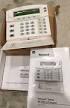 NetworX NX-6V2 LED Keypad User Manual POWER Light is on when AC power is present; flashes to indicate a low battery condition. ARMED Light is on when armed; off when disarmed; flashes to indicate a previous
Customer Care (800) 948-7133. Index. Arming Your System...page 1. Chime Feature...page 4. Access Codes...page 4. Setting the Time and Date...
 Index Arming Your System...page 1 Chime Feature...page 4 Access Codes...page 4 Setting the Time and Date...page 5 Adjusting the Keypad Display/Volume...page 6 Panic Alarms...page 7 Testing Your System...page
SECURITY SYSTEM NOTES
 SECURITY SYSTEM NOTES Installing/Service Company For Service Call Central Station Duress Code FUNCTION CODES Function Code Controls Function This system is is not partitioned. EMERGENCY ACTIVATION KEYS
IDS. Users Guide to Keypad Functions S E C U R I T Y MANUAL NO. 700-171-01B ISSUED AUG 2002 VERSION 1.18
 INHEP DIGITAL IDS S E C U R I T Y Users Guide to Keypad Functions MANUAL NO. 700-171-01B ISSUED AUG 2002 VERSION 1.18 Summary of Operation A rm/ disarm [#] + [USER CODE] Quick Quick Quick Away Arm Stay
GE Concord 4 Quick User Guide
 GE Concord 4 Quick User Guide GE Concord 4 Quick User Guide Page 1 Before Calling Is the keypad beeping? Press *. This will silence the beeping and let you know where the trouble is. Is there a flashing
tattletale User Guide Consumer unit version 2.48 1 P a g e
 tattletale User Guide Consumer unit version 2.48 1 P a g e Contents Basic 1... 4 Base Unit Features... 4 Initial Setup... 4 Arming... 5 Disarming... 5 Quiet Button... 5 Settings... 5 Settings 2... 6 Quick
FIRST ALERT INSTRUCTION MANUAL FOR FA 270 KEYPADS SECURITY SYSTEM
 FIRST ALERT INSTRUCTION MANUAL FOR FA 270 KEYPADS SECURITY SYSTEM Page 0 Table of Contents Introduction 1 System Basics.. 1 Burglary Protection.. 1 Fire Protection.. 1 Security Codes. 1 Zones and Partitions
Document No. 466-1763 Rev. D
 i 1 6-4 ) 6 1 ) + + 4, 7 IA HI/ K E@ A 6 Document No. 466-1763 Rev. D ii Commands at a Glance Disarm the system. Cancel an accidental alarm. Arm to Level 2 HOME. Arm to Level 3 AWAY. Send a police alarm.
Simon XT User Manual. 600-1054-95R-11 and 600-1054-95R-11-CN P/N 466-2266-02 REV B ISS 13JAN11
 Simon XT User Manual 600-1054-95R-11 and 600-1054-95R-11-CN P/N 466-2266-02 REV B ISS 13JAN11 Copyright Trademarks and patents Manufacturer FCC compliance Contact information 2011 UTC Fire & Security.
GC2 Panel User Guide
 GC2 Panel User Guide ENGLISH (International) WIRELESS SECURITY SYSTEM WARNING: OWNER S I NSTRUCTION NOTICE Not to be removed by anyone except occupant THIS PAGE INTENTIONALLY LEFT BLANK CONTENTS System
Users Guide to Keypad Functions
 Users Guide to Keypad Functions MANUAL NO. 700-175-01J ISSUED JAN 2002 VERSION 1.41 Summary of Operation A rm/ disarm [#] + [USER CODE] Quick Quick Quick Panic Fire Medical Away Arm Stay Arm Stay Arm &
Security System Owner s Manual
 Security System Owner s Manual Interactive Technologies Inc. 2266 North 2nd Street North St. Paul, MN 55109 FCC Notices FCC Part 15 Information to the User Changes or modifications not expressly approved
SECURITY SYSTEM NOTES
 SECURITY SYSTEM NOTES Installing/Service Company For Service Call Central Station Duress Code FUNCTION CODES Function Code Controls Function EMERGENCY ACTIVATION KEYS (check if enabled) Fire Auxiliary
National Security Systems Inc (800)457-1999. Security System User's Guide
 National Security Systems Inc (800)457-1999 Security System User's Guide Security System Glossary As security system technology has evolved, a special jargon has developed. Some terms widely used within
Security System. User's Guide. Keypad
 Security System EN User's Guide Keypad Security System User's Guide This system includes a telephone line seizure feature. The system can be programmed to communicate with a central monitoring station
Simon XT V2 User Manual
 GE Security Simon XT V2 User Manual P/N 466-2266-01 REV A ISS 24FEB10 Copyright Disclaimer Trademarks and patents 2010 GE Security, Inc. This document may not be copied in whole or in part or otherwise
POWER POWER ABC DEF GHI JKL ABC DEF GHI JKL COMMAND YZ COMMAND POWER ABC DEF GHI JKL COMMAND YZ USER'S GUIDE
 POWER POWER POWER ABC DEF GHI JKL ABC DEF GHI JKL MNO PQR STU VWX MNO PQR STU VWX YZ COMMAND YZ COMMAND ABC DEF GHI JKL MNO PQR STU VWX COMMAND YZ USER'S GUIDE Security Command User's Guide for 9XR Command
Simon Security System. User Guide. 466-1871-01-EUR Rev A August 2004. Part No: 60-911 ZZZJHVHFXULW\FRP. Motion. Doors & Windows
 ) *(6HFXULW\ 466-1871-01-EUR Rev A August 2004 ZZZJHVHFXULW\FRP Part No: 60-911 Doors & Windows Motion Sensors System Status HOME SECURITY Arm Disarm 1/2 3/4 5/6 7/8 9/0 CODE Chime Doors Motion Time Sensor
Using your LED Plus keypad
 Using your LED Plus keypad System 238 System 2316 System 238i System 2316i Part Number 5-051-372-00 Rev B Thank you for purchasing this C&K alarm system Your system is one of the most powerful and advanced
Solution-16 Operators Manual ISSUE 1.60
 Solution-16 Operators Manual ISSUE 1.60 !"#$%&"'()*+ Operators Manual Copyright 2002 by, SYDNEY, AUSTRALIA Document Part Number MA880O DOCUMENT ISSUE 1.60 Printed 22 March 2002 This documentation is provided
Understanding the Code Pad lights...4. Code Pad tones...5. Fully arming the system On MODE...6. Fully arming the system - Quick Arm MODE...
 TABLE OF CONTENTS...Glossary of terms...2...code Pad Diagram...3 Understanding the Code Pad lights...4 Code Pad tones...5 Fully arming the system On MODE...6 Fully arming the system - Quick Arm MODE...6
466-2183 Rev A March 2005. Security. www.gesecurity.com. Part Numbers: 600-1021-95R 600-1022-95R 600-1040. Concord 4 Series Security Systems
 g GE Security 466-2183 Rev A March 2005 www.gesecurity.com Part Numbers: 600-1021-95R 600-1022-95R 600-1040 Concord 4 Series Security Systems user guide Notices FCC Part 15 Information to the User Changes
NetworX Series. NX- 4/8 Code Pad. User Manual (Australian Version)
 NetworX Series NX- 4/8 Code Pad User Manual (Australian Version) Table Of Contents Code Pad Diagram... Inside Front Glossary of Terms...2 Understanding the Code Pad lights...3 Code Pad Tones...4 Fully
IDS X-Series User Manual 700-398-01D Issued July 2012
 1 2 Contents 1. Introduction to the IDS X-Series Panels... 7 2. Before Operating Your Alarm System... 7 3. Understanding the Keypad LEDs... 8 3.1 Viewing Data on an LED Keypad... 12 3.1.1 LED Status Indicators...
FA701 Series. User s Guide. K6249-2V2 5/09 Rev. A
 FA701 Series TouchCenter Keypads User s Guide K6249-2V2 5/09 Rev. A Table of Contents ABOUT THE TOUCHCENTER... 5 Introduction... 5 2 The TouchCenter Interface... 5 Navigating through the TouchCenter...
HILLS Series LED Code Pad User Manual
 HILLS Series LED Code Pad User Manual Not all features may be available on your system Check with your installer to find out which features are programmed Page 2 TABLE OF CONTENTS Code Pad Diagrams...2
D1260/D1260B. Keypad. National Security Systems Inc (800)457-1999. Owner's Manual
 D1260/D1260B EN Owner's Manual Keypad National Security Systems Inc (800)457-1999 D1260/D1260B Owner's Manual This system includes a telephone line seizure feature. The system may be programmed to communicate
VISTA-128FBP VISTA-250FBP Commercial Fire and Burglary Partitioned Security Systems with Scheduling
 VISTA-128FBP VISTA-250FBP Commercial Fire and Burglary Partitioned Security Systems with Scheduling User Guide K0377V2 7/09 Rev. C 2 TABLE OF CONTENTS SYSTEM OVERVIEW... 5 General... 5 A Partitioned System...
Using Your. Security System With Icon Keypad S5020, S5021, S5022
 Using Your Security System With Icon Keypad S5020, S5021, S5022 Contents 1 Overview Your Security System... 1 How Your Security System Works... 2 Your System's Programming... 3 Getting Used to Your System...
SECURITY SYSTEM NOTES. EMERGENCY ACTIVATION KEYS (check if enabled) PROGRAMMED FUNCTIONS
 SECURITY SYSTEM NOTES Installing/Service Company For Service Call Installation Date / / Central Station Duress Code EMERGENCY ACTIVATION KEYS (check if enabled) Fire Auxiliary Emergency Police PROGRAMMED
User s Guide. Security Systems
 User s Guide Security Systems National Security Systems Inc (800)457-1999 2 Table of Contents About This Users Guide... 4 Introduction... 4 Security System Basics... 5 Controlled Points... 6 24-Hour Points...
User s Guide. Security Systems
 User s Guide Security Systems 2 Table of Contents About This Users Guide... 4 Introduction... 4 Security System Basics... 5 Controlled Points... 6 24-Hour Points... 7 Keypad Keys... 7 Keypad Tones... 8
466-1822 Rev C February 2003. GE Interlogix. www.ge-interlogix.com. Part No: 60-874-95R. Allegro. User Guide
 g 466-1822 Rev C February 2003 GE Interlogix www.ge-interlogix.com Part No: 60-874-95R Allegro User Guide FCC Notices FCC Part 15 Information to the User Changes or modifications not expressly approved
Changes or modifications not expressly approved by Interactive Technologies, Inc. can void the user s authority to operate the equipment.
 0 FCC Notices FCC Part 15 Information to the User Changes or modifications not expressly approved by Interactive Technologies, Inc. can void the user s authority to operate the equipment. FCC Part 15 Class
8VHU V*XLGH 6HFXULW\6\VWHPV (QWUHSUHQHXU(1 6HFXULW\0DQDJHU(1. Meets ADT Security Services Triple Standards Requirements:
 6DIHZDWFK3UR Š (1 (QWUHSUHQHXU(1 6HFXULW\0DQDJHU(1 6HFXULW\6\VWHPV 8VHU V*XLGH Meets ADT Security Services Triple Standards Requirements: C US LISTED Standards for Security and Fire Standard for False
Wireless Security System
 Wireless Security System 2GIG-CNTRL2 (2GIG-CP2) User s Guide WARNING: Owner s Instruction Notice Not to be removed by anyone except occupant The Go!Control Security System Congratulations on your ownership
SECURITY SYSTEM NOTES SPECIAL CODES ENTRY / EXIT DELAY TIMES ARM / DISARM CODES
 SECURITY SYSTEM NOTES Installing/Service Company For Service Call SPECIAL CODES "Chime" Digit 1 "Partial Arm" Digit 2 "Quick Arm" Digit 3 ENTRY / EXIT DELAY TIMES Exit Delay Time Entry Delay Time Secondary
XR6/XR10 User s Guide
 XR6/XR10 User s Guide Silencing an Alarm All/Perimeter and Home/Away Systems 1. While the alarm bell or siren is sounding, enter your user code. The keypad displays DISARM SILENCE. 2. Press the SELECT
HILLS Series LED Code Pad User Manual
 HILLS Series LED Code Pad User Manual Not all features may be available on your system Check with your installer to find out which features are programmed Page 2 TABLE OF CONTENTS Code Pad Diagrams...2
LYNX Touch L5200 Series Security System
 LYNX Touch L5200 Series Security System User Guide 800-16083V1 12/14 Rev. A LYNX Touch L5200 Series Your Honeywell security system is designed for use with devices manufactured or approved by Honeywell
Enhanced. Commercial Burglary Partitioned Security System with Scheduling. User Guide. K4970-1V3 4/09 Rev. B FA560 3 STAY 2 AWAY 1 OFF 5 TEST 9 CHIME
 BS/ESC N/Y SHIFT ARMED READY A D S SPACE R B E T C F X ENTER ARMED READY MAX INSTANT READY R BYPASS FA1660C Enhanced Commercial Burglary Partitioned Security System with Scheduling 4 1 5 FA560 6 7 8 9
Lynx Plus Series Security System
 Lynx Plus Series Security System User Guide ARMED READY ESCAPE ADD OFF AWAY RECORD LIGHTS ON 1 2 3 VOLUME TEST PLAY 4 5 6 BYPASS 7 8 9 STAY DELETE AUX SELECT LIGHTS OFF 0 CODE CHIME STATUS NO DELAY FUNCTION
LYNX Touch L7000 Series Security System
 LYNX Touch L7000 Series Security System User Guide 800-16084 12/13 Rev. A LYNX Touch L7000 Series Your Honeywell security system is designed for use with devices manufactured or approved by Honeywell for
CONTENTS 4. HOW TO UNSET THE PANEL...7
 Pi-8 USER MANUAL CONTENTS 1. THE KEYPAD AND ITS OPERATION...3 1.1 DESCRIPTION OF THE KEYPAD LEDS... 3 1.1.1 READY LED (RED)...3 1.1.2 TAMPER LED (RED)...3 1.1.3 POWER LED (GREEN)...3 1.1.4 CIRCUIT LEDs
Elite 8D/Lite Version 8 Zone Controller. Arrowhead Alarm Products Ltd. Operating Guide. Proudly Designed and Manufactured in New Zealand
 Elite 8D/Lite Version 8 Zone Controller 8 Arrowhead Alarm Products Ltd Operating Guide 1 Proudly Designed and Manufactured in New Zealand 2 CONTENTS Page No. INTRODUCTION 4 About your Alarm 4 OPERATING
NESS D16. 16 Zone Control Panel and Dialler OWNER S MANUAL
 NESS D16 16 Zone Control Panel and Dialler OWNER S MANUAL REVISION 2, JULY 2001 Ness Security Products Pty Ltd Quality Endorsed Company ISO9001 LIC.No. QEC2074 NSW Head Office only WWW.NESS.COM.AU Australia
LYNX Touch L5210 Series Security System
 LYNX Touch L5210 Series Security System User Guide 800-19975 12/14 Rev. A LYNX Touch L5210 Series Your Honeywell security system is designed for use with devices manufactured or approved by Honeywell for
SECURITY SYSTEM NOTES. Security System Configuration
 Installing / Service Company: For Service Call: SECURITY SYSTEM NOTES Security System Configuration Master Code: Auxiliary Code(s) 2 3 4 5 6 "Quick Arm" Digit: Exit Delay Time Auxiliary Exit Delay Time
User s Guide. Security Systems D220
 User s Guide Security Systems D220 Table of Contents About This User s Guide... 3 Introduction... 3 Security System Basics... 4 Controlled Points... 5 24-Hour Points... 6 Keypad Keys... 6 Keypad Lights...
www.ealarm.com.my P/N 5-051-371-00 Rev D
 System 236 System 236i P/N 5-051-371-00 Rev D Thank you for purchasing this C&K alarm system Your system is one of the most powerful and advanced alarm systems on the market today, designed to provide
LYNX Touch Security System
 LYNX Touch Security System User Guide 800-10615V1 12/12 Rev. A LYNX Touch L5100 Series Your Honeywell security system is designed for use with devices manufactured or approved by Honeywell for use with
SPECIAL CODES AUXILIARY CODES SYSTEM NOTES
 Installing/Service Company Monitoring Center SPECIAL CODES Master Code Duress Code AUXILIARY CODES "Quick Arm" " Chime" 08 02 09 03 10 04 11 05 12 06 13 07 14 SYSTEM NOTES Exit Delay Time Entry Delay Time
User's Manual. For use with ProSYS 16, ProSYS 40, and ProSYS 128
 User's Manual For use with ProSYS 16, ProSYS 40, and ProSYS 128 Important Notice This manual is delivered subject to the following conditions and restrictions: This manual contains proprietary information
Simon XTi User Manual
 Simon XTi User Manual Simon XTi P/N 466-2452 REV A 15MAR12 Copyright Trademarks and patents Manufacturer FCC compliance Contact information Customer support 2012 UTC Fire & Security. All rights reserved.
SECURITY SYSTEM NOTES SPECIAL CODES. Security System Configuration
 Installing / Service Company: SECURITY SYSTEM NOTES For Service Call: Master Code SPECIAL CODES Duress Code Security System Configuration Auxiliary Code(s) Quick Arm" Digit: 2 9 3 10 4 11 5 12 6 13 7 14
VISTA-50P VISTA-50PUL
 S e c u r i t y S y s t e m User's Manual VISTA-50P VISTA-50PUL N5943-6 7/95 TABLE OF CONTENTS SYSTEM OVERVIEW... 3 A Partitioned System... 3 Zones... 3 Fire Protection... 4 Burglary Protection... 4 Alarms...
466-1936 Rev E October 2004 ZZZ*(6HFXULW\FRP. Part No: 60-883-95R. CareGard. User Guide
 ) *(6HFXULW\ 466-1936 Rev E October 2004 ZZZ*(6HFXULW\FRP Part No: 60-883-95R CareGard User Guide FCC Notices FCC Part 15 Information to the User Changes or modifications not expressly approved by GE Security
MONITOR ISM / AFx Multi-Tenant Security System User Guide V1.3
 MONITOR ISM / AFx Multi-Tenant Security System User Guide V.3 Multi-Tenant Security System User Guide Welcome New Users! There are two types of suite security keypads. Follow the instructions in the proceeding
LYNX Touch Security System
 LYNX Touch Security System User Guide 1:35 2 PM October 26, 2011 72 Mostly Sunny 68 F F Feels Like 71 Security Messages Automation 5-Day Forecast News Traffic 800-10615 1/12 Rev. A LYNX Touch L5100 Series
Intruder alarm system Operating Instructions
 New remote keypad Intruder alarm system Operating Instructions 0 2 3 4 5 6 7 8 9 CHIME OMIT RESET PROG SET Power Power 0 2 3 5 6 7 8 Chime Omit Prog 4 9 Set AccentaG3 mini Servicing organisation details
3 6HFXULW\6\VWHP 8VHU*XLGH K4333 9/99 AWAY BYPASS STAY ALARM FIRE ARMED OFF AWAY STAY READY MAX TEST BYPASS INSTANT CODE CHIME
 ARMED READY OFF AWAY STAY MAX TEST BYPASS INSTANT CODE CHIME READY ARMED READY NIGHT NO AC PHONE TEST NOT READY CHIME BAT CHECK INSTANT CANCELED OFF AWAY STAY MAX TEST BYPASS INSTANT CODE CHIME READY 3
Ademco Vista-20P/First Alert FA-168C Basic Commands
 Zones 64 total Ademco Vista-20P/First Alert FA-168C Basic Commands Wireless Yes, Zones 09 to 48 + 16 Keyfob Zones (Zones 49 to 64) Batteries Downloadable Partitions 2 12 volt Rechargable inside main Panel,
GUIDE GETTING STARTED IMPORTANT SUPPORT RESOURCES
 IMPORTANT SUPPORT RESOURCES Subscriber Portal Go to https://portal.coxhomelife.com to log in to your account and manage your system features online. Online Support Go to www.cox.com/homelifesupport to
6HFXULW\6\VWHPV 8VHU V*XLGH K5309-1V1 8/01
 9,67$39,67$3&1 9,67$39,67$3&1 6HFXULW\6\VWHPV 8VHU V*XLGH K5309-1V1 8/01 1 IMPORTANT! PROPER INTRUSION PROTECTION For proper intrusion coverage, sensors should be located at every possible point of entry
Welcome to a whole new level of interactive home security
 Welcome to a whole new level of interactive home security User Manual TouchScreen Key Fob Keychain Remote Web Access Mobile Access ReadyHome User Manual Introducing a whole new level of security for the
SECURITY SYSTEM NOTES SPECIAL CODES AUXILIARY ARM / DISARM CODES ENTRY / EXIT DELAY TIMES ZONE DESCRIPTIONS
 SECURITY SYSTEM NOTES Installing/Service Company For Service Call SPECIAL CODES Master Code Duress Code "Quick Arm" Digit "Chime" Digit "Entry-Guard" Digit AUXILIARY ARM / DISARM CODES 02 12 22 03 13 23
Control/Communicator Installation Manual
 DAS NETWORX NX-8 Control/Communicator Installation Manual Page General Description... 2 Ordering Information... 2 Option Definitions... 2 Programming the LED Code Pads... 4 Programming the NX-8... 8 Types
ICP-CC488. Installation Guide ICP-CC488 Control Panel
 ICP-CC488 EN Installation Guide ICP-CC488 Control Panel ICP-CC488 Installation Guide Notices EN 2 Copyright Notice Unless otherwise indicated, this publication is the copyright of Bosch Security Systems,
ADEMCO VISTA SERIES VISTA-20P / VISTA-20PSIA VISTA-15P / VISTA-15PSIA Security Systems
 ADEMCO VISTA SERIES VISTA-20P / VISTA-20PSIA VISTA-15P / VISTA-15PSIA Security Systems User Guide K5309-1V4 10/04 Rev. A IMPORTANT! PROPER INTRUSION PROTECTION For proper intrusion coverage, sensors should
Changes or modifications not expressly approved by Interlogix, Inc. can void the user s authority to operate the equipment.
 9-4 5 ) 7 ) 8 A HI E = @ = JA H 6 D A 2 A =? A A A F A H 1 FCC Notices FCC Part 15 Information to the User Changes or modifications not expressly approved by Interlogix, Inc. can void the user s authority
ADEMCO VISTA SERIES VISTA-20P / VISTA-20PSIA VISTA-15P / VISTA-15PSIA Security Systems
 ADEMCO VISTA SERIES VISTA-20P / VISTA-20PSIA VISTA-15P / VISTA-15PSIA Security Systems User Guide K5309-1V7 3/15 Rev A IMPORTANT! PROPER INTRUSION PROTECTION For proper intrusion coverage, sensors should
User's Manual 5120XM N8031 6/96
 Fire and Burglary System User's Manual 5120XM N8031 6/96 SYSTEM OVERVIEW...3 General...3 Zones...3 Fire & Emergency Protection...3 Burglary Protection...4 Alarms...4 Memory of Alarm...4 ABOUT THE KEYPADS...5
5HDG\*XDUG5 6HFXULW\6\VWHP 8VHU*XLGH K5481-1 8/00 OFF AWAY STAY AUX
 5HDG\*XDUG5 6HFXULW\6\VWHP OFF AWAY STAY AUX 8VHU*XLGH K5481-1 8/00 7$%/(2)&217(176 SYSTEM OVERVIEW...3 Features...3 General Operation...4 Quick View of System Functions...6 About the Master Keypad...7
SECURITY & MONITORING QUICK GUIDE
 SECURITY & MONITORING QUICK GUIDE Now that you have your security system installed, use it regularly. Regular usage will increase your comfort with operating the system and reduce the likelihood of false
Solution 880 Operators Manual ISSUE 1.10
 Solution 880 Operators Manual ISSUE 1.10 Solution 880 Operators Manual Copyright 2001 by, SYDNEY, AUSTRALIA Document Part Number MA408O DOCUMENT ISSUE 1.10 Printed 25 May 2001 This documentation is provided
ADEMCO LYNXR-EN Security System
 ADEMCO LYNXR-EN Security System User Guide ARMED READY OFF ESCAPE AWAY ADD STAY RECORD LIGHTS ON 1 2 3 VOLUME 4 5 6 TEST 7 8 9 PLAY BYPASS DELETE AUX SELECT LIGHTS OFF CODE CHIME 0 # STATUS NO DELAY FUNCTION
System Manager s Manual
 LCD Keypad DGP2-641B / DGP2-641RB DGP2-641 / DGP2-641R System Manager s Manual Also includes Operating Instructions Table of Contents Introduction... 1 Legend... 1 Basic Operation... 1 Auditory Feedback
HARDWIRED CONTROL PANELS
 USER GUIDE 9651 HARDWIRED CONTROL PANELS Contents 1. Introduction...3 The Alarm System...3 The Keypad...3 About This Guide...5 2. Everyday Operation...6 How Do I Know if the System is Working?...6 Setting
Security System User's Guide
 Security System User's Guide Security System Glossary As security system technology has evolved, a special jargon has developed. Some terms widely used within the industry are these: Arm and Disarm Your
TABLE OF CONTENTS HOW TO AVOID FALSE ALARMS... 2
 TABLE OF CONTENTS HOW TO AVOID FALSE ALARMS... 2 THE BRINK S HOME SECURITY SYSTEM Equipment in the Standard Systems... 3 Optional Equipment... 4 Optional Features... 5 Description of the Keypad... 6 OPERATING
VISTA-100. Commercial Fire and Burglary 8VHU*XLGH. Partitioned Security System. N6020-2 Rev B 4/99 FIRE FIRE PULL
 VISTA-100 Commercial Fire and Burglary Partitioned Security System 8VHU*XLGH FIRE FIRE * PULL N6020-2 Rev B 4/99 TABLE OF CONTENTS SYSTEM OVERVIEW... 3 A Partitioned System... 3 Zones... 3 Fire Protection...
S I E R R A PRODUCT INFORMATION GUIDE FOR HOME SECURITY. SIERRA Page 1
 S I E R R A PRODUCT INFORMATION GUIDE FOR HOME SECURITY SIERRA Page 1 C O N T E N T S USING YOUR SIERRA SYSTEM: Turning On/Off Home Arming Instant Home Arming Quick Exit Mode Chime Mode SPECIAL FUNCTIONS:
User Guide for the DS7060 Control/Communicator
 DS7060 User Guide Copyright 1996-97 Detection Systems, Inc. User Guide for the DS7060 Control/Communicator Copyright 1996-97 Detection Systems, Inc. Detection Systems, Inc., 130 Perinton Parkway, Fairport,
Emergency Dialer DIAL-ALERT MODEL: AD-105. www.skylinkhome.com
 www.skylinkhome.com Emergency Dialer TM DIAL-ALERT MODEL: AD-105 If you would like to order Skylink s products or have difficulty getting them to work or download information and user manual, please :
astec Integrated Alarm System USER GUIDE
 astec Integrated Alarm System USER GUIDE 020008599 CONTENTS Full Set, Part Set and Disarm 3 Instant Full Set 3 Part Set with exit time 4 Bell Test 4 Bypassing zones 4 Switch Lights on/off 4 Bypass (24
Accenta/Optima. User Guide. Servicing Organisation (Installer) name: Telephone Number: Date of Installation: Account Number: Honeywell Security
 Accenta/Optima User Guide ZONE 1 2 3 4 5 6 7 8 9 Chime Omit Prog PA 0 1 2 3 4 5 6 7 8 9 CHIME OMIT RESET PROG SET Accenta + TA PA DAY POWER PA! " # $ % & 0 1 2 3 5 6 7 8 Chime Omit Reset Prog 4 9 Set PA
ICP-CC488 ICP-CC488 EN. Control Panel. User s Guide
 ICP-CC488 EN User s Guide ICP-CC488 Control Panel ICP-CC488 User's Guide Notices EN 2 Copyright Notice Unless otherwise indicated, this publication is the copyright of Bosch Security Systems, Inc. ( Bosch
MODEL 4734 SECURITY SYSTEM OWNER'S MANUAL TABLE OF CONTENTS
 MODEL 4734 SECURITY SYSTEM OWNER'S MANUAL TABLE OF CONTENTS 1 SYSTEM OVERVIEW Page 1 1.1 Introduction 1 1.2 System components 1 1.3 Features 3 1.4 Types of alarms 5 1.5 Other audible signals 6 1.6 Access
Security System. User Guide for the LED Command Center
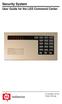 Security System User Guide for the LED Command Center MY SECURITY COMPANY IS: CALL BEFORE TEST: THIS SECURITY SYSTEM IS CONNECTED TO TELEPHONE NUMBER: THE SECURITY CONTROL PANEL IS CONNECTED TO THE PHONE
How To Use A Keypad On A Iphone Or Ipad (Awn) With A Security System On A Powerline (Apl) With An Alarm System On It (Aldeen) And A Power Button On It
 WARNING This manual contains information on limitations regarding product use and function and information on the limitations as to liability of the manufacturer. The entire manual should be carefully
Using Your. Security System. With LED Keypad S5030, S5031, S5032
 Using Your Security System With LED Keypad S5030, S5031, S5032 Contents 1 Overview Your Security System... 1 How Your Security System Works... 2 Your System's Programming... 3 Getting Used to Your System...
TABLE OF CONTENTS HOW TO AVOID FALSE ALARMS... 1
 TABLE OF CONTENTS HOW TO AVOID FALSE ALARMS... 1 THE BRINK S HOME SECURITY SYSTEM Equipment in the Standard Systems... 2 Optional Equipment... 3 Description of the Keypad... 5 OPERATING THE BRINK S SYSTEM