
Annual Monitoring Network Plan Report
|
|
|
- Jewel Hines
- 10 years ago
- Views:
Transcription
1 Annual Monitoring Network Plan Report June 2015 Clark County Department of Air Quality 4701 W. Russell Road, Suite 200 Las Vegas, Nevada 89118

2

3 Executive Summary This document reports the status of the Clark County air monitoring network in 2014, as required by Title 40, Part 58 of the Code of Federal Regulations. It describes network operation in 2014, changes planned for , and the ways in which Clark County disseminates network data to the public in a timely manner. Page 1

4 TABLE OF CONTENTS 1.0 Introduction Minimum Monitoring Requirements Ozone PM PM NO SO CO Pb Collocated Monitors as of Site Tables Maps of Criteria Pollutant Monitoring Stations in National Performance Audit and Performance Evaluation Programs Network Modifications Completed Changes Proposed Changes PM Monitoring in South Las Vegas Valley O 3 Monitoring at Indian Springs O 3 Monitoring at Spring Mountain Youth Camp Upper Air Meteorological Measurements at North Las Vegas Airport Boulder City (2 nd Site at Garrett Junior High School) Logandale Criteria Pollutant Monitoring at Cecile Avenue Site Review Process for Network Modifications Near-Road Monitoring Special Purpose Studies Future Needs Temporary Site Shutdowns...75 Appendix A: Cross Reference Guide... A-1 Appendix B: EPA Approval Documents...B-1 Page 2

5 LIST OF FIGURES Figure 1: Apex Figure 2: Boulder City Figure 3: Central Fire Station: Near-Road Site Figure 4: Green Valley Figure 5: J.D. Smith...19 Figure 6: Jean Figure 7: Jerome Mack Figure 8: Joe Neal Figure 9: Mesquite Figure 10: Palo Verde Figure 11: Paul Meyer Figure 12: Sunrise Acres Figure 13: Teddy and Rancho: Near-Road Site Figure 14: Walter Johnson...46 Figure 15: Winterwood...48 Figure 16: CO Monitors Figure 17: O 3 Monitors Figure 18: NO x Monitors Figure 19: SO 2 Monitors Figure 20: Continuous PM 10 Monitors Figure 21: Continuous PM 2.5 Monitors Figure 22: Filter-Based PM 2.5 Sampler Figure 23: South Las Vegas Valley Figure 24: Indian Springs Figure 25: Spring Mountain Youth Camp (Proposed SPM Site) Figure 26: North Las Vegas Airport...66 Figure 27: Boulder City (Garrett Junior High)...67 Figure 28: Logandale...69 Figure 29: Cecile Avenue Page 3

6 LIST OF TABLES Table 1. Minimum Monitoring Requirements for Ozone...6 Table 2. Minimum Monitoring Requirements for PM 2.5 (FRM and FEM) Table 3. Minimum Monitoring Requirements for PM Table 4. Minimum Monitoring Requirements for NO Table 5. Minimum Monitoring Requirements for SO Table 6. Minimum Monitoring Requirements for CO...8 Table 7. Minimum Monitoring Requirements for Pb at NCore...8 Table 8. Filter-Based PM2.5 FRM Network...9 Table 9. Continuous PM2.5 FEM Network...9 Table NPAP and TTP Evaluations...57 Table PEP Audit Activity...57 Table 12. Summary of Network Modifications...58 Table 13. Proposed Site and Equipment Changes, Table 14: Temporary Site Shutdowns...75 ACRONYMS AND ABBREVIATIONS AADT AQS CBSA CFR CO DAQ EPA FEM FRM MSA AQS NO X NPAP O 3 Pb PEP PM POC PWEI SPM SLAMS SO 2 TSP TTP μg/m 3 annual average daily traffic Air Quality System Core-Based Statistical Area Code of Federal Regulations carbon monoxide Clark County Department of Air Quality U.S. Environmental Protection Agency federal equivalent method federal reference method Metropolitan Statistical Area National Ambient Air Quality Standards oxides of nitrogen National Performance Audit Program ozone lead Performance Evaluation Program Particulate Matter parameter occurrence code Population Weighted Emissions Index Special Purpose Monitoring State/Local Air Monitoring System sulfur dioxide Total Suspended Particulate through-the-probe micrograms per cubic meter Page 4

7 1.0 INTRODUCTION This report serves as a review of the current Clark County Department of Air Quality (DAQ) ambient air monitoring network and as a plan for future network activities. During 2014, the following conditions existed: 1. DAQ operated monitoring instruments to measure ambient concentrations of continuous and filter-based particulate matter (PM) 2.5, continuous PM 10, ozone (O 3 ), carbon monoxide (CO), nitrogen oxides (NO, NO 2, NO x, NO y ), sulfur dioxide (SO 2 ), and lead (Pb). 2. DAQ operated under a quality-assured system. 3. DAQ operated visibility instrumentation at North Las Vegas Airport and operated a Sunset Elemental Carbon/Organic Carbon monitor at the Jerome Mack monitoring station as a special project. Criteria air pollutants are a group of six common air contaminants regulated by the U.S. Environmental Protection Agency (EPA), which developed National Ambient Air Quality Standards (AQS) for these pollutants to protect public health and the environment. The six criteria pollutants are O 3, PM 2.5 /PM 10, CO, NO 2, SO 2, and Pb. DAQ submits quarterly all criteria pollutant data, including precision and accuracy data, to the Air Quality System (AQS) database. Currently, Clark County is designated as attainment for the O 3, PM 2.5, CO, and NO 2 AQS and unclassifiable for SO 2 and Pb. The Las Vegas Valley (Hydrographic Area 212) within Clark County is classified as attainment for PM 10, and is subject to a maintenance plan. The area attained the PM 10 standard as of December 31, 2006, and EPA issued a Finding of Attainment in August EPA approved the Request for Redesignation and Maintenance Plan for PM 10, submitted by DAQ in August 2012, with an effective date of November 5, DAQ submitted the 2013 annual data certification to EPA in April 2014, and submitted the 2014 annual data certification in April The Nevada Department of Transportation s most recent annual traffic report, dated 2013, provided the traffic count information where available. For those areas where traffic count information was not available, DAQ used nearby traffic counters that measured similar traffic patterns to estimate traffic counts. Where there were no nearby traffic counters or similar traffic patterns, Monitoring personnel s knowledge of the monitoring site s traffic pattern was used to estimate traffic counts. Air quality data is disseminated to the public in a timely manner through the DAQ website and EPA s AirNow database. DAQ also provides customized data reports upon request. Page 5

8 2.0 MINIMUM MONITORING REQUIREMENTS The tables below show that the Clark County air quality network meets or exceeds the 2014 minimum requirements of Title 40, Part 58 of the Code of Federal Regulations (40 CFR 58). Population census information was obtained from the Clark County Department of Comprehensive Planning 2012 and 2013 reports, and based on the Metropolitan Statistical Area (MSA) and the Core-Based Statistical Area (CBSA). All PM monitoring instruments, except for Pb sampling, are low volume instruments. Pb sampling is made using a Total Suspended Particulate (TSP) high volume instrument. For all gaseous monitoring operations at all sites, a two-point (zero/span) QC check is conducted daily and a threepoint (zero/precision/span) QC check is conducted weekly. 2.1 Ozone Table 1. MSA Las Vegas-Paradise (29820) Minimum Monitoring Requirements for Ozone County Population & Census Year 8-hr Design Value [ppb], DV Years 1 Clark, NV 2,062,253 (2013) 78, DV Years = the three years for which the design value was calculated (e.g., ). 2 Air Quality System (site) Identification. 3 SLAMS stands for State/Local Air Monitoring System. Design Value site (name, AQS ID 2 ) Joe Neal ( ) # Required SLAMS Sites 3 # Active SLAMS Sites # Additional SLAMS Sites Needed Notes: Monitors required for SIP or maintenance plan: This network meets the minimum monitoring requirement for the referenced criteria pollutant. 2.2 PM 2.5 Table 2. Minimum Monitoring Requirements for PM 2.5 (FRM and FEM) 1 MSA County Pop. & Census Year Annual Design Value [μg/m 3 ], DV Years 2 Annual Design Value Site (name, AQS ID) Daily Design Value [μg/m 3 ], DV Years 1 Daily Design Value Site (name, AQS ID) # Required SLAMS Sites # Active SLAMS Sites 3 # Additional SLAMS Sites Needed Las Vegas- Paradise (29820) Clark, NV 2,062,253 (2013) 9.7, Sunrise Acres ( ) 24, Sunrise Acres ( ) collocation 0 1 FRM stands for federal reference method, and FEM stands for federal equivalent method. 2 DV Years = the three years for which the design value was calculated (e.g., ). 3 Meets requirements in 40 CFR 58 Appendix D Notes: Monitors required for SIP or maintenance plan: This network meets the minimum monitoring requirement for the referenced criteria pollutant. Page 6

9 2.3 PM 10 Table 3. Minimum Monitoring Requirements for PM 10 Max. Concentration in MSA County Pop. & Census Year 2014 [μg/m 3 ] Las Vegas- Paradise (29820) Clark, NV 2,062,253 (2013) 1081 Max. Conc. Site (name, AQS ID) Jean ( ) Notes: Monitors required for SIP or maintenance plan: This network meets the minimum monitoring requirement for the referenced criteria pollutant. # Required SLAMS sites # Active SLAMS sites # Additional SLAMS Sites Needed NO 2 Table 4. Minimum Monitoring Requirements for NO 2 CBSA 1 Pop. & Max AADT # Required Counts 2 Near-road Census Year (2013) Monitors Las Vegas-Paradise- Pahrump (332) 2,062,253 (2013) # Active Near-road Monitors # Additional Nearroad Monitors Needed # Required Area-wide Monitors # Active Area wide Monitors # Additional Areawide Monitors Needed 264, Core-Based Statistical Area. 2 AADT stands for annual average daily traffic. Notes: Monitors required for SIP or maintenance plan:. J.D. Smith and Sunrise Acres meet the requirements for area-wide monitors. Sunrise Acres also meets RA40 requirements (EPA Regional Administratorrequired monitors per 40 CFR 58, App. D, Sec : 1) Monitors required for Photochemical Assessment Monitoring Station: Two near-road NO2 monitors operational in SO 2 Table 5. Minimum Monitoring Requirements for SO 2 CBSA County Population & Total SO 2 Census Year 3 [tons/yr] 1 Population Weighted Emissions Index 2 [million persons-tons/yr] # Required Monitors # Active Monitors Las Vegas-Paradise- Clark, NV 2,000,759 (2012) 7,179 14,364 (est.) Pahrump (332) 1 Using 2011 National Emissions Inventory data. 2 Calculated by multiplying CBSA population and total SO 2 and dividing product by one million. # Additional Monitors Needed Page 7

10 3 Used for Population Weighted Emissions Index (PWEI) calculation Notes: PWEI requirements met. Monitors required for SIP or maintenance plan: EPA Regional Administrator-required monitors per 40 CFR 58, App. D, Sec : 0 This network meets the minimum monitoring requirement for the referenced criteria pollutant. 2.6 CO Table 6. Minimum Monitoring Requirements for CO CBSA Pop. & Census Year # Required Near-Road Monitors # Active Near-Road Monitors # Additional Monitors Needed Las Vegas-Paradise-Pahrump (332) 2,062,253 (2013) Notes: Monitors required for SIP or maintenance plan: EPA Regional Administrator-required monitors per 40 CFR 58, App. D, Sec : 0 This network meets the minimum monitoring requirement for the referenced criteria pollutant. 2.7 Pb The source emission threshold for the ambient source-oriented Pb monitoring requirement is 0.50 tons per year. DAQ has not identified sources that might trigger this requirement, and a preliminary assessment has shown no such sources within Clark County. Therefore, DAQ does not conduct source-oriented Pb monitoring. Table 7. Minimum Monitoring Requirements for Pb at NCore NCore Site CBSA Pop. & Census Year (name, AQS ID) Jerome Mack Middle School ( ) Las Vegas-Paradise- Pahrump (332) # Required Monitors Notes: Monitors required for SIP or maintenance plan: This network meets the minimum monitoring requirement for the referenced criteria pollutant. # Active Monitors # Additional Monitors Needed 2,062,253 (2013) Page 8

11 3.0 COLLOCATED MONITORS AS OF 2015 Table 8. Filter-Based PM2.5 FRM Network Method Code # Primary Monitors, Site # Required Collocated Monitors # Active Collocated Monitors EQPM : Jerome Mack 1 1, Collocated at Jerome Mack Table 9. Method Code EQPM Continuous PM2.5 FEM Network # Primary Monitors, Site 4: J.D. Smith, Green Valley, Sunrise Acres, and Jean # Required Collocated Monitors # Active Collocated FRM Monitors # Active Collocated FEM Monitors (same method designation as primary) 1 1 1, Collocated with FRM at Sunrise Acres Appendix A of 40 CFR 58 requires 15% of PM 2.5 FRM and FEM samplers in a network to be collocated. For the PM 2.5 FRM network (method EQPM ), the collocated sampler is at the Jerome Mack (NCore) site. For the PM 2.5 FEM network (method EQPM ), the collocated sampler is at the Sunrise Acres site. This collocation arrangement meets the Appendix A requirement. J.D. Smith, Green Valley, and Jean each has a PM 2.5 continuous FEM monitor that serves as the primary PM 2.5 monitor for the site. Page 9

12 SITE TABLES Figure 1: Apex The primary objective of the Apex site, located approximately 25 miles northeast of Las Vegas, is to monitor the ambient impacts of emissions from nearby processing facilities and power plants. Since the site is generally downwind from Las Vegas, it also serves as an indicator of pollutant transport flow out of the Las Vegas Valley. This site is the only Air Quality monitoring station in the Apex Valley. Apex is an EPA-approved seasonal O 3 monitoring site that operates between April and September. Local Site Name (AQS ID) Apex ( ) GPS Coordinates (latitude, longitude) , Street Address U.S. Highway 93, Las Vegas, NV Distance to roadways (m) U.S. Highway 93:108 Traffic counts (AADT, yr) U.S. Highway 93: 2600 (2013) Ground cover Native desert Representative statistical area name Las Vegas-Paradise, NV MSA Pollutant, Parameter Occurrence Code (POC) O 3, 1 Parameter code Basic monitoring objective(s) AQS comparison Site type(s) Regional transport Page 10

13 Pollutant, Parameter Occurrence Code (POC) O 3, 1 Network affiliation Monitor type(s) Primary, QA Collocated, or Other Instrument manufacturer & model Method code FRM/FEM/ARM/other Collecting agency Analytical lab Reporting agency Spatial scale SLAMS Primary TAPI 400 series EQOA FEM DAQ DAQ Regional Monitoring start date 01/01/1998 Current sampling frequency Calculated sampling frequency Continuous, seasonal Continuous, seasonal Sampling season 04/01-09/30 Probe height (m) 3.9 Distance from supporting structure (m) 1.4 Distance from obstructions on roof horizontal distance (m) Distance from obstructions on roof vertical height (m) Distance from obstructions not on roof horizontal distance (m) Distance from obstructions not on roof vertical height (m) Distance from trees (m) Distance to furnace or incinerator flue (m) Distance between monitors fulfilling QA collocation requirements (m) Distance to nearest PM instrument (m) Unrestricted airflow (degrees) 360 Probe material for reactive gases Residence time for reactive gases (s) 2.2 Will there be changes within the next 18 months? (Y/N) Is it suitable for comparison against the annual PM 2.5? (Y/N) Frequency of flow rate verification for manual PM samplers Frequency of flow rate verification for automated PM analyzers Frequency of one-point QC check for gaseous instruments Teflon Last annual performance evaluation for gaseous parameters 09/22/2014 Last two semiannual flow rate audits for PM monitors Based on the March 8, 2012 EPA waiver to reduce the O 3 monitoring season at Apex (AQS ID: ) and Mesquite (AQS ID: ), and due to resource limitations, DAQ continues to utilize the ozone monitoring season waiver and requests a renewal of this waiver (see Appendix B). Meteorological measurements at the Apex site include wind speed, wind direction, and ambient temperature. N Daily Page 11

14 Figure 2: Boulder City. The Boulder City site, approximately 25 miles southeast of Las Vegas, was established at the request of Boulder City government officials and residents to serve as an indicator of population exposure to pollutants, particularly O 3 and PM 10. Local Site Name (AQS ID) Boulder City ( ) GPS Coordinates (latitude, longitude) , Street Address 1005 Industrial Rd., Boulder City, NV Distance to roadways (m) Industrial Rd: 58; U.S. Highway 93: 96 Traffic counts (AADT, yr) Industrial Rd: 1,700; U.S. Highway 93: 20,500 (2013) Ground cover Paved, native desert Representative statistical area name Las Vegas-Paradise, NV MSA Pollutant, POC PM10, 1 O3, 1 Parameter code Basic monitoring objective(s) AQS comparison AQS comparison Site type(s) Population exposure Population exposure, regional transport Network affiliation Monitor type(s) SLAMS SLAMS Page 12

15 Pollutant, POC PM10, 1 O3, 1 Primary, QA Collocated, or Other Primary Primary Instrument manufacturer & model Thermo FH62C14 TAPI 400 series Method code EQPM EQOA FRM/FEM/ARM/other FEM FEM Collecting agency DAQ DAQ Analytical lab Reporting agency DAQ DAQ Spatial scale Neighborhood Urban Monitoring start date 01/01/ /01/1998 Current sampling frequency Continuous Continuous Calculated sampling frequency Continuous Continuous Sampling season Year-round Year-round Probe height (m) Distance from supporting structure (m) Distance from obstructions on roof horizontal distance (m) Distance from obstructions on roof vertical height (m) Distance from obstructions not on roof horizontal distance (m) Distance from obstructions not on roof vertical height (m) Distance from trees (m) Distance to furnace or incinerator flue (m) Distance between monitors fulfilling QA collocation requirements (m) Distance to nearest PM instrument (m) Unrestricted airflow (degrees) Probe material for reactive gases Teflon Residence time for reactive gases (s) 3.0 Will there be changes within the next 18 months? (Y/N) Y Y Is it suitable for comparison against the annual PM 2.5? (Y/N) Frequency of flow rate verification for manual PM samplers Frequency of flow rate verification for automated PM analyzers Biweekly Frequency of one-point QC check for gaseous instruments Daily Last annual performance evaluation for gaseous parameters 9/23/2014 Last two semiannual flow rate audits for PM monitors 2/7/2014, 9/12/2014 The monitoring shelter at the Boulder City site is being changed out in Meteorological measurements at the Boulder City site include barometric pressure. Page 13

16 Figure 3: Central Fire Station: Near-Road Site 2. The Central Fire Station Near-Road site is located in the parking lot of the Central Fire Station, located southeast of E. Bonanza Road and N. Veterans Memorial Drive. This monitoring station is the second near-road site that DAQ is deploying in 2015, and it will initially measure NO 2. Local Site Name (AQS ID) Central Fire Station ( ) GPS Coordinates (latitude, longitude) , Street Address 500 N. Casino Center Boulevard, Las Vegas, NV Distance to roadways (m) U.S. Highway 93: 15; N. Casino Center Boulevard 120; Bonanza Road:180 Traffic counts (AADT, yr) U.S. Highway 93: 184,000; N. Casino Center Boulevard 3,400; Bonanza Road: 12,500 (2013) Ground cover Paved Representative statistical area name Las Vegas-Paradise, NV MSA Pollutant, POC NO2, 1 Parameter code Page 14

17 Pollutant, POC NO2, 1 Basic monitoring objective(s) Site type(s) Network affiliation Monitor type(s) Primary, QA Collocated, or Other Instrument manufacturer & model Method code FRM/FEM/ARM/other Collecting agency Analytical lab Reporting agency Spatial scale Monitoring start date Current sampling frequency Calculated sampling frequency Sampling season Probe height (m) Distance from supporting structure (m) Distance from obstructions on roof horizontal distance (m) Distance from obstructions on roof vertical height (m) Distance from obstructions not on roof horizontal distance (m) Distance from obstructions not on roof vertical height (m) Does obstruction(s) not on roof impede flow Obstruction height above probe (m) Distance from trees (m) Distance to furnace or incinerator flue (m) Distance between monitors fulfilling QA collocation requirements (m) Distance to nearest PM instrument (m) AQS comparison Highest concentration Near Road SLAMS Primary TAPI 200 series EQ FEM DAQ DAQ Microscale 2015 (anticipated) Continuous Continuous Year-round 4 (est.) 1.2 (est.) 3.0 (est.) 1.0 (est.) Unrestricted airflow (degrees) 360 Probe material for reactive gases Residence time for reactive gases (s) Will there be changes within the next 18 months? (Y/N) Is it suitable for comparison against the annual PM 2.5? (Y/N) Frequency of flow rate verification for manual PM samplers Frequency of flow rate verification for automated PM analyzers Frequency of one-point QC check for gaseous instruments No Teflon 7.5 (est.) Last annual performance evaluation for gaseous parameters 2015 Last two semiannual flow rate audits for PM monitors The Central Fire Station Near-Road Site 2 was approved by EPA in DAQ plans to begin operations in Meteorological measurements at Near-Road Site 2 include wind speed, wind direction, ambient temperature, and barometric pressure. N Daily Page 15

18 Figure 4: Green Valley. The Green Valley site in Henderson was established in response to citizen complaints about dust emissions from a gravel processing plant, and continues to monitor PM 10 and PM 2.5. O 3 monitoring was established in Local Site Name (AQS ID) Green Valley ( ) GPS Coordinates (latitude, longitude) , Street Address 298 Arroyo Grande Blvd., Henderson, NV Distance to roadways (m) Santiago Drive: 12.2; Arroyo Grande Blvd: 198; North Stephanie: 533 Traffic counts (AADT, yr) Santiago Drive: 3,500; Arroyo Grande Blvd: 10,500; North Stephanie: 32,000 (2014) (estimated) Ground cover Paved, gravel Representative statistical area name Las Vegas-Paradise, NV MSA Pollutant, POC PM 10, 1 PM 2.5 (continuous), 3 O 3, 1 Parameter code Basic monitoring objective(s) AQS comparison AQS comparison AQS comparison Site type(s) Population exposure Population exposure Population exposure, regional transport Page 16

19 Pollutant, POC PM 10, 1 PM 2.5 (continuous), 3 O 3, 1 Network affiliation Monitor type(s) SLAMS SLAMS SLAMS Primary, QA Collocated, or Other Primary Primary Primary Instrument manufacturer & model Thermo FH62C14 Thermo 5014i TAPI 400 series Method code EQPM EQPM EQOA FRM/FEM/ARM/other FEM FEM FEM Collecting agency DAQ DAQ DAQ Analytical lab Reporting agency DAQ DAQ DAQ Spatial scale Middle Middle (area-wide) Middle Monitoring start date 01/01/ /01/ Current sampling frequency Continuous Continuous Continuous Calculated sampling frequency Continuous Continuous Continuous Sampling season Year-round Year-round Year-round Probe height (m) Distance from supporting structure (m) Distance from obstructions on roof horizontal distance (m) Distance from obstructions on roof vertical height (m) Distance from obstructions not on roof horizontal distance (m) Distance from obstructions not on roof vertical height (m) (est.) Distance from trees (m) 9.0 (est.) 6.5 (est.) 10.0 (est.) Distance to furnace or incinerator flue (m) Distance between monitors fulfilling QA collocation requirements (m) Distance to nearest PM instrument (m) Unrestricted airflow (degrees) Probe material for reactive gases Teflon Residence time for reactive gases (s) Will there be changes within the next 18 months? (Y/N) Is it suitable for comparison against the annual PM 2.5? (Y/N) Frequency of flow rate verification for manual PM samplers Frequency of flow rate verification for automated PM analyzers 3.0 (est.) N N N N Y Biweekly Biweekly Page 17

20 Pollutant, POC PM 10, 1 PM 2.5 (continuous), 3 O 3, 1 Frequency of one-point QC check for gaseous instruments Last annual performance evaluation for gaseous parameters Last two semiannual flow rate audits for PM monitors Daily /11/2014, 9/9/2014 2/11/2014, 9/9/2014 Meteorological measurements at the Green Valley site include wind speed, wind direction, ambient temperature, and barometric pressure. Based on the 2014 Annual Network Plan approval, O 3 monitoring at the Green Valley site was established in Page 18

21 Figure 5: J.D. Smith. The J.D. Smith site in North Las Vegas replaced the old McDaniel and Post Office PM sites. This site monitors gaseous (NO 2, CO, and O 3 ) and particulate (PM 10 and PM 2.5 ) pollutants using continuous methods. This site also serves as an indicator of population exposure to pollutants. Local Site Name (AQS ID) J.D. Smith ( ) GPS Coordinates (latitude, longitude) , Street Address 1301B Tonopah Ave., North Las Vegas, NV Distance to roadways (m) Tonopah Ave: 84; Bruce Street: 175; Stanley Ave: 137 Traffic counts (AADT, yr) Tonopah Ave: 7,400; Bruce Street: 7,400; Stanley Ave: 400 (2013) (estimated) Ground cover Paved, grass Representative statistical area name Las Vegas-Paradise, NV MSA Pollutant, POC PM 10, 1 CO, 1 NO 2, 1 O 3, 1 PM 2.5 (continuous), 3 Parameter code Page 19
22 Pollutant, POC PM 10, 1 CO, 1 NO 2, 1 O 3, 1 Basic monitoring objective(s) Site type(s) AQS comparison Population exposure AQS comparison Population exposure AQS comparison Highest concentration AQS comparison Population exposure PM 2.5 (continuous), 3 AQS comparison Population exposure Network affiliation Monitor type(s) SLAMS SLAMS SLAMS SLAMS SLAMS Primary, QA Collocated, or Other Instrument manufacturer & model Primary Primary Primary Primary Primary Thermo 5014i TAPI 300 series TAPI 200 series TAPI 400 series Thermo 5014i Method code EQPM RFCA RF EQOA EQPM FRM/FEM/ARM/other FEM FRM FRM FEM FEM Collecting agency DAQ DAQ DAQ DAQ DAQ Analytical lab Reporting agency DAQ DAQ DAQ DAQ DAQ Spatial scale Neighborhood Neighborhood Neighborhood Neighborhood Neighborhood Monitoring start date 01/01/ /10/ /10/ /10/ /01/2013 Current sampling frequency Calculated sampling frequency Continuous Continuous Continuous Continuous Continuous Continuous Continuous Continuous Continuous Continuous Sampling season Year-round Year-round Year-round Year-round Year-round Probe height (m) Distance from supporting structure (m) Distance from obstructions on roof horizontal distance (m) Distance from obstructions on roof vertical height (m) Distance from obstructions not on roof horizontal distance (m) Distance from obstructions not on roof vertical height (m) Obstruction height above probe (m) Distance from trees (m) Distance to furnace or incinerator flue (m) Page 20
23 Pollutant, POC PM 10, 1 CO, 1 NO 2, 1 O 3, 1 Distance between monitors fulfilling QA collocation requirements (m) Distance to nearest PM instrument (m) Unrestricted airflow (degrees) Probe material for reactive gases Residence time for reactive gases (s) Will there be changes within the next 18 months? (Y/N) Is it suitable for comparison against the annual PM 2.5? (Y/N) Frequency of flow rate verification for manual PM samplers Frequency of flow rate verification for automated PM analyzers Frequency of one-point QC check for gaseous instruments Last annual performance evaluation for gaseous parameters Last two semiannual flow rate audits for PM monitors PM 2.5 (continuous), Teflon Teflon Teflon N N N N N N N N N Y Biweekly Biweekly Daily Daily Daily 12/23/ /27/ /24/2014 5/9/2014, 10/24/2014 Meteorological measurements at the J.D. Smith site include wind speed, wind direction, ambient temperature, relative humidity, and barometric pressure. 5/9/2014, 10/24/2014 Page 21
24 Figure 6: Jean. The Jean site is approximately 30 miles south of Las Vegas. This site was originally set up as an upwind background site, and it still serves this purpose for PM. The primary objective for O 3 monitoring is to measure transport from Southern California. Local Site Name (AQS ID) Jean ( ) GPS Coordinates (latitude, longitude) , Street Address 1965 State Route 161, Jean, NV Distance to roadways (m) State Route 161: 1,287 Traffic counts (AADT, yr) State Route 161: 1,300 (2013) Ground cover Gravel, native desert Representative statistical area name Las Vegas-Paradise, NV MSA Pollutant, POC PM 10, 1 O 3, 1 PM 2.5 Primary (continuous), 3 Parameter code Basic monitoring objective(s) AQS comparison AQS comparison AQS comparison Page 22
25 Pollutant, POC PM 10, 1 O 3, 1 PM 2.5 Primary (continuous), 3 Site type(s) Upwind background Regional transport Upwind background Network affiliation Monitor type(s) SLAMS SLAMS SLAMS Primary, QA Collocated, or Other Primary Primary Primary Instrument manufacturer & model Thermo 5014i API 400 series Thermo 5014i Method code EQPM EQOA EQPM FRM/FEM/ARM/other FEM FEM FEM Collecting agency DAQ DAQ DAQ Analytical lab Reporting agency DAQ DAQ DAQ Spatial scale Regional Regional Regional Monitoring start date 01/01/ /01/ /01/2013 Current sampling frequency Continuous Continuous Continuous Calculated sampling frequency Continuous Continuous Continuous Sampling season Year-round Year-round Year-round Probe height (m) Distance from supporting structure (m) Distance from obstructions on roof horizontal distance (m) Distance from obstructions on roof vertical height (m) Distance from obstructions not on roof horizontal distance (m) Distance from obstructions not on roof vertical height (m) Distance from trees (m) Distance to furnace or incinerator flue (m) Distance between monitors fulfilling QA collocation requirements (m) Distance to nearest PM instrument (m) Unrestricted airflow (degrees) Probe material for reactive gases Teflon Residence time for reactive gases (s) 4.0 Will there be changes within the next 18 months? (Y/N) Is it suitable for comparison against the annual PM 2.5? (Y/N) Frequency of flow rate verification for manual PM samplers Frequency of flow rate verification for automated PM analyzers Frequency of one-point QC check for gaseous instruments N N N N N Y Biweekly Biweekly Daily Page 23
26 Pollutant, POC PM 10, 1 O 3, 1 Last annual performance evaluation for gaseous parameters Last two semiannual flow rate audits for PM monitors PM 2.5 Primary (continuous), 3 10/17/2014 2/12/2014, 9/9/2014 2/12/2014, 9/9/2014 Meteorological measurements at the Jean site include wind speed, wind direction, ambient temperature, and barometric pressure. Page 24
27 Figure 7: Jerome Mack. The Jerome Mack site in east Las Vegas is the Clark County NCore site. Its primary objective is to monitor trace-level gaseous pollutants, PM parameters (including PM 10, PM 2.5, PM Coarse, and speciated PM parameters), and meteorological parameters as part of a nationwide network. In 2014, this site began operating the PM 2.5 QA collocated FRM sampler for the PM 2.5 FRM network. Local Site Name (AQS ID) Jerome Mack ( ) GPS Coordinates (latitude, longitude) , Street Address 4250 Karen Avenue, Las Vegas, NV Distance to roadways (m) Sahara: 244; Lamb: 351; Karen: 130 Traffic counts (AADT, yr) Sahara: 23,000; Lamb: 26,000; Karen: 3,000 (est.) (2013) Ground cover Concrete, grass Representative statistical area name Las Vegas-Paradise, NV MSA Page 25
28 Pollutant, POC Parameter code Basic monitoring objective(s) Site type(s) Network affiliation Monitor type(s) Primary, QA Collocated, or Other Instrument manufacturer & model Method code FRM/FEM/ ARM/other Collecting agency Analytical lab Reporting agency Spatial scale PM 10, 3 PM 2.5 (continuous), 3 PM (continuous), 3 PM 2.5 Primary (FRM), 1 PM 2.5 Collocated (FRM), 2 Speciation SASS, 5 Speciation URG, 5 O 3, 1 NO Y, AQS comparison Population exposure AQS comparison Population exposure Research support Population exposure AQS comparison Population exposure AQS comparison Population exposure NCore NCore NCore NCore NCore Research support Population exposure CSN Supplement al, NCore Research support Population exposure CSN Supplement al, NCore AQS comparison Population exposure Research support Population exposure Trace CO, 1 Research support, AQS comparison Population exposure Trace SO 2, 1 AQS comparison Population exposure Pb, 1 AQS comparison Population exposure NCore NCore NCore NCore NCore SLAMS SLAMS SLAMS SLAMS SLAMS SLAMS SLAMS SLAMS SLAMS SLAMS SLAMS SLAMS Primary Other Primary Primary MetOne BAM 1020 MetOne BAM 1020 (mathematical difference) EQPM MetOne BAM 1020 EQPM EQPM FEM FEM FEM Thermo 2025i EQPM FRM Primary QA Collocated Thermo 2025i EQPM FRM Collocated Primary Primary Primary Primary Primary Primary Primary Met One SASS URG 3000 TAPI 400 series EQOA TAPI 200 series RF TAPI 300 series RFCA TAPI 100 series EQSA American Ecotech HiVol 3000 EQL Other Other FEM Other FRM FEM FEM DAQ DAQ DAQ DAQ DAQ DAQ DAQ DAQ DAQ DAQ DAQ DAQ Weigh Weigh RTI RTI RTI DAQ DAQ DAQ DAQ DAQ RTI RTI DAQ DAQ DAQ DAQ DAQ Urban Neighborhood Neighborhood Neighborhood Neighborhood Neighborhood Neighborhood Neighborhood Neighborhood Neighborhood Neighborhood Neighborhood Page 26
29 Pollutant, POC Monitoring start date Current sampling frequency Calculated sampling frequency Sampling season Probe height (m) Distance from supporting structure (m) Distance from obstructions on roof horizontal distance (m) Distance from obstructions on roof vertical height (m) Distance from obstructions not on roof horizontal distance (m) PM 10, 3 PM 2.5 (continuous), 3 PM (continuous), 3 PM 2.5 Primary (FRM), 1 PM 2.5 Collocated (FRM), 2 Speciation SASS, 5 Speciation URG, 5 O 3, 1 NO Y, 1 01/01/ /01/ /01/ /01/ /01/ / / /01/ /01/ /01/ /01/ /01/2012 Continuous Continuous Continuous 1:3 1:6 1:3 1:3 Continuous Continuous Continuous Continuous 1:6 Continuous Continuous Continuous 1:3 1:6 1:3 1:3 Continuous Continuous Continuous Continuous 1:6 Year-round Year-round Year-round Year-round Year-round Year-round Year-round Year-round Year-round Year-round Year-round Year-round Trace CO, 1 Trace SO 2, Pb, 1 Page 27
30 Pollutant, POC Distance from obstructions not on roof vertical height (m) Obstruction height above probe (m) Distance from trees (m) Distance to furnace or incinerator flue (m) Distance between monitors fulfilling QA collocation requirements (m) Distance to nearest PM instrument (m) Unrestricted airflow (degrees) Probe material for reactive gases PM 10, 3 PM 2.5 (continuous), 3 PM (continuous), 3 PM 2.5 Primary (FRM), 1 PM 2.5 Collocated (FRM), 2 Speciation SASS, 5 Speciation URG, 5 O 3, 1 NO Y, 1 Trace CO, 1 Trace SO 2, Teflon Teflon Teflon Teflon Pb, High-Vol Page 28
31 Pollutant, POC Residence time for reactive gases (s) Will there be changes within the next 18 months? (Y/N) Is it suitable for comparison against the annual PM 2.5? (Y/N) Frequency of flow rate verification for manual PM samplers Frequency of flow rate verification for automated PM analyzers Frequency of one-point QC check for gaseous instruments PM 10, 3 PM 2.5 (continuous), 3 PM (continuous), 3 PM 2.5 Primary (FRM), 1 PM 2.5 Collocated (FRM), 2 Speciation SASS, 5 Speciation URG, 5 O 3, 1 NO Y, 1 Trace CO, 1 Trace SO 2, N N N N N N N N N N N N N Y N Y Y N N N N N N N Monthly Monthly Monthly Monthly Monthly Biweekly Biweekly Biweekly Daily Daily Daily Daily Pb, 1 Page 29
32 Pollutant, POC Last annual performance evaluation for gaseous parameters Last two semiannual flow rate audits for PM monitors PM 10, 3 PM 2.5 (continuous), 3 PM (continuous), 3 PM 2.5 Primary (FRM), 1 PM 2.5 Collocated (FRM), 2 Speciation SASS, 5 Speciation URG, 5 O 3, 1 NO Y, 1 Trace CO, 1 Trace SO 2, 1 10/28/ /31/ /26/ /29/2014 5/9/2014, 11/12/2014 5/9/2014, 11/12/2014 5/9/2014, 11/12/2014 2/14/2014, 5/2/2014, 9/3/2014, 10/3/2014 2/14/2014, 5/2/2014, 9/3/2014, 10/3/2014 2/14/2014, 5/1/2014, 7/9/2014, 11/12/2014 2/14/2014, 5/1/2014, 7/9/2014, 11/12/2014 The Pb sampler is the only high volume sampler in the DAQ network. Meteorological measurements at this site include wind speed, wind direction, ambient temperature, relative humidity, precipitation, and barometric pressure. Pb, 1 2/14/2014, 5/1/2014, 7/9/2014, 11/21/2014 Page 30
33 Figure 8: Joe Neal. The primary objectives of the Joe Neal site, located in northwest Las Vegas, are to monitor O 3 and its precursors in an area of high O 3 concentrations, and to support DAQ modeling efforts. The topography is such that the summertime loft brings higher O 3 and precursor levels toward this site from the east end of the Las Vegas Valley. PM 10 monitoring was initially deployed at this site due to population growth in the northwest, and the site now also serves as a high O 3 indicator. A NO x monitor was added in January 2008 to monitor for O 3 precursors. Local Site Name (AQS ID) Joe Neal ( ) GPS Coordinates (latitude, longitude) , Street Address 6651 W. Azure Way, Las Vegas, NV Distance to roadways (m) Rebecca: 12.6; Azure: 213; Tropical: 130 Traffic counts (AADT, yr) Rebecca: 4,000 (est.); Azure 6,000 (est.); Tropical 6,000 (2014) Ground cover Gravel, grass, pavement Representative statistical area name Las Vegas-Paradise, NV MSA Page 31
34 Pollutant, POC PM 10, 1 O 3, 1 NO 2, 1 Parameter code Basic monitoring objective(s) AQS comparison AQS comparison Research support, AQS comparison Site type(s) Population exposure Max. ozone concentration Population exposure Network affiliation Monitor type(s) SLAMS SLAMS SLAMS Primary, QA Collocated, or Other Primary Primary Primary Instrument manufacturer & model Thermo 5014i API 400 series API 200 series Method code EQPM EQOA RF FRM/FEM/ARM/other FEM FEM FRM Collecting agency DAQ DAQ DAQ Analytical lab Reporting agency DAQ DAQ DAQ Spatial scale Neighborhood Neighborhood Middle Monitoring start date 01/01/ /01/ /01/2008 Current sampling frequency Continuous Continuous Continuous Calculated sampling frequency Continuous Continuous Continuous Sampling season Year-round Year-round Year-round Probe height (m) Distance from supporting structure (m) Distance from obstructions on roof horizontal distance (m) Distance from obstructions on roof vertical height (m) Distance from obstructions not on roof horizontal distance (m) Distance from obstructions not on roof vertical height (m) Distance from trees (m) Distance to furnace or incinerator flue (m) Distance between monitors fulfilling QA collocation requirements (m) Distance to nearest PM instrument (m) Unrestricted airflow (degrees) Probe material for reactive gases Teflon Teflon Residence time for reactive gases (s) Will there be changes within the next 18 months? (Y/N) Is it suitable for comparison against the annual PM 2.5? (Y/N) Frequency of flow rate verification for manual PM samplers Frequency of flow rate verification for automated PM analyzers N N N N N N Biweekly Page 32
35 Pollutant, POC PM 10, 1 O 3, 1 NO 2, 1 Frequency of one-point QC check for gaseous instruments Last annual performance evaluation for gaseous parameters Last two semiannual flow rate audits for PM monitors Daily Daily 10/17/ /24/2014 2/7/2014, 9/5/2014 Meteorological measurements at the Joe Neal site include wind speed, wind direction, ambient temperature, relative humidity, and barometric pressure. In 2006, a revision of CFR Part 58 increased distance-to-roadway requirements for reactive gases. The Joe Neal site began operating in 2000, but NO X operations, which provide precursor measurements needed for modeling purposes, did not begin until This site is representative of the monitoring area as though the NO X siting criteria were fully met, and because it is also the highest SLAMS O 3 monitor in the network, relocating the site is not in the best interest of the DAQ O 3 network. Due to physical constraints (the shelter and footprint of the site) options of relocating the probe within the site will not satisfy the distance-to-roadway requirement. Because the Joe Neal site cannot meet the 2006 distance-to-roadway requirement for NO X, DAQ is hereby requesting a waiver based on 40 CFR 58, Appendix E, Section 10. Page 33
36 Figure 9: Mesquite. The Mesquite site monitors O 3 and is approximately 70 miles north of Las Vegas. The site sits along a transport and exit corridor connecting jurisdictional boundaries, and serves as an indicator of population exposure of pollutants. Mesquite is an EPA-approved seasonal O 3 monitoring site that operates between April and September. Local Site Name (AQS ID) Mesquite ( ) GPS Coordinates (latitude, longitude) , Street Address 465 E. Old Mill Rd., Mesquite, NV Distance to roadways (m) 7.8 Traffic counts (AADT, yr) <1,000 (est.), 2014 Ground cover Pavement, gravel Representative statistical area name Las Vegas-Paradise, NV MSA Pollutant, POC O 3, 1 Parameter code Basic monitoring objective(s) AQS comparison Site type(s) Population exposure Network affiliation Monitor type(s) SLAMS Page 34
37 Pollutant, POC O 3, 1 Primary, QA Collocated, or Other Primary Instrument manufacturer & model API 400 series Method code EQOA FRM/FEM/ARM/other FEM Collecting agency DAQ Analytical lab Reporting agency DAQ Spatial scale Middle Monitoring start date 10/01/2001 Current sampling frequency Continuous, seasonal Calculated sampling frequency Continuous, seasonal Sampling season 04/01-09/30 Probe height (m) 3.6 Distance from supporting structure (m) 1.2 Distance from obstructions on roof horizontal distance (m) Distance from obstructions on roof vertical height (m) Distance from obstructions not on roof horizontal distance (m) Distance from obstructions not on roof vertical height (m) Distance from trees (m) Distance to furnace or incinerator flue (m) Distance between monitors fulfilling QA collocation requirements (m) Distance to nearest PM instrument (m) Unrestricted airflow (degrees) 360 Probe material for reactive gases Teflon Residence time for reactive gases (s) 2.5 Will there be changes within the next 18 months? (Y/N) N Is it suitable for comparison against the annual PM 2.5? (Y/N) N Frequency of flow rate verification for manual PM samplers Frequency of flow rate verification for automated PM analyzers Frequency of one-point QC check for gaseous instruments Daily Last annual performance evaluation for gaseous parameters 09/22/2014 Last two semiannual flow rate audits for PM monitors 1 Tree is 0.65 meters above inlet. Meteorological measurements at the Mesquite site include wind speed, wind direction, and ambient temperature. Based on the March 8, 2012 EPA waiver to reduce the O 3 monitoring season at Apex (AQS ID: ) and Mesquite (AQS ID: ), and due to resource limitations, DAQ continues to utilize the ozone monitoring season waiver and requests a renewal of this waiver (see Appendix B). Page 35
38 Because the O 3 monitor at Mesquite does not meet distance-to-roadway siting requirements, DAQ is investigating an alternate location where O 3 and PM 10 can be effectively monitored in Mesquite. With respect to current O 3 monitoring in Mesquite, DAQ will continue to conduct SLAMS O 3 monitoring at the site until a suitable replacement monitoring location is established. DAQ s interest in this continued monitoring is based on the negligible traffic count, historical AQS monitoring data, fulfilling the objective of population exposure, and the monitor being the only AQS O 3 monitor in the Virgin Valley air shed (Hydrographic Area 222). Page 36
39 . Figure 10: Palo Verde. The primary objective of the Palo Verde site in west Las Vegas is to monitor O 3, but it also monitors PM 10. The topography is such that the summertime loft brings higher O 3 and precursor levels toward this site from the east end of the Las Vegas Valley. Local Site Name (AQS ID) Palo Verde ( ) GPS Coordinates (latitude, longitude) , Street Address 333 Pavilion Center Dr., Las Vegas, NV Distance to roadways (m) Pavilion Center Dr: 14.7; Greenmoor Lane: 15.0 Traffic counts (AADT, yr) Ground cover Representative statistical area name Pavilion Center Dr: 7,000 (est.); Greenmoor Lane: 4,000 (est.) (2014) Paved Las Vegas-Paradise, NV MSA Pollutant, POC PM 10, 1 O 3, 1 Parameter code Basic monitoring objective(s) AQS comparison AQS comparison Site type(s) Population exposure Population exposure Network affiliation Monitor type(s) SLAMS SLAMS Page 37
40 Pollutant, POC PM 10, 1 O 3, 1 Primary, QA Collocated, or Other Primary Primary Instrument manufacturer & model Thermo FH62C14 API 400 series Method code EQPM EQOA FRM/FEM/ARM/other FEM FEM Collecting agency DAQ DAQ Analytical lab Reporting agency DAQ DAQ Spatial scale Middle Neighborhood Monitoring start date 07/01/ /01/1998 Current sampling frequency Continuous Continuous Calculated sampling frequency Continuous Continuous Sampling season Year-round Year-round Probe height (m) Distance from supporting structure (m) Distance from obstructions on roof horizontal distance (m) Distance from obstructions on roof vertical height (m) Distance from obstructions not on roof horizontal distance (m) Distance from obstructions not on roof vertical height (m) Distance from trees (m) Distance to furnace or incinerator flue (m) Distance between monitors fulfilling QA collocation requirements (m) Distance to nearest PM instrument (m) Unrestricted airflow (degrees) Probe material for reactive gases Teflon Residence time for reactive gases (s) Will there be changes within the next 18 months? (Y/N) N N Is it suitable for comparison against the annual PM 2.5? (Y/N) Frequency of flow rate verification for manual PM samplers Frequency of flow rate verification for automated PM analyzers Frequency of one-point QC check for gaseous instruments Last annual performance evaluation for gaseous parameters N Biweekly N Daily 10/24/2014 Last two semiannual flow rate audits for PM monitors 4/08/2014, 10/24/ Tree is 0.5 meters below PM 10 inlet and 0.6 meters above O 3 inlet. Meteorological measurements at the Palo Verde site include wind speed, wind direction, ambient temperature, and barometric pressure. Page 38
41 Figure 11: Paul Meyer. The primary objective of the Paul Meyer site in southwest Las Vegas is to monitor O 3, but it also monitors PM 10. The topography is such that the summertime loft brings higher O 3 and precursor levels toward this site from the east end of the Las Vegas Valley. Local Site Name (AQS ID) Paul Meyer ( ) GPS Coordinates (latitude, longitude) , Street Address 4525 New Forest Dr., Las Vegas, NV Distance to roadways (m) New Forest Dr: 102; South Tenaya Way: 160 Traffic counts (AADT, yr) Ground cover Representative statistical area name New Forest Dr: 3,500 (est.); South Tenaya Way: 3,800 (2013) Concrete, grass Las Vegas-Paradise, NV MSA Page 39
42 Pollutant, POC PM 10, 1 O 3, 1 Parameter code Basic monitoring objective(s) AQS comparison AQS comparison Site type(s) Population exposure Population exposure Network affiliation Monitor type(s) SLAMS SLAMS Primary, QA Collocated, or Other Primary Primary Instrument manufacturer & model Thermo FH62C14 API 400 series Method code EQPM EQOA FRM/FEM/ARM/other FEM FEM Collecting agency DAQ DAQ Analytical lab Reporting agency DAQ DAQ Spatial scale Neighborhood Neighborhood Monitoring start date 01/01/ /01/1998 Current sampling frequency Continuous Continuous Calculated sampling frequency Continuous Continuous Sampling season Year-round Year-round Probe height (m) Distance from supporting structure (m) Distance from obstructions on roof horizontal distance (m) Distance from obstructions on roof vertical height (m) Distance from obstructions not on roof horizontal distance (m) Distance from obstructions not on roof vertical height (m) Distance from trees (m) Distance to furnace or incinerator flue (m) Distance between monitors fulfilling QA collocation requirements (m) Distance to nearest PM instrument (m) Unrestricted airflow (degrees) Probe material for reactive gases Teflon Residence time for reactive gases (s) 2.9 Will there be changes within the next 18 months? (Y/N) N N Is it suitable for comparison against the annual PM 2.5? (Y/N) N N Frequency of flow rate verification for manual PM samplers Frequency of flow rate verification for automated PM analyzers Biweekly Frequency of one-point QC check for gaseous instruments Daily Last annual performance evaluation for gaseous parameters 09/23/14 Last two semiannual flow rate audits for PM monitors 02/11/14, 09/12/14 Meteorological measurements at the Paul Meyer site include wind speed, wind direction, ambient temperature, and barometric pressure. Page 40
43 Figure 12: Sunrise Acres. Monitoring at the Sunrise Acres site near the center of the Las Vegas Valley began as part of a CO study in the 1990s. All monitoring activities at the former East Charleston site were transferred to Sunrise Acres when the former lease was terminated. The primary objective of the Sunrise Acres site is to monitor CO, NO 2 (meeting the RA40 requirement), and PM. The site monitors PM 10 and PM 2.5 using both filter-based and continuous methodologies. The PM 2.5 FEM is the primary monitor at this site, and it is collocated with a PM 2.5 FRM. Local Site Name (AQS ID) Sunrise Acres ( ) GPS Coordinates (latitude, longitude) , Street Address 2501 Sunrise Ave., Las Vegas, NV Distance to roadways (m) Sunrise Ave: 128; Eastern Ave: 160 Traffic counts (AADT, yr) Sunrise Ave: 4,000 (est.); Eastern Ave: 28,500 (2013) Ground cover Paved Representative statistical area name Las Vegas-Paradise, NV MSA Page 41
44 Pollutant, POC PM 10, 1 CO, 1 PM 2.5 Collocated FRM, 1 PM 2.5 Primary FEM (continuous), 3 NO 2, 1 Parameter code Basic monitoring objective(s) Site type(s) AQS comparison Population exposure AQS comparison Highest concentration AQS comparison Highest concentration AQS comparison Highest concentration AQS comparison Population exposure Network affiliation Monitor type(s) SLAMS SLAMS SLAMS SLAMS SLAMS Primary, QA Collocated, or Other Instrument manufacturer & model Primary Primary QA Collocated Primary Primary Thermo 5014i API 300 series Thermo 2025i Thermo 5014i TAPI 200 series Method code EQPM RFCA EQPM EQPM RF FRM/FEM/ARM/other FEM FRM FRM FEM FRM Collecting agency DAQ DAQ DAQ DAQ DAQ Analytical lab Weigh Reporting agency DAQ DAQ DAQ DAQ DAQ Spatial scale Neighborhood Neighborhood Neighborhood Neighborhood Neighborhood Monitoring start date 04/17/ /01/ /01/ /01/ /01/2013 Current sampling frequency Calculated sampling frequency Continuous Continuous 1:3 Continuous Continuous Continuous Continuous 1:3 Continuous Continuous Sampling season Year-round Year-round Year-round Year-round Year-round Probe height (m) Distance from supporting structure (m) Distance from obstructions on roof horizontal distance (m) Distance from obstructions on roof vertical height (m) Distance from obstructions not on roof horizontal distance (m) Distance from obstructions not on roof vertical height (m) Distance from trees (m) Distance to furnace or incinerator flue (m) Page 42
45 Pollutant, POC PM 10, 1 CO, 1 PM 2.5 Collocated FRM, 1 PM 2.5 Primary FEM (continuous), 3 NO 2, 1 Distance between monitors fulfilling QA collocation requirements (m) Distance between PM 2.5 FRM and PM 2.5 FEM 4.6 Distance between PM 2.5 FRM and PM 2.5 FEM 4.6 Distance to nearest PM instrument (m) Unrestricted airflow (degrees) Probe material for reactive gases Residence time for reactive gases (s) Will there be changes within the next 18 months? (Y/N) Is it suitable for comparison against the annual PM 2.5? (Y/N) Frequency of flow rate verification for manual PM samplers Frequency of flow rate verification for automated PM analyzers Frequency of onepoint QC check for gaseous instruments Last annual performance evaluation for gaseous parameters Last two semiannual flow rate audits for PM monitors Distance to PM 2.5 FEM monitor Distance to PM 10 FEM monitor Teflon Teflon N N N N N N N Y Y N Monthly Biweekly Biweekly Daily Daily 12/30/ /31/ /07/14, 10/24/14 2/14/14, 9/30/14 04/07/14, 10/24/14 DAQ is conducting NO 2 monitoring to meet RA40 requirements outlined in 40 CFR 58, App. D, Sec Meteorological measurements at the Sunrise Acres site include wind speed, wind direction, ambient temperature, and barometric pressure. Page 43
46 Figure 13: Teddy and Rancho: Near-Road Site 1. The Near-Road Site 1 monitoring station was approved by EPA in 2014 and began operation in January The site is at the southeast side of the intersection between South Rancho Drive and Teddy Drive in Las Vegas. This is the first near-road monitoring site that DAQ deployed. Local Site Name (AQS ID) Teddy and Rancho ( ) GPS Coordinates (latitude, longitude) , Street Address 2755 S. Rancho Drive, Las Vegas, NV Distance to roadways (m) Interstate 15: 15; South Rancho Drive: 20; Teddy Drive: 15 Traffic counts (AADT, yr) Interstate 15: 260,000; South Rancho Drive: 15,000 (est.); Teddy Drive: 10,000 (est.) (2013) Ground cover Unpaved Representative statistical area name Las Vegas-Paradise, NV MSA Page 44
47 Pollutant, POC NO 2, 1 Parameter code Basic monitoring objective(s) Site type(s) Network affiliation Monitor type(s) Primary, QA Collocated, or Other Instrument manufacturer & model Method code FRM/FEM/ARM/other Collecting agency Analytical lab Reporting agency Spatial scale AQS comparison Highest concentration Near Road SLAMS Primary TAPI 200 series EQ FEM DAQ DAQ Microscale Monitoring start date 2015 Current sampling frequency Calculated sampling frequency Sampling season Probe height (m) Distance from supporting structure (m) Distance from obstructions on roof horizontal distance (m) Distance from obstructions on roof vertical height (m) Distance from obstructions not on roof horizontal distance (m) Distance from obstructions not on roof vertical height (m) Distance from trees (m) Distance to furnace or incinerator flue (m) Distance between monitors fulfilling QA collocation requirements (m) Distance to nearest PM instrument (m) Continuous Continuous Year-round 4 (est.) 1.2 (est.) Unrestricted airflow (degrees) 360 Probe material for reactive gases Residence time for reactive gases (s) Will there be changes within the next 18 months? (Y/N) Is it suitable for comparison against the annual PM 2.5? (Y/N) Frequency of flow rate verification for manual PM samplers Frequency of flow rate verification for automated PM analyzers Frequency of one-point QC check for gaseous instruments Teflon 4.0 (est.) Last annual performance evaluation for gaseous parameters 2015 Last two semiannual flow rate audits for PM monitors This Near-Road Site 1 began operation in Meteorological measurements at Near-Road Site 1 include wind speed, wind direction, ambient temperature, and barometric pressure. N Daily Page 45
48 Figure 14: Walter Johnson. The primary objective of the Walter Johnson site, located on the west side of Las Vegas, is to monitor O 3. The topography is such that the summertime loft brings high O 3 and precursor levels toward this site from the east end of the Las Vegas Valley. Local Site Name (AQS ID) Walter Johnson ( ) GPS Coordinates (latitude, longitude) , Street Address 7701 Ducharme Ave., Las Vegas, NV Distance to roadways (m) Traffic counts (AADT, yr) Ground cover Representative statistical area name Villa Monterey Drive: 13.0; Ducharme Avenue: 46; South Buffalo Drive: 270 Villa Monterey Drive: 3,000 (est.); Ducharme Avenue: 5,000 (est.); South Buffalo Drive: 26,000 (2013) Concrete/asphalt, grass Las Vegas-Paradise, NV MSA Page 46
49 Pollutant, POC O 3, 1 Parameter code Basic monitoring objective(s) Site type(s) Network affiliation Monitor type(s) Primary, QA Collocated, or Other Instrument manufacturer & model Method code FRM/FEM/ARM/other Collecting agency Analytical lab Reporting agency Spatial scale AQS comparison Population exposure SLAMS Primary API 400 series EQOA FEM DAQ DAQ Neighborhood Monitoring start date 08/01/1998 Current sampling frequency Calculated sampling frequency Sampling season Continuous Continuous Year-round Probe height (m) 4.3 Distance from supporting structure (m) 1.5 Distance from obstructions on roof horizontal distance (m) Distance from obstructions on roof vertical height (m) Distance from obstructions not on roof horizontal distance (m) Distance from obstructions not on roof vertical height (m) Distance from trees (m) 14.6 Distance to furnace or incinerator flue (m) Distance between monitors fulfilling QA collocation requirements (m) Distance to nearest PM instrument (m) Unrestricted airflow (degrees) 360 Probe material for reactive gases Residence time for reactive gases (s) 3.0 Will there be changes within the next 18 months? (Y/N) Is it suitable for comparison against the annual PM 2.5? (Y/N) Frequency of flow rate verification for manual PM samplers Frequency of flow rate verification for automated PM analyzers Frequency of one-point QC check for gaseous instruments Teflon Last annual performance evaluation for gaseous parameters 09/23/2014 Last two semiannual flow rate audits for PM monitors Meteorological measurements at the Walter Johnson site include barometric pressure. N N Daily Page 47
50 Figure 15: Winterwood. The Winterwood site monitored O 3 and PM 10, and was shut down in October This shutdown followed the process outlined in 40 CFR 58.14, and DAQ received approval for the shutdown as part of the 2014 network plan approval letter from EPA. Local Site Name (AQS ID) Winterwood ( ) GPS Coordinates (latitude, longitude) , Street Address 5483 Club House Dr., Las Vegas, NV Distance to roadways (m) 42 Traffic counts (AADT, yr) 400 (2013) (estimated) Ground cover Grass, paving, gravel Representative statistical area name Las Vegas-Paradise, NV MSA Pollutant, POC CO, 1 O 3, 2 Parameter code Basic monitoring objective(s) AQS comparison AQS comparison Site type(s) Population exposure Population exposure Network affiliation Monitor type(s) SLAMS SLAMS Primary, QA Collocated, or Other Primary Primary Page 48
51 Pollutant, POC CO, 1 O 3, 2 Instrument manufacturer & model API 300 series API 400 series Method code RFCA EQOA FRM/FEM/ARM/other FRM FEM Collecting agency DAQ DAQ Analytical lab Reporting agency DAQ DAQ Spatial scale Neighborhood Neighborhood Monitoring start date 01/01/ /01/1979 Current sampling frequency Continuous Continuous Calculated sampling frequency Continuous Continuous Sampling season Year-round Year-round Probe height (m) Distance from supporting structure (m) Distance from obstructions on roof horizontal distance (m) Distance from obstructions on roof vertical height (m) Distance from obstructions not on roof horizontal distance (m) Distance from obstructions not on roof vertical height (m) Distance from trees (m) Distance to furnace or incinerator flue (m) Distance between monitors fulfilling QA collocation requirements (m) Distance to nearest PM instrument (m) Unrestricted airflow (degrees) Probe material for reactive gases Teflon Teflon Residence time for reactive gases (s) Will there be changes within the next 18 months? (Y/N) N N Is it suitable for comparison against the annual PM 2.5? (Y/N) N N Frequency of flow rate verification for manual PM samplers Frequency of flow rate verification for automated PM analyzers Frequency of one-point QC check for gaseous instruments Daily Daily Last annual performance evaluation for gaseous parameters 09/29/ /25/2014 Last two semiannual flow rate audits for PM monitors Page 49
52 5.0 MAPS OF CRITERIA POLLUTANT MONITORING STATIONS IN 2014 Figure 16: CO Monitors. Page 50
53 Figure 17: O 3 Monitors. Page 51
54 Figure 18: NO x Monitors. Page 52
55 Figure 19: SO 2 Monitors. Page 53
56 Figure 20: Continuous PM 10 Monitors. Page 54
57 Figure 21: Continuous PM 2.5 Monitors. Page 55
58 Figure 22: Filter-Based PM 2.5 Sampler. Page 56
59 6.0 TIOL PERFORMANCE AUDIT AND PERFORMANCE EVALUATION PROGRAMS Each year EPA Region 9 contracts for the National Performance Audit Program (NPAP) Through-the- Probe (TTP) performance evaluation, which focuses on gaseous criteria pollutants. With the exception of an NO 2 evaluation at JD Smith on April 23, 2014, DAQ received a Pass on all 2014 NPAP/TTP performance evaluations. The low-end misalignment of the NO 2 instrument at JD Smith was corrected and re-verified through the corrective action process. Table NPAP and TTP Evaluations Monitoring Station Pollutant Evaluation Date Walter Johnson O 3 4/21/2014 Sunrise Acres CO, NO 2 4/22/2014 JD Smith CO, O 3, NO 2 4/23/2014 Each year the PM 2.5 FRM sampling network undergoes a Performance Evaluation Program (PEP) audit. PEP audit results (in μg/m 3 ) are generated and submitted to the AQS database. In 2014 and for the first time, a PM 2.5 FEM was audited. This audit took place at Sunrise Acres. Table PEP Audit Activity Sampler Location Pollutant Audit Date Jerome Mack, Sunrise Acres PM 2.5 FRM 2/4/2014 Jean PM 2.5 FRM 4/23/2014 Jerome Mack, Jean PM 2.5 FRM 7/16/2014 Sunrise Acres PM 2.5 FEM 10/18/ /19/2014 Page 57
60 7.0 NETWORK MODIFICATIONS 7.1 Completed Changes DAQ has made the following network changes: Table 12. Summary of Network Modifications Action Date Explanation Winterwood site shutdown O 3 Special Purpose Monitoring (SPM) at Logandale shutdown O 3 SPM at Indian Springs shutdown Removed PM 2.5 FRM at Jean. PM 2.5 FEM is now the primary PM 2.5 monitor October 2014 October 2014 October 2014 January 2015 This site, which monitored O 3 and PM 10, was shut down following the process outlined in 40 CFR DAQ received approval for this shutdown as part of the 2014 network plan approval letter from EPA. Enhanced summertime O 3 monitoring completed. Enhanced summertime O 3 monitoring completed. No regulatory requirement for PM 2.5 FRM sampler at site, and resource optimization. Near-Road Site 1: Teddy & Rancho 2015 Near-Road Site 2: Central Fire Station 2015 EPA approval for Near-Road Site 1 was received in the 2014 network plan approval letter. DAQ began operation of this site in EPA approval for Near-Road Site 2 was received in the 2014 network plan approval letter. DAQ plans to begin operation of this site in Discontinued O 3 SPMs at Arden Peak, Frenchman Mountain and Laughlin Discontinued O 3 SPMs after completion of 2012 summer O 3 study. 7.2 Proposed Changes This section, which describes anticipated and potential changes to the monitoring network over the next two years, constitutes Clark County s official request to Region 9 for approval of proposed changes. Table 13. Proposed Site and Equipment Changes, Date of Site/Equipment Change Proposed Change Explanation Deploy PM 10 Monitor at Walter Johnson June 2015 The PM 10 monitor was removed from Walter Johnson in March 2008 due to safety concerns. Because these concerns no longer exist, DAQ is proposing installation of a PM 10 Monitor in This monitor will provide greater spatial representation as outlined in the 5-Year Network Assessment. (See Section 4 for all site-specific information.) Deploy SLAMS PM Monitoring in the South End of the Las Vegas Valley June 2016 In an effort to improve PM monitoring spatial coverage, DAQ proposes to deploy SLAMS PM monitoring in the southern part of the Las Vegas Valley. A need to fill this spatial gap was identified in the 5-Year Network Assessment. Page 58
61 Redeploy O 3 Monitor in Indian Springs as SLAMS Redeploy SPM O 3 Monitor at Spring Mountain Youth Camp Redeploy Upper Air Meteorological Monitoring at North Las Vegas Airport Deploy a second O 3 and PM monitoring site in Boulder City June 2015 April 2015 June 2015 June 2016 Redeploy O 3 SPM Monitor in Logandale June 2015 Close criteria pollutant monitoring at Sunrise Acres and JD Smith, and redeploy operations at a new location. June 2016 O 3 monitoring at Indian Springs was approved as part of the 2014 Network Plan. This monitor will help to identify high O 3, characterize transport, and fill a spatial gap. Further purpose for this site is provided in the 5-Year Network Assessment. This location is approximately 45 miles northwest of Las Vegas and may provide high O 3 triangulation between Joe Neal and the Las Vegas Paiute Tribe. This site will be run as SPM, and will help characterize upper elevation O 3. More detailed discussion is contained later in this document. Upper air meteorological monitoring will be helpful in developing exceptional event demonstration packages and for air quality studies. More detailed discussion is contained later in this document. The current Boulder City monitoring location is in a split-flow corridor, does not have neighborhood representation, and cannot properly accommodate meteorological measurements. The new site, which is slated to be at Garrett Junior High School, can address a number of these issues and is expected to be a good indicator of population exposure. DAQ intends to redeploy O 3 special purpose monitoring in Logandale. The proposed site is approximately 50 miles northeast of Las Vegas, and the monitor is expected to fill a spatial gap in the O 3 network and could provide insight into transport. Since Sunrise Acres and JD Smith are not optimally sited and may be subject to local pollution influences, a replacement site on Cecile Avenue is being proposed. Page 59
62 7.2.1 PM Monitoring in South Las Vegas Valley Figure 23: South Las Vegas Valley. Local Site Name (AQS ID) South Las Vegas (TBD) GPS Coordinates (latitude, longitude) , Street Address 6665 W Gary Ave. Las Vegas, NV Distance to roadway (m) 120 Traffic count (AADT, yr) < 1,000 (2015) Ground cover Native desert Representative statistical area name Las Vegas-Paradise, NV MSA Pollutant, POC PM10, 1 Parameter code Basic monitoring objective(s) AQS comparison Site type(s) General/Background Monitor type(s) SLAMS Instrument manufacturer & model Thermo 5014i Method code EQPM Page 60
63 Pollutant, POC PM10, 1 FRM/FEM/ARM/other FEM Collecting agency DAQ Analytical lab Reporting agency DAQ Spatial scale Urban Monitoring start date June 2016 (proposed) Current sampling frequency Continuous Calculated sampling frequency Continuous Sampling season Year-round Probe height (m) 4.0 (anticipated) Distance from supporting structure (m) 1.2 (anticipated) Distance from obstructions on roof horizontal distance (m) Distance from obstructions on roof vertical height (m) Distance from obstructions not on roof horizontal distance (m) Distance from obstructions not on roof vertical height (m) Distance from trees (m) 200 (est.) Distance to furnace or incinerator flue (m) Distance between collocated monitors (m) Unrestricted airflow (degrees) 360 Probe material for reactive gases Residence time for reactive gases (s) Will there be changes within the next 18 months? (Y/N) Y (PM 10 installation) Is it suitable for comparison against the annual PM 2.5? (Y/N) Frequency of flow rate verification for manual PM samplers Frequency of flow rate verification for automated PM analyzers Biweekly Frequency of one-point QC check for gaseous instruments Last annual performance evaluation for gaseous parameters Last two semiannual flow rate audits for PM monitors Page 61
64 7.2.2 O 3 Monitoring at Indian Springs Figure 24: Indian Springs. Local Site Name (AQS ID) Indian Springs ( ) GPS Coordinates (latitude, longitude) , Street Address 668 Gretta Ln., Indian Springs, NV Distance to roadway (m) 100 Traffic count (AADT, yr) < 1,000 (2015) Ground cover Native desert Representative statistical area name Las Vegas-Paradise, NV MSA Pollutant, POC O3, 1 Parameter code Basic monitoring objective(s) Research support Site type(s) Regional transport Monitor type(s) SLAMS Instrument manufacturer & model TAPI 400 series Method code EQOA FRM/FEM/ARM/other FEM Collecting agency DAQ Analytical lab Reporting agency DAQ Page 62
65 Pollutant, POC O3, 1 Spatial scale Regional Monitoring start date 2014 Current sampling frequency Calculated sampling frequency Sampling season Year-round Probe height (m) 5 (anticipated) Distance from supporting structure (m) 2 (anticipated) Distance from obstructions on roof horizontal distance (m) Distance from obstructions on roof vertical height (m) Distance from obstructions not on roof horizontal distance (m) 5 estimated Distance from obstructions not on roof vertical height (m) 1 estimated Distance from trees (m) Distance to furnace or incinerator flue (m) Distance between collocated monitors (m) Unrestricted airflow (degrees) 360 Probe material for reactive gases Teflon Residence time for reactive gases (s) Will there be changes within the next 18 months? (Y/N) Y (O 3 installation) Is it suitable for comparison against the annual PM 2.5? (Y/N) Frequency of flow rate verification for manual PM samplers Frequency of flow rate verification for automated PM analyzers Frequency of one-point QC check for gaseous instruments Daily (anticipated) Last annual performance evaluation for gaseous parameters Last two semiannual flow rate audits for PM monitors O 3 Monitoring at Spring Mountain Youth Camp The proposed Spring Mountain Youth Camp (AQS ) site is approximately 30 miles northwest of Las Vegas. Previously run as an upper-elevation O 3 research site, it will be redeployed in 2015 and will be operated as an SPM pursuant to 40 CFR 58.20(a). As part of the 2014 Annual Network Plan approval, EPA Region 9 acknowledged DAQ s continued operation of this site as an SPM. Due to physical limitations and restrictive conditions, DAQ cannot operate this O 3 monitor in compliance with FRM or FEM requirements, and it will designate related data as nonregulatory. One of the main FEM requirements is to comply with testing procedures for the specific pollutant (40 CFR 53.3(b)). For O 3, the setup and startup of the test analyzer, test samplers, and reference method must be in strict accordance with the manufacturer s operation manuals. The regulation leaves no room for even minor deviations from the manual s specifications (40 CFR 53.32(d)(1)). Many upper-elevation O 3 research sites cannot comply with FRM or FEM requirements because they require modified instrument configurations, operations outside instrument design specifications, deviations from QA and QC frequencies, and siting limitations. With regard to the Spring Mountain Page 63
66 Youth Camp site, some of these restrictions apply, including: siting/flow path obstruction; and instrument flow rate out of specification that cannot be corrected due to limitations of this equipment operating at such high altitude. Because of these limitations, DAQ cannot fully comply with 40 CFR 58.11, 58.12, Appendix A, or Appendix E. DAQ intends to operate this and all future upper-elevation O 3 research instruments as SPM, non-frm, and non-fem. Figure 25: Spring Mountain Youth Camp (Proposed SPM Site). Local Site Name (AQS ID) Spring Mountain Youth Camp ( ) GPS Coordinates (latitude, longitude) , Street Address 2400 Angel Peak Place Distance to roadway (m) 30 Traffic count (AADT, yr) 300 (2015) Ground cover Gravel, concrete Representative statistical area name Las Vegas-Paradise, NV MSA Page 64
67 Pollutant, POC O3, 1 Parameter code Basic monitoring objective(s) Research support Site type(s) Regional transport Monitor type(s) Special purpose Instrument manufacturer & model TAPI 400 series Method code EQOA FRM/FEM/ARM/other other Collecting agency DAQ Analytical lab Reporting agency DAQ Spatial scale Regional Monitoring start date 2015 Current sampling frequency Calculated sampling frequency Sampling season Year-round Probe height (m) 6 (anticipated) Distance from supporting structure (m) 2 (anticipated) Distance from obstructions on roof horizontal distance (m) Distance from obstructions on roof vertical height (m) Distance from obstructions not on roof horizontal distance (m) 1 estimated Distance from obstructions not on roof vertical height (m) 2 estimated Distance from trees (m) Distance to furnace or incinerator flue (m) Distance between collocated monitors (m) Unrestricted airflow (degrees) Probe material for reactive gases Teflon Residence time for reactive gases (s) Will there be changes within the next 18 months? (Y/N) Y (O 3 installation) Is it suitable for comparison against the annual PM 2.5? (Y/N) Frequency of flow rate verification for manual PM samplers Frequency of flow rate verification for automated PM analyzers Frequency of one-point QC check for gaseous instruments Daily (anticipated) Last annual performance evaluation for gaseous parameters Last two semiannual flow rate audits for PM monitors 1 Open fetch, but air flow is limited by obstructions Upper Air Meteorological Measurements at North Las Vegas Airport In previous years, DAQ conducted upper air meteorological measurements at the North Las Vegas Airport. Measurement instruments included a radar wind profiler, a microwave radiometer, and Sodar technology. Due to equipment and budgetary issues, the site was temporarily discontinued on October 13, DAQ intends to reestablish measurements using the radar wind profiler and the microwave Page 65
68 radiometer, which delivers continuous temperature and humidity profiles with radiosonde-equivalent assimilation accuracy. These measurements will be helpful in developing exceptional event demonstration packages and for air quality studies. Figure 26: North Las Vegas Airport Page 66
69 7.2.5 Boulder City (2 nd Site at Garrett Junior High School) Figure 37: Boulder City (Garrett Junior High) Local Site Name (AQS ID) Garrett Junior High (TBD) GPS Coordinates (latitude, longitude) , Street Address Distance to roadways (m) 1200 Ave G, Boulder City, NV Adams Blvd: 50 (anticipated); Avenue G: 200 (anticipated) Traffic counts (AADT, yr) Adams Blvd: 5,100; Avenue G: 2,400: (2013) Ground cover Representative statistical area name Grass, unpaved, paved Las Vegas-Paradise, NV MSA Page 67
70 Pollutant, POC PM10, 1 O3, 1 Parameter code Basic monitoring objective(s) AQS comparison AQS comparison Site type(s) Population exposure Population exposure Network affiliation Monitor type(s) SLAMS SLAMS Primary, QA Collocated, or Other Primary Primary Instrument manufacturer & model Thermo 5014i TAPI 400 series Method code EQPM EQOA FRM/FEM/ARM/other FEM FEM Collecting agency DAQ DAQ Analytical lab Reporting agency DAQ DAQ Spatial scale Neighborhood Neighborhood Monitoring start date 2016 (anticipated) 2016 (anticipated) Current sampling frequency Continuous Continuous Calculated sampling frequency Continuous Continuous Sampling season Year-round Year-round Probe height (m) 5.0 (anticipated) 4.0 (anticipated) Distance from supporting structure (m) 1.5 (anticipated) 1.2 (anticipated) Distance from obstructions on roof horizontal distance (m) Distance from obstructions on roof vertical height (m) Distance from obstructions not on roof horizontal distance (m) Distance from obstructions not on roof vertical height (m) Distance from trees (m) 50 (anticipated) 50 (anticipated) Distance to furnace or incinerator flue (m) Distance between monitors fulfilling QA collocation requirements (m) Distance to nearest PM instrument (m) Unrestricted airflow (degrees) Probe material for reactive gases Teflon Residence time for reactive gases (s) Will there be changes within the next 18 months? (Y/N) Is it suitable for comparison against the annual PM 2.5? (Y/N) Frequency of flow rate verification for manual PM samplers Frequency of flow rate verification for automated PM analyzers Y (PM 10 installation) Biweekly Y (O 3 installation) Page 68
71 Pollutant, POC PM10, 1 O3, 1 Frequency of one-point QC check for gaseous instruments Last annual performance evaluation for gaseous parameters Last two semiannual flow rate audits for PM monitors Daily Logandale Figure 28: Logandale Local Site Name (AQS ID) Logandale (TBD) GPS Coordinates (latitude, longitude) , Street Address 3570 Lyman Street, Logandale, NV Distance to roadway (m) 61 Traffic count (AADT, yr) 200 (2013) Ground cover Native desert Representative statistical area name Las Vegas-Paradise, NV MSA Pollutant, POC O3, 1 Parameter code Basic monitoring objective(s) Research support Site type(s) Regional transport Page 69
72 Pollutant, POC O3, 1 Monitor type(s) Instrument manufacturer & model Method code FRM/FEM/ARM/other Collecting agency Analytical lab Reporting agency Spatial scale Special purpose TAPI 400 series EQOA FEM DAQ DAQ Regional Monitoring start date 2015 Current sampling frequency Calculated sampling frequency Sampling season Probe height (m) Distance from supporting structure (m) Distance from obstructions on roof horizontal distance (m) Distance from obstructions on roof vertical height (m) Distance from obstructions not on roof horizontal distance (m) Distance from obstructions not on roof vertical height (m) Distance from trees (m) Distance to furnace or incinerator flue (m) Distance between collocated monitors (m) Continuous Continuous Year-round 5 (anticipated) 2 (anticipated) 7 estimated 5 estimated Unrestricted airflow (degrees) 360 Probe material for reactive gases Residence time for reactive gases (s) Will there be changes within the next 18 months? (Y/N) Is it suitable for comparison against the annual PM 2.5? (Y/N) Frequency of flow rate verification for manual PM samplers Frequency of flow rate verification for automated PM analyzers Frequency of one-point QC check for gaseous instruments Last annual performance evaluation for gaseous parameters Last two semiannual flow rate audits for PM monitors Criteria Pollutant Monitoring at Cecile Avenue Site Teflon Y (O 3 installation) Daily (anticipated) DAQ is proposing to shut down criteria pollutant monitoring the Sunrise Acres and J.D. Smith sites, combine the sites, and redeploy as one site at Cecile Avenue. Although historical monitoring data has been acceptable from both Sunrise Acres and JD Smith, DAQ notes that these sites are not optimally sited and may be subject to local pollution influences. Therefore, the replacement criteria pollutant monitoring site at Cecile Avenue is being proposed. Page 70
73 Figure 29: Cecile Avenue. Local Site Name (AQS ID) Cecile Avenue (TBD) GPS Coordinates (latitude, longitude) , Street Address 3750 Cecile Avenue Distance to roadway (m) 100 Traffic count (AADT, yr) 2,500 (2015) Ground cover Concrete, Grass Representative statistical area name Las Vegas-Paradise, NV MSA Pollutant, POC O3, 1 CO,1 NO2,1 PM10 PM2.5 Parameter code Basic monitoring objective(s) Site type(s) AQS comparison Population exposure AQS comparison Highest concentration AQS comparison Highest concentration AQS comparison Population exposure AQS comparison Population exposure Monitor type(s) SLAMS SLAMS SLAMS SLAMS SLAMS Instrument manufacturer & model TAPI 400 series TAPI 300 series TAPI 200 series Thermo 5014i Thermo 5014i Method code EQOA RFCA RF EQPM EQPM Page 71
74 Pollutant, POC O3, 1 CO,1 NO2,1 PM10 PM2.5 FRM/FEM/ARM/other FEM FRM FRM FEM FEM Collecting agency DAQ DAQ DAQ DAQ DAQ Analytical lab Reporting agency DAQ DAQ DAQ DAQ DAQ Spatial scale Neighborhood Neighborhood Neighborhood Neighborhood Neighborhood Monitoring start date Current sampling frequency Calculated sampling frequency Sampling season Year-round Year-round Year-round Year-round Year-round Probe height (m) 5 (anticipated) 5 (anticipated) 5 (anticipated) 5 (anticipated) 5 (anticipated) Distance from supporting structure (m) Distance from obstructions on roof horizontal distance (m) Distance from obstructions on roof vertical height (m) Distance from obstructions not on roof horizontal distance (m) Distance from obstructions not on roof vertical height (m) 2 (anticipated) 2 (anticipated) 2 (anticipated) 2 (anticipated) 2 (anticipated) Distance from trees (m) Distance to furnace or incinerator flue (m) Distance between collocated monitors (m) Unrestricted airflow (degrees) Probe material for reactive gases Residence time for reactive gases (s) Will there be changes within the next 18 months? (Y/N) Is it suitable for comparison against the annual PM 2.5? (Y/N) Frequency of flow rate verification for manual PM samplers Frequency of flow rate verification for automated PM analyzers Teflon Teflon Teflon < 4 (anticipated) < 4 (anticipated) < 4 (anticipated) Y (installation) Y (installation) Y (installation) Y (installation) Y (installation) Yes Biweekly Biweekly Page 72
75 Pollutant, POC O3, 1 CO,1 NO2,1 PM10 PM2.5 Frequency of one-point QC check for gaseous instruments Last annual performance evaluation for gaseous parameters Last two semiannual flow rate audits for PM monitors Daily (anticipated) Daily (anticipated) Daily (anticipated) 7.3 Review Process for Network Modifications The annual network plan outlines all notices of proposed changes, in compliance with 40 CFR (a)(2). DAQ will provide time for a public review when proposing to reduce any SLAMS monitoring. DAQ will post all notices and documents for public review on its website. 7.4 Near-Road Monitoring In March 2013, EPA revised 40 CFR 58 to extend the deadline for commencement of near-road NO 2 monitoring to January 1, Using guidance in EPA s June 2012 Near-Road Technical Assistance Document, DAQ identified and proposed a location (outlined in the 2014 Annual Network Plan) at the southeast side of the intersection between S. Rancho Drive and Teddy Drive (Near-Road Site 1). The EPA provided approval of this location as part of the 2014 Annual Network Plan approval letter, which can be found in Appendix B of this document. Agencies which serve CBSA s with a population of 2.5 million or more, or with a population of 500,000 or more and one or more roadway segments with AADT counts of 250,000 or above are required to establish a second near-road monitor and have it operational no later than January 1, Because Clark County meets the 500,000 population threshold and the AADT count, DAQ identified and proposed a location (as outlined in the 2014 Annual Network Plan) at the Central Fire Station (Near- Road Site 2). This location is off U.S. Highway 95 and Casino Center Blvd., and sits in one of the Valley s highest traffic areas where traffic is congested at least twice per day. The EPA provided an approval of this location as part of the 2014 Annual Network Plan approval letter, which can be found in Appendix B of this document. 40 CFR 58 requires one CO monitor and one PM 2.5 monitor to be placed at a near-road site, and DAQ anticipates having these monitors operational by January 1, 2017, as required. 7.5 Special Purpose Studies DAQ plans to contribute to the goals of the Clean Air Act and the evolving science of air quality. DAQ s objectives include research of pollutants and precursor transport, identification of stratospheric intrusions and mixing heights, and model validation. A majority of this effort will be conducted during the O 3 season. All upper-elevation O 3 research monitors that are part of these studies will not be part of the regulatory monitoring network. Page 73
76 Other studies and efforts that DAQ has been involved in include the following: At the request of EPA s Office of Air Quality Planning and Standards, DAQ took part in the Sunset Elemental Carbon/Organic Carbon evaluation project. A semi-continuous carbon sampler was operated at the Jerome Mack NCore station, and data was loaded into AQS. In 2015, DAQ concluded this project. Also, DAQ has been operating visibility cameras at North Las Vegas Airport and now plans to install visibility cameras at the M Resort, located on the south end of the Las Vegas Valley. These visibility cameras assist in documenting dust and transport events in the Las Vegas Valley. Last, DAQ will continue filter-based chemical speciation sampling during special events such as New Year s Eve and Fourth of July when PM 2.5 can reach exceedance levels, and where impacts from fireworks can be documented. Sampling for markers of Levoglucosan may also take place, which can be beneficial in developing O 3 exceptional event demonstration packages where smoke from wildfires may be a significant factor. 7.6 Future Needs Through special studies, modeling, forecasting, and network assessments, DAQ has projected spatial gaps and other monitoring concerns in specific areas of Clark County. DAQ will explore the possibility of gaseous, particulate, or meteorological monitoring in the southeast part of the Las Vegas Valley, Laughlin, Primm, Coyote Springs, Overton, and will look into combining Sunrise Acres and JD Smith sites into one, well-sited, monitoring site. Special study sites will likely be started as SPM. Page 74
77 7.7 Temporary Site Shutdowns During 2014 and 2015, DAQ temporarily shut down a number of sites to conduct needed safety-related improvements, reorganization, and standardization. The table below provides a synopsis of the sites, reasoning, and date range of shutdown. Table 14: Site Joe Neal JD Smith Jean Walter Johnson Green Valley Paul Meyer Boulder City Temporary Site Shutdowns Reason for Temporary Shutdown Safety improvements, cleaning, and reorganization Safety improvements, cleaning, and reorganization Safety improvements, cleaning, and reorganization Problems with structural integrity of shelter. Replaced shelter and made safety improvements. Problems with structural integrity of shelter. Replacing shelter and making safety improvements. Problems with structural integrity of shelter. Replaced shelter and made safety improvements. Problems with structural integrity of shelter. Replacing shelter and making safety improvements. Date Range of Closure April 22, May 23, 2014 September 16, October 7, 2014 October 19, October 31, 2014 October 29, December 10, 2014 November 2, May 1, 2015 (anticipated) October 29, January 24, 2014 for O 3. October 29, March 19, 2015 for PM 10 March 1, May 1, 2015 (both dates anticipated) Criteria Pollutant O 3, NO 2, PM 10 CO, NO 2, O 3, PM 10, PM 2.5 O 3, PM 10, PM 2.5 O 3 PM 10, PM 2.5 O 3, PM 10 O 3, PM 10 Comments No AQS exceedances recorded in the monitoring network during the shutdown. Upgrade included PM 10 monitoring method replacement. No O 3 exceedances recorded in the monitoring network during the shutdown. This is the low/background PM site. No O 3 exceedances recorded in the monitoring network during the shutdown. No PM exceedances anticipated in the monitoring network during the shutdown. No O 3 exceedances recorded in the monitoring network during the shutdown; no PM exceedances anticipated. Attempting to expedite upgrade in order to capture majority of summer O 3 monitoring. Page 75
2015 Ambient Air Monitoring Network Plan
 2015 Ambient Air Monitoring Network Plan Planning, Monitoring and Outreach Division July 2015 Final Draft Table of Contents Introduction... 4 General Information on Air Monitoring Networks... 5 SLAMS Air
Commonwealth of Puerto Rico/ Office of the Governor Puerto Rico Environmental Quality Board. Puerto Rico Air Monitoring Network Plan
 Commonwealth of Puerto Rico/ Office of the Governor Puerto Rico Environmental Quality Board Puerto Rico Air Network Plan Puerto Rico Air Network Plan 2014 Table of Contents LIST OF FIGURES... 4 ACRONYMS
Ambient Air Monitoring Work Plan National Core (NCore) Monitoring Station
 Ambient Air Monitoring Work Plan National Core (NCore) Monitoring Station Hamilton County, Ohio MSA Hamilton County Department of Environmental Services 250 William Howard Taft Rd Cincinnati, OH 45219
Ambient Air Monitoring Work plan For National Core (NCore) Monitoring Station
 Ambient Air Monitoring Work plan For National Core (NCore) Monitoring Station CBSA Louisville-Jefferson County KY-IN MSA Louisville Metro Air Pollution Control District 850 Barret Avenue Louisville, KY
State of Hawaii 2015 Air Monitoring Network Plan
 State of Hawaii 205 Air Monitoring Network Plan Submitted to the U.S. EPA Region 9 July, 205 Prepared by: State of Hawaii Department of Health Environmental Management Division Clean Air Branch and State
Air Quality Monitoring Group. 2015 Annual Monitoring Network Plan Mecklenburg County Air Quality
 Air Quality Monitoring Group 2015 Annual Monitoring Network Plan Mecklenburg County Air Quality Mecklenburg County Air Quality A Division of the Mecklenburg County Land Use and Environmental Services Agency
2015 Annual Monitoring Network Plan
 Texas Commission on Environmental Quality 2015 Annual Monitoring Network Plan P.O. Box 13087, Austin, Texas 78711-3087 Table of Contents List of Appendices... 2 List of Tables... 2 2015 ANNUAL MONITORING
OFR-15-05 State of Arizona Air Monitoring Network Plan
 OFR-15-05 State of Arizona Air Monitoring Network Plan For the Year 2015 Arizona Department of Environmental Quality Air Quality Division Air Assessment Section July 1, 2015 Final State of Arizona Air
AIR QUALITY MONITORING NETWORK PLAN
 STATE OF MONTANA AIR QUALITY MONITORING NETWORK PLAN May 2015 Montana Department of Environmental Quality Air Quality Bureau 1520 East 6 th Ave Helena, MT 59601 Contents Introduction... 3 I. Ambient Air
2014 Annual Monitoring Network Plan
 Texas Commission on Environmental Quality 2014 Annual Monitoring Network Plan P.O. Box 13087, Austin, Texas 78711-3087 Table of Contents 2014 ANNUAL MONITORING NETWORK PLAN... 3 INTRODUCTION... 3 TCEQ
525 Camino de los Marquez, Suite I Santa Fe, New Mexico, 87505 Phone (505) 476-4300 Fax (505) 476-4375. www.nmenv.state.nm.us
 SUSANA MARTINEZ Governor JOHN A. SANCHEZ Lieutenant Governor 525 Camino de los Marquez, Suite I Santa Fe, New Mexico, 87505 Phone (505) 476-4300 Fax (505) 476-4375 www.nmenv.state.nm.us RYAN FLYNN Cabinet
2012 Annual Monitoring Network Plan for Mississippi
 2012 Annual Monitoring Network Plan for Mississippi The MDEQ Air Division is receiving comments on the 2012 Annual Monitoring Network Plan until June 30 th. Please address comments to: [email protected]
2015 ANNUAL MONITORING NETWORK PLAN
 2015 ANNUAL MONITORING NETWORK PLAN SACRAMENTO METROPOLITAN AIR QUALITY MANAGEMENT DISTRICT PROGRAM COORDINATION DIVISION 777 12 TH STREET, 3 RD FLOOR SACRAMENTO, CA 958114 (916) 874-4800 AIRQUALITY.ORG
2014-2015 Air Monitoring Network Plan. City of Philadelphia Department of Public Health Air Management Services
 2014-2015 Air Monitoring Network Plan City of Philadelphia Department of Public Health Air Management Services July 1, 2014 Executive Summary Philadelphia has an air monitoring network of ten air monitoring
Alaska Department of Environmental Conservation. Annual Air Quality Monitoring Network Plan. May 2015 Public Notice Draft. Air Quality Division
 Alaska Department of Environmental Conservation Air Quality Division Air Monitoring & Quality Assurance Program 619 E. Ship Creek Ave. #249 Anchorage, AK 99501 Phone: (907) 269-7577 Fax: (907) 269-7508
2014 Oregon Annual Ambient Air Monitoring Network Plan
 Report 2014 Oregon Annual Ambient Air Monitoring Network Plan Submitted to: Environmental Protection Agency, Region 10. By: Anthony Barnack June 2014 Air Quality Planning 811 SW 6th Avenue Portland, OR
Wyoming Ambient Air Monitoring Annual Network Plan 2015. Photo from Website Camera at Wamsutter Monitoring Site
 Wyoming Ambient Air Monitoring Annual Network Plan 2015 Photo from Website Camera at Wamsutter Monitoring Site TABLE OF CONTENTS 1.0 Introduction... 2 1.1 The AQD Monitoring History... 2 1.2 General Monitoring
TR 07-03 SUPPLEMENTARY REQUIREMENTS FOR THE ACCREDITATION OF CONTINUOUS AMBIENT AIR QUALITY MONITORING STATIONS
 SUPPLEMENTARY REQUIREMENTS FOR THE ACCREDITATION OF CONTINUOUS AMBIENT AIR QUALITY MONITORING STATIONS Approved By: Chief Executive Officer: Ron Josias Senior Manager: Christinah Leballo Reviewed By: Testing
Vermont Annual Air Monitoring Network Plan 2014
 Vermont Annual Air Monitoring Network Plan 2014 Vermont Department of Environmental Conservation Air Quality & Climate Division December 31, 2014 Page 2 of 45 Table of Contents Section Page Number Table
Illinois Ambient Air Monitoring 2015 Network Plan
 Illinois Ambient Air Monitoring 2015 Network Plan Illinois Environmental Protection Agency Bureau of Air August 2014 Table of Contents Acronyms...2 Introduction...3 Monitoring Designations...3 Monitoring
QA Transactions and Reports
 QA Transactions and Reports Monitoring Quality Assurance QA Transactions & Reports National Ambient Air Monitoring Conference August 2014 1 Background The QA requirements for ambient air quality monitoring
AQS Site and Monitor Configuration
 AQS Site and Monitor Configuration AQS How-To Clinic Site & Monitor Configuration National Ambient Air Monitoring Conference August 2014 1 Site and Monitor Metadata Site Basic Site Info (AA) Site Street
Utah Air Quality Monitoring Network Five-year Network Assessment
 Utah Air Quality Monitoring Network Five-year Network Assessment State of Utah GARY R. HERBERT Governor SPENCER J. COX Lieutenant Governor Utah Division of Air Quality Air Monitoring Section June 2015
Ambient Air Monitoring Network Plan 2012
 Ambient Air Monitoring Network Plan 2012 This document, a description of the New Jersey Ambient Air Monitoring Network for 2012, is available for public comment. Please e-mail public comments by June 29,
STATE OF NEW HAMPSHIRE STATE IMPLEMENTATION PLAN REVISION
 STATE OF NEW HAMPSHIRE STATE IMPLEMENTATION PLAN REVISION CARBON MONOXIDE LIMITED MAINTENANCE PLAN for the THE CITY OF MANCHESTER AND THE CITY OF NASHUA CARBON MONOXIDE MAINTENANCE AREAS August 1, 2012
Annual Report on the Air Resources Board s Fine Particulate Matter Monitoring Program
 Annual Report on the Air Resources Board s Fine Particulate Matter Monitoring Program January 2014 California Environmental Protection Agency Air Resources Board State of California California Environmental
Assessment of Air Emissions Martin Marietta Materials Facilities on Highway 34, Weld County, Colorado Project No.: 4572.003
 April 1, 2015 Mr. James Sharn 10170 Church Ranch Way, Suite 201 Westminster, Colorado 80021 Subject: Assessment of Air Emissions Facilities on Highway 34, Weld County, Colorado Project No.: 4572.003 Dear
National Environment Protection (Ambient Air Quality) Measure
 National Environment Protection (Ambient Air Quality) as amended made under section 20 of the National Environment Protection Council Act 1994 (Cwlth), National Environment Protection Council (New South
THE NEW HAMPSHIRE AMBIENT AIR MONITORING PROGRAM 2015/2016 ANNUAL NETWORK REVIEW, PLAN and 5 YEAR ASSESSMENT
 THE NEW HAMPSHIRE AMBIENT AIR MONITORING PROGRAM 2015/2016 ANNUAL NETWORK REVIEW, PLAN and 5 YEAR ASSESSMENT July 2015 New Hampshire Department of Environmental Services R-ARD-15-2 THE NEW HAMPSHIRE AMBIENT
AN OVERVIEW OF PM 2.5 CHEMICAL SPECIATION NATIONWIDE NETWORK PROGRAM IN THE UNITED STATES
 AN OVERVIEW OF PM 2.5 CHEMICAL SPECIATION NATIONWIDE NETWORK PROGRAM IN THE UNITED STATES R.K.M. Jayanty, James B. Flanagan, and Edward E. Rickman, Jr. RTI International *, [email protected] RTI International,
Issues/Concerns With Ambient Air Monitoring
 Issues/Concerns With Ambient Air Monitoring By Wendy Bracken Please find listed comments below that pertain to the Final Report on Ambient Air Monitoring of the Courtice Road Station, June 2009. They are
Quality System Training Module 4 Data Validation and Usability
 Quality System Training Module 4 Data Validation and Usability Dennis Mikel EPA - Office of Air Quality Planning and Standards 2008 Conference on Managing Environmental Quality Systems Some Definitions
Smoke Management Plan
 Smoke Management Plan December 2007 TABLE OF CONTENTS 1.0 Introduction 3 2.0 Background 6 3.0 Smoke Management Plan 7 3.1 Authorization to Burn 10 3.2 Minimizing Air Pollutant Emissions 11 3.3 Smoke Management
TSA of TCEQ Air Monitoring Program Austin, Texas September 7-28, 2010
 TSA of TCEQ Air Monitoring Program Austin, Texas September 7-28, 2010 An on-site evaluation of the TCEQ Air Monitoring Program was conducted on September 7 th through September 28 th, 2010. The previous
The Regulatory Role of Chemical Mechanisms and Future Needs
 The Regulatory Role of Chemical Mechanisms and Future Needs Ajith Kaduwela Planning and Technical Support Division Air Resources Board California Environmental Protection Agency Department of Land, Air
The design of the Romanian national air quality monitoring network
 The design of the Romanian national air quality monitoring network Ecaterina SZABO NRC Air Quality Romania Senior Councilor Pollution Control and Air Quality Department Ministry of Environment and Forestry
Oil and Gas Air Quality Regulations and Permitting
 Oil and Gas Air Quality Regulations and Permitting Adam Berig Olsson Associates Colorado Springs Oil and Gas Committee Presentation February 2012 Who Regulates Air Quality? United States Environmental
FACT SHEET PROPOSED REVISIONS TO THE NATIONAL AMBIENT AIR QUALITY STANDARDS FOR SULFUR DIOXIDE
 FACT SHEET PROPOSED REVISIONS TO THE NATIONAL AMBIENT AIR QUALITY STANDARDS FOR SULFUR DIOXIDE SUMMARY OF ACTION o On November 16, 2009, EPA proposed to strengthen the National Ambient Air Quality Standard
Pennsylvania Marcellus Shale Short- Term Ambient Air Sampling Project
 Pennsylvania Marcellus Shale Short- Term Ambient Air Sampling Project Marcellus Shale Conference November 16, 2011 Nick Lazor Chief, Air Quality Monitoring Division Bureau of Air Quality PA Department
NOVEL STRATEGIES FOR ASSESSMENT OF AMBIENT AIR QUALITY USING GIS AND ONLINE POLLUTION MONITORING TOOLS I. Jaykumar 2, V. Hima Bindu 2, P.
 NOVEL STRATEGIES FOR ASSESSMENT OF AMBIENT AIR QUALITY USING GIS AND ONLINE POLLUTION MONITORING TOOLS I. Jaykumar 2, V. Hima Bindu 2, P.V Mukunda Rao 2, G. Sagareshwar 2 K.V. Ramani 3, & Y. Anjaneyulu
EPA Requirements for Diesel Standby Engines In Data Centers. Bob Stelzer / CTO / Safety Power Inc. For 7x24 Fall 2014 Conference. 1.
 EPA Requirements for Diesel Standby Engines In Data Centers Bob Stelzer / CTO / Safety Power Inc For 7x24 Fall 2014 Conference 1.0 Introduction In order to get the Air Emissions Permit for facilities that
LICENSING & PERMITS LAS VEGAS, NORTH LAS VEGAS, HENDERSON, BOULDER CITY, MESQUITE AND CLARK COUNTY
 LICENSING & PERMITS LAS VEGAS, NORTH LAS VEGAS, HENDERSON, BOULDER CITY, MESQUITE AND CLARK COUNTY These are the suggested steps along with a listing and a brief description of each of the forms and filings
ATTAINMENT PROJECTIONS
 ATTAINMENT PROJECTIONS Modeling is required to assess monitored exceedances of the PM10 NAAQS at all sites that cause the District to be classified as nonattainment for the 24-hour standard. Modeling is
AMBIENT AIR QUALITY MONITORING SYSTEM. Air Quality Monitoring... Easier. Faster. Better. www.chemtrols.com
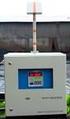 AMBIENT AIR QUALITY MONITORING SYSTEM Air Quality Monitoring... Easier. Faster. Better. www.chemtrols.com AMBIENT AIR QUALITY MONITORING FROM CHEMTROLS Chemtrols is a leading solution provider in the field
Indiana 2016 Ambient Air Monitoring Network Plan
 Indiana 2016 Ambient Air Monitoring Network Plan Indiana Department of Environmental Management Office of Air Quality July 1, 2015 Table of Contents Acronyms... 7 Introduction... 8 Public Review and Comment...