
A self-help guide to managing back pain and enabling recovery
|
|
|
- Lucas Ray
- 10 years ago
- Views:
Transcription
1 A self-help guide to managing back pain and enabling recovery The aim of this publication is to help people with back pain to begin to get back in control of their symptoms. By following the advice in this publication most people with back pain can enable recovery and limit the amount of time and suffering back pain often brings to work and leisure. In this booklet you will find information on: Back Pain, Treatment, Medication, Work Issues, Further Investigations, Common Myths, Glossary and Downloadable Guides This publication is supported by a grant from Grünenthal Ltd In association with
2 Acknowledgements Back in Control Working Group Fraser Ferguson, AHP Clinical Coordinator, NHS 24 Anna Crawford, Clinical Governance Lead NHS 24 Kathleen Houston, Development Manager Vocational Rehabilitation, Healthy Working Lives Susan Morison, Clinical Physiotherapy Specialist, Greater Glasgow Back Pain Service Mick McMenemy, Project Lead, National Musculoskeletal Scotland Redesign NHS 24 Patient Representative, George Selkirk Greater Glasgow Back Pain Service Grünenthal Ltd Contents Introduction Back Pain Treatment Medication Work Issues Further Investigations Common Myths More Information A Guide to Staying Active with Back Pain Back Pain at Work Sheet Glossary Disclaimer
3 Introduction The aim of this publication is to help people with back pain to begin to get back in control of their symptoms. By following the advice in this publication most people with back pain can enable recovery and limit the amount of time and suffering back pain often brings to work and leisure. Key facts to start The first three important steps to enable recovery are: take action, get advice, take pain relief Getting back to normal as soon as possible is the best way to aid your recovery Back pain is rarely due to any serious disease or damage Activity is better than rest Don t take back pain lying down The questions in this booklet were asked by people who suffered back pain. The answers are based on the experiences of those who have successfully managed their symptoms, together with the best research and medical evidence. 2. Introduction
4 Back Pain Why did I get back pain? Most people do not really know why. In Scotland 83% of people with back pain were unable to think of any actual cause for their symptoms 1. Back pain is very often due to a build up of different things. Examples might include working in awkward positions, sitting for prolonged periods or repeating tasks frequently without changing positions regularly. What is causing my back pain? Back pain is rarely due to any serious disease or damage. Back pain can be felt in the lower back area often spreading into the buttocks. Sometimes back pain travels into your leg (sciatica). This type of pain is normally due to the sciatic nerve being irritated. It is almost impossible to say exactly what is causing your symptoms. Often people ask: How can I be so sore when I can t remember doing anything to cause it? Why is there nothing to see? The lack of a clearly defined cause can make back pain sufferers feel very frustrated. Most people would like a specific diagnosis for their symptoms. How long will my back pain last Thankfully, 90% of people suffering from acute back pain do recover within six weeks. This recovery is helped if you keep active, keep at work and try to do things as normally as possible, even though you may have to modify these activities at first. If symptoms are not starting to improve within a week or so, you should consider contacting a physiotherapist or GP to begin treatment and rehabilitation. 3. Back pain
5 Is my back pain something serious? Back pain affects nearly everyone at some point in their life and is rarely due to any serious disease or damage. If you experience any of the following, you need to contact NHS 24 as soon as possible. Difficulty passing or controlling urine Numbness around your back passage or genitals. If you experience any of the following, you need to speak to your doctor as soon as possible. Serious pain which gets worse over several weeks. Generally feeling unwell. Back pain that starts when you are ill with other problems such as rheumatoid arthritis or cancer. Your back problem doesn t settle after six weeks. Numbness, pins and needles, or weakness in one or both legs. Unsteadiness when you walk. How can I avoid further episodes of back pain? Keep active keep moving and begin to return to your normal activity gradually. It is a good idea to aim for 30 minutes of moderate activity a day, 5 days a week. That might sound like a lot, but moderate activity can be anything that makes you slightly out of breath and increases your heart rate, like a brisk walk. Visit for lots of extra advice on how to become more active. In most cases, back pain recovers in a few weeks but it is not uncommon for it to return. You can help things by trying to stay in control of your symptoms, try to follow any advice given by a health care professional or found in this publication or visit 4. Back pain
6 Treatment for Back Pain Don t take back pain lying down! There is a lot you can do to help yourself recover. Get active. Take some pain relief. Get advice from a health care professional and follow the advice in this publication. The longer you are off work with back pain, the greater the risk of chronic pain and disability, and the lower your chances of ever returning to work. So the sooner you get going, the better. See a copy of the Staying Active with Back Pain. Guide on p13 of this publication. Follow these three simple steps to enable recovery Take painkillers Keep active, even if you have to modify things at first Take action and get treatment and rehabilitation advice from your physiotherapist or GP if your back pain is not getting better. There are no specific exercises that help every person with back pain. However, some safe exercises have been produced to help keep you moving. Information on these simple exercises can be found via the PhysioTools link on the Scottish Backs home page at Gradually returning to any sports or hobbies you may have is also a very important part of your rehabilitation. You may have to start gradually and modify activities to begin with. It will take time to slowly return to full fitness. Think of top footballers with injuries. Do they suddenly return from injury straight back to the first team playing 90 minutes at full pace? No. They gradually build up their activity levels bit by bit. Do I need to see a doctor about my back pain? Back pain affects nearly everyone at some point in their life but is rarely due to any serious disease or damage. Getting advice from your doctor can be useful to offer assessment, reassurance and prescribe appropriate medication for your pain if simple painkillers have not helped. They are also able to direct you to your local physiotherapy services. 5. Treatment
7 Do I need to see a doctor about my back pain? continued Not normally. If you follow the right advice and take the right medication, your back problem should improve over the next six weeks. If you experience any of the following, you need to contact NHS 24 as soon as possible. Difficulty passing or controlling urine Numbness around your back passage or genitals. If you experience any of the following, you need to speak to your doctor as soon as possible. Serious pain which gets worse over several weeks. Generally feeling unwell. Back pain that starts when you are ill with other problems such as rheumatoid arthritis or cancer. Your back problem doesn t settle after six weeks. Numbness, pins and needles, or weakness in one or both legs. Unsteadiness when you walk. Will losing weight help my back pain? There is no real evidence to show that losing weight helps back pain. What we know is that being more active helps reduce back pain as well as being good for your overall health and well-being, even if you are overweight. 6. Treatment
8 Medication for my back pain Should I take painkillers? Painkillers can help you keep moving. However, it is important that if you are already taking medication for something else or have other health problems you check with the pharmacist at your local chemist before taking painkillers for your back problem. You can find your local pharmacist here medicines (such as ibuprofen) to help your pain. You can take both these medicines together. paracetamol in 24 hours. You should not take any more than this amount. problems such as ulcers, or have had a previous allergic reaction to ibuprofen. Always take ibuprofen with or just after food. then you can safely take it again. If you are not sure, speak to your pharmacist. 7. Medication
9 Work Issues When can I go back to work? Generally, people recover faster and everybody benefits by staying at work or returning to work as early as possible, even if you have to carry out light duties at first. Back pain does not need to be completely gone before you can get back to work. Sore backs may be limiting at first, but it is still possible to do most normal work activities without putting too much strain on your back. Discuss any worries you have about returning to work with your employer as soon as you can. For free and confidential advice on back pain and work, call the Healthy Working Lives Adviceline on , or visit Healthy Working Lives at or The Health and Safety Executive at See Back Pain at Work information sheet (page 14). This sheet has important information you can share with your employer. How do I lift correctly? Every lift has its own risks. Try and plan ahead before any lift. If you are in employment, discuss this with your employers. Lifting is not only related to work. You lift in many daily activities such as picking up your baby, shopping bags or gardening. More information on lifting and manual handling can be found at Healthy Working Lives or from The Health and Safety Executive at What about sitting? Sitting without regularly changing positions can also cause problems. Being aware of your sitting posture can help reduce back pain problems. Information on computer workstations can be found at: and Avoid sitting for prolonged periods and get up to move regularly. Remember these simple rules apply whether you are sitting at work or at play. 8. Work Issues
10 Further Investigations for back pain Do I need an MRI scan? MRI (Magnetic Resonance Imaging) is a type of scan that is often used to diagnose health conditions that affect organs, tissue and bone. In most cases with back pain you will not require an MRI. Most back pain is rarely due to any serious disease or damage and clears up in a few weeks. If you have pain from your back, which is travelling to your leg (sciatica) that is not improving within 6 to 12 weeks of normal treatment and rehabilitation then an MRI may be considered. Discuss these symptoms with your physiotherapist or GP who can decide what is most appropriate for you. Do I need an X-ray? An X-ray is a painless way of producing pictures of inside the body using radiation. In most cases of back pain, X-rays are not necessary. Most back pain is rarely due to any serious disease or damage and clears up in a few weeks. An X-ray rarely helps diagnose the problem and can expose you to unnecessary radiation. Discuss this further with your physiotherapist or GP. Do I need an operation? Most back pain clears up in a few weeks by taking painkillers, keeping active and taking action. In the UK only around 1-2% of people with back pain ever require surgery. Your physiotherapist or GP can give you more information on this. 9. Further Investigations
11 Common myths about back pain There is a trapped nerve Nerves are rarely trapped. If there is a nerve problem, it is more likely that it is the sciatic nerve, which is irritated but not trapped. An irritated nerve gets better if you reduce the irritation whereas a trapped nerve can be much more difficult to clear up. You can help reduce the irritation by taking painkillers and keeping active. I have sciatica Sciatic pain is pain from your back that travels down the back of your leg often all the way into your foot. Sciatica is not a disease but a symptom. Sciatica is pain arising in the sciatic nerve, most often from something irritating it. There are many different causes for this. Fortunately, like most back pain symptoms, focusing on trying to stay active and getting back to normal will enable the quickest recovery. I must be 100% pain free before I go back to work The longer you are off work then the less likely it is you will ever get back. Plan to get back to work as soon as you can even if on lighter duties at first. Review the information in the Work Section above. Discuss this with your employer, sooner rather than later. I should try and avoid activity with back pain Keeping active is the best thing to help you get back to normal. Avoiding activity will hinder your recovery rather than help it. You may need to start slowly or modify normal activities at first. Rest is the best thing for back pain Rest rarely helps back pain and may actually slow down your recovery. If you have sciatic pain you may need to treat it with care for a day or two. However, get up and get moving as soon as you can. You may need to start slowly or modify normal activities at first. Review the Staying Active with Back Pain guide (page 13) for more detailed information. 10. Common myths
12 Tablets for back pain should only be taken when it is really sore It is important that you take any tablets you have for your back pain as per the instructions on the packet. Take them regularly. Taking painkillers only when your back is painful is fire fighting the pain and tends to be less effective overall. Back pain never clears up Most back pain settles quickly. Although it is important to be realistic there is no one super cure for all back pain. The best way to enable recovery is to keep active, get back to normal and to return to work. If your back pain is not settling in a week or so contact your physiotherapist or GP. Should I take painkillers? Painkillers can help you keep moving. However, it is important that if you are already taking medication for something else or have other health problems you check with the pharmacist at your local chemist before taking painkillers for your back problem. You can find your local pharmacist here medicines (such as ibuprofen) to help your pain. You can take both these medicines together. paracetamol in 24 hours. You should not take any more than this amount. problems such as ulcers, or have had a previous allergic reaction to ibuprofen. Always take ibuprofen with or just after food. Don't take ibuprofen within 48 hours of an injury. then you can safely take it again. If you are not sure, speak to your pharmacist. 11. Common myths
13 More Information Where can I get more information about back pain? Accessing services and information Five of the best places to look for safe, quality and effective information about back pain and where to find and access NHS Scotland treatment and rehabilitation services are: 1. Scottish Backs This web site is supported by NHS inform, NHS 24 and NHS Scotland and has the best up to date information about back pain. There are links to work and employee issues, simple exercise advice and downloadable information NHS inform NHS inform is a national development, delivered by NHS 24 to provide a co-ordinated single source of quality assured health information about health and health services in Scotland. NHS inform can be accessed either via the web at or via Helpline number at where the Health information advisers will provide advice and signposting to information. 3. VideoPhysio Hear from people who have had back pain. VideoPhysio allows you to watch and listen to how you could cope with your back pain without it taking over your life NHS 24 NHS 24 provides comprehensive up-to-date health information and self-care advice for people in Scotland. You will find information on how to access NHS Scotland services here Looking Local Looking Local offers a national service helping you to access public services, search for local information and advice. You can text your postcode to 61061, and you will get an immediate text response with a link to your local services within Looking Local. (Normal charges for texting messages apply) 12. More Information
14 A Guide to Staying Active with Back Pain Get on with your life You know that keeping active is good for your health - it is just the same for your back. The most important thing is for you to get on with your life. Stay in control. You really can help yourself to enable a successful recovery. Keep it moving and strike a balance Some things may take a little longer or you may need to change how you do them. Of course, you may need to take it a little easier or move a bit more carefully at first. However, do not stop altogether. You can still do most normal activities without putting too much strain on your back. Simple, painkill- taking it is important that you keep your back moving. This may hurt a bit at first, but it does not do any damage - hurt is not the same as harm. It is worth carefully working through any initial discomfort - because you will get back to normal that much quicker. Change position often. Do not sit or stand in one position for too long. Take breaks when driving or sitting. Get up and walk about to avoid stiffening up. Continue to do your normal activities. Being active will help you get better faster. Walking is a good form of regular exercise that will help you. What about work? Staying active and getting on with your life means staying at work or returning to work as soon as possible. You do not have to wait until the pain is 100% gone. In fact, getting back to work can help you recover faster. Do not be afraid to ask colleagues for help if you need to. See the Back Pain at Work Guide (page 14). The longer you are off the less likely it is you will get back. Some tasks may be more difficult when your back is sore, but back pain is not usually caused by work. Work is good for physical and mental health. Discuss this with your employer, sooner rather than later. More information Don t take back pain lying down 13. A Guide to Staying Active with Back Pain
15 Back Pain at Work Sheet: Why is back pain an issue for your employees? Your employees are your most important assets and you rely on a fit and healthy workforce. So it makes good business sense to make sure that you are able to manage one of the biggest causes of sickness absence. Most of us get backache at some time in our lives. Back pain can be very painful, but most often is not due to any serious disease or damage. Research shows that with back pain, it is best to STAY ACTIVE and to continue ordinary activities as normally as possible. This is the best way of enabling a successful recovery. What about work? Back pain does not need to be completely gone to get back to work. Sore backs may be limiting at first, but it is still possible to do most normal activities without putting too much strain on the back. People recover faster and everybody benefits by staying at work or returning to work as early as possible, even if this means starting with light duties. Extra help and support at this time is a good investment. Here are some simple inexpensive steps to support your employee to stay at work or return to work as soon as they can: Think about how you might be able to modify their job or provide some extra support for a short time Talk to your employee about different ways they could do their job for a short while. Often they will have simple solutions. Can the employee return to work in a gradual way rather than back to normal hours immediately? 14. Back Pain at Work Sheet
16 For more information about back pain and work 1. Visit 2. Healthy Working Lives Free occupational health and safety advice for employers in Scotland, covering a range of health and safety issues. Free National Advice Line Health Working Lives: Telephone If you want confidential advice and information on a wide range of workplace health issues, including Health Promotion, Occupational Health and Safety, Employability and Vocational Rehabilitation, or you want to contact them via , or via the link below Working Health Service Scotland (WHSS) This service has been set up to improve health and support individuals to remain in work or return to work. WHSS is available to people of working age and who are employed by a small to medium enterprise (i.e. companies which have less than 250 employees). Employee should be based in Scotland and have no access to Occupational Health/Employment Assistance Programmes. For more information and support call free on Health and Safety Executive The HSE can offer support and advice for employees and employers. Don t take back pain lying down 15. Back Pain at Work Sheet
17 Glossary Acute back pain Acute back pain is generally recognised as pain that lasts for up to six weeks. Chronic pain Chronic pain is continuous, long-term pain of more than 12 weeks or after the time that healing would have been thought to have occurred in pain after trauma or surgery. com is a good place to start looking for more information on this subject. Healthy Working Lives Healthy Working Lives is available to assist employers and employees in a wide range of topics relating to the workplace to create a healthy and motivated workforce. To do this, they offer free and confidential Workplace Visits, practical information and advice, and a structured Award Programme (www. healthyworkinglives.com) MRI scan MRI stands for magnetic resonance imaging. It is the use of magnets and radio waves to take detailed pictures of inside the body. Neuropathic pain Neuropathic pain is defined by the International Association for the Study of Pain (IASP) as pain arising NHS inform NHS inform is a national development, delivered by NHS 24 to provide a coordinated single source of quality assured health information about health and health services in Scotland. Physiotherapy Physiotherapy is a healthcare profession with a science foundation. The range of work is very broad and varied and involves working with people to promote their own health and well-being. Physiotherapy helps restore movement and function to as near normal as possible when someone is affected by injury, illness or by developmental or other disability. 16. Glossary
18 Rehabilitation Rehabilitation is the process of restoring function to a person who has had an illness or injury so as to regain maximum self-sufficiency and function in a normal, or as near normal manner as possible. Sciatica Sciatica is not a disease but a symptom. Sciatica is pain arising in the sciatic nerve, most often from something irritating it not trapping it. The sciatic nerve is the largest nerve in the body, running from the spinal cord down through the buttock and the back of each leg to supply all the muscles of the lower limb. It also carries sensory information back from the leg to the spinal cord and via the cord to the brain. Scottish Backs Scottish Backs is an online resource for people with low back pain. The information on this site will assist people with back pain to prevent it taking over aspects of their work and day-to-day life. It presents consistent advice, based on the best available evidence. It can be found at Slipped disc A slipped disc is the common name for the medical term prolapsed or herniated disc. Many people in the UK have back pain and although a slipped disc can cause back pain and/or leg pain, there are many other reasons for these symptoms. The discs are protective, circular pads of cartilage, that lie between the bones of your spine (vertebrae) and cushion the vertebrae when you jump or run. They are made up of a tough, fibrous case, which contains a softer gel. A slipped disc occurs when the outer part of a disc ruptures and allows the gel inside to bulge outwards from between the vertebrae. The damaged disc can put pressure on your whole spinal cord or on a single nerve fibre. This means that a slipped disc can cause pain both around the area of the bulge or anywhere along the area controlled by an affected nerve. X-ray An X-ray is a painless way of producing pictures of inside the body using radiation. 17. Glossary
19 Disclaimer NHS inform - Disclaimer NHS 24 operates the NHS inform website to allow information around health and health services to be freely available to the public in Scotland. NHS 24 uses its best efforts to ensure the accuracy and reliability of information on this website. However, no guarantees are made that the information contained on this website or associated, or linked web-sites is accurate, complete and current at any given time. Information presented on this website or associated sites may change at any time. Any information appearing on this website is issued as general information and is not warranted by NHS 24, or any other health organisation, nor should it be taken as advice. No responsibility can be accepted by NHS 24 or any other health organisation for action or inaction as a result of information contained on this website. This information is not intended in any way to replace the advice of your doctor or any other health care professional. Specific advice should be sought in specific situations from a properly qualified health worker. NHSinform.co.uk will not be liable for any direct, indirect, consequential, special, exemplary, or other damages arising therefore. 18. Disclaimer
20
Nerve Root Pain. Your back pain diagnosis. Contact Details. Spinal Triage Nuffield Orthopaedic Centre Windmill Road Headington Oxford OX3 7LD
 Nerve Root Pain Contact Details Spinal Triage Nuffield Orthopaedic Centre Windmill Road Headington Oxford OX3 7LD Phone: 01865 738051 Fax: 01865 738027 Web Site www.noc.nhs.uk Nerve Pain Patient Information
15 things you might not know about back pain
 15 things you might not know about back pain Mary O Keeffe (University of Limerick), Dr Kieran O Sullivan (University of Limerick), Dr Derek Griffin (Tralee Physiotherapy Clinic) Managing back pain costs
MANAGING BACK PAIN GETTING YOU BACK INTO ACTION MANAGING BACK PAIN. www.healthcare-rm.com
 H E A L T H R I S K M A N A G E M E N T MANAGING BACK PAIN MANAGING BACK PAIN GETTING YOU BACK INTO ACTION GETTING YOU BACK INTO ACTION www.healthcare-rm.com Who is this for? CONTENTS Introduction about
.org. Herniated Disk in the Lower Back. Anatomy. Description
 Herniated Disk in the Lower Back Page ( 1 ) Sometimes called a slipped or ruptured disk, a herniated disk most often occurs in your lower back. It is one of the most common causes of low back pain, as
Cervical Spondylosis. Understanding the neck
 Page 1 of 5 Cervical Spondylosis This leaflet is aimed at people who have been told they have cervical spondylosis as a cause of their neck symptoms. Cervical spondylosis is a 'wear and tear' of the vertebrae
Preventing & Treating Low Back Pain
 Preventing & Treating Low Back Pain An Introduction to Low Back Pain Low back pain is the number two reason that Americans see a health care practitioner second only to colds and flu. While most people
INFORMATION FOR YOU. Lower Back Pain
 INFORMATION FOR YOU Lower Back Pain WHAT IS ACUTE LOWER BACK PAIN? Acute lower back pain is defined as low back pain present for up to six weeks. It may be experienced as aching, burning, stabbing, sharp
Spine University s Guide to Cauda Equina Syndrome
 Spine University s Guide to Cauda Equina Syndrome 2 Introduction Your spine is a very complicated part of your body. It s made up of the bones (vertebrae) that keep it aligned, nerves that channel down
Introduction: Anatomy of the spine and lower back:
 Castleknock GAA club member and Chartered Physiotherapist, James Sherry MISCP, has prepared an informative article on the common causes of back pain and how best it can be treated. To book a physiotherapy
Herniated Disk. This reference summary explains herniated disks. It discusses symptoms and causes of the condition, as well as treatment options.
 Herniated Disk Introduction Your backbone, or spine, has 24 moveable vertebrae made of bone. Between the bones are soft disks filled with a jelly-like substance. These disks cushion the vertebrae and keep
Surgery for cervical disc prolapse or cervical osteophyte
 Mr Paul S. D Urso MBBS(Hons), PhD, FRACS Neurosurgeon Provider Nº: 081161DY Epworth Centre Suite 6.1 32 Erin Street Richmond 3121 Tel: 03 9421 5844 Fax: 03 9421 4186 AH: 03 9483 4040 email: [email protected]
Herniated Lumbar Disc
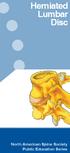 Herniated Lumbar Disc North American Spine Society Public Education Series What Is a Herniated Disc? The spine is made up of a series of connected bones called vertebrae. The disc is a combination of strong
Whiplash. Whiplash is part of our modern lives. One in 200 of us will suffer from it at some point but it is rarely serious.
 Whiplash www.physiofirst.org.uk Whiplash is part of our modern lives. One in 200 of us will suffer from it at some point but it is rarely serious. Most people make a full return to health. What you do
Acute Oncology Service Patient Information Leaflet
 Spinal cord compression Acute Oncology Service Patient Information Leaflet Introduction If you have been diagnosed with cancer, you need to know about spinal cord compression and the warning signs. What
Spinal cord stimulation
 Spinal cord stimulation This leaflet aims to answer your questions about having spinal cord stimulation. It explains the benefits, risks and alternatives, as well as what you can expect when you come to
University College Hospital. Metastatic spinal cord compression (MSCC) information for patients at risk of developing MSCC.
 University College Hospital Metastatic spinal cord compression (MSCC) information for patients at risk of developing MSCC Cancer Services 2 If you would like this document in another language or format,
Is Your Neck Or Back Pain Caused By A Herniated Disc?
 Is Your Neck Or Back Pain Caused By A Herniated Disc? The bones in your spine are called the vertebrae. The vertebrae are held together and in place by ligaments and small discs that act as shock absorbers.
This booklet can also be provided in large print on request. Please call 01865 738126. Spinal Stenosis. The Oxford Spine Unit
 This booklet can also be provided in large print on request. Please call 01865 738126 Nuffield Orthopaedic Centre NHS Trust NHS Spinal Team Nuffield Orthopaedic Centre Windmill Road Headington Oxford OX3
Cancer Pain. Relief from PALLIATIVE CARE
 PALLIATIVE CARE Relief from Cancer Pain National Clinical Programme for Palliative Care For more information on the National Clinical Programme for Palliative Care, go to www.hse.ie/palliativecareprogramme
How to treat your injured neck
 How to treat your injured neck Exceptional healthcare, personally delivered Your neck is made up of a number of bones bound together by strong discs and ligaments. It is also protected by strong muscles.
Temple Physical Therapy
 Temple Physical Therapy A General Overview of Common Neck Injuries For current information on Temple Physical Therapy related news and for a healthy and safe return to work, sport and recreation Like Us
What is the function of the spinal column?
 What is the function of the spinal column? Stability The function of the human spinal column is above all to stabilise the head, the upper body, and walking upright. Primarily responsible for this are
Seven Myths About Back Pain
 Seven Myths About Back Pain As reported in Safety Bulletin BCL004, Lifting and Your Back Some Fresh Ideas, up to 80 per cent of adults will experience back pain at some time during their lives. Let s take
Spine University s Guide to Kinetic MRIs Detect Disc Herniations
 Spine University s Guide to Kinetic MRIs Detect Disc Herniations 2 Introduction Traditionally, doctors use a procedure called magnetic resonance imaging (MRI) to diagnose disc injuries. Kinetic magnetic
Drug treatments for neuropathic pain
 Understanding NICE guidance Information for people who use NHS services Drug treatments for neuropathic pain NICE clinical guidelines advise the NHS on caring for people with specific conditions or diseases
Whiplash Injury Advice Sheet
 Whiplash Injury Advice Sheet What is whiplash? You can get whiplash if your head is suddenly jolted backwards and forwards in a whip-like movement. This type of neck injury often happens in car crashes.
LOW BACK PAIN: SHOULD I HAVE AN MRI?
 DATE: / / HG SY EH CQ RL AS JZ Name: (Last, First, M.I.) M F DOB: / / Decision Point LOW BACK PAIN: SHOULD I HAVE AN MRI? You may want to have a say in this decision, or you may simply want to follow your
Herniated Cervical Disc
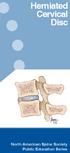 Herniated Cervical Disc North American Spine Society Public Education Series What Is a Herniated Disc? The backbone, or spine, is composed of a series of connected bones called vertebrae. The vertebrae
Patient Guide. Sacroiliac Joint Pain
 Patient Guide Sacroiliac Joint Pain Anatomy Where is the Sacroiliac Joint? The sacroiliac joint (SIJ) is located at the bottom end of your spine, where the "tailbone" (sacrum) joins the pelvis (ilium).
SPINE SURGERY - LUMBAR DECOMPRESSION
 SPINE SURGERY - LUMBAR DECOMPRESSION Information Leaflet Your Health. Our Priority. Page 2 of 7 Introduction This booklet has been compiled by the physiotherapy department to help you understand lumbar
Herniated Disk in the Lower Back
 Nader M. Hebela, MD Fellow of the American Academy of Orthopaedic Surgeons http://orthodoc.aaos.org/hebela Cleveland Clinic Abu Dhabi Cleveland Clinic Abu Dhabi Neurological Institute Al Maryah Island
Cervical Spondylosis (Arthritis of the Neck)
 Copyright 2009 American Academy of Orthopaedic Surgeons Cervical Spondylosis (Arthritis of the Neck) Neck pain is extremely common. It can be caused by many things, and is most often related to getting
This is my information booklet: Introduction
 Hip arthroscopy is a relatively new procedure which allows the surgeon to diagnose and treat hip disorders by providing a clear view of the inside of the hip with very small incisions. This is a more complicated
Back & Neck Pain Survival Guide
 Back & Neck Pain Survival Guide www.kleinpeterpt.com Zachary - 225-658-7751 Baton Rouge - 225-768-7676 Kleinpeter Physical Therapy - Spine Care Program Finally! A Proven Assessment & Treatment Program
Your knee: Rheumatoid arthritis or osteoarthritis?
 Your knee: Rheumatoid arthritis or osteoarthritis? Age Rheumatoid arthritis can come on at any age while osteoarthritis usually starts later in life. How does it start? Rheumatoid arthritis comes on rapidly
Neck Injuries and Disorders
 Neck Injuries and Disorders Introduction Any part of your neck can be affected by neck problems. These affect the muscles, bones, joints, tendons, ligaments or nerves in the neck. There are many common
It can be devastating to be diagnosed with a cancer like multiple myeloma. But there are treatments that can help you live longer and feel better.
 Patient information from the BMJ Group It can be devastating to be diagnosed with a cancer like multiple myeloma. But there are treatments that can help you live longer and feel better. What is multiple
What are Core Muscles?... 2. A Healthy Lumbar Spine...3. What is Low Back Pain?...4. Rehabilitation...6. Stages of Rehabilitation...
 Table of Contents What are Core Muscles?... 2 A Healthy Lumbar Spine...3 What is Low Back Pain?...4 Rehabilitation...6 Stages of Rehabilitation...7 Pain Management....................... 8 Heat/Ice What
Treating symptoms. An introduction to. Everyone diagnosed with MS can get treatment for their symptoms. The symptoms of MS. Who can get treatment?
 Everyone diagnosed with MS can get treatment for their symptoms This resource is an introduction to the treatments that are available. The symbol will point you to further resources. An introduction to
Low Back Pain Protocols
 Low Back Pain Protocols Introduction: Diagnostic Triage And 1. Patient Group Adults aged 18 years and over with routine low back problems. Patients who have had recent surgery should be referred directly
Non-epileptic seizures
 Non-epileptic seizures a short guide for patients and families Information for patients Department of Neurology Royal Hallamshire Hospital What are non-epileptic seizures? In a seizure people lose control
YOUR GUIDE TO TOTAL HIP REPLACEMENT
 A Partnership for Better Healthcare A Partnership for Better Healthcare YOUR GUIDE TO TOTAL HIP REPLACEMENT PEI Limited M50 Business Park Ballymount Road Upper Ballymount Dublin 12 Tel: 01-419 6900 Fax:
Headache after an epidural or spinal injection What you need to know. Patient information Leaflet
 Headache after an epidural or spinal injection What you need to know Patient information Leaflet April 2015 We have produced this leaflet to give you general information about the headache that may develop
Whiplash and Whiplash- Associated Disorders
 Whiplash and Whiplash- Associated Disorders North American Spine Society Public Education Series What Is Whiplash? The term whiplash might be confusing because it describes both a mechanism of injury and
INSTRUCTIONAL MATERIALS: REFERENCES: a. PAEC School Safety Manual b. Any locally produced Back Injury pamphlet TRAINING AIDS:
 LESSON TOPIC: AVERAGE TIME: BACK INJURY PREVENTION 30 Minutes INSTRUCTIONAL MATERIALS: REFERENCES: a. PAEC School Safety Manual b. Any locally produced Back Injury pamphlet TRAINING AIDS: a. Handout #1
Heel pain and Plantar fasciitis
 A patient s guide Heel pain and Plantar fasciitis Fred Robinson BSc FRCS FRCS(orth) Consultant Trauma & Orthopaedic Surgeon Alex Wee BSc FRCS(orth) Consultant Trauma & Orthopaedic Surgeon. What causes
Recent Injuries. www.physiofirst.org.uk
 Recent Injuries www.physiofirst.org.uk A recent or acute injury can occur suddenly during any activity, from tripping over the kerb, to making the bed, to playing sport. In some cases, an acute injury
Patient information for cervical spinal fusion.
 Patient information for cervical spinal fusion. Introduction This booklet has been compiled to help you understand spinal cervical fusion surgery and postoperative rehabilitation. Anatomy The cervical
 More information >>> HERE
 TAC information for people with soft tissue injuries. Looking after yourself and your injury Getting moving again. Soft tissue injuries
 TAC information for people with soft tissue injuries Looking after yourself and your injury Getting moving again Soft tissue injuries A The aim of this booklet is to give you the information and practical
Fact Sheet: Occupational Overuse Syndrome (OOS)
 Fact Sheet: Occupational Overuse Syndrome (OOS) What is OOS? Occupational Overuse Syndrome (OOS) is the term given to a range of conditions characterised by discomfort or persistent pain in muscles, tendons
Recognizing and Understanding Pain
 Because multiple myeloma is a cancer involving the bone marrow, a common myeloma symptom is bone pain. But the good news is that most pain can be managed. This resource can help you better understand pain
Further information You can get more information and share your experience at www.aboutmyhealth.org
 OS01 Total Hip Replacement Further information You can get more information and share your experience at www.aboutmyhealth.org Local information You can get information locally from: Taunton and Somerset
Information on the Chiropractic Care of Lower Back Pain
 Chiropractic Care of Lower Back Pain Lower back pain is probably the most common condition seen the the Chiropractic office. Each month it is estimated that up to one third of persons experience some type
Level 1, 131-135 Summer Street ORANGE NSW 2800 Ph: 02 63631688 Fax: 02 63631865
 Write questions or notes here: Level 1, 131-135 Summer Street ORANGE NSW 2800 Ph: 02 63631688 Fax: 02 63631865 Document Title: Total Knee Replacement Further Information and Feedback: Tell us how useful
The road to recovery. The support available to help you with your recovery after stroke
 The road to recovery The road to recovery The support available to help you with your recovery after stroke We re for life after stroke Introduction Need to talk? Call our confidential Stroke Helpline
Epidural Continuous Infusion. Patient information Leaflet
 Epidural Continuous Infusion Patient information Leaflet April 2015 Introduction You may already know that epidural s are often used to treat pain during childbirth. This same technique can also used as
Treating Mesothelioma - A Quick Guide
 Treating Mesothelioma - A Quick Guide Contents This is a brief summary of the information on Treating mesothelioma from CancerHelp UK. You will find more detailed information on the website. In this information
How To Understand The Effects Of Mild Traumatic Brain Injury
 Knowing about your Mild Traumatic Brain Injury (TBI) Knowing about mild TBI There is a distinction between visible injuries to the scalp ( Head Injuries ) and internal injuries to the brain itself ( Traumatic
If you or a loved one have suffered because of a negligent error during spinal surgery, you will be going through a difficult time.
 If you or a loved one have suffered because of a negligent error during spinal surgery, you will be going through a difficult time. You may be worried about your future, both in respect of finances and
.org. Cervical Radiculopathy (Pinched Nerve) Anatomy. Cause
 Cervical Radiculopathy (Pinched Nerve) Page ( 1 ) Cervical radiculopathy, commonly called a pinched nerve occurs when a nerve in the neck is compressed or irritated where it branches away from the spinal
Back Safety and Lifting
 Back Safety and Lifting Structure of the Back: Spine The spine is the part of the back that supports the trunk and head. It protects the spinal cord as well as giving flexibility to the body. Vertebrae
Shared Decision Making
 Deciding what to do about osteoarthritis of the knee This short decision aid is to help you decide what to do about your knee osteoarthritis. You can use it on your own, or with your doctor, to help you
Sciatica Yuliya Mutsa PTA 236
 Sciatica Yuliya Mutsa PTA 236 Sciatica is a common type of pain affecting the sciatic nerve, which extends from the lower back all the way through the back of the thigh and down through the leg. Depending
Knowing about your Low Back Pain
 Knowing about your Low Back Pain Knowing about low back pain Low back pain is very common with around 80-90% of adults having some sort of back pain in their lifetime. detail vertebra disc Although a specific
VCA Animal Specialty Group 5610 Kearny Mesa Rd., Suite B San Diego, CA 92111 858-560-8006 www.vcaanimalspecialtygroup.com.
 Disk Disease While not limited to small breeds, disc disease is much more prevalent among Dachshunds, Lhasa Apsos, Poodles, Beagles and Pekingese primarily due to genetic factors. These traits result in
Hitting a Nerve: The Triggers of Sciatica. Bruce Tranmer MD FRCS FACS
 Hitting a Nerve: The Triggers of Sciatica Bruce Tranmer MD FRCS FACS Disclosures I have no financial disclosures Objectives - Sciatica Historical Perspective What is Sciatica What can cause Sciatica Clinical
Schiffert Health Center www.healthcenter.vt.edu. Neck Pain (Cervical Strain) COMMON CAUSES: QUICK TREATMENT : NECK PAIN TREATING NECK PAIN:
 Schiffert Health Center www.healthcenter.vt.edu Patient Information: Neck Pain (Cervical Strain) COMMON CAUSES: Neck pain may be triggered by a specific event, such a sport injury or motor vehicle accident.
About MS. An introduction to. An introduction to multiple sclerosis for people who have recently been diagnosed. What is MS? Is it common?
 An introduction to multiple sclerosis for people who have recently been diagnosed When you have just been diagnosed with multiple sclerosis, you will probably have many questions about the condition and
Lumbar Disc Herniation/Bulge Protocol
 Lumbar Disc Herniation/Bulge Protocol Anatomy and Biomechanics The lumbar spine is made up of 5 load transferring bones called vertebrae. They are stacked in a column with an intervertebral disc sandwiched
The Physiotherapy Pilot. 1.1 Purpose of the pilot
 The Physiotherapy Pilot 1.1 Purpose of the pilot The purpose of the physiotherapy pilot was to see if there were business benefits of fast tracking Network Rail employees who sustained injuries whilst
ARTHRITIS INTRODUCTION
 ARTHRITIS INTRODUCTION Arthritis is the most common disease affecting the joints. There are various forms of arthritis but the two that are the most common are osteoarthritis (OA), and rheumatoid arthritis
X-Plain Rheumatoid Arthritis Reference Summary
 X-Plain Rheumatoid Arthritis Reference Summary Introduction Rheumatoid arthritis is a fairly common joint disease that affects up to 2 million Americans. Rheumatoid arthritis is one of the most debilitating
Surgery for Disc Prolapse
 Contact Details Spinal Team Nuffield Orthopaedic Centre Windmill Road Headington Oxford OX3 7LD Surgery for Disc Prolapse Phone: 01865 738051 Fax: 01865 738027 Web Site www.noc.nhs.uk Surgery for disc
Spine University s Guide to Transient Osteoporosis
 Spine University s Guide to Transient Osteoporosis 2 Introduction The word osteoporosis scares many people because they ve heard about brittle bone disease. They may know someone who has had it or seen
Why Back Safety is Important
 Back Safety Why Back Safety is Important Back injuries are considered by OSHA (the Occupational Safety and Health Administration) as the nation's #1 workplace safety problem. Back Injuries are often: Very
WHEN PROSTATE CANCER RETURNS: ADVANCED PROSTATE CANCER. How Will I Know If My Prostate Cancer Returns?
 WHEN PROSTATE CANCER RETURNS: ADVANCED PROSTATE CANCER (The following information is based on the general experiences of many prostate cancer patients. Your experience may be different.) How Will I Know
Dizziness and balance problems
 Dizziness and balance problems Dizziness and balance problems, Action on Hearing Loss Information, May 2011 1 Dizziness and balance problems This factsheet is part of our Ears and ear problems range. It
Clinical Reasoning The patient presents with no red flags and no indications of maladaptive behaviour in regard to fear avoidance.
 The McKenzie Institute International 2014 Vol. 3, No. 3 CASE REVIEW: A CLINICIAN S PERSPECTIVE Case Review: 35-Year-Old Male with History of Low Back Pain Brian Østergaard Sørensen, PT, Dip.MDT Introduction
Epilepsy. What is Epilepsy? Epilepsy is a common brain condition. About 1 person in every 200 has epilepsy. Epilepsy is when you keep having seizures.
 Epilepsy What is Epilepsy? Epilepsy is a common brain condition. About 1 person in every 200 has epilepsy. Epilepsy is when you keep having seizures. A seizure is a sudden burst of electrical activity
BACK PAIN: WHAT YOU SHOULD KNOW
 BACK PAIN: WHAT YOU SHOULD KNOW Diane Metzer LOWER BACK PAIN Nearly everyone at some point has back pain that interferes with work, recreation and routine daily activities. Four out of five adults experience
A whiplash injury, most commonly due to a car crash, causes neck pain. See separate leaflet called 'Whiplash Injury' for details.
 Neck Pain in Adults Who gets neck pain and what are the causes? Neck pain is common. More than half of people develop a bout of neck pain at some time in their life. One survey done in the UK found that,
Procedure Information Guide
 Procedure Information Guide Total hip replacement Brought to you in association with EIDO and endorsed by the The Royal College of Surgeons of England Discovery has made every effort to ensure that the
Primary and revision lumbar discectomy. (nerve root decompression)
 Primary and revision lumbar discectomy (nerve root decompression) The aim of this leaflet is to help answer some of the questions you may have about having a lumbar discectomy. It explains the benefits,
Medical Insurance Long Term (chronic) Conditions Explained
 Medical Insurance Long Term (chronic) Conditions Explained October 2013 FS 28452 wpa.org.uk EMS 505226 IS 553152 Introduction This leaflet explains how we manage claims for our policyholders whose medical
Rheumatoid Arthritis www.arthritis.org.nz
 Rheumatoid Arthritis www.arthritis.org.nz Did you know? RA is the second most common form of arthritis Approximately 40,000 New Zealanders have RA RA can occur at any age, but most often appears between
SCRIPT NUMBER 82 SPRAINED ANKLE (TWO SPEAKERS)
 SCRIPT NUMBER 82 SPRAINED ANKLE (TWO SPEAKERS) PROGRAM NAME: HEALTH NUGGETS PROGRAM TITLE: SPRAINED ANKLE PROGRAM NUMBER: 82 SUBJECT: PATHOLOGY, CAUSES, DIAGNOSIS, TREATMENT, PREVENTION OF SPRAINED ANKLES
Ankle Stabilisation Procedure
 Ankle Stabilisation Procedure Exceptional healthcare, personally delivered Following your consultation with a member of the Foot and Ankle team you have been diagnosed with an unstable ankle. This leaflet
.org. Cervical Spondylosis (Arthritis of the Neck) Anatomy. Cause
 Cervical Spondylosis (Arthritis of the Neck) Page ( 1 ) Neck pain can be caused by many things but is most often related to getting older. Like the rest of the body, the disks and joints in the neck (cervical
Lumbar Laminectomy and Interspinous Process Fusion
 Lumbar Laminectomy and Interspinous Process Fusion Introduction Low back and leg pain caused by pinched nerves in the back is a common condition that limits your ability to move, walk, and work. This condition
Hopefully this information will be useful for people with dementia, their families, carers and medical professionals.
 et ision 2020 UK The right to sight ementia and Sight Loss Interest Group Cataracts and dementia Cataracts are a very common eye condition in older people. Most people with cataracts are over the age of
Patient Guide to Lower Back Surgery
 The following is a sampling of products offered by Zimmer Spine for use in Open Lumbar Fusion procedures. Patient Guide to Lower Back Surgery Open Lumbar Fusion Dynesys The Dynesys Dynamic Stabilization
Scaphoid Fracture of the Wrist
 Page 1 of 6 Scaphoid Fracture of the Wrist Doctors commonly diagnose a sprained wrist after a patient falls on an outstretched hand. However, if pain and swelling don't go away, doctors become suspicious
Lower Back Pain An Educational Guide
 Lower Back Pain An Educational Guide A publication from the Center of Pain Medicine and Physiatric Rehabilitation 2002 Medical Parkway Ste 150 1630 Main St Ste 215 Annapolis, MD 21401 Chester, MD 21619