
CMS Mandated Training for Providers, First Tier, Downstream and Related Entities
|
|
|
- Catherine Copeland
- 10 years ago
- Views:
Transcription
1 CMS Mandated Training for Providers, First Tier, Downstream and Related Entities I. INTRODUCTION It is the practice of Midwest Health Plan (MHP) to conduct its business with the highest degree of ethics and in compliance with all laws. MHP has adopted written policies and procedures to comply with business standards, federal and state laws. MHP has established effective lines of communication and has a dedicated compliance officer to monitor suspected violations, and, when appropriate, to oversee corrective actions to prevent future violations. Midwest Health Plan (MHP) is a Medicare Advantage (MA) Organization that contracts with the Centers for Medicare & Medicaid Services (CMS) to offer health coverage to eligible enrollees. As an entity that contracts with MHP to provide health and/or administrative services on behalf of our MA beneficiaries, your organization must meet new education and training requirements related to fraud, waste and abuse (FWA). The purpose of this memorandum is to provide FWA compliance training as required by the federal regulations and Medicare guidance. Specifically, this memorandum includes: an overview of the revised regulations; relevant definitions related to the regulations; education requirements; fraud, waste and abuse training; a sample attestation, training log and resources. II. REVISED REGULATIONS On December 5, 2007, CMS issued a final rule addressing 42 C.F.R. Part 422 regarding the Medicare Advantage program. Pursuant to this final rule, MA Organizations, such as MHP, are required to: Maintain appropriate oversight and attest it will implement a compliance plan that is designed to detect, prevent and correct fraud, waste and abuse and includes effective training and education between the compliance officer, organization employees, contractors, agents and directors. Participation in training programs should be a condition of continued employment and a criterion included in employee evaluations. Establish training and communication requirements for first tier, downstream and related entities with which MHP has a contractual relationship. In this respect, the first tier, downstream and related entities with whom MHP contracts must undertake the training required by the regulations and addressed by this memorandum, and must attest to MHP that such training has been completed. Obtain training logs and copies of attestations from their first tier, downstream and related entities to comply with this requirement. Accordingly, your organization must

2 submit the required attestation (Exhibit A) within the designated timeframe to MHP and must maintain internal training logs (Exhibit B). III. DEFINITIONS Plan Sponsor: An entity that has a contract with CMS to offer one or more of the following Medicare products: MA Plans, MA Prescription Drug Plans, Prescription Drug Plans (PDP) and 1876 Cost Plans. First Tier Entity: Any party that enters into a written arrangement acceptable to CMS with a Sponsor or applicant to provide administrative services or health care services for a Medicare eligible individual under the MA or Part D programs. 1 Downstream Entity: Any party that enters into a written arrangement, acceptable to CMS, below the level of the arrangement between a Sponsor and a first tier entity. These written arrangements continue down to the level of the ultimate provider of both health and administrative services. 2 Related Entity: Any entity that is related to the MA Organization by common ownership or control and (1) performs some of the MA Organization s management functions under contract or delegation; (2) furnishes services to Medicare enrollees under an oral or written agreement; or (3) leases real property or sells materials to the MA organization at a cost of more than $2500 during a contract period. 3 Fraud: An intentional act of deception, misrepresentation or concealment in order to gain something of value. Examples of fraud include billing for services not furnished; billing for services at a higher rate than is justified; soliciting, offering or receiving a kickback, bribe or rebate; or violations of the physician self-referral (Stark) prohibition. Waste: Use or expend carelessly, extravagantly, or to no purpose. Abuse: May be intentional or unintentional and directly or indirectly results in unnecessary or increased costs to the Medicare program. Examples of abuse include: charging in excess for services or supplies; proving medically unnecessary services; or providing services that do not meet professionally recognized standards. IV. EDUCATION REQUIREMENTS According to federal regulations, MHP is ultimately responsible for oversight and monitoring of education and training of first tier, downstream and related entities. As one of 1 42 C.F.R Id. 3 Id. 2

3 these entities, your organization can comply with the FWA education and training requirements by satisfying one of the following three options: (1) Provide your own training in accordance with 42 C.F.R (b) (4) (vi) (c) Effective training and education between the compliance officer and organization employees, contractors, agents and directors. (2) Take training from another MA Organization. (3) Complete the training provided by MHP. Your organization must submit the required attestation (Exhibit A) within the designated timeframe to MHP and must maintain internal training logs (Exhibit B). V. FRAUD, WASTE AND ABUSE TRAINING A. Documentation Requirements Your organization is required to complete the attestation attached hereto, which must be signed by an authorized representative. Upon request, your organization may be required to submit copies of training logs demonstrating that your employees received FWA training. If your organization has contracted with other entities to provide health and/or administrative services on behalf of MHP MA and/or Part D beneficiaries, you will need to obtain attestations from those entities that they have completed FWA training. In addition, those entities will also need to provide your organization with copies of their training logs. B. Relevant FWA Laws 1. False Claims Act The False Claims Act prohibits knowingly presenting (or causing to be presented) to the federal government a false or fraudulent claim for payment or approval. When submitting claims data to CMS for payment, MHP and our subcontractors must certify that claims data is true and accurate to the best of their knowledge and belief. The False Claims Act is enforced against any individual/entity that knowingly submits (or causes another individual/entity to submit) a false claim for payment to the federal government. *** Note, intent to defraud is not necessary to prove that the government was in fact defrauded, as long as it is established that the person acted with intent to defraud Anti-Kickback Statute 4 42 U.S.C. 1320a-7b. 3

4 Section 1128B9b of the Social Security Act provides criminal penalties for individuals and entities that knowingly and willfully offer, pay, solicit or receive remuneration in order to induce or reward business payable (or reimbursable) under the Medicare or other federal health care programs. 5 For purposes of the anti-kickback statute, remuneration includes the transfer of anything of value, directly or indirectly, overtly or covertly, in cash or in kind. Recent kickback cases have involved unlawful referral payments in the form of free office space, free equipment, free drugs or supplies, inflated or sham consulting contracts, and travel and entertainment by physicians by hospitals, pharmaceutical companies and laboratories. In addition to applicable criminal sanctions, and individual or entity may be excluded from participation in the Medicare and other federal health care programs and subject to civil monetary penalties for violations of the Anti-Kickback Statute. 3. Self-Referral Prohibition Statute (Stark Law) The federal Stark law prohibits physicians from referring Medicare patients to an entity with which the physician or a physician s immediate family member has a financial relationship, unless an exception applies HIPAA The Health Insurance Portability and Accountability Act of 1996 (HIPAA), Public Law , applies to covered entities, including health care providers and health plans. Individuals, organizations, and agencies that meet the definition of a covered entity under HIPAA must comply with statutory and regulatory requirements to protect the privacy of health information and provide individuals with certain rights with respect to their health information. 7 C. Examples of Potential FWA 1. Potential FWA committed by a MA Organization and/or Part D Plan Sponsor 8 Potential FWA committed by a MA Organization and/or Part D Plan Sponsor could include unlawful marketing schemes, such as: Unsolicited door-to-door marketing. Enrollment of beneficiaries without their knowledge or consent. Stating that a marketing agent/broker works for or is contracted with the Social Security Administration or CMS U.S.C. 1320a-7b(b) U.S.C. 1395nn C.F.R. Part Medicare Prescription Drug Benefit Manual, CMS Pub , Chapter 9, Section

5 Requires beneficiaries to pay up front premiums. 2. Potential FWA committed by a Prescriber 9 Potential FWA committed by a prescriber could include: Illegal remuneration schemes Prescriber is offered, or paid, or solicits, or receives unlawful remuneration to induce or reward the prescriber to write prescriptions for drugs, products or services. Script mills Prescriber writes prescriptions for drugs that are not medically necessary, often in mass quantities, and often for patients that are not theirs. These scripts are usually written, but not always, for controlled drugs on sale on the black market, and might include improper payments to the prescriber. Provision of false information Prescriber falsifies information (not consistent with medical record) submitted through a prior authorization or other formulary oversight mechanism in order to justify coverage. Prescriber misrepresents the dates, descriptions of prescriptions or other services furnished, or the identity of the individual who furnishes the services. Theft of provider s DEA number or prescription pad Prescription pads and/or DEA numbers can be stolen from prescribers. This information could illegally be used to write prescriptions for controlled substances or other medications often sold on the black market. 3. Potential FWA related to billing 10 Potential FWA committed by a provider could include: Billing for items or services not rendered or not provided as claimed; Submitting claims for equipment or supplies and services that are not reasonable and necessary; Double billing resulting in duplicate payment; Billing for non-covered services as if covered; Knowing misuse of provider identification numbers, which results in improper billing; Unbundling; Failure to properly code using coding modifiers; Altering medical records; Compensation programs that offer incentives for items or services ordered and revenue generated; Inappropriate use of place of service codes; Routine waivers of deductibles and coinsurance; Clustering; and 9 Medicare Prescription Drug Benefit Manual, CMS Pub , Chapter 9, Section Medicare Prescription Drug Benefit Manual, CMS Pub , Chapter 9, Section

6 Upcoding the level of service provided. 4. Potential FWA committed by a Pharmacy Benefit Manager 11 Potential FWA committed by a pharmacy benefit manager could include: Unlawful remuneration Pharmacy benefit manager receives unlawful remuneration in order to steer a beneficiary toward a certain plan or drug, or for formulary placement. Includes unlawful remuneration from vendors beyond switching fees. Failure to Offer Negotiated Prices Occurs when a pharmacy benefit manager does not offer a beneficiary the negotiated price of a Part D drug. 5. Potential FWA committed by a Retail Pharmacy 12 Potential FWA committed by a retail pharmacy could include: Bait and Switch Pricing Occurs when a beneficiary is led to believe that a drug will cost one price, but at the point of sale the beneficiary is charged a higher amount. Prescription Drug Shorting Pharmacist provides less than the prescribed quantity and intentionally does not inform the patient or make arrangements to provide the balance, but bills for the fully-prescribed amount. Prescription Forging or Altering Where existing prescriptions are altered, by an individual without the prescriber s permission to increase quantity or number of refills. 6. Potential FWA committed by a Pharmaceutical Manufacturer 13 Illegal Off-label promotion Illegal promotion of off-label drug usage through marketing, financial incentives, or other promotion campaigns. Illegal Usage of Free Samples Providing free samples to physicians knowing and expecting those physicians to bill the federal health care programs for the sample. 11 Medicare Prescription Drug Benefit Manual, CMS Pub , Chapter 9, Section Medicare Prescription Drug Benefit Manual, CMS Pub , Chapter 9, Section Medicare Prescription Drug Benefit Manual, CMS Pub , Chapter 9, Section

7 7. Potential FWA committed by a Beneficiary 14 Potential FWA committed by a beneficiary could include: Misrepresentation of Status: A Medicare beneficiary misrepresents personal information, such as identity, eligibility, or medical condition in order to illegally receive the drug benefit. Enrollees who are no longer covered under a drug benefit plan may still attempt to use their identity card to obtain prescriptions. Identity Theft: Perpetrator uses another person s Medicare card to obtain prescriptions. Prescription forging or altering: Where prescriptions are altered, by someone other than the prescriber or pharmacist with prescriber approval, to increase quantity or number of refills. Prescription diversion and inappropriate use: Beneficiaries obtain prescription drugs from a provider, possibly for a condition from which they do not suffer, and gives or sells this medication to someone else. Also can include the inappropriate consumption or distribution of a beneficiary s medications by a caregiver or anyone else. Prescription stockpiling: Beneficiary attempts to game their drug coverage by obtaining and storing large quantities of drugs to avoid out-of pocket costs, to protect against periods of non-coverage (i.e., by purchasing a large amount of prescription drugs and then disenrolling), or for purposes of resale on the black market. Doctor shopping: Beneficiary or other individual consults a number of doctors for the purpose of inappropriately obtaining multiple prescriptions for narcotic painkillers or other drugs. Doctor shopping might be indicative of an underlying scheme, such as stockpiling or resale on the black market. D. Reporting and preventing FWA 1. Reporting Potential FWA Compliance with state and federal laws and regulations and Medicare program requirements is a priority to MHP. If your organization or other downstream entity with which you contract to provide health and/or administrative services on behalf of MA or Part D beneficiaries has questions regarding compliance generally, has questions regarding MHP s FWA compliance policies or training, or identifies potential FWA, please contact: Your organization s compliance officer or compliance hotline; and/or MHP: Kathleen M. Harkness, RN, MS, CPHQ, 14 Medicare Prescription Drug Benefit Manual, CMS Pub , Chapter 9, Section

8 Sr. Director of Corporate Quality Midwest Health Plan 4700 Schaefer Rd. Ste. 340 Dearborn, MI (313) ; and/or Office of Inspector General: Office of the Inspector General HHS TIPS Hotline P.O. Box Washington, DC (800) HHS-TIPS ((800) ) (phone) (800) (fax) When making an inquiry, please provide as much information as possible regarding your question or concern, including the following information: Contact information (Name, address, telephone number - *** Note, you also may report anonymously. Retaliation is prohibited when you report a compliance concern in good faith); Type of item or service involved; Place of service; Nature of the compliance question or allegation(s) (if applicable); Timeframe of the allegation(s) (if applicable). 2. Preventing Potential FWA CMS has adopted the following strategies to prevent fraud and abuse: Effective enrollment procedures and education of physicians, providers, suppliers and beneficiaries. Early detection through Medical Review (MR) and data analysis. Close coordination with law enforcement and other agency partners. Applying fair and firm enforcement policies. In addition, your organization should establish disciplinary guidelines for non-compliant or fraudulent behavior, which should include mandatory retraining and which may include disciplinary action, including possible termination when behavior is serious, repeated, or when knowledge of a possible violation is not reported. 8
9 E. Attestation, Training Log and Resources Your organization must submit the required attestation (Exhibit A) within the designated timeframe to MHP and must maintain internal training logs (Exhibit B). A list of FWA resources is also attached as Exhibit C. 9
10 EXHIBIT A ATTESTATION As a first tier, downstream or related entity, attests that it has conducted appropriate education and training to identify, correct and prevent potential fraud, waste and abuse, per the Final Rule published at 72 Fed. Reg et seq. (December 5, 2007). Please select the method of education and training that your organization chose to comply with the Final Rule requirement: ( ) Conducted our own education and training per 42 C.F.R (b) (4) (vi) (c). ( ) Took training and education provided by a MA and/or Part D Sponsor or other organization. ( ) Took training and education provided by Midwest Health Plan. The signature below attests that your organization has completed appropriate education and training to identify, correct and prevent potential fraud, waste and abuse, and your organization will furnish upon request to Midwest Health Plan training logs to validate that training was completed. In addition, your organization will obtain attestations from other entities that provide health, prescription and/or administrative services on behalf of Midwest Health Plan Medicare Advantage beneficiaries, and upon request obtain training logs to verify that fraud, waste and abuse training was completed by those entities. Signature: Name: Title: Date: Please return this completed attestation annually by March 31 to: Kathleen M. Harkness, RN, MS, CPHQ Sr. Director of Corporate Quality Midwest Health Plan 4700 Schaefer Rd. Ste. 340 Dearborn, MI Fax:

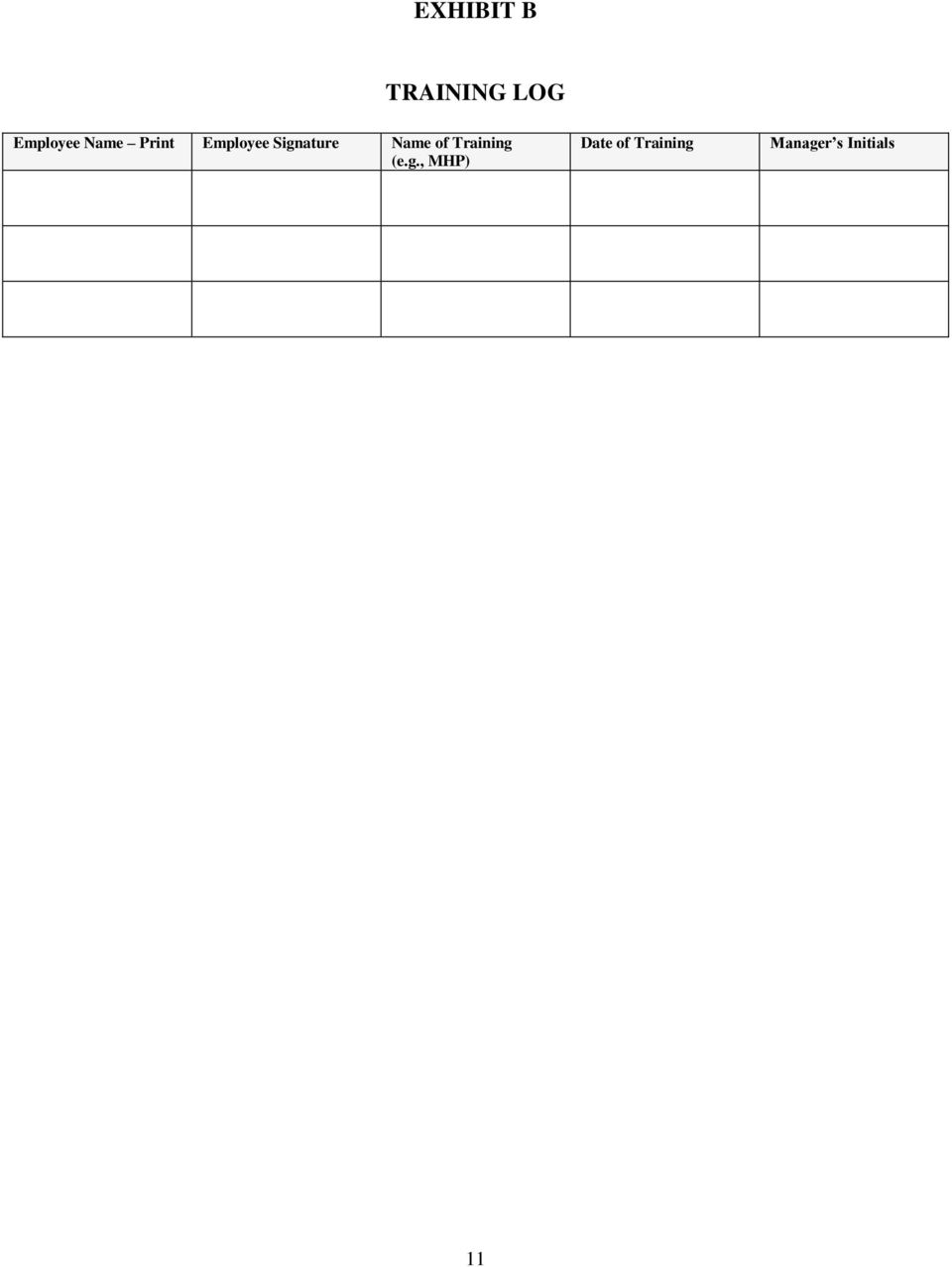
11 EXHIBIT B TRAINING LOG Employee Name Print Employee Signature Name of Training (e.g., MHP) Date of Training Manager s Initials 11
12 EXHIBIT C RESOURCES The following federal government websites are sources of information regarding fraud, waste and abuse education, detection, correction and prevention: Department of Health and Human Services, Office of Inspector General Centers for Medicare & Medicaid Services ure.pdf 12

Fraud Waste and Abuse Training Requirement. To Whom It May Concern:
 RE: Fraud Waste and Abuse Training Requirement To Whom It May Concern: This letter is to inform you about a new requirement being implemented by the CMS program (Centers for Medicare and Medicaid Services)
Compliance and Program Integrity Melanie Bicigo, CHC, CEBS [email protected] 906-225-7749
 Compliance and Program Integrity Melanie Bicigo, CHC, CEBS [email protected] 906-225-7749 Define compliance and compliance program requirements Communicate Upper Peninsula Health Plan (UPHP) compliance
Fraud, Waste and Abuse Prevention Training
 Fraud, Waste and Abuse Prevention Training The Centers for Medicare & Medicaid Services (CMS) requires annual fraud, waste and abuse training for organizations providing health services to MA or Medicare
BlueCross BlueShield of Tennessee Senior Care Division and Volunteer State Health Plan
 BlueCross BlueShield of Tennessee Senior Care Division and Volunteer State Health Plan Fraud Waste and Abuse Training for Providers, First Tier, Downstream and Related Entities Overview The Centers for
Medicare Compliance and Fraud, Waste, and Abuse Training
 Medicare Compliance and Fraud, Waste, and Abuse Training Objectives Recognize laws and concepts affecting compliance and fraud, waste, and abuse (FWA) Increase awareness of FWA Use identification techniques
Fraud, Waste, and Abuse Training For Use By Care Wisconsin Providers Created: September 20, 2010 Reviewed/Revised: 8/18/2011
 Fraud, Waste, and Abuse Training For Use By Care Wisconsin Providers Created: September 20, 2010 Reviewed/Revised: 8/18/2011 Definitions & Examples Why it Matters Prevention, Detection and Reporting Your
Fraud, Waste & Abuse. Training Course for UHCG Employees
 Fraud, Waste & Abuse Training Course for UHCG Employees Overview The Centers for Medicare & Medicaid Services (CMS) require Medicare Advantage Organizations and Part D Plan Sponsors to provide annual fraud,
Overview, Guidance & Training: Medicare Fraud, Waste & Abuse
 Overview, Guidance & Training: Medicare Fraud, Waste & Abuse Learning Objectives 1. To become familiar with the new educational component of fraud, waste and abuse (FWA) training regulations that govern
Fraud, Waste, and Abuse
 These training materials are divided into three topics to meet the responsibilities stated on the previous pages: Fraud, Waste, Compliance Program Standards of Conduct Although the information contained
Medicare Advantage and Part D Fraud, Waste, and Abuse Training. October 2010
 Medicare Advantage and Part D Fraud, Waste, and Abuse Training October 2010 Introduction 2008: United States spent $2.3 trillion on health care. Federal fiscal year 2010: Medicare expected to cover an
Fraud, Waste and Abuse Training for Medicare and Medicaid Providers
 Fraud, Waste and Abuse Training for Medicare and Medicaid Providers For Use By: Licensed affiliates and subsidiaries of Magellan Health Services, Inc. Contents and Agenda Define Fraud, Waste, and Abuse
Medicare Fraud, Waste and Abuse (FWA) Compliance Training. ICE Approved: 11/13/09
 Medicare Fraud, Waste and Abuse (FWA) Compliance Training ICE Approved: 11/13/09 1 CMS Requirements The Centers for Medicare and Medicaid Services (CMS) requires annual fraud, waste, and abuse training
Touchstone Health Training Guide: Fraud, Waste and Abuse Prevention
 Touchstone Health Training Guide: Fraud, Waste and Abuse Prevention About the Training Guide Touchstone is providing this Fraud, Waste and Abuse Prevention Training Guide as a resource for meeting Centers
Fraud, Waste and Abuse Network Pharmacy Training 2011
 Fraud, Waste and Abuse Network Pharmacy Training 2011 Table of Contents Centers for Medicare & Medicaid Services (CMS) Role Important Federal Statutes for Medicare Participants Fraud, Waste and Abuse Defined
FRAUD, WASTE & ABUSE. Training for First Tier, Downstream and Related Entities. Slide 1 of 24
 FRAUD, WASTE & ABUSE Training for First Tier, Downstream and Related Entities Slide 1 of 24 Purpose of this Program On December 5, 2007, the Centers for Medicare and Medicaid Services ( CMS ) published
Fraud Waste and Abuse Training First Tier, Downstream and Related Entities
 Fraud Waste and Abuse Training First Tier, Downstream and Related Entities Revised: 04/2010 OVERVIEW Centene Corporation Purpose Bridgeway Compliance Program Definitions of Fraud Waste & Abuse Laws and
Developed by the Centers for Medicare & Medicaid Services
 Developed by the Centers for Medicare & Medicaid Services Every year millions of dollars are improperly spent because of fraud, waste, and abuse. It affects everyone. Including YOU. This training will
FIRST TIER, DOWNSTREAM AND RELATED ENTITIES (FDR) ANNUAL TRAINING
 FIRST TIER, DOWNSTREAM AND RELATED ENTITIES (FDR) ANNUAL TRAINING The Compliance Team appreciates your attention and cooperation during this CMS mandated annual training! DEFINITIONS ADVANTAGE utilizes
Fraud Waste and Abuse Training First Tier, Downstream and Related Entities. ONECare by Care1st Health Plan Arizona, Inc. (HMO) Revised: 10/2009
 Fraud Waste and Abuse Training First Tier, Downstream and Related Entities ONECare by Care1st Health Plan Arizona, Inc. (HMO) Revised: 10/2009 Overview Purpose Care1st/ ONECare Compliance Program Definitions
MEDICAID AND MEDICARE (PARTS C&D) FRAUD, WASTE AND ABUSE TRAINING
 MEDICAID AND MEDICARE (PARTS C&D) FRAUD, WASTE AND ABUSE TRAINING Why Do I Need Training/Where Do I Fit in? Why Do I Need Training? Every year millions of dollars are improperly spent because of fraud,
Fraud Waste & A buse
 5 Fraud Waste & Abuse Fraud, Waste and Abuse Detecting and preventing fraud, waste and abuse Harvard Pilgrim is committed to detecting, mitigating and preventing fraud, waste and abuse. Providers are also
The following presentation was based on the
 Fraud Waste and Abuse Presentation The following presentation was based on the Medicare Parts C & D Fraud, Waste, and Abuse Training and General Compliance Training developed by the Centers for Medicare
Prime Staffing-Fraud, Waste and Abuse Prevention Training Guide Designed for First-tier, Downstream and Related Entities
 Prime Staffing-Fraud, Waste and Abuse Prevention Training Guide Designed for First-tier, Downstream and Related Entities Prime Staffing is providing this Fraud, Waste and Abuse Prevention Training Guide
Medicare Compliance and Fraud, Waste and Abuse (FWA) Training
 Medicare Compliance and Fraud, Waste and Abuse (FWA) Training and its Medical Partners 5/1/11 1 Overview & Objectives What: Compliance & Fraud Waste & Abuse (FWA) program requirements Things you need to
Medicare Fraud, Waste, and Abuse Training for Healthcare Professionals 2010-2011
 Medicare Fraud, Waste, and Abuse Training for Healthcare Professionals 2010-2011 Y0067_H2816_H6169_WEB_UAMC IA 11/22/2010 Last Updated: 11/22/2010 Medicare Requirements The Centers for Medicare and Medicaid
2012-2013 MEDICARE COMPLIANCE TRAINING EMPLOYEES & FDR S. 2012 Revised
 2012-2013 MEDICARE COMPLIANCE TRAINING EMPLOYEES & FDR S 2012 Revised 1 Introduction CMS Requirements As of January 1, 2011, Federal Regulations require that Medicare Advantage Organizations (MAOs) and
Florida Health Care Plans Fraud, Waste & Abuse and Compliance Training
 Florida Health Care Plans Fraud, Waste & Abuse and Compliance Training 2014 Version INTRODUCTION The United States spends more than $2 trillion on health care every year. The National Health Care Anti-Fraud
Medicare Parts C & D Fraud, Waste, and Abuse Training and General Compliance Training
 Medicare Parts C & D Fraud, Waste, and Abuse Training and General Compliance Training Developed by the Centers for Medicare & Medicaid Services Issued: February, 2013 Important Notice This training module
MEDICAID AND MEDICARE (PARTS C&D) FRAUD, WASTE AND ABUSE TRAINING
 MEDICAID AND MEDICARE (PARTS C&D) FRAUD, WASTE AND ABUSE TRAINING Why Do I Need Training/Where Do I Fit in? Why Do I Need Training? Every year millions of dollars are improperly spent because of fraud,
TM Nightingale. Home Healthcare. Fraud & Abuse: Prevention, Detection, & Reporting
 Fraud & Abuse: Prevention, Detection, & Reporting What Is Fraud? Fraud is defined as making false statements or representations of facts to obtain benefit or payment for which none would otherwise exist.
SECTION 18 1 FRAUD, WASTE AND ABUSE
 SECTION 18 1 FRAUD, WASTE AND ABUSE Annual FW&A Training Required for Providers and Office Staff 1 Examples of Fraud, Waste and Abuse 2 Fraud, Waste and Abuse Program Policy 3 Suspected Non-Compliance
How To Get A Medical License In Michigan
 FRAUD, WASTE, & ABUSE Kimberly Parks NEIGHBORHOOD LEGAL SERVICES MICHIGAN ELDER LAW & ADVOCACY CENTER 12121 Hemingway Redford, Michigan 48239 (313) 937-8291 Why It s Important Fraud, Waste and Abuse drain
Medicare Parts C & D Fraud, Waste, and Abuse Training and General Compliance Training. Important Notice
 Medicare Parts C & D Fraud, Waste, and Abuse Training and General Compliance Training Developed by the Centers for Medicare & Medicaid Services Issued: February, 2013 Important Notice This training module
How To Get A Medical Bill Of Health From A Member Of A Health Care Provider
 Neighborhood requires compliance with all laws applicable to the organization s business, including insistence on compliance with all applicable federal and state laws dealing with false claims and false
Prevention of Fraud, Waste and Abuse Training
 Prevention of Fraud, Waste and Abuse Training For Group Health Contracted Providers FWA Department l Office of Compliance and Ethics 1 Outline Purpose Deemed Compliant Group Health Compliance Program Fraud,
Medicare Compliance and Fraud, Waste and Abuse (FWA) Training 5/1/11
 Medicare Compliance and Fraud, Waste and Abuse (FWA) Training 5/1/11 1 Overview & Objectives What: Compliance & Fraud Waste & Abuse (FWA) program requirements Things you need to be aware of and implement
Fraud, Waste and Abuse Page 1 of 9
 Page 1 of 9 Overview It is the policy of MVP Health Care, Inc. and its affiliates (collectively referred to as MVP ) to comply with all applicable federal and state laws regarding fraud, waste and abuse.
2015 Fraud, Waste & Abuse Prevention
 Quality Independent Physicians, LLC Awareness Training 2015 Fraud, Waste & Abuse Prevention Fraud, Waste and Abuse (FWA) Training Objectives After completing this training you should be able to: Recognize
MODULE II: MEDICARE & MEDICAID FRAUD, WASTE, AND ABUSE TRAINING
 MODULE II: MEDICARE & MEDICAID FRAUD, WASTE, AND ABUSE TRAINING 2 0 1 4 Introduction The Medicare and Medicaid programs are governed by statutes, regulations, and policies PacificSource must have an effective
Standards of Conduct for First Tier, Downstream, and Related Entities (FDR)
 Standards of Conduct for First Tier, Downstream, and Related Entities (FDR) The Health Plan 52160 National Road East St. Clairsville, Ohio 43950-9365 740.695.7902, 1.888.847.7902 TDD: 740.695.7919, 1.800.622.3925
Fraud, Waste and Abuse Training
 Fraud, Waste and Abuse Training 1 Why Do I Need Training? Every year millions of dollars are improperly spent because of fraud, waste and abuse. It affects everyone, Including YOU. This training will help
Compliance Program Guide for Contractors. Integrity Program
 Compliance Program Guide for Contractors Integrity Program Prepared by: Compliance Officer Version 2.2 December 2013 1 Table of Contents Integrity Program Overview... 2 Standards of Conduct... 3 Reporting
Combating Medicare Parts C and D Fraud, Waste, and Abuse
 Combating Medicare Parts C and D Fraud, Waste, and Abuse Why Do I Need Training? Every year billions of dollars are improperly spent because of FWA. It affects everyone including you. This training will
SCAN Health Plan Policy and Procedure Number: CRP-0067, False Claims Act & Deficit Reduction Act 2005
 Health Plan Policy and Procedure Number: CRP-0067, False Claims Act & Deficit Reduction Act 2005 Approver Approval Stage Date Chris Zorn Approval Event (Authoring) 12/09/2013 Nancy Monk Approval Event
CODE OF CONDUCT. Providers, Suppliers and Contractors
 CODE OF CONDUCT Providers, Suppliers and Contractors Table of Contents Code of Conduct... Honesty and integrity... Quality and Service... Responsibilities of Providers, Suppliers and Contractors... Compliance
False Claims Act CMP212
 False Claims Act CMP212 Colorado Access is committed to a culture of compliance in which its employees, providers, contractors, and consultants are educated and knowledgeable about their role in reporting
Combating Fraud, Waste, and Abuse
 Combating Fraud, Waste, and Abuse On-Line Training The information contained in this presentation is intended to prevent and/or combat Fraud, Waste, and Abuse with respect to Medicare and other benefit
Fraud Prevention Training Requirements For Medicare Advantage Plans
 MEDICARE ADVANTAGE (Part C) PRESCRIPTION DRUG (Part D) FRAUD, WASTE, and ABUSE EDUCATION AND TRAINING 1 INTRODUCTION CMS has mandated that Medicare Advantage Organizations (MAOs) and Prescription Drug
AppleCare. 2013 General Compliance Training
 AppleCare 2013 General Compliance Training Goals After completing this course, you will understand: The Principles of Ethics and Integrity and the Compliance Plan How to report a suspected or detected
Compliance Training for Medicare Programs Version 1.0 2/22/2013
 Compliance Training for Medicare Programs Version 1.0 2/22/2013 Independence Blue Cross is an independent licensee of the Blue Cross and Blue Shield Association. 1 The Compliance Program Setting standards
Fraud, Waste and Abuse Training. Protecting the Health Care Investment. Section Three
 Fraud, Waste and Abuse Training Protecting the Health Care Investment Section Three Section 1.2: Purpose According to the National Health Care Anti-Fraud Association, the United States spends more than
Medicare Part D Compliance Fraud, Waste & Abuse. Training for Network Pharmacies 2011/2012
 Medicare Part D Compliance Fraud, Waste & Abuse Training for Network Pharmacies 2011/2012 Table of Contents Introduction... 3 Section One: Medicare and the Medicare Part D Compliance Program... 6 Medicare
Preventing Fraud, Waste, and Abuse
 2013 Compliance Training for Contractors and Vendors Module 2 Preventing Fraud, Waste, and Abuse For Internal Training Purposes Only 1 Learning Objectives After completing this training, learners will
Compliance. In general, compliance means conforming to a rule, such as a specification, policy, standard or law.
 COMPLIANCE TRAINING Compliance In general, compliance means conforming to a rule, such as a specification, policy, standard or law. Regulatory compliance describes the goal that corporations or public
Description of a First Tier, Downstream, and Related Entity
 We at Health Partners Plans (HPP) would like to thank you for your partnership with HPP and helping us to provide exceptional service to our Medicare beneficiaries. The Centers for Medicare and Medicaid
HCCA 2013 COMPLIANCE INSTITUTE ANTI-KICKBACK STATUTE 101 SEATTLE, WASHINGTON
 UW MEDICINE HCAA 2013 Compliance Institute HCCA 2013 COMPLIANCE INSTITUTE ANTI-KICKBACK STATUTE 101 April 23, 2013 Robert S. Brown Senior Compliance Specialist UW Medicine Compliance SEATTLE, WASHINGTON
COMPLIANCE AND OVERSIGHT MONITORING
 COMPLIANCE AND OVERSIGHT MONITORING The contract between HCA and Molina Healthcare defines a number of performance requirements that must be satisfied by Molina Healthcare subcontracted Providers to provide
Standards of. Conduct. Important Phone Number for Reporting Violations
 Standards of Conduct It is the policy of Security Health Plan that all its business be conducted honestly, ethically, and with integrity. Security Health Plan s relationships with members, hospitals, clinics,
Prepared by: The Office of Corporate Compliance & HIPAA Administration
 Gwinnett Health System s Annual Education 2014 Corporate Compliance: Our Commitment to Excellence Prepared by: The Office of Corporate Compliance & HIPAA Administration Objectives After completing this
USC Office of Compliance
 PURPOSE This policy complies with requirements under the Deficit Reduction Act of 2005 and other federal and state fraud and abuse laws. It provides guidance on activities that could result in incidents
Preferred IPA Medicare Fraud, Waste, and Abuse Training General Compliance Training HIPAA Compliance Training 2014-2015
 Preferred IPA Medicare Fraud, Waste, and Abuse Training General Compliance Training HIPAA Compliance Training 2014-2015 This training program consists of three parts: 1. Medicare Parts C & D Fraud, Waste,
A Roadmap for New Physicians. Avoiding Medicare and Medicaid Fraud and Abuse
 A Roadmap for New Physicians Avoiding Medicare and Medicaid Fraud and Abuse Introduction This tutorial is intended to assist new physicians in understanding how to comply with Federal laws that combat
I. Policy Purpose. II. Policy Statement. III. Policy Definitions: RESPONSIBILITY:
 POLICY NAME: POLICY SPONSOR: FRAUD, WASTE AND ABUSE COMPLIANCE OFFICER RESPONSIBILITY: EFFECTIVE DATE: REVIEW/ REVISED DATE: I. Policy Purpose The purpose of this policy is to outline the requirements
Compliance, Code of Conduct & Ethics Program Cantex Continuing Care Network. Contents
 Compliance, Code of Conduct & Ethics Program Cantex Continuing Care Network Contents Compliance, Code of Conduct & Ethics Program 1 What is the CCCN Code of Conduct? 2 Operating Philosophies 2 Employee
False Claims / Federal Deficit Reduction Act Notice Help Stop Healthcare Fraud, Waste and Abuse: Report to the Firelands Corporate Compliance Officer
 1111 Hayes Avenue Sandusky, OH 44870 www.firelands.com False Claims / Federal Deficit Reduction Act Notice Help Stop Healthcare Fraud, Waste and Abuse: Report to the Firelands Corporate Compliance Officer
FWA Program. Program Description. Issued by: Regulatory Compliance Department
 FWA Program Program Description Issued by: Regulatory Compliance Department July 2016 2016 FWA Program Description Page 1 of 16 Table of Contents Introduction Introduction..3 Definitions 4 Examples..6
Compliance Program and HIPAA Training For First Tier, Downstream and Related Entities
 Compliance Program and HIPAA Training For First Tier, Downstream and Related Entities 09/2011 Training Goals In this training you will gain an understanding of: Our Compliance Program elements Pertinent
PREVENTING FRAUD, ABUSE, & WASTE: A Primer for Physical Therapists
 PREVENTING FRAUD, ABUSE, & WASTE: A Primer for Physical Therapists Available at: http://www.apta.org/integrity 2014 American Physical Therapy Association. All rights reserved. All reproduction or redistribution
To: All Vendors, Agents and Contractors of Hutchinson Regional Medical Center
 To: All Vendors, Agents and Contractors of Hutchinson Regional Medical Center From: Corporate Compliance Department Re: Deficit Reduction Act of 2005 Dear Vendor/Agent/Contractor: Under the Deficit Reduction
Fraud, Waste & Abuse. UPMC Health Plan Quality Audit, Fraud, Waste & Abuse Department
 Fraud, Waste & Abuse UPMC Health Plan Quality Audit, Fraud, Waste & Abuse Department Definitions of Fraud, Waste & Abuse FRAUD: An intentional deception or misrepresentation made by a person or entity,
Stark, False Claims and Anti- Kickback Laws: Easy Ways to Stay Compliant with the Big Three in Healthcare
 Stark, False Claims and Anti- Kickback Laws: Easy Ways to Stay Compliant with the Big Three in Healthcare In health care, we are blessed with an abundance of rules, policies, standards and laws. In Health
Developed by the Centers for Medicare & Medicaid Services. Issued: February, 2013
 CMS Fraud, Waste, and Abuse Training and General Compliance Training Developed by the Centers for Medicare & Medicaid Services Issued: February, 2013 Important Notice This training module consists of two
AVOIDING FRAUD AND ABUSE
 AVOIDING FRAUD AND ABUSE Responsibility, Protection, Prevention Presented by: www.thehealthlawfirm.com Main Office: 1101 Douglas Avenue Altamonte Springs, FL 32714 Phone: (407) 331-6620 Fax: (407) 331-3030
Frequently Asked Questions (FAQs) Medicare First Tier, Downstream, and Related Entity (FDR) Compliance Program Requirements
 TABLE OF CONTENTS I. FDR General Compliance & Fraud, Waste, and Abuse Training and Standards/Code of Conduct 1. Why am I receiving notice to complete training for Aetna? 2. Why is this training necessary?
CHAMPAIGN COUNTY NURSING HOME SUMMARY OF ANTI-FRAUD AND ABUSE POLICIES
 1. PURPOSE CHAMPAIGN COUNTY NURSING HOME SUMMARY OF ANTI-FRAUD AND ABUSE POLICIES Champaign County Nursing Home ( CCNH ) has established anti-fraud and abuse policies to prevent fraud, waste, and abuse
Principles of Business Ethics Compliance and Fraud Prevention Guide
 Principles of Business Ethics Compliance and Fraud Prevention Guide Military Healthcare Services Dear Health Care Professionals, Entities and Vendors: Our industry s attention has increased its focus on
UPDATED. Special Advisory Bulletin on the Effect of Exclusion from Participation in Federal Health Care Programs
 UPDATED Special Advisory Bulletin on the Effect of Exclusion from Participation in Federal Health Care Programs Issued May 8, 2013 Updated Special Advisory Bulletin on the Effect of Exclusion from Participation
MEDICARE PARTS C&D GENERAL COMPLIANCE AND FRAUD, WASTE AND ABUSE TRAINING
 MEDICARE PARTS C&D GENERAL COMPLIANCE AND FRAUD, WASTE AND ABUSE TRAINING WHY THIS TRAINING? The Centers for Medicare and Medicaid Services (CMS) requires Medicare Part C and Part D Sponsors (such as Highmark)
Program Integrity Fraud, Waste, and Abuse Training
 Program Integrity Fraud, Waste, and Abuse Training March 2015 Jim K. Hampton, Director Fraud Operations & SIU Health Care Fraud is a crime that has a significant effect on the private and public health
SUBJECT: FRAUD AND ABUSE POLICY: CP 6018
 SUBJECT: FRAUD AND ABUSE POLICY: Department of Origin: Compliance & Audit Responsible Position: Vice President of Compliance and Audit Date(s) of Review and Revision: 07/10; 04/11; 11/11; 02/12; 6/12;