
HOW TO BUY A STOCK BY KELLY GREEN
|
|
|
- Alvin Willis
- 10 years ago
- Views:
Transcription
1 HOW TO BUY A STOCK BY KELLY GREEN
2 HOW TO BUY A STOCK WELCOME TO THE WORLD OF STOCK TRADING We understand that buying your first stock can be a daunting process. But if you break it down into smaller steps, it becomes much more manageable. That s exactly what we re going to do for you today. In this report, we ll walk you step-by-step through the process of making your first trade. We ve also included some helpful materials, including a glossary of common investing terms and a checklist of necessary information, in the Appendix. The first thing you need to do is open an account with a brokerage firm. When you want to see The Rolling Stones in concert, you can t just call up Mick Jagger and get tickets. You need to go through a ticket broker. It s the same with stock trading. If you want to buy shares of Tesla, you can t just send a check to Elon Musk. Instead, you must go through a brokerage firm. There s no other way to buy and sell stocks. Since your broker will be finalizing trades on your behalf, it s important that you choose the right broker for your needs.
3 STEP 1 Selecting a Brokerage Firm There are more than 4,000 brokerage firms in the U.S., ranging from huge global firms to small online firms. You ll need to make a selection depending on your individual needs, but we ll walk you through all the factors you should consider when making that decision. There are two main types of brokerage firms: full service and discount. When choosing which type is best for you, there are two main factors to consider: cost and service level. Both factors are interrelated, so it s helpful to think of them in terms of a scale. As you add more frills to the service level side, the price side will go up. Conversely, as you take more services away, the price side will go down. going to need. Will you want face-to-face interaction with a full-service broker who ll sit you down, discuss your ideas, and walk you step-by-step through the investment process? Or would you be comfortable with just an online representative at a discount brokerage who has more limited capacity to help? Or do you want something in the middle? The important thing to remember is that the more you want, the more you ll pay. FULL-SERVICE BROKER VS. DISCOUNT BROKER COST: When we talk about cost, we re talking about the commissions you ll pay on each trade you make through the brokerage. Some are flat rates and some are percentages. Since commissions can range from just a few pennies to as much as $100, it s important to know each brokerage s fee structure before you make your selection. You ll also need to ask yourself what kind of trader you think you re going to be. With commissions charged on each trade you make, your costs will be highly dependent on the frequency of your trading. SERVICE LEVEL: With regard to service level, there are a variety of things to consider. You ll want to think about how much support you re
4 As you can see in the table on the previous page, a full-service broker provides the complete service package. Examples of full-service brokers are companies like UBS or Wells Fargo. These types of accounts come with financial advisers who can look over your goals and provide individualized advice. You ll be able to walk into the office and get face-to-face help. In exchange for this level of service, you can expect to be charged $30 to $100 per trade. If you simply want to be able to place your buy and sell order, then you might just want a discount broker. A discount broker comes without all the frills of individualized advice. Most still offer interesting articles on basic trading, but you ll have to navigate those yourself and decide which apply to you. Using this type of account, you ll place your trades online yourself using the brokerage s platform. The benefit is lower commission costs. These are generally between $5 and $15. However, most companies offer specials for opening a new account. Some will let you trade commission free for a certain period of time, or they ll offer a number of commission-free trades. Since these advantages are only temporary, you shouldn t make it your deciding factor, but sometimes it s a nice perk. See the table above for the top 10 discount brokers according to Barron s. One final thing you might want to consider when selecting a brokerage is liquidity. This is the way traders gauge the speed with which they can turn their investments into dollars they can spend. The faster you can get your money, the more liquid your investment. Some brokerages will make you wait three days to a week before you can access the money you ve invested through them. Others offer debit cards or even online bill paying to make it easier for you to access your funds. The generally accepted recommendation is that you shouldn t invest any money that you expect to need in the next six months. For this reason, liquidity shouldn t be a major consideration. It s just something to think about.
5 STEP 2 Opening Your Account Once you ve decided on a brokerage firm, it s time to open your account. To do this you can walk into a full-service office and speak with an actual person, or you fill out an online application for a discount broker. Whichever type of brokerage you choose, you ll need to provide quite a bit of personal information. So before you begin the process, you ll want to make sure you have it all in hand. To open an account, you ll just need some basic personal information. This includes names, addresses, and Social Security numbers of any authorized traders who will be on the account. When you fund the account, which we ll get to in the next section, you ll need a good bit of financial information. To make it easy for you, we ve created a quick checklist will all the information you ll need so you don t forget anything (see Appendix B). You ll also be asked a little bit about past investment experience and goals. Examples of questions would be number of years of trading experience, or whether your goal is income or wealth building. To open an account that simply allows you to buy and sell stocks, the answers to these questions aren t the most important. We ll cover higher-level accounts in a later report. If you re using a full-service broker, the financial adviser who s assigned to you will use these questions as a starting point to provide individualized advice. But you can also expect at your first meeting to be asked many more questions about your financial situation and life events so your broker can make sure he is giving you the best recommendations. After you ve supplied all the necessary information and provided a signature (which can be done electronically if you re filling out forms online), you ll be asked how you d like to fund your account. Remember: If you re an authorized trader on the account, you ll need to include the information for this account when you file your taxes. So be sure to make a note of that and put it with your tax information.
6 STEP 3 Funding Your Account There are five common ways to fund your new account. The method you choose will determine how soon the money is available for you to make an actual trade. We ll start off with the most common and move to the least common. ELECTRONIC TRANSFER: For an electronic transfer, you ll enter your account information into your brokerage account. The benefits to this method are speed and ability to repeatedly transfer money back and forth. Usually the money clears in three days, and some accounts will clear that money for trading faster after they ve confirmed the validity of the account during the initial transfer. This means you ll need your routing and account numbers, which can be found at the bottom of a check or deposit slip. EXTERNAL BROKERAGE ACCOUNT TRANSFER: If you have shares in another brokerage account and want to consolidate them in a single account, you should be able to transfer those shares. This process usually involves a three-page form that you have to return to your broker. This process usually takes seven to ten days, but it s beneficial if you want all of your investments in one place. WIRE FUNDS TRANSFER: This method would be best if you wanted to transfer money electronically but not enter your banking information into your brokerage account. Using this method, you would enter your brokerage account into your bank s website. DEPOSITING A CHECK: If you d prefer not to use an electronic transfer, most brokerage accounts will let you use an old-fashioned check. You can either mail it in, or if your broker has a physical office in your neighborhood, simply drop it off. Just remember to account for the time that the check will be in the mail as well as the time it will take for the funds to clear. STOCK CERTIFICATE DEPOSIT: The final common option for funding an account is depositing physical certificates. Although stock certificates are not used anymore, if you already have some equity investments, your broker will be able to give you the proper forms to change these shares into electronic shares that you ll be able to see in your brokerage account. After you ve selected your funding method, you should get a confirmation that will let you know when those funds will be available for trading, meaning you re finally ready to make that first trade!
7 STEP 4 Identifying the Shares You Want to Buy Now that you have an account with available money, you are all set to buy your first stock. We ll walk you step-by-step through that process, using etrade screenshots. If you re using a different broker, the online platform will vary slightly, but you ll still be able to follow right along. The first thing you ll want to do is enter your username and password to log on (see figure 1). We ll use AT&T as our example (see figure 2). If you re not quite sure of the ticker symbol that you re looking for, just start typing the company name into the search field. Different options should pop up, and you can choose the correct one from the dropdown. In general, you ll be looking for the ones labeled COM, for common shares. FIGURE 1 This will open to an overview of your account. You ll see how much your account is worth, as well as how much cash is available for withdrawal or purchasing. To make your trade, you ll want to first navigate to the overview of the stock you wish to purchase. For this you can either enter the company name or the ticker symbol in the search box. A ticker symbol is a one- to four-letter combination that designates shares of that company. For example, if you re looking to trade shares of AT&T, they trade on the New York Stock Exchange under the symbol T. Other examples are IBM, which trades under the ticker IBM, and Ford, which trades simply under the ticker F. FIGURE 2
8 You can then click on the company to see the overview of that company s stock. Once at the overview page, you ll see a lot of information about those shares (see figure 3). As you can see in the screenshot at right, there is a lot of information about that company. If you re getting ready to place an order to buy shares, the most useful information is going to be last price. This is the most current price of one share of the company s stock. If you re still determining which stock you want to own, this screen this screen also features a number of useful research tabs as well as the latest headlines (see figure 4). FIGURE 3 FIGURE 4 HOW TO RESEARCH Stock research is easy to find, but good, profitable research is much harder to come by. Braden Copeland has been analyzing and investing in private and public companies for more than 20 years. And in his monthly missive, Building Wealth, he ll show you everything you need to know to build your own wealth. Braden will tell you what s going on in the market, what sectors he likes, which ones to avoid as well as the best way to put this information to use. He ll provide you with specific companies and their ticker symbols as well as recommended prices to get into and out of those positions. He even updates you monthly on how those positions are doing. And with his proprietary Syndicate System, Black List, and Open in Case of Emergency plan all part of a Building Wealth subscription you get some serious bang for your buck. For more information and to get started with a risk-free subscription to Building Wealth click here.
9 STEP 5 Setting Up Your Buy Order Once you know what shares you want to buy and have an idea of the price you want to pay, the next step is to actually place the buy order. To get to the order form, you ll want to click buy on the stock screen. (see figure 5) shares you already own, you ll want to select sell. The other two are for more speculative investors. We re talking about buying shares. So you ll click in the box and select the buy option. The next box you ll fill in is quantity. This is the number of shares, or position size, you want to purchase. To find your position size, you ll need to multiply the number of shares by the share price. When balancing your portfolio, you ll want to look at your position size instead of simply the number of shares you own. You can purchase any number of full shares that you want. But we would like to point out that a round lot is 100 shares. This is the most common unit used to buy a block of shares, but that doesn t prevent you from putting in an odd lot order. FIGURE 5 As you ll note from the order form, buying a stock isn t quite as simple as walking into a store and buying something. There are a handful of options you have to make decisions about. We are going to break them down one by one so you will be able to place your order confidently. First up is order type. This is simply the type of order you want to place. There are four options you ll commonly find here. As we continue across, the next box is already filled in with the stock s ticker symbol. You ll want to confirm that you clicked on the right stock so that you re not placing an order for shares of a completely different company. Our last two decisions affect how our order will be filled and how long it will take for it to be filled. The first two are simple: buy and sell. If you want to buy a block of shares, you ll want to select buy. If you want to sell a block of
10 Price type describes any parameters you want to place on the price that you buy your shares for. (See figure 6) THE THREE BASIC PRICE OPTIONS ARE: Market: This means you ll pay whatever the market price is for the shares at the time your order is filled. Generally these shares can get filled right away since you re agreeing to whatever price the seller is naming as the market price. FIGURE 6 If you ve spent any amount of time watching CNBC or even just watching the price of a particular stock, you know that the trading price can move in the blink of an eye, meaning the price of the shares could change while you re filling out your order page, and then again before your order is actually filled. Market on close: This means that the broker will try to execute your trade as close as possible to the end-of-day closing price of these shares. Your order will then be filled in after-hours trading or the following day. Limit: This option allows you to set a specific price as the maximum amount you re willing to pay per share. Since you re setting a limit price, your order may not be filled immediately, and may not be filled at all. FIGURE 7 Term type describes the length of time the brokerage firm will keep trying to fill your order if you select a price option other than market. (See figure 7) Good for the Day: This option will keep your order open and looking for a seller until the close of the market, which is 4 p.m. Good for 60 Days: This option will keep your order open for 60 days. This means that at any point during that time, if the broker finds a seller, it will execute your order. Immediate or Cancel: When selecting this option, you re telling your broker to only look if there is a seller at the time the order is placed. If there is an available seller for all or even part of your order, your order will be executed. If not, the order will be canceled. Fill or Kill: This is similar to Immediate or Cancel. The difference is that Fill or Kill doesn t allow for an order to be partially filled as Immediate or Cancel does.
11 STEP 6 Placing Your Buy Order Once you ve filled in all the blanks, you re ready to press the place order button at the bottom. You ll want to triple-check all the information here. When you click place order at the bottom, this order becomes a live market order. This means you ll want to be sure all the information is correct. You ll then click the place order button and your broker does the rest! You should get a confirmation that your order has been placed. And then another when your order is actually filled. When this happens, you ll receive an from your broker letting you know your order was executed. Remember, because everything is electronic now, you won t get stock certificates in the mail; instead shares will appear in your portfolio under the account overview tab. Congratulations, you ve now bought your first batch of shares. You re halfway to collecting your profits. Remember, your gains aren t locked in until you sell those shares. We ll cover knowing when to sell in another report If you placed a market order or a limit order that was above the market price, your order may have gotten filled right away. This means that if you go back to your account overview you ll see those shares in your account instead of the cash. If you placed a limit order, you probably won t get your shares right away. Instead you ll wait for share prices to drop below your limit price.
12 APPENDIX A: Glossary Brokerage Firm: Company that executes stock purchases and sales on behalf of an investor. There are two types: Discount Brokers that offer limited services at low cost, and Full-Service Brokers that feature personalized investing assistance for a significantly higher price. Commission: Flat fee or percentage paid to the broker when you buy and sell stocks. Dividend: Part of the company s profits that management has chosen to distribute to shareholders either as cash or additional shares. Not all companies issue dividends. Electronic Transfer: A method of electronically moving money between you and your broker that gives your broker authorization to access your bank account. Equity: Ownership stake in a company. Exchange: Market on which a particular stock is bought and sold. Fill or Kill Order: Order that must be immediately and completely filled or will be canceled. Good for the Day Order: Order that will only stay open until the end of the day. Good for 60 Days Order: Order that will stay open until filled, up to 60 days. Immediate or Cancel Order: Order that must be partially filled or will be canceled immediately. Index: Measurement of a specific section of the stock market. NASDAQ: The second largest stock exchange in the US. NYSE: World s largest stock exchange, located on Wall Street in New York. Over the Counter Market (OTC): Stocks that trade via a dealer network instead of on a centralized exchange. Portfolio: Group of stocks that a particular individual owns. Quote: The current price a stock is trading for on the open market. Securities Exchange Commission (SEC): Regulatory body that governs the securities market. Stock: Equity stake in a corporation. Stock Certificate: Although no longer issued, there are still some in existence. These physical certificates showed ownership of shares and can be taken to a broker and transferred to your online account. Ticker Symbol: One- to four-letter/number combination that designates shares of a stock on an exchange. Volume: Amount of shares that have been traded of a stock in a certain amount of time. Yield: The income return on an investment. Wire Funds Transfer: A method of electronically moving money between you and your broker that does not give your broker access to your bank account. Market Order: Order that will be filled at the current market price. Market on Close Order: Order that will be executed as close as possible to the day s closing price. Limit Order: Order that will be executed if the market price is within the limit parameters. Liquidity: Ease of being able to access money or a stock.
13 APPENDIX B: Information Checklist You ll need the following information for every party who will be listed on the account. Name Address Phone Number Social Security Number Date of Birth Employment Status Citizenship Status Investment Objectives Value of All Assets You Hold Excluding Real Estate How Much Past Experience You Have with Investing How Many Trades You Made in Any Investment Account in the Past 12 Months Federal Tax Bracket (Tables found on IRS website) Bank Name Account Routing Number Account Number
HOW TO SELL A STOCK BY KELLY GREEN
 HOW TO SELL A STOCK BY KELLY GREEN HOW TO SELL A STOCK In our first report, How to Buy a Stock, we took you step-by-step through selecting a broker and making your first trade. But we also pointed out
Money Math for Teens. Dividend-Paying Stocks
 Money Math for Teens Dividend-Paying Stocks This Money Math for Teens lesson is part of a series created by Generation Money, a multimedia financial literacy initiative of the FINRA Investor Education
Amazon Restricted Stock Units
 AMZN Amazon Restricted Stock Units Becoming an Owner For employees in the United States You Are an Amazon Leader; You Are an Owner Ownership is one of the leadership principles that guides every Amazonian.
Trading Shares in Your Fidelity Account
 Trading Shares in Your Fidelity Account A quick reference guide for stock plan participants Shares from your stock plan must be deposited into your account and may need to meet certain conditions* before
How Securities Are Traded
 How Securities Are Traded What is this project about? You will learn how securities are traded on exchanges, particularly how to conduct margin trades, short sales, and submit limit orders. What case do
Trading in shares with 28E STOCKBROKERS.
 Trading in shares with 28E STOCKBROKERS. THE STOCK EXCHANGE What is the Stock exchange and what function does it perform? The Stock exchange is an entity that provides a facility for companies to raise
Investing in Shares Nuts and Bolts of Buying Shares. Australian Shareholders Association Tutorial Resource Library
 Investing in Shares Nuts and Bolts of Buying Shares Australian Shareholders Association Tutorial Resource Library Disclaimer The ASA is not licensed to give financial advice. The content of these presentations
TMX TRADING SIMULATOR QUICK GUIDE. Reshaping Canada s Equities Trading Landscape
 TMX TRADING SIMULATOR QUICK GUIDE Reshaping Canada s Equities Trading Landscape OCTOBER 2014 Markets Hours All market data in the simulator is delayed by 15 minutes (except in special situations as the
Hewitt Financial Services Self-Directed Brokerage Account (SDBA)
 invest in you Enrollment Guide Brokerage Account (SDBA) Savings Plus offers a self-directed brokerage account option for investors who may want to direct investments to a wider variety of options other
Margin investing. A guide for Vanguard Brokerage clients
 Margin investing A guide for Vanguard Brokerage clients Please read this brochure carefully before you apply for a margin account. This complex, high-risk strategy isn t appropriate for all investors.
Introduction To Financial Markets & Investing
 Introduction To Financial Markets & Investing Matthew Lawson, M.D. Getting Started A true story Internal Medicine Intern Recently married Husband has Financial Planner assigned through his employer Neither
Stock Market Q & A. What are stocks? What is the stock market?
 Stock Market Q & A What are stocks? A stock is a share in the ownership of a corporation. The person buying the stock becomes a stockholder, or shareholder, of the corporation and earns dividends on his
iaccess Investment Your move to North Online Information guide Date issued: 1 July 2013 Effective date: 1 October 2013
 iaccess Investment Your move to North Online Information guide Date issued: 1 July 2013 Effective date: 1 October 2013 North is a registered trademark of National Mutual Life Association of Australasia
SMG... 2 3 4 SMG WORLDWIDE
 U S E R S G U I D E Table of Contents SMGWW Homepage........... Enter The SMG............... Portfolio Menu Page........... 4 Changing Your Password....... 5 Steps for Making a Trade....... 5 Investor
Guide to Understanding Portfolios READING PORTFOLIO PAGES
 Guide to Understanding Portfolios READING PORTFOLIO PAGES The Welcome page is the first page teams see when they login. Teams have access to nine portfolio functions Teams click an icon to view rankings,
U.S. Treasury Securities
 U.S. Treasury Securities U.S. Treasury Securities 4.6 Nonmarketable To help finance its operations, the U.S. government from time to time borrows money by selling investors a variety of debt securities
This Report Is For You! Options Basics
 This Report Is For You! You have in your hands a powerful report on options and the option market. We ve written this report for two types of investors those new to options trading, and for any experienced
INTRODUCTION... 4 GETTING STARTED... 5
 E-Trade User Guide E-Trade User Guide INTRODUCTION... 4 System Overview.... 4 GETTING STARTED... 5 Logging on to Your ETrade.... 5 Resetting Your Password.... 6 Retrieving Your Password.... 7 Changing
A Beginners Guide Getting Started with trademonster
 A Beginners Guide Getting Started with trademonster [email protected] 1-877-598-3190 Welcome to trademonster We re glad you chose to be a part of the new era in online brokerage. The trademonster platform
the gateway to your stock options
 WELCOME GUIDE FIDELITY STOCK PLAN SERVICES the gateway to your stock options TAKE PART IN YOUR COMPANY S GROWTH TAKE ADVANTAGE OF all your plan offers Your employer has provided you with a potentially
Understanding Portfolios. Enter a Trade
 Understanding Portfolios Enter a Trade The Trade Menu Navigation Menu provides access to various areas in a team s portfolio. It is available on all the pages of a team s online portfolio. Please note
A SMART WAY TO PAY. AN EASY WAY TO SAVE. Fifth Third Bank Health Savings Account
 A SMART WAY TO PAY. AN EASY WAY TO SAVE. Fifth Third Bank Health Savings Account Contents Welcome 3 Getting Started 4 Logging in for the First Time 4 Forget your Username or Password? 4 Home Page 5 Make
PFIN 12: Buying and Selling Investments 78
 PFIN 12: Buying and Selling Investments 78 12-1 Researching Investments OBJECTIVES Describe the types of financial information found in magazines, newspapers, and newsletters. Describe the type of data
How to Turn Your Brokerage Account Into an ATM
 A Publication of The Sovereign Society How to Turn Your Brokerage Account Into an ATM By Jeff D. Opdyke, Executive Editor The Sovereign Society 55 N.E. 5th Avenue, Suite 200 Delray Beach, FL 33483 USA
Day to Day Operations Guide
 Day to Day Operations Guide Contents The Fulfillment Process... 2 Fulfilling Orders... 3 Sales Tax Documentation... 6 Cancelling an Order or Changing Order Quantity... 6 Processing Refunds and Partial
SUPPLEMENTARY INFORMATION DOCUMENT THE NFU MUTUAL SELECT INVESTMENT PLAN THE NFU MUTUAL SELECT INDIVIDUAL SAVINGS ACCOUNT (ISA) INVESTMENTS
 SUPPLEMENTARY INFORMATION DOCUMENT THE NFU MUTUAL SELECT INVESTMENT PLAN THE NFU MUTUAL SELECT INDIVIDUAL SAVINGS ACCOUNT (ISA) INVESTMENTS SUPPLEMENTARY INFORMATION DOCUMENT The NFU Mutual Select Investment
Handbook for finding the right FX Broker
 Handbook for finding the right FX Broker With currency trading becoming even more popular, the number of brokers is growing at a rapid rate. What should one look at when deciding which broker to open an
sample materials This material is from the Council for Economic Education
 sample materials This material is from the Council for Economic Education To find out more about this publication, visit http://store.councilforeconed.org Permissions and usage You have permission to use
Overview of the LOYAL3 Platform: How It Works + Specific Risks
 Dated September 2015 Subject to Change for Future Offerings Overview of the LOYAL3 Platform: How It Works + Specific Risks NOTE: THIS IS NOT THE PROSPECTUS. The Information Below is Specific to the LOYAL3
How Selling Your House To A Real Estate Investor Stacks Up Against Your Other Options
 How Selling Your House To A Real Estate Investor Stacks Up Against Your Other Options Pros, cons, costs, and timeline of each option So, you need to sell your house. Selling in a market like today s can
How Securities Are Traded. Chapter 3
 How Securities Are Traded Chapter 3 Primary vs. Secondary Security Sales Primary new issue issuer receives the proceeds from the sale first-time issue: IPO = issuer sells stock for the first time seasoned
Excess Equity and Buying Power. Non-Restricted Accounts. Minimum Maintenance Requirement. NYSE/NASD Minimum Credit Requirement
 Margins Excess Equity and Buying Power Restricted Accounts Same-Day Substitution Non-Restricted Accounts Minimum Maintenance Requirement NYSE/NASD Minimum Credit Requirement The Short Sale Credit Balance
Understanding Portfolios. Enter a Trade
 Understanding Portfolios Enter a Trade The Trade Menu Navigation Menu provides access to various areas in a team s portfolio. It is available on all the pages of a team s online portfolio. Please note
Would You Like To Earn $1000 s With The Click Of A Button?
 Would You Like To Earn $1000 s With The Click Of A Button? (Follow these easy step by step instructions and you will) This Version of the ebook is for all countries other than the USA. If you need the
International Brokerage. Topics Introduction Important Information Key Terminologies Account Opening System Specifications Disclosures
 International Brokerage Topics Introduction Important Information Key Terminologies Account Opening System Specifications Disclosures Introduction Securities Brokerage at Citibank N.A., UAE Branch is a
Your Guide to E*TRADE s Platinum Independent Advisor Platform
 1 Your Guide to E*TRADE s Platinum Independent Advisor Platform As an independent advisor, you can rely on E*TRADE s state-of-the-art, advisor-only system to help you better serve your clients, while making
Customer Support : System Requirements : Logging In : Homepage :
 We have developed the Quick Start Guide to ensure your quick access to the GCC stock markets data and other important information. In addition it will assist you to achieve the maximum benefits of using
A Guide to Using HiFX
 A Guide to Using HiFX Welcome to HiFX Whatever your international payments needs, HiFX gives you access to consistent bank beating exchange rates and the ability to arrange international money transfers
ONLINE TRADING GUIDE
 ONLINE TRADING GUIDE MORGANCAPITAL itrade TM MORGANCAPITAL GROUP 3 BIADUO STREET OFF KEFFI STREET S/WEST IKOYI, P.O. Box 75691 Victoria Island, Lagos itrade TM Is a registered trademark of MorganCapital
THE STOCK MARKET GAME GLOSSARY
 THE STOCK MARKET GAME GLOSSARY Accounting: A method of recording a company s financial activity and arranging the information in reports that make the information understandable. Accounts payable: The
How Selling Your House To A Real Estate Investor Stacks Up Against Your Other Options
 How Selling Your House To A Real Estate Investor Stacks Up Against Your Other Options Pros, cons, costs, and timeline of each option So, you need to sell your house. Selling in a market like today s can
TD Spread Trading User Guide
 TD Direct Investing TD Spread Trading User Guide Welcome to TD Financial Spread Trading, a trading name of London Capital Group Ltd (LCG) A TD Financial Spread Trading account offers you a quick, flexible
FAQ. (Continued on page 2) An Investment Advisory Firm
 FAQ An Investment Advisory Firm What is QASH Flow Advantage? It is a time-tested model that includes three strategic components: A portfolio of carefully selected Exchange-Traded Funds (ETFs) for diversification
BEAR: A person who believes that the price of a particular security or the market as a whole will go lower.
 Trading Terms ARBITRAGE: The simultaneous purchase and sale of identical or equivalent financial instruments in order to benefit from a discrepancy in their price relationship. More generally, it refers
C H A P T E R Investing in Stocks 421
 Investing in Stocks C H A P T E R 15 Walter Woodward owned 500 shares of a stock that he bought at $40 per share. As the price rose steadily over the course of several months to over $48, Walter decided
Lesson 16. Investing in stocks. www.dirhami.ae
 Lesson 16 Investing in stocks www.dirhami.ae Lesson 16 Investing in stocks What Is a Stock? Technically, a share of stock is a form of ownership or equity in a publicly traded company. A publicly traded
Lecture 15: Final Topics on CAPM
 Lecture 15: Final Topics on CAPM Final topics on estimating and using beta: the market risk premium putting it all together Final topics on CAPM: Examples of firm and market risk Shorting Stocks and other
INVESTOR PORTFOLIO SERVICE (IPS) ONLINE
 INVESTOR PORTFOLIO SERVICE (IPS) online user guide HELPING HAND. It s important to keep a close eye on your investments, so we do all we can to lend a helping hand. That s why we ve put together this step-by-step
What Is an Option? the basics. Types of Options
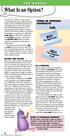 the basics What Is an Option? An option is a contract to buy or sell a specific financial product officially known as the option s underlying instrument or underlying interest. For equity options, the
Determination of Forward and Futures Prices
 Determination of Forward and Futures Prices Options, Futures, and Other Derivatives, 8th Edition, Copyright John C. Hull 2012 Short selling A popular trading (arbitrage) strategy is the shortselling or
How To Use Selfrade
 Welcome to Selftrade A guide for new Selftrade customers PART OF THE EQUINITI GROUP Welcome Thank you for choosing Selftrade for your investments. Selftrade aims to provide you with the information and
Investing: Risks and Rewards
 Investing: Risks and Rewards Key Terms Stock Dividends Capital Gain Common Stock Preferred Stock A stock is an investment in the ownership of a corporation, represented by shares of the business Things
Create a personal account and a fan page for your business and you ll be on your way to building relationships with new and existing customers.
 Create a personal account and a fan page for your business and you ll be on your way to building relationships with new and existing customers. And the best part of all it s FREE! Create Your Account:
Employee Share Purchase Plans
 Employee Share Purchase Plans Originally Effective April 1, 2002 and Amended and Restated Effective October 25, 2011 Bank of Montreal Qualified Employee Share Purchase Plan For employees of BMO Financial
Types of Stock. Common Stock most common form of stock. Preferred Stock. Companies may customize other classes of stock.
 Stock Market Basics What are Stocks? Stock is ownership in a publicly traded company. Stock is a claim on the company s assets and earnings. The more stock you have, the greater your claim as an owner.
A User s Guide to Self-directed Brokerage Accounts (SDAs) From Retirement Brokerage Services
 A User s Guide to Self-directed Brokerage Accounts (SDAs) From Retirement Brokerage Services Table of Contents Introduction Managing Your Self-directed Brokerage Account (SDA) Funding Your SDA pg. 3 Transferring
CHAPTER 16. Stocks and Bonds
 CHAPTER 16 Stocks and Bonds SECTION 1: Stocks Financial Markets Stocks and bonds are bought and sold in a financial market. Financial markets channel money from some people to other people. They bring
Employee Stock Purchase Plan
 Employee Stock Purchase Plan E N R O L L M E N T G U I D E FOR THE OFFERING PERIOD August 1, 2014 THROUGH January 31, 2015 Your enrollment must be complete by July 21, 2014 ENROLL ONLINE AT WWW.ETRADE.COM/ENROLL
ANZ Margin Lending Integrated with E TRADE
 ANZ Margin Lending Integrated with E TRADE The ANZ Margin Loan - Integrated with E TRADE What is margin lending? Benefits of gearing The ANZ Margin Loan is an integrated facility that allows you to trade
INTRODUCTION. This program should serve as just one element of your due diligence.
 FOREX ONLINE LEARNING PROGRAM INTRODUCTION Welcome to our Forex Online Learning Program. We ve always believed that one of the best ways to protect investors is to provide them with the materials they
Schwab Personal Choice Retirement Account (PCRA)
 Schwab Personal Choice Retirement Account (PCRA) Savings Plus offers a self-directed brokerage account option for investors who may want to direct investments to a wider variety of options other than those
Verizon Communications
 A Direct Stock Purchase and Share Ownership Plan for Common Stock, $.10 par value per share, of Verizon Communications Inc. Verizon Communications Direct Invest Purchase Verizon shares conveniently. Build
Managing your MrSite account
 Managing your MrSite account Managing your MrSite account Welcome to MrSite we re sure you re going to have lots of success with your website, whatever you want to achieve. If you ever need to manage your
Saga Share Direct Provided by Equiniti Financial Services Limited. Welcome. A guide for new Saga Share Direct customers
 Saga Share Direct Provided by Equiniti Financial Services Limited Welcome A guide for new Saga Share Direct customers 1 Headline Welcome Thank Subhead you for choosing Saga Body Share text Direct provided
Brought to you by. Technology changes fast. From new apps to digital marketing, it can feel impossible to keep up.
 Brought to you by Technology changes fast. From new apps to digital marketing, it can feel impossible to keep up. At The Paperless Agent, our mission is to help real estate professionals from all experience
Chapter 3. How Securities are Traded
 Chapter 3 How Securities are Traded Primary vs. Secondary Security Sales Primary: When firms need to raise capital, they may choose to sell (or float) new securities. These new issues typically are marketed
The Trading Method That Proves Even a Beginning Trader Can Become a Profitable Trader in Just Hours by Trading with the Rhythm of the Market.
 The DecisionBar Trading Manual The Trading Method That Proves Even a Beginning Trader Can Become a Profitable Trader in Just Hours by Trading with the Rhythm of the Market. Part 1 By Les Schwartz Welcome
WEB PLATFORM USER GUIDE: CFD
 WEB PLATFORM USER GUIDE: CFD Spread Co Ltd, Argyle House, Joel Street, Northwood Hills, London, HA6 1NW, United Kingdom Tel: (44) (0)1923 832 600 Fax: (44) (0)1923 845 308 E-mail: [email protected] Registered
How to Paper Trade Jim Rickards IMPACT System
 How to Paper Trade Jim Rickards IMPACT System How to Paper Trade Jim Rickards IMPACT System Shae Russell, Editor, Currency Wars Trader Dear Currency Wars Trader Subscriber, Congratulations on taking your
Saving and Investing. Being an educated investor will help enable you to become financially sound. Chapters 30 and 31
 Saving and Investing Being an educated investor will help enable you to become financially sound Chapters 30 and 31 Essential Questions How do you know when to save and when to invest? What are some reasons
BUYER S GUIDE TO FIXED DEFERRED ANNUITIES
 BUYER S GUIDE TO FIXED DEFERRED ANNUITIES Prepared by the National Association of Insurance Commissioners The National Association of Insurance Commissioners is an association of state insurance regulatory
CREATE TAX ADVANTAGED RETIREMENT INCOME YOU CAN T OUTLIVE. create tax advantaged retirement income you can t outlive
 create tax advantaged retirement income you can t outlive 1 Table Of Contents Insurance Companies Don t Just Sell Insurance... 4 Life Insurance Investing... 5 Guarantees... 7 Tax Strategy How to Get Tax-Free
Module 1 Introduction Programme
 Module 1 Introduction Programme CFDs: overview and trading online Introduction programme, October 2012, edition 18 1 In this module we look at the basics: what CFDs are and how they work. We look at some
Online Trading (E-Trade) USER GUIDE English. Version 1.0. Web Link: www.nbadsecurities.com/etrade
 Online Trading (E-Trade) USER GUIDE English Version 1.0 Web Link: www.nbadsecurities.com/etrade 1 Table of Contents Introduction... 3 Purpose of This Document... 3 Target Audience... 3 Logging on to Your
STOCK OPTION BASICS. ConocoPhillips Non-U.S. Employees October 2006
 STOCK OPTION BASICS ConocoPhillips Non-U.S. Employees October 2006 Table of Contents General Description of Stock Options... 1 Accessing Merrill Lynch... 2 Types of Stock Options... 4 Decision 1: When
How To Buy Stock On Margin
 LESSON 8 BUYING ON MARGIN AND SELLING SHORT ACTIVITY 8.1 A MARGINAL PLAY Stockbroker Luke, Katie, and Jeremy are sitting around a desk near a sign labeled Brokerage Office. The Moderator is standing in
Trailing Stop. Trailing Stop Explained
 Trailing Stop Trailing Stop Explained Trailing Stop orders offer the advantage of providing protection against losses with an automatically executed order. Additionally, they may help the trader protect
User Reference Guide to UTRADE Web US Markets
 Overview UTRADE Web US Markets has the following features to help you profit from markets in the US: Direct orders to NASDAQ, AMEX and NYSE Limit and Stop orders Watchlist and Portfolio management tools
The Field Study Handbook: A Common Sense Approach for Discovering User Needs
 I n c r e m e n t a l S i t e R e p o r t XYZ Brokerage Field Study Incremental Report Mary C., Customer Los Angeles Began investing one and a half years ago, but grew up in an environment where stocks
Norbert s Gambit and US-Friendly RRSPs A better way to buy US dollars in Scotia itrade accounts
 Norbert s Gambit and US-Friendly RRSPs A better way to buy US dollars in Scotia itrade accounts Justin Bender, CFA, CFP, B. Comm. Portfolio Manager PWL CAPITAL Dan Bortolotti Financial Planning Consultant
External Funds Transfer FAQs
 External Funds Transfer FAQs How do I sign up for this service? Frequently Asked Questions during Registration and Sign Up The sign-up process for this service is quite simple. Step 1: Complete a short
QUICK START GUIDE: THE WIZARD STOCKS
 : In this guide, we ll show you the four simple steps to trading stocks with The Wizard. It s important to us that you understand what to do before you learn how to do it, because once you learn this simple
Stock-Trak Professor User Guide
 Stock-Trak Professor User Guide Thank you for using Stock-Trak, the leader in Stock Market Game Simulations. We have worked to make the process of setting up and monitoring your class as straight forward
Enrolling in Your Employee Stock Purchase Plan
 Enrolling in Your Employee Stock Purchase Plan Your company has invited you to participate in its Employee Stock Purchase Plan (ESPP), which allows you to contribute a portion of your salary to purchase
A stock is a share in the ownership of a company. Stock represents a claim on the company s assets and earnings.
 Stock Market Basics What are stocks? A stock is a share in the ownership of a company. Stock represents a claim on the company s assets and earnings. As an owner (shareholder), you are entitled to your
4myaccount! USER GUIDE
 4myaccount! USER GUIDE TABLE OF CONTENTS Logging in for the First Time or After PIN Reset 3 Viewing Account Information in the Account Info Tab 8 Viewing Market Data in the Quotes & Market Data Tab 9 Financial
Section I. Investing In Common Stocks
 Section I Investing In Common Stocks A corporation is a company that is a separate legal entity owned by stockholders. In other words, the corporation functions like a single person separate from its owners
Trade Today. Your guide to getting started with TD Direct Investing
 Trade Today Your guide to getting started with TD Direct Investing Welcome to TD Direct Investing Thank you for choosing TD Direct Investing. We value the trust you ve placed in us and look forward to
How To Read Your Brokerage Account Statement
 Understanding Your Brokerage Account Statements Understanding Your Brokerage Account Statements INTRODUCTION How am I doing financially? The best way to track your brokerage account activity and performance
Chapter 1. Setting the Groundwork
 Chapter 1 Setting the Groundwork Understanding Essential Basic Concepts Investors new to financial markets are often intimidated by the seemingly endless stream of new and unfamiliar terminology and the
Butterfield s Online Investment Centre provides you with online access to your brokerage accounts, night and day, seven days a week.
 Butterfield s Online Investment Centre provides you with online access to your brokerage accounts, night and day, seven days a week. With Butterfield s Online Investment Centre you can place trades and
WellsTrade Getting Started Guide
 WellsTrade Getting Started Guide We re making online investing easier and more convenient than ever. wellsfargo.com 800.TRADERS (800.872.3377) Welcome to WellsTrade Thank you for choosing WellsTrade. We
Understanding Your Brokerage Account Statements
 Understanding Your Brokerage Account Statements Understanding Your Brokerage Account Statements North American Securities Administrators Association, Inc.? What can my statement tell me? INTRODUCTION How