
Are You Always Ready for The Joint Commission or CMS Survey?
|
|
|
- Reynard Porter
- 10 years ago
- Views:
Transcription

1 Are You Always Ready for The Joint Commission or CMS Survey? Sandy Garcia, RN, BSN, MBA Lead Consultant Certified Lean/Six Sigma Black Belt 1 Are You? Were You? Do You? Have You? 2 1


2 Infection Prevention and Control Does Your Staff Know the Contact Time of all Your PRODUCTS? Contact Time = Consider placing a large label on sani-cloths to indicate appropriate contact as outlined in the small print from the manufacturer. Contact Time= 3 Infection Prevention and Control Wire Cart Used for Supplies What Should You be Looking for? Solid Surface on Bottom Shelf! Outdates? 4 2

3 Medication Management Does Your Staff Have Access to Medications? Lidocaine 5 Medication Management Include authorization for these individuals to have access to medications in a policy. Consider placing into their job description. Consider a competency. Please me for a sample policy and competency at [email protected] 6 3

4 Introduce the 2 nd generation tracer concept Utilize 2 nd generation tracers concepts for Cleaning, Disinfection and Sterilization within your organization 7 2 nd Generation Tracer Risk Process: CDC RN Emergency Surgery ICU I m a g i n g L a b C S MD MR 8 4


5 Cleaning, Disinfection and Sterilization 9 Perspectives July

6 Let s Trace A Case Cart! Follow the case cart from an OR suite to decontamination. How are contaminated instruments contained during transport? If the organization does not have a case cart system, containment may be an issue. How are contaminated instruments transported in a timely manner? 11 Transport to Decontamination During transport to a decontamination area, are the instruments contained in a leak-proof container to minimize the risk of exposing personnel to contaminants during transport? How does the OR Technician or OR Nurse deliver the case cart to decontamination? Does he/she cross the line into decontamination? If so, is there appropriate PPE for him/her to change into prior to entering decontamination? 12 6

7 Central Processing Show me your AAMI standards? Are they readily available for all staff? Are they current? Show me the instructions on how you are going to clean, disinfect and sterilize this instrument (choose an instrument and see if they can locate the information manually or if they have a computer system, have them pull that instrument up and show you the information. 13 Central Processing Ask staff the contact time on all products used for cleaning. 14 7

8 Decontamination Upon entering decontamination... Does the staff in that area instruct you to put appropriate PPE on? Is the PPE available without you having to enter decontamination? Is there an Eyewash Station present? Is the eyewash station hooked up to tepid water ( degrees F)? Note: If cold water only need to complete a risk assessment. How often does the staff check the eyewash station? Weekly per ANSI standards with a thorough maintenance check annually. 15 Eyewash Station Ask staff how many minutes they run the eyewash for during their check? 2-3 minutes per ANSI standards Are the eye pieces in place and good condition? Ask the staff to test the eyewash station. Is the pressure enough to push the eye pieces off? Sample Log Next Slide. Please me for an electronic copy [email protected] 16 8

9 Sample Eye Wash Inspection Record Eye Wash Inspection Record 1. Eye washes must be tested and inspected weekly 2. Run the eye wash for 2-3 minutes 3. Ensure the water has sufficient water flow 4. Ensure the water is tepid (60 degrees F to 100 degrees F) and that there is sufficient water flow 5. Note whether the hands-free mechanism is functioning 6. Outlet heads (lids covering where water flows from) should be kept closed when not in use. These lids should pop off upon activation of the water 7. Initial the appropriate box below to document a passing inspection 8. If inspection fails, notify all users and call Plant Operations immediately at. Should an exposure occur, flush the affected eye(s) for 15 minutes. To ensure adequate flushing, hold eyelid(s) open and roll the eyeball Month/Year Week 1 Week 2 Week 3 Week 4 Supervisor/Manager Monthly Review: Note: Preventative Maintenance will occur annually to check for problems such as valve leakage, clogged openings and lines and adequacy of fluid volume (.4 gallons per minute for 15 consecutive minutes). These records will be kept within Plant Operations. 17 Decontamination Room Ask the staff if this room is positive or negative pressure? Perform a tissue test. Validate with requesting the readings from Engineering (these readings should be taken minimally yearly). How often is the room temperature and humidity checked? What are the appropriate temperature and humidity ranges for this room? Per AORN: Review logs to ensure negative pressure at least 10 air exchanges per hour (need to check minimally yearly check with state requirements, some are more strict than AORNs/AAMI guidelines). Temperature is maintained between 60 F and 65 F ( 20 C to 23 C). Humidity is maintained between 20% or 30% and 60% Review temperature and humidity logs recommend range thermometer in this area. Note: George Mills and TJC will now accept a 20% humidity-but CMS WILL NOT AT THIS TIME! 18 9

10 Ventilation (Table 7-1) Function Pressure Relationship Min Outdoor ACH Minimum Total ACH All Room Air Exhausted Directly Outdoors Relative Humidity Design Temp. F Equip. Room Negative N/R 10 Yes N/R N/R Soiled or Decontam Negative 2 6 Yes N/R Clean Work Room Positive 2 4 N/R Max Sterile Storage Positive 2 4 N/R Max ANSI/ASHRAE/ASHE Standard Table 7-1 Decontamination Room Are doors kept closed in this room at all times? Is there a pass through window? Is this window kept closed when not in use? What supplies do you use and have available in decontamination? Minimally the decontamination area should be stocked with softbristle brushes, cleaning cloths, alcohol and appropriate PPE. Enzymatic cleaner is used for manual and automated cleaning of instruments. Alcohol is used to render instruments safe to handle after cleaning, if not rendered safe by another means. OSHA requires that personnel wear skin and mucous membrane protection (i.e. fluid-resistant or impervious gown, gloves and face protection)

11 Decontamination Room Manual Cleaning Process Which sink is used for soaking and which sink is used for rinsing? Are these labeled as such? Are instruments rinsed with cold running water before beginning the cleaning process? This will remove gross debris and help prevent coagulation of the blood present on the instruments. Some facilities use a spray. 21 Decontamination Room How much enzymatic cleaner is used per gallon of water? How do you know how much water is in this sink? How do you know how much enzymatic cleaner to use? Do you measure the cleaner when adding? Does the manufacturer of the cleaner require a temperature range of the water? If so, how do you ensure the temperature? Does the manufacturer require a soak? Do you time this process? 22 11

12 Decontamination Room Sonic Washers and Upright Washers What is the daily routine maintenance that is required on the sonic washer or upright washer? Review the manufacturer s guidelines. Who is responsible for the routine maintenance? If the answer is biomed, pull biomed records. Usually, biomed will do the PM s annually but will not do the other routine cleaning and maintenance. Does the organization have documentation supporting this routine cleaning and maintenance? 23 Sterile Processing Ask the staff if this room is positive or negative pressure? POSITIVE How often is the room temperature and humidity checked? What are the appropriate temperature and humidity ranges for this room? Review logs to ensure negative pressure at least 10 air exchanges per hour. Temperature is maintained between 68 F and 73 F ( 20 C to 23 C). Humidity is maintained between 20% or 30% and 60% Review temperature and humidity logs recommend range thermometer in this area. Note: George Mills and TJC will not accept a 20% humidity for any surgical service s area! 24 12

13 Ventilation (Table 7-1) Function Pressure Relationship Min Outdoor ACH Minimum Total ACH All Room Air Exhausted Directly Outdoors Relative Humidity Design Temp. F Equip. Room Negative N/R 10 Yes N/R N/R Soiled or Decontam Negative 2 6 Yes N/R Clean Work Room Positive 2 4 N/R Max Sterile Storage Positive 2 4 N/R Max ANSI/ASHRAE/ASHE Standard Table 7-1 Sterile Processing Upright Washers Are you performing TOSI/VERIFY tests on your washers? How often? How did you determine the frequency? Show me the documentation. If not, how do you ensure that the instrumentation is clean after processing through your washers? How do you ensure that the proper temperature is reached during a wash cycle? 26 13

14 Sterile Processing Sterilizers, Sterrad What is the daily routine maintenance that is required on the sterilizer/sterrad? Review the manufacturer s guidelines. Who is responsible for the routine maintenance? If the answer is biomed, pull biomed records. Usually, biomed will do the PM s annually but will not do the other routine cleaning and maintenance. Does the organization have documentation supporting this routine cleaning and maintenance? 27 Sterile Processing Are alarms audible? How often are alarms checked? Note: If the department does not bring down (turn off) the steam sterilizers weekly, they usually won t meet the weekly requirements of the manufacturer. Quick question to ask and will give you a lot of information. Are biologicals documented per manufacturer? Does the documentation include expiration date and lot number? 28 14


15 Sterile Processing Environmental Cleaning How often is the sterile processing room terminally cleaned? Show me the policy. 29 Sterile Processing Storage of Sterile vs. Unsterile Where are unsterile items stored in the sterile processing room? Once the instruments come out of the sterilizer, what is the cool time and where do they go to cool? Is there a line that no one crosses with unsterile instrumentation? 30 15

16 Let s Trace Instruments from a Unit to Central! Where are instruments stored while awaiting transportation on the unit? If in the soiled utility room, is this room negative pressure-consider doing a tissue test. How are instruments held until pickup? If unit uses an enzymatic cleaner-refer to Central requirements in Decontamination. If they spray with a product and place in a biohazard container or place in water in a biohazard container, is it in their policy? Show me the policy? 31 Let s Trace Instruments from a Unit to Central! Watch transportation from the unit/s to Central. Are they transported in a container that will not leak? Recommendation: Drop container and see if lid comes off-don t do this with instruments in it! Make sure it is empty! Is the container clearly marked as biohazard? How is the container cleaned before bringing back to unit? 32 16

17 CIDEX OPA CIDEX OPA Is cidex OPA used in this area or any other area of the hospital (check respiratory, radiology, OB/GYN offices/clinics). How long is the cidex good for? (14 days) How long are the quality strips good for? When a new bottle of strips is opened, what is the process? Check QC under the attached instructions for the strips. Normally, a negative and positive needs to be conducted when a new bottle of strips are opened. A container of full-strength cidex and a container of half cidex and water needs to be prepared. Dip three test strips into each solution. Hold for 1 second and read after seconds (check strips). Document the positive and negative controls before using that bottle of test strips. After a new bottle is open, how often do you retest the strips per hospital policy? SEE SAMPLE QC DOCUMENTATION TOOL NEXT SLIDE me for an electronic [email protected] 33 Sample Cidex OPA Daily Record Cidex OPA Daily Record (New record should be initiated with any change of solution, strip bottle or lot numbers) Cidex OPA Solution: Lot #: Date Opened: Exp. Date of Solution: Note: Unused Cidex OPA solution should be discarded 75 days after opening or by expiration date (whichever comes first). Cidex OPA Test Strips: Lot #: Date Opened: Exp. Date of Strips: Strip QC (Required when new bottle of test strips opened and PERIODICALLY AS DEFINED BY ORGANIZATION!! Positive Control (use with full strength solution - should pass): Pass Fail Negative Control (use half strength solution should fail): Pass Fail Note: Refer to QC instructions on insert attached to each bottle of strips. Discard test strips 90 days after opening or by expiration date on bottle (whichever comes first) or if QC of new bottle fails. Cidex OPA Solution must be tested prior to each use** with single test strip in actual soak solution. Change soak solution every 14 days or when it fails test strip test (whichever comes first) ** Solution Tested Date Item Pass Fail Time In/Initials Time Out/Initials Comments 34 17

18 QUESTION: One of my organizations heard that all areas where Cidex OPA is used requires negative pressure. However, OPA per their manufacturers guidelines do not require negative pressure. As you know, many organizations have to use OPA in their ultrasound areas for their probes since there is currently no alternative. This would make it very difficult when most organizations have the OPA in closed containers in their ultrasound rooms (risk assessment has been completed for access to the OPA by their patients). Please advise. Thank you. 35 ANSWER: Use of Cidex OPA or other disinfectants does not require the space they are used in to be maintained under negative pressure. The only cases, relative to the chemical itself, where the space would be maintained under pressure would be those instances when the hazardous vapors that are created get to a level where the health and safety of the workers is at risk. Using the chemical as you describe for ultrasound rooms typically does not pose that level of risk. Perhaps this comment was received relative to when Cidex OPA is used in a decontamination room, in which the room is required to be maintained under negative pressure to control the risks associated with cross contamination. George Mills, MBA, FASHE, CEM, CHFM, CHSP Director of Engineering 36 18

19 Example of Condition Level Deficiency IC EP (A-0747) Condition of Participation: Condition of Participation: Infection Control This Condition is NOT MET as evidenced by: During tracer activity in the operating room it was noted the substerile room serving operating room three contained a flash sterilizer. This was one of two flash sterilizers contained in the operating room. The second flash sterilizer was not operable at the time of the tracer. (cont) Condition Level Deficiency (cont) The log book for the flash sterilizer near room 3 was reviewed during the tracer. This unit had been used to flash sterilize instruments needed urgently for active cases in the operating room. However, the chemical indicator strips that were used to monitor the performance of the sterilizer had expired for use in November

20 Condition Level Deficiency (cont) During tracer activity in the operating room staff indicated that the biological monitoring that was required for the flash sterilizer contained in the sub-sterile room of operating room three was performed and documented by the central sterile department. During tracer activity in the central sterile department the staff could not provide any documentation that biological monitoring had been performed for the flash sterilizer since 18 days prior to the tracer. (cont) Condition Level Deficiency (cont) The biological monitoring for all of the sterilizers in the central sterile department had performed and documented appropriately. Further investigator revealed that due to an apparent communication issue between the operating room and central sterile staff there had been no biological monitoring of the flash sterilizer since Jan 18, (cont) 40 20

21 Condition Level Deficiency (cont) During that time period instruments were processed in the flash sterilizer on January 25,26 and February 4, The minimum AAMI requirement for biological monitoring was noted to be once per week. Therefore this requirement had not been met. (cont). Condition Level Deficiency (cont) In addition, the hospital policy was to run a biological indicator daily each day a sterilizer was used. Prior to the end of the survey the hospital had re-qualified the sterilizer by running three consecutive biological indicators and had made changes to insure that the required biological monitoring would occur. 21
22 CMS Visits Supporting Partnership for Patients (PfP) As per the October 2011 letter, CMS is undertaking a wide range of actions to support the PfP goals. CMS Survey & Certification (S&C) program, together with our partners in the State Survey Agencies (SAs), also have important roles to play to promote optimum patient safety and quality of care. Our working assumption is that hospitals with full compliance with the Medicare CoPs pertaining to QAPI, infection control, and discharge planning requirements will be in a better position to reduce healthcare-acquired conditions (HACs) and the need for hospital readmissions. 43 CMS Visits (cont) To this end, CMS is pre-testing three new surveyor worksheets that are intended to aid surveyors in assessing hospital compliance with these three Medicare CoPs. The organization that recently experienced this survey was told they were selected based on their risk-adjusted all-cause readmission rates. Their initial letter presented by the surveyor stated they were being surveyed due to credible allegations of non-compliance. They were informed that no deficiencies would be cited unless they identify immediate jeopardy issues
23 CMS Visits (cont) Subsequent communication with CMS revealed that they presume, as part of our pilot, that hospitals with poor readmission rates may be at greater risk for non-compliance with one or more of the three Conditions of Participation. We do recognize, however, that just being on the hospital list may not translate to non-compliance. Since this is a pilot we are promoting a collaborative, educational process as opposed to a more punitive approach. The focus of the survey is to assess compliance with the identified Condition of Participation, in your case Infection Control, and to test one of the three draft surveyor worksheets. 45 CMS Visits (cont) The 3-day survey focused on Infection Control compliance, as detailed on the surveyor worksheet included in the May 2012 letter. Issues of noncompliance with infection control CoPs were identified during the survey and shared with the organization. Noncompliance observations were not cited as deficiencies for the organization and will not require corrective action plans, as is usually the case during CMS surveys
24 CMS Visits (cont) Examples of issues identified include observations of noncompliance with indwelling urinary catheter placement, central line dressing changes, isolation precautions, documentation of pressure relationships in negative/positive pressure rooms, and use of surgical attire (caps, masks). 47 PLEASE CONSIDER COMPLETING THE SELF ASSESSMENTS! S H A R E 48 24

25 Thank You 49 25
Safe Handling of Cytotoxic Materials
 Safe Handling of Cytotoxic Materials Kara Henman RN, MN, CON(C) Oncology Practice Consultant Cancer Care Nova Scotia What are hazardous drugs? Chemotherapy Immunosuppressive agents Biological agents Antiviral
INFECTION CONTROL SURVEYOR WORKSHEET
 Exhibit 351 Ambulatory Surgical Center (ASC) INFECTION CONTROL SURVEYOR WORKSHEET (Rev: 142, Issued: 07-17-15, Effective: 07-17-15, Implementation: 07-17-15) Name of State Agency or AO (please specify)
Biosafety Level 2 (BSL-2) Safety Guidelines
 BLS-4 Biosafety Level 2 (BSL-2) Safety Guidelines BSL-3 BSL-2 BSL-1 BSL-2 builds upon BSL-1. If you work in a lab that is designated a BSL-2, the microbes used pose moderate hazards to laboratory staff
BLOODBORNE PATHOGENS EXPOSURE CONTROL PLAN
 BLOODBORNE PATHOGENS EXPOSURE CONTROL PLAN Facility Name: University of Arkansas at Little Rock Date of Preparation: 01-17-06 In accordance with the OSHA Bloodborne Pathogens Standard, 1910.1030, the following
33 Infection Control Techniques
 CHAPTER 33 Infection Control Techniques Learning Outcomes 33.1 Describe the medical assistant s role in infection control. 33.2 Describe methods of infection control. 33.3 Compare and contrast medical
Biological Safety Program
 Risk Management & Safety Main Office, Wyoming Hall Phone: (307) 766-3277 Fax: (307)766-6116 Regulated Materials Management Center Phone: (307)766-3696 Fax: (307)766-3699 Web: www.uwyo.edu/ehs Email: [email protected]
4. Infection control measures
 4. Infection control measures Apart from general hygienic practices and vaccination, staff of institutions should also adopt specific infection control measures against communicable diseases. The measures
Appendix J IBC Biohazard Spill Management Plan
 OVERVIEW Prevention is the most important part of any spill management plan. Be sure to read and understand standard operating procedures (SOP s) and protocols for safe manipulation of biohazards before
Recommendations for the Safe Use of Handling of Cytotoxic Drugs
 Recommendations for the Safe Use of Handling of Cytotoxic Drugs Introduction Cytotoxic drugs are toxic compounds and are known to have carcinogenic, mutagenic and/or teratogenic potential. With direct
Bloodborne Pathogens. Updated 1.21.13
 Bloodborne Pathogens Updated 1.21.13 Purpose OSHA s Blood-borne Pathogens Standard protects anyone with a job-related risk of contracting a blood-borne borne disease The standard outlines preventative
PI s Name Date Bldg./Rm# CDC Biosafety Level 3 (BSL-3)
 PI s Name Date Bldg./Rm# CDC Biosafety Level 3 (BSL-3) Yes No 1. Is access to the laboratory limited or restricted at the discretion of the laboratory director when experiments are in progress? Yes No
Emergency Showers and Eyewash Stations
 Emergency Showers and Eyewash Stations Here is a guide regarding what types and specifications are required when selecting an emergency Shower and/or eyewash station. Why are emergency showers or eyewash
EAST CAROLINA UNIVERSITY INFECTION CONTROL POLICY
 EAST CAROLINA UNIVERSITY INFECTION CONTROL POLICY Department: Adult and Pediatric HealthCare/ECU-Doctor s Park, Building #2 Date Originated: October 28, 1992 Date Reviewed: 10.28.92, 12.14.94, Date Approved:
AORN Recommended Practices. AORN Practices. RPs Related to Environmental Services. Joan Blanchard, RN, MSS, CNOR, CIC September 10, 2008
 AORN Recommended Practices Joan Blanchard, RN, MSS, CNOR, CIC September 10, 2008 AORN Practices AORN Recommended Practices are AORN s official position on aseptic technique and technical practices. This
BC Children s Hospital Mistake-Proofing Equipment Reprocessing. Laurence Bayzand Janice Penner Sue Fuller Blamey
 BC Children s Hospital Mistake-Proofing Equipment Reprocessing Laurence Bayzand Janice Penner Sue Fuller Blamey Case for Collaboration Patient Safety Learning System (PSLS) trending identified an increased
POLICY 08:18:00 BLOODBORNE PATHOGENS CONTROL PLAN
 POLICY 08:18:00 BLOODBORNE PATHOGENS CONTROL PLAN I. Purpose and Scope The purpose of this plan is to establish guidelines and precautions for the handling of materials which are likely to contain infectious
OCCUPATIONAL SAFETY AND HEALTH ADMINISTRATION (OSHA)
 OCCUPATIONAL SAFETY AND HEALTH ADMINISTRATION (OSHA) The OSHA/VOSH 1910.1030 Blood borne Pathogens Standard was issued to reduce the occupational transmission of infections caused by microorganisms sometimes
Cidex OPA Solution Training Checklist and Competency for Semi-Critical Medical Devices
 Name Method of Validation: Direct observation Today s Date: Unit/Department Please have user do the following: 1. Locate Cidex OPA Safety Data Sheet. 2. Verbalize which semi-critical devices are cleaned/disinfected
Leader s Guide E4017. Bloodborne Pathogens: Always Protect Yourself
 E4017 Bloodborne Pathogens: Always Protect Yourself 1 Table of Contents Introduction 3 Video Overview.3 Video Outline.4 Preparing for and Conducting a Presentation. 7 Discussion Ideas..8 Quiz..9 Quiz Answers...11
InfectIon PreventIon checklist for outpatient settings:
 InfectIon PreventIon checklist for outpatient settings: Minimum Expectations for Safe Care National Center for Emerging and Zoonotic Infectious Diseases Division of Healthcare Quality Promotion CS224818
Administrative Procedure
 Administrative Procedure Number: 410 Effective 1/30/98 Supercedes: 1 of Subject: MEDICAL WASTE MANAGEMENT PLAN 1.0. PURPOSE: The purpose of the California State University Los Angeles Medical Waste Management
Design Requirements for Eyewash and Safety Shower Units APPLICATION: Detailed Installation, Operation and Design. Eyewash Stations.
 APPLICATION: Eyewash Stations must be provided in the following areas. Laboratories Plumbed emergency eyewash equipment shall be installed in every lab or room, where an MSDS for the materials used specifies
Biosafety Guidelines. 5. Pipetting Mechanical pipetting devices must be available and used. Mouth pipetting is prohibited.
 Biosafety Guidelines Biosafety Level 1 Laboratory Biosafety Level 1 is suitable for work involving well-characterized agents not known to consistently cause disease in immunocompetent adult humans, and
MEDICAL WASTE MANAGEMENT
 MEDICAL WASTE MANAGEMENT Biological Safety INTRODUCTION PURPOSE Regulated medical waste is a designation for wastes that may contain pathogenic microorganisms which was previously termed infectious waste.
THE BASICS OF DECONTAMINATION
 THE BASICS OF DECONTAMINATION Objectives: Review the basic factors that impact cleaning and decontamination of surgical devices. Present the fundamentals of manual and automatic cleaning Review various
Management Plan For Control of Blood-borne Pathogens, Infectious Wastes and Other Potentially Hazardous Biological Agents
 Management Plan For Control of Blood-borne Pathogens, Infectious Wastes and Other Potentially Hazardous Biological Agents 1.0 Executive Summary 1.1 The Bloodborne Pathogen standard, initiated by OSHA,
Revision 5. Calvin College Medical Waste Management Plan. Date: Health and Safety
 Calvin College Medical Waste Management Plan Prepared by: Date: Environmental 6/10/1 Health and Safety Approved By: Date: Revision 1.0 Policy The following medical waste management plan has been established
Response to Biological Spills in the Laboratory (Intentional or Accidental)
 Response to Biological Spills in the Laboratory (Intentional or Accidental) Exposure Management For splash to eyes, mucous membranes, or broken area of the skin Irrigate eyes with clean water, saline or
Safety FIRST: Infection Prevention Tips
 Reading Hospital Safety FIRST: Infection Prevention Tips Reading Hospital is committed to providing high quality care to our patients. Your healthcare team does many things to help prevent infections.
University of Kentucky / UK HealthCare Policy and Procedure. Policy # A03-030
 University of Kentucky / UK HealthCare Policy and Procedure Policy # A03-030 Title/Description: High-Level Disinfection with Cidex OPA Purpose: To provide instructions for high level disinfection with
Hazardous Precautions. Prepared By: Hazardous Precautions Working Group Updated: March 2014
 Hazardous Precautions Prepared By: Hazardous Precautions Working Group Updated: March 2014 1 What are Hazardous Medications? They are therapeutic agents that are often used in the treatment of: cancer,
INFECTION CONTROL PRECAUTIONS
 INFECTION CONTROL PRECAUTIONS Outline Standard Precautions Droplet Precautions Contact Precautions Airborne Precautions References STANDARD PRECAUTIONS Use Standard Precautions, or the equivalent, for
BSL 1 Laboratory Biosafety Manual
 BSL 1 Laboratory Biosafety Manual Version 1.0 Idaho State University, Office for Research Institutional Biosafety Committee (IBC) 1651 Alvin Ricken Drive, Pocatello, ID 83201-8046 Phone: 208-282-2179 Fax:
Attachment D Infection Control Policy METHODS OF IMPLEMENTATION AND CONTROL
 Attachment D Infection Control Policy METHODS OF IMPLEMENTATION AND CONTROL OSHA requires that the ECP include a schedule and method of implementation for the various requirements of the standard. The
1/22/2012. When is it a good time to learn about sterile processing in your facility? Continuing Education Contact Hours. Learning Objectives
 Continuing Education Contact Hours Participants must complete the entire presentation/seminar to achieve successful completion and receive contact hour credit. Partial credit will not be given. All of
Washington University Environmental Health and Safety Clinical Inspection Comment Sheet
 Washington University Environmental Health and Safety Clinical Inspection Comment Sheet Signs and Labels: Appropriate hazard warnings including any words, pictures, symbols or combination that convey health
Objectives 5/11/2015. Taking the Chaos out of Accreditation Surveys in Sterile Processing
 Taking the Chaos out of Accreditation Surveys in Sterile Processing Rose Seavey MBA, BS, RN CNOR, CRCST, CSPDT Financial Disclosures: 3M Healthcare, Bioseal, Medacta, onesource, ReadySet, Steris, Ultra
STANDARD OPERATING PROCEDURE EMERGENCY EYEWASH AND SHOWER EQUIPMENT
 STANDARD OPERATING PROCEDURE EMERGENCY EYEWASH AND SHOWER EQUIPMENT 1.0 PURPOSE 2.0 SCOPE 2.1 PLUMBED EYEWASH UNIT 2.2 EMEMERGENCY SHOWER 3.0 DEFINITIONS 4.0 RESPONSIBILITIES 4.1 OFFICE OF ENVIRONEMNTAL
Laboratory Biosafty In Molecular Biology and its levels
 Laboratory Biosafty In Molecular Biology and its levels Workshop 16-17 Oct..2012 Guidelines Does not mean optional Laboratory Biosafety The Laboratory Biosafety Manual is an important WHO publication
EMERGENCY EYE WASH FACILITY POLICY. Under the Occupational Health and Safety Regulations of the Province of Newfoundland and Labrador
 EMERGENCY EYE WASH FACILITY POLICY Under the Occupational Health and Safety Regulations of the Province of Newfoundland and Labrador References to emergency eyewash facilities and emergency washing facilities
Infectious Waste Management Plan
 Infectious Waste Management Plan Infectious Waste Management Plan USC Health & Safety Programs Unit 777-5269 POLICY: A. In keeping with the University of South Carolina's policy of providing protection
Biohazard - Anything that is harmful or potentially harmful to man, other species or the environment.
 SHARPS INJURY AND BLOODBORNE PATHOGEN EXPOSURE POLICY Purpose Faculty, staff, and students of the Massachusetts College of Pharmacy and Health Sciences shall utilize comprehensive and standardized procedures
INSTITUTIONAL POLICY AND PROCEDURE (IPP) Department: Manual: Section:
 HOSPITAL NAME INSTITUTIONAL POLICY AND PROCEDURE (IPP) Department: Manual: Section: TITLE/DESCRIPTION POLICY NUMBER HANDLING OF H AZARDOUS DRUGS EFFECTIVE DATE REVIEW DUE REPLACES NUMBER NO. OF PAGES APPROVED
"ADOPTED STANDARDS FOR THE REGULATION OF MEDICAL WASTE" IN HEALTH CARE FACILITIES LICENSED BY THE MISSISSIPPI STATE DEPARTMENT OF HEALTH
 "ADOPTED STANDARDS FOR THE REGULATION OF MEDICAL WASTE" IN HEALTH CARE FACILITIES LICENSED BY THE MISSISSIPPI STATE DEPARTMENT OF HEALTH REGULATED MEDICAL WASTE "Infectious medical wastes" includes solid
Beware that ordinary prescription glasses do not provide adequate protection. This is also true with poorly fitting safety glasses.
 Ethidium Bromide Introduction Ethidium bromide (EtBr) is widely used for visualization of nucleic acids in electrophoretic gels. EtBr forms fluorescent complexes, by intercalation of DNA, which are readily
EXPOSURE CONTROL PLAN (sample) 1 Child Care Directors and Employers
 EXPOSURE CONTROL PLAN (sample) 1 Child Care Directors and Employers The Model Exposure Control Plan is intended to serve as an employer guide to the OSHA Bloodborne Pathogens standard. A central component
Biosafety Level 2 Criteria
 Biosafety Level 2 Criteria Biosafety in Microbiological and Biomedical Laboratories (BMBL) 5th Edition Biosafety Level 2 (BSL-2): Biosafety Level 2 builds upon BSL-1. BSL-2 is suitable for work involving
CEDARS-SINAI MEDICAL CENTER O.R./ANESTHESIA/SURGERY CENTER SERVICES OPERATING ROOM
 I. Purpose: To provide standardized guidelines for nursing and non-nursing personnel in accordance with roles and responsibilities as outlined in the job descriptions along with the AORN standards of practice.
An Infusion of Quality and Safety STAT!
 Quality is not an act, it is a habit. Aristotle An Infusion of Quality and Safety STAT! Quality is not an act, it is a habit. Mary Kakenmaster MSN, RN, CNE Oakton Community College [email protected]
Infection Control in the Dental Practice through Proper Sterilization
 Midmark Corporation 60 Vista Drive P.O. Box 286 Versailles, Ohio 45380-0286 937-526-3662 midmark.com Infection Control in the Dental Practice through Proper Sterilization In today's world, the need for
Carnegie Mellon University s Policy and Procedures for Recombinant and Synthetic Nucleic Acid Materials Spills
 Carnegie Mellon University s Policy and Procedures for Recombinant and Synthetic Nucleic Acid Materials Spills Background In accordance with Section IV-B-2-b-(6) of the NIH Guidelines for Research Involving
EMERGENCY EYEWASH AND SHOWERS 29 CFR Part 1910.151 (c)
 29 CFR Part 1910.151 (c) This General Regulation Is As Follows: "Where the eyes or body of any person may be exposed to injurious corrosive materials, suitable facilities for quick drenching or flushing
OESO Ergonomics Division...919-668-ERGO(3746) Duke Police...919-684-2444 Corporate Risk Management... 919-684-6226
 Musculoskeletal Disorders (MSDs) Develop over time and can take a long time to heal Can be quite painful and reduce overall effectiveness and efficiency Occur in any part of the body A variety of risk
Quality Assurance Calendar Maintenance Responsible Party Jan Feb Mar Apr May Jun Jul Aug Sep Oct Nov Dec
 Generator fire up Generator 1 hour load test Generator 4 hour load test Fire extinguisher integrity checks Fire extinguisher certification Fire drills Fire door integrity Fire signage lighting Fire alarm
Infection Prevention Program in Ambulatory Surgical Facilities
 Infection Prevention Program in Ambulatory Surgical Facilities 2 Patient Safety in the Ambulatory Surgical Setting History and Background of Centers for Medicare and Medicaid Services (CMS) Regulations
STANDARD OPERATING PROCEDURES SPILL RESPONSE AND CLEAN-UP OUTSIDE BIOSAFETY CABINET
 BIOLOGICAL SPILL KIT IN A 5 GALLON BUCKET WITH LID Spill response and cleanup procedures (SOP) 1 Notepad 1 Pen 6 Business cards 1 Permanent marker 1 trash bag 6 Biohazard stickers 1 roll duct tape 1 roll
MANAGING A STERILE PROCESSING DEPARTMENT IN CRISIS: HOW TO STAY COOL WHEN YOUR SPD GETS TOO HOT
 MANAGING A STERILE PROCESSING DEPARTMENT IN CRISIS: HOW TO STAY COOL WHEN YOUR SPD GETS TOO HOT FRANK MYERS, MA, CIC INFECTION PREVENTIONIST III UC SAN DIEGO HEALTH SYSTEM POTENTIAL CONFLICT: MR. MYERS
UCLA Henry Samueli School of Engineering and Applied Science STANDARD OPERATING PROCEDURE MEDICAL WASTE (BIOHAZARD WASTE) MANAGEMENT
 UCLA Henry Samueli School of Engineering and Applied Science STANDARD OPERATING PROCEDURE MEDICAL WASTE (BIOHAZARD WASTE) MANAGEMENT PURPOSE The purpose of this document is to specify the procedures used
Clean Technique vs. Sterile Technique for Nurses
 Clean Technique vs. Sterile Technique for Nurses Dressing changes and other nursing procedures Jen Agosti RN, CWCA, FACCWS, CFCN, DAPWCA Accredita8on Nurse Sharks, Inc. is an approved provider of Continuing
BODY SUBSTANCE ISOLATION (BSI): THE STANDARD OF CARE
 CRAIG HOSPITAL POLICY/PROCEDURE Approved: NPC, IC, MEC, P&P 05/06 Effective Date: 02/88 P&P 06/09 Attachments: Revised Date: 05/03, 04/06 Decision Tree for Isolation Precautions Comments on Specific Diseases
02.11 Food and Nutrition Services
 02.11 Purpose Audience To assure proper and safe food handling, storage, and preparation. All Department of employees. Personnel The following guidelines shall be used to monitor proper and safe food handling,
Precautions for Handling and Disposal of Dead Bodies
 Precautions for Handling and Disposal of Dead Bodies Department of Health Hospital Authority Food and Environmental Hygiene Department The 8 th edition This set of guidelines is prepared by Infection Control
Standard laryngoscope blade assemblies Directions for use
 1 2014 Welch Allyn, Inc. MM 721358 Ver. C Standard laryngoscope blade assemblies Directions for use Intended use About this document The rigid laryngoscope is a device used to examine and visualize a patient
FLORENCE TOWNSHIP BOARD OF EDUCATION FILE CODE: 4112.4/4212.4 Florence, New Jersey
 FLORENCE TOWNSHIP BOARD OF EDUCATION FILE CODE: 4112.4/4212.4 Florence, New Jersey Regulation Exposure Control Administration BLOODBORNE PATHOGENS A. The district safety and health program officer, district
CYTOTOXIC PRECAUTIONS A GUIDE FOR PATIENTS & FAMILIES
 Perth and Smiths Falls District Hospital Attention: Manager, Quality 60 Cornelia Street, West Smiths Falls, Ontario K7A 2H9 CYTOTOXIC PRECAUTIONS A GUIDE FOR PATIENTS & FAMILIES This guide has been prepared
Biohazardous Waste and Sharps Disposal
 Biohazardous Waste and Sharps Disposal Federal OSHA Occupational Exposure to Bloodborne Pathogens Standard 29 CFR 1910.1030 State California Code of Regulations (CCR), Medical Waste Management Act, Chapter
World Leader in Emergency Eye Care
 Emergency Eyewash 2013 CATALOG WHAT S INSIDE World Leader in Emergency Eye Care 115 Primary Eyewash Device 117 Secondary Eyewash Device 118 Personal Eyewash Bottles 119 Wall Stations 120 Refills 121 Accessories
6.0 Infectious Diseases Policy: Student Exposure Control Plan
 6.0 Infectious Diseases Policy: Student Exposure Control Plan 6.1 PURPOSE & SCOPE This exposure control plan has been established to define the infection control program for students of Pacific University.
INFECTION CONTROL POLICY MANUAL
 Page 1 of 7 POLICY MANUAL Key Words: personal protective equipment, PPE, safety equipment, infection control, standard precautions Policy Applies to: All staff employed by Mercy Hospital. Credentialed
Safe Operating Procedure
 Safe Operating Procedure (Revised 12/11) SPILL AND EXPOSURE RESPONSE FOR BIOHAZARDOUS MATERIALS (INCLUDING RECOMBINANT NUCLEIC ACIDS) (For assistance, please contact EHS at (402) 472-4925, or visit our
BLOODBORNE PATHOGENS EXPOSURE CONTROL PROGRAM
 BLOODBORNE PATHOGENS EXPOSURE CONTROL PROGRAM Purpose: The purpose of this program is to eliminate or minimize employee and student exposure to blood and other potentially infectious materials. This exposure
Mock OSHA Inspection:
 Mock OSHA Inspection: PASS or FAIL? Infection Control OSHA Dental Practice Act HIPAA Presented by Leslie Canham, CDA, RDA, CSP (Certified Speaking Professional) In the dental field since 1972, Leslie helps
National Endoscopy Programme. Decontamination Standards for Flexible Endoscopes
 National Endoscopy Programme Decontamination Standards for Flexible Endoscopes Updated March 2009 Introduction Providing an effective endoscope decontamination service within a safe environment is an essential
POSITION DESCRIPTION COLUMBUS REGIONAL HEALTHCARE SYSTEM
 POSITION DESCRIPTION COLUMBUS REGIONAL HEALTHCARE SYSTEM JOB TITLE SURGICAL TECHNOLOGIST JOB CODE 0860 DEPARTMENT FLSA (Exempt/Non-Exempt) OPERATING ROOM NON-EXEMPT DEPARTMENT DIRECTOR SIGNATURE ADMINISTRATIVE
Support Cleaning Apparatus. Operation, Cleaning, & Safety Manual
 Support Cleaning Apparatus Operation, Cleaning, & Safety Manual Revision 1.1 31 May 2014 WARNING: The instructions and precautionary statements contained herein are intended for the Support Cleaning Apparatus
AUTOCLAVE PROGRAM. SOP Bio-006 FOR THE USE OF AUTOCLAVE FOR STERILIZATION OF MATERIALS AND BIOLOGICAL WASTE SOP
 ENVIRONMENTAL AND EMERGENCY MANAGEMENT ENVIRONMENTAL HEALTH AND SAFETY 175 Cabot St. Wannalancit Suite 311 Lowell MA 01854 Ruth Medina, Ph.D. Tel: 978-934-2778 Senior Biosafety Specialist/Biosafety Officer
Private Water Supplies Sampling Manual. A Field Guide
 Private Water Supplies Sampling Manual A Field Guide Foreword This sampling manual details standard procedures for the collection, storage and transportation of samples at private water supplies in accordance
Managing Regulated Medical Waste in New Mexico
 Managing Regulated Medical Waste in New Mexico Prepared by: Dr. Joe King Camino Real Environmental Research Center Sunland Park, New Mexico History of Medical Waste Regulations 1988 Legislation in response
Improving the Quality of Surgical Trays. By: Stephen M. Kovach
 Improving the Quality of Surgical Trays By: Stephen M. Kovach Performance measurement in healthcare represents what is done and how well it is done. The goal is to accurately understand the basis for current
UNH SAFETY AUDIT Office of Environmental Health and Safety
 UNH SAFETY AUDIT Office of Environmental Health and Safety Administrative Information Customized for each location. Ensure contact information on door caution signs is up to date. Doors YES NO N/A 1. The
VRE. Living with. Learning how to control the spread of Vancomycin-resistant enterococci (VRE)
 VRE Living with Learning how to control the spread of Vancomycin-resistant enterococci (VRE) CONTENTS IMPORTANT VRE is a serious infection that may become life-threatening if left untreated. If you or
Guidance on safe use of Autoclaves
 Safety Office Reviewed: Dec 2013 Reviewed: DD Month Year Guidance on safe use of Autoclaves 1. Hazards & Uses There are several different types of hazard associated with the use of autoclaves. The main
Risk Assessment: Biosafety Cabinet
 Risk Assessment: Biosafety Cabinet Biosafety cabinets (BSCs) serve as primary containment devices for operations involving potential splashes, spills or aerosolization of hazardous biological materials.
Training on Standard Operating Procedures for Health Care Waste Management Swaziland 12 May, 2011
 Training on Standard Operating Procedures for Health Care Waste Management Swaziland 12 May, 2011 Safe Infectious Waste Handling and Transport Objective Waste Overview Roles and Responsibilities of Waste
Detergents in CSSD. Wim Renders
 Detergents in CSSD Wim Renders http://www.aqualitybv.eu Water is the solvent For pre-rinsing (cold): tap water In the ultra sonic cleaner: soft (preferably) or RO water; For manual cleaning: cold tap
Hand Hygiene and Infection Control
 C Hand Hygiene and Infection Control Sirius Business Services Ltd www.siriusbusinessservices.co.uk Tel 01305 769969 [email protected] Whatever your First Aid, Fire Safety or Health & Safety
Chemotherapy Spill Response:
 Chemotherapy Spill Response: Antineoplastic Spills Outside Of A Fume Hood Lisa Hudley, RN Training Coordinator Safety & Environmental Compliance William Guess Director Safety & Environmental Compliance
MANITOBA PATIENT SERVICE CENTRE STANDARDS
 MANITOBA PATIENT SERVICE CENTRE STANDARDS February 2015 INTRODUCTION These Standards are derived from Z316.7-12 and are approved by the Council of the College of Physicians and Surgeons of Manitoba. These
Bloodborne Pathogens Program Revised July, 5 2012
 Bloodborne Pathogens Program Revised July, 5 2012 Page 1 of 16 Table of Contents 1.0 INTRODUCTION...3 1.1 Purpose...3 1.2 Policy.3 2.0 EXPOSURE CONTROL METHODS 4 2.1 Universal Precautions.4 2.2 Engineering
Department: Manager: Safety Coordinator: Date:
 SAFETY and staff, regardless of hiring status or job position 1 1. Can staff name their department safety coordinator? 2. Is the Department Safety Binder current? 3. Do slip/trip hazards exist? 4. How
Unit 3.4 Decontamination (Core)
 INSTRUCTOR GUIDE Unit 3.4 Decontamination (Core) INSTRUCTOR GUIDE TERMINAL OBJECTIVE Given scenarios involving hazardous materials/wmd incidents, the participant shall identify when emergency decontamination
Waste Management Program
 SUNY Cortland Environmental Health and Safety Office Waste Management Program Inception Date: January 30, 2007 Latest Revision/Review Date October 8, 2015 Previous Revision/Review Date: April 30, 2014
Fundamental Autoclave Techniques
 Fundamental Autoclave Techniques Version 3, September 2010 Veronika Tatarinoff GSBmE University of NSW Brandy Nelson University of Kentucky The following information is directed at aseptic/sterile surgical,
KEY CAL/OSHA STANDARDS THAT APPLY TO MOST EMPLOYERS
 KEY CAL/OSHA STANDARDS THAT APPLY TO MOST EMPLOYERS FACTSHEET 1 Below are some key Cal/OSHA standards that apply to most employers: A. INJURY AND ILLNESS PREVENTION PROGRAM STANDARD (Title 8 California
Conservation of Momentum Greg Kifer
 SCIENCE EXPERIMENTS ON FILE Revised Edition 6.7-1 Conservation of Momentum Greg Kifer Topic Conservation of momentum Time 1 hour! Safety Please click on the safety icon to view the safety precautions.
UNIVERSITY OF RICHMOND REGULATED MEDICAL WASTE MANAGEMENT GUIDELINES
 UNIVERSITY OF RICHMOND REGULATED MEDICAL WASTE MANAGEMENT GUIDELINES November 2003 Table of Contents Section Page I. Introduction.... 1 II. Characteristics of Regulated Medical Waste 1-2 III. Exclusions...2-3
Quality Assurance Calendar Laundry and Housekeeping Responsible Party Jan Feb Mar Apr May Jun Jul Aug Sep Oct Nov Dec
 Laundry Cleaning agent review and approval Appropriate chemical disinfection with low temperature wash cycles Laundry water temperature Laundry chemical dispensing Wash water ph Lint trap cleaning Equipment
EMERGENCY SHOWERS AND EYEWASH STATIONS
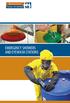 EMERGENCY SHOWERS AND EYEWASH STATIONS EMERGENCY SHOWERS AND EYEWASH STATIONS Thousands of New Brunswickers work near hazardous chemicals every day. Although safety practices have improved over the years,
Section 6: Your Hemodialysis Catheter
 Section 6: Your Hemodialysis Catheter What you should know about your dialysis catheter How to change your catheter TEGO connectors Starting dialysis using a catheter End of dialysis using a catheter Changing