
STANDARD OPERATING PROCEDURE EMERGENCY EYEWASH AND SHOWER EQUIPMENT
|
|
|
- Dorthy Harris
- 10 years ago
- Views:
Transcription
1 STANDARD OPERATING PROCEDURE EMERGENCY EYEWASH AND SHOWER EQUIPMENT 1.0 PURPOSE 2.0 SCOPE 2.1 PLUMBED EYEWASH UNIT 2.2 EMEMERGENCY SHOWER 3.0 DEFINITIONS 4.0 RESPONSIBILITIES 4.1 OFFICE OF ENVIRONEMNTAL HEALTH & SAFETY 4.2 FACILITIES MANAGEMENT & CAMPUS PLANNING/CONTRACTOR 4.3 PRINCIPAL INVESTIGATORS (PI s)/supervisors 5.0 APPLICATIONS 6.0 GENERAL REQUIRMENTS 7.0 OPERATION AND PROCEDURES 8.0 TESTING 8.1 EYEWASHES 8.2 EYE/FACE WASHES & COMBINATION UNITS 9.0 REGULATIONS, STANDARS AND REFERENCES 10.0 PROGRAM APPROVAL AND REVIEW Accidental chemical exposures can still occur even with good engineering controls, personal protective equipment and safety precautions. Emergency eye/face washes and showers provide an immediate mechanism to mitigate chemical exposure and further injury by allowing employees, students and volunteers a method of decontaminating areas of the body which have been exposed to an injurious material. 1.0 PURPOSE The purpose of the standard is intended to provide guidance concerning the minimum performance requirements, use, test procedures, and training of emergency eyewash and shower equipment in accordance with California Code of Regulations (CCR) Title 8 and ANSI/ISEA Z SCOPE This standard establishes the minimum performance requirements for eye wash and shower equipment for the emergency treatment of the eyes or body of an employee, student, and volunteer who has been exposed to injurious materials. It covers the following types of equipment: emergency showers, combination showers and eyewashes or eye/face washes. 2.1 Plumbed eyewash unit shall be provided for all work areas or classroom settings where, during normal operations or foreseeable emergencies, the eyes of an employee, student or visitor may come into contact with any substance which can cause corrosion, severe irritation, or permanent tissue damage or which is toxic by absorption. Drench and water hoses; sink faucets, or showers are not acceptable eyewash facilities. If there is any possibility that an

2 individual s eyes may be splashed with cryogenic materials such as liquid nitrogen or solutions containing 0.1 percent or greater formaldehyde, the employer shall provide acceptable eyewash facilities within the immediate work area for emergency use. 2.2 Emergency shower shall be provided for all work areas or classroom settings where, during normal operations or foreseeable emergencies, areas of the body may come into contact with any substance which can cause corrosion, severe irritation, or permanent tissue damage or which is toxic by absorption. 3.0 DEFINITIONS American National Standards Institute (ANSI): Is a non-profit organization that coordinates the standardization and conformity assessment systems in the United States. Combination Units: An interconnected assembly of emergency equipment supplied by a single source of flushing fluid. The unit consists of both the emergency shower and an eye/face wash. Drench Hose Units: A supplemental, hand-held device consisting of a flexible hose connected to a flushing supply and used to provide fluid to irrigate and flush face and body areas. Emergency Shower: A device which delivers flushing fluid that utilizes a valve which remains open during use to enable the user to have water cascading over the entire body while the hands are free. Emergency Units or Equipment: general term for emergency eyewash, eye/face wash, shower, drench hose and combination units. Eyewash: a unit that flushes water specifically to the eyes. Eye/Face Wash: device that flushes both eyes and face. Hazardous/Injurious Material: any substance that could cause corrosion, severe irritation, or permanent tissue damage or is toxic by absorption. Plumbed Eyewash: eyewash unit permanently connected to a source of potable water. Potable Water: water that is suitable for drinking. Stay-Open Valve: a valve that manually opens and closes the emergency units. Tepid: A flushing temperature conducive to promoting a minimum 15 minute irrigation period. A suitable range of C ( F) Valve Actuator: A device connected to the valve to facilitate its operation.

3 Note: Self-contained or personal washes will not be addressed in this document 4.0 RESPONSIBILITIES 4.1 Office of Environment, Health & Safety Ensures that each department is aware of their responsibilities under this standard. Reviews the standard periodically and updates as necessary. Verifies inspection records and locations of all emergency units/equipment. Assists with plan review and placement of new equipment during new construction or major renovation. Provides consultation and guidance concerning the operations and testing of eyewash units to Principal Investigators and Supervisors. 4.2 Facilities Management/Contractor Performs inspections, monthly flushing test and annual flow test of emergency eye/face wash and safety shower equipment. Maintains accurate record of locations of all emergency eyewash and shower stations. Provides equipment and protocols required to perform testing and flushing of eyewash, shower, combination eyewash shower units. Ensures that inspections and activations are recorded on inspection tags. Coordinates immediate modifications, maintenance, repair and replacement of equipment as deemed necessary to meet current standards. Informs Environmental Health and Safety of any new installations and current repair status of existing equipment. 4.3 Principal Investigators (PI s)/supervisors Each has the following responsibility under this standard to: Ensure that any individual under the supervisor s purview understand their responsibilities and comply with this standard. Ensure that all employees, students and volunteers have received instruction in the proper use and operation of the emergency unit/equipment provided for the area. Ensure that procedures, equipment and materials appropriate for the specific work locations are provided to protect the health and safety of all employees, students and volunteers. Prior to assigning work involving the potential for hazardous materials to splash onto the skin or into the eyes, PI s/supervisors must verify that: o Emergency Units/Equipment i.e.-emergency showers, eyewash equipment, eye/face wash equipment, or combination shower and eyewash or eye/face wash equipment are provided in the work place and are accessible and operable. o All shut-off valves between the sanitary water supply and the eyewash and/or safety shower are secured in the open position. o Any individual working in the area is comfortable with their use. Performs and or assigns weekly/monthly testing and documentation of plumbed eyewash units for their areas. Routes to the shower/eyewash station and the area around the equipment are kept clear.

4 Promptly submit a work order to Facilities Management when any unit is not functioning properly. Clearly tag the unit- DO NOT USE -Out of Service. 4.4 Employees, Students and Volunteers Each employee and student is responsible for knowing the following when working in an area where emergency units/equipment is required: How to properly use emergency units/equipment. The location of the nearest emergency units/equipment. The routes to the emergency units/equipment and the area around them are kept clear of obstructions at all times. The equipment is operable and has passed the required inspection/maintenance test. When any unit is not functioning properly notify the supervisor immediately and clearly tag the unit- DO NOT USE -Out of Service 5.0 APPLICATIONS Where the eyes or body of any person may be exposed to hazardous, injurious or corrosive materials, suitable emergency units or equipment for quick drenching or flushing of the eyes and body shall be provided within the work area for immediate emergency use. Some area examples would be: Where corrosive or injurious chemicals are used, such as: o Solutions of inorganic/organic acids or bases with a ph of 2.0 or less, or 12.5 or more, o Other organic or inorganic materials that is corrosive or irritating to eyes or skin (with methylene chloride and phenol as just two examples.) o Organic or inorganic materials that is significantly toxic by skin absorption (e.g. phenol.) Areas where operations involve the use of air or water reactive liquids or solids. All work areas where formaldehyde solutions in concentrations greater than or equal to 0.1% are handled. Other materials to include irritants, sensitizers, carcinogens, highly toxic materials, any (neurotoxins, hepatotoxins, nephrotoxins), biological and radioactive materials. Storage areas where breakable containers of injurious or corrosive materials (1 gal or more) are handled outside their original shipping cartons. Waste accumulation areas that could contain corrosive waste materials. Where cryogenic materials are dispensed. Areas where corrosive chemicals are used in a closed or pressurized systems that can catastrophically fail and cause the chemicals to leak. 6.0 GENERAL REQUIREMENTS Emergency units shall be located in immediately accessible locations that require no more than 10 seconds (approximately 25 feet) for the injured person to reach along unobstructed pathways within the laboratory or work area and where the user shall not have to pass through a door to reach the unit.

5 Emergency unit shall be identified with a highly visible sign in well lighted area. The area around the emergency units shall be clear, unobstructed and have no items hanging on them. There shall be no sharp projections anywhere in the operating area of the unit. The valve actuator shall be designed so that the water flow remains in the on position without the use of the operator's hands and must remain open until manually shut off. The valve shall be large enough to be easily located and operated by the user. Any electrical apparatus, telephone and thermostats should not be located within 18 inches of the units. Where electrical outlets are necessary, they must be protected by ground fault interrupters. The eyewash and eyewash/face equipment shall be located to provide enough room to allow the eyelids to be held open with the hands while the eyes are in the water stream. Emergency eyewash equipment shall ensure that a controlled flow of potable tepid water is provided to both eyes simultaneously at a velocity low enough not to be injurious to the user. 7.0 OPERATIONS AND PROCEDURES The American National Standards Institute (ANSI) Standard for Emergency Eyewash and Shower Equipment (ANSI Z ) recommends that the affected body part must be flushed immediately and thoroughly for at least 15 minutes using a large supply of clean fluid under low pressure. Water does not neutralize contaminants -- it only dilutes and washes them away. Begin flushing as quickly as possible after the eye comes in contact with a harmful substance as the first 10 seconds are critical. Toxic substances, when coming in contact with the eye, immediately begin to damage sensitive eye tissues. The longer they remain in contact, the greater the damage to the eye. Besides tissue damage, acids and alkali can change the ph in the eye itself. When the ph of the eye begins to get out of the narrow tolerable range, severe eye damage, including blindness, may result. However, other references recommend a minimum 20-minute flushing period if the nature of the contaminant is not known. The flushing or rinsing time can be modified if the identity and properties of the chemical are known. For example: A minimum 5-minute flushing time is recommended for mildly irritating chemicals, At least 20 minutes for moderate-to-severe irritants, 20 minutes for non-penetrating corrosives, and At least 60 minutes for penetrating corrosives. Non-penetrating corrosives are chemicals which react with human tissue to form a protective layer which limits the extent of damage. Most acids are non-penetrating corrosives. Penetrating corrosives, such as most alkalies, hydrofluoric acid and phenol, enter the skin or eyes deeply. Penetrating corrosives require longer water flushing (a minimum of 60 minutes) than nonpenetrating corrosives (a minimum of 20 minutes). In all cases, if irritation persists, repeat the flushing procedure. It is important to get medical attention as soon as possible after first aid has

6 been given. A physician familiar with procedures for treating chemical contamination of the eyes and body should be consulted. General checklist to use for chemical exposures In case of chemical exposure, flush skin or eyes with cool water for at least 15 minutes-or more and if possible until medical assistance arrives. DO NOT RUB! Contact Public Safety (714) (or dial 911 from a campus phone) in order to get medical assistance as soon as possible. Provide Materials Safety Data Sheets (MSDSs)/Safety Data Sheets, (SDSs) to medical personnel. Know the effects of chemicals with which you are working. Read, ask questions about, and understand MSDSs/SDSs for each chemical with which you work. Always wear personal protective equipment to include eye, face, body and foot protection. Learn the location and use of all emergency equipment, even if you are working in a new area for only a brief time. Know how to help others reach showers or eyewashes and how to help them get medical assistance. Hold your eyes open with your hands while using eyewash to be sure water reaches the eyes. While assisting injured person provide clean cover for privacy while removing contaminated clothing after the shower has been activated. Immediately wash off even small amounts of chemicals. Notify supervisor as soon as emergency has subsided. Supervisor should immediately notify the Risk Manager and EH&S 8.0 TESTING 8.1 Eyewashes Weekly Plumbed eyewashes shall be activated when labs are in use for a period long enough to verify operation and ensure flushing is available. The test will be documented on the tag provided. If there is a period of time where a laboratory area is inactive, the weekly flushing may be deemed unnecessary, but must be documented on the tag provided. Monthly Visually inspect the unit for leaks or pipe damage and proper placement of protective covers. This should be done prior to testing in order to avoid further damage to the unit and risk of injury to users. Ensure that the unit is free of any obstructions. Activate unit. Ensure that the water flow is continuous, evaluate that the unit can maintain flow for 15 minutes, and is not injurious to the user's eye or face. Valve actuator must activate water flow in one second or less. o Valve actuator must stay on unless manually turned off and must activate water flow in one second or less.

7 o Controlled flow of flushing fluid must be provided to both eyes simultaneously. o The unit must be capable of delivering not less than 0.4 gallons per minute of flushing fluid for 15 minutes. Sanitize water supply through monthly flushing. In order to relieve the unit of any rust and other pipe build-up, flush the unit until the water runs clear. Document test with dates and initials on unit tag. Annual Flow rate test to be conducted by outside contractor. 8.2 Eye/face washes, Combination Units Monthly and Annual Flush and Flow Rate testing to be performed by an outside contractor. 9.0 REGUATIONS, STANDARDS AND REFERENCES California Code of Regulations (CCR), Title 8, General Industry Safety Orders Section 5162, Emergency Eyewash and Shower Equipment California Code of Regulations, Title 8, General Industry Safety Orders Section 5217(i), Formaldehyde Hygiene Protection American National Standards Institute/ International Safety Equipment Association (ANSI/ISEA), Z358.1 American national Standard for Emergency Eyewash and Shower Equipment Approved September 14, PROGRAM REVIEW Date Reviewed: DRAFT presented September 14, 2010 by: Karen Swift, EH&S Specialist Approved by Science Safety Committee November 11, 2010

Emergency Showers and Eyewash Stations
 Emergency Showers and Eyewash Stations Here is a guide regarding what types and specifications are required when selecting an emergency Shower and/or eyewash station. Why are emergency showers or eyewash
Design Requirements for Eyewash and Safety Shower Units APPLICATION: Detailed Installation, Operation and Design. Eyewash Stations.
 APPLICATION: Eyewash Stations must be provided in the following areas. Laboratories Plumbed emergency eyewash equipment shall be installed in every lab or room, where an MSDS for the materials used specifies
15430 SAFETY SHOWERS AND EYEWASHES
 15430 SAFETY SHOWERS AND EYEWASHES PART 1: GENERAL 1.01 RELATED SECTIONS 01005 - ENVIRONMENTAL HEALTH 11600 LABORATORY EQUIPMENT 15020 - LABORATORIES 15130 - PIPING SPECIALITES 15400 - PLUMBING 15420 -
Section 4 EMERGENCY EYEWASH AND SAFETY SHOWER EQUIPMENT
 Section 4 EMERGENCY EYEWASH AND SAFETY SHOWER EQUIPMENT Contents A. Scope 4-2 B. Applications 4-2 C. Equipment Requirements 4-3 D. Testing and Commissioning 4-4 E. References 4-5 4-1 A. Scope This guide
EMERGENCY EYE WASH FACILITY POLICY. Under the Occupational Health and Safety Regulations of the Province of Newfoundland and Labrador
 EMERGENCY EYE WASH FACILITY POLICY Under the Occupational Health and Safety Regulations of the Province of Newfoundland and Labrador References to emergency eyewash facilities and emergency washing facilities
Section 1.2 EMERGENCY EYEWASH AND SAFETY SHOWER EQUIPMENT TABLE OF CONTENTS. Page A. Regulations, Consensus Standards, and References 1.
 Section 1.2 EMERGENCY EYEWASH AND SAFETY SHOWER EQUIPMENT TABLE OF CONTENTS Page A. Regulations, Consensus Standards, and References 1.2-2 B. Scope 1.2-2 C. Application 1.2-2 D. Location 1.2-4 E. Performance
EMERGENCY SHOWERS AND EYEWASH STATIONS
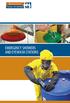 EMERGENCY SHOWERS AND EYEWASH STATIONS EMERGENCY SHOWERS AND EYEWASH STATIONS Thousands of New Brunswickers work near hazardous chemicals every day. Although safety practices have improved over the years,
EMERGENCY EYEWASH AND SHOWERS 29 CFR Part 1910.151 (c)
 29 CFR Part 1910.151 (c) This General Regulation Is As Follows: "Where the eyes or body of any person may be exposed to injurious corrosive materials, suitable facilities for quick drenching or flushing
Emergency Eyewash and Drench Shower Program
 Emergency Eyewash and Drench Shower Program Document Number: Effective Date: Revision Date: 7-24-14 1.0 Purpose and Applicability 1.1 The purpose of this program is to ensure that all safety eyewashes
ANSI / ISEA Z358.1-2014 Compliance Checklist
 ANSI / ISEA Z358.1-2014 Compliance Checklist INTRODUCTION The selection of emergency eyewash and shower equipment is often a complicated process. In addition to addressing design and engineering issues,
Safety & Risk Management Policies and Procedures
 Safety & Risk Management Policies and Procedures Title: Emergency Eye Wash & Shower Policy Date: August 2013 Rationale: The Occupational Safety and Health Administration (OSHA 29CFR 1910.151) requires
American National Standard for Fixed and Portable Decontamination Shower Units
 Revision of ANSI/ISEA 113-2008 American National Standard for Fixed and Portable Secretariat International Safety Equipment Association Approved American National Standards Institute, Inc. American National
Emergency Showers and Eyewashes Mike Adkins Wednesday, October 31, 10:00-11:1511:15 a.m.
 Emergency Showers and Eyewashes Mike Adkins Wednesday, October 31, 10:00-11:1511:15 a.m. Safety First! How to Specify Emergency Showers and Eyewashes Presented by Mike Adkins, Guardian Equipment. ASPE
EMERGENCY EYEWASH & SHOWER EQUIPMENT SELECTION, INSTALLATION & USE GUIDE
 EMERGENCY EYEWASH & SHOWER EQUIPMENT SELECTION, INSTALLATION & USE GUIDE FOREWORD The need for emergency eyewash and shower devices is real. 15,110 U.S. workers were afflicted by chemical exposures in
GEORGIA INSTITUTE OF TECHNOLOGY ENVIRONMENTAL HEALTH AND SAFETY PERSONAL PROTECTIVE EQUIPMENT
 PURPOSE To protect the health and welfare of GEORGIA TECH employees in areas where there may be a risk of injury or exposure to hazardous substances or conditions employees who work in areas where physical
B. Shop Drawings: Diagram power, signal, and control wiring.
 SECTION 224500 - PART 1 - GENERAL 1.1 SUMMARY A. Section Includes: 1. Emergency showers. 2. Eyewash equipment. 3. Eye/face wash equipment. 4. Combination units. 5. Water-tempering equipment. 1.2 SUBMITTALS
IX. EMERGENCY PLANNING
 IX. EMERGENCY PLANNING EMERGENCY PLANNING, SPILL RESPONSE & REPORTING Any unexpected event or accident situation that occurs during the transport, storage or use of hazardous materials constitutes a potential
How Compliant is Your Emergency Shower and Eyewash? What Managers Need to Consider about Australian Standard Compliance
 How Compliant is Your Emergency Shower and Eyewash? What Managers Need to Consider about Australian Standard Compliance Introduction Despite every precaution to prevent them occurring, accidents happen.
Particularly Hazardous Substances (PHS) Standard Operating Procedure (SOP)
 Particularly Hazardous Substances (PHS) Standard Operating Procedure (SOP) Formaldehyde, formalin, paraformaldehyde solutions, and paraformaldehyde solids Principal Investigator: Room & Building #: Department:
Waste Management Log Book
 Waste Management Log Book Web address: www.ehs.psu.edu Designated Accumulation Area: Building & Room Number Location in Room Supervisor: E-mail Individual designated to ensure procedures are followed:
EOSMS 204C Effective Date: 12/8/2014 Page 1 of 8
 EOSMS 204C Effective Date: 12/8/2014 Page 1 of 8 1. Purpose This Standard Operating Procedure (SOP) establishes procedures for the safe handling, transportation and storage of (MC), which is also known
A. Accessible Fixture: Emergency plumbing fixture that can be approached, entered, and used by people with disabilities.
 SECTION 224500 - EMERGENCY PLUMBING FIXTURES PART 1 - GENERAL 1.1 RELATED DOCUMENTS A. Drawings and general provisions of the Contract, including General and Supplementary Conditions and Division 01 Specification
North Carolina State University Emergency Facilities Closure Checklist- Part I
 North Carolina State University Emergency Facilities Closure Checklist- Part I Unplanned or spontaneous events often disrupt daily operations on campus. In the event that an incident may interrupt your
COLUMBUS STATE COMMUNITY COLLEGE EMPLOYEE SAFETY MANUAL
 COLUMBUS STATE COMMUNITY COLLEGE EMPLOYEE SAFETY MANUAL HAZARDOUS MATERIAL MANAGEMENT Effective October 15, 1995 Page 1 of 4 Updated August, 2008 Revised August, 2009 A. Columbus State Community College
Mechanical Systems Competency 1.20
 Competency 1.20 Mechanical systems personnel shall demonstrate a working level knowledge of the safety and health fundamentals of mechanical systems and/or components. 1. Supporting Knowledge and Skills
Emergency Eyewash. The Importance of Eye Flushing Systems
 Emergency Eyewash world leaders in emergency eye care The Importance of Eye Flushing Systems Experts agree that eyes utilize more than 65 percent of the pathways to the brain, contributing nearly 85 percent
Appendix J IBC Biohazard Spill Management Plan
 OVERVIEW Prevention is the most important part of any spill management plan. Be sure to read and understand standard operating procedures (SOP s) and protocols for safe manipulation of biohazards before
Issue Date: 04-Oct-2013 Revision Date: 19-Nov-2014 Version Number: 1. 1. Identification. 2. Hazards Identification
 Safety Data Sheet Issue Date: 04-Oct-2013 Version Number: 1 Product Identifiers Product Name: Bright Dyes FLT Yellow/Green Liquid Product Number: 106001 Recommended Use & Restrictions on Use Water tracing
OESO Ergonomics Division...919-668-ERGO(3746) Duke Police...919-684-2444 Corporate Risk Management... 919-684-6226
 Musculoskeletal Disorders (MSDs) Develop over time and can take a long time to heal Can be quite painful and reduce overall effectiveness and efficiency Occur in any part of the body A variety of risk
When Safety Comes First. Emergency Safety Shower and Eye Wash Catalogue
 When Safety Comes First Emergency Safety Shower and Eye Wash Catalogue No industry, irrespective of its size or its function, can afford to neglect the safety of its personnel and the general public. Advances
Spill Clean-up. Flammable Liquids Liquids with flash points below 100 degrees Fahrenheit.
 SUNY Cortland-Environmental Health and Safety Office Spill Clean-up Inception Date : June 16, 2010 Latest Revision/Review Date: July 15, 2015 Last Review/Revision Date: April 30, 2014 Contents I. Introduction
CHEMICAL SPILL MANAGEMENT GUIDELINES
 WHS Unit CHEMICAL SPILL MANAGEMENT GUIDELINES Contents 1 Purpose... 2 2 Scope... 2 3 Definitions... 2 4 Roles and Responsibilities... 2 5 General... 2 6 Defining Major or Minor Spill... 3 7 Major Spill
When Safety Comes First. Emergency Safety Shower and Eye Wash Catalogue
 When Safety Comes First Emergency Safety Shower and Eye Wash Catalogue No industry, irrespective of its size or its function, can afford to neglect the safety of its personnel and the general public. Advances
: CRYSTAL CLEAN DRAIN CLEANER CRYSTALS
 1. PRODUCT AND COMPANY IDENTIFICATION Product information Trade name Use of the Substance/Preparation : : Drain Cleaner Company : PRO-TEC CHEMICAL AND PLASTICS LLC. 9646 Highway 20 West Freeport, FL 32439
Lake Restoration Inc. 12425 Ironwood Circle Rogers, MN 55374
 Lake Restoration Inc. 12425 Ironwood Circle Rogers, MN 55374 Phone (877) 428-8898 Fax (763) 428-1543 Transportation Emergency (CHEMTREC) (800) 424-9300 MATERIAL SAFETY DATA SHEET 1. PRODUCT IDENTIFICATION
ALVERNIA UNIVERSITY OSHA REGULATION: 29 CFR 1910.1200 HAZARD COMMUNICATION SECTION: 1700 REVISION DATE: 2/3/2012 REVISION: 4 NUMBER:
 OSHA REGULATION: 29 CFR 90.200 HAZARD COMMUNICATION 700 : DATE: /3/200 DATE: 2/3/202 A. POLICY. This procedure follows requirements set forth in 29 CFR 90.200. 2. It is the policy of Alvernia University
MATERIAL SAFETY DATA SHEET "LIQUID FIRE" DRAIN LINE OPENER 09/2007 PHYSICAL/CHEMICAL CHARACTERISTICS:
 09/2007 MATERIAL SAFETY DATA SHEET "LIQUID FIRE" DRAIN LINE OPENER MANUFACTURER'S NAME: AMAZING PRODUCTS, INC. P.O. BOX 14226 LOUISVILLE, KY 40214 PHONE: 502-361-3655 FAX: 502-361-1810 E-MAIL: [email protected]
If you have any questions about how to safely undertake a task or project, ask your supervisor before you begin.
 Laboratory Health and Safety Manual Section 1: Introduction and Objectives This manual provides a set of minimum standards and practices for the safe and healthy operation of a laboratory. Following the
Independent Forensics of Illinois
 Independent Forensics of Illinois RSID -Semen Lab kit Universal Buffer #0230 Material Safety Data Sheet Date Updated: 01/2014 SECTION 1 - CHEMICAL PRODUCT AND COMPANY IDENTIFICATION MSDS Name: RSID -SEMEN
STANDARD OPERATING PROCEDURES Safe Autoclave Operations
 Department of Environmental Health & Safety Biosafety & Biosecurity STANDARD OPERATING PROCEDURES Safe Autoclave Operations The purpose of this document is to provide standard operating procedures for
DECONTAMINATION PRODUCTS
 DECONTAMINATION PRODUCTS AXION MSR TM EYE/FACE WASH UNITS SHOWERS :: COMBINATION UNITS This catalog represents a snapshot of the emergency response equipment that Haws offers. For more details and a comprehensive
Corrosivity of Water Supplies
 WD-DWGB-3-4 2009 Corrosivity of Water Supplies What is meant by Corrosivity? Corrosive water can be defined as a condition of water quality which will dissolve metals from metallic plumbing at an excessive
SAFETY DATA SHEET PRIVATE LABEL SULPHURIC ACID DRAIN CLEANER SPD1047/SPD1046
 SAFETY DATA SHEET SECTION 1: Identification of the substance/mixture and of the company/undertaking 1.1. Product identifier Product name 1.2. Relevant identified uses of the substance or mixture and uses
Hazard/Risk Identification and Control Procedure
 Hazard/Risk Identification and Control Procedure Introduction Hazard identification and the steps taken to minimize the risks associated with identified hazards are a critical component of working safely.
Occupational Health and Safety in the Laboratory (Undergraduate Students)
 Occupational Health and Safety in the Laboratory (Undergraduate Students) Introduction and scope of the Guidelines These guidelines have been written for all laboratory practical classes at the University
Evaluating MSDS First Aid Advice
 Evaluating MSDS First Aid Advice Senior Technical Specialist Evidence-Based Approach Identify specific questions Search for relevant literature Critically evaluate quality of evidence Determine best answer
SAFETY DATA SHEET WINTERHALTER A81 BLUE ENZYME DRAIN CLEANER
 SAFETY DATA SHEET SECTION 1: Identification of the substance/mixture and of the company/undertaking 1.1. Product identifier Product name 1.2. Relevant identified uses of the substance or mixture and uses
Safety introduction. In the event of fire and accidents, you have a responsibility to know the location of:
 Safety introduction 2011-12-01 1 (7) Safety introduction General safety at the department A laboratory is a place with a lot of potential risks such as dangerous substances, sharp objects and electrical
ABC CIRCUITS 10 Circuit Drive Circuit Town, IN 12345 SLUG CONTROL PLAN
 ABC CIRCUITS 10 Circuit Drive Circuit Town, IN 12345 SLUG CONTROL PLAN The purpose of this plan is to provide detailed instructions for slug prevention and control. A complete copy of this plan is maintained
SAFETY DATA SHEET Revised edition no : 5
 Page : 1 êxxn : Harmful Health îñï` 0 3 0 -- : 3 WARNING : Corrosive or toxic. Avoid skin contact or inhalation. Flammability : 0 Reactivity : 0 Special Notice Key : -- --- Not combustible. Stable : Not
112039.00 224500 EMERGENCY PLUMBING FIXTURES
 PART 1 - GENERAL 1.1 SUMMARY A. This Section includes the following emergency plumbing fixtures: 1. Emergency showers. 2. Eyewash equipment. 3. Eye/face wash equipment. 4. Hand-held drench hoses. 5. Combination
SPILLS & SPILL KITS. Spills -General Guidelines:
 Spills -General Guidelines: If handled properly, a spill may be nothing more than a nuisance. If handled improperly, a spill can seriously disrupt your activities and the work of your colleagues. At worst,
Safety Data Sheet SOMAmer Reagent
 SECTION 1: Identification Safety Data Sheet SOMAmer Reagent 1.1 Product identifier Product name SOMAmer Reagent (aptamer) 1.2 Supplier s details Name Address Email SomaLogic, Inc. 2945 Wilderness Place
OSU INSTITUTE OF TECHNOLOGY POLICY & PROCEDURES
 Hazardous Communications 5-001 FACILITY MANAGEMENT July 2014 INTRODUCTION AND GENERAL STATEMENT 1.01 OSU Institute of Technology (OSUIT) recognizes that its employees have both a right and need to know
AS 4775 2007 AS 4775 2007. Australian Standard. Emergency eyewash and shower equipment. This is a free 6 page sample. Access the full version online.
 AS 4775 2007 AS 4775 2007 Australian Standard Emergency eyewash and shower equipment This Australian Standard was prepared by Committee SF-048, Emergency Eyewash and Shower Equipment. It was approved on
EMERGENCIES. Emergencies
 Emergencies A good safety program, training, and use of precautions reduce the number and seriousness of accidents. Laboratory accidents can range from fires to chemical spills to spills and falls. Your
Standard Operating Procedure
 Standard Operating Procedure FLAMMABLE LIQUIDS This standard operating procedure (SOP) is intended to provide general guidance on how to safely work with flammable liquids. This SOP is generic in nature
Biosafety Level 2 (BSL-2) Safety Guidelines
 BLS-4 Biosafety Level 2 (BSL-2) Safety Guidelines BSL-3 BSL-2 BSL-1 BSL-2 builds upon BSL-1. If you work in a lab that is designated a BSL-2, the microbes used pose moderate hazards to laboratory staff
Safety Meeting Topic: Chemical Spills and Emergency Action Plans for General Industry
 Company Name: Safety Meeting ID: 16 Date: Grainger Safety Services Inc. 2012 Safety Meeting Topic: Chemical Spills and Emergency Action Plans for General Industry UPDATED: This safety meeting has been
MATERIAL SAFETY DATA SHEET TOILET BOWL SANITIZER
 MATERIAL SAFETY DATA SHEET TOILET BOWL SANITIZER No. 1 Date Issued: 07/03/2011 COMPANY DETAILS NAME: Hygiene Systems (Pty) Ltd EMERGENCY TEL: 0860 494 4363 ADDRESS: 7 Hargan Road, TEL: 011 552 8403 SECTION
SILICON VALLEY CLEAN WATER. May 2015
 SILICON VALLEY CLEAN WATER May 2015 Slug Discharge Control and Spill Containment Guidelines This document was revised and used with the permission of the Los Angeles County Sanitation District, Industrial
Laboratory Audit Sheet Auditor s Name: Date of Inspection: / / Building Name: Room# Principal Investigator:
 Laboratory Audit Sheet Auditor s Name: Date of Inspection: / / Building Name: Room# Principal Investigator: 1. 0 GENERAL HOUSKEEPING PRACTICES Y/N N/A C REGULATORY GUIDANCE COMMENTS 1.1 Walkways in and
Clean Water: Supply side potable water, not wastewater. Gray Water/Sewage: Wastewater originating from a drain (sink, toilet, urinal).
 Procedures for Emergency Responses to Flooding and Building Water Intrusion PURPOSE: To establish uniform, sanitary, and systematic procedures for responding to flooding and water intrusion emergencies.
MATERIAL SAFETY DATA SHEET
 MATERIAL SAFETY DATA SHEET Revision date: 02/20/2012 Revision number: 0 1. PRODUCT AND COMPANY IDENTIFICATION Product Name ProClean Drain Cleaner Contact Manufacturer Duracable Manufacturing Company 300
(616) 361-6691 421 Ann Street N.W. Emergency Phone Grand Rapids, MI 49504
 MSDS Document Page 1 of 5 Product 1. Chemical Product and Company Identification Trade Name of this Product Manufacturer Phone Number Haviland Consumer Products, Inc. (616) 361-6691 421 Ann Street N.W.
MATERIAL SAFETY DATA SHEET
 MATERIAL SAFETY DATA SHEET I. PRODUCT & COMPANY IDENTIFICATION Product Name: Infectiguard Product Type: Hand Sanitizer Supplier Address: Dr Fresh Inc 6645 Caballero blvd. Buena park, CA, 90620 USA Phone:
College of Biological Science - Standard Operating Procedure Chemical Spills Date: 8-Feb-2008 Prepared by: A Doane Revision: New Supersedes: n/a
 College of Biological Science - Standard Operating Procedure Chemical Spills Date: 8-Feb-2008 Prepared by: A Doane Revision: New Supersedes: n/a Purpose: To provide direction on the proper response to
Material Safety Data Sheet. RM 110 Scale Inhibitor Liquid Mix Kit Concentrate
 of 5 PRODUCT AND COMPANY IDENTIFICATION Manufacturer Kärcher North America, Inc. 325 S Price Road Chandler, AZ 85224 Phone: Fax: Email: Web: 360-833-600 360-833-9200 [email protected] www.karcher.com
Level I Inspection Guidance Document 2014
 Level I Inspection Guidance Document 2014 LEVEL I Required Weekly Checklist Note: Items listed in the Level I Required Weekly Checklist are to be inspected weekly. For Satellite Accumulation Areas, it
A. Accessible Fixture: Emergency plumbing fixture that can be approached, entered, and used by people with disabilities.
 SECTION 22 45 00 - (ADD#2) PART 1 - GENERAL 1.1 RELATED DOCUMENTS A. Drawings and general provisions of the Contract, including General and Supplementary Conditions and Division 01 Specification Sections,
Ingredient CAS Number Weight % ACGIH TLV PEL STEL Phosphoric Acid 7664-38-2 1 mg/m3 1 mg/m3 3 mg/m3
 Page 1 of 5 MSDS Document Product 1. Chemical Product and Company Identification Product Manufacturer Haviland Consumer Products, Inc. 421 Ann Street N.W. Grand Rapids, MI 49504 Phone Number (616) 361-6691
PATHWAYS DRAIN TREATMENT. Use only for the purpose on the product label.
 SAFETY DATA SHEET PATHWAYS DRAIN TREATMENT Section 1. Chemical product and company identification Product name Recommended use and restrictions PATHWAYS DRAIN TREATMENT Drain Cleaner Use only for the purpose
TEXAS TECH UNIVERSITY HAZARDOUS WASTE PROGRAM DEPARTMENT OF ENVIRONMENTAL HEALTH AND SAFETY
 TEXAS TECH UNIVERSITY HAZARDOUS WASTE PROGRAM DEPARTMENT OF ENVIRONMENTAL HEALTH AND SAFETY 1 TABLE OF CONTENTS I II III IV V VI VII INTRODUCTION CHEMICAL HAZARDOUS WASTE 1. Definition 2. Characteristics
Chemical Spill Response Guideline
 ChemicalSpillResponseGuideline Despite the best efforts of researchers to practice safe science in the laboratory, accidents resulting in the release of chemicals will occur. For this reason, it is essential
Laboratory Safety Inspection Checklist (Biology and Biochemistry)
 EOSMS 201-1A Date: 11/15/14 Page 1 of 9 Building Room Inspection Date Department Principal Investigator(s) Inspector(s) Instructions: This form is to be completed for laboratory self-inspection. Complete
Responding to Accidents and Emergencies
 P:NAU:CHM:15 Date: 6/3/2008 Supersedes: none Responding to Accidents and Emergencies 1. General Preparation for Emergencies a. All laboratory personnel should know what to do in case of an emergency. Laboratory
TRICHLOROACETIC ACID SOLUTION Department of Pharmacy Duke University Medical Center Box 3089 Durham, NC 27710 919-684-5125
 Page 1 of 5 1. IDENTIFICATION OF SUBSTANCE Name: Manufacturer: TRICHLOROACETIC ACID SOLUTION Department of Pharmacy Duke University Medical Center Box 3089 Durham, NC 27710 919-684-5125 Information Department:
HAZARDOUS WASTE SATELLITE ACCUMULATION MANAGER RESPONSIBILITIES
 INTRODUCTION This program applies to Eastern Washington University (EWU) personnel who work with chemicals and generate chemical waste in performance of their job duties. Chemicals may pose a threat to
Pesticide Harmful Effects And Emergency Response
 Pesticide Harmful Effects And Emergency Response Most pesticides are designed to harm or kill pests. Because some pests have systems similar to the human system, some pesticides also can harm or kill humans.
SECTION 1: IDENTIFICATION OF THE SUBSTANCE/MIXTURE AND OF THE COMPANY/UNDERTAKING. Enzymatic Drain Cleaner and Maintainer
 SECTION 1: IDENTIFICATION OF THE SUBSTANCE/MIXTURE AND OF THE COMPANY/UNDERTAKING 1.1. Product identifier Product name Product No. Enzymatic Drain Cleaner and Maintainer C187 1.2. Relevant identified uses
SPILL RESPONSE PROCEDURE
 SPILL RESPONSE PROCEDURE Queen's University Spill Response Procedure May 2000 1 SOP-HAZMAT-01 1.0 Preamble This document outlines emergency spill response procedures as part of the overall Queen's University
NFPA Hazard Class: * Physical Form: Solid. Health: 0 (Least) * Appearance: Yellow Flammability: 1 (Slight)
 Safety Data Sheet Microcrystalline Wax 1. Chemical Product Identification Generic Name: Microcrystalline Wax INCI Name: Microcrystalline Wax Chemical Family: Mineral Emergency Telephone Numbers: Page 1
A. Accessible Fixture: Emergency plumbing fixture that can be approached, entered, and used by people with disabilities.
 SECTION 224500 - EMERGENCY PLUMBING FIXTURES PART 1 - GENERAL 1.1 RELATED DOCUMENTS A. Drawings and general provisions of the Contract, including General and Supplementary Conditions and Division 01 Specification
1. IDENTIFICATION. US IVD HCCA, portioned BD Bruker US IVD HCCA, Portioned
 Safety Data Sheet Issue Date: 26-Nov-2013 Revision Date: 01-Jan-2015 Version B Product Identifier Product Name Other means of identification SDS # Other Information 1. IDENTIFICATION US IVD HCCA, portioned
Material Safety Data Sheet
 Material Safety Data Sheet Conforms to ISO 11014:2009 DRAIN CLEANER 1. IDENTIFICATION OF THE SUBSTANCE/PREPARATION AND OF THE COMPANY Product name : DRAIN CLEANER Product code : KC7 Use/description of
Contingency Plan. Facility Name
 Contingency Plan Facility Name This plan is reviewed annually and amended whenever changes occur that will significantly affect the ability of this facility to respond to an emergency situation. This includes
Emergency safety showers Part 3: Body showers for production and logistic sites
 Date: 2008 February DIN 12899-3 Emergency safety showers Part 3: Body showers for production and logistic sites Sicherheitsnotduschen Teil 3: Körperduschen für Betriebe und Umschlaganlagen Douches de sécurité
Hazardous Waste Management Plan
 Hazardous Waste Management Plan Introduction The management of hazardous waste is governed by the Environmental Protection Agency (EPA) regulations, specifically, 40CFR260-262. These regulations are the
MATERIAL SAFETY DATA SHEET
 MATERIAL SAFETY DATA SHEET SECTION 1 -- CHEMICAL PRODUCT AND COMPANY IDENTIFICATION PRODUCT NAME Sav-A-Hoof Protectant PRODUCT CODE 309 ISSUE DATE 11/15/14 EMERGENCY TELEPHONE NUMBERS DISTRIBUTOR SBS EQUINE
Water System Disinfection
 Water System Disinfection Document Number Revision 1 Approved By Ric Morris All 6/2/04 Active Divisions/Departments FEMC Raytheon Polar Services Company HARD COPY NOT CONTROLLED-CONTROLLED COPY AVAILABLE
SAFETY DATA SHEET CLEENOL LIFT SPRAY CLEANER WITH BACTERICIDE
 SAFETY DATA SHEET SECTION 1: Identification of the substance/mixture and of the company/undertaking 1.1. Product identifier Product name 1.2. Relevant identified uses of the substance or mixture and uses
FIRING RANGE PHASE 1 DESIGN 224500-1
 FIRING RANGE PHASE 1 DESIGN 224500-1 SECTION 224500 - PART 1 - GENERAL 1.1 RELATED DOCUMENTS A. Drawings and general provisions of the Contract, including General and Supplementary Conditions and Division
Laboratory Safety and Environmental Health Assessment Program
 Laboratory Safety and Environmental Health Assessment Program Principal Investigators and Faculty are vital to the success of safety and environmental compliance programs in Colorado School of Mines research
SAFETY DATA SHEET EVO-STIK PLUMBERS MAIT
 Revision Date November 2012 Revision 9 1 / 5 SAFETY DATA SHEET According to Regulation (EC) No 1907/2006 SECTION 1: IDENTIFICATION OF THE SUBSTANCE/MIXTURE AND OF THE COMPANY/UNDERTAKING 1.1. Product identifier
Seahorse Bioscience SAFETY DATA SHEET
 Seahorse Bioscience SAFETY DATA SHEET United States Section 1. Identification of the Mixture and of the Company 1.1 Product Code: 102720-100 Product Name: XF Palmitate-BSA 1.2 Relevant identified uses
Biosafety Guidelines. 5. Pipetting Mechanical pipetting devices must be available and used. Mouth pipetting is prohibited.
 Biosafety Guidelines Biosafety Level 1 Laboratory Biosafety Level 1 is suitable for work involving well-characterized agents not known to consistently cause disease in immunocompetent adult humans, and
Emergency procedures instructions to farm staff
 Emergency procedures instructions to farm staff The first priority in the event of an emergency is for the safety of all people present. Emergency phone numbers Dial 111 for Fire/Police/Ambulance 1. Tell
Version: 1.0 Revision Date: 06/25/2013 Print Date: 06/25/2013 POOL TIME D.E. FILTER POWDER
 SECTION 1. PRODUCT AND COMPANY IDENTIFICATION Product name: Product Use Description: Recreational Water Product Chemical nature: Silica Company: Recreational Water Products Pool Time PO Box 1449 Buford,