
The Flora of Rainbow Bridge National Monument
|
|
|
- Cleopatra Webb
- 10 years ago
- Views:
Transcription
1 Sego Lily November (6) November 2010 (volume 33 number 6) The Flora of Rainbow Bridge National Monument In this issue: The Flora of Rainbow Bridge National Monument , 4 Chapter News Bulletin Board Trouble for Pando? Revolutionary New Taxonomy. 14 Utah Botanica: Noteworthy Discoveries: New Mustards for Utah UNPS Rare Plant List Update 15 Cover: Rainbow Bridge, the world s largest natural stone bridge, viewed from the southeast in Rainbow Bridge National Monument, Utah. Photo by W. Fertig, September This Rainbow Bridge was the one great natural phenomenon, the one grand spectacle, which Shefford had ever seen that did not at first give vague disappointment, a confounding of reality, a disenchantment of contrast with what the mind had conceived. But this thing was glorious. It silenced him, yet did not awe or stun. His body and brain, weary and dull from the toil of travel, received a singular and revivifying freshness. He had a strange, mystic perception of this rosy-hued stupendous arch of stone, as if in a former life it had been a goal he could not reach Here at last, apparently, was the rainbow of his boyish dreams and of his manhood: a rainbow magnified even beyond those dreams, no longer transparent and ethereal, but solidified, a thing of ages, sweeping up majestically from the red walls, its iris-hued arch against the blue sky. - Zane Grey, The Rainbow Trail, Copyright 2010 Utah Native Plant Society. All Rights Reserved.

2 Officers President: Walter Fertig (Kane Co) Vice President: Kipp Lee (Salt Lake Co) Treasurer: Charlene Homan (Salt Lake Co) Secretary: Mindy Wheeler (Summit Co) Board Co-Chairs: Bill King (Salt Lake Co) and Dave Wallace (Cache Co) UNPS Board: Jason Alexander (Utah Co), Robert Fitts (Utah Co), Susan Fitts (Utah Co), Ty Harrison (Salt Lake Co), Steve Hegji (Salt Lake Co), Celeste Kennard (Utah Co), Margaret Malm (Washington Co), Larry Meyer (Salt Lake Co), Therese Meyer (Salt Lake Co), Leila Shultz (Cache Co), Maggie Wolf (Salt Lake Co). Committees Communications: Larry Meyer Conservation: Bill King & Tony Frates Utah Native Plant Society Horticulture: Maggie Wolf Important Plant Areas: Mindy Wheeler Invasive Weeds: Susan Fitts Rare Plants: Walter Fertig Scholarship/Grants: Therese Meyer Chapters and Chapter Presidents Cache: Michael Piep Cedar City: Marguerite Smith Escalante: Harriet Priska Fremont: Lisa White Manzanita: Walter Fertig Mountain: Mindy Wheeler Salt Lake: Southwestern/Bearclaw poppy: Margaret Malm Utah Valley: Celeste Kennard Website: For late-breaking news, the UNPS store, the Sego Lily archives, Chapter events, sources of native plants, the digital Utah Rare Plant Field Guide, and more, go to unps.org. Many thanks to Xmission for sponsoring our website. For more information on UNPS: Contact Bill King ( ) or Susan Fitts ( ), or write to UNPS, PO Box , Salt Lake City, UT, or Sego Lily Editor: Walter Fertig The deadline for the January 2011 Sego Lily is 15 December Copyright 2010 Utah Native Plant Society. All Rights Reserved The Sego Lily is a publication of the Utah Native Plant Society, a 501(c)(3) not-for-profit organization dedicated to conserving and promoting stewardship of our native plants. Use of content material is encouraged but requires permission (except where exempted by statute) and must be correctly credited and cited. Articles, photographs and illustrations submitted to us remain the property of the submitting individuals or organizations. Submit permission requests to [email protected]. We encourage readers to submit articles for potential publication. By submitting an article, an implicit license is granted to print the article in the newsletter or other UNPS publications for reprint without permission (in print and electronic media). When submitting an article, please indicate whether it has been previously published or submitted for consideration to other publications. Chapter News Escalante (Garfield County): On November 9th, the chapter will hold a general membership meeting to nominate a new slate of officers and discuss visions and goals for Our annual Christmas potluck dinner will be held n December 3rd at the Priska s home, 120 W 200 S. Harriet Priska Fremont (Richfield area): We will not be publishing a calendar for 2011, however we are going ahead with our 2012 calendar and invite all of the UNPS chapters to submit a photo from a chapter member and a paragraph of what makes their chapter special. This calendar generates funds for our chapter events and we would like to help all the native plant chapters benefit from the sale of the calendars too. The perennial plant exchange held last month was successful with speaker Ross Murdock from Southern Utah University presenting a fun, informative talk and we all went home with new plants (and gained 3 new members). We are a small chapter with big ambitions, so we are always looking for new members to help support us with projects (like our demonstration gardens and the Sam Stowe Campground). - Janett Warner Manzanita (Kane County): Our November program will feature your umbel chapter president speaking about the wildflowers of Southeast Alaska. In December, 2 Tim Clarke (newly transplanted to Kanab and landscape architect to the stars) will discuss native plants and design tips for local landscaping. For January, paleontologist Alan Titus of the Grand Staircase- Escalante National Monument will talk about fossil plants of the late Cretaceous that fed the dinosaurs. Later this winter John Flatberg will speak on organic gardening and Laura Fertig will discuss her recent trek to the Himalayas. - W. Fertig Southwestern/Bearclaw Poppy (Washington County): Roger Luckenbach will give a presentation on cactus of the southwest, on Monday, 8 November at 7 PM in the Springdale Canyon Community Center. Roger will also speak about North American Deserts: Why is Utah such an Unusual Biological Region as the opening talk in the Crawford Lecture Series of the Zion Canyon Field Institute on Friday, November 5. For more information, contact Barbara Farnsworth or Margaret Malm ([email protected]). Barbara Farnsworth

3 Sego Lily November (6) Bulletin Board 2011 UNPS Scholarship: UNPS is pleased to announce it is accepting applications for the Society s annual student scholarship program aimed at encouraging research on native plant species in Utah. Applicants are asked to complete a short form (available on-line from the UNPS webstite and provide a 2-3 page summary of their proposed research, methods, and significance. Applications are due by 14 January 2011 and can be ed to unps.org (please indicate in the subject line your last name and project title). The UNPS scholarship committee will review the applications and choose 1-2 for an award of $. Funds for the scholarship are from donations to UNPS or proceeds from the UNPS on-line store. UVU Herbarium Day Saturday, 6 November : The Utah Valley University Herbarium is sponsoring another work day for mounting their backlog of plant specimens on 6 November from noon until 4 PM. Gluing specimens and labels is a great way to learn about new plant species from all over the west, while helping the university and having fun with like-minded paste aficionados. Parking is free on Saturdays at UVU in Lot N near the library. For further information, please call ( ) or Jason Alexander ([email protected]). UNPS Life Member Update: Wayne Padgett, Mindy Wheeler, David and Theresa Wilson, Harriet Priska, and Kody Wallace have recently joined the ranks of UNPS life members, bringing the total to 45 individuals & couples. Trouble for Pando? One of Utah s most noteworthy residents is the world s largest Quaking aspen (Populus tremuloides), a tree affectionately named Pando (Latin, for I spread ) due to its growth habit. Pando is no ordinary tree for starters it has some 47,000 trunks or boles. Like many aspens, Pando is a clone consisting of trunks connected below ground by a common rootstalk. Each bole has recently been shown to be genetically and morphologically identical. The entire clone, located near Fish Lake in southern Sevier County on Fishlake National Forest, covers 43 acres and is estimated to weigh 6,615 tons. Some scientists believe that Pando is the largest individual of any living organism in the world. Unfortunately, not all is well with Pando. Forest Service researchers are concerned that the enormous clone is not regenerating. Mature trees in the stand are beginning to die from insect attack, disease, or old age. New shoots are not being produced or surviving long enough to replace the older boles. Establishment from seed at the site is essentially non-existent. Managers are perplexed as to what to do next. Individual aspen trunks live for only years, and are usually replaced by new sucker shoots produced from the roots. Growth of suckers has been much reduced over the past century in aspen stands across the west and many stands are slowly contracting as they age or are replaced by more shade-tolerant conifer species. Several factors are commonly cited in the decline of aspen, including over-browsing of shoots by high numbers of native ungulates (especially elk) or livestock and fire suppression. Aspens are also susceptible to Sooty bark canker and other fungal infections that can kill a tree in 3-10 years. In the past decade a new threat has emerged, primarily in Colorado, called Sudden Aspen Decline or SAD. Unlike the slow, longterm decline in vigor of aspen stands long noted in the west, mortality from SAD occurs rapidly (often in just 2-3 years) and can eliminate an entire clone. Foresters believe SAD is caused by numerous environmental factors, including cytospora canker, bark beetles, and poplar borers, and is exacerbated by severe drought conditions. Aspen clones most affected by SAD tend to occur at relatively low elevations, on southfacing aspects, and drought-prone soils. The decline of Pando is not thought to be related to SAD as yet, but is more typical of the longterm malaise affecting aspen stands across the Rockies and Intermountain West. Researchers are investigating several possible tools for promoting aspen recruitment, including fencing to control browsing and controlled burns to stimulate regeneration. Seed production and survival is rare in as- 3 pen (the seed is short-lived and does not persist in the soil), but establishment has been shown to occur following wildfires, such as those in Grand Teton and Yellowstone national parks in 1986 and The true size and age of Pando has been controversial. Recent genetic studies by de Woody et al. (2008) confirmed that the clone is genetically uniform, though the scientists did find 40 other aspen genotypes adjacent to the stand. While boles within a clone are genetically identical, they may become physically separated from each other as portions of the underground root die back. Thus, not all 47,000 trunks may actually be interconnected. Early estimates placed the age of Pando at 10,000 years, or back to the end of the Pleistocene when conditions were presumed to be more favorable for seed establishment. Though rare, good seed can still be produced and presumably seedlings could have germinated and become established at any time over the past several millennia. No reliable methods exist to age the roots. Despite these uncertainties about its size and age, Pando is clearly a venerable old tree. With our help, it will hopefully enjoy many more centuries of life. - Walter Fertig References: DeWoody, J., C.A. Rowe, V.D. Hipkins, and K.E. Mock Pando lives: Molecular genetic evidence of a giant aspen clone in central Utah. Western North American Naturalist 68(4):

4 Utah Native Plant Society By Walter Fertig To the Navajo, it was Nonnezoshe, the stone arch. Paiutes called it Barhoini - the rainbow. In all, five tribes from the Four Corners region considered it sacred. White explorers named it Rainbow Bridge for its colorful hues (though mostly in orange, tan, and white) and arching shape. Rainbow Bridge is the world s largest natural stone bridge reaching 290 feet from top to bottom and spanning 275 feet across Bridge Canyon*. President William Howard Taft recognized the significance of the bridge in May 1910, decreeing it one of the nation s first national monuments under the Antiquities Act. Rainbow Bridge had only been discovered by the outside world less than a year earlier. Though likely known by Indians for centuries, word of the colossal stone rainbow first attracted the attention of early settlers in Over the next two years expeditions were mounted by University of Utah dean Byron Cummings and government surveyor William Douglass to discover the bridge rumored to lie somewhere in the poorly explored meandering canyons of the Colorado River west of Navajo Mountain in extreme southern San Juan County, Utah. The two rival parties eventually joined forces with local trader/ explorer John Wetherill, Paiute guide Nasja Begay, and Ute guide Jim Mike to reach the bridge in August For years, Rainbow Bridge was the most remote and probably least visited National Park Service unit in the contiguous United States. No paved roads 0r airstrips were located in the monument. Reaching the bridge entailed a four day trek on foot or horseback from base camps on the south or north sides of Navajo Mountain, or a three day boat trip from Lee s Ferry to the mouth of Bridge Canyon on the Col- * To put this in perspective, the bridge is nearly the height of the US Capitol. Above: Western redbud (Cercis occidentalis var. orbiculata) produces pealike blooms in April in Bridge Canyon below Rainbow Bridge. Overland trekkers seeking Rainbow Bridge from the south must cross the appropriately named Redbud Pass and Redbud Canyon. Photo by W. Fertig. orado River and then a 7 mile hike up canyon. With the completion of Glen Canyon Dam in 1963, Rainbow Bridge became accessible by boat on Lake Powell, though it is still nearly a four hour round-trip from Wahweap Marina. Three hundred thousand tourists now visit the bridge each year according to the park service. Rainbow Bridge is carved entirely within Jurassic-aged Navajo Sandstone sitting on a base of Triassic Kayenta Sandstone. Until 5.5 million years ago, the Colorado Plateau region was a relatively flat plain built up of thousands of feet of sediments. Regional uplift and a wetter climate facilitated extensive erosion by creeks draining Navajo Mountain. Over time, Bridge Creek carved a deep, meandering chasm that pinched off a narrow fin of sandstone. Eventually the creek began to pound at the base of the fin, ultimately creating a small hole in the Navajo Sandstone. Over time the hole expanded thanks to the erosive power of floods and freezing and thawing to ultimately create the massive bridge that stands today. It is thought that nature took 30,000 4 years to carve the bridge. Engineers predict that it should persist for many thousands of years to come until the massive abutments are eventually eroded to half their current size and will no longer be able to support the weight of the span. At just 65 acres, Rainbow Bridge National Monument is the smallest national park unit in Utah. Not surprisingly, it also has one of the smallest floras. The low species richness is a consequence of the minimal elevational range ( feet) and limited number of vegetation types (Utah juniper, blackbrush-saltbush scrub, hanging gardens, and rock ledges) present in the monument. The first trained botanists to explore Rainbow Bridge were apparently Elzada Clover and Lois Jotter in 1939, as part of their baseline floristic studies of the canyons of the Colorado River (Clover and Jotter 1941). They noted 18 vascular plant species from the area. During the next four decades just 15 additional species were documented through the efforts of John T. Howell, Duane Atwood, Stan Welsh, and others. In 1985, Jim Holland and colleagues from Glen Canyon NRA made extensive collections at Rainbow Bridge and bumped the known flora to 164, where it stood for the next two decades. I became interested in the flora of Rainbow Bridge in April 2006 when I first visited the monument with my wife Laura and some friends via the overland route. Although I kept a log of plants observed on the trek, I didn t differentiate between species found in the monument and those from the adjacent Navajo reservation. When we returned in April 2008, Laura and I had Holland and Wood s unpublished species list in hand and began checking off new taxa. In just a few hours we relocated 62 species cited by previous botanists and discovered 26 new species. One of our discoveries was the first report of the rare Texas stork s-bill (Erodium texanum), a native [text continued on page 13]

5 Sego Lily November (6) The following checklist is based on herbarium records (primarily from the University of Nevada Las Vegas, Glen Canyon NRA, and Brigham Young University), published and unpublished literature, and recent field collections and observations by Walter and Laura Fertig and John Spence. Species are organized alphabetically by family and genus. Life forms include annual forbs (AF), annual graminoids (AG), ferns and fern-allies (fern), perennial forbs (PF), perennial graminoids (PG), shrubs (S), and trees (T). Range describes the distribution of each species in Utah and includes: local endemics (LE), regional endemic (RE), peripheral (P), sparsely distributed (S), and widespread (W). Status within Rainbow Bridge NM is either confirmed present (Pres) with an herbarium record, photograph, or recent observation; historical (Hist) - not observed since 1970; or reported (Rep) in the literature. Population Size ranges from common (com) to uncommon (unc) or rare. The source is the basis for a record in the Rainbow Bridge flora and may be an herbarium specimen, literature citation, or observation. The year documented is the earliest year in which a species was reported for the monument. Species taxonomy follows the 4th edition of A Utah Flora (Welsh et al., 2008). Family Species/Synonym Common Name Life form Range Status Pop Size Source Year Doc. Agavaceae Anacardiaceae Yucca harrimaniae var. harrimaniae Yucca toftiae (Y. angustissima var. toftiae) Rhus aromatica var. simplicifolia (R. trilobata var. simplicifolia) Rhus aromatica var. trilobata (R. trilobata var. trilobata) Spanish bayonet S W Pres Unc Fertig & Spence obs Sep Toft s yucca S LE Pres Unc Fertig & Fertig obs Apr Squawbush S W Pres Unc Clover & Jotter 4048 (MICH) 1939 Squawbush S W Pres Unc Fertig & Fertig obs Apr Toxicodendron rydbergii Western poison ivy S W Pres Com Fertig et al. obs Jul Apiaceae (Umbelliferae) Cymopterus acaulis var. fendleri (C. fendleri) Fendler s spring-parsley PF RE Pres Unc Holland, Ott & Wood 2711 (UNLV) 1985 Apocynaceae Apocynum cannabinum Common dogbane PF W Pres Unc Fertig & Fertig obs Apr Asclepiadaceae (Apocynaceae) Asclepias asperula var. asperula Spider milkweed PF W Pres Rare Fertig & Fertig obs Apr Asclepias latifolia Broadleaf milkweed PF W Pres Rare Fertig & Spence obs Sep Asclepias macrosperma Bigseed milkweed PF RE Pres Rare Holland, Ott, & Wood 2667 (UNLV) 1985 Asteraceae (Compositae) Acourtia wrightii (Perezia wrightii) Wright s perezia PF P Pres Unc Fertig & Fertig obs Apr Artemisia bigelovii Bigelow s sagebrush S W Pres Unc Fertig & Spence obs Sep Artemisia ludoviciana var. albula Artemisia ludoviciana var. mexicana Aster ascendens (Symphyotrichum ascendens) Aster wasatchensis var. pulcher (Eucephalus pulcher, Herrickia glauca var. pulchra) Aster welshii (Symphyotrichum welshii) Baccharis salicifolia (B. glutinosa) Louisiana wormwood PF W Pres Com Fertig et al. obs Jul Louisiana wormwood PF W Pres Unc Fertig & Fertig obs Apr Pacific aster PF W Pres Com Fertig & Spence (GLCA) 2010 Modest aster PF RE Pres Unc Fertig & Spence obs Sep Welsh s aster PF RE Pres Rare Fertig et al (GLCA) 2008 Sticky seep-willow S W Pres Com Fertig et al (GLCA) 2008 Brickellia atractyloides Spiny brickellbush S W Pres Unc Holland, Ott, & Wood 2726 (UNLV) 1985 Brickellia longifolia Longleaf brickellbush S W Pres Com Fertig et al. obs July Bricellia microphylla var. scabra Rough brickellbush S W Pres Unc Fertig & Fertig obs Apr Chaenactis macrantha Showy dusty-maiden AF W Pres Unc Holland, Ott, & Wood 2712 (UNLV) 1985 Chaenactis stevioides Stevia dusty-maiden AF W Pres Unc Holland, Ott, & Wood 2713 (UNLV) 1985 Chrysopsis villosa var. minor (Heterotheca villosa var. minor) Hispid golden-aster PF W Pres Unc Fertig & Fertig obs Apr

6 Utah Native Plant Society Family Species/Synonym Common Name Life form Range Status Pop Size Source Year Doc. Asteraceae (Compositae) Chrysopsis villosa var. villosa (Heterotheca villosa var. villosa) Chrysothamnus nauseosus var. junceus (Ericameria nauseosa var. juncea) Chrysothamnus nauseosus var. oreophilus (Ericameria nauseosa var. consimilis, E. nauseosa var. oreophila) Cirsium neomexicanum var. neomexicanum Hairy golden-aster PF S Rep Unk Holland & Wood (1985) 1985 Rush rabbitbrush S RE Pres Com Fertig & Fertig obs Apr Greenish rabbitbrush S W Pres Com Fertig & Fertig obs Apr New Mexico thistle PF W Pres Unc Fertig et al. obs Jul Cirsium rydbergii Rydberg s thistle PF RE Pres Rare Fertig et al. obs Jul Conyza canadensis var. glabrata Encelia frutescens var. resinosa Canadian horseweed AF W Pres Com Clover & Jotter (1941) 1939 Bush encelia S RE Pres Unc Holland, Ott, & Wood 2653 (UNLV) 1985 Erigeron bellidiastrum Pretty daisy AF W Pres Rare Fertig et al (GLCA) 2008 Erigeron divergens var. divergens Spreading daisy PF W Hist Unk Clover & Jotter 4093 (MICH) 1939 Erigeron lobatus Lobeleaf daisy PF RE Pres Rare Holland, Ott, & Wood 2679 (BRY) 1985 Erigeron utahensis var. sparsifolius (E. sparsifolius) Euthamia occidentalis (Solidago occidentalis) Filago californica (Logfia californica) Slenderleaf daisy PF RE Pres Unc Holland, Ott, & Wood 2664 (UNLV) 1985 Western goldenrod PF W Pres Unc Fertig et al. obs Jul Fluffweed AF P Rep Unk Holland & Wood (1985) 1985 Gaillardia pinnatifida Hopi blanketflower PF W Pres Unc Holland, Ott, & Wood 2701 (UNLV) 1985 Glyptopleura marginata Crustweed AF W Pres Unc Holland, Ott, & Wood 2707 (UNLV) 1985 Gnaphalium palustre Lowland cudweed AF W Pres Unc Holland, Ott, & Wood 2685 (UNLV) 1985 Gnaphalium stramineum (G. chilense, Pseudognaphalium stramineum) Cottonbatting cudweed AF W Pres Unc Fertig et al. obs Jul Gutierrezia microcephala Thread snakeweed S W Pres Com Fertig et al. obs Jul Gutierrezia sarothrae Broom snakeweed S W Pres Com Fertig & Fertig obs Apr Hymenopappus filifolius var. cinereus Hymenoxys acaulis var. arizonica (Tetraneuris acaulis) Hymenoxys acaulis var. ivesiana (Tetraneuris ivesiana) Machaeranthera canescens var. aristata Malacothrix glabrata Pluchea sericea (Tessaria sericea) Prenanthella exigua (Lygodesmia exigua) Solidago canadensis var. salebrosa (S. altissima) Solidago velutina (S. sparsiflora) Common hyalineherb PF W Pres Unc Holland, Ott, & Wood 2672 (UNLV) 1985 Stemless woollybase PF W Rep Unk Holland & Wood (1985) 1985 Canyonlands woollybase PF W Pres Unc Fertig & Spence obs Sep Hoary aster PF W Pres Unc Fertig et al. obs Jul Filiform desertdandelion AF W Pres Unc Holland, Ott, & Wood 2709 (UNLV) 1985 Arrowweed S W Pres Unc Fertig et al. obs Jul 2008 (UNLV) 2008 Prenanthella AF W Pres Unc Holland, Ott, & Wood 2705 (UNLV) 1985 Canadian goldenrod PF W Pres Unc Atwood 3304 (BRY) 1939 Three-nerve goldenrod PF W Pres Com Fertig & Fertig obs Apr

7 Sego Lily November (6) Family Species/Synonym Common Name Life form Range Status Pop Size Source Year Doc. Asteraceae (Compositae) Sonchus asper Spiny-leaf sow-thistle AF I Pres Rare Fertig et al. obs Jul Stephanomeria pauciflora Stephanomeria tenuifolia var. tenuifolia Brown-plume wirelettuce PF W Pres Com Fertig & Fertig obs Apr Slender wire-lettuce PF W Pres Com Fertig et al. obs Jul Stylocline micropoides Desert nest-straw AF P Pres Rare Holland, Ott, & Wood 2661 (UNLV) 1985 Thymophylla pentachaeta var. belenidium (Dyssodia pentachaeta) Scale glandweed PF W Pres Com Welsh & Atwood (BRY) 1948 Townsendia annua Annual townsendia AF W Pres Unc Holland, Ott, & Wood 2699 (UNLV) 1985 Townsendia incana Hoary townsendia PF W Pres Unc Holland, Ott, & Wood 2670 (UNLV) 1985 Wyethia scabra (Scabrethia scabra) Xylorhiza imberbis (X. tortifolia var. imberbis, Machaeranthera tortifolia var. imberbis) Rough mule s-ears PF W Pres Unc Holland, Ott, & Wood 2671 (UNLV) 1985 Hurtleaf woodyaster PF RE Pres Unc Holland, Ott, & Wood 2668 (UNLV) 1985 Betulaceae Ostrya knowltonii Western hop-hornbeam T RE Pres Unc Fertig & Spence (GLCA) 2010 Boraginaceae Cryptantha circumcissa Cushion cryptanth AF W Pres Unc Holland, Ott, & Wood 2723 (UNLV) 1985 Cryptantha confertiflora Basin yellow cryptanth PF W Pres Unc Fertig et al. obs Jul Cryptantha fendleri Sand dune cryptanth AF W Hist Unk Clover & Jotter 4097 (MICH) 1939 Cryptantha flava Plateau yellow cryptanth PF W Pres Unc Holland, Ott, & Wood 2673 (UNLV) 1985 Cryptantha gracilis Slender cryptanth AF W Pres Unc Fertig & Fertig obs Apr Cryptantha nevadensis Nevada cryptanth AF P Pres Unc Holland, Ott, & Wood 2676 (UNLV) 1985 Cryptantha pterocarya - variety not determined Wing-nut cryptanth AF W Rep Unc Holland & Wood (1985) 1985 Cryptantha recurvata Recurved cryptanth AF W Pres Unc Holland, Ott, & Wood 2675 (UNLV) 1985 Heliotropium convolvulaceum Lappula occidentalis (L. redowskii) - variety not determined Bindweed heliotrope AF W Hist Unk Cutler 2847 (NY) 1939 Cupseed stickseed AF W Pres Unc Holland, Ott, & Wood 2724 (UNLV) 1985 Plagiobothrys jonesii Jones popcorn-flower AF RE Pres Unc Holland, Ott, & Wood 2716 (UNLV) 1985 Brassicaceae (Cruciferae) Tiquilia latior (Coldenia hispidissima) Arabis perennans var. perennans (Boechera perennans) Arabis pulchra (Boechera pulchra var. pallens) Descurainia pinnata var. osmiarum Matted tiquilia PF RE Pres Unc Fertig & Fertig obs Apr Perennial rockcress PF W Pres Unc Holland, Ott, & Wood 2689 (UNLV) 1985 Desert rockcress PF W Rep Unk Holland & Wood (1985) 1985 Western tansy-mustard AF W Pres Unc Fertig & Fertig obs Apr Lepidium alyssoides var. eastwoodiae (L. montanum var. spathulatum) Eastwood s tall pepperwort PF RE Pres Com Fertig & Fertig obs Apr Lepidium lasiocarpum var. lasiocarpum Lepidium montanum var. jonesii Hairy-pod pepperwort AF W Pres Unc Fertig & Fertig obs Apr Jones pepperwort PF W Pres Unc Fertig & Spence obs Sep Physaria rectipes (Lesquerella rectipes) Colorado Plateau bladderpod PF RE Pres Unc Holland, Ott, & Wood 2693 (UNLV) 1985 Rorippa sinuata Spreading yellowcress PF S Pres Rare Holland, Ott, & Wood 2706 (UNLV)

8 Utah Native Plant Society Family Species/Synonym Common Name Life form Range Status Pop Size Source Year Doc. Brassicaceae (Cruciferae) Streptanthella longirostris Long-beak fiddlemustard Cactaceae Echinocereus engelmannii Engelmann s hedgehog cactus AF W Pres Unc Fertig & Fertig obs Apr PF W Rep Unk Holland & Wood (1985) 1985 Echinocereus triglochidiatus (E. mojavensis) Opuntia erinacea var. erinacea Opuntia erinacea var. utahensis Claretcup PF W Pres Rare Fertig et al. obs Jul Common prickly-pear PF W Pres Com Fertig & Fertig obs Apr Utah pricklypear PF W Pres Unc Fertig et al. obs Jul Campanulaceae Sclerocactus whipplei var. roseus (S. parviflorus) Lobelia cardinalis ssp. graminea Small-flower fishhook cactus PF W Pres Com Fertig & Fertig obs Apr Cardinal-flower PF P Pres Rare Atwood & Allen 3301 (BRY) 1971 Caryophyllaceae Silene antirrhina Sleepy catchfly AF W Pres Rare Fertig et al. obs Jul Chenopodiaceae (Amaranthaceae) Atriplex canescens var. canescens Atriplex saccaria var. saccaria Four-wing saltbush S W Pres Com Fertig & Fertig obs Apr Stalked orache AF RE Pres Unc Holland, Ott, & Wood 2718 (UNLV) 1985 Grayia spinosa Spiny hopsage S W Pres Unc Holland, Ott, & Wood 2682 (UNLV) 1985 Monolepis nuttalliana Nuttall s povertyweed AF W Pres Unc Holland, Ott, & Wood 2710 (UNLV) 1985 Salsola tragus (S. kali, S. tragus, S. pestifer) Russian-thistle AF I Pres Unc Fertig & Fertig obs Apr Commelinaceae Tradescantia occidentalis Western spiderwort PF W Pres Unc Holland, Ott, & Wood 2656 (UNLV) 1985 Cupressaceae Cyperaceae Juniperus osteosperma (Sabina osteosperma) Carex hassei (included in C. aurea by some authors) Scirpus pungens var. longispicatus (Schoenoplectus pungens) Utah juniper T W Pres Unc Clover & Jotter (1941) 1939 Salt sedge PG W Pres Unc Fertig et al. obs Jul Three-square bulrush PG W Pres Rare Fertig et al. obs Jul Elaeagnaceae Shepherdia rotundifolia Roundleaf buffaloberry S RE Pres Unc Clover & Jotter (1941) 1939 Ephedraceae Ephedra torreyana Torrey s mormontea S W Pres Unc Howell (ARIZ) 1948 Ephedra viridis var. viridis Green mormontea S W Pres Unc Fertig et al. obs Jul Ephedra viridis var. viscida (E. cutleri) Cutler s mormontea S W Pres Unc Fertig & Fertig obs Apr Equisetaceae Equisetum hyemale var. affine Equisetum x ferrisii (hybrid between E. hyemale x E. laevigatum) Tall scouring-rush Fern W Pres Unc Welsh & Atwood (BRY) 1972 Ferris s horsetail Fern W Pres Rare Fertig et al. obs Jul Equisetum laevigatum Smooth scouring-rush Fern W Pres Unc Fertig & Spence obs Sep Euphorbiaceae Fabaceae (Leguminosae) Chamaesyce fendleri (Euphorbia fendleri) Astragalus amphioxys var. amphioxys Astragalus amphioxys var. vespertinus Astragalus lentiginosus var. palans Fendler s spurge PF W Rep Unk Holland & Wood (1985) 1985 Crescent milkvetch PF W Pres Unc Holland, Ott, & Wood 2658 (UNLV) 1985 Sheldon s milkvetch PF RE Pres Com Fertig & Fertig obs Apr Straggling milkvetch PF W Pres Unc Holland, Ott, & Wood 2684 (UNLV) 1985 Astragalus nuttallianus var. micranthiformis Small-flowered milkvetch AF RE Pres Unc Holland, Ott, & Wood 2714 (UNLV) 1985 Astragalus sabulonum Gravel milkvetch PF W Rep Unk Holland & Wood (1985) 1985 Astragalus zionis var. zionis Zion milkvetch PF RE Pres Unc Fertig & Fertig obs Apr

9 Sego Lily November (6) Family Species/Synonym Common Name Life form Range Status Pop Size Source Year Doc. Fabaceae (Leguminosae) Fagaceae Cercis occidentalis var. orbiculata (C. orbiculata) Dalea occidentalis (D. oligophylla, D. candida var. oligophylla) Lupinus pusillus variety not determined Psoralidium lanceolatum var. stenophyllum Quercus gambelii var. gambelii Quercus x pauciloba (hybrid between Q. gambelii x Q. turbinella) Western redbud S W Pres Unc Atwood 3298 (BRY) 1939 White prairie-clover PF W Pres Unc Fertig et al (GLCA) 2008 Dwarf lupine AF W Rep Unk Holland & Wood (1985) 1985 Slenderleaf scurfpea PF RE Pres Unc Holland, Ott, & Wood 2691 (UNLV) 1985 Gambel s oak T W Pres Unc Fertig & Fertig obs Apr Few-lobe oak S W Pres Unc Fertig & Spence (GLCA) 2008 Gentianaceae Centaurium calycosum Buckley s centaury AF P Pres Rare Fertig et al. obs Jul Swertia utahensis (Frasera paniculata) Utah swertia PF RE Pres Rare Fertig & Spence obs Sep Geraniaceae Erodium cicutarium Stork s-bill AF I Pres Com Fertig & Fertig obs Apr Erodium texanum Texas stork s-bill AF P Pres Rare Fertig & Fertig obs Apr Hydrophyllaceae (Boraginaceae) Juncaceae Phacelia ivesiana Ives phacelia AF W Pres Unc Fertig & Fertig obs Apr Juncus arcticus (J. balticus) Juncus ensifolius var. brunnescens Baltic rush PG W Pres Unc Welsh & Atwood (BRY) 1972 Brownish rush PG W Pres Unc Fertig et al. obs Jul Juncus longistylis Longstyle rush PG W Pres Unc Fertig et al. obs Jul Juncus tenuis Poverty rush PG W Pres Unc Fertig et al. obs Jul Juncus torreyi Torrey s rush PG W Pres Unc Fertig et al. obs Jul Liliaceae (Alliaceae) Allium macropetalum San Juan onion PF W Pres Unc Fertig & Fertig obs Apr Allium nevadense Nevada onion PF W Pres Unc Holland, Ott, & Wood 2657 (UNLV) 1985 Liliaceae (Alliaceae, Themidaceae) Liliaceae (Calochortaceae) Androstephium breviflorum Pink funnel-lily PF W Rep Unk Holland & Wood (1985) 1985 Calochortus flexuosus Sinuous mariposa PF W Pres Com Holland, Ott, & Wood 2698 (UNLV) 1985 Liliaceae (Anthericaceae) Calochortus nuttallii Sego-lily PF W Pres Unc Holland, Ott, & Wood 2662 (UNLV) 1985 Eremocrinum albomarginatum Sand lily PF RE Rep Unk Holland & Wood (1985) 1985 Loasaceae Mentzelia albicaulis White-stem blazingstar AF W Rep Unk Holland & Wood (1985) 1985 Mentzelia multiflora Desert stickleaf PF W Pres Unc Fertig et al. obs Jul Mentzelia pterosperma Wing-seed stickleaf PF W Pres Unc Holland, Ott, & Wood 2715 (UNLV) 1985 Malvaceae Sphaeralcea coccinea Scarlet globe-mallow PF W Rep Unk Holland & Wood (1985) 1985 Sphaeralcea moorei Moore s globe-mallow PF RE Pres Com Fertig & Fertig obs Apr Sphaeralcea rusbyi Rusby s globe-mallow PF RE Pres Rare Fertig et al. obs Jul Nyctaginaceae Abronia fragrans (ours probably var. elliptica though often included in var. fragrans ) Fragrant sand-verbena PF W Pres Com Holland, Ott, & Wood 2677 (UNLV) 1985 Mirabilis multiflora Showy four-o clock PF W Rep Unk Holland & Wood (1985) 1985 Tripterocalyx carneus var. wootonii Wooton s sand-verbena AF RE Pres Unc Fertig & Fertig obs Apr

10 Utah Native Plant Society Family Species/Synonym Common Name Life form Range Status Pop Size Source Year Doc. Oleaceae Fraxinus anomala Singleleaf ash S W Pres Unc Holland, Ott, & Wood 2669 (UNLV) 1985 Onagraceae Camissonia walkeri Walker s camissonia AF W Pres Unc Holland, Ott, & Wood 2717 (UNLV) 1985 Oenothera caespitosa var. crinita Paria evening-primrose PF W Pres Unc Holland, Ott, & Wood 2700 (UNLV) 1985 Oenothera coronopifolia Oenothera longissima Hairy-throat eveningprimrose Bridges eveningprimrose PF W Rep Unk Holland & Wood (1985) 1985 PF RE Pres Unc Fertig et al. obs Jul Oenothera pallida var. pallida Pale evening-primrose PF W Pres Unc Fertig & Spence obs Sep Orchidaceae Epipactis gigantea Giant helleborine PF W Pres Unc Clover & Jotter 4033a (MICH) 1939 Pinaceae Pinus edulis Two-needle pinyon T W Rep Unk Holland & Wood (1985) 1985 Plantaginaceae Plantago patagonica Woolly plantain AF W Pres Unc Holland, Ott, & Wood 2680 (UNLV) 1985 Poaceae (Gramineae) Andropogon gerardii var. gerardii Aristida purpurea (includes vars. fendleriana, purpurea, & reports of nealleyi) Big bluestem PG W Pres Rare Fertig et al. obs Jul Purple three-awn PG W Pres Com Welsh & Atwood (BRY) 1972 Bothriochloa barbinodis Cane bluestem PG W Pres Com Fertig et al (GLCA) 2008 Bouteloua curtipendula Sideoats grama PG W Pres Unc Fertig & Spence obs Sep Bromus diandrus (B. rigidus, Anisantha diandra) Bromus japonicus (B. arvensis, B. commutatus) Ripgut brome AG I Pres Rare Welsh & Atwood (BRY) 1972 Japanese chess AG I Pres Rare Fertig et al (GLCA) 2008 Bromus rubens Red brome AG I Pres Unc Fertig & Fertig obs Apr Bromus tectorum (Anisantha tectorum) Cheatgrass AG I Pres Com Welsh & Atwood (BRY) 1972 Calamagrostis scopulorum Jones reedgrass PG W Pres Unc Atwood & Allen 3300 (BRY) 1971 Cenchrus longispinus Field sandbur AG W Pres Rare Fertig et al. obs Jul Cynodon dactylon Bermuda grass PG I Pres Rare Fertig et al. obs Jul Distichlis spicata Desert saltgrass PG W Rep Unk Holland & Wood (1985) 1985 Elymus canadensis Canada wildrye PG W Pres Unc Fertig et al. obs Jul Elymus elymoides (Sitanion hystrix) Erioneuron pulchellum (Dasychloa pulchella) Festuca octoflora (Vulpia octoflora) Hilaria jamesii (Pleuraphis jamesii) Squirreltail PG W Pres Unc Fertig et al. obs Jul Fluffgrass PG W Pres Unc Holland, Ott, & Wood 2722 (UNLV) 1985 Six-weeks fescue AG W Pres Unc Fertig & Spence obs Sep Galleta PG W Pres Unc Fertig & Fertig obs Apr Imperata brevifolia Satintail PG P Extirp Unk Darrow s.n. (MNA) - apparently inundated by Lake Powell 1945 Muhlenbergia minutissima Annual muhly AG S Rep Unk Holland & Wood (1985) 1985 Muhlenbergia thurberi (includes M. curtifolia) Panicum acuminatum (Dichanthelium acuminatum) Thurber s muhly PG W Pres Unc Fertig & Spence (GLCA) 2010 Bundle panicgrass PG W Pres Unc Fertig et al. obs Jul Panicum virgatum Switchgrass PG W Pres Com Fertig et al. obs Jul

11 Sego Lily November (6) Family Species/Synonym Common Name Life form Range Status Pop Size Source Year Doc. Poaceae (Gramineae) Phragmites australis Common reed PG W Pres Com Fertig & Fertig obs Apr Poa annua Annual bluegrass AG I Rep Unk Holland & Wood (1985) 1985 Poa fendleriana Muttongrass PG W Pres Com Fertig et al. obs Jul Poa pratensis Kentucky bluegrass PG I Pres Unc Fertig et al. obs Jul Polypogon monspeliensis Rabbitfoot-grass AG I Pres Unc Fertig et al. obs Jul Polypogon semiverticillatus (Agrostis semiverticillatus) Water polypogon PG I Hist Unk Clover & Jotter 4033 (MICH) 1939 Schismus barbatus Mediterranean grass AG I Pres Unc Fertig & Fertig obs Apr Schizachyrium scoparium (Andropogon scoparius) Little bluestem PG W Pres Unc Fertig & Fertig obs Apr Sorghastrum nutans Indian grass PG W Pres Rare Fertig et al. obs Jul Sporobolus cryptandrus Sand dropseed PG W Pres Unc Fertig & Fertig obs Apr Sporobolus flexuosus Mesa dropseed PG W Pres Com Fertig & Fertig obs Apr Stipa comata (Hesperostipa comata) Stipa hymenoides (Oryzopsis hymenoides, Achnatherum hymenoides) Stipa speciosa (Jarava speciosa, Achnatherum speciosum) Needle-and-thread PG W Pres Unc Holland, Ott, & Wood 2666 (UNLV) 1985 Indian ricegrass PG W Pres Com Fertig & Fertig obs Apr Desert needlegrass PG W Pres Unc Welsh & Atwood (BRY) 1972 Polemoniaceae Gilia hutchinsifolia Broadlobe gilia AF W Pres Unc Holland, Ott, & Wood 2704 (UNLV) 1985 Gilia inconspicua var. sinuata Shy gilia AF W Pres Com Holland, Ott, & Wood 2719 (UNLV) 1985 Gilia leptomeria var. leptomeria (Aliciella leptomeria) Ipomopsis aggregata var. aggregata (Gilia aggregata) Ipomopsis gunnisonii (Gilia gunnisonii) Ipomopsis polycladon (Gilia polycladon) Common gilia AF W Pres Unc Holland, Ott, & Wood 2674 (UNLV) 1985 Scarlet gilia PF W Pres Unc Welsh & Atwood (BRY) 1972 Gunnison s gilia AF W Pres Unc Holland, Ott, & Wood 2659 (UNLV) 1985 Spreading gilia AF W Pres Rare Fertig & Fertig obs Apr Polygonaceae Eriogonum corymbosum var. corymbosum Eriogonum corymbosum var. orbiculatum Eriogonum flexum (Stenogonum flexum) Eriogonum inflatum var. inflatum Crisp-leaf wild buckwheat S W Pres Com Fertig & Fertig obs Apr Rimrock wild buckwheat S RE Pres Unc Fertig & Fertig obs Apr Bent wild buckwheat AF RE Pres Unc Holland, Ott, & Wood 2702 (UNLV) 1985 Desert trumpet PF W Pres Com Fertig & Fertig obs Apr Eriogonum palmerianum Palmer s wild buckwheat AF W Pres Unc Holland, Ott, & Wood 2697 (UNLV) 1985 Polypodiaceae (Adiantaceae) Eriogonum wetherillii Wetherill s wild buckwheat AF RE Pres Unc Fertig & Fertig obs Apr Rumex hymenosepalus Canaigre dock PF W Rep Unk Holland & Wood (1985) 1985 Adiantum capillus-veneris Southern maidenhair fern Fern W Pres Unc Fertig & Fertig obs Apr Primulaceae Primula specuicola Cave primrose PF RE Pres Rare Holland, Ott, & Wood 2683 (UNLV) 1985 Ranunculaceae Anemone tuberosa Desert anemone PF W Pres Unc Atwood 3561 (BRY) 1971 Aquilegia micrantha Alcove columbine PF RE Pres Rare Holland, Ott, & Wood 2678 (UNLV) 1939 Clematis ligusticifolia White virgin s-bower PF W Pres Unc Fertig et al. obs Jul

12 Utah Native Plant Society Family Species/Synonym Common Name Life form Range Status Pop Size Source Year Doc. Ranunculaceae Rhamnaceae Delphinium scaposum var. scaposum (D. andersonii var. scaposum) Rhamnus betulifolia (Frangula betulifolia) Pale larkspur PF W Pres Unc Holland, Ott, & Wood 2688 (UNLV) 1985 Birchleaf buckthorn S W Pres Unc Fertig & Fertig obs Apr Rosaceae Amelanchier utahensis Utah serviceberry S W Pres Com Fertig & Fertig obs Apr Coleogyne ramosissima Blackbrush S W Pres Com Hollan, Ott, & Wood 2654 (UNLV) 1985 Petrophyton caespitosum Rock spiraea PF W Pres Unc Fertig & Fertig obs Apr Purshia mexicana var. stansburyana (P. stansburiana) Cliff-rose S W Pres Com Fertig & Fertig obs Apr Rubiaceae Salicaceae Galium multiflorum var. multiflorum Populus fremontii var. fremontii (P. deltoides var. fremontii) Salix exigua var. stenophylla Shrubby bedstraw PF W Pres Rare Holland, Ott, & Wood 2690 (UNLV) 1985 Fremont cottonwood T W Pres Unc Fertig et al. obs Jul Coyote willow S W Pres Com Holland, Ott, & Wood 2692 (UNLV) 1985 Salix gooddingii Goodding s black willow T W Rep Unk Holland & Wood (1985) 1985 Santalaceae Comandra umbellata var. pallida Bastard toadflax PF W Pres Unc Fertig & Fertig obs Apr Scrophulariaceae (Orobanchaceae) Castilleja chromosa (C. angustifolia var. dubia, C. applegatei ssp. martini) Castilleja exilis (C. minor) Desert paintbrush PF W Pres Unc Fertig & Fertig obs Apr Annual paintbrush AF W Pres Unc Fertig & Spence obs Sep Castilleja linariifolia Wyoming paintbrush PF W Pres Unc Clover & Jotter 4046 (MICH) 1939 Scrophulariaceae (Phrymaceae) Scrophulariaceae (Plantaginaceae) Mimulus eastwoodiae Penstemon ambiguus var. laevissimus Penstemon eatonii var. undosus Eastwood s monkeyflower PF RE Pres Rare Atwood & Allen 3303 (BRY) 1971 Bush penstemon PF W Pres Unc Clover & Jotter 4034 (MICH) 1939 Eaton s firecracker penstemon PF W Pres Unc Holland, Ott, & Wood 2686 (UNLV) 1985 Penstemon utahensis Utah penstemon PF W Rep Unk Holland & Wood (1985) 1985 Solanaceae Datura wrightii Angel s trumpet AF W Pres Unc Fertig & Fertig obs Apr Tamaricaceae Lycium andersonii Anderson s wolfberry S W Pres Unc Fertig & Fertig obs Apr Nicotiana attenuata Coyote tobacco AF W Pres Unc Fertig et al. obs Jul Nicotiana trigonophylla Desert tobacco AF W Pres Unc Fertig & Spence obs Sep Tamarix chinensis (T. pentandra, T. ramosissima) Five-stamen tamarisk S I Pres Unc Fertig & Fertig obs Apr Typhaceae Typha domingensis Southern cattail PG W Pres Unc Fertig et al. obs Jul Ulmaceae (Celtidaceae) Urticaceae Celtis reticulata (C. laevigata var. reticulata) Parietaria pensylvanica var. hespera Netleaf hackberry T W Pres Unc Fertig et al. obs Jul Pellitory AF P Pres Unc Holland, Ott, & Wood 2681 (UNLV) 1985 Vitaceae Pathenocissus vitacea Virginia creeper S I Pres Unc Welsh & Atwood s.n. (BRY) 1972 Questionable records: Two species reported for Rainbow Bridge by Holland et al. are not included in this list and considered questionable. Yucca glauca is a Great Plains species that is not otherwise known (or expected) from Utah. This report is probably based on a misidentified collection of Yucca toftiae or Y. harrimaniae. Sphaeralcea janeae is known mainly from the White Rim area and vicinity of Canyonlands National Park. The Rainbow Bridge report is probably based on S. moorei or S. rusbyi. 12

13 Sego Lily November (6) Above: Erodium texanum (left) growing next to its more common, weedy cousin, E. cicutarium at Rainbow Bridge NM. Photo by W. Fertig, 12 April known from fewer than a dozen sites in San Juan and Washington counties in Utah. Laura and I revisited Rainbow Bridge in July 2008 to document summer-blooming species. This time we traveled by boat in the company of NPS botanist John Spence, graduate student Emily Palmquist, and University of Michigan sedge expert Tony Reznicek. Our team found 35 new species, bringing the total flora to 224. Among our more noteworthy finds were first records of Welsh s aster (Aster welshii), Arrowweed (Pluchea sericea), and Indiangrass (Sorghastrum nutans). In September 2010, John Spence and I made one last visit to Rainbow Bridge to document the undercollected fall flora. In particular, I was interested in visiting a side drainage across from the bridge that had caught my eye on earlier visits but required a bit of a scramble to access. With just an hour to spare before our return on the park service boat, John and I clambered over the loose sandy terrace to reach a shady alcove and perennial spring. Our hard work was rewarded with the discovery of a small hanging garden with dangling clumps of rock spirea (Petrophyton caespitosum), wideleaved Rydberg s thistle (Cirsium rydbergii), orange-flowered Eastwood s monkeyflower (Mimulus eastwoodiae), cave primrose (Primula specuicola), and the aptly named cardinal-flower (Lobelia cardinalis). To our surprise, we also found a small grove of Western hophornbeam (Ostyra knowltonii), a rare shrub not previously recorded from Rainbow Bridge. In all we added 10 new species to the monu- ment s flora, bringing the total number of confirmed and reported species to 234. The table below gives the statistical breakdown of the flora of Rainbow Bridge National Monument. Nearly 39% of all plant species in the monument are perennial forbs. Another 27% of all species are annuals. Trees and shrubs make up about 18% of all taxa. Almost 73% of the species in the monument are common and widespread across much of Utah or the west, while just 36 are restricted to the Colorado Plateau. Only 15 introduced species have been documented at Rainbow Bridge or just 6.4% of the flora. This number is extremely low compared to other park units and half the statewide average. The relative lack of weeds is probably due to the monument s remoteness and absence of roads. The most common exotic species are cheatgrass (Bromus tectorum) and stork s-bill (Erodium cicutarium). Salt cedar (Tamarix chinensis) was once more common, but has decreased significantly due to recent removal efforts by NPS. Statistical Summary of the Flora of Rainbow Bridge National Monument Taxonomic Diversity 13 Present, Extirpated or Historical Reported Total Total # of Taxa (including vars. and subspecies) # of Families Life Form Diversity Toft s yucca (Yucca toftiae) is arguably the rarest species from Rainbow Bridge. This striking yucca with extremely tall flowering stalks is a local endemic of hanging gardens and canyons along the Colorado River and tributaries upstream of Glen Canyon Dam in Utah. The species has only been recognized since 1975, but is shown in an historical photograph from the 1920s taken in Redbud Canyon south of Rainbow Bridge (Bernheimer 1923)! The state s only known occurrence of lobeleaf daisy (Erigeron lobatus) is found at Rainbow Bridge, though this species is more widespread to the south in Arizona. One other notable rare species is satingrass (Imperata brevifolia) which was collected in the area by Darrow in 1945 but has not been relocated since the filling of Glen Canyon Reservoir. At least five other species from Rainbow Bridge are considered historical and have not been seen since before Of the fourteen national parks and monuments managed by the National Park Service and BLM in Utah, Rainbow Bridge is currently 13th in total number of species, exceeding only Golden Spike National # of Tree Taxa # of Shrub Taxa # of Perennial Forb Taxa # of Annual Forb Taxa # of Perennial Graminoid Taxa # of Annual Graminoid Taxa # of Fern Taxa Biogeographic Diversity # of Introduced Taxa # of Native Taxa # of Locally Endemic Taxa # of Regionally Endemic Taxa # of Disjunct Taxa # of Peripheral Taxa # of Sparse Taxa # of Widespread Taxa

14 Utah Native Plant Society Revolutionary New Plant Taxonomy Above: Glen Canyon NRA botanist John Spence posing with the prickly Rydberg s thistle or Cirsium rydbergii (Spence is on the left). Rydberg s thistle is an uncommon, native, hanging garden species recognized by its enormous leaves and often drooping inflorescence. Photo by W. Fertig, September Historic Site (Fertig 2009). However, with our new discoveries in 2010, Rainbow Bridge is now only one species behind Timpanogos Cave National Monument for a share of 12th place! John Spence applied a first-order jackknife analysis to collection data from Rainbow Bridge from and estimates that the total vascular flora of the monument ranges from species. Clearly additional floristic work is still needed, and I ll be more than happy to make my way back to Rainbow Bridge to find the missing species! References Bernheimer, C.L Encircling Navajo Mountain with a pack-train. The National Geographic Magazine 43 (2): Clover, E.U. and L. Jotter Floristic studies in the canyon of the Colorado and tributaries. American Midland Naturalist Fertig, W Species richness and complementarity: Sizing up Utah s national parks, monuments, recreation areas, and historic sites. Sego Lily 32 (5):6-7. By Dave Culp Reprinted from the March 2000 issue of Castilleja, the newsletter of the WY Native Plant Society Following in the footsteps of the Angiosperm Phylogeny Group (see Farewell to the Aceraceae: Changes in the Angiosperm Family Tree in the September Sego Lily), an even more novel approach to taxonomy has been developed. With all due apologies to Arthur Cronquist, the current method of plant classification used in most modern herbaria is cumbersome at best. After working in the Rocky Mountain Herbarium I have developed a simplified method of plant classification to be known as the Culp Method of Filing Plant Corpses. The main problem with Art s system lies in the families: there are too many of them. The Culp Method of Filing Plant Corpses utilizes only seven families. In keeping with Art s tradition, we start with primitive plants. The first family is the Mossiaceae. Plants in the Mossiaceae family are characterized by being short, slimy, and generally gross. Members of this family are also readily identifiable by using the Animal Method: If it looks like something the cat drug in, and the dog was afraid to drag it back out, its in the Mossiaceae. Our second family is the Ferniaceae. There is only one criterion for membership in this family: If it hangs in a fern bar it s a Ferniaceae. Ferniaceae is probably one of the most fun families to study because of its habitat. Moving up the evolutionary ladder, we come to the Grassiaceae. These plants are very easily identified. If it has long, very thin leaves, tries to cover as much ground as possible, and survives after being run over by machines with whirling blades and the name Toro painted on them, it belongs in the Grassiaceae. 14 The next family is the largest. It is the Floweriaceae. This family includes any plant that exists to produce a flower. By flower, we mean a showy plant part that, when presented to your spouse, will probably win you forgiveness for an all night session at the fern bar. The larger plants of the world fall into one of two families. These families are the Bushiaceae and the Treeiaceae. Both of these families have members that grow tall. Members of the Bushiaceae, however, have branches very low to the ground and are often found around foundations of buildings. Plants of the Treeiaceae don t have low branches and generally live further away from buildings. Our final family is the most painful and dangerous to study. It is the Cockleburriaceae. Members of this family can be placed into one of two subfamilies: Dog Hair Cloggus or Bicycle Tire Eatus. Members of the Cockleburriaceae are identified by their spines, thorns, and other lethal projections. If you pick up a plant and say ouch it s probably a member of the Cockleburriaceae. Placement into the two subfamilies is easy: throw it at your dog. If it gets stuck in its hair, it s a Dog Hair Cloggus. The next test involves a bicycle. If it causes a flat tire after being run over by the bicycle, it goes into the Bicycle Tire Eatus subfamily. Use of the Culp Method of Filing Plant Corpses will help most herbaria overcome their difficulties in filing specimens. It should also create lots of debate and frantic research among plant taxonomists. This will create hordes of jobs, stimulate the economy, help establish a new world order, and bring peace to the world. At the very least, it will make working in an herbarium a whole lot easier. Editor s Note: The author formerly worked at the Rocky Mountain Herbarium at the University of Wyoming. He was fired after refiling the entire collection using the Culp Method.

15 Sego Lily November (6) Utah Botanica Odds and Ends from Utah Botany Noteworthy Discoveries New Mustards for Utah: As originally reported in the April 2010 issue of the Western North American Naturalist, Utah Valley University professor James Harris has added two new Draba species to the known flora of Utah. Pennell s draba (Draba pennellii) and Pedicellate draba (D. pedicellata) were both previously known only from eastern Nevada but have now been confirmed from the Deep Creek Mountains of Juab and Tooele counties in western Utah. Pennell s draba is a perennial forb with a diffusely branched caudex and tangled mats of greenish basal leaves, white flowers, and broadly elliptic and often twisted fruits with relatively long styles. It is most likely to be confused with Breaks draba (D. subalpina) of the mountains of southern Utah which has shorter styles on the fruit and grows mostly on limestone. Harris and his wife, Melinda Woolf Harris, found D. pennellii to be locally common in crevices of quartzite cliffs in Birch Creek Canyon. Additional habitat for the species is likely to be found at higher elevations in the Deep Creek Range. The Utah population is separated from the nearest occurrence in the Schell Creek Range of Nevada by about 39 miles. Pedicellate draba resembles Pennell s draba but has a more compact growth form, yellow flowers, and non-twisted fruits. The Utah population occurs near the head of Goshute Canyon in crevices of dolomitic rock in the understory of Bristlecone pine and Limber pine. Utah material corresponds to var. pedicellata, which differs from var. wheelerensis of the Wheeler Peak area in being taller and not having a distinctly zig-zagging fruit stalk. Even with the discovery of Utah populations, both species have relatively limited global ranges and fairly specific habitats. Both will be considered for potential inclusion on the UNPS rare plant list when it is revised next year. - Walter Fertig Updates to UNPS Rare Plant List: Last November, the Utah Native Plant Society s Rare Plant Committee published its list of Utah plant species of concern that was developed at the 5th Southwest Rare Plant Conference in March 2009 Fertig et al. 2009). This past March, a group of Utah botanists met at the Orangerie at Red Butte Garden following the annual UNPS state rare plant meeting to revise the list based on new field studies and additional data. The following changes in status were recommended by the group: 1. Added to Extremely High Priority list Carex specuicola: Upgraded from the High Priority list following a change in trend score from 0 to 1 based on research by Daniella Roth. 2. Added to High Priority list Carex haysii: Changed from Watch to High Priority due to higher threats to Zion NP populations from trailside trampling and competition from exotic Festuca arundinacea. Erigeron kachinensis: Changed from Watch status to High priority due to increased concern over drought impacts to hanging garden habitat. Phacelia indecora: Threats to hanging garden habitats along the San Juan River considered high (score changed from 0 to 1), overall potential score changed from 6 to 7 and upgraded from Watch list to High Priority. 3. Added to Watch list Penstemon navajoa: Previously on Medium Priority list, but bumped up to Watch list due to increased threat from recent intensive wildfires on Navajo Mountain and impacts from logging and feral horses. Primula specuicola: Also formerly on the Medium list but changed to Watch status because of increased concern over dewatering of hanging garden habitats in 15 the Colorado Plateau from longterm drought. Yucca schidigera: Participants agreed that the previous rank of this species as High Priority was too high; habitat specificity was changed from 1 to 0 and the overall score dropped to the Watch range. Yucca toftiae: Changed from High Priority to Watch list; trend changed to unknown. 4. Added to Need Data list Draba abajoensis: Recently described as a new species by Mike Windham and Ihsan Al-Shehbaz from SE Utah and adjacent NE Arizona and NW New Mexico. This species is known from less than a dozen populations in the La Sal and Abajo mountains of Grand and San Juan counties, Utah. Listed as Need Data for now, due to lack of information on abundance, threats, and trends. 5. Other species discussed, but status not changed: Aster kingii var. barnebyana (Watch), Astragalus desereticus (High), Draba santaquinensis (Need Data), Eriogonum corymbosum var. smithii (High), Eriogonum ephedroides (Watch), Penstemon duchesnensis (Watch), Potentilla diversifolia var. madsenii (Need Data), Sclerocactus blainei (Need Data), Swertia gypsicola (Watch), and Zigadenus vaginatus (Medium). Overall, there was a net gain of one species to the Extremely High Priority (31 to 32), Watch (262 to 263), and Need Data (102 to 103) lists. The total number of High Priority species remained 114. Thanks to the participants at the 2010 species ranking meeting for their contributions: Jason Alexander, Leanna Ballard, Ron Bolander, Jesse Brunson, Rita Dodge, Larry England, Robert Fitts, Teresa Prendusi, Aaron Roe, Daniella Roth, Jessie Salix, and Jim Spencer. - Walter Fertig, chair UNPS rare plant committee. References: Fertig, W. et al Utah Native Plant Society rare plants of Utah list. Sego Lily 32(6): 8-17.


16 Utah Native Plant Society Utah Native Plant Society PO Box Salt Lake City, UT Return Service Requested Want to download this and previous issues of Sego Lily in color? Or read late breaking UNPS news and find links to other botanical websites? Or buy wildflower posters, cds, and other neat stuff at the UNPS store? Go to unps.org! Utah Native Plant Society Membership New Member Renewal Gift Membership Membership Category Student $9.00 Senior $12.00 Individual $15.00 Household $25.00 Sustaining $40.00 Supporting Organization $55.00 Corporate $ Lifetime $ Mailing US Mail Electronic Name Street City State Zip Chapter Please send a complimentary copy of the Sego Lily to the above individual. Please enclose a check, payable to Utah Native Plant Society and send to: Utah Native Plant Society PO Box Salt Lake City, UT Join or renew on-line at unps.org 16

Restoring Burned Area Fire Regimes at Zion National Park
 Restoring Burned Area Fire Regimes at Zion National Park Kelly Fuhrmann, Zion National Park, State Route 9, Springdale, UT 84767; kelly_ [email protected] Introduction The Kolob Fire is the largest wildfire
PPA NATIVE PLANT SALE 2015
 PPA NATIVE PLANT SALE 2015 PLANT HABITAT LISTS Use these lists to find the best plants for your property. If you live in the Pine Barrens, the best choices for your home are listed in the Pine Barrens
CALCULATING AVAILABLE FORAGE
 CALCULATING AVAILABLE FORAGE Mindy Pratt and G. Allen Rasmussen Range Management Fact Sheet May 2001 NR/RM/03 An important part of calculating Stocking Rate is knowing the amount of available forage you
Moses Creek Savanna Management Plan
 Moses Creek Savanna Management Plan Written by: Kyle Steele, Project Coordinator UWSP Society for Ecological Restoration Faculty Advisor: Dr. Alan Haney 01 August 2003 The student chapter of the Society
Phoenix Biological Consulting Providing proactive biological solutions throughout southern California
 Phoenix Biological Consulting Providing proactive biological solutions throughout southern California PO Box 720949, Pinon Hills, CA 92372-0949; (949) 887 0859 cell (760) 249-5463 fax July 30, 2012 Mr.
2016 Healthy Yards Plant Guide
 2016 Healthy Yards Plant Guide SUN KIT Each Wildflower Kit includes a tray of 17 wildflowers in 10cm pots Black-Eyed Susan Rudbeckia hirta Average Height: 30 to 150 cm Quantity: 3 Flowers: Yellow, Orange,
RARE PLANTS AND BOTANICALLY SIGNIFIGANT ASSEMBLAGES
 Guidelines for Rare Plant Surveys Edited by Diana Bizecki Robson INTRODUCTION With the recent protection of some of Saskatchewan s rare plants under The Wildlife Act, industry will be required to conduct
STANDARDS FOR RANGELAND HEALTH ASSESSMENT FOR SAGEHEN ALLOTMENT #0208
 STANDARDS FOR RANGELAND HEALTH ASSESSMENT FOR SAGEHEN ALLOTMENT #0208 RANGELAND HEALTH STANDARDS - ASSESSMENT SAGEHEN ALLOTMENT #0208 STANDARD 1 - UPLAND WATERSHED This standard is being met on the allotment.
Developing a Utah Rare Plant List
 Sego Lily November 9 3 () Developing a Utah Rare Plant List by Walter Fertig, UNPS Rare Plant Committee November 9 Vol. 3, No. In this issue: Developing a Utah Rare Plant list Chapter News................
Gardening with West Virginia Native Plants WVNPS 2012
 This list represents native plants found in many counties in West Virginia. You will find those locations in Checklist of Vascular Flora of West Virginia. Order form Home Page and for additional gardening
Common Name: AMERICAN BARBERRY. Scientific Name: Berberis canadensis Miller. Other Commonly Used Names: none. Previously Used Scientific Names: none
 Common Name: AMERICAN BARBERRY Scientific Name: Berberis canadensis Miller Other Commonly Used Names: none Previously Used Scientific Names: none Family: Berberidaceae (barberry) Rarity Ranks: G3/S1 State
DEVELOPMENT GUIDELINES OAK TREES CARE AND MAINTENANCE
 DEVELOPMENT GUIDELINES OAK TREES CARE AND MAINTENANCE This guide will offer basic information for the preservation and maintenance of oak trees as a part of an overall landscape use. Unfortunately, oak
Controlling Invasive Plants and Animals in our Community
 Controlling Invasive Plants and Animals in our Community PROVIDED BY THE WILDLIFE COMMITTEE What makes a plant or animal invasive? When a plant or animal from another region of the world (usually Europe
Fire, Forest History, and Ecological Restoration of Ponderosa Pine Forests at Mount Rushmore, South Dakota
 Fire, Forest History, and Ecological Restoration of Ponderosa Pine Forests at Mount Rushmore, South Dakota Restoration uses the past not as a goal but as a reference point for the future...it is not to
Monitoring Report. Sclerocactus mesae-verdae Transplant Project
 Monitoring Report Sclerocactus mesae-verdae Transplant Project Northern Navajo Fairgrounds Shiprock, San Juan County, NM 28 By Daniela Roth, Botanist Navajo Natural Heritage Program Department of Fish
Oak Trees BASIC GROWING REQUIREMENTS FOR YOUR
 They are beautiful in their peace, They are wise in their silence. They will stand after we are dust. They teach us, and we tend them. G.A. MacDunelmor BASIC GROWING REQUIREMENTS FOR YOUR Oak Trees The
TAMARISK MAPPING & MONITORING USING HIGH RESOLUTION SATELLITE IMAGERY. Jason W. San Souci 1. John T. Doyle 2
 TAMARISK MAPPING & MONITORING USING HIGH RESOLUTION SATELLITE IMAGERY Jason W. San Souci 1 John T. Doyle 2 ABSTRACT QuickBird high resolution multispectral satellite imagery (60 cm GSD, 4 spectral bands)
Colorado Natural Heritage Program
 CNHP s mission is to preserve the natural diversity of life by contributing the essential scientific foundation that leads to lasting conservation of Colorado's biological wealth. Colorado Natural Heritage
A DISCOVERY REGARDING THE DEATH OF ASH TREES IN THE PLYMOUTH AREA
 A DISCOVERY REGARDING THE DEATH OF ASH TREES IN THE PLYMOUTH AREA As you are probably aware, we have seen a significant amount of dying ash trees in the Plymouth, Canton, Northville area. This prompted
NATURAL REGIONS OF KENTUCKY
 NATURAL WONDERS As you travel around Kentucky taking pictures, you are excited by what you see. Kentucky offers diverse and amazing sights. The Six Regions In the West, you see the Mississippi River, the
FORESTED VEGETATION. forests by restoring forests at lower. Prevent invasive plants from establishing after disturbances
 FORESTED VEGETATION Type of strategy Protect General cold adaptation upland and approach subalpine forests by restoring forests at lower Specific adaptation action Thin dry forests to densities low enough
Post-Wildfire Clean-Up and Response in Houston Toad Habitat Best Management Practices
 Post-Wildfire Clean-Up and Response in Houston Toad Habitat Best Management Practices Purpose The purpose of this document is to provide guidance and recommendations for minimizing potential impacts to
China The Giant Panda
 China The Giant Panda China The Giant Panda Deep in a forest, a black-and-white bear sits peacefully. It chews the green leaves of a plant. The bear is alone, but there are others not too far away. Later,
Climate, Vegetation, and Landforms
 Climate, Vegetation, and Landforms Definitions Climate is the average weather of a place over many years Geographers discuss five broad types of climates Moderate, dry, tropical, continental, polar Vegetation:
Healthy Forests Resilient Water Supply Vibrant Economy. Ecological Restoration Institute
 Healthy Forests Resilient Water Supply Vibrant Economy Ecological Restoration Institute How Water Gets to Your Home MOST OF THE VALLEY S WATER SUPPLY comes from winter precipitation and runoff from Arizona
GLOSSARY OF TERMS CHAPTER 11 WORD DEFINITION SOURCE. Leopold
 CHAPTER 11 GLOSSARY OF TERMS Active Channel The channel that contains the discharge Leopold where channel maintenance is most effective, sediment are actively transported and deposited, and that are capable
Nevada Pinyon-Juniper Partnership Proposed Demonstration Area A Brief Introduction. Presented by Jeremy Drew Project Manager Resource Concepts, Inc.
 Nevada Pinyon-Juniper Partnership Proposed Demonstration Area A Brief Introduction Presented by Jeremy Drew Project Manager Resource Concepts, Inc. What I ll Discuss: Purpose of a Demonstration Area Priorities
Increasing water availability through juniper control.
 Tim Deboodt, OSU Crook County Extension Agent 498 SE Lynn Blvd. Prineville, OR 97754 541-447-6228 [email protected] Increasing water availability through juniper control. Throughout the region
Introduction to Iowa Native Prairie ie Plants 1
 Introduction to Iowa Native Prairie Plants The Iowa tallgrass prairie developed over the past 9,000 to 10,000 years, after the retreat of the last glaciers. The ecosystem that developed as a prairie consisted
GENERAL WATERING & CARE GUIDE
 GENERAL WATERING & CARE GUIDE Between 30-60 percent of water applied to lawns and gardens is never absorbed by the plants. Water is often wasted because it is applied too quickly and runs off, evaporates
Managing Fire Dependent Wildlife Habitat without Fire. A Land Management Practice That: 100 Years of Fire Suppression in Ponderosa pine ecosystems
 Managing Fire Dependent Wildlife Habitat without Fire Dale Swedberg Chairman North Central Washington Prescribed Fire Council Land Management Practices used to Manage Wildlife Habitat A Land Management
Adoption of an Interim 602(a) Storage Guideline. Final Environmental Assessment
 Adoption of an Interim 602(a) Storage Guideline Final Environmental Assessment U.S. Department of the Interior Bureau of Reclamation March 2004 The mission of the Department of the Interior is to protect
VITA Bradford R. Cole Utah State University, Merrill-Cazier Library Logan, Utah 84322-3000 435-797-8268 e-mail: [email protected]
 VITA Bradford R. Cole Utah State University, Merrill-Cazier Library Logan, Utah 84322-3000 435-797-8268 e-mail: [email protected] EDUCATION Master of Science, History, Utah State University, 1986. Bachelors
Desert Communities Third Grade Core: Standard 2 Objective 2 Describe the interactions between living and nonliving things in a small environment.
 Desert Communities Third Grade Core: Standard 2 Objective 2 Describe the interactions between living and nonliving things in a small environment. (Discovering Deserts NatureScope: page 40, 43, 44) Objective:
Low Desert Pruning Guide for Commonly Used Shrubs
 Low Desert Pruning Guide for Commonly Used Shrubs Use the following tables as a guideline to determine the right time to prune for many common shrubs. Most plants will do their best if allowed to grow
Identifying & Managing Weeds in Gardens. Todd Mervosh Valley Laboratory - Windsor The Connecticut Agricultural Experiment Station
 Identifying & Managing Weeds in Gardens Todd Mervosh Valley Laboratory - Windsor The Connecticut Agricultural Experiment Station Definitions of WEED Plant out of Place - any plant growing where it is not
King Fire Restoration Project, Eldorado National Forest, Placer and El Dorado Counties, Notice of intent to prepare an environmental impact statement.
 This document is scheduled to be published in the Federal Register on 12/24/2014 and available online at http://federalregister.gov/a/2014-30158, and on FDsys.gov [3410-11- P] DEPARTMENT OF AGRICULTURE
Angora Fire Restoration Activities June 24, 2007. Presented by: Judy Clot Forest Health Enhancement Program
 Angora Fire Restoration Activities June 24, 2007 Presented by: Judy Clot Forest Health Enhancement Program California Tahoe Conservancy Independent California State Agency within the Resources Agency Governed
Passive Restoration 101: Framework and Techniques Overview. Amy Chadwick, Great West Engineering August 26, 2015 Butte, America
 Passive Restoration 101: Framework and Techniques Overview Amy Chadwick, Great West Engineering August 26, 2015 Butte, America What Defines Passive Restoration? Process-based, nature-driven Minimal equipment
The Nature Conservancy Offering Protected Lands for Sale in the Adirondacks Sustainable Forestry to Continue
 News release For immediate release August 21, 2008 Contact: Connie Prickett, (518) 576-2082 x162, [email protected] The Nature Conservancy Offering Protected Lands for Sale in the Adirondacks Sustainable
Wild Meadows HOA Annual Meeting January 25, 2006
 Wild Meadows HOA Annual Meeting January 25, 2006 Wild Meadows Homeowners Association Annual Meeting Agenda Establish Quorum Introductions Wild Meadows Update Restoration Update HOA Ecologist Update HOA
Arizona s Large Fires Suppression vs. Restoration. WESTCAS Fall 2011 Meeting Bruce Hallin Manager, Water Rights and Contracts October 27, 2011
 Arizona s Large Fires Suppression vs. Restoration WESTCAS Fall 2011 Meeting Bruce Hallin Manager, Water Rights and Contracts October 27, 2011 THE PROBLEM Unhealthy Forests Since 2000, at least 1,501,654
Hoover Dam: Taming the Colorado River and Powering Millions
 06 March 2012 MP3 at voaspecialenglish.com Hoover Dam: Taming the Colorado River and Powering Millions USBR BOB DOUGHTY: This is Bob Doughty. STEVE EMBER: And this is Steve Ember with EXPLORATIONS in VOA
Food, Fiber and Natural Resource Literacy All About State Trust Lands. Colorado State Board of Land Commissioners, also known as the State Land Board.
 Colorado Reader AG IN THE CLASSROOM HELPING THE NEXT GENERATION UNDERSTAND THEIR CONNECTION TO AGRICULTURE COLORADO FOUNDATION FOR AGRICULTURE - GROWINGYOURFUTURE.COM Millions of Acres of Land Food, Fiber
Georgia O Keeffe 1887-1986. The Beauty of Nature
 Georgia O Keeffe 1887-1986 The Beauty of Nature Sun Prairie, Wisconsin 1887 The farm where Georgia grew up was a great place to learn about nature. Georgia wanted to touch and feel everything. She remembered
MARK NELSON USU EXTENSION AGENT Beaver County, Utah
 MARK NELSON USU EXTENSION AGENT Beaver County, Utah Utah Beaver County Currently there are nearly 50 million acres of Pinyon/Juniper woodlands across the west and more acres are being invaded each year.
Summary of Pre- and Post-Project Vegetation Survey Results
 3921 East Bayshore Road Palo Alto CA 94303-4326 tel 650.962.9876 fax 650.962.8234 www.acterra.org [email protected] Introduction Summary of Pre- and Post-Project Vegetation Survey Results Acterra Stewardship
Invasive Tree Species
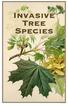 Invasive Tree Species A Contents Invasive Tree Species................. 1 Removal Permit Process.............. 2 Mitigation......................... 3 Identification Guide: Norway maple - Acer platanoides............
Flower and Native Plant Seed Production. Thomas G Chastain CSS 460/560 Seed Production
 Flower and Native Plant Seed Production Thomas G Chastain CSS 460/560 Seed Production Flower seed production is a small component of the seed production industry. Seed is often blended and used in wildflower
6. NATURAL AREAS FIRE MANAGEMENT
 6. NATURAL AREAS FIRE MANAGEMENT 6-1 Wildfire management is an important component of managing and maintaining County natural areas. The natural areas are woven into the community fabric and are a part
Earth Science Landforms, Weathering, and Erosion Reading Comprehension. Landforms, Weathering, and Erosion
 Reading Comprehension Name 1 How many people have been to the Rocky Mountains or the Grand Canyon? When people go to visit these natural wonders, they may not realize that it took millions of years for
The Resilience of Nature. Mount St. Helens Eruption and Recovery
 The Resilience of Nature Mount St. Helens Eruption and Recovery Mount St. Helens Before the 1980 Eruption Photo taken from Norway Pass Eruption March 27, 1980 The 1980 Eruptive Period Begins The Mountain
Recovery and Rehabilitation of Vegetation on the Fitzner-Eberhardt Arid Lands Ecology Reserve, Hanford Reach National Monument, Following the 24
 Recovery and Rehabilitation of Vegetation on the Fitzner-Eberhardt Arid Lands Ecology Reserve, Hanford Reach National Monument, Following the 24 Command Fire FINAL REPORT: 2001-2004 Recovery and Rehabilitation
3.1. Succession, Recovery, and Renewal in Natural Communities. A35 Starting Point. What Happens to a Vacant Lot?
 3.1 Succession, Recovery, and Renewal in Natural Communities Here is a summary of what you will learn in this section: Ecosystems change in predictable ways known as succession. Ecosystems can establish
Addendum D. Nomination of Moody Wash ACEC
 Addendum D Nomination of Moody Wash ACEC Moody Wash ACEC is hereby nominated by Citizens for Dixie s Future to: BLM St. George Field Office 345 East Riverside Drive St. George, UT 84790 Moody Wash is a
18 voting members 44 stakeholders 114 email list. Senators: Wyden & Merkley Representative DeFazio
 18 voting members 44 stakeholders 114 email list Senators: Wyden & Merkley Representative DeFazio State Representative Krieger State Senators: Roblan, Johnson, and Kruse Governor Brown s office County
EcoInformatics International Inc.
 1 von 10 03.08.2010 14:25 EcoInformatics International Inc. Home Services - solutions Projects Concepts Tools Links Contact EXPLORING BEAVER HABITAT AND DISTRIBUTION WITH GOOGLE EARTH: THE LONGEST BEAVER
KINGMAN IS GROWING! COLUMN
 KINGMAN IS GROWING! COLUMN THE INTRIGUING AGAVE BY LINDA REDDICK, KINGMAN AREA MASTER GARDENER An Agave is a tough, easy-care succulent that can add style to your garden, tolerate less than ideal conditions
by Erik Lehnhoff, Walt Woolbaugh, and Lisa Rew
 Designing the Perfect Plant Activities to Investigate Plant Ecology Plant ecology is an important subject that often receives little attention in middle school, as more time during science classes is devoted
Your Defensible Space Slideshow
 Your Defensible Space Slideshow Red = Trees to Remove Your Defensible Space Slideshow This slideshow was created to highlight actions you can take to dramatically improve the chances of your home surviving
Flowers; Seeds enclosed in fruit
 Name Class Date Chapter 22 Plant Diversity Section Review 22-1 Reviewing Key Concepts Short Answer On the lines provided, answer the following questions. 1. Describe the main characteristics of plants.
Background Information: The Mamquam River Floodplain Restoration Project
 Background Information: The Mamquam River Floodplain Restoration Project The Mamquam River Floodplain Restoration project is being undertaken in partnership with the Squamish River Watershed Society, Fisheries
First Annual Centennial Strategy for. Yucca House National Monument
 First Annual Centennial Strategy for Yucca House National Monument August 2007 Year: 2007 Vision Statement Yucca House National Monument was set aside in 1919 to preserve an unexcavated Ancestral Puebloan
4.2 Buena Vista Creek Watershed
 Buena Vista Creek Watershed 4.2 Buena Vista Creek Watershed Watershed Overview The Buena Vista Creek Watershed is the fourth-largest system within the Carlsbad Hydrologic Unit. The watershed extends approximately
Inventory of Plants at MOJA and MANZ - Final Report 2006 Solicitation # Q2280201178 PO Box 27, Kelso, CA 92309 1.0 INTRODUCTION
 1.0 INTRODUCTION 1.1 National Inventory and Monitoring Program and Mojave Network The Servicewide Inventory and Monitoring (I&M) Program, initiated by the National Park Service (NPS) in 1992, was created
Rocky Mountain Wolf Recovery 2009 Interagency Annual Report
 Rocky Mountain Wolf Recovery 2009 Interagency Annual Report A cooperative effort by the U.S. Fish and Wildlife Service, Nez Perce Tribe, National Park Service, Montana Fish, Wildlife & Parks, Idaho Fish
Chapter 18 Introduction to. A f r i c a
 Chapter 18 Introduction to A f r i c a Ch. 18:1 Landforms & Resources 1. Africa s shape & landforms are the result of its location in the southern part of the ancient supercontinent of. Pangaea Over thousands
RESTORATION & REVITALIZATION
 RESTORATION & REVITALIZATION Legal preservation has not proved to be sufficient to preserve natural communities. Restoration activities are diverse and includes revitalization of natural communities which
Addendum. Use Attainability Analysis for Site Specific Selenium Criteria: Alkali Creek. February 23, 2009
 Addendum Use Attainability Analysis for Site Specific Selenium Criteria: Alkali Creek February 23, 2009 Prepared by MWH Americas, Inc. Prepared for EnCana Oil and Gas (USA) Inc. Page 2 Responses to Comments
Maintaining Cactus and Succulents
 Maintaining Cactus and Succulents Master Gardener Education February 22, 2011 Jack Kelly University of Arizona College of Agriculture and Life Sciences Pima County Cooperative Extension Tucson, Arizona
Ruby River Grayling - Gravel Spawning Beds Monitoring Report January 2008
 Ruby River Grayling - Gravel Spawning Beds Monitoring Report January 2008 In partnership with Montana Department of Fish, Wildlife, and Parks (FWP), American Wildlands, and Wildlife Forever, the Madison
WILD WEST REVIVAL Thomas Mayrhofer Photography
 SAN SIMEON COASTLINE [2008] Obispo County, Kalifornien, Vereinigte Staaten 1800 x 600 mm 1.300 UPPER ANTELOPE CANYON [2008] Navajo Nation Reservation, Arizona, Vereinigte Staaten 600 x 1800 mm 900 LOWER
Identification and Prevention of Frost or Freeze Damage By Linda Reddick, Kingman Area Master Gardener
 KINGMAN IS GROWING! COLUMN Identification and Prevention of Frost or Freeze Damage By Linda Reddick, Kingman Area Master Gardener Again this year we have been experiencing some very cold weather, with
All members of the puma species carry their kittens the same way domestic cats do, and they can purr like housecats too.
 Florida Panther In spite of many, many attempts, I have not been able to discover let alone photograph a majestic Florida panther in the wild. The tawny cat is an endangered species. The panthers I have
Tree and forest restoration following wildfire
 Peter F. Kolb (PhD) MSU Extension Forestry Specialist Adj. Assistant Professor Forest Ecology School of Forestry, University of Montana, Missoula, MT 59808 Tel. (406) 243-4705, e-mail: [email protected]
Small Dam Hazard Assessment Inventory
 Small Dam Hazard Assessment Inventory What would happen if your dam were to fail? This is a question that most dam owners hope they will never have to answer. However it is a question you, as a responsible
Florida Native Plant Society
 Florida Native Plant Society Native Plant Owners Manual Asclepias humistrata Sandhill Milkweed Mark Hutchinson For Your Information All date and seasonal references are applicable to the eastern panhandle
Tree Landscape Planting
 City of Pierre Tree Landscape Planting The value of Woody Plant Landscaping Locally Adapted Species List Tips for Successful Planting Pierre Ordinances Public Needs to Know Community Tree Statistics: Trees
ELMER AVENUE. Water Augmentation Study NEIGHBORHOOD RETROFIT DEMONSTRATION PROJECT
 ELMER AVENUE Water Augmentation Study NEIGHBORHOOD RETROFIT DEMONSTRATION PROJECT STAGG STREET ELMER AVENUE KESWICK STREET PASEO NOTE: Photo taken before retrofit WHAT IS THE NEIGHBORHOOD RETROFIT PROJECT?
Lesson 3: Fish Life Cycle
 Lesson 3: Fish Life Cycle Activity: Diagram fish life cycle. Grade level: 4-8 Subjects: Science, social studies Setting: Classroom Duration: 50 minutes Key Terms: Fry, life cycle, life history, spawn,
ENDANGERED AND THREATENED
 ENDANGERED AND THREATENED Understand how species in the Sonoran Desert Region may become endangered or threatened and what is being done to protect them. ARIZONA SCIENCE STANDARDS SC03-S4C3-03&04, SC08-S1C3-07,
STATEMENT OF SHARON BUCCINO SENIOR ATTORNEY NATURAL RESOURCES DEFENSE COUNCIL WASHINGTON, DC
 STATEMENT OF SHARON BUCCINO SENIOR ATTORNEY NATURAL RESOURCES DEFENSE COUNCIL WASHINGTON, DC Good morning. My name is Sharon Buccino. I am an attorney with the Natural Resources Defense Council (NRDC).
From Recreation to Education
 From Recreation to Education The James Clarkson Environmental Discovery Center Introductions Owner Mike Arens, Chief Engineer - HCMA Landscape Architect Rick Espe, ASLA, LEED AP MSI Design Environmental
Division of Forestry
 Guidelines for Managing Sites with Ash To Address the Threat of Emerald Ash Borer On Forestry-Administered Lands BACKGROUND The ash genus (Fraxinus) in Minnesota comprises some 900 million trees and is