
Cherokee Snakebite Remedies
|
|
|
- Kerry Horace Flynn
- 10 years ago
- Views:
Transcription
1 Cherokee Snakebite Remedies David Cozzo At first, serpents were not poison. No roots were poison, and man would have lived forever, but the sun passing over, perceived that the earth was not large enough to support all, in immortality, that would be born. Poison was inserted in the tooth of the snake, in the root of the wild parsnip, etc. And one of the first family was soon bitten by a snake and died. All possible means were used to bring the life but in vain. John Howard Payne 1 The tale above was related to missionary Daniel Butrick and transferred to playwright John Howard Payne early in the nineteenth century to explain why snakes carried such deadly poison and why a chance encounter with a snake, especially if it appears to be a poisonous one, instills mortal fear in the stoutest of hearts. It should come as no surprise that the rich tradition of Cherokee storytelling should contain an explanatory tale of the origin of snake poison, or that their vast pharmacopoeia would contain a wide array of remedies to treat one bitten by a snake. Here I will examine the historical record about these remedies and, through comparison with the findings of later researchers, attempt to clarify and identify the main remedies used by the Cherokee to treat snakebites. Two poisonous snakes are encountered in the Southern Appalachian region: timber rattlesnakes (Crotalus horridus) and copperheads (Agkistrodon contortrix). The Cherokee have historically had ambivalent relationships with the rattlesnakes and a loathing for the

2 44 DAV I D C OZ Z O copperheads. The rattlesnake was known as u-tsa- na-ti or he has a bell because of the alarm sounded by its rattle (Mooney 1900, 295). Rattlesnakes were approached with both a reverence for their power and a fear of their bite, as well as their association with the Thunder spirit. When Lightening, the youngest son of Thunder, was required by his father to play a stick ball match against his two older brothers, he chose for his adornment bracelets of copperheads and a necklace of a great rattlesnake to make himself appear fierce (Mooney 1900, 311). Mooney found that rattlesnakes were referred to as the Thunder s necklace and to kill one is to destroy one of the most prized ornaments of the thunder god (1900, 295). Rattlesnakes were considered the leaders of the snakes, and they epitomized the relationship of all snakes to the underworld (Fradkin 1990, 333). Olbrechts may have best captured the Cherokee attitude toward rattlesnakes: The Cherokee, like other Indians, has a great reverence for snakes in general, but for rattlesnakes in particular, and is careful never to offend one, even by word. In accordance with the principle often applied in the formulas of belittling a serious ailment, it is customary, when a man has been bitten by a snake, to announce that he has been scratched by a briar. (Mooney and Olbrechts 1932, 177) It was considered a foolish act to kill a rattlesnake because they were believed to have clan affiliations (Mooney 1900, 305). As with the blood law of the Cherokee, killing a member of a clan had to be avenged by the departed one s clan member. The balance had to be restored by taking the life of a member of equal value to the clan that had perpetrated the killing of one s affiliate. Therefore, if one killed a rattlesnake, the snake s clan would have to seek revenge on a member of the killer s clan. This rule was not limited to snake/

3 CHEROKEE SNAKEBITE REMEDIES 45 human interactions. It was said that snakes, ginseng, and deer were allies, all having exceptional powers, and that an action against one of them would be avenged by all of them (Mooney 1900, 294). Copperheads, on the other hand, were viewed as solitary creatures. They were generally despised and, since they had no comparable clan affiliations, they could be killed with impunity. The copperhead was known simply as wo-di-ge a-sko-li, or brown head, an apt description that provided its common English name (Mooney 1900, 296). The general therapy for treatment of snakebites consisted of both internal and external applications of a medicinal plant decoction. A portion of the decoction was imbibed, and the remainder was either blown or rubbed on the bite. The external application, whether blown or rubbed, was always performed in a counterclockwise direction, symbolizing the uncoiling of the serpent and the undoing of its intent. Dreams of snakebite were treated as an actual bite due to concern that, if untreated, inflammation and the symptoms of an actual bite would set in at the location of the dream-bite (Mooney 1891, 352). James Adair was one of the earliest commentators on the range and efficacy of Cherokee snakebite remedies: I do not remember to have seen or heard of an Indian dying by the bite of a snake, when out at war, or a hunting; although they are then often bitten by the most dangerous of snakes every one carries in his shot-pouch, a piece of the best snake-root, such as the Seneeka, or fernsnake-root, or the wild hore-hound, wild plantain, St. Andrew s cross, and a variety of other herbs and roots, which are plenty, and well known to those who range the American woods, and are exposed to such dangers, and will effect a thorough and speedy cure if timely applied. When an Indian perceives he is struck by a snake,

4 46 DAV I D C OZ Z O he immediately chews some of the root, and having swallowed a sufficient quantity of it, he applies some to the wound; which he repeats as occasion requires, and in proportion to the poison the snake has infused into the wound. For a short space of time, there is a terrible conflict throughout all the body, by the jarring qualities of the burning poison, and the strong antidote; but the poison is soon repelled through the same channels it entered, and the patient is cured. (1974, ) Some of the plants mentioned by Adair are easily identified by their common names. Others were vernacular names for plants that were later identified by other researchers as Cherokee snakebite remedies. The Seneeka is Seneca snakeroot, Polygala senega, which has its function indicated in its common name. The reference to the Seneca tribe in both the common and botanical names would also indicate an association with northern Iroquoian peoples, but documentation of this is not evident (Moerman 1998; Herrick 1995). Mooney claimed that the Cherokee did not use P. senega for snakebite, but for other unspecified illnesses and as a source of income in the commercial botanicals market (Cozzo 2004, 302). A later source that appears to cite it as a viable remedy may be referencing Adair, but it is not clear from the text (Hamel and Chiltoskey 1975, 55). Perhaps Mahoney s rendition of Cherokee physician Richard Foreman s relationship to P. senega can shed some light on the ambiguity associated with its use for snakebite: Much has been written with regard to its virtue in the cure of the bite of the snake; we never used it for this purpose, believing that the remedies prescribed for the treatment of animal poisons are superior to this root; but should a case occur where this root was at hand, and the remedies prescribed under that head could not be

5 CHEROKEE SNAKEBITE REMEDIES 47 obtained, we would give it a fair trial; the mode of using it internally in tea or decoction, and externally, to the wound. (1857, 245) The fern snake root mentioned by Adair appears to be Botrychium virginianum, the rattlesnake fern. While the vernacular name rattlesnake fern could be attributed to an association with the rattle of a rattlesnake because of the erect nature of its fertile frond, Olbrechts claimed that it was the primary remedy for a dream-snakebite. The Cherokee had an elaborate system of disease diagnosis associated with the dream world (Mooney and Olbrechts 1932, 35-37), and a dream of being bitten by a snake was treated as an actual bite. If the dream-bite was left untreated, the victim would eventually develop swelling and ulcers on the spot, just as if it were an actual bite (Mooney 1900, 295; Mooney and Olbrechts 1932, 176). Rattlesnake fern was applied to both a dream-bite and, in the absence of a superior remedy, was an acceptable remedy for an actual bite (Mooney and Olbrechts 1932, 177; Cozzo 2004, 337). Wild horehound may be more difficult to identify than other remedies mentioned by Adair. Mahoney says that wild hoarhound is Eupatorium pilosum and that it is too well known to need description (Mahoney 1857, 227), but he makes no mention of it being used as a snakebite remedy. However, it is very closely related to and bears a close resemblance to the species Ageratina altissima (formerly Eupatorium rugosum), a common species in the North Carolina mountains, which is one of several plants known as white snakeroot. Banks identified Lycopus virginicus by the common name water horehound, which the Cherokee boiled in milk and gave to a dog that had been bitten by a snake (2004, 94). One local man in the mountains of North Carolina identified L. virginicus, also known as bugleweed, as meadow horehound, and his description of its use

6 48 DAV I D C OZ Z O matched that described by Banks (personal communication, June 15, 2005). Mooney also mentioned that L. virginicus was used for snakebites, but he gave no indication of its application (Cozzo 2004, 206). Such evidence would suggest that L. virginicus is the most likely candidate for the remedy described by Adair as wild horehound. Adair s wild plantain was most likely Cacalia atriplicifolia, the pale Indian plantain. While not specifically mentioned for use as a snakebite remedy, Mooney (1891, 326) did tout its virtues as a poultice for drawing toxins out of wounds: held in great repute as a poultice for cuts, bruises, and cancer, to draw out poisonous matter. The bruised leaf is bound over the spot and frequently removed. St. Andrews cross, the last of the plants specifically named by Adair, is the common name for Hypericum hypericoides, so named because the four-parted flowers resemble an x-shaped cross. The legend of St. Andrew suggests that, when he was crucified, he asked that it be done on a cross of a different shape from that of Jesus. This x-shaped cross is also the basis for the crossed bars on the Confederate flag. No other researchers mentioned this plant for snakebite; however, Banks did find that it was used for its ability to reduce fevers, a function that would be beneficial for systemic inflammation caused by snakebite (2004, 78). Two other species of Hypericum are used in traditional Chinese medicine as remedies for snakebite (Houghton and Osibogun 1993), suggesting that the genus may have some inherent efficacy. While Adair does not mention their names, he does indicate that, a variety of other herbs and roots, which are plenty could be applied to a snakebite. Such a statement would indicate that he would find no flaw with the reports of later researchers who added many more plants to his list. The next treatment of Cherokee remedies appears to have come from the French botanist Palisot de Beauvois, sent to the Southeast in 1796 to reestablish the fur trade among the Creeks and Cherokees.

7 CHEROKEE SNAKEBITE REMEDIES 49 De Beauvois recorded the following information in his notes in what he called a table of snakebite remedies, although not really a table in a contemporary sense: Table of Remedies and Plants Employed by the Cherokees Against Snakebite In the first moment of the bite they use three kinds of remedies: the suction which is always the most effective when it is possible to employ, or chewed tobacco applied to the wound or cannon powder to which one sets afire. Once at home they use three plants. One, a kind of helianthus which I have not yet well determined. The very milky root of the prenanthes alba or its varieties as well as all lactuca. The bark root of tulipier; in the most serious cases all of the plants are employed in infusion. In the course of the treatment they use the root of Spiraea trifoliata. Therein they find the double advantage of being strongly purged and of abundant vomiting. It is good which in general they make use of in all sicknesses the plants of the family composita and of the bark of several trees and plants found in large numbers in North America. (Anderson 1984) The tobacco mentioned by de Beauvois was most likely Nicotiana rustica, the old tobacco of the Cherokee and the primary tobacco used in ritual and medicine (Cozzo 2004). Mooney had the following to say about N. rustica: Tobacco was used as a sacred incense or as the guarantee of a solemn oath in nearly every important function in

8 50 DAV I D C OZ Z O binding the warrior to take up the hatchet against the enemy, in ratifying the treaty of peace, in confirming sales or other engagements, in seeking omens for the hunter, in driving away witches or evil spirits, and in regular medical practice. It was either smoked or sprinkled on the fire, never rolled into cigarettes, as among the tribes of the Southwest, neither was it ever smoked for the mere pleasure of the sensation. (Mooney 1900, 424) Nicotiana rustica is a much stronger tobacco, possessing as much as eight times the nicotine content of the introduced N. tobacum, the species prevalent in the commercial trade (Haley, Gardner, and Whitney 1924; Idris et al. 1998). Besides applying tobacco to the bite, the person treating the bite would also hold tobacco in his mouth to counteract the poison sucked out of a bite (Mooney and Olbrechts 1932, 241). The Helianthus mentioned by de Beauvois could have been one of a number of native sunflowers or sunflower-like plants. I take exception with Anderson s informant who dismissed its potential outof-hand (Anderson 1984). There are as many as sixteen species of Helianthus and numerous species of related yellow-flowered members of the family Asteraceae growing in the Southern Appalachian Mountains (Smith 1998, ). The edible sunflower, Helianthus annuus, has been recorded as a snakebite remedy in the Southwest, being employed by the White Mountain Apache and Zuni (Moerman 1998, 257). This would indicate some degree of efficacy for that particular species, not to mention other members of the genus. Mooney recorded that a decoction of the roots of Rudbeckia fulgida, a type of black-eyed Susan that resembles a small sunflower, was used as a wash on snakebites (Mooney 1891, 327). Perhaps this plant, or a closely-related one, was the unknown Helianthus observed by de Beauvois.

9 CHEROKEE SNAKEBITE REMEDIES 51 In keeping with his praise of the medicinal qualities of the family Asteraceae (he refers to it as composita), de Beauvois highlighted Prenanthes alba and the genus Lactuca. Several species of Prenanthes are common to the Southern Appalachians, some more common than P. alba, which is found only in a few counties in western North Carolina (Radford, Ahles, and Bell 1968, 1020). However, de Beauvois did indicate that the varieties of P. alba were suitable substitutes. No other researchers corroborated the use of either Prenanthes or Lactuca for snakebite, but the common name of rattlesnake root applied to P. alba and some related species of Prenanthes would indicate a reputation for some degree of efficacy. In the Cherokee ethnobotanical classification system, P. alba is considered a small folk species of the folk genus da ye wa, or it sews itself up. The large folk species of this genus is Cacalia atriplicifolia, mentioned above as a potential snakebite remedy. The root bark of the tulip poplar, Liriodendron tulipifera, got a passing mention by de Beauvois (as tulipier), but was highly touted for a range of conditions and wound-healing capacity by both Olbrechts and Banks (Cozzo 2004, 78). One of Olbrechts many claims included its use as a suitable substitute for the rattlesnake fern, Botrychium virginianum, in cases of snakebite. A decoction of the root bark was blown over the patient and rubbed directly on the site of the bite (Mooney and Olbrechts 1932, 177). Mahoney applied tulip poplar specifically for the bite of a copperhead: I have known the bite of the copperhead cured in the following manner: Immediately apply to the wound, tobacco, which has been perfectly wet in vinegar, and, as soon as it can be prepared give a strong decoction of the yellow-poplar root bark, and bathe the wound frequently with the same. (1857, 99)

10 52 DAV I D C OZ Z O The Spiraea trifoliata mentioned by de Beauvois is an old name for Portheranthus trifoliata, also known as Indian Physic or American Ipecacuanha. The common names refer to its strong purging and emetic qualities. Again I take exception with Anderson s informant who suggests that P. trifoliata was used as a calming or soothing agent. Mooney found mixed responses to the use of this plant, some claiming that it was useful for severe bowel complaints, others claiming that it was too toxic to take internally (1891, 326). As mentioned above, de Beauvois found that those who partook of this medication were strongly purged and of abundant vomiting, neither of which should be considered calming or soothing. However, it is reported to be a safe and efficient emetic (PDR 2004, 460) and would have served the purpose ascribed to it by de Beauvois. Emesis was an important aspect of Cherokee snakebite therapy, especially in cases of a dream-snakebite. Dreaming of snakes causes the dreamer s saliva to become spoiled, a serious medical condition among Southeastern Indians. Saliva was considered to be associated with the primary soul, located in the head, in the Cherokee humoral system (Witthoft 1984; Fogelson 1982; Cozzo 2007). Natural or intentional disturbance in the state of saliva had to be addressed, usually in the form of an emetic. The Swimmer manuscript (Mooney and Olbrechts 1932, 198) contains an elaborate formula for such an emetic. It included a decoction of two types of rush, the soft-stemmed bulrush (Schoenoplectus tabernaemontani) and the soft rush (Juncus effusus), wood vetch (Vicia caroliniana), and poison ivy (Rhus radicans) found growing on the east side of a poplar tree. Another species mentioned in the formula, Coronilla varia, or crown vetch, may have been a misidentification. According to some sources, it was not introduced to this country from Asia until the 1950s ( wvdnr.gov/wildlife/dirtydozen.shtm), making it an unlikely candidate for inclusion in a Cherokee formula, much less having been

11 CHEROKEE SNAKEBITE REMEDIES 53 ascribed a Cherokee name. There are, however, local populations in the North Carolina mountains near present-day Cherokee, so if there was a much earlier introduction, it may have been included in the Cherokee pharmacopoeia. The myth of the origin of snake poison was not the only mention of snakebite in the Payne/Butrick papers. The papers also contained a clear description of how to treat a bite that included some Cherokee names for the plant remedies: They (Thunders) were directed to a weed in the woods the top of which is a rattle like that of a rattlesnake and take the root. It must be dug in the winter when the top is dry. Also to another root the blossom of which has something rising out of it like a rattlesnake s tooth. The third the top smells like a snake. The fourth has one round slim stem grows up high and a branching flower at the top. The fifth is called Senica snake root called the first snakes tail (I nv tv ka to ki)... second owl s head (u gu gu sko), third (A yv ta wi gi) some round thing mashed. Fourth (kv ne li ta), anything with young. Fifth (u nv ste tsv sti ki), senica snake root. All pounded together some of the compound is taken in the mouth, and with it in the mouth the place is sucked which was bitten. Snake doctors always kept this compound by them. (Payne, n.d. Vol. 3, 82) Snake s tail (I nv tv ka to ki) most likely refers to Prunella vulgaris, also commonly known as heal-all or self-heal. The Cherokee name refers to the dried flower head, which does indeed resemble the erect tail of a rattlesnake. Mooney recorded two names for P. vulgaris (Cozzo 2004, 237): inatu gataga ( snake tail ) and inatu wasitsu ( snake rattle ). Both names provide evidence that the species

12 54 DAV I D C OZ Z O referred to by Butrick is, indeed, P. vulgaris. Prunella vulgaris is considered a panacea by both Chinese and Native American herbal practitioners, and current research shows it to be the highest known source of rosmarinic acid, a powerful antioxidant (Duke 1992, 158). Mooney identified owl s head (u gu gu sko) as Pedicularis canadensis, commonly known as lousewort. The name, which Mooney recorded as ugukuska, stems from uguku ( the hooting owl ) and ( head ) and refers to the appearance of the flowering head (Cozzo 2004, 283). The observation that the blossom of which has something rising out of it like a rattlesnake s tooth refers to the individual flowers, which are curved in a manner resembling a snake s fang. The plant whose top smells like a snake had been a mystery to me before finding this reference. Olbrechts recorded a plant that he glossed as the (plant) which is called: snake s odor ; however, he was unable to provide a botanical species to coincide with this distinctive name (Cozzo 2004, 237). But Butrick s supplying the Cherokee name a yv ta wi gi ( some round thing mashed ) may solve this mystery. Mooney recorded the name ayutawigi for Thalictrum dioicum, commonly known as early meadow rue, and glossed it as it bursts due to the tendency of the stalk to burst when pressure was applied (Cozzo 2004, 217). This coincides nicely with Butrick s gloss of some round thing mashed. It was common for Cherokee plants to have more than one name depending on consensus or lack of consensus by the informants. In this instance, there may have been more than one salient feature that determined the name(s) for T. dioicum. My own experience suggests that the members of the genus Thalictrum do have a musky odor, but comparing that smell to a poisonous serpent will have to wait until there is an opportunity for proper confinement of the serpent. The reference to kv ne li ta, ( anything with young ) is, again, very similar to the name of a plant recorded by Mooney as ganelita

13 CHEROKEE SNAKEBITE REMEDIES 55 ( pregnant ). This was one of the Cherokee names for Angelica venenosa or hairy angelica (Cozzo 2004, 231). The reference to pregnancy or having young may be descriptive of the swollen leaf nodes common to members of the family Apiaceae, which are especially prominent on A. venenosa. Butrick s fifth, and last, plant in this formula may have been misidentified. He refers to it as Senica snake root, the common name applied the Polygala senega or the Seneeka mentioned by Adair. However, the Cherokee name supplied by Butrick (u nv ste tsv sti ki) bears no resemblance to the name recorded by Mooney for P. senega (uyugili), but it is very close to unastetstiya ( very small root ), the name Mooney recorded for Aristolochia serpentaria or Virginia snakeroot (Cozzo 2004, 290). Olbrechts claimed that A. serpentaria was a viable substitute for rattlesnake fern (Botrychium virginianum) or tulip poplar (Liriodendron tulipifera) when treating a snakebite that occurred in a dream (Mooney and Olbrechts 1932, 177). As both the common name and specific epithet suggest, A. serpentaria had a reputation as a snakebite remedy and would most likely have been included in the Cherokee repertoire on the occasion of an actual snakebite. I am ambivalent about including James Mahoney s The Cherokee Physician; or, Indian Guide to Health (1857) in this work as it gives no background on the Cherokee practitioner, Richard Foreman, nor does it really discuss Cherokee ethnomedicine. However, it does use the Cherokee names for some illnesses and remedies, indicating some familiarity with Cherokee language and concepts. But even these are placed in a framework of mid-nineteenth-century, westernbiomedical understanding of medicine and physiology. So while I include excerpts from Mahoney s work here, I urge the reader to view the authenticity of his portrayal of Cherokee ethnomedical practices with a healthy dose of skepticism.

14 56 DAV I D C OZ Z O Mahoney s first protocol for snakebite was to purge the patient with a powerful emetic, preferably lobelia (most likely Lobelia inflata or Indian tobacco, the preferred emetic of nineteenth century Thomsonian physicians). This treatment was followed by liberal doses of an infusion of the root of rattle-snake s master, which he claimed could be harmlessly imbibed in large doses. This treatment would cure the bite of the copper-head or rattle-snake, or any other poisonous reptile (1857, 98). The plant commonly known as rattlesnake master is Eryngium yuccafolium, and Mahoney s description suggests that this is the case. He also claimed that it is the most powerful and certain remedies for snake-bite now known (1857, 267). It should be noted that Mooney claimed that starry campion, Silene stellata, was locally known in the Southern Appalachian region as rattle-snake s master, and he recorded the Cherokee name for Eryngium yuccafolium as selikwaya, or green snake, because of the appearance of the leaves. However, Mahoney s description is more suited to E. yuccafolium than S. stellata, and in this case, I am confident that his reference is to the former. Mahoney s alternative treatment was a bit more elaborate: Apply the ligature or bandage and administer the emetic above as directed, and after the operation of the emetic, give a tea of piny-weed root freely. For an external application to the wound, make a plaster to the wound of equal quantities of salt, tobacco, indigo, and hog s-lard; pulverize the tobacco, indigo, and salt, then mix all the articles together and apply it in the form of a poultice. A free usage of spirits, such as whisky, brandy, etc., will be found of great benefit in all cases of bites or stings. I have ascertained from personal observation, that a person when intoxicated, cannot be poisoned by the bite of a snake. Many lives have been saved by the free use

15 CHEROKEE SNAKEBITE REMEDIES 57 of whisky and red pepper; indeed, I believe that whisky alone will save life in many instances, when the bite would prove fatal if an active remedy was not resorted to immediately. (1857, 98-99) The piny-weed referred to in this protocol was most likely Hypericum gentioides, commonly known as pineweed due to its resemblance to a small pine tree. Mooney identified pineweed as such and commented that the Cherokee name, natsiyusti ( like a pine tree ), was based on the same observable quality (Cozzo 2004, 170). Mahoney recorded an almost identical Cherokee name (no-tse-e-yaustee) in The Cherokee Physician and claimed that it will cure the bite of a copper-head, or rattle-snake (1857, 267). This is a close relative of the St. Andrew s cross (Hypericum hypericoides) mentioned by Adair and could very well have a similar biochemical profile that would prove effective against snakebites. Whisky would have been an adopted remedy, but its remedial potential was well known to the Cherokee by the mid-nineteenth century. Other herbal snakebite remedies mentioned by Mahoney include striped blood-wort, Indian sanide (sanicle?), mountain dittany, and the common green plantain (1857, 99). Stripped blood-wort may be stripped gentian (Gentiana villosa), blood-wort being a common name for closely related members of the Gentian family in the British Isles used to purify the blood (Allen and Hatfield 2004, 194). One of the North American common names is Sampson snakeroot (Crellin and Philpott 1990, 378). Mahoney suggests applying the bruised leaves to the bite and taking a tablespoon of the juice of the plant every few minutes. Mahoney s mention of Indian sanide may be a misprint by the publisher. Sanicle would easily by misread as sanide if the c and l were combined as one letter. This would make more sense, as North American members of the genus Sanicula are commonly

16 58 DAV I D C OZ Z O referred to as black snakeroot (Crellin and Philpott 1990, 99) and both Mooney (Cozzo 2004, 182) and Banks (2004, 83) make mention of Sanicula canadensis as a species of sanicle known to the Cherokee. However, neither mentions S. canadensis as a snakebite remedy. But it is also possible that this plant is not in the genus Sanicula at all. Indian sanicle is one of many common names for Ageratina altissima, also known as white snakeroot or white sanicle (Panter and James 1990). Mountain dittany is the common name for Cunila origanoides, a member of the mint family that fits Mahoney s description. He claimed, It is very good for snake bite. In this case, the tea should be drank freely, and the bruised leaves applied to the wound. A 1687 account of the tribes of Virginia referred to this plant as not a true dittany, but mountain calamint, and claimed it would not only cure the bite of a rattlesnake but that the very smell of this plant would cause the snake to die (Hoffman 1964). The common green plantain, Plantago major, is a well-known wound healer, and Banks (1953, 101) claimed it was used as a Cherokee remedy for bee stings. According to Mahoney, Bruise the herb and root and apply it to the wound, and at the same time take the expressed juice or tea freely. (1857, 99) James Mooney, for all his writing on Cherokee culture, provided surprisingly little information about snakebite remedies. His primary discussion on the topic concerned Silene stellata, commonly known as starry campion or, locally in Southern Appalachia, rattlesnake s master (Mooney 1900, 295). He claimed that the juice is held to be a sovereign remedy for snakebites, and it is believed that even the deadliest snake will flee from one who carries a small portion of the root in his mouth. The dried root was beaten and made into a poultice or chewed and applied to the bite. This application would cure the bite if applied within twenty-four hours, even if yellow liquid was seeping from the puncture.

17 CHEROKEE SNAKEBITE REMEDIES 59 In his field notes, Franz Olbrechts claimed it was another member of the Silene genus that was a primary snakebite remedy: Silene virginica or fire pink (Cozzo 2004, 150). As with Mooney s description of the use of Silene stellata, Olbrechts claimed that chewing on a piece of the root would ward off snakes. In case of an actual bite, the juice produced by chewing the root would be blown on the site in a counterclockwise direction. It is highly unlikely that these two species were confused by Mooney and Olbrechts. Even though they are classified in the same genus, the starry campion has white, fringed flowers, and the fire pink has red, showy flowers, making them easily distinguishable from each other, even to the untrained eye. However, their close botanical relationship would indicate that they may share biochemical similarities and were both efficacious against snakebites. The other snakebite remedy discussed by Mooney was basswood (Tilia americana), the bark of which was chewed and placed on the site of a bite. He surmised that its usefulness might come from its association with the Thunder spirit and the fact that the basswood had a reputation of being immune from lightning strikes (Mooney 1900, 295). Banks added that a cold tea of the bark was drunk and applied externally when a dog was bitten by a snake (2004, 77). Banks mentioned two new species not encountered by earlier ethnographers. The roots of hog peanut (Amphicarpa bracteata) could be used in place of chewing tobacco as a general snakebite remedy (2004, 67), and the roots of cocklebur (Xanthium strumarium) were chewed for a rattlesnake bite (2004, 113). In the case of A. bracteata, the root was brewed and blown on the bite accompanied by a song and a prayer. Cocklebur has a reputation in the Appalachian region as a snakebite remedy, but the part used was primarily the leaves instead of the roots (Crellin and Philpott 1990, ).

18 60 DAV I D C OZ Z O Two other plants, hepatica or liverleaf (Hepatica acutiloba) and walking fern (Asplenium rhizophyllum) were combined in a decoction and used as an emetic for dreams of snakes (Banks 2004, 20), but it is not clear from the source if this was used to treat a dream snakebite or just for disturbing dreams of snakes. Asplenium rhizophyllum was known as inatu ganka, or snake s tongue in Cherokee, because of the resemblance of this small fern to a serpent s tongue (Cozzo 2004, 335). In the opening epigraph, it was said that when poison was inserted into the tooth of the serpent, it was also placed in the wild parsnip. The wild parsnip mentioned here is not the feral relative of the European parsnip, Pastinaca sativa, but Cicuta maculata, also known as water hemlock or spotted cowbane. This is the most toxic plant in the Northern temperate zone, with the roots being the most toxic portion (Westbrooks and Preacher 1986, 128). It was used by the Cherokee primarily for conjuring, poisoning, and suicide, but there is also a reason it should be included in an article on snakebite remedies. According to Mooney, Before starting on a journey, a small piece of the root is sometimes chewed and blown upon the body to prevent sickness, but the remedy is almost as bad as the disease, for the snakes are said to resent the offensive smell by biting one who carries it (1900, 425). So, in this instance, one who used Cicuta maculata for the prevention of disease would also be well served to carry at least one of the roots reputed to repel snakes, thus avoiding two potential maladies on their journey. Or the traveler could rely on the method mentioned in the Payne/Butrick (n.d., Vol. 1, 21) papers: Hunters, also, would wave their leggings and moccasins over fire, to secure protection from snakes. Historical ethnobotany is rarely an exact science. The earliest ethnographers had limited knowledge of native languages or indigenous botanical classification systems, and their botanical sophistication

19 CHEROKEE SNAKEBITE REMEDIES 61 would have applied to European species at best (Merrill and Feest 1975). Unless voucher specimens were collected and have been examined, it is impossible to verify the identity of plants described in historical works to the precise botanical species. However, the Cherokee were visited and written about by so many ethnographers, that speculation on the botanical species under consideration can be promoted with a high degree of certainty. What makes the Cherokee case unique is the linguistic evidence incorporated with botanical descriptions or species identification. The Cherokee names provided by Butrick or Mahoney can be cross-referenced with the linguistic materials collected by Mooney. Most of the plant specimens that he collected were identified to species by his colleagues at the Smithsonian Institution, some of the most capable botanists of his day. Olbrechts, also working under the aegis of the Smithsonian Institution, would have the same botanical support system as Mooney. Banks approached his research from both a botanical and ethnographic perspective, providing scientific, common, and Cherokee names. Such a treasure trove of ethnobotanical knowledge allows the descriptions of the past to be examined in a new light. This paper clearly demonstrates that, as Adair noted, the Cherokee employed quite a number of remedies to deter and cure snakebites, many containing some reference to a snake in their common English names. Indeed, if some of the obscure references are counted, those referenced in this article are impressive: Seneca snakeroot (Polygala senega), rattlesnake fern (Botrychium virginianum), rattlesnake root (Prenanthes alba), Virginia snakeroot (Aristolochia serpentaria), rattlesnake master (Eryngium yuccafolium and Silene stellata), black snakeroot (Sanicula canadensis), Sampson snakeroot (Gentiana villosa) and white snakeroot (Ageratina altissima). This would indicate the endurance of indigenous knowledge as it was transmitted to their Euro-American neighbors.

20 62 DAV I D C OZ Z O Several remedies also exemplify the homeopathic principle ( like cures like ) known to Western herbalists as the doctrine of signatures. According to this doctrine, an observable quality in a medicinal remedy is indicative of which symptoms it will alleviate. Typically, the feature under consideration is morphological in character, but it may also be the color, aroma, or habitat that indicates a remedy s usefulness. Mooney relates the concept to the Cherokee ethnomedical system in this manner: Cherokee medicine is an empiric development of the fetich idea. For a disease caused by a rabbit the antidote must be a plant called rabbit s food, rabbit s ear, or rabbit s tail; for snake dreams the plant used is snake s tooth; for worms a plant resembling a worm in appearance, and for inflamed eyes a flower having the appearance and name of deer s eye. A yellow root must be good when a patient vomits yellow bile, and a black one when dark circles come about his eyes, and in each case the disease and the plant alike are named from the color. A decoction of burs must be a cure for forgetfulness, for there is nothing that will stick like a bur; and a decoction of the wiry roots of the devil s shoestring must be an efficacious wash to toughen the ballplayer s muscles, for they are almost strong enough to stop the plowshare in the furrow. (1900, 329) In the case of the Cherokee snakebite remedies, Prunella vulgaris, Botrychium virginianum, and Polygala senega all have portions that are held erect and resemble the rattle of the rattlesnake. Also, as mentioned above, the flower of Pedicularis canadensis resembles the fang of a rattlesnake, Thalictrum dioicum has an odor like that of a snake, and Asplenium rhizophyllum resembles the tongue of a snake. But,

21 CHEROKEE SNAKEBITE REMEDIES 63 from the small ratio of signature plants in relation to the whole, it appears unlikely that this would indicate selection criteria for determining snakebite remedies. While such a signature would serve as a potent mnemonic device for transmitting and retaining valuable cultural knowledge, stating, as Mooney does, that such an identifying feature must be present does not hold up when the whole range of potential remedies are considered. Perhaps it should not be surprising that the Cherokee have so many remedies for snakebites. Snake venom is a complex cocktail of modified digestive proteins that have a direct effect on blood coagulation, the nervous system, the heart, and skeletal muscles (Koh, Armugam, and Jeyaseelan 2006). The Southern Appalachian homeland of the Cherokee is one of the most botanically diverse temperate bioregions on the planet. The combination of the seriousness of a snake s bite and the wide range of available potential medicines would, in Adair s words, lend itself to the knowledge of, a variety of herbs and roots, which are plenty, and well known to those who range the American woods. Note 1. John Howard Payne Papers, Vol. 3, 82. n.d. Housed at the Newberry Library, Chicago, Illinois.
22 64 DAV I D C OZ Z O Works Cited Adair, James Adair s History of the American Indians. Edited under the auspices of the National Society of the Colonial Dames of America, in Tennessee, by Samuel Cole Williams. New York: Promontory Press. Allen, David E., and Gabrielle Hatfield Medicinal Plants in Folk Tradition: An Ethnobotany of Britain & Ireland. Portland: Timber Press. Anderson, William L Palisot De Beauvois and Cherokee Snakebite Remedy. Journal of Cherokee Studies 9(1): 4-9. Banks, William H., Jr., and Steve Kemp Plants of the Cherokee: Medicinal, Edible, and Useful Plants of the Eastern Cherokee Indians. Gatlinburg, TN: Great Smoky Mountains Association. Cozzo, David N The Humors in the Cherokee Ethnomedical System. Journal of Cherokee Studies 25: Ethnobotanical Classification System and Medical Ethnobotany of the Eastern Band of the Cherokee Indians. PhD diss., University of Georgia, Athens. Crellin, John K., and Jane Philpott A Reference Guide to Medicinal Plants: Herbal Medicine Past and Present. Durham: Duke University Press. Duke, James A Handbook of Edible Weeds. Boca Raton: CRC Press. Fradkin, Arlene Cherokee Folk Zoology: The Animal World of a Native People, New York: Garland Publishing. Fogelson, Raymond D Person, Self, and Identity: Some Anthropological Retrospects, Circumspects, and Prospects. In Psychosocial Theories of the Self, edited by Benjamin Lee, New York: Plenum Press.
23 CHEROKEE SNAKEBITE REMEDIES 65 Haley, D. E., F. D. Gardner, and R. T. Whitney Nicotiana Rustica as a Source of Nicotine for Insect Control. Science 50(1555): Hamel, Paul D., and Mary U. Chiltoskey Cherokee Plants: Their Uses A 400 Year History. Self-published. Herrick, James W Iroquois Medical Botany. Syracuse: Syracuse University Press. Hoffman, Bernard G John Clayton s 1687 Account of the Medicinal Practices of the Virginia Indians. Ethnohistory 11(1): Houghton, Peter J., and Ibironke M. Osibogun Flowering Plants Used Against Snakebite. Journal of Ethnopharmacology 39:1-29. Idris, A. M., S. O. Ibrahim, E. N. Vasstrand, A. C. Johannessen, J. R. Lillehaug, B. Magnusson, M. Wallstrom, J. M. Hirsch, and R. Nilsen The Swedish Snus and Sudanese Toombak: Are They Different? Oral Oncology 34: Koh, D. C. I., A. Armugam, and K. Jeyaseelan Snakebite Venom Components and Their Applications in Medicine. Cellular and Molecular Life Sciences 63: Mahoney, James W The Cherokee Physician or Indian Guide to Health: As Given by Richard Foreman, A Cherokee Doctor. New York: James M. Edney. Merrill, William L., and Christian F. Feest An Exchange of Botanical Information in the Early Contact Situation: Wisakon of the Southeastern Algonquians. Economic Botany 29: Moerman, Daniel E Native American Ethnobotany. Portland: Timber Press.
24 66 DAV I D C OZ Z O Mooney, James Myths of the Cherokee. In Nineteenth Annual Report of the Bureau of American Ethnology, Washington DC: Government Printing Office The Sacred Formulas of the Cherokees. In Seventh Annual Report of the Bureau of Ethnology. Washington DC: Government Printing Office., and Frans Olbrechts The Swimmer Manuscript: Cherokee Sacred Formulas and Medicinal Prescriptions. US Bureau of American Ethnology, Bulletin 99. Panter, K. E., and L. F. James Natural Plant Toxicants in Milk: A Review. Journal of Animal Science 68: Payne, John Howard. n.d. John Howard Payne Papers. Housed at the Newberry Library, Chicago, Illinois. PDR (Physicians Desk Reference) Physicians Desk Reference for Herbal Medicines, 3rd ed. Montvale, NJ: Thomson PDR. Radford, Albert E., Harry E. Ahles, and C. Ritchie Bell Manual of the Vascular Flora of the Carolinas. Chapel Hill: University of North Carolina Press. Smith, Richard N Wildflowers of the Southern Mountains. Knoxville: University of Tennessee Press. Westbrooks, Randy G., and James W. Preacher Poisonous Plants of Eastern North America. Columbia: University of South Carolina Press. Witthoft, John Cherokee Beliefs Concerning Death. Journal of Cherokee Studies 8(2):
Common Name: AMERICAN BARBERRY. Scientific Name: Berberis canadensis Miller. Other Commonly Used Names: none. Previously Used Scientific Names: none
 Common Name: AMERICAN BARBERRY Scientific Name: Berberis canadensis Miller Other Commonly Used Names: none Previously Used Scientific Names: none Family: Berberidaceae (barberry) Rarity Ranks: G3/S1 State
Wildlife for the Workforce Part II:
 Wildlife for the Workforce Part II: Turtles and Tortoises, Snakes, Bees, and Exotic Animals Sarasota County Parks and Recreation Turtles and Tortoises Common cooter Green sea turtle Gopher tortoise Terrapin
Medical Discoveries in the 18 th Century
 Medical Discoveries in the 18 th Century by Courtney Mazzerina and Kelly Olsick JCM 360 B: Media History Dr. David Copeland, Instructor Fall 2002 2002, Courtney Mazzerina and Kelly Olsick During the eighteenth
SUBSTANCE ABUSE. Key Concepts. Types of Drugs
 SUBSTANCE ABUSE You have to choose who you want to be in life. This happens by making lots of decisions every day. Using substances is a choice. This is a big choice, because substances have a very real
What You And Your Family Can Do About Asthma
 GLOBAL INITIATIVE FOR ASTHMA What You And Your Family Can Do About Asthma BASED ON THE GLOBAL STRATEGY FOR ASTHMA MANAGEMENT AND PREVENTION NHLBI/WHO WORKSHOP REPORT NATIONAL INSTITUTES OF HEALTH NATIONAL
China The Giant Panda
 China The Giant Panda China The Giant Panda Deep in a forest, a black-and-white bear sits peacefully. It chews the green leaves of a plant. The bear is alone, but there are others not too far away. Later,
#20 in notebook WHAT EVENTS LED TO THE CHEROKEE REMOVAL?
 #20 in notebook WHAT EVENTS LED TO THE CHEROKEE REMOVAL? I. BACKGROUND 1733 Georgia was founded. Colonists were welcomed by Tomochichi, a Yamacraw Indian. Most of Georgia was inhabited by Indians. 1838
Preserving Wild Ginseng in Minnesota
 Note: This digital document was adapted from Smith, W. R. 1993. Preserving Wild Ginseng in Minnesota. Minnesota Natural Heritage Program, Minnesota Department of Natural Resources. 7 pages. Preserving
How to. Stop Smoking. In a Week. Redding Hypnosis Roger Gray, CHT Call today for an appointment (530) 227-3752 www.reddinghypnosis.
 How to Stop Smoking In a Week Redding Hypnosis Roger Gray, CHT Call today for an appointment (0) - www.reddinghypnosis.com CONTENTS PREFACE THE RISKS OF SMOKING KNOW YOUR ENEMY HOW YOU CAN QUIT SMOKING
Medications to help you quit smoking
 Medications to help you quit smoking How can medication help me quit smoking? Using medications can increase your chances of quitting smoking 2 to 3 times more than quitting without using medications.
Understanding the Differences between Conventional, Alternative, Complementary, Integrative and Natural Medicine
 AYURVEDIC HOSPITAL - Nugegoda, Sri Lanka. FOR INFERTILITY TREATMENTS Call Dr. R. A. R. P. Susantha on +94 (0)77 307 3621 for Free Consultancy www.ayurvedic-hospital.com [email protected] Understanding
Native People in Early Virginia
 Name: Date: Native People in Early Virginia When the Jamestown settlers arrived in Virginia in 1607, there were already thousands of Native Americans, or First Americans, living on the land they called
Multiple Myeloma. This reference summary will help you understand multiple myeloma and its treatment options.
 Multiple Myeloma Introduction Multiple myeloma is a type of cancer that affects white blood cells. Each year, thousands of people find out that they have multiple myeloma. This reference summary will help
Patient Information Once Weekly FOSAMAX (FOSS-ah-max) (alendronate sodium) Tablets and Oral Solution
 Patient Information Once Weekly FOSAMAX (FOSS-ah-max) (alendronate sodium) Tablets and Oral Solution Read this information before you start taking FOSAMAX *. Also, read the leaflet each time you refill
Questions & Answers on Rabies
 BUCKS COUNTY DEPARTMENT OF HEALTH Neshaminy Manor Center, Health Building 1282 Almshouse Road Doylestown, PA 18901 215-345-3318 Questions & Answers on Rabies Q: What is rabies? A: Rabies is a deadly disease
Allergic Reaction. A Presentation of EMD Cards for Animal Bites, Stings EMD CE for April 2015
 Allergic Reaction A Presentation of EMD Cards for Animal Bites, Stings EMD CE for April 2015 Is an abnormal reaction of the immune system to an otherwise harmless or foreign substance A foreign substance
Tobacco Addiction. Why does it seem so hard to stop smoking? What's in cigarettes? What if I smoke just a few cigarettes a day?
 Tobacco Addiction Why does it seem so hard to stop smoking? Smoking causes changes in your body and in the way you act. The changes in your body are caused by an addiction to nicotine. The changes in the
Native Plants, Native People
 American Indian Tribes of North Carolina and Their Relationship to the Land General Notes About this Program This is an outdoor program. Participants should dress for the weather, and be aware that, at
ORAL ANTICOAGULANTS - RIVAROXABAN (XARELTO) FOR ATRIAL FIBRILLATION
 ORAL ANTICOAGULANTS - RIVAROXABAN (XARELTO) FOR ATRIAL FIBRILLATION Information Leaflet Your Health. Our Priority. Page 2 of 6 What Are Anticoagulants And What Do They Do? This information leaflet has
Jesus Parables in Chronological Order. Three Kingdom of Heaven Parables (#13-#15) Parable #13 Mark 4:26-29 The Growing Seed
 Jesus Parables in Chronological Order Three Kingdom of Heaven Parables (#13-#15) Parable #13 Mark 4:26-29 The Growing Seed 26 He also said, This is what the kingdom of God is like. A man scatters seed
Cherokee Women and Education
 Cherokee Women and Education Before 1877 By Laura Page European Treatment of Cherokee Women In the early 16th Century Native American women were treated with high respect and held positions of authority
Exploring South Carolina
 Exploring South Carolina Rose Capell Lander University [email protected] Overview This lesson is based on South Carolina: An Atlas. Students will use the atlas to compare the regions in which the
MEDICATION GUIDE POMALYST (POM-uh-list) (pomalidomide) capsules. What is the most important information I should know about POMALYST?
 MEDICATION GUIDE POMALYST (POM-uh-list) (pomalidomide) capsules What is the most important information I should know about POMALYST? Before you begin taking POMALYST, you must read and agree to all of
Staying on Track with TUBERCULOSIS. Medicine
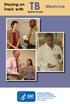 Staying on Track with TB TUBERCULOSIS Medicine What s Inside: Read this brochure to learn about TB and what you can do to get healthy. Put it in a familiar place to pull out and read when you have questions.
ORAL ANTICOAGULANTS - RIVAROXABAN (XARELTO) FOR DEEP VEIN THROMBOSIS (DVT)
 ORAL ANTICOAGULANTS - RIVAROXABAN (XARELTO) FOR DEEP VEIN THROMBOSIS (DVT) Information Leaflet Your Health. Our Priority. Page 2 of 6 What Are Anticoagulants And What Do They Do? This information leaflet
Anaphylaxis: a severe, life threatening allergic reaction usually involving swelling, trouble breathing, and can progress to shock
 Allergy is a condition in which the immune system causes sneezing, itching, rashes, and wheezing, or sometimes even life-threatening allergic reactions. The more you know about allergies, the better prepared
PSORIASIS AND ITS. Learn how vitamin D medications play an important role in managing plaque psoriasis
 PLAQUE PSORIASIS AND ITS TREATMENTS Learn how vitamin D medications play an important role in managing plaque psoriasis 2 Understanding Plaque Psoriasis WHAT CAUSES PLAQUE PSORIASIS? No one knows exactly
Snakes of Massachusetts
 Snakes of Massachusetts Of the roughly 3,000 known species of snake found worldwide, only 15% are considered dangerous to humans. Luckily here in Massachusetts we only have two types of dangerous venomous
------------------------------------------------------------------------------------------------------------
 The Pocket Homeopath Operating Instructions About Homeopathy Buying this program allows you to keep the charted data beyond the trial date. ------------------------------------------------------------------------------------------------------------
CANCER TREATMENT: Chemotherapy
 CANCER TREATMENT: Chemotherapy Chemotherapy, often called chemo, is the use of drugs to treat a disease. The term chemotherapy is now most often used to describe a type of cancer treatment. Dr. Khuri:
Kino, Juana and Coyotito
 1 Kino, Juana and Coyotito K ino woke up early in the morning. The stars were still shining in the sky. The cockerels were beginning to crow 1 and the pigs were looking for something to eat. Outside the
Fry Phrases Set 1. TeacherHelpForParents.com help for all areas of your child s education
 Set 1 The people Write it down By the water Who will make it? You and I What will they do? He called me. We had their dog. What did they say? When would you go? No way A number of people One or two How
Tracks of a Panda by Nick Dowson, Illustrated by Yu Rong Scripted for Readers Theater by Karen Antikajian
 Tracks of a Panda by Nick Dowson, Illustrated by Yu Rong Scripted for Readers Theater by Karen Antikajian Narrator 1: Narrator 6: Narrator 2: Narrator 7: Narrator 3: Narrator 8: Narrator 4: Fact Announcer
How To Quit Smoking
 The American College of Obstetricians and Gynecologists f AQ FREQUENTLY ASKED QUESTIONS FAQ065 WOMEN S HEALTH It s Time to Quit Smoking What are the dangers of smoking? How does smoking affect the body?
Oh Baby! We Want To Keep You Safe From Secondhand Smoke TAKE THE FIRST STEP FOR YOUR BABY
 Oh Baby! We Want To Keep You Safe From Secondhand Smoke TAKE THE FIRST STEP FOR YOUR BABY TAKE THE FIRST STEP FOR YOUR BABY Making a plan to avoid secondhand smoke is an important step in helping your
APPENDIX I-A: INFORMED CONSENT BB IND 11184 Protocol CDC IRB #4167
 APPENDIX I-A: INFORMED CONSENT BB IND 11184 Protocol CDC IRB #4167 INFORMED CONSENT FOR USE OF DIPHTHERIA ANTITOXIN (DAT) FOR SUSPECTED DIPHTHERIA CASES Investigational New Drug (IND) BB 11184 Protocol
5420-R STUDENT HEALTH SERVICES REGULATION NORTH COLONIE CENTRAL SCHOOLS NEWTONVILLE, NEW YORK Emergency Procedures and Approved First Aid Methods
 STUDENT HEALTH SERVICES REGULATION NORTH COLONIE CENTRAL SCHOOLS NEWTONVILLE, NEW YORK Emergency Procedures and Approved First Aid Methods EMERGENCY PROCEDURES Contact parents and cooperate with them in
Ear Infections Chickenpox chickenpox
 Ear Chickenpox Infections chickenpox Chickenpox Chickenpox is a common, very contagious viral infection that over 90% of people get during childhood unless they have been immunised. After an infection,
March 10, 2015 CONFERENCE CALL DOCUMENTATION FOR C.N.A.s Presented by Dwana Jackson, CNA, AIPP Quality Specialist
 March 10, 2015 CONFERENCE CALL DOCUMENTATION FOR C.N.A.s Presented by Dwana Jackson, CNA, AIPP Quality Specialist Good morning everyone and welcome to today s conference call, our topic today is documentation
Rivaroxaban to prevent blood clots for patients who have a lower limb plaster cast. Information for patients Pharmacy
 Rivaroxaban to prevent blood clots for patients who have a lower limb plaster cast Information for patients Pharmacy Your doctor has prescribed a tablet called rivaroxaban. This leaflet tells you about
Your Own Teeth and Gums
 Your Own Teeth and Gums CHAPTER1 Next time you look in a mirror, look at your teeth and the skin (gums) around them. Look in your children s mouths, too. Look at both gums and teeth, because the health
How to get into vet school
 How to get into vet school By Amanda Hoffman, YCP Biology Class of 2012 Before you begin make sure that veterinary medicine is exactly what you want to study in your future, that this is the career you
Bile Duct Diseases and Problems
 Bile Duct Diseases and Problems Introduction A bile duct is a tube that carries bile between the liver and gallbladder and the intestine. Bile is a substance made by the liver that helps with digestion.
Lesson 2: Save your Smile from Tooth Decay
 Lesson 2: Save your Smile from Tooth Decay OVERVIEW Objectives: By the end of the lesson, the Lay Health Worker will be able to: 1. Describe what tooth decay is and how it happens. 2. State the causes
Information for adult patients. Common questions about tonsil surgery. Why do we have tonsils? How is the operation performed? What happens now?
 Information for adult patients The purpose of this information is to help everyone who undergoes tonsil surgery to feel as good as possible after the operation and to return to normal food and normal activities
Skin cancer Patient information
 Skin cancer Patient information What is cancer? The human body is made up of billions of cells. In healthy people, cells grow, divide and die. New cells constantly replace old ones in an orderly way. This
HEALING SCRIPTURE CONFESSIONS
 HEALING SCRIPTURE CONFESSIONS God s Medicine For You Compiled by Dean Wall BELIEVERS PUBLICATIONS Box 33233 Denver, CO 80233-0233 U.S.A. Copyright 1985,1990 Believers Publications All Rights Reserved Printed
HOW TO CARE FOR A PATIENT WITH DIABETES
 HOW TO CARE FOR A PATIENT WITH DIABETES INTRODUCTION Diabetes is one of the most common diseases in the United States, and diabetes is a disease that affects the way the body handles blood sugar. Approximately
Quit plan. Your free guide on how to stop smoking. www.want2stop.info
 Quit plan Your free guide on how to stop smoking www.want2stop.info Thinking? about stopping Around three quarters of those people in Northern Ireland who smoke say they would like to stop. If you are
Introduction. Dear Leader,
 Table of Contents Introduction...4 Meeting and Setting Goals...6 Week 1: The Great Human Questions...9 Week 2: Examining the Ways We Know...15 Week 3: The Christian Worldview...24 Appendix A: The Divine
Cancer Treatment Moringa Oleifera for Cancer Prevention or Treatment
 Cancer Treatment Moringa Oleifera for Cancer Prevention or Treatment As we learn more about cancer, we are empowered to use more of the tools which nature has created for us to help battle this terrible
How do Patients Take THE GIFT from Mother Earth, BEST FULVIC and Humic and Fulvic Based Supplements?
 How do Patients Take THE GIFT from Mother Earth, BEST FULVIC and Humic and Fulvic Based Supplements? Patients typically start taking THE GIFT from Mother Earth. THE GIFT from Mother Earth is a highly-concentrated
Discover Entomology. Discover Entomology. A Science, a Career, a Lifetime. A Science, a Career, a Lifetime
 Discover Entomology A Science, a Career, a Lifetime Discover Entomology A Science, a Career, a Lifetime What is Entomology? Entomology is the study of insects. Entomologists study bees, ants, beetles,
Patient information. How to Stop Smoking Before your Operation PIF 734 V5
 Patient information How to Stop Smoking Before your Operation PIF 734 V5 Fag Ends can help you stop smoking before your operation. To contact Fag Ends for help to stop smoking please call Freephone: 0800
Recipe for Survival. Medicine kills. Medicine saves. Everyone has their own views on the subject
 El-Dassouki 1 Noor El-Dassouki Mr. Skubiski ENG 4U March 18, 2013 Recipe for Survival Medicine kills. Medicine saves. Everyone has their own views on the subject matter, but like many other things in life,
Compare and Contrast Versions of a Story
 Compare and Contrast Versions of a Story What story has wicked stepsisters, a fairy godmother, glass slippers, and a girl who works hard and ends up marrying a prince? Cinderella! You have probably read
Poison Ivy, Oak & Sumac: A Rash of Information About Identification, Treatment and Prevention
 Poison Ivy, Oak & Sumac: A Rash of Information About Identification, Treatment and Prevention The American Academy of Family Physicians Foundation has favorably reviewed this material through 2007. Favorable
Acute Myeloid Leukemia
 Acute Myeloid Leukemia Introduction Leukemia is cancer of the white blood cells. The increased number of these cells leads to overcrowding of healthy blood cells. As a result, the healthy cells are not
Everyone knew the rich man in the village. He had become rich by lending people
 Grade 3: Unit 5, Week 1 Making Money Read Aloud: The Moneylender and the Fly A Vietnamese Folk Tale retold by Polly Peterson Wonderful Words: possession, rascal, witness, debt, stern The Moneylender and
After Your Gastric Bypass Surgery
 After Your Gastric Bypass Surgery UHN Information for patients and families Read this information to learn: what problems to look out for how to care for yourself at home about your follow-up appointment
In-Patient Radioactive Iodine ( 131 I) Treatment
 In-Patient Radioactive Iodine ( 131 I) Treatment Information for patients and families Princess Margaret Read this booklet to learn: what radioactive iodine treatment is what to expect instructions to
(Leader and Reader Text) Vigil Service for a Deceased Serran with Lay Leader
 (Leader and Reader Text) Vigil Service for a Deceased Serran with Lay Leader Prayers, readings and the quotes below are taken from Order of Christian Funerals, approved for use in the Dioceses of the United
Prayer Ministry Handbook October 2012 Edition
 Prayer Ministry Handbook October 2012 Edition 510 New Bloomfield Road P.O. Box 155, Duncannon, PA 17020 717.834.5444 www.aharvest.org www.facebook.com/ahcduncannon Matthew Zang, Senior Pastor Prayer Ministry
Table Summary of the California Acupuncture Board Scope of Practice Summary by Kevin McNamee, D.C., L.Ac. with The Supply Center funding
 Table Summary of the California Acupuncture Board Scope of Practice Summary by Kevin McNamee, D.C., L.Ac. with The Supply Center funding A professions scope of practice is a dynamic entity which will continually
Storytelling + young learners + limited vocabulary?
 Storytelling + young learners + limited vocabulary? Why not? Warm-up: March bunny (bunny - eek, hunter - bang, vegetarian - yea, wood God father - ohm! ) In a dark, dark wood (story 7) In a dark, dark
Student worksheet: Similar words/confusable words/right or wrong words
 1. Lend, borrow or both? Student worksheet: Similar words/confusable words/right or wrong words Time for your language health-check. Find out how Grammar Scan can help you achieve greater accuracy. First
Homeopathy Naturopathy Osteopathy Chiropractic Ayurveda and Conventional
 Credit: The image of Chinese medicine bottles from http://www.flickr.com/photos/moriza/49897087/ Homeopathy Naturopathy Osteopathy Chiropractic Ayurveda and Conventional Russell A. Faust, PhD, MD, FAAP
Confirmation Faith Statement
 A is simply 1-2 paragraphs of what you believe about God, faith, Jesus, salvation, etc. Every Confirmation student will pick out a Confirmation verse as a basis of their faith statement. You can use one
Alcohol and drug abuse
 Alcohol and drug abuse This chapter explores how alcohol abuse affects our families, relationships, and communities, as well as the health risks associated with drug and alcohol abuse. 1. Alcohol abuse
entrust to you the true riches? And if you have not been faithful with what belongs to another, who will give you what is your own?
 Serving Two Masters This month I am looking at the stories Jesus told. And since I like a challenge, I am either looking at stories we don t usually hear about or a different view of a familiar story.
You re One in Seven Billion!
 You re One in Seven Billion! We ve all heard the expression, You re one in a million!. With the ever-growing number of people on the planet, it might be more accurate to say, You re one in seven billion!
ULTIMATE TERMITE SOLUTION WATER BASED TERMITICIDE QUICK ACTION LONG LASTING CONTROL ELIMINATES TERMITES ODOURLESS PEOPLE, PET & PLANT FRIENDLY
 ULTIMATE TERMITE SOLUTION WATER BASED TERMITICIDE QUICK ACTION LONG LASTING CONTROL ELIMINATES TERMITES ODOURLESS PEOPLE, PET & PLANT FRIENDLY TERMITES CAN DEVOUR YOUR HOME! Australia s subterranean termites
What are spider veins? What is the best treatment for spider veins?
 Laser Spider/Leg Vein Q & A What are spider veins? Millions of women and men are bothered by unsightly spider veins on their faces and legs. Spider veins or telangiectasias are those small red, blue and
Name Class Date. Adapting to the Environment Adaptations and Survival
 CHAPTER 3 4 SECTIN Adapting to the Environment Adaptations and Survival EFRE YU READ After you read this section, you should be able to answer these questions: What adaptations help animals survive? What
IN A SMALL PART OF THE CITY WEST OF
 p T h e L a s t L e a f IN A SMALL PART OF THE CITY WEST OF Washington Square, the streets have gone wild. They turn in different directions. They are broken into small pieces called places. One street
Laws and Regulations Relating to RABIES. Excerpts from the. California Health and Safety Code. and the. California Code of Regulations
 Laws and Regulations Relating to RABIES Excerpts from the California Health and Safety Code and the California Code of Regulations CALIFORNIA DEPARTMENT OF PUBLIC HEALTH DIVISION OF COMMUNICABLE DISEASE
Full version is >>> HERE <<<
 Full version is >>> HERE http://pdfo.org/yotristo/pdx/cust1630/ Tags: how to quit marijuana with seb grant fresh data-- marijuana
Georgia O'Keeffe, 1887-1986: Her Paintings Showed Her Love for the American Southwest
 27 November 2011 voaspecialenglish.com Georgia O'Keeffe, 1887-1986: Her Paintings Showed Her Love for the American Southwest Detail from "Blue and Green Music," 1921 (You can download an MP3 of this story
Healthy Lifestyle, Tobacco Free and Recovery Lesson for Group or Individual Sessions
 Healthy Lifestyle, Tobacco Free and Recovery Lesson for Group or Individual Sessions This lesson is part of an overall curriculum based program developed by the New York State Office of Alcoholism and
Parents Cough & Cold Kit for Children Winter/Spring 2008 By Andrew Weil, M.D.
 Parents Cough & Cold Kit for Children Winter/Spring 2008 By Andrew Weil, M.D. Dear Parents, You may be aware that manufacturers have voluntarily recalled several children s common over-the-counter cough
Does God Heal Physically in Response to Prayer?
 Does God Heal Physically in Response to Prayer? by JENNIFER KENNEDY DEAN LET ME LAY OUT CLEARLY for you how I understand prayer for physical healing. As I travel and meet people and listen to their concerns,
ORAL ANTICOAGULANTS RIVAROXABAN (XARELTO) FOR PULMONARY EMBOLISM (PE)
 ORAL ANTICOAGULANTS RIVAROXABAN (XARELTO) FOR PULMONARY EMBOLISM (PE) Information Leaflet Your Health. Our Priority. Page 2 of 6 What Are Anticoagulants And What Do They Do? This information leaflet has
Oak Trees BASIC GROWING REQUIREMENTS FOR YOUR
 They are beautiful in their peace, They are wise in their silence. They will stand after we are dust. They teach us, and we tend them. G.A. MacDunelmor BASIC GROWING REQUIREMENTS FOR YOUR Oak Trees The
Appalachian American Indians A Timeline of the Historic Period
 Appalachian American Indians A Timeline of the Historic Period Prior to 1700 Shawnee and Mingo colonies claimed the eastern panhandle of what is now WV and the south eastern area- including the areas that
Like cocaine, heroin is a drug that is illegal in some areas of the world. Heroin is highly addictive.
 Heroin Introduction Heroin is a powerful drug that affects the brain. People who use it can form a strong addiction. Addiction is when a drug user can t stop taking a drug, even when he or she wants to.
Why Fruit Trees Die D. B. Meador, Extension Specialist (retired) University of Illinois
 Why Fruit Trees Die D. B. Meador, Extension Specialist (retired) University of Illinois Occasionally, fruit trees decline and often die. Diseases affecting the leaves, fruit, and twigs of fruit trees usually
The Hepatitis B virus (HBV)
 The Hepatitis B virus (HBV) There are 400 million people in the world who live with chronic hepatitis B, including France. Most people don t even know they are infected. But there are several important
Advent Wreath and Prayers
 Advent Wreath and Prayers The Advent wreath itself is simply a circle of greens holding four candles. Even little children will be delighted to assist or accompany parents in buying or cutting tree boughs
Yogi Tea Bag Inspirations received from all the Yogi Tea Debby has consumed over the last year
 Yogi Tea Bag Inspirations received from all the Yogi Tea Debby has consumed over the last year A Act selfless, you will be infinite. Appreciate yourself and honor your soul. As a plant can t live without
A Sample Radio Interview
 A Sample Radio Interview By Erik R, 7/5/00 The following is a sample interview that has been put together to help show how to provide a positive approach to answering questions about Narcotics Anonymous.
How To Treat A Cancer With Natural Remedies
 Mesothelioma is a devastating form of cancer that is relatively rare when compared to the incidence rates of other cancers. The word mesothelioma is derived from the English word mesothelium, which is
Dentures. Dental Implants. Look Younger. Chew Better
 Dentures & Dental Implants That Will Help You Look Younger & Chew Better Herbert Dental Copyright 2013 by Herbert Dental All rights reserved. Published by Herbert Dental No part of this publication may
DECISION ON APPEAL OF VICIOUS DOG DETERMINATION. This is an appeal from a determination by the City of Rutland Board of Alderman
 Miller v. City of Rutland, No. 513-7-10 Rdcv (Cohen, J., Aug. 19, 2010) [The text of this Vermont trial court opinion is unofficial. It has been reformatted from the original. The accuracy of the text
ELEMENTARY-LEVEL SCIENCE TEST
 4THE UNIVERSITY OF THE STATE OF NEW YORK SPRING 2008 GRADE 4 ELEMENTARY-LEVEL SCIENCE TEST WRITTEN TEST Student Name School Name Print your name and the name of your school on the lines above. The test
Tobacco/Marijuana. Tobacco. Short-term effects of smoking
 Tobacco/Marijuana Tobacco Nicotine, one of the more than 4,000 chemicals found in the smoke from tobacco products such as cigarettes, cigars, and pipes, is the primary component in tobacco that acts on
Probiotics for the Treatment of Adult Gastrointestinal Disorders
 Probiotics for the Treatment of Adult Gastrointestinal Disorders Darren M. Brenner, M.D. Division of Gastroenterology Northwestern University, Feinberg School of Medicine Chicago, Illinois What are Probiotics?
Care and Problems of the Digestive System. Chapter 18 Lesson 2
 Care and Problems of the Digestive System Chapter 18 Lesson 2 Care of the Digestive System Good eating habits are the best way to avoid or minimize digestive system problems. Eat a variety of foods Avoid
VAD Chemotherapy Regimen for Multiple Myeloma Information for Patients
 VAD Chemotherapy Regimen for Multiple Myeloma Information for Patients The Regimen contains: V = vincristine (Oncovin ) A = Adriamycin (doxorubicin) D = Decadron (dexamethasone) How Is This Regimen Given?