
This revised document was developed by OSACH Consultant & Program Specialist Sandra Wilson, with support and assistance of her colleagues.
|
|
|
- Megan Cornelia Lane
- 10 years ago
- Views:
Transcription
1 Small Business Health and Safety Programs Second Edition

2 Copyright 2008 Ontario Safety Association for Community & Healthcare (OSACH) 4950 Yonge Street, Suite 1505 Toronto, Ontario M2N 6K1 Canada Telephone Fax Toll Free Web site: ISBN: Product Number: RPRFE333 Second Edition: December 2008 This revised document was developed by OSACH Consultant & Program Specialist Sandra Wilson, with support and assistance of her colleagues. Parts of this document may be reproduced for the purpose of education and training without permission provided that appropriate credit is given to OSACH. Please note that this document and the information contained herein are for the purpose of providing readers with general information only that may not be applicable to specific situations. In every case, readers should seek specific advice from qualified individuals regarding appropriate health and safety techniques. Under no circumstances shall the Ontario Safety Association for Community & Healthcare (OSACH) be held responsible for any damage or other losses resulting from reliance upon the general information herein contained, and all such liabilities are specifically disclaimed to the full extent permitted by law. All digital and analogue content available from OSACH, including, but not limited to, published and unpublished text, graphics, user and visual interfaces, videos, films, logos, images, audio clips, computer code, data compilations and software, and the compilation and design thereof in any media format including OSACH s Website (the Content ) is the property of OSACH and is protected by Canadian and applicable foreign copyright laws and international conventions. All registered and unregistered trademarks, design marks and/or service marks (the Trademarks ) displayed on OSACH s Website and in all of the Content are the property of OSACH in Canada and elsewhere and are protected by Canadian and applicable foreign trademark laws and international conventions. All other trademarks not owned by OSACH that appear in the content and/or website are the property of their respective owners, who may or may not be affiliated with, connected to, or sponsored by OSACH. Neither the content, the trademarks, nor any portion of OSACH s website may be used, reproduced, posted, uploaded, distributed, translated, sold, resold, modified or otherwise exploited, in full or in part, for any purpose without OSACH s prior written consent.

3 Small Business Health and Safety Programs Preface The Ontario Safety Association for Community & Healthcare (OSACH) supports the prevention and reduction of workplace injuries and occupational diseases in Ontario s health and community care sector by assisting organizations to adopt preventive best practices and approaches. The purpose of this booklet is to provide general health and safety information pertinent to small business. OSACH hopes that small business employers will find this a valuable information resource and will translate this information into strategies for ensuring that their workplaces are as safe and healthy as possible. OSACH is a non-profit organization designated as the Safe Workplace Association for the health and community care sector under the Workplace Safety and Insurance Act, Our vision is to lead Ontario s community and health care workplaces to be the healthiest and safest through innovative solutions.

4 S m a l l B u s i n e s s H e a l t h a n d S a f e t y P r o g r a m s Contents Introduction 1 Why worry about Health and Safety? 1 How am I doing now? 1 Where can I get help? 1 Legislation 2 What does the law require? 2 How do I know which regulations apply to me? 2 Who enforces the OHS Act? 2 What happens if I don t comply? 2 Responsibilities and Rights 3 Who is responsible for health and safety? 3 What are the worker rights? 4 Health and Safety Representative (HSR) 5 Who can be the Health and Safety Representative? 5 What is the role of the Health and Safety Representative? 5 Health and Safety Policy and Program 6 What is a health and safety policy? 6 What is a health and safety program? 7 Preventing Worker Injuries 8 What are the common hazards in health and community care workplaces? 8 What are the hazards in my workplace? 9 Who inspects the workplace? 9 How do I control a hazard? 10 What do I do if a worker is injured? 10 What incidents should be reported? 11 What incidents require additional reporting? 11 How do I investigate reported incidents? 12 Emergency Plans 13 What emergency plans do I need? 13 Training And Education 14 What do I include in orientation training? 14 What might be included in refresher training? 15 What training do I need as an employer? 16 Summary 16 Other Sources Of Information 17 Glossary 17 Health & Safety Program Checklist 18

5 S m a l l B u s i n e s s H e a l t h a n d S a f e t y P r o g r a m s 1 Introduction As a business owner you are legally responsible for providing a healthy and safe workplace. Healthcare and community care employers in Ontario need to know their responsibilities under Ontario s Occupational Health and Safety Act (OHSA) as well as all related regulations, and comply with them. It s the law! This booklet is intended for employers and office managers in small businesses. The purpose of the booklet is to provide a framework for the development of a health and safety program that satisfies the requirements of the OHSA. The Health and Safety Program Checklist at the end of the booklet will help you to keep track of the steps you have completed. A small business is an organization that employs fewer than 20 employees. Specific sections of the OHSA are referenced to assist in locating legislative requirements. Legislation cited in this guide is based on Ontario statues and regulations current at the time of release. Many samples and resources that can be used in the development of health and safety related materials are available free to download from the OSACH website at Samples should be modified to suit the individual business. Employees and the Health and Safety Representative (HSR) may also find this guide helpful in understanding the employer s responsibilities under the OHSA. Why worry about Health and Safety? Top performers have recognized that to be a successful business, health and safety like quality, needs to be integrated into every aspect of business operations. Workplace injuries and illnesses can be devastating for your business and your most valued assets, your workers. Excellence in quality, safety, productivity and client care are compatible and mutually supportive. Health and safety is good business! How am I doing now? Before you continue, read the statements below and check those that are true for your organization. I am familiar with the OHS Act and Regulations. I have a written health and safety policy posted in my workplace. I have trained my workers in the hazards of the job, and what they should do to prevent injury. I have a reporting system in place so that employees can notify me of hazards and injuries. I have a process in place to return injured workers safely back to work I have emergency procedures in place, and employees are aware of their role. I have an appropriate first aid kit and a trained first aid responder available on all shifts. Where can I get help? If you have questions about the material in this booklet, or need assistance, contact the OSACH consultant serving your region. Locate the consultant through our website or contact the OSACH Head Office at We would be happy to help you!

6 2 S m a l l B u s i n e s s H e a l t h a n d S a f e t y P r o g r a m s Legislation The Ontario Occupational Health and Safety Act (OHSA) and associated regulations set a minimum standard for worker health and safety in all workplaces in Ontario. The OHSA should be posted in your workplace in a location accessible to all workers. OHSA s. 25(2)(i) What does the law require? Under the OHSA, employers who employ more than five workers are required to take measures to ensure a safe workplace, such as: 1. Develop a health and safety policy and a program to support that policy. 2. Know the employer responsibilities and communicate to workers their rights and responsibilities. 3. Ensure there is a health and safety representative (HSR) to audit the health and safety program at the organization. 4. Recognize the hazards that exist in the workplace and assess and control all hazards that have the potential to cause injuries or illness. 5. Train workers to follow safe work practices and procedures at all times. When calculating the number of workers in the workplace, include both part-time and full-time staff. Organizations employing five or fewer employees must comply with items 2, 4 and 5 in the above list. OHSA s. 25(4) Action items Post a copy of the OHSA and regulations relevant to your workplace (such as Health Care and Residential, Industrial Establishments, WHMIS, Critical Injury and First Aid). Review the application sections of the regulations that apply to you. If you need assistance, contact your OSACH Consultant. How do I know which regulations apply to me? There are a number of regulations under the OHSA, and the employer should be familiar with the regulations relevant to the business. Each regulation has a section outlining application. Reviewing these sections will help you to decide if the regulation applies to your workplace. For example, if your business does not use, store or handle WHMIS controlled materials, then sections 5-25 of the WHMIS regulation do not apply to you. WHMIS s. 4(1) Who enforces the OHS Act? The Ministry of Labour (MoL) enforces the OHSA and regulations. An MoL inspector can enter a workplace at any time, without notice and without a warrant. He/she must show current identification, and may ask that a worker representative accompany him/her on a tour of the workplace. OHSA s. 54(3) What happens if I don t comply? Non-compliance with the OHSA or regulations may result in orders, fines and/or penalties. If convicted of an offence under the Act, an individual can be fined up to $25,000 and/or imprisoned for up to 12 months. The maximum fine for a corporation convicted of an offence is $500,000. OHSA s. 66 Downloadable resources from the Small Business button at Overview of Health and Safety Legislation Additional Resources: Pocket Ontario OH&S Act & Regulations, consolidated edition, containing Ontario statutes and regulations, can be purchased from OSACH. Contact OSACH Head Office to order ( ). Statues and regulations can also be downloaded on an individual basis from: Ontario Ministry of Labour, A Guide to the Occupational Health and Safety Act, June Available to download from:

7 S m a l l B u s i n e s s H e a l t h a n d S a f e t y P r o g r a m s 3 Responsibilities and Rights The OHSA is based on the concept of the Internal Responsibility System (IRS), in which everyone in the workplace shares responsibility for health and safety according to their authority and ability. Since the employer has the greatest authority and ability, the employer bears the greatest responsibility for health and safety. Who is responsible for health and safety? The OHSA establishes formal roles and responsibilities for employers, supervisors and workers (the main workplace parties). The employer should clearly outline the responsibilities and accountabilities for the workplace parties. All workplace parties must know and understand these responsibilities. Consider the following when developing responsibility statements (full details can be found in OHSA sections 25 through 28). Employers (OHSA s. 25 & 26) Ensure that the equipment, materials and protective devices provided are maintained in good condition. OHSA s. 25(1)(b) Provide information, instruction and supervision to a worker to protect the health and safety of the worker. OHSA s. 25(2)(a) Appoint a competent person when appointing a supervisor. OHSA s. 25(2)(c) Acquaint a worker with any hazard in the workplace and in the handling, storage, use, disposal and transport of any article, device, equipment or a biological, chemical or physical agent. OHSA s. 25(2)(d) Afford assistance and co-operation to the HSR in the carrying out of any of their duties. OHSA s. 25(2)(e) Take every precaution reasonable in the circumstances for the protection of a worker. OHSA s. 25(2)(h) Prepare and review, at least annually, a written occupational health and safety policy and develop and maintain a program to implement that policy. OHSA s. 25(2)(j) Post in the workplace a copy of the OHSA and relevant regulations OHSA s. 25(2)(f) The employer can satisfy these requirements by: Performing regular workplace inspections Developing written safe work practices Observing workers completing tasks to ensure correct processes are followed Correcting substandard acts and conditions Conducting employee training and information sessions Under the OHSA, a competent person means one who: is qualified because of knowledge, training and experience to organize the work and its performance, is familiar with the OHSA and the regulations that apply to the work, and has knowledge of any potential or actual danger to health or safety in the workplace. Take every precaution reasonable: Due diligence in the workplace is closely linked to taking every precaution reasonable in the circumstances to protect the health and safety of all workers. It is the main defence available to a person or corporation charged with an offence under the OHSA, if they can prove they acted in a sufficiently careful and reasonable manner in the circumstances. Documentation becomes vital when establishing due diligence and proving that the health and safety program is in place and functioning effectively. Providing health and safety information to the HSR including a summary of incidents occurring at the workplace Educating supervisors about the Act and regulations to ensure supervisor competency The employer can delegate responsibilities, but cannot transfer overall responsibility to other workplace parties. Supervisors (OHSA s. 27) The supervisor must ensure that workers comply with the OHSA and regulations and the policies and procedures of the organization. Supervisors must advise workers, in writing if necessary, of actual or potential hazards. They must also provide ongoing instruction and training. In many small businesses, the employer is the supervisor. OHSA s. 25(3)

8 4 S m a l l B u s i n e s s H e a l t h a n d S a f e t y P r o g r a m s A supervisor shall: Advise a worker of the existence of any potential or actual danger to the health and safety of the worker of which the supervisor is aware. OHSA s. 27(2)(a) Ensure that a worker uses or wears the equipment, protective devices or clothing that the worker s employer requires to be used or worn. OHSA s. 27(1)(b) Take every precaution reasonable in the circumstances for the protection of a worker. OHSA s. 27(2)(c) The supervisor should be: Familiar with the applicable legislation and regulations Capable of organizing the workload in a safe manner Able to evaluate job performance Knowledgeable about actual or potential health and safety hazards Able to communicate effectively with staff Action item Develop responsibility statements for the employer, supervisors and employees. Workers (OHSA s. 28) To be able to fulfill their responsibilities, workers must know their responsibilities, have the authority to carry them out and have received adequate training. Every worker actively contributes to the effectiveness of a health and safety program. Workers are responsible for: Complying with the OHSA, its regulations, and the policies and procedures of the business OHSA s. 28(1)(a) Wearing protective clothing and using protective equipment correctly, as required by the employer OHSA s. 28(1)(b) Reporting violations of the OHSA, defective equipment, and actual or potential hazards to a supervisor or the employer OHSA s. 28(1)(c)(d) Operating equipment and using devices safely which includes not removing a guard or safety device OHSA s. 28(2) Downloadable resources from the Small Business button at Use the following OSACH Fast Facts to share information with workplace parties: Health and Safety Is Everyone s Business The Leadership Factor: Occupational Health and Safety Begins With Us Caught in the Middle: The Supervisor and Occupational Health and Safety Empowerment and Self-Protection: Occupational Health and Safety for Workers What are the worker rights? Workers have three basic rights under the OHSA: 1) Workers have the right to know about potential hazards that may be present in the workplace. They have a right to be trained and have information about machinery, equipment, working conditions, processes and hazardous substances. The Workplace Hazardous Materials Information System (WHMIS) is often referred to as the Right to Know legislation as it gives the workers the right to know about hazardous materials used in their workplace and how they can work safely. Action item Prepare a written policy outlining how the right to refuse unsafe work will be exercised at your workplace. 2) Workers have the right to participate by being part of the process of identifying and resolving workplace health and safety concerns. This right may be expressed by being a worker Health and Safety Representative in the workplace. Workers can also participate in health and safety every day by following safe work practices, or identifying and reporting hazards to their supervisor or employer.

9 S m a l l B u s i n e s s H e a l t h a n d S a f e t y P r o g r a m s 5 3) Workers have the right to refuse work if they have reason to believe that the work they have been requested to do places any person at risk. They have the right to refuse to perform the work until the hazard is corrected. OHSA s. 43(1-13) There are specific steps to follow in the event of a work refusal and all workplace parties should understand these steps. Some healthcare workers have a limited right to refuse unsafe work. They cannot refuse if the hazard is inherent in the work, or if the refusal would directly endanger the life, health or safety of another person. Downloadable resources from the Small Business button at Right to Refuse Unsafe Work Policy Right to Refuse Flowchart Additional Resources: The Ministry of Labour (MoL) website offers information on the work refusal process: Reason to believe: The worker does not need documented proof, such as a test result, that they are in danger in order to refuse work. For example: If there is a nauseating smell in the air the worker does not need to have a report stating that the concentration of a chemical in the air is above allowable limits If the noise level is so high the worker cannot hear clearly, the worker does not need to have a report stating the noise level is above allowable limits Health and Safety Representative (HSR) If there are more than five but fewer than 20 employees regularly employed at the business, an HSR is required. Regularly employed means the worker is on the payroll on a permanent or ongoing basis. Who can be the Health and Safety Representative? The HSR must be a non-management person, selected by the workers he/she represents or by a trade union if one is present in the workplace. OHSA s. 8(5) Once an HSR is selected, his/her name and work contact information should be posted in an accessible location for all workers. Action items If an HSR is required at the business, allow worker members to select a HSR. Post the name of the HSR. Note that: The Ministry of Labour may order an employer to cause an HSR to be appointed even if five or fewer employees are regularly employed. OHSA s. 8(2) A joint health and safety committee (JHSC) must be formed, regardless of the number of employees, if an organization is subject to an MoL order under OHSA s. 33, or if there is a designated substance in use at the workplace. OHSA s. 9(2)(c) and 33 For further information on the JHSC, contact the OSACH consultant serving your region. What is the role of the Health and Safety Representative? While the OHSA places certain duties and responsibilities on the HSR (OHSA s. 8), it is important to understand that the day-to-day health and safety functions and corrective actions to be taken in the workplace are the responsibility of the employer, supervisor and worker. The primary functions of the HSR are to identify workplace hazards and to make recommendations to the employer regarding ways to control the hazards. The HSR is responsible for: Inspecting the workplace monthly OHSA s. 8(6) Identifying health and safety hazards and making recommendations OHSA s. 8(10) Assisting in critical or fatal incident investigations OHSA s. 8(14) Making written recommendations for improvements OHSA s. 8(12)

10 6 S m a l l B u s i n e s s H e a l t h a n d S a f e t y P r o g r a m s The employer has the following obligations to the HSR: Provide information and assistance during a workplace inspection, incident investigation or work-refusal investigation OHSA s. 8(9) Provide notice when health-and-safety-related tests are occurring, in order that the HSR may be present at the beginning of testing OHSA s. 8(11)(a-b) Provide known information on potential or existing hazards in the workplace or in similar industries OHSA s. 8(11)(c) Allow the HSR to accompany a Ministry of Labour inspector during a workplace inspection OHSA s. 54(3) Respond in writing to written recommendations received from the HSR within 21 days, including a timetable for implementing the accepted recommendation(s), and/or reasons why the employer is not accepting a recommendation. The employer does not have to implement recommendations from the HSR OHSA s. 8(12-13) Allow the HSR time from regular duties as necessary to carry out legislated duties OHSA s. 8(15) It is recommended that terms of reference be developed for the HSR to clearly outline the duties and responsibilities of the position. Action items Develop a terms of reference to outline the processes for an HSR. Offer training to the HSR in conducting inspections, investigations and in the work-refusal process. Downloadable resources from the Small Business button at Terms of Reference Health and Safety Representative Additional Resources: Ontario Ministry of Labour, A Guide for Joint Health and Safety Committees (JHSCs) and Representatives in the Workplace, June 2002, available to download at: Action items Health and Safety Policy and Program If an organization employs more than five people, the OHSA requires that the employer prepare a written health and safety policy and a program to support that policy. OHSA s. 25(2)(j) and 25(4) What is a health and safety policy? The health and safety policy is a written commitment by the employer that clearly outlines the organization s approach to health and safety. When communicated to all employees, the policy guides the workplace parties toward a common goal of improved health and safety. Note that organizations with five or fewer workers are exempt from preparing a health and safety policy. The policy must be clearly written so that everyone understands the intent and meaning. The policy should contain at least the following elements: Employer commitment to providing a healthy and safe workplace A commitment to comply with the legislation Write a health and safety policy for your business and review it at least annually. OHSA s.25(2)(j) Health-and-safety-related responsibilities of the employer, workers, contractors, visitors and the public Consultation and co-operation between management and workers to improve health and safety Sign and date the policy, and post it in a conspicuous location where workers can see it and access it at all times. OHSA 25(2)(k) A copy of the health and safety policy can also be included in an employee handbook if one is provided to workers, in any health and safety training policy and procedure manual, or as part of the orientation package for new workers. It should also be reviewed with all contracted workers.

11 S m a l l B u s i n e s s H e a l t h a n d S a f e t y P r o g r a m s 7 Since every business is different, a health and safety policy must be written to specifically suit the business. Downloadable resource from the Small Business button at Health and Safety Policy What is a health and safety program? The information included in a health and safety program will vary depending on the hazards identified in a specific workplace. For most workplaces, health and safety information is kept together in a binder labelled Health and Safety Program. The information should be accessible to all workers. Consider the following as a minimum when developing health and safety programs: Assigned responsibility, accountability and authority for the success of the program HSR responsibilities Analysis of injury and/or illness trends A formal means of hazard/incident/injury reporting Incident/injury investigation Workplace inspections Emergency preparedness including first aid Orientation and ongoing training Action item Prepare a binder or file to hold the health and safety program information that you develop, and place it in a location accessible to all workers. The remainder of this booklet provides information on the elements in the above list. Certain hazard-specific programs may be required as part of the health and safety program, depending on the hazards in the workplace. Each health and safety program component should indicate the person responsible for the program. The following are examples of what you may need to consider at your workplace: WHMIS policy, procedures and training Chemical waste management Infection prevention and control Biohazardous waste and sharps disposal procedures Immunization and inoculation Radiation protection Appropriate use of antiseptics, disinfectants and decontaminants Managing the risk of violence in the workplace Practices and procedures for working alone Safe manual material handling (MSD prevention) Personal protective equipment (PPE) Electrical safety procedures (such as lockout) Preventive maintenance Slip, trip and fall prevention Motor Vehicle Safety The Health Care and Residential Facilities Regulation (HCRFR) requires the employer to develop written measures and procedures to ensure worker safety. These written procedures should be developed in consultation with the HSR, and reviewed annually at a minimum. HCRFR s. 8 & 9 Downloadable resources from the Small Business button at Use the following OSACH Fast Facts when developing policies and procedures: Protecting Workers Who Work Alone Workplace Hazardous Materials Information System (WHMIS) Safe Handling and Disposal of Sharps and Medical Supplies in Home Health Settings Hand Hygiene: Spread Protection, Not Infection

12 8 S m a l l B u s i n e s s H e a l t h a n d S a f e t y P r o g r a m s Preventing Worker Injuries There are many hazards in a workplace that could result in an employee injury. The employer and supervisors have a responsibility under the OHSA to identify workplace hazards and put measures in place to protect the worker. What are the common hazards in health and community care workplaces? The table below lists some common workplace hazards that can be found in health and community care, but this is a limited list. Your workplace may have additional hazards related to the work that you do. Type of Hazard Musculoskeletal Client handling (lift, transfer or reposition) Manual material handling (lifting, pushing, pulling, lowering) Design or organization of work Chemical Solids, liquids or gases Exposure to controlled, consumer, medical products, designated substances, etc. Physical Excessive heat, noise or vibration exposure Exposure to radiation from X-rays or lasers Biological Pathogenic organisms (blood-borne pathogens) capable of causing illness or disease Bacteria, viruses, fungi (moulds, yeast), parasites, plants Work Practice Hazards Failure to establish safe work practices or failure to follow safe work policies and procedures Energy Hazard Electricity Steam, heat, chemical energy Pneumatic pressure or hydraulic pressure Violence/Aggression Use of force or aggressive behaviour, including hitting, kicking, punching, pushing, slapping, pulling hair, biting, etc. Machines/Equipment Moving parts Pinch points Blades Organizational stressors Excessive workload, role uncertainty, responsibility for others, job satisfaction, job security Examples Lifting people or materials improperly or without the use of lifting devices Working in a static or awkward position Moving/re-arranging furniture, pushing wheelchairs, carts, supplies, food, handling chemicals, wastes, etc. Wrist injury from repetitious movement during keyboarding Use of cleaning/laundry products in a client s home/office/workplace Use of medical products to care for clients in the home Care involving use of hazardous drugs Unwanted sound of 85 decibels or greater without hearing protection Working in cold or hot areas where the body cannot easily maintain normal internal temperatures Exposure to ionizing or non-ionizing radiation (such as UV light) Exposure to persons who may be ill or carriers of pathogenic organisms Exposure to organisms from raw meats or from eating foods improperly prepared, cooked or stored Exposure to the potential of any biological hazards as a result of close contact, personal care and/or interaction with people A needle stick or other sharps exposure Not wearing proper shoes, not wiping up spills immediately, improper use of cleaners, not diluting disinfectants as per procedure, not salting ice in winter, taking short cuts or risks that can result in injury, not following safe driving practices, etc. Any equipment that requires a lockout procedure Usually associated with maintenance or repair of equipment Frayed electrical cords or excessive equipment plugged into power bars Steam/heat from autoclaves. Can include anyone (children or adults) who can enter the workplace or come into contact with a worker on the job, while in a workplace, or travelling or working outside the facility Animal attacks Any piece of a machine that is energized and can result in electrical shocks, moving parts that need to be guarded (such as shredders), sharp edges (such as metal edges of equipment), cutting tools, etc. Working short-staffed, working with inadequate resources, downsizing, minimal control over tasks, etc.

13 S m a l l B u s i n e s s H e a l t h a n d S a f e t y P r o g r a m s 9 Downloadable resources from the Small Business button at OSACH Fast Fact Hazards in Health Care Workplaces What are the hazards in my workplace? A hazard is defined as a practice, behaviour, condition or situation that can contribute to and/or cause injury, illness or property damage. To find the hazards in your workplace, walk through the workplace and talk to workers. Look for ways that employees might be injured Determine who is at risk of injury List the measures you currently have in place to protect workers from that particular hazard, and then List what additional precautions and controls may be needed, along with the name of the person responsible for completing the task and the time frame for completion. You may also identify hazards: From employee incident reports As part of an incident investigation During regular workplace inspections You can use the Hazard Assessment form downloadable from to document what you find. Add as many rows as are needed. For instance, you may have more than one source of musculoskeletal hazards, or many sources of chemical hazards. Since the workplace is always changing, the hazard assessment should be revisited at least annually. It should also be shared with the HSR. Downloadable resources from the Small Business button at Hazard Assessment Form Who inspects the workplace? Routine inspection of the workplace by the employer/supervisor is a method of ensuring that hazards, including improper technique, are identified and controlled. The completed hazard assessment will help to identify high-risk tasks and work areas that should be inspected on a regular basis. Supervisors must ensure compliance with safe work practices. Compliance is only the beginning of the safety process. Safety practices must be continually updated to ensure they match all changes and identified hazards in the workplace. Routine inspection of the workplace by supervisors is a method of ensuring that hazards, including improper technique, are identified and controlled to satisfy this requirement. These inspections and any findings or directions stemming from them should be documented. In addition to documented supervisor inspections, the OHSA requires the HSR to inspect the workplace at least once a month, identify hazards and recommend improvements. These inspections should also be documented. OHSA s. 8(6-7) Downloadable resources from the Small Business button at Workplace inspection policy Workplace inspection checklist OSACH Workplace Inspection Report Action items Complete a written hazard assessment for the workplace. Share the hazard assessment with the HSR. Review the hazard assessment annually. Action item Develop a process for documented inspections by the employer/supervisor and by the HSR.

14 10 S m a l l B u s i n e s s H e a l t h a n d S a f e t y P r o g r a m s How do I control a hazard? To develop effective controls, apply them: at the source, by eliminating the hazard, introducing a less dangerous alternative material or process; along the path, by placing the control between the hazard and the worker (such as guards or shields); and/or at the worker, through the use of personal protective equipment or well-defined safe practices. Several control options may be available to choose from. Engineering controls: These controls include: eliminating the hazard altogether, re-design of processes, areas, tasks and/or equipment, substituting a less hazardous substance or process, isolation or enclosure of the process, local exhaust ventilation, general ventilation, wetting-down processes, shielding, shock/vibration mountings and machinery or workplace re-design. Work practice controls: These control methods involve activities such as ongoing worker education and training, written job procedures including details of the use of personal protective equipment, housekeeping programs, labelling, proper storage methods, hand hygiene, rules/standards compliance and behaviour reinforcement. Administrative controls: These controls include re-scheduling workers to minimize the potential hazards of shift work, rotating workers to reduce the risk of musculoskeletal injuries, continual revision of inspection checklists to reflect the dynamic nature of the workplace, management support of health and safety initiatives, mandatory reporting of deficiencies/hazards and follow-up by supervisors to ensure that procedures are followed. Personal Protective Equipment: This control measure occurs at the worker and involves the use of personal protective equipment such as gloves, masks, respirators, gowns or other barriers to protect the worker from coming in contact with a hazard that cannot be eliminated or enclosed. Hazards that are not effectively controlled may lead to an incident resulting in worker injury. What do I do if a worker is injured? The actions taken by the employer depend on the extent of the injury. If first aid is required, the employer must have a trained first aid responder available on all shifts (more information on first aid is found on page 14 of this booklet) to provide first aid. If further medical treatment is required, the employer must provide and pay for transportation to the medical facility, and must also pay the worker the full day s wages. Accommodation is defined in section 17(2) in the Human Rights Legislation: The commission, a board of inquiry or a court shall not find a person incapable unless it is satisfied that the needs of the person cannot be accomplished without undue hardship on the person responsible for accommodating those needs, considering the costs, outside sources of funding and health and safety requirements, if any. The employer has a duty to accommodate workers with disabilities to the point of undue hardship. The employer should always attempt to return an injured worker to work as soon as possible. For the worker, carefully planned return to work with appropriate accommodations helps to speed recovery, maintain self-esteem and minimize dramatic changes in financial well-being. For employers, the benefits of return-to-work programs include cost containment, maintaining compliance with social and legislative obligations and maintaining quality of service through a stable workforce. Talk to your OSACH consultant if you need assistance setting up a return-to-work program suitable for your workplace. Downloadable resource from the Small Business button at Steps in Managing Workplace Injuries and Illnesses Additional resources: For WSIB registered firms, review the information contained in the WSIB Fact Sheet How Do I Report an Injury or Illness to the WSIB? (Including the Form 7)

15 S m a l l B u s i n e s s H e a l t h a n d S a f e t y P r o g r a m s 11 What incidents should be reported? The employer must maintain records of all incidents involving injury at the workplace. Prudent employers also document near misses, as these provide insight into potential hazards that, if corrected, can prevent incidents and injury. A procedure outlining the expectations around reporting of hazards and incidents should be developed and reviewed with employees. All employees should be encouraged to immediately report any hazardous conditions that they observe, as this is an effective method of preventing incidents and injuries. Reviewing and analyzing reported hazards and incidents can indicate trends that are occurring in your workplace, as well as injury-prevention opportunities. Downloadable resources from the Small Business button at OSACH Employee Incident Report OSACH Organizational Analysis of Incidents Incident Reporting and Investigation Policy What incidents require additional reporting? Incidents that result in medical aid or lost time from work require reporting to the HSR and the union, if any, as well as reporting to the WSIB using the Form 7. Incidents involving occupational illness, critical injury (as defined by regulation 834) or fatality require reporting to the Ministry of Labour in addition to the HSR, union, if any, and WSIB. Near misses are incidents or hazardous conditions that did not result in injury, but could have under different circumstances. For instance, an employee trips on a wrinkle in the carpet but does not fall. If this is reported, the carpet can be fixed. If it is not identified as a hazard, perhaps the next time someone will trip and fall. Action items Adopt a standard incident-reporting form for capturing this information. Prepare an annual summary of incidents. The following table outlines instances where internal and external reporting is required depending on the result of the worker incident (OHSA s. 51 and 52). Type of Injury/Definition Workplace Example Reporting Requirement Medical/Healthcare Aid: The injury results in a visit to a doctor, dentist or other healthcare provider for the purpose of diagnosing and prescribing medical care as a result of an injury at work. A cut that requires stitches Physiotherapy for a neck injury from awkward posture Medical follow-up to a needle stick injury Written notice to the HSR and trade union, if any, within four days of the occurrence, containing the required information. Lost-time Injury: An employee does not return for their next scheduled shift due to inability to work resulting from an injury that occurred in the workplace. Occupational Illness: A condition that results from exposure in the workplace to a physical, chemical or biological agent. Fatality or Critical Injury that: Places life in jeopardy Produces unconsciousness Results in a substantial loss of blood Involves the fracture of an arm or leg (not a finger or toe) Involves the amputation of an arm, leg, hand or foot (not a finger or toe) Involves burns to a major portion of the body, or Causes the loss of sight in an eye (Regulation 834) A severe back injury from lifting a heavy piece of equipment Occupational asthma from ongoing exposure to latex Skin sensitization from long-term exposure to a chemical A broken leg from falling off a step stool A splash of corrosive chemical in the eye resulting in lost vision A worker becoming unconscious after slipping in water and hitting her head on a countertop A worker loses eye sight due to an injury from improper use of a laser. A worker is killed in a motor vehicle collision Written notice to the HSR and trade union if any within four days of the occurrence, containing the required information. Written notice to the MoL, HSR and trade union, if any, within four days of being notified by the employee of the occupational illness containing the required information. Immediate notice (by telephone or other direct method) to the MoL, HSR and trade union, if any. Written notice to the MoL within 48 hours containing the required information.

16 12 S m a l l B u s i n e s s H e a l t h a n d S a f e t y P r o g r a m s Action items The information required in the written report is found in section 5 of the Health Care and Residential Facilities Regulation, or section 5 of the Industrial Establishments Regulation, depending on which regulation applies to your organization. The required information includes: The name and address of the employer The nature and the circumstances of the occurrence and the bodily injury or illness sustained A description of the machinery or equipment involved The time and place of the occurrence Develop a process for internal and external reporting of incidents involving injury. Designate a person responsible for external reporting Additional Resources: Ministry of Labour Report an Incident The name and address of the person suffering the injury or illness, or who was killed or critically injured (depending on the incident) The names and addresses of all witnesses to the occurrence The name and address of the physician or surgeon, if any, by whom the person was or is being attended to for the injury or illness The steps taken to prevent a recurrence How do I investigate reported incidents? All workplace incidents and reported hazards should be investigated to determine the root cause(s) so that recommendations can be made to reduce or eliminate these hazards. A good investigation will prevent future injuries. It is important that the people investigating incidents realize that the goal is to identify root causes and not simply the immediate events. All persons conducting investigations should have training. Appropriate and standardized investigation procedures and techniques are critical in identifying the root causes of incidents. Action items Develop a process for investigating incidents, hazards and near misses. Adopt a standard investigation form for documenting this information. For most incidents, the supervisor or employer conducts the investigation. However, section 8(14) of the OHSA states that the HSR should be part of the investigation of critical injuries or fatalities. Seven steps to effective investigation are outlined in the OSACH Fast Fact How to Investigate an Incident. Downloadable resources from the Small Business button at Incident Reporting and Investigation Policy Investigation Form OSACH Fast Fact How to Investigate an Incident

17 S m a l l B u s i n e s s H e a l t h a n d S a f e t y P r o g r a m s 13 Emergency Plans Emergency plans are procedures for dealing with such sudden unexpected situations as fires, explosions, major releases of hazardous materials, violent occurrences or natural hazards. The objective of the plans is to prevent or minimize fatalities, injuries and damage. What emergency plans do I need? The extent of the response will vary depending on the nature of the business and the types of emergencies that may exist. For most businesses, an emergency response program would include: Fire prevention Toxic gas leak or chemical spill Violent encounter Evacuation First aid The plans should be in writing, be readily accessible to all workers, and include specific responsibilities. The employer should prepare a contact list of all workers and their home/cell phone numbers, with permission, to be used in the event emergency information must be quickly communicated. Emergency contact numbers for fire, police, ambulance, etc. should be posted and readily available, including specific numbers, not only 911. For fire prevention consider: Inspecting fire equipment monthly and arranging for an external inspection annually Conducting and documenting regular fire drills Ensuring fire equipment and exits are not blocked For toxic gas leaks or chemical spills consider: Planning ahead by reviewing the material safety data sheets for any gases and chemicals in use Developing spill-response procedures based on the information provided Obtaining any specific spill clean-up materials needed Ensuring staff are aware of the procedures for and location of equipment Making prior arrangements with an external company, if workers do not have the ability or capacity to deal with a leak or spill For a violent encounter consider: Educating workers in what to do if confronted by a violent person Educating workers in how to minimize contact with a violent person Pre-programming a speed dial for the police For evacuation consider: Identifying emergency exits Determining how clients will be evacuated Listing any equipment that needs to be powered down before leaving the building

18 14 S m a l l B u s i n e s s H e a l t h a n d S a f e t y P r o g r a m s For first aid consider: The first aid supplies required for the location based on the First Aid Requirements regulation 1101 under the Workplace Safety and Insurance Act Who will act as first aid responder and whether they have appropriate training How first aid events will be documented How the required quarterly inspection of the first aid kit will be conducted and documented How workers injured on the job will be transported to a medical facility Action items Prepare an emergency services contact list. Prepare a worker contact information list, with permission. Develop written emergency response procedures. Train all staff in emergency response procedures. Appoint a first aid responder and post his/her first aid certificate. Downloadable resources from the Small Business button at First Aid Policy First Aid Inspection Record OSACH Fast Fact First Aid Additional Resources: Information on emergency response programs can be found at: WSIB First Aid Program Post Form 82 In Case of All Injuries poster. Training and Education A successful health and safety program requires the participation and support of all workplace parties. When all parties provide input into the development of a program, it is likely to have greater success and compliance. Therefore it is important to educate all workplace parties about the health and safety policy and program. Health and safety education should focus on training for workers, supervisors and the employer. Training can be completed in-house by the employer or by knowledgeable employees for many topics. In some cases, an external provider may be needed. All new workers should receive orientation immediately upon starting the job. When planning training, consider any special language needs or barriers to be overcome, such as shift schedules. What do I include in orientation training? Although the content of the employee orientation training program will vary in each workplace according to the hazards present, consider these topics: Occupational health and safety legislation including the right to refuse unsafe work Health and safety responsibilities An introduction to the HSR and his/her role (if applicable) Hazard and incident/injury reporting Workplace inspections Emergency procedures and location of first aid stations

19 S m a l l B u s i n e s s H e a l t h a n d S a f e t y P r o g r a m s 15 Health and safety orientation should also include a workplace-specific component. The supervisor has the responsibility for training the worker in the specific hazards of the job and controls that are required, including personal protective equipment. Training may also be required when there is a change in process, equipment or procedures. There may also be a need for re-training if an employee demonstrates inadequate performance according to the standard set for safe procedures. Workplace-specific procedures might include: Musculoskeletal disorder (pains and strains) prevention Workplace Hazardous Materials Information System (WHMIS) Client handling Action items Manual material handling Include health and safety in new Slip and fall prevention employee orientation. Infection prevention and control Develop an orientation checklist. Workplace violence prevention Motor vehicle safety A record of all training should be maintained. Untrained workers must never perform a job that requires workplace-specific training. Downloadable resource from the Small Business button at Health and Safety Orientation Checklist Additional Resources: OSACH Video First Steps to Health and Safety: Orientation for New Employees. The video outlines many of the hazards present in the health and community care sector including musculoskeletal disorders, slips/falls and infectious diseases, to name a few. The WSIB offers booklets and a video to assist employers in providing health and safety orientation to new employees. For the WSIB s Launching a Safe Start booklets and video, contact the WSIB Prevention Hotline at Video: You have rights and responsibilities (5011A) Booklets: Launching a Safe Start An Employer s Guide (5009A) Launching a Safe Start A Worker s Guide (5010A) What might be included in refresher training? Periodically, employees will need refresher training to ensure procedures are being carried out correctly. The refresher training will depend on the hazards present at the workplace, and on the needs identified. Downloadable resource from the Small Business button at Health and Safety Ongoing Training Action item Develop a schedule for necessary ongoing training in health and safety.

20 16 S m a l l B u s i n e s s H e a l t h a n d S a f e t y P r o g r a m s What training do I need as an employer? The success of the health and safety program depends on the commitment from the employer/supervisor and their ability to meet the definition of competent person (see definition on page 3). Therefore, the employer/supervisor should receive training in health and safety that may include: OHSA and regulations Roles and responsibilities Due diligence Offences and penalties Hazard awareness Workplace hazard-specific training Workplace inspections Hazard/incident/injury reporting Investigation Action item Identify employer/supervisor training needs and schedule training Summary This booklet outlines the basic components of a health and safety program and provides a starting point for the employer to establish a written health and safety policy and program. But it is not enough just to have the program in writing; it must be effectively implemented by the employer and communicated to all employees. As well, the employer must demonstrate commitment to health and safety by: Acting on HSR recommendations Co-operating with and supporting the HSR Ensuring health and safety information is distributed and communicated Holding supervisors and employees accountable for health and safety Holding meetings at which health and safety is a regular part of the agenda Allocating adequate resources Fulfilling their legislated obligation to take every reasonable precaution to protect the health and safety of the workforce (that is, exercising due diligence)

21 S m a l l B u s i n e s s H e a l t h a n d S a f e t y P r o g r a m s 17 Other Sources of Information Many documents available from OSACH, the WSIB and the MoL can assist an employer to establish and communicate the health and safety program. Only a few documents have been referenced in this guide. Contact these organizations or visit the web sites to review the information available. Ontario Safety Association for Community & Healthcare Ontario Ministry of Labour (OSACH) Occupational Health and Safety Branch 4950 Yonge Street, Suite 1505 General Inquiries: Toronto, Ontario M2N 6K1 Toll Free (Ontario): Tel.: Toll free: Fax: Fax: Workplace Safety and Insurance Board (WSIB) Health Care Division 200 Front Street West, 6th Floor Toronto, Ontario M5V 3J1 Tel.: Toll free: Glossary competent person: Under the OHSA, a competent person means one who: is qualified because of knowledge, training and experience to organize the work and its performance, is familiar with the OHSA and the regulations that apply to the work, and has knowledge of any potential or actual danger to health or safety in the workplace. designated substance: a biological, chemical or physical agent, or a combination thereof, that is prescribed as a designated substance. The exposure of a worker to a designated substance is prohibited, regulated, restricted, limited or controlled. Designated substances include acrylonitrile, arsenic, asbestos, benzene, coke oven emissions, ethylene oxide, isocyanates, lead, mercury, silica and vinyl chloride. employer: a person who employs one or more workers or contracts for the services of one or more workers. OHSA s. 1(1) hazard: a practice, behaviour, condition or situation that can contribute to and/or cause injury, illness or property damage. hazard assessment: the process of evaluating the level of risk associated with identified workplace hazards. HCRFR: Health Care and Residential Facilities Regulation HSR: health and safety representative IRS: internal responsibility system industrial establishment: an office building is included in the OHSA definition of industrial establishment JHSC: joint health and safety committee lockout: the process of de-energizing or disengaging machinery or equipment capable of movement before cleaning, servicing, adjusting or setting up operations MoL: Ontario s Ministry of Labour MSD: musculoskeletal disorder OHSA: Occupational Health and Safety Act OSACH: Ontario Safety Association for Community & Healthcare supervisor: a person who has charge of a workplace or authority over a worker. OHSA s. 1(1) WHMIS: Workplace Hazardous Materials Information System worker: a person who performs work or supplies services for monetary compensation. OHSA s.1(1) WSIB: Workplace Safety and Insurance Board
22 18 S m a l l B u s i n e s s H e a l t h a n d S a f e t y P r o g r a m s Health and Safety Program Checklist Organization Name: Completed by: Date Completed: Responsibilities and Rights H&S responsibilities Right to refuse Responsibility assigned for external reporting of incidents to MoL Health and Safety Representative Selected for the workplace Terms of reference developed HSR monthly workplace inspection is occurring Health and Safety Policy and Program Written health and safety policy dated and signed by employer Health and safety policy reviewed within the past year Health and safety program materials located in one place Preventing Worker Injuries Hazard assessment completed for the workplace (within the past year) Hazard assessment shared with HSR Incident reporting procedure is in place for internal and external reporting Employee incident reporting form is available Annual summary of incidents is available Incident investigation procedure is in place Investigation form is in place Employer/supervisor workplace inspections are occurring Training and education program Health and safety included in orientation Orientation checklist is in use Ongoing health and safety training is scheduled Employer/supervisor training is occurring The HSR has received training in conducting workplace inspections, investigations and the work refusal process Worker Training/Education completed for: H&S roles and responsibilities Right to refuse unsafe work Incident reporting Hazard identification Safe work practices Emergency plan responsibilities Postings Health and safety policy OHSA and relevant regulations HSR name and work location Emergency contact numbers Form 82 (In Case of All Injuries) First aid responder certificate Emergency Plans Written emergency plan is in place First aid responder selected and trained First aid kit is available First aid kit is inspected quarterly
23 Small Business Health and Safety Programs ISBN: Product Number: RPRFE333 Second Edition: December 2008 Ontario Safety Association for Community & Healthcare Yonge Street Toronto, Ontario M9N 6K1 Tel: or Fax:
Small Business Health and Safety Programs
 Small Business Health and Safety Programs Small Business Resource Manual Copyright 2012 Public Services Health and Safety Association (PSHSA) 4950 Yonge Street, Suite 902 Toronto, Ontario M2N 6K1 Canada
Young Workers Health & Safety Workshop
 Young Workers Health & Safety Workshop Our goal is to give you the health and safety awareness you need to protect yourself and your fellow workers. SUMMER JOBS SERVICE Why? Because an average of 36 young
Policy: Accident & Injury Reporting Category: Operations. Authorized by: Joan Arruda, CEO
 Category: Operations Authorized by: Pages: 11 Date effective: Dec. 15, 2010 To be revised: Dec. 15, 2013 Revised: May 9, 2011 Joan Arruda, CEO POLICY This Policy and Procedure is intended to bring consistency
Elements of an Occupational Health and Safety Program
 Occupational Health and Safety Division Elements of an Occupational Health and Safety Program Table of Contents Introduction 3 What workplaces must have a program? 5 What criteria must the program meet?
A Guide to. OHSA Requirements for Basic Awareness Training
 A Guide to OHSA Requirements for Basic Awareness Training Table of Contents About This Guide... 3 Background... 4 Key Terms and Concepts... 6 Ministry of Labour Awareness Training Programs... 7 Worker
Slips and Falls. A Guide to Implementing a Workplace Prevention Program
 Slips and Falls A Guide to Implementing a Workplace Prevention Program Copyright 2006, Ontario Safety Association for Community & Healthcare, all rights reserved. Please note that this document and the
Information. on Workplace Health and Safety. Information. for Workers
 Information on Workplace Health and Safety Information for Workers This guide is designed to provide basic information about workplace health and safety as required by the Occupational Health and Safety
Occupational Health and Safety Manual
 Occupational Health and Safety Manual TABLE OF CONTENTS Introduction...................................................................................... 2 York University Occupational Health and Safety
Hazard/Risk Identification and Control Procedure
 Hazard/Risk Identification and Control Procedure Introduction Hazard identification and the steps taken to minimize the risks associated with identified hazards are a critical component of working safely.
Health & Safety at Work
 Ministry of Labour Worker Health & Safety at Work Prevention Starts Here Worker Health and Safety Awareness in 4 Steps This workbook belongs to: Contents 01 INTRODUCTION 03 STEP 1: GET ON BOARD 03 Everyone
Originator Date Section ID Description of Change Reason for Change
 MANAGEMENT PROCEDURE Author : P.D Govender Date of Recommendation: Date of Acceptance: Distribution: -Health & Safety Committee - All Personnel BREEDE VALLEY FIRE & EMERGENCY SERVICES DCN: BVFES/HSE/FSMA/SOP/IRP/2005
Ontario Health Care Health and Safety Committee. Under Section 21 of the Occupational Health and Safety Act. Guidance Note for Workplace Parties #6
 Ontario Health Care Health and Safety Committee Under Section 21 of the Occupational Health and Safety Act Guidance Note for Workplace Parties #6 Occupational Injury and Illness Reporting Requirements
INCIDENT/ACCIDENT/INJURY REPORTING AND INVESTIGATION
 BOARD PROCEDURE Approval Date 2014 Review Date 2019 Contact Person/Department Human Resources Administrator Replacing All previous procedures Page 1 of 11 Identification HR - 4208 INCIDENT/ACCIDENT/INJURY
A Short Guide to The Safety, Health and Welfare at Work Act, 2005
 A Short Guide to The Safety, Health and Welfare at Work Act, 2005 3 A Short Guide to the Safety, Health and Welfare at Work Act, 2005 Published in August 2005 by the Health and Safety Authority, 10 Hogan
HealthandSafetyOntario.ca. Introduction. Responsibilities. Health and Safety Policy
 starting your Health and safety program Introduction Workplace injuries and illnesses can be prevented. The key to achieving safe production is to identify and control all workplace health and safety hazards.
A Guide to the. Occupational Health and Safety Act
 A Guide to the Occupational Health and Safety Act A Guide to the Occupational Health and Safety Act March 2015 The Guide and other Guides, Statutes and Regulations relating to Occupational Health and
Health and Safety Worker Training
 Health and Safety Worker Training Wellington Health Care Alliance June 2014 To be the Workplace of Choice Our Hospitals are committed to a safe, healthy and respectful workplace 2 Occupational Health and
ADMINISTRATIVE PROCEDURE. Employee Injury/Incident/Disease Investigation and Reporting Procedures
 ADMINISTRATIVE PROCEDURE HR121 Employee Injury/Incident/Disease Investigation and Reporting Procedures Board Received: June 23, 2014 Review Date: September 2017 Accountability: 1. Frequency of Reports
GEORGIA INSTITUTE OF TECHNOLOGY ENVIRONMENTAL HEALTH AND SAFETY PERSONAL PROTECTIVE EQUIPMENT
 PURPOSE To protect the health and welfare of GEORGIA TECH employees in areas where there may be a risk of injury or exposure to hazardous substances or conditions employees who work in areas where physical
Accidents/Incidents are Preventable
 Section 4 Fundamentals of Accident/Incident Prevention Accidents/Incidents are Preventable Many people believe that accidents are the inevitable result of unchangeable circumstances, fate, or a matter
Occupational Health and Safety at Toronto Public Library. Employee and Labour Relations Committee
 STAFF REPORT INFORMATION ONLY 10. Occupational Health and Safety at Toronto Public Library Date: April 10, 2014 To: From: Employee and Labour Relations Committee City Librarian SUMMARY This report provides
Health and Safety Management in Healthcare
 Health and Safety Management in Healthcare Information Sheet Nov 2010 This information sheet gives guidance on the key elements of health and safety management in healthcare. It is intended for small employers
RMM 501 Hazardous Materials Management Systems Including WHMIS Program Page 2 November 2014
 RMM 501 Hazardous Materials Management Systems Including WHMIS Program Page 2 3.4 McMaster University RMM #300 Safety Orientation and Training Program 3.5 McMaster University RMM #301 Standard Operating
PERSONNEL WORK PLACE SAFETY PROGRAM
 5440 PERSONNEL WORK PLACE SAFETY PROGRAM Accidents are undesirable, unplanned occurrences which can be prevented and which often result in bodily harm, loss of school time, property damage, expensive legal
Local Coordinators, Bargaining Unit Presidents, and Occupational Health and Safety Representatives
 Local Coordinators and Bargaining Unit Presidents /August 16, 2004 Page 2 Critical Injury/Illness/Accident/Exposure Investigation To: From: Local Coordinators, Bargaining Unit Presidents, and Occupational
Six steps to Occupational Health and Safety
 Six steps to Occupational Health and Safety This booklet gives basic guidelines for workplace health and safety systems to help industry in NSW comply with the "duty of care" principle outlined in the
Conducting a Job Hazard Assessment. Environmental, Health and Safety 275-3241
 Conducting a Job Hazard Assessment Environmental, Health and Safety 275-3241 EH&S Programs: Fire Safety Blood Borne Pathogens Hazard Communication Personal Protective Equipment Emergency Preparedness General
[HEALTH AND SAFETY PROGRAM] The Corporation of the Town of Huntsville Version Control By: Human Resources Department V.01.11
![[HEALTH AND SAFETY PROGRAM] The Corporation of the Town of Huntsville Version Control By: Human Resources Department V.01.11](/thumbs/26/8504203.jpg "[HEALTH AND SAFETY PROGRAM] The Corporation of the Town of Huntsville Version Control By: Human Resources Department V.01.11") 2011 The Corporation of the Town of Huntsville Version Control By: Human Resources Department V.01.11 [HEALTH AND SAFETY PROGRAM] The following health and safety loss control program together with previously
2011 The Corporation of the Town of Huntsville Version Control By: Human Resources Department V.01.11 [HEALTH AND SAFETY PROGRAM] The following health and safety loss control program together with previously
EMPLOYEE SAFETY TRAINING PROCEDURE
 UNIVERSITY OF ALASKA FAIRBANKS SAFETY SYSTEM POLICY AND PROCEDURE DOCUMENT NUMBER: 301 ISSUE DATE: SEPTEMBER 1996 REVISION DATE: APRIL 2003 SUBJECT: Employee Safety Training Procedure EMPLOYEE SAFETY TRAINING
Occupational Health & Safety Practitioner. Reading PRINCIPLES OF ACCIDENT PREVENTION
 Occupational Health & Safety Practitioner Reading PRINCIPLES OF ACCIDENT PREVENTION January 2009 Contents OVERVIEW...1 SECTION 1: INTRODUCTION...1 SECTION 2: TECHNIQUES FOR ACCIDENT PREVENTION...4 SECTION
This guide is prepared by the Occupational Safety and Health Branch, Labour Department. This edition March 2010
 This guide is prepared by the Occupational Safety and Health Branch, Labour Department This edition March 2010 This guide is issued free of charge and can be obtained from offices of the Occupational Safety
OSHA Compliance Checklist ASC
 OSHA Compliance Checklist ASC Date Inspectors Facility OSHA is the agency responsible for establishing and enforcing standards that will make the workplace safe and healthful for the employees. The way
ERGONOMICS AND MUSCULOSKELETAL INJURY (MSI) Preventing Injuries by Design
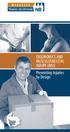 ERGONOMICS AND MUSCULOSKELETAL INJURY (MSI) Preventing Injuries by Design ERGONOMICS and Musculoskeletal injury (MSI) Some of the tasks we perform at work, such as lifting, reaching and repeating the same
How to Meet OSHA s Employee Training Requirements
 How to Meet OSHA s Employee Training Requirements A Quick Guide for Medical, Dental, and Other Ambulatory Care Settings A supplement to Medical Environment Update Dear reader, Survey responses and calls
EMERGENCY PREPAREDNESS & RESPONSE PROCEDURE
 1 of 12 DOCUMENT REVISION HISTORY Revision No. Date DESCRIPTION OF CHANGES Pages Affected By 00 01/07/2003 Draft Issued For Comment All HSEQ Dept. 01 01/09/2003 Total Change First Approved Issue All HSEQ
MD 52 WASTE MANAGEMENT AUTHORITY CORPORATE HEALTH AND SAFETY PROGRAM
 UNSAFE ACTS AND CONDITIONS All accidents are the result of an unsafe act, an unsafe condition or a combination of both. Unsafe acts account for approximately 80% of all incidents/accidents, while unsafe
E3902 Seeing Accidents Before They Happen Leader s Guide
 E3902 Seeing Accidents Before They Happen Leader s Guide ERI PRODUCTIONS INC. SEEING ACCIDENTS BEFORE THEY HAPPEN This easy-to-use Leader s Guide is provided to assist in conducting a successful presentation.
Contractor Safety Management
 1.0 Introduction Memorial University will ensure that a diligent contractor management process is established. This procedure establishes requirements for contract administration and oversight of contractor
Your Rights, Responsibilities, and the Occupational Health and Safety Act
 Labour and Advanced Education Occupational Health and Safety Your Rights, Responsibilities, and the Occupational Health and Safety Act This page and all contents are Crown copyright 2007, Province of Nova
RISK MANAGEMENT. RISK MANAGEMENT chapter 4 CONTENTS. Overview... 45. Risks... 45. Choosing science activities... 46
 RISK MANAGEMENT CONTENTS Overview... 45 Risks... 45 Choosing science activities... 46 Safety awareness and education... 48 RISK MANAGEMENT chapter 4 Overview All activities involve potential risks, however,
Leader s Guide E4017. Bloodborne Pathogens: Always Protect Yourself
 E4017 Bloodborne Pathogens: Always Protect Yourself 1 Table of Contents Introduction 3 Video Overview.3 Video Outline.4 Preparing for and Conducting a Presentation. 7 Discussion Ideas..8 Quiz..9 Quiz Answers...11
Hazard Identification, Risk Assessment & Control Program
 Hazard Identification, Risk Assessment & Control Program 1. INTRODUCTION Hazard Identification, Risk Assessment and Control The Nova Scotia Occupational Health and Safety Act, Capital Health Policies and
ACCIDENT/INCIDENT REPORTING AND INVESTIGATION
 ACT PUBLIC SECTOR ACCIDENT/INCIDENT REPORTING AND INVESTIGATION 1. PURPOSE ACT Government Directorates and entities are required to report and investigate all workplace accidents and incidents and ensure
Autoclave Safety. Autoclaves are sterilizers using high pressure and high temperature steam. The potential safety risks for the operators are:
 Autoclave Safety Purpose: Sterilization refers to the complete killing of all living organisms, including spores. Common sterilization techniques include the application of wet heat, dry heat, chemicals,
Incident Investigation and Reporting Procedures - Code of Practice 3.11
 - Code of Practice 3.11 Distribution: To be brought to the attention of all Heads of Service, managers, supervisors, employees, trade union representatives and Head Teachers Introduction This code of practice
How to manage health and safety in small businesses
 How to manage health and safety in small businesses Do I need to read this? Are you a self-employed person? Do you own a business and employ staff or contractors? Do you want some influence over your ACC
OSHA Training Guidelines (An Unofficial Summary)
 OSHA Training Guidelines (An Unofficial Summary) Many standards promulgated by the Occupational Safety and Health Administration (OSHA) explicitly require the employer to train employees in the safety
Dining Services OSHA Safety Training Program TRAINING RECORD
 Dining Services OSHA Safety Training Program TRAINING RECORD Employee Title: This record documents the safety training received by Dining Services employees, including student employees, as required by
Online Training. Training Categories: Page 2. Workplace Wellness (6 videos) Health and Safety (17 videos) Page 3. Page 6. Leadership (7 videos) Page 7
 Training Categories: Page 2 Workplace Wellness (6 videos) Our employee wellness training videos on topics such as Respect in the Workplace, Stress Management, Ergonomics and Substance Abuse are intended
Risk management a practical approach
 Risk management a practical approach Introduction Preventing work related accidents and injuries is the primary concern for all those involved in health and safety. Work related accidents and injuries
Preventing Workplace Violence and Bill 168 A Guide for Employers
 Preventing Workplace Violence and Bill 168 A Guide for Employers May 2010 This Guide provides general information only and should not be relied on as legal advice or opinion. This publication is copyrighted
WE ALL HAVE RIGHTS AND RESPONSIBILITIES
 WE ALL HAVE RIGHTS AND RESPONSIBILITIES Definition of employee a) A person employed at a place of employment. b) A person at a place of employment for any purpose in connection to the place of employment.
This program is listed as a mandatory inspection item on the MnOSHA Investigation Checklist, Item 7D.
 Standard: Summary: Coverage: Workplace Accident and Injury Reduction Program RESOLUTION NO# 0809-88 Minnesota Statutes 182.653, A Workplace Accident and Injury Reduction Program Minnesota Rules 5205.1500,
No. Name of Legislation Applicable Issues and Requirements Demonstration of Compliance 1. Health and Safety at Work Act 1974
 The Police Treatment Centres Health and Safety Legal Compliance Register No. Name of Legislation Applicable Issues and Requirements Demonstration of Compliance 1. Health and Safety at Work Act 1974 2.
Emergencies and Incident Investigation FOR SCHOOLS
 Emergencies and Incident Investigation FOR SCHOOLS When an emergency occurs it is too late to decide who will do what, and what equipment you need. With your staff, plan how you will manage emergencies
CORPORATE GUIDANCE ON ACCIDENT REPORTING AND ACCIDENT INVESTIGATION
 CORPORATE GUIDANCE ON ACCIDENT REPORTING AND ACCIDENT INVESTIGATION SUMMARY PAGE Introduction As an employer the Council has responsibilities to record all workplace accidents/incidents and to report specific
ACCIDENT/INCIDENT INVESTIGATION RIDDOR
 1.0 INTRODUCTION ACCIDENT/INCIDENT INVESTIGATION RIDDOR In the event of an employee, contractor, visitor or member of the public suffering an injury from a work related incident, certain procedures must
Workplace Accident, Illness and Disability Management System Policy and Supporting Program
 Ryerson University POLICY-PROCEDURE Workplace Accident, Illness and Disability Management System Policy and Supporting Program 1. Introduction Provisions within the Ontario Workplace Safety and Insurance
Tech Shop Safety Level 2 - FN000425. Tech Shop / Tool Safety Operations. (Fermilab machines not covered in course FN000258)
 Tech Shop Safety Level 2 - FN000425 Tech Shop / Tool Safety Operations (Fermilab machines not covered in course FN000258) Table of Contents Tech Shop / Tool Safety Operations 3 General Rules of Safety
A Guide to Accident Investigations
 A Guide to Accident Investigations Introduction The Health and Safety Executive (HSE) report that in 2010/2011 171 workers were killed at work. A further 121,430 other injuries to employees were reported
OCCUPATIONAL HEALTH AND SAFETY IN HOSPITALITY
 OCCUPATIONAL HEALTH AND SAFETY IN HOSPITALITY Employee Induction Checklist March 2003 CONTENTS HOSPITALITY INDUSTRY OHS EMPLOYEE INDUCTION CHECKLIST... 2 INTRODUCTION... 2 WHAT IS THE OHS INDUCTION CHECKLIST?...
INJURY AND ILLNESS PREVENTION PROGRAM. For SOLANO COMMUNITY COLLEGE DISTRICT
 INJURY AND ILLNESS PREVENTION PROGRAM For SOLANO COMMUNITY COLLEGE DISTRICT Adopted: August 1992 Updated: January 2004 Updated: January 2006 Updated: January 2009 TABLE OF CONTENTS INTRODUCTION... 1 GOALS...
Back Pain Musculoskeletal Disorder Updated October 2010
 Back Pain Musculoskeletal Disorder Updated October 2010 According to the Health and Safety Executive back pain is the most common health problem for British workers. Approximately 80% of people experience
Administrative Procedures Memorandum A4002
 Page 1 of 8 Date of Issue May 2015 Original Date of Issue September 1985 Subject References Links Contact REPORTING OF WORKPLACE INJURY/ILLNESS Workplace Safety & Insurance Act Occupational Health & Safety
Reporting accidents and incidents at work
 Reporting accidents and incidents at work A brief guide to the Reporting of Injuries, Diseases and Dangerous Occurrences Regulations 2013 (RIDDOR) What is RIDDOR? Reporting accidents and incidents at work
Performance Standard for the administration of Incident Reporting & Investigation
 HEALTH AND SAFETY MANAGEMENT SYSTEM Performance Standard for the administration of Incident Reporting & Investigation Performance Standard for Incident Reporting & Investigation 28.10.08 HSMS CPS Doc 03,
Accident, incident and near miss reporting, recording and investigation procedure for managers
 F.09 Accident, incident and near miss reporting, recording and investigation procedure for managers 1.0 SCOPE 1.1 This procedure sets out Crossroads Care s position on the reporting and suitable recording
INCIDENT REPORTING POLICY
 INCIDENT REPORTING POLICY Revised April 2011 1 Incident Reporting Policy Introduction This policy has been developed to detail the standards to be applied following an accident or incident at Northumbria
OCCUPATIONAL HEALTH AND SAFETY RISK ASSESSMENT PROGRAM FOR AGRICULTURE
 OCCUPATIONAL HEALTH AND SAFETY RISK ASSESSMENT PROGRAM FOR AGRICULTURE Definitions of Commonly Used Terms in Risk Management Hazard: anything, including a work practice or procedure, that causes, or has
Implementing Occupational Health & Safety in Schools and District Worksites
 Implementing Occupational Health & Safety in Schools and District Worksites Overview... 2.1 Getting Started (Establishing Due Diligence)... 2.1 How to Use This Manual... 2.1 Responsibility of the Principal
INTRODUCTION TO OSHA PRESENTATION
 Introduction to OSHA 2-hour Lesson Directorate of Training and Education OSHA Training Institute Lesson Overview Purpose: To provide workers with introductory information about OSHA Topics: 1. Why is OSHA
If you have any questions about how to safely undertake a task or project, ask your supervisor before you begin.
 Laboratory Health and Safety Manual Section 1: Introduction and Objectives This manual provides a set of minimum standards and practices for the safe and healthy operation of a laboratory. Following the
Incident Investigation Procedure
 Incident Investigation Procedure Document Number 001001 Date Approved 27 November 2012 1 Introduction When a serious incident occurs there shall be a review of the system which is in place to manage the
ACCIDENT/INCIDENT REPORTING AND INVESTIGATION PROCEDURE
 ACCIDENT/INCIDENT REPORTING AND INVESTIGATION PROCEDURE Introduction 1. Accidents involving personal injuries, including staff, students and visitors etc. and/or property damage may occur on campus. Such
Personal Protective Equipment (PPE) Blitz Stakeholder Webinar September 15, 2011
 Personal Protective Equipment (PPE) Blitz Stakeholder Webinar September 15, 2011 Don Brown CIH, ROH - Provincial Specialist Industrial health and Safety Program Occupational Health and Safety Branch Notes
Completion Test Answer Key. 1. Why are young people more likely to be injured on the job than other groups of workers?
 1. Why are young people more likely to be injured on the job than other groups of workers? They receive little or no safety training or supervision. They are reluctant to ask questions for fear of appearing
THE REPORTING OF INJURIES, DISEASES AND DANGEROUS OCCURRENCES REGULATIONS 2013 (RIDDOR)
 ACCIDENT AND NEAR MISS REPORTING POLICY BACKGROUND AND LEGISLATION Regardless of the severity, all accidents and incidents at work should be recorded. There is a legal requirement for the responsible person
Incident/Injury Reporting and Investigation Policy Township of Tudor and Cashel
 A. Policy Statement The is committed to the health and safety of employees, contractors, visitors and the general public. All incidents/injury shall be investigated to the extent warranted by their severity
Reporting accidents and incidents at work
 Reporting accidents and incidents at work A brief guide to the Reporting of Injuries, Diseases and Dangerous Occurrences Regulations (RIDDOR) Reporting accidents and incidents at work A brief guide to
KEY CAL/OSHA STANDARDS THAT APPLY TO MOST EMPLOYERS
 KEY CAL/OSHA STANDARDS THAT APPLY TO MOST EMPLOYERS FACTSHEET 1 Below are some key Cal/OSHA standards that apply to most employers: A. INJURY AND ILLNESS PREVENTION PROGRAM STANDARD (Title 8 California
Elevating Devices Mechanic Safety Training
 Elevating Devices Mechanic Page 1 PREFACE This Elevating Devices Mechanic Curriculum Training Standard has been developed in keeping with the Common Format Guidelines prescribed by the Technical Standards
COIDA ACCIDENT REPORTING
 COMPENSATION FOR OCCUPATIONAL INJURIES & DISEASE ACT, 1993 Where the accident has caused death, unconsciousness or amputation or where the injured employee is presumed unable to work for a period of at
SAMPLE using TEMPLATE 1
 SAMPLE using TEMPLATE 1 Title: 8.1 Inspections by Managers 8.2 Inspections by JHSC or HS Representative 8.3 Operator Pre-Use Inspections Approved by: John Idnc Location: all facilities and equipment Date
Basic Information / Risk Assessment General Part I II. http://hwi.osha.europa.eu
 Risk Assessment Tool Basic Information / Risk Assessment General Part I II http://hwi.osha.europa.eu 2 R I S K A S S E S S M E N T T O O L I B A S I C I N F O R M A T I O N & R I S K A S S E S S M E N
Appendix L: Emergency Response Procedure
 Environmental Impact Assessment Project Number: 41924 May 2014 Document Stage: Final Nam Ngiep 1 Hydropower Project (Lao People s Democratic Republic) Appendix L: Emergency Response Procedure Prepared
Working for business. Workplace Safety Discount Application With employees
 Working for business Workplace Safety Discount Application With employees What is the Workplace Safety Discount? Workplace Safety Discount provides a framework for building successful and sustainable workplace
How To Understand The Health And Safety Code Of Act 1.5.1
 May 2011 SMB001 Occupational Health and Safety Tool Kit for Small Business Table of Contents About this Document 2 Section 1: Responsibilities Under the OHS Legislation 6 Section 2: Health and Safety
Workplace Injury and Exposure to Infectious/Environmental Hazards in the Clinical Setting for Learners in the Faculty of Health Sciences
 Workplace Injury and Exposure to Infectious/Environmental Hazards in the Clinical Setting for Learners in the Faculty of Health Sciences Introduction The Faculty of Health Sciences is committed to promoting
COLUMBUS STATE COMMUNITY COLLEGE EMPLOYEE SAFETY MANUAL
 COLUMBUS STATE COMMUNITY COLLEGE EMPLOYEE SAFETY MANUAL HAZARDOUS MATERIAL MANAGEMENT Effective October 15, 1995 Page 1 of 4 Updated August, 2008 Revised August, 2009 A. Columbus State Community College
Getting the occupational safety basics organised
 Getting the occupational safety basics organised 10 important measures Introduction Occupational health and safety are the foundation of wellbeing at work. The employer is responsible for providing safe
DO YOU WORK AROUND BLOOD OR BODY FLUIDS? Cal/OSHA s New Rules
 DO YOU WORK AROUND BLOOD OR BODY FLUIDS? Cal/OSHA s New Rules Labor Occupational Health Program University of California, Berkeley 1994 ACKNOWLEDGMENTS This booklet is a publication of the Labor Occupational
Contractor Safety Program Office of Environmental Health and Safety University of Toronto
 Office of Environmental Health and Safety Table of Contents Overview... 3 Program Objectives... 3 University Health and Safety Policy... 4 Environmental, Health and Safety Mission Statement... 4 Roles
Job Description. Position Title: Registered Nurse. Department: Reports To: Purpose. Responsibilities
 Job Description Position Title: Registered Nurse Department: Reports To: Director of Care Purpose Reporting to the DOC, the Registered Nurse (RN) is accountable to provide professional nursing care to
Reporting accidents and incidents at work
 Reporting accidents and incidents at work A brief guide to the Reporting of Injuries, Diseases and Dangerous Occurrences Regulations 2013 (RIDDOR) DRAFT Subject to ministerial approval, this guidance applies
Rutherford County Workplace Injuries and Safety
 Rutherford County Workplace Injuries and Safety In safety, we concern ourselves not just with the tasks but how we accomplish the task. Objectives Course Outline: Become familiar with workplace injuries