
Managing Your Student Loans During Turbulent Times
|
|
|
- Felix Gervase Shepherd
- 10 years ago
- Views:
Transcription
1 Managing Your Student Loans During Turbulent Times You Will Learn: The different types of student loans How to get detailed information on your existing student loans Repayment options In today s workplace, a college education is essential to compete. As the cost of higher education continues to increase college students have turned to student loans to finance all of some of their college education. Every type of student loan accomplishes the end goal, which is to providing funding for your college education; however all student loans are NOT created equal. There are a number of different student loans for different educational purposes; however all student loans fall into one of two categories; Federal Student Loans and Private Student Loans. Federal Student Loans are subject to oversight and regulation by the federal government. Examples of Federal Student loans include where the U.S. Department of Education is the lender, Federal Family Education Loans (FFEL) where private lenders make student loans backed by the Federal Government and Federal Loans where the federal government issues long term low interest loans to school financial aid offices. The school then issues loans to needy undergraduate and graduate students pay for higher education. Private Student Loans, sometimes referenced as alternative loans are offered by private lenders and do NOT include the benefits and protections available with Federal student loans. Private loans tend to have higher interest rates and fees compared to Federal government loans. Private loans also do not offer opportunities for cancellation or loan forgiveness that are available on many of the Federal Student loans. As you investigate your options for financing your college education, it typically makes financial sense to exhaust your all of your federal loan options including grants and scholarships before considering student loans from private companies. EDU-2 STU 8/11/11 1

2 How to Get Detailed Information on your Existing Student Loans Now that we have differentiated the two main types of student loans, how do you verify what type you have and what payment relief options are available? The United States Department of Education maintains a database on student loans and grants that come directly from the government or are federally insured. The name of the database is the National Student Loan Data System. The information is obtained from lenders, servicers, schools, Direct Loans, and guaranty agencies. You can obtain access to the database by going to Click on the Financial Aid Review button. To login, you will be required to enter your social security number, the first two letters of your last name, your date of birth and your PIN. If you know you already have Federal loans you should have already received your PIN. If you have misplaces your PIN or need to obtain a PIN you can create one online at Once you are logged in you will be able to view details and the status of those loans in the database. It s important to note the information in the database is NOT real time. It is not uncommon for the information to be as old as 120 days. If you need a more up to date status or if you feel there is inaccurate information in the database, contact your loan servicer directly. If you have private loans, your primary resource is going to be your loan servicer. A loan servicer is who you make your student loan payment. Another valuable resource is the note you signed when you took out the loan. The note, especially on private student loans, will contain important provisions as to what repayment alternatives are available. Repayment Options Once again your repayment options are going to vary based whether you have a Federal student loan or a private student loan. We will cover the private student loan first as the options are limited and lender specific. Private Loan Repayment Options The first obvious form of repayment is the agreed upon monthly payment and term as outlined in the student loan documents you signed. For example, if you borrowed $10, for a period of 10 years at a rate of 6%, your monthly payment would be $ per month. These terms along with when the payments would begin would be outlined in the note. In the event you are unable to maintain the agreed upon repayment terms in a private student loan, you must refer to your note to see what alternative repayment options are available. Unfortunately, since these are private student loans, your options are going to be limited to what your lender will allow and has stipulated in the note. If you are having difficulty in making your scheduled payment, it is imperative to make contact with your loan servicer to discuss your situation and explore the options available. EDU-2 STU 8/11/11 2

3 Federal Student Loan Repayment Options Direct Federal loans and Federally insured loans have a number of repayment options available to assist current and former students in managing their student loan debt. While there are a number of repayment options for Federal student loans, some of the options available are dependent on which Federal loan(s) you have. Here are some of the loan repayment types for Federal student loans: Typical Initial Payment Options ALL >$30,000 (Combined) >$30,000 Standard Repayment With the standard plan, you'll pay a fixed amount each month until your loans are paid in full. Your monthly payments will be at least $50, and you'll have up to 10 years to repay your loans.your monthly payment under the standard plan may be higher than it would be under the other plans because your loans will be repaid in the shortest time. For that reason, having a 10-year limit on repayment, you may pay the least interest. Extended Repayment Under the extended plan, youll pay a fixed annual or graduated repayment amount over a period not to exceed 25 years. If you're a FFEL borrower, you must have more than $30,000 in outstanding FFEL Program loans. If you're a Direct Loan borrower, you must have more than $30,000 in outstanding Direct Loans. This means, for example, that if you have $35,000 in outstanding FFEL Program loans and $10,000 in outstanding Direct Loans, you can choose the extended repayment plan for your FFEL Program loans, but not for your Direct Loans. Your fixed monthly payment is lower than it would be under the Standard Plan, but you'll ultimately pay more for your loan because of the interest that accumulates during the longer repayment period. This is a good plan if you will need to make smaller monthly payments. Because the repayment period will be 25 years, your monthly payments will be less than with the standard plan. However, you may pay more in interest because you're taking longer to repay the loans. Remember that the longer your loans are in repayment, the more interest you will pay. EDU-2 STU 8/11/11 3

4 Graduated Repayment With this plan, your payments start out low and increase every two years. The length of your repayment period will be up to ten years. If you expect your income to increase steadily over time, this plan may be right for you. Your monthly payment will never be less than the amount of interest that accrues between payments. Although your monthly payment will gradually increase, no single payment under this plan will be more than three times greater than any other payment. Restructured Payment Options Income Based Repayment (IBR) Effective July 1, 2009 Income Based Repayment is a new repayment plan for the major types of federal loans made to students. Under IBR, the required monthly payment is capped at an amount that is intended to be affordable based on income and family size. You are eligible for IBR if the monthly repayment amount under IBR will be less than the monthly amount calculated under a 10-year standard repayment plan. If you repay under the IBR plan for 25 years and meet other requirements you may have any remaining balance of your loan(s) cancelled. Additionally, if you work in public service and have reduced loan payments through IBR, the remaining balance after ten years in a public service job could be cancelled. EDU-2 STU 8/11/11 4

5 Direct Loans Income Contingent Repayment Plans (ICR) (Direct Loans Only) This plan gives you the flexibility to meet your Direct Loans SM obligations without causing undue financial hardship. Each year, your monthly payments will be calculated on the basis of your adjusted gross income (AGI, plus your spouse's income if you're married), family size, and the total amount of your Direct Loans. Under the ICR plan you will pay each month the lesser of: 1. The amount you would pay if you repaid your loan in 12 years multiplied by an income percentage factor that varies with your annual income, or percent of your monthly discretionary income. If your payments are not large enough to cover the interest that has accumulated on your loans, the unpaid amount will be capitalized once each year. However, capitalization will not exceed 10 percent of the original amount you owed when you entered repayment. Interest will continue to accumulate but will no longer be capitalized (added to the loan principal). The maximum repayment period is 25 years. If you haven't fully repaid your loans after 25 years (time spent in deferment or forbearance does not count) under this plan, the unpaid portion will be discharged. You may, however, have to pay taxes on the amount that is discharged.as of July 1, 2009, graduate and professional student Direct Loan borrowers are eligible to use the ICR plan. Parent Direct Loan borrowers are not eligible for the ICR repayment plan. FFEL Direct FFEL Income Sensitive Repayment Plan (ISR) (FFEL Loans Only) With an income-sensitive plan, your monthly loan payment is based on your annual income. As your income increases or decreases, so do your payments. The maximum repayment period is 10 years. Ask your lender for more information on FFEL Income- Sensitive Repayment Plans. Grace Periods Borrower Grace Periods - After you graduate, leave school, or drop below half-time enrollment, you have a period of time before you have to begin repayment. This "grace period" will be six months for a Federal Loan (Direct Loan Program SM or Federal Family Education Loan (FFEL SM ) Program) and nine months for Federal Loans. EDU-2 STU 8/11/11 5

6 Borrowers - The repayment period for a Direct Loan begins at the time the loan is fully disbursed, and the first payment is due within 60 days after the final disbursement. However, a graduate student Loan borrower (as well as a parent borrower who is also a student) can defer repayment while the borrower is enrolled at least half-time, and, for loans first disbursed on or after July 1, 2008, for an additional six months after the borrower is no longer enrolled at least half-time. Interest that accrues during these periods will be capitalized if not paid by the borrower during the deferment. Parent Loan borrowers whose loans were first disbursed on or after July 1, 2008, may choose to have repayment deferred while the student for whom the parent borrowed is enrolled at least half-time and for an additional six months after that student is no longer enrolled at least half-time. Interest that accrues during these periods will be capitalized if not paid by the parent during the deferment. Postponing (Deferring Payments) Postponing Repayment If you have trouble making your education loan payments, contact immediately the organization that services your loan. You might qualify for a deferment, forbearance, or other form of payment relief. It's important to take action before you are charged late fees. For Federal Loans, contact your loan servicer or the school that made you the loan. For Direct and FFEL Loans, contact your loan servicer. If you do not know who your servicer is, you can look it up in the U.S. Department of Education s National Student Loan Data System. Note to Loan borrowers: Generally, the eligibility requirements and procedures for requesting a deferment or forbearance for Loan borrowers also apply to you. However, since all Loans are unsubsidized, you'll be charged interest during periods of deferment or forbearance. If you don't pay the interest as it accrues, it will be capitalized (added to the principal balance of the loan), thereby increasing the amount you'll have to repay. EDU-2 STU 8/11/11 6

7 Deferment: You can receive a deferment for certain defined periods. A deferment is a temporary suspension of loan payments for specific situations such as reenrollment in school, unemployment, or economic hardship.you don t have to pay interest on the loan during deferment if you have a subsidized Direct or FFEL, Loan or a Federal Loan. If you have an unsubsidized Direct or FFEL Loan, you re responsible for the interest during deferment. If you don t pay the interest as it accrues (accumulates), it will be capitalized (added to the loan principal), and the amount you have to pay in the future will be higher. You have to apply for a deferment to your loan servicer (the organization that handles your loan), and you must continue to make payments until you ve been notified your deferment has been granted. Otherwise, you could become delinquent or go into default. Military Service Deferment An active duty military deferment is available to borrowers in the Direct, FFEL, and Loan programs who are called to active duty during a war or other military operation or national emergency. This deferment is available while the borrower is serving on active duty during a war or other military operation or national emergency or performing qualifying National Guard duty during a war or other military operation or national emergency and, if the borrower was serving on or after Oct. 1, 2007, for an additional 180-day period following the demobilization date for the qualifying service. Post-Active Duty Student Deferment A Direct, FFEL, or Loan borrower who is a member of the National Guard or other reserve component of the U.S. Armed Forces (current or retired) and is called or ordered to active duty while enrolled at least half-time at an eligible school, or within six months of having been enrolled at least half-time, is eligible for a deferment during the 13 months following the conclusion of the active duty service, or until the borrower returns to enrolled student status on at least a half-time basis, whichever is earlier. EDU-2 STU 8/11/11 7

8 Economic Hardship Deferment A Direct, FFEL, or Federal Loan borrower may qualify for an economic hardship deferment for a maximum of three years if the borrower is experiencing economic hardship according to federal regulations. Forbearance Forbearance is a temporary postponement or reduction of payments for a period of time because you are experiencing financial difficulty. You can receive forbearance if you re not eligible for a deferment. Unlike deferment, whether your loans are subsidized or unsubsidized, interest accrues, and you re responsible for repaying it. Your loan holder can grant forbearance in intervals of up to 12 months at a time for up to 3 years. You have to apply to your loan servicer for forbearance, and you must continue to make payments until you've been notified your forbearance has been granted. ALL Other Forms of Payment Relief Although you re asked to choose a repayment plan when you first begin repayment, you might want to switch repayment plans later if a different plan would work better for your current financial situation. Under the Federal Family Education Loan Program, you can change repayment plans once a year. Under the Federal Direct Student Loan Program, you can change plans any time as long as the maximum repayment period under your new plan is longer than the time your Direct Loans have already been in repayment. EDU-2 STU 8/11/11 8

9 Student Loan Consolidation A Direct Consolidation Loan allows a borrower to consolidate (combine) multiple federal student loans into one loan. The result is a single monthly payment instead of multiple monthly payments. Make sure to carefully consider whether loan consolidation is the best option for you. While loan consolidation can simplify loan repayment and lower your monthly payment, it also can significantly increase the total cost of repaying your loans. Consolidation offers lower monthly payments by giving you up to 30 years to repay your loans. But, if you increase the length of your repayment period, you'll also make more payments and pay more in interest than you would otherwise. In fact, in some situations, consolidation can double your total interest expense. If you don't need monthly payment relief, you should compare the cost of repaying your unconsolidated loans against the cost of repaying a consolidation loan.you also should take into account the impact of losing any borrower benefits offered under repayment plans for the original loans. Borrower benefits from your original loan, which may include interest rate discounts, principal rebates, or some loan cancellation benefits, can significantly reduce the cost of repaying your loans. You may lose those benefits if you consolidate. Once your loans are combined into a Direct Consolidation Loan, they cannot be removed. That's because the loans that were consolidated have been paid off and no longer exist. Take the time to study the pros and cons of consolidation before you submit your application. Most federal student loans are eligible for consolidation, including subsidized and unsubsidized Direct and FFEL Loans, Direct and FFEL Loans, Supplemental Loans for Students (SLS), Federal Loans, Federal Nursing Loans, Health Education Assistance Loans, and some existing consolidation loans. Private education loans are not eligible for consolidation. If you are in default, you must meet certain requirements before you can consolidate your loans. Note: A Loan made to the parent of a dependent student cannot be transferred to the student. Therefore, a student who is applying for loan consolidation cannot include his or her parent s Loan. EDU-2 STU 8/11/11 9

10 While this guide does discuss, the FFEL loan program was discontinued July 1, The repayment options under FFEL plans are available for your existing FFEL loans. In addition, you may be able to convert (consolidate) your under the DIRECT loan program. Contact your loan servicer for details. As you can see there are a number of options available to you to repay your student loans. Regardless if you have Federal student loans or private student loans if you have or will have difficulty in making payments under the original terms, it is imperative to initiate contact with your loan servicer as soon as possible. While there are alternative repayment options, some of the best alternatives will no longer be available if the loan has gone into default. Compliments of: Delray Credit Counseling Corp W Atlantic Ave #200 Delray Beach, FL (800) Copyright 2011 All Rights Reserved EDU-2 STU 8/11/11 10

STUDENT LOAN REPAYMENT
 STUDENT LOAN REPAYMENT Chase College of Law Financial Aid Presentation April 14 th, 2011 TOPICS TO BE COVERED General Repayment Information Loan consolidation Repayment Plans Public service loan forgiveness
Federal Loan Repayment Options
 Federal Loan Repayment Options The Standardized Repayment Plan- allows you to pay off your federal student loans in the shortest amount of time. This repayment Plan saves you money over time because your
Student Loans A comprehensive look at student aid and the various repayment options
 Student Loans A comprehensive look at student aid and the various repayment options How Much Does College Cost? According to the Bureau of Labor Statistics and the US Department of Labor, the average cost
NAVIGATING LOAN REPAYMENT
 NAVIGATING LOAN REPAYMENT Navigating Loan Repayment Agenda Federal Loan Exit Counseling Basics of Student Loan Repayment Federal Repayment Plans Other Repayment Considerations Helpful Links Question and
EXIT COUNSELING GUIDE FOR BORROWERS OF DIRECT LOANS AND FEDERAL FAMILY EDUCATION PROGRAM LOANS
 EXIT COUNSELING GUIDE FOR BORROWERS OF DIRECT LOANS AND FEDERAL FAMILY EDUCATION PROGRAM LOANS U.S. Department of Education Arne Duncan Secretary Federal Student Aid James W. Runcie Chief Operating Officer
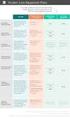
Comparison of Income-Driven Repayment Plans *
 Comparison of Income-Driven Repayment Plans * ICR ORIGINAL IBR NEW BORROWER IBR PAY AS YOU EARN REPAYE Eligible Borrowers Direct Loan (FFEL borrowers may qualify through consolidation) Direct Loan and
William D. Ford Federal Direct Loan Program Direct Subsidized Loan and Direct Unsubsidized Loan Borrower s Rights and Responsibilities Statement
 Important Notice: This Borrower s Rights and Responsibilities Statement provides additional information about the terms and conditions of the loans you receive under the accompanying Master Promissory
EXIT COUNSELING GUIDE FOR BORROWERS OF DIRECT LOANS AND FEDERAL FAMILY EDUCATION PROGRAM LOANS
 EXIT COUNSELING GUIDE FOR BORROWERS OF DIRECT LOANS AND FEDERAL FAMILY EDUCATION PROGRAM LOANS U.S. Department of Education Arne Duncan Secretary Federal Student Aid James W. Runcie Chief Operating Officer
STUDENT LOAN FORGIVENESS AND REPAYMENT: WHAT YOU NEED TO KNOW
 STUDENT LOAN FORGIVENESS AND REPAYMENT: WHAT YOU NEED TO KNOW From here to repayment IUPUI updates your enrollment status. Your grace period begins. Your student loan servicer sends you details about
Student Loans Terms To Know
 Student Loans Terms To Know Borrower The borrower in most cases is the student. The loan is made in the borrower s name and he/she is responsible for paying back the loan(s) including principal plus any
EXIT COUNSELING GUIDE FOR BORROWERS OF DIRECT LOANS AND FEDERAL FAMILY EDUCATION PROGRAM LOANS
 EXIT COUNSELING GUIDE FOR BORROWERS OF DIRECT LOANS AND FEDERAL FAMILY EDUCATION PROGRAM LOANS U.S. Department of Education Arne Duncan Secretary Federal Student Aid James W. Runcie Chief Operating Officer
The End of Grace. How to Navigate Your Student Loans After You Graduate
 The End of Grace How to Navigate Your Student Loans After You Graduate Where to find your loans National Student Loan Data System Complete your Financial Aid Review Complete your Exit Counseling www.nslds.ed.gov
FDLP and FFELP Fact Sheet Provided by the National Council of Higher Education Loan Programs (NCHELP) Program Regulations Committee
 STAFFORD AND PLUS LOANS Interest Rate 1. [34 CFR 685.202; HEA 428(d)] [34 CFR 682.202; HEA 428(d); 438(g)] The interest rate is fixed at 6.8% for Stafford loans first disbursed on or after July 1, 2006,
Income-Driven Repayment Plans: Frequently Asked Questions
 Income-Driven Repayment Plans: Frequently Asked Questions Contents Introduction...1 General Information...2 Eligible Borrowers...6 Eligible Loans...9 Monthly Payment Amount... 12 Repayment Period & Loan
How To Get Out Of A Subgratame Loan With A Credit Card
 Income Based Repayment Questions and Answers (Q&A) Prepared by Federal Student Aid U.S. Department of Education January 5, 2010 The Questions & Answers (Q&As) that follow provide information about the
William D. Ford Federal Direct Loan Program Direct Subsidized Loan and Direct Unsubsidized Loan Borrower s Rights and Responsibilities Statement
 Important Notice: This Borrower s Rights and Responsibilities Statement provides additional information about the terms and conditions of the loans you receive under the accompanying Master Promissory
Income-Based Repayment Program Questions and Answers (Q&As)
 Prepared by Federal Student Aid U.S. Department of Education February 7, 2011 The questions and answers (Q&As) that follow provide information about the Income-Based Repayment (IBR) Plan that is available
William D. Ford Federal Direct Loan Program Direct PLUS Loan Borrower s Rights and Responsibilities Statement
 Important Notice: This Borrower s Rights and Responsibilities Statement provides additional information about the terms and conditions of the loans you receive under the accompanying Federal Direct PLUS
ENTRANCE COUNSELING GUIDE
 ENTRANCE COUNSELING GUIDE For Direct Loan Borrowers Contents Direct Loan Types 1 Borrow Wisely 2 Borrow Direct Subsidized Loans and Direct Unsubsidized Loans First 2 You Must Repay Your Loans 3 Use of
William D. Ford Federal Direct Loan Program Direct Subsidized Loan and Direct Unsubsidized Loan Borrower s Rights and Responsibilities Statement
 Important Notice: This Borrower s Rights and Responsibilities Statement provides additional information about the terms and conditions of the loans you receive under the accompanying Master Promissory
Federal Student Loan Repayment
 Federal Student Loan Repayment The Road to Zero Know your financial goals. Know what you owe. Know what time it is. Know your options. Select your plan. Manage your payments. AccessGroup.org Financial
WiseBorrower Education Series
 FEDERAL STUDENT LOANS: Repayment 101 How do I determine my loan repayment strategy? What repayment plans are available? What repayment tools will help me navigate tough financial times? What is the best
Teacher Education Assistance for College and Higher Education Grant (TEACH Grant)
 Teacher Education Assistance for College and Higher Education Grant (TEACH Grant) Exit Counseling Guide December 18, 2008 1 Overview What is the TEACH Grant Program? The U.S. Department of Education s
EXIT COUNSELING GUIDE
 EXIT COUNSELING GUIDE For Federal Student Loan Borrowers Contents Intro 1 Exit Counseling Federal Student Loan Programs Getting Started 1 Types of Federal Student Loans Loan Terminology Repaying Your
Helping Students Repay their Loans: Repayment Plan Overview. Greg Carlo Senior Client Relationship Manager
 Helping Students Repay their Loans: Repayment Plan Overview Greg Carlo Senior Client Relationship Manager Agenda Information you can share with your students Understanding Loan Repayment Top 10 Things
ENTRANCE COUNSELING GUIDE
 ENTRANCE COUNSELING GUIDE For Direct Loan Borrowers ENTRANCE COUNSELING GUIDE For Direct Loan Borrowers CONTENTS TYPES OF DIRECT LOANS Direct Subsidized Loans, Direct Unsubsidized Loans, Direct PLUS Loans,
DIRECT CONSOLIDATION LOAN GUIDE for SCHOOLS
 DIRECT CONSOLIDATION LOAN GUIDE for SCHOOLS Since January 1995, the U.S. Department of Education has been consolidating the federal education loans of borrowers in repayment and borrowers in default. The
STUDENT LOAN EXIT COUNSELING AND REPAYMENT. Sam Krow-Lucal, Student Loan Coordinator, Stanford Financial Aid Office
 STUDENT LOAN EXIT COUNSELING AND REPAYMENT Sam Krow-Lucal, Student Loan Coordinator, Stanford Financial Aid Office Presentation Overview Loan Repayment Terminology Federal Loan Repayment Plans Federal
How To Pay Off A Federal Student Loan
 Federal Student Aid Income-Driven Plans for Federal Student Loans What is an income-driven repayment plan? An income-driven repayment plan is a repayment plan that sets your monthly student loan payment
Federal Stafford Loan Counseling Checklist
 Student s Name (Please Print) Social Security Number You are receiving a Federal Stafford loan to help you cover the costs of your education. You must repay this loan. Before you receive your Stafford
fyi Federal loans: The smart way to borrow
 Federal loans: The smart way to borrow If you don t receive enough free money to pay for college and you aren t able to cover your costs with savings or other resources, consider federal student loans.
Types of Title IV Loans - Loan Modification Options
 Loans 101: Understanding the Basics Objectives 1 2 3 4 The role of loans in financial aid Overview of the Title IV Loan Program Repayment options Counseling resources The Role of Student Loans in Financial
EXIT INTERVIEW FACT SHEET
 EXIT INTERVIEW FACT SHEET All students who have borrowed a Federal Direct/FFEL student loan are required by law to complete an Exit interview at this point of graduation or if they leave school, or drop
Income-Based (IBR) / Pay As You Earn / Income-Contingent (ICR) Repayment Plan Request OMB No. 1845-0102 Form Approved
 IBR/PAYE/ICR SECTION 1: BORROWER IDENTIFICATION Please enter or correct the following information. Check this box if any of your information has changed. SSN - - Name Address City, State, Zip Code Telephone
Exit Counseling Guide for Direct Loan Borrowers
 You borrowed Direct Subsidized Loans and/or Direct Unsubsidized Loans to help you finance your education. Repaying these loans is a serious responsibility. This guide explains some of the most important
Loan Exit. Agenda. Goals. O Interest Rates O Rights & Responsibilities
 Loan Exit Loan Exit Agenda O Interest Rates O Rights & Responsibilities O Payment information O Consolidation O Benefits O Consequences O Last steps O Contacts Goals O Fulfill requirement O Translate terms
2015 United Student Aid Funds, Inc. All rights reserved. 1
 Federal Direct Loan Repayment Relief Presented by USA Funds University Agenda Overview. Repayment. Deferment. Forbearance. Discharge and Forgiveness. Federal Consolidation Loans. Federal Direct Loans Repayment
Entrance Counseling Guide for Direct Loan Borrowers
 You are borrowing Direct Subsidized Loans and/or Direct Unsubsidized Loans to help you finance your education. Repaying these loans is a serious responsibility. This guide explains some of the most important
If you borrowed money to help pay for your
 Federal Direct Consolidation Loans If you borrowed money to help pay for your or your child s education after high school and you still owe money on these loans, the U.S. Department of Education s Federal
U.S. Financing Information
 U.S. Financing Information 1 U.S Financial Aid Planning to meet the costs of attending university is an investment for the future, and you may have many financing options, including grants, scholarships,
Private Loan Guide. Apply for free, federal and state financial aid programs:
 Private Loan Guide Private loan basics Private student loans are non-federal loans. You should only borrow private loans to fund your education as a last resort. Do all of the following before you consider
Student Loans Bankruptcy and Student Loans: NUTS & BOLTS The Options (pressing your plea Prov 6:1-5) Federal loan
 Student Loans Bankruptcy and Student Loans: Must prove undue hardship Must initiate an adversary hearing, a separate lawsuit within the bankruptcy where the undue hardship is illustrated. Most can t afford
Repaying Your Student Loan. Florida Coastal School of Law
 Repaying Your Student Loan Florida Coastal School of Law Workshop Objectives At the end of the workshop you will understand: What options are available during repayment What education-related tax incentives
Widener University School of Law. Exit Interview Counseling Presentation Managing your student loan repayment
 Widener University School of Law Exit Interview Counseling Presentation Managing your student loan repayment Types Of Education Debt Three Types Federal Loans Stafford Subsidized/Unsubsidized Federal Direct
William D. Ford Federal Direct Loan Program Direct PLUS Loan Borrower s Rights and Responsibilities Statement
 Important Notice: This Borrower s Rights and Responsibilities Statement provides additional information about the terms and conditions of the loans you receive under the accompanying Federal Direct PLUS
New Directions. New Directions. A Guide to Repaying Your Federal Student Loans
 New Directions New Directions A Guide to Repaying Your Federal Student Loans This booklet is a resource to help you learn more about: Your rights and responsibilities as a student loan borrower of a Federal
Managing Your Student Loans 101. Basic Understanding of the Repayment Process
 Managing Your Student Loans 101 Basic Understanding of the Repayment Process Katherine Coates Office of Federal Student Aid Kansas City, MO Adam Essex Office of Federal Student Aid Washington D.C. Kevin
How To Get A Loan From A College
 STUDENT LOANS: AFTER YOU BORROW Student Loan Basics Nearly Everyone CAN Borrow, however: Loans have to be repaid! Borrow only what you need!! Interest What you are charged for using someone else s money
2014 Exit Counseling / Student Loan Repayment Information. May 7, 2014 University of Maryland, Baltimore County
 2014 Exit Counseling / Student Loan Repayment Information May 7, 2014 University of Maryland, Baltimore County First. If you are graduating: Congratulations! Know your loans Know the type(s) of loan (Stafford