
DIRECT CONSOLIDATION LOAN GUIDE for SCHOOLS
|
|
|
- Eustace Cameron
- 10 years ago
- Views:
Transcription
1 DIRECT CONSOLIDATION LOAN GUIDE for SCHOOLS

2 Since January 1995, the U.S. Department of Education has been consolidating the federal education loans of borrowers in repayment and borrowers in default. The Department also consolidates education loans of borrowers who are still in school. This guide will help you counsel borrowers who are in school, as well as those in repayment or in default, based on their unique circumstances. The guide is organized around borrower eligibility-borrowers in School, Borrowers Out of School, and Borrowers in Default-rather than loan type, since some loans cannot be consolidated while a borrower is in school. In addition, some eligible loans may lose benefits, while others may gain benefits only if consolidated while the borrower is in school. If you have specific questions about eligibility, grace periods, interest rate computations, or anything else related to Direct Consolidation Loans, please call the Loan Origination Center s, Consolidation Department at We welcome your recommendations for improvement and have included a comment sheet for your suggestions.

3 CONTENTS Introduction...1 The Basics...1 Advantages...1 Eligible Loans...3 Ineligible Loans...3 Loan Categories...3 Interest Rates...4 Borrower Eligibility...5 Student Borrowers...5 In school...5 Out of school...6 In default...7 Parent Borrowers...8 In school...8 Out of school...8 In default...9 Married Borrowers...10 In school...10 In default...10 Rehabilitation vs. Consolidation...11 Rehabilitation...11 Advantages of Rehabilitation...11 Consolidation...12 Advantages of Consolidation...12 How Consolidation Works...13 Repayment...15 Repayment Plans...15 Choosing a Plan...21 Changing Plans...21 Making Payments...22

4 Postponing repayment...23 Deferment...23 Forbearance...25 Default on a Direct Consolidation Loan...26 Consequences of Default on a Direct Consolidation Loan...26 Discharge of a Direct Consolidation Loan...27 Conditions of a Direct Consolidation Loan...27 Consolidation of Health Professions Loans...28 Health Professions Student Loans & Loans for Disadvantaged Students...28 Health Education Assistance Loans...29 HEAL Refinancing...29 Nursing Student Loans...30 How to Reach Us...31 Consolidation Materials and Publications...33 Definitions...34 Please Tell Us What You Think...36

5 INTRODUCTION Students and parents gain a simple way to manage education debt with Federal Direct Consolidation Loans (Direct Consolidation Loans.) Through consolidation, borrowers may combine various types of federal education loans, including Direct Loans and loans made through the Federal Family Education Loan (FFEL) Program. Consolidation may also extend a borrower s repayment period, lower his or her interest rate, and eliminate the hassle of dealing with multiple lenders. THE BASICS One Direct Loan or FFEL must be included in any Direct Consolidation Loan. Borrowers who are consolidating all FFEL loans that are in a grace or repayment period must certify on the application that they have checked with a FFEL consolidation lender and (1) have been unable to obtain a Federal Consolidation Loan, or (2) have been unable to obtain a Federal Consolidation Loan with incomesensitive repayment terms acceptable to them. 1 The reason why a borrower may be unable to obtain such a loan include but are not limited to: (1) lenders requiring a minimum loan amount, and (2) some lenders not offering income-sensitive repayment terms. Borrowers do not have to include all of their loans in the consolidation. For instance, a borrower might choose to leave a loan with a lower interest rate out of the consolidation. Borrowers may consolidate a single loan to take advantage of the benefits of the Direct Consolidation Loan Program. There are no minimum or maximum amounts to consolidate and there is no consolidation fee. Borrowers may prepay a Direct Consolidation Loan at any time. Borrowers must notify the Department s Direct Loan Servicing Center of any changes. For instance, they must report a change of address, enrollment status, etc. It is also vital that borrowers contact the Direct Loan Servicing Center when they have questions or problems making their payments. ADVANTAGES Consolidation holds many advantages for borrowers: All Direct Loan borrowers send one monthly payment to the Direct Loan Servicing Center instead of multiple payments to various lenders. The Department of Education is the lender and this will never change. To update an address, change student status or request deferment or forbearance forms, a borrower need only call one lender, the Department of Education s Direct Loan Servicing Center. A Direct Consolidation Loan receives a sixmonth grace period if the borrower is 1 Borrowers with all Federal PLUS loans are not eligible for a Direct Consolidation Loan on the basis of not being able to obtain a FFEL Consolidation with income-sensitive repayment terms acceptable to them. For a discussion of this requirement, see the comments on 34 CFR (d)(l)(i)(B) at 59 FR (December 1, 1994) 1

6 attending school, at least half-time and one of the loans consolidated is in an in-school period at the time of application. Generally, a loan is considered to be in an in-school period if it is not in grace or repayment. If the borrower does not meet the criteria for an in-school consolidation, the first payment on the Direct Consolidation Loan is due within 60 days of the first disbursement of the loan. A borrower with a Direct Loan or FFEL loan in an in school or grace period may also benefit from a lower interest rate. The interest rate on Direct Consolidation Loans is based on the weighted average of the interest rates on loans being consolidated. As of July 1, 2000, we calculate the weighted average of a borrower s loans using the interest rate in effect on the date we receive the application (reference GEN ). If a borrower s application is received while they are in an in-school or grace period, rather than in repayment, they may receive a lower weighted average interst rate. The difference between a borrower s interest rate during their in-school and/or grace period, and during the repayment period can be as high as.6 percentage points. Effective October 1, 1998 through June 30, 2003: - The formula for calculating the interest rate on subsidized and unsubsidized Direct Loans or FFELs, during the in-school and grace periods, is the 91-day Treasury bill rate plus 1.7 percentage points. A Direct Consolidation Loan may ease the strain on a borrower s budget by lowering the borrower s overall monthly payment. The minimum monthly payment on a Direct Consolidation Loan may be lower than the combined payments charged on a borrower s federal education loans. A borrower may take advantage of other benefits upon entering repayment. For instance, borrowers who choose to repay using the electronic debit feature will receive a.25 percent discount on their interest rate. Borrowers may choose from four different repayment plans and may switch plans at any time. The repayment period on a Direct Consolidation Loan may be extended up to a maximum of 30 years under certain repayment plans, depending on a borrower s debt, however, extending the repayment period will increase the total interest charged. The Income Contingent Repayment (ICR) Plan bases monthly payments on a borrower s annual income and total loan amount. Varied deferment options are available on a Direct Consolidation Loan. Borrowers may be eligible for additional deferments if they have an outstanding balance on an FFEL made before July 1, 1993, when they obtain a Direct Consolidation Loan. (For more on deferments, see Postponing Repayment, page 23.) - The formula for calculating the interest rate on subsidized and unsubsidized Direct Loans or FFELs during repayment is the average 91-day Treasury bill rate plus 2.3 percentage points. 2

7 ELIGIBLE LOANS A borrower may consolidate one or more federal education loans into a Direct Consolidation Loan. These are the loans eligible for consolidation: Direct Subsidized and Unsubsidized Loans Federal Subsidized and Unsubsidized Stafford Loans Direct PLUS Loans and Federal PLUS Loans* Direct Consolidation Loans and Federal Consolidation Loans Guaranteed Student Loans Federal Insured Student Loans Federal Supplemental Loans for Students Auxiliary Loans to Assist Students Federal Perkins Loans* National Direct Student Loans* National Defense Student Loans* Health Education Assistance Loans* Health Professions Student Loans* Loans for Disadvantaged Students* Nursing Student Loans* LOAN CATEGORIES The Direct Consolidation Loan Program groups loans into three categories: Direct Unsubsidized Consolidation Loans Direct Subsidized Consolidation Loans Direct PLUS Consolidation Loans Most subsidized federal education loans can be consolidated into a Direct Subsidized Consolidation Loan category. Unsubsidized federal education loans can be consolidated into a Direct Unsubsidized Consolidated Loan category. And, Direct PLUS Loans and Federal PLUS Loans can be combined into a Direct PLUS Consolidation Loan category. Borrowers who have loans from more than one category still have only one Direct Consolidation Loan and make only one monthly payment. The Direct Loan Servicing Center keeps track of a Direct Consolidation Loan s different categories. Repayment and deferment options vary depending on the loan category. *Loans that are not eligible for in-school consolidation INELIGIBLE LOANS Some loans are always ineligible for consolidation. While these loans may not be included in a Direct Consolidation Loan, they may be considered in the calculation of a borrower s maximum repayment period under the Graduated or Extended Repayment Plan. These include but are not limited to the following: Loans made by a state or private lender and not guaranteed by the federal government Primary Care Loans Law Access Loans Medical Assist Loans PLATO Loans 3

8 INTEREST RATES The interest rate for Direct Consolidation Loans is based on the weighted average of the interest rates on loans being consolidated, rounded to the nearest higher one-eighth of one percent. The rate is fixed and will not exceed 8.25%. The chart below describes how to calculate the weighted average interest rate. Borrowers may also use our interactive calculator at to determine their weighted average interest rate and to see what their loan payments might be under each of our four repayment plans. Four steps to calculate the Weighted Average Interest Rate Step 1: Multiply each loan amount by its interest rate to obtain the per loan weight factor. Step 2: Add the per loan weight factors together. Step 3: Add the loan amounts together. Step 4: Divide the total per loan weight factor by the total loan amount and then multiply by 100. Step 5: Round the result of Step 4 to the nearest higher one-eighth of one percent if it is not already at an eighth of a percent. Total per loan weight factor X 100 = Weighted Average Total loan amount Rate* *(Round to the nearest higher 1/8 th of one percent) 4

9 BORROWER ELIGIBILITY Direct Consolidation Loans are available to a wide range of borrowers. The introduction covered the basics. This section explains who is eligible. In counseling borrowers on their eligibility for a Direct Consolidation Loan, a financial aid administrator must determine the borrower type (student or parent) and then the borrower status (in school, out of school, in default). Borrowers who are out of school include those in grace, in repayment, or in deferment or forbearance. The following sections outline the eligibility requirements for both student and parent borrowers in each status and address concerns for married borrowers. STUDENT BORROWERS When applying for a Direct Consolidation Loan, borrowers must meet the eligibility requirements for their status: in school, out of school, or in default. In School Borrowers are in school if they are attending school at least half time. They are eligible for in-school consolidation if they are attending a Direct Loan school and include at least one Direct Loan or FFEL in an in-school period A student loan is considered to be in an inschool period if it is not in grace or repayment. EXAMPLES: A borrower who is attending a Direct Loan school half time and wishes to consolidate all of her loans (two FFELs in an in-school period) is eligible for inschool consolidation. However, a borrower who is attending a non-direct Loan school half time and wishes to consolidate all of his loans (two FFELs in an in-school period) is NOT eligible for in-school consolidation. OR are attending a non-direct Loan school and have at least one Direct Loan and include at least one Direct Loan or FFEL in an in-school period. HINT: Borrowers who are applying for an in-school consolidation should apply after their last loan is fully disbursed AND allow enough time for the LOC to receive the application BEFORE their last day of attendance in order to take advantage of the in-school consolidation benefits. 5

10 Out of School Borrowers are out of school if they are making scheduled payments on their federal education loans or they are in a period of grace, deferment, or forbearance. These borrowers are eligible to consolidate if they have at least one Direct Loan or have at least one FFEL and have been unable to obtain a Federal Consolidation Loan with a FFEL consolidation lender or have been unable to obtain a Federal Consolidation Loan with income-sensitive repayment terms acceptable to them. EXAMPLES: A borrower who recently graduated and wishes to consolidate a Direct Loan with other federal education loans is eligible for a Direct Consolidation Loan. A borrower in repayment who wishes to consolidate a FFEL with other federal education loans (no Direct Loans) and has been unable to obtain a Federal Consolidation Loan is eligible for a Direct Consolidation Loan. A borrower in repayment who wishes to consolidate a FFEL with other federal education loans (no Direct Loans) and is able to obtain a Federal Consolidation Loan is NOT eligible for a Direct Consolidation Loan. HINT: Borrowers who apply during their grace period go into repayment within 60 days, forfeiting any remaining grace period (reference GEN-00-07). Thus, borrowers who apply too early in their grace period may not be able to take full advantage of their grace period. 6

11 In Default Borrowers who want to consolidate a defaulted loan(s) must meet additional requirements for eligibility. The following requirements are divided for borrowers with Direct Loans and borrowers with FFELs. Borrowers are eligible to consolidate a defaulted loan(s) if they have at least one Direct Loan and agree to repay under the Income Contingent Repayment (ICR) Plan or have made satisfactory repayment arrangements on the defaulted loan(s) OR have at least one FFEL and have been unable to obtain a Federal Consolidation Loan with a FFEL consolidation lender or have been unable to obtain a Federal Consolidation Loan with income-sensitive repayment terms acceptable to them and agree to repay under the ICR Plan or have made satisfactory repayment arrangements on the defaulted loan(s). For the purpose of consolidation, three consecutive, voluntary, on-time, full monthly payments on a defaulted FFEL or Direct Loan constitutes satisfactory repayment arrangements. Borrowers must work with their current loan holders to set up reasonable and affordable payments. Borrowers who wish to consolidate defaulted Perkins or health professions loans should contact their loan holders for information on satisfactory repayment arrangements under these programs. Borrowers who have at least one in-school loan and one defaulted loan must meet an additional requirement to consolidate while in school: They must make satisfactory repayment arrangements on their defaulted loans or exclude them from the consolidation. EXAMPLES: A borrower who wishes to consolidate a defaulted Direct Loan or FFEL and cannot afford to make satisfactory repayment arrangements may include the defaulted loan in the Direct Consolidation Loan provided the borrower is eligible and agreed to repay under the ICR Plan. A borrower who wishes to consolidate a defaulted Direct Loan or FFEL loan and repay under the Standard, Extended or Graduate Repayment Plan must first make satisfactory repayment arrangements. NOTE: Borrowers who are in default also should be made aware of the addition of collection costs to their loan. When a defaulted Direct Loan or FFEL is included in a Direct Consolidation Loan, collection costs of up to 18.5 percent of the outstanding principal and interest are added to the outstanding balance. When Perkins Loans and health professions loans are consolidated, collection costs are added then also. However, collection costs on these loans may exceed 18.5 percent of the outstanding principal and interest. NOTE: A defaulted Direct Consolidation Loan that originally included a defaulted loan(s) may not be consolidated again. 7

12 PARENT BORROWERS Parent borrowers have at least one Direct PLUS Loan or Federal PLUS Loan to finance their child s education. When applying for a Direct Consolidation Loan, these borrowers must meet the eligibility requirements for their status: in-school, outof-school, and/or in default. In School Parent borrowers who are also students may consolidate in school. While a PLUS Loan does not qualify as an in-school loan, parent borrowers may have other eligible loans in an in-school period. These borrowers must then meet the in-school requirements identified for student borrowers on page 5. Out of School Parent borrowers are out of school if they have only PLUS loans or have PLUS loans and student loans on which they are making scheduled payments or are in a period of grace, deferment, or forbearance. These borrowers are eligible to consolidate if they include at least one Direct Loan OR include at least one FFEL and have been unable to obtain a Federal Consolidation Loan 1. Parent borrowers must also meet credit requirements. They are eligible for a Direct Consolidation Loan if they do not have an adverse credit history OR have an adverse credit history and obtain an endorser who does not have an adverse credit history for the PLUS part of the consolidation loan or document extenuating circumstances. EXAMPLES: A parent borrower in repayment who does not have an adverse credit history and who has been unable to obtain a Federal PLUS Consolidation Loan is eligible for a Direct Consolidation Loan. A parent borrower in repayment who wishes to consolidate a Direct PLUS Loan, but has an adverse credit history, must obtain an endorser for the PLUS portion of the Direct Consolidation Loan or document extenuating circumstances to the Department. 1 Parent borrowers are not eligible for a Direct Consolidation Loan on the basis of being unable to obtain a Federal Consolidation Loan with incomesensitive terms acceptable to them because they are not eligible for the Income Contingent Repayment Plan. 8

13 In Default Parent borrowers who want to consolidate a defaulted loan(s) must meet additional requirements to consolidate the loan. They are eligible to consolidate a defaulted loan(s) if they have at least one Direct Loan and have made satisfactory repayment arrangements on the defaulted loan(s) OR have at least one FFEL and have been unable to obtain a Federal Consolidation Loan 1 from a FFEL consolidation lender and have made satisfactory repayment arrangements on the defaulted loan(s). For the purpose of consolidation, three consecutive, voluntary, on-time, full monthly payments on a defaulted Direct Loan or FFEL Program loan constitute satisfactory repayment arrangements. Borrowers must work with their current loan holders to set up reasonable and affordable payments. (Borrowers who are in default on other federal education loans must contact their current loan holders to determine how those loan holders define satisfactory repayment arrangements.) Parent borrowers who are in default on a student loan (not a PLUS Loan) may choose to repay that loan under the ICR Plan or make satisfactory repayment arrangements; either will satisfy the eligibility requirement. Parent borrowers in default must still undergo a credit check. Any defaulted loans will appear on a borrower s credit report. Parent borrowers with an adverse credit history are eligible for a Direct Consolidation Loan only if they obtain an endorser who does not have an adverse credit history for the PLUS part of the consolidation loan or document extenuating circumstances. Parent borrowers who have at least one inschool loan and one defaulted loan must make satisfactory repayment arrangements to consolidate while in school. They must then meet the in-school requirements for student borrowers on page 5. EXAMPLES: A parent borrower who wishes to consolidate defaulted Direct PLUS Loans, has made satisfactory repayment arrangements with the Direct Loan Servicing Center, and has obtained an eligible endorser may include the defaulted loans in a Direct Consolidation Loan. A parent borrower who wishes to consolidate defaulted Federal PLUS Loans, has made satisfactory repayment arrangements with her FFEL loan holder, has been unable to obtain a Federal Consolidation Loan, and has obtained an eligible endorser may include the defaulted leans in a Direct Consolidation Loan. NOTE: A defaulted Direct Consolidation Loan that originally included a defaulted loan(s) may not be consolidated again. 1 Parent borrowers are not eligible for a Direct Consolidation Loan on the basis of being unable to obtain a Federal Consolidation Loan with incomesensitive terms acceptable to them because they are not eligible for the Income Contingent Repayment Plan. 9

14 MARRIED BORROWERS Married borrowers are eligible for joint consolidation if either borrower includes a Direct Loan OR includes a FFEL and has been unable to obtain a Federal Consolidation Loan with a FFEL consolidation lender; or, if eligible for the ICR Plan, has been unable to obtain a Federal Consolidation Loan with income-sensitive repayment terms acceptable to them. TIP! Married borrowers should be counseled to weigh carefully their decision to consolidate jointly. Both borrowers must qualify for deferment, forbearance, and certain discharges. If one spouse dies or becomes permanently disabled, the other spouse is still responsible for repayment of the entire consolidation loan. On the other hand, when a single borrower dies or becomes permanently disabled, the consolidation loan is discharged. If the case of divorce, the consolidation loan cannot be unconsolidated. Both parties are accountable for the entire consolidation loan until it is paid in full. Thus, each spouse may want to consolidate separately to minimize risk. In School If applying for in-school consolidation, both must meet the in-school requirements for student borrowers on page 5. In Default If including a defaulted loan, a couple must meet the requirements on pages 7 and 9. If applying to consolidate PLUS Loans and both spouses have an adverse credit history, a couple needs only one endorser. 10

15 REHABILITATION VS. CONSOLIDATION Consolidation has specific advantages, disadvantages, and restrictions for borrowers in default. In addition, borrowers in default must be made aware of the advantages of rehabilitating their loans. The following section addresses rehabilitation versus consolidation. REHABILITATION While consolidation holds many advantages for borrowers in default, borrowers should first consider rehabilitation, in which a loan is brought out of default and the default notation is removed from the borrower s credit record. Direct Loans, Perkins Loan(s) and FFELs are eligible for rehabilitation. To rehabilitate a Direct Loan, a borrower must make 12 reasonable and affordable, consecutive, voluntary, on-time, full monthly payments to the Department of Education. To rehabilitate a Perkins Loan, a borrower must make 12 consecutive, voluntary, on time, full monthly payments as defined by the lending institution, to the holder of the defaulted loan. To rehabilitate a FFEL, a borrower must make 12 reasonable and affordable, consecutive, voluntary, on-time, full monthly payments to the holder of the defaulted loan, and the loan must be resold. Payments secured from a borrower on an involuntary basis, such as through wage garnishment or litigation, cannot be counted toward the borrower s 12 payments. The reasonable and affordable payment amount must be more than the amount of the involuntary payment. A borrower who wishes to rehabilitate a FFEL on which a judgment has been entered must sign a new promissory note prior to the sale of the loan to an eligible lender. A borrower who wishes to rehabilitate a Direct Loan on which a judgement has been entered must also sign a new promissory note. NOTE: It has been a loan industry practice not to repurchase FFEL Program loans with a balance of less than $1,500. If a FFEL Program loan cannot be resold, it will not be rehabilitated. ADVANTAGES OF REHABILITATION A defaulted loan is reported to credit bureaus and may remain on a borrower s credit report for up to seven years. Rehabilitation removes the default notation from a borrower s credit report. Rehabilitation reinstates a borrower s eligibility for Title IV aid. After six payments a borrower s eligibility is restored, but the borrower is expected to continue making payments toward rehabilitating the loan. A borrower is once again eligible for deferment after rehabilitation. Wage garnishment ends, and the Internal Revenue Service no longer withholds a borrower s income tax refund. 11

16 CONSOLIDATION Consolidation may help a borrower who cannot rehabilitate a defaulted loan get back on track. Some of the advantages of rehabilitation are available through consolidation. ADVANTAGES OF CONSOLIDATION A defaulted loan is reported to credit bureaus and may remain on a borrower s credit report for up to seven years. Consolidating a defaulted loan results in the credit report bearing a notation that the defaulted loan was paid in full. This notation is preferable to an unpaid default, but it does not guarantee that lenders will not deny future credit for items such as mortgages, auto loans or credit cards, based on this notation. Borrowers in default also benefit from the advantages available with all Direct Consolidation Loans, especially convenience. To update an address, change student status or request deferment forms, a borrower need only call one loan holder, the Department of Education s Direct Loan Servicing Center. A borrower no longer has to keep track of multiple loans and lenders. Borrowers who are in default should also be made aware of the addition of collection costs to their loan. When a defaulted Direct Loan or FFEL is included in a Direct Consolidation Loan, collection costs of up to 18.5 percent of the outstanding principal and interest are added to the outstanding balance. When Perkins and health professions loans are consolidated, collection costs are added then also. But, collection costs on these loans may exceed 18.5 percent of the outstanding principal and interest. Consolidation, like rehabilitation, reinstates a borrower s eligibility for Title IV aid. A borrower is once again eligible for deferment after consolidation. No payments are required as a precondition for consolidation if the borrower is eligible and agrees to repay under the ICR Plan. Wage garnishment ends, and the Internal Revenue Service no longer withholds a borrower s income tax refund. 12

17 HOW CONSOLIDATION WORKS When a borrower consolidates loans in the Direct Consolidation Loan Program, the Department of Education pays off the original federal education loans and originates a new loan for the total amount of the loan(s) consolidated. Here s how that works: Step 1: Application Review We review the borrower s application and enter it into our system. If there is missing or incorrect information, we make three attempts to contact the borrower. If these attempts are unsuccessful, the application is returned to the borrower with a cover letter that identifies the needed information. The borrower has 14 days to provide the information to us or his or her application is deactivated. NOTE: If you want to order a limited quantity of Direct Consolidation Loan applications, please call Step 2: Credit Check (for PLUS borrowers only) If the application includes a PLUS Loan, we perform a credit check on the borrower. If the borrower passes the credit check, the borrower is notified and loan verification begins. If the borrower does not pass the credit check, we send a letter that outlines his or her options. The borrower may appeal the credit check, document extenuating circumstances, obtain an eligible endorser for the PLUS part of the consolidation loan, or exclude the PLUS Loan from the consolidation. Step 3: Income Contingent Repayment Processing If the applicant selects the Income Contingent Repayment Plan, we forward his or her Consent to Disclosure of Tax Information form to the IRS for approval. If the waiver is denied, we request additional information (Alternative Documentation of Income) from the borrower. Step 4: Loan Verification We request verification of the information on the borrower s application to determine each loan s eligibility for consolidation and its payoff balance. Currently, we electronically verify Direct Loans, defaulted loans held by the Department, and loans held by Sallie Mae. For all other loans, we send a verification certificate to each loan holder to obtain the required information. Schools will receive verification certificates for Perkins Loans that are included in the consolidation. Loan holders have ten days to complete the verification certificate and return it to us at: U.S. Department of Education Consolidation Department Loan Origination Center P.O. Box 1723 Montgomery, AL NOTE: There is a new electronic verification process that loan holders may elect to use in lieu of the paper verification certificate. 13

18 Step 5: Loan Statement Created A loan statement package is mailed to the borrower after his or her loans are verified. The loan statement lists all loans that have been verified and included in the promissory note. The borrower has ten days from the date of the loan statement to provide us with the information regarding any discrepancies or to withdraw his or her application. If the Loan Origination Center does not hear from the borrower by the tenth calendar day, payoffs are disbursed. Step 6: Payment to Loan Holders If a loan is not in default, we mail a pay-off check to the loan holder or credit the borrower s Direct Loan account. If a loan is in default, the Department s Debt Collection Service or the Guarantee Agency will receive an electronic payment manifest, SF-1081, for the principal and interest, and a check for the collection costs. When a loan holder receives a payment from the Loan Origination Center, the loan holder(s) is required by regulation to fully discharge the debt upon receipt of proceeds and notify the borrower that the loan(s) has been paid in full even if we undepay the loan. [See 34 CFR (f )(2)] Step 7: Account Set-Up We forward payoff information to the Direct Loan Servicing Center once the borrower s loan(s) is successfully consolidated. The Servicing Center sends the borrower a Welcome letter and repayment information. This consolidation process generally takes days. Unless the borrower is obtaining an In-School Consolidation, he or she will receive a bill within 60 days of the first disbursement of the Direct Consolidation Loan. NOTE: Borrowers are required to continue making payments with their current lender(s) until they receive written notification that their loan(s) has been successfully consolidated. NOTE: Borrowers have 180-days, after the first disbursement of their consolidation loan, to add a loan(s) to the consolidation. After 180-days, the borrowers must complete a new application listing the existing consolidation loan and the new loan(s). Any payment a borrower makes to the previous loan holder(s) after the loan(s) is paid off is forwarded to us as an overpayment. These payments are applied to the consolidation loan balance. If our payment does not satisfy the borrower s account balance, the loan holder is prohibited from billing the borrower and must notify us of the underpaid amount. We work with the lender(s) to resolve any underpayment or overpayment issues. 14

19 REPAYMENT Direct Consolidation Loan can simplify repayment for borrowers because it provides convenience and repayment plans that are designed to meet the needs of almost every borrower. When repaying a Direct Consolidation Loan, a borrower may choose from four repayment plans. The following sections will help borrowers understand each available repayment plan and decide which plan best fits their needs. REPAYMENT PLANS Before entering repayment, borrowers receive information about the four repayment plans and are asked to select a plan: Standard Repayment Plan: fixed monthly payments for a maximum of 10 years Extended Repayment Plan: fixed monthly payments that are less than payments under the Standard Plan with the repayment period ranging from 12 to 30 years depending on the total amount borrowed Graduated Repayment Plan: monthly payments that increase every two years with the repayment period varying from 12 to 30 years depending on the total amount borrowed The four repayment plans are available to borrowers of Direct Subsidized and Unsubsidized Consolidation Loans. Direct PLUS Loan borrowers may not choose the ICR Plan. Borrowers who consolidate more than one loan type (subsidized, unsubsidized, and PLUS) will have only one Direct Consolidation Loan and will make only one payment each month. In general, borrowers choose one repayment plan. However, borrowers who consolidate PLUS Loans with student loans may repay the PLUS portion under a different repayment plan. Borrowers who do not choose a plan are assigned to the Standard Repayment Plan; however, borrowers may change plans at any time. Income Contingent Repayment Plan (ICR): monthly payments that are based on a borrower s annual income, family size, and total Direct Loan debt, and are spread over a term of up to 25 years 15

20 Standard Repayment Plan With the Standard Plan, borrowers make fixed monthly payments of at least $50 for up to 10 years. Borrowers pay less interest under this plan than the other plans because the repayment period is shorter. In general, the shorter the repayment period, the lower the total interest paid. (See Example A below.) EXAMPLE A This example shows a Direct Subsidized Consolidation Loan repaid at an 8.25 percent interest rate under the Standard Repayment Plan for 10 years (120 payments). Loan Beginning Total Amount Monthly Amount Payment Repaid $15,000 $184 $22,077* *$15,000 in principal and $7,077 in interest Extended Repayment Plan With the Extended Plan, borrowers make fixed monthly payments of at least $50 over a 12- to 30-year period, depending on the borrower s total education loan debt. (See the table upper right.) Education loans that are not included in the consolidation may be considered when calculating the length of repayment under the Extended Plan; however, they may not exceed the amount of the Direct Consolidation Loan. Borrowers with a small loan balance may repay in less than 12 years. Amount of Debt EXTENDED/GRADUATED REPAYMENT TABLE Length of Repayment Period May Not Exceed Less than $10, years $10,000 - $19, years $20,000 - $39, years $40,000 - $59, years $60,000 or more 30 years Because most borrowers take longer than 10 years to repay their loans under the Extended Plan, their monthly payments are lower than they would be with the Standard Plan. However, the amount borrowers repay is greater because they pay more interest. (See Example B below.) EXAMPLE B This example shows a Direct Subsidized Consolidation Loan repaid at an 8.25 percent interest rate under the Extended Repayment Plan for 15 years (180 payments). Loan Beginning Total Amount Monthly Amount Payment Repaid $15,000 $146 $26,196* *15,000 in principal and $11,196 in interest 16

21 Graduated Repayment Plan Under the Graduated Plan, payments start out low and increase, generally, every two years. The length of the repayment period varies from 12 to 30 years, depending on the borrower s education loan debt. (See the Extended/Graduated Repayment Table on page 16.) Education loans that are not included in the consolidation may be considered when calculating the length of repayment under the Graduated Plan; however, they may not exceed the amount of the Direct Consolidation Loan. EXAMPLE C This example shows a Direct Subsidized Consolidation Loan repaid at an 8.25 percent interest rate under the Graduated Repayment Plan for 15 years (180 payments). Loan Beginning Ending Total Amount Monthly Monthly Amount Payment Payment Repaid $15,000 $103 $244 $28,762* *15,000 in principal and $13,762 in interest This plan works for borrowers who expect their income to increase steadily over time. A borrower s monthly payment will be equal to either the interest that accumulates on the borrower s loans or half of the payment the borrower would make each month using the Standard Plan. A borrower s monthly payment will never increase more than 1.5 times what the borrower would pay under the Standard Repayment Plan. Generally, borrowers repay more over the term of the loan in the Graduated Plan than in the Extended Plan. However, the Graduated Plan offers lower payments when borrowers are just starting out in their careers. (See Example C upper right.) 17
22 Income Contingent Repayment Plan The ICR Plan gives borrowers the flexibility to meet their obligations without causing them financial hardship. A borrower s monthly payment is based on annual Adjusted Gross Income (AGI), family size, and the total amount of the borrower s Direct Loans. Income information is obtained from the Internal Revenue Service (IRS) or from alternative documentation submitted by the borrower. To participate in the ICR Plan, borrowers (and if married, their spouses) must sign the Income Contingent Repayment Plan Consent to Disclosure of Tax Information form. This allows the IRS to release income information to the Department of Education to calculate monthly payments. Borrowers monthly payments are adjusted annually to reflect inflation, income and interest rate changes. The monthly payment amounts for some borrowers may not be enough to cover the interest accruing on their loans. This situation is referred to as negative amortization. In such cases, the unpaid interest is capitalized, added to the principal balance, annually, not to exceed 10 percent of the original loan balance. Once the capitalization limit has been reached, interest continues to accrue but is not capitalized. (The capitalization limit does not apply to interest that accrues during deferment or forbearance.) The maximum repayment period for the ICR Plan is 25 years. Earlier payment periods for borrowers who began repaying in the Standard Plan or 12-year Extended Plan count toward the 25-year maximum. Earlier payment periods in other plans do not count toward the maximum. If a borrower has not fully repaid the Direct Consolidation Loan after 25 years, the unpaid portion is discharged. However, the borrower must pay taxes on the portion discharged. Alternative Documentation of Income Alternative documentation of income is required for borrowers in their first year of repayment, and for certain borrowers in their second year of repayment because the reported AGI may not reflect their current income. Such documentation includes pay stubs, canceled checks, or, if these are unavailable, a signed statement explaining income sources. Alternative documentation of income does not apply to borrowers with new consolidation loans if they have been in repayment on their underlying loans for two years. Other borrowers who may be required to submit alternative documentation of income include borrowers whose AGI does not reasonably reflect their current income. In addition, borrowers may choose to submit alternative documentation of current income, if special circumstances, such as loss of employment, warrant a payment adjustment. 18
23 Calculating Payments Until the Department receives income information from the IRS or alternative documentation of income, borrowers monthly payments are equal to the interest that accrues each month. If they are unable to make the interest-only payments, borrowers may request a forbearance until their first scheduled ICR payment is due. Under the ICR plan, the monthly payment would be $0 for borrowers with income less than or equal to the U.S. Department of Health and Human Services poverty level for their family size. (See Direct Loan Repayment Book for more information.) Borrowers whose calculated monthly payment is greater than $0 but less than $5 are required to make a $5 monthly payment. Other borrowers must pay the calculated monthly payment. Because the ICR Plan is designed to keep payments affordable, it contains calculations to protect low-income borrowers. Low income borrowers pay the lesser of: the amount they would pay if they repaid their loan in 12 years, multiplied by an income percentage factor that varies with their annual income, or The monthly payment in Example D is calculated as follows: Step 1: Step 2: Step 3: Step 4: Multiply the principal balance by the constant multiplier for 8.25% interest ( ). (For constant multipliers, see the Direct Loan Repayment book) x 15,000 = Multiply the result by the income percentage factor that corresponds to the borrower s income. (For income percentage factors, see the Direct Loan Repayment book) % (0.9089) x = $148 Determine 20 percent of discretionary income. (See the Direct Loan Repayment book for poverty guidelines chart. We used the poverty guideline for a family size of one.) ($30,000 - $8,050) x = $366 Payment is the amount determined in step 2 because it is less than 20 percent of discretionary income. 20 percent of their discretionary income (AGI minus the poverty level for their family size) EXAMPLE D This example shows a borrower with a family size of one and a $30,000 AGI repaying a $15,000 Direct Subsidized Loan at an 8.25 percent interest rate under the ICR Plan. Loan Adjusted Beginning Number of Years Total Amount Gross Income Monthly Payment in Repayment Repayment $15,000 $30,000 $ $25,034* *$15,000 in principal and $10,034 in interest 19
24 Payments for Married Borrowers The income of both spouses is considered when a married borrower repays under the ICR Plan, even if only one spouse consolidates. Both incomes are considered whether a couple repays jointly or separately and whether they file joint or separate tax returns. Further, a married borrower who submits alternative documentation of income is also required to submit alternative documentation of income for his/her spouse. (For more information on alternative documentation of income see page 18.) The monthly payment in Example E is calculated as follows: Step 1: Step 2: Add the Direct Loan balances of the husband and wife together to determine the aggregate loan balance. $5,000 + $10,000 = $15,000 Multiply the principal balance by the constant multiplier to 8.25% interest ( ). (For constant multipliers, see the Direct Loan Repayment book.) x 15,000 = The monthly payments for married borrowers repaying jointly are based on their joint debt and income. While married borrowers are not required to repay their loans jointly, it is important to remember that if only one spouse chooses to repay under ICR Plan, the AGI (or alternative documentation of income) for both spouses will be used to determine a monthly payment. (See Example E below.) Step 3: Step 4: Multiply the result by the income percentage factor that corresponds to the joint income. (For income percentage factors, see the Direct Loan Repayment book.) 79.91% (0.7991) x = $129 Determine 20 percent of discretionary income. (See the Direct Loan Repayment book for poverty guidelines chart. We use the poverty guideline for a family size of two.) ($25,000 - $10,850) x = $236 Step 5: Payment is the amount determined in step 3 because it is less than 20 percent of discretionary income. EXAMPLE E This example shows a married couple with a family size of two and a $25,000 AGI. They are jointly repaying a $15,000 Direct Subsidized Consolidation Loan ($10,000 for one spouse and $5,000 for the other) at an 8.25 percent interest rate under the ICR Plan. Loan Adjusted Beginning Number of Years Total Amount Gross Income Monthly Payment in Repayment Repayment $15,000 $25,000 $ $27,974* *$15,000 in principal and $12,974 in interest 20
25 CHOOSING A PLAN Borrowers may compare monthly payments and the total amount repaid under the various repayment plans by using our interactive calculator at However, the choice of a repayment plan should not be solely based on the monthly payment. Each plan has specific advantages. The Standard Plan has a shorter repayment period than other repayment plans. Borrowers pay off their loan(s) quicker and pay less interest than under the other plans. However, the Standard Plan may require higher monthly payments. Borrowers who expect to have a good income benefit from the Standard Plan. Borrowers who think a higher monthly payment may be difficult to manage or who are unsure of their income are better off with another plan. The Extended and Graduated plans have longer repayment periods than the Standard Plan. Thus, borrowers will likely have lower monthly payments but will pay more interest over the life of the loan. Payments are fixed under the Extended Plan, and borrowers generally pay less interest under the Extended Plan than under the Graduated Plan. The Standard and Extended plans offer borrowers fixed payments. However, borrowers who prefer to initially make smaller payments first and larger payments as their income increase may benefit from the Graduated Plan. Borrowers who select the ICR Plan have monthly payments that vary with their annual income. Borrowers with low incomes will have longer repayment periods than they would have under another plan. As a result, borrowers pay more in interest, but should have an easier time keeping up with monthly payments allowing them to avoid default. 21 As a borrower s income increases, the monthly payment increases. The increase in monthly payment decreases the repayment period and the interest paid over time. Borrowers who want manageable monthly payments based on their income will benefit from the ICR Plan. NOTE: Direct PLUS Consolidation Loans are not eligible for ICR. CHANGING PLANS Most borrowers may change repayment plans at any time. Borrowers who were required to repay under the ICR plan must make three consecutive monthly payments before switching to another plan. There is no limit to the number of times borrowers may change plans. A borrower may change to the ICR plan at any time. After the switch, the borrower s repayment period will be 25 years, less any time spent in the ICR, Standard, and 12- year Extended plans. Time spent in the Extended Plan under the 15- to 30-year periods and in the Graduated Plan does not count toward the 25-year maximum. A borrower may change to another plan as long as the new plan has a repayment term longer than the amount of time the borrower has already spent in repayment. For example, a borrower in the Extended Plan may only change to the Standard Plan if the borrower has spent fewer than 10 years in repayment. The new repayment term will be determined by subtracting the amount of time a borrower has spent in repayment from the term allowed under the new plan. For example, a borrower who has spent three years in the Extended Plan would have a new seven-year repayment period under the Standard Plan.
26 MAKING PAYMENTS For most borrowers, repayment begins 60 days after the first disbursement on the Direct Consolidation Loan. For borrowers with an In-school Direct Consolidation Loan, repayment begins after their six-month grace period expires. (If the borrower s enrollment status changes to less than half-time after the application but prior to the first disbursement of the Direct Consolidation Loan, the Direct Consolidation Loan will receive a grace period equal to the number of months of grace remaining when the first disbursement is made.) Borrowers will receive a monthly billing statement from the Direct Loan Servicing Center, unless the borrower is repaying the Direct Consolidation Loan using Electronic Debit Account (EDA). Borrowers who choose to repay using EDA will receive a.25 percent discount on their interest rate for as long as they continue to make payments this way. Borrowers can prepay a Direct Consolidation Loan at any time without penalty. If a borrower makes a payment that exceeds the required monthly payment, the prepayment will be applied first to any charges or collection costs, then to outstanding interest, and last to principal. However, if a borrower s account has no outstanding interest, the prepayment is applied entirely to principal. If the prepayment is twice the borrower s monthly payment, the next payment due date is advanced unless the borrower specifies otherwise. The borrower will be notified of a revised due date. Borrowers must keep the Direct Loan Servicing Center informed of any name or address changes. Borrowers are responsible for making payments on time regardless of whether they receive billing statements. Borrowers should send payments to: U.S. Department of Education Direct Loan Payment Center P.O. Box Atlanta, GA
27 POSTPONING REPAYMENT Borrowers who are having trouble making their monthly payments may be able to postpone repayment by requesting a deferment or forbearance. Each has separate conditions and requirements. DEFERMENT Borrowers who qualify for a deferment may temporarily postpone payments on their loan. The federal government pays the interest charged on subsidized consolidation loans during a deferment, but the borrower is responsible for interest charged on unsubsidized and PLUS consolidation loans. The borrower may either pay the interest as it accrues or allow it to accumulate and capitalize when the deferment period ends. For borrowers whose consolidation loan contains subsidized, as well as unsubsidized and PLUS portions, interest is charged only on the unsubsidized and PLUS portions during periods of deferment. NOTE: The length of a repayment period does not include periods of deferment. Deferments are available for Direct Consolidation Loan borrowers who meet at least one of the following conditions: The borrower is enrolled at least half-time at an eligible school. There is no maximum eligibility limit for this deferment. (Borrowers participating in a medical internship or residency except for a dentistry residency are not eligible for this deferment. For information on forbearance, see page 25.) The borrower is enrolled full time in a graduate fellowship program approved by the Department of Education. There is no maximum eligibility limit for this deferment. The borrower is enrolled full time in a rehabilitation training program that is approved by the Department of Education. There is no maximum eligibility limit for this deferment. The borrower is unemployed and seeking but unable to find full-time employment. Eligibility for this deferment is limited to three years. The borrower is experiencing or will experience an economic hardship. Criteria for this deferment include receiving payment under a public assistance program or earning a salary below the poverty line. Contact the Direct Loan Servicing Center for more information or see 34 CFR (b)(3) and 34 CFR (s)(6). Borrowers who had an outstanding balance on a Federal Family Education Loan Program (FFEL) made before July 1, 1993, at the time they obtained their Direct Consolidation Loan may be eligible for additional deferments under the following conditions: The borrower is serving in an eligible internship or residency program. Eligibility for this deferment is limited to two years. 23
28 The borrower is temporarily totally disabled or is unable to work because the borrower is required to provide full-time care for a temporarily totally disabled dependent or spouse. Eligibility for this deferment is limited to three years. The borrower is teaching in a designated teacher shortage area. Eligibility for this deferment is limited to three years, and Direct PLUS Consolidation Loans are ineligible. The borrower is serving in the U.S. Armed Forces, Peace Corps, or the Commissioned Corps of the Public Health Service, or serving as a full-time paid volunteer for a tax-exempt organization or an ACTION program. Under certain circumstances, members of the reserve component of the National Guard or the U.S. Armed Forces who are on active duty may also qualify for this deferment. Eligibility for this deferment is limited to three years. The borrower is serving on active duty in the National Oceanic and Atmospheric Administration. Eligibility for this deferment is limited to three years, and Direct PLUS Consolidation Loan borrowers are ineligible. The borrower is pregnant, caring for a newborn child, or caring for a newly adopted child. The borrower must not be working full time or attending school, but must have attended at least half time within the six months preceding application for this deferment. Eligibility for this deferment is limited to six months per occurrence, and Direct PLUS Consolidation Loan borrowers are ineligible. The borrower is the mother of a preschoolage child. The borrower must be working at least 30 hours per week at a salary of no more than $1 above the federal minimum wage. The borrower must also have entered or reentered the work force within one year preceding application for this deferment. Eligibility for this deferment is limited to one year, and Direct PLUS Consolidation Loan borrowers are ineligible. PLUS borrowers who had an outstanding balance on a FFEL made before July 1, 1993, at the time they obtained the Direct Consolidation Loan, may be eligible to receive an Education Related Deferment if the dependent student for whom they received the loans meets at least one of the following conditions: The student is enrolled at least half-time at an eligible school. The student is enrolled full time in an approved graduate fellowship program. The student is enrolled full time in an approved rehabilitation training program. NOTE: Married borrowers are eligible for a deferment on a joint consolidation loan only if both spouses are eligible for a deferment; however, they do not have to meet the requirements for the same deferment. NOTE: Endorsers on Direct PLUS Consolidation Loans are not eligible for deferments. 24
29 Borrowers who meet any of these conditions and want to postpone repayment of their loan must call or write the Direct Loan Servicing Center to request the appropriate form. Borrowers must document that they meet the requirements for the deferment requested. The deferment form explains what supporting documentation or certification is needed. NOTE: Borrowers will lose the deferments that apply to their underlying loans and gain the deferments available on a Direct Consolidation Loan when they consolidate. Borrowers should weigh carefully the advantages and disadvantages when deciding whether or not to consolidate. FORBEARANCE Borrowers who are willing but unable to make payments and do not qualify for a deferment may be eligible for forbearance. Forbearance means temporarily postponing payments or making smaller payments for a limited and specified period of time. Interest is charged on all Direct Consolidation Loans during forbearance. While both principal and interest payments are forborne, borrowers may choose to pay the interest as it accumulates or have it capitalized at the end of the forbearance period. NOTE: Endorsers on Direct PLUS Consolidation Loans may be eligible for forbearance. NOTE: The length of a repayment period does not include periods of forbearance. Borrowers may request forbearance if they meet at least one of the following conditions: The borrower is experiencing financial or health problems. The borrower is serving in a medical or dental internship or residency. The borrower is serving in a position under the National and Community Service Trust Act of The borrower is obligated to make payments on Title IV loans that are equal to or greater than 20 percent of the borrower s total monthly gross income. Eligibility is limited to three years. NOTE: Married borrowers are eligible for forbearance on a joint consolidation loan only if both spouses meet the requirements for forbearance. Borrowers who meet any of these conditions and want to postpone repayment of their loan must call or write the Direct Loan Servicing Center to obtain the appropriate form. Borrowers must document that they meet the requirements for forbearance. NOTE: Forbearances are granted for periods of up to one year at a time. 25
30 DEFAULT ON A DIRECT CONSOLIDATION LOAN Borrowers who fail to make a payment on time are considered delinquent on a Direct Consolidation Loan. Borrowers who do not make payments for 270 days are in default. CONSEQUENCES OF DEFAULT ON A DIRECT CONSOLIDATION LOAN The consequences of default are severe and long-lasting: The Department of Education can immediately demand repayment of the total loan amount due. It is important that borrowers stay in touch with the Direct Loan Servicing Center. Default can occur when a borrower fails to keep the Direct Loan Servicing Center up to date on address or name changes and billing statements go astray. The Direct Loan Servicing Center can offer alternatives when a borrower is having trouble making monthly payments. Borrowers may apply for a deferment or forbearance, or change repayment plans. The Department of Education will attempt to collect the debt and may charge the borrower collection costs. The default will be reported to national credit bureaus, and the borrower credit rating will be damaged, making it difficult for the borrower to make purchases such as a car or house. Borrowers in default are ineligible for Title IV student aid. Borrowers in default are ineligible for deferments. The Internal Revenue Service can withhold a borrower s federal income tax refund. The borrower s wages may be garnished. 26
31 DISCHARGE OF A DIRECT CONSOLIDATION LOAN Under a few special circumstances, a borrower s Direct Consolidation Loan may be discharged. This means a borrower is released from all obligations to repay the loan. CONDITIONS OF DISCHARGE ON A DIRECT CONSOLIDATION LOAN A borrower s loan may be discharged with proof of the following: The borrower becomes totally and permanently disabled. A physician must certify total and permanent disability. Also, the condition cannot have existed at the time the borrower applied for the Direct Consolidation Loan, unless a doctor certifies that the condition substantially deteriorated after the loan was made. NOTE: A borrower is considered totally and permanently disabled if he/she would be considered permanently disabled for all loans that were included in the consolidation loan if those loans had not been consolidated. Sec (b)(3)(i).) The borrower dies. However, borrowers who consolidate jointly agree to repay the entire consolidation loan if either spouse dies. The borrower has not received a refund that should have been made by the school. The borrower s school closes or the school falsely certifies a borrower s eligibility. If a parent has a PLUS Loan for the borrower, it will also be discharged. The borrower s obligation to repay a loan is discharged in bankruptcy (in rare cases). NOTE: Married borrowers who consolidate jointly are eligible for discharge only if both meet the requirements for discharge, with the exception of a discharge for a closed school or false certification of eligibility. Borrowers may not avoid repaying their loans because they did not complete a course of study (for reasons other than school closure or false certification), did not like a school or program, or did not obtain employment after completing school. NOTE: Borrowers who have Federal Perkins Loans are eligible for cancellation under other conditions, such as performing certain kinds of public service. This benefit is lost when a Perkins Loan is included in a Direct Consolidation Loan. 27
32 CONSOLIDATION OF HEALTH PROFESSIONS LOANS Differences exist between the Direct Consolidation Loan Program and the health professions and nursing student financial aid programs because the former is authorized by the Higher Education Act and the latter by the Public Health Service Act. Borrowers should be made aware of the advantages and disadvantages of consolidating these types of loans because of the differences between the programs. They are outlined in the following sections. HEALTH PROFESSIONS STUDENT LOANS (HPSL) & LOANS FOR DISADVANTAGED STUDENTS (LDS) HPSL and LDS borrowers receive a oneyear grace period. Direct Consolidation Loans that include a HPSL or LDS do not qualify for a grace period. To qualify for an in-school deferment, Direct Consolidation Loan borrowers must be attending at least half-time. HPSL and LDS borrowers are required to attend school full time to be eligible for an inschool deferment. For HPSL and LDS borrowers, the interest rate is fixed at 3, 5, 7, or 9 percent depending on the date the loan was made. The interest rate on a Direct Consolidation Loan is based on the weighted average of the interest rates on the loans being consolidated. It is a fixed rate with an 8.25 percent cap. Interest does not accrue on HPSL or LDS loans during periods of grace and deferment. However, borrowers who include a HPSL or LDS in a Direct Consolidation Loan are charged interest during these periods. They may either pay the interest as it accumulates or allow it to capitalize. HPSL and LDS borrowers have 10 years to repay their loans. Direct Consolidation Loan borrowers may choose from four repayment plans with 10 to 30 years to repay their loans depending on the repayment plan and how much they owe. Borrowers who include a HPSL or LDS in a Direct Consolidation Loan do not retain the deferments that apply to the health professions loan. However, they gain the deferments that apply to Direct Consolidation Loans. They may be eligible for additional deferments if they have an outstanding balance on an FFEL made before July 1, 1993, when they obtain a Direct Consolidation Loan. (For more information on deferments, see Postponing Repayment page 23.) 28
33 NOTE: HPSL and LDS borrowers may be eligible for either a Federal Consolidation Loan or a Direct Consolidation Loan. In either case, the terms applying to the new consolidation loan supersede those of the underlying loans. The repayment period starts over, and borrowers may apply for deferments for which the time limit had been exhausted on their original underlying loans. HEALTH EDUCATION ASSISTANCE LOANS (HEAL) HEAL borrowers receive a nine-month grace period. Direct Consolidation Loans that include a HEAL do not qualify for a grace period. To qualify for an in-school deferment, Direct ConsolidationLoan borrowers must be attending an eligible school at least half-time. HEAL borrowers are required to attend school full time to be eligible for an in-school deferment. HEALs may be offered as fixed or variable rate loans. The maximum interest rate on a variable rate HEAL is based on the average 91-day Treasury bill rate plus 3 percentage points and is not capped. This rate is adjusted quarterly. Actual HEAL interest rates are frequently much lower than the maximum. For example, in Fiscal Year 1996 interest rates were as low as the quarterly Treasury bill rate plus 1.59 percentage points. The interest rate on a Direct Consolidation Loan that includes a HEAL is based on the weighted average of the loans being consolidated. It is a fixed rate with an 8.25 percent cap. HEAL borrowers have from 10 to 25 years to repay their loans. Direct Consolidation Loan borrowers may choose from four repayment plans with 10 to 30 years to repay their loans depending on the repayment plan and the loan amount. Under the Direct Consolidation Loan Program, HEAL borrowers may repay under the ICR Plan for the entire repayment period. HEAL lenders are only required to offer an ICR Plan for the first five years of repayment. HEAL REFINANCING Borrowers who have defaulted on a HEAL may include the collection costs and late fees in a Direct Consolidation Loan. These fees can not be included under HEAL Refinancing. Borrowers who include a HEAL in a Direct Consolidation Loan do not retain the deferments that apply to the HEAL, as they would under HEAL Refinancing. However, they gain the deferments that apply to Direct Consolidation Loans. They may be eligible for additional deferments if they have an outstanding balance on an FFEL made before July 1, 1993, when they obtain a Direct Consolidation Loan. (For more on deferments, see Postponing repayment page 23.) Some HEALs may be offered as fixed interest rate loans. The interest rate cannot exceed the maximum interest rate assessed for the quarter in which the borrower obtains the HEAL. 29
34 NOTE: Under both the HEAL Refinancing and Direct Consolidation Loan programs, the terms applying to the new loan supersede those of the underlying loans. The repayment period starts over, and borrowers may apply for deferments for which the time limit had been exhausted on the underlying loans. NURSING STUDENT LOANS (NSL) NSL borrowers receive a nine-month grace period. Direct Consolidation Loans that include a NSL do not qualify for a grace period. For NSL borrowers, the interest rate is fixed at 3, 5, or 6 percent depending on the date the loan was made. The interest rate on a Direct Consolidation Loan that includes an NSL is based on the weighted average of the loans being consolidated. It is a fixed rate with an 8.25 percent cap. Interest is not charged on NSLs during periods of grace and deferment. However, borrowers who include a NSL in a Direct Consolidation Loan are charged interest during these periods. They may either pay the interest as it accumulates or allow it to capitalize. NSL borrowers have 10 years to repay their loans. Direct Consolidation Loan borrowers may choose from four repayment plans with 10 to 30 years to repay their loans depending on the repayment plan and how much they owe. Borrowers who include a NSL in a Direct Consolidation Loan do not retain the deferments that apply to the NSL. However, they gain the deferments that apply to Direct Consolidation Loans. They may be eligible for additional deferments if they have an outstanding balance on an FFEL made before July 1, 1993, when they obtain a Direct Consolidation Loan. (For more on deferments, see Postponing Repayment page 23.) NOTE: NSL borrowers may be eligible for either a Federal Consolidation Loan or a Direct Consolidation Loan. In either case, the terms applying to the new consolidation loan override some of the limits on the underlying loans. The repayment period starts over, and borrowers may apply for deferments for which the time limit had been exhausted. 30
35 HOW TO REACH US Direct Consolidation Loan Team Program development and coordination Working hours from 8 a.m. to 4:30 p.m. (CST) Monday-Friday Mail correspondence to: U.S. Department of Education Direct Consolidation Loan Team 474 South Court Street Suite 500 Montgomery, Alabama voice fax Visit our web site at Applicant Services/Loan Origination. (800) Voice (800) TDD General information about consolidation Estimated repayment information Applications Replacement forms Questions about application processing Working hours from 8 a.m. to 8 p.m. (EST) Monday-Friday Mail applications, correspondence, repayment plan selection forms, disclosure of tax information (ICR) and alternate documentation of income (ADI) to: William D. Ford Direct Loan Program P. O. Box Louisville, KY Mail verification certificates, promissory notes and endorser addenda to: William D. Ford Direct Loan Program P.O. Box 2007 Montgomery, AL
36 Borrower Services/Loan Servicing.(800) Voice (800) TDD Payment information Changing repayment plans Deferment and forbearance forms Address/name changes Working hours from 8 a.m. to 8:30 p.m. (EST) Monday-Friday Mail correspondence to: U.S. Department of Education Borrower Services Department Direct Loan Servicing Center P.O. Box 4609 Utica, NY Mail payments to: U.S. Department of Education Direct Loan Payment Center P.O. Box Atlanta, GA Telephone numbers and information are subject to change without notice 32
37 CONSOLIDATION MATERIALS AND PUBLICATIONS The following Direct Consolidation Loan materials are currently available. You may order these materials for your students by calling the Direct Loan Origination Center at Student Loan Driving You Crazy introduces borrowers to the Direct Consolidation Loan Program, outlines the advantages of a Direct Consolidation Loan and eligibility requirements. Federal Direct Consolidation Loan Application and Promissory Note Package includes a 12-page information booklet on Direct Consolidation Loans, an Application and Promissory note, Instructions for completing the Application and Promissory Note, an Additional Loan Listing sheet, a Repayment Plan Selection form, and a Consent to Disclosure of Tax Information. Updated information is also available on the Direct Consolidation Loan Web site. The address is 33
38 DEFINITIONS Adverse Credit History: An applicant has an adverse credit history when he or she is 90 days or more delinquent on any debt or has been the subject of a default determination, bankruptcy discharge, foreclosure, repossession, tax lien, wage garnishment, or write-off of a Title IV education loan during the five years preceding the credit report. Capitalization: The addition of accrued interest to the principal of a loan, increasing the cost of the loan. Constant Multiplier: A factor used to calculate payments at a given interest rate over a fixed period of time. Default: Failure to repay a loan according to the terms of the promissory note. This failure must persist for 270 days. Deferment: A temporary postponement of payments on a loan. Discretionary Income: A borrower s federal Adjusted Gross Income (AGI) minus the U.S. Department of Health and Human Services poverty Level for the borrower s family size. Forbearance: A postponement of payments or a reduction in monthly payments for a limited and specified period of time during which a borrower is willing but unable to make payments. In-School Period: A student loan is considered to be in an in-school period if it is not in grace or repayment. Reasonable and Affordable Payments: The holder of a Direct Loan or FFEL Program loan determines what constitutes a reasonable and affordable payment on a caseby-case basis. Loan holders consider disposable income and such expenses as housing, utilities, food, medical costs, workrelated expenses, dependent care, and other Title IV education loans. Borrowers are then provided with a written statement of the payment and an opportunity to object to those terms. Rehabilitation: The process of bringing a loan out of default and removing the default notation on a borrower s credit report. To rehabilitate a defaulted Direct Loan or Perkins Loan, a borrower must make 12 consecutive, voluntary, on-time, full monthly payments that are reasonable and affordable given the borrower s total financial situation on the defaulted loan. To rehabilitate a FFEL, a borrower must make 12 consecutive, voluntary, on-time, full monthly payments that are reasonable and affordable given the borrower s total financial situation on the defaulted loan, and the loan must be resold. 34
39 Satisfactory Repayment Arrangements: Under the Direct Loan and FFEL Programs, for the purpose of consolidation, three consecutive, voluntary, on-time, full monthly payments that are reasonable and affordable given the borrower s total financial situation constitute satisfactory repayment arrangements. For the purpose of restoring eligibility for Title IV student aid, six consecutive, voluntary, on-time, full monthly payments that are reasonable and affordable given the borrower s total financial situation constitute satisfactory repayment arrangements. (Borrowers who are in default on other federal education loans must contact their current loan holders to determine how those loan holders define satisfactory repayment arrangements.) Verification: The process of requesting that a loan holder certify a loan s payoff balance. 35
40 PLEASE TELL US WHAT YOU THINK We have updated this guide to reflect statutory and policy changes. We would like to further improve this guide based on your comments. The text is provided for your review. Please respond to the following questions and or fax your comments to us. Are any questions left unanswered? If so, which ones? Are any of the explanations confusing? If so, which ones Should information on other topics be included? If so, which topics? Please include any other comments you have about this guide. Please forward your comments to us. Address: U.S. Department of Education Consolidation Work Group ROB-3, Room th and D Streets, SW Washington, DC Fax number: (202) Thank you for partnering with us! 36
41 NOTES
42 NOTES
43 U.S. DEPARTMENT OF EDUCATION Loan Origination Center Electronic Data Systems 231 Northeast Bypass Warehouse #3, Bays 1-4 Montgomery, Alabama FOR OFFICIAL BUSINESS ONLY PENALTY FOR PRIVATE USE $300
If you borrowed money to help pay for your
 Federal Direct Consolidation Loans If you borrowed money to help pay for your or your child s education after high school and you still owe money on these loans, the U.S. Department of Education s Federal
STUDENT LOAN REPAYMENT
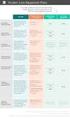 STUDENT LOAN REPAYMENT Chase College of Law Financial Aid Presentation April 14 th, 2011 TOPICS TO BE COVERED General Repayment Information Loan consolidation Repayment Plans Public service loan forgiveness
William D. Ford Federal Direct Loan Program Direct Subsidized Loan and Direct Unsubsidized Loan Borrower s Rights and Responsibilities Statement
 Important Notice: This Borrower s Rights and Responsibilities Statement provides additional information about the terms and conditions of the loans you receive under the accompanying Master Promissory
CRS Report for Congress
 Order Code RL31575 CRS Report for Congress Received through the CRS Web Consolidation Loan Provisions in the Federal Family Education Loan and Direct Loan Programs Updated November 16, 2004 Adam Stoll
William D. Ford Federal Direct Loan Program Direct PLUS Loans Borrower s Rights and Responsibilities Statement
 William D. Ford Federal Direct Loan Program Direct PLUS Loans Borrower s Rights and Responsibilities Statement Important Notice: This Borrower s Rights and Responsibilities Statement provides additional
William D. Ford Federal Direct Loan Program Direct Subsidized Loan and Direct Unsubsidized Loan Borrower s Rights and Responsibilities Statement
 Important Notice: This Borrower s Rights and Responsibilities Statement provides additional information about the terms and conditions of the loans you receive under the accompanying Master Promissory
Helping Students Repay their Loans: Repayment Plan Overview. Greg Carlo Senior Client Relationship Manager
 Helping Students Repay their Loans: Repayment Plan Overview Greg Carlo Senior Client Relationship Manager Agenda Information you can share with your students Understanding Loan Repayment Top 10 Things
ENTRANCE COUNSELING GUIDE
 ENTRANCE COUNSELING GUIDE For Direct Loan Borrowers Contents Direct Loan Types 1 Borrow Wisely 2 Borrow Direct Subsidized Loans and Direct Unsubsidized Loans First 2 You Must Repay Your Loans 3 Use of
How To Get Out Of A Subgratame Loan With A Credit Card
 Income Based Repayment Questions and Answers (Q&A) Prepared by Federal Student Aid U.S. Department of Education January 5, 2010 The Questions & Answers (Q&As) that follow provide information about the
fyi Federal loans: The smart way to borrow
 Federal loans: The smart way to borrow If you don t receive enough free money to pay for college and you aren t able to cover your costs with savings or other resources, consider federal student loans.
William D. Ford Federal Direct Loan Program Direct Subsidized Loan and Direct Unsubsidized Loan Borrower s Rights and Responsibilities Statement
 Important Notice: This Borrower s Rights and Responsibilities Statement provides additional information about the terms and conditions of the loans you receive under the accompanying Master Promissory
Student Loans Terms To Know
 Student Loans Terms To Know Borrower The borrower in most cases is the student. The loan is made in the borrower s name and he/she is responsible for paying back the loan(s) including principal plus any
Federal Stafford Loan Counseling Checklist
 Student s Name (Please Print) Social Security Number You are receiving a Federal Stafford loan to help you cover the costs of your education. You must repay this loan. Before you receive your Stafford
Income-Based Repayment Program Questions and Answers (Q&As)
 Prepared by Federal Student Aid U.S. Department of Education February 7, 2011 The questions and answers (Q&As) that follow provide information about the Income-Based Repayment (IBR) Plan that is available
EXIT INTERVIEW FACT SHEET
 EXIT INTERVIEW FACT SHEET All students who have borrowed a Federal Direct/FFEL student loan are required by law to complete an Exit interview at this point of graduation or if they leave school, or drop
Federal Loan Repayment Options
 Federal Loan Repayment Options The Standardized Repayment Plan- allows you to pay off your federal student loans in the shortest amount of time. This repayment Plan saves you money over time because your
Widener University School of Law. Exit Interview Counseling Presentation Managing your student loan repayment
 Widener University School of Law Exit Interview Counseling Presentation Managing your student loan repayment Types Of Education Debt Three Types Federal Loans Stafford Subsidized/Unsubsidized Federal Direct
BEFORE YOU DECIDE. Here are things to consider when deciding whether consolidation is right for you:
 BEFORE YOU DECIDE Here are things to consider when deciding whether consolidation is right for you: THE INTEREST RATES OF EACH LOAN THAT YOU WANT TO CONSOLIDATE The interest rate for a Direct Consolidation
Exit Counseling Guide for Direct Loan Borrowers
 You borrowed Direct Subsidized Loans and/or Direct Unsubsidized Loans to help you finance your education. Repaying these loans is a serious responsibility. This guide explains some of the most important
William D. Ford Federal Direct Loan Program Direct PLUS Loan Borrower s Rights and Responsibilities Statement
 Important Notice: This Borrower s Rights and Responsibilities Statement provides additional information about the terms and conditions of the loans you receive under the accompanying Federal Direct PLUS
NAVIGATING LOAN REPAYMENT
 NAVIGATING LOAN REPAYMENT Navigating Loan Repayment Agenda Federal Loan Exit Counseling Basics of Student Loan Repayment Federal Repayment Plans Other Repayment Considerations Helpful Links Question and
Student Loans Bankruptcy and Student Loans: NUTS & BOLTS The Options (pressing your plea Prov 6:1-5) Federal loan
 Student Loans Bankruptcy and Student Loans: Must prove undue hardship Must initiate an adversary hearing, a separate lawsuit within the bankruptcy where the undue hardship is illustrated. Most can t afford
Income-Driven Repayment Plans: Frequently Asked Questions
 Income-Driven Repayment Plans: Frequently Asked Questions Contents Introduction...1 General Information...2 Eligible Borrowers...6 Eligible Loans...9 Monthly Payment Amount... 12 Repayment Period & Loan
EXIT COUNSELING GUIDE FOR BORROWERS OF DIRECT LOANS AND FEDERAL FAMILY EDUCATION PROGRAM LOANS
 EXIT COUNSELING GUIDE FOR BORROWERS OF DIRECT LOANS AND FEDERAL FAMILY EDUCATION PROGRAM LOANS U.S. Department of Education Arne Duncan Secretary Federal Student Aid James W. Runcie Chief Operating Officer
What is a Federal Direct PLUS Loan?
 What is a Federal Direct PLUS Loan? This is one of the low-interest loans that make up the William D. Ford Federal Direct Loan Program (also known as Direct Loans ). The Direct Loan Program enables students
STUDENT LOAN REPAYMENT STRATEGIES
 STUDENT LOAN REPAYMENT STRATEGIES FOR GRADUATE STUDENTS November 9, 2009 Updated: 11/04/2009 The information contained in this presentation is not comprehensive, is subject to constant change, and therefore
STUDENT LOAN FORGIVENESS AND REPAYMENT: WHAT YOU NEED TO KNOW
 STUDENT LOAN FORGIVENESS AND REPAYMENT: WHAT YOU NEED TO KNOW From here to repayment IUPUI updates your enrollment status. Your grace period begins. Your student loan servicer sends you details about
Loan Consolidation: What You Need to Know to Make an Informed Decision. Name Title Sallie Mae. April 2006
 Loan Consolidation: What You Need to Know to Make an Informed Decision Name Title Sallie Mae April 2006 Welcome To The Seminar!!! Consolidation often seems complicated, especially now You probably have
Private Loan Guide. Apply for free, federal and state financial aid programs:
 Private Loan Guide Private loan basics Private student loans are non-federal loans. You should only borrow private loans to fund your education as a last resort. Do all of the following before you consider
Managing Your Student Loans During Turbulent Times
 Managing Your Student Loans During Turbulent Times You Will Learn: The different types of student loans How to get detailed information on your existing student loans Repayment options In today s workplace,
Student Loans A comprehensive look at student aid and the various repayment options
 Student Loans A comprehensive look at student aid and the various repayment options How Much Does College Cost? According to the Bureau of Labor Statistics and the US Department of Labor, the average cost
FDLP and FFELP Fact Sheet Provided by the National Council of Higher Education Loan Programs (NCHELP) Program Regulations Committee
 STAFFORD AND PLUS LOANS Interest Rate 1. [34 CFR 685.202; HEA 428(d)] [34 CFR 682.202; HEA 428(d); 438(g)] The interest rate is fixed at 6.8% for Stafford loans first disbursed on or after July 1, 2006,
2014 Exit Counseling / Student Loan Repayment Information. May 7, 2014 University of Maryland, Baltimore County
 2014 Exit Counseling / Student Loan Repayment Information May 7, 2014 University of Maryland, Baltimore County First. If you are graduating: Congratulations! Know your loans Know the type(s) of loan (Stafford
Entrance Counseling Guide for Direct Loan Borrowers
 You are borrowing Direct Subsidized Loans and/or Direct Unsubsidized Loans to help you finance your education. Repaying these loans is a serious responsibility. This guide explains some of the most important
EXIT COUNSELING GUIDE FOR BORROWERS OF DIRECT LOANS AND FEDERAL FAMILY EDUCATION PROGRAM LOANS
 EXIT COUNSELING GUIDE FOR BORROWERS OF DIRECT LOANS AND FEDERAL FAMILY EDUCATION PROGRAM LOANS U.S. Department of Education Arne Duncan Secretary Federal Student Aid James W. Runcie Chief Operating Officer
EXIT COUNSELING GUIDE
 EXIT COUNSELING GUIDE For Federal Student Loan Borrowers Contents Intro 1 Exit Counseling Federal Student Loan Programs Getting Started 1 Types of Federal Student Loans Loan Terminology Repaying Your
EXIT COUNSELING GUIDE FOR BORROWERS OF DIRECT LOANS AND FEDERAL FAMILY EDUCATION PROGRAM LOANS
 EXIT COUNSELING GUIDE FOR BORROWERS OF DIRECT LOANS AND FEDERAL FAMILY EDUCATION PROGRAM LOANS U.S. Department of Education Arne Duncan Secretary Federal Student Aid James W. Runcie Chief Operating Officer
Federal Student Aid Glossary (edited. Original at: http://studentaid.ed.gov/glossary) Academic Year This is the amount of the academic work you must
 Federal Student Aid Glossary (edited. Original at: http://studentaid.ed.gov/glossary) Academic Year This is the amount of the academic work you must complete each year, and the time period in which you
Direct Loan Exit Counseling
 Direct Loan Exit Counseling Understanding your student loan rights and responsibilities is critical to successful repayment! This guide will help you understand Federal Stafford Loans and Direct Loans.
How To Write A Federal Consolidation Loan
 Federal Family Education Loan Program (FFELP) Federal Consolidation Loan Application and Promissory Note Guarantor, Program, or Lender Identification OMB No. 1845-0036 Form approved Exp. date 10/31/2006
How To Get A Loan From A College
 STUDENT LOANS: AFTER YOU BORROW Student Loan Basics Nearly Everyone CAN Borrow, however: Loans have to be repaid! Borrow only what you need!! Interest What you are charged for using someone else s money
William D. Ford Federal Direct Loan Program Direct PLUS Loan Borrower s Rights and Responsibilities Statement
 Important Notice: This Borrower s Rights and Responsibilities Statement provides additional information about the terms and conditions of the loans you receive under the accompanying Federal Direct PLUS
TAKE CHARGE OF LOAN REPAYMENT!
 1 TAKE CHARGE OF LOAN REPAYMENT! Strategies for Managing Your Debt Successfully Fall 2013 Jeffrey Hanson Education Services Boston University School of Law Your Action Plan 5 Steps 2 1. Take stock of your
ENTRANCE COUNSELING GUIDE
 ENTRANCE COUNSELING GUIDE For Direct Loan Borrowers ENTRANCE COUNSELING GUIDE For Direct Loan Borrowers CONTENTS TYPES OF DIRECT LOANS Direct Subsidized Loans, Direct Unsubsidized Loans, Direct PLUS Loans,
Federal Direct Exit Loan Counseling
 Federal Direct Exit Loan Counseling Student Financial Services Fall 2012 What is Exit Counseling and Why are You Here? Exit counseling is a way for students to understand their rights and responsibilities.
Income-Based (IBR) / Pay As You Earn / Income-Contingent (ICR) Repayment Plan Request OMB No. 1845-0102 Form Approved
 IBR/PAYE/ICR SECTION 1: BORROWER IDENTIFICATION Please enter or correct the following information. Check this box if any of your information has changed. SSN - - Name Address City, State, Zip Code Telephone
Student loan terms to know
 Definition of words related to federal student loans and the Nelnet payment process. Accrue The act of interest accumulating on the borrower s principle balance. Aggregate Loan Limit The maximum total
WiseBorrower Education Series
 FEDERAL STUDENT LOANS: Repayment 101 How do I determine my loan repayment strategy? What repayment plans are available? What repayment tools will help me navigate tough financial times? What is the best
The End of Grace. How to Navigate Your Student Loans After You Graduate
 The End of Grace How to Navigate Your Student Loans After You Graduate Where to find your loans National Student Loan Data System Complete your Financial Aid Review Complete your Exit Counseling www.nslds.ed.gov
Repaying Your Student Loan. Florida Coastal School of Law
 Repaying Your Student Loan Florida Coastal School of Law Workshop Objectives At the end of the workshop you will understand: What options are available during repayment What education-related tax incentives
Federal Direct Consolidation Loan Instructions for Application and Promissory Note
 Federal Direct Consolidation Loan Instructions for Application and Promissory Note OMB No. 1845-0053 Form Approved Exp. Date 02/28/2014 Before You Begin Gather all of your education loan records, account
8/4/2015. Agenda. Student Loan Repayment and other exciting activities after GRADUATION! Types of Loans. Key Players. Stafford Loan Interest Rates
 Student Repayment and other exciting activities after GRADUATION! Agenda types & interest rate The grace period Repayment plans Forgiveness Avoiding delinquency & default Financial Planning 1 2 Key Players
Federal Direct Consolidation Loan Instructions for Application and Promissory Note
 Federal Direct Consolidation Loan Instructions for Application and Promissory Note OMB No. 1845-0053 Form Approved Exp. Date 02/28/2014 Before You Begin Gather all of your education loan records, account
DIRECT LOAN CONSOLIDATION
 DIRECT LOAN CONSOLIDATION Self-Help Packet (February 2013) DIRECT LOAN CONSOLIDATION Consolidation Consolidation is similar to refinancing a loan. You can consolidate all, just some, or even just one of
How To Resolve A Defaulted Loan
 Default Issues in Detail Since most of your current students will be eligible for inschool deferment if they re attending at least half-time, you are most likely to be involved in default issues with students
Types of Title IV Loans - Loan Modification Options
 Loans 101: Understanding the Basics Objectives 1 2 3 4 The role of loans in financial aid Overview of the Title IV Loan Program Repayment options Counseling resources The Role of Student Loans in Financial
ECONOMIC HARDSHIP DEFERMENT REQUEST Federal Family Education Loan Program
 HRD ECONOMIC HARDSHIP DEFERMENT REQUEST Federal Family Education Loan Program Use this form only if all of your outstanding Federal Family Education Loan (FFEL) Program loans were made on or after July
In the instructions for the Request to Add Loans, the last three paragraphs are replaced by the following:
 This Addendum relates to Special. Some of the terms and conditions of Special Direct Consolidation Loans are different from the terms and conditions of regular as described in the accompanying Federal