
SIMPLE AND LOW COST MANUAL WATER WELL DRILLING
|
|
|
- Rosa Perry
- 10 years ago
- Views:
Transcription
1 SIMPLE AND LOW COST MANUAL WATER WELL DRILLING AN INSTRUCTION MANUAL FOR BAPTIST DRILLING Written by Steven A. Bill

2 Simple Low-Cost Manual Water Well Drilling: An Instruction Manual

3 Table of Contents Acknowledgements... 6 Overview... 7 The Drilling Process... 7 Advantages... 8 Potential Limitations... 8 Special Note... 9 Section I: Tools and Parts Assembly A. Movable Point Drill Bit with Built-in Retention Valve B. Fixed-Point Valve Drill Bit C. Rock Drill Bit D. Open Drill Bit (Valve-less) E. Ball Valve F. Gate Valve G. Reaming Extension H. Drill Stem and Spout Drill Stem Spout I. Well Casing and Filter J. Hand Pump Constructing the Piston Constructing the Piston Rod Constructing the Piston Rod Assembly Assembling the Pump Housing Installing the Completed Pump K. Manual Water Pump Section II: Toolkit Section III: Preliminary Drilling Setup A. Site Exploration B. Well Site Preparation Derrick Construction Rope and Pulley Assembly Settling Pool Water Supply Section IV: Drilling Procedure A. Handling the Stem B. Commencement C. Continuation D. Determining Depth and Filter Placement E. Issues in Drilling Hard material and Speed of Drilling Flooding Drilling Fluid Viscosity Collapsing Well Start and Stop Drilling Drill Stem Rescue... 42

4 4 Rescue Tools Repeated Clogging Widening the Borehole Section V: Inserting the Well Casing and Conditioning the Well A. Well Casing Casing Diameter and Material Installing Filter and Casing Conditioning the Well Alternative Conditioning Method B. Hand Pump Installation Fulcrum and Lever Sanitation Seal (Pad) Glossary Resources Appendix A: Inches to Millimeters Conversion Chart Appendix B: Images of Parts... 55

5 5 List of Figures Figure 1 Exploded view of movable point drill bit 10 Figure 2 - Welding the valve-housing of the drill bit 11 Figure 3-1" bulb welded on to head of 4" bolt 12 Figure 4-4-bladed point cut from leaf-spring steel 12 Figure 5 - Exploded view of fixed-point drill bit 13 Figure 6 - Exploded view of rock drill bit 14 Figure 7 - Exploded view of ball valve 15 Figure 8 - Exploded view of gate valve 16 Figure 9 - Exploded view of reaming extension 17 Figure 10 - Variation of reaming extension 17 Figure 11 - Optional modification to stem 19 Figure 12 - Simple drill stem 19 Figure 13 - Exploded view of spout 20 Figure 14 - Constructing the filter 21 Figure 15 Bottom of filter heated and bent 22 Figure 16 Rice bags glued to filter 22 Figure 17 - Electrical tape around filter 22 Figure 18 - Exploded view of coupling assembly for piston 23 Figure 19 - Exploded view of piston assembly 24 Figure 20 - Exploded view of piston rod 25 Figure 21 - Exploded view of piston rod assembly 26 Figure 22 - Exploded view of pump housing 27 Figure 23 - T-coupling assembled on to pump 28 Figure 24 - Exploded view of manual water pump 29 Figure 25 - Construction of Derrick Structure 33 Figure 26 - Rowing handles 34 Figure 27 - Water holding structure 35 Figure 28 - Drilling procedure set up with rowers 36 Figure 29 - Holding the drill stem with pipe wrenches 37 Figure 30 - Exploded view of rescue tool 42 Figure 31 - Holding the casing in place with rubber strapping 45 Figure 32 - Set up for back pumping into well casing 46 Figure 33 - Inertia pump 47 Figure 34 - Fulcrum and Sanitation Pad 49

6 6 Acknowledgements The author would like to thank the following: Dr. Daniel Beams of Agua Yaku for his guidance and endorsement of the accuracy of this manual; Nikolas Fiorito for assistance with diagrams; the members of Grace Church for financial support toward fieldwork in Bolivia; and the School of Communication and Culture at Royal Roads University for the opportunity to apply international and intercultural communication skills to a practical and potentially far-reaching endeavour.

7 7 Overview The Baptist well drilling method was developed by Terry Waller of Water for All International in Having worked alongside Mr. Waller, Dr. Daniel Beams of Agua Yaku has since adopted the method, offering slight variations and adding an optional motorized component that alleviates the manual power required to drill. The following instruction manual details how to drill a well using the manual well drilling method only. Whereas typical hand drilling techniques require a hand to be placed over the spout of the drill stem to act as the valve, the Baptist method uses a valve incorporated into the drill bit at the bottom of the drill stem (or elsewhere in the stem). The approach uses a combination of sludging and percussion methods. The sludging component consists of suspended Bold terms are found in the glossary at the back. cuttings in the drilling fluid that are pumped to the surface and spurted into a settling pool. The drill stem is lifted by volunteers pulling a rope through a pulley attached to a derrick and then dropped, thereby providing the percussion component of the drilling process. The width of the borehole is between 2-4" ( 5-10cm) with depths of over 300' ( 100m) possible depending on soil conditions. 1 As of 2011, the Baptist method has been successfully used to drill over 2,000 wells throughout Latin America, Africa, and Asia and, at approximately 50 persons per well, has provided clean water to over 100,000 people throughout the world. 2 The Drilling Process The setup of the drilling rig consists of a custom-made drill bit and check-valve attached to one end of a 1¼" galvanized pipe and a spout attached to the opposite end. Using manual power and a rope and pulley system, the stem is continually lifted and dropped into the borehole. The repeated downward force of the rig into the borehole causes sediment and rocks to loosen. Water is poured into the hole so that as the hole deepens, the check valve on the drill bit allows cuttings and water to travel up through the drill stem and out the spout at the top. As the rig descends, PVC pieces are added to the stem until the desired depth is attained. Once the desired aquifer has been reached, PVC well casing with a built-in filter is inserted into the borehole. The well is then conditioned and a hand pump is inserted into the casing, completing the well. 1 Baptist drilling. (n.d.). In Rural Water Supply Network. Retrieved from 2 Forsyth, A.M., Ramudu, E., Hindal, H.L., & Lazarus, D.R. (2010). A manual well drilling pilot project: Implementing the Water for All International method. International Journal for Service Learning in Engineering, 5(1),

8 8 Advantages i. Simple. Compared to other well drilling approaches, the Baptist method is considered simple and the knowledge easily transferable. ii. Local Materials. There are no special materials or parts required. All the materials can be purchased through a local hardware store and manufactured in a welding shop. iii. Maintenance. Because of the simplicity of the method and the materials used, maintenance to the hand pump is fairly easy, thus ensuring minimal down time. iv. Adaptable. The technology is also adaptable to local contexts. Depending on availability, alternative materials can be substituted. v. Inexpensive. The construction of the rig (including the drill stem, spout, pulley, drill bits, and tool kit) costs between $150-$300 US, depending on location and depth of well. The cost of a well (including well casing, filter, hand pump, and concrete sanitation pad) is approximately $50-$250 US, depending on location and depth of well. vi. Lightweight. The materials required for drilling a well can be transported relatively easily, allowing for more remote wells to be drilled. vii. Fast. Compared to other manual drilling methods, the Baptist method is considered a fast drilling procedure. Depending on soil conditions, rates of up to 100' (30m) per day can be attained. viii. Deep. Wells have been reportedly drilled to depths of 345' (105m). 3 Potential Limitations i. Cannot drill through rock. The drilling method works best in unconsolidated material such as sand, loam, small gravel, and light rock. However, it will not penetrate hard rock or boulders. Accordingly, it is limited to non-mountainous regions. ii. iii. Limited borehole. The diameter of the borehole should be less than 4" ( 10cm) as it becomes increasingly difficult to insert the well casing into a wider borehole due to buoyancy and the amount of water to be displaced. This limited diameter of the borehole corresponds to less water production per pump. Existing Water Supply. The process requires L ( Gallons) of water supply. This is usually not a limitation but should be considered when determining if the Baptist method should be used. 3 Waller, T. (2010). Water For All International. Retrieved from

9 9 iv. High Risk. The well drilling procedure is subject to several uncertainties, including: risk of poor water quality upon completion; uncertainty of soil conditions at a given depth (discovery of rocks or boulders results in having to abandon progress); potential for drill stem to snap or drill bit to break off; and potential to drop stem down borehole when adding or removing pieces. In general, however, the Baptist method does not offer any limitations that are not also found in other manual well drilling procedures and, in fact, offers several significant advantages that other approaches do not. As such, the Baptist method is a preferred approach to other common manual well drilling techniques, particularly in nonmountainous areas. If great caution is applied throughout the entire process from the choosing of the borehole location to the installation of the hand pump a successful well can be drilled most of the time. Special Note Glossary - The instructions in this manual have been written with the beginner well driller in mind. Terms that are in bold are referenced in the Glossary at the back of this book. Units of Measurement - Depending on the country in which the well is dug, units of measurements will differ. Accordingly, measurements are usually done in both metric and imperial units. However, where only one unit of measurement is provided, consult Appendix A for a conversion table. This manual switches between imperial and metric so caution must be taken in ensuring the proper measurements are consulted. In addition, most standard measurements used (e.g. width of PVC pipe, length of screws, etc.) are based on those used in Bolivia and as such may be slightly different elsewhere. Keep in Mind Boxes Each section of the manual has a number of additional knowledge boxes that provide tips, optional variations, additional resources, and other useful information that should be consulted if possible in order to ensure a successful well.

10 10 Section I: Tools and Parts Assembly A. Movable Point Drill Bit with Built-in Retention Valve Materials: 2-1¼" galvanized coupling 1 - ¾"-1¼" galvanized reducer coupling 1 - ⅝" x 4" steel bolt 4-1" x ⅜" rebar (optional) 1 - Leaf-spring steel (cut into three triangles) 1 - Leaf-spring steel ring (optional) An instructional video detailing this section can be found at =orvsl8_e5ls. Figure 1 Exploded view of movable point drill bit i. Weld 1¼" galvanized couplings together (Figure 2, next page). Add ¼" ring of welding material around body. This will help widen the borehole.

11 11 Figure 2 - Welding the valve-housing of the drill bit ii. iii. iv. Add welding rod material to the outside of the ¾" end of the reducer coupling (Figure 2). Grind the material so that the reducer coupling will fit snugly into the coupling. This ensures that the reducer coupling does not flare out from the constant pounding of the bulb end of the valve, thus breaking the seal between the bulb and the reducer coupling. Weld reducer coupling to body. Weld ¼" ring of steel around valve-housing, which will aid in widening the borehole, allowing for a wider diameter well casing. v. An optional addition is to weld (4) 1" x ⅜" rebar to the outside of the valve-housing to further aid in increasing the diameter of the borehole, allowing for a 2" PVC casing. (Adding Part iv. and v. is only effective in unconsolidated soil. In harder material, you IMPORTANT! Welding galvanized steel without removing galvanized coating will result in emissions of a heavy, noxious, yellow-green smoke that can envelope the welder. Continuous exposure to this smoke can result in galvanized poisoning. Where possible, use non-galvanized steel components when welding. If non-galvanized components are unavailable, degalvanize the components using a wire brush or grinder prior to welding. Further, use a ventilation welding hood to reduce smoke inhalation. may want to make a pilot hole with a smaller diameter bit and then ream the borehole using a reaming extension (See page 17). vi. vii. If available, weld a leaf-spring steel ring on to the top of the reducer coupling. The ring is harder than the coupling and will prolong the life of the bit. To create the valve, weld an approximate 1" diameter bulb/cone on to the head of the ⅝" x 4" bolt as shown in Figure 3 (next page). Shape the bulb with a grinder, ensuring that it fits snugly into the reducer coupling and that there is enough space around the bulb for the cuttings to flow up and through the


12 12 bit. You may have to cut the bolt in order to limit the space between the body and the bit. However, if you have welded a leaf-spring ring, you should not have to cut the bolt. viii. Cut parts A, B, and C from leaf-spring steel using a miter saw (Figure 4). ix. Weld the 4-bladed point together and attach to bolt placed through the body of the bit as shown in Figure 1. When welding the 4-bladed point on to the valve-bolt, ensure that ½"-¾" is left between the bit body and the base of the point. Figure 3-1" bulb welded on to head of 4" bolt Figure 4-4-bladed point cut from leaf-spring steel

13 13 B. Fixed-Point Valve Drill Bit Materials: 2-1¼" galvanized male-female reducer bushing 1 - ¾"-1¼" galvanized reducer coupling 1 - ⅝" x 4" steel bolt 1-1½" rebar 4-1" x ⅜" rebar (optional) 1 - Leaf-spring steel (cut into three triangles) Figure 5 - Exploded view of fixed-point drill bit The fixed-point valve drill bit provides extra impact to break through harder material. i. Repeat Section I; Subsection A; Steps i-vi. ii. iii. iv. Place the bolt into the reducer coupling and weld a piece of rebar across the end of the bolt, making a T (Figure 5). This will prevent the bolt-valve from slipping out the top of the bit. Cut parts A, B, and C from leaf-spring steel using a miter saw (Figure 4, page 12). The size of the blades should be slightly larger than the movable point drill bit. This is because the fixed-point bit is often used to widen the borehole. Weld the 4-bladed point together and then weld completed point to the reducer coupling.


14 14 C. Rock Drill Bit Materials: 2-1¼" galvanized coupling 1 - ¾"-1¼" galvanized reducer coupling 1 - ⅝" x 4" steel bolt 1-1½" rebar 4-1" x ⅜" rebar (optional) 1 - Leaf-spring steel The Rock Drill Bit is a variation of the fixed-point valve drill bit, specifically designed to penetrate through rock. Accordingly, the 4-point blade is designed to be more blunt. Figure 6 - Exploded view of rock drill bit D. Open Drill Bit (Valve-less) Materials: 2-1¼" galvanized coupling 1 - ¾"-1¼" galvanized reducer coupling 4-1" x ⅜" rebar (optional) The open drill bit does not contain a valve at all. The valve-less bit depends on a valve placed elsewhere in the drill stem, generally near the spout of the stem (see Gate Valve below) or above the drill bit. An open drill bit would be used in material such as clay, in which there is a tendency for the clay to clog the bit, thus rendering

15 15 the valve ineffective. Removing the valve decreases the probability of the bit from becoming plugged with viscid material such as clay. However, keep in mind that placing the valve at the top of the drill stem (near the spout) also decreases the efficiency of the valve s function. The process for creating an open drill bit is identical to the processes noted above except that construction of the bolt-valve is not necessary. E. Ball Valve Materials: 2-1¼" galvanized coupling 1-2" x ⅜" steel bar 2-1½"-1¼" galvanized reducer coupling 4-1" x ⅜" rebar (optional) 1-1 ¼" (32mm) ball bearing 1-1¼" diameter galvanized nipple Figure 7 - Exploded view of ball valve i. Weld 1¼" couplings together to form the valve housing. At the middle of the top coupling, drill a ⅜" hole. Weld steel bar through the hole.

16 16 ii. iii. iv. Attach male-female reducer couplings on to each end of the valve housing. Place the ball bearing into the valve housing. Attach nipple to bottom of valve housing. Ball bearing should fit snugly on to the nipple, ensuring that it does not get jammed or wedged inside. F. Gate Valve Materials: 2-1" steel nipple 1-45 elbow 1" coupling 1-1¼"-1" reducer coupling 1-1¼" diameter steel nipple 1-1¼" brass horizontal check valve Figure 8 - Exploded view of gate valve Used in conjunction with a valve-less open drill bit, the gate valve is attached to the end of the spout of the drill stem. It is used when a movable point or fixed-point drill bit continues to clog. This generally occurs in fine, compacted material such as clay. i. Attach nipple to exit-end of spout. ii. iii. Attach elbow coupling to nipple. Attach nipple to elbow coupling.


17 17 iv. Attach reducer coupling to nipple. v. Attach brass horizontal check valve to nipple. G. Reaming Extension Materials: 1-1¼" galvanized coupling 1 - automotive gear (approximately 3-4" in diameter) 1 1¼" galvanized nipple Figure 9 - Exploded view of reaming extension The reaming extension is used in conjunction with a ball valve. It is used to widen the borehole, specifically for fitting a well casing 3-4" in diameter. i. Weld the automotive gear to the end of the coupling. ii. Weld the nipple to the other side of the automotive gear. Figure 10 - Variation of reaming extension

18 18 H. Drill Stem and Spout Materials: 1-1"x 9' (3m) steel pipe threaded on each end ¼" reducer coupling 1-1¼" x 18' (6m) galvanized pipe 1-1½" x 9' (3m) galvanized pipe (optional) 10-1" x 18' (6m) Schedule 40 PVC pipe 30-1" PVC coupling 2-1" galvanized 90 elbow coupling 2-16" (40cm) x ½" steel pipe 2-1" galvanized nipple The following instructions refer to a 60m ( 200') well. Additional PVC pieces would be required for a deeper well. Drill Stem i. Optional modification: Divide the 1½" x 9' galvanized pipe into two pieces, length-wise, and weld on to one end of 18' pipe so that the bit, once screwed on, will fit snug against the 9' pieces. This modification is done so that extra weight is added to the drill stem near the bit as well as reduces the impact on the threads holding the bit (Figure 11 next page). ii. iii. On the opposite end of the 18' pipe (end without the additional attached piping), screw on a reducer coupling and then the steel nipple. Cut the PVC pipe into 19 x 9' sections and 2 x 4.5' (1.5m) sections. Each section is threaded on both ends with a PVC hand-threader. iv. Screw 1" PVC coupling on to one end of each 9' piece and 4.5' piece. With seven threads, the coupling will be tight when the threads are no When threading the PVC pipe, be careful not to create too few or too many threads. The optimal number of threads is 7. Both the 18' steel pipe and the 1" x 9' will require being threaded on both ends. Special tools are required to thread steel pipes, including a pipe vise, cutter, reamer and threading die to match the size of the pipe. Accordingly, this may have to be done in a machine shop by a professional machinist. longer visible. Place the PVC pieces into a vice grip and use a pipe wrench to tighten the couplings. Additionally, grease can be smeared on to the threads, further aiding in tightening the couplings to the PVC pieces.

19 19 Figure 11 - Optional modification to stem Figure 12 - Simple drill stem

20 20 Spout i. The 16" steel pipe will act as the handle for the spout. Weld the middle of this pipe to the outer curve of the elbow coupling. ii. Screw a 1" steel nipple into one end of the elbow coupling, and then tighten PVC coupling to the nipple. Ensure that the ends of the 16" steel pipe do not contain any sharp edges. Grind the ends if necessary. iii. iv. Cut a piece of 1" x 10" ( 25cm) piece of PVC pipe. Thread one end of this piece. Heat the last 3-4" of the PVC pipe, gently bending it downward (See Figure 13) v. Screw the threaded end of the 10" PVC into the elbow coupling, ensuring that the pipe is pointing downward. vi. Create a second spout using Steps vi. x. Add a 1.5m PVC pipe to the PVC coupling. Having a second spout will greatly improving the efficiency of adding PVC pieces to the drill stem as required. Figure 13 - Exploded view of spout

21 21 I. Well Casing and Filter Materials: 11-2", 3", or 4" x 18' (6m) Class 9 PVC piping (depending on the diameter of the borehole) (11 pieces would be needed for a 60m well) 2 - Loose-woven nylon bags (rice or potato bag) (Alternatively, you can use specially manufactured material for well filter if available) 2 - Rolls of electrical tape Rubber cement PVC glue Figure 14 - Constructing the filter i. Cut three triangular points to a depth of 2" on one end of a 2" PVC piece, or four triangular pieces on one end of a 3" PVC piece. Heat the ends over a flame until the triangular pieces become flexible. Fold the three (or four) tips to a point and hold until stiff. The length of the filter depends on the depth of the sand layer in which the filter will be placed. This is usually about 1.5-3m ( 5-7ft) in length. ii. For a 2" casing, begin 4" ( 10cm) up from the folded point, cut two columns of width-wise slits, approximately ½" ( 1cm) apart for the determined length of the filter. (In a 3-4" casing, 3 columns of slits should be cut). Cuts should be made to a depth of the hacksaw blade (approximately 1.5" in length). To ensure columns are straight, use a marker to draw lines on opposite sides of the casing.
22 22 iii. Open up nylon bag(s). Beginning at the top of the filter (where the slits begin), liberally apply rubber cement in between the columns of slits, ensuring to avoid getting rubber cement in the slits). Let dry until tacky (approximately 10 minutes). Carefully stretch one edge of nylon bag and attach to rubber cement. iv. Apply rubber cement to other side of casing. Let dry until tacky. Carefully stretch nylon bag around casing and attach to rubber cement. v. Apply rubber cement on top of first seam (Step iii.) and let dry until tacky. Stretch bag around and attach on seam. When dry, cut excess away. vi. Repeat Steps 3-5 moving down the filter, slightly overlapping, until all slits are covered with the nylon bag material. vii. To ensure the nylon bags do not tear while descending down the borehole, wrap electrical tape around the nylon bag at the tip of the filter, as well as at sections where the nylon overlaps. Figure 15 Bottom of filter heated and bent Figure 16 Rice bags glued to filter Figure 17 - Electrical tape around filter

23 23 J. Hand Pump Materials: 1-40' x 1½" ( 13m x 4cm) Flexible coil plastic pipe (black polyethylene tubing) 1-35' (10½m) x ½" Flexible coil plastic pipe (black polyethylene tubing) 1-12" x 1¼" x 3 16" steel plate 1-1½" T galvanized or PVC coupling 2-1" x 2" angle iron (angular) (L-bracket) 1-1" PVC coupling 1-1" x 6" PVC pipe 1-1" PVC nipple 1 - ¾" PVC coupling 1-1" check valve 2 - ⅝" x 5" ( 10cm) steel rebar 4 - ⅜" x 3½" ( 9cm) bolt (6 nuts, 5 washers) 1 - ⅜" x 6" ( 15cm) bolt (1 nut, 2 washers) 1 - Foam sandal 1-5' x 5" x 3" (1.5m x 13cm x 8cm) board (to secure casing) 1-7½' x 5" x 3" (2.3m x 13cm x 8cm) board 1-6½' x 2 x 3 (2m x 5cm x 8cm) board 1-5-6½' (1.5-2m) wooden post (or 3" diameter steel pipe or larger if casing diameter is larger) Teflon Tape A step by step instruction video for creating the hand pump can be found here: =IHkEPx0hj4Y Constructing the Piston i. Saw the ¾" PVC coupling in half. Grind off the ridges around the coupling. ii. Figure 18 - Exploded view of coupling assembly for piston Cut two foam circle seals from a sandal. The first seal should fit snugly inside 1½" diameter polyethylene tubing. Cut a ½" hole in the center of this seal. The second seal is approximately 1" in diameter, with a hole large enough to stretch over a ⅜" diameter bolt. This particular pump design is not efficient below approximately 50' ( 15m). For areas with a deeper water table, you may need to use a commercially available hand pump that functions at greater depths (up to 170' (50m)), such as the India Mark II, commonly used throughout the world. For less initial investment, you can use a gasoline motor and air compressor. Keep in mind, however, that a submersible electric pump and the India Mark II require a minimum 4" casing size.
24 24 iii. iv. Stretch the larger seal on to one end of the ¾" PVC nipple. Tighten the ¾" coupling halves on to both sides of the nipple using a vice and pipe wrench. Cut three triangular slots on one end of the coupling as shown in Figure 18 (previous page). v. Weld head of ⅜" x 3½" bolt to one end of the steel bolt. You may need to grind or sand to ensure the foam seals are round. The seals should each be approximately ¾" thick, implying that a new sandal is ideal. vi. vii. viii. ix. Place a washer on the rod/bolt assembly. This washer will stop the piston from sliding too far down the shaft. Place the coupling assembly on to the rod/bolt assembly, with the triangular slots toward the washer. Screw on one nut above the coupling assembly. Add a washer above the nut. x. Add the smaller foam seal. xi. xii. Add another washer above the seal. Tighten and secure the seal by screwing on two more nuts above the smaller seal. Figure 19 - Exploded view of piston assembly
25 25 Constructing the Piston Rod Figure 20 - Exploded view of piston rod i. Cut the steel plate into three pieces with widths: 4.5", 4.5", and 3". ii. iii. iv. Drill a ⅜" hole approximately ½" from the end of the two 4.5" pieces. Weld the three pieces together in a U-shape, with the 3" piece along the bottom. Weld the 3' x ⅜" steel bar to the middle of the 3" piece. v. On the opposite end of the steel bar, weld a ⅝" x 5" steel rebar.
26 26 Figure 21 - Exploded view of piston rod assembly Constructing the Piston Rod Assembly i. Using a fire or gas burner, heat approximately 6" of the end of the ½" polyethylene tube. ii. iii. While the polyethylene tube is soft, force the free end of the piston down the tube. To firmly connect the piston to the tube, wrap rubber strapping tightly around the end of the polyethylene tube and use water to cool the end. Continue applying cold water for several minutes before unwrapping the rubber strapping. iv. Using a fire or gas burner, heat approximately 6" of the other end of the ½" polyethylene tube. v. While the polyethylene tube is soft, force the end of the piston rod down the tube, approximately 6". vi. To firmly connect the piston rod to the tube, wrap rubber strapping tightly around the end of the polyethylene tube and use water to cool the end. Continue applying cold water for several minutes before unwrapping the rubber strapping.
27 27 Assembling the Pump Housing Figure 22 - Exploded view of pump housing i. Cut a 9" (23cm) and a 12" ( 30cm) piece out of the 40' ( 13m) polyethylene tube and thread one end of each piece (approximately 7 threads). ii. Thread one end of the remaining 40' polyethylene tube (approximately 7 threads). iii. iv. Thread both ends of the 1" x 6" PVC pipe and wrap threading with Teflon tape. Attach the 1" PVC coupling on to one end of the 6" PVC pipe. v. Attach the check valve on to the other end of the 6" PVC pipe. vi. To install the check valve assembly, heat the non-threaded end of the 40' polyethylene tube and then insert the coupling end of the check valve assembly into the heated tube. Wrap with rubber strapping tightly, and then cool with water to ensure check-valve assembly is securely fitted in the tube.
28 28 Installing the Completed Pump Although the installation of the completed pump is described here, this is actually the last step in the drilling process. Accordingly, refer to Section V, Subsection B for the implementation of this step. i. The 9" tube, followed by the T-coupling, is pushed on to the piston rod assembly. ii. iii. iv. The piston rod is inserted into the open end of the 40' polyethylene tube. Screw the T-Coupling and the 9" piece of polyethylene tubing on to the end of the 40' tube. Screw the 12" piece of polyethylene tubing into the T-coupling (perpendicular to the rest of the tube). v. Insert the pump assembly into the well casing. vi. Move the piston rod up and down, ensuring that the piston is not too tight, nor too lose, and that water pumps out efficiently. If water does not pump out after several aggressive up and down motions, disassemble the pump assembly and ensure that the check valve and piston are working properly. Note: The length of the hand pump assembly is determined by the level of the water table. The check-valve of the hand pump assembly (i.e. the bottom of the hand pump assembly) should be located at a minimum of 10-13' ( 2-4m). For example, in Bolivia, the water table is 13-26' ( 4-8m); therefore the length of the hand pump assembly is about 40' ( 12m). Figure 23 - T-coupling assembled on to pump
29 29 K. Manual Water Pump Materials: 1 - ¾" x 25" ( 2cm x 64cm) steel pipe threaded on both ends 2 - ¾" x 6" ( 2cm x 15cm) steel pipe (threaded on one end) 1-6" x 1" ( 15cm x 2.5cm) galvanized pipe 1 - ¾" galvanized T-Coupling 1-1½"-1" steel reducer coupling 1-1½-1" steel reducer bushing 1 - ¾"-½" steel reducer coupling 1-10" x 2" x ½" piece of steel 1 - ½" x ½" polyethylene tubing (to be screwed into the ½" reducer coupling) 1 - marble ( ½" in diameter) 1 - Sandal 1-1½" steel elbow coupling 1 - ½ steel nipple 1 - ½" steel coupling 1-24" x 1½" PVC pipe threaded on both ends 1 - Roll of Teflon tape 1 - ½" polyethylene tube (length depends on distance to water source from the well) i. Screw in ¾" x 6" steel pipe into both ends of the T-coupling and weld the steel pipe to the coupling. ii. Weld a ½" coupling to the end of one of the steel pipe ends and close off the other end using a hammer to flatten it and a weld to ensure it is airtight. iii. Screw in the ¾" x 25" steel pipe into the T- coupling, using Teflon tape around the threads. iv. Weld a stopping ring around the piston end of the ¾" x 25" steel pipe. Figure 24 - Exploded view of manual water pump v. Cut a donut-shaped seal out of the sandal: approximately 1½" in diameter with a ¾" diameter hole.
30 30 vi. vii. viii. ix. Push the donut-shaped seal on to the end of the ¾" x 25" steel pipe, up to the welded stopping ring. Thread a short piece of ½" polyethylene tube and screw it into a ½"-¾" reducer coupling, cutting off the excess tubing to make it flush with the reducer coupling. Place the marble in the ¾" x 25" steel pipe. Screw on the ½"-¾" reducer coupling on to the end of ¾" x 25" steel pipe. x. Screw the 1"-1½" reducer bushing into the end of the 1" x 6" steel pipe. xi. xii. xiii. xiv. Weld ½" nipple on to the other end of the 1" x 6" steel pipe. Screw ½" steel coupling on to the ½" nipple on the end of 1" x 6" steel pipe. Screw elbow coupling on to end of 1"-1½" reducer bushel. Weld the 10" x 2" piece of steel on to the back of the elbow coupling. This will serve as the footplate. xv. Insert the ¾" x 25" steel pipe into the 24" x 1½" PVC pipe, screwing into the 1"- 1½" reducer coupling. xvi. xvii. xviii. Screw the elbow coupling of the base assembly into the 24" x 1½" PVC pipe. Attach a hose or a threaded ½" polyethylene tube to the end of the base assembly, leading into the water source. Attach a hose or a threaded ½" polyethylene tube to the handle end of the water pump, leading into the well.
31 31 Section II: Toolkit The following is a checklist of tools and materials to have on site that will ensure the drilling procedure goes well. Ax/chainsaw Barrels (water containers) Bentonite (2 bags) Buckets (20L) - Used for carrying water and mixing bentonite Check valve (1") Electrical tape several rolls Extra 1" couplings both PVC and steel (plastic couplings are less expensive but tend to crack more often) Gloves Hacksaw Hammer and nails Hand cable winch come along Hand drill/auger and bits Journal/note pad Knife Machete Magnifying glass Manual water pump (see page 29) Measuring tape Oil/grease Permanent marker Pick/hoe Pipe Vice Pipe wrenches (18") a minimum of 4 is required Pliers Polyethylene tube (½") 300' Post hole digger Pulley 4" (10cm) (extra) PVC cement PVC threader various sizes include 1", 1.5", and ½" Rescue Tools Rope 40-50' (12-15m) that is approximately ¾" in diameter (Ensure rope passes through pulley with ease) Rubber cement Rubber strapping Screen to catch cuttings Set of screwdrivers Set of wrenches Several tarps to build water holding tank Shovel Small sledge hammer Smaller rope Spout (extra) Steel brush Teflon tape Various drill bits, including: movable-point; fixed-point; valveless; rock bit; auger bit Vice grips Wire (10-20') Water testing kit Wood saw Optional Gasoline motor with attached driveshaft pulley Belt-driven compressor and water pump Chassis to mount motor and air compressor Belts to drive water pump and air compressor
32 32 Section III: Preliminary Drilling Setup A. Site Exploration Site exploration is one of the most important steps in the drilling process. The success of the well is completely dependent on several factors, including the availability of ground water, whether the water is potable, and whether the well is easily accessible by the users. Accordingly, adhere to the following guidelines in determining the well placement. If possible, conduct an inventory of existing wells in the area in order to estimate depth of water table, the quality of water at varying depths, and the geological strata that can be expected. Speak with the local community to determine if groundwater seeps into the bottom of pit latrines during the rainy season. This will indicate how deep the groundwater is. 4 Ensure that the well is placed in a location that is convenient to the people who will be using it. However, it may be necessary to compromise convenience in order to ensure the well is successful. Do not drill within 15-50m ( ') down gradient from a latrine or other area in which human or animal waste is deposited. Bacteria and other contaminants from fecal waste can seep into the ground and travel through groundwater, and if a well is placed near a high concentration of contaminants, the well may become polluted. 5 B. Well Site Preparation The best time of year to drill is during the dry season so that when groundwater is reached, you can be confident that this will be the lowest water level that will occur throughout the year, and even in the dry season, there will still be water available. If the well is drilled during the rainy season, it is difficult to determine how much the groundwater level could drop during the dry season and how deep the well would need to be drilled to ensure an adequate yield. * * Lassaline & Fitzgerald, (2010). Derrick Construction Materials: Rope/Wire Nails Timbers/pipes x 3 (length = 12-15' ( 3.5-4m)) Support beams x 4 The construction of the derrick is dependent on local availability. Either pipes or a few pieces of timber will suffice. i. Begin by using a posthole digger to dig two holes approximately 7' ( 2m) apart, with the desired borehole located mid-way between the two holes. Each 4 Lassaline & Fitzgerald, Lassaline & Fitzgerald, 2010.
33 33 hole should be approximately 3' ( 1m) in order to ensure the timbers are secured. ii. Place a timber down each hole. When determining the pieces of timber to use, locate pieces that are Y-shaped as this will ensure greater ease when securing the crossbeam (see Figure 25). After timbers are in place, pack in surrounding hole with earth, ensuring the timbers are aligned upright and firmly in place. iii. Place a crossbeam timber across the two vertical timbers, approximately 8-10' ( 2.5-3m). Secure the crossbeam using rope, wire, or nails. It is important that the crossbeam does not shift during the drilling process so ensure that it is secured tightly, using extra rope and nails if necessary. It may be easier to secure the pulley to the crossbeam before raising the crossbeam. iv. Stabilize the derrick structure using ropes and supporting beams as illustrated below. Figure 25 - Construction of Derrick Structure
34 34 Rope and Pulley Assembly Materials: Pulley (4" (10cm)) Rope (length = 50' ( 15m); thickness = 1 (2.5cm) Heavy object (hammer or pipe wrench) Wire, rope, or chain vii. Secure the pulley to the center of the crossbeam, directly above the desired borehole location, using wire, rope, or a chain. viii. Insert one end of the rope into the pulley and tie a heavy object such as a pipe wrench or hammer to it as demonstrated in Figure 25 (previous page). The tense rope will sit directly above where the borehole will be. As pulling begins, the pulley tends to swing forward as the rope is tensed. Therefore, locate the borehole 1-2" (3-5cm) forward from where the rope hangs. ix. At the end of the rope, rowing handles made from locally available material are tied using a double-half hitch knot (See below). Figure 26 - Rowing handles Settling Pool i. Dig a settling pool 3' x 3' x 1-2' deep ( 100cm x 100cm x 30-60cm deep). Make sure that the pool slopes away from the borehole. This ensures the cuttings will not fall down the hole once removed. In order to preserve the water supply, line the settling pool with bentonite. This prevents the water from seeping into the ground. ii. Dig a 4" x 1' ( 10cm x 30cm) trench from the desired borehole to the settling pool.
35 35 Water Supply Materials: Several barrels or cisterns to hold water Tarp Rope Stakes (3' ( 1m)) Timbers (10-12' ( 4m)) Approximately L ( gal.) of water is required for each day of drilling. i. Because the water acts as the drilling fluid as well as mixes with the bentonite, it is very important that a sufficient supply of water is available at all times. ii. If barrels or cisterns are not available, a makeshift holding structure can be constructed using a large tarp, wooden stakes, timbers, and rope. Figure 27 - Water holding structure
36 36 Section IV: Drilling Procedure Figure 28 - Drilling procedure set up with rowers Note: Measurements are provided as metric in this section due to the conventions used in Bolivia. A. Handling the Stem Before proceeding with drilling, consider the following points: IMPORTANT: It is critical that the drill stem is vertical (perpendicular to the horizon) at the outset of the drilling as this will ensure the borehole remains vertical later on in the drilling process. From the outset, an order for lifting the drill stem using pipe wrenches should be established. As the depth of the borehole increases, the drill stem becomes heavier, making it increasingly difficult to lift out. If the workers responsible for lifting the stem know when to attach their pipe wrench to the stem, the possibility of dropping the stem down the borehole greatly decreases. When lifting the PVC drill stem with the pipe wrenches, workers should be careful to ensure the angle at which the wrench attaches to the stem is not too severe, as this will cause the stem to snap (See Figure 29, next page). The PVC pipe is used primarily because of its lightness and low cost not because of its durability.
37 37 When adding pieces to the drill stem, it is important to ensure the drill bit does not sit on the bottom of the borehole as this will increase the likelihood of becoming clogged. Figure 29 - Holding the drill stem with pipe wrenches B. Commencement i. Begin the borehole by using a posthole digger to descend as deep as possible. Ensure that the hole is placed several inches ahead of where the rope is hanging (see Page 34 for more information on this). ii. iii. iv. Once the posthole digger has reached its maximum descent, fill the borehole and the settling pool with drilling fluid. Insert a 3m steel pipe with a movable bit attached to one end, and a spout attached to the other. Manually lift and drop the drilling rig into the borehole, drilling down as deep as possible. Ensure that the drill stem remains vertical while descending (have assistants help). With every down stroke, drilling fluid (mixed with cuttings) should begin to spurt from the spout into the settling pool. To ensure wrenches are not accidentally dropped down the borehole, use rubber strapping (tire tube rubber) to secure the wrenches to the derrick. In addition to the water in the borehole, a mixture of bentonite and water must be added as the well is being drilled in order to prevent the well from collapsing and to aid in lifting the cuttings out of the borehole.
38 38 C. Continuation i. Once the 3m steel pipe has descended to its maximum depth, a 1.5m piece of 1½" PVC or steel is added. This piece should have a spout attached to it prior to attaching to the drill stem. To add the piece, several workers need to lift the existing drill stem several feet off the bottom of the borehole using pipe wrenches. ii. iii. Tie the spout to the rope that is hanging down. Use a slipknot to tie rope to spout as this will allow for easy removal when adding pieces. Sometimes a slipknot is difficult to remove so alternatively, a steel ring can be tied to the end of the rope, passing the rope through the ring to create the slipknot. With workers at the other end of the rope, a rowing motion ensues in which the drill stem is lifted and dropped. Begin with two people and as the drill stem becomes heavier, additional rowers are added. 4-6 persons are usually sufficient. A worker is stationed above the borehole to guide the drill stem, ensuring it remains vertical and to direct the spurting drilling fluid into the settling pool. If water is not coming out from the spout, you may want to use the palm of your hand as a valve by cupping the end of the spout on the up stroke, and removing the palm on the down stroke. This may need to be repeated for 5-10 minutes in order to get the drilling fluid to recirculate in and out of the drill rig. If this does not work, you may need to remove the drill stem from the hole and unclog the drill bit. iv. Once 4.5m is reached, withdraw the drill stem and remove the drill bit, attaching it to the 6m steel pipe. The 6m pipe is used because it allows for correcting verticality due to its weight and straightness. v. Once the 6m steel pipe has reached its maximum depth, a 1.5m PVC piece with an attached spout is added. Drilling resumes. vi. At 7.5m, the 1.5m piece is removed and a 3m PVC piece is added, along with the spout. Drilling resumes. There is no one size fits all method for drilling. Accordingly, sometimes it is better to use more steel piping and other times it is better to use more plastic. Steel will go down faster and is better in clay, but it is much heavier and difficult to work with. Plastic is lighter but has a greater tendency to crack. A combination is determined as the drilling progresses. vii. viii. ix. At 9m, the spout is removed and the 1.5m piece with attached spout is added. Drilling resumes. Steps v-vii are repeated until the desired aquifer is reached. When lifting the PVC drill stem with the pipe wrenches, workers should be careful to ensure the angle at which the wrench attaches to the stem is not too
39 39 severe, as this will cause the stem to snap. Remember that the PVC pipe is used primarily because of its lightness and low cost not because of its durability. D. Determining Depth and Filter Placement i. Keep a logbook, recording cuttings that come out of the spout every 1.5m. To determine the type of sediment, catch a sample in a bucket as it spurts out from the spout and decant water off the top. Alternatively, you can use a small nylon screen that can catch the solid material as it comes out of the spout. ii. iii. Water is found in layers of sand called aquifers. The filter must be placed in at least 2m of an aquifer layer. Once the sediment is mostly sand and gravel, and the borehole seems to be recharging water naturally, the aquifer is most likely reached. However, it is important to continue drilling at this point in order to maximize exposure of the filter to the aquifer. 6 Confined aquifers are preferred over unconfined aquifers. Confined aquifers will usually follow a layer of clay. However, if rock is reached and the drill cannot descend further, than it is acceptable to place the filter in a shallow, unconfined aquifer. Thus, once sand is reached at a desirable depth, continue drilling until clay or rock is hit. This is where the filter should be placed. Cuttings include: topsoil, sand, clay, gravel/rock. Sand usually passes through a nylon screen so a bucket must be used if passing through sand. WARNING: If the filter is placed in clay, there will be no water. If it is partially placed in clay, muddy water in reduced quantity will result. iv. Sand quality Coarse sand will contain more water than fine sand. Examine sand particles under a magnifying glass: rounded sand particles may indicate greater water volume compared to hard-edged sand particles. E. Issues in Drilling Rarely is a well drilled by simply adding PVC pieces and drilling until desired depth. Inevitably issues come up along the way that prevents a smooth process. However, if the well driller is prepared for these issues beforehand and ensures he or she has the right tools on site, as well as knows what action to take when issues arise, the drilling 6 Lassaline & Fitzgerald, 2010.
40 40 procedure can usually continue with minimal interruption. The following list provides some tips for overcoming issues in drilling. Hard material and Speed of Drilling The Baptist method is not intended for drilling through thick layers of rock. However, if rock is hit, it is worth trying to pass through in order to avoid having to abandon the well. Certain action can be taken when drilling through tough material such as clay or rock. Flooding Use an all steel drilling stem attached to an auger bit or a rock bit. The added weight will provide increased force. Note: the steel drilling pipes will make the drilling rig much heavier than the PVC stem. 1" steel drill stem deeper than 30m becomes difficult to handle manually. Adding workers to the rowing crew will help alleviate this but it will still be a challenge. Once the hard material has been passed, you can switch back to the PVC stem or use a combination of steel and PVC. If the drill bit is in hard rock and ceases to make any progress after several hours, you will have to abandon the well and begin elsewhere. For a first well being dug in an area, several locations may need to be tested in order to determine the feasibility of drilling in the area. The speed of the drilling will vary. It is possible to descend 1.5m in 5 minutes or 1 hour, depending on the density of the layer. However, as long as progress is being made, regardless of the speed, do not be discouraged. Because flooding is a common occurrence in many low level areas throughout the developing world, it is important to ensure that the top of the well casing will be well above the typical flood levels for that area. Once the drill has been completed and the well casing has been inserted, a platform of concrete can be placed around the well, thereby allowing the top of the well casing to be higher. Drilling Fluid Viscosity The proper thickness of the drilling fluid must be maintained. If it is too thin, it cannot suspend the cuttings. If it is too thick, it will not pump properly. The viscosity is determined by what material is being drilled through, as well as what is added to the water (i.e. bentonite). When drilling through sand, the viscosity of the drilling fluid needs to be increased as thin drilling fluid will not suspend the sand particles. Thus, if you are drilling through a layer of sand and not making any progress, add bentonite to the water.
41 41 Collapsing Well When drilling through clay, the drilling fluid may require thinning. To do so, remove several buckets of drilling fluid from the settling pool and replace with water. To prevent a well from collapsing, ensure that bentonite is regularly added to the drilling fluid. The bentonite coats the walls of the borehole, preventing sand from caving in. Sand layers have a tendency to collapse, trapping the drill stem and bit. If this happens, do everything possible to extract the stem immediately. If the stem does not come out by hand, try using a hand cable winch come along or a motorized vehicular winch. Alternatively, a block and tackle pulley system can be used to increase the force required in removing the stem. Sometimes the drill stem is not removable and you may need to abandon the well and start elsewhere. It is important to have multiple bits and drill stem material on sight. Never leave the drill stem and bit at the bottom of a borehole as this greatly increases the chance of a collapsing well trapping the stem. If you stop for a few minutes, suspend the drill stem with the rope a few feet off the bottom. If you stop for a few hours or overnight, completely remove the drill stem. Start and Stop Drilling Ideally, it is better to continuously drill as long as possible. This greatly reduces the chance of the well collapsing and is also more efficient as less time is spent removing and replacing the drill stem. Before drilling commences, you may decide on teams to work in shifts, running 24 hours, so that drilling does not have to stop. If continuous drilling is not possible, resuming drilling after stopping for a night must be done with care. Upon start up, be sure to slowly circulate the drilling fluid, as it tends to become too dense to pump at the bottom of the borehole. For example, if the well is 20m deep, begin pumping with a 6mdrill stem, adding 1.5m sections, and re-circulating the drilling fluid as the stem descends. In the last several meters, descend very slowly to avoid clogging the bit.
42 42 Drill Stem Rescue It is not uncommon for the drill stem to be lost down the well. Use the fabricated rescue tool (see below) to retrieve the stem. Begin by determining how deep the stem is by measuring the broken piece that was removed. Attach 3m pieces of PVC pipe to the rescue tool as it descends the borehole. When you have reached the top of the drill stem, attempt to hook the tool inside the stem or around the coupling (depending on the type of tool used) and gently extract the hooked drill stem. The most common reasons for losing the drill stem in the well: 1) Carelessness when lifting the stem to add or remove pieces. 2) PVC coupling breaks or unscrews. 3) PVC pieces break due to excessive flexing. 4) Well caves in. Rescue Tools In the event that the drill bit breaks off or the movable drill bit tip breaks, the well will most likely have to be abandoned. Thus, before drilling begins, it is very important to inspect the drill bits, making sure they are well constructed, do not have any cracks, and are completely screwed on to the drill stem. If the drill stem drops down the hole, it is important to have a rescue tool readily available. The sooner action is taken to retrieving the stem, the better the chances of success are. The following is one variation of a rescue tool that has proved effective. Materials: 3 x 5" pieces of rebar 1 x 1" galvanized coupling 1 x ¾" galvanized nipple 1 x ⅜" x 1m steel rod Figure 30 - Exploded view of rescue tool
43 43 i. Grind a point on the end of the steel rod. ii. iii. iv. Each end of the rebar pieces is ground to a point. Weld the rebar pieces on to the steel rod, approximately 6" up from the grounded point. Weld a coupling on to opposite end of steel rod. v. Insert nipple into coupling. Repeated Clogging Drilling in consolidated material such as clay often results in the drill bit becoming clogged, thus preventing the removal of cuttings through the bit, and greatly decreasing the productivity of the drilling. Using a valve-less drill bit is the best action to take when confronted with continuous clogging. Widening the Borehole The ball valve can be placed just above the bit or just below the spout at the top of the stem. It can also be placed at the 1.5m mark. The gate valve can be placed at the exit spout. However, the offcentered weight of the gate valve causes the PVC pipe to flex excessively, which can cause threads to break in the stem. It is suggested that when using the gate valve, attach it to a steel 1.5m section. The standard 1¼" diameter drill bit is usually sufficient for a 2" well casing. If the first part of the well casing (the filter) feels too tight when sliding down the borehole, remove it and widen the borehole. To widen the borehole, use the fixed-point drill bit. If a 3-4" well casing is to be used, a special reaming extension should be implemented (see Page 17). Bentonite should be used continuously while widening as the reaming process removes the existing bentonite, causing the walls and sand layers to cave in.
44 44 Section V: Inserting the Well Casing and Conditioning the Well A. Well Casing Casing Diameter and Material PVC plastic Class 9 (medium thickness) works sufficiently for the well casing. Generally, this comes in 6m ( 20') sections. However, for increased longevity of the well, steel casing can be used. This will increase the cost of the well substantially. Around the casing, clay or soil needs to be packed down to stabilize the well casing and to reduce water filtration around the well. 2" is the most common diameter used for wells that will be utilized by families and small communities. 3-4" diameter wells are ideal for increased volume such as irrigation and larger communities. Also, 4" is the minimum size for a submersible electric pump. Installing Filter and Casing i. Force the first piece of PVC pipe (with the filter) down the borehole. Depending on the diameter of the casing, it may take several people to assist in forcing it down and displacing the water. To counteract the buoyancy of the casing, the casing is filled with water after it is inserted in the borehole. ii. The height of the well casing above ground will depend on how high the concrete sanitary pad will be, based on whether the area is prone to flooding. If flooding does not occur, usually 0.5-1m will suffice. However, for flood-prone areas, casing may have to be 1-2m above the ground. Using PVC pipe glue, attach the next section of 6m casing. Once the piece has been attached, wait seconds before thrusting the casing down the borehole. The casing is filled with water. iii. iv. Continue adding 6m sections of PVC pipe as required, keeping track of the depth of the casing as it descends. Once the desired depth for the filter is reached, saw the casing off approximately m above the ground. Using a 3m section of 1" steel pipe along with rubber strapping (tire tube rubber), secure the well casing to a secured object such as the derrick or heavy timber. Lay the steel pipe on the ground, perpendicular to the well, using rubber strapping to tie to the casing and to the secured object. This will ensure the casing does not pop out of the borehole due to its buoyancy. Alternatively, rubber strapping attached to steaks or a piece of timber can help secure the casing as well (Figure 30).
45 45 v. After the case is inserted, fill the gap between the borehole and the casing with gravel. Figure 31 - Holding the casing in place with rubber strapping Image courtesy: Forsyth, Ramudu, Hindal, & Lazarus, 2010
46 46 Conditioning the Well Figure 32 - Set up for back pumping into well casing Water is back pumped into the casing and forced out of the filter. The back pumping is necessary as it flushes the drilling fluid, removes bentonite from the walls, and pushes the sediment out of the casing and lifts them to the surface, allowing water to flow freely from the aquifer into the filter. i. The most inexpensive and manually intensive method for back pumping is to use the manual water pump (See page 29 for construction). Alternatively, a small gasolinepowered water pump can be used. In order to help dissolve bentonite, 2-4 kg of salt may be added to the water while it is being backpumped into the well casing. ii. iii. Insert ½" polyethylene tube into the well casing and seal the casing using rubber strapping (tire tube rubber) and/or a 0.5L plastic soda bottle. Connect the other end of the polyethylene tube to the water pump. Begin pumping water into the casing until water runs clear from the ground around the outside of the casing. This generally takes between minutes. Blocking the top of the spout (the top of the inertia pump) can enhance conditioning by forcing water to circulate around the retention valve. This process is known as swabbing.
47 47 iv. Once clean water flows around the casing, the well is ready for water to be pumped from inside the casing, using a makeshift inertia pump. 7 v. To create the inertia pump, attach a 1" retention valve on to the end of a 3m PVC piece used in the drilling stem. In order to increase suction efficiency, wrap electrical tape around the retention valve such that If after several cycles of backpumping and inertia pumping, the recharge rate is still limited, it may take several days of conditioning and pumping for the recharge rate to increase. the valve is slightly smaller than the diameter of the casing. Continue joining pieces of PVC piping, descending down the well until the retention valve is at the level of the filter. Note: Ensure that the top of the PVC piping is at least 1m above the top of the well casing in order to avoid the spout hitting the casing during the pumping. Figure 33 - Inertia pump Image courtesy: Lassaline, & Fitzgerald, (2010). 7 Forsyth, Ramudu, Hindal, & Lazarus, 2010.
48 48 vi. Begin pumping using the spout. If necessary, tie the spout to the rope through the pulley and use two workers to assist in pumping as is done in the drilling process. Pump continuously until the water is clear or until the casing has emptied. If the casing does not empty and the water runs clear, then the well is recharging adequately. If the casing empties, however, this means that the recharging rate is slower than the pumping rate. Repeating the back-pumping, inertia pumping, and swabbing several times will help condition the well, creating small pathways for water to flow toward the well, thereby increasing the recharge rate of the well. Alternative Conditioning Method i. An electric or gas-powered air compressor can be used to condition and pump the well. Attach a hose to the compressor and feed it to the bottom of the casing. Air will lift the water up the casing and blow it out the top. As the casing refills, the air compressor continues to blow out the water in spurts. After the well has been conditioned, water should be tested using a simple water testing kit to ensure it is free of bacteria. Further, shock chlorination should be conducted by adding chlorine to the well.* ii. To direct water away from the well area, *Lassaline & Fitzgerald, (2010). attach a T-coupling to the top of the casing. Hose from the compressor (can be ½" polyethylene tube) can be forced down the top of the T-coupling while a second hose (of desired length) can be attached to the horizontal end. As air pushes down, water comes out of the horizontal piece, away from the well.
49 49 B. Hand Pump Installation Fulcrum and Lever i. Install a support around the well casing. A piece of timber or a steel pipe (more durable) is hammered 2-3 into the ground and tied securely to the well casing. ii ' (½-¾m) from the casing, install a 5' (1½m) piece of timber with a U-top to act as the fulcrum. Drill a hole through both sides of the U (Figure 29). iii. Insert pump assembly (see Section I, Subsection J, Installing the Completed Pump) iv. Drill a hole approximately 2' up in a 6' timber (lever). Insert bolt through fulcrum and lever. v. Connect pump assembly to lever using a ⅜ bolt. If there is a flooding potential for the area, a dirt platform should be constructed to raise the sanitation seal to a sufficient height. Alternative methods to a fulcrum and lever include a submersible electric pump, air compressor pump, and electric surface pump. The fulcrum and lever is the most inexpensive and readily available method. Figure 34 - Fulcrum and Sanitation Pad
50 50 Sanitation Seal (Pad) i. A concrete pad should be constructed around the casing to eliminate water filtration. Ideally, the pad should be somewhere between 1-2m 2 (10-20 sq. ft.). At the very least, a 250cm 2 (3 sq. ft.) pad should be poured. The greater the size of the pad, the more convenient for keeping the pumping area mud-free. The pad should be built so that excess water is channeled away from the well, preventing water from pooling and becoming stagnant. Congratulations on the successful completion of your new well!
51 51 Glossary Aquifer Term Back pump Borehole Confined Aquifer Bentonite Consolidate material Cuttings Derrick Drill Stem (drilling rig) Drilling Fluid Ground Water India Mark II Percussion Drilling Recharge Rate Definition An aquifer is an underground formation of permeable rock or loose material that can produce useful quantities of water when utilized by a well. Back pumping refers to forcing water down the well casing and out the filter. This action allows for water to flow more freely from the aquifer into the well casing. A borehole is a manually constructed hole in the ground used for extracting water, petroleum, or gas. A confined aquifer refers to an aquifer that is not open to receiving water from the surface. It is recharged from a distant, remote location. A confined aquifer is preferred over an unconfined because it will contain less contaminant. Bentonite is an inexpensive, fine clay material used in well drilling that has the unique characteristic of swelling to several times its original volume when placed in water. It is most economical to buy bentonite in 50kg bags. A typical well requires 1-2 bags. If bentonite is not available, clay or manure can be used to thicken the drilling fluid and to line the borehole. Consolidated material refers to rock and other extremely hard to penetrate substances in the earth s surface. Cuttings refer to the sediment that is lifted in the drilling fluid during the drilling process. The cuttings settle into the settling pool and are examined to determine the type of layer being drilled. A derrick is the framework over a well that supports the drill stem. The drill stem, or drilling rig, refers to the drilling rig. In the Baptist method it is composed of the spout, PVC pipe, steel pipe, and the drill bit (and valve). Drilling fluid is composed of water, bentonite, and sediment and is responsible for carrying the cuttings from the bottom of the borehole out the spout. Ground water refers to underground water that is found in the pore spaces of rocks. In general, ground water refers to any water below the earth s surface. The India Mark II is a heavy-duty hand pump designed for communities up to 300 persons. The maximum lift of the India Mark II is 50m. Percussion drilling involves the lifting and dropping of a cutting tool suspended at the end of a rope. It is a dry technique, only adding a little water in order to remove the drill cuttings. Recharge rate refers to the time required for the aquifer to be refilled which corresponds to the rate at which the well casing fills with water. Conditioning the well through back pumping opens up pathways for water to travel from the aquifer into the casing, thus increasing the recharge rate.
52 52 Sludging Settling Pool Swabbing Unconfined Aquifer Unconsolidated Material Water Table Sludging (also known as Asian, or Indian sludging) involves reciprocating a steel pipe (of 25 to 40mm diameter) vertically in a shallow pit, which is kept full of water. The reciprocating action is achieved by a lever, which is attached to a bamboo frame. One operator operates the lever while the other uses his hand over the top like a flap valve. On the up-stroke the hand covers the pipe, while on the down stroke it lifts off. This action enables the cuttings to be carried up through the drill pipe and exit at the top. The settling pool refers to the dug hole in front of the borehole in which the drilling fluid empties and the cuttings settle. Swabbing refers to a method in conditioning the well through blocking the top of the inertia pump which forces the water to circulate around the check valve. An unconfined aquifer is an aquifer that is open to receive water from the surface, and whose water table surface is free to fluctuate up and down, depending on the recharge rate. Unconsolidated material refers to loose sediment such as sand or gravel. The level below which the ground is saturated with water. That is, all of the pore spaces in the ground are filled with water.
53 53 Resources Carter, R. C., Tyrrel, S. F., & Howsam, P. (1996). Strategies for handpump water supply programmes in less-developed countries. Water and Environment Journal, 10(2), Cloesen, P. (2007) Baptist drilling. Rural Water Supply Network. Retrieved from Crush, M. (2005). Water well drilling troubleshooting guide. Sandy, UT: Aardvark Global Publishing. Danert, K. (2009). Realizing the potential of hand-drilled wells for rural water supplies. Waterlines, 28(2), The Rural Water Supply Network ( is a global knowledge network that provides information on many different methods of water well drilling, including the Baptist method. The site is an excellent resource. Fitzgerald, C. M. (2010). Student volunteer opportunities in hydrophilanthropy: The steps to organizing a successful project. Journal of Contemporary Water Research & Education, 145(1), Forsyth, A. M., Ramudu, E., Hindal, H.L. & Lazarus, D.R. (2010). A manual well drilling pilot project: Implementing the water for all international method. International Journal for Service Learning in Engineering, 5(1), Lassaline, A.M. & Fitzgerald, C. (2010). Water for all international manual well drilling method. Paper presented at World Environmental and Water Resources Congress 2010: Challenges of Change. Michael, A. M., Khepar, S.D. & Sondhi, S.K. (2008). Water well and pumps (2nd ed.). New Delhi, India: Tata McGraw-Hill. Misstear, B., Banks, D., & Clark, L. (2006). Water wells and boreholes. West Sussex, England: Wiley. Suchy, D.R., Buchanan, R.C., & Sophocleous, M. (April 2011). Drilling a water well on your land: What you should know. Kansas Geological Survey. Retrieved from: Waller, T. (2010). Water for all international. Retrieved from
54 54 Appendix A: Inches to Millimeters Conversion Chart The following chart provides fractions in inches with millimeter conversion. Common fractions are highlighted in bold for easy reference: INCHES METRIC INCHES METRIC INCHES METRIC INCHES METRIC FRACTIONAL DECIMAL mm FRACTIONAL DECIMAL mm FRACTIONAL DECIMAL mm FRACTIONAL DECIMAL mm 1/ / / / / / / / / / / / / / / / / / / / / / / / / / / / / / / / / / / / / / / / / / / / / / / / / / / / / / / / / / / / / / / / / / / / / / /
55 55 Appendix B: Images of Parts Name Image Name Image Angle iron Steel Pipe Bronze horizontal check valve Flexible coil plastic pipe (Polyethylene Tubing) Bushing (Reducer) Nipple (steel) Check Valve Nipple Coupling (PVC) Coupling (Steel) PVC Piping (Class 9) Coupling (PVC) Reducer Coupling Elbow Coupling (45 ) T-Shaped Coupling
56 For more information on this simple well drilling, please contact: Dr. Daniel Beams through or visit the Agua Yaku website: or
Service Manual Rol-Lift
 R 2000 Service Manual Rol-Lift Series: T and E Developed by Generic Parts Service This manual is intended for basic service and maintenance of the Rol-Lift pallet jack. The pallet jacks you are servicing
Guidelines for Earthquake Bracing of Residential Water Heaters
 Guidelines for Earthquake Bracing of Residential Water Heaters Department of General Services Division of the State Architect 1102 Q Street, Suite 5100 Sacramento, CA 95814 Phone: (916) 324-7099 Fax: (916)
How To Launch A Rocket From A Formica
 Building the Basic Bottle Rocket Launch Pad Materials: -Formica double-sink countertop cutout. This can be easily and cheaply obtained from a local company that manufactures and/or installs countertops.
MGB Chrome Bumper Conversion
 MGB Chrome Bumper Conversion Installation Instructions For 1974 1/2-1980 MGB This kit requires cutting, welding, and painting. Professional installation recommended. Note: Every MGB body is slightly different
Fiberstars Lighted Laminar Flow Fountain Installation Manual
 Fiberstars Lighted Laminar Flow Fountain Installation Manual 79-15037-00 REV Xx http://www.fiberstars.com Page 1 of 8 SAVE THESE DIRECTIONS! These directions are provided to ensure the proper installation
Industrial Strength Rocket Launcher
 Industrial Strength Rocket Launcher Description: Instructions for the construction of an industrial strength rocket launcher for use with paper rockets. Materials: Schedule 40 PVC piping and bushings from
STEADYfast Stabilizer Installation Notes Fifth Wheel and Travel Trailers 11/23/13
 STEADYfast Stabilizer Installation Notes Fifth Wheel and Travel Trailers 11/23/13 (See Supplemental Instructions for trailers with heavy duty round footplates and/or Power Leveling Systems) PHONE SUPPORT
Build Your Own Solar Car Teach build learn renewable Energy! Page 1 of 1
 Solar Car Teach build learn renewable Energy! Page 1 of 1 Background Not only is the sun a source of heat and light, it s a source of electricity too! Solar cells, also called photovoltaic cells, are used
Guidelines for Earthquake Bracing Residential Water Heaters
 Guidelines for Earthquake Bracing Residential Water Heaters Department of General Services Division of the State Architect In accordance with the Health and Safety Code Section 19215, the Division of the
Power Cube Open Source Ecology Page 1. Power Cube. Version 4
 Power Cube Open Source Ecology Page 1 Power Cube Version 4 Power Cube Open Source Ecology Page 2 Contents Table of Contents Power Cube... 1 Contents...2 Introduction... 3 Bill Of Materials...4 Discrete
Policy on Water Heater Installations Policy No. UPC 510-1-94 Effective: September 1, 1995 Revised: February 10, 1996
 CITY OF SAN JOSE BUILDING DIVISION POLICY Policy on Water Heater Installations Policy No. UPC 510-1-94 Effective: September 1, 1995 Revised: February 10, 1996 All new and replacement water heaters installed
2100 AD 015 0009 Mirror Elevator Ball Nut Replacement Procedure
 2100 AD 015 0009 Mirror Elevator Ball Nut Replacement Procedure Derek Guenther 1/28/2015 Rev. Purpose The purpose of this document is to describe the procedure necessary to replace one of the ball nuts
EVALUAT ING ACADEMIC READINESS FOR APPRENTICESHIP TRAINING Revised for ACCESS TO APPRENTICESHIP
 EVALUAT ING ACADEMIC READINESS FOR APPRENTICESHIP TRAINING for ACCESS TO APPRENTICESHIP SCIENCE SKILLS SIMPLE MACHINES & MECHANICAL ADVANTAGE AN ACADEMIC SKILLS MANUAL for The Construction Trades: Mechanical
BUILDINGA 1/10 SCALE FLATBED TRAILER
 VOLUME 1, ISSUE 1 BUILDINGA 1/10 SCALE FLATBED TRAILER BUILT, DESIGNED & WRITTEN BY NATHAN MYERS MATERIALS: FEATURES: While the design was kept simple to allow anyone to be able to build their own trailer,
DTU Animal Cart Programme
 DTU Animal Cart Programme TECHNICAL 21 RELEASE PIPE AND ROLLER DONKEY CART AXLES Development Technology Unit, Department of Engineering, University of Warwick, Coventry, CV4 7AL UK, tel: +44 (0)1203 523523
Installation Instructions For Slider Casement Air Conditioners
 Installation Instructions For Slider Casement Air Conditioners NOTE: These instructions describe installation in a typical wood framed window with a wood SLIDE-BY sash, or installation in a metal CASEMENT
Trillium 40 Axis Spring Tensioner Wire Replacement Instructions
 Trillium 40 Axis Spring Tensioner Wire Replacement Instructions 1 Overview The objective is to replace the broken axis spring tensioner wire. This requires the following tasks: 1. Remove the seismometer
For exploded diagram and part number information, refer to the Spare Parts Catalog available on our website at www.rockshox.com.
 For exploded diagram and part number information, refer to the Spare Parts Catalog available on our website at www.rockshox.com. Information contained in this publication is subject to change at anytime
ETL listed for installations within 5 ft. (1.5M) of outer edge of water www.srsmith.com 79-15152-00 Rev E2 9.14 Page 1 of 10
 Color Light Streams Large Laminar Installation Manual (CLSLL) Input Power: Total Power: 12V AC 5W 4008814 ETL listed for installations within 5 ft. (1.5M) of outer edge of water 79-15152-00 Rev E2 9.14
Technical data. Assembly: Introduction. Before starting construction. Equipment needed. Glider or Electro Glider?
 Palio pro S2084 Technical data Wing span: Lenght: Weight: Wing area: Wing loading: El. Motor/ no. of cells: Controls: Introduction 2150 mm 1150 mm 1120 g 1860 g 42 dm2 27 g/dm2 44 g/dm2 600 / 7-8 cells
Navico-Northstar 2kW JRC Radar Package, Scanner Cable Removal and Replacement
 Navico-Northstar 2kW JRC Radar Package, Scanner Cable Removal and Replacement This work instruction describes the methods and means for which to remove and reinstall optional scanner cable configurations
product manual 08.09 H-4210A PORTABLE STATIC CONE PENETROMETER
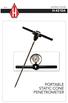 08.09 product manual H-4210A PORTABLE STATIC CONE PENETROMETER PORTABLE STATIC CONE PENETROMETER GENERAL INFORMATION The H-4210A Static Cone Penetrometer is an unparalleled device for measuring soil consistency.
http://waterheatertimer.org/troubleshoot-rheem-tankless-water-heater.html
 http://waterheatertimer.org/troubleshoot-rheem-tankless-water-heater.html TECHNICAL SERVICE DEPARTMENT Removal, Cleaning, & Reinstallation of the Burner Assembly For models 74 & GT199 Required tools -
Elo Touch Solutions Wall-mounting Kit for the 5501L IDS Touchmonitors
 Installation Manual Elo Touch Solutions Wall-mounting Kit for the 5501L IDS Touchmonitors SW602206 Rev B Table of Contents Chapter 1: Safety Warning... 3 Chapter 2: Kit Contents... 4 Included in Kit...
FREEBIRD THE ORIGINAL D.I.Y. ORNITHOPTER! Tools and Glue. Required Materials
 Do not try to make your ornithopter using "household materials". If you want it to fly, you have to build it right. FREEBIRD THE ORIGINAL D.I.Y. ORNITHOPTER! Wingspan: 16 inches Weight: 1/4 ounce The Ornithopter
2006 HEADSHOK Service Video #1
 LEFTY SPEED DLR DAMPING CARTRIDGE This document explains how to properly remove, disassemble, inspect, reassemble and reinstall the Lefty Speed DLR2 damping cartridge. It is a document to be used in conjunction
Simple Machines. What are simple machines?
 Definitions to know: Simple Machines Work done when an applied force causes an object to move in the direction of the force Energy ability to cause change; can change the speed, direction, shape, or temperature
Gear PEPSI CAN STOVE INSTRUCTIONS
 Gear PEPSI CAN STOVE INSTRUCTIONS [NOTE: Updated Instructions are now available. The new stove is less likely to develop flame leaks and the fuel/air mixture is improved. Instructions for a simmer ring
TRANS-05, Torque Tube Removal, Rebuilding, and Installation
 TRANS-05, Torque Tube Removal, Rebuilding, and Installation Tools Metric Wrench Set Metric Socket Set Jack Stands (6 minimum) Floor Jack 8mm Cheesehead socket (also referred to as 12 point internal socket
CAST IRON THE BASICS. Heatline - Cast Iron Radiators SMOOTH FLAT FILE TO REMOVE ANY SWARF. ONE TIME. ASSEMBLY. JOINTS SHOULD BE TIGHTENED.
 CAST IRON THE BASICS 1. DO NOT LIFT ON YOUR OWN. 2. ONLY LIFT THE RADIATOR VERTICALLY. 3. DO NOT LIFT MORE THAN 8/10 SECTIONS AT ANY ONE TIME. 4. POSITION THE RADIATOR BEFORE FINAL ASSEMBLY. 5. THIS PRODUCT
Building The Modular Moveable Greenhouse described in The Four Season Farm Gardener s Cookbook By Barbara Damrosch and Eliot Coleman
 1 Building The Modular Moveable Greenhouse described in The Four Season Farm Gardener s Cookbook By Barbara Damrosch and Eliot Coleman This modular greenhouse is designed so home gardeners can easily build
UNIT 7: PLUMBING KEY CONCEPTS. 1. Identify tools for plumbing. 2. Location of shutoff valves for the main and individual fixtures
 KEY CONCEPTS 1. Identify tools for plumbing 2. Location of shutoff valves for the main and individual fixtures 3. How water is supplied to your home 4. How waste water is removed and treated 5. Common
GEET Fuel Processor Plans
 GEET Fuel Processor Plans This is a greatly simplified Proof of Concept version of the GEET Fuel Processor that just about anyone can build from parts from a local Hardware store in a weekend for very
How to Build Your Own CornHole Game
 How to Build Your Own CornHole Game DIMENSIONS Here is a diagram with the basic measurements for the Cornhole board game. SUPPLIES 1/2 thick sheet of plywood one 4 x4 or two 2 x4 s 8 long 2 4 s (4) 4 1/2
Attachment G-1: Pit Latrine Diagram. Fig E.1a: Pit Latrine. Fig E.1b: Plan View of Twin Pits
 Attachment G-1: Pit Latrine Diagram Fig E.1a: Pit Latrine Fig E.1b: Plan View of Twin Pits Fig E.1c: Section of a water-sealed pan Fig E.1d: 3D view of Overflow Pipe Fig E.1e: 2D view of Overflow Pipe
LIFE SCIENCE. Hoop House Construction for New Mexico: 12-ft. x 40-ft. Hoop House BRINGING TO YOUR HOME ECONOMICS COLLEGE OF AGRICULTURE AND
 Hoop House Construction for New Mexico: 12-ft. x 40-ft. Hoop House COLLEGE OF AGRICULTURE AND HOME ECONOMICS BRINGING SCIENCE TO YOUR LIFE Hoop House Construction for New Mexico: 12-ft. x 40-ft. Hoop House
Permanent Magnetic Generator Construction Manual
 Permanent Magnetic Generator Construction Manual http://hojomotor.com Our Team Doing an On-site Assembly in Peru http://hojomotor.com Section 1) Introduction This manual describes how to build a 'permanent
The work of this Section includes furnishing and installing Reinforced Concrete Pressure Pipe as shown on the Drawings and as specified.
 Section 33 0200- Page 1 of 4 PART 1 - GENERAL 1.1 DESCRIPTION OF WORK The work of this Section includes furnishing and installing Reinforced Concrete Pressure Pipe as shown on the Drawings and as specified.
Overview PARTS LIST. B. Lever mounting base C. Flush handle assembly D. Grey/Blue float stop E. Grey float (Full Flush) F. Flush valve washer
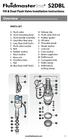 Overview READ ENTIRE INSTRUCTIONS BEFORE STARTING INSTALLATION PARTS LIST A. Flush valve B. Lever mounting base C. Flush handle assembly D. Grey/Blue float stop E. Grey float (Full Flush) F. Flush valve
DIRECT PUSH DRILLING.
 DIRECT PUSH DRILLING. CONCEPT. Direct Push Drilling is a method of drilling and sampling where the tools are pushed or driven into the ground. No rotation is involved so all the samples are uncontaminated
Stainless Steel Single and Dual Circulation Kits
 Instruction Sheet P/N 160780 01 Stainless Steel Single and Dual Circulation Kits Introduction The single and dual high-pressure circulation kits allow you to vary and control the circulation rate of coating
Installation Instructions
 READ BEFORE INSTALLING UNIT For Slider Casement Air Conditioners To avoid risk of personal injury, property damage, or product damage due to the weight of this device and sharp edges that may be exposed:
Preventing water damage in the basement
 Preventing water damage in the basement Thousands of home insurance claims are filed every year. Some losses are major, others aren t, but they re always an inconvenience and usually avoidable! As prevention
Table of Contents. www.hunterfan.com. What to Expect with. Preparation. Tools Needed. Wiring. Hanging the Fan. Blades. Motor Housing.
 www.hunterfan.com Table of Contents What to Expect with Your Installation 30 inches Hanging the Fan Wiring 8 Maintenance, Operation & Cleaning Light Kit 13??? 14 1 9 Troubleshooting 11 5 Blades Motor Housing
THE TRIMLINE 10' x 20' CANOPY
 THE TRIMLINE 10' x 20' CANOPY Instructions for Assembly Please, assemble the TrimLine at home the first time, not at an event. Before beginning assembly of your TrimLine, please take time to review the
2. This is a close up of a typical area where the rocker is rusted out leaving holes under where the rocker moulding would be..
 ROCKER PANELS 55,56,57 CHEVY REPLACEMENT Do not throw away any pieces when you first remove them. There are many supports that are not reproduced and will need to be used again. When disassembling try
Chapter. Restoration of Damaged Structures
 5 Chapter Restoration of Damaged Structures Bringing back a damaged structure to its pre-earthquake state and original strength is called restoration. This is the first step of building rehabilitation.
For exploded diagram and part number information, refer to the Spare Parts Catalog available on our website at www.rockshox.com.
 For exploded diagram and part number information, refer to the Spare Parts Catalog available on our website at www.rockshox.com. 2 0 0 5 D U K E A I R X C / S L / R A C E S E R V I C E G U I D E Information
Things you need to assemble the tube actuator. Left to right. are small piece of masking tape, super glue,pen knife and small
 Things you need to assemble the tube actuator. Left to right are small piece of masking tape, super glue,pen knife and small crosspoint screwdriver. You will also need a few drops of light oil. Begin by
IMPACT SPRINKLER TROUBLESHOOTING GUIDE
 RAIN USE AND OPERATION BIRD IMPACT SPRINKLER TROUBLESHOOTING GUIDE The diagrams below depict typical Rain Bird sprinklers with all available controls. Your particular model may have only some of these
Ecoflex Wall Penetration Systems: An efficient, sustainable solution for penetrating concrete or block walls
 Pre- insulated pipe systems ecoflex Wall Penetration installation guide Ecoflex Wall Penetration Systems: An efficient, sustainable solution for penetrating concrete or block walls Pre-insulated Pipe Systems
Solstice/Sky Water Pump Replacement
 Solstice/Sky Water Pump Replacement The water pump on the Solstice/Sky is starting to need replacement on some vehicles. This guide will help in replacing the water pump while the engine is still in the
In-Track Repair of Concrete Ties. Deland Humpherys, Director Track Mtce
 In-Track Repair of Concrete Ties Deland Humpherys, Director Track Mtce Concrete tie repairs: Shoulder repair process Normally the result of a derailment Lag removal and replacement process Broken lags
INSTRUCTIONS THOROUGHLY BEFORE BEGINNING***************
 Bill of Materials: RAC0012 Green Wing Aerodynamic Skirt Kit Item Part Number Description Quantity 1 RMC0218 Gen 2 Trailer Skirt Roadside 1 2 RMC0219 Gen 2 Trailer Skirt Curbside 1 3 RMC0041 Trailer Skirt
VOYAGER 570G. 744A Sprayer Control
 VOYAGER 570G 744A Sprayer Control U S E R M A N U A L U S E R M A N U A L Table of Contents CHAPTER 1 - INTRODUCTION...1 SYSTEM CONFIGURATIONS...1 KIT CONTENTS...3 CONTROL HOUSING ASSEMBLY...5 CHAPTER
Repairing the Seam of the WaterRower Tank
 Repairing the Seam of the WaterRower Tank The following instructions are for repairing a WaterRower that is leaking water around the seam, the 1 overlap between the top and bottom halves of the tank. While
www.cornholesupplies.com
 www.cornholesupplies.com How To Build Regulation Cornhole Boards Home of the Original Cornhole Bags and Boards Supply List: 1-4' X 8' Piece of Plywood (pre sanded) 4-2" X 4" X 8' Studs (2 by 4s make sure
INSTALL/REMOVAL INSTRUCTIONS: WINDOW REGULATOR
 REMOVAL/INSTALL OF WINDOW REGULATOR (741-306) Honda Accord 2003 07 General Tech Tips: Use painter s tape rather than duct tape to secure window. It will not damage paint or leave sticky residue. A plastic
GUTTER MACHINE CONTROLS STANDARD
 GUTTER MACHINE CONTROLS STANDARD Note: determine what type of control package is installed on the machine. --more-- All operators should familiarize themselves with the appropriate controls prior to any
Range Road RR Series Semi-Automatic Firewood Processor. Crated Unit Assembly Manual
 Range Road RR Series Semi-Automatic Firewood Processor Crated Unit Assembly Manual 1 1) Undo 8-18mm x 19mm Nuts and bolts, 2 on each leg of top frame 2) Lift top of Metal crate off and move out of work
BUILT-IN DISHWASHER INSTALLATION INSTRUCTIONS
 BUILT-IN DISHWASHER INSTALLATION INSTRUCTIONS PLEASE READ COMPLETE INSTRUCTIONS BEFORE YOU BEGIN LEAVE INSTALLATION INSTRUCTIONS AND USER'S GUIDE WITH OWNER ALL ELECTRIC WIRING AND PLUMBING MUST BE DONE
BICYCLE PUMP AIR PRESSURE ROCKETS Credit: Jeff Elmer, Physics Teacher, Oshkosh North High School
 BICYCLE PUMP AIR PRESSURE ROCKETS Credit: Jeff Elmer, Physics Teacher, Oshkosh North High School Concepts Illustrated: (1) Forced air flight and Newton s 3 rd Law (2) Stability and aerodynamics of rocket
Low Cost Heliostat Assembly Kit for High Schools
 Low Cost Heliostat Assembly Kit for High Schools Phillip Daniel Supervisor: Rockwell International Assistant Professor Alexander Mitsos Department of Mechanical Engineering Massachusetts Institute of Technology
Pallet Jack. OWNER S MANUAL Model MH1230. Important Safety Instructions Assembly Instructions Parts and Hardware Identification
 OWNER S MANUAL Model MH1230 Important Safety Instructions Assembly Instructions Parts and Hardware Identification Pallet Jack CAUTION: Read, understand and follow ALL instructions before using this product
SunMaxx Solar Filling Station Operating Instructions
 SunMaxx Solar Filling Operating Instructions Content 1. Declaration of conformity... 2 2. Introduction... 2 3. Transportation and unpacking... 4 4. Mounting and commissioning... 5 5. End of operation...
How To Replace A Reverse Osmosis Water Tank
 ALL MODELS REVERSE OSMOSIS WITH NONAIRGAP FAUCET 1. Read all instructions carefully before starting installation. 2. Find the cold water line beneath your sink. The cold water is typically on the right.
Pole Lathe and Shave Horse Design
 Pole Lathe and Shave Horse Design These pictures and accompanying words are Copyright Michael Hughes February 2002. They are not to be re-produced, in part or whole, without permission from the author.
30 minutes in class, 2 hours to make the first time
 Asking questions and defining problems Developing and using models Planning and carrying out investigations 30 minutes in class, 2 hours to make the first time 3 12 x 24 x ¾ inch plywood boards 1 x 12
Minor Cracks in Horizontal Surfaces
 Cracks, chips and broken or flaking areas in concrete are not only unsightly, they can lead to further deterioration of the surface. The result is a costly replacement project as opposed to a simple repair.
UPLIFT Height Adjustable Standing Desk (T-Frame) DIRECTIONS FOR ASSEMBLY AND USE - - ALSO - - Watch our assembly video
 UPLIFT Height Adjustable Standing Desk (T-Frame) DIRECTIONS FOR ASSEMBLY AND USE - - ALSO - - Watch our assembly video http://bit.ly/9ywwh! CAUTION MAKE SURE NO OBSTACLES ARE IN THE DESK S PATH AND ALL
Operating Instructions Parts List Manual Scissor Lift Pallet Truck
 Operating Instructions Parts List Manual Scissor Lift Pallet Truck Note: Operator MUST read and understand this operating instructions before use this Hand Scissor Lift. Thank you for using this hand scissors
CP2 Buried Cable Pedestal Initial & Rehab Installation Instructions
 Printing 3 March 2008 CP2 Buried Cable Pedestal Initial & Rehab Installation Instructions This instruction is intended for CP2 cable pedestal installations and replacements. The following tools will be
INSTALLATION INSTRUCTIONS
 INSTALLATION INSTRUCTIONS Application Outboards Faria 5 Gauge Set* Publication No. Description Part Number Honda Code PII53606A White faced, flat lens 06300-ZW5-010ZB 6315410 Issue Date Black faced, flat
Gas Bio-digester Information and Construction Manual For Rural Families
 Gas Bio-digester Information and Construction Manual For Rural Families Table of Contents I. What is a bio-digester? II. Considerations before building a bio-digester III. Materials and Instructions for
STORAGE, INSTALLATION AND MAINTENANCE PROCEDURES
 GATE VALVE O.S. & Y 1.0 Periodic Inspections 1.1 The valve stem packing should be inspected at least monthly. If the stem packing shows signs of leakage, simply tighten the adjusting nuts to compress the
Technique Guide. Screw Removal Set. Instruments for removing Synthes screws.
 Technique Guide Screw Removal Set. Instruments for removing Synthes screws. Table of Contents Introduction Screw Removal Set 2 Surgical Technique Preoperative Planning and Preparation 6 Removal of Intact
TITAN Fuel Tanks. INSTALLATION INSTRUCTIONS G e n e r a t i o n V
 TITAN pt. no.: 02 0000 0143 Important: Please read these instructions carefully and completely before starting the installation. TITAN Fuel Tanks INSTALLATION INSTRUCTIONS G e n e r a t i o n V Extended
BUTE Department of Construction Management and Technology
 BUTE Department of Construction Management and Technology 02.10.2012 Definition 1: Foundation: The structure, that transmits the load of the building to the soil Definition 2: Load bearing soil (strata):
Rebuild Instructions for 70001 and 70010 Transmission
 Rebuild Instructions for 70001 and 70010 Transmission Brinn, Incorporated 1615 Tech Drive Bay City, MI 48706 Telephone 989.686.8920 Fax 989.686.6520 www.brinninc.com Notice Read all instructions before
4 in 1 Strength Station
 Revision 0 September 2010 4 in 1 Strength Station Owner s Manual Record Serial Number Here Platinum by Tunturi www.tunturi.com Date www.tunturi.com of Purchase 4 in 1 Strength Station Owner s Manual Instructions
POLEMOUNT FIELD FIX ASSEMBLY INSTRUCTIONS
 POLEMOUNT FIELD FIX ASSEMBLY INSTRUCTIONS Polemount Field Fix Support If you have any questions or incur any problems installing or using the new Polemount, please use Miovision s Support System by emailing
How to Build a Poker Table
 How to Build a Poker Table www.pokertablematerials.com 10-Person Poker Table- 96 x 48 These are step by step instructions for building a poker table. The table will measure 48" x 96" and have a 4" wide
DiscPlus DX195 and DX225 Air Disc Brakes
 Revised 11-04 Technical Bulletin Revised 1 Technical 11-04 Bulletin DiscPlus DX195 and DX225 Air Disc Brakes Inspection, Installation and Diagnostics Air Disc Brake Inspection Intervals and Procedures
Gate Leg Drop Leaf Table Plans
 Preparing the table top blanks: Cut and glue enough 3/4 stock to make three panels 40 long by 24 wide (they will be cut to final size at a later time). While the glue dries we will work on the legs. Preparing
Contents. Front Derailleurs... 2. Part One - Planning... 2 I. Objectives... 2 II. Materials Needed... 2 III. Setting...2 IV. Evaluation...
 Contents... 2 Part One - Planning... 2 I. Objectives... 2 II. Materials Needed... 2 III. Setting...2 IV. Evaluation... 2 Part Two - Activity Instructions... 3 Steps to Adjusting and Replacing... 3 Disassemble...
Installation Guide. Bath and Wall Surrounds SERIES 7104 1021861-2-B
 Installation Guide and Wall Surrounds SERIES 7104 1021861-2-B Thank You For Choosing Sterling We appreciate your commitment to Sterling value. Please take a few minutes to review this manual before you
Watershed Works Manual
 National Rural Employment Guarantee Act Watershed Works Manual DRAINAGE LINE TREATMENT: GABION STRUCTURE Baba Amte Centre for People s Empowerment Samaj Pragati Sahayog September 2006 Drainage Line Treatment:
Before repairing your toilet, you must determine
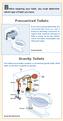 Before repairing your toilet, you must determine which type of toilet you have. Pressurized Toilets If you have a pressurized toilet, it is recommended that you call a licensed plumbing contractor to repair
DIY Poly Digester. What is Supplied in the Kit. Sketch of Arrangement
 DIY Poly Digester What is Supplied in the Kit 4 m of clear polyethylene layflat tube Inlet tube (100mm PVC pipe, 40 cm long) 0.4 m of 19mm dia PVC pipe 0.4 m of 13mm dia black poly tube 2 m of 12 mm dia
Appendix 8 Step-by-step guide to constructing small-scale aquaponic systems
 209 Appendix 8 Step-by-step guide to constructing small-scale aquaponic systems This step-by-step guide describes how to build the media bed, nutrient film technique (NFT) and deep water culture (DWC)
SERVICE PARTS LIST PAGE 1 OF 6 BASE ASSEMBLY SPECIFY CATALOG NO. AND SERIAL NO. WHEN ORDERING PARTS 12" DUAL BEVEL COMPOUND MITER SAW B27A
 PAGE 1 OF 6 BASE ASSEMBLY 00 0 EXAMPLE: Component Parts (Small #) Are Included When Ordering The Assembly (Large #). SPECIFY CATALOG NO. AND NO. WHEN ORDERING PARTS 1 02-80-0050 Thrust Bearing (1) 2 05-80-0510
H EAD TUBE BASICS. Figure 1 - Head tube, front fork and hardware
 H EAD TUBE BASICS Figure 1 - Head tube, front fork and hardware This tutorial will cover some of the basics you need to know when pulling apart the steering system of a bicycle for repair or use on one
Important: Please read these instructions carefully and completely before starting the installation. TITAN Fuel Tanks
 TITAN pt. no.: 03 0000 0120 Important: Please read these instructions carefully and completely before starting the installation. TITAN Fuel Tanks INSTALLATION INSTRUCTIONS G e n e r a t i o n V Extended
Table 4.9 Storm Drain Inlet Protetion Applicable for
 BMP C220: Storm Drain Inlet Protection Purpose To prevent coarse sediment from entering drainage systems prior to permanent stabilization of the disturbed area. Conditions of Use Type of Inlet Protection
M A N U A L 13-10-05
 Documentation The following information sheets illustrate the description below: 12-WW01-4G-E Sectional view of the lance with main dimensions 12-W101-6G-E Sectional view of the head of the lance with
KESSEL KTP 500 Submersible Pump with lateral and vertical outlet connection Order Numbers 28710, 28810, 28850
 INSTALLATION AND OPERATING INSTRUCTIONS KESSEL KTP 500 Submersible Pump with lateral and vertical outlet connection Order Numbers 28710, 28810, 28850 Product advantages Automatic float switch as water
Owners & Installation Manual for the Sheridan, Mountainair, Pine Valley and Old Forge Ceiling Fan Family
 Owners & Installation Manual for the Sheridan, Mountainair, Pine Valley and Old Forge Ceiling Fan Family Part of the Kiva Lighting Family Custom Lighting and Fans Since 1992 1312 12th St NW Albuquerque,
Convertible Top Hydraulic Cylinder Removal Manual for W124 E-Class Convertibles 1993-1995 Models 300CE (1993) and E320 (1994-1995)
 Convertible Top Hydraulic Cylinder Removal Manual for W124 E-Class Convertibles 1993-1995 Models 300CE (1993) and E320 (1994-1995) Written by Samit Ghosh with picture material from vexed of benzworld.org
INGROUND, ROPED, AND HOLELESS JACK SEAL REPLACEMENT
 D. L. Martin Company INGROUND, ROPED, AND HOLELESS JACK SEAL REPLACEMENT TYPICAL HYDRAULIC JACK HEAD ASSEMBLY 1 TOOLS REQUIRED: 1) Container to hold hydraulic fluid. 2) Clean rags and protective covers
Fiberstars Mini Lighted Laminar Flow Fountains
 Fiberstars Mini Lighted Laminar Flow Fountains SAVE THESE DIRECTIONS! These directions are provided to ensure the proper installation and operation of Fiberstars Mini Lighted Laminar Flow Fountain. The