
Comparison of the Thermal Welding Technique and Cold Dissection for Pediatric Tonsillectomy
|
|
|
- Everett Gardner
- 10 years ago
- Views:
Transcription
1 Trakya Univ Tip Fak Derg 2009;26(4): Original Article / Klinik Çalışma - Araştırma Comparison of the Thermal Welding Technique and Cold Dissection for Pediatric Tonsillectomy Çocuk Tonsillektomisinde Thermal Welding Tekniği ile Soğuk Diseksiyon Tekniğinin Karşılaştırılması Hüsamettin YAŞAR, Haluk ÖZKUL, Ayşegül VERİM Department of Otorhinolaryngology, Vakıf Gureba Hospital, İstanbul Submitted / Başvuru tarihi: Accepted / Kabul tarihi: Objectives: To compare the thermal welding technique (TWT) with cold dissection (CD) for pediatric tonsillectomy. Patients and Methods: Fifty consecutive children with chronic tonsillitis and/or upper airway obstruction were alternately assigned to the TWT or CD group. Age, gender, operation time, intraoperative hemostasis method, early postoperative pain, time to regain normal diet, and extent of healing of the tonsillar fossa on the tenth postoperative day were evaluated. Results: Thermal welding technique was significantly better than CD with regard to intraoperative hemostasis (p=0.0001). The mean time to regain normal diet was significantly shorter in the TWT group compared to the CD group (p=0.015); however, this difference was not clinically relevant. There were no statistically significant difference between the groups in early postoperative pain score (p=0.542) and healing of the tonsillar fossae on the tenth day of the surgery (p=0.152). Duration of the surgical procedure was significantly shorter in the CD group (p=0.001). Conclusion: Thermal welding technique was found to be effective for tonsillectomy than CD in terms of intraoperative hemostasis. Key words: Children; tonsillectomy; treatment. Amaç: Çocuk tonsillektomisinde thermal welding tekniği (TWT) ile soğuk diseksiyon tekniğini (SDT) karşılaştırmak. Hastalar ve Yöntemler: Kronik tonsillit ve/veya üst solunum yolu tıkanıklığı olan 50 çocuk TWT veya SDT grupları için ardışık olarak ayrıldı. Yaş, cinsiyet, ameliyat süresi, ameliyat esnasındaki hemostaz yöntemi, ameliyat sonrası erken dönemdeki ağrı, normal yemeğe geçiş süresi ve ameliyattan sonraki 10. günde tonsillar fossanın iyileşme durumu değerlendirildi. Bulgular: Ameliyat esnasındaki hemostaz bakımından TWT SDT ye göre önemli oranda daha iyiydi (p=0.0001). Ortalama normal yemeğe geçiş süresi SDT grubuna göre TWT grubunda daha iyiydi (p=0.015). Ancak bu fark klinik olarak anlamlı değildi. Ameliyat sonrası erken dönemdeki ağrı (p=0.542) ve ameliyatın onuncu gününde tonsillar fossanın iyileşmesi (p=0.152) bakımından gruplar arasında istatistiksel olarak anlamlı bir fark yoktu. Cerrahi girişimin süresi SDT grubunda önemli oranda daha kısaydı (p=0.001). Sonuç: Ameliyat esnasındaki hemostaz bakımından TWT nin SDT ye göre tonsillektomide daha etkili olduğu saptandı. Anahtar sözcükler: Çocuklar; tonsillektomi; tedavi. Trakya Univ Tip Fak Derg 2009;26(4): Correspondence (İletişim adresi): Dr. Hüsamettin Yaşar. Vakıf Gureba Hastanesi 1. Kulak Burun Boğaz Kliniği, Fatih, İstanbul. Tel: Fax (Faks): (e-posta): [email protected] Trakya Üniversitesi Tıp Fakültesi Dergisi. Ekin Tıbbi Yayıncılık tarafından basılmıştır. Her hakkı saklıdır. Medical Journal of Trakya University. Published by Ekin Medical Publishing. All rights reserved. 326

2 Tonsillectomy with or without adenoidectomy is one of the most frequently performed surgical procedures in children. [1] Whilst a variety of techniques have been used, [1-7] tonsillectomy in children is currently the most often performed with cold instruments. [1] Many new instruments have been developed to reduce morbidity following tonsillectomy due to complications, including hemorrhage and postoperative pain. The thermal welding technique (TWT), which is a new technique for tonsillectomy, differs from other electrosurgical procedures in several respects, including the use of direct thermal heating applied to the tissue to achieve the desired protein denaturation effect. A simple resistance heating wire driven by low-voltage direct current produces heat at the tip of bayonet forceps; no electrical current is applied to the tissue. [8,9] The TWT instrument consists of a universal power supply, Starion cautery forceps, and Starion powerpack footswitch, (Starion Instrument Corp. Saratoga, CA). Few reports have been published that compare electrosurgical instruments with cold instruments for tonsillectomy in pediatric patients. [3-5,10-12] In this paper, we compared TWT and CD for tonsillectomy in pediatric patients with regard to duration of operation, control of hemostasis, early postoperative pain, length of time to return to normal diet, and healing of the tonsillar fossa ten days after surgery. PATIENTS AND METHODS 327 A prospective study was conducted on 50 consecutive children undergoing tonsillectomy plus adenoidectomy from January 2008 through March Each child was alternately assigned to either the TWT or CD group as they appeared on the surgery list. Patients were enrolled for the intended treatments by H.Y. Parents were blinded to the assigned surgical technique. Inclusion criteria were chronic tonsillitis and/or upper airway obstruction. Children younger than three years and older than 12 years of age and/or children who had hematological disorders were excluded from the study. All procedures were performed by the same surgeon (H.Y.) under general anesthesia through endotracheal intubation. According to our study protocol, each patient was placed in the Rose position and a Davis-Boyle mouth gag supported by Draffin bipods was inserted into the mouth. A tongue retractor of suitable size was used depending on the age of the patient. First, adenoidectomy was performed and packed, and then the left tonsil was grasped with tonsil-seizing forceps and gently retracted medially. Thermal welding technique was set at 1 for sealing and 8 for cutting. First, a small cavity in the upper lateral aspect of the tonsil was created with a power setting of 8 using the right pedal. After the lateral capsule of the tonsil was recognized, dissection was performed by placing one tip of the cautery forceps next to the capsule and the other tip on the surface of the tonsil bed. Soft tissue between the tips of the forceps was sealed for five seconds using the 1 setting with the left pedal and then divided for 1-2 seconds using the 8 setting with the right pedal. This procedure was repeated from the superior aspect of the tonsil to the inferior aspect. After dissection of the tonsil was completed, the tonsil bed was packed with saline-soaked packing. The right tonsil was removed in similar fashion. All packings were removed and the tonsil beds were irrigated with saline solution and inspected. When needed ligation or electrocauterization was used for hemostasis in the TWT group. In the CD group, tonsils were removed in a similar fashion using scissors, tonsil dissectors and snares. Hemostasis was managed by packing and ligation. After absolute hemostasis was achieved, the Davis-Boyle mouth gag was removed and the patient was extubated. Operation time was measured from the time of insertion of the Davis-Boyle mouth gag to the time of its removal. The first cold liquid diet was given to the child 6-8 hours after the operation. Postoperative pain was assessed using analogic visual scales. [13] Acetaminophen was recommended for pain relief as needed. No antibiotics were prescribed routinely. Children were examined for bleeding, blood clot or residual tissue in tonsil beds and discharged on the first postoperative day. Parents were instructed to feed their child on a normal diet at the fifth postoperative day. If the child could not take a normal diet by
![[1] Many new instruments have been developed to reduce morbidity following tonsillectomy due to complications, including hemorrhage and postoperative pain.](/docs-images/41/3335252/images/page_2.jpg "The thermal welding technique (TWT), which is a new technique for tonsillectomy, differs from other electrosurgical procedures in several respects, including the use of direct thermal heating applied")
3 Table 1. Mean operation times Table 2. Intraoperative hemostasis procedures used Operation time (min) Group Mean±SD Median Range TWT 14.6±4.7a CD 10.0±3.2a a p=0.001, Mann-Whitney U test=141; TWT: Thermal welding technique; CD: Cold dissection. this time, a soft diet was continued until the child was able to receive his/her normal diet. The time to return to normal diet was recorded by the parents. Ten days later, another surgeon (H.O.) who was blinded to the operation technique performed visited the children. The condition of the tonsillar fossa was noted. If there was no slough in the tonsillar fossa ten days after surgery, it was accepted as good healing. Data were analyzed by the chi-square test, Student s t test, Kolmogorov-Smirnov test, and Mann-Whitney U test using SPSS 11.5 software. The study was approved by the local ethics committee. Written informed consent was obtained from all parents. RESULTS The two groups were similar for demographic parameters. The mean age of the 19 boys and 6 girls in the TWT group and 13 boys and 12 girls in the CD group was 7.12 years (range 4-12 years) and 6.08 years (range 3-12 years), respectively. No statistically significant difference was noted for age (p=0.113) and gender (p=0.077). The mean operation time was minutes in the TWT group and minutes in the CD group, the difference being statistically significant (p=0.001) (Table 1). Intraoperative hemostasis was achieved by packing alone in 20 children in the TWT group (80%) and in three children in the CD group Table 3. Healing of tonsillar fossae ten days after surgery Extent of healing TWT CD (n=25) (n=25) No slough (fully healed) 13 (52%) 8 (32%) Slough present 12 (48%) 17 (68%) p=0.152, chi-square test; TWT: Thermal welding technique; CD: Cold dissection. 328 Procedure TWT CD (n=25) (n=25) Packing only 20 (80%) 3 (12%) Ligation 2 (8%) 22 (88%) Electrocauterization 2 (8%) 0 Ligation & electrocauterization 1 (4%) 0 p=0.0001, chi-square test; TWT: Thermal welding technique; CD: Cold dissection. (12%). Ligation was used in two children in the TWT group (8%) and in 22 children in the CD group (88%). Both ligation and electrocauterization were used in one child in the TWT group (4%). Electrocauterization was used in two children in the TWT group (8%), but it was not used at all in the CD group. There was a statistically significant difference between the two groups with regard to intraoperative hemostasis (p=0.0001) (Table 2). There were no adverse events during surgery. The mean pain score was 5.8±1.3 (median 6, range 4-8) in the TWT group and 6±1.2 (median 6, range 4-8) in the CD group 6 to 8 hours post-surgery, which was not significantly different (p=0.542, Mann-Whitney U test). The mean time to regain normal diet was 7.3±0.7 (median 7, range 6-9) days in the TWT group and 8.0±1.1 (median 8, range 6-10) days in the CD group; this difference, although statistically significant (p=0.015, Mann-Whitney U test), is not clinically relevant because it represents only a fraction of a day. Ten days after the operation, the tonsils beds were fully healed in 13 children in the TWT group (52%) and in eight children in the CD group (32%). There was no statistically significant difference between the two groups in terms of the healing of tonsillar fossae (p=0.152) (Table 3). No measurable primary or secondary hemorrhage was noted in either group. There were no adverse events post-surgery. DISCUSSION Thermal welding technique is distinctive from other electrosurgical tools because its effect operates through application of direct heat energy instead of electrical current. It has been suggested that tissue injury is minimal with TWT [8,9] and that procedure is suitable for tonsillectomy. [6,14] It

4 should also be emphasized that the TWT instrument is not a bipolar instrument, because no electrical current passes through the tissue that is grasped by the forceps jaws. [6] Although TWT shares obvious similarities with LigaSure, the two techniques are entirely different: LigaSure controls hemostasis by vessel compression and obliteration through the emission of bipolar energy, whereas TWT achieves vessel sealing by tissue carbonization, as in conventional coagulation methods. Weinstock [9] has stated that healing after TWT lasted one week and that no eschar was left in the tonsillar fossa after seven days. However, Pizzuto et al. [11] suggested there was no time difference in the healing of tonsillar fossae between electrosurgical and classical dissection tonsillectomy, whereas other authors have stated that healing of the tonsillar fossa occurred much sooner with the CD method. [4,5,12] In the present study, we found no time difference between the two groups in terms of the healing of the tonsillar fossae at the tenth postoperative day. We did not detect any primary or secondary hemorrhage in either group, a result similar to those of several other studies after tonsillectomy. [2,3,9] Raut et al. [5] reported rates of primary and secondary hemorrhage after tonsillectomy of 3.1% (1/32) and 12.5% (4/32), respectively, using the CD method on 32 cases, and 5.5% (1/18) and 16.6% (3/18), respectively, with the bipolar scissors method on 18 cases. The incidence of post-tonsillectomy hemorrhage in a large pediatric group studied by Windfuhr and Chen [15] was 1.6% after CD. In our study, the mean operation time was longer in the TWT group compared to the CD group; however, we believe this gap will narrow as we gain more experience with TWT. Karatzanis et al. [16] noted no significant difference regarding mean operative time in adult patients undergoing tonsillectomy. Indeed, some authors have reported a shorter duration of surgery in tonsillectomy performed with electrosurgical instruments compared to CD. [2,3,12,17] In contrast, Raut et al. [5] found the duration of the operation to be shorter with the 329 classical dissection method compared to the bipolar scissors method. Postoperative pain is an important parameter in evaluating the quality of life during the course of healing and should be assessed in adults and in children >10 years of age, according to the recommendations of Silveira et al. [12] We observed no significant difference between the TWT and CD groups in terms of early postoperative pain. Raut et al. [5] found the degree of postoperative pain to be lower with the CD method compared to the bipolar scissors method. Weinstock [9] claimed the degree of pain to be low in patients who underwent thermal welding tonsillectomy. We found a statistically significant but clinically irrelevant difference (a fraction of a day) between the TWT and CD groups in terms of time required to return to a normal daily diet, similar to findings in two other studies. [3,11] Lassaletta et al. [4] reported a significantly earlier return to a normal daily diet amongst patients treated with the CD method compared to the microsurgical bipolar dissection method. [4] Similarly, Nunez et al. [10] found that patients operated on using hot dissection electrosurgical instruments returned to their normal daily diet later than did CD patients operated on with classical dissection. However, some authors have stated that the use of a thermal welding system shortened the return to a normal daily diet. [6,9] Finally, it has been stated that disposable tool usage is protective against the variant form of Creutzfeld-Jacob disease. [2,5,6,9] The forceps used in TWT are disposable and therefore the method should have a very low risk of transmitting variant Creutzfeld-Jacob disease. This potential benefit could be factored in when weighing the higher cost of TWT compared to CD. Thermal welding forceps costs about 300 USD. So TWT is much more expensive than CD. We found that TWT provides much better intraoperative control of bleeding in tonsillectomy in children compared to CD. Overall, TWT may be preferable to CD for pediatric tonsillectomy.

5 Acknowledgements We thank Drs. Mustafa Çetin, Özerdem Özçalışkan, Ömer Faruk Çalım and Alper Yenigün for assistance with the study, and Dr. Gülsüm Nurhan İnce for help with the statistical analysis. REFERENCES 1. Shah UK, Galinkin J, Chiavacci R, Briggs M. Tonsillectomy by means of plasma-mediated ablation: prospective, randomized, blinded comparison with monopolar electrosurgery. Arch Otolaryngol Head Neck Surg 2002;128: Prokopakis EP, Lachanas VA, Benakis AA, Helidonis ES, Velegrakis GA. Tonsillectomy using the Ligasure vessel sealing system. A preliminary report. Int J Pediatr Otorhinolaryngol 2005;69: Kirazli T, Bilgen C, Midilli R, Ogüt F, Uyar M, Kedek A. Bipolar electrodissection tonsillectomy in children. Eur Arch Otorhinolaryngol 2005;262: Lassaletta L, Martín G, Villafruela MA, Bolaños C, Alvarez-Vicent JJ. Pediatric tonsillectomy: post-operative morbidity comparing microsurgical bipolar dissection versus cold sharp dissection. Int J Pediatr Otorhinolaryngol 1997;41: Raut VV, Bhat N, Sinnathuray AR, Kinsella JB, Stevenson M, Toner JG. Bipolar scissors versus cold dissection for pediatric tonsillectomy--a prospective, randomized pilot study. Int J Pediatr Otorhinolaryngol 2002;64: Karatzias GT, Lachanas VA, Papouliakos SM, Sandris VG. Tonsillectomy using the thermal welding system. ORL J Otorhinolaryngol Relat Spec 2005;67: Shapiro NL, Bhattacharyya N. Cold dissection versus coblation-assisted adenotonsillectomy in children. Laryngoscope 2007;117: Treat MR. A new thermal device for sealing and dividing blood vessels. Available from: starioninstruments.com/pdfs/treat.pdf 9. Weinstock BI. An improved method for tonsillectomy using thermal welding technology. Available from: Tonsil.pdf 10. Nunez DA, Provan J, Crawford M. Postoperative tonsillectomy pain in pediatric patients: electrocautery (hot) vs cold dissection and snare tonsillectomy--a randomized trial. Arch Otolaryngol Head Neck Surg 2000;126: Pizzuto MP, Brodsky L, Duffy L, Gendler J, Nauenberg E. A comparison of microbipolar cautery dissection to hot knife and cold knife cautery tonsillectomy. Int J Pediatr Otorhinolaryngol 2000;52: Silveira H, Soares JS, Lima HA. Tonsillectomy: cold dissection versus bipolar electrodissection. Int J Pediatr Otorhinolaryngol 2003;67: von Baeyer CL. The Faces Pain Scale - Revised (English, French and 33 other languages). Available from: html 14. Karatzanis AD, Bourolias CA, Prokopakis EP, Panagiotaki IE, Velegrakis GA. Tonsillectomy with thermal welding technology using the TLS(2) thermal ligating shear. Int J Pediatr Otorhinolaryngol 2007;71: Windfuhr JP, Chen YS. Incidence of post-tonsillectomy hemorrhage in children and adults: a study of 4,848 patients. Ear Nose Throat J 2002;81: Karatzanis A, Bourolias C, Prokopakis E, Panagiotaki I, Velegrakis G. Thermal welding technology vs ligasure tonsillectomy: a comparative study. Am J Otolaryngol 2008;29: Chimona T, Proimos E, Mamoulakis C, Tzanakakis M, Skoulakis CE, Papadakis CE. Multiparametric comparison of cold knife tonsillectomy, radiofrequency excision and thermal welding tonsillectomy in children. Int J Pediatr Otorhinolaryngol 2008;72:

Adult tonsillectomy: relationship between indications and postoperative hemorrhage
 BEHBUT CEVANŞİR KULAK BURUN BOĞAZ HASTALIKLARI.. VE BAŞ BOYUN CERRAHİSİ DERNEĞİ Kulak Burun Bogaz Ihtis Derg 2012;22(1):21-25 Original Article / Çalışma - Araştırma doi: 10.5606/kbbihtisas.2012.004 21
Tonsil and Adenoid Surgery: Frequently Asked Questions
 Tonsil and Adenoid Surgery: Frequently Asked Questions Michael Rothschild, MD Director, Pediatric Otolaryngology Mount Sinai Medical Center 1175 Park Avenue, NY, NY 10128 (212) 996-2995 www.kidsent.com
The Value of Computed Tomography in Evaluation of Internal Nasal Valve Angle
 Trakya Univ Tip Fak Derg 2010;27(3):270-274 doi: 10.5174/tutfd.2009.01415.1 Original Article / Klinik Çalışma - Araştırma The Value of Computed Tomography in Evaluation of Internal Nasal Valve Angle Internal
What Dental Implants Can Do For You!
 What Dental Implants Can Do For You! Putting Smiles into Motion About Implants 01. What if a Tooth is Lost and the Area is Left Untreated? 02. Do You Want to Restore Confidence in Your Appearance? 03.
A Bootstrap Confidence Interval for Skewness and Kurtosis and Properties of t-test in Small Samples from Normal Distribution
 Trakya Univ Tip Fak Derg 2009;26(4):297-305 Original Article / Orijinal Çalışma - Araştırma A Bootstrap Confidence Interval for Skewness and Kurtosis and Properties of t-test in Small Samples from Normal
Laparoscopic Colectomy. What do I need to know about my laparoscopic colorectal surgery?
 Laparoscopic Colectomy What do I need to know about my laparoscopic colorectal surgery? Traditionally, colon & rectal surgery requires a large, abdominal and/or pelvic incision, which often requires a
Surgical Treatment of Chronic Rhinosinusitis in. Children
 Surgical Treatment of Chronic Rhinosinusitis in Children Fuad M. Baroody, M.D., F.A.C.S. Professor of Otolaryngology-Head and Neck Surgery and Pediatrics The University of Chicago Medicine and Biological
Facial Sports Injuries
 Facial Sports Injuries Playing catch, shooting hoops, bicycling on a scenic path or just kicking around a soccer ball have more in common than you may think. On the up side, these activities are good exercise
The forceps are available in addition to the standard models (s. catalogue of electrosurgical accessories).
 E l e c t r o s u r g e r y B i p o l a r P R E M I U M F o r c e p s B i p o l a r I r r i g a t i o n F o r c e p s The ERBE Forceps R ange with its Non-Stick Effec t. NEW Advantages of the Non-Stick
What is Balloon Sinuplasty?
 What is Balloon Sinuplasty? The painful symptoms associated with chronic sinusitis can be overwhelming. If symptoms are difficult to control with medications alone, your primary doctor may refer you to
Comparison of Three Different Doses of Intrathecal Levobupivacaine in Urological Surgery
 Trakya Univ Tip Fak Derg 2009;26(3):214-219 Original Article / Klinik Çalışma - Araştırma Comparison of Three Different Doses of Intrathecal Levobupivacaine in Urological Surgery Ürolojik Cerrahide Üç
Non-surgical treatment of severe varicose veins
 Non-surgical treatment of severe varicose veins Yasu Harasaki UCHSC Department of Surgery General Surgery Grand Rounds March 19, 2007 Definition Dilated, palpable, subcutaneous veins generally >3mm in
HF Electrosurgery Unit AUTOCON II 80 UNITS 7-2 07/2014-E
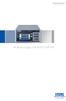 HF Electrosurgery Unit AUTOCON II 80 UNITS 7-2 07/2014-E HF Electrosurgery Unit AUTOCON II 80 The AUTOCON II 80 is a compact and high-performance HF electrosurgical unit which features a very attractive
Clinical Study Synopsis
 Clinical Study Synopsis This Clinical Study Synopsis is provided for patients and healthcare professionals to increase the transparency of Bayer's clinical research. This document is not intended to replace
Guidelines for Spay/Neuter
 Guidelines for Standards of Care in Animal Shelters Guidelines for Spay/Neuter Cynthia Barker Cox, DVM MSPCA Boston, MA Natalie Isaza, DVM College of Veterinary Medicine University of Florida Guidelines
Visceral surgery with ultrasonic technology by Söring: quick and with minimal bleeding.
 VISCERAL SURGERY Visceral surgery with ultrasonic technology by Söring: quick and with minimal bleeding. www.soering.com Söring ultrasonic scissors and hooks: for visceral surgery. Gentle operating with
41 Assisting with Minor Surgery
 Learning Outcomes 41.1 Define the medical assistant s role in minor surgical procedures. 41-2 CHAPTER 41 Assisting with Minor Surgery 41.2 Describe types of wounds and explain how they heal. 41.3 Describe
X-Plain Trigeminal Neuralgia Reference Summary
 X-Plain Trigeminal Neuralgia Reference Summary Introduction Trigeminal neuralgia is a condition that affects about 40,000 patients in the US every year. Its treatment mostly involves the usage of oral
A Guide to Hysteroscopy. Patient Education
 A Guide to Hysteroscopy Patient Education QUESTIONS AND ANSWERS ABOUT HYSTEROSCOPY Your doctor has recommended that you have a procedure called a hysteroscopy. Naturally, you may have questions about
HOMEOPATHY AS AN ALTERNATIVE TO ANTIBIOTICS
 HOMEOPATHY AS AN ALTERNATIVE TO ANTIBIOTICS Professor Dr. Michael FRASS Medical University of Vienna, Department Medicine I Doctor s Asscociation for Classical Homeopathy www.aekh.at President, Umbrella
YALE UNIVERSITY SCHOOL OF MEDICINE: SECTION OF OTOLARYNGOLOGY PATIENT INFORMATION FUNCTIONAL ENDOSCOPIC SINUS SURGERY
 YALE UNIVERSITY SCHOOL OF MEDICINE: SECTION OF OTOLARYNGOLOGY PATIENT INFORMATION FUNCTIONAL ENDOSCOPIC SINUS SURGERY What is functional endoscopic sinus surgery (FESS)? Functional endoscopic sinus surgery
Urinary Diversion: Ileovesicostomy/Ileal Loop/Colon Loop
 Urinary Diversion: Ileovesicostomy/Ileal Loop/Colon Loop Why do I need this surgery? A urinary diversion is a surgical procedure that is performed to allow urine to safely pass from the kidneys into a
Laparoscopic Repair of Incisional Hernia. Maria B. ALBUJA-CRUZ, MD University of Colorado Department of Surgery-Grand Rounds
 Laparoscopic Repair of Incisional Hernia Maria B. ALBUJA-CRUZ, MD University of Colorado Department of Surgery-Grand Rounds Overview Definition Advantages of Laparoscopic Repair Disadvantages of Open Repair
Liau DW : Injuries and Liability Related to Peripheral Catheters: A Closed Claims Analysis. ASA Newsletter 70(6): 11-13 & 16, 2006.
 Citation Liau DW : Injuries and Liability Related to Peripheral Catheters: A Closed Claims Analysis. ASA Newsletter 70(6): 11-13 & 16, 2006. Full Text An anesthesiologist inserted a 14-gauge peripheral
Perioperative Management of Patients with Obstructive Sleep Apnea. Kalpesh Ganatra,MD Diplomate, American Board of Sleep Medicine
 Perioperative Management of Patients with Obstructive Sleep Apnea Kalpesh Ganatra,MD Diplomate, American Board of Sleep Medicine Disclosures. This activity is supported by an education grant from Trivalley
Insight into Tonsillectomy and Adenoidectomy
 Insight into Tonsillectomy and Adenoidectomy Tonsils and adenoids are masses of tissue that are similar to the lymph nodes or "glands" found in the neck, groin, and armpits. Tonsils are the two masses
Provide chairside support during the extraction of teeth and minor oral surgery
 About this workforce competence This workforce competence is intended for those who provide close support during the extraction of erupted teeth, the extraction of unerupted teeth or roots, and bone removal.
it s time for rubber to meet the road
 your total knee replacement surgery Steps to returning to a Lifestyle You Deserve it s time for rubber to meet the road AGAIN The knee is the largest joint in the body. The knee is made up of the lower
SURGICAL TREATMENT OF NASAL CONGESTION AND RHINORRHEA
 SURGICAL TREATMENT OF NASAL CONGESTION AND RHINORRHEA 2010 Allergy Symposium November 6, 2010 David Keschner, MD, JD HNS Orange County General Introduction Overview of material Anatomy and Clinical Features
Shoulder Arthroscopy
 Copyright 2011 American Academy of Orthopaedic Surgeons Shoulder Arthroscopy Arthroscopy is a procedure that orthopaedic surgeons use to inspect, diagnose, and repair problems inside a joint. The word
a guide to understanding crouzon syndrome a publication of children s craniofacial association
 a guide to understanding crouzon syndrome a publication of children s craniofacial association a guide to understanding crouzon syndrome this parent s guide to Crouzon syndrome is designed to answer questions
Laparoscopic Cholecystectomy
 Laparoscopic Cholecystectomy Removal of Gall Bladder Page 12 Patient Information Further Information We endeavour to provide an excellent service at all times, but should you have any concerns please,
Laser Procedure Note
 Laser Procedure Note Patient Name Date 1. Pre procedure diagnosis 2. Procedure and Eye Eye: 3. Pre procedure topical medications administered (and time) 4. Vital signs BP / HR Acuity OD: OS: 5. IOP: OD
Kensington Eye Center 4701 Randolph Road, #G-2 Rockville, MD 20852 (301) 881-5701 www.keceyes.com
 Kensington Eye Center 4701 Randolph Road, #G-2 Rockville, MD 20852 (301) 881-5701 www.keceyes.com Natasha L. Herz, MD INFORMED CONSENT FOR DESCEMET S STRIPPING and AUTOMATED ENDOTHELIAL KERATOPLASTY (DSAEK)
MIN Set. Instruments for Minimally Invasive Neurosurgery. Aesculap Neurosurgery
 MIN Set Instruments for Minimally Invasive Neurosurgery Aesculap Neurosurgery MIN Set Features Fine instrument tips Especially important when working in very narrow spaces and close to sensitive structures.
The use of Web Pages as a Health Communication Tool in Private and Public Hospitals
 MÜSBED 2012;2(1):14-19 Araştırma / Original Paper The use of Web Pages as a Health Communication Tool in Private and Public Hospitals Leyla Köksal, Gonca Mumcu, Nur Şişman, Ramazan Özgür Çatar, Haydar
FREEDOM INGUINAL Hernia Repair System TECHNIQUE GUIDE
 FREEDOM INGUINAL Hernia Repair System TECHNIQUE GUIDE The following describes the open surgical preparation and implantation technique for the Freedom Inguinal Hernia Repair System. 1) Anesthesia can be
Spinal Cord Stimulation (SCS) Therapy: Fact Sheet
 Spinal Cord Stimulation (SCS) Therapy: Fact Sheet What is SCS Therapy? Spinal cord stimulation (SCS) may be a life-changing 1 surgical option for patients to control their chronic neuropathic pain and
Prospective, Randomized Controlled Trial of Starion TM
 WANG./Dis Colon Rectum Page 1 Prospective, Randomized Controlled Trial of Starion TM versus Ligasure TM Hemorrhoidectomy for Prolapsed Hemorrhoids Jaw-Yuan Wang, M.D.,*, Hsiang-Lin Tsai M.D.,*, Fang-Ming
G E R D. (Gastroesophageal Reflux Disease)
 G E R D (Gastroesophageal Reflux Disease) What is GERD? Gastroesophageal reflux disease (GERD) is a disorder caused by gastric acid flowing from the stomach into the esophagus. What are the symptoms of
INFORMED CONSENT - CARPAL TUNNEL RELEASE
 . Purchasers of the Patient Consultation Resource Book are given a limited license to modify documents contained herein and reproduce the modified version for use in the Purchaser's own practice only.
INFORMED CONSENT FOR SLEEVE GASTRECTOMY
 INFORMED CONSENT FOR SLEEVE GASTRECTOMY This informed-consent document has been prepared to help inform you about your Sleeve Gastrectomy including the risks and benefits, as well as alternative treatments.
ERBEJET 2. The versatility of waterjet surgery: ERBEJET 2 with hybrid instruments WATERJET SURGERY
 ERBEJET 2 The versatility of waterjet surgery: ERBEJET 2 with hybrid instruments WATERJET SURGERY Gentle interventions in surgery and endoscopy Waterjet surgery with hybrid technology Waterjet surgery
TRACHEOSTOMY TUBE PARTS
 Page1 NR 33 TRACHEOSTOMY CARE AND SUCTIONING Review ATI Basic skills videos: Tracheostomy care and Endotracheal suction using a closed suction set. TRACHEOSTOMY TUBE PARTS Match the numbers on the diagram
The Captivator II Snares are the first line of stiff and rounded snares available in multiple sizes with both a hot and cold snaring indication.
 Captivator II Single-Use Snares The Captivator II Snares are the first line of stiff and rounded snares available in multiple sizes with both a hot and cold snaring indication. The Captivator II Snare
ADVANCEMENTS IN PLANTAR FASCIA SURGERY
 C H A P T E R 3 3 ADVANCEMENTS IN PLANTAR FASCIA SURGERY James L. Bouchard, DPM Andrea Cass, DPM INTRODUCTION It has been estimated that 90% of patients with plantar fasciitis and heel spur syndrome get
Accelerated recovery of post-operative dental implant patients by means of pulsed shortwave (SWT) therapy: An Observational Study
 Bartolomeo Operti, MD and Dr Tiziano Tealdo Accelerated recovery of post-operative dental implant patients by means of pulsed shortwave (SWT) therapy: Bartolomeo Operti, MD Chief of Anesthesia Department
Summary and general discussion
 Chapter 7 Summary and general discussion Summary and general discussion In this thesis, treatment of vitamin K antagonist-associated bleed with prothrombin complex concentrate was addressed. In this we
The main surgical options for treating early stage cervical cancer are:
 INFORMATION LEAFLET ON TOTAL LAPAROSCOPIC RADICAL HYSTERECTOMY (TLRH) FOR EARLY STAGE CERVICAL CANCER (TREATING EARLY STAGE CERVICAL CANCER BY RADICAL HYSTERECTOMY THROUGH KEYHOLE SURGERY) Aim of the leaflet
Minimally Invasive Mitral Valve Surgery
 Minimally Invasive Mitral Valve Surgery Stanford Health Care offers leading, superior options in cardiac surgery, including the latest techniques and research for Minimally Invasive Cardiac surgery. Advanced
Comment prendre en charge une épistaxis sévère en médecine ambulatoire?!
 Comment prendre en charge une épistaxis sévère en médecine ambulatoire? Prof. dr. Thibaut. Van Zele Prof. dr. Jean-Baptiste Watelet dienst neus-, keel- en oorheelkunde Universitair Ziekenhuis Gent 2013
The Impact of Regional Anesthesia on Perioperative Outcomes By Dr. David Nelson
 The Impact of Regional Anesthesia on Perioperative Outcomes By Dr. David Nelson As a private practice anesthesiologist, I am often asked: What are the potential benefits of regional anesthesia (RA)? My
Tissue Reinforcement with Strattice Reconstructive Tissue Matrix following Correction of Severe Breast Deformity
 Tissue Reinforcement with Strattice Reconstructive Tissue Matrix following Correction of Severe Breast Deformity Robert Cohen, MD, FACS* Paradise Valley, AZ Case summary A 41-year old woman with a history
Analysis of burn cases observed after the 2011 Van earthquake
 Turkish Journal of Trauma & Emergency Surgery Original Article Ulus Travma Acil Cerrahi Derg 1;19 ():51-55 Klinik Çalışma doi: 1.555/tjtes.1.18 Analysis of burn cases observed after the 11 Van earthquake
a guide to understanding pierre robin sequence
 a guide to understanding pierre robin sequence a publication of children s craniofacial association a guide to understanding pierre robin sequence this parent s guide to Pierre Robin Sequence is designed
NATIONAL INSTITUTE FOR CLINICAL EXCELLENCE
 279 NATIONAL INSTITUTE FOR CLINICAL EXCELLENCE INTERVENTIONAL PROCEDURES PROGRAMME Interventional procedures overview of division of ankyloglossia (tongue-tie) in babies with difficulty breastfeeding Introduction
Captivator II. Single-Use Snares
 Captivator II Single-Use Snares Captivator II Snares are the first line of stiff and rounded snares available in multiple sizes with both a hot and cold snaring indication. The Captivator II Snare line
Laryngeal Mask Airways (LMA), Indications and Use for the Pre-Hospital Provider. www.umke.org
 Laryngeal Mask Airways (LMA), Indications and Use for the Pre-Hospital Provider Objectives: Identify the indications, contraindications and side effects of LMA use. Identify the equipment necessary for
Femoral head and neck ostectomy (FHO) is a commonly
 P ro c e d u re s P ro O R T H O P E D I C S Peer Reviewed Laura E. Peycke, DVM, MS, Diplomate CVS Texas &M University Femoral Head & Neck Ostectomy Femoral head and neck ostectomy (FHO) is a commonly
Childhood ENT disorders. When to refer to specialists. Claire Harris
 Childhood ENT disorders When to refer to specialists Claire Harris Background. Ear, nose and throat (ENT) are among the commonest reasons for attendance in general practice. Acute problems are managed
The RN First Assistant (RNFA) Standards of Practice
 The RN First Assistant (RNFA) Standards of Practice The RN First Assistant (RNFA) Standards of Practice were developed from the RN First Assistant Competency Statements. The original RNFA Competency Statements
SPINAL STENOSIS Information for Patients WHAT IS SPINAL STENOSIS?
 SPINAL STENOSIS Information for Patients WHAT IS SPINAL STENOSIS? The spinal canal is best imagined as a bony tube through which nerve fibres pass. The tube is interrupted between each pair of adjacent
Minimally Invasive Hip Replacement through the Direct Lateral Approach
 Surgical Technique INNOVATIONS IN MINIMALLY INVASIVE JOINT SURGERY Minimally Invasive Hip Replacement through the Direct Lateral Approach *smith&nephew Introduction Prosthetic replacement of the hip joint
Intraoperative Prevention of Stenosis for Laparoscopic Sleeve Gastrectomy
 CASE REPORT Intraoperative Prevention of Stenosis for Laparoscopic Sleeve Gastrectomy Ramon Vilallonga, MD, PhD, Jacques Himpens, MD Division of Bariatric Surgery, AZ St. Blasius, Dendermonde, Belgium
Smith & Nephew DYONICS RF Radiofrequency System
 I-1 Smith & Nephew DYONICS RF Radiofrequency System Smith & Nephew is proud to present a variety of RF options to meet the specialized needs of today s arthroscopist. The DYONICS RF Radiofrequency System
Y O U R S U R G E O N S. choice of. implants F O R Y O U R S U R G E R Y
 Y O U R S U R G E O N S choice of implants F O R Y O U R S U R G E R Y Y O U R S U R G E O N S choice of implants F O R Y O U R S U R G E R Y Your Surgeon Has Chosen the C 2 a-taper Acetabular System The
PREPARING FOR YOUR STOMA REVERSAL
 PREPARING FOR YOUR STOMA REVERSAL Information Leaflet Your Health. Our Priority. Page 2 of 6 Introduction- What you need to know As part of your bowel operation you may have had a temporary stoma formed.
How To Choose Between A Vaginal Birth Or A Cesarean Section
 Be informed. Know your rights. Protect yourself. Protect your baby. What Every Pregnant Woman Needs to Know About Cesarean Section 2012 Childbirth Connection If you re expecting a baby, there s a good
Scout Vessel Guard. A cover for vessels during anterior lumbar spine surgery.
 Scout Vessel Guard. A cover for vessels during anterior lumbar spine surgery. Technique Guide Instruments and implants approved by the AO Foundation Table of Contents Introduction Scout Vessel Guard 2
Degree of Intervention
 Inglewood Care Centre Degree of Intervention Handbook for Residents and Families Index Introduction..................................................... 2 Beliefs, Values, and Wishes.........................................
HAEMOPHILIA & UMBILICAL CORD BLOOD TRANSPLANT
 HAEMOPHILIA & UMBILICAL CORD BLOOD TRANSPLANT Haemostatic System in Body Blood vessels Platelets Plasma coagulation system Proteolytic or Fibrinolytic system How Bleeding Stops Vasoconstriction Platelet
Information for adult patients. Common questions about tonsil surgery. Why do we have tonsils? How is the operation performed? What happens now?
 Information for adult patients The purpose of this information is to help everyone who undergoes tonsil surgery to feel as good as possible after the operation and to return to normal food and normal activities
On Cervical Zygapophysial Joint Pain After Whiplash. Spine December 1, 2011; Volume 36, Number 25S, pp S194 S199
 On Cervical Zygapophysial Joint Pain After Whiplash 1 Spine December 1, 2011; Volume 36, Number 25S, pp S194 S199 Nikolai Bogduk, MD, PhD FROM ABSTRACT Objective To summarize the evidence that implicates
Enhanced recovery programme after TKA through multi-disciplinary collaboration
 Enhanced recovery programme after TKA through multi-disciplinary collaboration ChanPK(1), ChiuKY(1), FungYK(6), YeungSS(7), NgT(8), ChanMT(5), LamR(4), WongNY(3), ChoiYY(3), ChanCW(2), NgFY(1), YanCH(1)
Renal Vascular Access Having a Fistula For Haemodialysis
 Renal Vascular Access Having a Fistula For Haemodialysis Delivering the best in care UHB is a no smoking Trust To see all of our current patient information leaflets please visit www.uhb.nhs.uk/patient-information-leaflets.htm
Oral Zinc Supplementation as an Adjunct Therapy in the Management of Hepatic Encephalopathy: A Randomized Controlled Trial
 Oral Zinc Supplementation as an Adjunct Therapy in the Management of Hepatic Encephalopathy: A Randomized Controlled Trial Marcus R. Pereira A. Study Purpose Hepatic encephalopathy is a common complication
Innovation for optimized outcomes
 Innovation for optimized outcomes VASOVIEW Endoscopic Vessel Harvesting Systems MAQUET MAQUET Medical Systems Medical USA Systems VASOVIEW USA PRODUCT EVH SYSTEMS NAME 31 Minimally invasive endoscopic
SURGICAL PREAMBLE SPECIFIC ELEMENTS SURGICAL SERVICES WHICH ARE NOT LISTED AS A "Z" CODE
 Surgical PreambleApril 1, 2015 PREAMBLE SPECIFIC ELEMENTS In addition to the common elements, all surgical services include the following specific elements. A. Supervising the preparation of and/or preparing
Patient Labeling Information System Description
 Patient Labeling Information System Description The Trident Ceramic Acetabular System is an artificial hip replacement device that features a new, state-of-the-art ceramic-on-ceramic bearing couple. The
Airway assessment. Bran Retnasingham Andy McKechnie
 Airway assessment Bran Retnasingham Andy McKechnie The average Camberwell patient? Airway assessment There is one skill above all else that an anaesthetist is expected to exhibit and that is to
TREATMENT OF VARICOSE VEINS: CAN IT BE IMPROVED BY MECHANOCHEMICAL ABLATION USING THE CLARIVEIN DEVICE?
 TREATMENT OF VARICOSE VEINS: CAN IT BE IMPROVED BY MECHANOCHEMICAL ABLATION USING THE CLARIVEIN DEVICE? Michel MJP Reijnen Rijnstate Hospital, Arnhem The Netherlands [email protected] Disclosures
Interscalene Block. Nancy A. Brown, MD
 Interscalene Block Nancy A. Brown, MD What is an Interscalene Block? An Interscalene block is a form of regional anesthesia used in conjunction with general anesthesia for surgeries of the shoulder and
ESD for colorectal lesions I am in favour. Alessandro Repici, MD Digestive Endoscopy Unit IRCCS Istituto Clinico Humanitas Milano, Italy
 ESD for colorectal lesions I am in favour Alessandro Repici, MD Digestive Endoscopy Unit IRCCS Istituto Clinico Humanitas Milano, Italy Surgery for early colonic lesions 51 pts referred for lap colectomy
Facing a Hysterectomy? If you ve been diagnosed with early stage gynecologic cancer, learn about minimally invasive da Vinci Surgery
 Facing a Hysterectomy? If you ve been diagnosed with early stage gynecologic cancer, learn about minimally invasive da Vinci Surgery The Condition: Early Stage Gynecologic Cancer A variety of gynecologic
Recurrent Varicose Veins. Vineet Mishra, MD Director of Mohs Surgery and Procedural Dermatology University of Texas Health Science Center San Antonio
 Recurrent Varicose Veins Vineet Mishra, MD Director of Mohs Surgery and Procedural Dermatology University of Texas Health Science Center San Antonio Disclosures None Possible Causes of Recurrence DNA:
Laparoscopic Anti-Reflux (GERD) Surgery Patient Information from SAGES
 Laparoscopic Anti-Reflux (GERD) Surgery Patient Information from SAGES Surgery for "Heartburn" If you suffer from moderate to severe "heartburn" your surgeon may have recommended Laparoscopic Antireflux
Lawrence A. Kotlow D.D.S. P.C. 340 Fuller Road Albany, New York 12203
 Lawrence A. Kotlow D.D.S. P.C. 340 Fuller Road Albany, New York 12203 Practice limited to infants and children from birth to early teens Board Certified Specialist in Pediatric Dentistry 518-489-2571 fax:
Chapter 10. All chapters, full text, free download, available at http://www.divingmedicine.info SINUS BAROTRAUMA ANATOMY OF THE SINUSES
 Chapter 10 All chapters, full text, free download, available at http://www.divingmedicine.info SINUS BAROTRAUMA ANATOMY OF THE SINUSES The sinuses are air filled cavities contained within the bones of
Integumentary System Individual Exercises
 Integumentary System Individual Exercises 1. A physician performs an incision and drainage of a subcutaneous abscess in his office for a particularly uncooperative established patient. How should this
Introduction. 31 million Americans suffer from chronic sinusitis Surgical treatment for chronic sinusitis has evolved tremendously since its inception
 Balloon Sinuplasty Ki-Hong Kevin Ho, MD Faculty Advisor: Patricia Maeso, MD Department of Otolaryngology The University of Texas Medical Branch Grand Rounds Presentation December 16, 2009 Introduction
Helping you to make a speedy recovery after nasal septoplasty
 Helping you to make a speedy recovery after nasal septoplasty Nasal Septoplasty Contents Who this leaflet is for 2 What to expect after the operation 3 Things that will help you recover more quickly 4
Delivering nutrition, fluids & medication via a PEG. By Julia Pointer & Caroline Ross, Staff Nurses, Hospice Day Service
 Delivering nutrition, fluids & medication via a PEG By Julia Pointer & Caroline Ross, Staff Nurses, Hospice Day Service Aims of this session? To give an explanation of the theory and practice of a Percutaneous
Radiotherapy in Plasmacytoma and Myeloma. David Cutter Multiple Myeloma NSSG Annual Meeting 14 th September 2015
 Radiotherapy in Plasmacytoma and Myeloma David Cutter Multiple Myeloma NSSG Annual Meeting 14 th September 2015 Contents Indications for radiotherapy: Palliation in Multiple Myeloma Solitary Bone Plasmacytoma
Laparoscopic Gallbladder Removal (Cholecystectomy) Patient Information from SAGES
 Laparoscopic Gallbladder Removal (Cholecystectomy) Patient Information from SAGES Gallbladder removal is one of the most commonly performed surgical procedures. Gallbladder removal surgery is usually performed