
Health Systems Management Courses
|
|
|
- Derick Thomas
- 10 years ago
- Views:
Transcription
1 Health Systems Management Courses *HSM 200. US Healthcare Organization and Delivery. Credit 3 hours. This course is an overview of how health care is organized, delivered and financed in the United States. It traces the historical evolution in political, economic, cultural, and social contexts, including the distribution and access to medical and other services, the roles of public and private insurance and healthcare benefits, licensure and accreditation, quality, and reimbursement; access to healthcare, federal healthcare and legislative programs; and trends in healthcare delivery. (Summer) * HSM 210. Principles of Healthcare Management. Credit 3 hours. This course enables students to learn concepts and theories in health care management; develop the basic management skills and the ability to work productively with others; develop skills in using materials and references, tools and/or technology central to health care management; and to integrate health care management theory with real world problems. (Summer) *HSM 220. Health Care Policy and Reform. Credit 3 hours. This course provides an overview of the history and structure of the American health care system, including the history of employment-based health insurance, the challenges surrounding access, cost and quality, and the medical malpractice conundrum. Discussions include the history and challenges of health care reform. (Fall) *HSM 270/HSCI 270. Applying Evidence to Improve Healthcare Outcomes. Credit 3 hours. Students will build competencies in selecting, applying, and evaluating research methods in solving organizational problems or implementing outcome effectiveness strategies in healthcare organizations. This course provides an overview of the skills needed in daily operations for gathering statistical data used in planning and evaluating processes in the healthcare workplace. (Fall) *HSM 240. Human Resource Management for Health Care. Credit 3 hours. Students will critically evaluate the healthcare human resources in the dynamic healthcare environment. Organizations challenges of the future healthcare marketplace including garnering, managing, and developing personnel, keeping current on legalities, and making decisions given the economic, environmental, and societal needs will be discussed. Healthcare issues in human resources including the role of information technology, unions, compensation and benefits, and specific healthcare labor laws will be included. (Fall) *HSM 250. Principles and Practices of Case Management. Credit 3 hours. Students will explore the role of the case manager in a managed care environment. Principles of practice, historical and philosophical framework, roles and responsibilities of the case manager, models of case management, teambuilding and collaborative relationships, disease management, and quality and outcomes management are addressed. (Fall) *HSM 260. Introduction to Quality Performance in Healthcare. Credit 3 hours. Students will explore the evolution of health care quality concepts and efforts, and explores the social, governmental, regulatory, and professional pressures that have driven the health care quality field. Emphasis will be placed on application of theory to practice for components of quality improvement programs and strategies within a healthcare setting. (Fall) *NURS 313/NURS 302 Study of Human Diseases/ Fundamentals of Human Disease (3 credits). Prerequisites: GBIO151, BIOL 152, ZOO 250/252, ZOO 251/253, HS 132 or 133, or permission of Department Head. The course builds upon a student s understanding of human anatomy and integrates the study of human disease with focus on the risk factors, clinical manifestations, pathology, and prevention. Common disease states in the adult population will be studied. The intent of the course is to prepare health educators to identify, screen, and teach populations at risk.

2 *HSM 350. Healthcare and Regulatory Law. Credit 3 hours. Prerequisites: HSM 200 and HSM 210 or permission of Department Head. This course builds competencies in applying conceptual aspects of legislation, law, regulations, and standards in health informatics, evaluating legal aspects of risk management and quality improvement initiatives, applying ethics to health information management, and analyzing how compliance requirements impact healthcare organizations. (Spring) *HSM 355. Healthcare Reimbursement Systems. Credit 3 hours. Prerequisites: HSM 200 and HSM 210 or permission of Department Head. This course introduces financial management of healthcare services and focuses on identification of costs of care and payment systems for medical services, explains the impact of benefit design on provider and patient behavior with particular focus on managed care versus fee for service models, and reviews data sources and their applicability to economic analysis, including inpatient billing and cost-accounting systems. (Spring) *HSM 360/HS 360 Fundamentals of Epidemiology. Credit 3 hours. Prerequisites: Junior standing, MATH 241, and HS 133, or permission of Department Head. An introduction to the study of distribution of health events in human populations. Methods of assessing health states in populations by the use of morbidity and mortality data. Includes disease tracking and control methods for use in health care decisions. Major types of epidemiological investigations are also studied. (Fall) *HSM 365. Healthcare Quality Safety Measurement and Outcomes Analysis I. Credit 3 hours. Prerequisites: HSM 200 and HSM 210 or permission of Department Head. This course establishes a basis for critical analysis of issues in healthcare quality and safety and presents conceptual and scientific approaches to management. (Spring) *HSM 370. Integrated Care and Health Systems. Credit 3 hours. Prerequisites: HSM 200 and HSM 210 or permission of Department Head. Students will explore managed care from various perspectives and the progression of healthcare to managed care including various structures and components of the managed care system. Four key perspectives will be discussed including the healthcare provider, health system, employer, and consumer and their unique attributes, challenges, and operational issues. An analysis with application of managed care operations, including payment and reimbursement systems, legal issues including information brokering, privacy of information, and retrieval of information, clinical and business applications of information technology, contract negotiation, benchmarking, and outcomes management within various healthcare settings will be highlighted. (Spring) *HSM 375. Data Management. Credit 3 hours. Prerequisites: HSM 200 and HSM 210, or permission of Department Head. Students will learn the skills and competencies in health data structures, usage, and data collection tools, data quality assessment and integrity, types and content of health records, and health information standards and regulations for documentation. (Spring) *HSM 400. Introduction to Healthcare Finance. Credit 3 hours. Prerequisites: HSM 200 and HSM 210 or permission of Department Head. An introduction to healthcare reimbursement systems, the regulatory environment, general accounting, cost concepts, product costing, strategic planning and an introduction to the operating budget. Emphasis will be on understanding and interpreting financial information, concepts and techniques of financial analysis and the decision-making process in the health care environment (Summer) *HSM 410. Health Informatics. Credit 3 hours. Prerequisites: HSM 200 and HSM 210 or permission of Department Head. An introduction to project planning, management, evaluation, and the adoption of new technologies in diverse healthcare settings. Topics include competencies in evaluating medical practice workflow and functional needs of end-users, evaluating data infrastructure and information technology processes and

3 systems, and analyzing the fiscal and human resource commitment needed in all phases of implementing and adopting new technologies. (Summer) *HSM 420. Healthcare Innovation: Managing Effectively in a Changing Environment. Credit 3 hours. Prerequisites: HSM 400 and HSM 410, or permission of Department Head. An exploration of healthcare reform, including the impacts and considerations of HIPAA, the enabling roles that process design and improvement and information technology play in helping organizations meet meaningful use criteria; and the importance of leveraging organizational change management to help the people in organizations quickly adopt and proficiently use new processes and technology. (Fall) *HSM 430. Institutional Collaboration and Communication in Health Care. Credit 3 hours. Prerequisites: HSM 400 and HSM 410 or permission of Department Head. This course will discuss the importance of communication and the connection between communication and medical error, the standards of effective communication, national and institutional patient safety goals, strategies for information exchange. Students will be able to identify barriers, tools, strategies and outcomes to effective collaboration and communication. (Fall) Concentration Courses Healthcare Management Concentration *HSM 433. Strategic Management in Health Care Organizations. Credit 3 hours. Prerequisites: HSM 400 and HSM 410, or permission of Department Head. A detailed study of the development and implementation of strategy and market positioning by health care organizations in the changing health care marketplace and stresses practical approaches to articulate an organization's mission and vision with strategies to meet external and internal situations. Topics include: external and internal assessment, strategy development and implementation, market positioning, organizational structures to support strategy, provider-purchaser relationships, and governance and management structures. (Fall) *HSM 436. Systems Analysis in Health Care. This course prepares individuals to apply programming and systems analysis principles to the selection, implementation, and troubleshooting of customized computer and software installations in a health care setting.. Topics include: computer hardware and software; compilation, composition, execution, and operating systems; low-and high-level languages and language programming; programming and debugging techniques; installation and maintenance testing and documentation; process and data flow analysis; user needs analysis and documentation; cost-benefit analysis; and specification design. A lab fee is required for this course. (Fall). *HSM 439. Leadership Skill Development for the Mid-Level Manager. Credit 3 hours. Prerequisites: HSM 400 and HSM 410, or permission of Department Head. An exploration of individual leadership styles, the characteristics of effective leaders and ways to develop personal goals and strategies for becoming a more effective leader of healthcare teams. Specific leadership concepts include: operational (team performance, commitment and motivation, delegation, and time and stress management); relational (communications, negotiation and conflict management, coaching, and counseling and interviewing); and analytic (budgeting, managing financial and human resources, strategic thinking and decision making, and evaluating organizational and personal resources). (Fall) *HSM 442. Performance Initiatives. Credit 3 hours. Prerequisites: HSM 400 and HSM 410, or permission of Department Head. A discussion of performance initiatives aimed at improving the quality, efficiency, and overall value of health care. Specific topics include: feasibility, defining performance, program development, performance evaluation methods, and administration of performance appraisals. These arrangements provide financial incentives to hospitals, physicians, and other health care providers to carry out such improvements and achieve optimal outcomes for patients. (Spring)

4 *HSM 480. Project Management Fundamentals in Healthcare Systems. Credit 3 hours. Prerequisites: HSM 400 and HSM 410 or permission of Department Head. The focus of this course is to provide students an overview of various healthcare systems and projects associated with these systems. This course reviews the basics of project management and includes hands-on application through a work-related project. Students learn to maximize time, money and personnel by using efficient techniques for managing projects in the healthcare systems. A lab fee is required for this course. (Spring) *HSM 497. Internship in Healthcare Management. Credit 8 hours. Prerequisites: HSM 400 and HSM 410 or permission of Department Head. This is a senior-level internship where students engage in practical experiences in the field. A minimum of 320 hrs. is required. Students will demonstrate the ability to apply concepts, methods and theories of healthcare management in a healthcare setting. (Spring) Healthcare Quality Improvement Concentration *HSM 445. Tools and Methods for Healthcare Quality and Safety Improvement. Credit 3 hours. Prerequisites: HSM 400 and HSM 410 or permission of Department Head. A detailed study of systems-thinking methods and how systems thinking is applied within the healthcare system. This course provides tools and methods for improving quality and safety within the healthcare system. (Fall) *HSM 448. Risk Management. Credit 3 hours. Prerequisites: HSM 400 and HSM 410, or permission of Department Head. A discussion of general and high-risk management strategies within the healthcare industry such as legal concepts, development of risk management programs and effective governance. Topics include: risk financing, ethics, patient communication, credentialing of providers, contract review concepts, employment liability, and patient and occupational safety. (Fall) *HSM 451. Research & Evaluation Methods for Quality and Safety Improvement. Credit 3 hours. Prerequisites: HSM 400 and HSM 410 or permission of Department Head. A review of health services research methodology and its application in evaluation of healthcare programs, including quality and safety improvement interventions. (Fall) *HSM 454. Healthcare Quality and Safety Measurement and Outcomes Analysis II. Credit 3 hours. Prerequisites: HSM 365, HSM 400, and HSM 410, or permission of Department Head. A critical analysis of issues in healthcare quality and safety and conceptual and scientific approaches to management. This course requires demonstrated competencies in analyzing how quality improvement programs are developed, implemented, and improved; and skills necessary for management in the healthcare environment. (Spring) *HSM 481. Project Management Fundamentals in Healthcare Quality Improvement. Credit 3 hours. Prerequisites: HSM 400 and HSM 410 or permission of Department Head. The focus of this course is to provide students the history of healthcare quality improvement and an overview of various healthcare quality improvements initiatives. This course reviews the basics of project management and includes hands-on application through a work-related project. Students learn to maximize time, money and personnel by using efficient techniques for managing projects in healthcare quality improvement programs. A lab fee is required for this course. (Spring) *HSM 498. Internship in Healthcare Quality Improvement. Credit 8 hours. Prerequisites: HSM 400 and HSM 410 or permission of Department Head. This is a senior-level internship where students engage in practical experiences in the field. A minimum of 320 is required. Students will demonstrate the ability to apply concepts, methods and theories of healthcare quality improvement in a healthcare setting. (Spring)

5 Care Coordination Concentration NURS 233/NURS 330 Introduction to Pharmacology (3 credits). Credit 3 hours. Prerequisites: Zoology 250, 251, Chemistry 101 or 121, or permission of the Dean. Introduces principles of drug therapy for individuals across the life span. Focuses on pharmacological agents in relation to pharmacokinetic effects on body systems and therapeutic usage. (As Needed) *HSM 463/HS 454 -Health Coaching for Behavior Change. (3 credits). Prerequisite: Junior standing, and HS 133 or permission of Department Head. Students will explore and apply principles of modifying health behaviors on an individual, group, and community level for the prevention of health problems or the adoption of healthy lifestyles. Emphasis is placed on introducing the role of the Health Coach and the use of Motivational Interviewing and counseling skills for assisting others in confronting personal health concerns. (Fall, Spring) *HSM 467. Care Coordination in the Community. Credit 3 hours. Prerequisites: HSM 400 and HSM 410, or permission of Department Head. This course focuses on the comprehensive identification and indexing of community resources across the life span in a wide variety of settings such as, family welfare organizations, disability services, youth services, child protection and community health services, vocational services, and employment. (Fall) *HSM 470. Specialty Practices in Care Management. Credit 3 hours. Prerequisites: HSM 400 and HSM 410 or permission of Department Head. An examination of the care components of patient assessment, planning of care, coordinating and facilitating care plans for patients, working within and across the continuum of care, evaluating care provided, reassessing, mapping of care, evaluation, cost and quality containment strategies and patient advocacy. Specific topics include history and advocacy of case managers, case management best practices, insurance and alternative finance options, resource utilization management, and life care planning. (Fall) *HSM 482. Project Management Fundamentals in Care Coordination. Credit 3 hours. Prerequisites: HSM 400 and HSM 410 or permission of Department Head. The focus of this course is to provide students an overview of roles and responsibilities of healthcare coordinator and of review of significant care coordination initiatives. This course reviews the basics of project management and includes hands-on application through a work-related project. Students learn to maximize time, money and personnel by using efficient techniques for managing projects in the healthcare care coordination programs. (Spring) *HSM 499. Internship in Care Coordination. Credit 8 hours. Prerequisites: HSM 400 and HSM 410 or permission of Department Head. This is a senior-level internship where students engage in practical experiences in the field. A minimum of 320 hrs. is required. Students will demonstrate the ability to apply concepts, methods and theories of medical case management in a healthcare setting. (Spring)

Subdomain Weight (%)
 CLINICAL NURSE LEADER (CNL ) CERTIFICATION EXAM BLUEPRINT SUBDOMAIN WEIGHTS (Effective June 2014) Subdomain Weight (%) Nursing Leadership Horizontal Leadership 7 Interdisciplinary Communication and Collaboration
16- Master s Degree in Public Health and Public Health Sciences (Majoring Health Management, Planning and Policy)
 16- Master s Degree in Public Health and Public Health Sciences (Majoring Health Management, Planning and Policy) Students should fulfill a total of 38 credit hours: 1- Basic requirements: 10 credit hours.
Master of Science in Nursing
 Curry College s Master of Science in Nursing focuses on the timely and relevant Clinical Nurse Leader (CNL ) role. The program is designed for nurses who want to enhance their practice with cutting-edge
Master of Science in Nursing
 Curry College s Master of Science in Nursing is designed for nurses who want to enhance their practice with cutting-edge knowledge and skills. Among the program features are: Convenient campus locations
Graduate. scholars to. developing. meet the. scholarly learning. The inten establish. curriculum 1. programs. There are concisely
 Note: This document was developed as a collaboration between ADEA and the American Dental Hygienists Association. Introduction ADEA Core Competencies for Graduate Dental Hygiene Education (As approved
St. George s University
 St. George s University 34-Credit MBA in Multi-Sector Health Management Course Description MGMT 900 Professional Practice: Most individuals in this program will not have an undergraduate business degree.
GRADUATE HEALTH CARE BUSINESS COURSE DESCRIPTIONS
 Graduate Health Care Business Course Descriptions Undergraduate Health Care Business Course Descriptions GRADUATE HEALTH CARE BUSINESS COURSE DESCRIPTIONS MB 798 Fundamentals of Scholarly Writing in APA
Dear Colleagues, Best Regards, Pamela L. Quinones, RDH, BS
 A Letter from the 2011-2012 ADHA President Dear Colleagues, Partnering with ADEA to develop the Core Competencies for Graduate Dental Hygiene Education was a very positive and rewarding experience for
Master s Entry into Nursing. Academic Manual 2015-2016
 Master s Entry into Nursing Academic Manual 2015-2016 TABLE OF CONTENTS Overview of the Master s Entry into Nursing (MEN) Program 2 Outcomes 2 Plan of Study 3-4 Course Descriptions 5-11 Overview of the
Crosswalk of the Master s Essentials with the Baccalaureate and DNP Essentials
 Crosswalk of the Master s Essentials with the Baccalaureate and DNP Essentials Essential 1: Background for Practice from Sciences and Humanities Baccalaureate: Liberal Education for Baccalaureate Generalist
Test Content Outline Effective Date: January 12, 2016. Nurse Executive Board Certification Examination
 Board Certification Examination There are 175 questions on this examination. Of these, 150 are scored questions and 25 are pretest questions that are not scored. Pretest questions are used to determine
Nursing Program Specification تىصيف انبش بيج انذساس نكهيت انت شيض جبيعت حهىا
 j وحذة ض ب انجىدة - 2011 2010 University, Nursing Program Specification, Faculty of Nursing, Helwan Nursing Program Specification تىصيف انبش بيج انذساس نكهيت انت شيض جبيعت حهىا 0202 0 ىرج سلى ( 01 ) تىصيف
COMMISSION ON ACCREDITATION FOR DIETETICS EDUCATION 2008 FOUNDATION KNOWLEDGE AND COMPETENCIES DIETITIAN EDUCATION
 Individuals interested in becoming Registered Dietitians should expect to study a wide variety of topics focusing on food, nutrition and management. These areas are supported by the sciences: biological,
MN-NP GRADUATE COURSES Course Descriptions & Objectives
 MN-NP GRADUATE COURSES Course Descriptions & Objectives NURS 504 RESEARCH AND EVIDENCE-INFORMED PRACTICE (3) The purpose of this course is to build foundational knowledge and skills in searching the literature,
Test Content Outline Effective Date: February 9, 2016. Family Nurse Practitioner Board Certification Examination
 February 9, 2016 Board Certification Examination There are 200 questions on this examination. Of these, 175 are scored questions and 25 are pretest questions that are not scored. Pretest questions are
School of Nursing. Objectives. Undergraduate Degree Offered. Graduate Degree Offered. Accreditation. Programs of Study.
 256 Luth M. Tenorio, PhD, RN, Dean Janet M. Claypool, MN, RNC, Associate Dean Objectives The aim of the is to provide educational preparation for professional practice. There are four major goals for the
Health Information Management Baccalaureate Degree 2014 AHIMA REQUIRED COMPETENCIES
 Health Information Management Baccalaureate Degree 2014 AHIMA REQUIRED COMPETENCIES Domain I. Data Content, Structure & Standards (Information Governance) Sub-domain I.A Classification Systems 1. Evaluate,
Doctor of Nursing Practice
 308 Doctor of Nursing Practice Clarke University offers a Doctor of Nursing degree in Family Nurse Practice to serve the needs of the working health care professionals seeking post baccalaureate study.
Calendar. Program Mission and Outcomes
 Mercy College of Nursing and Health Sciences 31 Mercy College of Nursing and Health Sciences Master of Science in Nursing Dean: Kezia Lilly Faculty: Dana Hunt Office: 4431 S. Fremont St. Springfield, MO
Raise Your Voice, Raise Your Skills
 ASHHRA s Initiative Raise Your Voice, Raise Your Skills Tool 00 Please fax d Tool to ASHHRA at --77 Attn: Jamie Macander ASHHRA s Initiative Raise Your Voice, Raise Your Skills Introduction Changes are
Nurse Practitioner Student Learning Outcomes
 ADULT-GERONTOLOGY PRIMARY CARE NURSE PRACTITIONER Nurse Practitioner Student Learning Outcomes Students in the Nurse Practitioner Program at Wilkes University will: 1. Synthesize theoretical, scientific,
Master of Science in Nursing: Concentration in Family Nurse Practitioner
 1 Master of Science in : Concentration in Family Nurse Practitioner The School of provides master s level educational opportunities for registered nurses and individuals with a bachelor s degree in other
Masters of Science in Nursing Curriculum Guide Course Descriptions
 Masters of Science in Nursing Curriculum Guide Course Descriptions Core Courses (26 credits total) N502 Theoretical Foundations of Nursing Practice (3 credits) Theoretical Foundations of Nursing Practice
Care Definition, Practice Foundations, and Ability-Based Outcomes Updated May 23, 2013
 University of Washington School of Pharmacy Care Definition, Practice Foundations, and Ability-Based Outcomes The pharmacist graduating from the University of Washington School of Pharmacy promotes the
2015 ASHP STRATEGIC PLAN
 2015 ASHP STRATEGIC PLAN ASHP Vision ASHP s vision is that medication use will be optimal, safe, and effective for all people all of the time. ASHP Mission The mission of pharmacists is to help people
Master of Science in Nursing Education and Administration
 BELLARMINE UNIVERSITY in veritatis amore Donna and Allan Lansing School of Nursing & Health Sciences Master of Science in Nursing Education and Administration The purpose of the Master of Science in Nursing
Nursing (BS) Health assessment Leadership and management Nursing research Care of culturally diverse populations Global Health and policy issues
 Nursing (BS) ACADEMIC DIRECTOR: Margaret Reilly CUNY School of Professional Studies 101 West 31 st Street, 7 th Floor New York, NY 10001 Email Contact: Margaret Reilly, [email protected] URL: http://sps.cuny.edu/programs/bs_nursing
ADMINISTRATION OF HUMAN SERVICES
 ADMINISTRATION OF HUMAN SERVICES Department of Sociology, Criminal Justice and Human Services Program Contact Information Graduate Program Coordinator: Barbara Hogan, Ph.D., Dean of the School of Graduate
HIM 111 Introduction to Health Information Management HIM 135 Medical Terminology
 HIM 111 Introduction to Health Information Management 1. Demonstrate comprehension of the difference between data and information; data sources (primary and secondary), and the structure and use of health
(Revised Curriculum 2008)
 Master of Nursing Science Program in Community Nurse Practitioner (Revised Curriculum 2008) Curriculum Master of Nursing Science Program in Community Nurse Practitioner Academic Degree Master of Nursing
From the 2011 Accreditation Council for Occupational Therapy Education (ACOTE ) Standards and Interpretive Guide:
 From the 2011 Accreditation Council for Occupational Therapy Education (ACOTE ) Standards and Interpretive Guide: FOUNDATIONAL CONTENT REQUIREMENTS: Program content must be based on a broad foundation
DSPATHS CREDENTIALING PROGRAM
 Certificate of Advanced Proficiency (CAP) The Certificate of Advanced Proficiency (CAP) program is an education and training program designed for Direct Support Professionals who have completed the Certificate
Department of Health Information Management
 and managerial decision making. Prerequisite: HA 75. 15 Health Services Problem Solving and Decision Making. (-0) An introduction to methodologies used to seek solutions to health administration problems
Develop students abilities to serve as Christian leaders in professional nursing roles and to be contributing members of the profession of nursing.
 Mission, Goals and Outcomes for BSN Online Nursing Program Concordia University, Texas 2015 Mission of the School of Nursing Programs (BSN and MSN) The mission of the Concordia Nursing program is to develop
Personal Assessment Form for RN(NP) Practice for the SRNA Continuing Competence Program (CCP)
 Personal Assessment Form for RN(NP) Practice for the SRNA Continuing Competence Program (CCP) Completing a personal assessment is a mandatory component of the SRNA CCP. It allows a RN and RN(NP) to strategically
JOB DESCRIPTION HEALTH COMMISSIONER
 JOB DESCRIPTION HEALTH COMMISSIONER ROLE OVERVIEW: An appointed public official who serves as the Health Commissioner of the General Health District in Mahoning County, Ohio, and chief executive officer
Graduate Curriculum Guide Course Descriptions: Core and DNP
 Graduate Curriculum Guide Course Descriptions: Core and DNP APN Core Courses (35 credits total) N502 Theoretical Foundations of Nursing Practice (3 credits) Theoretical Foundations of Nursing Practice
School of Public Health and Health Services. Doctor of Public Health Health Behavior Department of Prevention and Community Health.
 School of Public Health and Health Services Doctor of Public Health Health Behavior Department of Prevention and Community Health 2014 Note: All curriculum revisions will be updated immediately on the
NURSING (NURS) Southeastern Louisiana University -- Nursing Course Listing
 Head of the School: Associate Professor Moffett Professors: Bond, Booth, Hyde, Lund Associate Professor: Carruth, Hill, Holland, Meeker, Prestholdt Assistant Professors: Davis, Guy, Lacour, Logan, Maynor,
Purpose. Admission Requirements NURSING EDUCATION STUDENT LEARNING OUTCOMES RESIDENCY REQUIREMENTS. Clinical Requirements
 NURSING EDUCATION Purpose This program is designed for professional nurses who have earned a Master s or Doctoral Degree in Nursing and seek further education in advanced nursing practice. Concentrations
646 HEALTH CARE POLICY IN THE U.S.: DEVELOPMENT, IMPACTS AND IMPLICATIONS FOR NURSES
 Graduate Courses: Master s Courses (NURS) AY 2012-13 (Effective August 2012) Professional Core 646 HEALTH CARE POLICY IN THE U.S.: DEVELOPMENT, IMPACTS AND IMPLICATIONS FOR NURSES (3). This course examines
SOUTHERN UNIVERSITY AND A&M COLLEGE BATON ROUGE, LOUISIANA
 MASTER OF SCIENCE IN NURSING (MSN) COURSE DESCRIPTIONS 600. THEORETICAL FOUNDATIONS OF ADVANCED NURSING (Credit, 3 hours). A systematic examination of the concepts of nursing, human beings, health, and
RN-MS Program. Purpose. Admission Requirements. State Requirements for Online/Distance Education. Degree Requirements
 RN-MS PROGRAM RN-MS Program Purpose This accelerated program is designed for the experienced, practicing registered nurse who plans to continue nursing studies through the master's level and does not hold
Richard M. Fairbanks School of Public Health Undergraduate Course Descriptions
 Richard M. Fairbanks School of Public Health Undergraduate Course Descriptions Program Code Course Letter Course Number Course Title Credits Prerequistes Course Description An introduction to public health
Nursing (NUR) The University of Alabama in Huntsville 1. NUR 000 - NURSING-CREDIT BY VALIDATION Semester Hours: 4-39
 The University of Alabama in Huntsville 1 Nursing (NUR) NUR 000 - NURSING-CREDIT BY VALIDATION Semester Hours: 4-39 NUR 201 - MULTIDIM ASPECTS HL CAREER OPT This course is designed for the student who
Board of Governors Exam Compilation
 10 Core Knowledge Areas for Board Certification in Healthcare Management Business This area includes knowledge that pertains to specific areas/concepts of the organization (e.g., marketing, business planning,
Degree Level Expectations, Learning Outcomes, Indicators of Achievement and the Program Requirements that Support the Learning Outcomes
 Department/Academic Unit: School of Nursing, MN Degree Level Expectations, Learning Outcomes, Indicators of Achievement and the Program Requirements that Support the Learning Outcomes Expectations (general
Florida Core Competencies for Early Care and Education Directors. February 2011
 Florida Core Competencies for Early Care and Education Directors February 2011 Florida Core Competencies for Early Care and Education Directors Table of Contents Introduction 4 Florida Core Competencies
Nursing Science (NUR SCI)
 University of California, Irvine 2015-2016 1 Nursing Science (NUR SCI) Courses NUR SCI 40. Introduction to Nursing and Health Care. 2 Units. Introduction to roles and responsibilities of nursing professionals,
Bachelor of Science in Nursing
 University of Missouri - Kansas City 1 Bachelor of Science in Nursing Baccalaureate Nursing Education Undergraduate baccalaureate nursing education is designed to prepare a nurse generalist who demonstrates
Health Information Management Program
 Health Information Management Program Phone: (512) 245-8242 Office: Health Professions Building 220 Fax: (512) 245-8258 Web: http://www.health.txstate.edu/him Degree Program Offered BSHIM, major in Health
MASTER OF SCIENCE IN NURSING
 300 MASTER OF SCIENCE IN NURSING Clarke University offers a Master of Science in Nursing degree in Nurse Educator and Family Nurse Practitioner programs, a post-master s certificate program and a master
Program in Clinical Practice Management
 Program in Clinical Practice Management Healthcare providers are often promoted into supervisory positions with minimal if any management training. This lack of training often leads to frustration and
M.S.N. Graduate Program
 M.S.N. Graduate Program Graduate Program Mission The Saint Luke s College of Health Sciences is an educational leader serving exceptional students pursuing a graduate nursing degree. An institution of
School of Advanced Studies Doctor Of Health Administration. DHA 003 Requirements
 School of Advanced Studies Doctor Of Health Administration The mission of the Doctor of Health Administration degree program is to develop healthcare leaders by educating them in the areas of active inquiry,
Health Information Administration
 Health Information Administration Department Chairperson: Rachelle Stewart Faculty: Adrianne Borden, Barbara Price, Lawrence Willis The Department of Health Information Administration (HIA) offers a four-year
Brooks College of Health Nursing Course Descriptions
 CATALOG 2010-2011 Graduate Information Brooks College of Health Nursing Course Descriptions NGR500C: Health Assessment and Diagnostics Prerequisites: Admission to the MSN Program or consent of instructor.
University of Indianapolis School of Nursing, MSN Graduate Course Catalog
 University of Indianapolis School of Nursing, MSN Graduate Course Catalog BIO 509 Advanced Pathophyisology This course provides a comprehensive scientific background for the evaluation of clients in various
Overview The AONE Nurse Executive Competencies
 Overview The AONE Nurse Executive Competencies The vision of the American Organization of Nurse Executives (AONE) is to shape the future of health care through innovative and expert nursing leadership.
Domain #1: Analytic Assessment Skills
 Domain #1: Analytic Assessment Skills 1. Defines a problem 2. Determines appropriate uses and limitations of both quantitative and qualitative data 3. Selects and defines variables relevant to defined
Standards for the School Counselor [23.110]
![Standards for the School Counselor [23.110]](/thumbs/25/6617639.jpg "Standards for the School Counselor [23.110]") II. STANDARDS FOR THE SCHOOL SERVICE PERSONNEL CERTIFICATE Standards for the School Counselor [23.110] STANDARD 1 - Academic Development Domain The competent school counselor understands the learning process
II. STANDARDS FOR THE SCHOOL SERVICE PERSONNEL CERTIFICATE Standards for the School Counselor [23.110] STANDARD 1 - Academic Development Domain The competent school counselor understands the learning process
Doctor of Public Health Health Behavior Department of Prevention and Community Health 2014-2015. Program Director
 Doctor of Public Health Health Behavior Department of Prevention and Community Health 2014-2015 Note: All curriculum revisions will be updated immediately on the website http://publichealth.gwu.edu/ Program
Professional Level Public Health Informatician
 Professional Level Public Health Informatician Sample Position Description and Sample Career Ladder April 2014 Acknowledgements Public Health Informatics Institute (PHII) wishes to thank the Association
HAMPTON UNIVERSITY ONLINE Hampton University School of Nursing Master of Science in Nursing
 Program Overview The RN MS on line program is designed to provide an educational opportunity by which a Registered Nurse with Diploma and Associate degree preparation can increase their education level
Old Dominion University. BS-MSN-DNP Neonatal Nurse Practitioner. Full-Time Curriculum
 Old Dominion University BS-MSN-DNP Neonatal Nurse Practitioner Full-Time Curriculum First Semester (Fall) NURS 715 Ethical Concepts and Issues in Advanced Practice Nursing 2 NURS 771 Physical Assessment
Health IT Certificate Series Introduction. Health IT Certificate Series - Professional Tracks
 Health IT Certificate Series Introduction According to the Bureau of Labor Statistics, there will be a shortfall of Health IT workers through 2015 and beyond. These workers will be in great demand as hospitals,
School of Allied Health Professions
 School of Allied Health Professions REGISTERED HEALTH INFORMATION ADMINISTRATOR BACHELOR S DEGREE PROGRAM The Health Information Administrator (HIA) manages health information systems that serve the needs
LEHMAN COLLEGE The City University of New York DEPARTMENT OF NURSING
 LEHMAN COLLEGE The City University of New York DEPARTMENT OF NURSING The upper division nursing program, which leads to a B.S. degree, is designed to prepare students for a career as a professional nurse
Graduate Catalog School Counseling
 Page 1 of 6 Graduate Catalog School Counseling Introduction Professional school counselors support teachers, other professional personnel, and parents in addressing the needs of students related to academic
Health Policy and Management Course Descriptions
 Health Policy and Management Course Descriptions HPM 500 (2) Introduction to the US Health Care System Fall, spring. Required for all MPH students. Introduces students to the US health care system, both
B.Sc. in Nursing. Study Plan. * For prerequisite & equivalent courses see the Courses Description. 6 C.H. University Compulsory Courses Page ( 64 )
 140 B.Sc. in Nursing Study Plan University Compulsory Courses Page ( 64 ) University Elective Courses Pages ( 64 & 65 ) Faculty Compulsory Courses 16 C.H 9 C.H 10 C.H Line No. Code Course 10101 MED10A
CALIFORNIA STATE UNIVERSITY, EAST BAY
 CALIFORNIA STATE UNIVERSITY, EAST BAY First Quarter/Year of Offering Quarter: FALL Year: 2013 Date Submitted to APGS:12/6/12 Catalog: SELF SUPPORT (2014-15) REQUEST FOR APPROVAL OF NEW CERTIFICATE, OR
Master of Science in Nursing Psychiatric Mental Health Nurse Practitioner Track
 Master of Science in Nursing Psychiatric Mental Health Nurse Practitioner Track Please note: Students admitted into the Psychiatric Mental Health Nurse Practitioner (PMHNP) track during the Summer and
Test Content Outline Effective Date: August 6, 2013. Psychiatric-Mental Health Nurse Practitioner Board Certification Examination
 Board Certification Examination There are 200 questions on this examination. Of these, 175 are scored questions and 25 are pretest questions that are not scored. Pretest questions are used to determine
Standards of Professional Performance for the Acute Care Clinical Nurse Specialist. Introduction
 Standards of Professional Performance for the Acute Care Clinical Nurse Specialist Introduction Standards of professional performance describe a competent level of behavior in the professional role, including
Certified Human Resources Professional Competency Framework
 Certified Human Resources Professional Competency Framework Table of Contents About the CHRP 3 Application of the Competency Framework 3 Path to Obtain the CHRP 4 Maintaining the CHRP 4 Overview of the
MASTER OF SCIENCE IN NURSING Director: Jennifer Twaddell
 Nursing MASTER OF SCIENCE IN NURSING Director: Jennifer Twaddell Department of Nursing Mission and Purposes The Department of Nursing is dedicated to carrying out the mission of the College of Arts and
Graduate Program Course Descriptions
 Graduate Program Course Descriptions The following section provides course descriptions for courses offered and required in the Research College of Nursing Graduate Programs: the Family Nurse Practitioner
U.S. Bureau of Labor Statistics. Pharmacy Tech
 From the: U.S. Bureau of Labor Statistics Pharmacy Tech Pharmacy technicians fill prescriptions and check inventory. Pharmacy technicians help licensed pharmacists dispense prescription medication. They
Basic Management Principles. Author: Jack E. Fincham, PhD, RPh Dean & Professor University of Kansas School of Pharmacy
 Basic Management Principles Author: Jack E. Fincham, PhD, RPh Dean & Professor University of Kansas School of Pharmacy Learning Objectives Understand basic management principles applying to individuals,
DOCTOR OF PHILOSOPHY DEGREE. Educational Leadership Doctor of Philosophy Degree Major Course Requirements. EDU721 (3.
 DOCTOR OF PHILOSOPHY DEGREE Educational Leadership Doctor of Philosophy Degree Major Course Requirements EDU710 (3.0 credit hours) Ethical and Legal Issues in Education/Leadership This course is an intensive
Core Competencies for Public Health Professionals: Tier 2
 Core Competencies for Public Health Professionals: Analytical/Assessment Skills (Mid Tier) 2 1B1. Describes factors impacting the health of a community (e.g., equity, income, education, environment) [formerly
Graduate Program Objective #1 Course Objectives
 1 Graduate Program Objective #1: Integrate nursing science and theory, biophysical, psychosocial, ethical, analytical, and organizational science as the foundation for the highest level of nursing practice.
How To Be A Medical Director
 AMERICAN MEDICAL DIRECTORS ASSOCIATION WHITE PAPER RESOLUTION A-11 1 SUBJECT: WHITE PAPER ON THE NURSING HOME MEDICAL DIRECTOR: LEADER AND MANAGER UPDATES RESOLUTION A06 INTRODUCED BY: ROLE OF MEDICAL
ASCA National Standards for Students
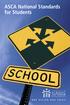 ASCA National Standards for Students ONE VISION ONE VOICE Citation Guide When citing from this publication, use the following reference: American School Counselor Association (2004). ASCA National Standards
How To Be A Health Care Provider
 Program Competency & Learning Objectives Rubric (Student Version) Program Competency #1 Prepare Community Data for Public Health Analyses and Assessments - Student 1A1. Identifies the health status of
Data Analytics and Wellness Programming
 Click to edit Master title style Data Analytics and Wellness Programming Presented to: International Public Management Association for Human Resources January 9, 2014 Presented by: Erin Eason and Bridgette
CAREER AND TECHNICAL EDUCATION STUDENT HANDBOOK
 CAREER AND TECHNICAL EDUCATION STUDENT HANDBOOK COURSE DESCRIPTIONS CAREER AND TECHNICAL EDUCATIONS COURSE DESCRIPTIONS Courses taught at Trousdale County High School Agriculture: PROGRAM OF STUDY: Agriculture
SUMMER 2014. Dear Prospective Paralegal Student:
 PARALEGAL PROGRAM Office 281 756 3642 Fax 281 756 3741 Dear Prospective Paralegal Student: Thank you for your interest in Alvin Community College's Paralegal Program. Paralegals work under the supervision
Nursing Vocational. Admission Requirements. Requirements Following Admission. Licensing as a Vocational Nurse (LVN) Completion Requirements
 Nursing Vocational Andrews Extension: 201 NW Ave. D, Andrews, Texas 79714 Phone: 432-524-4022 Faculty: Nancy Wells, chair; Nicole Hays, Rosa Tejeda Monahans Center: 806 South Dwight, Monahans, Texas 79756;