
MARYLAND DEPARTMENT OF THE ENVIRONMENT
|
|
|
- Millicent Bates
- 10 years ago
- Views:
Transcription
1 MARYLAND DEPARTMENT OF THE ENVIRONMENT Lead Poisoning Prevention Program Childhood Blood Lead Surveillance in Maryland Annual Report 2013 July,

2 MARYLAND CHILDHOOD LEAD REGISTRY ANNUAL SURVEILLANCE REPORT 2013 EXECUTIVE SUMMARY The Maryland Department of the Environment s statewide Childhood Lead Registry (CLR) performs childhood blood lead surveillance for Maryland. The CLR receives the reports of all blood lead tests conducted on Maryland children 0-18 years of age, and the CLR provides blood lead test results to the Maryland Department of Health and Mental Hygiene including Medicaid and local health departments as needed for case management, and upon request to third parties for research and planning. Since 1995, the CLR has released a comprehensive annual report on statewide childhood blood lead testing along with five Supplementary Data Tables which include a detailed breakdown of blood lead data by age, jurisdiction, blood lead level, and the trend of blood lead levels over the years. This current report presents the childhood blood lead test results for Calendar Year (CY) All data is based on blood lead testing (venous or capillary) on children. The CLR does not receive any reports on lead screening based on the lead risk assessment questionnaire that are completed by the primary care provider. With few exceptions, all data refer to children 0-72 months of age. Maryland CY 2013 Surveillance Highlights: Not all children in Maryland are required to be blood lead tested. Based on Maryland s Targeting Plan for Areas at Risk for Childhood Lead Poisoning, children are required to have a blood lead test at ages one and two years if they meet following criteria; (a) Live in an indentified at risk zip code (b) Participate in Maryland s Medicaid program (c) Give a positive response to the Risk Assessment Questionnaire conducted on children up to six years of age, as required. Statewide Testing, Including Baltimore City During CY 2013 a total of 110,082 (21.2%) children were tested of 518,865 children 0-72 months of age, as identified in the Maryland census population for This was a decrease of 457 children tested compared to 110,539 (21.7%) children tested of a population of 509,885 in CY12. The population of children 0-72 months of age increased from CY12 to CY13 by 8,980 children. Of those 110,082 children tested in CY13, a total of 371 (0.3%) were identified with a venous or capillary blood lead level > 10 micrograms per deciliter (µg/dl) (Prevalence: any child tested in the given year with a first time or ongoing history of a venous or capillary blood lead level > 10 µg/dl). This was an increase of 7 children compared to 364 (0.3%) during CY12. Children identified with a first time venous or capillary blood lead level > 10 µg/dl during CY13 totaled 304 (0.3%) (Incidence: a child with a first time venous or capillary blood lead 2

3 level > 10 µg/dl). This was an increase of 49 children with a new Incidence case compared to 255 (0.2%) in CY12. Of the 304 children with a new incidence case statewide, a total of 274 children met the criteria for medical and environmental case management (Confirmed Case). This was an increase of 38 Confirmed cases compared to the CY12 total of 236. During CY13, a total of 1,724 children had their first venous or capillary blood lead level of 5-9 µg/dl compared to 1,792 children in The highest testing rates for children 0-72 months of age were found in Baltimore City (32.1%), followed by Somerset County (31.2%), Worcester County (25.2%), Talbot County (24.8%), Prince George s County (24.7%), and Allegany County (24.5%). Baltimore City, Somerset, Worcester, and Allegany Counties are identified in Maryland s Targeting Plan as being 100% at-risk. The highest rates for children 0-35 months were found in Allegany County (42.5%), Baltimore City (42.3%), and Somerset and Talbot Counties each with 42.2%. Statewide, the overall testing rate for children 0-35 months was (29.7%). Maryland Counties During CY13, a total of 91,539 (19.8%) children were tested of 461,172 children 0-72 months of age, as identified in the Maryland census population for This was a decrease of 208 children tested compared to 91,747 (20.2%) of a population of 453,184 children tested in CY12. The population of children 0-72 months of age increased from CY12 to CY13 by 7,988 children. Of those 91,539 children tested in CY13, a total of 152 (0.2%) were identified with a venous or capillary blood lead level > 10 µg/dl (Prevalence). This is an increase of 10 children with a Prevalence level compared to 142 (0.2%) during CY12. Children identified with a first time (Incidence) venous or capillary blood lead level > 10 µg/dl during CY13 totaled 133 (0.1%). This was an increase of 28 children with an Incidence level compared to 105 (0.1%) in CY12. In Maryland Counties, 117 children with a first venous blood lead level > 10 µg/dl received medical and environmental case management (Confirmed Case). This was an increase of 25 children who received case management services over CY12 where 92 children were identified. Of the 117 Confirmed Cases, 29 (25%) of these cases involved children who were living in a pre-1950 residential rental dwelling (Affected Property). In the remaining 88 cases, 45 (38%) children were living in a post-1949 residential rental dwelling while 43 (37%) were living in an owner occupied property (Non-Affected). 3

4 Baltimore City During CY13, a total of 18,535 (32.1%) children were tested of 57,693 children 0-72 months of age, as identified in the Maryland census population for This was a decrease of 182 children tested compared to CY12 for children tested 118,717 (33%) out of a population of 56,701. The population of children 0-72 months of age increased from CY12 to CY13 by 992 children. Of the 18,535 children tested in CY13; a total of 218 (1.2%) were identified with a venous or capillary blood lead level > 10 µg/dl (Prevalence). This is a decrease of 1 child with a Prevalence case compared to 219 (1.2%) during CY12. Children identified with a first time venous or capillary blood lead level > 10 µg/dl (Incidence) during CY13 totaled 170 (0.9%). This was an increase of 22 children identified with an Incidence cases compared to 148 (0.8%) in CY12. In Baltimore City, 157 children with a first venous blood lead level > 10 µg/dl (Confirmed Case) received medical and environmental case management. This was an increase of 13 children who received case management over CY12 where 144 children were identified. Of the 157 Confirmed Cases approximately 82 (52%) of these cases children were living in a pre-1950 residential rental dwelling (Affected Property). In the remaining 75 cases, 4 (3%) children were living in a post-1949 residential rental dwelling while 71 (45%) were living in an owner occupied property (Non-Affected). Lead Updates Targeting Plan Evaluation Currently, there is no statewide requirement for universal blood lead testing of children in Maryland. Based on Maryland s Targeting Plan for Areas At-Risk for Childhood Lead Poisoning, children are required to have a blood lead test at one and two years if they meet any of the following criteria: (a) Live in an identified at-risk zip code, (b) Participate in Maryland s MEDICAID EPSTD Program, (c) Positive response to the Risk Assessment Questionnaire conducted at regular medical checkups on children up to age six years of age. Currently, the Targeting Plan is being re-evaluated by the Maryland Department of Health and Mental Hygiene and MDE. Universe of Affected Properties to Increase to Pre-1978 On January 1, 2015, all residential rental properties constructed prior to 1978 must be registered and lead inspected prior to each change in occupancy. Because the residential use of lead based paint was not banned until 1978, the amendment to the law that was passed during the 2012 legislative session seeks to expand the primary prevention aspects of the existing lead law that previously only mandated compliance for rental dwelling units built prior to MDE is gearing up to begin early registration for

5 Overview Exposure to lead is still the most significant and widespread environmental hazard for children in Maryland. Children are at the greatest risk from birth to age six while their neurological systems are developing. Exposure to lead can cause long-term neurological damage that may be associated with learning and behavioral problems and with decreased intelligence. There is no evidence of a blood lead level below which there are no health effects. The Centers for Disease Control and Prevention (CDC) concurs that the evidence shows that there is no threshold level for blood lead that can be considered safe. As evidence of adverse health effects were demonstrated at lower and lower blood lead levels, the CDC reduced the level of blood lead which required case management, and in March 2012, the CDC adopted the blood lead level of 5 µg/dl as the Reference Value. (See Figure One.) Sources of Childhood Lead Exposure Lead paint dust from deteriorated lead paint or from renovation of old houses is the major source of lead exposure for children in Maryland. Of an estimated 2,138,806 occupied residential houses in Maryland, 440,056 (18.5%) were built before 1950 and 939,785 (39.5%) were built between 1950 and (Source: US Census Bureau, American Community Survey, 5- Year Estimates.) A significant number of pre and residential rental units have been made lead free. Untreated units in those groupings are highly likely and likely to have lead based paint, respectively. In addition, water, air, and soil, may provide lowlevel, background exposure. Imported products, parental occupations, hobbies, and imported traditional medicines also cause lead exposure among children. Statistical Report In CY 2013, a total of 110,082 children 0-72 months were tested for lead exposure statewide. Table One provides a summary of statewide statistics for blood lead testing in In-utero exposure to lead may affect fetal development. This can be of more significance among certain subgroup populations who may be more at risk of environmental lead exposure. Findings The extent and severity of childhood lead exposure in 2013 remained was similar to The overall proportion of children with blood lead levels of 5 µg/dl dropped (Figure Two), but the proportion of children with the very first blood lead level of 10 µg/dl (incident cases) increased from 0.2% in 2012 to 0.3% in (See Table Two and Figure Three.) These changes, however, can be ascribed more to the annual variations of small numbers rather than real change in childhood lead exposure. The decline in lead exposure is further demonstrated by the decline in percentage of children tested for lead and that had the highest blood lead level of 5-9 µg/dl. (See Figure Four.) 5

6 Table One Calendar Year (CY) 2013 Statistical Report 1 Item Number Percent (%) All Children 0-18 Years of Age Number of tests 128,483 2 Number of children 122,854 Children 0-72 Months Number of tests 115,412 Number of children 110, Age Under One 10, One Year 37, Two Years 31, Three Years 11, Four Years 11, Five Years 8, Sex Female 53, Male 55, Undetermined Highest Blood Lead Level (BLL) (µg/dl) 4 107, , Mean BLL (Geometric mean) 1.41 Blood Specimen Capillary 22, Venous 77, Undetermined 3 9, For detailed analysis and breakdown of data refer to Supplementary Data Tables Children may have multiple tests in a given year. 3. In supplementary data tables, blood tests with sample type unknown were counted as capillary. Appendix A provides a breakdown of blood lead testing and the status of children by age groups of 0-35 and months by jurisdiction in 2013, and Appendix B provides summary results for the past eight (8) years at the State, Baltimore City, and Counties levels. For a detailed breakdown of blood lead data, please refer to supplementary data tables: Supplements

7 Population Children with BLL 5-9 µg/dl Children with BLL 10 µg/dl of Children Tested Old Cases 3 New Cases 4 Total Old Cases 5 New Cases 6 Total County Children 2 Number Percent Number Percent Number Percent Number Percent Number Percent Number Percent Number Percent Allegany 4,939 1, Anne Arundel 49,109 8, Baltimore 68,408 16, Baltimore City 57,693 18, , Calvert 7, Caroline 3, Carroll 13,279 1, Cecil 9,206 1, Charles 13,488 2, Dorchester 2, Frederick 21,347 2, Garrett 2, Harford 21,473 2, Howard 25,144 2, Kent 1, Montgomery 90,774 20, Prince George's 82,700 20, Queen Anne's 3, Saint Mary's 10,805 1, Somerset 1, Talbot 2, Washington 12,915 2, Wicomico 8,733 2, Worcester 3, County Unknown Total 518, , , , Table Two Blood Lead Testing of Children 0-72 Months by Jurisdiction in The table is based on the selection of the highest venous or the highest capillary in the absence of any venous test. Blood lead tests with sample type unknown were counted as capillary. 2. Adapted from Maryland census population 2010, provided by the Maryland Data Center, Maryland Department of Planning, 3. Children with the blood lead level of 5-9 µg/dl in 2013 and a history of a blood lead level 5 µg/dl in the past. 4. Children with the very first blood lead level of 5-9 µg/dl in These children were either not tested in the past or their blood lead levels were below 5 µg/dl. 5. Children with a history of a blood lead level 10 µg/dl. These children may have carried over from 2012 or had a blood lead test of 10 µg/dl in previous years. 6. Children with the very first blood lead test of 10 µg/dl in These children were either not tested in the past or their blood lead levels were below 10 µg/dl. This definition may not necessarily match the criteria for the initiation of case management. 7. Includes cases with out-of-state residence address at the time of the highest blood lead test. 7

8 Figure Two Blood Lead Distribution of Children 0-72 Months Tested for Lead in 2012 and 2013 % of Children with BLL at Given Level <= >=20 Blood Lead Level (µg/dl) Figure Three Number of Children 0-72 Months Tested for Lead and Number Reported to Have Blood Lead Levels 10 µg/dl: Number of Chidlren Tested 140, , ,000 80,000 60,000 40,000 20, ,000 10,000 8,000 6,000 4,000 2,000 0 Number of children with BLL >=10 µg/dl Children Tested Children with BLL >= 10 Identifying Children with Lead Exposure The critical issue in childhood lead poisoning is early detection. Because there are no specific clinical symptoms, a blood lead test is the most reliable technique to identify children with elevated blood lead levels. If there is any suspicion that a child is being exposed to lead, a health care provider should do a blood lead test. 8

9 Figure Four Percent of Children 0-72 Months Tested for Lead with the Highest Blood Lead Level 5-9 µg/dl: Percent Statewide Activities to Reduce (Eliminate) Childhood Lead Poisoning The State Elimination Plan calls for zero new cases of blood lead levels of 10 µg/dl. The plan focuses on primary prevention (removal and elimination of lead hazards) while maintaining wellestablished secondary prevention (identifying children who may be at risk of lead exposure) and tertiary prevention (case management of children exposed to lead) efforts in the state. Primary Prevention: Much of the decline in blood lead levels is the result of implementation and enforcement of Maryland s Reduction of Lead Risk in Housing Act (Act). The Act requires owners of pre-1950 rental dwelling units (Affected Properties) to reduce the potential for child exposure to lead paint hazards by performing specific lead risk reduction treatments prior to each change in tenancy. The State Elimination Plan for 2010 called for zero new blood lead levels of > 10 µg/dl. Though the percentage of children with elevated blood lead levels is consistently lowering in Maryland, there still remains new case incidence. There also continues to be a reduction in children identified with blood lead levels in compliant Affected Properties that have met the required risk reduction standards required at change of tenancy. To view a breakdown of blood lead levels of > 10 µg/dl and age of housing, see Figure Five. A further breakdown of housing type and confirmed cases by jurisdiction can be seen on page 12, Table Three. NEW LAWS TO AIMED AT CHLDHOOD LEAD POISONING PREVENTION Maryland s 1994 Reduction of Lead Risk in Housing Act requires owners of pre-1950 rental dwelling units to register their properties and reduce the potential for child exposure to lead paint hazards by performing specific lead risk reduction treatments prior to each change in tenancy. House Bill 644, passed by the Maryland General Assembly in 2012, requires owners of rental properties built before 1978, when the use of lead paint was prohibited, to register these properties and take steps towards reducing the risk of lead poisoning beginning in January, The legislation also allows MDE to seek delegation to administer a U.S Environmental Protection Agency rule that regulates renovations, repairs, and painting in homes that were built before 1978, whether they are rental units or owneroccupied, and in pre-1978 facilities with young children. The rule requires contractors who do work on these properties to receive training and use safe work practices. Maryland regulations to allow MDE to administer the federal rule are being drafted. 9

10 County Table Three Lead Poisoning Prevention Program: Childhood Lead Registry Property Status of New Cases of Blood Lead Levels > 10 µg/dl for CY2013 By Jurisdiction Number of Properties (compared to last year) Owner-Occupied Property Affected Property Non-Affected Property Number Percent Number Percent Number Percent Allegany % 0 0% 1 25% Anne Arundel % 0 0% 6 67% Baltimore % 5 20% 13 52% Baltimore City % *82 52% 4 3% Calvert 0 0 0% 0 0% 0 0% Caroline % 3 60% 1 20% Carroll % 3 75% 0 0% Cecil % 1 25% 1 25% Charles % 0 0% 1 50% Dorchester 1 0 0% 1 100% 0 0% Frederick % 2 40% 1 20% Garrett 0 0 0% 0 0% 0 0% Harford % 0 0% 0 0% Howard % 0 0% 1 33% Kent 1 0 0% 1 100% 0 0% Montgomery % 0 0% 8 50% Prince George's % 0 0% 7 70% Queen Anne's % 1 50% 0 0% Saint Mary's 0 0 0% 0 0% 0 0% Somerset % 0 0% 2 50% Talbot % 4 50% 1 12% Washington % 4 67% 0 0% Wicomico % 3 60% 1 20% Worcester 2 0 0% 1 50% 1 50% Counties Total % 29 25% 45 38% Statewide % % 49 18% Note: *Nine rental properties in Baltimore City with construction year unavailable are assumed to be rental properties constructed prior to

11 Figure Five Percent of Children 0-72 Months with Blood Lead Levels 10 µg/dl in 2013 and Age of the Housing Percentage Maryland Counties Property Status CY Pre-1950 Rental Post 1949 Owner Occupied Percentage Pre-1950 Rental Baltimore City Property Type CY Post Owner Occupied Total County Cases 117 Total Baltimore City Cases 157 Secondary Prevention Testing: : The second element of the State Elimination Plan is to identify children who may be at risk of lead exposure, so that preventive action can be implemented. Children ages one and two, because of their mouthing behavior, are most likely to be exposed to lead. To that end, the State of Maryland requires that children at ages one and two years be tested. The percentage of one and two year old children tested for lead has increased substantially since (See Figure Six.) Figure Six Percent of Children One and Two Years Old Tested for Lead vs. Children of Other Ages Percent One Year Two Years 3-5 Years Calendar Year Furthermore, children living in at-risk areas, or areas with a high proportion of pre-1950 housing units, are more likely to be exposed to lead than children living in other areas. The State has a targeted plan that identifies At-Risk areas. Universal blood lead testing applies to Baltimore City children (City Ordinance 20 effective July 2000). Table Three presents blood lead testing in the At- Risk and Not At-Risk areas of the state. At-risk area includes Baltimore City and Allegany, 11

12 Caroline, Dorchester, Frederick, Garrett, Somerset, Washington, Wicomico, and Worcester counties. Table Three Blood Lead Testing and Blood Lead Level of 5-9 and 10 µg/dl In At-Risk and Not At-Risk Areas in 2013 Children Tested Children with BLL 5-9 µg/dl Children with BLL 10 µg/dl Area Population Number Percent Number Percent Number Percent At-Risk 119,131 30, , Not At-Risk 399,734 79, Statewide* 518, , , * Statewide numbers include county unknown and out of state cases Another at risk population for lead poisoning is children enrolled in Maryland s Medical Assistance Program. MDE provides childhood blood lead data to the Office of Medicaid Administration of the Maryland Department of Health and Mental Hygiene (DHMH). Childhood blood lead data is provided quarterly and annually, to be matched with the list of children enlisted in the state s Medical Assistance Program. Based on data provided, DHMH prepares and distributes an annual report of blood lead testing of children under Maryland s Medicaid Program. Tertiary Prevention: Maryland s Lead Poisoning Prevention Program has well-established case management guidelines and environmental investigation protocols for follow-up of children with elevated blood lead levels (Tables Four and Five). A venous blood lead test of 10 µg/dl initiates case management and an environmental investigation. Currently, one venous or two capillary blood lead tests of 10 µg/dl trigger the Notice of Elevated Blood Lead Level (Notice of EBL) to be sent to the owner of a Pre-1950 residential dwelling unit (Affected Property). Under the Reduction of Lead Risk in Housing Act, an owner who receives a Notice of EBL is required to perform specific lead risk reduction treatments to limit further exposure to a child. Furthermore, effective June 1, 2012 the Department, health departments, or other local jurisdictions have the authority to order abatements in response to an investigation report of a child with an elevated blood lead level. Table Four Blood Lead Diagnostic and Follow-Up: Confirmation of a Capillary Blood Lead Test BLL (µg/dl) Confirm with venous blood lead test within: < Reference value 1 Routine blood lead test according to protocol Reference value months month week to 1 month hours hours 70 Immediately as an emergency lab test 1. At the time of this writing, the CDC defined Reference value as a blood lead level of <5 µg/dl. 2. The higher the BLL, the more urgent the need for confirmatory testing. 12

13 Table Five Blood Lead Diagnostic and Follow-Up: Follow-Up for Venous Blood Lead Testing 1 BLL (µg/dl)venous Early follow-up (First 2-4 tests after identification) Late follow-up (After BLL begins to decline) < Reference value 2 Routine blood lead test according to protocol Reference months 6 9 months months months months months weeks 1 month 1 month 45 As soon as possible Chelation with subsequent follow-up 1. Seasonal variations of BLLs exist and may be more apparent in colder climate areas. Greater exposure in the summer months may necessitate more frequent follow-up. 2. At the time of this writing, the CDC defined Reference value as a blood lead level of <5 µg/dl. 3. Some case managers or health care providers may choose to repeat blood lead tests on all new patients within a month to ensure that their BLL level is not rising more quickly than anticipated. Tables adapted from: Centers for Disease Control and Prevention: a. Managing Elevated Blood Lead Levels Among Children: Recommendations from the Advisory Committee on Childhood Lead Poisoning Prevention. Atlanta: CDC, b. Low Level Exposure Harms Children: A Renewed Call for Primary Prevention. Report of the Advisory Committee on Childhood Lead Poisoning Prevention, January Educational Burden of Childhood Lead Exposure Childhood lead exposure at early ages (before age 5) may adversely affect a child s neurobehavioral development and as such the child s later educational achievements. The effect may not show up until the child enters school (kindergarten). Such effects have become more of concern since the CDC reduced the blood lead level of concern to 5 µg/dl. Table Six presents the extent of the history of blood lead levels of 5-9 and 10 µg/dl among children who were at kindergarten age on September 1, Statewide, about 3,000 (4.4%) of the children had a history of a BLL 5 µg/dl when they entered kindergarten in

14 Table Six Blood Lead Testing and Childhood Lead Exposure of Kindergarten Population Projected Number of Projected Kindergarteners Number of Kindergarten with History of Children BLL 5-9 µg/dl BLL 10 µg/dl Population on BLL 5-9 in Tested Number Percent Number Percent in Projected Number of Kindergarteners with History of BLL 10 in 2013 County Allegany Anne Arundel 5, , Baltimore 11, , Baltimore City 9,195 1, , Calvert , Caroline Carroll , Cecil , Charles 1, , Dorchester Frederick 2, , Garrett Harford 2, , Howard 1, , Kent Montgomery 12, , Prince George's 12, , Queen Anne's Saint Mary's 1, , Somerset Talbot Washington 1, , Wicomico 1, , Worcester Total 69,181 2, ,548 2, Trends of Blood Lead Levels of 5-9 and 10 µg/dl The CDC adoption of a blood lead level of 5 µg/dl as the Reference Value raised the issue of follow up and case management protocol for children with blood lead levels of 5-9 µg/dl. The Department is currently working with the Department of Health and Mental Hygiene to establish follow-up testing and case management protocols. Figure Six presents the observed and the expected trend of blood lead levels of 5-9 µg/dl for CY The blood lead level of 10 µg/dl shows a smooth and gradual drop over the years. This can be seen in consistency of the observed and the expected trends. Such consistency is not seen in the observed and the expected trends of blood lead levels of 5-9. This may be because a child with a blood lead level of 5-9 may exit this group due to a higher blood lead level and then re-enter it when his/her blood lead level drops. 14

15 Figure Six Trend of Blood Lead Levels of 5-9 and >=10 µg/dl: Percent Observed BLL 5-9 Observed BLL >=10 Expected BLL >=10 Expected BLL 5-9 Data Quality The CLR is maintained in the Systematic Tracking of Elevated Lead Levels And Remediation (STELLAR) surveillance system obtained from the CDC Lead Poisoning Prevention Program. CLR staff makes all efforts to further improve data quality with respect to completeness, timeliness, and accuracy. Staff keep daily track of laboratory reporting to make sure laboratories are reporting all blood lead tests no later than biweekly. The law requires blood lead results of 20 µg/dl to be reported (faxed) within 24 hours after the result is known. However, upon CLR request, laboratories agreed to report (fax) the result of all blood lead tests of 10 µg/dl within 24 hours. For all blood lead tests 10 µg/dl, staff checks the completeness of the data, particularly with respect to the child s and the parent or guardian s name, address, and telephone number. In 2013, 89.7% of blood lead tests were reported to the CLR electronically. This is a drop of about one percentage in electronic reporting from 2012 (90.7%). The drop is due to the increase in number of clinics and establishments using hand held lead analyzers and reporting the results to the CLR in hard copy. Over the years, there has been a gradual increase in the use of hand held lead analyzers. This increase has not necessarily resulted in an increase in the number of blood lead tests, rather it has resulted from a shift in blood lead testing by laboratories to clinics (Table Seven). The average reporting time, from the time sample is drawn to time the result enters the CLR database, is approximately 6 days. The average time for elevated blood lead results ( 10 µg/dl) is approximately 30 hours. Table Eight provides the summary reports for completeness of data as required by law. Completeness of data does not necessarily mean accuracy of the data. 15

16 Table Seven Method of Blood Lead Reporting by Laboratories: * Number of Number of Number of Number of Number of Lab Reporting Labs Reports Labs Reports Labs Reports Labs Reports Labs Reports Electronic Report 8 115, , , , ,477 Hard Copy 30 9, , , , ,068 Total , , , , ,545 Percent Electronic % of Children Tested * First quarter Table Eight Completeness of Data for 2013 Item % Complete Child s name Date of Birth 99.8 Sex/Gender 99.6 Race 59.9 Parent/Guardian s name 59.4 Sample type 91.0 Test date 99.9 Blood lead level Address (geocoded) 90.2 Telephone number 95.6 Blood Lead Laboratory Reporting Requirement The amended law and regulations * of 2001 and 2002 require that: 1-The following demographic data for each child be included in each blood lead test reported: Date of Birth Sex Race Address Test date Sample type Blood lead level 2-Blood lead results 20 µg/dl be reported (faxed) within 24 hours after a result is known. All other results are to be reported every two weeks. 3-Reporting format complies with the format designed and provided by the CLR. 4-Data be provided electronically. * Environment Article 6-303, Blood lead test reporting (COMAR , Blood lead test reporting) 16

17 Appendix A Blood Lead Testing of Children 0-72 Months by Major Age Group and Jurisdiction in 2013 Age Group Population of Children Blood Lead Level 5-9 µg/dl Blood Lead Level 10 µg/dl Children Tested Old Cases New Cases Total Old Cases New Cases Total Number Percent Number Percent Number Percent Number Percent Number Percent Number Percent Number Percent Allegany County 0-35 Months 2,491 1, Months 2, Total 4,938 1, Anne Arundel County 0-35 Months 25,120 6, Months 23,989 2, Total 49,109 8, Baltimore County 0-35 Months 34,934 12, Months 33,474 3, Total 68,408 16, Baltimore City 0-35 Months 30,947 13, Months 26,745 5, Total 57,692 18, , Calvert County 0-35 Months 3, Months 3, Total 7, Caroline County 0-35 Months 1, Months 1, Total 3,

18 Appendix A Blood Lead Testing of Children 0-72 Months by Major Age Group and Jurisdiction in 2013 Age Group Population of Children Blood Lead Level 5-9 µg/dl Blood Lead Level 10 µg/dl Children Tested Old Cases New Cases Total Old Cases New Cases Total Number Percent Number Percent Number Percent Number Percent Number Percent Number Percent Number Percent Carroll County 0-35 Months 6,198 1, Months 7, Total 13,279 1, Cecil County 0-35 Months 4, Months 4, Total 9,207 1, Charles County 0-35 Months 6,789 1, Months 6, Total 13,488 2, Dorchester County 0-35 Months 1, Months 1, Total 2, Frederick County 0-35 Months 10,438 2, Months 10, Total 21,347 2, Garrett County 0-35 Months 1, Months 1, Total 2,

19 Appendix A Blood Lead Testing of Children 0-72 Months by Major Age Group and Jurisdiction in 2013, Continued Age Group Population of Children Blood Lead Level 5-9 µg/dl Blood Lead Level 10 µg/dl Children Tested Old Cases New Cases Total Old Cases New Cases Total Number Percent Number Percent Number Percent Number Percent Number Percent Number Percent Number Percent Harford County 0-35 Months 10,577 2, Months 10, Total 21,473 2, Howard County 0-35 Months 12,264 1, Months 12, Total 25,144 2, Kent County 0-35 Months Months Total 1, Montgomery County 0-35 Months 46,016 14, Months 44,758 6, Total 90,774 20, Prince George's County 0-35 Months 42,983 12, Months 39,717 7, Total 82,700 20, Queen Anne's County 0-35 Months 1, Months 2, Total 3,

20 Appendix A Blood Lead Testing of Children 0-72 Months by Major Age Group and Jurisdiction in 2013, Continued Age Group Population of Children Blood Lead Level 5-9 µg/dl Blood Lead Level 10 µg/dl Children Tested Old Cases New Cases Total Old Cases New Cases Total Number Percent Number Percent Number Percent Number Percent Number Percent Number Percent Number Percent Saint Mary's County 0-35 Months 5,371 1, Months 5, Total 10,805 1, Somerset County 0-35 Months Months Total 1, Talbot County 0-35 Months 1, Months 1, Total 2, Washington County 0-35 Months 6,437 1, Months 6, Total 12,915 2, Wicomico County 0-35 Months 4,494 1, Months 4, Total 8,733 2, Worcester County 0-35 Months 1, Months 1, Total 3,

21 Appendix A Blood Lead Testing of Children 0-72 Months by Major Age Group and Jurisdiction in 2013, Continued Age Group Population of Children Blood Lead Level 5-9 µg/dl Blood Lead Level 10 µg/dl Children Tested Old Cases New Cases Total Old Cases New Cases Total Number Percent Number Percent Number Percent Number Percent Number Percent Number Percent Number Percent County Unknown 0-35 Months Months Total Statewide 0-35 Months 264,007 78, , , Months 254,858 31, Total 518, , , ,
22 Appendix B Blood Lead Testing of Children 0-72 Months, and Prevalence and Incidence of Blood Lead Level 10 µg/dl: Calendar Blood Lead Tests. Prevalence Incidence Year Population Number Percent Number Percent Number Percent 2006 Baltimore City 54,547 18, Counties 408,784 84, County Unknown Statewide 463, , , Baltimore City 55,142 17, Counties 413,248 87, County Unknown Statewide 468, , Baltimore City 55,959 18, Counties 418,941 87, County Unknown Statewide 474, , Baltimore City 56,431 19, Counties 422,488 88, County Unknown 5 Statewide 478, , Baltimore City 57,937 19, Counties 433,661 94, County Unknown Statewide 491, , Baltimore City 55,681 19, Counties 445,021 90, County Unknown Statewide 500, , Baltimore City 56,701 18, Counties 453,184 91, County Unknown Statewide 509, , Baltimore City 57,693 18, Counties 461, County Unknown Statewide 518, ,
23 23 GARRETT CECIL CHARLES FREDERICK KENT BALTIMORE CARROLL HARFORD ALLEGANY DORCHESTER WICOMICO TALBOT WORCESTER MONTGOMERY WASHINGTON CAROLINE SOMERSET HOWARD PRINCE GEORGE'S SAINT MARY'S ANNE ARUNDEL CALVERT QUEEN ANNE'S BALTIMORE CITY Percent Blood Lead Level 5-9 µg/dl < >=3.0 Blood Lead Level >=10 µg/dl N E W S MARYLAND DEPARTMENT OF THE ENVIRONMENT Lead Poisoning Prevention Program Percent of Children 0-72 Months with Blood Lead Level 5-9 µg/dl, and Distribution of Children 0-72 Months with Blood Lead Level >=10 µg/dl Childhood Blood Lead Surveillance: 2013 Map One
24 Appendix C MARYLAND DEPARTMENT OF THE ENVIRONMENT CHILDHOOD BLOOD LEAD SURVEILLANCE BALTIMORE CITY %CHILDREN TESTED, BLOOD LEAD >=10MCG/DL (12,908 9,168 10,258 7,816 5,983 3,949 2,902 2,189 2,027 1,558 1,166 1, ) (38,030 32,620 38,794 29,630 21,423 17,753 17,414 18,033 21,231 16,595 18,242 18,970 17,943 18,363 17,670 18,622 19,043 19,702 19,049 18,717 18,535) CALENDAR YEAR (Number of Children with BLL>=10mcg/dl) (Number of Children Tested) 24
25 MARYLAND DEPARTMENT OF THE ENVIRONMENT CHILDHOOD BLOOD LEAD SURVEILLANCE STATEWIDE %CHILDREN TESTED, BLOOD LEAD >=10MCG/DL (14,546 10,377 11,585 9,884 7,763 5,068 3,904 3,402 2,841 2,297 1,719 1,811 1,331 1, ) (60,912 52,391 64,394 59,746 67,118 58,585 61,529 75,516 76,742 79,507 76, ,549 99, , , , , , , ,539110,082) CALENDAR YEAR (Number of Children with BLL>=10mcg/dl) (Number of Children Tested) 25
Department of the Environment. Annual Report 2011. Lead Poisoning Prevention Program
 Department of the Environment Childhood Blood Lead Surveillance in Maryland Annual Report 2011 Lead Poisoning Prevention Program MARYLAND DEPARTMENT OF THE ENVIRONMENT 1800 Washington Boulevard Baltimore,
Department of Health and Mental Hygiene Joint Chairmen Report Substance Abuse Treatment Services Executive Summary
 Department of Health and Mental Hygiene Joint Chairmen Report Substance Abuse Treatment Services Executive Summary Improving access to substance abuse treatment services is a high priority for the State
Drug- and Alcohol-Related Intoxication Deaths in Maryland, 2014
 Maryland Department of Health and Mental Hygiene Larry Hogan, Governor Boyd Rutherford, Lt. Governor Van Mitchell, Secretary May, 215 Drug- and Alcohol-Related Intoxication Deaths in Maryland, 214 Table
Payroll DeltaFlex Product Suite
 Date: November 5, 2013 Information source(s): Websites: Office of the Comptroller of Maryland Tax Table Information - Maryland Payroll DeltaFlex Product Suite http://taxes.marylandtaxes.com/business_taxes/business_tax_types/income_tax/
DEPARTMENT OF HUMAN SERVICES SOCIAL SERVICES ADMINISTRATION 311 W. SARATOGA STREET BLATIMORE, MARYLAND 21201
 DEPARTMENT OF HUMAN SERVICES SOCIAL SERVICES ADMINISTRATION 311 W. SARATOGA STREET BLATIMORE, MARYLAND 21201 DATE: January 30, 2014 POLICY #: SSA# 14-13 TO: Directors, Local Departments of Social Services
SUBTITLE 14. OPEN DATA.
 4lr0705 Bill No.: Requested: Committee: By: Senator Ferguson Drafted by: Simpson Typed by: Stored Proofread by Checked by A BILL ENTITLED AN ACT concerning State Government Establishment of an Open Data
Health Insurance Partnership
 Health Insurance Partnership Enrollment Update Prepared by the Maryland Health Care Commission January 1, 2013 Introduction During the 2007 Special Session, Governor O Malley proposed and the General Assembly
Health Insurance Partnership. Enrollment Update
 Health Insurance Partnership Enrollment Update January 1, 2010 Introduction During the 2007 Special Session, Governor O Malley proposed and the General Assembly enacted legislation to extend medical coverage
Maryland Department of Health and Mental Hygiene 201 W. Preston Street Baltimore, Maryland 21201
 STATE OF MARYLAND DHMH Maryland Department of Health and Mental Hygiene 201 W. Preston Street Baltimore, Maryland 21201 Martin O Malley, Governor Anthony G. Brown, Lt. Governor Joshua M. Sharfstein, M.D.,
Subsidy Enrollments among Accredited Child Care Providers in Maryland
 Subsidy Enrollments among Accredited Child Care Providers in Maryland November 18, 20 Prepared for the Division of Early Childhood Development Maryland State Department of Education John Spears and Merve
Department of Legislative Services Maryland General Assembly 2009 Session
 Department of Legislative Services Maryland General Assembly 2009 Session HB 1182 FISCAL AND POLICY NOTE House Bill 1182 (Delegate Hixson) Ways and Means and Economic Matters Communications Services -
Maryland Jurisdiction Epidemiological Profiles Chartbook
 Jurisdiction Epidemiological Profiles Chartbook February 13, 2014 The Statewide Epidemiological Outcomes Workgroup Department of Pharmaceutical Health Services Research University of Baltimore School of
Your Land and Your Highways
 Maryland Department of Transportation State Highway Administration Your Land and Your Highways Your Rights and Benefits Guide Maryland Department of Transportation State Highway Administration Office of
PART II Is this a transfer of real property subject to agricultural transfer tax? (YES NO )
 CERTIFICATE OF CONVEYANCE PART I 1. Location of land being conveyed: (Include name of county or Baltimore City) 2. Transferor: 3. Transferee: 4. Certificate of Conveyance accompanying: (Please check appropriate
Maryland Administrative Office of the Courts Business and Technology Case Management Program
 Maryland Administrative Office of the Courts Business and Technology Case Management Program Application to be Listed for Designation as a Business and Technology Mediator Pursuant to Maryland Rule 17-107
Facts about Maryland s School Library Media Programs 2014-2015
 Facts about Maryland s School Library Media Programs 2014-2015 1 Table of Contents INTRODUCTION... 3 2014 15 Annual Report Executive Summary.... 4 Staff Totals by LEA, 2014 15... 11 Collection Totals by
Maryland s Strategic Highway Safety Plan Because Every Life Counts
 Maryland s Strategic Highway Safety Plan Because Every Life Counts ASHE / ITE Joint Meeting October 21, 2014 Maryland s Strategic Highway Safety Plan Today s Presentation Provide Overview of Maryland s
Overview of the Economic Census and Other Economic Programs Presentation Exercises and Handouts
 Overview of the Economic Census and Other Economic Programs Presentation Exercises and Handouts Andy Hait & Rosanne Tingley Economic Planning & Coordination Division U.S. Census Bureau Presentation Handouts
Maryland Circuit Courts Health Care Malpractice Claims ADR Program Application
 Maryland Circuit Courts Health Care Malpractice Claims ADR Program Application Pursuant to Maryland Courts and Judicial Proceedings ( CJ ) Code Ann., 3-2A-06C, the Court is required to order parties in
Eligibility, and Individualized Education Program (IEP) Process in Maryland
 A Guide For Parents of Students With Disabilities Understanding the Evaluation, Eligibility, and Individualized Education Program (IEP) Process in Maryland Maryland State Department of Education Division
2013 UNIFORM CRIME REPORT
 CRIME IN MARYLAND 2013 UNIFORM CRIME REPORT GOVERNOR MARTIN O MALLEY LT. GOVERNOR ANTHONY G. BROWN COLONEL MARCUS L. BROWN, SUPERINTENDENT MARYLAND STATE POLICE CENTRAL RECORDS DIVISION IDA J. WILLIAMS,
State of Maryland Department of Human Resources
 State of Maryland Department of Human Resources Mail-In Application for Qualified Medicare Beneficiary (QMB) and Specified Low-Income Medicare Beneficiary (SLMB) Programs Dear Applicant: In this packet
DHR TO PROVIDE UP TO $2,000 TO FAMILIES FOR POST ADOPTION SERVICES Pilot Program eligibility requirements expanded
 MARYLAND DEPARTMENT OF HUMAN RESOURCES Maryland s Social Services Agency PUBLIC NOTICE DHR TO PROVIDE UP TO $2,000 TO FAMILIES FOR POST ADOPTION SERVICES Pilot Program eligibility requirements expanded
Involuntary Discharges and Transfers from
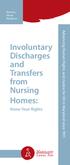 Nursing Home Residents Involuntary Discharges and Transfers from Nursing Homes: Know Your Rights MLA :: 1-color logo :: PMS 1807c Advancing Human Rights and Justice for All in Maryland since 1911 Maryland
Data Services Engineering Division. Traffic Monitoring System Program
 Data Services Engineering Division Traffic Monitoring System Program July 2015 Table of Contents Table of Contents Chapter 1: Introduction... 1-1 Chapter 2: Automatic Traffic Recorders (ATRs)... 2-1 ATRs
Results Embargoed Until Tuesday, October 6 at 12:01AM. Clinton Leads Rivals among Maryland Democratic Primary Voters
 Results Embargoed Until Tuesday, October 6 at 12:01AM Press Contact Information Mileah Kromer Director, Sarah T. Hughes Field Politics Center [email protected] Chris Landers Office of Communications
Maryland 1. Dependent Public School Systems (39) Maryland ranks 46th among the states in number of local governments, with 265 as of June 2002.
 Maryland Maryland ranks 46th among the states in number of local governments, with 265 as of June 2002. COUNTY GOVERNMENTS (23) The entire state is encompassed by county government with the exception of
Maryland Work Zone Accidents Comparison 1994-2003 May 2005
 Maryland Work Zone Accidents Comparison 1994-23 May 25 Traffic Safety Analysis Division Office of Traffic and Safety Maryland State Highway Administration 7491 Connelley Drive Hanover, Maryland 2176-171
THE NEBRASKA BLOOD LEAD TESTING PLAN
 THE NEBRASKA BLOOD LEAD TESTING PLAN Recommendations for Health Care Professionals Lead Poisoning in Nebraska Children are most vulnerable All children under age 6 are at risk due to: Hand-to-mouth activity
Maryland Insurance Administration s 2006 Report on the Availability and Affordability of Health Care Medical Professional Liability Insurance in
 Maryland Insurance Administration s 2006 Report on the Availability and Affordability of Health Care Professional Liability Insurance in Maryland September 5, 2006 Maryland Insurance Administration's 2006
Lead Screening and Case Follow-up Guidelines for Local Health Departments
 State of Illinois Illinois Department of Public Health Lead Screening and Case Follow-up Guidelines for Local Health Departments March 2011 Table of Contents Definition of Terms... 1 Federal Standards
Survey of Local Health Departments in Maryland
 Survey of Local Health Departments in Maryland DEPARTMENT OF LEGISLATIVE SERVICES JANUARY 2013 Survey of Local Health Departments in Maryland Department of Legislative Services Office of Policy Analysis
GOVERNOR S LEAD POISONING PREVENTION COMMISSION Maryland Department of the Environment 1800 Washington Boulevard Baltimore MD 21230
 MARYLAND DEPARTMENT OF THE ENVIRONMENT Land Management Administration Technical Services and Operations Program 1800 Washington Boulevard Suite 610 Baltimore Maryland 21230-1719 410-537-3314 800-633-6101
MARYLAND S 2010 ANNUAL ORAL HEALTH LEGISLATIVE REPORT
 MARYLAND S 2010 ANNUAL ORAL HEALTH LEGISLATIVE REPORT Martin O Malley Anthony G. Brown John M. Colmers Governor Lt. Governor Secretary I. Introduction During the 2009 session of the Maryland General Assembly,
CESAR BRIEFING Methamphetamine in Maryland
 March 2005 CESAR BRIEFING in Maryland CESAR Briefings are designed to provide concise answers and information on requested topics related to substance abuse and are available online at www.cesar.umd.edu.
Out- of- School Suspension in Maryland Public Schools, 2008-2014
 Out- of- School Suspension in Maryland Public Schools, 2008-2014 Matthew Henry November 2015 Exclusionary discipline, or the practice of removing students from the classroom in response to disruptive behavior,
*Elevated Blood Lead Level 10 µg/dl. Objectives. Why Is Lead Poisoning Still An Issue? Childhood Lead Poisoning Prevention Program
 A Full Picture Of Lead Case Management Efforts In Los Angeles County Los Angeles County Department of Public Health Maternal, Child & Adolescent Health Programs Childhood Lead Poisoning Prevention Program
Obtaining Protective Orders and Peace Orders
 Domestic Violence Programs in Maryland Allegany County Hotline: 301-759-9244 TTY: 301-759-9244 Family Crisis Resource Center: 301-759-9246 Anne Arundel County Hotline: 410-222-6800 YWCA Domestic Violence
Guidelines for Follow-up of Children with Elevated Blood Lead Levels for Local Health Department Lead Poisoning Prevention Programs
 Guidelines for Follow-up of Children with Elevated Blood Lead Levels for Local Health Department Lead Poisoning Prevention Programs New York State Department of Health Lead Poisoning Prevention Program
A Comparison Study of Real Estate Tax Closing Costs in Maryland, Northern Virginia, and Washington, D.C.
 A Comparison Study of Real Estate Tax Closing Costs in Maryland, Northern Virginia, and Washington, D.C. For the by Frederick E. Flick, Ph.D. Kristine Weilbacker Hanson, M.U.R.P. April 2007 EXECUTIVE SUMMARY
ADMINISTRATIVE RELEASE. Maryland Income Tax. Administrative Release No. 21
 Maryland Income Tax ADMINISTRATIVE RELEASE Administrative Release No. 21 Subject: Income Tax Treatment of Employee Contributions under the Maryland Pension Pickup Program I. Background Membership in the
Is Lead Poisoning Still a Problem?
 Is Lead Poisoning Still a Problem? Lisa Menillo MD St. Francis Hospital and Medical Center Co-Director Hartford Regional Lead Treatment Center Assistant Professor Pediatrics University of Connecticut Medical
Voting in Maryland. Maryland State Board of Elections. 151 West Street, Suite 200 Annapolis, MD 21401. P.O. Box 6486 Annapolis, MD 21401-0486
 Maryland State Board of Elections 151 West Street, Suite 200 Annapolis, MD 21401 P.O. Box 6486 Annapolis, MD 21401-0486 Phone: 1-800-222-8683 www.elections.state.md.us Voting in Maryland 2011-2012 Voter
Chapter 4. Courts and Related Offices
 Chapter 4. Courts and Related Offices The Maryland Constitution establishes the judiciary as a separate branch of government. Administration of Maryland s judicial system represents a unique State-local
January 20, 2015. H-107 State House H-101 State House Annapolis, MD 21401-1991 Annapolis, MD 21401-1991
 The Honorable Martin O Malley Governor State of Maryland Annapolis, MD 21401-1991 STATE OF MARYLAND DHMH Maryland Department of Health and Mental Hygiene Martin O Malley, Governor Anthony G. Brown, Lt.
2012 2014 Maryland HIV Plan
 Maryland Department of Health & Mental Hygiene Prevention and Health Promotion Administration 2012 2014 Maryland HIV Plan Comprehensive HIV Plan Statewide Coordinated Statement of Need Maryland HIV Prevention
Preliminary Analysis of Blood Lead Levels in Saline County. and other Selected Areas in Kansas
 Preliminary Analysis of Blood Lead Levels in Saline County and other Selected Areas in Kansas Background Lead is found throughout our environment. It is a naturally occurring bluish-gray metal found in
The Status of Maryland s Children
 The Status of Maryland s Children Maryland has the highest median family income ($82,404) in the U.S. Families with children in Maryland have a median family income of $80,265. Yet, in 2007, over 10% of
BULLYING, HARASSMENT, OR INTIMIDATION
 BULLYING, HARASSMENT, OR INTIMIDATION IN MARYLAND PUBLIC SCHOOLS A REPORT TO THE MARYLAND GENERAL ASSEMBLY ON INCIDENTS REPORTED UNDER THE SAFE SCHOOLS REPORTING ACT OF 2005 Presented by the Maryland State
MARYLAND PUBLIC MENTAL HEALTH SYSTEM (PMHS)
 MARYLAND PUBLIC MENTAL HEALTH SYSTEM (PMHS) EMERGENCY PETITION BILLING MANUAL Published by ValueOptions Maryland Table of Contents TABLE OF CONTENTS..1 INTRODUCTION....2 CLAIMS FROM A FACILITY FOR EMERGENCY
Maryland Real Estate Brokers Act. Real Estate Empower, Inc. www.rempower.com
 Maryland Real Estate Brokers Act Real Estate Empower, Inc. www.rempower.com Section number Title 17, Business Occupations and Professions, Annotated Code of Maryland, Real Estate Brokers Section name Section
MARYLAND DEPARTMENT OF ASSESSMENTS AND TAXATION SIXTY-NINTH REPORT
 MARYLAND DEPARTMENT OF ASSESSMENTS AND TAXATION SIXTY-NINTH REPORT MADE TO THE GOVERNOR AND GENERAL ASSEMBLY FISCAL YEAR 2013 TABLE OF CONTENTS General Duties and Powers... 1 Office of the Director...
Childhood Lead Poisoning
 7 Childhood Lead Poisoning in Wisconsin The Scope of the Problem The WCLPPP began systematically collecting information on all blood lead tests conducted in Wisconsin since 994. Under the requirements
Blood Lead Levels Among Oregon American Indian and Alaska Native Children
 Blood Lead Levels Among Oregon American Indian and Alaska Native Children Northwest Portland Area Indian Health Board Indian Leadership for Indian Health Prepared by: Megan Hoopes, Jenine Dankovchik, Erik
Preschool Special Education Coordinators
 Preschool Special Education Coordinators Allegany County Baltimore City Dee Blank Colleen Duffy Child Find Specialist, IMCIT Allegany County Public Schools Baltimore City Public Schools P.O. Box 1724 200
Finances and Demographic Information DEPARTMENT OF LEGISLATIVE SERVICES 2013
 Overview of Maryland Local Governments Finances and Demographic Information DEPARTMENT OF LEGISLATIVE SERVICES 2013 Overview of Maryland Local Governments Finances and Demographic Information Department
MARYLAND SMOKE-FREE CAMPUSES
 MARYLAND SMOKE-FREE CAMPUSES Jurisdiction Municipality Smoke-Free Area Policy Allegany Cumberland Allegany of Maryland Anne Arundel Baltimore City Thomas B. Finan Brandenburg Lois Jackson Unit Joseph S.