
Security System Owner s Manual
|
|
|
- Percival Cuthbert Jacobs
- 10 years ago
- Views:
Transcription
1 Security System 8000 Owner s Manual

2 Contents Introduction... Safety Procedures... Safety Planning... Fire Protection... System Operation... Sensors... Wireless System Keypad (Wireless Remote Transmitter)... When Leaving Home... When Returning Home... Turning Your System Off... Sounding apanic Alarm... Opening a Door or Window When the System is Armed... Alarms and Trouble Beeps... Alarms..... Trouble Beeps

3 Contents Components... Central Controller..... The Wireless System Keypad (Wireless Remote Transmitter)... Wireless Local Keypad (Keypad Transmitter)... Supervised Smoke Detector... Universal Transmitter..... Passive Infrared Transmitter (PIRT)... Wireless Siren/Controller... Testing and Maintenance... Replacing Batteries in Keypads and Universal Transmitters... Replacing PIRT Batteries... Replacing Smoke Detector Batteries... Replacing Wireless Siren/Controller Batteries... Weekly System Test... Warranty... FCC Registration and Repair Information Index Quick Reference... inside back cover Transmitter Identification Numbers... back cover 36

4 Introduction Congratulations on the purchase of your new AT&T Security System Your dealer has demonstrated the correct way to operate your new system. Use this booklet as a reference when you have questions about its operation or maintenance. Remember, no security system prevents emergencies. Instead, a security system alerts you and your family in the event of an emergency. Your AT&T Security System 8000 cannot be a substitute for sound safety practices or insurance. Contact your insurance company to inform them that you have installed a security system-you may be entitled to a reduction in premiums. In Case of Emergency Contact your local police department, fire department, and alarm dealer for advice on handling household emergencies. Ensure that every member of your household knows exactly what to do if an emergency occurs. This AT&T security system is suitable for use as a Grade A Household Burglary Warning System (UL1023)

5 Safety Procedures Safety Planning Plan in advance how each member of your family should respond to an alarm. Discuss the different alarm signals, make sure each person is familiar with them, and make a plan for each person. If you have children, be sure that you instruct them carefully and that they understand. Establish a meeting place outside the house, so you can account for everyone in case of fire or other emergency. Practice safety procedures so that everyone can respond quickly in a crisis. In case of a fire alarm, every member of your family should leave the house immediately by way of planned escape routes and meet at a planned location. Returning Home to an Audible Alarm If you return home to an audible alarm, do not enter your house. You might be walking into a fire or an intruder might still be inside. Go to a neighbor or public phone and call the fire department or police. Using the Universal Transmitter as a Panic Button Press Alarm on the Universal Transmitter and hold it down for 2 seconds. Testing Your Alarm System Weekly Test your wireless alarm system every week, using the procedures on page 32. To prevent false alarms, check with your dealer before testing. 2

6 Safety Procedures Fire Protection To Reduce the Risk of Fire Minimize hazards: Store flammable materials properly. Avoid cleaning with flammable liquids such as gasoline. If at all possible, eliminate explosive or fastburning materials from your home. Use good housekeeping techniques. A cluttered attic, basement, or storage area increases the risk of fire. Never smoke in bed. Do not leave children unattended. Do not overload electrical outlets. If you have children or invalids in your home, the fire department can provide you with window decals that will show the fire department where to look first in the event of a fire. If the Smoke Alarm Beeps Repeatedly The Supervised Smoke Detector beeps once every 7 seconds when the batteries are low. Replace the batteries immediately (see page 30). If the Smoke Alarm Is Triggered Smoke detectors warn you of a fire in its early stages, so that you can escape from your house before smoke reaches a dangerous concentration level. 3

7 Safety Procedures When the smoke alarm is triggered, the smoke detector s internal siren sounds and the smoke detector transmits the alarm to the Central Controller. Also, the On/Alarm light in the center of the Supervised Smoke Detector Transmitter glows steadily. (During normal operation, this On/Alarm light flashes about once every 7 seconds.) Immediately follow the evacuation instructions given below. If your security system is connected to a central monitoring service, an emergency call will be initiated. Evacuation Procedures Do not panic-escape may depend upon clear thinking. Get out of the house following planned escape routes, if possible. Do not stop to dress or collect valuables. Open doors carefully only after feeling them to see if they are hot. If a door is hot, do not open it-follow an alternate escape route. Keep close to the floor-smoke and hot gases rise. Keep doors and windows closed unless it is necessary to open them to escape. Meet at a pre-established meeting place after leaving your house. Never re-enter a burning building. Use a neighbor s phone or a street fire alarm box to call the fire department. 4

8 System Operation Sensors The AT&T Security System 8000 consists of various types of sensors. These sensors are attached to transmitters that report to the Central Controller. These sensors are set in one of the following ways: 24-Hour sensors are always armed. You cannot turn these sensors off. Smoke detectors, environmental and auxiliary sensors are 24-hour sensors. Perimeter sensors are usually located at windows and exterior doors. These sensors are armed when your system is in the HOME or AWAY mode. Interior sensors are only armed when the system is in the AWAY mode. These sensors are usually motion detectors or intrusion sensors on interior doors. 5

9 System Operation Wireless System Keypad (Wireless Remote Transmitter) In order to operate your system correctly, you should be familiar with the Wireless System Keypad. Please read this section carefully and keep it handy as a reference source. NOTE: You need the security code to operate any keypad. When your dealer tells you the security code, write it down and store it safely. DO NOT WRITE YOUR SECURITY CODE IN THIS BOOK OR ANYWHERE THAT AN INTRUDER COULD FIND IT. The Wireless System Keypad enables you to set your system to Home, Away, or Off. It also enables you to open any door or window that is connected to this keypad. The keypad can also be used to generate a Panic Alarm in an emergency. The Wireless System Keypad is usually mounted at the principle access door, but additional units can be converted for use as portable keypads. 6

10 System Operation When Leaving Home Enter your security code on the Wireless System Keypad attached to the door from which you will be leaving. The transmitter beeps once after each number you enter and will beep three times after the entire code is entered correctly. Press Away. If the Central Controller beeps once, the system is secure -continue to step 3. If the Central Controller beeps four times, one or more of the transmitters is not secure. Go to the Central Controller to find out where the problem exists. Check to see if: a window or door is open a keypad is disarmed the cover is off one of the transmitters a transmitter has been tampered with something is triggering a motion detector. If you correct the problem, the Central Controller will beep once when you arm the system. If you do not correct the problem, the system will arm itself within 40 seconds, but the alarm point that caused the problem will remain unprotected. Press Open and then go out the door and close it. The system will arm itself in about 40 seconds. If you do not leave within 40 seconds, enter your security code and press Open. You can exit through that door and the system will remain armed. 7

11 System Operation When Returning Home Enter your home through a door that is close to a Wireless System Keypad. The Central Controller will begin beeping at an interval of once every three seconds. Enter your security code on the keypad within 40 seconds of entering the door. This will cancel the delayed alarm. Press Home. This will disable all Interior sensors. The Central Controller will beep once to indicate the change in status. Turning Your System Off 1 Enter your security code on the Wireless System Keypad. The keypad will beep three times when the code is entered correctly. 2 Press Off. All internal and perimeter sensors are deactivated. All 24-hour sensors (fire, auxiliary, environmental, tamper and panic) remain armed. The Central Controller will beep once to indicate the change in status. Sounding a Panic Alarm Simultaneously press both sets of red dots in the Alarm area of any keypad (see illustration). This will immediately sound an intrusion alarm and activate your telephone dialer. 8

12 System Operation Opening a Door or Window When the System Is Armed 1 Enter your security code on the Wireless System Keypad. 2 Press Off to disarm the system. 3 Open the door or window. 4 Rearm your system. The Central Controller will beep four times because of the open door or window. The system will be armed but the sensor at the open door or window will be unprotected. When you close the door or window the sensor will be reaccepted into the system immediately. NOTE: If there is a Wireless System Keypad or a Wireless Local Keypad attached to the door or window sensor: 1 Enter your security code. 2 Press Open. The transmitter will beep three times. 3 Open the door or window within 40 seconds after pressing Open. You can leave the door or window open as long as you like. When you close it, the sensor will be reaccepted into the system.

13 Alarms and Trouble Beeps The System 8000 generates two types of warnings: alarms and trouble beeps. The following chart will help you distinguish between these warnings. 1 This Pattern every 40 seconds uninterrupted tone repeating pattern: long tones only repeating pattern: one long tone, 3 short tones repeating pattern: 8 short tones t Means Trouble Beeps-A system problem has been detected. Your system is still operable, but the problem should be corrected as soon as possible (see page 14). Fire Alarm-Either the Smoke Detector Transmitter or a transmitter configured for fire emergency has been triggered. Your system will sound this alarm and activate your telephone dialer. Depending on your programming, there may be a 40-second delayed alarm from external sirens. Intrusion Alarm-A door or window has been opened or broken; a motion detector has been triggered; or a tamper switch has been activated. Your system will sound this alarm and activate your telephone dialer, unless the keypad is set on the 40-second delay. Auxiliary Alarm-An auxiliary transmitter has been triggered. Your system will sound this alarm and activate your telephone dialer. Environmental Alarm-A sensor has been triggered by heat, cold, moisture, etc. Your system will sound the alarm and activate your telephone dialer. External sirens are silent. NOTE: Your system may not be equipped for all these alarms. Ask your dealer which alarms are included in your system. 10

14 Alarms and Trouble Beeps Automatic Disarm Period After your system sounds a fire, environmental, or auxiliary alarm, it will not repeat the same kind of alarm for five minutes. This Automatic Disarm Period gives you time to clear away smoke or otherwise tend to the emergency, without having another alarm of this type go off. During this period, AA will be displayed at the Central Controller. Silencing Alarms To silence any alarm, enter your security code on a keypad. This will silence an alarm that is already sounding and will cancel a delayed alarm that has not yet sounded. You can cancel any type of alarm this way-fire, intrusion, environmental, or auxiliary. The Cancel key on your Central Controller will cancel a fire, environmental, or auxiliary alarm, but it will not cancel an intrusion alarm. Intrusion alarms can only be cancelled by entering your security code on a keypad. NOTE: If a false alarm occurs and your system is equipped with a telephone dialer, call your monitoring service to inform them that there is no emergency. 12

15 Alarms and Trouble Beeps The Ambush Feature The Ambush Feature is designed to protect you in the event that you must unwillingly cancel an intrusion alarm. Should an intruder force you to cancel an alarm, enter your security code backwards on the keypad. For example, if your code is 7-6-4, enter The audible alarm will immediately go silent, but your Central Controller will continue to dial your monitoring service and will report a special Ambush alarm. During this period, all other system functions - such as changing states - will operate normally. NOTE: If you are not connected to a monitoring service this feature is not included in your system. Sounding a Panic Alarm If an intruder is attempting to enter your house, you can trigger the alarm immediately-even before the intruder sets off the alarm at a door or window. Simultaneously press both sets of red dots in the Alarm area of any keypad (see illustration). This will sound an intrusion alarm and activate your automatic telephone dialer. In many installations, Universal Transmitters are also set up as Panic Alarms. To activate the Panic Alarm on the Universal Transmitter, press the button and hold it down for 2 seconds. 13

16 Alarms and Trouble Beeps Trouble Beeps If your Central Controller starts to beep twice every 40 seconds, NO ALARM IS SOUNDING. The system is sounding Trouble Beeps to alert you to a problem it has detected. Trouble beeps can come from the Central Controller (see below), from the Wireless Siren/ Controller (see page 17), or from a Smoke Detector (see page 17). When You Hear Trouble Beeps from the Central Controller 1 Press Test/Demo on your Central Controller. This will silence the beeps. 2 Press Messages once. This will display any trouble messages detected by the Central Controller. 3 Check the digital display to see where the problem is. If the display shows This Display I Means 0 through 31 There is a problem with a numbered transmitter. Check the list of I I numbers on the back cover of this booklet to identify the transmitter. cc There is a problem with your Central Controller (see page 18). (Continue )1 14

17 Alarms and Trouble Beeps (Continued) 4 Check the Indicator Light to determine what the problem is. This Light Alarm No Check In Low Battery AC Power Means The transmitter shown in the display has recently registered an alarm that has not been canceled. If you cannot account for a recent alarm, contact your dealer immediately. The transmitter has not checked in with the Central Controller during the Controller s normal supervisory time. Replace the battery in the affected transmitter (see pages 28-31). If that doesn t correct the problem, have your dealer check the transmitter for problems. The unit indicated in the display needs a new battery (see pages 28-31). This light should be on. If it is not, the power supply to the Central Controller has been interrupted and your system is running on backup batteries. (This will not be the cause of the trouble beeps, unless the backup batteries are running low.) Check your household fuses or circuit breakers for the source of the power interruption. The backup (Continued) 15

18 Alarms and Trouble Beeps NOTE: If AC Power is the only indicator light on, the device shown in the display is NOT SECURE-it may be disarmed or its sensor may be open. This will not cause trouble beeps, but the Central Controller will beep four times when you try to set your system to HOME or AWAY. 5 Press Messages again to check for additional problems. The system will display additional trouble messages, if there are any, each time you press Messages. When the digital display shows -A, -0, or -H, (Away, Off, or Home), you have seen all the trouble messages. To run through them again, press Messages. 6 Press Messages until the display shows -A, -0, or -H. This will silence the trouble beeps unless the system detects a new problem. The trouble messages will stay in the Central Controller memory until you clear them. 7 After you have corrected the problem, press Clear Display to erase the trouble messages shown in the digital display. Trouble messages can only be erased if the problem has been fixed. 16

19 Alarms and Trouble Beeps When you hear Trouble Beeps from the Wireless Siren/ Controller Press Test/Demo on the Central Controler to silence the trouble beeps. When you press Test/Demo, each Wireless Siren/Controller will respond 1,4,8, or no beeps. 1 beep means - the Wireless Siren/Controller is okay. 4 beeps mean - the Wireless Siren/Controller needs new batteries. See page 31 for instructions on replacing batteries. 8 beeps or no beeps mean - a problem with the radio link between the Central Controller and the Wireless Siren/Controller. Call your dealer for assistance. If the Test/Demo button fails to silence the trouble beeps at a Wireless Siren/Controller, got to that unit, remove its cover by lifting it up and away from the bottom, and press the area marked Cancel. When you hear Trouble Beeps Directly from a Smoke Detector The batteries in the smoke detector need to be replaced (see page 30). The smoke detector s internal warning signal will sound before sending a low battery signal to the Central Controller. 17

20 Components Different systems offer different selections of components to meet your specific needs. Your dealer will let you know what components are in your system. Central Controller The Central Controller is the brain of the system. When a transmitter broadcasts an alarm, the Central Controller sounds the audible alarm. It can also sound an alarm outside the home with optional sirens, and inside the home with the optional Wireless Siren/Controller. If your system is equipped with a telephone link, the Central Controller will also report all alarms to your monitoring service. This Display Means -O I Your system is OFF. I -H Your system is set to HOME. I I -A I Your system is set to AWAY. ~1 0 through 31 There is an alarm or a problem with a numbered transmitter. Check I the list of numbers on the back cover of this booklet to identify the transmitter, and use the indicator lights to help identify the problem. I cc There is a problem with your Central Controller. Check the indicator lights to see what the problem is. Call your dealer if you cannot determine the cause of the problem. I

21 Components If there is trouble with your system, Indicator Lights will tell you what the problem is. See page 15 for what each Indicator Light means. Press Messages to see if any trouble conditions or alarms have occured (see page 14). Press Clear Display to erase records of alarms and trouble messages. Press Test/Demo to silence trouble beeps (see page 14). This button is also used during a test or demonstration (see page 32). This button will not cancel an intrusion alarm. Press Cancel to cancel an accidental alarm (see page 12). This button will not cancel an intrusion alarm.
22 The Wireless System Keypad (Wireless Remote Transmitter) The Wireless System Keypad transmits commands to the Central Controller. It may be mounted on a wall and connected to one or more intrusion sensors, or it can be used as a portable device. Number Keys are used to enter your security code-either to cancel an alarm or to use other buttons (see page 7). Open enables you to open a door or window connected to the keypad without setting off an alarm (see page 9). Alarm sets off an immediate Panic alarm when both sets of dots are pressed simultaneously. Away, Home, and Off let you arm and disarm various sensors in your system (see page 7). 20
23 Components Wireless Local Keypad (Keypad Transmitter) The Wireless Local Keypad enables you to change the settings of the door controlled by this keypad. Like the Wireless System Keypad, it can also cancel an alarm, generate a Panic Alarm, and generate an Ambush Alarm, if your system is equipped with this feature. To change the settings of the Wireless Local Keypad: 1 Enter your security code on the keypad. 2 Move the slide switch to the setting you want. The settings are: Instant - The sensor attached to this keypad will generate an immediate alarm when your system is in the AWAY or HOME mode. Delay - The sensor attached to this keypad will generate a 40-second delayed alarm when your system is in the AWAY or HOME mode. During the delay the Central Controller will beep every 3 seconds. Use this setting if you intend to use this door to enter your home. Interior - The sensor attached to this keypad will generate an alarm only when your system is in the AWAY mode. It is disarmed when your system is set to HOME. Disarm - The sensor attached to this keypad is disarmed even if your system is set to HOME or AWAY. NOTE: Setting the Wireless Local Keypad to Disarm does not disarm the Panic Alarm feature, the tamper detector, or any 24-hour sensors that are connected to the transmitter. However, if you try to arm the system when a keypad is set to Disarm, the Central Controller will beep 4 times to indicate that the transmitter is not secure. 21
24 Components Supervised Smoke Detector The AT&T Supervised Smoke Detector is a photoelectric type, designed to detect a fire in its early stages so that you can escape from your house before smoke reaches a dangerous concentration level. When the detector senses smoke particles, it simultaneously sounds an alarm (using a built-in siren) and sends an alarm to the Central Controller. During normal operation, the On/Alarm light in the center of the smoke detector flashes once every 7 seconds. During an alarm, it remains lighted. Pressing and holding Test for approximately 20 seconds checks the operation of the smoke detector. NOTE: When the smoke detector batteries are low, a built-in horn beeps once every 7 seconds. If the batteries are not replaced, the smoke detector will send a message to the Central Controller. See 30 for instructions on battery replacement. 22
25 Components NFPA Recommendations for Detector Installation The National Fire Protection Association s Standard 74, Section 2-1, reads as follows: : Smoke detectors shall be installed outside of each separate sleeping area in the immediate vicinity of the bedrooms and on each additional story of the family living unit, including basements and excluding crawl spaces and unfinished attics. The provisions of represent the minimum number of detectors required by this standard. It is recommended that the householder consider the use of additional smoke or heat detectors for increased protection for those areas separated by a door from the areas protected by the required smoke detectors under above. The recommended additional areas are: living room, dining room, bedroom(s), kitchen, attic (finished or unfinished), furnace room, utility room, basement, integral or attached garage, and hallways not covered under above. However, the use of additional detectors remains the option of the householders. Typical Multi-Floor Installation Smoke detector for minimum protection 0 Smoke detector for additional protection A Heat-activated detectors
26 Components NOTES: The Central Controller has a 3-AG 3/4-amp fuse on the external siren leads. If the external sirens do not sound when they should, the fuse may need replacing. Underwriter s Laboratory requires the use of a UL-listed, single station smoke detector with a relay connected to a universal transmitter in fire applications. UL requires that any fire application includes either a supervised smoke detector transmitter, or a universal transmitter configured for fire and connected to a UL-listed, single station smoke detector with relay. Other types of smoke/fire sensors (such as heat sensors) may be included in the system. 72 Typical Single-Floor Installation- One Bedroom Area Typical Single-Floor Installation- Two Bedroom Areas 24
27 Components Universal Transmitter Transmitters are used differently in each system and are preset by your dealer. The back cover of this manual lists each transmitter and where it is located. Transmitters may be mounted on walls and connected to smoke or fire sensors, intrusion sensors, or other sensors. They can also be set up as portable units that you can carry with you. The button on the Universal Transmitter can either be a Test or Alarm button. To activate the button, press and hold it for 2 seconds. 25
28 Components Passive Infrared Transmitter (PIRT) The PIRT is a space protector which detects intruders by measuring changes in heat patterns. When the PIRT detects an intruder, it transmits an alarm to the Central Controller. Most PlRTs are interior sensors and are only armed when your system is set to Away. The PIRT is used in areas which would be difficult to protect with other types of sensors or as additional protection against intrusion. It is usually mounted on a wall to monitor an entire room or hallway. NOTE: The PIRT sends an alarm signal when it first detects motion and will not send another until it resets itself. The PIRT will reset itself only after it does not detect any movement for 2-1/2 minutes. 26
29 Components Wireless Siren/Controller This is an extension siren for remote areas of your home. It echoes trouble beeps and alarms sounded at the Central Controller. It also controls any optional sirens mounted inside or outside your home. The Wireless Siren/Controller operates on household power, but automatically switches to a backup battery during a power failure. To conserve backup power, the controller will not activate the external sirens when battery-operated. 27
30 Testing and Maintenance Replacing Batteries in Keypads and Universal Transmitters Batteries should be replaced whenever they are low. Test the Universal Transmitter weekly to be sure it is working properly (see page 32 for the procedure used to test the transmitter battery power and operation). To Replace Batteries: 1 Put your system in the DEMONSTRATION mode. (Set the system to Off, then press and hold Test/Demo on the Central Controller for 3 seconds.) 2 To remove the transmitter cover, press upward on the release tab at the bottom of the transmitter. Remove the transmitter cover by lifting it up and out at the bottom. NOTE: This will set off an alarm, but since the system is in the DEMONSTRATION mode, it is only a test alarm. It will sound at a lower volume and will not activate your telephone dialer or any external sirens. Cancel the test alarm if you wish. 3 Remove the battery and discard it. 4 Replace the battery with a 9-volt battery (Duracell MN1 604, or Eveready 522). Attach the battery lead and set battery into the transmitter body. 5 Re-attach transmitter cover to the backplate. 6 Test transmitter to be sure it operates properly (see page 32). 7 Take your system out of the DEMONSTRATION mode by pressing Test/Demo on the Central Controller. The system will automatically return to normal operation if no activity occurs within 10 minutes while in the DEMONSTRATION mode. 28
31 Testing and Maintenance Replacing PIRT Batteries Batteries should be replaced whenever they are low. Test the PIRT weekly to be sure it is working properly (see page 32 for procedures used to test PIRT battery power and operation). To Replace Batteries: 1 Put your system in the DEMONSTRATION mode. (Set the system to Off, then press and hold TestDemo in the Central Controller for 3 seconds.) 2 Use a coin to press down on the PIRT release tab (located in a slot at the top of the backplate). Pull the top of the backplate away from the transmitter body to release it. NOTE: This will set off an alarm, but since the system is in the DEMONSTRATION mode, it is only a test alarm. It will sound at a lower volume and will not activate your telephone dialer or any external sirens. Cancel the test alarm if you wish. Remove the PIRT housing by pulling it up and away from the bottom of the baseplate. Remove the batteries and discard them. Replace the batteries with new 9-volt batteries (Duracell MN1 604, or Eveready 522). Attach the battery leads and set the batteries into the transmitter body. Re-attach the PIRT housing to the backplate. Test the PIRT to be sure it operates properly (see page 32). Take your system out of the DEMONSTRATION mode by pressing Test/Demo on the Central Controller. The system will automatically return to normal operation if no activity occurs within 10 minutes while in the DEMONSTRATION mode. 29
32 Testing and Maintenance Replacing Smoke Detector Batteries Batteries should be replaced annually or when low. See page 32 for the procedure used to test the transmitter battery power and operation. To Replace Batteries: Remove the smoke detector from the mounting bracket by pressing the black tab on the side marked PRESS. Lift the detector away from PRESS and lift up until the top is free from its hook. Remove both old batteries and discard them. Wait at least one minute before inserting new batteries. This allows the Low Battery detector in the transmitter to reset. Replace the batteries with two 9-volt batteries (Duracell MN1604 only). Insert the batteries with leads pointed to the center of the transmitter, as shown in the figure at the right. Re-attach the detector to the mounting bracket by hooking it at the top, then swing the bottom down until it snaps into place (you may need to press the detector into the bracket at both top and bottom). Test the detector to be sure it operates properly. NOTE: Different manufacturers make 9-volt alkaline batteries in slightly different case sizes. To ensure proper fit and performance in your smoke detector, You should use only Duracell MN
33 Testing and Maintenance Replacing Wireless Siren/Controller Batteries Go to the Wireless Siren/Controller and remove the cover by lifting it up and away from the bottom. Remove the old battery and replace it with a new one (Duracell MN1604 or Eveready 522). Press Cancel for 1 second (you will hear a chirp) to reset the low battery sensor in the Wireless Siren/Controller. Replace the cover securely.
34 Testing and Maintenance Your AT&T Security System 8000 requires very little maintenance. All you will normally need to do is replace its batteries whenever they run low. YOU SHOULD ALSO TEST YOUR SYSTEM WEEKLY-WITH AND WITHOUT AC POWER-TO BE SURE EVERYTHING WORKS PROPERLY. Weekly System Test Perform the following test procedure every week; once with the Central Controller plugged in and once with the Central Controller unplugged. This will ensure that the backup batteries operate properly. Enter your security code on your keypad. Press Off. Your system is now set to OFF. Within 2 minutes of setting your system to OFF, press and hold Test/Demo on your Central Controller for 3 seconds until a decimal point appears in the display. Your system is now in the DEMONSTRATION mode. Enter your security code on the keypad and press Away. Go to each transmitter and cause it to set off an alarm. (Open the door or window, activate its motion or smoke detector, or otherwise trip its sensor.) In the DEMONSTRATION mode, the alarm you hear will not be as loud as a normal alarm. (The automatic telephone dialer and any external sirens will be deactivated and the volume on internal sounders will be lowered.) The pattern of the alarm you hear should correspond to the type of alarm you triggered-fire, intrusion, environmental, or auxiliary (see page 10). (Continued) 32
35 Testing and Maintenance (Continued) After a fire, environmental, or auxiliary alarm, the system will normally not respond to the same type of alarm again for about 5 minutes. (See Automatic Disarm Period, page 12.) But in the DEMONSTRATION mode, this disarm period is only 2 minutes. 5 After you hear the alarm sound, cancel the alarm by entering your security code on the keypad of any transmitter. 6 Repeat for each transmitter in your system. NOTE: The Passive Infrared Transmitter (PIRT) sends an alarm signal when it first detects motion and will not send another until it resets itself. The PIRT will reset itself only after it does not detect any motion for 2-1/2 minutes. 7 8 Enter your security code on your keypad and set your system to the mode you want. (It is currently set to the AWAY mode.) Press Test/Demo on your Central Controller once to take the system out of the DEMONSTRATION mode. Your system is now in the mode you selected in step 7. (Continued)
36 Testing and Maintenance If any of the transmitters fails to trigger an alarm, and the cause is not obvious, call your dealer immediately. If you forget to take the system out of the DEMONSTRATION mode, it will reset itself in about 10 minutes. NOTE: When you are done testing, be sure to restore AC power to your Central Controller. The power transformer should be secured to the outlet 34
37 Warranty Important AT&T does not provide a warranty on these products to consumers. Consumer warranties and maintenance arrangements are provided only by the dealer who installed your system and who is best equipped to maintain it. You should inquire of your dealer as to the nature and extent of the dealer s warranty and maintenance agreements, if any. There are no obligations or liabilities on the part of AT&T for loss of use of these products, or property damage or any other incidental or consequential damages arising out of or in connection with the use or performance of these products. AT&T makes no guaranty or warranty, including any implied warranty of merchantability or fitness regarding these products. Some states do not allow the exclusion or limitation of consequential damages, so the above limitations or exclusions may not apply to you. AT&T Security Systems 5 Wood Hollow Road Parsippany, New Jersey
38 FCC Information FCC Registration and Repair Information Your new AT&T product has been registnred with the Federal Communications Commission (FCC). This product complies with standards in Part 68 of the FCC Rules. The FCC requires us to provide you with the following information. Connection and use with the nationwide telephone network The FCC requires that you connect your product to the nationwide telephone network through a modular telephone outlet or jack. The modular jack to which this equipment must be connected is a USOC RJ- 31x. This equipment may not be used with Party Line Service or Coin Telephone Lines. Notification to the Telephone Company Upon request of your local telephone company, you are required to provide them with the following information: A The line which you will connect the telephone equipment (that is, your phone number), and B The telephone equipment s FCC registration number and ringer equivalence number (REN). Those numbers are on the back or bottom of your telephone equipment. 36
39 FCC Information The REN is useful to determine how many devices you may connect to your telephone and still have them ring when you are called. In most, but not all areas, the sum of all REN s should be 5 or less. You may want to contact your local telephone company. Repair instructions If it is determined that your telephone equipment is malfunctioning, the FCC requires that it not be used and that it be unplugged from the modular outlet until the problem has been corrected. Repairs to this telephone equipment can be made only by the manufacturer or its authorized agents or by others who may be authorized by the FCC. For repair procedures, contact your AT&T authorized security dealer. Rights of the telephone company If your telephone is causing harm to the telephone network, the telephone company may temporarily discontinue your telephone service. If possible, the telephone company will notify you before interrupting service. If advance notice is not practical, you will be notified as soon as possible. You will be given the opportunity to correct the problem and you will be informed of your right to file a complaint with the FCC. Your telephone company may make changes in its facilities, equipment, operations, or procedures that could affect the proper functioning of your telephone. If such changes are planned, you will be notified. 37
40 FCC Information Interference Information: Part 15 of FCC Rules Some telephone equipment generates and uses radio-frequency energy and, if not installed and used properly, may cause interference to radio and television reception. Your AT&T product has been tested and found to meet the standards for a Class B computing device, as specified in Subpart B of Part 15 of the FCC Rules. These specifications are designed to provide against such interference in a residential installation. However, there is no guarantee that interference will not occur in a particular installation. If your AT&T product causes interference to radio or television reception when it s in use, you might correct the interference with any one or all of these measures: Where it can be done safely, re-orient the receiving television or radio antenna. To the extent possible, relocate the television, radio, or other receiver with respect to the telephone equipment. Plug your radio or television into an AC outlet that is not on the same circuitas your security system. If you need assistance, call your AT&T authorized security dealer. 38
41 Index Alarms (see also Trouble Beeps) Ambush, 13 Automatic disarm period, 12 Cancelling, 12 Environmental, 10 Fire, 10 Intrusion, 10 Panic, 2, 8, 13 Tamper, 21, Ten minute maximum, 11 Triggering, 13 Ambush Alarm, 13 Arming the system, 7 Central Controller, 12, 14-16, 18-l 9 Digital display, 12, 14, 16, 18 Indicator lights, 15, 19 Disarming the system, 8, 20 Displays Digital, 12, 14, 16, 18 Indicator Lights, 15, 19 Doors or windows, opening, 9 Emergency Procedures, 1 Evacuation, 4 Fire protection, 3 Safety, 2 Automatic Disarm Period, 12 Environmental Alarm, 10 Batteries, replacing Keypads, 28 Passive Infrared Transmitter (PIRT), 29 Supervised Smoke Detector, 30 Universal Transmitter, 28 Wireless Siren/Controller, 3 Cancelling an Alarm, 12 Evacuation Procedures, 4 FCC Registration and Repair Information, Fire alarm, 10 NFPA Recommendations, Fire protection, 3 39
42 Index ID numbers for transmitters, back cover Monitoring service, Indicator Lights 15, 19 Intrusion Alarm, 10 Keypad, Wireless System Operation, 6, 20 Battery replacement, 28 Keypad, Wireless Local Operation, 21 Replacing batteries, 28 Maintenance, Modes Away, 5-7, 15, 18, 21, 26 Delay, 21 Demonstration, Home, 5-6, 8, 15, 18, 21 Instant, 21 Off 6, 8, 18, 21 Operation Procedures, 5-9 Leaving home, 7 Opening door or window, 9 Returning Home, 8 Turning system on (arming), 7 Turning system off (disarming), 8, 21 Panic Alarm, 2, 8, 13 Passive Infrared Transmitter (PIRT) Operation, 26 Battery replacement, 29 Quick Reference, inside back cover Safety Procedures, 2-4 NFPA Recommendations, Security Code, 6, 13, Sensors, 5 Interior, 5, 21 Perimeter, 5 24 hour, 5, 21 40
43 Index Smoke Detector Operation, 22 Battery replacement, 30 Trouble Beeps from, 22 Tamper Alarm, 21, Testing the system, Transmitters ID Number List, back cover Passive Infrared, 26 Universal, 25 Wireless Local Keypad Operation, 21 Replacing batteries, 28 Wireless Siren/Controller Battery replacement, 31 Trouble beeps, 17 Operation, 27 Wireless System Keypad Operation, 6, 20 Battery replacement, 28 Trouble Beeps From the Central Controller, 10, 14-l 6 From the Wireless Siren/Controller, 17 From the Supervised Smoke Detector, 22 UL Requirements, 24 Universal Transmitter Battery replacement, 28 ID number list, back cover Operation, 25 Warranty Information, 35 41
44 Here is a brief guide to the operation of your AT&T Security System For more detailed instructions, see the Owner s Manual pages noted. Please pay special attention to the Safety Procedures (pages 2-4) which give important information not covered here. When Leaving Home (see page 7) 1 Enter your security code on the keypad attached to the door. The transmitter will beep 3 times in quick succession as the last number is entered correctly. 2 Press Away. The Central Controller will beep once. 3 Press Open. The transmitter will beep 3 times. 4 Go out the door and close it. The system will arm itself in about 40 seconds When Returning Home (see page 8) 1 Enter your home through a door that has been set for entry. The Central Controller will begin beeping once every 3 seconds. 2 Enter your security code within 40 seconds. This will cancel the delayed alarm. 3 Press Home. This will disable all the interior sensors. Sounding a Panic Alarm (see page 8) Simultaneously press both sets of red dots on the keypad. Turning Your System Off (see page 8) 1 Enter your security code on the keypad. The system will beep 3 times. 2 Press Off. All intrusion sensors will be turned off. Fire alarms remain armed.
45 Quick Reference Silencing Trouble Beeps from the Central Controller (see page 14) - Press Test/Demo on the Central Controller. OR Press Cancel on your Central Controller. Silencing Trouble Beeps from a Smoke Detector (see page 30) Replace battery in smoke detector. Silencing Trouble Beeps from the Wireless Siren/Controller (see page 17) Press Test/Demo on the Central Controller. If this fails to silence Trouble Beeps, remove cover of Wireless Siren/Controller and press the Cancel button inside. Silencing Alarms (see page 12) - Enter your security code on the keypad. OR Press Cancel on your Central Controller NOTE: The Cancel button on your Central Controller will not cancel an intrusion alarm. Opening a Door or Window When the System is Armed (see page 9) Enter your security code on a keypad and press Off. Open door or window. Enter your security code on a keypad and press Home.
46
User s Guide. Security Systems D220
 User s Guide Security Systems D220 Table of Contents About This User s Guide... 3 Introduction... 3 Security System Basics... 4 Controlled Points... 5 24-Hour Points... 6 Keypad Keys... 6 Keypad Lights...
www.ealarm.com.my P/N 5-051-371-00 Rev D
 System 236 System 236i P/N 5-051-371-00 Rev D Thank you for purchasing this C&K alarm system Your system is one of the most powerful and advanced alarm systems on the market today, designed to provide
Using your LED Plus keypad
 Using your LED Plus keypad System 238 System 2316 System 238i System 2316i Part Number 5-051-372-00 Rev B Thank you for purchasing this C&K alarm system Your system is one of the most powerful and advanced
INSTRUCTION MANUAL DSC 1550
 INSTRUCTION MANUAL DSC 1550 A WORD ABOUT YOUR SYSTEM The PC1550 Security System has been designed to give you the greatest possible flexibility and convenience. Read this manual carefully and become familiar
Using Your GEM-P400 Security System
 Using Your GEM-P400 Security System ARMED GEMINI STATUS 1 2 3 4 &20387(5,=(' 6(&85,7< 6
INSTRUCTION MANUAL SOFTWARE VERSION 1.0R
 INSTRUCTION MANUAL SOFTWARE VERSION 1.0R FCC COMPLIANCE STATEMENT CAUTION: Changes or modifications not expressly approved by Digital Security Controls Ltd. could void your authority to use this equipment.
User s Guide. Security Systems
 User s Guide Security Systems National Security Systems Inc (800)457-1999 2 Table of Contents About This Users Guide... 4 Introduction... 4 Security System Basics... 5 Controlled Points... 6 24-Hour Points...
User s Guide. Security Systems
 User s Guide Security Systems 2 Table of Contents About This Users Guide... 4 Introduction... 4 Security System Basics... 5 Controlled Points... 6 24-Hour Points... 7 Keypad Keys... 7 Keypad Tones... 8
Changes or modifications not expressly approved by Interactive Technologies, Inc. can void the user s authority to operate the equipment.
 0 FCC Notices FCC Part 15 Information to the User Changes or modifications not expressly approved by Interactive Technologies, Inc. can void the user s authority to operate the equipment. FCC Part 15 Class
TABLE OF CONTENTS HOW TO AVOID FALSE ALARMS... 2
 TABLE OF CONTENTS HOW TO AVOID FALSE ALARMS... 2 THE BRINK S HOME SECURITY SYSTEM Equipment in the Standard Systems... 3 Optional Equipment... 4 Optional Features... 5 Description of the Keypad... 6 OPERATING
INSTRUCTION MANUAL. DSC Security Products PC1500/PCI550
 INSTRUCTION MANUAL DSC Security Products PC1500/PCI550 ABOUT YOUR SECURITY SYSTEM Your DSC security equipment has been designed to give you the greatest possible flexibility and convenience. Read this
NetworX NX-6V2. LED Keypad User Manual
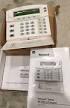 NetworX NX-6V2 LED Keypad User Manual POWER Light is on when AC power is present; flashes to indicate a low battery condition. ARMED Light is on when armed; off when disarmed; flashes to indicate a previous
FIRST ALERT INSTRUCTION MANUAL FOR FA 270 KEYPADS SECURITY SYSTEM
 FIRST ALERT INSTRUCTION MANUAL FOR FA 270 KEYPADS SECURITY SYSTEM Page 0 Table of Contents Introduction 1 System Basics.. 1 Burglary Protection.. 1 Fire Protection.. 1 Security Codes. 1 Zones and Partitions
SECURITY SYSTEM NOTES
 SECURITY SYSTEM NOTES Installing/Service Company For Service Call Central Station Duress Code FUNCTION CODES Function Code Controls Function This system is is not partitioned. EMERGENCY ACTIVATION KEYS
TABLE OF CONTENTS HOW TO AVOID FALSE ALARMS... 1
 TABLE OF CONTENTS HOW TO AVOID FALSE ALARMS... 1 THE BRINK S HOME SECURITY SYSTEM Equipment in the Standard Systems... 2 Optional Equipment... 3 Description of the Keypad... 5 OPERATING THE BRINK S SYSTEM
SECURITY SYSTEM NOTES
 SECURITY SYSTEM NOTES Installing/Service Company For Service Call Central Station Duress Code FUNCTION CODES Function Code Controls Function EMERGENCY ACTIVATION KEYS (check if enabled) Fire Auxiliary
INSTRUCTION MANUAL PC255O
 INSTRUCTION MANUAL PC255O Canadian Department of Communications Notice NOTICE: The Canadian Department of Communications label identifies certified equipment. This certification means that the equipment
616, 626, 636 & 646 Keypads
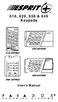 616, 626, 636 & 646 Keypads User s Manual TABLE OF CONTENTS 1.0 BASIC OPERATION...2 2.0 ACCESS CODES...4 3.0 ARMING & DISARMING...6 4.0 PANIC ZONES...13 5.0 KEY ACCESS PROGRAMMING.14 6.0 ADDITIONAL FEATURES...15
Using your Alpha Plus keypad With your
 Using your Alpha Plus keypad With your q q q System 236 System 238 System 2316 q q q System 236i System 238i System 2316i Part Number 5-051-373-00 Rev B Thank you for purchasing this C&K alarm system Your
466-1936 Rev E October 2004 ZZZ*(6HFXULW\FRP. Part No: 60-883-95R. CareGard. User Guide
 ) *(6HFXULW\ 466-1936 Rev E October 2004 ZZZ*(6HFXULW\FRP Part No: 60-883-95R CareGard User Guide FCC Notices FCC Part 15 Information to the User Changes or modifications not expressly approved by GE Security
SECURITY SYSTEM NOTES SPECIAL CODES. Security System Configuration
 Installing / Service Company: SECURITY SYSTEM NOTES For Service Call: Master Code SPECIAL CODES Duress Code Security System Configuration Auxiliary Code(s) Quick Arm" Digit: 2 9 3 10 4 11 5 12 6 13 7 14
Changes or modifications not expressly approved by Interlogix, Inc. can void the user s authority to operate the equipment.
 9-4 5 ) 7 ) 8 A HI E = @ = JA H 6 D A 2 A =? A A A F A H 1 FCC Notices FCC Part 15 Information to the User Changes or modifications not expressly approved by Interlogix, Inc. can void the user s authority
Security System Owner s Manual
 Security System Owner s Manual Interactive Technologies Inc. 2266 North 2nd Street North St. Paul, MN 55109 FCC Notices FCC Part 15 Information to the User Changes or modifications not expressly approved
National Security Systems Inc (800)457-1999. Security System User's Guide
 National Security Systems Inc (800)457-1999 Security System User's Guide Security System Glossary As security system technology has evolved, a special jargon has developed. Some terms widely used within
SECURITY SYSTEM NOTES SPECIAL CODES AUXILIARY ARM / DISARM CODES ENTRY / EXIT DELAY TIMES ZONE DESCRIPTIONS
 SECURITY SYSTEM NOTES Installing/Service Company For Service Call SPECIAL CODES Master Code Duress Code "Quick Arm" Digit "Chime" Digit "Entry-Guard" Digit AUXILIARY ARM / DISARM CODES 02 12 22 03 13 23
SECURITY SYSTEM NOTES. Security System Configuration
 Installing / Service Company: For Service Call: SECURITY SYSTEM NOTES Security System Configuration Master Code: Auxiliary Code(s) 2 3 4 5 6 "Quick Arm" Digit: Exit Delay Time Auxiliary Exit Delay Time
Personal Assistance System Owner's Guide
 Owner's Guide PSC07 READ THIS FIRST This equipment generates and uses radio frequency energy, and if not installed and used properly, that is, in strict accordance with the manufacturers instructions,
5HDG\*XDUG5 6HFXULW\6\VWHP 8VHU*XLGH K5481-1 8/00 OFF AWAY STAY AUX
 5HDG\*XDUG5 6HFXULW\6\VWHP OFF AWAY STAY AUX 8VHU*XLGH K5481-1 8/00 7$%/(2)&217(176 SYSTEM OVERVIEW...3 Features...3 General Operation...4 Quick View of System Functions...6 About the Master Keypad...7
User's Manual 5120XM N8031 6/96
 Fire and Burglary System User's Manual 5120XM N8031 6/96 SYSTEM OVERVIEW...3 General...3 Zones...3 Fire & Emergency Protection...3 Burglary Protection...4 Alarms...4 Memory of Alarm...4 ABOUT THE KEYPADS...5
GE Concord 4 Quick User Guide
 GE Concord 4 Quick User Guide GE Concord 4 Quick User Guide Page 1 Before Calling Is the keypad beeping? Press *. This will silence the beeping and let you know where the trouble is. Is there a flashing
SPECIAL CODES AUXILIARY CODES SYSTEM NOTES
 Installing/Service Company Monitoring Center SPECIAL CODES Master Code Duress Code AUXILIARY CODES "Quick Arm" " Chime" 08 02 09 03 10 04 11 05 12 06 13 07 14 SYSTEM NOTES Exit Delay Time Entry Delay Time
Consumer Information. FCC Notice
 Consumer Information FCC Notice This equipment has been tested and found to comply with the limits for a Class B digital device, pursuant to Part 15 of the FCC Rules. These limits are designed to provide
Security System User s Guide
 Security System User s Guide Table of Contents Introduction Command Center Function Keys Security System Basics Your Custom Display View Faulted or Bypassed Points Warning Displays and Tones Fire Alarms
IDS X-Series User Manual 700-398-01D Issued July 2012
 1 2 Contents 1. Introduction to the IDS X-Series Panels... 7 2. Before Operating Your Alarm System... 7 3. Understanding the Keypad LEDs... 8 3.1 Viewing Data on an LED Keypad... 12 3.1.1 LED Status Indicators...
HILLS Series LED Code Pad User Manual
 HILLS Series LED Code Pad User Manual Not all features may be available on your system Check with your installer to find out which features are programmed Page 2 TABLE OF CONTENTS Code Pad Diagrams...2
System User s Manual
 System User s Manual BHS-4000A Consumer Information FCC Notice This equipment has been tested and found to comply with the limits for a Class B digital device, pursuant to Part 15 of the FCC Rules. These
INSTRUCTION MANUAL PC5OO WITH PC5OORK KEYPAD
 INSTRUCTION MANUAL PC5OO WITH PC5OORK KEYPAD TABLE OF CONTENTS SYSTEM INFORMATION 2 INTRODUCTION 3 Test Your System Regularly...3 Important Notice...3 Glossary...3 BASIC OPERATION 4 Arming Your System...4
GC2 Panel User Guide
 GC2 Panel User Guide ENGLISH (International) WIRELESS SECURITY SYSTEM WARNING: OWNER S I NSTRUCTION NOTICE Not to be removed by anyone except occupant THIS PAGE INTENTIONALLY LEFT BLANK CONTENTS System
Security System. User's Manual VISTA-20BAY. N7527-4 03/98 File No: S1632 SINCE 1946
 Security System User's Manual VISTA-20BAY SINCE 1946 N7527-4 03/98 File No: S1632 TABLE OF CONTENTS System Overview...4 General Information...4 Zones...4 Burglary Protection...4 Security Codes...5 Fire
Wireless Security System
 Wireless Security System 2GIG-CNTRL2 (2GIG-CP2) User s Guide WARNING: Owner s Instruction Notice Not to be removed by anyone except occupant The Go!Control Security System Congratulations on your ownership
Users Guide to Keypad Functions
 Users Guide to Keypad Functions MANUAL NO. 700-175-01J ISSUED JAN 2002 VERSION 1.41 Summary of Operation A rm/ disarm [#] + [USER CODE] Quick Quick Quick Panic Fire Medical Away Arm Stay Arm Stay Arm &
PC Tab Security System INSTRUCTION MANUAL
 PC Tab Security System INSTRUCTION MANUAL This manual is intended as a Quick Start manual covering the basic functions that have been enabled on the alarm panel. The alarm panel is capable of extensive
Security System. User's Guide. Keypad
 Security System EN User's Guide Keypad Security System User's Guide This system includes a telephone line seizure feature. The system can be programmed to communicate with a central monitoring station
READY ARMED 2 AWAY 1 OFF 3 STAY B 5 TEST 6 C D MAX BYPASS 9 CHIME # 8 CODE INSTANT READY I I I I I I FA560 K4855V1 3/00
 ARMED MAX INSTANT READY READY R BYPASS R R )$& )$&&1 6HFXULW\6\VWHP A 1 OFF 2 AWAY 3 STAY B 4 5 TEST 6 C D 7 * FA560 8 CODE 0 9 CHIME # I I I I I I HEAT COOL BYPASS ACTIVE 8VHU*XLGH K4855V1 3/00 TABLE
User Guide for the DS7060 Control/Communicator
 DS7060 User Guide Copyright 1996-97 Detection Systems, Inc. User Guide for the DS7060 Control/Communicator Copyright 1996-97 Detection Systems, Inc. Detection Systems, Inc., 130 Perinton Parkway, Fairport,
HILLS Series LED Code Pad User Manual
 HILLS Series LED Code Pad User Manual Not all features may be available on your system Check with your installer to find out which features are programmed Page 2 TABLE OF CONTENTS Code Pad Diagrams...2
SECURITY SYSTEM NOTES SPECIAL CODES ENTRY / EXIT DELAY TIMES ARM / DISARM CODES
 SECURITY SYSTEM NOTES Installing/Service Company For Service Call SPECIAL CODES "Chime" Digit 1 "Partial Arm" Digit 2 "Quick Arm" Digit 3 ENTRY / EXIT DELAY TIMES Exit Delay Time Entry Delay Time Secondary
IDS. Users Guide to Keypad Functions S E C U R I T Y MANUAL NO. 700-171-01B ISSUED AUG 2002 VERSION 1.18
 INHEP DIGITAL IDS S E C U R I T Y Users Guide to Keypad Functions MANUAL NO. 700-171-01B ISSUED AUG 2002 VERSION 1.18 Summary of Operation A rm/ disarm [#] + [USER CODE] Quick Quick Quick Away Arm Stay
1 2 3 4 5 6 7 8 9 STAY AWAY 0 NIGHT
 1 2 3 4 5 6 7 8 9 AWAY 0 STAY NIGHT THIS BOOKLET CONTAINS CONFIDENTIAL INFORMATION ABOUT YOUR SECURITY SYSTEM. KEEP IT IN A SECURE PLACE. TABLE OF CONTENTS System Overview............................ 1
Wireless Security System
 Wireless Security System 2GIG-CP2 User s Guide WARNING: Owner s Instruction Notice Not to be removed by anyone except occupant The Go!Control Security System Congratulations on your ownership of a Go!Control
User's Manual AM100. N7527-3V1 Rev B 4/99
 Security System User's Manual AM100 N7527-3V1 Rev B 4/99 2 SYSTEM OVERVIEW... 4 General... 4 Zones... 4 Burglary Protection... 5 Security Codes... 5 Fire Protection... 5 Alarms.... 6 Memory of Alarm...
SECURITY SYSTEM NOTES. EMERGENCY ACTIVATION KEYS (check if enabled) PROGRAMMED FUNCTIONS
 SECURITY SYSTEM NOTES Installing/Service Company For Service Call Installation Date / / Central Station Duress Code EMERGENCY ACTIVATION KEYS (check if enabled) Fire Auxiliary Emergency Police PROGRAMMED
Wireless Home Security System Product Manual (Model #80355)
 Wireless Home Security System Product Manual (Model #80355) Installation Instructions During set-up, if no key is pressed for 15 seconds it will come out of the setup mode and you will have to start over.
PRODUCT WARRANTY. Page 20
 PRODUCT WARRANTY Manufactured equipment is warranted to be free from defects in material and workmanship for a period of twelve (12) months from date of manufacture as indicated by the date stamp and/or
Lynx Plus Series Security System
 Lynx Plus Series Security System User Guide ARMED READY ESCAPE ADD OFF AWAY RECORD LIGHTS ON 1 2 3 VOLUME TEST PLAY 4 5 6 BYPASS 7 8 9 STAY DELETE AUX SELECT LIGHTS OFF 0 CODE CHIME STATUS NO DELAY FUNCTION
INSTRUCTION MANUAL LCD-6OO SECURITY STATION
 INSTRUCTION MANUAL 1993 Digital Security Controls Ltd. 1645 Flint Road, Downsview, Ontario, Canada M3J 2J6 Printed in Canada 29000144 R1 LCD-6OO SECURITY STATION Table of Contents Introduction 1 About
NetworX Series. NX- 4/8 Code Pad. User Manual (Australian Version)
 NetworX Series NX- 4/8 Code Pad User Manual (Australian Version) Table Of Contents Code Pad Diagram... Inside Front Glossary of Terms...2 Understanding the Code Pad lights...3 Code Pad Tones...4 Fully
LYNX Touch L5200 Series Security System
 LYNX Touch L5200 Series Security System User Guide 800-16083V1 12/14 Rev. A LYNX Touch L5200 Series Your Honeywell security system is designed for use with devices manufactured or approved by Honeywell
How To Use A Keypad On A Iphone Or Ipad (Awn) With A Security System On A Powerline (Apl) With An Alarm System On It (Aldeen) And A Power Button On It
 WARNING This manual contains information on limitations regarding product use and function and information on the limitations as to liability of the manufacturer. The entire manual should be carefully
tattletale User Guide Consumer unit version 2.48 1 P a g e
 tattletale User Guide Consumer unit version 2.48 1 P a g e Contents Basic 1... 4 Base Unit Features... 4 Initial Setup... 4 Arming... 5 Disarming... 5 Quiet Button... 5 Settings... 5 Settings 2... 6 Quick
Ademco Vista-20P/First Alert FA-168C Basic Commands
 Zones 64 total Ademco Vista-20P/First Alert FA-168C Basic Commands Wireless Yes, Zones 09 to 48 + 16 Keyfob Zones (Zones 49 to 64) Batteries Downloadable Partitions 2 12 volt Rechargable inside main Panel,
D1260/D1260B. Keypad. National Security Systems Inc (800)457-1999. Owner's Manual
 D1260/D1260B EN Owner's Manual Keypad National Security Systems Inc (800)457-1999 D1260/D1260B Owner's Manual This system includes a telephone line seizure feature. The system may be programmed to communicate
SECURITY SYSTEM NOTES AREA LISTINGS SPECIAL CODES ENTRY / EXIT DELAY TIMES ARM / DISARM CODES ZONE DESCRIPTIONS
 SECURITY SYSTEM NOTES Installing/Service Company For Service Call Area 1 Area 2 Area 3 AREA LISTINGS SPECIAL CODES "Quick Arm" Digit "Partial Arm" Digit "Chime" Digit ENTRY / EXIT DELAY TIMES Exit Delay
LYNX Touch Security System
 LYNX Touch Security System User Guide 1:35 2 PM October 26, 2011 72 Mostly Sunny 68 F F Feels Like 71 Security Messages Automation 5-Day Forecast News Traffic 800-10615 1/12 Rev. A LYNX Touch L5100 Series
USER'S MANUAL. N7527-1V2 Rev B 4/99
 USER'S MANUAL FA162C Security System N7527-1V2 Rev B 4/99 2 SYSTEM OVERVIEW... 4 General... 4 A Partitioned System... 4 Zones... 4 Burglary Protection... 5 Security Codes... 5 Fire Protection... 6 Alarms...
3 6HFXULW\6\VWHP 8VHU*XLGH K4333 9/99 AWAY BYPASS STAY ALARM FIRE ARMED OFF AWAY STAY READY MAX TEST BYPASS INSTANT CODE CHIME
 ARMED READY OFF AWAY STAY MAX TEST BYPASS INSTANT CODE CHIME READY ARMED READY NIGHT NO AC PHONE TEST NOT READY CHIME BAT CHECK INSTANT CANCELED OFF AWAY STAY MAX TEST BYPASS INSTANT CODE CHIME READY 3
LYNX Touch L5210 Series Security System
 LYNX Touch L5210 Series Security System User Guide 800-19975 12/14 Rev. A LYNX Touch L5210 Series Your Honeywell security system is designed for use with devices manufactured or approved by Honeywell for
USER'S MANUAL. N7527-1V2 Rev B 4/99
 USER'S MANUAL FA162C Security System N7527-1V2 Rev B 4/99 2 SYSTEM OVERVIEW... 4 General... 4 A Partitioned System... 4 Zones... 4 Burglary Protection... 5 Security Codes... 5 Fire Protection... 6 Alarms...
MANUAL. FA142C Security System. N7229 1V2 Rev B 4/99
 USER'S MANUAL FA142C Security System N7229 1V2 Rev B 4/99 SYSTEM OVERVIEW...3 General...3 Keypads...3 Zones...3 Burglary Protection...4 Fire Protection...4 Alarms...4 Memory of Alarm...4 Phone Access &
Your Ademco. Fir&Burglar Alarm System. LogiCenter INTRODUCTION: 1. _- ALARM DEVICE MANUFACTURING CO.
 Your Ademco LogiCenter Fir&Burglar Alarm System i INTRODUCTION: Your LogiCenter is designed to alert you in the event of either a forced entry into a protected area or signal an alarm if a fire alarm condition
USER INSTRUCTIONS CONTENTS
 CONTENTS Full Set [1]...2 Part Set [2]...2 Night Set [3]...3 Unsetting...3 Unsetting after or during an alarm...3 Testing the system [5]...3 Isolating zones [6]...4 Reprogramming codes [8]...4 Chime facility
6H XULW\6\VWHP 8VHU*XLGH FIRE BURGLARY INSTRUMENTS, INC. N9819V3 6/00 ARM STAY INSTANT AC/LB READY
 ARM STAY INSTANT AC/LB READY 1 2 3 4 5 6 ;/7 6H XULW\6\VWHP 8VHU*XLGH FIRE BURGLARY INSTRUMENTS, INC. N9819V3 6/00 Table Of Contents QUICK REFERENCE...3 INTRODUCTION...4 SYSTEM REFERENCE...5 TURNING THE
Security System. User Guide FIRE BURGLARY INSTRUMENTS, INC. N9819V3 2/00
 XL-2T Security System User Guide FIRE BURGLARY INSTRUMENTS, INC. N9819V3 2/00 Table Of Contents QUICK REFERENCE... 3 INTRODUCTION... 5 SYSTEM REFERENCE... 6 TURNING THE SYSTEM ON... 9 TURNING THE SYSTEM
LYNX Touch L7000 Series Security System
 LYNX Touch L7000 Series Security System User Guide 800-16084 12/13 Rev. A LYNX Touch L7000 Series Your Honeywell security system is designed for use with devices manufactured or approved by Honeywell for
LYNX Touch Security System
 LYNX Touch Security System User Guide 800-10615V1 12/12 Rev. A LYNX Touch L5100 Series Your Honeywell security system is designed for use with devices manufactured or approved by Honeywell for use with
Power864. User s Guide. Now classified in accordance with ANSI/SIA CP-01-2000 (SIA-FAR)
 WARNING This manual contains information on limitations regarding product use and function and information on the limitations as to liability of the manufacturer. The entire manual should be carefully
User's Manual VIA-30PSE, VISTA-10SE. N7229V2 Rev B. 1/97
 Security System User's Manual VIA-30PSE, VISTA-10SE N7229V2 Rev B. 1/97 SYSTEM OVERVIEW...3 General...3 Zones...3 Burglary Protection...3 Chime Feature...3 Alarms...4 Fire Protection...4 Memory of Alarm...4
POWER POWER ABC DEF GHI JKL ABC DEF GHI JKL COMMAND YZ COMMAND POWER ABC DEF GHI JKL COMMAND YZ USER'S GUIDE
 POWER POWER POWER ABC DEF GHI JKL ABC DEF GHI JKL MNO PQR STU VWX MNO PQR STU VWX YZ COMMAND YZ COMMAND ABC DEF GHI JKL MNO PQR STU VWX COMMAND YZ USER'S GUIDE Security Command User's Guide for 9XR Command
HUNTER-PRO 32 Ver. 3.8 Intruder Alarm System RXN-9/416 User Guide
 HUNTER-PRO 32 Ver. 3.8 Intruder Alarm System RXN-9/416 User Guide PIMA Electronic Systems Ltd. 5 Hatzoref Street, Holon 58856, Israel +972-3-5587722 +972-3-5500442 [email protected] http://www.pima-alarms.com
CAD-05 Kit GSM Auto Dialer. Owner s Manual
 CAD-05 Kit GSM Auto Dialer Owner s Manual CAD-05 Kit Manual.indd 1 Warnings: This device complies with Part 15 of the FCC rules, Operation of this device is subject to the following conditions: 1. This
FUTURE CALL PICTURE CARE PHONE MODEL: FC-1007 USER MANUAL
 FUTURE CALL PICTURE CARE PHONE MODEL: FC-1007 USER MANUAL Please follow instructions for repairing if any otherwise do not alter or repair any parts of device except specified. IMPORTANT SAFETY INSTRUCTIONS
32 ZONE SECURITY SYSTEM. Compatible with DLS-3 v1.3 (and higher) downloading software
 NT9005 V1.0 32 ZONE SECURITY SYSTEM Compatible with DLS-3 v1.3 (and higher) downloading software User Guide WARNING: This manual contains information on limitations regarding product use and function and
Destiny 4100. Destiny 4100. Owners Manual
 Destiny 4100 Destiny 4100 Owners Manual TABLE OF CONTENTS INTRODUCTION Control Panel...3 Detection Devices...3 Telephone Keypads...3 GLOSSARY... 4-5 LOCAL PHONE ACCESS Using Your Telephones As Keypads...6
Elite 8D/Lite Version 8 Zone Controller. Arrowhead Alarm Products Ltd. Operating Guide. Proudly Designed and Manufactured in New Zealand
 Elite 8D/Lite Version 8 Zone Controller 8 Arrowhead Alarm Products Ltd Operating Guide 1 Proudly Designed and Manufactured in New Zealand 2 CONTENTS Page No. INTRODUCTION 4 About your Alarm 4 OPERATING
Wireless Alarm System. Window/Door Sensor. User s Manual. Choice ALERT. Control all Sensors & accessories from one location
 45131 Wireless Alarm System Window/Door Sensor User s Manual Choice ALERT Control all Sensors & accessories from one location Table of Contents Important Safeguards 4 Introduction 5 Installation 6 Assigning
Understanding the Code Pad lights...4. Code Pad tones...5. Fully arming the system On MODE...6. Fully arming the system - Quick Arm MODE...
 TABLE OF CONTENTS...Glossary of terms...2...code Pad Diagram...3 Understanding the Code Pad lights...4 Code Pad tones...5 Fully arming the system On MODE...6 Fully arming the system - Quick Arm MODE...6
Wireless Security System
 Wireless Security System 2GIG-CNTRL2 Operation & User s Guide WARNING: Owner s Instruction Notice Not to be removed by anyone except occupant Technical Support 866-670-1591 www.2gig.com The GO!control
SECTION 13850 DETECTION AND ALARM
 SECTION 13850 DETECTION AND ALARM PART 1 GENERAL 1.01 SUMMARY A. Section Includes 1. Control Panel 2 Associated Equipment B. Products Installed But Not Supplied Under This Section 1. Section 16140 - Wiring
Using Your. Security System. With LED Keypad S5030, S5031, S5032
 Using Your Security System With LED Keypad S5030, S5031, S5032 Contents 1 Overview Your Security System... 1 How Your Security System Works... 2 Your System's Programming... 3 Getting Used to Your System...
Wireless Alarm System. Silent Alert. User s Manual. Choice ALERT. Control all Sensors & accessories from one location
 45137 Wireless Alarm System Silent Alert User s Manual Choice ALERT Control all Sensors & accessories from one location Table of Contents Important Safeguards 4 Introduction 4 Adding a Silent Alert to
VR8. User Guide Intruder Alarm System
 VR8 EN User Guide Intruder Alarm System VR8 User Guide Notices EN 2 Copyright Notice Unless otherwise indicated, this publication is the copyright of Bosch Security Systems Pty Ltd ( Bosch ). All rights
How to Use Your Moose Security System
 How to Use Your Moose Security System ZXLED8/ZXLED12 Control Station READY TROUBLE 1 2 3 4 5 6 7 8 FIRE 9 10 11 12 OFF CANCEL D AWAY STAY VIEW INFO ALM MEM EVENT LOG 1 2 3 BYPASS DELAY ARM CHIME 4 5 6
Using Your. Security System With Icon Keypad S5020, S5021, S5022
 Using Your Security System With Icon Keypad S5020, S5021, S5022 Contents 1 Overview Your Security System... 1 How Your Security System Works... 2 Your System's Programming... 3 Getting Used to Your System...
XR6/XR10 User s Guide
 XR6/XR10 User s Guide Silencing an Alarm All/Perimeter and Home/Away Systems 1. While the alarm bell or siren is sounding, enter your user code. The keypad displays DISARM SILENCE. 2. Press the SELECT
Instruction Manual PC15OO/PC155O W A R N I N G
 Instruction Manual PC15OO/PC155O W A R N I N G This manual contains information on limitations regarding product use and function and information on the limitations as to liability of the manufacturer.