
Unit 2/Lesson 12. Lesson Title: The Thirteen Original Colonies
|
|
|
- Franklin McDaniel
- 9 years ago
- Views:
Transcription
1 Unit 2/Lesson 12 Lesson Title: The Thirteen Original Colonies Short Term Goal: Identify how America was named, the original colonies, the different lifestyles of the people who lived in the Southern, Middle and New England colonies. Common Core Standards: SLEs: H.6.3.7: Analyze a timeline that illustrates selected historical events H : Identify the causes for the establishment of the thirteen colonies (e.g., gold, tobacco, religion) H.6.3.8: Compare artifacts from events in various periods of history H.6.2.6: Determine how photos and documents are used to gather information about the past. Common Core: Reading Standards for Informational Text CC3RI1 Ask and answer questions to demonstrate understanding of a text, referring explicitly to the text as the basis for the answers CC3RI2 Determine the main idea of a text; recount the key details & explain how they support the main idea. CC3RI5 Use text features and search tools (e.g., key words, sidebars, hyperlinks) to locate information relevant to a given topic efficiently. CC3RI7 Use information gained from illustrations (e.g., maps, photographs) and the words in a text to demonstrate understanding of the text (e.g., where, when, why, and how key events occur. Speaking and Listening Standards CC3SL1 Engage effectively in a range of collaborative discussions (one-on-one, in groups, and teacher-led) with diverse partners on grade 3 topics and texts, building on others ideas and expressing their own clearly. CC3SL1a Come to discussions prepared, having read or studied required material; explicitly draw on that preparation and other information known about the topic to explore ideas under discussion. CC3SL2 Determine the main ideas & supporting details of a text read aloud or information presented in diverse media & formats, including visually, quantitatively, & orally CC3SL4 Report on a topic or text, tell a story, or recount an experience with appropriate facts & relevant, descriptive details, speaking clearly at an understandable pace. CC3SL4a. Read on-level text with purpose and understanding. Writing Standards CC3W2a Introduce a topic and group related information together; include illustrations when useful to aiding comprehension CC3W2b Develop the topic with facts, definitions, & details.
2 CC3W2c Use linking words & phrases (e.g., also, another, and, more, but) to connect ideas within categories of information CC3W2d Provide a concluding statement or section. CC.3.W.3 Write narratives to develop real or imagined experiences or events using effective technique, descriptive details, and clear event sequences CC.3.W.3.b. Use dialogue and descriptions of actions, thoughts, and feelings to develop experiences and events or show the response of characters to situations. CC.3.W.3.d. Provide a sense of closure. CC.3.W.4. With guidance and support from adults, produce writing in which the development and organization are appropriate to task and purpose. (Grade-specific expectations for writing types are defined in standards 1 3 above.) CC.3.W.5. With guidance and support from peers and adults, develop and strengthen writing as needed by planning, revising, and editing. (Editing for conventions should demonstrate command of Language standards 1 3 up to and including grade 3 on pages 28 and 29.) CC.3.W.10 Write routinely over extended time frames (time for research, reflection, and revision) and shorter time frames (a single sitting or a day or two) for a range of disciplinespecific tasks, purposes, and audiences Materials: How America Got Its Name Early Map of America 1515 First Printing of America 1507 Image Analysis Sheet Regional Map of the Thirteen Colonies Questions to Answer about the Colonies Smart Board Lessons: Colonial Life and Thirteen Colonies (Click on Abraham Choate or Abraham Dodge) Direct Explanation/Model:
3 Whole Group/Three Sessions What: Identify how America was named, the original colonies, the different lifestyles of the people who lived in the Southern, Middle and New England colonies. Why: The students will learn about a period in history through artifacts, maps, narratives, and quotes showing personal perspectives. America was named after Amerigo Vespucci, a 15th century Florentine merchant. People flocked to America for a variety of reasons such as religious freedom, financial prosperity, and some as slaves to work the field of the colonists. How: The students will listen to a read aloud about the origin of our country s name as well as look at a map of the land dating back to the 1500 s. They will research the reasons people settled here and the different lifestyles they lived based on the geography. Session One: Guided Activity: As an introduction to the study of the Thirteen Colonies read the narrative about the naming of America. Discuss the first map that was drawn showing America as a continent. How does it look different from maps of today. Apply: Have the students respond to the information by answering the question: Do you agree with the decision to name the continent America? Session Two: Guided Activity: Participate in an interactive lesson with Smart Exchange (Colonial Life) to introduce the Thirteen Original Colonies. Apply: The students will answer questions about a regional map of the Thirteen Colonies.
4 Guided Activity: Discuss as a class the significance of physical geography in the late 1700s, when colonists were settling the area that is now the United States. Share the smart board lesson The Thirteen Colonies (grades 1, 2, 3, 4, and 5). Some ideas to address in the discussion might include the following: Settlements needed to be near waterways because boats were the most practical way to transport cargo. In particular, access to the Atlantic Ocean was crucial at the time, as trade with Britain, the rest of Europe, the Caribbean, and Africa was essential to the colonial American economy. Geographical barriers such as rivers and mountains limited settlement because transportation technology was much less developed than it is now. Climate and geography had a major impact on the crops that settlers could grow for food and for trade. Tobacco, imported from Trinidad in 1612, became an important export crop for the Southern Colonies, where it grew particularly well. In addition, other crops such as corn and wheat grew well throughout the colonies. Fishing developed as an important industry, especially in New England, where ocean geography offered ideal conditions for abundant fish populations. About 4/5 of the colonial population were farmers. Approximately ¼ of the colonial population were slaves, brought to the colonies against their will from Africa in the triangular trade system, in which European manufactured commodities were traded for slaves in Africa, who were then traded for agricultural commodities such as sugar, cotton, and tobacco to be taken back to Europe and the colonies. All land was taken from Native Americans, either peacefully or forcefully. Native American friendliness was the only way that the initial colonies survived. Native American communities did not have the same sense of land ownership that Europeans had; they shared the land they occupied rather than staking a claim. Thus, there was a major cultural difference between the Europeans and the Native Americans, which resulted in major displacements of the latter. Next, discuss with students what was going on during that period in American history. Some ideas to address in the discussion might include the following: People came to the colonies for different reasons, such as seeking freedom from religious persecution, seeking fortune, or being kidnapped and enslaved. Naturally, their reasons for coming and their backgrounds had an impact on their values and priorities. Life was very different in the various colonies. For example, slaves, who were an important part of the economic system, made up about 40% of the population in the Southern colonies at that time, while they were less common in the Northern Colonies. Agriculture was the primary industry in most colonies, but almost universally in the South. In New England, government was organized around town councils, whereas the Middle and Southern Colonies generally tended to organize their governments around counties. (This is still true.) Desire for religious freedom was a major incentive for
5 settling in New England and the Middle Colonies, whereas economic opportunity was a primary factor in the settlement of the Southern Colonies. The Middle Colonies were settled largely by non-english Europeans, including Swedish, Dutch, and Germans, Swiss, French, Scottish, and Welsh. Despite their differences, people in all colonies were becoming increasingly discontent with British colonial rule and its various manifestations, especially taxation without representation. Other concerns included British regulation of trade, mandates to house and feed British military, and lack of due process of law (fair trials). It is this discontent with British rule that united the diverse colonies in a fight for independence from Britain. During the Revolutionary years, leaders from each colony joined together to a) claim independence from Britain and b) set up a unified government. Guided Activity: The students will research two families who lived during the colonial period. They will look at artifacts and find out how they made a living. They will go to websites to see artifacts and read about the life the people lived. (Click on Abraham Choate or Abraham Dodge) Apply: After doing the research the students will complete the Historian s Question Activity. Pretend to be a child in one of the families and write to one of the other families. In this activity, students write letters to each other from the perspectives of children in the families they ve researched. They will imagine that the children are cousins. The students should use all they have learned from their studies of the family's artifacts as well as other learning experiences about colonial life in America to write a letter that is authentic, although they are encouraged to use their imaginations to create realistic details. Letters should follow standard friendly letter format and should include, at a minimum, the following components: A date (month, day, and year) A description of the child's day, A reference to at least one other member of the household, A reference to the setting (e.g., the season, the house, the community), An issue of concern, A source of excitement, At least two questions
6 H O W A M E R I C A G O T I T S N A M E References: It is an irony of history that the name "America" did not come from Christopher Columbus. That distinction belongs to a German writer of geography. In a further twist of events, America was named after Amerigo Vespucci, a 15th century Florentine merchant who owned a business in Seville, Spain, furnishing supplies for ships, preparing them for mercantile expeditions. How do we explain what seems to mock the reality of history? Stirred by the achievements of Columbus and envious of the reputation his discoveries brought, Vespucci endeavored to cultivate Columbus' friendship and trust. Seven years after Columbus' first voyage and while Columbus was still alive, Vespucci accompanied an expedition that consisted of four ships. They sailed past the eastern coast of South America, and visited Trinidad, which Columbus had named the preceding year. On his return to Europe Vespucci wrote letters with glowing descriptions of the newly discovered countries. He called the lands he had visited a "New World." Some years later Vespucci's letters were published and read by Martin Waldseemuller, a noted geographer, and Mathias Ringmann, a schoolmaster. Recently-arrived from Germany to the province of Lorraine, they were attracted to the town of Saint-Die because of a newly-established printing. Both men were engaged in working on a reproduction of Ptolemy's treatise on geography, to which they were adding a preface. After reading the account of Vespucci's travels in "Quatre Navigations d' Americ Vespuce," they decided to incorporate Vespucci's voyage into the treatise. Ringmann, acting as editor, wrote in his introduction: "There is a fourth quarter of the world which Amerigo Vespucci has discovered and which for this reason we can call 'America' or the land of Americo." Apparently ignorant of the discoveries and achievements made by Columbus fifteen years earlier, Ringmann continued: "We do not see why the name of the man of genius, Amerigo, who has discovered them, should not be given to these lands, as Europe and Asia have adopted the names of women." Their work was published on April 25, 1507 under the title "Cosmographiae Introductio." It marked the first time the word AMERICA appeared in print. Ellis, Edward S., Library of American History, Cincinnati, Ohio, Steele, Joel Dorman and Steele, Esther Baker. A Brief History of the United States, 1871 Patton, Jacob Harris and Lord, John. The History and Government of the United States, 1876 Montgomery, D.H. An Elementary American History, 1904.
7 Image Analysis Worksheet Name Date Observation: Study the image. Look at the whole image and individual parts. List observations People Objects Activities
8
9 U.S. Territorial Map 1775 New England Massachusetts, New Hampshire, Connecticut, Rhode Island (Vermont and Maine came later) Middle Colonies New York, New Jersey, Pennsylvania, Delaware Southern Colonies Maryland, Virginia, North Carolina, South Carolina, Georgia Trace the lines of the Mississippi River and the Ohio River. Shade in the section between the original colonies and the Mississippi, and label this region "British Territories." Shade the part of the country west of the Mississippi with another color or marking and label it "Other Territories." Finally, label the map "The British Colonies in 1775."
10 Thirteen Colonies Map Questions 1. The thirteen colonies were colonies of what country? 2. Which colony was farthest north? 3. Which colony was farthest south? 4. The colonies were bounded by the Appalachian Mountains on the west. What ocean bordered the colonies on the east? 5. The oldest colony was Virginia (founded in 1607). Which colony was just south of Virginia? 6. The colony of Virginia contained what are now the states of Virginia and West Virginia. What colony bordered Virginia to the northeast? 7. The colony of Massachusetts was composed of what are now the states of Massachusetts and Maine. What colony was between the two parts of Massachusetts? 8. What colony was located east of Connecticut? 9. The colony of New York contained what are now the states of Vermont and New York. What two colonies bordered the colony of New York on the south? and 10. In what year did the 13 colonies declare their independence from Britain?
11 Historian s Questions Use the website to answer the questions. (Click on Abraham Choate or Abraham Dodge) 1. Which family are you investigating? 2. Where was their home? 3. What kind of place was it? 4. What did they do for work? 5. How prosperous was the family? 6. List three artifacts from the family s home and explain what they might tell you about how they lived? A. B. C.
SOCIAL STUDIES UNIT OUTLINES FIFTH GRADE
 SOCIAL STUDIES UNIT OUTLINES FIFTH GRADE In fifth grade, students use their understanding of social studies concepts and cause-and-effect relationships to study the development of the United States up
New England Colonies Facts For Kids
 New England Facts For Kids Free PDF ebook Download: New England Facts For Kids Download or Read Online ebook new england colonies facts for kids in PDF Format From The Best User Guide Database The three
Chapter 3: European Exploration and Colonization
 Chapter 3: European Exploration and Colonization Trade Route to Asia in the 1400s European Trade With Asia Traders - people who get wealth by buying items from a group of people at a low price and selling
Virginia Standards of Learning & Essential Historical Skills Taught
 Title The Africans Arrive: A History Mystery! Lesson Author Donna Shifflett Key Words Negro, victual, indentured servant, slave Grade Level Grade 4 or 5, Virginia Studies Time Allotted 60 minutes Lesson
Reading Standards for Literature
 Reading for Literature ELACC3RL1 Key Ideas and Details: Ask and answer questions to demonstrate understanding of a text, referring explicitly to the text as the basis for the answers. 11/5/2012 1 Reading
Send all inquiries to: Glencoe/McGraw-Hill 8787 Orion Place Columbus, Ohio 43240-4027 ISBN 0-07-824996-1. Printed in the United States of America
 Copyright by The McGraw-Hill Companies, Inc. All rights reserved. Permission is granted to reproduce the material contained herein on the condition that such material be reproduced only for classroom use;
Sample Test: Colonialism and Foundations of America. Use the following map and your knowledge of Social Studies to answer question 1.
 Sample Test: Colonialism and Foundations of America Use the following map and your knowledge of Social Studies to answer question 1. 1. What key activity does this map depict? A Middle Passage B Trans-Saharan
VISUAL 6.1 GREAT BRITAIN S AMERICAN COLONIES
 SPECIALIZATION AND TRADE IN THE THIRTEEN COLONIES LESSON 6 VISUAL 6.1 GREAT BRITAIN S AMERICAN COLONIES GREAT BRITAIN S COLONIES All colonies are rich in natural resources but short on labor. PRODUCTIVE
Overview. Mission Gate, ca. late 1700s Courtesy Texas Archeological Research Labs. Photo by Hunt Wellborn
 H C H A P T E R t h r e e H immigration Overview Chapter 3: Immigration covers many groups involved in the early colonization of Texas: farmers, ranchers, soldiers, missionaries, and slaves. Exhibits in
Chapter 3: The English Colonies
 Chapter 3: The English Colonies Section 1: The Southern Colonies Settlement in Jamestown In 1605 a company of English merchants asked King James I for the right to found, or establish, a settlement. In
17. WHO BECOMES PRESIDENT OF THE UNITED STATES IF THE PRESIDENT SHOULD DIE? 22. HOW MANY CHANGES OR AMENDMENTS ARE THERE TO THE CONSTITUTION?
 DEPARTMENT OF JUSTICE Immigration & Naturalization Service 100 Typical Questions 1. WHAT ARE THE COLORS OF OUR FLAG? 2. HOW MANY STARS ARE THERE IN OUR FLAG? 3. WHAT COLOR ARE THE STARS ON OUR FLAG? 4.
Henry Hudson by Kelly Hashway
 Before planes, people traveled by boat. And getting goods from one place to another took a long time, especially when ships had to sail around continents. In the early 1600s, European trading companies
Reasons why the colonies began God Religious Freedoms
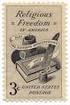 13 Colonies Reasons why the colonies began God Religious Freedoms The Puritans and the Pilgrims fled from England to the colonies Gold People could make lots of money in the colonies especially on plantations
The Southern Colonies
 The Southern Colonies About 100 men and boys sailed to Virginia in 1607. They set up a settlement. They named their new home Jamestown. They did not plant crops. They looked for gold. Just a few of the
Jamestown Settlement Family Gallery Guide From Africa to Virginia
 Jamestown Settlement Family Gallery Guide From Africa to Virginia Not long after the English settled Jamestown in 1607, the first Africans were brought to Virginia. They arrived in 1619 from the Kongo/Angola
Chapter 2 Democracy in the colonies
 Chapter 2 Democracy in the colonies Learning Objectives Explain how self-government got its start in the colonies Explain the purpose of the Mayflower Compact. Describe the ways the Pilgrims practiced
Five Themes of Geography
 Five Themes of Geography Studying the geography of the entire world is a huge task. You can make that task easier by using the five themes of geography: location, regions, place, movement, and humanenvironment
Georgia. Georgia and the American Experience. Georgia. Georgia and the American Experience Chapter 4: Settlement of the Thirteenth Colony Study Guide
 Slide 1 2005 Clairmont Press and the American Experience Chapter 4: 1477-1752 1752 Settlement of the Thirteenth Colony Study Presentation Slide 2 2005 Clairmont Press and the American Experience Section
Fourth Grade Social Studies Content Standards and Objectives
 Fourth Grade Social Studies Content Standards and Objectives Standard 1: Citizenship characterize and good citizenship by building social networks of reciprocity and trustworthiness (Civic Dispositions).
Students will know Vocabulary: purpose details reasons phrases conclusion point of view persuasive evaluate
 Fourth Grade Writing : Text Types and Purposes Essential Questions: 1. How do writers select the genre of writing for a specific purpose and audience? 2. How do essential components of the writing process
Slavery in Charleston, South Carolina:
 Slavery in Charleston, South Carolina: Standards Addressed: Social Studies 3-2.7: Explain the transfer of the institution of slavery into South Carolina from the West Indies, Including the slave trade
STANDARD 3.1 Greece & Rome. STANDARD 3.2 - Mali
 2008 Curriculum Framework Grade Three Social Studies Standards Condensed format created by SOLpass. www.solpass.org Key: red text highlights NEW (2008 revision) content; crossout indicates content cut
E/LA Common Core Standards for Writing Grade 5
 Text Type and Purposes Anchor Standards 1. Write arguments to support claims in an analysis of substantive topics or texts, using valid reasoning and relevant and sufficient evidence. 2. Write informative/explanatory
Winter 2009 Teaching with Primary Sources Quarterly Learning Activity Elementary Level
 Winter 2009 Teaching with Primary Sources Quarterly Learning Activity Elementary Level The Declaration of Independence: Differentiated Learning Activity OVERVIEW Declaration of Independence Baltimore,
Chapter 10: How Americans Settled the Frontier. The white settlers moving west into land that Native Americans lived : westward expansion.
 Chapter 10: How Americans Settled the Frontier Multiple Perspectives and the Idea of a Frontier Frontier : The land west of where most white settlers lived. Native Americans lived on the frontier. The
Colonial America Vocabulary
 Colonial America Vocabulary jerkin jacket of cloth or leather, open at the neck, but without sleeves. petticoat independence minutemen women s skirts, often worn several at a time, sometimes the top one
3rd Grade Common Core State Standards Writing
 Text Types and Purposes Writing CCSS.ELA-Literacy.W.3.1 Write opinion pieces on topics or texts, supporting a point of view with reasons. CCSS.ELA-Literacy.W.3.1a Introduce the topic or text they are writing
Mercantilism and the Act for Advancement of Trade
 Mercantilism and the Act for Advancement of Trade HISTORICAL THINKING SKILLS: Standard 5 - Historical Issues Analysis & Decision-Making; 5B. Compare the interests and values of the various people involved.
Students will know Vocabulary: claims evidence reasons relevant accurate phrases/clauses credible source (inc. oral) formal style clarify
 Sixth Grade Writing : Text Types and Purposes Essential Questions: 1. How do writers select the genre of writing for a specific purpose and audience? 2. How do essential components of the writing process
Take this Test! 1. The Aztec Empire was located in Canada or Central America?
 Take this Test! Round One 1. The Aztec Empire was located in Canada or Central America? 2. Where did Roger Williams eventually settle?...maryland or Rhode Island? 3. During the European settlement of the
FLORIDA BECOMES A U.S. TERITORY By Laura Harder and Toni Migliore
 FLORIDA BECOMES A U.S. TERITORY By Laura Harder and Toni Migliore Summary: After the British returned Florida to Spain, Florida came under Spanish rule for a second time. During this second period, which
Liberty! How the Revolutionary War Began By Lucille Recht Penner ISBN: 0-375-82200-3
 American Revolution Liberty! How the Revolutionary War Began By Lucille Recht Penner ISBN: 0-375-82200-3 Teacher: Karen Ours Unit Topic: Events Leading to Revolutionary War Grade: 5 th - Special Ed- MIMR
All of the materials for the summer assignments can also be found on my class website: https://sites.google.com/site/apushistorywhs/
 Advanced Placement United States History (APUSH) Summer Assignment 2012 Instructor: K. Poteat Brown Email: [email protected] Class Site: https://sites.google.com/site/apushistorywhs/ Welcome to
American Presidents. Author: Dr. Michael Libbee, Michigan Geographic Alliance
 American Presidents Author: Dr. Michael Libbee, Michigan Geographic Alliance Lesson Overview: Students will understand how the political geography of the country has changed. This lesson helps summarize
Strand: Reading Literature Topics Standard I can statements Vocabulary Key Ideas and Details
 Strand: Reading Literature Key Ideas and Details Craft and Structure RL.3.1 Ask and answer questions to demonstrate understanding of a text, referring explicitly to the text as the basis for the answers.
Types of Businesses. For each event explain the cause, the actual event, and then the effects of each. Before During After Bacon s Rebellion-
 SSUSH1 The student will describe European settlement in North America during the 17th century. a. Explain Virginia s development; include the Virginia Company, tobacco cultivation, relationships with Native
A Taxing Time: The Boston Tea Party
 2 A Taxing Time: The Boston Tea Party Lesson Objectives Core Content Objectives Students will: Describe how the thirteen English colonies in America evolved from dependence on Great Britain to independence
Immigration. The United States of America has long been the world s chief receiving
 Non-fiction: Immigration Immigration The United States of America has long been the world s chief receiving nation for immigrants. An immigrant is a person who leaves his/her country to settle and remain
Correlation to the Common Core State Standards for English Language Arts, Grade 3
 Correlation to the Common Core State Standards for English Language Arts, Grade 3 Journeys Grade 3 LESSON 1 LESSON 2 LESSON 3 LESSON 4 LESSON 5 1 Houghton Mifflin Harcourt Publishing Company. All rights
The Election of 1860 By Ron Miller - Jewett Academy
 The Election of 1860 By Ron Miller - Jewett Academy I. Lesson Summary Summary The Election of 1860 demonstrated the divisions within the United States just before the Civil War. The election was unusual
Guided Reading Level Ī - -
 A Friend to the Pilgrims Guided Reading Level Ī - - No part of this publication may be reproduced in whole or in part, or stored in a retrieval system, or transmitted in any form or by any means, electronic,
Colonial Cultures Clash A Native & Colonist Compare Life In The New World. Explore our Web Site
 Colonial Cultures Clash A Native & Colonist Compare Life In The New World Explore our Web Site At http://parks.sandi.net/pages/williamsburg/index.html For easy access links to: Quicktime Movies PDF files
Jamestown Questions and Answers
 Jamestown Questions and Answers Why is Jamestown important? Jamestown was the first permanent English settlement in North America. It is America s birthplace. Who were the first Europeans to explore Virginia?
Social 7 Ch 3 Study Guide /63 Name: Any goods being brought into the country
 Social 7 Ch 3 Study Guide /63 Name: Define the following terms. Use the glossary to help you. /13 Mercantilism- Sovereignty- Monopoly- Factories- allowed an imperial country to become rich in gold and
Colonization and Revolutionary War Roanoke--The Lost Colony
 Non-fiction: Colonization and Revolutionary War Roanoke: The Lost Colony Colonization and Revolutionary War Roanoke--The Lost Colony During the 1580 s, the English made several attempts to establish a
Title: African Americans and the Port of Baltimore in the Nineteenth Century. Lesson Developed by: Jennifer Jones Frieman.
 Title: African Americans and the Port of Baltimore in the Nineteenth Century Lesson Developed by: Jennifer Jones Frieman Grade Level: 4, 8 Duration: 60 minute class period MARYLAND VSC: History: Grade
Student Worksheet #1
 Student Worksheet #1 Regional Differences between the North and South at the Time of the Civil War Listed below are human factors and ideas that identified the regions of the North and South during the
How to Write a DBQ Essay
 How to Write a DBQ Essay This packet will be your guide to writing successful DBQ essays for social studies. Keep this in your binder ALL YEAR (it will also probably be helpful in 8 th grade). Name: Class
Chapter 8, Section 2 The Louisiana Purchase. Pages 272-277
 Chapter 8, Section 2 The Louisiana Purchase Pages 272-277 American Settlers Move West By the early 1800s, thousands of Americans settle in the area between the Appalachians and the Mississippi River. Kentucky,
The students will be introduced to the immigration station Ellis Island and participate in a reenactment of the experience of Ellis Island.
 Title The Experience of Ellis Island Key Words Ellis Island, Citizenship, Immigration Grade Level First Time Allotted 45 minute lesson Lesson Overview The students will be introduced to the immigration
Identify the Declaration of Independence s grievances and the. Article of Confederation s Weaknesses.
 Standard 1: Foundations of Government, Law, and the American Political System SS.5.C.1.4 #2 Identify the Declaration of Independence s grievances and the Article of Confederation s Weaknesses. http://www.archives.gov/exhibits/charters/charters_of_freedom_zoom_pages/charters_of_freedom_zoom_4.1.1.html
Overview. Summary. Writing Skills
 Overview Summary Background Information Two Cultures Meet Native American and European By Ann Rossi By the 1400s, Native Americans had been living in the Americas for more than 10,000 years. Europeans
CHAPTER ONE: A CONTINENT OF VILLAGES, TO 1500
 CHAPTER ONE: A CONTINENT OF VILLAGES, TO 1500 SETTLING THE CONTINENT Who Are the Indian People? Migration from Asia Clovis: The First American Technology NEW WAYS OF LIVING ON THE LAND Hunting Traditions
TEACHING DEMOCRACY. Cal Humanities & The California History-Social Science Project
 Tee TEACHING DEMOCRACY Jennifer Brouhard Glenview Elementary School May 16, 2012 What was the purpose of the Preamble? Cal Humanities & The California History-Social Science Project Copyright 2012, Regents
ALIKE AND DIFFERENT: GERMANY, THE UNITED STATES, AND OUR REGION. A Second Grade Lesson Plan
 ALIKE AND DIFFERENT: GERMANY, THE UNITED STATES, AND OUR REGION A Second Grade Lesson Plan Wanda Dengel Notre Dame Elementary Portsmouth, Ohio September 26,2008 1 (NOTE: The Second Grade Lesson below can
Chapter 9: The Policies of Alexander Hamilton and Thomas Jefferson
 Chapter 9: The Policies of Alexander Hamilton and Thomas Jefferson Department of State, Department of Treasury, Department of War, Attorney General, Postmaster General : 5 government departments established
Lesson Plans. Before Beginning the unit, please read Teaching Immigration History. Second Grade Immigration History
 Lesson Plans This unit explores immigration to the United States, with an emphasis on the latter half of the 19 th century. Because such time concepts typically are not meaningful for children, for the
WELCOME! THE LESSON PLAN
 WELCOME! On behalf of Splash! Publications, we would like to welcome you to Rhode Island, one of 13 lessons in our Thirteen Original Colonies Unit. This lesson was designed by teachers with you and your
SOCIAL STUDIES UNIT OUTLINES FOURTH GRADE
 SOCIAL STUDIES UNIT OUTLINES FOURTH GRADE In fourth grade, students use their understanding of social studies concepts and skills to explore Washington State in the past and present. Students learn about
Lesson sequence. How important were Africans to the Atlantic Slave Trade? Overall enquiry question. Learning objectives
 Lesson sequence Overall How important were Africans to the Atlantic Slave Trade? Year group Challenge traditional views of the Slave Trade, particularly the Triangular Trade model Investigate and explain
Introduction to Mesoamerica Lesson Plan
 Introduction to Mesoamerica Lesson Plan Introduction This lesson is an introduction to Mesoamerica and its cultures. We will take a brief look at four of the great civilizations of ancient Mexico and examine
The Pilgrims and Puritans come to America to avoid religious persecution.
 The Pilgrims and Puritans come to America to avoid religious persecution. BUILDING BACKGROUND England s first successful colonial settlements were in Virginia. They were started mainly as business ventures.
The South feared that the North would take control of Congress, and Southerners began to proclaim states rights as a means of self-protection.
 U.S. History to 1865 Study Guide HISTORY AND SOCIAL SCIENCE STANDARDS OF LEARNING CURRICULUM FRAMEWORK 2008 (NEW) Reformatted version created by SOLpass www.solpass.org STANDARD USI.9A ISSUES DIVIDING
The American Flag. Career Pathways. Practical Nursing. Study / Life skills. Pharmacy Tech. Medical Asst. EKG / Cardio. Fire Rescue.
 X Technology Study / Life skills EL-Civics Career Pathways Police Paramedic Fire Rescue Medical Asst. EKG / Cardio Phlebotomy Practical Nursing Healthcare Admin Pharmacy Tech IMT AMT HVAC Welding Other:
Public Land Survey System - Definition
 Public Land Survey System - Definition The Public Land Survey System (PLSS) is a method used in the United States to locate and identify land, particularly for titles and deeds of farm or rural land. The
Common Core Writing Standards
 Correlation to the Series, Grades K 2 Common Core State Standards, 2010. National Governors Association Center for Best Practices and Council of Chief State School Officers. All rights reserved. College
Grade 4 Writing Curriculum Map
 Curriculum Map BOE Approval November 2013 CURRICULUM MAP WRITING GRADE 4 SEPTEMBER OCTOBER NOVEMBER DECEMBER JANUARY Creating a Buzz About : It s All About Me! Tell Me A Story Realistic Fiction Tell Me
Ch. 3 Section 2: The New England Colonies
 Ch. 3 Section 2: The New England Colonies Pilgrims and Puritans Religious tensions in England remained high after the Protestant Reformation. A Protestant group called the Puritans wanted to purify, or
Mansa Musa s Pilgrimage Grade Seven
 Ohio Standards Connection: Geography Benchmark A Identify on a map the location of major physical and human features of each continent. Indicator 2 On a map, identify places related to the historical events
Reporting Category 1. Eras: Colonial Period, American Revolution Number of Questions on Test: 7 Facts You must Know
 Time Period: 1607 1781 Reporting Category 1 Eras: Colonial Period, American Revolution Number of Questions on Test: 7 Facts You must Know 1. The New England Colonies were settled by people seeking religions
Chapter 12 The South Section Notes Video Maps History Close-up Images Quick Facts
 Chapter 12 The South Section Notes Growth of the Cotton Industry Free Southern Society The Slave System History Close-up Southern Plantation Quick Facts Chapter 12 Visual Summary Video Regional Economies
THEMES/Learning Objectives
 PERIOD 2: 1607 1754 The content for APUSH is divided into 9 periods. The outline below contains the required course content for Period 2. The Thematic Learning Objectives (historical themes) are included
Expansion of trade and empire 1750 1900
 10389-01P5-34-GECKO 22/5/02 10:56 am Page 5 1 Expansion of trade and empire 1750 1900 In 1900 Britain had an empire that covered a quarter of the world s land surface. An empire is when one country, in
SIXTH GRADE UNIT 1. Reading: Literature
 Reading: Literature Writing: Narrative RL.6.1 RL.6.2 RL.6.3 RL.6.4 RL.6.5 RL.6.6 RL.6.7 W.6.3 SIXTH GRADE UNIT 1 Key Ideas and Details Cite textual evidence to support analysis of what the text says explicitly
Systems of Transportation and Communication Grade Three
 1 Ohio Standards Connection: Geography Benchmark D Analyze ways that transportation and communication relate to patterns of settlement and economic activity. Indicator 8 Identify systems of transportation
Boston Tea Party Lithograph
 Boston Tea Party Lithograph "The Destruction of Tea at Boston Harbor." 1773. Copy of lithograph by Sarony & Major, 1846. Credit: National Archives and Records Administration Historical Context: The point
A Correlation of. Pearson myworld Social Studies Grade 2 Florida Edition. To the Monroe County Curriculum Guide
 A Correlation of Pearson myworld Social Studies Grade 2 Florida Edition To the Monroe County Curriculum Guide Table of Contents HISTORICAL THINKING SKILLS... 3 Unit 1- Rules and Laws... 4 Unit 2: Citizenship:
Civics (History and Government) Questions for the Naturalization Test
 (rev. 03/11) Civics (History and Government) Questions for the Naturalization Test The 100 civics (history and government) questions and answers for the naturalization test are listed below. The civics
LANGUAGE ARTS 2016 17 K 12 SUBJECT BOOKLET
 LANGUAGE ARTS 2016 17 K 12 SUBJECT BOOKLET Gwinnett s curriculum for grades K 12 is called the Academic Knowledge and Skills (AKS). The AKS for each grade level spell out the essential things students
Chapter 3. Methodology
 22 Chapter 3 Methodology The purpose of this study is to examine the perceptions of selected school board members regarding the quality and condition, maintenance, and improvement and renovation of existing
Ch.1. Name: Class: Date: Matching
 Name: Class: Date: Ch.1 Matching Match each item with the correct statement below. a. technology e. democracy b. diffusion f. extended family c. exports g. interdependence d. climate 1. goods sent to markets
2. The student will be able to explain why and how people immigrated to the United States.
 Title The Experience of Ellis Island Key Words Ellis Island, Citizenship, Immigration Grade Level First Time Allotted 45 minute lesson Lesson Overview Students will learn about what immigration is and
State Trivia. You found a shortcut! Board Game. Super Teacher Worksheets - www.superteacherworksheets.com
 Super Teacher Worksheets - www.superteacherworksheets.com If a player lands on Lose a turn, they skip their next turn. A player can only cross the Route 66 shortcut if they land on the square that says,
The retreat of glaciers and the original people of the Great Lakes
 Subject/target grade: Grade 9-12 Local History, Ecology, or Earth/Environmental Science classes Duration: Four 50-minute class periods; one optional half-day field activity Setting: Classroom Materials
FOREIGN LANGUAGE ENROLLMENTS IN K-12 PUBLIC SCHOOLS: Are Students Prepared for a Global Society?
 FOREIGN LANGUAGE ENROLLMENTS IN K-12 PUBLIC SCHOOLS: Are Students Prepared for a Global Society? Executive Summary Since 1968, the American Council on the Teaching of Foreign Languages (ACTFL) has conducted
Geography at GISSV: An Introduction to the Curriculum
 Geography at GISSV: An Introduction to the Curriculum Classes Geography is taught for two hours per week in Grades 5-9. The only exception is in Grade 8, where class is taught for one hour per week for
History. Programme of study for key stage 3 and attainment target (This is an extract from The National Curriculum 2007)
 History Programme of study for key stage 3 and attainment target (This is an extract from The National Curriculum 2007) Crown copyright 2007 Qualifications and Curriculum Authority 2007 Curriculum aims
The Causes of the French and Indian War
 The Causes of the French and Indian War The End of the French Threat 1. relations between England & the colonies had been positive until the 1760s 2. England & France were the two main rivals for leadership
HISTORICAL ANALYSIS Comparing and Contrasting - 13 Colonies
 Objectives From the 2015 Revised Framework: Historical thinking involves the ability to identify, compare, and evaluate multiple perspectives on a given historical event in order to draw conclusions about
Unit: Westward Expansion Lesson #2 US 1 st Taste of Expansion
 Unit: Westward Expansion Lesson #2 US 1 st Taste of Expansion Essential Questions: How did the United States attempt expansion after the Revolutionary War? What part of the country did they embark on this
This activity will work best with children in kindergarten through fourth grade.
 ACTIVITY SUMMARY Reading Guide, page 1 of 3 During this activity, you and your child will actively read Martin s Big Words, using the suggested reading strategies. WHY Through this activity, your child
North Carolina Essential Standards Third grade Social Studies
 North Carolina s Third grade Social Studies In third grade, students draw upon knowledge learned in previous grades to develop more sophisticated understandings of how communities may be linked to form
II. Third Grade, Our Colonial Heritage 2003 Colorado Unit Writing Project 1
 Our Colonial Heritage Grade Level or Special Area: Third Grade Written by: Wendy S. Hyndman, The Classical Academy, Colorado Springs, CO Length of Unit: Six lessons approximately 23-24 days 45 minutes
These Maps Are For The Birds
 These Maps Are For The Birds Students will study New York State Breeding Bird Atlas maps to learn where different bird species nest and how their distributions have changed over time. Objectives: Students
FUR TRADE PHASE 1 The Early Fur Trade 1500-1603 A Glimpse of the Early Fur Trade
 FUR TRADE PHASE 1 The Early Fur Trade 1500-1603 The cod fishery began the early fur trade. First Nations such as the Mi kmaq began to trade with Europeans coming to fish cod off the east coast. The British
LESSON 3: EXHIBITING A CIVIL WAR SOLDIER
 LESSON 3: EXHIBITING A CIVIL WAR SOLDIER Abraham Lincoln Presidential Library and Museum GRADE 5-8 Objectives Understand the purpose of a museum, museum exhibits and exhibit labels. Experience hands-on
AP HUMAN GEOGRAPHY 2009 SCORING GUIDELINES
 AP HUMAN GEOGRAPHY 2009 SCORING GUIDELINES Question 1 The map above shows the distribution of three religious groups in the contiguous United States. Part A (3 points) Using the letters in the legend,
6 th Grade Unit 5: Latin America Today
 The following instructional plan is part of a GaDOE collection of Unit Frameworks, Performance Tasks, examples of Student Work, and Teacher Commentary for the SIXTH GRADE Social Studies course. 6 th Grade
Chapter 6 The Problems that England Faced after the French and Indian War
 Page 23 Chapter 6 The Problems that England Faced after the French and Indian War In 1759, thirty-one-year-old General James Wolf led a small but determined band of British soldiers up the steep cliff