
Besides the aesthetic properties, mechanical and
|
|
|
- Patrick Edwards
- 9 years ago
- Views:
Transcription
1 Influence of Warp Yarn Tension on Cotton Greige and Dyed Woven Fabric Prosperities UZMA SYED*, AND RAFIQUE AHMED JHATIAL** RECEIVED ON ACCEPTED ON ABSTRACT Fabric properties such as pilling and abrasion resistance and tensile strength vary when greige fabric is processed further. The quality of dyed fabric depends on the quality of greige fabric. Cotton Plain and Twill weave fabrics were woven at three different warp yarn tension and then dyed using monochlorotriazine, Drimerene Red Cl-5B dye gives difference in fabric properties. The ASTM, American International Standards were used to determine the greige and dyed fabric properties. It has been observed fabric woven at proper loom setting or warp yarn tension have high strength, less pilling and abrasion tendency as compared to fabric woven at variant warp yarn tension. Moreover, fabric tenacity is decreased after dyeing whereas, slight difference in pilling and abrasion values is observed after dyeing than that of greige fabric. Key Words: Pilling, Abrasion, Tensile Strength, Weave Structure. 1. INTRODUCTION Besides the aesthetic properties, mechanical and physical properties of fabric are considered as decisive quality parameters. Fabric structure plays a critical role for predicting the fabric properties. Among other fabric properties, fabric strength is one of the most important properties of woven fabric, especially for technical textiles application [1,2]. The warp yarn strength and ends per cm are two considerable factors, which affect on fabric strength in warp direction [3]. To determine the strength of fabric, it is necessary to have complete knowledge of fabric structure and the interaction between the warp and weft yarns during weaving process [4,5]. Tensile stresses are shared and transferred at the intersection points such as high number of interlacement has high resistant to tensile stresses. During wet-treatment such as dyeing process, fabric is immersed in cold water, followed by hot water, steaming or a chemical treatment. In all treatments yarns are swelled and increased the yarn crimp. The greater yarn crimp increases the fabric extensibility property. Since, during weaving process warp yarns are under more tension, having more crimp and greater extensibility in the filling direction. Moreover, woven fabric exhibited much higher strength predicted from yarn strength at the same gauge length. Researchers investigated [6-9] that it was because of contact pressures at yarn crossovers, so there was a less chance for fabric failure as compared to yarn. Similarly, the strength behavior of fabric was also depended on the yarn manufacturing system (ring, rotor and friction) and *Assistant Professor, and ** Faculty Member, Department of Textile Engineering, Mehran University of Engineering & Technology, Jamshoro. 133
2 fabric density. Yarn possessed the appropriate mean strength and strength distribution; permit the valid prediction of fabric strength [8]. Furthermore, Twill fabrics due to its floating structure are more flexible and easily bend, thus, improve the drapability. The fabric properties such as drapability, handle, wrinkle resistance and air permeability of greige woven fabric were similar to the dyed woven fabric. Fabric handle and density was constantly decreased with abrasion time while fabric thickness, air permeability, and softness were increased inconsistently [10]. During abrasion, cotton fibres [11] were lost that induced increase permeability of cotton fabric. If the fibres were accommodate between interstices of the yarns of fabric and established an equilibrium situation (loss of fibre = gain of fibres) then there were no change of permeability. The decrease in fabric density was minimized during short periods of assessment while the change in other physical properties such as compression, relaxation and air permeability was high [10]. Cotton fabric woven from compact yarn was reported to have less abrasion resistance than the ring spun yarn [12]. Much work has been reported on predicting the fabric properties using image processing such as fabric drape [13,14], handle [15,16], wrinkle resistance [16], fabric strength in warp direction [3]. Although image processing gives accurate results when fabric parameters such as ends and picks per inch, warp and weft linear density and etc were feed. Further, these parameters could measure after weaving. If the fabric weaves at improper loom setting such as variation in warp yarn tension, it has an effect on fabric properties due to high stresses on the yarns during fabrication. Therefore, in this paper fabric properties such as pilling and abrasion resistance and tensile strength after weaving and wet-treatment are determined and compared. The fabric samples, Plain and Twill weave were woven at three different warp yarns tension. The fabric properties are varied due to stress applied on yarns during weaving that weaken the fibre filaments of the yarns of the woven fabric. 2. MATERIALS 100% cotton greige and dyed fabrics, Plain and Twill weave each of 2m long were woven on Pieco Iwama Shuttle loom at three different warp yarn tension (when warp beam was stationary) [17]. The tension of weft yarn is kept constant, (47cN) during weaving process. The specifications of cotton greige fabrics of 64x36 tex is shown in Table METHODS 3.1 Dyeing The fabric samples were dyed with Drimarene Red Cl-5B (3% owf) by an exhaust method on Rapid HT dyeing machine [17]. 3.2 Pilling Test The pilling test was performed before and after dyeing, in order to assess the resistance to the formation of pills and other related surface changes on textile fabrics under light TABLE 1. FABRIC SPECIFICATIONS Specimen Ends and Picks Warp Tension GSM Type per cm (cn) 42x x x x x x , Plain fabric woven when back roller is in its respective position (considered as original position), T-2, Plain fabric woven when the back roller from its respective position, 2.5cm downward,, Plain fabric woven when the back roller from its respective position, 2.5cm upward,, Twill fabric woven when back roller is in its respective position (considered as original position),, Twill fabric woven when the back roller from its respective position, 2.5cm downward, and, Twill fabric woven when the back roller from its respective position, 2.5cm upward. 134
3 Influence of Warp Yarn Tension on Cotton Greige and Dyed Woven Fabric Prosperities pressure. The test was performed using ASTM D4970 [18] American Standard on Martindale Abrasion and Pilling tester M235. Four pair of circular samples of 140 and 38mm was cut from each swatch. The test was performed using both 9 and 12K Pascal pressure for 2000 rubs according to the standard. The degree of pilling was visually assessed using pilling photograph 1-5, 1 means more pilling and 5 means no pilling. 3.3 Abrasion Resistance Wearing a way of any part of a material by rubbing against another surface or abrasion resistance to textile material under light pressure determines the abrasion resistance. The test was performed according to the standard ASTM D [19] on Martindale Abrasion and Pilling tester M235, before and after dyeing. Three samples each 38mm were taken and abraded against the woollen standard abraded fabric using 9 and 12K Pascal pressure. The end point of abrasion test was reached when two yarns were broken and then rubs resist by the fabric samples were recorded. 3.4 Tensile Strength The tensile strength of 100% cotton woven fabric samples was assessed according to the ASTM D standard on USTER Tensorapid 4. It obeys the CRE (Constant Rate of Elongation) method and machines were operated as the instructions mention in UTR 4 manual [20].The test was carried out on both warp and weft direction each of the woven fabric (greige and after dyeing). Before strength testing, fabric samples were conditioned for 24 hours at standard atmospheric condition o C and 65% relative humidity. The samples of Plain and Twill weave each were fringed manually so that yarns were arranged in parallel fashion. USTER Tensorapid 4 was automatically applied the requisite force or load during testing and measured the tensile strength in cn/tex. The improper alignment and tension on the fabric samples during testing cause jaw break (fabric breakages 5mm above jaws). Five samples of warp and weft direction were taken of each Plain and Twill weave fabrics. The average of the tenacity (cn/ tex) and elongation %age of five samples were determined. 4. RESULTS AND DISCUSSION 4.1 Pilling Resistance The pilling tendency of woven fabric depends on the yarn evenness (thick, thin and neps), turns per meter and linear density. Fabric composes of uneven yarn and less turns per meter has more tendencies to pill formation. Similarly, fabric construction has also effect on pill formation, Twill weave fabric have more tendency to pills formation as compared to the Plain fabric (Table 2). The pills, small balls of fibre or fuzz that are formed on the fabric surface due to abrasion between the yarns, fabric to fabric, and fabric to skin contact. It has been observed from Tables 2-3, greige fabric has more resistance to pill formation as compared to dyed fabric after 2000 rubs. Plain fabric weave at requisite loom setting such as proper warp yarn tension () can be used for apparel and upholstery purpose. It is because fabric shows excellent to very good pilling rating in both 9 and 12K Pascal. Moreover, and fabric samples have slight to moderate pilling tendency (4-3 rating). The and fabrics were woven at varied or improper warp yarn tension that's not only change the fabric construction and GSM (Gram Per Square Meter) values but also have an adverse effect on fabric properties especially pilling formation. The pills on the fabric surface gives roughness and degrade the fabric quality. Furthermore, Twill fabric has warp and weft yarn floats (2/2 up/down) causes the fibres in the yarns of the woven fabric to migrate when small force is applied. On the contrary, Plain fabric due to its construction (1/1 up/down) and compact weave, fibres in the yarns of the fabric are 135
4 difficult to migrate. Similar to Plain fabric, Twill weave fabric woven at improper warp yarn tension have moderate to poor pilling tendency. However, after dyeing Twill fabric shows slightly improvement in pilling rating it is due to the wet-treatment, cotton fabric shrink thus yarns are come close to each other and have more resistance to pills formation. Though, Twill fabric woven using 64x36 tex can only be used for apparel purpose and not suitable for heavy such as upholstery fabric. Hence, Plain and Twill weave fabric; woven at improper warp yarn tension ( and ) gives rejected fabric quality as well as have an effect on pills formation as compared to and fabric. 4.2 Abrasion Resistance Resistance to abrasion results of greige and dyed fabric samples each woven at different warp yarn tension is shown in Table 4. Similar to pilling test, Twill fabrics have less abrasion resistance than Plain fabrics. Among Plain weave fabrics, and abraded almost same number of rubs (2000) on greige and dyed fabric. The Plain fabric shows high resistance to pilling even at 12K Pascal. Whereas, fabric, a rejected sample in greige state also shows resistance to abrasion less than the other Plain fabrics ( and fabric). On the contrary, has abrasion resistance more than that of the Twill weave fabrics. TABLE 2. PILLING RATING OF GREIGE WOVEN FABRIC Specimen Pressure Type (K Pascal) Large Small Twill fabric (2/2) has loose structure and more floating of yarns as compared to Plain weave fabric. In fabric with float yarns, fibres are free to move to absorb energy and less consistently exposed to abradant, therefore, Twill fabric shows superior abrasion. Further, both Plain and Twill fabric samples were woven using same linear density of warp and weft yarns but due to the difference of fabric structure, the tension of warp yarn on all Twill fabrics is much higher than the Plain fabrics. Hence, weaken the warp yarn due to more stresses on yarn TABLE 3. PILLING RATING OF DYED WOVEN FABRIC Specimen Pressure Large Small Type (K Pascal) TABLE 4. ABRASION RESISTANCE OF GREIGE AND DYED WOVEN FABRIC Specimen Pressure Greige, No. Dyed, No Type (K Pascal) of Rubs of Rubs
5 Influence of Warp Yarn Tension on Cotton Greige and Dyed Woven Fabric Prosperities during weaving., and fabric samples show less abrasion at 9K Pascal after dyeing as compared to before dyeing. As discussed in preceding Section, after dyeing fabric has been shrinking, yarns are much closer to each other hence, more resistance to abrasion and more thickly is fabric. However, no improvement has been observed at 12K Pascal, it might be because high pressure presses the yarns in the fabric which flattens the yarns, increases the gap between the yarns and makes fabric thinner thus abraded in the same manner as greige state. Similar to fabric, fabric samples have also less resistance to abrasion and yarns are broken after rubs; that shows presence of weak yarn. The abrasion resistance indicates the durability of the fabric sample, higher the resistance means more durability and less resistance vise verse. The pressure 9 and 12K Pascal shows whether fabric is suitable for apparel or upholstery purpose. 4.3 Tensile Strength Tensile strength results of greige and dyed fabric samples are shown in Figs It has been revealed that the tensile strength cn/tex, of the greige fabric is slightly higher than the dyed fabric. The strength of fabric depends on the strength of yarn, when compared the strength cn/tex of lea (1375 warp, 1184 weft) to the greige fabric such as fabric, the tenacity value cn/ tex is 40.3% decreased in warp direction and 42.0% in weft direction and for fabric (2/2) tenacity value is 39.4% decreased in warp direction and 46.4% in weft direction. Hence, decreased in tenacity values are more in weft direction as compared to warp yarn direction of fabric. Similarly, when compared the elongation % value of lea (6.98 warp and 4.77 weft) to the greige fabric, for fabric, it has been increased 167.2% in warp direction and 94.7% FIG. 1. TENACITY cn/tex OF GREIGE AND DYED PLAIN AND TWILL WEAVE FABRIC. FIG. 2. ELONGATION, % OF GREIGE AND DYED PLAIN AND TWILL WEAVE FABRIC (WHERE, GW IS GREIGE WARP YARN, GWE IS GREIGE WEFT YARN, DW IS DYED WARP YARN, AND DWE IS DYED WEFT YARN) 137
6 in weft direction. In case of fabric, it has been increased 73.3% in warp yarn direction and 148.2% in weft yarn direction. It is because during fabric formation, yarns are interlaced at right angle and induce a crimp in the yarn. When a force is applied on the fabric either in warp or weft yarn direction, initially crimp is removed, yarns are straightened and then applied force causes to break the yarns thus fabric sample. Likewise, the elongation percentage value after dyeing is much higher than that of greige fabric in both Plain and Twill weave fabrics. It is due to the wet-treatment (Solomatic bleaching and dyeing process) yarns are swelled and after drying when yarns back to its position, they collapsed and come closer to each other, hence induce more crimp in the fabric sample. Due to the higher percentage of crimp the elongation % is increased. However, the tenacity value after dyeing is decreased because the interaction of chemicals and heat treatment during pre-treatment and dyeing processes decreases the degree of polymerization of cotton fibre. Although, the strength of cotton fibre is higher when wet as compared to dry state. That is why, only 10 and 8.2% decrease in tenacity value for fabric and fabric in warp direction is observed. Whereas, in weft yarn direction the tenacity value is decreased 0.79% in case of fabric and 5.4% for fabric. In addition, the tensile strength value of greige woven fabric samples is compared with and sample. sample has given high strength values such as 6.81 and 11.40% in warp direction and 2.52 and 9.12% in weft direction as compared to and fabric sample as shown in Table 5. After dyeing, fabric sample has given 1.2% high tenacity value in warp direction and 9% high tenacity value in weft direction when compared with fabric sample. Similarly, the tenacity value of sample is more than to 15% lower than the sample both in warp and weft direction as shown in Table 6. Hence, similar to other fabric properties such as pilling and abrasion, the tenacity and elongation % values are decreased >> fabric and for Twill fabric >>. Thus, the improper tension of warp yarn has an adverse effect on the strength of dyed fabric. TABLE 5. TENSILE STRENGTH OF GREIGE WOVEN FABRIC Specimen Sample Average Coefficient of Variance Type Direction Tenacity Elongation Tenacity Elongation (cn/tex) (%) (cn/tex) (%) Warp Yarn Weft Yarn Warp Yarn Weft Yarn Warp Yarn Weft Yarn Warp Yarn Weft Yarn Warp Yarn Weft Yarn Warp Yarn Weft Yarn TABLE 6. TENSILE STRENGTH OF DYED WOVEN FABRIC Specimen Sample Average Coefficient of Variance Type Direction Tenacity Elongation Tenacity Elongation (cn/tex) (%) (cn/tex) (%) Warp Yarn Weft Yarn Warp Yarn Weft Yarn Warp Yarn Weft Yarn Warp Yarn Weft Yarn Warp Yarn Weft Yarn Warp Yarn Weft Yarn
7 Influence of Warp Yarn Tension on Cotton Greige and Dyed Woven Fabric Prosperities 5. CONCLUSION Cotton Plain and Twill weave fabric samples were woven on shuttle loom at varied warp yarn tension. Fabric properties such as pilling and abrasion tendency and strength are important quality parameters and varied due to the further processing. The fabric woven at improper yarn tension not only having affects on fabric construction (thread density and GSM value) but also have an effect on fabric properties. and weave fabric has high strength value, less pilling and abrasion tendency as compared to,, and fabric. Moreover, fabric properties are deduced after dyeing process and due to the fabric shrinkage slight improvement in elongation percentage is observed. ACKNOWLEDGEMENTS The authors acknowledge the cooperation of technical staff of Department of Textile Engineering, Mehran University of Engineering & Technology, Jamshoro, Pakistan, for conducting research. REFERENCES [1] Zavec, D., Pavlinic, G.J., Investigation of the Relation between Fabric Mechanical Properties and Behavior, International Journal of Clothing Science Technology, Volume 15, Nos. 3/4, pp , [2] Hearle, S.W.J., Grosberg, P., and Backer, S., Structural Mechanics of Fibres, Yarns and Fabrics, Wiley Interscience, New York, [3] Majumdar, A., Ghosh, A., Saha, S.S., Roy, A., Barman, S., Panigrahi, D., and Biswas, A., Empirical Modelling of Tensile Strength of Woven Fabrics, Fibres and Polymers, Volume 9, No. 2, pp , [4] Grosberg, P., and Kedia, S., The Mechanical Properties of Woven Fabrics, Part-I: The Initial Load Extension Modulus of Woven Fabrics, Textile Research Journal, Volume 36, No. 1, pp , [5] Kawabata, S., and Niwa, M., Objective Measurement of Fabric Mechanical Property and Quality: Its Application to Textile and Clothing Manufacturing, International Journal of Clothing Science Technology, Volume 3, No. 1, pp. 7-18, [6] Lord, R.P., and Radhakrishnaiah, P.A., Comparison of Various Woven Fabrics Containing Friction, Rotor, and Ring Spun Cotton Yarn Fillings, Textiles Research Journal, Volume 58, pp. 354, [7] Lord, R.P., Radhakrishnaiah, P., and Grove, G., Assessment of Tactile Properties of Woven Fabrics Made from Various Types of Staple Fibre yarn, Journal Textile Institute, Volume 79, pp. 32, [8] Shahpurwala, A.A., and Schwartz, P., Modeling Woven Fabric Tensile Strength Using Statistical Bundle Theory, Textile Research Journal, Volume 59, pp. 26, [9] Seo, H.M., Realff, L.M., Pan, N., Boyce, M., Schwartz, P., and Backer, S., Mechanical Properties of Fabric Woven from Yarns Produced by Different Spinning Technologies: Yarn Failure in Woven fabric, Textile Research Journal, Volume 63, No. 3, pp , [10] Ukponmwan, O.J, Appraisal of Woven Fabric Performance, Textile Research Journal, Volum 57, No. 8, pp , [11] Seyam, A., and El-Shiekh, A., Mechanics of Woven Fabrics Part-V: Impact of Weavability Limit Parameters on Properties of Fabrics from Yarns with Thickness Variation, Textile, Research Journal, Volume 65, No. 1, pp , [12] Sunaay, O., and Sukriye, U., An Investigation about Tensile Strength, Pilling and Abrasion Properties of Woven Fabrics Made from Conventional and Compact Ring Spun Yarns, Fibres and Textiles in Eastern Europe, Volume 15, No. 1, pp , [13] Fan, J., and Newton, E., Predicting Garment Drape with a Fuzzy Neural Network, Textile Research Journal, Volume 71, No. 7, pp , [14] Stylios, K.G., and Powell, J.N., Engineering the Drapability of Textile Fabrics, International Journal of Clothing Science Technology, Volume 15, Nos. 3-4, pp ,
8 [15] Park, W.S., and Hwang, G.Y., Measuring and Fuzzy Predicting Total Handle from Selected Mechanical Properties of Double Weft Knitted Fabrics, Textile Research Journal, Volume 69, No. 1, pp , [16] Fan, J., and Hunter, L., A Worsted Fabric Expert System: Part-II: An Artificial Neural Network Model for Predicting the Properties of Worsted Fabric, Textile Research Journal, Volume 68, No. 10, pp. 763, [17] Syed, U., Jhatial, R.A., and Peerzada, M.H., Influence of Warp Yarn Tension on Cotton Woven Structures, Mehran University Research Journal of Engineering & Technology, Volume 32, No. 1, pp , Jamshoro, Pakistan, January, [18] ASTM, "Standard Test Method for Pilling Resistance and Other Related Surface Changes of Textile Fabrics: Matindale Tester D ", Annual Book of ASTM Standard, Volume 07.02, USA Publicher, [19] ASTM, "Standard Test Method for Abrasion Resistance of Textile Fabric (Martindale Pilling and Abrasion Tester Method) D ", Annual Book of ASTM Standard, Volume 07.02, USA Publicher, [20] USTER, "Operation", Uster Tensorapid 4 Manual, Zellweger Publicher, Volume 5.01, pp. 6-22, Switzerland,
COMPARISON BETWEEN MECHANICAL PROPERTIES OF FABRICS WOVEN FROM COMPACT AND RING SPUN YARNS
 COMPARISON BETWEEN MECHANICAL PROPERTIES OF FABRICS WOVEN FROM COMPACT AND RING SPUN YARNS Alsaid. A. Almetwally 1 and Mona. M. Salem 2 Textile Division, National Research Centre, Egypt 1 e-mail: [email protected]
Ingeo Fibre Apparel Product Guidelines. Fiber to Fabric. 1. Introduction to Ingeo fibers 2. Fiber to yarn 3. yarn to fabric
 Ingeo Fibre Apparel Product Guidelines Fiber to Fabric 1. Introduction to Ingeo fibers 2. Fiber to yarn 3. yarn to fabric Apparel Products 1. Introduction to Ingeo fibers Ingeo fibre The only synthetic
Effect of Lycra Extension Percent on Single Jersey Knitted Fabric Properties
 Effect of Lycra Extension Percent on Single Jersey Knitted Fabric Properties R. Sadek, A. M. El-Hossini, A. S. Eldeeb, A.A. Yassen Mansoura University, Textile Engineering Department, Mansoura, EGYPT Correspondence
EVALUATION OF THE CARE AND PERFORMANCE OF COMFORT STRETCH KNIT FABRICS. Introduction
 EVALUATION OF THE CARE AND PERFORMANCE OF COMFORT STRETCH KNIT FABRICS Elizabeth P. Easter, University of Kentucky, Lexington, KY and Bruce E. Ankenman, Northwestern University, Evanston, IL Introduction
1370 EFFECT OF BLENDING EGYPTIAN AND UPLAND COTTONS ON O.E. YARN QUALITY
 1370 EFFECT OF BLENDING EGYPTIAN AND UPLAND COTTONS ON O.E. YARN QUALITY Dr. Souzan Sanad, Cotton Research Institute, Giza, Egypt Mr. Mohamed El-Sayed, Cotton Research Institute, Giza, Egypt Dr. Ahmed
WEAVING TECHNOLOGY II
 WEAVING TECHNOLOGY II Secondary Motions of Weaving Prof.Dr. Emel Önder Ass.Prof.Dr.Ömer Berk Berkalp Other Loom Mechanisms A series of other mechanisms is used in the interest of productivity and quality.
TF: TEXTILE ENGINEERING AND FIBRE SCIENCE
 TF: TEXTILE ENGINEERING AND FIBRE SCIENCE Duration: Three Hours Maximum Marks: 100 Please read the following instructions carefully: General Instructions: 1. Total duration of examination is 180 minutes
Yarns. Definition of Yarn. Classification: * Types of Yarn. Yarns may be: In addition, Filament yarns may be: From fibers to yarns
 Yarns From fibers to yarns Definition of Yarn A yarn is a constructed assemblage of textile fibers which acts as a unit in fabric formation. Classification: Yarns may be: Staple or Filament Single or Plied
Tearing strength of cotton fabrics in relation to certain process and loom parameters
 Indian Journal of Fibre & Textile Research Vol. 32, December 2007, pp. 439-445 Tearing strength of cotton fabrics in relation to certain process and loom parameters S Dhamija a & Manisha Chopra The Technological
Evaluation of Egyptian cotton variety (Giza 90) and promising cotton cross for yarn characters
 Evaluation of Egyptian cotton variety (Giza 90) and promising cotton cross for yarn characters 1 El-Banna, A.A.A. ; 2 M.N. El-Banna; 3 M.A.A. Nassar; 4 M.I. El-Bagoury and 5 Rasha M. Abdo 1,2,3 Fac. Agric.,
Predicting Yarn Quality Performance Based on Fibers types and Yarn Structure. N. A. Kotb
 Predicting Yarn Quality Performance Based on Fibers types and Yarn Structure N. A. Kotb Department of Technical Education, Faculty of Education, Helwan University, Egypt [email protected] Abstract:
GENERAL GUIDELINES AND TECHNICAL SPECIFICATIONS OF UNIFORM FABRICS FOR MGVCL EMPOLYEES FOR BLOCK YEAR 2011-2013
 / GENERAL GUIDELINES AND TECHNICAL SPECIFICATIONS OF UNIFORM FABRICS FOR MGVCL EMPOLYEES FOR BLOCK YEAR 2011-2013 MADHYA GUJARAT VIJ COMPANY LTD. REGISTERED OFFICE: SARDAR PATEL VIDYUT BHAVAN, RACE COURSE,
Compact Spinning for Improved Quality of Ring-Spun Yarns
 Momir Nikolić, Zoran Stjepanovič*, Franc Lesjak**, Andrej Štritof** Compact Spinning for Improved Quality of Ring-Spun Yarns University in Ljubljana, Faculty of Natural Sciences and Technology, Department
Chapter 6:Textiles & Production. Chapter 6.1: Textiles & Fashion Chapter 6.2: Making Textiles
 Chapter 6:Textiles & Production Chapter 6.1: Textiles & Fashion Chapter 6.2: Making Textiles Key Terms Fabrics Fibers Yarns Natural Fibers Filament Manufactured Fibers Denier Fabrics & Fibers Fabrics are
400.00 IS 3675 :1966 Re08 100 g cotton fibre By Flat Bundle Method Spinlab. Spinlab. Statex
 Fibre Testing :- 1) Testing of Various types of Fibres, Silver, Roving, Yarn, Threads, Rope, Fabric, Garment, Carpets, Pile fabrics, Netting Fabric, Blankets, Filter fabrics, Automotive textiles, Non-Woven
Impacts of Fiber Length Distribution on Market Value and Yarn Quality: Implications for U.S. Cotton Eric F. Hequet M.
 Impacts of Fiber Length Distribution on Market Value and Yarn Quality: Implications for U.S. Cotton Eric F. Hequet M. Dean Ethridge International Textile Center Texas Tech University Lubbock, Texas 79409
Dispersion of Synthetic Fibers in Wet-Lay Nonwovens
 Dispersion of Synthetic Fibers in Wet-Lay Nonwovens This article was written by James M. Keith, retired Director of Technical Services for MiniFIBERS, and published in the Tappi Journal, Vol. 77, No. 6,
Statistical Model for Predicting Compressed Air Consumption on Air-Jet Looms
 Statistical Model for Predicting Compressed Air Consumption on Air-Jet Looms Abdul Jabbar, Shakeel Ahmed, Tanveer Hussain, PhD, Noman Haleem, Faheem Ahmed National Textile University, Faisalabad, Punjab
TENCEL HIGH PERFORMANCE SPORTSWEAR
 TENCEL HIGH PERFORMANCE SPORTSWEAR Heinrich Firgo, Friedrich Suchomel, Tom Burrow Textile Innovation, Lenzing AG, Austria Hydrophilic natural fibers like cotton and wool and the man made cellulosic fibers
Specification for Dope Dyed Polyester Viscose Uniform Cloth
 PREAMBLE Specification for Dope Dyed Polyester Viscose Uniform Cloth The Director General of CRPF has asked NITRA to prepare technical specifications for Dope dyed polyester viscose uniform cloth for Khaki,
Abrasive Elements and Abrasion Resistance Tests for Car Seat Upholstery
 Abrasive Elements and Abrasion Resistance Tests for Car Seat Upholstery Ivona Jerkovic, Josep Maria Pallarés, Monica Ardanuy, PhD, Xavier Capdevila PhD Universitat Politècnica de Catalunya, Terrassa, Barcelona
Developments in Glass Yarns and Fabric Constructions
 feature Developments in Glass Yarns and Fabric Constructions by Alun Morgan Isola Group Europe Glass fibres are nothing new; the ancient Egyptians reportedly drew coarse fibres from heat softened glass.
Choosing The Proper Short Cut Fiber for Your Nonwoven Web
 Choosing The Proper Short Cut Fiber for Your Nonwoven Web ABSTRACT You have decided that your web needs a synthetic fiber. There are three important factors that have to be considered: generic type, diameter,
a versatile specie a variety of uses
 a versatile specie For thousands of years, sheep have been among the most efficient of all the domestic animals. They thrive in extreme conditions of climate and habitat. They produce wool, used for varieties
SEM Analysis of CO 2 Laser Treated Cotton Grey Fabric
 A. Méndez-Vilas and J. Díaz (Eds.) SEM Analysis of CO 2 Laser Treated Cotton Grey Fabric Y. L. Chow, C. K. Chan, and C. W. Kan Institute of Textiles and Clothing, The Hong Kong Polytechnic University,
Therefore, the pilling effect always will be avoided, and should be taken into account from initial conception of the fabric:
 FABRICS AND PILLING Pilling is an undesired effect, which involves the formation of balls of tangled fibers, on the surface of the fabrics. The pilling causes aspects of "prolonged use" in very short periods
SINCE 1947 IN THE VAN OF BUFFING MACHINES
 SINCE 1947 IN THE VAN OF BUFFING MACHINES We are specialised in the designing and in the manufacturing of tannery machines since 1947. The first machine produced by Aletti has been a traditional buffing
PhD thesis. Lívia Kokas Palicska
 University of Western Hungary, Faculty of Wood Engineering József Cziráki Doctoral School of Wood Sciences and Technologies Sciences of Fibre Technology PhD thesis Examination of drape and hand of fabrics
Chapter 6: Fibers. Fibers. Fibers. Fibers. Fabric. Types of Fibers. Chapter 6. Kendall/Hunt 1
 Chapter 6: Wherever he steps, whatever he touches, whatever he leaves even unconsciously, will serve as silent witness against him. Not only his fingerprints or his footprints, but his hair, the fibers
The Comfort Properties of the Terry Towels Made of Cotton and Polypropylene Yarns
 The Comfort Properties of the Terry Towels Made of Cotton and Polypropylene Yarns Güngör Durur, PhD 1, Eren Öner 2 1 Pamukkale University, Denizli, TURKEY 2 Dokuz Eylül University, İzmir, Buca TURKEY Correspondence
Naue GmbH&Co.KG. Quality Control and. Quality Assurance. Manual. For Geomembranes
 Naue GmbH&Co.KG Quality Control and Quality Assurance Manual For Geomembranes July 2004 V.O TABLE OF CONTENTS 1. Introduction 2. Quality Assurance and Control 2.1 General 2.2 Quality management acc. to
Wool processing is the multi step process
 Wool Dyeing process Wool processing is the multi step process Wool processing is the multi step process of turning raw wool into finished product. The basic steps Scouring Drying Carding or Combing Spinning
High Capacity Hot Air Dryer
 High Capacity Hot Air Dryer MADE IN AUSTRIA autumn 2015 www.zimmer-austria.com page 1 Hot air dryer type: Compact HC The modular construction of the high efficiency and powerful hot air nozzle dryer is
THE EFFECT OF BLENDING A RATIO OF EGYPTIAN CHORISIA SPP. FIBERS WITH COTTON AND POLYESTER WASTES ON SOME PROPERTIES OF THE YARNS
 THE EFFECT OF BLENDING A RATIO OF EGYPTIAN CHORISIA SPP. FIBERS WITH COTTON AND POLYESTER WASTES ON SOME PROPERTIES OF THE YARNS Amal Mohamed EL-Moursy¹, Abeer Ibrahim Mohamed² ¹ ²Department of Textile
Properties of Fibers and Fabrics Luke Ferguson, Ph.D. Materials Education Associates Seattle, WA [email protected]
 Properties of Fibers and Fabrics Luke Ferguson, Ph.D. Materials Education Associates Seattle, WA [email protected] Copyright: Edmonds Community College 2009 Abstract This experiment tests the strength of threads,
Non- Carbon Fiber Electrical Heating Textile Introduction:
 Non- Carbon Fiber Electrical Heating Introduction: This Heating is a new generation electrical heating system which is specially designed for mobile heating, energy saving and safety orientated requirements
Lecture slides on rolling By: Dr H N Dhakal Lecturer in Mechanical and Marine Engineering, School of Engineering, University of Plymouth
 Lecture slides on rolling By: Dr H N Dhakal Lecturer in Mechanical and Marine Engineering, School of Engineering, University of Plymouth Bulk deformation forming (rolling) Rolling is the process of reducing
4. Cryogenic gloves are generally designed to protect the hands from intense cold or heat.
 PROTECTIVE GLOVES In many University laboratories, exposure to chemicals, infectious agents, sharp objects, extreme temperatures and other hazards can create a potential for injury to the hand. Wherever
TECHNICAL TEXTILE TOOLS REPORT GENERAL INTRODUCTION
 TECHNICAL TEXTILE TOOLS REPORT GENERAL INTRODUCTION EVA ANDERSSON STRAND AND MARIE-LOUISE NOSCH Tools and Textiles Texts and Contexts research program The Danish National Research Foundation s Centre for
The Effects of Different Fabric Types and Seam Designs on the Seams [sic] Efficiency
![The Effects of Different Fabric Types and Seam Designs on the Seams [sic] Efficiency](/thumbs/40/21784870.jpg "The Effects of Different Fabric Types and Seam Designs on the Seams [sic] Efficiency") Eastern Michigan University DigitalCommons@EMU Senior Honors Theses Honors College 2006 The Effects of Different Fabric Types and Seam Designs on the Seams [sic] Efficiency Courtney LaPere Follow this
Eastern Michigan University DigitalCommons@EMU Senior Honors Theses Honors College 2006 The Effects of Different Fabric Types and Seam Designs on the Seams [sic] Efficiency Courtney LaPere Follow this
Methods for investigation of yarn structure and properties
 Methods for investigation of yarn structure and properties Dana Kremenakova Technical University of Liberec Textile Faculty Textile research center Czech Textile Seminar Greece May 2005 SYSTEM OF EXPERIMENTAL
Washing knitwear in spray - dwelling compartments
 J. Ströhle, G. Schramek /Benninger AG, CH- 9240 Uzwil / Switzerland Washing knitwear in spray - dwelling compartments 1. Summary This paper describes washing of knitwear in spray - dwelling compartments.
Study on flame retardant properties of poly(lactic acid) fibre fabrics
 Indian Journal of Fibre & Textile Research Vol. 39, September 2014, pp. 268-273 Study on flame retardant properties of poly(lactic acid) fibre fabrics M S Parmar a, Maheshwar Singh, Rajiv Kumar Tiwari
CONSUMPTION OF THE SEWING THREAD OF JEAN PANT USING TAGUCHI DESIGN ANALYSIS
 CONSUMPTION OF THE SEWING THREAD OF JEAN PANT USING TAGUCHI DESIGN ANALYSIS B. Jaouachi 1, F. Khedher 1, F. Mili 2 1 Laboratory of Engineering Textile of I.S.E.T Ksar Hellal, University of Monastir, Tunisia
KALPANA INDUSTRIES LTD. TECHNICAL DATA SHEET
 1 KALPANA INDUSTRIES LTD. TECHNICAL DATA SHEET KI XL - 03 / KI-SC 10 TWO COMPONENT AMBIENT CURABLE POLYETHYLENE COMPOUND FOR INSULATION OF LOW VOLTAGE POWER CABLE DESCRIPTION : KI polyethylene compound
YARN TENSION IN THE PROCESS OF ROTOR SPINNING
 AUTEX Research Journal, Vol. 3, No1, March 23 AUTEX YARN TENSION IN THE PROCESS OF ROTOR SPINNING Monika Lotka, Tadeusz Jackowski Technical University of Łódź Department of Technology and Structure of
RAINBOW: A NOVEL VISCOSE FIBER FOR PES BLENDS INNOVATIONS IN DYEING TECHNOLOGY
 22 RAINBOW: A NOVEL VISCOSE FIBER FOR PES BLENDS INNOVATIONS IN DYEING TECHNOLOGY Peter Sulek, Marina Crnoja-Cosic, Jörg Schlangen Lenzing Aktiengesellschaft, A-486 Lenzing, Austria Phone: (43) (7672)
Ring-spinning processing
 Technical Bulletin 341104 Introduction The sections that follow relate to the processing of 1.5dtex 38 mm Ingeo PLA fiber intended for conversion through the cotton or short staple spinning route. The
Expansion and shrinkage of fibers
 Expansion and shrinkage of fibers Introduction Fibers are produced worldwide in enormous quantities. More than 20 million tons of synthetic fibers and 20 million tons of natural fibers are manufactured
REGULATIONS AND SYLLABUS FOR Executive Training Course On Jute Technology and Management
 REGULATIONS AND SYLLABUS FOR Executive Training Course On Jute Technology and Management UNDER ISDS PROJECT 2014 Department of Jute and Fibre Technology Institute of Jute Technology University of Calcutta
Card Fibre Transfer Test ver 1.0. Pc-Program Application BY ITRU GROUP LTD
 Card Fibre Transfer Test ver 1.0 Pc-Program Application BY ITRU GROUP LTD Table of Contents 1-1 Test Results... 2 1-2 Introduction to Carding Machine... 4 1-3 Technical terms and definitions and their
Technical Data. 7. Bearing Fits. 7.1 Interference. 7.2 Calculation of interference F B LLLLLLLLL( A-54
 Technical Data 7. Bearing Fits 7.1 Interference For rolling s the rings are fixed on the or in the housing so that slip or movement does not occur between the mated surface during operation or under. This
Composite Materials. Mary P. Shafer. Fabric Development, Inc. Quakertown, PA 18951
 Composite Materials Mary P. Shafer Fabric Development, Inc. Quakertown, PA 18951 Composite Material Two inherently different materials that when combined together produce a material with properties that
The Effect of Fiber Twist on the Mechanical Properties of Natural Fiber Reinforced Composites
 The Effect of Fiber Twist on the Mechanical Properties of Natural Fiber Reinforced Composites H. Ma, Y. Li * and Y. Luo 1 School of Aerospace Engineering and Applied Mechanics Tongji University, Shanghai
CCS COTTON CLASSIFYING SYSTEM
 CCS COTTON CLASSIFYING SYSTEM COTTON TESTING In production of spun yarns an effective quality control of fibres, slivers, rovings, and yarns serves to secure material properties as well as optimal spinning
A GUIDE TO HIGH PERFORMANCE POLYURETHANE UPHOLSTERY FABRICS
 A GUIDE TO HIGH PERFORMANCE POLYURETHANE UPHOLSTERY FABRICS WHAT IS POLYURETHANE AND HOW IS IT MADE? Polyurethane, commonly referred to as PU, is a polymer that is considered to be a highly resilient,
A Guide to Thermoform Processing of Polypropylene. Introduction
 A Guide to Thermoform Processing of Polypropylene Introduction Thermoforming is the process of heating plastic sheet to a pliable state and forming it into shape. Thermoforming offers processing advantages
Non Destructive Testing of Fabric Weight in the Weaving Process
 13th International Symposium on Nondestructive Characterization of Materials (NDCM-XIII), 20-24 May 2013, Le Mans, France www.ndt.net/?id=15540 Non Destructive Testing of Fabric Weight in the Weaving Process
COMMERCIAL ITEM DESCRIPTION CLOTH AND STRIP, LAMINATED OR COATED, VINYL NYLON OR POLYESTER, HIGH STRENGTH, FLEXIBLE
 INCH-POUND A-A-55308 May 13, 1997 COMMERCIAL ITEM DESCRIPTION CLOTH AND STRIP, LAMINATED OR COATED, VINYL NYLON OR POLYESTER, HIGH STRENGTH, FLEXIBLE The General Services Administration has authorized
Chapter 55. Man-made staple fibres
 Note. Chapter 55 Man-made 1.- Headings 55.01 and 55.02 apply only to man-made filament tow, consisting of parallel filaments of a uniform length equal to the length of the tow, meeting the following specifications
Nomex KD Technology. DuPont TM. DuPont s Heritage in Hot Gas Filtration Application. For over 4 decades, a filter media made of Nomex
 DuPont s Heritage in Hot Gas Filtration Application For over 4 decades, a filter media made of Nomex brand fibre has been considered as the state of the art product in typical filtration applications such
TWISTING OF FIBRES IN YARNS FOR NATURAL FIBRE COMPOSITES
 18 TH INTERNATIONAL CONFERENCE ON COMPOSITE MATERIALS TWISTING OF FIBRES IN YARNS FOR NATURAL FIBRE COMPOSITES M. Rask 1 *, B. Madsen 1 1 Materials Research Division, Risø National Laboratory for Sustainable
TECHNICAL TEXTILE & FABRIC FOR DIGITAL PRINTING HANGZHOU (CHINA). HAINING(CHINA). UK
 TECHNICAL TEXTILE & FABRIC FOR DIGITAL PRINTING Soyang is the leading supplier of technical textile & fabrics for digital printing and industrial application based in China. With more than 10years experiences
Hardened Concrete. Lecture No. 14
 Hardened Concrete Lecture No. 14 Strength of Concrete Strength of concrete is commonly considered its most valuable property, although in many practical cases, other characteristics, such as durability
Wrapper Fibres in Open-End Rotor-Spun Yarns: Yarn Properties and Wrapper Fibres
 Erdem Koç, Carl Anthony Lawrence*, Cherian Iype* Wrapper Fibres in Open-End Rotor-Spun Yarns: Yarn Properties and Wrapper Fibres Çukurova University Textile Engineering Department Adana, Turkey e-mail:
EDEXCEL NATIONAL CERTIFICATE/DIPLOMA MECHANICAL PRINCIPLES OUTCOME 2 ENGINEERING COMPONENTS TUTORIAL 1 STRUCTURAL MEMBERS
 ENGINEERING COMPONENTS EDEXCEL NATIONAL CERTIFICATE/DIPLOMA MECHANICAL PRINCIPLES OUTCOME ENGINEERING COMPONENTS TUTORIAL 1 STRUCTURAL MEMBERS Structural members: struts and ties; direct stress and strain,
EXAMINATION OF THE ABSORPTION PROPERTIES OF VARIOUS FIBRES IN RELATION TO UV RADIATION
 AUTEX Research Journal, Vol. 3, No2, June 2003 AUTEX EXAMINATION OF THE ABSORPTION PROPERTIES OF VARIOUS FIBRES IN RELATION TO UV RADIATION Joanna Alvarez, Barbara Lipp-Symonowicz Technical University
Study on dyeing behavior of cotton/organic cotton knitted fabrics D. Raja 1, A.Arputharaj 2, C. Prakash 1, V.Ramesh Babu 1 and C.V.
 Indian Journal of Science and Technology Vol. No. 7 (July ) ISSN: 97-686 76 Study on dyeing behavior of cotton/organic cotton knitted fabrics D. Raja, A.Arputharaj, C. Prakash, V.Ramesh Babu and C.V. Koushik
Numerical Analysis of Independent Wire Strand Core (IWSC) Wire Rope
 Numerical Analysis of Independent Wire Strand Core (IWSC) Wire Rope Rakesh Sidharthan 1 Gnanavel B K 2 Assistant professor Mechanical, Department Professor, Mechanical Department, Gojan engineering college,
Copyright 2011 Casa Software Ltd. www.casaxps.com. Centre of Mass
 Centre of Mass A central theme in mathematical modelling is that of reducing complex problems to simpler, and hopefully, equivalent problems for which mathematical analysis is possible. The concept of
Araldite AV 170. Advanced Materials. One component epoxy adhesive. Structural Adhesives. Key properties. Description. Product data.
 Advanced Materials Araldite AV 170 Structural Adhesives Araldite AV 170 One component epoxy adhesive Key properties Cures at 140-180 C Heat resistant to 120 C Very good peel strength Good chemical resistance
Continuous open width treatment of knitwear - a case study based on economics and quality
 1 J. Ströhle, P. Brändle, Benninger AG, CH- 9240 Uzwil / Switzerland Continuous open width treatment of knitwear - a case study based on economics and quality 1. Introduction The worldwide demand for knitwear
The Shelf Life Of Static Ropes For Life Rescue Lines
 The Shelf Life Of Static Ropes For Life Rescue Lines THE SHELF LIFE OF ROPE The shelf life of rope is an issue that has been around for many years. It came to a head about 10 years ago when a copy of an
Textile Processes Page 22
 Textile Processes Page 22 Finishing So that fabrics might be prepared to be used by the consumer, in the clothing manufacturing, textiles for home furnishing, technical textiles and others products, oftentimes
Production Process of Non Crimp Fabrics [NCF] for aviation applications. Composites without borders 2014-10-15 Moskau Rainer Seuß
![Production Process of Non Crimp Fabrics [NCF] for aviation applications. Composites without borders 2014-10-15 Moskau Rainer Seuß](/thumbs/40/21253654.jpg "Production Process of Non Crimp Fabrics [NCF] for aviation applications. Composites without borders 2014-10-15 Moskau Rainer Seuß") Production Process of Non Crimp Fabrics [NCF] for aviation applications Composites without borders 2014-10-15 Moskau Rainer Seuß Content Company profile Multiaxial structures Spreading technology MAX 5
Production Process of Non Crimp Fabrics [NCF] for aviation applications Composites without borders 2014-10-15 Moskau Rainer Seuß Content Company profile Multiaxial structures Spreading technology MAX 5
A Technical Guidance Manual: Terminology, Index, & Performance Testing Procedures for Rolled Erosion Control Products
 Page 1 of 20 A Technical Guidance Manual: Terminology, Index, & Performance Testing Procedures for Rolled Erosion Control Products 1. BACKGROUND Standardization of the rolled erosion control products (RECPs)
Study of three-dimensional spacer fabrics: Physical and mechanical properties
 journal of materials processing technology 206 (2008) 359 364 journal homepage: www.elsevier.com/locate/jmatprotec Study of three-dimensional spacer fabrics: Physical and mechanical properties Joanne Yip,
Garment dye: denim trend analysis
 Greige: ready to dye Using an ecru base, a variety of off-white and natural tones can be achieved using this process in conjunction with other finishing techniques. Fabric must be in a RTD (ready to dye)
SAND CAST CHILL CAST LM4 - TF
 1 This alloy conforms with British Standards 1490 and is similar to the obsolete specifications BS.L79 and D.T.D 424A. Castings may be in the cast (M) of fully heat treated (TF) conditions. CHEMICAL COMPOSITION
NATIONAL STANDARD OF THE PEOPLE S REPUBLIC OF CHINA GB 12014-200x Replaces GB 12014 1989. Anti-static protective clothing
 ICS 13.340.10 C 73 GB NATIONAL STANDARD OF THE PEOPLE S REPUBLIC OF CHINA GB 12014-200x Replaces GB 12014 1989 Anti-static protective clothing (Draft Submitted for Approval) Announced XX-XX-200X Effective
Glossary of Textile Terms
 Glossary of Textile Terms A abrasion resistance: Ability of a fiber, yarn, or fabric to maintain physical properties or appearance despite surface friction. ACT Performance Guidelines: In order to make
VISCOSE FIBRES WITH NEW FUNCTIONAL QUALITIES
 VISCOSE FIBRES WITH NEW FUNCTIONAL QUALITIES Walter Roggenstein Kelheim Fibres GmbH, Regensburger Str. 109, 93309 Kelheim, Germany Phone: (+49) 9441 99-489; Fax: (+49) 9441 99-1489; Email: [email protected]
Measurement of Residual Stress in Plastics
 Measurement of Residual Stress in Plastics An evaluation has been made of the effectiveness of the chemical probe and hole drilling techniques to measure the residual stresses present in thermoplastic
Chapter 2 Fundamentals of Screen-Printing Electrochemical Architectures
 Chapter 2 Fundamentals of Screen-Printing Electrochemical Architectures Abstract This chapter introduces the background theory on the screen-printing process. 2.1 Screen-Printing Process The technique
Properties of Materials
 CHAPTER 1 Properties of Materials INTRODUCTION Materials are the driving force behind the technological revolutions and are the key ingredients for manufacturing. Materials are everywhere around us, and
Flocking of textiles. Flocked shirt 13. flocking drying cleaning. adhesive. application. creation
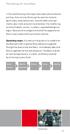 Flocking of textiles > The motif flocking is the high-class alternative to textile printing. One not only flocks sports wear for schools, sport clubs, associations etc., but also fabrics for garments,
Viscosity: A Property of fluids 307-6 Compare the viscosity of various liquids 307-7 Describe factors that can modify the viscosity of a liquid 208-6
 Viscosity: A Property of fluids 307-6 Compare the viscosity of various liquids 307-7 Describe factors that can modify the viscosity of a liquid 208-6 Design an experiment to test the viscosity of various
DuPont Kevlar The ScIence of cut PRoTecTIon
 DuPont Kevlar The Science of Cut Protection Industry standards groups have made tremendous progress in testing and measuring the cut protective performance of gloves and apparel. DuPont has been a pioneer
by Karen Powell, The Slipcover Maker
 by Karen Powell, The Slipcover Maker Types of Slipcover Canvas... 3 Best Canvas Weights... 5 Wrinkles & Shrinkage... 6 Canvas Slipcover FAQ... 8 Beyond Basic Canvas... 9 How-To Preshrink Canvas... 10 About
Specifications, Product Testing and Terminology
 Specifications, Product Testing and Terminology The following synopsis provides a review of various material and final product testing, which is performed on our products, as well as, many of our competitors.
Property Test/Standard Description. gloss (70-85) Flash point ISO 3679 Method 1. 212 F (100 C) calculated VOC-US/Hong Kong. US EPA method 24 (tested)
 Not approved 2063;2064 1,2 2063 ^(ValidationDate) 1 Product description This is a two component solvent free polyamine cured coating. It is a general purpose tank lining with good chemical resistance.
North American Stainless
 North American Stainless Long Products Stainless Steel Grade Sheet 2205 UNS S2205 EN 1.4462 2304 UNS S2304 EN 1.4362 INTRODUCTION Types 2205 and 2304 are duplex stainless steel grades with a microstructure,
ENVIRONMENTAL BEST PRACTICE IN DYEING AND FINISHING OF TENCEL AND LENZING MODAL
 Lenzinger Berichte 89 (11) 3-36 ENVIRONMENTAL BEST PRACTICE IN DYEING AND FINISHING OF TENCEL AND LENZING MODAL Jim Taylor Lenzing AG, Werkstr. 1, 486 Lenzing, Austria Phone: (+43) 767 71-3488; Fax: (+43)
The bog jacket is a garment crafted from a
 Weaver s Wisdom by Lynette Ausland Eads Weaving is one of the most enjoyable and universal of all the fiber arts. In this column, we blend historical perspectives with contemporary techniques and equipment
STUDY ON COMFORT CHARACTERISTICS OF HIGH ACTIVE SPORTSWEAR
 STUDY ON COMFORT CHARACTERISTICS OF HIGH ACTIVE SPORTSWEAR by MANPREET MANSHAHIA Department of Textile Technology Submitted in fulfillment of the requirements of the degree of DOCTOR OF PHILOSOPHY to the
Properties of Fresh Concrete
 Properties of Fresh Concrete Introduction The potential strength and durability of concrete of a given mix proportion is very dependent on the degree of its compaction. It is vital, therefore, that the
How To Improve Mechanical Properties Of A Composite Material
 Usak University Journal of Material Sciences journal homepage: http://uujms.usak.edu.tr Research article Mechanical properties of bi axial glass fiber and pistachio shell reinforced polyester composites
It's large enough to handle most welding job shop projects, yet small enough to make it a worth while home-workshop tool
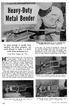 It's large enough to handle most welding job shop projects, yet small enough to make it a worth while home-workshop tool H Craft Print Project No. 272 ERE'S a metal bender that will enable you to bend
ZIMBABWE SCHOOL EXAMINATIONS COUNCIL (ZIMSEC)
 ZIMBABWE SCHOOL EXAMINATIONS COUNCIL (ZIMSEC) ADVANCED LEVEL SYLLABUS TEXTILES AND CLOTHING DESIGN 9193 EXAMINATION SYLLABUS FOR 2013-2017 TEXTILES AND CLOTHING DESIGN ADVANCED LEVEL SUBJECT CODE: 9193