
This Guideline does not address electrical equipment in the following categories:
|
|
|
- Bertram Copeland
- 9 years ago
- Views:
Transcription

1 Policy Hierarchy link Responsible Officer Contact Officer Superseded Documents HS418 Portable Electrical Equipment Inspection, Testing and Tagging Guideline Work Health and Safety Act 2011 Work Health and Safety Regulation 2011 Work Health and Safety Policy AS/NZS 3760:2010 In-service safety inspection and testing of electrical equipment Director, UNSW Safety and Sustainability Manager, UNSW Health & Safety, Adam Janssen x OHS418 Portable Electrical Equipment Inspection, Testing and Tagging Guideline v 2.1 File Number 2016/00370 Associated Documents Version Authorised by Approval Date Effective Date 2.4 Director, UNSW Safety and Sustainability 30 March March Introduction and Scope Definitions Procedure Managing risks of electrical equipment Does all electrical equipment have to be tested and tagged? Environments that require testing Requirements for serviced or repaired electrical equipment Who can inspect and test electrical equipment? What should be included in the visual and physical inspection Testing Action for non-compliant equipment Tags Requirements for NEW electrical equipment Requirements for stationary electrical equipment Examples of electrical equipment that should be inspected, tested and tagged Requirements for desktop computers and office electrical equipment Personal, Leased or Hired Equipment Record Keeping Frequency of testing : History Appendix 1: Indicative testing and inspection intervals for electrical equipment Introduction and Scope The purpose of this guideline is to provide a framework to assist in controlling the electrical hazards associated with plug-in type portable electrical equipment. This Guideline applies to all UNSW workplaces where electrical equipment is in use and is restricted to plug-in type portable electrical equipment. Electrical equipment covered by this Guideline includes: Electrical equipment used in a hostile environment Electrical equipment used in a non-hostile environment Portable and handheld appliances, e.g. power tools Extension leads, IEC cables and power boards Portable Residual Current Devices (RCDs) This Guideline does not address electrical equipment in the following categories: Electrical equipment used in construction work. This equipment is subject to the requirements of the WorkCover Code of Practice - Electrical practices for construction work. HS418 Portable Electrical Equipment Inspection, Testing and Tagging Guideline Page 1 of 9

2 Electrical equipment that has been serviced or repaired which could affect the electrical safety of the equipment. This equipment must be tested in accordance with AS/NZS 5762 prior to be placed back into service. This Guideline does not cover electrical work that must be undertaken by a licensed electrician. Such work includes: Replacement of faulty GPO's Wiring and repair of electrical switchboards Disassembly of electrical equipment to facilitate inspection or repair This guideline does not apply to: electrical equipment installed at a height of 2.5m above ground (no reasonable chance of a person touching such equipment) electrical equipment that has to be dismantled before it can be tested hard wired fixed equipment or stationary equipment medical electrical equipment (covered by AS/NZS 3551) 2. Definitions Competent Person A Competent Person is one who the Responsible Person ensures possesses the necessary practical theoretical skills, acquired through training, qualification, experience or a combination of these, to correctly undertake the tasks described in this Guideline. A Competent Person is not required to be a registered or licensed electrical practitioner. Note: Any area of the University may decide that a person designated to do electrical testing requires documented electrical qualifications. Construction site For the purposes of this Guideline only, a construction site is defined as an operating environment where construction work is performed. Electrical equipment In this Guideline electrical equipment (or article) means plug-in type portable electrical equipment. Flexible supply lead A flexible cable or cord which supplies voltage to electrical equipment. It has one end connected to a plug with pins designed to engage with a socket outlet (GPO), and the other end either: (a) connected to terminals within the equipment; or, (b) fitted with a connector designed to engage with an appliance inlet fitted to the equipment. GPO General Power Outlet Hostile operating environment A workplace where the electrical equipment or flexible supply cord is subject to operating conditions that are likely to result in damage to the equipment. This includes an operating environment that may: cause mechanical damage to the item of equipment; or expose the item of equipment to moisture, heat, vibration, corrosive substances or dust. HS418 Portable Electrical Equipment Inspection, Testing and Tagging Guideline Page 2 of 9

3 Non-hostile operating environment A workplace that is dry, clean, well organised and free of operating conditions that are likely to result in damage to electrical equipment or the flexible supply cord. For example: an office, retail shop, telecentre, classrooms, etc. Portable appliance tester: A device capable of performing the required tests described in this Guideline. Note: There is a range of PATs available from electrical retailers. UNSW cannot recommend any particular brand or model as each School / Work Unit s requirements may vary. Personal, leased or hired electrical equipment Electrical equipment not purchased or owned by UNSW but used in a UNSW workplace. Such equipment may include: but is not limited to, laptop computers; heaters; fans; handheld power tools; audio equipment; kitchen appliances; and electronic test equipment. Residual current device (RCD) A mechanical switching device designed to make, carry and break currents under normal service conditions, and to cause the opening of the contacts when the residual current attains a given value under specified conditions. RCD's are classified according to their rated residual current as follows: (a) Type I: < 1 0mA (b) Type II: >10mA<30mA (c) Type III: >30mA < 300mA without selective tripping time delay (d) Type IV: >30mA < 300mA with selective tripping time delay To evaluate which RCD you made need in a particular situation consult AS/NZS 3190: Approval and test specification - Residual current devices. Only Type I and Type II are suitable for personal protection in the event of a current flow to earth. Responsible Person The Responsible Person is considered to be the person who has the legal responsibility for implementing a safe system of work. Voltage Voltage is defined as differences of potential, normally existing between conductors and between conductors and earth as follows: (a) Extra-low voltage (ELV) - not exceeding 50 V a.c. or 120 V ripple free d.c; (b) Low voltage (LV) - exceeding extra-low voltage, but not exceeding 1000 V a.c. or 1500 V d.c; (c) High voltage (HV) - exceeding low voltage. 3. Procedure 3.1 Managing risks of electrical equipment Employers have a duty of care to ensure that employees and visitors to the workplace are safe from injury and risks to health. Therefore any safety risks surrounding electrical hazards must be managed in accordance with the requirements of the NSW Work Health and Safety Act 2011 and Work Health and Safety Regulation HS418 Portable Electrical Equipment Inspection, Testing and Tagging Guideline Page 3 of 9

4 A systematic risk management approach must be applied to eliminate or control the risk of electrical hazards. A range of control measures can be implemented including: routine visual checks; regular inspection; maintenance; repair; replacement; use of residual current devices (RCDs); and, where warranted, testing of identified electrical equipment. 3.2 Does all electrical equipment have to be tested and tagged? No. Clause 150(1) of the WHS Regulation only requires testing and tagging of those items of electrical equipment that are supplied with electricity through an electrical socket outlet, and are used in construction and demolition sites or in higher-risk operating conditions. These are conditions that are likely to result in damage to the equipment or a reduction in its expected life span,. 3.3 Environments that require testing In clause 150 of the Regulation, the environments that require testing include those which expose the equipment to moisture, heat, vibration, mechanical damage, corrosive chemicals or dust. Examples include wet or dusty areas, outdoors, workplaces that use corrosive substances, commercial kitchens and manufacturing environments. Note that due to the nature of the work conducted in some laboratories and workshops, they may be considered a higher-risk operating environment. Assessment of your workplace should be carried out to determine if it is considered a higher-risk operating environment under the WHS Regulation. 3.4 Requirements for serviced or repaired electrical equipment Electrical equipment that has been serviced or repaired which could have affected electrical safety must be inspected, tested and tagged prior to the equipment being placed back into service. In addition, any electrical equipment that has been bought second-hand must be tested before its first use. 3.5 Who can inspect and test electrical equipment? The inspection and testing of electrical equipment must be done by a 'competent person' as defined in the WHS Regulation A competent person must be: A licensed or registered electrician, or A licensed electrical inspector, or A person who has completed a structured training course and been assessed as competent in the use of appliance testers and the visual inspection of electrical equipment. Regardless of who does the work the person must be authorised by the employer and must be adequately trained and instructed to do the work. Moreover, the person authorising the work must make sure that the inspection and testing program is appropriate and adequate for the needs of the workplace. Some electrical inspection and testing tasks require a degree of technical expertise and interpretation of results and therefore can only be carried out by appropriately qualified personnel, such as a licensed electrician or electrical inspector HS418 Portable Electrical Equipment Inspection, Testing and Tagging Guideline Page 4 of 9

5 If in doubt, the person authorising the inspection and testing program must obtain advice from a person qualified in electrical matters, an electrician, electrical contractor or specialist testing provider. 3.6 What should be included in the visual and physical inspection AS/NZS 3760:2010 requires the following equipment checks be made by visual and physical inspection of all equipment: a. Check for obvious damage, defects, or modifications in the equipment and its accessories, connectors, plugs or cord extension sockets; and for discoloration that may indicate exposure to excessive heat, chemicals or moisture; b. Check that flexible cords are effectively anchored to equipment, plugs, connectors and cord extension sockets; NOTE This inspection, including flexing and straining at points of entry and clamping points by the application of reasonable combination of push/pull and rotary movements, may detect broken strands or loose connections. c. Check for damage to flexible cords to ensure that: I. The inner cores of flexible cords are not exposed or twisted II. The external sheaths are not cut, abraded, twisted, or damaged to such an extent that the insulation of the inner cores is visible, and III. Unprotected conductors or the use of banding insulation tape are not in evidence. NOTE (1) Carefully running the flexible cord through the hand will often detect internal damage such as twisted conductors or broken core filling. (2) Connecting the plugs/cord extension sockets of cord extension sets together helps to confirm that the terminals have not spread. 14 d. For Electrical Portable Outlet Devices (EPODs), check that the warning indicating the maximum load to be connected to the device is intact and legible; e. Check that any operating controls are in good working order i.e. that they are secure, aligned and appropriately identified; f. Check that covers, guards, and the like are secured and working in the manner intended by the manufacturer or supplier; g. Check that ventilation inlets and exhausts are unobstructed; h. The pins of insulated pin plugs should be inspected for damage to the insulation of the pins, and, if fitted, the shroud on cord extension sockets should be inspected for damage; i. Check that the current rating of the plug is consistent with the current rating of the equipment. 3.7 Testing Testing of earthing continuity, insulation, portable isolating transformers, operation of RCDs, polarity of rewireable plugs, portable generators, arch welders with exposed terminals, portable inverters and Class 1 equipment must be carried out by a competent person following the requirements of : AS/NZS 3760:2010. Tables 1 and 2 in this standard specify the leakage current limits and insulation resistance limits for such testing. 3.8 Action for non-compliant equipment Equipment that fails the inspection or testing must be appropriately labelled and withdrawn from service. A Danger Tag system can be used to indicate that the equipment requires remedial action. The equipment must be isolated in such a manner that it cannot be used until repaired (e.g. locked out, locked away). HS418 Portable Electrical Equipment Inspection, Testing and Tagging Guideline Page 5 of 9

6 3.9 Tags Equipment that passes the inspection and testing must be fitted with tags that are durable, legible, non-reusable,, non-metallic and may be colour coded. The date on which the test was performed must be indicated. In addition the name of the person (company) who performed the test as well the date of next test must be indicated. Reference should also be made to AS Requirements for NEW electrical equipment The supplier of new electrical equipment is deemed responsible for the electrical safety of the equipment in accordance with the principles of safe design and manufacture. It is therefore not necessary for an employer to test new equipment before its first use, but a competent person should still visually inspect the equipment to ensure no damage has occurred during shipment or commissioning. Following the inspection, the new equipment that has been assessed as requiring future testing be fitted with a tag stating that the equipment is new to service, and the date of entry into service. This action sets a baseline date to work with for future electrical inspection and testing activities Requirements for stationary electrical equipment Stationary or fixed equipment connected by a fixed cable or flexible cord which is not flexed in normal use or exposed to damage, nor is in a higher-risk operating environment, is not normally considered to represent a hazard sufficient to warrant routine in-service electrical safety testing. Subject to the outcome of a risk assessment, the testing of such equipment is not normally required. fixed equipment is equipment that is fastened to a support, secured in position or otherwise due to its size and mass located in a specific location stationary equipment is equipment having a mass exceeding 18 kg and not provided with carrying handle(s). Where flexible cable or cord is flexed on equipment that is moved only for restocking, maintenance, or cleaning, in-service testing is required. It is sufficient to conduct only a visual inspection and earth test on such fixed or stationary equipment Examples of electrical equipment that should be inspected, tested and tagged Some electrical equipment may be used in a situation that poses a risk to the operator due to the nature of its location and the type of use. If a risk assessment shows there is a risk to employees and others, the employer should ensure the equipment is inspected, tested and tagged. The categories in the following table list plug-in type electrical equipment that is commonly used in higher-risk operating environments and does require regular inspection and testing, and provides examples of the types of electrical equipment. CATEGORY OF EQUIPMENT Hand held electrical equipment Portable electrical equipment moved while EXAMPLES OF ELECTRICAL EQUIPMENT TO BE TESTED Hand held power tools Hairdryers Kitchen appliances Laboratory equipment Floor polishers HS418 Portable Electrical Equipment Inspection, Testing and Tagging Guideline Page 6 of 9

7 in operation Electrical equipment that is moved between operations in such a manner that could damage the flexible supply lead Electrical equipment that is used in a higher-risk operating environment where damage to the equipment or the electricity supply to that equipment could occur such as in wet or dusty conditions. Vacuum cleaners Portable lighting equipment Portable electronic whiteboards, overhead projectors Laptop computers Electrical plant used in factory type environments Welding machines Extension cords Power boards Electrical equipment used in wet or dusty areas Electrical equipment used outdoors, in kitchens, Laboratories (chemical damage) Certain factory-type environments 3.13 Requirements for desktop computers and office electrical equipment Not all electrical equipment requires regular testing. In some situations electrical equipment such as desktop computers and stationary office equipment does not present a risk to their operators. This is due to: the permanent nature of their location the working environment in which the equipment is used. In cases like these, a risk assessment should be carried out in accordance with the risk management provisions of the WHS Regulation The assessment should determine whether desktop computers and other similar stationary office equipment - warrant regular testing and tagging Personal, Leased or Hired Equipment The electrical inspection, testing and tagging requirements outlined in this guideline also apply to personal, leased or hired electrical equipment used in a UNSW hostile operating environment. If a staff member, student or visitor refuses to allow testing, the equipment must be removed from the workplace. If any personal, leased or hired equipment fails the tests the owner must be notified before any further action is undertaken. Testing must not damage any personal, leased or hired equipment. Student laptops used in a non-hostile environment e.g. classrooms, library, public eating areas do not require testing and tagging Record Keeping The following records are required for the electrical testing and tagging program: 1. A list of all equipment 2. A record of formal inspection and tests 3. A repair register 4. A record of all faulty equipment showing details of services or corrective actions Records are to be retained for 7 years and may be stored electronically. Such records include risk assessments that establish the frequency of testing Frequency of testing A risk assessment can be used to indicate the testing frequency. However the guide in Appendix 1 (reproduced from AS3760:2010) also provides indicative intervals. HS418 Portable Electrical Equipment Inspection, Testing and Tagging Guideline Page 7 of 9

8 Any equipment being returned to service after repair or servicing that could have affected the electrical safety of the equipment, should be inspected and tested. In addition any second hand equipment should undergo electrical inspection and testing before it goes into service. 4. History The authorisation and amendment history for this document must be listed in the following table. Refer to information about Version Control on the Policy website. Version Authorised by Approval Date Effective Date Sections modified 1.0 Director, Human Original Version 3/6/2005 3/6/2005 Resources 2.0 Director, Human Revised format, correction 1/11/2006 1/1/2006 Resources for legislative change Correction to establish the 2.1 requirement to test all new Director, Human 28/2/ /2/2008 electrical equipment Resources regardless of location and use Director, Human Resources Director, UNSW Safety and Sustainability Director, UNSW Safety and Sustainability 19/3/ /3/ April April March March 2016 Updated in accordance with WHS legislation 2011 Updated Branding Logo in accordance with UNSW Branding Guidelines. Modified the document identifier from OHS to HS in accordance with WHS legislation review Reviewed for administrative updates Reviewed for administrative updates HS418 Portable Electrical Equipment Inspection, Testing and Tagging Guideline Page 8 of 9

9 5. Appendix 1: Indicative testing and inspection intervals for electrical equipment reproduced from AS/NZS 3760: 2010 (table 4) Type of environment and /or equipment (a) Factories, workshops, places of manufacture, assembly, maintenance or fabrication Environment where the equipment or supply flexible cord is subject to flexing in normal use OR is open to abuse OR is in a hostile environment Environment where the equipment or supply flexible cord is not subject to flexing in normal use OR is not open to abuse OR is not in a hostile environment Residential type areas e.g. hotels, residential institutions, motels, boarding houses, halls, hostels, accommodation houses etc. Equipment used for commercial cleaning Hire Equipment Inspection Test and Tag Repaired, serviced or second-hand equipment Equipment including Class I equipment, Class II equipment, cord sets, cord extension sets and EPODs (b) 6 months Interval between inspection and tests Push-button test by user Portable (c) Daily, or preuse Fixed (d) Residual Current Devices (RCDs) Operating time and push-button test Portable (e) Fixed (f) 6 months 12 months 12 months 12 months 3 months 6 months 12 months 12 months 5 years 3 months 6 months 2 years 2 years 2 years 6 months 6 months 2 years 2 years 6 months Prior to hire Daily, or preuse n/a 6 months n/a Including push-button test by n/a n/a hirer prior to hire 3 months n/a 3 months 12 months After repair or service which could affect electrical safety or on reintroduction to service: Refer to AS/NZS5762 HS418 Portable Electrical Equipment Inspection, Testing and Tagging Guideline Page 9 of 9

FREQUENTLY ASKED QUESTIONS TESTING AND TAGGING OF ELECTRICAL EQUIPMENT
 FREQUENTLY ASKED QUESTIONS TESTING AND TAGGING OF ELECTRICAL EQUIPMENT HAS THE LAW CHANGED REGARDING TESTING AND TAGGING OF ELECTRICAL EQUIPMENT? Yes, Simplified safety regulations for electrical equipment
In the context of this document, the following definitions apply:
 UON Key Risk Area: KRA 3.7 Electrical Testing and Tagging 1. Purpose To provide guidance for managing the risks associated with University activities where electrical equipment is used and to ensure compliance
RCD Inspection Log Book
 RCD Inspection Log Book This book is the property of: Commenced: / /. Completed: / /. 2 Clipsal Australia Pty Ltd Clipsal Australia Pty Ltd 3 4 Clipsal Australia Pty Ltd Clipsal Australia Pty Ltd 5 6 Clipsal
Heading FACT SHEET. Overview. www.safeworkaustralia.gov.au
 ELECTRICAL RISKS AT THE WORKPLACE Heading FACT SHEET Overview This fact sheet provides general guidance for persons conducting a business or undertaking (PCBUs) and workers on managing electrical risks
Annual testing programme will be reported, by the department, as part of the annual hazard review process due to be completed by 31 March each year.
 HR Heath and Safety Policy Health and Safety Electrical Appliances Testing and Inspection Policy The University of Auckland provides for specific safe operating practices for the safety testing and inspection
MANAGING ELECTRICAL RISKS IN THE WORKPLACE
 MANAGING ELECTRICAL RISKS IN THE WORKPLACE Code of Practice MARCH 2015 Safe Work Australia is an Australian Government statutory agency established in 2009. Safe Work Australia consists of representatives
FIRST STOP SAFETY 1 PAT-IT. Portable Appliance Tester. User Manual. Issue 1.6
 FIRST STOP 1 PAT-IT Portable Appliance Tester User Manual Issue 1.6 First Stop Safety 11 Glaisdale Road Northminster Business Park Upper Poppleton York YO26 6QT t: 01904 791050 f: 01904 780054 e: [email protected]
ELECTRICAL TESTING PROCEDURE
 Document uncontrolled when printed Procedure ID no 0464/05 ELECTRICAL TESTING PROCEDURE This procedure is applicable to: All Department of Education and Children's Services employees. DOCUMENT CONTROL
See Table of Amendments
 Title: Electrical Safety Procedure Version 1.2 TRIM file number Short description Relevant to Authority Responsible officer Responsible office 06/XXXX A procedure on ensuring the safe and reliable supply
Electrical Practices for Construction Work
 1. Purpose Electrical Practices for Construction Work The purpose of this Code is to provide practical guidance and set minimum safety requirements for electrical practices on all construction sites in
GUIDE TO THE MAINTENANCE, INSPECTION AND TESTING OF PORTABLE EQUIPMENT (ELECTRICAL APPLIANCES AND TOOLS) IN THE WORKPLACE
 GUIDE TO THE MAINTENANCE, INSPECTION AND TESTING OF PORTABLE EQUIPMENT (ELECTRICAL APPLIANCES AND TOOLS) IN THE WORKPLACE ET 215:2008 ELECTRO-TECHNICAL COUNCIL OF IRELAND 2008 Page 1 of 6 Published by
What equipment needs RCD protection? 3. Testing and tagging of electrical equipment 6. Protectively earthed and double insulated equipment 8
 ELECTRICAL SAFETY CONTENTS Introduction 2 Residual current devices 2 What equipment needs RCD protection? 3 Risk assessment examples 4 RCD testing 5 Testing and tagging of electrical equipment 6 Testing
ELECTRICAL PRACTICES FOR CONSTRUCTION WORK
 CONTRACTOR S CHECKLIST ELECTRICAL PRACTICES FOR CONSTRUCTION WORK 2007 WorkCover. Watching out for you. New South Wales Government Disclaimer This publication contains information regarding occupational
Maintaining portable electric equipment in low-risk environments
 Maintaining portable electric equipment in low-risk environments Introduction This leaflet explains the simple and sensible precautions that need to be taken to prevent danger from portable or movable
MEM10019 Select circuit protection devices by type and rating, fit to switchboards and install earthing
 MEM10019 Select circuit protection devices by type and rating, fit to switchboards and install earthing Release: 1 MEM10019 Select circuit protection devices by type and rating, fit to switchboards and
Preventative Maintenance & Statutory Testing
 Preventative Maintenance & Statutory Testing Emergency Evacuation Lighting - Inspection and Maintenance It is an Occupational Health and Safety Act requirement that employers have a legal duty of care
Electrical safety code of practice 2013. Managing electrical risks in the workplace
 Electrical safety code of practice 2013 Managing electrical risks in the workplace This Queensland code of practice has been approved by the Attorney-General and Minister for Justice and commences on 1
Inspection and testing of portable electrical equipment
 February 2008 Inspection and testing of portable electrical equipment This is a guidance document for Schools and Support Services. Units should use the guidance to help them develop their own local health
St Peter s College ELECTRICAL SAFETY. B. University Safety Office Policy Statement S4/10, Working safely with Electricity.
 St Peter s College ELECTRICAL SAFETY References: A. Peninsula Business Services Guidance Note 4-1, Electrical Safety. B. University Safety Office Policy Statement S4/10, Working safely with Electricity.
Electrical safety and you
 Electrical safety and you A brief guide Introduction Electricity can kill or severely injure people and cause damage to property. Every year many accidents at work involving electric shock or burns are
THE INSPECTION OF PORTABLE ELECTRICAL EQUIPMENT
 THE INSPECTION OF PORTABLE ELECTRICAL EQUIPMENT Introduction This document, provides a mechanism by which departments can fulfil their duty to assess and manage portable electrical equipment testing. This
Electrical Safety Policy
 Electrical Safety Policy Version Number: V2 Name of originator/author: Director of Estates and Facilities Name of responsible committee: Estates and Facilities Committee Name of executive lead: Chief Operating
Maintaining portable electrical equipment
 Maintaining portable electrical equipment Do you have control over or use portable electrical equipment in the workplace? This guidance is for managers, electricians, technicians and users and gives sensible
Electrical Safety Tips. Help us keep you safe
 Electrical Safety Tips Help us keep you safe To help you stay safe when using electricity, ActewAGL has compiled these electrical safety tips. For natural gas safety tips please see ActewAGL s natural
ELECTRICAL INSULATION TESTING OF HV EQUIPMENT UP TO 33kV
 1. SCOPE This document details PowerSystems requirements for electrical testing of HV Equipment up to and including 33kV. 2. ISSUE RECORD This is a Reference document. The current version of Controlled
WHS Policies and Procedures Package
 WHS Policies and Procedures Package The following is an extract to highlight the style and layout of this publication, as well as a snapshot of the content. Some samples may not be included in their entirety
Residual Current Devices. Switching on to Safety
 Residual Current Devices Switching on to Safety Contents What is a Residual Current Device? 2 Types of RCDs 3 Switchboard RCDs 3 1 Residual Current Devices Socket outlet RCDs 4 Portable RCDs 4 Changes
ELECTRICAL SAFETY. The standard unit for measuring electrical current.
 ELECTRICAL SAFETY Introduction The following sections provide general safety guidelines and procedures for electrical safety. This chapter covers the following topics: TOPIC PAGE General Electrical Safety
WHS LEGISLATIVE COMPLIANCE GUIDELINES
 WHS LEGISLATIVE COMPLIANCE GUIDELINES CONTENTS 1 Introduction... 2 2 Scope... 2 3 Responsibilities... 2 3.1 Manager WHS Unit... 2 3.2 Management of Faculties, Divisions and Research Institutes... 2 4 Maintaining
CHECKING AND TESTING ELECTRICAL INSTALLING WORK
 CHECKING AND TESTING ELECTRICAL INSTALLING WORK Department of Consumer and Employment Protection Energy Safety Preface It is a requirement of the Electricity (Licensing) Regulations 1991 that all electrical
2-SLICE COOL TOUCH TOASTER
 2-SLICE COOL TOUCH TOASTER PLA0405 Instruction Manual Due to on-going product improvements, specifications and accessories may change without notice. Actual product may differ slightly to that depicted.
Experts in what we do. Portable Appliance Testing A Practical Guide. www.seaward.co.uk
 Experts in what we do. Portable Appliance Testing A Practical Guide www.seaward.co.uk PAT testing is changing Only Apollo 600 puts it in a risk-based health and safety setting On-board camera provides
Safety & Environmental Protection Services Guidance Note
 Safety & Environmental Protection Services Guidance Note A STEP-BY-STEP GUIDE TO VISUAL INSPECTION OF ELECTRICAL EQUIPMENT Why Inspect? The Health and Safety at Work etc Act 1974 and the Electricity at
Electrical installations on construction sites
 Industry standard Electrical installations on construction sites Edition No. 3 January 2011 The information presented in the Industry Standard Electrical installations on construction sites is intended
Customer Installation Safety Plan. March 2015
 Customer Installation Safety Plan March 2015 Document History Issue No. Date Approved By Summary of Changes 1 June 2014 Chief Engineer Updated and revised in line with requirement for biennial review under
Extension Cord Safety Policy
 NATIONAL HIGH MAGNETIC FIELD LABORATORY Operated by Florida State University, University of Florida, Los Alamos National Laboratory Florida State University, 1800 East Paul Dirac Drive, Tallahassee, Florida
Section B: Electricity
 Section B: Electricity We use mains electricity, supplied by power stations, for all kinds of appliances in our homes, so it is very important to know how to use it safely. In this chapter you will learn
Sprayed vermiculite ceiling coating management plan, Condell Park High School, Condell Park, NSW
 Sprayed vermiculite ceiling coating management plan, Condell Park High School, Condell Park, NSW August 2006 NSW Department of Commerce Parsons Brinckerhoff Australia Pty Limited ACN 078 004 798 and Parsons
Fire Protection Notice No. 9 ELECTRICAL SAFETY
 Fire Protection Notice No. 9 ELECTRICAL SAFETY Because electricity is one of the most controllable forms of energy it can also be one of the safest. But, as industry and commerce draw ever more heavily
GUIDE TO MANAGING ELECTRICAL SAFETY IN EDUCATION QUEENSLAND SCHOOLS
 GUIDE TO MANAGING ELECTRICAL SAFETY IN EDUCATION QUEENSLAND SCHOOLS REVISED OCTOBER 2014 Table of contents Part 1: ELECTRICAL SAFETY REQUIREMENTS 1.1 Legislative requirements....2 1.2 What are electrical
October Safety Subject
 October Safety Subject Electrical Hazards All electrical equipment should be kept in good repair. Replace defective equipment or have it repaired by a qualified person. Watch for wiring on appliances that
Occupational Health and Safety Amendment (Residual Current Devices) Regulation 2011
 New South Wales Occupational Health and Safety Amendment (Residual Current Devices) under the Occupational Health and Safety Act 2000 Her Excellency the Governor, with the advice of the Executive Council,
Electrical Hazards. Power Tools. Extension Cords
 Electrical Hazards Electrical hazards can be found in nearly every roofing work site. Whether the hazard is posed by worn or damaged power tools or cords, improperly grounded tools or equipment, or the
NZQA registered unit standard 15848 version 6 Page 1 of 5. Demonstrate and apply knowledge of safeguards for use with portable electrical appliances
 Page 1 of 5 Title Demonstrate and apply knowledge of safeguards for use with portable electrical appliances Level 2 Credits 3 Purpose This unit standard covers knowledge of safeguards used in conjunction
TIG INVERTER INSTRUCTION MANUAL
 TIG INVERTER INSTRUCTION MANUAL Contents Warning General Description Block Diagram Main Parameters Circuit Diagram Installation and Operation Caution Maintenance Spare Parts List Troubleshooting 3 4 4
INFRARED QUARTZ WALL HEATER
 INFRARED QUARTZ WALL HEATER MODEL NO: IQ2000 PART NO: 6939004 MOUNTING & OPERATION INSTRUCTIONS GC0715 INTRODUCTION Thank you for purchasing this CLARKE Infrared Wall Heater. Before attempting to use this
Intertek Research & Performance Testing Technical Report S64604 Issue 1 Page 1 of 17. Report issued by: S64604 Issue 1
 Intertek Research & Performance Testing Technical Report S64604 Issue 1 Page 1 of 17 TECHNICAL REPORT Client: Stephen Curtler Electrical Safety Council 18 Buckingham Gate London SW1E 6LB Report issued
Union County Public Schools. Facilities Department. Electrical. Safe Work Practices
 1 Union County Public Schools Facilities Department Electrical Safe Work Practices 2 Purpose In accordance with OSHA Standards 1910.331-335, safety-related work practices shall be used by Union County
Electrical safety of grid-connected solar installations in Western Australia December 2011
 Electrical safety of grid-connected solar installations in Western Australia December 2011 Level 1, 303 Sevenoaks Street (cnr Grose Avenue) Cannington, Western Australia 6107 PO Box 135 Cannington WA 6987
Title: Grounding and Bonding Rev-01
 Procedure No.: BMEHS-002-012 Page: 1 of 12 Preparer: Owner: Approver: EHS Team Member S/H Manager Site Manager Signed Copy on File Signed Copy on File Signed Copy on File Document Revision Change Table
2 electrical. electrical. 2010 PulteGroup, Inc. All Rights Reserved.
 2 12 2010 PulteGroup, Inc. All Rights Reserved. circuit breakers Circuit breakers protect your home s system from power failure. The wiring in your home is protected by circuit breakers. Circuit breakers,
School or service safety advisor (SSA) role
 School or service safety advisor (SSA) role Document control information Published document name: ssa-role-gn Date issued: January 2012 Version: 1.0 School or service safety advisor (SSA) role Previous
HS307 Hazard & Incident Reporting Procedure
 Policy Hierarchy link Responsible Officer Contact Officer HS307 Hazard & Incident Reporting Procedure Work Health and Safety Act 2011 Work Health and Safety Regulation 2011 Work Health and Safety Policy
Data Sheet. Portable Appliance Testing
 Data Pack A Issued March 2003 1502621615 Data Sheet Portable Appliance Testing Why is appliance safety inspection and testing required? A quarter of all serious electrical accidents involve portable electrical
Control of Hazardous Energy (Lockout / Tagout)
 WAUKESHA COUNTY TECHNICAL COLLEGE Control of Hazardous Energy (Lockout / Tagout) Release Date: March 26, 2012 Revision Date: March 26, 2012 Revision Level: 1 TABLE OF CONTENTS Purpose... 1 Scope... 1 Responsibilities...
DEPARTMENT OF CODES AND BUILDING SAFETY FLOOD RECOVERY INFORMATION
 May 2010 DEPARTMENT OF CODES AND BUILDING SAFETY FLOOD RECOVERY INFORMATION GUIDELINES FOR PERMITS ASSOCIATED WITH THE REPAIR OF FLOOD DAMAGED HOMES AND BUILDINGS The Department of Codes and Building Safety
Electrical safety for entertainers
 Electrical safety for entertainers Electrical safety for entertainers If you are an entertainer who uses electrical equipment for sound, lighting or other effects, this leaflet is for you. It sets out
Table Of Contents 6 6 6 7 7 8 8 9-11 12 12-13 14 15 16 17 18 19 20-21 22 22 23 24 24 24
 USER S GUIDE Table Of Contents Package Contents Accessories: Sold Separately Product Specifications Intended Use Compatibility ResMed Device Warning Battery Pack Run Times Power Backup Usage Getting Started
OH&S Management Systems Audit Checklist (NAT, E3)
 3.1.2 3.1.1 Introduction OH&S Management Systems Audit Checklist (NAT, E3) This audit checklist is based on Element 3 (Implementation) of the National Self-Insurers OHS Audit Tool. For a full copy of the
Contractor Connect Scheme Electrical Contractor and Worker Handbook
 Contractor Connect Scheme Electrical Contractor and Worker Handbook January 2016 Document release information Document number 13553681 Document title Revision status Contractor Connect Scheme handbook
NewAir AC-10000E, AC-10000H Portable Air Conditioner Owner s Manual PLEASE READ AND SAVE THESE INSTRUCTIONS
 NewAir AC-10000E, AC-10000H Portable Air Conditioner Owner s Manual PLEASE READ AND SAVE THESE INSTRUCTIONS BEFORE USE GENERAL SAFETY INSTRUCTIONS: ALWAYS OPERATE THE UNIT IN AN UPRIGHT POSITION AND PLACE
SLIPS, TRIPS AND FALLS POLICY
 SLIPS, TRIPS AND FALLS POLICY First Issued Issue Version Purpose of issue/description of change Planned Review Date 2 Root cause analysis (RCA), RIDDOR August 2012 and inspection of communal areas referenced
Release 1. BSBWHS508A Manage WHS hazards associated with plant
 Release 1 BSBWHS508A Manage WHS hazards associated with plant BSBWHS508A Manage WHS hazards associated with plant Modification History Release Release 1 Comments This Unit first released with BSB07 Business
Six steps to Occupational Health and Safety
 Six steps to Occupational Health and Safety This booklet gives basic guidelines for workplace health and safety systems to help industry in NSW comply with the "duty of care" principle outlined in the
PLYMOUTH COLLEGE Risk Assessment: Policy Guidance
 PLYMOUTH COLLEGE Assessment PLYMOUTH COLLEGE Assessment: Policy Guidance 1 Scope This guidance is applicable to all those with responsibility for undertaking risk assessments for activities which are under
WORKING IN CONFINED SPACES GUIDELINES
 WORKING IN CONFINED SPACES GUIDELINES Contents 1 Introduction... 2 2 Scope... 2 3 Definitions... 2 4 Responsibilities... 3 4.1 Permit Authoriser... 3 4.2 Permit Receiver... 3 4.3 Responsible UOW Officer...
Does a landlord have to have an electrical inspection carried out?
 Bob Miller, Head of Housing Services at the University of London spoke to Vincenzo Rampulla at the National Landlords Association (NLA) about electrical and fire safety in private rented accommodation.
USER MANUAL Stand Alone Power Supply PSQ 2909 / PSQ 3909 / PSQ 4909 PSQ 2920 / PSQ 3920 / PSQ 4920
 USER MANUAL Stand Alone Power Supply PSQ 2909 / PSQ 3909 / PSQ 4909 PSQ 2920 / PSQ 3920 / PSQ 4920 [This page intentionally left blank] Warning for Your Protection 1. Read these instructions. 2. Keep these
ADVANCED CERAMIC. with REAL PEARL HEAT 8x smoother 5x longer lasting AC5011. 090183 REM IFU Ci76_22L.indd 1 19:47:02 17.04.
 5 AC5011 5 ADVANCED CERAMIC ULTIMATE HIGH with REAL PEARL HEAT 230 DIGITAL 8x smoother 5x longer lasting 090183 REM IFU Ci76_22L.indd 1 19:47:02 17.04.09 Guido Krölls F E A B A I B H C C D H G C E G E
Common Electrical Hazards in the Workplace Including Arc Flash. Presented by Ken Cohen, PhD, PE & CIH (Ret.)
 Common Electrical Hazards in the Workplace Including Arc Flash Presented by Ken Cohen, PhD, PE & CIH (Ret.) 1 What s New In February 1972, OSHA incorporated the 1971 edition of the National Fire Protection
Electrical Grounding. Appendix C
 Appendix C Electrical Grounding Low-Voltage Equipment Grounding The most frequently cited Office of Safety and Health Administration (OSHA) electrical violation is improper occupational grounding of equipment
FLUORESCENT UV- RING LIGHT OPERATING INSTRUCTION
 FLUORESCENT UV- RING LIGHT OPERATING INSTRUCTION Caution! UV-radiation of this device is in the range of UV-A (320-400 nm). Direct exposure to eyes shall therefore be avoided. UV protection glasses shall
I&I NSW Technical Reference Electrical Engineering Management Plan
 Technical Reference Electrical Engineering Safety EES-001 I&I NSW Technical Reference Electrical Engineering Management Plan Coal Mine Health and Safety Act 2002 Coal Mine Health and Safety Regulation
12-Volt 10-Amp Regulated Power Supply
 22-506.fm Page 1 Friday, August 6, 1999 12:55 PM Cat. No. 22-506 OWNER S MANUAL Please read before using this equipment. 12-Volt 10-Amp Regulated Power Supply 22-506.fm Page 2 Friday, August 6, 1999 12:55
Hazard Identification, Risk Assessment And Control Procedure
 Hazard Identification, Risk Assessment And Control Procedure 1. Purpose 1.1 To ensure that there is a formal process for hazard identification, risk assessment and control to effectively manage hazards
GUIDANCE ON ELECTRICAL INSPECTIONS
 GUIDANCE ON ELECTRICAL INSPECTIONS Electricity Electricity is a versatile and convenient source of energy. However, it can be potentially dangerous if the system has not been properly designed, installed,
CONTINUOUS MONITORING AND AVOIDANCE OF RESIDUAL CURRENTS IN DATA CENTRES WITH RCM White paper Revision 2
 IT Power Solutions CONTINUOUS MONITORING AND AVOIDANCE OF RESIDUAL CURRENTS IN DATA CENTRES WITH RCM White paper Revision 2 Thomas B. Jones 1 Introduction Operators and managers consider outages, operational
Work in Substations - General
 Work in Substations - General Summary: This document supports the Power System Safety Rules and its requirements assembled under Work in Substations General Category 3 and apply to all persons working
Listed are common requirements that apply to existing solar installations when altered, added to or reconfigured.
 SOLAR ALTERATIONS REQUIREMENTS August 2015 These requirements address typical alterations to solar installations; they cannot address every scenario. In Victoria, an alteration to a solar installation
Are you aware. Outline
 Electrical Safety of Medical Equipment Hasan Al-Nashash School of Engineering American University of Sharjah (AUS) 1 Are you aware Electrocutions are the 5th leading cause of accidental death in the U.S.
TRAINING RESOURCE MANUAL NATIONAL SPECIALISED ELECTRICAL WORK RECORD OF WORK EXPERIENCE AND TRAINING UEENEEP024A UEENEEP017A. EE-Oz Training Standards
 TRAINING RESOURCE MANUAL NATIONAL SPECIALISED ELECTRICAL WORK UEENEEP024A UEENEEP017A RECORD OF WORK EXPERIENCE AND TRAINING 1 CONTENTS Learner s Personal Details Page 3 Background Information Page 4 Definitions
OH&S MANAGEMENT SYSTEM CHECKLIST - AS 4801:2001 (STATUS A = Acceptable; N = Not Acceptable; N/A = Not Applicable)
 OH&S MANAGEMENT SYSTEM CHECKLIST - AS 4801:2001 (STATUS A = Acceptable; N = Not Acceptable; N/A = Not Applicable) 4.1 General Requirements 4.2 OHS policy Has the organisation an established and maintained
Event Management Guidelines. Month 2011. 1 Event Management Guidelines (Month, 2011)
 Month 2011 1 (Month, 2011) Table of Contents Executive Summary... 2 More information... 2 Event Risk Assessment... 3 Event Checklist... 4 Event Details... 8 Event Contact List... 10 Event Task List...
ADM1TE 5/30A DIN rail single phase two wire energy meter
 ADMTE 5/30A DIN rail single phase two wire energy meter. Safety instruction.2 Foreword.3 Performance criteria.4 Specifications.5 Basic errors.6 Description.7 Dimensions.8 Installation.9 Operating.0 Troubleshooting.
LOCKOUT/TAGOUT PROGRAM ENERGY CONTROL PLAN
 LOCKOUT/TAGOUT PROGRAM ENERGY CONTROL PLAN March 2003 (Revised) St. Louis Community College Table of Contents Section # Title Page # 1 Purpose 1 2 Applicability 2 3 Program Overview 3 4 Energy Control
12 SOLAR PHOTOVOLTAIC POWER SUPPLY SYSTEMS by John Ware. PV modules are current-limiting
 12 SOLAR PHOTOVOLTAIC POWER by John Ware IT IS PLANNED for BS 7671:2008 to include a new Section 712 providing additional requirements for safety applicable to solar photovoltaic (pv) power supply systems.
The Electrical Safety Regulation (pre and post 1 January 2014)
 The Electrical Safety Regulation (pre and post 1 January 2014) The following table provides an overview comparison between the Electrical Safety Regulation 2002 (the ESR 2002) current as at 1 July 2013
NewAir AC-10100E / AC-10100H Portable Air Conditioner Owner s Manual PLEASE READ AND SAVE THESE INSTRUCTIONS
 NewAir AC-10100E / AC-10100H Portable Air Conditioner Owner s Manual PLEASE READ AND SAVE THESE INSTRUCTIONS ELECTRICAL SAFETY This appliance is for indoor use only. Always turn off the unit and unplug
CPPSEC2021A Install security equipment and systems
 CPPSEC2021A Install security equipment and systems Release: 1 CPPSEC2021A Install security equipment and systems Modification History Not Applicable Unit Descriptor Unit descriptor This unit of competency
School of Engineering University of Glasgow
 School of Engineering University of Glasgow Electronics Workshops Rankine Building 319A (2 Technicians) 510 (1 Technician) 712A (4 Technicians, 1 Modern Apprentice) James Watt South 619 (2 Technicians)
Guidance on Load Testing Suspended Access Equipment
 Guidance on Load Testing Suspended Access Equipment SPECIALIST ACCESS ENGINEERING AND MAINTENANCE ASSOCIATION (This document must be read in conjunction with the SAEMA document: Guidance on Using Suspended
Electrical Resistance Resistance (R)
 Electrical Resistance Resistance (R) Any device in a circuit which converts electrical energy into some other form impedes the current. The device which converts electrical energy to heat energy is termed
Asbestos Policy ASBESTOS POLICY. Version 2 / Jun 2015 Page 1 of 11 Asbestos Policy
 ASBESTOS POLICY Version 2 / Jun 2015 Page 1 of 11 Asbestos Policy This is a controlled document. It should not be altered in any way without the express permission of the author or their representative.
Portable Air Conditioner
 Portable Air Conditioner Owner's Manual Model:3 in 1 12,000 Btu/h Series 3 Please read this owner s manual carefully before operation and retain it for future reference. CONTENTS 1. SUMMARY...1 2. PORTABLE
2 YEAR WARRANTY S7200PAU USE & CARE MANUAL ADVANCED CERAMIC TECHNOLOGY. To register your product go to www.remington-products.com.
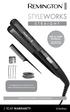 USE & CARE MANUAL PLEASE READ PRIOR TO USE To register your product go to www.remington-products.com.au ADVANCED CERAMIC TECHNOLOGY 2 YEAR WARRANTY S7200PAU 1 IMPORTANT SAFEGUARDS Warning: When the straightener
IMPORTANT SAFETY INSTRUCTIONS WARNING READ AND SAVE THESE OPERATING AND SAFETY INSTRUCTIONS BEFORE USING THIS HEATER.
 THERMAWAVE CERAMIC HEATER Model HZ-850 Series Model HZ-860 Series IMPORTANT SAFETY INSTRUCTIONS WARNING READ AND SAVE THESE OPERATING AND SAFETY INSTRUCTIONS BEFORE USING THIS HEATER. Warning Failure to
OWNER S MANUAL BIG BEAR VORTEX FAN MODEL #BB-1 INTRODUCTION OPERATION SAFETY SERVICE WARRANTY CONTACT SPECIFICATIONS TROUBLESHOOTING
 OWNER S MANUAL BIG BEAR VORTEX FAN MODEL #BB-1 INTRODUCTION OPERATION SAFETY SERVICE WARRANTY CONTACT SPECIFICATIONS TROUBLESHOOTING PLEASE READ AND SAVE THESE INSTRUCTIONS - 2 - INTRODUCTION TO THE BIG