
Get Moving! All About Muscles
|
|
|
- Lucas Parsons
- 9 years ago
- Views:
Transcription
1 Get Moving! All About Muscles A Reading A Z Level U Quick Reader Word Count: 2,002 Q U I C K R E A D E R U Written by Lisa Trumbauer Visit for thousands of books and materials.

2 Photo Credits: Front cover, back cover, pages 3, 5 (stop watch), 6 (art), 7, 8, 10, 11, 12, 14 (art), 15, 19, 20, 24 : ArtToday; Title page: Neal Preston/CORBIS; page 4: Royalty-Free/CORBIS; page 5, 9: Craig Frederick/ LearningPage, Inc.; page 13: PICIMPACT/CORBIS; page 16: Bettmann/CORBIS; page 18: David Gates/ LearningPage, Inc.; page 21: Royalty-Free/CORBIS Get Moving! All About Muscles Level U Quick Reader 2004 Learning Page, Inc. Written by Lisa Trumbauer Written by Lisa Trumbauer ReadingA Z TM Learning Page, Inc. All rights reserved. Learning Page 1630 E. River Road #121 Tucson, AZ Correlation LEVEL U Fountas & Pinnell Q Reading Recovery 24 DRA 40

3 A Moving Machine Table of Contents AMoving Machine Muscle Monster Make a Muscle the Skeletal Muscles Mirror, Mirror Don t Think About It the Smooth Muscles One More the Cardiac Muscle ACloser Look Muscle Building Conclusion Glossary Index Have you ever walked by a gym and watched people lifting weights? Maybe you even have weight training in school. Running, bending, twisting these are all forms of training your body and shaping up. But what, exactly, are you training? What are you shaping? What is all this lifting and grunting and straining about? It s about your muscles. This woman lifts weights to keep her arm muscles in shape. Muscles are the part of the body that allows you to move. If you didn t have muscles, you wouldn t be able to lift or jump or walk, or even write or smile or chew. Your muscles make your body a moving machine. Shaping up, or getting into shape, means shaping your muscles so they are strong and powerful. Strong, powerful muscles make your body move more efficiently. 3 4

4 The human body is loaded with muscles of many different sizes more than 600 muscles in all. Although all muscles help your body move, muscles are divided into three main types: the skeletal muscles, the smooth muscles, and the cardiac muscle. Two of these muscle types the smooth muscles and the cardiac muscle are involuntary muscles. That means that they move on their own, without us telling them to move. Skeletal muscles, on the other hand, are voluntary, which means they move because we want them to. Most of the muscles in your body are skeletal muscles. So let s get moving, and see what the skeletal muscles are all about. A Muscle Minute You re getting ready to turn the page, aren t you? As you do, think of all the muscles you use just to do this one, small task. Muscles lift your arm, and muscles move your hand and fingers, which enable you to flip the page. You could say that muscles made you do it! Muscle Monster This scary creature isn t the latest creepy movie monster, or even an oddball superhero. Actually, this creature is you. It s what you look like, under your skin, with all your skeletal muscles in place. The dark, stringylooking things are the muscles, and the whitish parts are the tendons. Tendons are fibers that attach muscles to bones. You can t see any bones in this diagram, can you? That s because muscles cover the bones and are attached to them. The muscles literally pick up the bones, like those in your arms and legs, and make them move. This is what your body looks like under your skin. 5 6

5 Here s how these muscles work. If you want to move, you form the thought in your brain. Your brain then sends a signal to the muscles needed to make the movement you are thinking about. You might wiggle your toes, or snap your fingers, or even lift your eyebrows. Once the signal reaches the muscles, your muscles begin to move. Each muscle pulls on the bone to which it is attached, and this pulling puts your body in motion. Because your brain must tell these muscles to move, these movements are voluntary. The voluntary muscles are your skeletal muscles. Your brain tells your leg muscles to kick a ball. Make a Muscle the Skeletal Muscles Have you ever asked anyone to feel your muscle? What did you do? You probably made a fist, lifted your forearm toward your shoulder, and pointed to the bulge that formed on your upper arm. Good job! You ve just provided a good example of how muscles work. biceps muscle The biceps muscle contracts to pull up the forearm. When you pulled your arm upward, the muscle in your upper arm, the biceps, contracted. It pulled on the bone, causing your forearm to lift. You can feel the contracted biceps muscle bulging under your skin. Although muscles allow us to do all kinds of movements, pulling is the only movement that muscles themselves can do. 7 8

6 In order for you to lower your arm, another muscle must get into action. This muscle is the triceps muscle, and it lies on the underside of your upper arm. When you lower your arm, the biceps muscle relaxes, and the triceps muscle contracts it pulls your forearm down. In most cases, therefore, your muscles must work as a team. One muscle pulls, or contracts, so that you can move in one way, then another muscle must pull, or contract, so your body can move in the opposite way. deltoids trapezius A Muscle Minute The deltoid muscles in the shoulders lift the arms. The trapezius (treh-pe-zee-us) muscles are near the neck, and they lift the shoulders. The biceps and triceps move the lower arm. Muscles in your legs move your legs in a similar way as the muscles in your arms. Try this: sit down, stretch out your leg, and feel the top of your thigh. The muscle you feel here is the quadriceps (KWAD-ri-seps), which enables you to lift your leg. If you bend your knee toward you, you might feel a muscle on the back of your thigh. This is the hamstring, which makes your knee bend. A big muscle bulges on your lower leg, at the back. You might call this your calf muscle, but its more scientific name is the gastrocnemius (gastrahk-ne-mee-us). Stand up, and lift your foot behind you. This is the function of the calf muscle to pull up the heel of your foot. gluteus maximus sartorius hamstring quadriceps triceps biceps calf muscle Achilles tendon Muscles work as a team so this man can lift the box. Runners use their leg muscles. 9 10

7 Mirror, Mirror The sartorius muscle allows this runner s knee to bend so she can stretch her leg muscles. Run your hand down from the back of your calf to the top of your heel. Do you feel that flexible part, just above your ankle? This is actually a tendon, called the Achilles (eh-kil-eez) tendon. It is your body s longest and strongest tendon, connecting your calf muscle to the bone in your heel. A few other important muscles are found in your legs, such as the sartorius (sahr-to-reeus). It is your body s longest muscle, and it is responsible for allowing your leg to twist and bend at the A Muscle Minute Achilles was a warrior in Greek myth whose only weak spot was his heel. The tendon that connects the calf muscle to the heel bone is called the Achilles tendon after him. knee. Then there s the biggest muscle of all the gluteus maximus (GLEWT-ee-us MAK-seh-mus). This is the muscle that you feel in your butt. Take a look at yourself in the mirror, and make a bunch of funny faces. Wiggle your eyebrows, move your lips, blink your eyes. How is your face able to make all these expressions? Once again, your skeletal muscles made you do it. In fact, the muscles of your eye are the most active muscles in your body. Scientists think that these muscles move more than 100,000 times a day. The skull is the bone that makes up most of your head, and it is largely covered with muscles. Only one bone on your face actually moves your jaw, or the mandible (MAN-deh-behl). Only two muscles on your face are needed to raise and lower your jaw. The temporalis is connected to your temple, and the masseter (ma-seet-her) is connected to your cheekbone. Your jaw muscles help you bite and chew food

8 So what do the other muscles on your face move? They move other muscles, which are attached to the skull. As the muscles move under your skin, your face shows different expressions. For example, some muscles of your face help you to smile and frown. Muscles that help you smile are attached to your This man is a champion of making his face muscles move in unusual ways. cheekbone on one end and to your lips on the other. When the muscles contract, your lips move up. Other muscles are attached to the chin and the lips. These muscles pull your lips down into a frown. A Muscle Minute How many muscles are needed to make you smile? 17! That s nothing, though, compared to how many muscles are needed to form a frown 40! That s more than double the amount needed to smile. So it really does take less effort to smile than to frown. Don t Think About It the Smooth Muscles Every time you eat, you set a variety of muscles into motion. A few of those muscles are skeletal, because they move your jaw up and down. Other muscles move inside your body to help move food through your system. These esophagus muscles move without any instructions from stomach you. Moving all on their own, or involuntarily, these muscles are called smooth muscles. intestines Involuntary muscles keep your food moving through your body. Smooth muscles are generally smaller and thinner than skeletal muscles. They are responsible for the small ways in which the organs inside your body move. Smooth muscles push food to your stomach, then smooth muscles push food from your stomach into your intestines. Eventually, smooth muscles push the unused food out of your body

9 Blood vessels also have smooth muscles, and these muscles are found inside the vessels walls. These smooth muscles help push blood through the vessels and ultimately through your body. Smooth muscles are also important for breathing. Once the air enters your body, smooth muscles push the air downward and into your lungs. Without smooth muscles, you wouldn t be able to breathe, your blood would not be able to flow, and your food would not pass into your stomach and out again. Try This The Eyes Have It Another important smooth muscle is in your eye. The black part of your eye is called the pupil. It gets bigger when you are in the dark to let in more light, and it gets smaller when you are in the light to limit the light. How does the pupil get bigger and smaller? Muscles pull the pupil open and closed. What you need: A flashlight, mirror, and dark room. 1. Put your face close to the mirror. Look into the mirror with the flashlight off. See how large your pupils are. 2. Turn on the flashlight. Shine the light toward your eyes, but not directly in them, and watch your pupils get smaller. One More the Cardiac Muscle Your body has one more type of muscle, and it is the only one of its kind. It is the cardiac muscle, or your heart. Like the smooth muscles, your heart muscle is always in motion, even though you haven t asked it to do anything. It is an involuntary muscle, pumping and pushing blood through your body, every minute, every second, of every day. Doctors hold a human heart during surgery. Your heart keeps your body running smoothly by pumping blood throughout your body. The heart has openings that control the flow of blood moving through it. These openings, called valves, are controlled by smooth muscles, which open and close the valves. In fact, the shutting of the valves is the sound of your heart beating. When smooth muscles inside your heart contract, blood moves from one section of the heart to the other. Your heart might not be the biggest muscle in your body, but it is definitely the most important

10 How the Cardiac Muscle Works When doctors listen to your heart they hear your cardiac muscle contracting. The sound it makes is lub-dub. The lub is the cardiac muscle contracting the upper chambers of the heart. The dub is the cardiac muscle contracting the lower chambers of the heart. The average adult heart beats 72 times per minute. One beat is one lub-dub. That means each lub-dub and rest happens in less than one second! blood from body 1 upper chamber 3 2 lower chamber to body 3 1 to lungs upper chamber 2 1 The lub, or first contraction, pushes blood from the upper chambers of the heart to the lower chambers. 2 The dub, or second contraction, pushes the blood from the lower chambers out to the lungs and the rest of your body. blood from lungs lower chamber 3 Then the cardiac muscle rests, which allows the upper chambers to fill with blood again. 4 The next lub-dub, or pair of contractions, happens without you having to think about it. A Closer Look You ve probably noticed that skeletal muscles appear to be dark and rather stringy. Muscles are made up of special cells called fibers, and the fibers are, indeed, very long. In addition, each muscle fiber is made up of smaller fibers, called myofibril. Long muscle fibers are bound together in groups called fascicles. All the fascicles are held together by tissues, and the fascicles and tissues make up one strand of muscle. So one muscle can have several thousand fibers, and many more myofibrils. Protein Power Your skeletal muscles are also made up of protein. Eating protein replenishes the protein in your muscles, keeping your muscles strong. So where do you get protein? You get it from meat, such as fish or chicken, or from plants, such as spinach, bean products, seeds, pasta, and seaweed. Eating protein helps your muscles

11 Cardiac muscle cells Smooth muscle cells Skeletal muscle cells Different ways to exercise your skeletal muscles A Muscle Minute The smallest muscle in your body is a smooth muscle, and it is in your ear. It is called the stapedius, and it controls the movement of a bone in your ear. You would need a microscope to see this muscle it is only 0.01 inches ( cm) long. If you compare the three types of muscles under a microscope, you can see other ways in which skeletal, smooth, and cardiac muscles differ. The cells of the skeletal muscles appear separate and straight. Smooth-muscle cells are also straight, but they are more firmly connected. The cells of the cardiac muscle, or the heart, are more wavy and branching. 19 Muscle Building Your smooth muscles and your cardiac muscle are constantly moving, so you don t need to exercise them. Your skeletal muscles, however, need you to take care of them. Your muscles adjust to the way your body uses them. If you use your muscles a lot, your muscles remain strong and may even become stronger. Health experts tell us to exercise to keep our muscles working properly. Muscles also become tired. Unlike your smooth and cardiac muscles, which never rest, your skeletal muscles do need to rest. It takes a lot of oxygen to keep these muscles moving. Rest helps the muscles regain their strength. 20

12 However, when you are not very active, your muscles are not active. Slowly, they adjust to being inactive, becoming weaker and weaker. Weak muscles don t allow you to do as many activities; for example, you won t be able to run very far or for very long, and you won t be able to lift heavy objects. That s where bodybuilding comes in. Bodybuilding is really muscle building. People build their bodies by making their muscles bigger and stronger. As they lift weights, their muscles adjust to the activity and become more powerful, so more and more weight can be lifted each time. At first, the muscles will not be able to lift very heavy loads. Over time and with constant training, the muscles build and become strong. Bodybuilders. lift weights to. build muscles. 21 Sometimes people can actually stretch their muscles too far. When this happens, a doctor will say they have pulled a muscle. Often when a muscle has been pulled, some muscle fibers have torn. The muscle usually hurts, and it might even feel a little tight. Rest will help the muscle to heal and rebuild its broken fibers. Muscles also weaken if you break a bone. Broken bones are healed by preventing the bones from moving. If the bones don t move, then the muscles don t move either. When a cast comes off, the broken bone will be stronger, but the muscles will be weak. Doing slow, moderate exercise will strengthen the weakened muscles. Conclusion Your body is a muscle machine. To keep your muscles working, the muscles need to remain active. Doctors stress the importance of exercise for keeping muscles strong, and they re right. Exercise not only strengthens your skeletal muscles, but it keeps your heart pumping and your blood flowing. Your muscles react to the messages you send to your brain. Tell your muscles to move, and they will. Exercise your muscles daily, and they ll work more efficiently. 22 So go on get moving, and mind your muscles!

13 Glossary Achilles a tendon that connects the calf tendon muscle to the heel bone (p. 11) deltoid shoulder muscle that lifts arm (p. 9) fascicles groups of long muscle fibers (p. 18) gastrocnemius calf muscle that lifts the heel (p. 10) gluteus muscle in butt and upper thigh that maximus helps move legs forward (p. 11) hamstring muscle on back of thigh that makes the knee bend (p. 10) involuntary muscles that move without you muscles having to tell them to (p. 5) masseter myofibril quadriceps sartorius stapedius temporalis trapezius muscle connected to cheekbone that helps raise and lower the jaw (p. 12) small fibers that make up muscle fibers (p. 18) muscle on top of thigh that lifts the leg (p. 10) muscle that allows leg to twist and bend at knee (p. 11) muscle that controls the bones in the ear (p. 19) muscle connected to temple that helps raise and lower the jaw (p. 12) neck muscle that lifts the shoulder (p. 9) voluntary muscles that move when you tell muscles them to (p. 7) Achilles tendon, 10, 11 arm(s), 5, 6, 8, 9 biceps, 8, 9 triceps, 9 blood vessels, 15 bodybuilding, 21 bone(s), 6, 8, 22 brain, 7, 22 contract(s), 8, 9, 13, 17 ear, 19 exercise, 20, 22 eye, 12, 15 face, 12, 13 fibers, 6, 18, 22 fascicles, 18 myofibril, 18 heart, 16, 17, 22 jaw, 12, 14 masseter, 12 temporalis, 12 Index leg(s), 6, 10, 11 gastrocnemius, 10 gluteus maximus, 10, 11 hamstring, 10 quadriceps, 10 sartorius, 10, 11 lungs, 15 oxygen, 20 protein, 18 pulled, 22 relax(es), 9 shaping up, 4 shoulder, 9 deltoid, 9 trapezius, 9 stomach, 14 tendon(s), 6, 11 types of muscle cardiac, 5, 16, 19, 20 involuntary, 5, 14, 16 skeletal, 5-8, 12, 14, smooth, 5, 14-16, 19, 20 voluntary, 5,

UNIT 5: FITNESS BASIC ANATOMY & PROPER STRETCHING TECHNIQUE BASIC ANATOMY MAJOR MUSCLE GROUPS & BONES PROPER STRETCHING TECHNIQUE
 UNIT 5: FITNESS BASIC ANATOMY & PROPER STRETCHING TECHNIQUE TOPIC 1: TOPIC 2: BASIC ANATOMY MAJOR MUSCLE GROUPS & BONES PROPER STRETCHING TECHNIQUE GRADES 6-7 UNIT 5 FITNESS BASIC ANATOMY & GRADES PROPER
Chair Exercises and Lifting Weights
 Chair Exercises and Lifting Weights Why are chair exercises and lifting weights important? Physical activity is one of the most important things you can do to maintain your diabetes control as well as
Cardiac Rehab Program: Stretching Exercises
 Cardiac Rehab Program: Stretching Exercises Walk around the room, step side to side, ride a bike or walk on a treadmill for at least 5 minutes to warm up before doing these stretches. Stretch warm muscles
Muscular System. Student Learning Objectives: Identify the major muscles of the body Identify the action of major muscles of the body
 Muscular System Student Learning Objectives: Identify the major muscles of the body Identify the action of major muscles of the body Structures to be identified: Muscle actions: Extension Flexion Abduction
MUSCLES G.C.S.E. PHYSICAL EDUCATION. Unit 1. Factors Affecting Participation and Performance. G.C.S.E. P.E. Teacher:.
 G.C.S.E. PHYSICAL EDUCATION Unit 1 Factors Affecting Participation and Performance MUSCLES Name: G.C.S.E. P.E. Teacher:. By the end of this booklet you should: Be able to describe and explain how muscles
Functional rehab after breast reconstruction surgery
 Functional rehab after breast reconstruction surgery UHN A guide for women who had DIEP, latissimus dorsi with a tissue expander or implant, or two-stage implant based breast reconstruction surgery Read
Range of Motion Exercises
 Range of Motion Exercises Range of motion (ROM) exercises are done to preserve flexibility and mobility of the joints on which they are performed. These exercises reduce stiffness and will prevent or at
SELF-MASSAGE HANDOUTS
 SELF-MASSAGE HANDOUTS Self-Massage for the Head and Face Self-Massage for the Low Back and Buttocks Self-Massage for Runners Self-Massage for the Neck Self-Massage for the Feet Self-Massage for the Arms
Passive Range of Motion Exercises
 Exercise and ALS The physical or occupational therapist will make recommendations for exercise based upon each patient s specific needs and abilities. Strengthening exercises are not generally recommended
Knee Conditioning Program. Purpose of Program
 Prepared for: Prepared by: OrthoInfo Purpose of Program After an injury or surgery, an exercise conditioning program will help you return to daily activities and enjoy a more active, healthy lifestyle.
Muscular System. Principles of Health Science Dr. Wood
 Muscular System Principles of Health Science Dr. Wood Characteristics of muscles Excitability: : irritability or ability to respond to stimulus Contractibility: : ability to contract (become short and
How To Stretch Your Body
 Exercise Module A New Leaf Choices for Healthy Living University of North Carolina at Chapel Hill 2007 Center for Health Promotion and Disease Prevention Physical Activity Exercises for Keeping Active
Workout Routine - Dumbbells - Full Body Printed on Apr 28 2011
 Workout Routine - Dumbbells - Full Body Printed on Apr 28 2011 Workout Routine Snapshot 2 Workout Days 0 Cardio Exercises 14 Strength Training 0 Stretching Exercises 2 Abs 2 Back 2 Chest 2 Shoulders 2
Deltoid Trapezius. Identify the muscle pair(s) that work together to produce the movements listed above.
 Shoulder- the major muscles in this group are the infraspinatus, subscapularis, terems major, teres minor deltoid, and trapezius. These muscles work together to move the shoulder area, allowing you, for
THE SPEED PROGRAM THE following is A list Of POinTS THAT PRODucE RESulTS in SPEED improvement: CHANGE THE GAME
 THE SPEED PROGRAM Remember, perfect technique is the #1 emphasis with the BFS Speed Program. Faster times will follow perfect technique. The Speed Program is as follows: 1. Start with a Sprint Learning
A proper warm-up is important before any athletic performance with the goal of preparing the athlete both mentally and physically for exercise and
 A proper warm-up is important before any athletic performance with the goal of preparing the athlete both mentally and physically for exercise and competition. A warm-up is designed to prepare an athlete
Strengthening Exercises - Below Knee Amputation
 Strengthening Exercises - Below Knee Amputation These exercises will help you strengthen your muscles to best use your prosthetic leg. Do these exercises as directed by your therapist or doctor. Do the
Flexibility Assessment and Improvement Compiled and Adapted by Josh Thompson
 Flexibility Assessment and Improvement Compiled and Adapted by Josh Thompson Muscles must have a full and normal range of motion in order for joints and skeletal structure to function properly. Flexibility
Exercises for older people
 Exercise for older people Exercises for older people Sitting Getting started If you ve not done much physical activity for a while, you may want to get the all-clear from a GP before starting. For the
Anatomy & Physiology 120. Lab #7 Muscle Tissue and Skeletal Muscles
 Anatomy & Physiology 120 Lab #7 Muscle Tissue and Skeletal Muscles What you Need to Know Look briefly at the Structure of: 1) Skeletal, 2) Smooth & 3) Cardiac Muscle Naming, Identification, Functions You
General Guidelines. Neck Stretch: Side. Neck Stretch: Forward. Shoulder Rolls. Side Stretch
 Stretching Exercises General Guidelines Perform stretching exercises at least 2 3 days per week and preferably more Hold each stretch for 15 20 seconds Relax and breathe normally Stretching is most effective
Living Room Bodyweight Workout Week 1 March or jog in place for 1 min to increase heart rate and lubricate joints.
 Warm Up- Living Room Bodyweight Workout Week 1 March or jog in place for 1 min to increase heart rate and lubricate joints. Protocol- All exercises will be done for 2 sets of 10 repetitions. After the
Low Back Pain: Exercises
 Low Back Pain: Exercises Your Kaiser Permanente Care Instructions Here are some examples of typical rehabilitation exercises for your condition. Start each exercise slowly. Ease off the exercise if you
Muscular System Grades 3-5 BACKGROUND
 Muscular System Grades 3-5 BACKGROUND The Muscular System Muscle makes up most of everything underneath the skin. This is the tissue that makes up the heart, body organs, and skeletal muscles. Muscle accounts
MUSCULAR SYSTEM REVIEW. 1. Identify the general functions of the muscular system
 MUSCULAR SYSTEM REVIEW 1. Identify the general functions of the muscular system 2. Define the four characteristics of muscular tissue a. irritability (excitability) - b. extensibility- c. contractibility
Basic Stretch Programme 3. Exercise Circuit 4
 Basic Stretch Programme 3 Exercise Circuit 4 2 1 Calves Stand approximately 1 metre away from wall with legs straight and heels on floor. Step and lean forward and slowly push hips towards wall. Should
A Stretch-Break Program for Your Workplace! www.healthyworkplaceweek.ca
 www.healthyworkplaceweek.ca A Stretch-Break Program for Your Workplace! Why is stretching at work important? Sitting at a desk or computer; or standing at your work station for extended periods of time
Fact sheet Exercises for older adults undergoing rehabilitation
 Fact sheet Exercises for older adults undergoing rehabilitation Flexibility refers to the amount of movement possible around a joint and is necessary for normal activities of daily living such as stretching,
CARDIAC REHABILITATION HOME EXERCISE ADVICE
 CARDIAC REHABILITATION HOME EXERCISE ADVICE Introduction Exercise is a very important as part of your rehabilitation and your future health. You will need to exercise at least three times per week, minimum,
Strength Training HEALTHY BONES, HEALTHY HEART
 Strength Training HEALTHY BONES, HEALTHY HEART No matter what your age, strength training can improve your bone health and your balance. As we age, our bones lose both tissue and strength. This condition
Unit 3L.4: Body Parts and Functions
 Unit 3L.4: Organs in the Human body Keeping Healthy The Skeleton Science skills: Classification Observing Making models Data collection By the end of this unit you should: Compare the structure of humans
MINDING OUR BODIES. Healthy Eating and Physical Activity for Mental Health
 MINDING OUR BODIES Healthy Eating and Physical Activity for Mental Health Facilitators Guide: Background Information (note: tell participants to consult with their doctor before starting to exercise) What
The Take-Apart Human Body
 The Take-Apart Human Body As any teacher knows, children are naturally curious about their bodies. Their questions are endless, and present a tremendous educational opportunity: How do my ears work? Where
Stem cell transplant, you and your rehabilitation Information for patients and their carers
 Oxford University Hospitals NHS Trust Physiotherapy department Stem cell transplant, you and your rehabilitation Information for patients and their carers Stem cell transplant exercise handout Thank you
Don t. Hamstrings. Calf Muscles. both legs 2-3 times. stretch is felt in the back of the calf. Repeat with both legs 2-3 times.
 Remember to: Warm-up your muscles first before stretching (e.g. stretch after walking). Stretch until you feel mild discomfort, not pain. Never bounce or force a stretch. Hold the stretch for 10-30 seconds
Lateral pterygoid muscle Medial pterygoid muscle
 PATIENT INFORMATION BOOKLET Trismus Normal Jaw Function The jaw is a pair of bones that form the framework of the mouth and teeth. The upper jaw is called the maxilla. The lower jaw is called the mandible.
Strength Training for the Runner
 Strength Training for the Runner Strength Training for the Runner What? The goal of resistance training for runners is not necessarily adding muscle mass but 1. improving muscular strength, 2. improving
MODERE WEIGHT MANAGEMENT EXERCISE PROGRAM
 Congratulations on taking your health, fitness and body composition to the next level! Long term weight loss is impossible without a sustainable exercise routine. The Modere Weight Management Exercise
Preventing Falls. Strength and balance exercises for healthy ageing
 Preventing Falls Strength and balance exercises for healthy ageing Exercise should be comfortable and fun. To get the most out of your home exercise book, join a class for older people to check your exercises
Our Human Body On-site student activities Years 5 6
 Our Human Body On-site student activities Years 5 6 Our Human Body On-site student activities: Years 5-6 Student activity (and record) sheets have been developed with alternative themes for students to
ISOMETRIC EXERCISE HELPS REVERSE JOINT STIFFNESS, BUILDS MUSCLE, AND BOOSTS OVERALL FITNESS.
 ISOMETRIC EXERCISE HELPS REVERSE JOINT STIFFNESS, BUILDS MUSCLE, AND BOOSTS OVERALL FITNESS. By Askari A. Kazmi KazmisBioscienceLabs exercise helps reverse joint stiffness, builds muscle, and boosts overall
Anatomy and Physiology 121: Muscles of the Human Body
 Epicranius Anatomy and Physiology 121: Muscles of the Human Body Covers upper cranium Raises eyebrows, surprise, headaches Parts Frontalis Occipitalis Epicranial aponeurosis Orbicularis oculi Ring (sphincter)
The Lose-the-Last-1o-Pounds Workout
 Printable Workout: www.myfitstation.com The Lose-the-Last-1o-Pounds Workout From The Women s Health Big Book of Exercises Phase 1) Week 1-4 It s time to finish off that fat for good! This 8-week plan from
Otago Exercise Program Activity Booklet
 Head Movements Stand up tall and look ahead. Slowly turn your head as far as you can to the right. Slowly turn your head as far as you can to the left. Repeat five times to each side. 44 Neck Movements
EXERCISE INSTRUCTIONS 1
 EXERCISE INSTRUCTIONS 1 Contents ANKLE TOUCHES... 4 BACK EXTENSIONS... 4 BACK REVERSE FLYES... 4 BALL ROLL... 4 BASKETBALL SQUATS... 4 BEAR CRAWL... 4 BICEP CURL (Resistance Band)... 4 BOXING JABS... 5
try Elise s toning exercise plan
 try Elise s toning exercise plan Whether you want to start things off slow and gradually build up your fi tness, or begin with a challenge, Elise s toning exercise programme is designed for all levels.
EXERCISE MANUAL PERSONALITY GYM
 EXERCISE MANUAL PERSONALITY GYM EXERCISE MANUAL PERSONALITY GYM legs. 1 calves raise Stand with the wide part of one foot on the seated row foot support. Start in a position with your calves stretched.
Practice Chapter 6. Figure 6.3. Multiple Choice Identify the choice that best completes the statement or answers the question.
 Practice Chapter 6 Multiple Choice Identify the choice that best completes the statement or answers the question. 1. Voluntary muscle tissue is; a. smooth muscle b. skeletal muscle c. dense regular d.
ACL Reconstruction Rehabilitation Program
 ACL Reconstruction Rehabilitation Program 1. Introduction to Rehabilitation 2. The Keys to Successful Rehabilitation 3. Stage 1 (to the end of week 1) 4. Stage 2 (to the end of week 2) 5. Stage 3 (to the
Physical Capability Strength Test: One Component of the Selection Process
 Physical Capability Strength Test: One Component of the Selection Process One aspect of the Power Systems Institute selection process is to successfully complete and achieve a passing score on a physical
12 Week Do-it-Yourself Fitness Program
 12 Week Do-it-Yourself Fitness Program Created by Brad Awalt, MS, ACSM Assistant Manager, Health Plus [email protected] January 2011 Do you have a goal to begin an exercise routine, but not sure
SAMPLE WORKOUT Full Body
 SAMPLE WORKOUT Full Body Perform each exercise: 30 secs each x 2 rounds or 2-3 sets of 8-12 reps Monday & Wednesday or Tuesday & Thursday Standing Squat Muscles: glutes (butt), quadriceps (thigh) Stand
Range of Motion. A guide for you after spinal cord injury. Spinal Cord Injury Rehabilitation Program
 Range of Motion A guide for you after spinal cord injury Spinal Cord Injury Rehabilitation Program This booklet has been written by the health care providers who provide care to people who have a spinal
Exercise for Kidney Patients
 Exercise for Kidney Patients Renal Services Information for Patients University Hospitals of Leicester NHS Trust Introduction Regular exercise can: Give you more energy Make you feel stronger Improve your
Muscle Movements, Types, and Names
 Muscle Movements, Types, and Names A. Gross Skeletal Muscle Activity 1. With a few exceptions, all muscles cross at least one joint 2. Typically, the bulk of the muscle lies proximal to the joint it crossed
Human Body Vocabulary Words Week 1
 Vocabulary Words Week 1 1. arteries Any of the blood vessels that carry blood away from the heart to all parts of the body 2. heart The muscular organ inside the chest that pumps blood through the body
Animal Systems: The Musculoskeletal System
 Animal Systems: The Musculoskeletal System Tissues, Organs, and Systems of Living Things Cells, Cell Division, and Animal Systems and Plant Systems Cell Specialization Human Systems The Digestive The Circulatory
Mini Medical School Lesson
 Mini Medical School Lesson The American Osteopathic Association s (AOA) Mini Medical School Lesson is designed to help educators teach children about health and fitness. This lesson is aimed towards elementary
EXERCISE DESCRIPTIONS PHASE I Routine #1
 EXERCISE DESCRIPTIONS PHASE I Routine #1 Hip Mobility Exercise: Forward Out-In Movement: Raise leg out to the side, and rotate around to the front. Keep shin/thigh angle at 90 degrees. Exercise: Backward
Exercise 1: Knee to Chest. Exercise 2: Pelvic Tilt. Exercise 3: Hip Rolling. Starting Position: Lie on your back on a table or firm surface.
 Exercise 1: Knee to Chest Starting Position: Lie on your back on a table or firm surface. Action: Clasp your hands behind the thigh and pull it towards your chest. Keep the opposite leg flat on the surface
Ensure that the chair you use is sturdy and stable. Wear comfortable clothes and supportive footwear.
 Page 1 Safety Ensure that the chair you use is sturdy and stable. Wear comfortable clothes and supportive footwear. Prepare a space and have your exercise band and a glass of water (for afterwards) ready
Reader s Theater. I AM the Most Important. (A Script about the human body systems. By Amy Bowden) Characters
 Reader s Theater I AM the Most Important (A Script about the human body systems By Amy Bowden) Characters Judge (narrator) Digestive System Circulatory System Muscular System Respiratory System Nervous
Exercises after breast or upper body lymph node surgery
 Exercises after breast or upper body lymph node surgery Surgery may limit the strength and movement of your arm. These exercises are helpful if you have had: breast surgery with or without lymph node removal
Pre - Operative Rehabilitation Program for Anterior Cruciate Ligament Reconstruction
 Pre - Operative Rehabilitation Program for Anterior Cruciate Ligament Reconstruction This protocol is designed to assist you with your preparation for surgery and should be followed under the direction
Stretch the fingers by either interlocking them or holding your fingers as one unit and pull them downwards gently with the other hand.
 Although often thought of as a technique that requires two people, massage on yourself is also beneficial and can be done at any time during the day. In fact, whenever you rub a tense spot or ease a tight
Year 2 Science: The Human Body Resource Pack
 Year 2 Science: The Human Body Resource Pack Body Systems II Body Systems Digestion our bodies break down food and use Skeletal system the skeleton is made up of bones that support our the nutrients to
CONDITIONING PLAN FOR CHEERLEADING 2007-2008
 CONDITIONING PLAN FOR CHEERLEADING 2007-2008 GENERAL OVERVIEW This plan is a sport specific conditioning plan designed for the female competitive cheerleader. The purpose is to allow for proper training
DSM Spine+Sport - Mobility
 To set yourself up for success, practice keeping a neutral spine throughout all of these movements. This will ensure the tissue mobilization is being applied to the correct area, and make the techniques
TIPS and EXERCISES for your knee stiffness. and pain
 TIPS and EXERCISES for your knee stiffness and pain KNEE EXERCISES Range of motion exercise 3 Knee bending exercises 3 Knee straightening exercises 5 STRENGTHENING EXERCISES 6 AEROBIC EXERCISE 10 ADDITIONAL
Spine Conditioning Program Purpose of Program
 Prepared for: Prepared by: OrthoInfo Purpose of Program After an injury or surgery, an exercise conditioning program will help you return to daily activities and enjoy a more active, healthy lifestyle.
TRE TM Template for Level I Trainees June 2013
 TRE TM Template for Level I Trainees June 2013 THIS DOCUMENT IS TO BE PROVIDED TO TRE LEVEL I TRAINEES WHO ARE: ENROLLED IN THE TRE ENROLLMENT WEBSITE AND WORKING WITH A LEVEL III TRAINER WITHIN THE TRE
Basic Training Exercise Book
 Basic Training Exercise Book Basic Training Exercise Book Instructions The exercises are designed to challenge the major muscles groups every day, approximately every 2 to 3 hours., for a total of 6 times
A small roller with a big effect. The mini roller for massaging, strengthening, stretching and warming up
 A small roller with a big effect The mini roller for massaging, strengthening, stretching and warming up Suva Preventative products P. O Box, 6002 Lucerne Enquiries Tel. 041 419 58 51 Orders www.suva.ch/waswo
Physical & Occupational Therapy
 In this section you will find our recommendations for exercises and everyday activities around your home. We hope that by following our guidelines your healing process will go faster and there will be
Keep fit at the workplace! A simple training programme for more exercise at the workplace.
 Keep fit at the workplace! A simple training programme for more exercise at the workplace. INTRODUCTION Dear Readers, Keeping your body in one position, such as sitting or standing for a long time, results
Human Bones BROWARD COUNTY ELEMENTARY SCIENCE BENCHMARK PLAN ACTIVITY ASSESSMENT OPPORTUNITIES. Grade 4 Quarter 3 Activity 21
 activity 21 Human Bones BROWARD COUNTY ELEMENTARY SCIENCE BENCHMARK PLAN Grade 4 Quarter 3 Activity 21 SC.F.1.2.1 The student knows that the human body is made of systems with structures and functions
Chair Exercises For Older Adults
 Chair Exercises For Older Adults Many of these exercises were adapted from these sources: National Institute on Aging, Exercise: A Guide from the National Institute on Aging, 2001, http://www.nia.nih.gov/healthinformation/publications/exerciseguide/.
Rehabilitation. Rehabilitation. Walking after Total Knee Replacement. Continuous Passive Motion Device
 Walking after Total Knee Replacement After your TKR, continue using your walker or crutches until your surgeons tells you it is okay to stop using them. When turning with a walker or crutches DO NOT PIVOT
Meniscus Tear: Exercises
 Meniscus Tear: Exercises Your Kaiser Permanente Care Instructions Here are some examples of typical rehabilitation exercises for your condition. Start each exercise slowly. Ease off the exercise if you
Take a few minutes for yourself and incorporate some Office Yoga into your daily routine.
 OFFICE YOGA Working in an office or at a computer for prolonged periods of time can put strain on the neck, shoulder and back muscles which in turn can lead to tension and stiffness. This tension can cause
Chronos - Circuit Training Bodyweight
 Outline Chronos - Circuit Training Bodyweight 1. Mountain climbers doubles x 10 2. Mountain climbers singles x 10 each leg 3. Mountain climbers singles out x 10 each leg 4. Mountain Climbers Doubles out
ACUPUNCTURE POINTS STIMULATION WITH PAINGONE A GENERAL GUIDE TO PAIN RELIEF
 ACUPUNCTURE POINTS STIMULATION WITH PAINGONE A GENERAL GUIDE TO PAIN RELIEF Tower Health - Unit 1 Holly Court Business Park, Landmere Lane, Edwalton, Nottingham NG12 4DG Tel. 0115 9651780 www.tower-health.co.uk
Achilles Tendon Repair Surgery Post-operative Instructions Phase One: The First Week After Surgery
 Amon T. Ferry, MD Orthopedic Surgery Sports Medicine Achilles Tendon Repair Surgery Post-operative Instructions Phase One: The First Week After Surgery Amon T. Ferry, MD Orthopedic Surgery / Sports Medicine
For Deep Pressure Massage
 T H E R A C A N E O W N E R S M A N U A L For Deep Pressure Massage Thera Cane is a self massager used to apply pressure to sore muscles. The unique design of the Thera Cane lets you apply deep pressure
BEACH VOLLEYBALL TRAINING PROGRAM
 2008 ELITE PERFORMANCE ATHLETE CONDITIONING BEACH VOLLEYBALL TRAINING PROGRAM Team BC 2008 Steve Van Schubert, CAT(C), CSCS Training Schedule General Outline Phase 1 2 Weeks Phase 2 3 Weeks Phase 3 3 Weeks
total hip replacement
 total hip replacement EXCERCISE BOOKLET patient s name: date of surgery: physical therapist: www.jointpain.md Get Up and Go Joint Program Philosophy: With the development of newer and more sophisticated
Understanding. Heel Pain
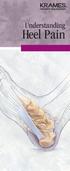 Understanding Heel Pain What Causes Heel Pain? Heel pain is a common problem that occurs when the heel is placed under too much stress. Heel pain is most often caused by walking in ways that irritate tissues
Anterior Cruciate Ligament Reconstruction Rehabilitation Protocol
 The First Two Weeks After Surgery You will go home with crutches and be advised to use ice. Goals 1. Protect reconstruction 2. Ensure wound healing 3. Maintain full knee extension 4. Gain knee flexion
Stretching in the Office
 Stretching in the Office Legs: Quads, Hamstrings, IT band, Hip flexors, Gluts, Calves Quads: Standing @ desk maintaining upright posture, grab one leg @ a time by foot or ankle and bring it towards backside
JUNIPERO SERRA VOLLEYBALL OFF SEASON TRAINING SCHEDULE
 JUNIPERO SERRA VOLLEYBALL OFF SEASON TRAINING SCHEDULE 2007 OFF SEASON WORKOUT Our off season workout is centered around Speed, Agility & Quickness which are athletic attributes that are very trainable
COMMON OVERUSE INJURIES ATTRIBUTED TO CYCLING, AND WAYS TO MINIMIZE THESE INJURIES
 COMMON OVERUSE INJURIES ATTRIBUTED TO CYCLING, AND WAYS TO MINIMIZE THESE INJURIES Listed are a few of the most common overuse injuries associated with cycling long distances. 1. Cervical and upper back
9 exercises to rehab a torn ACL without surgery
 MENU Search foxnews.com Health Home Men's Health Women's Health Children's Health Alternative Medicine Diabetes Heart Health Allergies HEALTH 9 exercises to rehab a torn ACL without surgery By Julie Wilcox
.org. Achilles Tendinitis. Description. Cause. Achilles tendinitis is a common condition that causes pain along the back of the leg near the heel.
 Achilles Tendinitis Page ( 1 ) Achilles tendinitis is a common condition that causes pain along the back of the leg near the heel. The Achilles tendon is the largest tendon in the body. It connects your
The Breathe Better resource has been developed in partnership with Wintec s Centre for Sport Science and Human Performance with funding provided by
 BREATHE BETTER The Breathe Better resource has been developed in partnership with Wintec s Centre for Sport Science and Human Performance with funding provided by the Wintec Research Office through a research
Back Safety Goals. Back injury and injury prevention Lifting techniques Quiz
 Back Safety Back Activities Reaching, bending over, sitting Skiing, hiking, bike riding Playing with your children and grandchildren Working and feeling productive Back Safety Goals Back injury and injury
TOTAL KNEE REPLACEMENT
 PENN ORTHOPAEDICS TOTAL KNEE REPLACEMENT Home Exercise Program PENN ORTHOPAEDICS TOTAL KNEE REPLACEMENT HOME EXERCISE PROGRAM To get the best results from your surgery, it is important that you do your
THE BENJAMIN INSTITUTE PRESENTS. Excerpt from Listen To Your Pain. Assessment & Treatment of. Low Back Pain. Ben E. Benjamin, Ph.D.
 THE BENJAMIN INSTITUTE PRESENTS Excerpt from Listen To Your Pain Assessment & Treatment of Low Back Pain A B E N J A M I N I N S T I T U T E E B O O K Ben E. Benjamin, Ph.D. 2 THERAPIST/CLIENT MANUAL The
The Eight Pieces of Brocade
 The Eight Pieces of Brocade Ba Duan Jin (The Eight Pieces of Brocade) was developed during the twelfth century by the famous general Yueh Fei (who also created the Hsing I internal martial art) as a way
How To Improve Drainage
 Rehabilitation Home Program Edema Exercises To Improve Drainage You will improve your lymph flow by doing a few exercises each day. These exercises are an important part of your home program. They may