
Modern authenticated encryption
|
|
|
- Alban Byrd
- 9 years ago
- Views:
Transcription
1 Modern authenticated encryption Joan Daemen STMicroelectronics and Radboud University Zagreb 2O16 Zagreb, Kroatia, March 23, / 46

2 Authenticated encryption: what and why Outline 1 Authenticated encryption: what and why 2 An ideal AE scheme 3 Making it practical 4 Dealing with usage wishes and worries 5 Keyak and Ketje 6 Nonceless AE: Haddoc 7 Robust AE: Mr. Monster Burrito 2 / 46

3 Authenticated encryption: what and why What is authenticated encryption (AE)? Messages and cryptograms M = (AD, P) message with associated data and plaintext M c = (AD, C, T) cryptogram with assoc. data, ciphertext and tag All of M is authenticated but only P is encrypted wrapping: M to M c unwrapping: M c to M Symmetric cryptography: same key used for both operations Authentication aspect unwrapping includes verification of tag T if not valid, it returns an error Note: this is usually called AEAD 3 / 46

4 Authenticated encryption: what and why The CAESAR competition Public competition for AE schemes consortium from academia and industry aims for portfolio instead of single winner CAESAR committee (secretary Dan Bernstein) Timeline submission deadline: March 15, rounds foreseen end of round 1: July 7, 2015 target end date: December 2017 Status: Round 1: 57 candidates Round 2: 29 left 4 / 46

5 Authenticated encryption: what and why CAESAR 2nd round candidates 7 points! Singapore Hongjun Wu (& co) 4, Jean, Nikolic & Peyrin 3 5 points! Belgium COSIC team 2, FX Standaert& co, Keccak team 2 3 points! California Rogaway, Krovetz & co 3 Japan NTT & co team, Minematsu, NEC & co team 2 points! India Nandi & co 2 Switzerland Aumasson & co, EPFL team 1 point Luxembourg Biryukov & Khovratovich Germany Lucks & co from Weimar Austria Mendel, Schläffer & co from IAIK Graz Poland Morawiecki, Gaj, Pieprzyk & co Macedonia Danilo Gligoroski& co Finland Markku Saarinen China Lei Wang 5 / 46

6 Authenticated encryption: what and why Limitations of AE No protection against traffic analysis AE does not hide length and number of messages to be addressed separately: random padding and dummy messages Determinism: equal messages lead to equal cryptograms information leakage concern of replay attacks solution: ensure message uniqueness at wrapping end include nonce N in input when wrapping wrapping becomes stateful a simple message counter suffices From now on we always include a nonce N 6 / 46

7 Authenticated encryption: what and why Functional behaviour Wrapping: state: K and past nonces N input: M = (N, AD, P) output: C, T or processing: if (N N ) return else add N to N and return C, T Wrap[K](N, AD, P) Unwrapping: state: K input: M c = (N, AD, C, T) output: P or processing: return Unwrap[K](N, AD, C, T): P if valid and otherwise 7 / 46
 Unwrapping: state: K input: M c = (N, AD, C, T)](/docs-images/46/21528110/images/page_7.jpg "output: P or processing: return Unwrap[K](N, AD, C, T): P if valid and otherwise 7 / 46")
8 Authenticated encryption: what and why Sessions Session: tag in cryptogram authenticates also previous messages full sequence of messages since the session started Additional protection against: insertion, omission, re-ordering of messages within a session Attention point: last message of session Alternative views: split of a long cryptogram in shorter ones intermediate tags See [Bellare, Kohno and Namprempre, ACM 2003], [Keccak Team, SAC 2011], [Boldyreva, Degabriele, Paterson, Stam, EC 2012] and [Hoang, Reyhanitabar, Rogaway and Vizár, 2015] 8 / 46

9 Authenticated encryption: what and why Functional behaviour, with sessions 1 K, N AD (1) P (1) AD (2) P (2) AD (3) P (3) C (1) T (1) C (2) T (3) C (3) T (2) Session start: creation of stateful session object D if (N N ) (past nonces) return else add N to N and create D with State Start(K, N) Wrapping return C (i), T (i) D.Wrap(AD (i), P (i) ) this updates State Unwrapping return D.Unwrap(AD (i), C (i), T (i) ): P (i) or in case of no error, this updates State 9 / 46

10 Authenticated encryption: what and why Why (session-based) authenticated encryption? Convenience often both are confidentiality and integrity are needed one scheme to choose instead of two Efficiency combination can be more efficient than sum of the two, e.g., CBC encryption and CMAC: 2 block cipher calls per input block OCB3 AE: 1 block cipher call per input block sponge-based AE: 1 permutation call per input block Reduction of attack surface differential attacks limited to session setup due to nonce chosen ciphertext attacks ineffective due to Increase of robustness against fault attacks in wrap due to nonce requirement in unwrap due to 10 / 46

11 An ideal AE scheme Outline 1 Authenticated encryption: what and why 2 An ideal AE scheme 3 Making it practical 4 Dealing with usage wishes and worries 5 Keyak and Ketje 6 Nonceless AE: Haddoc 7 Robust AE: Mr. Monster Burrito 11 / 46

12 An ideal AE scheme An ideal AE scheme Underlying primitive: random oracle RO output length l implied by the context RO e ( ) = RO( 1) for encryption RO a ( ) = RO( 0) for tag computation Wrapping if (N N ) it return C RO e (K N AD) P T RO a (K N AD P) Unwrapping P RO e (K N AD) C T RO a (K N AD P) If (T = T) return, else return P Note: RO input shall be uniquely decodable in K, N AD and P 12 / 46

13 An ideal AE scheme Ideal AE scheme, now supporting sessions Starting the session if (N N ) it return History K N Wrapping of M (i) = (AD (i), P (i) ) History History AD (i) 1 History History P (i) 0 return (C (i), T (i) ) and then C (i) RO(History) P (i) and then T (i) RO(History) Unwrapping of M (i) c = (AD (i), C (i), T (i) ) save current state in case of error: S History History History AD (i) 1 and then P (i) RO(History) C (i) History History P (i) 0 and then τ RO(History) if (τ = T (i) ) return P (i), else History S and then return Note: History shall be uniquely decodable in K, N AD (i) and P (i) 13 / 46

14 An ideal AE scheme Security of our ideal AE scheme Attack model: adversary can adaptively query: Start, respecting nonce uniqueness (not counted), D.Wrap (q w times) and D.Unwrap (q u times) RO(x): n times Input to RO(K ) never repeats: outputs are uniformly random intra-session: each input to RO is longer than previous one inter-session: first part of RO input (N, K) never repeated So cryptograms C (i) and tags T (i) are uniformly random 14 / 46

15 An ideal AE scheme Security of our ideal AE scheme (cont d) Forgery: building sequence of valid cryptograms M (1) c... M (l) c not obtained from calls to wrap for some M (1)... M (l) Privacy break: learning on plaintext bits of M (l) c without unwrapping all of M (1) c... M (l) c Complete security breakdown: key recovery single target key: getting one specific key multiple target: getting one key out of m target keys 15 / 46

16 An ideal AE scheme Security of our ideal AE scheme (cont d 2) Forgery best strategy: send random but well-formatted cryptograms success probability for q u attempts: q u 2 T Privacy break best strategy at unwrap: send cryptograms with modified C i or T i success probability for q u attempts: q u 2 T Key retrieval best strategy: exhaustive key search single target: success probability for n key guesses n2 K multi-target: success probability for n key guesses (m + 1)n2 K Countermeasure against multi-target security erosion: global nonce Summary: 1 out of m keys recovery after 2 K log 2 (m+1) offline calls to RO( ) single privacy break/forgery after 2 T online calls to D.Unwrap 16 / 46

17 Making it practical Outline 1 Authenticated encryption: what and why 2 An ideal AE scheme 3 Making it practical 4 Dealing with usage wishes and worries 5 Keyak and Ketje 6 Nonceless AE: Haddoc 7 Robust AE: Mr. Monster Burrito 17 / 46

18 Making it practical Intermezzo: the sponge M pad trunc Z r c 0 0 outer inner f f f f f f absorbing squeezing Arbitrary input and output length Parameters: rate r and capacity c with r + c = b (width) Proven security strength when input M starts with long key: expected workload to distinguish from RO is 2 c ϵ calls to f deals with average behaviour over all possible f of width b f should be designed such that there are no better attacks 18 / 46

19 Making it practical Instantiating our ideal AE scheme Replace RO by a sponge function (e.g. Keccak) Due to security proof [Andreeva, Daemen, Mennink, Van Assche FSE 2015]: key recovery: min(2 K log 2 m, 2 c ϵ ) offline calls to Keccak-f privacy break/forgery: min(2 T, 2 c/2 ) online calls to Keccak-f... assuming f (e.g., Keccak-f) has no exploitable properties Practical scheme? History includes all previous messages storing it may require huge buffer Practical scheme! sponge variant operating sequentially on a b-bit state S at any point S: collision-resistant keyed hash of History instantiations: our CAESAR submissions Keyak and Ketje 19 / 46

20 Making it practical Instantiating our ideal AE scheme Replace RO by a sponge function (e.g. Keccak) Due to security proof [Andreeva, Daemen, Mennink, Van Assche FSE 2015]: key recovery: min(2 K log 2 m, 2 c ϵ ) offline calls to Keccak-f privacy break/forgery: min(2 T, 2 c/2 ) online calls to Keccak-f... assuming f (e.g., Keccak-f) has no exploitable properties Practical scheme? History includes all previous messages storing it may require huge buffer Practical scheme! sponge variant operating sequentially on a b-bit state S at any point S: collision-resistant keyed hash of History instantiations: our CAESAR submissions Keyak and Ketje 19 / 46

21 Making it practical Intermezzo: full-state keyed duplex (FSKD) K σ 0 Z 0 σ 1 Z 1 σ 2 Z 2 0 f outer inner f f init duplexing duplexing Duplex: alternating absorbing and squeezing Full-state absorbing (b bits instead of r bits) Security proof in [Mennink, Reyhanitabar and Vizár, 2015] relies on [Andreeva, Daemen, Mennink, Van Assche FSE 2015] basically same bounds as classical sponge in keyed mode 20 / 46
22 Making it practical Advantages of sponge-based AE Smaller surface for cryptanalysis than block-cipher modes there are no round keys evolving state during session: moving target Cheaper protection against side channel attacks DPA and DEMA limited to session setup due to nonce unicity moving target during session Optimization of ratio security strength vs memory usage 21 / 46
23 Dealing with usage wishes and worries Outline 1 Authenticated encryption: what and why 2 An ideal AE scheme 3 Making it practical 4 Dealing with usage wishes and worries 5 Keyak and Ketje 6 Nonceless AE: Haddoc 7 Robust AE: Mr. Monster Burrito 22 / 46
24 Dealing with usage wishes and worries Wish for being online Online: being able to wrap or unwrap a message on-the-fly Avoid having to buffer long messages Online unwrapping implies returning unverified plaintext but security of our scheme relies on it two ways to tackle this problem Tolerating Release of Unverified Plaintext (RUP) catastrophic fragmentation attack [Albrecht et al., IEEE S&P 2009] add security notions and attacks [Andreeva et al., ASIACRYPT 2014] try to satisfy (some of) these: costly Our solution: address this with sessions split long cryptogram into short ones, each with tag shorten cryptograms til they fit the unwrap buffer 23 / 46
25 Dealing with usage wishes and worries Wish for surviving sloppy nonce management Our assumption: K, N is unique per (wrapping) Session Start users/implementers do not always respect this wish to limit consequences of nonce violation All online AE schemes leak in case of nonce violation equality of first messages of session leaks in any case stream encryption: re-use of keystream block encryption: just equality of block(s) leaks low entropy plaintexts become an issue successful active attacks for quasi all proposed schemes Consensus among experts on following: ideal security in case of nonce misuse hard to define user shall be warned to not allow nonce violation calling an AE scheme nonce-misuse resistant gives wrong message Our stance: there is no excuse for nonce violation 24 / 46
26 Dealing with usage wishes and worries Wish for parallelism Many CAESAR submissions use AES Modern CPUs have dedicated AES instruction, e.g. AES-NI on Intel pipelining: 1 cycle per round but latency of 8 to 16 cycles performing a single AES: 80 cycles performing 8 independent AES: 88 cycles Expoiting the pipeline requires ability to parallelize Also non-aes based schemes can benefit from parallelism, e.g. pipelined architectures superscalar architectures SIMD instructions Hence: support for parallelism in Keyak 25 / 46
27 Dealing with usage wishes and worries Wish for lightweight Whole world of buzzwords: IoT, Smart Grid, RFID, ad-hoc sensor and body area network, Strongly constrained resources low area: reduce chip cost low power: RF powered low energy: battery-life Specific conditions short messages transaction time, Compromising on target security strength provable security of mode consequences of improper usage, Hence: Ketje is dedicated for lightweight 26 / 46
28 Keyak and Ketje Outline 1 Authenticated encryption: what and why 2 An ideal AE scheme 3 Making it practical 4 Dealing with usage wishes and worries 5 Keyak and Ketje 6 Nonceless AE: Haddoc 7 Robust AE: Mr. Monster Burrito 27 / 46
29 Keyak and Ketje Keyak [Keccak team + Ronny Van Keer] AE scheme submitted to CAESAR (tweaked for round 2) Permutation-based mode called Motorist Makes use of Keccak-p permutations Keccak-p: reduced-round version of Keccak-f Keccak-f: permutations underlying Keccak all 6 functions in SHA-3 based on Keccak-f[1600] (24 rounds) Generic definition with 5 parameters c capacity τ tag length b width of Keccak-p n r number of rounds in Keccak-p Π degree of parallelism 28 / 46
30 Keyak and Ketje Keyak named instances 5 named instances with c = 256, τ = 128, n r = 12 Efficiency: Short messages: Π calls to Keccak-p Long messages: twice as fast as SHAKE128 Name Width b Parallelism Π River Keyak Lake Keyak Sea Keyak Ocean Keyak Lunar Keyak / 46
31 Keyak and Ketje The Motorist mode of use 0 SUV 1 T (0) SUV = Secret and Unique Value Plaintext absorbed in outer part, AD in inner part also Tag and keystream from same output block Z i Specified in three layers: Piston: Π of them, each one an FSKD Engine: finite state machine steering the Piston(s) Motorist: session starting and (un)-wrapping, using the Engine 30 / 46
32 Keyak and Ketje The Motorist mode of use 0 SUV 1 P(1) A (1) T (0) C (1) T (1) SUV = Secret and Unique Value Plaintext absorbed in outer part, AD in inner part also Tag and keystream from same output block Z i Specified in three layers: Piston: Π of them, each one an FSKD Engine: finite state machine steering the Piston(s) Motorist: session starting and (un)-wrapping, using the Engine 30 / 46
33 Keyak and Ketje The Motorist mode of use 0 SUV 1 P(1) A (1) P (2) T (0) C (1) T (1) C (2) T (2) SUV = Secret and Unique Value Plaintext absorbed in outer part, AD in inner part also Tag and keystream from same output block Z i Specified in three layers: Piston: Π of them, each one an FSKD Engine: finite state machine steering the Piston(s) Motorist: session starting and (un)-wrapping, using the Engine 30 / 46
34 Keyak and Ketje The Motorist mode of use 0 SUV 1 P(1) A (1) P (2) A (3) T (0) C (1) T (1) C (2) T (2) T (3) SUV = Secret and Unique Value Plaintext absorbed in outer part, AD in inner part also Tag and keystream from same output block Z i Specified in three layers: Piston: Π of them, each one an FSKD Engine: finite state machine steering the Piston(s) Motorist: session starting and (un)-wrapping, using the Engine 30 / 46
35 Keyak and Ketje Ketje [Keccak team + Ronny Van Keer] AE scheme submitted to CAESAR (made it to round 2) Two instances Functionally similar to Keyak Lightweight: using reduced-round Keccak-f[400] or Keccak-f[200] small footprint low computation for short messages How? 96-bit or 128-bit security (incl. multi-target) more ad-hoc: monkeyduplex instead of FSKD reliance on nonce uniqueness for key protection 31 / 46
36 Keyak and Ketje Ketje instances and lightweight features feature Ketje Jr Ketje Sr state size 25 bytes 50 bytes block size 2 bytes 4 bytes processing computational cost session start per session 12 rounds 12 rounds wrapping per block 1 round 1 round 8-byte tag comp. per message 9 rounds 7 rounds More on Ketje and Keyak: / 46
37 Keyak and Ketje Keyak and Ketje in absence of nonces Keyak may leak plaintext information XOR of 1st differing plaintext blocks in otherwise identical sessions Ketje may break down completely single-round differential attacks become possible 33 / 46
38 Nonceless AE: Haddoc Outline 1 Authenticated encryption: what and why 2 An ideal AE scheme 3 Making it practical 4 Dealing with usage wishes and worries 5 Keyak and Ketje 6 Nonceless AE: Haddoc 7 Robust AE: Mr. Monster Burrito 34 / 46
39 Nonceless AE: Haddoc Haddoc: the concept AD P PRF K CTR T C Permutation-based variant of SIV [Rogaway, Shrimpton 2006] Nonceless Leakage limited to: length of messages identical messages (AD, P) give identical cryptograms (C, T) 35 / 46
40 Nonceless AE: Haddoc Inside Haddoc: the donkeysponge PRF Absorbing phase exploits state secrecy [DR, Pelican, 2005]: usage of full state width b n init = 2: make all state bits depend on the key n absorb = 6: limit max DP to prevent state collisions Squeezing phase: n squeeze = 12, c = / 46
41 Nonceless AE: Haddoc Building blocks of Haddoc PRF: donkeysponge with input K: key input M: injective coding of (AD, P) output T = Z 256 CTR: sponge in counter mode single-block in- and outputs Z i = sponge(k T i) C i = M i Z i n r = 12 Permutations Keccak-p[1600, n r ] Keccak-p[800, n r ] 37 / 46
42 Nonceless AE: Haddoc Haddoc features Processing: long messages: about 70 % of SHAKE128 short messages: 26 rounds if P is absent we get a MAC function: long messages: about 21 % of SHAKE128 short messages: 14 rounds Advantages decryption: random access encryption: PRF parallelizable Disadvantages encryption strictly two-pass message expansion by 2n-bit tag for n-bit security 38 / 46
43 Robust AE: Mr. Monster Burrito Outline 1 Authenticated encryption: what and why 2 An ideal AE scheme 3 Making it practical 4 Dealing with usage wishes and worries 5 Keyak and Ketje 6 Nonceless AE: Haddoc 7 Robust AE: Mr. Monster Burrito 39 / 46
44 Robust AE: Mr. Monster Burrito Mr. Monster Burrito: the concept P 0 C B TW K B -1 C P 0? Robust AE [Rogaway, ACNS 2014] inspired by AEZ [Hoang, Krovetz, Rogaway, Shrimpton 2014] wide tweakable block cipher variable key-, tweak- and blocksize: K, TW and B Best possible forgery resistance for given message expansion 40 / 46
45 Robust AE: Mr. Monster Burrito Inside Mr. Monster Burrito Pʹleft K TW Pʹright F 1 F 2 F 3 F 4 C left C right Based on [Naor Reingold 1997], thanks [DJB, Tenerife 2013] F 2 and F 3 : PRF F 1 and F 4 : constraint is max DP < / 46
46 Robust AE: Mr. Monster Burrito Building blocks of Mr. Monster Burrito Asymmetric Feistel: right part is single block F i : donkeysponge instances as in Haddoc PRF F i input: K: key M: injective coding of ( B, TW, S left/right, i) F i output length: F 1, F 3 and F 4 : single-block F 2 : same length as left part Permutations Keccak-p[1600, n r ] Keccak-p[800, n r ] 42 / 46
47 Robust AE: Mr. Monster Burrito Mr. Monster Burrito features Processing block length above rate: close to 100% of SHAKE128 short block length: 56 rounds Advantages minimum data expansion for given anti-forgery level can even exploit redundancy in plaintext Disadvantages: heavyweight crypto four-pass inefficient for small block lengths 43 / 46
48 Conclusions Conclusions Keccak-based AE: our preferred: CAESAR-candidate Keyak constrained platforms: CAESAR-candidate Ketje nonceless: Haddoc and Mr. Monster Burrito will not win beauty contest but performance degradation is not dramatic Inspired by [Rogaway on AE, ACNS 2014] Q? Thanks for your attention! 44 / 46
49 Conclusions Conclusions Our advice: don t repeat nonces don t release unverified plaintext Sponge-based authenticated encryption is symmetric crypto 2.0 exciting competitive 45 / 46
50 Conclusions Thank you for your attention! 46 / 46
Permutation-based encryption, authentication and authenticated encryption
 Permutation-based encryption, authentication and authenticated encryption Guido Bertoni 1, Joan Daemen 1, Michaël Peeters 2, and Gilles Van Assche 1 1 STMicroelectronics 2 NXP Semiconductors Abstract.
Permutation Based Cryptography for IoT
 Permutation Based Cryptography for IoT Guido Bertoni 1 Joint work with Joan Daemen 1, Michaël Peeters 2 and Gilles Van Assche 1 1 STMicroelectronics 2 NXP Semiconductors CIoT 2012, Antwerp, November 21
GCM-SIV: Full Nonce Misuse-Resistant Authenticated Encryption at Under One Cycle per Byte. Yehuda Lindell Bar-Ilan University
 GCM-SIV: Full Nonce Misuse-Resistant Authenticated Encryption at Under One Cycle per Byte Shay Gueron Haifa Univ. and Intel Yehuda Lindell Bar-Ilan University Appeared at ACM CCS 2015 How to Encrypt with
Error oracle attacks and CBC encryption. Chris Mitchell ISG, RHUL http://www.isg.rhul.ac.uk/~cjm
 Error oracle attacks and CBC encryption Chris Mitchell ISG, RHUL http://www.isg.rhul.ac.uk/~cjm Agenda 1. Introduction 2. CBC mode 3. Error oracles 4. Example 1 5. Example 2 6. Example 3 7. Stream ciphers
Ascon. Ch. Dobraunig 1, M. Eichlseder 1, F. Mendel 1, M. Schläffer 2. 22nd Crypto Day, Infineon, Munich. (A Submission to CAESAR)
 Ascon (A Submission to CAESAR) Ch. Dobraunig 1, M. Eichlseder 1, F. Mendel 1, M. Schläffer 2 1 IAIK, Graz University of Technology, Austria 2 Infineon Technologies AG, Austria 22nd Crypto Day, Infineon,
Overview of Cryptographic Tools for Data Security. Murat Kantarcioglu
 UT DALLAS Erik Jonsson School of Engineering & Computer Science Overview of Cryptographic Tools for Data Security Murat Kantarcioglu Pag. 1 Purdue University Cryptographic Primitives We will discuss the
AES-COPA v.2. Designers/Submitters: Elena Andreeva 1,2, Andrey Bogdanov 3, Atul Luykx 1,2, Bart Mennink 1,2, Elmar Tischhauser 3, and Kan Yasuda 1,4
 Submission to the CAESAR competition AES-COPA v.2 Designers/Submitters: Elena Andreeva 1,2, Andrey Bogdanov 3, Atul Luykx 1,2, Bart Mennink 1,2, Elmar Tischhauser 3, and Kan Yasuda 1,4 Affiliation: 1 Dept.
MAC. SKE in Practice. Lecture 5
 MAC. SKE in Practice. Lecture 5 Active Adversary Active Adversary An active adversary can inject messages into the channel Active Adversary An active adversary can inject messages into the channel Eve
lundi 1 octobre 2012 In a set of N elements, by picking at random N elements, we have with high probability a collision two elements are equal
 Symmetric Crypto Pierre-Alain Fouque Birthday Paradox In a set of N elements, by picking at random N elements, we have with high probability a collision two elements are equal N=365, about 23 people are
Message Authentication Code
 Message Authentication Code Ali El Kaafarani Mathematical Institute Oxford University 1 of 44 Outline 1 CBC-MAC 2 Authenticated Encryption 3 Padding Oracle Attacks 4 Information Theoretic MACs 2 of 44
On the Security of CTR + CBC-MAC
 On the Security of CTR + CBC-MAC NIST Modes of Operation Additional CCM Documentation Jakob Jonsson * jakob [email protected] Abstract. We analyze the security of the CTR + CBC-MAC (CCM) encryption mode.
SYMMETRIC ENCRYPTION. Mihir Bellare UCSD 1
 SYMMETRIC ENCRYPTION Mihir Bellare UCSD 1 Syntax A symmetric encryption scheme SE = (K,E,D) consists of three algorithms: K and E may be randomized, but D must be deterministic. Mihir Bellare UCSD 2 Correct
Provable-Security Analysis of Authenticated Encryption in Kerberos
 Provable-Security Analysis of Authenticated Encryption in Kerberos Alexandra Boldyreva Virendra Kumar Georgia Institute of Technology, School of Computer Science 266 Ferst Drive, Atlanta, GA 30332-0765
Talk announcement please consider attending!
 Talk announcement please consider attending! Where: Maurer School of Law, Room 335 When: Thursday, Feb 5, 12PM 1:30PM Speaker: Rafael Pass, Associate Professor, Cornell University, Topic: Reasoning Cryptographically
Network Security. Modes of Operation. Steven M. Bellovin February 3, 2009 1
 Modes of Operation Steven M. Bellovin February 3, 2009 1 Using Cryptography As we ve already seen, using cryptography properly is not easy Many pitfalls! Errors in use can lead to very easy attacks You
Cryptography and Network Security Chapter 12
 Cryptography and Network Security Chapter 12 Fifth Edition by William Stallings Lecture slides by Lawrie Brown (with edits by RHB) Chapter 12 Message Authentication Codes At cats' green on the Sunday he
Hash Function of Finalist SHA-3: Analysis Study
 International Journal of Advanced Computer Science and Information Technology (IJACSIT) Vol. 2, No. 2, April 2013, Page: 1-12, ISSN: 2296-1739 Helvetic Editions LTD, Switzerland www.elvedit.com Hash Function
Introduction to SHA-3 and Keccak
 Introduction to SHA-3 and Keccak Joan Daemen STMicroelectronics and Radboud University Crypto summer school 2015 Šibenik, Croatia, May 31 - June 5, 2015 1 / 45 Outline 1 The SHA-3 competition 2 The sponge
Chair for Network Architectures and Services Department of Informatics TU München Prof. Carle. Network Security. Chapter 13
 Chair for Network Architectures and Services Department of Informatics TU München Prof. Carle Network Security Chapter 13 Some More Secure Channel Issues Outline In the course we have yet only seen catastrophic
Reconsidering Generic Composition
 Reconsidering Generic Composition Chanathip Namprempre Thammasat University, Thailand Phillip Rogaway University of California, Davis, USA Tom Shrimpton Portland State University, USA 1/24 What is the
Cryptography Lecture 8. Digital signatures, hash functions
 Cryptography Lecture 8 Digital signatures, hash functions A Message Authentication Code is what you get from symmetric cryptography A MAC is used to prevent Eve from creating a new message and inserting
Message authentication
 Message authentication -- Hash based MAC unctions -- MAC unctions based on bloc ciphers -- Authenticated encryption (c) Levente Buttyán ([email protected]) Secret preix method MAC (x) = H( x) insecure!
The Misuse of RC4 in Microsoft Word and Excel
 The Misuse of RC4 in Microsoft Word and Excel Hongjun Wu Institute for Infocomm Research, Singapore [email protected] Abstract. In this report, we point out a serious security flaw in Microsoft
Modes of Operation of Block Ciphers
 Chapter 3 Modes of Operation of Block Ciphers A bitblock encryption function f: F n 2 Fn 2 is primarily defined on blocks of fixed length n To encrypt longer (or shorter) bit sequences the sender must
Authentication requirement Authentication function MAC Hash function Security of
 UNIT 3 AUTHENTICATION Authentication requirement Authentication function MAC Hash function Security of hash function and MAC SHA HMAC CMAC Digital signature and authentication protocols DSS Slides Courtesy
How To Attack A Block Cipher With A Key Key (Dk) And A Key (K) On A 2Dns) On An Ipa (Ipa) On The Ipa 2Ds (Ipb) On Pcode)
 Cryptography and Network Security Chapter 6 Fifth Edition by William Stallings Lecture slides by Lawrie Brown (with edits by RHB) Chapter 6 Block Cipher Operation Many savages at the present day regard
IT Networks & Security CERT Luncheon Series: Cryptography
 IT Networks & Security CERT Luncheon Series: Cryptography Presented by Addam Schroll, IT Security & Privacy Analyst 1 Outline History Terms & Definitions Symmetric and Asymmetric Algorithms Hashing PKI
SHA3 WHERE WE VE BEEN WHERE WE RE GOING
 SHA3 WHERE WE VE BEEN WHERE WE RE GOING Bill Burr May 1, 2013 updated version of John Kelsey s RSA2013 presentation Overview of Talk Where We ve Been: Ancient history 2004 The Competition Where We re Going
CS155. Cryptography Overview
 CS155 Cryptography Overview Cryptography Is n A tremendous tool n The basis for many security mechanisms Is not n The solution to all security problems n Reliable unless implemented properly n Reliable
Symmetric Crypto MAC. Pierre-Alain Fouque
 Symmetric Crypto MAC Pierre-Alain Fouque Birthday Paradox In a set of D elements, by picking at random D elements, we have with high probability a collision two elements are equal D=365, about 23 people
Overview of Symmetric Encryption
 CS 361S Overview of Symmetric Encryption Vitaly Shmatikov Reading Assignment Read Kaufman 2.1-4 and 4.2 slide 2 Basic Problem ----- ----- -----? Given: both parties already know the same secret Goal: send
Lecture 9 - Message Authentication Codes
 Lecture 9 - Message Authentication Codes Boaz Barak March 1, 2010 Reading: Boneh-Shoup chapter 6, Sections 9.1 9.3. Data integrity Until now we ve only been interested in protecting secrecy of data. However,
IPsec Details 1 / 43. IPsec Details
 Header (AH) AH Layout Other AH Fields Mutable Parts of the IP Header What is an SPI? What s an SA? Encapsulating Security Payload (ESP) ESP Layout Padding Using ESP IPsec and Firewalls IPsec and the DNS
Hash Function JH and the NIST SHA3 Hash Competition
 Hash Function JH and the NIST SHA3 Hash Competition Hongjun Wu Nanyang Technological University Presented at ACNS 2012 1 Introduction to Hash Function Hash Function Design Basics Hash function JH Design
Message Authentication Codes
 2 MAC Message Authentication Codes : and Cryptography Sirindhorn International Institute of Technology Thammasat University Prepared by Steven Gordon on 28 October 2013 css322y13s2l08, Steve/Courses/2013/s2/css322/lectures/mac.tex,
How To Encrypt With A 64 Bit Block Cipher
 The Data Encryption Standard (DES) As mentioned earlier there are two main types of cryptography in use today - symmetric or secret key cryptography and asymmetric or public key cryptography. Symmetric
Table of Contents. Bibliografische Informationen http://d-nb.info/996514864. digitalisiert durch
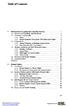 1 Introduction to Cryptography and Data Security 1 1.1 Overview of Cryptology (and This Book) 2 1.2 Symmetric Cryptography 4 1.2.1 Basics 4 1.2.2 Simple Symmetric Encryption: The Substitution Cipher...
Authenticated Encryption: Relations among Notions and Analysis of the Generic Composition Paradigm By Mihir Bellare and Chanathip Namprempre
 Authenticated Encryption: Relations among Notions and Analysis of the Generic Composition Paradigm By Mihir Bellare and Chanathip Namprempre Some slides were also taken from Chanathip Namprempre's defense
CIS433/533 - Computer and Network Security Cryptography
 CIS433/533 - Computer and Network Security Cryptography Professor Kevin Butler Winter 2011 Computer and Information Science A historical moment Mary Queen of Scots is being held by Queen Elizabeth and
EXAM questions for the course TTM4135 - Information Security May 2013. Part 1
 EXAM questions for the course TTM4135 - Information Security May 2013 Part 1 This part consists of 5 questions all from one common topic. The number of maximal points for every correctly answered question
Developing and Investigation of a New Technique Combining Message Authentication and Encryption
 Developing and Investigation of a New Technique Combining Message Authentication and Encryption Eyas El-Qawasmeh and Saleem Masadeh Computer Science Dept. Jordan University for Science and Technology P.O.
Triathlon of Lightweight Block Ciphers for the Internet of Things
 NIST Lightweight Cryptography Workshop 2015 Triathlon of Lightweight Block Ciphers for the Internet of Things Daniel Dinu, Yann Le Corre, Dmitry Khovratovich, Leo Perrin, Johann Großschädl, Alex Biryukov
Security/Privacy Models for "Internet of things": What should be studied from RFID schemes? Daisuke Moriyama and Shin ichiro Matsuo NICT, Japan
 Security/Privacy Models for "Internet of things": What should be studied from RFID schemes? Daisuke Moriyama and Shin ichiro Matsuo NICT, Japan 1 Internet of Things (IoT) CASAGRAS defined that: A global
Leakage-Resilient Authentication and Encryption from Symmetric Cryptographic Primitives
 Leakage-Resilient Authentication and Encryption from Symmetric Cryptographic Primitives Olivier Pereira Université catholique de Louvain ICTEAM Crypto Group B-1348, Belgium [email protected]
Authenticated encryption
 Authenticated encryption Dr. Enigma Department of Electrical Engineering & Computer Science University of Central Florida [email protected] October 16th, 2013 Active attacks on CPA-secure encryption
Common Pitfalls in Cryptography for Software Developers. OWASP AppSec Israel July 2006. The OWASP Foundation http://www.owasp.org/
 Common Pitfalls in Cryptography for Software Developers OWASP AppSec Israel July 2006 Shay Zalalichin, CISSP AppSec Division Manager, Comsec Consulting [email protected] Copyright 2006 - The OWASP
Lecture 10: CPA Encryption, MACs, Hash Functions. 2 Recap of last lecture - PRGs for one time pads
 CS 7880 Graduate Cryptography October 15, 2015 Lecture 10: CPA Encryption, MACs, Hash Functions Lecturer: Daniel Wichs Scribe: Matthew Dippel 1 Topic Covered Chosen plaintext attack model of security MACs
Dr. Jinyuan (Stella) Sun Dept. of Electrical Engineering and Computer Science University of Tennessee Fall 2010
 CS 494/594 Computer and Network Security Dr. Jinyuan (Stella) Sun Dept. of Electrical Engineering and Computer Science University of Tennessee Fall 2010 1 Introduction to Cryptography What is cryptography?
SAMPLE EXAM QUESTIONS MODULE EE5552 NETWORK SECURITY AND ENCRYPTION ECE, SCHOOL OF ENGINEERING AND DESIGN BRUNEL UNIVERSITY UXBRIDGE MIDDLESEX, UK
 SAMPLE EXAM QUESTIONS MODULE EE5552 NETWORK SECURITY AND ENCRYPTION September 2010 (reviewed September 2014) ECE, SCHOOL OF ENGINEERING AND DESIGN BRUNEL UNIVERSITY UXBRIDGE MIDDLESEX, UK NETWORK SECURITY
Privacy and Security in library RFID Issues, Practices and Architecture
 Privacy and Security in library RFID Issues, Practices and Architecture David Molnar and David Wagner University of California, Berkeley CCS '04 October 2004 Overview Motivation RFID Background Library
Cryptographic mechanisms
 General Secretariat for National Defence Central Directorate for Information Systems Security PRIME MINISTER Paris, 2007 september 14 No. 1904/SGDN/DCSSI/SDS/LCR Cryptographic mechanisms Rules and recommendations
Network Security - ISA 656 Introduction to Cryptography
 Network Security - ISA 656 Angelos Stavrou September 18, 2007 Codes vs. K = {0, 1} l P = {0, 1} m C = {0, 1} n, C C E : P K C D : C K P p P, k K : D(E(p, k), k) = p It is infeasible to find F : P C K Let
Rfid Authentication Protocol for security and privacy Maintenance in Cloud Based Employee Management System
 Rfid Authentication Protocol for security and privacy Maintenance in Cloud Based Employee Management System ArchanaThange Post Graduate Student, DKGOI s COE, Swami Chincholi, Maharashtra, India [email protected],
CIS 6930 Emerging Topics in Network Security. Topic 2. Network Security Primitives
 CIS 6930 Emerging Topics in Network Security Topic 2. Network Security Primitives 1 Outline Absolute basics Encryption/Decryption; Digital signatures; D-H key exchange; Hash functions; Application of hash
12/3/08. Security in Wireless LANs and Mobile Networks. Wireless Magnifies Exposure Vulnerability. Mobility Makes it Difficult to Establish Trust
 Security in Wireless LANs and Mobile Networks Wireless Magnifies Exposure Vulnerability Information going across the wireless link is exposed to anyone within radio range RF may extend beyond a room or
The Order of Encryption and Authentication for Protecting Communications (Or: How Secure is SSL?)
 The Order of Encryption and Authentication for Protecting Communications (Or: How Secure is SSL?) Hugo Krawczyk Abstract. We study the question of how to generically compose symmetric encryption and authentication
Victor Shoup Avi Rubin. fshoup,[email protected]. Abstract
 Session Key Distribution Using Smart Cards Victor Shoup Avi Rubin Bellcore, 445 South St., Morristown, NJ 07960 fshoup,[email protected] Abstract In this paper, we investigate a method by which smart
SPINS: Security Protocols for Sensor Networks
 SPINS: Security Protocols for Sensor Networks Adrian Perrig, Robert Szewczyk, J.D. Tygar, Victor Wen, and David Culler Department of Electrical Engineering & Computer Sciences, University of California
Chapter 6 CDMA/802.11i
 Chapter 6 CDMA/802.11i IC322 Fall 2014 Computer Networking: A Top Down Approach 6 th edition Jim Kurose, Keith Ross Addison-Wesley March 2012 Some material copyright 1996-2012 J.F Kurose and K.W. Ross,
Three attacks in SSL protocol and their solutions
 Three attacks in SSL protocol and their solutions Hong lei Zhang Department of Computer Science The University of Auckland [email protected] Abstract Secure Socket Layer (SSL) and Transport Layer
Cryptography & Network Security
 Cryptography & Network Security Lecture 1: Introduction & Overview 2002. 3. 27 [email protected] Common Terms(1) Cryptography: The study of mathematical techniques related to aspects of information security
CSCE 465 Computer & Network Security
 CSCE 465 Computer & Network Security Instructor: Dr. Guofei Gu http://courses.cse.tamu.edu/guofei/csce465/ Secret Key Cryptography (I) 1 Introductory Remarks Roadmap Feistel Cipher DES AES Introduction
Cryptographic hash functions and MACs Solved Exercises for Cryptographic Hash Functions and MACs
 Cryptographic hash functions and MACs Solved Exercises for Cryptographic Hash Functions and MACs Enes Pasalic University of Primorska Koper, 2014 Contents 1 Preface 3 2 Problems 4 2 1 Preface This is a
Chapter 11 Security+ Guide to Network Security Fundamentals, Third Edition Basic Cryptography
 Chapter 11 Security+ Guide to Network Security Fundamentals, Third Edition Basic Cryptography What Is Steganography? Steganography Process of hiding the existence of the data within another file Example:
802.11 Security (WEP, WPA\WPA2) 19/05/2009. Giulio Rossetti Unipi [email protected]
 802.11 Security (WEP, WPA\WPA2) 19/05/2009 Giulio Rossetti Unipi [email protected] 802.11 Security Standard: WEP Wired Equivalent Privacy The packets are encrypted, before sent, with a Secret Key
TinySec: A Link Layer Security Architecture for Wireless Sensor Networks
 TinySec: A Link Layer Security Architecture for Wireless Sensor Networks Chris Karlof, Naveen Sastr, David Wagner Presented By: Tristan Brown Outline Motivation Cryptography Overview TinySec Design Implementation
Part I. Universität Klagenfurt - IWAS Multimedia Kommunikation (VK) M. Euchner; Mai 2001. Siemens AG 2001, ICN M NT
 Part I Contents Part I Introduction to Information Security Definition of Crypto Cryptographic Objectives Security Threats and Attacks The process Security Security Services Cryptography Cryptography (code
Client Server Registration Protocol
 Client Server Registration Protocol The Client-Server protocol involves these following steps: 1. Login 2. Discovery phase User (Alice or Bob) has K s Server (S) has hash[pw A ].The passwords hashes are
Length extension attack on narrow-pipe SHA-3 candidates
 Length extension attack on narrow-pipe SHA-3 candidates Danilo Gligoroski Department of Telematics, Norwegian University of Science and Technology, O.S.Bragstads plass 2B, N-7491 Trondheim, NORWAY [email protected]
Cryptography & Network Security. Introduction. Chester Rebeiro IIT Madras
 Cryptography & Network Security Introduction Chester Rebeiro IIT Madras The Connected World 2 Information Storage 3 Increased Security Breaches 81% more in 2015 http://www.pwc.co.uk/assets/pdf/2015-isbs-executive-summary-02.pdf
Network Security. Chapter 3 Symmetric Cryptography. Symmetric Encryption. Modes of Encryption. Symmetric Block Ciphers - Modes of Encryption ECB (1)
 Chair for Network Architectures and Services Department of Informatics TU München Prof. Carle Network Security Chapter 3 Symmetric Cryptography General Description Modes of ion Data ion Standard (DES)
Message Authentication
 Message Authentication message authentication is concerned with: protecting the integrity of a message validating identity of originator non-repudiation of origin (dispute resolution) will consider the
Lecture 4 Data Encryption Standard (DES)
 Lecture 4 Data Encryption Standard (DES) 1 Block Ciphers Map n-bit plaintext blocks to n-bit ciphertext blocks (n = block length). For n-bit plaintext and ciphertext blocks and a fixed key, the encryption
CS 758: Cryptography / Network Security
 CS 758: Cryptography / Network Security offered in the Fall Semester, 2003, by Doug Stinson my office: DC 3122 my email address: [email protected] my web page: http://cacr.math.uwaterloo.ca/~dstinson/index.html
Vulnerabilities in WEP Christopher Hoffman Cryptography 2 2011-3
 Vulnerabilities in WEP Christopher Hoffman Cryptography 2 2011-3 1. Abstract Wired Equivalent Privacy (WEP) was the first encryption scheme used for protecting wireless traffic. It consisted of a private
AVR1318: Using the XMEGA built-in AES accelerator. 8-bit Microcontrollers. Application Note. Features. 1 Introduction
 AVR1318: Using the XMEGA built-in AES accelerator Features Full compliance with AES (FIPS Publication 197, 2002) - Both encryption and decryption procedures 128-bit Key and State memory XOR load option
Speeding up GPU-based password cracking
 Speeding up GPU-based password cracking SHARCS 2012 Martijn Sprengers 1,2 Lejla Batina 2,3 [email protected] KPMG IT Advisory 1 Radboud University Nijmegen 2 K.U. Leuven 3 March 17-18, 2012 Who
A Secure RFID Ticket System For Public Transport
 A Secure RFID Ticket System For Public Transport Kun Peng and Feng Bao Institute for Infocomm Research, Singapore Abstract. A secure RFID ticket system for public transport is proposed in this paper. It
A PPENDIX H RITERIA FOR AES E VALUATION C RITERIA FOR
 A PPENDIX H RITERIA FOR AES E VALUATION C RITERIA FOR William Stallings Copyright 20010 H.1 THE ORIGINS OF AES...2 H.2 AES EVALUATION...3 Supplement to Cryptography and Network Security, Fifth Edition
Security. Contents. S-72.3240 Wireless Personal, Local, Metropolitan, and Wide Area Networks 1
 Contents Security requirements Public key cryptography Key agreement/transport schemes Man-in-the-middle attack vulnerability Encryption. digital signature, hash, certification Complete security solutions
Transitions: Recommendation for Transitioning the Use of Cryptographic Algorithms and Key Lengths
 NIST Special Publication 800-131A Transitions: Recommendation for Transitioning the Use of Cryptographic Algorithms and Key Lengths Elaine Barker and Allen Roginsky Computer Security Division Information
IoT Security Concerns and Renesas Synergy Solutions
 IoT Security Concerns and Renesas Synergy Solutions Simon Moore CTO - Secure Thingz Ltd Agenda Introduction to Secure.Thingz. The Relentless Attack on the Internet of Things Building protection with Renesas
Counter Expertise Review on the TNO Security Analysis of the Dutch OV-Chipkaart. OV-Chipkaart Security Issues Tutorial for Non-Expert Readers
 Counter Expertise Review on the TNO Security Analysis of the Dutch OV-Chipkaart OV-Chipkaart Security Issues Tutorial for Non-Expert Readers The current debate concerning the OV-Chipkaart security was
Message Authentication Codes. Lecture Outline
 Message Authentication Codes Murat Kantarcioglu Based on Prof. Ninghui Li s Slides Message Authentication Code Lecture Outline 1 Limitation of Using Hash Functions for Authentication Require an authentic
Applying Remote Side-Channel Analysis Attacks on a Security-enabled NFC Tag
 Applying Remote Side-Channel Analysis Attacks on a Security-enabled NFC Tag Thomas Korak Thomas Plos Institute for Applied Information Processing and Communications (IAIK), Graz University of Technology,
SPC5-CRYP-LIB. SPC5 Software Cryptography Library. Description. Features. SHA-512 Random engine based on DRBG-AES-128
 SPC5 Software Cryptography Library Data brief SHA-512 Random engine based on DRBG-AES-128 RSA signature functions with PKCS#1v1.5 ECC (Elliptic Curve Cryptography): Key generation Scalar multiplication
Effective Secure Encryption Scheme [One Time Pad] Using Complement Approach Sharad Patil 1 Ajay Kumar 2
![Effective Secure Encryption Scheme [One Time Pad] Using Complement Approach Sharad Patil 1 Ajay Kumar 2](/thumbs/24/3828705.jpg "Effective Secure Encryption Scheme [One Time Pad] Using Complement Approach Sharad Patil 1 Ajay Kumar 2") Effective Secure Encryption Scheme [One Time Pad] Using Complement Approach Sharad Patil 1 Ajay Kumar 2 Research Student, Bharti Vidyapeeth, Pune, India [email protected] Modern College of Engineering,
Effective Secure Encryption Scheme [One Time Pad] Using Complement Approach Sharad Patil 1 Ajay Kumar 2 Research Student, Bharti Vidyapeeth, Pune, India [email protected] Modern College of Engineering,
Identity-based Encryption with Post-Challenge Auxiliary Inputs for Secure Cloud Applications and Sensor Networks
 Identity-based Encryption with Post-Challenge Auxiliary Inputs for Secure Cloud Applications and Sensor Networks Tsz Hon Yuen - Huawei, Singapore Ye Zhang - Pennsylvania State University, USA Siu Ming
Lecture Note 8 ATTACKS ON CRYPTOSYSTEMS I. Sourav Mukhopadhyay
 Lecture Note 8 ATTACKS ON CRYPTOSYSTEMS I Sourav Mukhopadhyay Cryptography and Network Security - MA61027 Attacks on Cryptosystems Up to this point, we have mainly seen how ciphers are implemented. We
How To Understand And Understand The History Of Cryptography
 CSE497b Introduction to Computer and Network Security - Spring 2007 - Professors Jaeger Lecture 5 - Cryptography CSE497b - Spring 2007 Introduction Computer and Network Security Professor Jaeger www.cse.psu.edu/~tjaeger/cse497b-s07/