
GLYPHOSATE. Glyphosate 7E.1. Herbicide Basics
|
|
|
- Jordan Gallagher
- 9 years ago
- Views:
Transcription
1 Glyphosate 7E.1 GLYPHOSATE Herbicide Basics Chemical formula: N- (phosphonomethyl) glycine Herbicide Family: None generally recognized Target Species: most annual and perennial plants Forms: salts Formulations: SL, EC Mode of Action: amino acid synthesis inhibitor Water Solubility: 900,000 ppm Adsorption potential: high Primary degradation mech: slow microbial metabolism Average Soil Half-life: 47 days Mobility Potential: low Dermal LD50 for rabbits: >5,000 mg/kg Oral LD50 for rats: 5,600 mg/kg LC50 for bluegill sunfish: 120 mg/l Trade Names: Some trade names include Roundup, Roundup-Pro, Rodeo, Accord, Glyphomax, and Touchdown. Manufacturer: Current manufacturers include Monsanto, Cenex/Land O Lakes, Dow AgroSciences, Du Pont, Helena, & Platte. Synopsis Glyphosate is a non-selective, systemic herbicide that can control most annual and perennial plants. It controls weeds by inhibiting the synthesis of aromatic amino acids necessary for protein formation in susceptible plants. Glyphosate is strongly adsorbed to soil particles, which prevents it from excessive leaching or from being taken-up from the soil by non-target plants. It is degraded primarily by microbial metabolism, but strong adsorption to soil can inhibit microbial metabolism and slow degradation. Photo- and chemical degradation are not significant in the dissipation of glyphosate from soils. The half-life of glyphosate ranges from several weeks to years, but averages two months. In water, glyphosate is rapidly dissipated through adsorption to suspended and bottom sediments, and has a half-life of 12 days to ten weeks. Glyphosate by itself is of relatively low toxicity to birds, mammals, and fish, and at least one formulation sold as Rodeo is registered for aquatic use. Some surfactants that are included in some formulations of glyphosate, however, are highly toxic to aquatic organisms, and these formulations are not registered for aquatic use. Monsanto s patent for glyphosate expired in 2000, and other companies are already selling glyphosate formulations.

2 Glyphosate 7E.2 Herbicide Details Chemical Formula: N-(phosphonomethyl) glycine Trade Names: Monsanto discovered and held the patent for glyphosate, and was for many years, the only company that manufactured and sold this herbicide. The patent expired in 2000, however, and already several other companies are making and selling glyphosate formulations. Some of the current trade names include: Roundup Ultra, Roundup Pro, Accord, Honcho, Pondmaster, Protocol, Rascal, Expedite, Ranger, Bronco, Campain, Landmaster, and Fallow Master by Monsanto; Glyphomax and Glypro by Dow AgroSciences; Glyphosate herbicide by Du Pont; Silhouette by Cenex/Land O Lakes; Rattler by Helena; MirageR by Platte; JuryR by Riverside/Terra; and Touchdown by Zeneca. As of November 2001, Rodeo (previously manufactured by Monsanto) is now being manufactured by Dow AgroSciences and Monsanto is now producing Aquamaster. Manufacturers: Current manufacturers include Monsanto, Cenex/Land O Lakes, Helena, Platte, Riverside/Terra, Dow AgroSciences, and Zeneca. Use Against Natural Area Weeds: Glyphosate is a broad-spectrum, nonselective systemic herbicide that kills or suppresses many grasses, forbs, vines, shrubs, and trees. Care should be taken, especially in natural areas, to prevent it from being applied to desirable, native plants, because it will likely kill them. In terrestrial systems, glyphosate can be applied to foliage, green stems, and cut-stems (cut-stumps), but cannot penetrate woody bark (Carlisle & Trevors 1988). Only certain formulations of glyphosate (e.g., Rodeo ) are registered for aquatic use, as glyphosate by itself is essentially non-toxic to submersed plants (Forney & Davis 1981), but the adjuvents often sold with glyphosate may be toxic to aquatic plants and animals. Glyphosate is one of the most commonly used herbicides in natural areas, because it provides effective control of many species. Natural area weeds that have been controlled with glyphosate include: bush honeysuckle (Lonicera maackii), cogon grass (Imperata cylindrica), common buckthorn (Rhamnus cathartica), glossy buckthorn (Frangula alnus), Japanese honeysuckle (Lonicera japonica), and smooth brome (Bromus inermis). In TNC preserves, glyphosate has been used to control dewberries (Rubus spp.), bigtooth aspen (Populus grandidentata), and black cherry (Prunus serotina) at Kitty Todd preserve in Ohio, sweetclover (Melilotus officinalis) in Indiana preserves, leafy spurge (Euphorbia esula) and St. John s wort/klamath weed (Hypericum perforatum) in Michigan preserves, and bindweed (Convolvulus arvensis) and velvetgrass (Holcus lanatus) in Oregon and Washington preserves. In aquatic or wetland systems, glyphosate has successfully controlled common reed (Phragmites australis) in Delaware, Michigan, and Massachusetts preserves, purple loosestrife (Lythrum salicaria) in Indiana and Michigan preserves, reed canarygrass (Phalaris arundinacea) in Illinois preserves, and glossy buckthorn (Frangula alnus) and hybrid cattail (Typha x glauca) in Michigan preserves.

3 Glyphosate 7E.3 Mode of Action: Glyphosate kills plants by inhibiting the activity of the enzyme 5- enolpyruvylshikimic acid-3-phosphate synthase (EPSP), which is necessary for the formation of the aromatic amino acids tyrosine, tryptophan, and phenylalanine. These amino acids are important in the synthesis of proteins that link primary and secondary metabolism (Carlisle & Trevors 1988). EPSPs are present in the chloroplast of most plant species, but are not present in animals. Animals need these three amino acids, but obtain them by eating plants or other animals. Glyphosate is therefore, relatively non-toxic to animals (Monsanto Company 1985). Certain surfactants or other ingredients that are added to some glyphosate formulations are toxic to fish and other aquatic species (EXTOXNET 1996). Glyphosate can also act as a competitive inhibitor of phosphoenolpyruvate (PEP), which is one of the precursors to aromatic amino acid synthesis. It also affects other biochemical processes, and, although these effects are considered secondary, they may be important in the total lethal action of glyphosate. Dissipation Mechanisms: Summary: Glyphosate is degraded primarily by microbial metabolism. Glyphosate is believed to be susceptible to photodegradation (Lund-Hoie & Friestad 1986), but the extent to which this occurs is uncertain. Glyphosate is not significantly degraded by other chemical mechanisms in the field. Glyphosate is strongly adsorbed to soil, which can slow microbial metabolism but prevents excessive movement in the environment. Glyphosate is non-volatile (T. Lanini, pers. obs). Volatilization Glyphosate does not volatilize readily when applied in the field (T. Lanini, pers. obs.). Photodegradation Although originally thought to be unaffected by sunlight (Rueppel et al. 1977), later studies found glyphosate to be susceptible to photodegradation (Lund-Hoie & Friestad 1986; Carlisle & Trevors 1988). Lund-Hoie and Friestad (1986) reported a half-life of four days for glyphosate in deionized water under UV light. Microbial Degradation Glyphosate is degraded primarily by microbial metabolism. Two steady rates of degradation have been identified (Rueppel et al. 1977). It has been hypothesized that the more rapid rate of degradation represents the metabolism of unbound glyphosate molecules, while the slower rate represents the metabolism of glyphosate molecules bound to soil particles (Nomura & Hilton 1977; Rueppel et al. 1977). The degradation of glyphosate is slower in soils with a higher adsorption capacity. Degradation rate was also affected by the particular microbial community of each soil (Carlisle & Trevors 1988; Malik et al. 1989). The primarily metabolite of glyphosate is aminomethylphosphonic acid, which is non-toxic and degraded microbially at a somewhat slower rate than the parent compound (Nomura & Hilton 1977; Rueppel et al. 1977; Carlisle & Trevors 1988). A number of other minor, biodegradable metabolites have also been identified.

4 Glyphosate 7E.4 Adsorption Glyphosate is water-soluble, but it has an extremely high ability to bind to soil particles. Adsorption of glyphosate increases with increasing clay content, cation exchange capacity, and decreasing soil ph and phosphorous content (Sprankle et al. 1975a,b; Hance 1976; Nomura & Hilton 1977; Rueppel et al. 1977; Glass 1987). Glyphosate is adsorbed to soil particles rapidly during the first hour following application and slowly thereafter (Sprankle et al. 1975b). Strong adsorption to soil particles slows microbial degradation, allowing glyphosate to persist in soils and aquatic environments. Because glyphosate rapidly binds to soils, it has little or no herbicidal activity ( killing power ) once it touches soil (Sprankle et al. 1975a; Hance 1976; Nomura & Hilton 1977). Glyphosate can also be inactivated by adsorption if mixed with muddy water. Adsorption prevents glyphosate from being mobile in the environment except when the soil particles themselves are washed away (Sprankle et al. 1975b; Rueppel et al. 1977; Roy et al. 1989a). Comes et al. (1976) found that glyphosate sprayed directly into a dry irrigation canal was not detectable in the first irrigation waters flowing through the canal several months later, although glyphosate residues remained in the canal soils. In most cases, glyphosate is quickly adsorbed to suspended and bottom sediments (Feng et al. 1990). Chemical Decomposition Glyphosate is not readily hydrolyzed or oxidized in the field (Rueppel et al. 1977; Anton et al. 1993; Zaranyika & Nyandoro 1993). Behavior in the Environment Summary: Glyphosate binds readily with soil particles, which limits its movement in the environment. It is degraded through microbial metabolism with an average half-life of two months in soils and two to ten weeks in water. In plants, glyphosate is slowly metabolized. Soils Glyphosate is highly water soluble, but unlike most water-soluble herbicides, glyphosate has a very high adsorption capacity. Once glyphosate contacts soil it is rapidly bound to soil particles rendering it essentially immobile (Roy et al. 1989a; Feng & Thompson 1990). Unbound glyphosate molecules are degraded at a steady and relatively rapid rate by soil microbes (Nomura & Hilton 1977; Rueppel et al. 1977). Bound glyphosate molecules also are biologically degraded at a steady, but slower rate. The half-life of glyphosate in soil averages two months but can range from weeks to years (Nomura & Hilton 1977; Rueppel et al. 1977; Newton et al. 1984; Roy et al. 1989a; Feng & Thompson 1990; Anton et al. 1993). Although the strong adsorption of glyphosate allows residues to persist for over a year, these residues are largely immobile and do not leach significantly. Feng and Thompson (1990) found that >90% of glyphosate residues were present in the top 15 cm of soil and were present as low as 35 cm down the soil column in only one of 32 samples. Adsorption to soil particles prevents glyphosate from being taken-up by the roots of plants. Water

5 Glyphosate 7E.5 Because glyphosate binds strongly to soils, it is unlikely to enter waters through surface or subsurface runoff except when the soil itself is washed away by runoff, and even then, it remains bound to soil particles and unavailable to plants (Rueppel et al. 1977, Malik et al. 1989). Most glyphosate found in waters likely results from runoff from vegetation surfaces, spray drift, and intentional or unintentional direct overspray. In most cases, glyphosate will dissipate rapidly from natural water bodies through adsorption to organic substances and inorganic clays, degradation, and dilution (Folmar et al. 1979; Feng et al. 1990; Zaranyika & Nyandoro 1993; Paveglio et al. 1996). Residues adsorbed to suspended particles are precipitated into bottom sediments where they can persist until degraded microbially with a half-life that ranges from 12 days to 10 weeks (Goldsborough & Brown 1993; EXTOXNET 1996). At least one study found that >50% of the glyphosate added directly to the waters of an irrigation canal were still present 14.4 km downstream (Comes et al. 1976). Vegetation Glyphosate is metabolized by some, but not all plants (Carlisle & Trevors 1988). It is harmless to most plants once in the soil because it is quickly adsorbed to soil particles, and even when free, it is not readily absorbed by plant roots (Hance 1976). The half-life of glyphosate on foliage has been estimated at 10.4 to 26.6 days (Newton et al. 1984). Roy et al. (1989b) found 14% and 9% of applied glyphosate accumulated in the berries of treated blueberry and raspberry bushes, respectively. These residues dissipated from the fruit with a half-life of <20 days for blueberries and <13 days for raspberries (Roy et al.1989b). Environmental Toxicity Birds and Mammals Glyphosate is of relatively low toxicity to birds and mammals (Evans & Batty 1986). The LD50 of glyphosate for rats is 5,600 mg/kg and for bobwhite quail, >4,640 mg/kg. EPA s Reregistration Eligibility Decision states that blood and pancreatic effects and weight gain were noted during subchronic feeding studies with rats and mice (EPA 1993). Other studies show developmental and reproductive impacts to animals given the highest dose. Newton et al. (1984) examined glyphosate residues in the viscera of herbivores following helicopter application of glyphosate to a forest in Oregon and found residue levels comparable to those found in litter and ground cover (<1.7 mg/kg). These residue levels declined over time and were undetectable after day 55 (Newton et al. 1984). Although carnivores and omnivores exhibited much higher viscera residue levels (5.08 mg/kg maximum), Newton et al. (1984) concluded that carnivores were at lower risk than herbivores due to the lower relative visceral weights and a proportionally lower level of food intake. Batt et al. (1980) found no effect on chicken egg hatchability or time to hatch when an egg was submerged in a solution of 5% glyphosate. Sullivan and Sullivan (1979) found that black-tailed deer showed no aversion to treated foliage and consumption of contaminated forage did not reduce total food intake. Significant impacts to bird and mammal populations due to large-scale habitat alterations following treatment of forest clearcuts with glyphosate have been reported (Morrison & Meslow 1984; Santillo et al. 1989a,b; MacKinnon & Freedman 1993).

6 Glyphosate 7E.6 Aquatic Species Glyphosate itself is of moderate toxicity to fish. The 96-hour LC50 of technical grade glyphosate for bluegill sunfish and rainbow trout are 120 mg/l and 86 mg/l, respectively. Fish exposed to 5 mg/l of glyphosate for two weeks were found to have lung damage and liver damage was observed at glyphosate concentrations of 10 mg/l (Neskovic et al. 1996). The technical grade of glyphosate is of moderate toxicity to aquatic species, and the toxicity of different glyphosate formulations can vary considerably. For example, Touchdown 4-LC and Bronco have low LC50s for aquatic species (<13 mg/l), and are not registered for aquatic use. On the other hand, Rodeo has relatively high LC50s (>900 mg/l) for aquatic species and is permitted for use in aquatic systems. The surfactant in Roundup formulations is toxic to fish, however, Rodeo has no surfactant, and is registered for aquatic use. The surfactant X-77 Spreader, which is often used in conjunction with Rodeo, is approximately 100 times more toxic to aquatic invertebrates than Rodeo alone (Henry et al. 1994). The surfactant MONO818 is included in Roundup formulations because it aids the break-down of surface tension on leaf surfaces, but it may also interfere with cutaneous respiration in frogs and gill respiration in tadpoles (Tyler 1997 a,b). In addition, MONO818 is highly toxic to fish (Folmar et al. 1979; Servizi et al. 1987). The LC50 of MONO818 is 2-3 mg/l for sockeye, rainbow, and coho fry (Folmar et al. 1979; Servizi et al. 1987; Tyler 1997 a,b). The LC50 of Roundup for bluegill sunfish and rainbow trout is only slightly higher at 6-14 mg/l and 8-26 mg/l, respectively. Similarly for Daphnia, the 96-hour LC50 of glyphosate alone is 962 mg/l, but the LC50 of Roundup drops to 25.5 mg/l (Servizi et al. 1987). Roundup is therefore not registered for use in aquatic systems. Despite these toxicity levels, Hildebrand et al. (1980) found that Roundup treatments at concentrations up to 220 kg/ha did not significantly affect the survival of Daphnia magna or its food base of diatoms under laboratory conditions. In addition, Simenstad et al. (1996) found no significant differences between benthic communities of algae and invertebrates on untreated mudflats and mudflats treated with Rodeo and X-77 Spreader. It appears that under most conditions, rapid dissipation from aquatic environments of even the most toxic glyphosate formulations prevents build-up of herbicide concentrations that would be lethal to most aquatic species. Other Non-Target Organisms Roberts and Berk (1993) investigated the effects of Roundup on chemoattraction of the protozoa Tetrahymena pyriformis and found that it significantly interfered with chemoreception but not motility. Doses of glyphosate <10 ppm were stimulatory to soil microflora including actinomycetes, bacteria, and fungi, while concentrations > 10 ppm had detrimental impacts on microflora populations in one study (Chakravarty & Sidhu 1987). While some short-term studies (< 30 days) found glyphosate caused significant impacts to microbial populations, Roslycky (1982) found that these populations rebound from any temporary increase or decrease within 214 days. Similarly, Tu (1994) found that microorganisms recovered rapidly from treatment with glyphosate and that the herbicide posed no long-term threat to microbial activities.

7 Glyphosate 7E.7 Application Considerations: Glyphosate can be applied using conventional, recirculating, wet apron, hooded and handoperated sprayers; controlled drop, rope-wick, roller, and carpet applicators; mistblowers; injectors; and wipe-on devices (Carlisle & Trevors 1988). Feng et al. (1990) found that 10 meter buffer zones limited unintentional effects through chemical drift and off-target deposits into streams during application, while Marrs et al. (1993) concluded that 20 meters was a safe buffer width. Liu et al. (1996) found that increasing the glyphosate concentration was more effective in controlling weeds than increasing the droplet size. Thielen et al. (1995) concluded that the cations of hard water, including Ca ++ and Mg ++, can greatly reduce the efficacy of glyphosate when present in a spray solution. Addition of ammonium sulfate or other buffer can precipitate out heavy elements in hard water if added before the herbicide is mixed with water. When glyphosate is used as an aquatic herbicide, do not treat the entire water body at one time. Treat only one-third to one-half of any water body at any one time, to prevent fish kills caused by dissolved oxygen depletion. Safety Measures: Some glyphosate formulations are in EPA toxicity categories I and II (the two highest categories) for eye and skin exposure. Care should be taken and protective clothing worn to prevent accidental contact of these formulations on skin or eyes. Human Toxicology: EPA classified glyphosate as a Group E carcinogen or a chemical that has not shown evidence of carcinogencity in humans (EPA 1993). References Anton, F.A., et al Degradational behavior of the pesticides glyphosate and diflubenzuron in water. Bulletin of Environmental Contamination and Toxicology 51: Batt, B.D., J.A. Black and W.F. Cowan The effects of glyphosate herbicide on chicken egg hatchability. Canadian Journal of Zoology 58: Carlisle, S. M., and J. T. Trevors Glyphosate in the environment. Water Air Soil Pollut. 39: Chakravarty, P., and S. S. Sidhu Effect of glyphosate, hexazinone and triclopyr on in vitro growth of five species of ectomycorrhizal fungi. Eur. J. For. Path. 17: Comes, R.D., V.F. Bruns, and A.D. Kelley. 1976a. Residues and persistence of glyphosate in irrigation water. Weed Science 24(1): E.P.A Glyphosate. R.E.D. Facts. Prevention, Pesticides and Toxic Substances. EPA- 738-F

8 Glyphosate 7E.8 Evans, D.D. and M.J. Batty Effects of high dietary concentrations of glyphosate on a species of bird, marsupial and rodent indigenous to Australia. Environmental toxicology and chemistry 5: EXTOXNET Glyphosate. Pesticide Information Profiles. Extension Toxicology Network. Feng, J.C. and D.G. Thompson Fate of glyphosate in a Canadian forest watershed: 2. Persistence in foliage and soils. Journal of Agricultural Food Chemistry 38: Feng, J.C., D.G. Thompson and P.E. Reynolds Fate of glyphosate in a Canadian forest watershed: 1. Aquatic residues and off-target deposit assessment. Journal of Agricultural Food Chemistry 38: Folmar, L. C., H. O. Sanders, and A. M. Julin Toxicity of the herbicide glyphosate and several of its formulations to fish and aquatic invertebrates. Arch. Environ. Contam. Toxicol. 8: Forney, D.R. and D.E. Davis Effects of low concentrations of herbicides on submersed aquatic plants. Weed Science 29: Glass, R.L Phosphate adsorption by soils and clay minerals. Journal of Agricultural Food Chemistry 35(4): Goldsborough, L.G. and D.J. Brown Dissipation of glyphosate and aminomethylphosphonic acid in water and sediments of boreal forest ponds. Environmental Toxicology and Chemistry 12: Hance, R. J Adsorption of glyphosate by soils. Pestic. Sci. 7: Helling, C. S., P. C. Kearney, and M. Alexander Behavior of pesticides in soil. Adv. Agron. 23: Henry, C. J., K. F. Higgins, and K. J. Buhl Acute toxicity and hazard assessment of RodeoR, X-77 SpreaderR, and Chem-TrolR to aquatic invertebrates. Arch. Environ. Contam. Toxicol. 27: Hildebrand, L. D., D. S. Sullivan, and T. P. Sullivan Effects of RoundupR herbicide on populations of Daphnia magna in a forest pond. Bull. Enviorn. Contam. Toxicol. 25: Liu, S., R.A. Campbell, J.A. Studens, and R.G. Wagner Absorption and translocation of glyphosate in Aspen (Populus tremuloides) as influenced by droplet size, droplet number, and herbicide concentration. Weed Science 44:

9 Glyphosate 7E.9 Lund-Hoie, K, and H. O. Friestad Photodegradation of the herbicide glyphosate in water. Bull. Environ. Contam. Toxicol. 36: MacKinnon, D.S. and B. Freedman Effects of silvicultural use of the herbicide glyphosate on breeding birds of regenerating clearcuts in Nova Scotia, Canada. Journal of Applied Ecology 30: Malik, J., G. Barry and G. Kishore A mini-review of The herbicide glyphosate. BioFActors 2(1): Marrs, R.H., A. J. Frost, R. A. Plant, and P. Lunnis Determination of buffer zones to protect seedlings of non-target plants from the effects of glyphosate spray drift. Agriculture, Ecosystems and Environment 45: Morrison, M.L. and E.C. Meslow Effects of the herbicide glyphosate on bird community structure, western Oregon. Forest Science 30(1): Neskovic, N.K. et.al Biochemical and histopathological effects of glyphosate on carp, Cyprinus carpio. Bulletin of Environmental Contamination and Toxicology 56: Newton, M. et.al Fate of glyphosate in an Oregon forest ecosystem. 32: Nomura, N. S., and H. W. Hilton The adsorption and degradation of glyphosate in five Hawaiian sugarcane soils. Weed Research 17: Paveglio, F.L. et.al Use of Rodeo and X-77 spreader to control smooth cordgrass (Spartina alterniflora) in a southwestern Washington estuary: Environmental fate. Environmental Toxicology and Chemistry 15(6): Roberts, R.O. and S.G. Berk Effect of copper, herbicides, and a mixed effluent on chemoattraction of Tetrahymnea pyriformis. Environmental Toxicology and Water Quality 8: Roslycky, E. B Glyphosate and the response of the soil microbiota. Soil Biol. Biochem. 14: Roy, D.N., S. K. Konar, S. Banerjee, D. A. Charles, D. G. Thompson, and R. Prasad. 1989b. Uptake and persistence of the herbicide glyphosate in fruit of wild blueberry and red raspberry. Canadian Journal of Forest Research 19: Roy, D.N., S. K. Konar, S. Banerjee, D. A. Charles, D. G. Thompson, and R. Prasad. 1989a. Persistence, movement and degradation of glyphosate in selected Canadian boreal forest soils. Journal of Agricultural Food Chemistry 37(2):

10 Glyphosate 7E.10 Rueppel, M.L., B.B. Brightwell, J. Schaefer and J.T. Marvel Metabolism and degradation of glyphosate in soil and water. Journal of Agricultural and Food Chemistry 25: Santillo, D.J., D. M. Leslie Jr., and P. W. Brown. 1989a. Response of small mammals and habitat to glyphosate application on clearcuts. Journal of Wildlife Management 53(1): Santillo, D.J., P. W. Brown, and D. M. Leslie, Jr b. Response of songbirds to glyphosateinduced habitat changes on clearcuts. Journal of Wildlife Management 53(1): Servizi, J. A., R. W. Gordon, and D. W. Martens Acute toxicity of Garlon 4 and Roundup herbicides to salmon, Daphnia, and trout. Bull. Environ. Contam. Toxicol. 39: Simenstad, C.A., et.al Use of Rodeo and X-77 spreader to control smooth cordgrass (Spartina alterniflora) in a southwestern Washington estuary: 2. Effects on benthic microflora and invertebrates. Environmental Toxicology and Chemistry 15(6): Sprankle, P., W. F. Meggitt, and D. Penner. 1975a. Rapid inactivation of glyphosate in the soil. 1975a. Weed Science. 23(3): Sprankle, P. W. F. Meggitt, and D. Penner. 1975b. Adsorption, mobility, and microbial degradation of glyphosate in the soil. Weed Science. 23(3): Sullivan, T. P., and D. S. Sullivan The effects of glyphosate herbicide on food preference and consumption in black-tailed deer. Can. J. Zool. 57: Thielen, K.D., E.P. Jackson and D. Penner. 1995a. The basis for the hard-water antagonism of glyphosate activity. Weed Science 43: Tu, C.M Effects of herbicides and fumigants on microbial activities in soil. Bulletin of Environmental Contamination and Toxicology 53: Tyler, M.J. 1997a. Herbicides kill frogs. Newsletter of the declining amphibians population task force #21. Tyler, M. J. 1997b. Environmentally friendly: A false sense of security? Species. Newsletter of the Species Survival Commission, IUCN, The World Conservation Union. 29: WSSA Herbicide handbook. Weed Society of America. Champaign, Illinois. 352 pp. Zaranyika, M.F. and M.G. Nydandoro Degradation of glyphosate in the aquatic environment: An enzymatic kinetic model that takes into account microbial degradation of both free and colloidal (or sediment) particle adsorbed glyphosate. Journal of Agricultural Food Chemistry 41:

GUIDELINES FOR THE REGISTRATION OF BIOLOGICAL PEST CONTROL AGENTS FOOD AND AGRICULTURE ORGANIZATION OF THE UNITED NATIONS
 GUIDELINES FOR THE REGISTRATION OF BIOLOGICAL PEST CONTROL AGENTS FOOD AND AGRICULTURE ORGANIZATION OF THE UNITED NATIONS -ii- GUIDELINES ON THE REGISTRATION OF BIOLOGICAL PEST CONTROL AGENTS FOOD AND
R.E.D. FACTS. Chloroxylenol. Pesticide Reregistration. Use Profile. Regulatory History
 United States Prevention, Pesticides EPA-738-F-94-028 Environmental Protection And Toxic Substances September 1994 Agency (7508W) R.E.D. FACTS Pesticide Reregistration Use Profile Regulatory History Chloroxylenol
ENVIRONMENTAL FATE OF GLYPHOSATE. Jeff Schuette
 ENVIRONMENTAL FATE OF GLYPHOSATE Jeff Schuette Environmental Monitoring & Pest Management Department of Pesticide Regulation Sacramento, CA 95824-5624 (Revised November 1998) This document reviewed all
www.irishseedsavers.ie Natural surface water on earth includes lakes, ponds, streams, rivers, estuaries, seas and oceans.
 www.irishseedsavers.ie POND LIFE FACT SHEET Natural surface water on earth includes lakes, ponds, streams, rivers, estuaries, seas and oceans. A pond is a small body of fresh water shallow enough for sunlight
Pest Management Regulatory Agency
 Pest Management Regulatory Agency Overview Document Introduction The Pest Management Regulatory Agency (PMRA) was established in April 1995 in response to the recommendations of the Pesticide Registration
The MSDS format adheres to the standards and regulatory requirements of the United States and may not meet regulatory requirements in other countries.
 The MSDS format adheres to the standards and regulatory requirements of the United States and may not meet regulatory requirements in other countries. DuPont Page 1 "DuPont" "ADVION" COCKROACH GEL BAIT
MOFARNO 160EC MATERIAL SAFETY DATA SHEET. SECTION 1 Chemical product and Company identification
 MOFARNO 160EC MATERIAL SAFETY DATA SHEET Product Name: Mofarno 160EC Active Ingredients: Fomesafen + Quizalofop-p-ethyl Chemical name: SECTION 1 Chemical product and Company identification Fomesafen: 5-(2-chloro-a,a,a-trifluoro-p-tolyloxy)-N-methylsulfonyl-2-nitrobenzamide
TRICLOPYR. Triclopyr 7k.1
 Triclopyr 7k.1 M. Tu, C. Hurd, R. Robison & J.M. Randall TRICLOPYR Herbicide Basics Chemical formula: [(3,5,6- trichloro-2-pyridinyl)oxy] acetic acid Herbicide Family: Pyridine (Picolinic acid) Target
Product Safety Summary Sheet
 . Product Safety Summary Sheet DuPont Vinyl Acetate Chemical Identification, Product Identification or Common Name: CAS number: 108-05-4 CAS name: Acetic acid ethenyl ester EC Number: 203-545-4 IUPAC name:
This material is based on work supported by the U.S. Department of Agriculture, Extension Service & the U.S. EPA
 Revised April 1992 (reformatted May 2000) A Workbook for Certified Pesticide Applicators To accompany the VHS tape "Pesticides in the Environment" Based on materials developed by: Colorado State University
DOW CORNING CORPORATION Material Safety Data Sheet
 Page: 1 of 7 1. IDENTIFICATION OF THE SUBSTANCE AND OF THE COMPANY Dow Corning Corporation South Saginaw Road Midland, Michigan 48686 24 Hour Emergency Telephone: Customer Service: Product Disposal Information:
IMAZAPYR. Imazapyr 7h.1
 Imazapyr 7h.1 IMAZAPYR Herbicide Basics Chemical formula: (+)-2-[4,5- dihydro-4-methyl-4-(1- methylethyl)-5-oxo-1h-imidazol- 2-yl]-3-pyridinecarboxylic acid Herbicide Family: Imidazolinone Target Species:
A User s Guide for the Ambient Water Quality Guidelines for Cadmium
 A User s Guide for the Ambient Water Quality Guidelines for Cadmium What is a Water Quality Guideline? The British Columbia Ministry of Environment develops ambient water quality guidelines (WQGs) to assess
PESTICIDE USE IN IRRIGATED CROPS AND ITS EFFECT ON HUMAN AND ANIMALS HEALTH AND ENVIRONMENT
 PESTICIDE USE IN IRRIGATED CROPS AND ITS EFFECT ON HUMAN AND ANIMALS HEALTH AND ENVIRONMENT Background Pest problems is more pronounced in agricultural ecosystem where the natural balance of host and pests
Material Safety Data Sheet Fluid: 50 cp
 1. IDENTIFICATION OF THE SUBSTANCE AND OF THE COMPANY Brookfield Engineering Laboratories Emergency Telephone (Chem-Tel Inc.): 11 Commerce Boulevard Domestic (US/PR/Canada/US Virgin Is); 800 255 3924 Middleboro,
Weed Weapon Long Term Ready to Use. Pathclear Long Term Ready to Use. Kiwicare Corporation Limited
 Page 1 of 9 1. PRODUCT AND COMPANY INFORMATION Product Name: Synonyms: Molecular Formula: Supplier: Weed Weapon Long Term Ready to Use Pathclear Long Term Ready to Use Mixture Kiwicare Corporation Limited
School of Forest Resources and conservation
 School of Forest Resources and conservation Daniel B. Warnell School of Forestry and Natural Resources Forestry, Wildlife, Water and Soil Resources, Fisheries and Aquaculture, Natural Resource Recreation
Biodegradable Certification Standard
 SCS Global Services Biodegradable Certification Standard Environmental Certification Services Version 5 0 (October 2012) SCS Global Services 2000 Powell Street, Ste. 600, Emeryville, CA 94608 USA +1.510.452.8000
Total Suspended Solids Total Dissolved Solids Hardness
 Total Suspended Solids (TSS) are solids in water that can be trapped by a filter. TSS can include a wide variety of material, such as silt, decaying plant and animal matter, industrial wastes, and sewage.
FOOD CHAINS, FOOD WEBS AND ECOLOGICAL PYRAMIDS
 FOOD CHAINS, FOOD WEBS AND ECOLOGICAL PYRAMIDS SECTION 1 In an ecosystem, plants capture the sun's energy and use it to convert inorganic compounds into energy-rich organic compounds. This process of using
Bayer Environmental Science A Business Group of Bayer CropScience Pty Ltd ABN 87 000 226 022 Address:
 1. IDENTIFICATION OF THE SUBSTANCE / MIXTURE AND SUPPLIER Product name: Other names: None Product code: AE F160730 00 EW02 A1 Recommended An aqueous concentrate insect growth regulator insecticide use:
DuPont Ally herbicide
 This SDS adheres to the standards and regulatory requirements of Australia and may not meet the regulatory requirements in other countries. 1. IDENTIFICATION OF THE SUBSTANCE/MIXTURE AND OF THE COMPANY/UNDERTAKING
Pond Ecosystem Field Study MOLS
 This multi-week lab involves field studies comparing ecosystem-level ecology between 2 freshwater ponds in Marshfield Outdoor Learning Sanctuary. We will be investigating a correlation between weather
Integrated Weed Management in Portland Parks
 Urban Pest Management Course February 6, 2013 Integrated Weed Management in Portland Parks Commissioner Nick Fish www.portlandparks.org Director Mike Abbaté Commissioner www.portlandparks.org Jim Francecsconi
Material Safety Data Sheet Fluid: 5 to 100,000 cp
 1. IDENTIFICATION OF THE SUBSTANCE AND OF THE COMPANY Brookfield Engineering Laboratories Emergency Telephone (Chem-Tel Inc.): 11 Commerce Boulevard Domestic (US/PR/Canada/US Virgin Is); 800 255 3924 Middleboro,
T 465 Bucasan Pino Date of issue: 21. 2. 2014 Page 1 of 10
 Date of issue: 21. 2. 2014 Page 1 of 10 1. Identification of the mixture and of the company / undertaking 1.1. Product identifier 1.2. Relevant identified uses of the mixture and uses advised against Water-dilutable
SAFETY DATA SHEET according to regulation (EC) no 1907/2006 Clinic Ace Version 3 (UK) Issue date 07/30/2008
 1. IDENTIFICATION OF THE SUBSTANCE/PREPARATION AND THE COMPANY/UNDERTAKING Product information Trade name : Usage : herbicide Company : Nufarm UK Limited Crabtree Manorway North Belvedere KENT DA17 6BQ
Bio Tread - Hard-Surface Cleaner Safety Data Sheet
 SECTION 1: Product and company identification Product name : Bio Tread - Hard-Surface Cleaner Use of the substance/mixture : Cleaner Bacterial digestant Product code : 0526 Company : Total Solutions P.O.
Chapter 2. The Nitrogen Cycle
 Chapter 2 Plants need at least seventeen elements to grow. Three of these elements carbon, oxygen, and hydrogen are referred to as "building blocks." Plants get these elements from air and water. The other
Pest Control Products Board Nairobi, Kenya PESTICIDE REGISTRATION IN KENYA - BIOPESTICIDES. by P. N. Ngaruiya (Dr)
 Pest Control Products Board Nairobi, Kenya PESTICIDE REGISTRATION IN KENYA - BIOPESTICIDES by P. N. Ngaruiya (Dr) Introduction Pesticides, an indispensable tool in farming Chemical pesticides such as the
DOW CORNING CORPORATION Material Safety Data Sheet
 Page: 1 of 7 1. PRODUCT AND COMPANY IDENTIFICATION Dow Corning Corporation South Saginaw Road Midland, Michigan 48686 24 Hour Emergency Telephone: Customer Service: Product Disposal Information: CHEMTREC:
Material Safety Data Sheet
 Material Safety Data Sheet Section 1: Chemical Product and Company Identification Catalog Number: 9658, 9659, 9660, 9662, SZ116530, SZ116600, SZ116700, Z116600, Z116700, ZX-903, ZX-906 Product Identity:
IPM Plan for Campus Landscape
 Created June 2014 IPM Plan for Campus Landscape Statement of Purpose The purpose of this integrated pest management (IPM) plan is to guide the use of environmentally sensitive pest management strategies
Which of the following can be determined based on this model? The atmosphere is the only reservoir on Earth that can store carbon in any form. A.
 Earth s Cycles 1. Models are often used to explain scientific knowledge or experimental results. A model of the carbon cycle is shown below. Which of the following can be determined based on this model?
MATERIAL SAFETY DATA SHEET. In Case of Emergency, Call 1-800-888-8372. Syngenta Crop Protection, Inc Post Office Box 18300 Greensboro, NC 27419
 MATERIAL SAFETY DATA SHEET Syngenta Crop Protection, Inc Post Office Box 18300 Greensboro, NC 27419 In Case of Emergency, Call 1-800-888-8372 1. CHEMICAL IDENTIFICATION EPA Signal Word: Caution Product.:
Pond Vocabulary Words and Meanings
 Pond Vocabulary Words and Meanings Adapt: to adjust to a use or situation Aquatic: from or in the water Bacteria: tiny organisms, too small to be seen with the naked eye Carnivore: an animal that eats
JAPANESE KNOTWEED. What is Japanese Knotweed?
 JAPANESE KNOTWEED What is Japanese Knotweed? Japanese Knotweed (botanical name Fallopia japonica) was introduced into Britain from Japan in the early 1800 s. It was originally grown as an ornamental plant,
DuPont(TM) Altriset(R) termiticide
 This SDS adheres to the standards and regulatory requirements of Australia and may not meet the regulatory requirements in other countries. 1. IDENTIFICATION OF THE SUBSTANCE/MIXTURE AND OF THE COMPANY/UNDERTAKING
Ecosystems and Food Webs
 Ecosystems and Food Webs How do AIS affect our lakes? Background Information All things on the planet both living and nonliving interact. An Ecosystem is defined as the set of elements, living and nonliving,
September 19, 1984 FOOD PRODUCTION AND DIRECTION GÉNÉRALE, SECTION INSPECTION BRANCH PRODUCTION ET INSPECTION PESTICIDES DES ALIMENTS TRADE MEMORANDUM
 Agriculture Canada September 19, 1984 T-1-245 FOOD PRODUCTION AND DIRECTION GÉNÉRALE, SECTION INSPECTION BRANCH PRODUCTION ET INSPECTION PESTICIDES DES ALIMENTS TRADE MEMORANDUM RE: Guidelines for Developing
ACUSOL 810A Detergent Grade Rheology Modifier and Stabilizer
 ACUSOL 810A Detergent Grade Rheology Modifier and Stabilizer Description ACUSOL 810A is an Alkali Soluble acrylic polymer Emulsion (ASE). ACUSOL 810A can be directly incorporated into formulations without
LIMNOLOGY, WATER QUALITY
 LIMNOLOGY, WATER QUALITY PA RANI ET E R S, AN D c 0 IV D IT I 0 N S AND ECOREGIONS Water Quality Parameters Nutrients are important parameters because phosphorous and nitrogen are major nutrients required
Material Safety Data Sheet POOL TIME TOTAL ALKALINITY INCREASER
 SECTION 1. PRODUCT AND COMPANY IDENTIFICATION Product name: Product Use Description: Alkalinity Increaser Chemical nature: Carbonates Company: Recreational Water Products Pool Time PO Box 1449 Buford,
MATERIAL SAFETY DATA SHEET
 MATERIAL SAFETY DATA SHEET 1. PRODUCT AND COMPANY IDENTIFICATION Name: XYLOCAINE SOLUTIONS WITH EPINEPHRINE Address/Phone No.: DENTSPLY Pharmaceutical 3427 Concord Road York, PA 17402 Phone: 717-757-0200
Urban Ecology: Watersheds and Aquatic Ecology A BIOBUGS program
 NAME: Urban Ecology: Watersheds and Aquatic Ecology A BIOBUGS program Objective: To describe the health of the Muddy River in the Fens wetlands system of Boston by examining abiotic and biotic parameters.
Bioremediation of contaminated soil. Dr. Piyapawn Somsamak Department of Environmental Science Kasetsart University
 Bioremediation of contaminated soil Dr. Piyapawn Somsamak Department of Environmental Science Kasetsart University Outline Process description In situ vs ex situ bioremediation Intrinsic biodegradation
III. THE MICROBIAL BIOMASS
 III. THE MICROBIAL BIOMASS Required Readings: Ley, R.E., D.A. Lipson and S.K. Schmidt. 2001. Microbial biomass levels in barren and vegetated high altitude talus soils. Soil Sci. Soc. Am. J. 65:111 117.
BUTLERS GLYPHOSATE WEEDKILLER. Non selective herbicide for the control of a wide range of weeds and grasses.
 1. IDENTIFICATION OF THE MATERIAL AND SUPPLIER Product Name: Recommended Use: BUTLERS GLYPHOSATE WEEDKILLER Non selective herbicide for the control of a wide range of weeds and grasses. Supplier: Yates
Ref.130000014173 1. IDENTIFICATION OF THE SUBSTANCE/MIXTURE AND OF THE COMPANY/UNDERTAKING. : Disinfectant, Cleaning agent
 This SDS adheres to the standards and regulatory requirements of Great Britain and may not meet the regulatory requirements in other countries. 1. IDENTIFICATION OF THE SUBSTANCE/MIXTURE AND OF THE COMPANY/UNDERTAKING
3.1. Substance Not applicable 3.2. Mixture Name Product identifier % Classification (GHS-US)
 SECTION 1: Identification of the substance/mixture and of the company/undertaking 1.1. Product identifier Product name : Bronze Wire 1.2. Relevant identified uses of the substance or mixture and uses advised
DOW CORNING CORPORATION Material Safety Data Sheet
 Page: 1 of 7 1. IDENTIFICATION OF THE SUBSTANCE AND OF THE COMPANY Dow Corning Corporation South Saginaw Road Midland, Michigan 48686 24 Hour Emergency Telephone: Customer Service: Product Disposal Information:
Phosphorus. Phosphorus Lake Whatcom Cooperative Management. www.ecy.wa.gov/programs/wq/nonpoint/phosphorus/phosphorusban.html
 Phosphorus Phosphorus Brochure Lake Whatcom Cooperative Management Reducing Phosphorus Website Washington State Department of Ecology www.ecy.wa.gov/programs/wq/nonpoint/phosphorus/phosphorusban.html Nutrients
Bioremediation. Introduction
 Bioremediation Introduction In the twentieth century, the ever increase in the global human population and industrialization led to the exploitation of natural resources. The increased usage of heavy metals
Guidelines for Selecting and Maintaining Glycol Based Heat Transfer Fluids
 Guidelines for Selecting and Maintaining Based Heat Transfer Fluids David Berry Engineering Manager, Chem-Aqua Canada Allan Browning Technical Marketing Manager, Chem-Aqua, Inc. Based Heat Transfer Fluids
Material Safety Data Sheet
 1. IDENTIFICATION OF THE SUBSTANCE/PREPARATION AND THE COMPANY Product name: Company: Telephone: Telefax: E-mail: Emergency telephone number: SNF Inc. 1 Chemical Plant Road Riceboro, GA 31323 United States
SAFETY DATA SHEET. according to 1907/2006/EC, Article 31. Zenith 6B Toilet Cleaner (072200)
 SAFETY DATA SHEET according to 190/2006/EC, Article 31 Page 1/5 Zenith 6B Toilet Cleaner (02200) SECTION 1: Identification of the substance/mixture and of the company/undertaking 1.1. Product identifier
DOW CORNING CORPORATION Material Safety Data Sheet
 Page: 1/7 1. IDENTIFICATION OF THE SUBSTANCE AND OF THE COMPANY Dow Corning Corporation South Saginaw Road Midland, Midland 48686 24 Hour Emergency Telephone: Customer Service: Product Disposal Information:
What Is Humic Acid? Where Does It Come From?
 What Is Humic Acid? Humic and Fulvic acids are the final break-down constituents of the natural decay of plant and animal materials. These organic acids are found in pre-historic deposits. Humic matter
Safety Data Sheet. according to Regulation (EC) No 1907/2006 6% AFFF DC-6
 Page 1 of 5 SECTION 1: Identification of the substance/mixture and of the company/undertaking 1.1. Product identifier 1.2. Relevant identified uses of the substance or mixture and uses advised against
: MR MUSCLE Window & Glass Cleaner
 1. IDENTIFICATION OF THE SUBSTANCE/MIXTURE AND OF THE COMPANY/UNDERTAKING Product information Product identifier : Relevant identified uses of the substance or mixture and uses advised against : Hard Surface
NITROGEN IN SOIL AND FERTILIZERS James J. Camberato
 1 NITROGEN IN SOIL AND FERTILIZERS James J. Camberato Nitrogen influences turf health and quality more than any other nutrient. Nitrogen is present in grass plants in greater quantities than any other
Key Idea 2: Ecosystems
 Key Idea 2: Ecosystems Ecosystems An ecosystem is a living community of plants and animals sharing an environment with non-living elements such as climate and soil. An example of a small scale ecosystem
PART 4 ENVIRONMENTAL HAZARDS - 217 -
 PART 4 ENVIRONMENTAL HAZARDS - 217 - CHAPTER 4.1 HAZARDOUS TO THE AQUATIC ENVIRONMENT 4.1.1 Definitions and general considerations 4.1.1.1 Definitions aquatic toxicity means the intrinsic property of
The main source of energy in most ecosystems is sunlight.
 Energy in Ecosystems: Ecology: Part 2: Energy and Biomass The main source of energy in most ecosystems is sunlight. What is the amount of energy from the sun? 100 W/ft 2 The energy gets transferred through
Food Web Crasher. An introduction to food chains and food webs
 Food Web Crasher An introduction to food chains and food webs Activity Students create a physical food web and watch what happens when an aquatic nuisance species is introduced into the ecosystem. Grade
Material Safety Data Sheet. Accepta 4212. Statham House Talbot Road Manchester M32 0FP
 Material Safety Data Sheet 1. Company Identification and Product Information Product Name: Application High Molecular Weight Anionic Polyacrylamide polymer Supplier: Accepta Ltd Statham House Talbot Road
Use this diagram of a food web to answer questions 1 through 5.
 North arolina Testing Program EO iology Sample Items Goal 4 Use this diagram of a food web to answer questions 1 through 5. coyotes 3. If these organisms were arranged in a food pyramid, which organism
N-P-K FERTILIZERS. by M.L. Vitosh Extension Specialist, Crop and Soil Sciences
 Michigan State University Extension! Extension Bulletin E-896! Reprint July 1996 N-P-K FERTILIZERS by M.L. Vitosh Extension Specialist, Crop and Soil Sciences T here are many grades and analyses of nitrogen
Glyphosate Levels in Breakfast Foods: What is safe?
 Glyphosate Levels in Breakfast Foods: What is safe? The Alliance for Natural Health USA April 19, 2016 Glyphosate is the active ingredient in the world s most widely used herbicide, its use being largely
Stalosan F 2014-01-15. Safety Data Sheet 1. IDENTIFICATION OF THE SUBSTANCE/PREPARATION AND OF THE COMPANY/UNDERTAKING
 Safety Data Sheet 1. IDENTIFICATION OF THE SUBSTANCE/PREPARATION AND OF THE COMPANY/UNDERTAKING 1.1 Identification of the substance or preparation Stalosan F 1.2 Relevant identified uses of the substance
How To Plan A Buffer Zone
 Backyard Buffers Protecting Habitat and Water Quality What is a buffer? A buffer (also called a riparian buffer area or zone) is the strip of natural vegetation along the bank of a stream, lake or other
Safety Data Sheet Primasol Deaerator NF (Primasol NF) Revision date : 2012/01/14 Page: 1/6
 Revision date : 2012/01/14 Page: 1/6 1. Product and Company Identification Company BASF Canada Inc. 100 Milverton Drive Mississauga, ON L5R 4H1, CANADA 24 Hour Emergency Response Information CANUTEC (reverse
*** SAFETY DATA SHEET ***
 *** SAFETY DATA SHEET *** 1. IDENTIFICATION OF THE SUBSTANCE/PREPARATION AND OF THE COMPANY/UNDERTAKING PRODUCT NAME ECCOBOND 50126 FC PART A RECOMMENDED USE SUPPLIER Adhesive ICI Belgium nv (Emerson &
a. a population. c. an ecosystem. b. a community. d. a species.
 Name: practice test Score: 0 / 35 (0%) [12 subjective questions not graded] The Biosphere Practice Test Multiple Choice Identify the letter of the choice that best completes the statement or answers the
Section 5.1 Food chains and food webs
 Section 5.1 Food chains and food webs The ultimate source of energy in an ecosystem comes from sunlight This energy is converted to an organic form using photosynthesis which is then passed between organisms
MARYLAND DEPARTMENT OF THE ENVIRONMENT 1800 Washington Boulevard Baltimore Maryland 21230 (410) 537-3000 1-800-633-6101 http://www.mde.state.md.
 MARYLAND DEPARTMENT OF THE ENVIRONMENT 1800 Washington Boulevard Baltimore Maryland 21230 (410) 537-3000 1-800-633-6101 http://www.mde.state.md.us FACT SHEET General Discharge Permit No. 12-SI NPDES Permit
MSDS Biocidal ZF Composed according to EC-Directive 1907/2006/EC Date of issue/last revision: 19.05.2009
 MS-WAK--eng-01-r03-05/09 MSDS Composed according to EC-Directive 1907/2006/EC Date of issue/last revision: 19.05.2009 1. Identification of the substance/preparation and the company/undertaking Productnumber:
Handy Andy Regular Material Safety Data Sheet
 1. Identification of Substance and Company Product Name: Other Names: None HSNO Approval: Not Applicable (existing substance) Product Code: O4580, 741065, 741072 UN Number: Not Applicable Hazchem Code:
Swallowed Do not induce vomiting give 250 ml water to drink. Seek immediate medical attention.
 Section 3- HAZARDS IDENTIFICATION R20/21 3.1 Hazardous substance dangerous goods 3.2 Risk Phrases R20/21 Harmful by inhalation in contact with skin. 3.3 Safety Phrases S16 Keep away from sources of ignition
TESTIMONY OF DR. STEVEN BRADBURY DIRECTOR, OFFICE OF PESTICIDE PROGRAMS U.S. ENVIRONMENTAL PROTECTION AGENCY
 TESTIMONY OF DR. STEVEN BRADBURY DIRECTOR, OFFICE OF PESTICIDE PROGRAMS U.S. ENVIRONMENTAL PROTECTION AGENCY BEFORE THE SUBCOMMITTEE ON NUTRITION AND HORTICULTURE OF THE AGRICULTURE COMMITTEE AND SUBCOMMITTEE
MATERIAL SAFETY DATA SHEET
 MATERIAL SAFETY DATA SHEET SECTION 1 - CHEMICAL PRODUCT & COMPANY IDENTIFICATION Pfizer Consumer Healthcare Pfizer Inc 201 Tabor Road Morris Plains, New Jersey 07950 Emergency telephone Hours of operation
MATERIAL SAFETY DATA SHEET ALLERMYL Shampoo ANTI-IRRITANT ANTI-ADHESIVE TECHNOLOGY Product Code: 002408 and 002416
 MATERIAL SAFETY DATA SHEET 1. IDENTIFICATION OF THE SUBSTANCE/PREPARATIONS AND OF THE COMPANY UNDERTAKING Product Name Product Description Manufacturer/Supplier Shampoo for dogs and cats Virbac AH, Inc.
Ecology 1 Star. 1. Missing from the diagram of this ecosystem are the
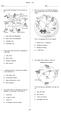 Name: ate: 1. Missing from the diagram of this ecosystem are the 5. ase your answer(s) to the following question(s) on the diagram below and on your knowledge of biology.. biotic factors and decomposers.
Integrated Pest Management
 Chapter 2 Integrated Pest Management In This Chapter Keywords After learning the information in this chapter, you will be able to: 1. Define Integrated Pest Management (IPM). 2. List and describe the 5
INEOS Chlor Limited Runcorn Site HQ South Parade, PO Box 9 Runcorn, Cheshire, WA7 4JE Tel : (01928) 561111, Fax : (01928) 516632
 SAFETY DATA SHEET 1. IDENTIFICATION OF THE SUBSTANCE/PREPARATION AND COMPANY/UNDERTAKING Address/Phone No.: Emergency Phone No.: Use of Substance / Preparation: INEOS Chlor Limited Runcorn Site HQ South
1. IDENTIFICATION OF THE SUBSTANCE/PREPARATIONS AND OF THE COMPANY UNDERTAKING
 MATERIAL SAFETY DATA SHEET HEXADENE Medicated Shampoo with SPHERULITES Microcapsules 1. IDENTIFICATION OF THE SUBSTANCE/PREPARATIONS AND OF THE COMPANY UNDERTAKING Product Name HEXADENE Medicated Shampoo
BAYER ADVANCED HOME PEST PLUS GERM KILLER INDOOR & OUTDOOR INSECT KILLER READY-TO-USE MSDS Number 102000016791 EPA Registration No.
 Revision Date: 07/27/2007 SECTION 1. CHEMICAL PRODUCT AND COMPANY INFORMATION Product Name INDOOR & OUTDOOR INSECT KILLER READY-TO-USE MSDS Number 102000016791 EPA Registration No. 72155-80 Bayer CropScience
Registration Decision. Sulfoxaflor
 Registration Decision RD2015-09 Sulfoxaflor (publié aussi en français) 8 June 2015 This document is published by the Health Canada Pest Management Regulatory Agency. For further information, please contact:
Welcome to the Understanding Dissolved Oxygen learning module. This section provides information on the following topics:
 Introduction Welcome to the learning module. This section provides information on the following topics: How dissolved oxygen is defined and measured in numbers Why dissolved oxygen is important Natural
SAFETY DATA SHEET BLOOD & PROTEIN REMOVER
 Revision Date 21/11/2012 Revision 1 SAFETY DATA SHEET SECTION 1: IDENTIFICATION OF THE SUBSTANCE/MIXTURE AND OF THE COMPANY/UNDERTAKING 1.1. Product identifier Product name Product No. R144 1.2. Relevant
ROFERON-A PFS 3 M IU/0.5 ml
 Safety Data Sheet ROFERON-A PFS 3 M IU/0.5 ml SECTION 1: Identification of the substance/mixture and of the company/undertaking 1.1. Product identifier Product name Product code ROFERON-A PFS 3 M IU/0.5
MATERIAL SAFETY DATA SHEET
 Page 1 of 4 PRODUCT NAME : COMPANY DETAILS Company Name LABSCAN ASIA CO., LTD. Address 24 Rama 1 Road, Pathumwan, Bangkok 10330 Thailand Tel. / Fax Tel : 662-613-7911-4 Fax : 662-613-7915 Emergency Tel.
Integrated Pest Management (IPM) Policy
 Integrated Pest Management (IPM) Policy What is Integrated Pest Management (IPM)? Integrated pest management (IPM) is an approach to pest control that utilizes regular monitoring and record keeping to
SAFETY DATA SHEET. according to 1907/2006/EC, Article 31. Zenith 6E Glass & Stainless Steel Cleaner (070200, 072600)
 SAFETY DATA SHEET according to 1907/2006/EC, Article 31 Page 1/6 date SECTION 1: Identification of the substance/mixture and of the company/undertaking 1.1. Product identifier Product name Product code
Safety Data Sheet DYVEL DSP HERBICIDE Revision date : 2013/04/17 Page: 1/9
 Revision date : 2013/04/17 Page: 1/9 1. Product and Company Identification Company BASF Canada Inc. 100 Milverton Drive Mississauga, ON L5R 4H1 CANADA 24 Hour Emergency Response Information CANUTEC (reverse
GPS Safety Summary HEXANE-1,6-DIOL DIACRYLATE
 GPS Safety Summary Substance Name: HEXANE-1,6-DIOL DIACRYLATE 1. General Statement HDDA is a difunctional acrylic monomer which can be polymerised by free radicals. In particular, HDDA is designed for
GPS Safety Summary. Substance Name: ETHOXYLATED TRIMETHYLOLPROPANE TRIACRYLATE
 GPS Safety Summary Substance Name: ETHOXYLATED TRIMETHYLOLPROPANE TRIACRYLATE 1. General Statement SR 454 is a trifunctional low viscosity acrylate monomer for use in ultra violet and electron beam curing
ECOSYSTEM 1. SOME IMPORTANT TERMS
 ECOSYSTEM 1. SOME IMPORTANT TERMS ECOSYSTEM:- A functional unit of nature where interactions of living organisms with physical environment takes place. STRATIFICATION:- Vertical distribution of different