
May 16, 1961 H. A. oseoon, JR 2,984,150
|
|
|
- Madison Merritt
- 9 years ago
- Views:
Transcription
1 May 16, 1961 H. A. oseoon, JR 2,984,150 Filed Dec. 20, Sheets-Sheet 1 o 7 ' INVENTOR " HAROLD A. ossooolm. ' lav/6276a g1. 46,125+ W?ORNEY? I

2 May 16, 1961 Filed Dec. 20, 1956 H. A. OSGOOD, JR 2,984,150 7 Sheets-Sheet 2

3 May 16, 1961 Filed Dec. 20, 1956 H. A. OSGOOD, JR 2,984,150 7 Sheets-Sheet 3 : INVENTOR HAROLD A.OSGOOD,JR. A. '' 8% Z'fTORN

4 May 16, 1961 Filed Dec. 20, 1956 H. A. oseoon, JR 2,984,150 ets-sheet 4 INVEOR HAROLD A.os<3ooD,JR. BY/Cl7d1 Q 3" 9. ATTORNE 1"

5

6 May 16, 1961 H. A. OSGOOD, JR 2,984,150 Filed Dec. 20, Sheets-Sheet 6 INVENTOR HAROLD A. OSGOODIJR ATTORNEY

7 May 16, 1961 Filed Dec. 20, 1956 H. A. OSGOOD, JR 2,984,150 7 Sheets-Sheet '7 I47 / / BY INVENTOR HA HOLD A. OSGOOD/JR. A'TT'oRNEY

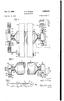
8 United States Patent 0 2,984,150 Patented May 16, ,984,150 Harold A. Osgood, Jr., Norwalk, Conn., assignor to Sperry Rand Corporation, New York, N.Y., a corporation of Delaware Filed Dec. 20, 1956, Ser. No. 629,514 4 Claims. (Cl ) This invention relates to new and useful improvements in cameras and has particular reference to a camera for photographing documents?owing through the device in a continuous manner. The main object of the invention is to provide a camera in which the optical path and the arrangement of drive elements are such as to permit the manufacture o'fb 1a much smaller camera than has hitherto been pos S! e. A further object is to provide a frame construction within which the documents pass and in which they are photographed with the light reflected thereon passing around the structure within the covers by the aid of mir rors and?nally being projected through a lens associated with the?lm camera. This optical path is wrapped around the frame structure and furnishes a proper path without requiring the enlargement of the structure. A still further object is to dispose all of the drive mechanism to one side of the frame structure and with the axes of the several drive elements in parallel planes whereby the drive mechanism is simpli?ed and more efficient, and occupies much less space. Yet another object is to provide a simple and e?icient mechanism whereby a safety wrap is achieved auto matically whenever a button is pressed and its length is determined by the diameter of the?lm drive roller employed. Further and more speci?c objects, features and ad vantages will more clearly appear from the detailed de scription given below when viewed in connection with the accompanying drawings which form part of the speci?cation and which illustrate a present preferred form of the invention. In brief and general terms, the invention concerns the provision of a micro-?lm camera in which is a frame structure including spaced vertical frame plates between which are disposed a system of document engaging belts, upper and lower drums to drive the belts, a pair of angu larly disposed mirrors on opposite sides of the documents passing through the document chamber formed between the frame plates, and a pair of banks of lamps disposed to project light on opposite sides of the document. The light is re?ected from the document surfaces on to the mirrors within the chamber and projected laterally there from through an elongated opening in the lower side of the frame on to another mirror disposed outside the frame. This latter mirror projects the light upwardly to another mirror disposed outside the frame near the top thereof which then projects the light through another elongate opening in the frame near the top thereof and across the top through another elongate opening in the other wall of the frame to still another mirror disposed outside the frame wall. This last mirror projects the light forwardly into a lens unit mounted in association with a micro-?lm camera which is mounted on the side of the frame but spaced therefrom. This arrangement permits the optical path, as is evident, to be wrapped closely around the main frame structure of the machine within the covers thereof and permits of the use of a very small size of unit in contrast to former units which have been much greater in size and in cost of construc tion. A further feature of the invention has to do with the dispositon of all the drive elements on one side of the frame structure in planes between the adjacent frame wall and the inner wall of the micro-?lm camera with all the axes of the various elements in parallelism whereby the drive is simpli?ed, and can be disposed in a much more compact relation to reduce the volume occupied thereby and thus further facilitate the production of a much smaller unit than before. The only elements with in the frame structure which are actuated by the drive mechanism are the two belt-driving drums above men tioned. Still another feature of the invention has to do with the simple and efficient means whereby a safety wrap" may be achieved and generally comprises a?lm driving roller, a linkage connected thereto which at its other end is connected to an adjustable element on a timer clock mechanism which operates to open a switch after a de termined interval of time. More particularly an arm on the timer clock mechanism is automatically set by the above mentioned linkage in accordance with the diam eter of the drive roller employed. The size of the drive roller depends upon the character of lens to be em ployed and the reduction ratio used between the size of the picture on the?lm and the size of the documents passing through the unit. The timer switch is normally closed and when a button is pressed its circuit is ener gized to start the clock mechanism and after an interval of time, determined by the setting of the arm, the switch is opened. When the button is pressed the lights are ex tinguished through operated relay contacts and not turned on again until the predetermined time interval has passed. A present preferred form of the machine is shown in the drawings, of which, Fig. 1 is a perspective view of the camera; Fig. 2 is a partial left-side elevation with the outside cover removed and the camera cover partly broken away; Fig. 3 is a longitudinal vertical section of the main drive mechanism with the outside cover and camera ele ments removed; Fig. 4 is a vertical longitudinal section approximately through the center of the machine; Fig. 5 is a front elevation, with the front cover re moved, showing the main drive elements and the camera drive elements; Fig. 6 is a horizontal section taken on the line 6 6 of Fig. 2; Fig. 7 is a vertical transverse section approximately through the center of the machine;. Fig. 8 is a perspective view of the folded optical sys tem; Fig. 9 is a schematic plan view thereof; Fig. 10 is a schematic front elevation thereof; and Fig. ll is a diagram of the circuit connections for the machine. Referring now to the detailed drawings of the present preferred form of the machine, there is a basic frame construction comprising a base plate 2%), supported by legs 21 near the four corners thereof. A drive motor 22 is supported on the plate 20 at the rear left corner thereof. A pair of vertical frame plates 23 and 24 are longitudinally and suitably supported in spaced relation on the base plate 20. They are held in spaced relation at the top by tie bolts 25 and 26 which extend to the left of the frame plate 23 and on their ends are con nected to and support a camera casing 27. Adjacent

9 2,984,150 3 the upper part of the frame a top plate 24A provides a closure therefor spaced from the top cover 32 of a hous ing for the machine or unit. The lower portion of casing 27 is supported by spacer bolts 28 and 29 extending from the camera casing 27 to the frame plate 23. As shown in Fig. 5 the camera casing 27 is disposed to the left of and apart from the frame plate 23 and in this space are disposed suitable driveelements to be later described. The camera unit housing is provided with side covers 30 and 31, a top cover 32, and a rear cover 33. All of 10 these covers are, in any suitable manner, removably dis~ posed. The front Wall 34 of the camera unit housing has a large opening 35 in which may be disposed a lower copy delivery tray 36 and an upper copy-collector tray 37 of usual form. As a copy is delivered to the ma 15 chine from the lower tray, it passes through the ma chine and emerges at the top on to the tray 37. These trays are in any suitable manner removably disposed. It will be seen from Fig. 4 that, when in position, the upper tray 37 acts as a ba?ie for the light within the camera. U-shaped angle bars 38 and 39 are disposed respec tively across the front and rear of the camera and at their ends are connected to the frame plates 23 and 24 by bolts 40. These bars support respective ends of mir rors 41 and 42 which are disposed in an angular rela tion and in a horizontal plane Within the space between the frame plates 23' and 24. As shown in Fig. 4, pins 43 are?xed to these plates and curved U-shaped clips 44 are at their ends connected to the pins. The respec tive ends of the mirrors bear against the pins to ac curately position them and are received within the clips as shown. This a? ords an easy and reliable means to position the mirrors. The opposite ends of the mirrors 41 and 42 rest in an opening in a small plate 45 which is bolted as at 46 to the inside wall of the frame plate 23. There is also an alined opening 47 in plate 23 through which the ends of the mirrors extend sligthly as shown in Fig. 3. Small angularly disposed guide plates 48 and 49 are mounted on the plate 45 and against these small plates 48 and 49 the respective ends of the mirrors 41 and 42 rest. Further description of the rela tion and operation of these mirrors will be subsequently described. Document drive mechanism (Figs. 3, 4, 6 and 7) The motor 22, the shaft of which extends longitudinal ly of the camera, is provided with a worm gear box 5i? which drives a transverse shaft 51. On shaft 51 is a sprocket 52 over which runs a chain 53, the other end of which runs around a sprocket 54?xed to a shaft 55. This shaft extends through the frame plates 23 and 24 and is journalled in bearings in the plates 23 and 24 as shown in Fig. 7. On this shaft 55, between the plates 23 and 24, is?xed a belt-drive drum 56, the operation of which with respect to other parts will presently be described. To the shaft 55 is?xed another sprocket 57 over which runs one end of a chain 58, the other end of which runs around a sprocket 59?xed on a shaft 60. This shaft, similarly to shaft 55, extends through the frame plates 23 and 24 and is journalled in bearings in these plates. On this shaft between the plates 23 and 24 is?xed a belt-drive drum 61, the operation of which with respect to other parts will presently be described. The chain is tensioned by contact with an eccentrically mounted disc 62, of suitable material such as plastic, which also acts as a brake to stop the motion when the motor stops. This disc is adjustably mounted on the side of the plate 23. The shaft 60 also carries a pulley 63?xed thereto. Over this pulley runs a belt 64 which passes around a pulley 65 rotatable on a stub shaft 66 mounted on the adjacent wall 67 of the camera casing 27. Fixed to the pulley 65 and rotatable therewith is another pulley A guide roller 69 mounted on the frame plate 23 keeps the belt 64 in proper tension. Over this pulley 68 passes another belt 70 which extends up and around still another pulley 71 and is kept under proper tension by a guide roller 72 which is mounted on the wall 67 of the camera. _ The pulley 71 is mounted for rotation on a sleeve like bushing 72 which is fastened to the adjacent wall 67 of the camera casing 27. Between the bushing and the inner bore of the pulley is a ball bearing element generally indicated at 73'. Within the bushing 72 a shaft 74 is adapted to rotate. This shaft 74 extends to the left in Fig. 5 through an opening in the camera wall 67 and has on that end a?lm drive roller 75. To the right side of the pulley 71, as viewed in Fig. 5, is fastened an armature plate 76. This armature plate is disposed closely adjacent to a rotatable element 77 of a well known magnetic clutch mechanism, the other?xed element 78 of which is held from rotation by a link 79 at one end connected to the frame and the other end of which is welded to the wall of the element 78. The element 77 of the clutch is rotatable and mounted on a sleeve?xed to the shaft 74. This mechanism is described only generally since it is a well known mech anism the details of which, per se, form no part of this invention. However, when the clutch is energized in a manner to be hereinafter set forth, the armature element 76 is drawn tight against the face of the clutch element 77. Since the armature is rotating with the pulley 71, this will cause the element 77 to rotate and thus turn the shaft 74 and turn the drive pulley 75. On the right end of the shaft 74 as viewed in Fig. 5, there is mounted a gear 80 against the face of which bears a resilient spring plate 81 to act as a brake. This plate at one end is?xed to the frame plate 23. The gear 80 meshes with a smaller gear 82 on a shaft 82 which extends through a sleeve bushing 83?xed to the wall 67 of the camera casing 27. This shaft extends through the wall of the camera and on its end therein supports a?lm take-up reel 84. The gear 32 is rotatable on shaft 82'. A collar 85 on the right end of shaft 82, as viewed in Fig. 5, is fastened to the shaft 82 and a pair of discs 86 and 87 are disposed against the gear 82 on the side opposite the collar 85 and the pressed against the gear by means of a coiled spring 88, the other end of which bears against another collar 89?xed to the shaft 82. The mechanism thus far described concerns a feature of the invention, namely,'the formation of the drive for the documents through the machine and the opera tion of the camera in a very small compass with all drive and other shafts in parallelism, thus simplifying the construction and reducing the expense'of manufacture and assembly and permitting the constrution of a much smaller camera than has been hitherto possible Document feed mechanism (Figs. 4 and 7) Previously mentioned upper and lower shafts 60 and 55 extend into the device between the frame plates 23 and 24 and carry belt drive drrms 61 and 56 thereon. In general the drive of the belts which pass the docu ments through the apparatus is of the usual type. A plurality of pairs of narrow spaced tape-like belts 96 and 91 are related to the lower drum 56 and pass around a series of guide rollers such as 92 in such a manner that they lie closely adjacent each other from the rollers near the delivery tray 36 to the drum 56, around the drum and up to the pair of guide rollers disposed just below the photographic zone which is indicated by the letter X. Here the belts separate and pass back to the entry position. The upper drum 6]. is in like manner related to a plurality of pairs of narrow tape-like belts 93 and 94 which are guided by a series of guide rollers 95 whereby the document passing up through the photo graphic zone X is received between these belts closely

10 2,984,150 5 disposed and passed up around the drum 61 and then passed out between a pair of exit rollers 95 to drop upon the collector tray 37. Just above the level of the photographic zone X and on opposite sides of the document passing up through said zone are banks of lamps 96 mounted on brackets 97 which extend across between the frame plates 23 and 24. Means later described permit the banks of lamps to be illuminated together. Feeler?ngers 93 are disposed with their ends across the path 10 of the document 99 (Fig. 8) so that when the front edge of the document encounters the?ngers they will be slightly moved with a pivoted bar 100 on which they are mounted. This bar is connected by suitable link age, generally indicated by the numeral 101 to one or 15 more micro-switches, generally indicated by the numeral 102. These micro-switches are adapted, when closed, to energize certain solenoids associated with a clutch and a shutter as will be explained. Similarly, when the document s rear edge passes beyond the ends of the?ngers 93, the micro-switches will be opened and the respective solenoids will be deenergized. Wrapped optical system (Figs. 7 to 10) Referring to Fig. 8, the optical system of mirrors is shown diagrammatically and the mirrors 41 and 42 are shown in angular relation respectively to the rear and to the front of the document 99 with their left ends lying closely adjacent. These mirrors are mounted 30 as previously described. When the banks of lamps 96 are illuminated, the light will be thrown on the front and rear faces of the document and will be projected on to the mirrors 41 and 42 and from them to the right on to an elongated mirror 103. This mirror 103 is mounted on a casting plate 104?xed to the outside of the frame plate 24 and is disposed thereon in a 45 degree angle to throw the light received from the mirrors 41 and 42 upwardly in a vertical direction to another mir ror 105 similarly mounted on the casting 104 and at a degree angle to receive the light from the mirror 103 and to re?ect it horizontally across the top plate 25A of the frame structure. An aperture v106 in the frame plate 24 is coextensive with the length of the mirror 103 and permits the light to pass from mirrors 41 and 42 to the mirror 103. Similarly an elongate aperture is formed in the frame plate 24 adjacent the mirror 105 to permit the light to be projected therethrough across the top of the mechanism but below the cover plate 32. In like manner an aperture 108 is formed in frame plate 23 to permit the light from mirror 105 to fall on another mirror 109 which is mounted, as shown in Fig. 2, on a rear portion of the camera casing 27 at an angle of 45 degrees to receive the light from the mirror 105 and project it forwardly in a line parallel to the frame plate 23, and into the camera. Thus there has been provided a wrapped optical path for the light which passes around the periphery of the device Within the cover plates, which formation permits the light to pass around the interior mechanism after it has passed through the?rst elongate aperture 106 without inter fering with the interior mechanism for feeding the docu ments through the machine. This is an important fea ture of the invention and allows the production of a much smaller casing for the machine. In some instances it is desired to allow light to pass only through the forward half of the aperture 103, especially when images are to be projected only on one half of the film in the camera. To achieve this result, a shutter plate or?ag 110, generally L-shaped, is pivoted at its lower end at 111 to the outside of the frame plate 23 as shown in Figs. 3 and 7. In the full line position the flag is limited against a stop element 112 and in its dotted position by a stop member 113. A spring 114 at one end is?xed to the frame plate 23 and to the?ag at the other end. The spring is related to the pivot point of the?ag to act as a toggle to hold the?ag in its operative or inoperative positions. Camera and its operation (Figs. 2, 5 and 6) The lens 115 (Fig. 8) is mounted in a block 116 and is disposed eccentrically therein with respect to a hori zontal plane therethrough as clearly seen in Fig. 6. The axis of the lens is in line with an aperture 117 in the wall of the camera casing. The block 116 is mounted on top of the camera wall outside the portion of the camera casing which contains the?lm reels. A shutter plate 118 is adapted to be positioned, when desired, across the aperture 117 to block off the light from the interior of the camera casing containing the?lm. This plate is mounted on and extends from a disc 119?xed on the shaft 120 of a solenoid motor 122 which is oper ated as later described. When pictures are to be project ed on to the?lm the shutter 118 is automatically moved out of the way as hereinafter described. The block 116 is slidable into position between upper and lower guide plates 123 and 124 and is held in posi tion on bolts 12S?xed to plate 67. These bolts extend through holes in the block and have threaded ends to receive holding nuts 126. To remove the lens block 116, the nuts are removed and the block is slid off the bolts, out between the guide plates 123 and 124. At this time a new lens unit may be inserted within the block, be cause lenses of differing focal length may be employed as desired to achieve di?'erent reduction ratios between document size and picture size on the?lm. When it is desired to take pictures on only one side of the film, the?ag 110 is disposed in operative position and light will pass only through the forward portion of the elon gate aperture 108 and thus only the front face of the docu ment will be projected on the?lm. For purposes of projecting pictures on a particular side of the?lm the block 116 may be removed and turned reversely around a horizontal longitudinal axis so that the eccentric posi tion of the lens unit in the block 116 is shifted as is obvious. In either case of projecting pictures on only one side of the?lm, the flag is always in operative posi tion to block off the rear portion of the aperture 108. When reversed, the block 116 is slipped on to the bolts 125 and the nuts then screwed on. Film control and operation (Fig. 2) The?lm 127 is supplied from a reel 128, mounted on a shaft 129 rotatable in a bearing on the wall 67 of the camera casing and its unreeling motion is re sisted in any well known manner (not shown) by spring action so that it will not over-run. The?lm then passes over guide and tensioning rollers 130 mounted on the said Wall and passes around a drive roller 75 on shaft 74, the driving of which has been described. Pressing against the drive roller 75 is another roller 131 mounted on an arm 132 pivoted to the wall 67. It then passes to the take~up reel 84, the drive of which has been previously described. The ratio of gears 80 and 81 is such that the supply reel is turned slightly faster than the?lm is moving. Safety wrap mechanism (Fig. 2). The arm 132 is extended as at 133 beyond the pivot point and this extension is pivotally connected to a link 134 which at its other end is connected to the lower end of an arm 135 on a type of well-known timer mech anism 136. A switch in the timer mechanism (not shown) is normally closed and is opened after a de termined interval of time which is determined by he setting of the arm \135. The setting of the arm 135 is determined through the described link 134, extension 133, arm 132, roller 131, and drive roller 75. For given reduction ratio between the document size and the image size to be projected on the?lm a de?nite focal length of lens is used and a drive roller 75 of de?nite diameter. When a di?erent reduction ratio is to be employed a

11 , i 7 different lens and a larger or smaller drive roller is used and this will position the roller 131 differently and cause the above linkage to move and set the arm 135 at a di?erent but proper angle to determine the time interval before the switch controlled by the timer is opened. The operation in the circuit of the timer switch is to be explained in the subsequent description of the circuit and the operation of its parts. This safety wrap control is also a feature of the invention herein. A manual switch is operated at the beginning of each desired length of?lm and at the end thereof. This is because the?lm is loaded in the daylight and a length of the?lm be comes fogged and the device is thus operated a de?nite time to wrap up this fogged portion before the lamps are turned on and picture projection takes place. At the end of a desired length of?lm a safety wrap oper ation is performed to wrap a de?nite length of?lm around the exposed?lm to protect the exposed?lm when the?lm is removed since it is removed in daylight and a few layers of?lm are always fogged. When the safety wrap is taking place at either end of the?lm the lamps are not lit, as will be seen in the description of the circuit and its operation. 10 the lamp circuit and contact 169 acts to energize the clutch solenoid. The banks of lamps 96 are connected in series. On one side they are connected to wire 167 and on the other side by wire 173 to the adjustable arm 174 of the rheo~ stat 168. A pair of neon lamps 175 are disposed across between wires 167 and 173 and a wire 176 extends from a point between lamps 175 and a point between the re spective banks of lamps 96. A voltage meter 177 is also connected across between wires 167 and 173. With this arrangement when any lamp in the banks goes out, the corresponding neon light is illuminated to indicate this condition. 7 The micro-switches 102,operated by the documents 15 passing through the device, when operated, are respec tively connected by wires 178 and 179 to one side of the relays 148 and 149, the other sides of which, as previously stated, are connected by wire 150 to the wire 147. With these relays 148 and 1149 are related suitable spark-sup 20 pression and time delay networks generally designated by the numerals 180 and 181. The relay 148, when en ergized, operates contacts 182, 183 and 184. The con tact 182 is normally open and when closed forms a hold ing circuit for the relay through network 180. This de Circuit layout and general operation (Fig. 1 I ) 25 laying circuit is to keep the relay energized even after the related micro-switch 102 is opened by the passage of Referring to Fig. 11. From a source of alternating cur the rear end of a document beyond it, so that the rear por rent power, two power lines 140 and 141 extend. Line tion of the document will have time to pass the pho 140 passes through a main switch 142 to one side of tograph zone X before the relay is deenergized. The motor 22. The other line 141 passes to the other side 30 contact 183 is normally open and, when operated, closes of the motor 22. Therefore whenever this switch is a circuit from wire 170 over wire 185 to wire 172 lead closed, the motor starts to run. This motion through the ing to one side of the clutch solenoid. The contact 184 drive mechanism previously described will operate the is normally open but, when closed, establishes a circuit document belt-drive drums as well as the pulley asso through wire 186 to line 140 and through wire 187 to a ciated with the magnetic clutch. When the magnetic 35 power socket 188 for a stacker unit which may be used clutch is operated the?lm drive roller is turned as well as with the device to stack the documents after they have the?lm take-up reel. passed out of the machine. A recti?er 143 is connected to line 140 by wire 144 The relay 149 is provided with contacts 189 and 190. and to return line 141 through wire 145. The DC. side The contact 189 is similar in its function to contact 182 of the recti?er is connected by wire 146 to a pair of 40 associated with relay 149 to hold the relay energized vmicro-switches 102 and by wire 147 to one side of the until the delaying network allows it to open. The contact clutch and shutter solenoids. A pair of relays 148 and 190, normally open, when closed establishes a circuit be 149 are connected in parallel to wire 147 by wire 150. tween wire 191 leading to one side of the shutter solenoid A timer relay 151 is connected to line wire 140 by a and wire 192 connected to wire 170. The networks gen safety wrap button 152 which is momentarily and manu 45 erally designated as 193 associated with contacts 184 and ally operated. In parallel with relay 151 by wire 153 is 190 are for the suppression of sparking at the contacts. A a timer clock mechanism 136. The opposite sides of the wire 194 is connected between wire 170 to the left of clock mechanism 136 and the timer relay 151 are con spacer button 171 and the wire 146 leading to one side nected respectively by wires 154 and 155 to the line 141. of the recti?er 143. Extra convenience sockets 195 and A wire 156 is connected to line wire 140 and leads to a are connected across between line 145 and line 140 switch 157 (not shown in other drawings) connected to for any other suitable uses. and operated by the movement of the previous flag 110. The two contacts of this switch are connected by wires General description of entire operation 158 and 159 respectively to lamps 160 and 161. The The?lm is loaded into the camera and the main switch other sides of these lamps are connected to the line is closed. This starts the motor 22 which drives the In the position of the switch 157 shown the lamp 161 is belt-driving drums within the frame plates 23 and 24 and lit and indicates that the flag 110 is in operative position also drives the pulley 7-1 which is free to rotate on its blocking off the rear half of the aperture 108 as pre shaft through ball bearings at the same time the light viously stated. When the switch is in the other position circuit is energized through normally closed contacts 165. the lamp 160 is lit indicating that both sides of a docu 60 Because a certain length of?lm has become fogged due ment are being photographed. to daylight loading, it is necessary to wind up this certain A normally closed timer switch 162 is connected on one amount before the lights are turned on and photographing side to line 140 and on the other side by wire 163 to of the documents takes place. It is to be remembered a normally open holding contact 164 for relay 151 op that with a determined character of lens in the camera erated when said relay is energized. A normally closed 65 and with a determined size of?lm drive pulley employed contact 165 actuated by relay 151 is connected on one therewith the linkage connected to the timer clock has side by wire 166 to wire 156 and on the other side by been thus set to open the timer switch 162 after a deter wire 167 to one side of a rheostat 168, the other side of mined period of time. With these conditions existing, the which is connected to line 141. A normally open contact safety wrap button 152 is manually and momentarily 169 of relay 151 is connected by wire 170 to a manually 70 pressed, and the safety wrap relay 151 is energized to operated spacer button 171, the other side of which is pull up its three normally open contacts 164, 165 and connected to one side of the clutch solenoid 78 by wire 169. The timer clock mechanism 136 is also energized 172. When closed the contact 169 connects to wire 172. with the relay 151. Contacts 164 hold the relay 151 It is evident that the contact 164 functions as a holding energized; contacts 165 cut o? the lamp circuit; and con contact for the relay 151, the contact 165 acts to open 75 tacts 169 energize the clutch solenoid 78. Then the take

12 2,984,150 up reel on the camera is turned to wind up the safety wrap length of?lm. When the timer clock switch is opened the timer clock circuit and the relay 151 circuit is opened and the contacts of relay 151 drop back to nor mal thus closing the light circuit and opening the circuit to the clutch solenoid 78. The arm 174 of the rheostat 168 is set for the proper illumination of the lamps 96, and the?ag 110 is set in one or another position depending upon whether only one or both sides of the documents are to be photographed. 10 As a document is fed into the machine, it is passed up through the photographic zone X and before this happens, the?ngers associated with the micro-switches 102 have closed the switches and energized the relays 148 and 149. The contacts of these relays are operated. Through the 15 contacts of relay 148 a holding circuit for itself is estab lished through contacts 182 and this relay is held ener gized for a determined period of time due to the delay network associated therewith and for the reasons pre viously set forth. The contacts 183 of relay 148 when closed establish a circuit for the clutch solenoid 78. The contacts 184 establish a circuit for the stacker socket so that a stacker may be operated if desired. The energization of relay 149 operates its contacts to establish through contacts 189 a holding circuit for itself 25 which is held for a determined time in the same way the relay 1448 is held. Contacts 190 when closed establish a circuit for the shutter solenoid so that the shutter which is normally disposed across the opening between the lens and the interior of the?lm chamber is moved out of the way, and photographing of the document can proceed. If documents are fed into the machine in close order, the relays 143 and 149 due to the delaying circuits are maintained energized and the feed of?lm continues. When a desired amount of?lm is passed through the de 35 vice a bell mechanism (not shown) is operated and when this takes place the safety wrap button is again pressed which cuts off the light, starts the timer clock and holds the relay 151 energized until the timer switch 162 is again opened. This then wraps a determined length of?lm 40 around the photographed length to protect it when the reel of?lm is taken out of the camera in daylight. If it is desired to move the?lm a short distance to provide a gap between pictures or groups of pictures for ready identi?cation or cataloguing purposes, it is merely neces 45 sary to press the spacer button 171 which will connect the clutch to the power and move the?lm which moves as long as the button is held down. If a designated group of documents are passed into the machine and the?lm motion is stopped when they pass, the spacer button can be actuated to move the?lm the desired distance to separate this group from the next group to be inserted into the machine. Turning to the document feed, it is obvious that when the main switch is closed the belt-driving drums within 55 the frame structure are turned. As the documents enter, the micro-switches 102 are actuated. If both sides are being photographed, the?ag 110 is out of the way of the aperture 108. The light is projected on the document on both sides and then is re?ected laterally through the 60 apeiture in the frame plate 24 to the lower mirror, then up along the outside of the frame structure to the upper mirror. It then is projected across the top of the machine above the frame structure beneath the cover and through the aperture 108 to strike the mirror on top of the camera 65 casing which projects it forward parallel to the frame structure into the lens. This optical path is thus shortened and wrapped around so that a much smaller camera cas ing may be employed. While I have described what I consider to be a highly 70 desirable embodiment of my invention, it is obvious that many changes in form could be made without departing from the invention and I, therefore, do not limit myself to the exact form herein shown and described, nor to anything less than the whole of my invention as herein before set forth and as hereinafter claimed. I claim: 1. A micro-?lm apparatus having a long light path in a relatively small structure, said apparatus comprising a base, a housing mounted on said base, a frame structure mounted on said base within said housing, said frame comprising a top plate generally parallel to but spaced from said base and?rst and second side plates disposed in parallel spaced relation at approximately right angles to said base and said top plate and extending beyond said top plate, said top and side plates forming an inner cham ber within said housing, said inner chamber being smaller than the interior of said housing with said top and side plates being spaced from the corresponding inner surfaces of said housing, said?rst side plate having upper and lower horizontally disposed elongated apertures and said second side plate having an upper aperture aligned with the upper aperture of said?rst side plate to provide light communication channels between the interior of said inner chamber and the interior of said housing,?rst light re?ect ing means supported within said housing to re?ect light penetrating said lower aperture through said aligned upper apertures and along a path parallel to said top plate in the space between said top plate and said housing; said inner chamber containing a top sheet feeding system com prising a pair of parallel moving belt groups between which a sheet member is moved, a bottom sheet feeding system comprising a pair of parallel moving belt groups between which a sheet member is moved, a discharge terminal for said bottom sheet feeding system, a receiv ing terminal for said top sheet feeding system, said dis charge and receiving terminals being in parallel spaced relation to provide an open space across which a sheet to be photographed is moved, means responsive to the ap proach of a sheet to said open space to illuminate op posite sides of said sheet as it traverses said open space, second light re?ecting means for re?ecting the images of opposite sides of the sheet traversing said open space through said lower aperture, and a camera mounted with in said housing but without said inner chamber, said camera including means for projecting light passing through said aligned upper apertures and between said top plate and said housing onto a light sensitive?lm contained within said camera. 2. The micro-?lm apparatus de?ned in claim 1 further including a shutter means adjustably mounted adjacent the upper aperture of said second side plate, and means for yieldably retaining said shutter means in different positions of adjustment across said upper aperture of said second side plate, at least one of said positions of ad justment being such that said shutter prevents the image from one side of a sheet passing through said open space from being projected onto a?lm in said camera. 3. The micro-?lm apparatus de?ned in claim 1 Where in said top sheet feeding system comprises a discharge terminal, and further including a tray mounted in said frame and extending from said top sheet feeding system discharge terminal to the exterior of said housing for collecting sheets fed through said apparatus, said tray also serving as a ba?le to prevent external light from pene trating said housing. 4. The micro-?lm apparatus de?ned in claim 1 further including means for supporting said?rst and second re?ecting means, said?rst and second light re?ecting means comprising elongated mirrors, and said supporting means comprising clip means on opposite ends of said mirrors, and pin means within said housing for support ing said clip means. References Cited in the?le of this patent UNITED STATES PATENTS 2,504,734 Schmidling Apr. 18, 1950 (Other references on following page)

13 2,529,943 2,552,266 2,557,026 2,565,074 2,578, UNITED STATES PATENTS 2,984,156 Hopkins Nov. 14, 1950 Egan et a1. May 8, 1951 Budde June 12, 1951 Halahan et a1. Aug. 21, Berlant Dec. 11, ,578,254 2,578,320 2,615,365 2,682,194 2,823,579 2,845, Lee.. Dec. 11, 1951 Schubert Dec. 11, 1951 Johnson Oct. 28, 1952 Rosenburgh June 29, 1954 Fitter Feb. 18, 1958 Collins Aug. 5, 1958

NOV. 21, 1967 P J, FELLNER, JR 3,353,652 FEEDING AND INDEXING DEVICE FOR PACKAGE HANDLING APPARATUS. Filed May 25, 1967 2 Sheets-Sheet 1 /, 27
 NOV. 21, 1967 P J, FELLNER, JR FEEDING AND INDEXING DEVICE FOR PACKAGE HANDLING APPARATUS Filed May 25, 1967 2 Sheets-Sheet 1..Z., 76 60 A5 27 Q2 29 /, 27 a0 /@ /5 70 74 4 /9.32 5.77% ATTO 2N EY v Nov.
Oct. 31, 1939. ' E_ Ross 2,177,788 FILM MARKING DEVI CE ATTORNEY
 Oct. 31, 1939. ' E_ Ross 2,177,788 FILM MARKING DEVI CE Filed Sept. 14, 1934 3 Sheets-Sheet l ATTORNEY Oct. 313, 1939, l- E, Ross 2,177,788 FILM MARKING DEVICE Filed Sept. 14, 1934 3 Sheets-Sheet 2 \\
I4 '2 ORLANDO J. CHIAPPE Y.
 '. ' Dec. 6, 1960 o. J. GHIAPPE 2,963,058 DIE FOR BELLOWS 0R CORRUGA'l- ING MACHINE Filed Jan. 20, 1958 5 Sheets-Sheet 1 ' INVENTOR. I4 '2 ORLANDO J. CHIAPPE Y. - ATTORNEY _ Dec. 6, 1960 o. J. CHIAPPE
3,213,816. Oct. 26, 1965 42/ V//////////A 22 "71% / ' ///////1 J. SOLANKA. Filed Feb. 25, 1963 2 Sheets-Sheet 1. 34 32 2s 34 3o, 46 48 4o ATTORNEY
 Oct. 26, 1965 J. SOLANKA METHOD AND MEANS FOR SEWING AND SHANKING BUTTONS Filed Feb. 25, 1963 2 Sheets-Sheet 1 J 34 32 2s 34 3o, 46 48 4o Q? V//////////A 22 llhd. I. Val 24 28 _ 42/ "71% / ' ///////1 5o
, $55 WW 1 a 3 _g_ 3l_
 v Nov. 21, 1961 Y. c. BURNETT 3,009Q737 SEAT MOUNTED UTILITY TABLE Filed Méy 2a, 1960 / O 5 sheetisheet 1 _, dad /20?zz "Z? I IJL/BG / v40 L/ 24 I] 4//4o //2@ I 22 //Z6 W m, $55 WW 1 a 3 _g_ 3l_ 12 _/
June 2, 1964 J. w. COLE ETAL 3,135,148
 June 2, 1964 J. w. COLE ETAL 3,135,148 METHOD OF MACHINING MATERIALS Original Filed July 30, 1956 4 Sheets-Sheet 1 June 2, 1964 J. w. COLE ETAL 3,135,148 METHOD OF MACHINING MATERIALS Original Filed July
Feb. 21, 1967. o. J. B. ORWIN ETAL 3,305,058. Filed March 2, 1965 2 Sheets-Sheet 1' OVER-LOAD CLUTCH. DAVID Tenn FORTuNé
 Feb. 21, 1967 o. J. B. ORWIN ETAL Filed March 2, 1965 2 Sheets-Sheet 1' DAVID Tenn FORTuNé ' Feb. 21, 1967 o. J. B. ORWIN ETAL. Filed March 2, 1965 2 Sheets-Sheet,2 H57. 4 IN VENT'ORS. OLAF :mw 60mm»!
United States Patent [19] [11] Patent Number: 5,671,124
![United States Patent [19] [11] Patent Number: 5,671,124](/thumbs/40/20728739.jpg "United States Patent [19] [11] Patent Number: 5,671,124") ' USOO5671124A United States Patent [19] [11] Patent Number: 5,671,124 H0 [45] Date of Patent: Sep. 23, 1997 [54] CIRCUIT BOARD LOCATING DEVICE 3,488,628 1/1970 Lundergan et a1...... 361/767 4,859,108
' USOO5671124A United States Patent [19] [11] Patent Number: 5,671,124 H0 [45] Date of Patent: Sep. 23, 1997 [54] CIRCUIT BOARD LOCATING DEVICE 3,488,628 1/1970 Lundergan et a1...... 361/767 4,859,108
H. G. SHORTT. VACUUM -AGTUATED SCREEN. MPL'IOATION FILED 13.80.19, 1907. 4 SHEETS-SHEET 1.
 No. 896,473. - PATBNTED AUG. 18,1908. ` H. G. SHORTT. VACUUM -AGTUATED SCREEN. MPL'IOATION FILED 13.80.19, 1907. 4 SHEETS-SHEET 1. No. 896,473. PATENTED AUG. 18, 1908.VA` > H. G. 'SH0RTT~ VACUUM AGTUATBD
US 20140196633A1 (19) United States (12) Patent Application Publication (10) Pub. N0.: US 2014/0196633 A1 Shaw (43) Pub. Date: Jul.
 US 20140196633A1 (19) United States (12) Patent Application Publication (10) Pub. N0.: US 2014/0196633 A1 Shaw (43) Pub. Date: Jul. 17, 2014 (54) SECONDARY CONTAINMENT PALLET (52) US. Cl. HAVING FLEXIBLE
' Jan. 24, 1967 E. M. WOODFORD 3,300,697 HYDRAULIC STARTI-NG DEVICE FOR AN ELECTRIC MOTOR WHICH DRIVES HEAVY MACHINE ELEMENTS.
 ' Jan. 24, 1967 E. M. WOODFORD 3,300,697 HYDRAULIC STARTI-NG DEVICE FOR AN ELECTRIC MOTOR WHICH DRIVES Filed Nov; 21, 1963 3 Sheets-Sheet l vyhuii I / f: all; I Ti * ////////////. j y l l -_ \ s/e/wssr
Dec- 2, 1969 M. v. 8. BROWN ET AL 3,482,037
 Dec- 2, 1969 M. v. 8. BROWN ET AL 3,482,037 HOME SECURITY SYSTEM UTILIZING TELEVISION SURVEILLANCE Filed Aug. 1, 1966 3 Sheets-Sheet 1 VIDEO scaumsn / r55 / I a J Dec. 2, 1969 M. v. B. BROWI-Q ETAL '
INSTALLATION and OPERATION RANGE BALL CONVEYOR MODEL NO: BC-001AN
 Easy Picker Golf Products, Inc. 415 Leonard Blvd. N., Lehigh Acres, FL 33971 PH: 239-368-6600 FAX: 239-369-1579 Service: 800-982-4653 SALES: 800-641-4653 www.easypicker.com [email protected] INSTALLATION
1. Lay out 2 pieces of 7/8" tubing and mark for bending as shown. Remember that the bend is in the shaded area as shown below in Figure 1.
 MINI BIKE PLANS Page 1 INTRODUCTION Before starting to build your Mini-Bike, be sure that you have all the parts shown on the material list. You will note that tubing has been used in the construction.
Oct. 11, v1949. s. A. 'ST'AEGE 2,484,473
 Oct. 11, v1949. s. A. 'ST'AEGE 2,484,473 PAPER MACHINERY Filed 001,. 11, 1946 3 Sheets-Sheet 1 Oct. 11, 1949. s. A- STAE'GE ' 2,484,473 PAPER MACHINERY Filed Oct. 11, 1946 '3 Sheath-Sheet 2 4, FI'I'T'II
WOVEN WIRE BELTING 2,244,422. Filed Nov. 19, 1958 2 SheetsLSheat 1
 Jime 3, 1941. R. J. GUBA WOVEN WIRE BELTING 2,244,422 Filed Nov. 19, 1958 2 SheetsLSheat 1 June 3, 1941..R. J. GUBA ` 2,244,422 WOVEN WIRE BELTING Filed Nov. 19, 1938 2 Sheets-Sheet 2 @a Je 9 a5 ß m. m
(54) (71) (72) (21) (22) (51) (52)
 US 20140173950A1 (19) United States (12) Patent Application Publication (10) Pub. No.: US 2014/0173950 A1 Neri (43) Pub. Date: Jun. 26, 2014 (54) (71) (72) (21) (22) (51) (52) MEDAL-MOUNTING ASSEMBLY Applicant:
TEPZZ 8 8 A_T EP 2 811 282 A1 (19) (11) EP 2 811 282 A1 (12) EUROPEAN PATENT APPLICATION. (51) Int Cl.: G01N 3/04 (2006.01) G01N 3/08 (2006.
 (19) TEPZZ 8 8 A_T (11) EP 2 811 282 A1 (12) EUROPEAN PATENT APPLICATION (43) Date of publication:.12.14 Bulletin 14/0 (1) Int Cl.: G01N 3/04 (06.01) G01N 3/08 (06.01) (21) Application number: 14170412.2
Exakta 6x6 No. 602246
 Page 1/7 Repair of Exakta 6x6, 2 1/4, Single Lens Reflex Exakta 6x6 No. 602246 Access to Film ounter & Winding Mechanism For convenience remove the lens. The lens release is on the left side of the camera
United States Patent [191 [11] 3,777,065 Galian et a1. [45] We. 4, 1973
![United States Patent [191 [11] 3,777,065 Galian et a1. [45] We. 4, 1973](/thumbs/39/18399038.jpg "United States Patent [191 [11] 3,777,065 Galian et a1. [45] We. 4, 1973") _ ' United States Patent [191 [11] 3,777,065 Galian et a1. [45] We. 4, 1973 [54] CALLING SYSTEM UTILIZING A 2,901,542 8/1959 Henches et al..... 179/6 TA TELEPHONE 3,393,272 7/1968 Hanson..... 179/2 TC
_ ' United States Patent [191 [11] 3,777,065 Galian et a1. [45] We. 4, 1973 [54] CALLING SYSTEM UTILIZING A 2,901,542 8/1959 Henches et al..... 179/6 TA TELEPHONE 3,393,272 7/1968 Hanson..... 179/2 TC
United States Patent [191 [11] Patent Number: 4,895,256
![United States Patent [191 [11] Patent Number: 4,895,256](/thumbs/29/13744178.jpg "United States Patent [191 [11] Patent Number: 4,895,256") I United States Patent [191 [11] Patent Number: 4,895,256 Johnston [45] Date of Patent: Jan. 23, 1990 [54] AIR CONDITIONING SUPPLY CARRIER 3,392,874 7/1968 3,627,122 12/1971 [76] Inventor: James E. Johnston,
I United States Patent [191 [11] Patent Number: 4,895,256 Johnston [45] Date of Patent: Jan. 23, 1990 [54] AIR CONDITIONING SUPPLY CARRIER 3,392,874 7/1968 3,627,122 12/1971 [76] Inventor: James E. Johnston,
(12) United States Patent (10) Patent No.: US 8,253,226 B2 Oguri (45) Date of Patent: Aug. 28, 2012
 US008253226B2 (12) United States Patent (10) Patent No.: US 8,253,226 B2 Oguri (45) Date of Patent: Aug. 28, 2012 (54) ELECTRONIC PARTS, AND METHOD FOR (56) References Cited ARRANGING SHIELDING CASE AND
US 20070028343A1 (19) United States (12) Patent Application Publication (10) Pub. N0.: US 2007/0028343 A1 Makowka (43) Pub. Date: Feb.
 US 20070028343A1 (19) United States (12) Patent Application Publication (10) Pub. N0.: US 2007/0028343 A1 Makowka (43) Pub. Date: Feb. 8, 2007 (54) DISPOSABLE PROTECTIVE GARMENT Publication Classi?cation
Aug. 28, 1956. Filed July 5, 1955. J. W. VAN RIPER l 2,760,230 PLASTIC MATERIAL EXTRUSION HEAD. 2 Sheets-Sheet l
 Aug. 28, 1956 Filed July 5, 1955 J. W. VAN RIPER l 2,760,230 PLASTIC MATERIAL EXTRUSION HEAD 2 Sheets-Sheet l u Mí Aug. 28, 1956 Filed July 5, 1955 J. w. VAN RIPER PLASTIC MATERIAL EXTRUSION HEAD 2,760,230
2,784,258. Patented Mar. 5, 1957 2,784,258. terruption. An additional feature of this invention is the useof
 2,784,8 TWO STATIGN DICTATING SYSTEM WITH A I PLITY OF RECORDERS Henry E. Sharpe, Chatham, N. 5. Application July 6, 1951, Serial N 0. 2,4 5 Claims. (Cl. I79--100.1) This invention relates to a dictating
A Practical Guide to Free Energy Devices
 A Practical Guide to Free Energy Devices Part PatD12: Last updated: 12th February 2006 Author: Patrick J. Kelly This pre-world War I patent shows the details of a device which can produce electricity without
(54) (71) (72) Vedelago (TV) (IT) (73) (21) (22) (30) Chirignago (VE) (IT); Alberto Al?er, Foreign Application Priority Data
 US 20130094227Al (19) United States (12) Patent Application Publication (10) Pub. No.: US 2013/0094227 A1 Scordino et al. (43) Pub. Date: Apr. 18, 2013 (54) (71) (72) (73) (21) (22) (30) MOUNTING DEVICE
(72) Inventors: Juergen RIEDL, Koenigsbrunn (DE); USPC ( 267/285)
 US 20130087957A1 (19) United States (12) Patent Application Publication (10) Pub. No.: US 2013/0087957 A1 RIEDL et al. (43) Pub. Date: Apr. 11, 2013 (54) DEVICE FOR DAMPING THE VIBRATIONS Publication Classi?cation
Number Wheeler P/N Description Set Rex P/N Notes 1 603500 Base 1 J001 2 603501 Support, Right 1 J002 3 603502 Support, Left 1 J003 4 600328 Nut (M8)
 1 603500 Base 1 J001 2 603501 Support, Right 1 J002 3 603502 Support, Left 1 J003 4 600328 Nut (M8) 4 5 600130 Spring Washer (8mm) 4 6 600344 Roll Pin (M6x30) 4 7 600129 Socket Hd Cap Screw (M8x25) 4 8
Allg. 8, 1944. EM, 2ER, JR > '2,355,495
 Allg. 8, 1944. EM, 2ER, JR > 2,355,495 Filed June-dll, 1942 2 Sheets-.Sheet 1.20a ` ` abito/mm35 Aug- 8» 1944 E. M. ZIER, JR ` 2,355,495 Filed June.11, 1942 2 Sheets-Sheet 2 ` Patented Aug. 8, 1944 f 2,355,495
INSTALLATION AND OPERATING INSTRUCTIONS For Model GL1 Gate Locks
 Securitron Magnalock Corp. www.securitron.com ASSA ABLOY, the global leader Tel 800.624.5625 [email protected] in door opening solutions INSTALLATION AND OPERATING INSTRUCTIONS For Model GL1 Gate
Unit 24: Applications of Pneumatics and Hydraulics
 Unit 24: Applications of Pneumatics and Hydraulics Unit code: J/601/1496 QCF level: 4 Credit value: 15 OUTCOME 2 TUTORIAL 4 DIRECTIONAL CONTROL VALVES The material needed for outcome 2 is very extensive
r... MACHINE FOR SECURING LACING STUDS 0R STAPLES. N0. 466,810. Patented Jan. 12, 1892. Qpu?ial'xus T1,- 026L617 /\.> BY MWOJQ W, ATT Y.
 W 0 M 0 d m I G 0 X L E R TU _ 2 S h e e t S S h 6 MW r... MACHINE FOR SECURING LACING STUDS 0R STAPLES. N0. 466,810. Patented Jan. 12, 1892. WITNESSES ; Qém- INVENTOR'. Qpu?ial'xus T1,- 026L617 /\.> BY
Dec, 2, 1969 H. DLUHY 3,481,298 SECURING SYSTEM FOR DECK CONTAINER OR THE LIKE
 Dec, 2, 1969 H. DLUHY 3,481,298 Dec. 2, 1969 H. DLUHY 3,481,298 Filed June 14, 196B 3 Sheets-Sheet 2 :ml NIW) "HW im. Dec. 2, 1969 H. DLUHY 3,481,298 Filed June 14, 1968 5 Sheets-Sheet 3 A7 7 UPA/5X5 _
Kodak Home Page on Internet. Intranet. Table of Contents. Eastman Kodak Company, 1999. Publication No. SM5440-1 18NOV97 Supersedes SM5440-1 13MAY97
 {ServiceManual}{Production}{KodakServiceSupport} Publication No. SM5440-1 18NOV97 Supersedes SM5440-1 13MAY97 Kodak Home Page on Internet SERVICE MANUAL for the Kodak Carousel NEW LOOK PROJECTORS Standard
Ulllted States Patent [19] [11] Patent Number: 6,029,830
![Ulllted States Patent [19] [11] Patent Number: 6,029,830](/thumbs/40/20861563.jpg "Ulllted States Patent [19] [11] Patent Number: 6,029,830") US006029830A Ulllted States Patent [19] [11] Patent Number: 6,029,830 Manookian [45] Date of Patent: Feb. 29, 2000 [54] SPORTS EQUIPMENT HANGING BELT 4,049,126 9/1977 Halverson..... 211/8701 4,052,805
US006029830A Ulllted States Patent [19] [11] Patent Number: 6,029,830 Manookian [45] Date of Patent: Feb. 29, 2000 [54] SPORTS EQUIPMENT HANGING BELT 4,049,126 9/1977 Halverson..... 211/8701 4,052,805
Model RC Armature-Slot- Insulation Folder
 Model RC Armature-Slot- Insulation Folder 21 Model RC will handle insulation material up to 8 wide between its guides. Creasing rollers are adjustable sideways to make troughs up to 6 wide. A fixed ruler-guide
Technical Information
 Technical Information This section of the catalogue provides technical information that will help specify, install and maintain Surelock McGill devices and components. The topics are listed below: Blast
-uif 3,332,730. July z5, i967. Filed Oct. 24, 1965. INVENTORâ. A70/wu@ W. /PUß//v 7750@ TOPO/r R. W. RUBIN ET AL. 2 Sheets-Sheet l STORAGE UNIT
 July z5, i967 Filed Oct. 24, 1965 R. W. RUBIN ET AL STORAGE UNIT 2 Sheets-Sheet l -uif ìlml" /4 INVENTORâ. A70/wu@ W. /PUß//v 7750@ TOPO/r A fromm/5k5 _ United States Patent O Ffice 3,332,73` Patented
GAERTNER SCIENTIFIC CORPORATION 3650 Jarvis Ave. Skokie, Illinois 60076 U.S.A. tel: 1 847 673-5006 fax: 1 847 673-5009 email@gaertnerscientific.
 7109-C-244E-R1 Field Installation of HeNe Laser in B, C, and D-Type Auto Gain Ellipsometers GAERTNER SCIENTIFIC CORPORATION 3650 Jarvis Ave. Skokie, Illinois 60076 U.S.A. tel: 1 847 673-5006 fax: 1 847
TABLE OF CONTENTS. I. TROUBLESHOOTING... 2 - Section 1.01: Common Problems/Solutions... 2
 BAL Accu-Slide System I. Table of Contents TABLE OF CONTENTS I. TROUBLESHOOTING... 2 - Section 1.01: Common Problems/Solutions... 2 II. GETTING STARTED... 5 - Section 2.01: Tools You Will Need... 5 - Section
 UFO 1 FOLDER INDEX A2 FOLDING MACHINE TYPE 10060 LIST NO DESCRIPTION PAGE 10101M Main Assembly - Mechanical 2 10201M Main Roller Assembly 4 16101M Upper & Lower Perforator Shaft Assembly 6 12701M Primary
Ulllted States Patent [19] [11] Patent Number: 5,992,923. Wycech [45] Date 0f Patent: Nov. 30, 1999
![Ulllted States Patent [19] [11] Patent Number: 5,992,923. Wycech [45] Date 0f Patent: Nov. 30, 1999](/thumbs/40/20828367.jpg "Ulllted States Patent [19] [11] Patent Number: 5,992,923. Wycech [45] Date 0f Patent: Nov. 30, 1999") US005992923A Ulllted States Patent [19] [11] Patent Number: 5,992,923 Wycech [45] Date 0f Patent: Nov. 30, 1999 [54] REINFORCED BEAM ASSEMBLY 4,923,902 5/1990 Wycech. 4,978,562 12/1990 Wycech. [75] Inventor:
US005992923A Ulllted States Patent [19] [11] Patent Number: 5,992,923 Wycech [45] Date 0f Patent: Nov. 30, 1999 [54] REINFORCED BEAM ASSEMBLY 4,923,902 5/1990 Wycech. 4,978,562 12/1990 Wycech. [75] Inventor:
3. Loosen 3 x grub screws in the Dec end cap and unscrew the cap and counterweight shaft. NEQ6 Belt Modification Kit.
 NEQ6 Belt Modification Kit. Thank you for your purchase. Please read these instructions fully before fitting. Your package should contain 2 off 47 & 2 off 12 tooth aluminium pulleys 2 off belts 6mm wide
Mechanical Reasoning Review
 Mechanical Reasoning Review Work can be made easier or faster through practical applications of simple and/or compound machines. This is called mechanical advantage - in other words, using the principal
18974 (736) Singer No. 20-2. SINGER No. 20-2 ELECTRIC SEWING MACHINE INSTRUCTION MANUAL
 SINGER No. 20-2 ELECTRIC SEWING MACHINE INSTRUCTION MANUAL Next Page Main Parts Accessories To start the Motor To Stop the Motor To Change the Speed Needles and Thread Relative Sizes of Needle and Thread
MECHANICAL PRINCIPLES OUTCOME 4 MECHANICAL POWER TRANSMISSION TUTORIAL 1 SIMPLE MACHINES
 MECHANICAL PRINCIPLES OUTCOME 4 MECHANICAL POWER TRANSMISSION TUTORIAL 1 SIMPLE MACHINES Simple machines: lifting devices e.g. lever systems, inclined plane, screw jack, pulley blocks, Weston differential
Number Wheeler P/N Description Set Rex P/N Notes
 1 604041 Base 1 4041 2 604042 Base Cover 1 4042 3 608849 Washer (M5) 2 4 600124 Spring Washer (M5) 2 5 600329 Rd Hd Machine Screw (M5x8) 2 6 604047 Strainer 1 4047 7 600204 Rd Hd Machine Screw (M6x10)
The purposes of this experiment are to test Faraday's Law qualitatively and to test Lenz's Law.
 260 17-1 I. THEORY EXPERIMENT 17 QUALITATIVE STUDY OF INDUCED EMF Along the extended central axis of a bar magnet, the magnetic field vector B r, on the side nearer the North pole, points away from this
SLACK PERFORMANCE KARTS
 SLACK PERFORMANCE KARTS SET UP GUIDE Thank you for purchasing a 2013 Slack Axiom Chassis. Performance Mfg. strives to provide you with the very best chassis and components on the market today. Your satisfaction
United States Patent [191 Romo et al.
 United States Patent [191 Romo et al. [54] APPARATUS FOR PREVENTING NECK INJURY [76] Inventors: Leon E. Romo, Box 1 A Rt. 5, Annapolis, Md. 211; Jack T. Andrish, 120 E. 216 St., Euclid, Ohio 44123 [22]
3000, 4000, 4100, 7500, 7700
 3000, 4000, 4100, 7500, 7700 Drum & Disc Brake Lathes s Identification READ these instructions before placing unit in service. KEEP these and other materials delivered with the unit in a binder near the
1/29/2008 DR70. Baja Motorsports Inc. P.O. Box 61150 Phoenix, AZ 85082 Toll Free: 888-863-2252 PART NUMBERS PRICES ARE SUBJECT TO CHANGE 1 of 43
 DR70 Toll Free: 888-863-2252 PART NUMBERS PRICES ARE SUBJECT TO CHANGE 1 of 43 CYLINDER & CYLINDER HEAD 1 DR70-001 883099044472 CYLINDER 1 1 2 DR70-002 883099044489 GASKET, CYLINDER 1 1 3 DR70-003 883099044496
The connector we use most in joining beams is the Technic pin. The Technic pin comes in several variants, as shown in Figure 1 below.
 In this chapter we consider various ways to build strong constructions. A strong construction is vital to a robot, particularly mobile robots that tend to run into solid objects like walls, chairs, table
PowerLine Magnetic-Laser Pulley Alignment System Instructions
 MONARCH INSTRUMENT 15 COLUMBIA DRIVE AMHERST, NEW HAMPSHIRE 03031 PHONE: 603-883-3390 FAX: 603-886-3300 E-mail: [email protected] Web site: www.monarchinstrument.com PowerLine Magnetic-Laser
Front axle components, overview
 just a test. Front axle components, overview 40-1 General Information Load bearing components and parts of the suspension must not be welded or straightened. Vehicles without drive axle must not be moved,
Rating when used as a weight carrying hitch without spring bars:
 BOLT-TOGETHER WEIGHT DISTRIBUTING HITCH SYSTEM Rating when used as a weight distributing hitch with spring bars: Part Number 48051 4805 48053 48054 Max Tongue Weight 550 Ibs. 750 Ibs. 1000 Ibs. 1400 lbs.
EQUIPMENT SET UP RECURVE BOW
 EQUIPMENT SET UP RECURVE BOW Archery Australia Inc Coaching and Standards Committee Proudly Sponsored By EQUIPMENT SET UP RECURVE BOW It is important that equipment to be used must be set up correctly
Prof. Krishna Vasudevan, Prof. G. Sridhara Rao, Prof. P. Sasidhara Rao. x x. x x. Figure 10: Cross sectional view
 4 Armature Windings Main field Commutator & Brush Compole field haft v Compensating winding Armature winding Yoke Figure 10: Cross sectional view Fig. 10 gives the cross sectional view of a modern d.c.
Lexmark 4037-05E Laser Printer
 Lexmark 4037-05E Laser Printer asm_1 Covers asm_2 Left Side Frame asm_3 Frame and Redrive [1 of 2] asm_3a Frame and Redrive [2 of 2] asm_4 Top Cover asm_5 Standard Paper Tray asm_6 Fuser asm_7 Electronics
United States Patent [191
 United States Patent [191 Fancy [54] REDUNDANT SIGNAL CIRCUIT [75] Inventor: Thomas A. Fancy, Westminster, Mass. [73] Assignee: General Electric Company, Schenectady, NY. [211 Appl. No.: 854,973 [22] Filed:
March 2, 1971. J. A. GENTILuoMo 3,567,223 GOLF RANGE BALL HANDLING MEANS. Filed Jan. 20. 1967. 2 Sheets-Sheet 1. BY Mdm
 March 2, 1971 Filed Jan.. 1967 J. A. GENTILuoMo GOLF RANGE BALL HANDLING MEANS 2 Sheets-Sheet 1 BY Mdm l March 2,-11971 J. A. GENTlLuoMo ~ l l GOLF RANGE BALL HANDLING MEANS Filed Jan. 2o, 1967 ' 2 sheets-sheet
VEHICLE SPEED CONTROL SYSTEM
 PL VEHICLE SPEED CONTROL SYSTEM 8H - 1 VEHICLE SPEED CONTROL SYSTEM TABLE OF CONTENTS page DESCRIPTION AND SPEED CONTROL SYSTEM...1 SPEED CONTROL SERVO-PCM OUTPUT....2 SPEED CONTROL SWITCHES PCM INPUT...2
46431x92A Garden Tractor (1998) Page 1 of 16 Body Chassis
 46431x92A Garden Tractor (1998) Page 1 of 16 Body Chassis 46431x92A Garden Tractor (1998) Page 2 of 16 Body Chassis 1 092546E701 Bracket, Seat 2 091963 Z Plate Assembly, Switch 3 164X26 Spring, Compression
SP AF 300mm F/2.8 LD [IF] for Canon (Model 360EE)
![SP AF 300mm F/2.8 LD [IF] for Canon (Model 360EE)](/thumbs/40/21493790.jpg "SP AF 300mm F/2.8 LD [IF] for Canon (Model 360EE)") SP AF 300mm F/2.8 LD [IF] for Canon (Model 360EE) We greatly appreciate your purchase of this Tamron lens. The Tamron SP AF 300mm F/2.8 LD [IF] is a fast telephoto lens developed for Canon AF single-reflex
SP AF 300mm F/2.8 LD [IF] for Canon (Model 360EE) We greatly appreciate your purchase of this Tamron lens. The Tamron SP AF 300mm F/2.8 LD [IF] is a fast telephoto lens developed for Canon AF single-reflex
Lunette 2 Series. Curved Fixed Frame Projection Screen. User s Guide
 Lunette 2 Series Curved Fixed Frame Projection Screen User s Guide Important Safety and Warning Precautions Please follow these instructions carefully to ensure proper maintenance and safety with your
TECHNICAL INFORMATION
 TECHNICAL INFORMATION Models No. 2012NB Description 304mm (12") Automatic Thickness Planer CONCEPTION AND MAIN APPLICATIONS * Compact and light weight (27 Kg./59 lbs) automatic thickness planer for easier
Slide the new steering column shaft through the steering column from the driver compartment.
 Slide the new steering column shaft through the steering column from the driver compartment. Push the column shaft through the steering column until the machined end is out past the column lower bushing.
Electric Field Mapping Lab 3. Precautions
 HB 09-25-07 Electric Field Mapping Lab 3 1 Electric Field Mapping Lab 3 Equipment mapping board, U-probe, resistive boards, templates, dc voltmeter (431B), 4 long leads, 16 V dc for wall strip Reading
SERVICE PARTS LIST PAGE 1 OF 6 BASE ASSEMBLY SPECIFY CATALOG NO. AND SERIAL NO. WHEN ORDERING PARTS 12" DUAL BEVEL COMPOUND MITER SAW B27A
 PAGE 1 OF 6 BASE ASSEMBLY 00 0 EXAMPLE: Component Parts (Small #) Are Included When Ordering The Assembly (Large #). SPECIFY CATALOG NO. AND NO. WHEN ORDERING PARTS 1 02-80-0050 Thrust Bearing (1) 2 05-80-0510
1993 SUSPENSION Volkswagen Front. EuroVan
 Article Text ARTICLE BEGINNING 1993 SUSPENSION Volkswagen Front EuroVan DESCRIPTION FWD independent suspension is an double-wishbone type with torsion bars mounted on upper control arm. Wheel is supported
SUSPENSION AND STEERING OVERVIEW
 SUSPENSION SUSPENSION AND STEERING OVERVIEW The S40/V50 has a wide track and a long wheelbase for its relative size and weight. This gives the car stable and predictable driving characteristics. It also
v June 18, 1940. A. w.`tondreau ' 2,204,917 FILM APPARATUS Filed Feb. 12, 195e :s sheets-sheet 1 INVENTOR. ALBEN W Tampa-Au BY ATTO EY
 v June 18, 1940. A. w.`tondreau FILM APPARATUS Filed Feb. 12, 195e :s sheets-sheet 1 ALBEN W Tampa-Au BY INVENTOR. ATTO EY June 18,.1940. v A. W. TONDREAU ~ FILM APPARATUS Filëq Feb. 12, 1938 2,204,9
USED BUT NOT SHOWN: ITEMS 11-24.
 FO000900 - TABBING SYSTEM, MCS TABBER 2" Item Part Number Description Quantity 1 SM022604 Base Sub Assembly, MCS Tabber (2") 1 2 AF000512 Tabbing Head, MCS 2" 1 3 VC014001 Cable, Molded, DB25M-DB25F, 3
Filetto et al. [45] Date of Patent: Feb. 15, 2000
![Filetto et al. [45] Date of Patent: Feb. 15, 2000](/thumbs/39/20301551.jpg "Filetto et al. [45] Date of Patent: Feb. 15, 2000") US006025842A United. States Patent [19] [11] P a t en tn um b er: 6, 025, 842 Filetto et al. [45] Date of Patent: Feb. 15, 2000 [54] SYSTEM AND METHOD FOR WINDOW 5,046,001 9/1991 Barker et al...... 364/200
US006025842A United. States Patent [19] [11] P a t en tn um b er: 6, 025, 842 Filetto et al. [45] Date of Patent: Feb. 15, 2000 [54] SYSTEM AND METHOD FOR WINDOW 5,046,001 9/1991 Barker et al...... 364/200
M A N U A L 13-10-05
 Documentation The following information sheets illustrate the description below: 12-WW01-4G-E Sectional view of the lance with main dimensions 12-W101-6G-E Sectional view of the head of the lance with
INSTRUCTIONS FOR CHAIN LINK INSTALLATION Chain Link fence & Posts Meshdirect.co.uk
 INSTRUCTIONS FOR CHAIN LINK INSTALLATION Chain Link fence & Posts Meshdirect.co.uk This guide explains how to correctly install our chain link fencing and post system. The guide provides details of the
Data Sheet. Electro-mechanical counters Hengstler 800 series
 Data Pack D Issued March 00 504897 Data Sheet Electro-mechanical counters Hengstler 800 series The 800 series totalising and predetermining batch counters, manufactured by Hengstler, is available from
SHIFT INTERLOCK SYSTEM SHIFT INTERLOCK SYSTEM
 SHIFT INTERLOCK SYSTEM The shift lock system is designed to ensure the proper operation of the automatic transmission. The driver must depress the brake pedal in order to move the gear selector from Park
Roll-Up Door Maintenance Guide
 R Roll-Up Door Maintenance Guide Cable Replacement on Two Spring Type Balancer Page 1 Panel Replacement - Removable Roller Cover Type Bottom Panel Page 1 Panel Replacement - Removable Roller Cover Type
(12) United States Patent
 US006582087B2 (12) United States Patent (10) Patent N0.: US 6,582,087 B2 Whitehead et al. (45) Date of Patent: Jun. 24, 2003 (54) EXTENDABLE EXTERIOR REARVIEW D285,549 S 9/1986 Haack..... D12/187 MIRROR
Speed-Mat Rectangle Cutter
 Speed-Mat Rectangle Cutter 1 Honeycomb baseboard. 2 Left hold down. 14 3 Bottom hold down. 4 4 Left / right rule. 8 5 8 5 Left / right rule pointer. 1 6 Top / bottom rule. 7 Top / bottom rule pointer.