
Oct. 11, v1949. s. A. 'ST'AEGE 2,484,473
|
|
|
- Shanon Hubbard
- 9 years ago
- Views:
Transcription
1 Oct. 11, v1949. s. A. 'ST'AEGE 2,484,473 PAPER MACHINERY Filed 001,. 11, Sheets-Sheet 1

2 Oct. 11, s. A- STAE'GE ' 2,484,473 PAPER MACHINERY Filed Oct. 11, 1946 '3 Sheath-Sheet 2 4, FI'I'T'II a w W.b we I S.x_..t x... a? kl was a, 64 0 M. 5 ; 3. 4 T 4. U , 5 ~ a 66 42/441, W5

3 Oct. 11, Filed 001,- 11, 1946 S. A. STAEGE PAPER MACHINERY 2,484,473 3 Sheets-Sheet 3 grwcmtoz

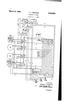
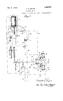
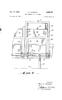
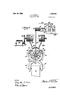
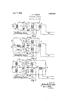
4 _ ' Patented Oct. 11, ,484,473 UNITED STATES PATENT OFFICE 1 This invention relates to paper making ma chinery, and more particularly to an automati cally operated control for guiding a Fourdrinier wire or felt of a paper making machine to keep such wire or felt running in the proper path. It is the principal object of the invention to provide an automatically operating control for guiding a wire or felt to maintain its operation in the proper path of travel, which is reliable and relatively fast acting to prevent the wire or felt from running off the guide roll, which does not require delicate or complicated mechanical link ages, economical in operation due to being ener gized for only short periods of time when a cor rection is to be applied, and normally de-ener gized during the period while the wire or felt is running straight in its normal path. Another object resides in the provision of a control for a paper making machine which auto matically operates in response to a movement of the Fourdrinier wire or felt requiring correction, in that such wire or felt is traveling too far from its normal or mid-position toward one end or the other of the guide roll, to apply quickly a cor rective movement, to the roll and to continue to apply such corrective movement only for as long 2,484,473 PAPER MACHINERY Stephen A. Staege, Hamilton, Ohio, assignor to The Black-Clawson Company, Hamilton, Ohio, a corporation of Ohio Application October 11, 1946, Serial No. 702, Claims. (Cl ) a period as the need for correction persists. It is another object to provide such a control which additionally moves the guide roll slowly a limited but retained amount tending to apply a corrective movement to the wire or felt when ever there is a tendency for it to depart too far from its normal path of travel on the roll, such correction as applied to the roll being retained, and if not su?icient to keep the wire or felt run ning correctly onithe rolls being automatically repeated until a complete correction is effected. Another object resides in the provision in a paper making machine of an automatically op erated wire or felt guide control adapted to apply to a guide roll a relatively large but temporary corrective movement independent of the machine speed and other operating conditions, and which also applies a relatively smaller but retained and cumulative correction in the same sense to the guide roll providing for maintaining accurate travel of the wire or felt at all times. a It is also an object to provide such a control in which there is a relatively quick movement of substantial magnitude of one end; for example, 50 the front or forward end of the guide roll to thereby change the transverse direction in which the wire or felt is tending-to move with respect to the ends of roll, such forward end of the roll being returned to its initial position as soon as ' the wire or felt has returned to its normal posi tion, and in which there is also a relatively slow or limited movement of the other end of the roll and in the opposite direction that tends to pro~ duce a relatively permanent or cumulative cor rective effect in the same sense. A still further object is to provide a guide con trol of the character described which operates so that if the power source or any part of the reg ulating system should fail for any reason the guide roll will remain in its normally neutral or mid position and not be moved therefrom to one ex treme position or the other, so that the wire or felt will continue to run true for a period su?i cient to permit the operator of the machine to take such steps as necessary to prevent the wire or felt from running off the guide roll. Other objects and advantages will be apparent from the following description, the appended claims and the accompanying drawings. In the drawings, which will illustrate preferred embodiments of the invention Fig. l is a schematic view illustrating the ap plication of the invention to a Fourdrinier wire; Fig. 2 is a top elevational view broken to show a portion of the Fourdrinier wire or felt traveling over a guide roll of a paper making machine and guide and control means therefor constructed in accordance with the present invention; Fig. 3 is a front elevational view, broken and partly in section, taken on the line 3-3 of Fig. 2; Fig. 4 is a side elevational view of the appa ratus shown in Fig. 2 as seen from the left hand side thereof; Fig. 5 is a view similar to Fig. 4 showing the g ppazratus as seen from the right hand side of Fig. 6 is a vcircuit diagram showing the elec trical connections and apparatus in diagram matic form;. Fig. 7 is a partial diagrammatic view showing the use of a palm and the control circuit asso ciated therewith; Fig. 8 is a broken top elevational view showing a portion of the Fourdrinier wire or felt traveling over a guide roll of a paper making machine and hydraulically operated means for positioning the roll constructed in accordance with the present invention; Fig. 9 is a front elevational view of the appa ratus shown in Fig. 8; and Fig. 10 is a side elevational view of the appa ratus shown in Fig. 8 as seen from the left hand side thereof. Referring more particularly to the drawings, '

5 ' 2,484,473 the numeral l5 indicates, in general, a traveling,member such as a Fourdrinier wire.or felt of a paper making machine which travels over the usual guide rolls one of which is indicated at l5. Thus in Fig. 1, which illustrates a typical appli cation of the invention in connection with a Fourdrinier wire, the guide roll I6 is shown posi-y tioned in conjunction with a breast roll 8, the usual table rolls 9 and suction boxes I, with a dandy roll I I and a couch roll I2, and the custom ary wire 13 and tension rolls I4. It will be ap parent also that if preferred the guide roll can be located on the return side of the wire l5 rather than in the position shown and the application of this invention would be the same. The guide roll 16 is Journaled at one end there of in a supporting housing 20 having a bearing structure 2 therein in which the hub portion 22 of the roll is rotatably carried. Integrally joined to the lower part.of the supporting hous 20 ing 20 is a depending casting or?ange 25 having feet 28 fastened to its lower edges to position the housing 20 so that it is slidably mounted on the T-shaped rail 30. To facilitate a relatively quick movement of the housing 20 through a substan tially long distance in either direction upon the T-rail 30, the housing is supported on bearings 3 contained within a rack 32 attached to the upper part of the T-rail- 30. Also attached to the T-rail 30 are a pair of brackets 33 and 34, one on each end thereof, which are bored and threaded to each receive and rotatably mount the threaded pins 35 and 36. Coiled about the body of these pins are springs 31 and 38 having their inner ends abutting against?ange 25, Fig. 4, and their outer ends against the headed nuts 39 and 40. Thus by running up or backing off the nuts 39 and 40 with respect to the brackets 33 and 34 means are provided for adjusting the force exerted by the springs 31 and 38 against the?ange 25 which tends to hold this end of the roll IS in its neutral or mid-position and to return that end of the roll to the same position after it has been to either side thereof. It is to be noted also in connection with the springs 31 and 38 that they are both constructed of su?i cient size and weight and adjusted so that when the guide roll I6 is in its neutral or mid-position the springs are substantially fully extended and without compression. This arrangement is pre ferred, rather than providing for both springs be ing under partial compression and when the guide roll is in the neutral or mid-position, to provide against a slight amount of friction causing the guide roll to fail to assume the neutral or mid-' position.. The.outer ends of the pins 35 and 36 have headed nuts 4 and 42 threadedly received there on which can be turned up against or back from the brackets 33 and 34 and thus provide for short ening or lengthening that portion of the pins be tween the backets and the?ange. This position ing of the inner ends of the pins with respect to the?ange can be used as an additional means for controlling the amount of force exerted by the springs 31 and 38 and also to provide adjustable stops which limit the distance which the?ange 25 can slide on the T-rail 30. To provide for automatically and quickly mov ing one end of the roll l6, as at the hub end 22 for example, to prevent the wire.or felt l5 from running off, the solenoids 52 and 53 are provided. These solenoids are positioned on either side of the roll I6 at one end thereof, as shown in Fig. 4, in the supporting frame 50 and have their inner ends coupled by means of the links 55 and 83 to the housing 20. Bosses 59 and 59 formed as an integral part of the housing project to receive the ends of the links. pins BI and 62 being inserted through a central bore provided therein to fasten the links. In order to sense when the wire or felt. l5 re quires correction of its path of travel, that is when it is tending to run too far to one side or the other and therefore likely to run off and become dam aged, a resiliently mounted palm 95 is positioned on one side.of the wire or felt 15 by means of the arm 66 which is pivotally mounted at its lower end in connection with a micro-switch 61. This switch in turn is carried by a bracket 68 form ing a part of the frame 50. As most clearly shown in Fig. 2, the palm 65 is also mounted so as to be positioned about one half inch away from the edge of the wire or felt l5 when the wire or felt is running straight and in its usual path, and is therefore normally out of contact therewith. Contact of the wire or felt with the palm moves the arm 66 and closes the switch 61. It is to be understood also that the palm 65, micro-switch 61 and- solenoid 53 are connected in an electrical circuit as illustrated in Fig. 6. Thus in response to the palm 65 being moved when the edge of the wire or felt, moving in the direction of the arrow H0, comes in contact therewith, the solenoid 53 will be energized and move the outer or forward end of the roll 16 downwardly as shown in Fig. 6, that is in the same direction as the travel of the member l5, thus swinging the roll to an angular position where it is no longer directly transverse of the traveling member I 5. Energization of the solenoid produces a rapid movement of the roll, of substantial extent, usually in excess of that required to correct the path of travel of the mem ber I 5. A similarly constricted palm vi59 is also posi tioned on the opposite side of the wire or felt 15 by means of an arm and bracket, not shown, at tached to the framework of the machine. The arm is pivotally connected at its lower end to a micro-switch, generally indicated by the refer ence numeral 10, which is also carried by the same bracket. Palm 69 is mounted similarly to palm 65; that is, so as to be positioned about one half inch away from the other edge of the wire or felt 15 when the wire or felt is running in its normal path, and is thus normally out of contact there with. Contact of the wire or felt with this palm moves the arm and closes switch 10. The palm 69, switch 10 and solenoid 52 are also connected in an electrical circuit, as illustrated in Fig. 6, so that in response to a movement of the palm 59 caused by the edge of the wire or felt coming in contact therewith the solenoid 52 will be energized and move the outer or forward end of the roll 16 quickly upwardly as shown in Fig. 6, or against the travel of member l5, thus angularly shifting the roll in the opposite direction to that imparted to the end of the roll when the solenoid 53 is ener gized. It is to be noted also in connection with the positioning of the palms 65 and 69 that they are placed relatively close to the guide roll l6 and spaced therefrom in the direction in which the traveling member is moving. At the other or back end, the roll I6 is rotatably mounted within a supporting housing 15 which is preferably of circular shape. This housing is pro vided with a bearing structure 16 in which the hub 11 of the roll is journaled. The lower part of this housing is cast to form a depending?ange 80 having feet 8 fastened to its lower edges. These

6 ' 5 feet are adapted to fit around the upper edge of a supporting T-rail 82 to provide a slidable mount ing permitting the housing 15 to move in either direction thereon. A pair of brackets 85 and 88, Fig. 5, are attached to the T-rail 82, one at each end thereof. Bracket 85 has a central bore 81 through which one end of the threaded pin or screw member 88 extends. Referring to Fig. 5, it can be seen that the screw member 88 is rotatably mounted, that portion thereof within the bracket 85 being unthreaded to form a bearing surface. The outer end of screw member 88 is of reduced diameter and has a cap 88 threadedly received thereon. At its inner end the screw member 88 has a portion of 2,484,478 reduced diameter forming a shoulder which abuts against the inner edge of bracket 88, and which also provides a bearing support within the bracket. In mounting, the screw member 88 is turned through a centrally positioned and threaded aper ture 8 formed within the upper part of flange 88 until its outer end is rotatably supported within the bracket 85, the cap 88 then being screwed on to hold the screw member in position to rotate' freely. The end which extends through the bracket 88 also serves as a bearing support and in turn is fastened to shaft 82 of a reduction gearing member 88, by means of the coupling 88, the drive motor being shown at 85. To provide for moving the housing 15 slowly and to a limited extent in one direction or the other upon the supporting rail 82, to make a retained or relatively permanent and cumulative correction in the position of roll l8 so that the wire or felt l5 will not run off, the screw member 88 which is connected thereto is turned slowly when the motor 85 is energized. For this purpose it is preferred to use a small, fractional horse power, 3 phase, 60 cycle, reversing motor operat ing through the high reduction gearing 88 to turn the screw member 88. This motor 85 is connected as shown in Fig. 6 so as to be driven in a direction which will cause the screw member 88 to move the inner or rear end of the roll i8 attached thereto in the opposite direction to the movement imparted to the forward end of the roll when one of the solenoids 52 or 53 is energized. Thus in response to the traveling member I varying from its normal or true running posi tion and contacting one of the palms, the sole noid associated therewith imparts a quick move ment of substantial magnitude to one end of the guide roll and in the proper direction to cause a correcting change in the direction in which the wire or felt is then running. This tempo rary movement of one end of the guide roll is through a fixed but adjustable distance which may be of the order of one inch or thereabouts where the length ofthe guide roll is of the order of about two hundred inches, the duration of this movement being of the order of about one or two seconds. At the same time this movement is be ing imparted to the front end of the roll, for ex ample, the reversing motor 85 at the other end of the roll is also energized and slowly turns the screw member 88 which moves the back end a of the roll in the opposite direction linearly to that in which the front end is then moving, such movement thus being in the same angular direc tion for the roll as a whole. a The movement of the back end of the roll is of a smaller magnitude and in a direction or sense to supplement the movement applied to the front end, and in the ex ample given may be of the order of approxi mately.001 inch per second In order to provide for reversing the leads of the motor 85 to secure its operation in the proper directions depending upon which one of the switches 81, or 10 has been energized, a three phase reversing magnetic switch generally indi cated by the numeral 81 in Fig. 6 is employed. This switch is provided with two operating coils or solenoids 88 and 88 which, whenenergized. are adapted to close the multiple contacts I88 and I85 respectively, which selectively control energization of the solenoids and the reversing ' motor from the power source I88. Thus when, for example, the palm 85 is moved and closes the micro-switch 81, the coil 85 is energized and causes one set of contacts I00 to be actuated and complete the circuits between the power source, the solenoid 58, and the motor 85 for operation in one direction, producing a relatively large temporary change as well as the relatively small 20» the control retained change for each cycle of operation of It will be evident without detailed tracing of the circuits that a corresponding op eration results when the opposite palm is actu ated by the traveling member moving toward it, i. e., in the opposite direction from its normal path of travel, and upon being so actuated, pro vides for energizing the opposite solenoid, pro ducing a quick relatively large movement of the guide roll in the opposite direction, as well as resulting in the energizing of motor 85 in the reverse direction to produce the relatively small retained movement of the roll,'also in the oppo site direction. It will be understood that these cycles may take place repeatedly in the same direction if the correction first applied is not su?lcient, or may take place intermittently and from time to time in opposite directions as may be required to maintain the traveling member operating continuously in its normal path of travel. Thus in operation,and assuming the traveling member ii to remain in its normal path of travel out of contact with both palms 85 and 88, the position of guide roll I8 is not changed, and it, remains in its generally transverse position as indicated. Assuming the member ii to be travel ing in the direction 'of the arrow H8 (Fig. 6). and that it begins to shift its path of travel to-. ward the forward side of the machine or'toward 50 the left as shown in Fig. 6, then it will engage palm 65 and close switch 81. Immediately upon closing, switch 81 energizes relay 88 which closes its multiple contacts I88, thereby energizing solenoid 58. Thereupon solenoid 53 attracts its armature and this results in a swinging or arcu ate travel of the forward or' left-hand end of roll 18 in the downward or counter-clockwise direction as illustrated infig. 6, causing it to assume a new angular relation with respect to the traveling member 05. Although the remaining guide and supporting rolls over which the member I5 is traveling have not been altered. this shift in the relation of guide roll l8 results in causing the traveling mem ber to move transversely, in the direction to re 65 turn to.its normal path of travel. It will be evident that the extent of this transverse motion of the traveling member is directly related to the angular shift in position. of roll l8. Since this movement occurs rapidly and to a substan tial extent, the tendency for the traveling mem ber to leave its normal path of travel is promptly checked, and overcome. In most cases the ex tent of such movement is greater than that re quired to produce the necessary e?ect, and the

7 ill-.4. traveling member I5 therefore returns to its neutral position almost immediately. When the traveling member is again in its normal path cf travel it will leave palm 65, de energizing vthe relay 98 and solenoid 53, the springs 37, 38 then restoring the forward end of the roll to its initial position. In the meantime, the closing of switch con tacts I00 has likewise energized reversing motor 95, and during the time that such contacts were 10 closed, motor 95 was operated to produce a rela tively slow and limited shift in the inner or rear end of roll Hi. This shift occurred in the direc tion to move the inner or right-hand end of the roll I6 upwardly as shown in Fig. 6, this move 15 ment being similarly in counterclockwise direc tion for the roll as a whole and thus supplement ing the shift in the roll produced by solenoid 53, although the actual extent of the movement was much less. Upon return of the traveling'member to its 20 normal path, and the consequent de-energization of relay 98, the motor 95 is de-energized but the shift in the position of the inner end of the roll is retained. Thus although the major shift of the forward end of the roll is no longer present, a minor shift of the inner end of the roll, in the same sense, is retained, and this is utilized to produce a continuing or cumulative correction in the path of travel of the member I5. Thus it will be apparent that the initial correction takes place rapidly to prevent displacement of the traveling member and to assure that an adequate and prompt correction will be made as soon as it departs from its normal path of travel, while a small continuing change is likewise produced in conjunction with the major temporary change. It will also be evident without further analysis. that a similar control will be exercised in the opposite direction when the traveling member engages palm 69 and it will thus be evident that the system provides for a highly satisfactory re lation of the path of travel of the member I5 to correct promptly any deviation, and to avoid unnecessary overtravel or hunting. ' There is shown in Fig. 7 a partial diagram matic view of a single palm and the control cir cuit associated. therewith for sensing when the traveling member I5 requires correction of its path of travel. With this construction, only a single palm 1 is required which is pivotally mounted at its lower end and positioned so as to ride against one edge of the traveling member l5 at all times. A spring 12, fastened at one end to an arm 13 of the palm H and at the other end to the frame work of the machine, is provided to hold the palm in contact with the traveling member I 5 at all times. Micro-switches 61' and 10' are placed one on each side and adjacent the-lower end of the arm 13, so that movement of the palm H to either the right or left, as viewed in Fig. '1, will cause the arm 13 to come in contact with one of these switches to close it. These switches, which are normally open, are connected to the solenoids 98 and 99' respectively by separate leads as shown and utilize a common lead to the power source I08. The solenoids 98' and 99' are connected to selectively close the multiple contacts I00 and I05 of the reversing switch 91 as shown in Fig. 6. In all other respects the circuit connections and the operating characteristics thereof are the same as described above in connection with Fig. 6. It will be readily apparent from this descrip tion that the apparatus and circuits described in connection with Fig. 7 thus operate in a similar manner to that previously described in connection with Fig. 6. It is to be noted that in the event of a power failure for any reason the roll I5 will not be affected thereby and will remain in its normal or mid-position so that the wire or felt I5 will continue to run true until something causes it to run one way or the other. Such movement, however, will be so slow as to afford the operator of the machine su?icient time to make such changes as necessary to prevent the wire or felt: from running off the roll and being damaged. In the event the present invention is to be used in connection with large paper machinesv wherein the guide roll may be too heavy to be moved directly by the solenoids. as above de scribed, without using excessively large solenoids, it is preferred to have the solenoids operate a pilot valve controlling a pneumatic or hydrauli cally operated system connected to move the guide roll in response thereto. A?uid pressure (pneumatic or hydraulic) operated system of this kind is illustrated in Figs. 8, 9 and 10 mounted within a framework, generally indi cated by the reference numeral II6, supported on an arm I I 1 integrally joined to-the T-rail 30. This framework supports the?uid pressure sys tem comprising a. cylinder I20 having a slidably mounted piston I2I mounted therein and the pilot valve chamber I 22, all constructed in ac cordance with the usual practice. Also in ac cordance with the general practice a supply of operating?uid is admitted to the chamber I 22 through the pipe I23 from a circulating supply system not shown, discharge therefrom being through valves communicating to exhaust or back to the main supply in the usual manner. Within the chamber I22 is slidably mounted a small control piston. I25 adapted to alternately open and close the ports. I21 in the underside of the chamber communicating with the cylinder I20 to provide for a controlled?ow of operating?uid to move the piston I2I. As shown most clearly in Fig. 8 piston I2I has an arm I30 bolted to its outer end which in turn is directly con nected to move the guide roll I6 in opposite directions upon the T-rail 30 as previously de scribed. It will be readily apparent from Fig. 10 that operating fluid can thus be admitted on either one side or the other of the piston I 2 and cause it to move in response thereto in a desired direction depending upon which of the ports I21 is uncovered. The control piston I26 as shown in Fig. 10 has its outer ends directly connected by means of the links I35 with the inner ends of the solenoids 52 and 53, removable pins I36 being provided at one end to connect the links to the solenoids and a threaded connection I38 being provided at the other end to connect with the ends of the piston which are threaded to engage therewith. Coiled springs I31, positioned about the outer ends of the piston and abutting against the outside of chamber I22 at one end and at the other end against the nuts forming part of the threaded connection I38, are provided to facilitate a rapid return of the control piston I23 to its neutral or mid-point, whenever the solenoids are not en ergized, and which provides for the operating?uid to discharge from the exhaust ports within cylinder 20. Piston I2I is then free to return to its neutral or mid-position and springs 31 and 38 immediately return the guide roll to its nor 75 mal or mid-position.

8 2,484,473 Operation of the guide mechanism when the pneumatic or hydraulically operated means are used in conjunction with the solenoids to move the guide roll is otherwise similar to vthe opera tion described in connection with the machine wherein the solenoids 52 and 53 were directly con nected to move one end of the roll IS. The motor 95 and screw member 88 also function in the same manner is this instance as before to apply a cor rective movement to the guide roll. 10 It will be apparent that in operation as soon as the wire or felt has returned to its normal or mid-position the solenoid acting to hold the front end of the roll at its shifted position with respect to the wire or felt will be de-energized. As the palm is no longer in contact with the edge of the wire or felt, the circuit connecting the solenoid to the main power source is open and the heavy springs 31 and 38 then return the front end of the roll to its normal or mid-position. However.20 the shift at the opposite end of the roll is not tem-_ porary but is retained and thus the guide roll is, now at a slightly different angle, this being a re tained or relatively permanent correction. If such retained correction is not enough, the wire or felt will again contact the same palm and re peat the action, thus temporarily correcting and at the same time adding increments of additional correction until the motor 85 has turned the screw member 88 su?iciently to adjust the roll to a po sition which will cause the wire to run true. It will thus be evident in connection with the operation of this device that when the wire or felt is running straight in its normal position the switches of the electrical system are open, the solenoids are not energized, there is no operat ing pressure in the cylinders and the motor which applies the slow motion adjustment to the guide roll is not running, thus providing for economi- cal operation and low maintenance costs. 40 While the apparatus herein described consti tutes a preferred embodiment of the invention, it is to be understood that the invention is not limited to this precise form, and that changes can be made therein without departing from the 45 scope of the invention which is defined in the ap pended claims. What is claimed is: ', 1. A control for maintaining a traveling mem ber in a predetermined desired path of travel - comprising a guide roll extending generally trans versely of said path of travel and in running con tact with said traveling member, means for ad~ justab-ly mounting said guide roll to vary its angu lar relation to said traveling member to correct the path of travel of said member, means for sensing a departure of said traveling member from its normal path of travel, means controlled by said sensing means for effecting a substantial temporary movement of said guide roll in the angular direction to correct the path of travel of said member during the time said sensing means is actuated, and additional means con trolled by said sensing means for producing a small retained movement of said guide roll in the same angular direction., ' 2. A control for maintaining a traveling mem ber in a predetermined desired path of travel comprising a guide roll extending generally trans versely of said path of travel and in running con tact with said traveling member, means for ad justably mounting said guide roll to vary its angu lar relation to said traveling member to correct the path of travel of said member, means for sensing a departure of said traveling member from its normal path of travel, means operable upon actuation of said sensing means for effect ing a rapid movement of said roll of substantial extent in the angular direction to apply a cor rection to the path of travel of said member, means operable upon return of said traveling member to its normal path of travel for reversing said substantial movement of said roll, and addi tional means operable upon actuation of said sensing means for effecting a retained relatively small movement of said roll in the same angular direction as that produced by said substantial movement. 3. A control for maintaining a traveling mem ber in a predetermined desired path of travel comprising a guide roll extending generally trans versely of said path of travel and in running con tact with said traveling member, means for mounting said guide roll for swinging movement to vary its angular relation to said traveling mem ber to correct the path of travel of said member, means for sensing a departure of said traveling member from its normal path of travel, means operable upon actuation of said sensing means for effecting a rapid movement of said roll of sub stantial extent in the angular direction to apply a correction to the path of travel of said member, additional means also operable upon actuation of said sensing means for effecting a relatively small movement of said roll in the same angular direc tion, and means operable upon return of said traveling member to its said normal path of travel for reversing said rapid movement of substantial 1- extent while retaining said small correcting move ment. 4. In a paper making machine having a guide maintaining said traveling member in a normal path of travel comprising means positioned on each side of said traveling member for sensing when said traveling member deviates from its normal path of travel, means responsive to said sensing means and adapted to be energized upon deviation of said traveling member from its nor mal path of travel and operatively connected to provide for moving said guide roll to vary the angular relation between said roll and said traveling member a relatively large amount in response to a deviation of said traveling member to apply a quick correction in the direction in which said traveling member is moving, means for returning said guide roll to its normal posi tion when said moving means is de-energized, and means also responsive to said sensing means for similarly moving said guide roll a relatively small amount to a new retained position. 5. In a paper making machine having a guide ' (ii) maintaining said traveling member in a normal path of travel comprising meanspositioned on each side of said traveling member for sensing when said traveling member deviates from its normal path of travel, means responsive to said sensing means and adapted to be energized upon deviation of said traveling member from its normal path of travel and operatively connected to provide for moving one end of said guide roll to vary the angu lar relation between said roll and said traveling - member a relatively large amount in response to a deviation of traveling member to apply a quick correction in the direction in which said traveling member is moving, means for returning said end 75 of the guide roll to its normal position when said

9 11 moving means is de-energlzed, and means also responsive to said sensing means for moving the other end of said guide roll in the opposite direc tion a relatively small amount to a new retained position for that end of said guide roll. 6. In a paper making machine having a guide changing the direction in which said traveling member is moving when it tends to deviate from its normal path of travel comprising electrically operated means positioned adjacent said travel ing member for sensing when said member de viates from its normal path of travel, electrically controlled means responsive to said sensing means and adapted to be energized upon deviation of said member from its normal path of travel and operatively connected to provide -for moving one end of said guide roll to vary its angular relation to said traveling member a relatively large amount in response to a deviation of said member to apply a quick correction in the direction in which said member is traveling, means for returning said end of the guide roll to its normal position when said > moving means is de-energized, and electrically controlled means also responsive to said sensing means for moving the other end of said guide roll in the opposite direction a relatively small amount to a new retained position for that end of said guide roll. 7. In a paper making machine having a guide maintaining said traveling member in a normal path of travel'comprising means positioned adja cent said traveling member for sensing when said member deviates from its normal path of travel,?uid operated means responsive to said sensing means and adapted to be motivated upon devia 2,484,473 trically operated means responsive to the closing _ tion of said member from its normal path of travel 40 of one of said switches and operatively con and operatively connected to provide for moving nected to said guide roll to provide for moving one end of said guide roll to vary its angular rela one end of said guide roll to vary its angular tion to said traveling member a relatively large relation to said wire a relatively large amount in amount in response to a deviation of said member response to a movement of said wire closing one to apply a quick correction in the direction in 45 which said member'is traveling and to provide of said switches, retractible means connected to provide for returning said end of the guide roll for returning said end of the guide roll to its :nor to its normal position when said closed switch mal position when said traveling member re is opened, and additional means also electrically turns to its normal path of travel, and means also, operated in response to the closing of said one responsive to said sensing means for moving the 50 of said switches for moving said guide roll a other end 0! said guide roll in the opposite direc relatively small amount to a new retained posi tion a relatively small amount to a new retained position for that end of said guide roll. tion for said guide roll which differs from its former position in the direction tending to re 8. In a paper making machine having a guide turn said wire to its normal path of travel In a paper making machine, a guide roll maintaining said traveling member in a normal having its supporting ends slidably mounted, a wire for carrying a paper web movably sup 'path of travel comprising means positioned on ported on said guide roll, and guide means each side of said member for sensing when said adapted to keep said wire moving in a substan member deviates from its normal path of travel, 60 tially straight path through the machine com means responsive to said sensing means and adapted to be energized upon deviation of said prising an electrical circuit, a pair of normally member from its normal path of travel and opera-v open switches connected in said circuit and posi tioned one on each side of said wire so that when tively connected to provide for moving one end of the edge of said wire comes in contact with one said guide roll to vary its angular relation to said 65 traveling member a relatively large amount in re of said switches the circuit is closed, a pair of solenoids operatively connected in said circuit sponse to a deviation of said member to apply a and to said guide roll to provide for moving said quick correction in the direction in which said guide roll to vary its angular relation to said member is traveling, retractible means connected to provide for returning said end of the guide roll wire a relatively large amountin response to the 70 closing of said circuit, means operatively con to its normal position when said moving means is de-energized, and means also responsive to said nected to return said guide roll to its original sensing means for moving the other end of said position whenever both of said solenoids are de guide roll a relatively small amount to a new re energized, and electrically operated means also tained position for that end of said guide roll connected in said circuit to respond when said 75 circuit is closed to move said guide roll angularly which diners from its former position in the di rection tending to return said traveling member to its normal path of travel. 9. In a paper making machine having a guide maintaining said traveling member in a normal path of travel comprising means,positioned on each side of said member for sensing when said member deviates from its normal path of travel, means responsive, to said sensing means and adapted to be energized upon deviation of said member from its normal path of travel and opera tively connected to provide for moving one end of said guide roll to vary its angular relation to said traveling member a relatively large amount in re sponse to a deviation of said member to apply a quick correction in the direction in which said member is traveling, springs connected to provide for returning said end of the guide roll to its nor mal position when said moving means is de-ener gized, and means also responsive to said sensing means for moving the other end of said guide roll in the opposite direction a relatively small amount to a new retained position for that end of said guide roll which differs from its former position in the direction tending to return said traveling member to its normal path of travel., I 10. In a paper making machine having a guide roll and a wire for carrying a paper web movably supported.on said guide roll, guide means for maintaining said wire in a normal path of travel comprising. a switch positioned on each side of said wire and out of contact therewith when said ' wire is traveling in a substantially straight path adapted to be closed and complete an electrical circuit when said wire deviates a predetermined amount from its normal path of travel, elec

10 2,484, a relatively small amount to a new retained posi tion which di?ers from its former position in the direction tending to return said wire to its nor mal path of travel. ' 12. In a paper making machine, a guide roll having its supporting ends adjustably mounted, a traveling member for carrying a paper web movably supported on said guide roll, and guide means adapted to keep said traveling member moving in a substantially normal path through 10 the machine comprising a pair of control means positioned one on each side of said traveling member for selectively closing an electrical cir cuit when said traveling member comes in con tact therewith,?uid operated means connected 15 to operate in response to the closing of said cir cuit for moving said guide roll ~quickly a rela tively large amount from a normal position in response to the closing of said circuit and to re turn said guide roll to its said normal position 20 upon the opening of said circuit, and additional electrically operated means connected in said circuit to respond when said circuit is closed to move said guide roll to a new retained position to vary its angular relation to said traveling mem 25 ber a relatively small amount which tends to return the path of travel of said traveling mem ber to said normal path through the machine. 13. In a paper making machine having a guide roll, a traveling member for carrying a paper 30 web supported on said guide roll, and guide means for maintaining said traveling member in a nor mal path of travel comprising means positioned relatively close to said guide roll and spaced therefrom in the direction in which said travel ing member is moving for sensing when said traveling member deviates from its normal path of travel, means responsive to said sensing means and adapted to be energized upon deviation of said traveling member from its normal path of travel and operatively connected to provide for moving said guide roll to vary the angular relation betwen said roll and said traveling mem ber a relatively large amount in response to a deviation of said traveling member to apply a 5 quick correction in the direction in which said - traveling member is moving, means for returning 14 said guide roll to its normal position when said moving means is de-energized, and means also responsive to said sensing means for similarly moving said guide roll a relatively small amount to a new retained position. 14. In a paper making machine, a guide roll having its supporting ends adjustably mounted, a traveling member for carrying a, paper web movably supported on said guide roll, and guide means adapted to keep said traveling member moving in a substantially normal path through the machine comprising a pair of control means positioned relatively close to said guide roll and spaced therefrom in the direction in which said _ traveling member is moving, said pair of control means also being positioned one on each side of said traveling member for selectively closing an electrical circuit when said traveling member comes in contact therewith, electrically operated means responsive to the closing or said circuit operatively connected to provide for moving said guide roll quickly from a normal position to vary its angular relation to said traveling mem~ ber a relatively large amount in response to the closing of said circuit, means for returning said guide roll to its said normal position upon the opening of said circuit, and additional electric ally operated means connected in said circuit to respond when said circuit is closed to move said guide roll to a new retained position to vary its angular relation to said traveling member a relatively small amount which tends to return the path of travel of said traveling member to said normal path through the machine., STEPHEN A. STAEGE. REFERENCES CITED The following references are oi. record in the die 01 this patent: UNITED STATES PATENTS Number Name Date 2,199,893 Norton et al... May 'I, 1940 FOREIGN PATENTS Number Country ' Date 283,349 Germany _- Apr. 12, 1915

' Jan. 24, 1967 E. M. WOODFORD 3,300,697 HYDRAULIC STARTI-NG DEVICE FOR AN ELECTRIC MOTOR WHICH DRIVES HEAVY MACHINE ELEMENTS.
 ' Jan. 24, 1967 E. M. WOODFORD 3,300,697 HYDRAULIC STARTI-NG DEVICE FOR AN ELECTRIC MOTOR WHICH DRIVES Filed Nov; 21, 1963 3 Sheets-Sheet l vyhuii I / f: all; I Ti * ////////////. j y l l -_ \ s/e/wssr
NOV. 21, 1967 P J, FELLNER, JR 3,353,652 FEEDING AND INDEXING DEVICE FOR PACKAGE HANDLING APPARATUS. Filed May 25, 1967 2 Sheets-Sheet 1 /, 27
 NOV. 21, 1967 P J, FELLNER, JR FEEDING AND INDEXING DEVICE FOR PACKAGE HANDLING APPARATUS Filed May 25, 1967 2 Sheets-Sheet 1..Z., 76 60 A5 27 Q2 29 /, 27 a0 /@ /5 70 74 4 /9.32 5.77% ATTO 2N EY v Nov.
H. G. SHORTT. VACUUM -AGTUATED SCREEN. MPL'IOATION FILED 13.80.19, 1907. 4 SHEETS-SHEET 1.
 No. 896,473. - PATBNTED AUG. 18,1908. ` H. G. SHORTT. VACUUM -AGTUATED SCREEN. MPL'IOATION FILED 13.80.19, 1907. 4 SHEETS-SHEET 1. No. 896,473. PATENTED AUG. 18, 1908.VA` > H. G. 'SH0RTT~ VACUUM AGTUATBD
I4 '2 ORLANDO J. CHIAPPE Y.
 '. ' Dec. 6, 1960 o. J. GHIAPPE 2,963,058 DIE FOR BELLOWS 0R CORRUGA'l- ING MACHINE Filed Jan. 20, 1958 5 Sheets-Sheet 1 ' INVENTOR. I4 '2 ORLANDO J. CHIAPPE Y. - ATTORNEY _ Dec. 6, 1960 o. J. CHIAPPE
Feb. 21, 1967. o. J. B. ORWIN ETAL 3,305,058. Filed March 2, 1965 2 Sheets-Sheet 1' OVER-LOAD CLUTCH. DAVID Tenn FORTuNé
 Feb. 21, 1967 o. J. B. ORWIN ETAL Filed March 2, 1965 2 Sheets-Sheet 1' DAVID Tenn FORTuNé ' Feb. 21, 1967 o. J. B. ORWIN ETAL. Filed March 2, 1965 2 Sheets-Sheet,2 H57. 4 IN VENT'ORS. OLAF :mw 60mm»!
Oct. 31, 1939. ' E_ Ross 2,177,788 FILM MARKING DEVI CE ATTORNEY
 Oct. 31, 1939. ' E_ Ross 2,177,788 FILM MARKING DEVI CE Filed Sept. 14, 1934 3 Sheets-Sheet l ATTORNEY Oct. 313, 1939, l- E, Ross 2,177,788 FILM MARKING DEVICE Filed Sept. 14, 1934 3 Sheets-Sheet 2 \\
THE 26-L BRAKE EQUIPMENT
 INSTRUCTION PAMPHLET No. 74 June 1964 THE 26-L BRAKE EQUIPMENT with 26-C BRAKE VALVE and 26-F CONTROL VALVE arranged for SAFETY CONTROL OVERSPEED CONTROL DYNAMIC INTERLOCK and MULTIPLE-UNIT CONTROL for
WOVEN WIRE BELTING 2,244,422. Filed Nov. 19, 1958 2 SheetsLSheat 1
 Jime 3, 1941. R. J. GUBA WOVEN WIRE BELTING 2,244,422 Filed Nov. 19, 1958 2 SheetsLSheat 1 June 3, 1941..R. J. GUBA ` 2,244,422 WOVEN WIRE BELTING Filed Nov. 19, 1938 2 Sheets-Sheet 2 @a Je 9 a5 ß m. m
Filed oct. 1, 1934 2,035,594
 ' March 31, 1936. TELEPHONE T. F. crockeà SYSTEM Filed oct. 1, 1934 Patented Mar. 3l, 1936 UNÈTED STATÈS lpatent QFFICE v TELEPHONE SYSTEM Thomas F. Crocker, Chicago, Ill., assignor to As sociated Electric
1,469,987. > M A Ira/2%, Oct. 9, 1923. Original Filed Oct. 2.9, 1918 2 Sheets-Sheet 1 HVVE/VTUR WEIGHING SCALE. BY M944. /?ay/a1 V ml. \ J. w.
 Oct. 9, 1923. \ J. w. BRYCE WEIGHING SCALE Original Filed Oct. 2.9, 1918 2 Sheets-Sheet 1 37 / 40 HVVE/VTUR BY M944. /?ay/a1 V ml > M A Ira/2%, J. w. BRYCE WEIGHING SCALE Original Filed Oct. 29. i918 2
Unit 24: Applications of Pneumatics and Hydraulics
 Unit 24: Applications of Pneumatics and Hydraulics Unit code: J/601/1496 QCF level: 4 Credit value: 15 OUTCOME 2 TUTORIAL 4 DIRECTIONAL CONTROL VALVES The material needed for outcome 2 is very extensive
3,213,816. Oct. 26, 1965 42/ V//////////A 22 "71% / ' ///////1 J. SOLANKA. Filed Feb. 25, 1963 2 Sheets-Sheet 1. 34 32 2s 34 3o, 46 48 4o ATTORNEY
 Oct. 26, 1965 J. SOLANKA METHOD AND MEANS FOR SEWING AND SHANKING BUTTONS Filed Feb. 25, 1963 2 Sheets-Sheet 1 J 34 32 2s 34 3o, 46 48 4o Q? V//////////A 22 llhd. I. Val 24 28 _ 42/ "71% / ' ///////1 5o
, $55 WW 1 a 3 _g_ 3l_
 v Nov. 21, 1961 Y. c. BURNETT 3,009Q737 SEAT MOUNTED UTILITY TABLE Filed Méy 2a, 1960 / O 5 sheetisheet 1 _, dad /20?zz "Z? I IJL/BG / v40 L/ 24 I] 4//4o //2@ I 22 //Z6 W m, $55 WW 1 a 3 _g_ 3l_ 12 _/
United States Patent [191 [11] 3,777,065 Galian et a1. [45] We. 4, 1973
![United States Patent [191 [11] 3,777,065 Galian et a1. [45] We. 4, 1973](/thumbs/39/18399038.jpg "United States Patent [191 [11] 3,777,065 Galian et a1. [45] We. 4, 1973") _ ' United States Patent [191 [11] 3,777,065 Galian et a1. [45] We. 4, 1973 [54] CALLING SYSTEM UTILIZING A 2,901,542 8/1959 Henches et al..... 179/6 TA TELEPHONE 3,393,272 7/1968 Hanson..... 179/2 TC
_ ' United States Patent [191 [11] 3,777,065 Galian et a1. [45] We. 4, 1973 [54] CALLING SYSTEM UTILIZING A 2,901,542 8/1959 Henches et al..... 179/6 TA TELEPHONE 3,393,272 7/1968 Hanson..... 179/2 TC
2,784,258. Patented Mar. 5, 1957 2,784,258. terruption. An additional feature of this invention is the useof
 2,784,8 TWO STATIGN DICTATING SYSTEM WITH A I PLITY OF RECORDERS Henry E. Sharpe, Chatham, N. 5. Application July 6, 1951, Serial N 0. 2,4 5 Claims. (Cl. I79--100.1) This invention relates to a dictating
June 2, 1964 J. w. COLE ETAL 3,135,148
 June 2, 1964 J. w. COLE ETAL 3,135,148 METHOD OF MACHINING MATERIALS Original Filed July 30, 1956 4 Sheets-Sheet 1 June 2, 1964 J. w. COLE ETAL 3,135,148 METHOD OF MACHINING MATERIALS Original Filed July
Aug. 28, 1956. Filed July 5, 1955. J. W. VAN RIPER l 2,760,230 PLASTIC MATERIAL EXTRUSION HEAD. 2 Sheets-Sheet l
 Aug. 28, 1956 Filed July 5, 1955 J. W. VAN RIPER l 2,760,230 PLASTIC MATERIAL EXTRUSION HEAD 2 Sheets-Sheet l u Mí Aug. 28, 1956 Filed July 5, 1955 J. w. VAN RIPER PLASTIC MATERIAL EXTRUSION HEAD 2,760,230
United States Patent [191 Romo et al.
 United States Patent [191 Romo et al. [54] APPARATUS FOR PREVENTING NECK INJURY [76] Inventors: Leon E. Romo, Box 1 A Rt. 5, Annapolis, Md. 211; Jack T. Andrish, 120 E. 216 St., Euclid, Ohio 44123 [22]
PART 2 FORKLIFT HYDRAULIC SYSTEM
 PART 2 FORKLIFT HYDRAULIC SYSTEM Chapter 1 Description and Operation Component Locations & Circuit Layouts 1 Hydraulic Pump 11 Control Valve 14 Valve Section Oil Flows 15 Anti-Cavitation Valve 22 Velocity
3,049,832 TWO-STAGE ROCKET. [oh/44m J don- E. Filed April 22, 1958. Arrow/Er INVENTOR. 2 Sheets-Sheet 1
 Aug. 21, 1962 Filed April 22, 1958 E. J. JOFFE TWO-STAGE ROCKET 2 Sheets-Sheet 1 I8 INVENTOR. [oh/44m J don- E Arrow/Er Aug. 21, 1962 Filed April 22, 1958 E. J. JOFFE TWO-STAGE ROCKET 2 Sheets-Sheet 2
Dec- 2, 1969 M. v. 8. BROWN ET AL 3,482,037
 Dec- 2, 1969 M. v. 8. BROWN ET AL 3,482,037 HOME SECURITY SYSTEM UTILIZING TELEVISION SURVEILLANCE Filed Aug. 1, 1966 3 Sheets-Sheet 1 VIDEO scaumsn / r55 / I a J Dec. 2, 1969 M. v. B. BROWI-Q ETAL '
United States Patent [191
 United States Patent [191 Fancy [54] REDUNDANT SIGNAL CIRCUIT [75] Inventor: Thomas A. Fancy, Westminster, Mass. [73] Assignee: General Electric Company, Schenectady, NY. [211 Appl. No.: 854,973 [22] Filed:
COUNTERBALANCE VALVES
 COUNTERBALANCE VALVES Introduction They are modulating valves which allow free flow into the actuator and then block the reverse flow until they feel a pilot pressure inversely proportional to the load
A descriptive definition of valve actuators
 A descriptive definition of valve actuators Abstract A valve actuator is any device that utilizes a source of power to operate a valve. This source of power can be a human being working a manual gearbox
(12) United States Patent (10) Patent No.: US 8,253,226 B2 Oguri (45) Date of Patent: Aug. 28, 2012
 US008253226B2 (12) United States Patent (10) Patent No.: US 8,253,226 B2 Oguri (45) Date of Patent: Aug. 28, 2012 (54) ELECTRONIC PARTS, AND METHOD FOR (56) References Cited ARRANGING SHIELDING CASE AND
Dec, 2, 1969 H. DLUHY 3,481,298 SECURING SYSTEM FOR DECK CONTAINER OR THE LIKE
 Dec, 2, 1969 H. DLUHY 3,481,298 Dec. 2, 1969 H. DLUHY 3,481,298 Filed June 14, 196B 3 Sheets-Sheet 2 :ml NIW) "HW im. Dec. 2, 1969 H. DLUHY 3,481,298 Filed June 14, 1968 5 Sheets-Sheet 3 A7 7 UPA/5X5 _
SECTION G2: CABLE PROCESSOR MODULE MAINTENANCE
 SECTION G2: CABLE PROCESSOR MODULE MAINTENANCE Cable Processor Module overview WARNING! When tipping the Cable Processor Module back, (after removing the toggle arm pin), use extreme caution not to drop
Lifting Tongs - A Brief Overview and Practical Advice
 Deals, 1922... `1,439,245 D. R, KNA PP., vhcusvmo MscHANlsM FlLeo MAY 27. 1920 ` 2 sheets~sheet l '45 _ 6'/ +,.f5 7?. «/ l J5 674/: 70@,- _ Il _ gli ' 6/ ~ ' ' État-entrati 19, lâzé, naze 5 10 20 >otherimprovements
Example. Fluid Power. Circuits
 Example Fluid Power Circuits To Enhance Symbol Reading Skills To Work On Circuit Reading Skills With Answers HI LO Pump Circuit 18 A1 B1 17 16 15 13 Set 14 2,000 PSI PG2 Set 500 PSI 12 11 7 8 10 PG1 9
Introduction to Process Control Actuators
 1 Introduction to Process Control Actuators Actuators are the final elements in a control system. They receive a low power command signal and energy input to amplify the command signal as appropriate to
TEPZZ 8 8 A_T EP 2 811 282 A1 (19) (11) EP 2 811 282 A1 (12) EUROPEAN PATENT APPLICATION. (51) Int Cl.: G01N 3/04 (2006.01) G01N 3/08 (2006.
 (19) TEPZZ 8 8 A_T (11) EP 2 811 282 A1 (12) EUROPEAN PATENT APPLICATION (43) Date of publication:.12.14 Bulletin 14/0 (1) Int Cl.: G01N 3/04 (06.01) G01N 3/08 (06.01) (21) Application number: 14170412.2
WHAT YOU DON T KNOW ABOUT ACCUMULATORS CAN KILL YOU!
 WHAT YOU DON T KNOW ABOUT ACCUMULATORS CAN KILL YOU! Atlanta (Monroe) GA 770-267-3787 [email protected] www.gpmhydraulic.com What You Don t Know About Hydraulic Accumulators Can Kill You TABLE OF CONTENTS
ABV20 Air Actuated Boiler Blowdown Valve Installation and Maintenance Instructions
 4057250/8 IM-P405-16 AB Issue 8 ABV20 Air Actuated Boiler Blowdown Valve Installation and Maintenance Instructions 1 General safety information 2 General product information 3 Installation 4 Operation
1iillllllllllllllilllllllllllllllllllllllllllllllllillllllllllllllllllllill
 1iillllllllllllllilllllllllllllllllllllllllllllllllillllllllllllllllllllill USO05615608A Ulllt d States Patent [19] [11] Patent Number: 5,615,608 Shaw et a]. [45] Date of Patent: Apr. 1, 1997 [54] REINFORCED
UNIT II Robots Drive Systems and End Effectors Part-A Questions
 UNIT II Robots Drive Systems and End Effectors Part-A Questions 1. Define End effector. End effector is a device that is attached to the end of the wrist arm to perform specific task. 2. Give some examples
Ulllted States Patent [19] [11] Patent Number: 6,029,830
![Ulllted States Patent [19] [11] Patent Number: 6,029,830](/thumbs/40/20861563.jpg "Ulllted States Patent [19] [11] Patent Number: 6,029,830") US006029830A Ulllted States Patent [19] [11] Patent Number: 6,029,830 Manookian [45] Date of Patent: Feb. 29, 2000 [54] SPORTS EQUIPMENT HANGING BELT 4,049,126 9/1977 Halverson..... 211/8701 4,052,805
US006029830A Ulllted States Patent [19] [11] Patent Number: 6,029,830 Manookian [45] Date of Patent: Feb. 29, 2000 [54] SPORTS EQUIPMENT HANGING BELT 4,049,126 9/1977 Halverson..... 211/8701 4,052,805
A Practical Guide to Free Energy Devices
 A Practical Guide to Free Energy Devices Part PatD12: Last updated: 12th February 2006 Author: Patrick J. Kelly This pre-world War I patent shows the details of a device which can produce electricity without
Allg. 8, 1944. EM, 2ER, JR > '2,355,495
 Allg. 8, 1944. EM, 2ER, JR > 2,355,495 Filed June-dll, 1942 2 Sheets-.Sheet 1.20a ` ` abito/mm35 Aug- 8» 1944 E. M. ZIER, JR ` 2,355,495 Filed June.11, 1942 2 Sheets-Sheet 2 ` Patented Aug. 8, 1944 f 2,355,495
Suspension and Steering Systems Operation. The Steering/Suspension System (Overview)
 Suspension and Steering Systems Operation Below is an overview of the suspension and steering systems The Steering/Suspension System (Overview) "Suspension," when discussing cars, refers to the use of
Unit 24: Applications of Pneumatics and Hydraulics
 Unit 24: Applications of Pneumatics and Hydraulics Unit code: J/601/1496 QCF level: 4 Credit value: 15 OUTCOME 2 TUTORIAL 3 HYDRAULIC AND PNEUMATIC MOTORS The material needed for outcome 2 is very extensive
LECTURE 28 to 29 ACCUMULATORS FREQUENTLY ASKED QUESTIONS
 LECTURE 28 to 29 ACCUMULATORS FREQUENTLY ASKED QUESTIONS 1. Define an accumulator and explain its function A hydraulic accumulator is a device that stores the potential energy of an incompressible fluid
*6/12. Nov. 24, 1953, L. L. BILLAR 2,660,621 OU/S L. BILL/4R. Filed July 14, 1950 IDENTIFICATION CODE ON SOUND RECORDS. 2 Sheets-Sheet l INVENTOR
 Nov. 24, 1953, L. L. BILLAR 2,660,621 Filed July 14, 1950 *6/12 IDENTIFICATION CODE ON SOUND RECORDS 2 Sheets-Sheet l _ '22 A 2/5 VACUUM TUBE AMP. OU/S L. BILL/4R INVENTOR Nov. 24, 1953 L. 1.. BILLAR 2,660,621
SITEMA PowerStroke. Technical Information TI-P11. 1 Function. 2 Applications. Mould Closing Devices series FSK. Contents
 English translation of German original Technical Information TI-P11 SITEMA PowerStroke Mould Closing Devices series FS drive system for powerful forces on a short stroke hydraulic actuation closing force
Cane Creek Double Barrel Instructions
 Cane Creek Double Barrel Instructions Congratulations on your purchase of the Cane Creek Double Barrel (CCDB) rear shock. Developed in partnership with Öhlins Racing, the Double Barrel brings revolutionary
United States Patent [19] Glover
![United States Patent [19] Glover](/thumbs/29/13251170.jpg "United States Patent [19] Glover") United States Patent [19] Glover [54] WINDOW UNIT [76] Inventor: J. Raymond Glover, 1019 Ave. C, White City, Jackson County, Oreg. 97503 [21] Appl. No.: 975,097 [22] Filed: Nov. 12, 1992 [51] Int. Cl.6.....
United States Patent [19] Glover [54] WINDOW UNIT [76] Inventor: J. Raymond Glover, 1019 Ave. C, White City, Jackson County, Oreg. 97503 [21] Appl. No.: 975,097 [22] Filed: Nov. 12, 1992 [51] Int. Cl.6.....
Procedures for daily inspection and testing of mechanical power presses and press brakes
 Procedures for daily inspection and testing of mechanical power presses and press brakes INTRODUCTION This leaflet gives guidance on the minimum safety checks that should be carried out on mechanical power
(54) (71) (72) (21) (22) (51) (52)
 US 20140173950A1 (19) United States (12) Patent Application Publication (10) Pub. No.: US 2014/0173950 A1 Neri (43) Pub. Date: Jun. 26, 2014 (54) (71) (72) (21) (22) (51) (52) MEDAL-MOUNTING ASSEMBLY Applicant:
Rebuild Instructions for 70001 and 70010 Transmission
 Rebuild Instructions for 70001 and 70010 Transmission Brinn, Incorporated 1615 Tech Drive Bay City, MI 48706 Telephone 989.686.8920 Fax 989.686.6520 www.brinninc.com Notice Read all instructions before
LINEAR ACTUATORS. Linear Actuators. Linear Actuators. Linear Actuators are Actuators that creates motion in a straight line, as contrasted
 LINEAR ACTUATORS Linear Actuators Linear Actuators Linear Actuators are Actuators that creates motion in a straight line, as contrasted with circular motion of a conventional electric motor. Linear actuators
SHIFT INTERLOCK SYSTEM SHIFT INTERLOCK SYSTEM
 SHIFT INTERLOCK SYSTEM The shift lock system is designed to ensure the proper operation of the automatic transmission. The driver must depress the brake pedal in order to move the gear selector from Park
POWERS Controls No. 4 Pneumatic Damper Actuator
 POWERS Controls No. 4 Pneumatic Damper Actuator Technical Instructions Document No. 155-032P25 AP 331-2 Actuator Assembly 331-2929 Typical Actuator Assembly 331-2904 Typical Actuator Assembly 331-3000
OCTOPUS SELECTION & INSTALLATION GUIDE
 OCTOPUS SELECTION & INSTALLATION GUIDE 38mm BORE LINEAR ACTUATOR STYLES LAM & LAR A. GENERAL DESCRIPTION: The Octopus hydraulic linear actuator is a simple, efficient and reliable way of driving the rudder
r... MACHINE FOR SECURING LACING STUDS 0R STAPLES. N0. 466,810. Patented Jan. 12, 1892. Qpu?ial'xus T1,- 026L617 /\.> BY MWOJQ W, ATT Y.
 W 0 M 0 d m I G 0 X L E R TU _ 2 S h e e t S S h 6 MW r... MACHINE FOR SECURING LACING STUDS 0R STAPLES. N0. 466,810. Patented Jan. 12, 1892. WITNESSES ; Qém- INVENTOR'. Qpu?ial'xus T1,- 026L617 /\.> BY
TRANSLATING CIRCUITS
 ' mg. 7, 1923. I > _ 1,463,795 J. R. CARSON TRANSLATING CIRCUITS Filed Oct. 10, 1918 \ \w 7 INVEN TOR. ATTORNEY. ' ' ; 55 Patente ug. 7, 1923. 1,463,795 STATS PATENT OFFKIE. _ JOHN R. CARSON, OF'NEW YORK,
(72) Inventors: Juergen RIEDL, Koenigsbrunn (DE); USPC ( 267/285)
 US 20130087957A1 (19) United States (12) Patent Application Publication (10) Pub. No.: US 2013/0087957 A1 RIEDL et al. (43) Pub. Date: Apr. 11, 2013 (54) DEVICE FOR DAMPING THE VIBRATIONS Publication Classi?cation
Rules of Actuator and Guide Alignment in Linear Motion Systems
 Rules of Actuator and Guide Alignment in Linear Motion Systems By Gary Rosengren, Director of Engineering Tolomatic, Inc. About the Author Gary Rosengren is Director of Engineering at Tolomatic and has
Design and Modeling of Fluid Power Systems ME 597/ABE 591 Lecture 5
 Systems ME 597/ABE 591 Lecture 5 Dr. Monika Ivantysynova MAHA Professor Fluid Power Systems MAHA Fluid Power Research Center Purdue University Displacement Machines Study different design principles and
CENTRIFUGAL PUMP OVERVIEW Presented by Matt Prosoli Of Pumps Plus Inc.
 CENTRIFUGAL PUMP OVERVIEW Presented by Matt Prosoli Of Pumps Plus Inc. 1 Centrifugal Pump- Definition Centrifugal Pump can be defined as a mechanical device used to transfer liquid of various types. As
Working Drawing and Assemblies. Chapter 10
 Working Drawing and Assemblies Chapter 10 Objectives 1.Define working drawings. 2. Describe how working drawings are used in industry. 3. List the major components of a complete set of working drawings.
Belt Tensioning Methods for Small Package Conveyors What s the best solution?
 Belt Tensioning Methods for Small Package Conveyors What s the best solution? Industrial White Paper By: Michael A. Hosch, P.E. Dorner Mfg. Corp. 975 Cottonwood Avenue Hartland, WI 53029 USA Phone: 800
How To Make A Programmable Logic Network From A Program To A Program
 Àug.19,19694 c. CHEMLA :TAL ' 3,462,738. _ POLYPHASE PRIORITY DETERMINING SYSTEM Filed May 19, 1966 s sheets-*sheet x l I I I ` ` i i tu t1 t2 t3 t1. t5 te t7 te ts îlo tu t1: ha tu. BY mventors. clauos
(12) (10) Patent N0.: US 6,740,055 B2 Dominguez (45) Date of Patent: May 25, 2004
 United States Patent US006740055B2 (12) (10) Patent N0.: US 6,740,055 B2 Dominguez (45) Date of Patent: May 25, 2004 (54) TRAUMA CERVICAL COLLAR 5,016,623 A * 5/1991 Krahenbuhl..... 602/27 5,054,475 A
Pump ED 101. Positive Displacement Pumps. Part I Reciprocating Pumps
 Pump ED 101 Positive Displacement Pumps Part I Reciprocating Pumps Joe Evans, Ph.D http://www.pumped101.com There are many pump designs that fall into the positive displacement category but, for the most
M A N U A L 13-10-05
 Documentation The following information sheets illustrate the description below: 12-WW01-4G-E Sectional view of the lance with main dimensions 12-W101-6G-E Sectional view of the head of the lance with
US 20140196633A1 (19) United States (12) Patent Application Publication (10) Pub. N0.: US 2014/0196633 A1 Shaw (43) Pub. Date: Jul.
 US 20140196633A1 (19) United States (12) Patent Application Publication (10) Pub. N0.: US 2014/0196633 A1 Shaw (43) Pub. Date: Jul. 17, 2014 (54) SECONDARY CONTAINMENT PALLET (52) US. Cl. HAVING FLEXIBLE
May 16, 1961 H. A. oseoon, JR 2,984,150
 May 16, 1961 H. A. oseoon, JR 2,984,150 Filed Dec. 20, 1956 7 Sheets-Sheet 1 o 7 ' INVENTOR " HAROLD A. ossooolm. ' lav/6276a g1. 46,125+ W?ORNEY? I May 16, 1961 Filed Dec. 20, 1956 H. A. OSGOOD, JR 2,984,150
HOLLISTER-WHITNEY ROPE GRIPPER
 HOLLISTER-WHITNEY ROPE GRIPPER Instructions for Model #620GA1, 620GA2 (Patented worldwide, other patents pending) WARNING: KEEP HANDS CLEAR OF ROPE GRIPPER. FORCES CREATED CAN CRUSH FINGERS. Figure 1 ROPE
3.0 CHARACTERISTICS. AR Auxiliary Relay High Speed, High Threshold 41-759.3C
 41-759.3C the magnetic core upon energizing of the switch. When the switch closes, the moving contacts bridge two stationary contacts, completing the trip circuit. Also during this operation two fingers
Shaft- Mounted Speed Reducers
 Torque Arm Design Considerations for Todd R. Bobak has worked in the gear industry for 15 years. He has held positions in technical service, design and development, and quality assurance. He is a product
METAL-TURNING LATHE Built from Stock Parts
 by Frank Beatty USING STANDARD PARTS and stock materials that are available almost anywhere, you can build this metalworking lathe with only a few tools. Because of simplification of the assembly in order
Recognizing and understanding schematic symbols will enable you to comprehend a circuit s function.
 Schematic symbols are used to identify and graphically depict the function of fluid power components. Recognizing and understanding schematic symbols will enable you to comprehend a circuit s function.
5' i > 95 l 4. United States Patent Barnett [151 3,699,515. 1451 Oct. 17, 1972. (opr/oa/al) '0. [22] Filed: Jan. 4, 19,71 [21] Appl. No.
![5' i > 95 l 4. United States Patent Barnett [151 3,699,515. 1451 Oct. 17, 1972. (opr/oa/al) '0. [22] Filed: Jan. 4, 19,71 [21] Appl. No.](/thumbs/19/343585.jpg "5' i > 95 l 4. United States Patent Barnett [151 3,699,515. 1451 Oct. 17, 1972. (opr/oa/al) '0. [22] Filed: Jan. 4, 19,71 [21] Appl. No.") United States Patent Barnett [541 MOVEMENT RESPONSIVE ALARM SYSTEM FOR A VEHICLE [72] Inventor: Howard James Barnett, 4433 North Stanton, Apt. 412, El Paso, Tex. 79920 [22] Filed: Jan. 4, 19,71 [21] Appl.
United States Patent Barnett [541 MOVEMENT RESPONSIVE ALARM SYSTEM FOR A VEHICLE [72] Inventor: Howard James Barnett, 4433 North Stanton, Apt. 412, El Paso, Tex. 79920 [22] Filed: Jan. 4, 19,71 [21] Appl.
Class 5 to 7 Truck and Bus Hydraulic Brake System
 Class 5 to 7 Truck and Bus Hydraulic Brake System Diagnostic Guide 1st Edition * 5+0 Important Service tes The information in this publication was current at the time of printing. The information presented
The Secret of Hydraulic Schematics. BTPHydraulics www.iranfluidpower.com
 The Secret of Hydraulic Schematics BTPHydraulics www.iranfluidpower.com www.iranfluidpower.com Table of Contents The Secret to Reading and Interpreting Hydraulic Schematics... 1 Hydraulic System Schematics...
Fig 1 Power Transmission system of Tractor
 POWER TRANSMISSION SYSTEM Transmission is a speed reducing mechanism, equipped with several gears (Fig. 1). It may be called a sequence of gears and shafts, through which the engine power is transmitted
Sheet Metal Shearing & Bending
 Training Objective After watching the program and reviewing this printed material, the viewer will gain a knowledge and understanding of the principles and machine methods of shearing and bending sheetmetal
Auto mo tive Cor po ra tion TC 237 TRANSFER CASE PARTS MAN UAL
 Auto mo tive Cor po ra tion TC 237 TRANSFER CASE PARTS MAN UAL Fabco Automotive Corporation, Livermore, CA Ph: (925) 454-9500 Fax: (925) 454-9501 1-(800) 967-8838 www.fabcoautomotive.com See Note 5 See
Bulletin 840 Float Switch and Operator Assembly Instructions
 Bulletin 840 Switch and nstructions ATTETO: Disconnect all power before wiring float switch and motor. Secure cover before reconnecting power. Test float switch operator assembly manually before leaving
(54) (71) (72) Vedelago (TV) (IT) (73) (21) (22) (30) Chirignago (VE) (IT); Alberto Al?er, Foreign Application Priority Data
 US 20130094227Al (19) United States (12) Patent Application Publication (10) Pub. No.: US 2013/0094227 A1 Scordino et al. (43) Pub. Date: Apr. 18, 2013 (54) (71) (72) (73) (21) (22) (30) MOUNTING DEVICE
SPECIAL FEATURES. Air- Electric Clutch Control. Extended Beds and Rams
 , SPECIAL FEATURES Extended Beds and Rams Beds and rams can be extended at both ends or at one end only for closing or "homing" operations. Extensions at both ends of the machine provide greatly increased
MEASURING WHEEL ALIGNMENT
 MEASURING WHEEL ALIGNMENT 2003-04 WHEEL ALIGNMENT Specifications & Procedures - Hummer - H2 Steering and vibration complaints are not always the result of improper alignment. One possible cause is wheel
Slide the new steering column shaft through the steering column from the driver compartment.
 Slide the new steering column shaft through the steering column from the driver compartment. Push the column shaft through the steering column until the machined end is out past the column lower bushing.
SELF-STEERING AXLE TABLE OF CONTENTS
 SELF-STEERING AXLE TABLE OF CONTENTS Section 1 - Introduction Section 2 - Pre-Installation Check List Section 3 - Ride Height Adjustments Section 4 - Suspension Mount Section 5 - Axle Mount Section 6 -
Troubleshooting Guide for Jacks Down LED Lights
 Troubleshooting Guide for Jacks Down LED Lights Equalizer Systems Auto-Level systems manufactured after 2005 feature a pressure switch system that monitors the retracted state of leveling jacks and any