
Trip Report Cuba I: Caribbean Endemics
|
|
|
- Melinda Fox
- 9 years ago
- Views:
Transcription
1 Trip Report Cuba I: Caribbean Endemics 5 th to 14 th March 2010 Trip report compiled by tour leader: Luis Segura Tour Summary Our Cuba tour commenced in the bustling metropolis of Havana (known locally as La Habana). After a general get-together at breakfast on our first day, we then left for Soroa. We stopped en route at a couple of lagoons, notching up several species of duck, including Canvasback and Whitecheeked Pintail, as well as Snail Kite, Pied-billed Grebe, American Coot and Brown Pelican. Once having checked into our hotel, we began birding in the immediate surrounds. This proved to be quite productive, and we managed to find several good birds, as well our first Cuban endemics. These included Scaly-naped Pigeon, Northern Flicker, West Indian Woodpecker, Cuban Green Woodpecker, Cuban Tody, Cuban Trogon, several species of warbler (including the beautiful endemic Yellow-headed), Western Spindalis, Loggerhead Kingbird and La Sagra s Flycatcher.

2 Trip Report RBT Cuba I Unfortunately, however, we missed one of our main target birds: namely, Cuban Grassquit. Nonetheless, we recorded 52 species on this, our first day, including 6 endemics. Not bad for our Cuba introduction. The following morning we headed for the San Diego de los Baños area. After meeting our local guide, we continued on to Cueva de los Portales and La Güira. Our first goal this morning was to find our evasive Cuban Grassquit. Thankfully, after a bit of work, most of us eventually managed a decent sighting. We then continued on to Cueva de los Portales, where our prime target was the endemic Cuban Solitaire. It didn t take long before we heard one calling, and we soon had wonderful scope views of a bird singing in a tree. After enjoying this much anticipated sighting, we then explored the cave headquarters of Che Guevara s western Cuban army during the Cuban missile crisis of the 1960s. Thereafter, we headed for our last birding spot of the morning: La Güira Park (also known as Hacienda Cortina). Here we managed to find a good number of birds, including the local race of Green Heron, Yellow-bellied Sapsucker and Kildeer. After lunch at a local Hotel, we then took off for the Zapata area. Arriving at Playa Larga in the early evening, we met our new local guide before checking into our hotel for the following 4 nights. An early start the next morning saw us headed for Sendero La Turba to find two of Zapata s key birds: Zapata Wren and Zapata Sparrow. Stopping at a marshy area with extensive reed beds en route, we tried our luck for Zapata s famous Wren. Initially we had no such luck, though we did manage to see several other warbler species, including the attractive Cape May. After further attempts to find our Wren, all of a sudden one flew out and perched on a reed right next to the trail, allowing all of us fantastic views as it obligingly displayed for us. What a find and what a relief! This bird is by no means guaranteed, and we counted ourselves very fortunate for ticking one the world s rarest and most highly localized birds. We then took a short walk in search of another specialty: the Zapata Sparrow. It didn t take long before we found a pair of on a short tree along our trail, beautifully illuminated by the morning sunlight. What a treat! On the walk back to our vehicle, we were also treated to sightings of several other species, including Mangrove Cuckoo, Black-crowned Night-Heron, Black-throated Blue Warbler and American Redstart, to name but a few. We then left the area of La Turba and drove about 30 minutes to the small village of Sopillar, where our main goal was the tiny Bee Hummingbird. We commenced our birding along a narrow trail towards a local pig farm, where we soon found several Cuban specialties, including further sightings of Cuban Trogon and Cuban Tody, both offering great views. On arrival at the farm, we saw a huge flock of Yellow-faced Grassquits feeding at the corrals. While enjoying these wonderful birds, a Fernandina Flicker started calling from the other side of a cultivated field. Upon closer exploration, we soon found a male and female that showed very well on a tall tree. Despite being quite far away, we enjoyed good scope views of this stunning bird. Back on the trail, our guide took us to one of his secret spots, where he had found a Bee Hummingbird nest a couple of days ago. Locating this miniature nest was not easy at all. When we

3 Trip Report RBT Cuba I did, it then took some time to set the scope on the nest, but after a little patience we all managed to see this incredibly tiny bird sitting on its nest. After a very rewarding morning, we returned to our hotel for lunch. In the afternoon we decided to explore a different trail in the Sopillar area, where we were treated to a wide variety of Warblers, amongst which we were again able to spot Yellow-headed. Soon thereafter a small flock of Cuban Amazon delighted us, allowing great views of their wonderful head patterns while feeding in a short tree only a few yards away from where we stood. What a wonderful day with so many lifers for most us! The following morning we made another early start, this time to bird the Bermejas area where our main targets were the four species of local Quail-Doves. Bermejas is located along the east coast of the Bay of Pigs, some 25 kilometers away from Playa Larga, and is one of the most protected areas of the park, offering excellent habitat for birding. Upon arrival we followed a trail to where the local ranger has built a shallow pool in order for the quail-doves to have a constant water supply. We arrived there while still very early in the morning, right after sunrise, and found a suitable spot where we could stand and check the three trails that converge here, hoping for the quail-doves to show. Blue-headed, Gray-fronted and Key West were all calling, but we had to wait a long time before any of them eventually appeared. First to arrive was Gray-fronted, which allowed good scope views for all participants. While watching this one, a Blue-fronted made a quick landing followed by a sudden take off, never to return! This one was only spotted by Ian, and unfortunately we did not see it again today. The next to arrive was Ruddy Quail-Dove, which came to the pool and gave us all the chance to see it quite well. Key West didn t show at all, so by mid morning we decided to walk along Sendero Las Lagunitas to try for other birds. And then, just after leaving the pool area, a Key West Ground-Dove crossed the trail and perched low on a bush, offering good looks for most of us. With a sense of relief, we then left to meet a local ranger, reputed to know the location of every single bird in the Bermejas area, including most of their roosting and nesting sites. Along the way we picked up the endemic Red-shouldered Blackbird. True to the ranger s reputation, he immediately took us to a Cuban Screech-Owl nest, where we had wonderful views of this endearing endemic. On the way there we also visited the nest of a Cuban Green Woodpecker, but the bird was quite shy and we only saw it briefly. Next, he took us to a tree where a Greater Antillean Nightjar roosts. Again, the bird was right there in a very accessible place, sitting on a branch just above eye level, affording us some great photo opportunities. Elated once again, we then headed back to our bus, which was conveniently parked just in front of an area known to be a regular feeding station for Bee Hummingbird. After waiting a few minutes, a stunning male came out of the blue and started feeding on a blooming bush right in front of us, treating everyone to the most spectacular views of its iridescent blue plumage! After what turned out to be yet another excellent morning s birding, we returned to our hotel after lunch at a local restaurant in order to rest during the hottest hours of the afternoon. Thereafter we headed to an extensive wetland, where we spent a couple of hours watching different species of egrets, herons, warblers and many other of the areas more common birds.

4 Trip Report RBT Cuba I The following morning we visited the area of Las Salinas, located to the west of Playa Larga. This is also a highly protected section of the National Park, and tourists are not allowed here unless they enter with a local guide. Our goal this morning was to look for a few more endemics and specialties, as well as for waders and other waterfowl. The first part of the trail here crosses through a mangrove forest, and here we were lucky to find a Cuban Black-Hawk on its nest. This bird eventually proved to be quite common in the area, and we saw several throughout the morning. After crossing the mangrove forest, the trail is surrounded by fairly shallow tidal pools, providing suitable habitat for a diversity of water birds. Many species were present in large numbers, including American Flamingo, Neotropic Cormorant, Western Cattle Egret, Roseate Spoonbill and Grey Plover, to name but a few. Others were not so abundant, but we managed some nice sightings of Short-billed Dowicher, Tricolored Heron, two color morphs of Reddish Egret, Little Blue Heron, American White Pelican, Wood Stork and also Clapper Rail, which responded very well to playback. After spending a productive morning in Salinas, we then drove all the way to Caleta Buena. This is situated on the east coast of the Bay of Pigs. Here we were able to see quite a good number of warblers in Bahía Buena, and also Zenaida Dove, large flocks of Yellow-faced Grassquit, Cuban Blackbird and Loggerhead Kingbird. On the way back to Playa Larga, we decided to try again for quail-doves in Bermejas, so we returned to Sendero Las Lagunitas and again stood at the pool area. While it was not the best time of the day to do this, we nonetheless waited patiently for a couple of hours. The only species of quail-dove that appeared this afternoon was Gray-fronted, but many other birds showed nicely. Several warblers pitched for a drink and a bath, including Black-throated Blue, Black and White, Northern Parula, and both Yellow-throated and American Redstart. Cuban Blackbird and Common Ground-Dove also made good use of the pool, allowing all of us to enjoy some nice relaxing birding. We then headed back to our hotel, keeping an eye on the surrounding bush for better views of Cuban Parakeet, but unfortunately they didn t show. Checklist and evening cocktails ended our last full day in the Zapata area, and we were able to celebrate our luck at finding most of our target birds for this particular part of our tour. After breakfast the next morning, we left Playa Larga for the drive to Najasa. While basically a driving day, we also stopped en route at some rice fields to check for any new species, and succeeded in adding Glossy Ibis, Semipalmated Sandpiper, Black-necked Stilt and Northern Rough-winged Swallow. We finally arrived at the historical city of Camagüey in the early evening, where we took a walk through the town before continuing to our hotel in Najasa. (Camagüey, incidentally, is full of life, and is rather different to most of the other Cuban cities that we had seen thus far. Its colonial architecture is very remarkable, and it is worth visiting to get the feeling of how Cuba used to be during the days of its independence at the ends of the 19 th century.) Ending our walking tour at a park just after sunset, we were then surprised by the presence of two wonderful falcons flying overhead: a Peregrine and a Merlin.

5 Trip Report RBT Cuba I Today we drove from Camagüey to Hacienda Belén, our lodge in Najasa. After passing the Village of Najasa, the road traversed through a farmland area where the fields had been set on fire, no doubt to prepare the land for the forthcoming crop. This situation was more than favorable for nocturnal raptors, and we saw at least five Barn Owls sitting on the fence line between Najasa and Hacienda Belén, obviously looking for escaping mice and other small animals. Arriving at our hotel quite late in the evening, we then all retired for a well deserved rest. The following morning we drove a short distance from our lodge to a nearby birding trail. The habitat here is fairly open woodland with some cultivated fields and a wetland, making it suitable for a good number of bird species including five target birds. Almost immediately after arriving, a Giant Kingbird started to call. Responding to playback, a pair flew in and began displaying on a tree right next to us, allowing great views for everyone. Cuban Crow turned out to be very common here, and we heard them singing all over the place. Our target, however, was Palm Crow, which has a very different and distinctive call. Sure enough, shortly after enjoying our Kingbird display, we heard them calling across a cultivated field, where we found them feeding on the ground. After obtaining rather distant scope views, two individuals flew right close by, treating us to far better views two out of five targets in the bag! Next on the list was the endemic Plain Pigeon. Again, we heard it calling long before we managed to find our first, but it finally showed very well a couple of times, and everyone managed to see it. By this time, we were still missing good views of Cuban Parakeet, which only showed briefly in the Zapata area, so we were still hoping for this one. Our luck continuing as we soon had a pair perched on a dead tree right next to a Cuban Amazon, allowing great scope comparisons of the two species. We could not have asked for better sightings of this beautiful bird! By now we were only missing one species for the area: the delightful Oriente Warbler. This proved more difficult than the others, since it flocks along with other warbler species, so we had to carefully scan all the warbler flocks that we found along the way. Failing to find it along our current trail, we decided to walk instead of drive to our lodge in order to afford us more opportunities for finding this little bird. As it turned out, we were only a few meters from our lodge, having just about given up any hope, when we finally found two Oriente Warblers among many other warbler species mission accomplished! We then had lunch at the lodge, after which we decided to simply relax and enjoy the stunning weather around the swimming pool for the rest of the afternoon. We wrapped up another outstanding day by compiling our checklists over cocktails, followed by a scrumptious traditional Cuban Creole meal. The next day saw another long drive to get to our final destination at Cayo Coco, where we expected to find a few more specialties. After checking into our rooms, we met our new local guide who took us to Cayo Paredón Grande, where we stood a good chance for another endemic, Cuban Gnatcatcher, as well as a Caribbean endemic, Thick-billed Vireo; both of which proved very difficult to find! While there was at least one vireo singing, it would simply not reply to playback, nor would it pop up in any visible area, so unfortunately we missed it. However, while still trying for the vireo, we also heard a

6 Trip Report RBT Cuba I Cuban Gnatcatcher calling. Luckily, this one did respond to playback, and shortly afterwards Margot spotted the first individual in a bush right next to us yet another Cuban Endemic for the trip! Thereafter we returned to our hotel in the early evening, and over dinner we planned for a last morning s birding in the area. The following day our guide took us to Cayo Guillermo, where our main target was another Caribbean endemic: the Bahama Mockingbird. The Cayo Guillermo area is situated 30 kilometers west of Cayo Coco, and consists of dense, low-growing, semi-arid thorny brush land. On arrival here we were again fortunate to find Cuban Black-Hawk, as well as Northern Caracara. Northern Parula, Cuban Pewee and Northern Mockingbird were also present, but there was no sign of the Bahama Mockingbird. Our guide then mentioned that he had seen the bird here a couple of days ago, so he started to play a tape in order to try and attract it. A few minutes later an individual replied, and before long we spotted our first Bahama Mockingbird perched on top of a bush, displaying nicely and allowing good scope views for everyone. We then returned to our hotel in time to check out and drive to the airport for our flight back to Havana. While waiting in the boarding lounge, we compiled our final checklists, and after adding the mockingbird and some other waders found in a wetland at Cayo Guillermo, the final account came to 154 species, with only three endemics missing: Blue-headed Quail-Dove (which we decided not to include in the general checklist), Zapata Rail and Gundlach s Hawk. Not bad considering the short duration of our tour! Photos (in order of appearance): Cuban Tody, Cuban Trogon, Zapata Sparrow, Bee Hummingbird, Key West Quail- Dove, Greater Antillean Nightjar (L. Segura), Giant Kingbird (A. Riley), Cuban Black Hawk, Cuban Amazon and Cuban Pygmy-Owl (L. Segura). BIRD LIST (154 species) Nomenclature and taxonomy follows the IOC (International Ornithological Committee) including all recent updates. Key to abbreviations: ENDEMISM (E): endemic (NE): near-endemic (BE): breeding-endemic (I): introduced STATUS (T): threatened (Nt): near-threatened (Vu): vulnerable Blue-winged Teal Ring-necked Duck Lesser Scaup White-cheeked Pintail Canvasback Pied-billed Grebe American Flamingo Ducks, Geese & Swans Anatidae Anas discors Aythya collaris Aythya affinis Anas bahamensis Aythya valisineria Grebes Podicipedidae Podilymbus podiceps Flamingos Phoenicopteridae Phoenicopterus ruber

7 Trip Report RBT Cuba I Wood Stork Storks Ciconiidae Mycteria americana American White Ibis Glossy Ibis Roseate Spoonbill Ibises Threskiornithidae Eudocimus albus Plegadis falcinellus Platalea ajaja Herons & Bitterns Ardeidae Yellow-crowned Night Heron Nyctanassa violacea Black-crowned Night-Heron Nycticorax nycticorax Green Heron Butorides virescens Western Cattle Egret Bubulcus ibis Great Blue Heron Ardea herodias Western Great Egret Ardea alba Reddish Egret Egretta rufescens Tricoloured Heron Egretta tricolor Little Blue Heron Egretta caerulea Snowy Egret Egretta thula Magnificent Frigatebird Brown Pelican American White Pelican Frigatebirds Fregatidae Fregata magnificens Pelicans Pelicanidae Pelecanus occidentalis Pelecanus erythrorhynchos Cormorants & Shags Phalacrocoracidae Neotropic Cormorant Phalacrocorax brasilianus Double-crested Cormorant Phalacrocorax auritus Western Osprey Turkey Vulture Ospreys Pandionidae Pandion haliaetus New World Vultures Cathartidae Cathartes aura Kites, Hawks & Eagles Accipitridae Snail Kite Rostrhamus sociabilis Cuban Black Hawk (E) Buteogallus gundlachii Broad-winged Hawk Buteo platypterus Red-tailed Hawk Buteo jamaicensis Caracaras, Falcons Falconidae Northern Crested Caracara Caracara cheriway (plancus) American Kestrel Falco sparverius Merlin Falco columbarius Peregrine Falcon Falco peregrines

8 Trip Report RBT Cuba I Guineafowl Numididae Helmeted Guineafowl (I) Numida meleagris Clapper Rail Purple Gallinule Common Moorhen American Coot Limpkin Black-necked Stilt Rails, Crakes & Coots Rallidae Rallus longirostris Porphyrio martinica Gallinula chloropus Fulica americana Limpkin Aramidae Aramus guarauna Avocets and Stilts Recurvirostridae Himantopus mexicanus Lapwings, Plovers Charadriidae American Golden Plover Pluvialis dominica Grey (Black-bellied) Plover Pluvialis squatarola Semipalmated Plover Charadrius semipalmatus Wilson's Plover Charadrius wilsonia Sandpipers & Snipes Scolopacidae Western Sandpiper Calidris mauri White-rumped Sandpiper Calidris fuscicollis Short-billed Dowitcher Limnodromus griseus Spotted Sandpiper Actitis macularius Greater Yellowlegs Tringa melanoleuca Willet Tringa semipalmata Lesser Yellowlegs Tringa flavipes Ruddy Turnstone Arenaria interpres Red Knot Calidris canutus Semipalmated Sandpiper Calidris pusilla Least Sandpiper Calidris minutilla Dunlin Calidris alpina Stilt Sandpiper Calidris himantopus Northern Jacana Jacanas Jacanidae Jacana spinosa Gulls, Terns & Skimmers Laridae Ring-billed Gull Larus delawarensis Laughing Gull Leucophaeus atricilla Caspian Tern Sterna caspia Royal Tern Thalasseus maximus Black Skimmer Rynchops niger Lesser Black-backed Gull Larus fuscus Least Tern Sterna antillarum Gull-billed Tern Sterna nilotica

9 Trip Report RBT Cuba I Pigeons & Doves Columbidae Rock Dove (I) Columba livia Plain Pigeon (NE) Patagioenas (Columba) inornata White-crowned Pigeon (NE) Columba leucocephala Scaly-naped Pigeon (NE) Columba squamosa Mourning Dove Zenaida macroura Zenaida Dove Zenaida aurita White-winged Dove Zenaida asiatica Common Ground Dove Columbina passerina Gray-fronted (-headed) Quail-Dove (E) Geotrygon caniceps Key West Quail-Dove (NE) Geotrygon chrysia Ruddy Quail-Dove Geotrygon montana Parrots Psittacidae Cuban Parakeet (E) Aratinga euops Cuban Amazon (Parrot) (NE) Amazona leucocephala Cuckoos Cuculidae Mangrove Cuckoo Coccyzus minor Great Lizard Cuckoo (NE) Saurothera merlini Smooth-billed Ani Crotophaga ani Owls Strigidae [Western] Barn Owl Bare-legged (Cuban Screech) Owl (E) Cuban Pygmy Owl (E) Stygian Owl Tyto alba Gymnoglaux lawrencii Glaucidium siju Asio stygius Nightjars Caprimulgidae Greater Antillean Nightjar (NE) Caprimulgus cubanensis Antillean Palm Swift (NE) Swifts Apodidae Tachornis phoenicobia Cuban Emerald (NE) Bee Hummingbird (E) Cuban Trogon (E) Belted Kingfisher Cuban Tody (E) Hummingbirds Trochilidae Chlorostilbon ricordii Mellisuga helenae Trogons Trogonidae Priotelus temnurus Kingfishers Alcedinidae Megaceryle alcyon Todies Todidae Todus multicolor Woodpeckers Picidae West Indian Woodpecker (NE) Melanerpes superciliaris Yellow-bellied Sapsucker Sphyrapicus varius

10 Trip Report RBT Cuba I Cuban [Green] Woodpecker (E) Northern Flicker Fernandina's Flicker (E) Xiphidiopicus percussus Colaptes auratus Colaptes fernandinae Tyrants Tyrannidae Cuban Pewee (E) Contopus caribaeus Giant Kingbird (NE) Tyrannus cubensis Loggerhead Kingbird (NE) Tyrannus caudifasciatus La Sagra's Flycatcher (NE) Myiarchus sagrae Great Crested Flycatcher Myiarchus citrinus Vireos & Greenlets Vireonidae Thick-billed Vireo (NE) Vireo crassirostris Cuban Vireo (E) Vireo gundlachii Swallows &Martins Hirundinidae Northern Rough-winged Swallow Stelgidopteryx serripennis Cave Swallow Petrochelidon fulva Cuban Martin (NE) Progne cryptoleuca Zapata Wren (E) Wrens Cinclidae Ferminia cerverai Gnatcatchers Polioptilidae Blue-gray Gnatcatcher Polioptila caerulea Cuban Gnatcatcher (E) Polioptila lembeyei Mockingbirds &Allies Mimidae Gray Catbird Dumetella carolinensis Northern Mockingbird Mimus polyglottos Bahama Mockingbird (NE) Mimus gundlachii Thrushes Turdidae Cuban Solitaire (E) Myadestes elisabeth Red-legged Thrush (NE) Turdus plumbeus New World Warblers Parulidae Northern Parula Parula americana Mangrove (Yellow) Warbler Dendroica petechia (aestiva) Magnolia Warbler Dendroica magnolia Cape May Warbler Dendroica tigrina Black-throated Blue Warbler Dendroica caerulescens Black-throated Green Warbler Dendroica virens Yellow-throated Warbler Dendroica dominica Prairie Warbler Dendroica discolor Olive-capped Warbler (NE) Dendroica pityophila Palm Warbler Dendroica palmarum Black-and-white Warbler Mniotilta varia American Redstart Setophaga ruticilla Worm-eating Warbler Helmitheros vermivorum

11 Trip Report RBT Cuba I Ovenbird Louisiana Waterthrush Common Yellowthroat Yellow-headed Warbler (E) Oriente Warbler (E) Seiurus aurocapilla Seiurus motacilla Geothlypis trichas Teretistris fernandinae Teretistris fornsi Cuban Palm Crow (E) Cuban Crow (NE) Crows & Jays Corvidae Corvus minutus Corvus nasicus Oropendolas, Orioles & Blackbirds Icteridae Cuban (Greater Antillean) Oriole (E) Icterus melanopsis (dominicensis) Baltimore Oriole Icterus galbula Cuban Blackbird (E) Dives atroviolaceus Red-shouldered Blackbird (E) Agelaius assimilis Tawny-shouldered Blackbird (NE) Agelaius humeralis Greater Antillean Grackle (NE) Quiscalus niger Eastern Meadowlark Sturnella magna Cuban Grassquit (E) Yellow-faced Grassquit Dickcissel Cuban Bullfinch (NE) Finches Fringillidae Tiaris canorus Tiaris olivaceus Spiza Americana Melopyrrha nigra Honeycreepers, Tanagers & Allies Thraupidae Western Spindalis (Stripe-headed Tanager) (NE) Spindalis zena Red-legged Honeycreeper Cyanerpes cyaneus Buntings, New World Sparrows & Allies Emberizidae House Sparrow (I) Passer domesticus Zapata Sparrow (E) Arremon brunneinucha Rockjumper Birding Tours Worldwide Birding Adventures PO Box 13972, Cascades, 3202, South Africa Tel: Fax: [email protected] Alternative [email protected] Website:

Cuba Caribbean Endemic Birding 3 rd to 12 th March 2012 (10 days)
 Cuba Caribbean Endemic Birding 3 rd to 12 th March 2012 (10 days) Tour Leader: Forrest Rowland Top Ten Tour Highlights: 1. Cuban Tody 2. Blue-headed Quail-Dove 3. Gundlach s Hawk Cuban Tody by Matthew
RBT Cuba I Trip Report - 2015 1. Cuba Trip Report. Caribbean Endemic Birding I 21 st February to 1 st March 2015 (9 days)
 RBT Cuba I Trip Report - 2015 1 Cuba Trip Report Caribbean Endemic Birding I 21 st February to 1 st March 2015 (9 days) Cuban Nightjar by Clayton Burne Trip report compiled by tour leader: Clayton Burne
DECOY COMPETITION RULE BOOK
 34th Annual Havre de Grace Decoy & Wildlife Festival May 1, 2, 3, 2015 DECOY COMPETITION RULE BOOK GENERAL RULES AND REGULATIONS 1. All entrants must complete the entry form. Entry form must be signed.
Bluebonnet Bird Monitoring Project 2013 Annual Report. Photos by John Hartgerink and Eric Liffmann
 Bluebonnet Bird Monitoring Project 2013 Annual Report Photos by John Hartgerink and Eric Liffmann Introdu on to the Monitoring Project Begining in March 2010, the Bluebonnet Bird Monitoring Project (BBMP)
COORDINATOR: SUSANA AGUILAR MUGICA (CENTRO NACIONAL DE ÁREAS PROTEGIDAS, CNAP) INTRODUCTION
 CUBA LAND AREA 109,886 km 2 ALTITUDE 0 1,974 m HUMAN POPULATION 11,239,043 CAPITAL Havana IMPORTANT BIRD AREAS 28, totalling 231,657 km 2 IMPORTANT BIRD AREA PROTECTION 76% BIRD SPECIES 371 29 11 COORDINATOR:
FIELD CHECKLIST OF BIRDS
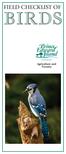 FIELD CHECKLIST OF BIRDS Blue Jay While in its 1977 spring session, the Prince Edward Island legislature officially declared the Blue Jay as avian emblem for the province. During Environment Week of 1976,
Bird Photography Site Guide Port Aransas, TX and environs
 Bird Photography Site Guide Port Aransas, TX and environs Overview Port Aransas, TX is located on the northern end of Mustang Island, less than an hour s drive from Corpus Christi. It has been known as
Where Do Birds Live?
 Objectives You will learn about 1) where birds build nests, 2) the materials they use, 3) different nest characteristics and 4) how to observe nesting activity. Introduction Birds hatch their young in
Seattle is -- FOR THE BIRDS. How to Identify Common Seattle Birds
 Seattle is -- FOR THE BIRDS How to Identify Common Seattle Birds Want to learn more about birds? Join Seattle Audubon s Family and Youth Programs Mailing List to hear about upcoming opportunities. Name:
South-west Iceland 24th February 2nd March 2016
 South-west Iceland 24th February 2nd March 2016 This was by no means a birding holiday, but more of a trip for me and my wife to relax and spend some time planning the birth of our first child and celebrate
Paphos 12 th 26 th March 2014
 Paphos 12 th 26 th March 2014 Trip Report By Bob Shiret View of Akamas Peninsular Introduction This report follows last April s where as you will see a different mix of birds were seen. The holiday was
JANUARY 1 JANUARY 2 JANUARY 3. Possible First Occurrences Today. Possible First Occurrences Today. Possible First Occurrences Today
 JANUARY 1 Black-capped Chickadee Two-note Song Canada Goose Sandhill Cranes Last Seen Wisconsin River Open JANUARY 2 Black-capped Chickadee Two-note Song Sandhill Cranes Last Seen Wisconsin River Open
Bird watching is organized by Alecturist Mr. Tomaz Remzgar
 Bird watching is organized by Alecturist Mr. Tomaz Remzgar Bird watching trip 1: Birds of alpine forests DURATION: 6-8 hours HABITATS: coniferous forest, mixed forest, rock cliffs PRICE: 180 A trip into
Birding Trip Report. Portugal 17 th to 23 rd April 2013. Tony Small & Dave Hardaker. [email protected]
 Birding Trip Report Portugal 17 th to 23 rd April 2013 Tony Small & Dave Hardaker. [email protected] Area around the back of Guerreiro, leading to LPN, Alentejo. We booked flights with Easyjet from
OROKLINI MARSH. Introduction
 OROKLINI MARSH Introduction I have been a keen Bird-watcher for many years and my interest has gradually changed to carrying out in depth study of specific sites rather than random outings to various areas.
Holiday Highlights New York City 7 14 May 2016
 Leaders: Simon Eaves and Darren Rees Holiday Highlights New York City 7 14 May 2016 Guests: Chris & Norman Haynes, Lyn & Dave Maslin, Val & Wayne Colson, June Forrest, Liz & Keith Barton, Margaret Dixey,
Date Species Species_2 Gender # Road Milepost or Specific Location Comments 4/10/2013 Red Fox Fox, Red 1 Tank Farm 5/25/2013 Emperor Goose Goose,
 Date Species Species_2 Gender # Road Milepost or Specific Location Comments 4/10/2013 Red Fox Fox, Red 1 Tank Farm 5/25/2013 Emperor Goose Goose, Emperor 4 Nome River Bridge Norton Sound Side 5/28/2013
Red-billed Tropicbird at Praia, Santiago, 30 th April 2011
 1 Cape Verdes April/May 2011 by Richard Bonser Red-billed Tropicbird at Praia, Santiago, 30 th April 2011 Introduction Following the sightings of three extreme Western Palearctic herons at one site in
Corsica. April 30th May 17th 2012. A Trip Report by Tim Hajda
 Corsica April 30th May 17th 2012 A Trip Report by Tim Hajda Introduction Corsica is a stunningly beautiful French island in the western Mediterranean Sea. Thanks to its relatively low population density
Trip Report. By Bob Shiret
 Paphos 16 th 30 th March 2016 Trip Report By Bob Shiret Introduction I have to confess that before embarking on this year`s trip I doubted whether I would be constructing a report afterwards as it could
Go Slow in Sweden. Naturetrek Go Slow Tour Itinerary. Outline itinerary. Fly Vasteras and transfer Svartådalen. Day 1
 Naturetrek Go Slow Outline itinerary Day 1 Fly Vasteras and transfer Svartådalen. Day 2/5 Birding & natural history excursions around Svartådalen. Day 6 Birding around Svartådalen and fly London. Departs
Integrating Bird Conservation and Natural Resources Management: Best Management Practices. Jennifer Devlin, City of Portland, Environmental Services
 Integrating Bird Conservation and Natural Resources Management: Best Management Practices Jennifer Devlin, City of Portland, Environmental Services When to Plan Disturbance: August 1 January 31 best time
Common Backyard Birds of Alabama
 Common Backyard Birds of Alabama Alabama Ornithological Society (AOS) state list includes 420 species: 158 species regularly breed in Alabama 174 species regularly winter 80 species migrate through Alabama
Spring tour B Kiskunság - Bükk Mountains - Lake Tisza - Hortobágy (5 days, 4 nights)
 Spring tour B Kiskunság - Bükk Mountains - Lake Tisza - Hortobágy (5 days, 4 nights) During this 5-days (4 nights) tour we will visit 3 National Parks. Kiskunság NP, Bükk NP and Hortobágy NP offering us
Trip to Kristiansund - Norway
 Trip to Kristiansund - Norway Sophia, Nico and Vincent from Germany Thursday, 20.09.2012 This is my story of the unforgettable days in Kristiansund, Norway. We went from our hometown Mering with the train
Guidance on waterbird monitoring methodology: Field Protocol for waterbird counting
 Guidance on waterbird monitoring methodology: Field Protocol for waterbird counting Report prepared by Wetlands International March 2010 Page 1 of 15 Contents Common Standards and field protocol for waterbird
These Maps Are For The Birds
 These Maps Are For The Birds Students will study New York State Breeding Bird Atlas maps to learn where different bird species nest and how their distributions have changed over time. Objectives: Students
Identifying Hawks in Flight using the SPASMATIC method:
 Identifying Hawks in Flight using the SPASMATIC method: S HAPE (relative sizes and proportions of wings, tail, and head) P ATTERN/PLUMAGE (contrasting patterns of dark and light) A CTIONS (How does the
PROGRAM: Maniti Pacaya Voyage [7D/6N]
![PROGRAM: Maniti Pacaya Voyage [7D/6N]](/thumbs/26/7735210.jpg "PROGRAM: Maniti Pacaya Voyage [7D/6N]") MANITI CAMP EXPEDITIONS Jr. Huallaga 240 2do Piso, Iquitos, Perú RUC: 10054007677 Web : http://www.manitiexpeditions.com Email : [email protected] Telephone Perú: (+51) 1-707-0441 Telephone
MANITI CAMP EXPEDITIONS Jr. Huallaga 240 2do Piso, Iquitos, Perú RUC: 10054007677 Web : http://www.manitiexpeditions.com Email : [email protected] Telephone Perú: (+51) 1-707-0441 Telephone
BIODIVERSITY AND CONSERVATION STUDIES IN GUYANA: 1, 2, & 3. Contributions to the Study of Biological Diversity Volume 2: 1-78
 BIODIVERSITY AND CONSERVATION STUDIES IN GUYANA: 1, 2, & 3 Contributions to the Study of Biological Diversity Volume 2: 178 Centre for the Study of Biological Diversity University of Guyana, Faculty of
SDSU PUBLIC HEALTH IN VIETNAM PROGRAM 2016 PROGRAM ITINERARY. (9 days/8 nights)
 PROGRAM ITINERARY (9 days/8 nights) During this Program, the students will take a short course in the field of Public Health in Vietnam. The course will take place in Hanoi, the capital city of Vietnam
Lakes And Reservoirs Mid Atlantic Coastal Plain
 Lakes And Reservoirs Mid Atlantic Coastal Plain There are 22 natural lakes in the Coastal Plain. Basins range from Carolina bays to peatland depressions. Most natural lakes in North Carolina are acidic
GUIDANCE: Avoiding Impacts on Nesting Birds During Construction and Revegetation Projects
 TERRESTRIAL ECOLOGY ENHANCEMENT STRATEGY GUIDANCE: Anna s Hummingbirds Photo by Phillip G.Engstrom Avoiding Impacts on Nesting Birds During Construction and Revegetation Projects Version 2 October 2010
Monitoring the State of
 Monitoring the State of Ontario's Migratory Landbirds Ontario's Migratory Landbirds: Who are they? Red-winged Blackbird Photo: Ron Ridout irds are a large and diverse group. For conservation planning purposes,
Hungary & Transylvania May 10 th 21 st 2011 Trip Report
 Hungary & Transylvania May 10 th 21 st 2011 Trip Report May 10 th The group consisting of Peter & Dot Kitching, Keith Deacon & Nadine Hodson, Brenda Seaton, Ann & Graham Johnson, Dick & Jan Brown and Maurice
Silent, Nighttime Hunters By Guy Belleranti
 By Guy Belleranti Owls are raptors, or birds of prey. They are carnivores who quickly and silently swoop down on their prey from above. Most raptors such as eagles, hawks and falcons are day hunters. They
Ulcinjska Primorje - Montenegro
 Basic ideas for the development of sustainable tourism on the Ada Island Ulcinjska Primorje - Montenegro (June 2004) Martin Schneider-Jacoby Fig. 1. Ada Island, Reserve Velipoja and the Bojana River: Protected
The Wonderful World of Wetlands BINGO
 The Wonderful World of Wetlands BINGO Time: 10-15 minutes to create Bingo board; 5-10 minutes to play one-round of Bingo Scituate Reservoir Watershed Education Program 17 Smith Ave Greenville, RI 02828
Zoo Activity Packet Grades 3-5. Thank you for choosing Reid Park Zoo for a field trip this year!
 Zoo Activity Packet Grades 3-5 Thank you for choosing Reid Park Zoo for a field trip this year! 22ND STREET AFRICAN ELEPHANT Expedition Tanzania Adaptation Zone S. RANDOLPH WAY ALDABRA TORTOISE LEE H.
AMBOSELI NATIONAL PARK
 AMBOSELI NATIONAL PARK FLYING PACKAGES (03 days / 02 nights) Crowned by Mount Kilimanjaro, Africa s highest peak, the Amboseli National Parks is one of Kenya s most popular parks. The name Amboseli comes
Bird Scavenger Hunt Activity
 Bird Scavenger Hunt Activity Materials: Bird questions worksheet (pages 2-3) 18 Bird fact cards (pages 4-8) Tape and scissors Preparation: Print the fact cards on card stock or brightly-colored paper and
Meet and greet All transfers 4 nights at The Tribe Hotel - Bed & Breakfast 2 green fees in Nairobi from a choice of 5 18-hole courses
 FOUR NIGHTS GOLF BREAKS THE TRIBE HOTEL THE TRIBE HOTEL ***** NAIROBI + GOLF PACKAGE: FROM US$ 1040 PER PERSON INCLUDES Meet and greet All transfers 4 nights at The Tribe Hotel - Bed & Breakfast 2 green
Fry Phrases Set 1. TeacherHelpForParents.com help for all areas of your child s education
 Set 1 The people Write it down By the water Who will make it? You and I What will they do? He called me. We had their dog. What did they say? When would you go? No way A number of people One or two How
Recommended Land Use Guidelines for Protection of Selected Wildlife Species and Habitat within Grassland and Parkland Natural Regions of Alberta
 Fish and Wildlife Division Sustainable Resource Development Recommended Land Use Guidelines for Protection of Selected Wildlife Species and Habitat within Grassland and Parkland Natural Regions of Alberta
Crooked Tree Wildlife Sanctuary
 Vision The Belize Audubon Society (BAS) will be a strategic leader in building a nation in which people in Belize live in harmony with and benefit from the environment. Mission The Belize Audubon Society
Owls. Choose words from the list at the end of the page to fill in the blank spaces.
 Owls Choose words from the list at the end of the page to fill in the blank spaces. Owls are _ of prey. A bird of prey is one that catches its food in its Owls hunt for their at night. A bird that hunts
Manitoba s Pine to Prairie International Birding Trail
 Manitoba s Pine to Prairie International Birding Trail Manitoba s Pine to Prairie International Birding Trail - 68 4 3 Lake Winnipeg Main Route Buffalo Point First Nation Moose Lake & Birch Point Provincial
Trip Report Madeira 22 February 1 March 2005
 1 (6) Trip Report Madeira 22 February 1 March 2005 Together with my two children, Alexander 13 years and Nina 9 years I made a combined vacation and birding tour to Madeira. We flew from Malmö-Sturup airport
Pesticides, and the Southwest Garbage Station
 Pesticides, and the Southwest Brooklyn Garbage Transfer Station by Mitchel Cohen Testimony before the NY State Department of Environmental Conservation This pamphlet is distributed free of charge to those
CLIVE PETROVIC (BVI ENVIRONMENTAL CONSULTANT), ESTHER GEORGES AND NANCY WOODFIELD PASCOE (BVI NATIONAL PARKS TRUST) INTRODUCTION
 BRITISH VIRGIN ISLANDS LAND AREA 153 km 2 ALTITUDE 0 521 m HUMAN POPULATION 23,550 CAPITAL Road Town IMPORTANT BIRD AREAS 3, totalling 53 km 2 IMPORTANT BIRD AREA PROTECTION 45% BIRD SPECIES 210 THREATENED
PUSD High Frequency Word List
 PUSD High Frequency Word List For Reading and Spelling Grades K-5 High Frequency or instant words are important because: 1. You can t read a sentence or a paragraph without knowing at least the most common.
Wetlands by Leslie Cargile
 Name: by Leslie Cargile What do the bogs in Ireland, the marshes in South Carolina, and the swamps of Louisiana have in common? If you said they re all wetlands, you d be right! are any land that is flooded
TERCEIRA & SANTA MARIA (AZORES)
 TERCEIRA & SANTA MARIA (AZORES) 8 15 August 2014 Introduction On this trip I visited the islands Terceira and Santa Maria in the Azores archipelago. On Terceira I searched for Nearctic vagrants (waders)
Birds of San Francisco Bay
 Pocket Guide to Birds of San Francisco Bay A project of PRBO Conservation Science and CalPIF Pocket Guide to Birds of San Francisco Bay Renée Cormier and Melissa Pitkin PRBO Conservation Science California
Costa Rican Retreat Join us for a Spiritual Retreat in the stunning, natural beauty of Costa Rica Experience "Pura Vida" or "Pure Life Reverend Heidi
 Costa Rican Retreat Join us for a Spiritual Retreat in the stunning, natural beauty of Costa Rica Experience "Pura Vida" or "Pure Life Reverend Heidi Alfrey and (Spirit Tours) who has led trips to Costa
NORTH KARELIAN BIRDING AREAS
 NORTH KARELIAN BIRDING AREAS Bird towers 1. Kitee, Hovinlampi (2 towers) 2. Joensuu, Höytiäinen channel estuary 3. Rääkkylä, Jouhtenuslampi 4. Valtimo, Lake Kalliojärvi (2 towers) 5. Rääkkylä, Lake Kiesjärvi
Birding Cyprus by foot, by bike, by bus and by car
 Birding Cyprus by foot, by bike, by bus and by car APRIL 2012 Having visited Cyprus once before, back in 1997, a return visit seemed overdue. A week long package deal via lowcostholidays got return flights
FAMILY SPECIAL: SAFARI, VICTORIA FALLS, AND CHOBE. Monday: Private Game Reserve
 FAMILY SPECIAL: SAFARI, VICTORIA FALLS, AND CHOBE Private Game Reserve Safari Victoria Falls Chobe Monday: Private Game Reserve S Arrive in Johannesburg, and connect to Hoedspruit, gateway to the private
Guthrie, D.A., "Bird Surveys along a Portion of the Santa Clara River and Its Tributaries Upstream from the Castaic Creek Confluence, near Valencia
 Guthrie, D.A., "Bird Surveys along a Portion of the Santa Clara River and Its Tributaries Upstream from the Castaic Creek Confluence, near Valencia California, 2000" (August 2, 2000; 2000E) BIRD SURVEYS
REGION 1 - NIAGARA FRONTIER
 REGION 1 - NIAGARA FRONTIER Mike Morgante 59 Briar Hill Road, Orchard Park NY 141 27 morgm @adelphia.net September was warm, dry and sunny. The average temperature for the month was 62.8" F, which was
Ski Innsbruck/Austria the heart of the Alps
 Ski Innsbruck/Austria the heart of the Alps February 26 March 2, 2008, guided trip A cultured city centre with a vast range of Olympic ski and snowboarding resorts. More than a ski vacation, Innsbruck
Caltech-UCSD Birds 200
 Caltech-UCSD Birds 200 Peter Welinder Steve Branson Takeshi Mita Catherine Wah Florian Schroff Serge Belongie University of California, San Diego Pietro Perona California Institute of Technology Abstract
Kenya Derby and Safari 10 18 April 2016
 Kenya Derby and Safari 10 18 April 2016 with Laura King and Tristan Voorspuy In partnership with Dubai Equestrio Magazine Laikipia - Masai Mara - Nairobi Offbeat Safaris have been operating for over 25
Tours for schools & clubs 01684 293175 QUOTATION
 QUOTATION THE 6 TH CAPE TOWN INTERNATIONAL SCHOOLS TENNIS TOURNAMENT OCTOBER 2015 ABOUT US These are just some of the reasons why over 200 schools and teams chose to tour with Gullivers: Established company
Better Wildlife Photography Course. Modules and Itinerary
 Better Wildlife Photography Course Modules and Itinerary Course Overview: The Better Wildlife Photography Course (BWP) has been designed and implemented as a way of helping guests, who already have a fundamental
Egypt 23/4 2/5 2010. Pink-backed Pelicans were seen quite easily on this visit at Abu Simbel. Photo Peter Berglin
 Egypt 23/4 2/5 2010 Trip report summary This is a much shortened version of the trip report, with many photos, in Swedish that can be seen at http://www.avifauna.se/avifauna/rapporter-arkiv/ reserapporter/nordafrika-mellanostern/egypten/
Teenager English Courses. Friendly, personal and highly effective teaching in the heart of the English Riviera
 Teenager English Courses Friendly, personal and highly effective teaching in the heart of the English Riviera The quality of education and the care of the students are excellent, maintaining the positive
Western Snowy Plover Numbers, Nesting Success, Fledging Success and Avian Predator Surveys in the San Francisco Bay, 2010.
 Western Snowy Plover Numbers, Nesting Success, Fledging Success and Avian Predator Surveys in the San Francisco Bay, 2010. M. Kern Prepared By: Caitlin Robinson-Nilsen, Waterbird Program Director Jill
Student s Name: Christopher Shum. UL Course: Psychology and Sociology. Host University: University of Calgary
 Student s Name: Christopher Shum UL Course: Psychology and Sociology Academic Year: 2014 / 2015 Semester: Autumn Host University: University of Calgary Host University Code: CAN6 Student Experience: Overall,
Aurora Adventure Breaks. Ongajok
 Aurora Adventure Breaks Ongajok Mountain Lodge 2016 ABOUT ONGAJOK MOUNTAIN LODGE WHERE NATURE IS STILL WILD The Ongajok Mountain Lodge is situated literally at the end of a road, in the wilderness of Norwegian
Little Mermaid. The. The Little Mermaid. by Hans Christian Andersen. Name:
 The Little Mermaid Name: Hans Christian Andersen was a famous Danish writer of children s stories and fairy tales. He wrote The Little Mermaid in 1837. It s the story of a young mermaid who is the youngest
Josh and Sarah s electric adventure
 Josh and Sarah s electric adventure Josh and Sarah s Electric Adventure is brought to you by Lake Country Power, an electric cooperative providing electricity and other energy related services to more
Managing for Multiple Benefits: Farming, Flood Protection, and Habitat Restoration in the Yolo Bypass Wildlife Area
 By Juliet Christian-Smith Managing for Multiple Benefits: Farming, Flood Protection, and Habitat Restoration in the Yolo Bypass Wildlife Area Whether a farmer is driving the tractor or I am, we are both
A beautiful sunny day in July; I m walking on a street in the middle of a city, being surrounded by
 A Trip to Cambridge By Iina Lahti A beautiful sunny day in July; I m walking on a street in the middle of a city, being surrounded by stunning old buildings. Colleges and churches seem to be in every corner,
A Guide To Birding Sites In and Around Corpus Christi, Texas
 A Guide To Birding Sites In and Around Corpus Christi, Texas Corpus Christi City Sites Blucher Park (CTC 071) Location: downtown, adjacent to the Public Library, off Carrizo St. Description: about 4 densely-wooded
Phonics. High Frequency Words P.008. Objective The student will read high frequency words.
 P.008 Jumping Words Objective The student will read high frequency words. Materials High frequency words (P.HFW.005 - P.HFW.064) Choose target words. Checkerboard and checkers (Activity Master P.008.AM1a
Bird Nature Study. This pdf file contains nature study printables to use with your children for a bird study. The set contains:
 Bird Nature Study This pdf file contains nature study printables to use with your children for a bird study. The set contains: Nature walk counting sheet - mark a tally every time you see one of the birds
Krakow. City and Landscape. Led by Robert Canis and Marek Kosinski. Group size: 6. Price: 485. Flights = Circa. 170 with easyjet
 Krakow City and Landscape October 5 th 9 th 2015 Led by Robert Canis and Marek Kosinski Group size: 6 Price: 485 Flights = Circa. 170 with easyjet Price includes: Tuition, guiding, accommodation and breakfast
Galápagos, Jungle, Day-trips and more!
 Galápagos, Jungle, Day-trips and more! Discover the Galápagos Island Discover the enchanted Galapagos Islands on a cruise or in a hopping island tour. Let us organize the trip of your life according to
Birds and flyies in San Casa - Copán
 HONDURAS: COPAN February 20 25, 2010 LEADERS: KEVIN ZIMMER & YOBANI PERAZA COMPILED BY: KEVIN ZIMMER VICTOR EMANUEL NATURE TOURS, INC. 2525 WALLINGWOOD DRIVE, SUITE 1003 AUSTIN, TX 78746 WWW.VENTBIRD.COM