
Pesticides, and the Southwest Garbage Station
|
|
|
- Lucinda Bond
- 10 years ago
- Views:
Transcription
1 Pesticides, and the Southwest Brooklyn Garbage Transfer Station by Mitchel Cohen Testimony before the NY State Department of Environmental Conservation

2 This pamphlet is distributed free of charge to those who contribute funds to help defray legal costs in opposing New York City s 20-year Solid Waste Management Plan (SWMP) and in particular the siting of the Southwest Brooklyn Marine Transfer (Garbage) Station. This testimony is only one facet of a multipronged critique of the City s plans. Others have written about air pollution from garbage trucks and tug boats; traffic chaos; health impacts on the community; the City s failure to deal in any serious way with waste reduction; and, environmental impact on marine life. Thank you very much! You can hear Mitchel every Thursday at 11 a.m. on his internet radio show (only on computer, not regular radio), by tuning to and clicking on Listen Live. Each show is repeated Tuesdays at 6 p.m. To hear past shows, click on Podcast and then Steal This Radio. Pick a show to listen to, and click on the arrow beneath each Steal This Radio show description. For more copies, or to obtain the testimony of other members of Wake Up & Smell the Garbage, please contact Mitchel Cohen 2652 Cropsey Avenue, #7H Brooklyn, NY [email protected]

3 Testimony of Mitchel Cohen, Submitted to the NY State Department of Environmental Conservation Re: Southwest Brooklyn Waste Transfer Station, Application # /00022 T he Department of Sanitation (DSNY)'s application for the SW Brooklyn Waste Transfer Station is so fraught with inconsistencies, contradictions with the Environmental Impact Statement, and insufficiencies in addressing the legitimate health and environmental concerns expressed by members of the community that this proposal must be rejected for this site. I am a stakeholder who lives a few blocks from the site, as well as the coordinator of the No Spray Coalition, which has been battling with New York City and its various departments over the dangerous misuse of pesticides and larvicides for nine years. In my experience, the Department of Sanitation and the Department of Health and Mental Hygiene have been duplicitous and negligent in matters of grave concern to the public's health and safety. The Department of Sanitation had for decades run an unpermitted municipal incinerator in this area indeed, on this very site now proposed for the Marine Transfer Station! until public outcry and a court order forced it to close in The ash, heavy metals and dioxin emissions poisoned the Bay and grossly endangered the surrounding environment, as well as the public's health and safety. In order to situate a large Marine Waste Transfer Station on this same site, the Department of Sanitation now proposes to annually 3

4 4 MITCHEL COHEN dredge the bottom to deepen the port, thus stirring up over and over again all the dangerous chemicals, metals and other toxic material emitted from the years of incinerator burning that plagued the community but which have now become neutralized at the bottom of the Bay.1 The North Shore Waterfront Conservancy of Staten Island, Inc., notes in its June 30, 2007 letter to the NY State Department of Environmental Conservation, This is clearly an established viable residential neighborhood and placing a Waste Transfer Station in the midst of it would destroy its diverse social and economic community base. This is an illogical action considering what a positive contribution this community has already made to the city and state of New York.... Families eat the fish in Gravesend Bay and these fish are the staple of their diet. Therefore, we are concerned that this waste transfer station would stir up toxins that lay covered in the surrounding waters causing harm to residents. In addition to being a critical social justice issue, the proposed transfer station will be situated right on Gravesend Bay the most environmentally sensitive water body in this area and one of the most important water bodies, in terms of wildlife, in the entire State. In fact, DSNY itself notes that the Southwest Brooklyn MTS would be placed in an area of great biological integrity and tremendous diversity: It housed a diverse benthic, larval finfish and adult finfish community. It also had the greatest number EFHlisted fish (8) and larvae (4) and the highest number of Dyspanopeus sayi (a mud crab whose presence indicates suitable dissolved oxygen levels in the water col1 See testimony of Vicky Grubman and NY State Assembly Represenative William Colton. Also, note that DSNY did not adequately investigate other possible sites. (See Section 2, below.)

5 PESTICIDES & THE GARBAGE TRANSFER STATION 5 umn). A diverse finfish community exists at the southwest Brooklyn converted MTS. Of 1,293 adult finfish collected, 69% were bay anchovy. Weakfish (Cynosciion regalis) and Scup (Stenotomus chrysops) were also abundant at this site.... The species collected were scup, windowpane, summer flounder, Atlantic herring, winter flounder, Atlantic butterfish, bluefish, and Black Sea bass.... Some of the highest finfish egg and larval densities and the greatest larval species richness were found in the Southwest Brooklyn Converted MTS. A Shannon-Weaver Index indicates this MTS to have the greatest finfish egg and larval species diversity and a Jaccard Index indicates that the finfish eggs and larvae were most dissimilar at the Southwest Brooklyn Converted MTS in comparison to the other MTSs sampled.2 In addition, seals have been spotted in the Bay, and the Brooklyn Bird Club, along with stakeholder Mark Treyger, who works with NY State Assembly representative William Colton, has photographed peregrine falcons (Falco Peregrinus) in the adjourning Dreier-Offerman regional park and wildlife sanctuary. The Peregrine Falcon is a federally listed endangered species. The Environmental Impact Statement, on the other hand (and contrary to this visual first-hand sighting), notes that the peregrine falcon was not listed as present for this site in the recent response from the USF & WS. 3 DSNY's application and related documents, including the FEIS, also fail to note the nearby Dreier-Offerman bird sanctuary or the spotting there of a western reef heron, which the NY Daily News (July 17, 2007) depicts as more common to 2 Final EIS, Solid Waste Management Plan, April 2005, p I removed the footnotes and some of the italicized Latin species names. 3 FEIS, Chapter 5, p. 40

6 6 MITCHEL COHEN West Africa or the Persian Gulf and only seen half a dozen times in North America. But the rare heron touched down in Dreier-Offerman Park in July 2007, and, the Daily News continues, local friends to the feathered kind hoped it would serve as their spotted owl, forcing the city to take a different line on protecting the area for local fauna and exotic visitors.... It's the best sighting ever in the park, Brooklyn Bird Club President Peter Dorosh wrote in an . And, according to Courier Life reporter Gary Buiso, It's the avian equivalent of a Honus Wagner baseball card and it's arrived in Brooklyn. (Courier Life, July 12, 2007) There's no denying it's a real thrill, said Alex Wilson, 48, of Bay Ridge, who was the first to officially identify the bird. Wilson grabbed his camera, and on the next page is the picture he took. The rare species was spotted again three weeks later in the park, which has been drawing visitors from out of state, including two West Virginians in town to catch a sight of the western reef heron, according to the blog account reported in the NY Daily News (Aug. 6, 2007). Alex Wilson also reports a total of 165 different species of birds seen at Dreier-Offerman Park. These include: Red-throated Loon Common Loon Pied-billed Grebe Horned Grebe Northern Gannet Great Cormorant Double-crested Cormorant Great Blue Heron Great Egret Snowy Egret WESTERN REEF-HERON Little Blue Heron Green Heron Black-crowned Night-Heron Yellow-crowned Night-Heron Glossy Ibis Turkey Vulture* Snow Goose Canada Goose Brant Mute Swan Gadwall American Wigeon American Black Duck


7 PESTICIDES & THE GARBAGE TRANSFER STATION Mallard Northern Pintail Northern Shoveler Canvasback* Greater Scaup Lesser Scaup Common Eider Bufflehead Common Goldeneye Hooded Merganser* Red-breasted Merganser Ruddy Duck Osprey Bald Eagle* Sharp-shinned Hawk Cooper's Hawk Red-shouldered Hawk* Broad-winged Hawk Red-tailed Hawk American Kestrel Merlin Peregrine Falcon American Coot Ring-necked Pheasant * Black-bellied Plover Semipalmated Plover Killdeer Greater Yellowlegs* 7

8 8 MITCHEL COHEN Lesser Yellowlegs Solitary Sandpiper Willet Spotted Sandpiper Semipalmated Sandpiper Least Sandpiper Pectoral Sandpiper * Purple Sandpiper Short-billed Dowitcher * American Woodcock Laughing Gull Bonaparte's Gull Ring-billed Gull Herring Gull Great Black-backed Gull Common Tern Forster's Tern* Least Tern Black Skimmer Rock Pigeon Mourning Dove Monk Parakeet* Yellow-billed Cuckoo* Chimney Swift Belted Kingfisher Red-bellied Woodpecker* Yellow-bellied Sapsucker* Downy Woodpecker Northern Flicker Willow Flycatcher Eastern Phoebe Ash-Throated FlyCatcher* Great Crested Flycatcher Eastern Kingbird White-eyed Vireo* Warbling Vireo* Red-eyed Vireo Blue Jay American Crow Fish Crow Horned Lark Tree Swallow Northern Rough-winged Swallow* Bank Swallow* Barn Swallow Red-breasted Nuthatch White-breasted Nuthatch* Brown Creeper* Carolina Wren House Wren Winter Wren* Golden-crowned Kinglet Ruby-crowned Kinglet Blue-gray Gnatcatcher Eastern Bluebird Veery Hermit Thrush* American Robin Gray Catbird Northern Mockingbird Brown Thrasher European Starling American Pipit Cedar Waxwing Tennessee Warbler* Orange-crowned Warbler Nashville Warbler


9 PESTICIDES & THE GARBAGE TRANSFER STATION Seaside Sparrow, May 2007 Northern Parula Yellow Warbler Magnolia Warbler Yellow-rumped Warbler Black-throated Green Warbler Prairie Warbler Palm Warbler Black-and-white Warbler American Redstart Ovenbird* Northern Waterthrush Connecticut Warbler* Common Yellowthroat Wilson's Warbler * Eastern Towhee* American Tree Sparrow Chipping Sparrow Clay-Colored Sparrow Field Sparrow* Vesper Sparrow* Lark Sparrow * Savannah Sparrow Seaside Sparrow Song Sparrow Lincoln's Sparrow Swamp Sparrow White-throated Sparrow White-crowned Sparrow* 9


10 10 MITCHEL COHEN Dark-eyed Junco Northern Cardinal Rose-breasted Grosbeak Indigo Bunting Bobolink Red-winged Blackbird Eastern Meadowlark* Common Grackle Boat-tailed Grackle* Brown-headed Cowbird Orchard Oriole * Baltimore Oriole Purple Finch House Finch Common Redpoll Pine Siskin American Goldfinch House Sparrow * Birds marked with an asterisk were reported by other observers. The remainder of the list represents (by the end of 2007) about a year s worth of Alex Wilson's sightings. Most of these species were seen in a few visits made in the winter and summer of htttp:// Semipalmated Plover & Willet, June 2007

11 PESTICIDES & THE GARBAGE TRANSFER STATION 11 Among these are several endangered species utilizing the adjoining park and waterways. The birds, fish and other wildlife will be severely and directly impacted by the use of pesticides so close to their sanctuary. Some species of birds eat rats and mice in fact, they are the best natural way to protect the surrounding community from rodent infestation. But when their food supply is targeted by rodenticides and pesticides, many of these magnificent birds will end up being poisoned by pesticide applications. An article in the NY Daily News, Owls are back will they last? City's poisoned rats pose biggest threat (November 10, 2002), reports that millions of pounds of pesticides are used in the state each year to kill insects, rodents and other pests that infest and damage homes, gardens, and buildings. In the fight against rats and mice, government agencies such as Transit and Housing authorities and the city Sanitation Department make regular use of rodent poisons that, in turn, can enter the food chain. The article goes on to say that Mice and small rats are the screech owl's favorite food. State records show that one of the city's screech owls, found dead near 72nd Street in January, ate the wrong rodent. It's the first time the death of one of the park's owls has been connected with rat poison. Since then, many more incidents have been uncovered. The Daily News article picks up on this pesticides and birds calamity: State files are replete with examples that conclude birds of prey were felled by pesticide poisoning in New York City: red-tailed hawks, American kestrels, a longeared owl. I think there is a huge pesticide problem out there, said Ward Stone, a state wildlife pathologist who took part in a 1999 study that linked 26 deaths of owls, hawks and eagles to like-

12 12 MITCHEL COHEN ly anti-coagulant rat poisons, which cause hemorrhaging. When pesticides kill owls, it's killing the very thing that should not be harmed, because owls are going to control the rats and mice, Stone said.... The city Parks Department at times has restricted, but not eliminated, the use of rat poisons within the parks, officials said. But researchers tracking the owls with radio transmitters have found the birds frequently prowl the streets far beyond Central Park's boundaries, where no such restrictions apply. The owls are out on the streets foraging for rats and mice at night, said William Giuliano, an ecologist at Fordham University, which is studying the park's screech owls. With rodenticides in wide use, That's certainly a concern. In fact, the Raptor Trust, a New Jersey bird rehabilitation center that supplied the first six owls released in Central Park in 1998, declined to send more birds because of concern over rat poisons used by the city, according to the NY Daily News. I was asked to continue the program after 1998 and I declined, because as I understood it... they had reinstituted the use of poisons in the park, said Len Soucy, the president of the trust. You can't be pro-owl and support the wholesale poisoning of rodents. (NY Daily News, November 10, 2002) Prompted by concern about the spread of West Nile Virus, New York State asked counties to report dead birds to its DEC wildlife pathology laboratory. After receiving more than 80,000 birds, Ward Stone discovered that while the virus was a factor in some of the deaths, the leading cause of bird deaths was pesticide poisoning. Lawn care chemicals were among the most common toxins. An American Bird Conservancy letter states: Spraying pesticides in urban and suburban areas does little to reduce the spread of West Nile Virus, is extremely harmful to birds

13 PESTICIDES & THE GARBAGE TRANSFER STATION 13 and may also harm the humans it is intended to protect. In the Spring of 2007, the No Spray Coalition filed a FOIL request for specific information about the pesticides that will be used at the proposed MTS. Stakeholders and environmental groups also asked the same questions during numerous testimonies before the NY City Council, and at the Environmental Justice hearing ordered by the DEC that DSNY held in April To date, DSNY has not responded. DSNY's application offers no information about the kind of baiting or rodenticide that will be used for rats around the perimeter of the facility nor does it consider monitoring for misuse of pesticides or accidental contamination. Yet this information is key to protecting wildlife, workers at the facility, and the surrounding community. Pesticides are the leading cause of non-natural bird deaths in New York City. More than 30 percent of the dead birds submitted to NY State DEC wildlife pathologist Ward Stone are said to have died from pesticide poisoning. Although forty million dollars have been allocated by New York City to set aside a section of Dreier-Offerman Park adjacent to the proposed site to become a wildlife preserve and sanctuary, the introduction of pesticides into this area will devastate the migratory and local bird populations, as well as fish and marine wildlife. It may also be dangerous for dogs and other pets walked in Dreier-Offerman Park. Waters and Pesticides DSNY also neglects to study how the pesticides and rodenticides will be kept from being washed into the water or land, or be blown into the air, affecting other wildlife, particularly birds, as well as human beings. The toxic chemicals will be regularly applied on land, facilities, trucks, barges

14 14 MITCHEL COHEN and containers, making it likely that they will be washed into the waters of the Bay, either accidentally or by design (see below), greatly compromising the biological diversity of the area as well as public health. In its Final Environmental Impact Statement (FEIS), DSNY writes: Procedures to control vermin, such as rats and insects, would be or, in the case of existing facilities, are incorporated into the operating permit of each Proposed Plan Facility. Licensed exterminators would service each Converted MTS monthly.... The exterminators would evaluate potential pest and vector problems and apply bait and/or spray throughout the refuse handling area, the tipping floor, the lunch and locker rooms and administrative areas. Standing water in barges not being used would be treated with larvicide and pesticide spray when necessary.4 And what would become of the run-off and wash-waters containing larvicide and pesticides? It is DSNY'S understanding that bilge and loose water pumped from the barges is permitted to be discharged directly into the river [sic]. 5 In other words, they would just be washed into the Bay. But DSNY is not worried. Loose and bilge water contamination is not of concern and such water will be pumped into surrounding bodies of water. 6 It is illegal, under Federal and State law, to apply or dispose of pesticides into navigable water bodies under the Clean Water Act, among other laws. Doing so also violates the labels of organophosphate and pyrethroid-related pesti4 Chapter Final SW Brooklyn Part 360 Permit Application, Vol. I, 2007, 6 NYCRR Part [v], 11.2[a][3][iv],11.4[f] p FEIS, Section Barge, Bilge and Loose Water Control,

15 PESTICIDES & THE GARBAGE TRANSFER STATION 15 cides, the most common ones used in New York City, and the Federal Insecticide, Fungicide, Rodenticide Act (FIFRA). Yet, there is nothing in the application that addresses the cleaning of the containers, whether for vermin or garbage. This becomes an even more serious matter if the containers are to be re-used. How will those containers be washed, stored, and protected from vermin and insects? And if offsite cleaning will be used, what supervision will be provided to ensure that no pesticides used will splash out of containers when garbage is dumped into them? In addition, will they be stored on-site? What precautions will be taken to prevent pesticides and larvicides in wash-water and run-off from barges, containers, garbage trucks, and the structure itself from being accidentally released, contaminating the surrounding areas? Even tiny amounts of pesticides kill fish, horseshoe crabs (which, in addition to being the oldest creatures on the planet, are indispensable for scientific research and which are currently thriving in the Bay), butterflies, bees, birds, dragonflies, etc., as well as mosquitoes and unwanted critters. The labels on Malathion, Pyrethroids, and piperonyl butoxide (a so-called synergist and a carcinogen in most pyrethroid combinations) all warn against spraying over or near bodies of water. Discharge of pesticides into NYC water bodies has had immediate adverse impacts on environmental health. On September 24, 1999, for example, hundreds of bluegill sunfish were found dead in Clove Lake, Staten Island, New York.7 NYSDEC attributed this illegal fish kill to the pres7 New York State Department of Environmental Conservation [NYSDEC] Memorandum from Peter Furdyne to DEC wildlife pathologist Ward Stone, January 21, 2000.

16 16 MITCHEL COHEN ence of the toxic pesticide, Malathion. Toxicological studies performed on the bluegill sunfish confirmed the presence of Malathion.8 As a result of a lawsuit brought against New York City officials by the No Spray Coalition, the U.S. Second Circuit Federal Court ruled that a pesticide is certainly a toxic substance, 9 and that the pesticides discharged are pollutants and toxic pollutants within the meaning of the Clean Water Act.10 U.S. District Court Judge George B. Daniels ruled in that case that if the City did discard the pesticides over water, it did so in contravention of the CWA. Such activity would constitute the discharge of a pollutant into navigable waters from a point source, and cannot be done without an NPDES permit. 11 So by applying pesticides to barges, containers, truck, facilities on or near waterways, land or facilities abutting waterways, or by washing the residues into the Bay (and DSNY plans to do this on a regular basis), the City will be in premeditated violation of the Clean Water Act and other laws and regulations designed to protect wildlife, waterways and habitats. Should DSNY develop different plans for pesticides and cleanup, these need to be explicitly reflected in the proposal and submitted for public review and comment. For instance, there is insufficient information in the application and other 8 Illinois Department of Agriculture Animal Disease Laboratory Toxicology Report, November 19, No Spray Coalition, Inc. v. City of New York, 2000 WL , *3 n.2 (S.D.N.Y. 2000). 10 CWA 502(6), (13), 33 U.S.C U.S. District Court, Southern District of New York: No Spray Coalition, Inc. v. The City of New York, et al., 00 Civ (GBD), June 7, 2005.

17 PESTICIDES & THE GARBAGE TRANSFER STATION 17 documents about protection for and monitoring of the health of the workers themselves, who will be working indoors at this facility and exposed repeatedly to pesticides, rodenticides and other toxins. During the Department of Health s administration of the pesticide spraying program for New York City beginning in 2001, after taking it over from the Mayor's Office of Emergency Management, many city workers were made sick because the agency utilized inadequate safeguards to protect them. Yet, at the proposed Southwest Brooklyn MTS, trucks loaded with garbage and sprayed with pesticides, will drip them from compactors and track them through the community. DSNY, like the Department of Health, will again jeopardize workers, the environment, and the community by facilitating exposure to these dangerous toxins. At the very least, DSNY needs to explain how it will monitor the health of workers. None of this has been included in DSNY's application nor in related documents. Wind Currents Nor does DSNY provide any study of wind currents which, every afternoon, change direction and blow to the east and southeast, directly across the site of the proposed facility and into the tall apartment buildings, senior citizen centers, nursing homes, the two schools for developmentally disabled children and other nearby residences, and the abutting marina (containing 250+ boats, mostly of city workers and retirees), potentially impacting thousands of people in a ½-mile radius around the site who are most susceptible to pesticide drifts and chemicals that severely compromise immune and neurological systems. The general environmental problems citywide related to pesticides and bird deaths will be greatly exacerbated in this

18 18 MITCHEL COHEN corner of Brooklyn, because the Department of Health and Mental Hygiene and the Department of Sanitation, which are responsible for monitoring the pesticide applications in the cases described, have done a terrible job of it. Yet the two pesticide applicators listed in the City s proposal will be once again in-house and under the lax supervision of this same Department of Sanitation. While some of these concerns would apply to any location for a facility applying pesticides, it is especially onerous at the proposed site because of its immediate proximity to the natural wildlife avian preserve at Dreier-Offerman regional park, its location on one of the most environmentally sensitive habitats for fish and marine life in the state, and for the way the winds blow directly from the site into the nearby apartment buildings, schools and other facilities heavily used by neighborhood residents who were forced to also bear the brunt of the pollution from the now-closed municipal incinerator at the same site. This situation is compounded by the proximity to a number of schools and youth facilities. Pesticides are especially dangerous for brain and nerve development in young children, and for elderly or immune-compromised people. Yet DSNY s proposal makes no in-depth accounting of these circumstances, nor treats the matter responsibly in any environmental and health-related fashion. With the expectation that almost 5,000 trucks per month will be utilizing this facility, picking up pesticides on their wheels and rumbling past various local facilities for developmentally disabled children on their route, one would think that a proper Environmental Impact Study would address those concerns. But not a single line in the FEIS does so. Also, there is no discussion of pesticides that become air-

19 PESTICIDES & THE GARBAGE TRANSFER STATION 19 borne, and only a general mention of waste water it is to be washed into the Bay, apparently, pesticides and all! In April 2007, the City agreed to settle a 7-year-old lawsuit against its massive and indiscriminate spraying of toxic pesticides brought under the Clean Water Act by the No Spray Coalition, which I coordinate. I ve already alluded to this seminal lawsuit, earlier. In addition to the Coalition winning $80,000 for a number of local grassroots environmental and wildlife protection groups, as part of the settlement agreement the City admitted (and I quote): Pesticides may remain in the environment beyond their intended purpose,... cause adverse health effects,... kill mosquitoes' natural predators,... increase mosquito resistance to the sprays,... and are not presently approved for direct application to waterways. I submit citations for the following seven groups of published studies that speak directly to this grave issue, which is one of extraordinary environmental injustice. i. Centers for Disease Control study that found that all residents of the United States, including residents of New York City and State, now carry dangerously high levels of pesticides and their residues in our bodies, which may have onerous effects on our health.12 ii. U.S. Geological Study, which shows that a large percentage of waterways and streams throughout the United States, including those in New York City and State, has been found to contain environmentally destructive pesticides that 12 Third National Report on Human Exposure to Environmental Chemicals, Centers for Disease Control, 2005.

20 20 MITCHEL COHEN may severely impact on animal and aquatic life.13 iii. Studies confirming that pesticides are both a trigger for asthma attacks and a root cause of asthma, and that asthma is epidemic throughout New York City.14 iv. Cicero Swamp Study, showing that pesticides killed off mosquitoes natural predators and that mosquitoes came back much stronger after the spraying, because their natural predators (which have longer reproductive cycles) were killed. These studies were done in New York state for mosquitoes carrying Eastern Equine Encephalitis and found a 15-fold increase in mosquitoes after repeated spraying, as virtually all of the new generations of mosquitoes had become pesticideresistant.15 v. Studies that show that pesticides have cumulative, multigenerational, degenerative impacts on human health, especially on the development of children which may not be evident immediately and may only appear years or even decades later U.S. Geological Survey: The Quality of Our Nation's Waters, Pesticides in the Nation's Streams and Ground Water, , 14 Salam, et al: Early-life environmental risk factors for asthma findings from the children's health study. Environmental Health Perspectives 112(6): Journal of the Am Mosquito Control Assoc, Dec; 13(4):315-25, 1997 Howard JJ, Oliver New York State Department of Health, SUNY-College ESF, Syracuse 13210, USA. 16 The Multigenerational, Cumulative and Destructive Impacts of Pesticides on Human Health, Especially on the Physical, Emotional and

21 PESTICIDES & THE GARBAGE TRANSFER STATION 21 vi. Studies that show that pesticides make it easier for mosquitoes and other organisms to get and transmit West Nile Virus due to damage to their stomach lining.17 And, vii. Studies that show that pyrethroid spraying is ineffective in reducing the number of the next generation of mosquitoes.18 The use of toxic pesticides to control vermin attracted to the proposed Southwest Garbage Transfer Station is a significant Environmental Justice issue for which no impact has been analyzed, let alone any study offered for cumulative and synergistic impacts (with toxins in the seabed, air pollution from trucks and tugboats, and more). I was indeed surprised that none of this was discussed in the current application or FEIS, as I and others had raised these concerns at primental Development of Children and Future Generations. A Submission to The House of Commons Standing Committee on Environment and Sustainable Development by Physicians and Scientists for a Healthy World, February 2000; Guillette, Elizabeth, et al: Anthropological Approach to the Evaluation of Pre-school Children Exposed to Pesticides in Mexico. Environmental Health Perspective, Vol. 106, No. 6, June 1998; Kaplan, Jonathan et al. Failing Health. Pesticides Use in California Schools. Report by Californians for Pesticide Reform, 2002, American Academy of Pediatrics, Committee on Environmental Health; Ambient Air Pollution: Respiratory Hazards to Children, Pediatrics 91, 1993); 17 Haas, George. West Nile virus, spraying pesticides the wrong response. American Bird Conservancy, October 23, Efficacy of Resmethrin Aerosols Applied from the Road for Suppressing Culex Vectors of West Nile Virus, Michael R. Reddy, Department of Immunology and Infectious Diseases, Harvard School of Public Health, Boston, Massachusetts, et. al., Vector-Borne and Zoonotic Diseases, Volume 6, Number 2, June 2006.
22 22 MITCHEL COHEN or hearings. The answers to my and others questions have not been forthcoming, our Freedom of Information request has gone unanswered, and basically we have been stonewalled by the NYC Department of Sanitation. 2. EXPLORATION OF OTHER POSSIBLE SITES? For years DSNY ran an unpermitted municipal waste incinerator on the exact site in which it now proposes to construct a large Garbage Transfer Station. In responding to queries that I and others made during the hearings process to DSNY chiefs, namely John Doherty, Harry Szarpanski and other DSNY officials, they indicated that DSNY did not seriously explore other sites before settling on this inappropriate one because, they said, DSNY already owned this site. That alone is sufficient reason to reject the siting of the SW Brooklyn MTS. I and others, including members of the NY City Council, requested that DSNY submit a checklist of other sites that they examined before settling on the current one. We asked that DSNY provide their original comments on each of those sites. DSNY has failed to provide such a list, and DSNY officials say that since DSNY already owned this site, it was unnecessary for them to look anywhere else. I ask that DEC direct DSNY to provide such a list of other sites for the SW Brooklyn MTS that DSNY investigated, and include their original comments (with dates) about each potential site. No waste transfer station should be placed in a residential neighborhood. There are other far less damaging, nonresidential sites that do not require repeated dredging and that would have far less impact on the marine environment and natural habitats (including rare and endangered species).
23 PESTICIDES & THE GARBAGE TRANSFER STATION 23 Transfer stations at more appropriate non-residential sites would be far less disruptive to nearby communities; at the current site, a large number of trucks hundreds of them (carting commercial as well as residential waste) would use already congested thoroughfares and turn onto single-lane streets 24 hours a day, 6 days per week. The wind patterns at this proposed location blow hazardous truck & tugboat diesel particulates, as well as pollution released by the dredging, directly into the tall apartment buildings, senior citizen convalescent homes, schools and children s amusement park adjacent to the site or nearby. A better proposal would investigate siting an MTS where the wind patterns would blow AWAY FROM residential communities. But those studies of alternative sites, including wind patterns, have not been presented by DSNY, which, to repeat, never seriously investigated other possible locations. DEC should reject their application for the current proposed site. 3. MISUSE OF SILT CURTAINS AND ECOLOGICALLYSENSITIVE DREDGING? On page 21 of the April 16, 2007 Environmental Justice meeting in Bensonhurst, Harry Szarpanski (one of the heads of DSNY) stated: We also plan to use environmental safeguards such as silk [sic] curtains, environmental buckets and prohibiting the dredge from overflowing the barge as dredging occurs. This statement runs counter to the draft EIS which states that the currents are too swift at the current site to use silt curtains to protect the environment. Dredging however, will cause the upper organic silts
24 24 MITCHEL COHEN to be disturbed to some degree, resulting in re-suspension of the sediments. Because of the swift currents in the area, mitigation measures, such as silt curtains, would not be feasible.19 According to the draft EIS, swift currents would disperse disturbed toxins from the old incinerator wastes throughout the Bay and the Atlantic off of Coney Island, where a great deal of recreational and some commercial fishing takes place. (Note, please, that higher levels of dangerous metals and other toxins were found by independent labs commissioned by NY State Assembly member Bill Colton; they now lay dormant on the floor of the Bay, but will be reactivated and dispersed by the repeated dredging at this site.) The final EIS reverses this finding, but provides no argument for why it has done so, nor scientific evidence to back up that administrative about-face. Nevertheless, according to the NY Daily News, Kathy Dawkins, a Sanitation Department spokeswoman, noted that the site was approved by the City Council and would actually reduce truck traffic. She said the dredging would be safe, and that the agency would use appropriate precautions to protect water quality by using measures such as an environmental clamshell bucket, silt curtains and preventing intentional barge overflow. [We'll leave aside, for the moment, lack of precautions in place for unintentional barge overflow, as well as overflow that occurs through the use of clamshell buckets! (see photo)] 19 DEIS Chapter 5, page 40.

25 PESTICIDES & THE GARBAGE TRANSFER STATION 25 Environmental spill-proof clamshell bucket... hmmm. DSNY claims that the amount of re-suspended sediments is expected to be low and the impacts, if any, highly localized. But the findings of independent scientists refute this claim. In samples taken by researchers from Rutgers University, this area of the Bay was found to have higher levels of toxins than reported by DSNY, which relied on extrapolations from dredging studies done 19 years ago. (Harry Szarpansky defended DSNY s inadequate sediment sampling at the April 16, 2007 hearing, stating that the dredging was done last at this site in The incinerator closed in We then therefore, don't believe that the material of the sediments that are going to be dredged were largely affected by the incinerator operation. ) DSNY assures concerned residents that toxic sediments
26 26 MITCHEL COHEN will remain confined. But the Sanitation Department's application and Environmental Impact statement fail to provide current data or research to substantiate their suppositions that impacts will be low and highly localized. The fact that the draft EIS says that currents are so swift that they preclude the use of silt curtains indicates that there is significant potential and opportunity for sediment dispersal. DSNY officials told the Environmental Justice meeting on April 16, 2007 that it plans to use silt curtains after all, contrary to the specifications in the draft EIS. This would be one small improvement if they would work. However, DSNY has not provided new evidence that refutes or corrects the current and very important declaration in the draft Environmental Impact Statement that silt curtains would not be effective in this area for containing the spread of toxins and other material. AND, the hazardous, toxic material from the old incinerator MUST BE contained, or the Bay will be destroyed. DSNY has stated publicly that it plans to go ahead with the dredging regardless of massive community opposition and the ecological harm that it will cause. Toxins will spread throughout the Bay and beyond. Silt curtains will be useless in containing the toxic material, according to the draft EIS, with nothing in the final EIS to explain the change of opinion on the use of those curtains. The siting of this transfer station is environmentally unsound and dangerous, a travesty that must be prevented. CONCLUSION As a result of DSNY s cavalier treatment of environmental protection of Gravesend Bay and the surrounding area, there are numerous irreconcilable contradictions between
27 PESTICIDES & THE GARBAGE TRANSFER STATION 27 the claims in the Permit Application and the conditions in the Environmental Impact Statement. Gaping holes, omissions and insufficiencies plague the Environmental Impact Statement. For these and other reasons that I and others have enumerated, the DEC should reject the proposed siting of the Southwest Brooklyn Marine Transfer Station. I therefore request that the DEC reject the City s proposal for the SW Brooklyn Marine Transfer Station. Mitchel Cohen is a stakeholder. He is a member of Wake Up & Smell the Garbage, coordinates the No Spray Coalition, and is also presenting this testimony on behalf of the Brooklyn Greens / Green Party. This report is intended to supplement the reports of Vicki Grubman, NY State Assembly representative William Colton, Ludger Balan, Ida Sanoff, Will Hershkowitz, attorney Joel Kupferman, and a number of expert witnesses who submitted briefs. I hope to publish each of these reports in separate pamphlets, so please contact me if you would like copies. [email protected].
Bluebonnet Bird Monitoring Project 2013 Annual Report. Photos by John Hartgerink and Eric Liffmann
 Bluebonnet Bird Monitoring Project 2013 Annual Report Photos by John Hartgerink and Eric Liffmann Introdu on to the Monitoring Project Begining in March 2010, the Bluebonnet Bird Monitoring Project (BBMP)
These Maps Are For The Birds
 These Maps Are For The Birds Students will study New York State Breeding Bird Atlas maps to learn where different bird species nest and how their distributions have changed over time. Objectives: Students
JANUARY 1 JANUARY 2 JANUARY 3. Possible First Occurrences Today. Possible First Occurrences Today. Possible First Occurrences Today
 JANUARY 1 Black-capped Chickadee Two-note Song Canada Goose Sandhill Cranes Last Seen Wisconsin River Open JANUARY 2 Black-capped Chickadee Two-note Song Sandhill Cranes Last Seen Wisconsin River Open
DECOY COMPETITION RULE BOOK
 34th Annual Havre de Grace Decoy & Wildlife Festival May 1, 2, 3, 2015 DECOY COMPETITION RULE BOOK GENERAL RULES AND REGULATIONS 1. All entrants must complete the entry form. Entry form must be signed.
WEST NILE VIRUS QUESTIONS ABOUT SPRAYING AND MOSQUITO CONTROL
 WEST NILE VIRUS QUESTIONS ABOUT SPRAYING AND MOSQUITO CONTROL Q1: What is West Nile virus (WNV)? A: WNV is a virus carried by certain species of mosquitoes that pick it up after biting infected birds.
Integrating Bird Conservation and Natural Resources Management: Best Management Practices. Jennifer Devlin, City of Portland, Environmental Services
 Integrating Bird Conservation and Natural Resources Management: Best Management Practices Jennifer Devlin, City of Portland, Environmental Services When to Plan Disturbance: August 1 January 31 best time
FIELD CHECKLIST OF BIRDS
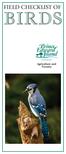 FIELD CHECKLIST OF BIRDS Blue Jay While in its 1977 spring session, the Prince Edward Island legislature officially declared the Blue Jay as avian emblem for the province. During Environment Week of 1976,
Pesticides & Integrated Pest Management
 Pesticides & Integrated Pest Management What are some common pests in child care and preschools? i Cockroaches: may be able to spread disease; allergic reactions from droppings Yellow jacket bees: can
Seattle is -- FOR THE BIRDS. How to Identify Common Seattle Birds
 Seattle is -- FOR THE BIRDS How to Identify Common Seattle Birds Want to learn more about birds? Join Seattle Audubon s Family and Youth Programs Mailing List to hear about upcoming opportunities. Name:
Date Species Species_2 Gender # Road Milepost or Specific Location Comments 4/10/2013 Red Fox Fox, Red 1 Tank Farm 5/25/2013 Emperor Goose Goose,
 Date Species Species_2 Gender # Road Milepost or Specific Location Comments 4/10/2013 Red Fox Fox, Red 1 Tank Farm 5/25/2013 Emperor Goose Goose, Emperor 4 Nome River Bridge Norton Sound Side 5/28/2013
Where Do Birds Live?
 Objectives You will learn about 1) where birds build nests, 2) the materials they use, 3) different nest characteristics and 4) how to observe nesting activity. Introduction Birds hatch their young in
Bird and bat droppings
 Bird and bat droppings Introduction While the hazards of bird and bat droppings are generally exaggerated, there is some risk of disease wherever there are large populations of roosting birds or bats.
Integrated Pest Management (IPM) Policy
 Integrated Pest Management (IPM) Policy What is Integrated Pest Management (IPM)? Integrated pest management (IPM) is an approach to pest control that utilizes regular monitoring and record keeping to
Stratford Landing Mount Vernon District Fairfax County December 2014
 Stratford Landing Mount Vernon District Fairfax County December 2014 A Message from the SLCA President While it is a privilege to honor the memory of those friends and neighbors we have lost, it is my
Common Backyard Birds of Alabama
 Common Backyard Birds of Alabama Alabama Ornithological Society (AOS) state list includes 420 species: 158 species regularly breed in Alabama 174 species regularly winter 80 species migrate through Alabama
Holiday Highlights New York City 7 14 May 2016
 Leaders: Simon Eaves and Darren Rees Holiday Highlights New York City 7 14 May 2016 Guests: Chris & Norman Haynes, Lyn & Dave Maslin, Val & Wayne Colson, June Forrest, Liz & Keith Barton, Margaret Dixey,
Sentinel Chicken Screening Here are the mosquito larvae! Ground Application Aerial Larvicide Applications
 County of San Diego Vector Control Program Mosquitoes, Rats, Ticks and More! What is a Vector? Any organism capable of carrying and transferring a disease Common vectors: Mosquitoes Ticks Rats Flies Mosquito
AN EVENTFUL JOURNEY. minutes. Natural History Lessons GRADE LEVELS 3-6 LENGTH OF ACTIVITY
 143 LENGTH OF ACTIVITY 40 minutes GRADE LEVELS 3-6 AN EVENTFUL JOURNEY Bird migration refers to the regular seasonal movement of certain species of birds. Nearly all North American birds migrate between
IPM Plan for Campus Landscape
 Created June 2014 IPM Plan for Campus Landscape Statement of Purpose The purpose of this integrated pest management (IPM) plan is to guide the use of environmentally sensitive pest management strategies
GUIDANCE: Avoiding Impacts on Nesting Birds During Construction and Revegetation Projects
 TERRESTRIAL ECOLOGY ENHANCEMENT STRATEGY GUIDANCE: Anna s Hummingbirds Photo by Phillip G.Engstrom Avoiding Impacts on Nesting Birds During Construction and Revegetation Projects Version 2 October 2010
ITEM 634.90030011- RODENT AND VERMIN CONTROL - INITIAL SURVEY. BAITING AND SANITATION ITEM 634
 DESCRIPTION A. Under these items the Contractor shall perform and satisfy the rodent and vermin control (extermination) and site sanitation requirements within construction areas as designated by the engineer.
How To Plan A Buffer Zone
 Backyard Buffers Protecting Habitat and Water Quality What is a buffer? A buffer (also called a riparian buffer area or zone) is the strip of natural vegetation along the bank of a stream, lake or other
Unit 4 Lesson 1: A Pest by Any Other Name
 Focus Areas: Pest Control: Biological; Environmental Science, Language Arts Focus Skills: critical thinking, conducting research, observing, graphing, interpreting data Objectives To explore human attitudes
Addendum D. Nomination of Moody Wash ACEC
 Addendum D Nomination of Moody Wash ACEC Moody Wash ACEC is hereby nominated by Citizens for Dixie s Future to: BLM St. George Field Office 345 East Riverside Drive St. George, UT 84790 Moody Wash is a
3. Which relationship can correctly be inferred from the data presented in the graphs below?
 1. Recent evidence indicates that lakes in large areas of New York State are being affected by acid rain. The major effect of acid rain in the lakes is (1) an increase in game fish population levels (3)
ORDINANCE NO. 3 OF 2009
 PENN TOWNSHIP CUMBERLAND COUNTY BOARD OF SUPERVISORS 1301 Centerville Road Tel: 717-486-3104 Newville, PA 17241 Fax: 717-486-3522 Email: [email protected] Website: www.penntwpcc.org ORDINANCE NO. 3 OF
Pesticides and Alternatives to Pest Control
 Pesticides and Alternatives to Pest Control Be familiar with different pesticides that may be found in the home and how to minimize poisonings and exposure. " Understand the role of integrated pest management
Chapter 10. Overview of Federal Laws and Regulations Governing Incineration
 Chapter 10 Overview of Federal Laws and Regulations Governing Incineration Contents Land-Based Incineration.......................... Ocean Incineration.............................. Statutes Governing
A DISCOVERY REGARDING THE DEATH OF ASH TREES IN THE PLYMOUTH AREA
 A DISCOVERY REGARDING THE DEATH OF ASH TREES IN THE PLYMOUTH AREA As you are probably aware, we have seen a significant amount of dying ash trees in the Plymouth, Canton, Northville area. This prompted
Monitoring the State of
 Monitoring the State of Ontario's Migratory Landbirds Ontario's Migratory Landbirds: Who are they? Red-winged Blackbird Photo: Ron Ridout irds are a large and diverse group. For conservation planning purposes,
RODENT CONTROL STRATEGY POLICY
 1 RODENT CONTROL STRATEGY POLICY Item B-HSD (01-2011)) MC 19/10/2011 RONDENT CONTROL STRATEGY POLICY RESOLVED: 1. That the contents of the report of the Rodent Control Strategy Ekurhuleni Metropolitan
FINAL RODENTICIDE COMMERCIAL KILLS RATS & MICE
 FINAL RODENTICIDE COMMERCIAL KILLS RATS & MICE PELLETS Kills Warfarin Resistant Norway Rats and House Mice Norway rats and house mice may consume a lethal dose in one feeding with first dead rodents appearing
1 ASIAN LONGHORNED BEETLE OUTBREAK
 1 THE REGIONAL MUNICIPALITY OF YORK REPORT NO. 10 OF THE REGIONAL COMMISSIONER OF TRANSPORTATION AND WORKS For Consideration by The Council of The Regional Municipality of York on October 16, 2003 1 ASIAN
Manitoba s Pine to Prairie International Birding Trail
 Manitoba s Pine to Prairie International Birding Trail Manitoba s Pine to Prairie International Birding Trail - 68 4 3 Lake Winnipeg Main Route Buffalo Point First Nation Moose Lake & Birch Point Provincial
Home without bugs. Tips and advice on both pests and pesticides. www.kemikalieinspektionen.se
 Home without bugs Tips and advice on both pests and pesticides www.kemikalieinspektionen.se Pests and vermin are on the increase Pests and vermin are becoming an increasing problem in Sweden. This may
The Environmental Protection Agency (EPA) evaluates and registers
 United States Prevention, Pesticides May 2000 Environmental and Toxic substances 735-F-00-004 Protection Agency (7506C) FOR YOUR INFORMATION Synthetic Pyrethroids for Mosquito Control EPA evaluates and
Laws to promote environmental sustainability of oceans and seas
 Laws to promote environmental sustainability of oceans and seas Laws regulations and other measures for conservation and sustainable use of living marine resources and biodiversity including those beyond
INTEGRATED PEST MANAGEMENT (IPM) GUIDELINES AND POLICY FOR SCHOOL PEST MANAGEMENT
 INTEGRATED PEST MANAGEMENT (IPM) GUIDELINES AND POLICY FOR SCHOOL PEST MANAGEMENT OVERVIEW School administrators and other individuals responsible for, maintaining school buildings and grounds need to
F o r B i r d s. Orange-crowned Warbler
 F o r B i r d s Count Results Red-throated Loon 20 Pacific Loon 10 Common Loon 12 Pied-billed Grebe 120 Horned Grebe 179 Red-necked Grebe 120 Western Grebe 914 Double-crested Cormorant 563 Brandt s Cormorant
Controlling rats and mice. A guide to preventing infestations and getting rid of them
 Controlling rats and mice A guide to preventing infestations and getting rid of them General information about rats and mice The house mouse and the brown rat are common rodent pests. We all have a responsibility
POLICY REGARDING PEST MANAGEMENT ON CITY PROPERTY
 POLICY REGARDING PEST MANAGEMENT ON CITY PROPERTY 1. The purpose of this policy is to eliminate or reduce pesticide use to the greatest possible extent. The City of Madison agrees with the US EPA that
Idaho Falls School District 91 Effective Date January 25, 2010
 PLN-4 CONTENTS 1. PURPOSE... 2 2. SCOPE AND APPLICABILITY... 2 3. SPIDERS... 2 4. COCKROACH CONTROL... 3 PLN-4 1. PURPOSE It is the policy of Idaho Falls School District #91 to provide a place of education
Integrated Pest Management
 Integrated Pest Management Many people do not mind encountering bugs outdoors. However, bugs indoors are usually considered pests. Even one insect may be considered too many. People use pesticides to control
B. Reduce the use of broad spectrum pesticides when feasible. C. Create awareness among City staff of less-toxic pest management techniques.
 City of Newark MAINTENANCE POLICY: INTEGRATED PEST MANAGEMENT POLICY ORIGINAL DATE: January 11, 2010; revised May 24, 2012 PURPOSE: The purpose of the City of Newark s Integrated Pest Management (IPM)
PUZZLING PIPES. Grade Level: 4-6
 PUZZLING PIPES Overview: Students will learn about the various paths that water takes after it is used. They will trace the path of wastewater either through the storm drain system or the sanitary sewer
City of Cambridge Climate Protection Action Committee. Recommendations for Adaptation to Climate Change. Purpose
 City of Cambridge Climate Protection Action Committee Recommendations for Adaptation to Climate Change Purpose The Climate Protection Action Committee (CPAC) is an advisory body to the City Manager on
Integrated Pest Management Policy for Research Laboratories
 Integrated Pest Management Policy for Research Laboratories Environmental Health & Safety I. POLICY The University of South Carolina s Integrated Pest Management Policy is based on the CDC s Biosafety
Proposed Terms of Reference for EIA studies
 1 Proposed Terms of Reference for EIA studies Base line data collection will be collected for the Post-Monsoon season 2016 (September to November 2016) in study area and 10 kms radius from project site.
Chapter 14 Quiz. Multiple Choice Identify the choice that best completes the statement or answers the question.
 Chapter 14 Quiz Multiple Choice Identify the choice that best completes the statement or answers the question. 1. Which of the following is NOT true regarding the Chesapeake Bay? a. it is one of many small
333 CMR: PESTICIDE BOARD 333 CMR 14.00: PROTECTION OF CHILDREN AND FAMILIES FROM HARMFUL PESTICIDES Section
 333 CMR 14.00: PROTECTION OF CHILDREN AND FAMILIES FROM HARMFUL PESTICIDES Section 14.01: Purpose 14.02: Definitions 14.03: Exemptions 14.04: General Provisions 14.05: Written Components of the Integrated
MARINA ENVIRONMENTAL MANAGEMENT POLICY
 MARINA ENVIRONMENTAL MANAGEMENT POLICY Clean Water & A Clean Environment Are Essential To Good Boating The Abbey Marina Is Committed To Being Environmentally Compatible STATEMENT OF PURPOSE: CLEAN & PROTECT
The Wonderful World of Wetlands BINGO
 The Wonderful World of Wetlands BINGO Time: 10-15 minutes to create Bingo board; 5-10 minutes to play one-round of Bingo Scituate Reservoir Watershed Education Program 17 Smith Ave Greenville, RI 02828
Integrated Mosquito Management. Rosmarie Kelly Public Health Entomologist Georgia Dept of Public Health
 Integrated Mosquito Management Rosmarie Kelly Public Health Entomologist Georgia Dept of Public Health Topics of discussion: Integrated pest management (IPM) History of pest management Definition of IPM
Discover Entomology. Discover Entomology. A Science, a Career, a Lifetime. A Science, a Career, a Lifetime
 Discover Entomology A Science, a Career, a Lifetime Discover Entomology A Science, a Career, a Lifetime What is Entomology? Entomology is the study of insects. Entomologists study bees, ants, beetles,
Lesson Overview. Biodiversity. Lesson Overview. 6.3 Biodiversity
 Lesson Overview 6.3 6.3 Objectives Define biodiversity and explain its value. Identify current threats to biodiversity. Describe how biodiversity can be preserved. THINK ABOUT IT From multicolored coral
BEECH MAST RESPONSE 2014
 BEECH MAST RESPONSE 2014 Heavy seeding in our native forests this year will drive high rodent and stoat numbers that prey on endangered birds. Battle for our Birds is a predator control response to protect
Guthrie, D.A., "Bird Surveys along a Portion of the Santa Clara River and Its Tributaries Upstream from the Castaic Creek Confluence, near Valencia
 Guthrie, D.A., "Bird Surveys along a Portion of the Santa Clara River and Its Tributaries Upstream from the Castaic Creek Confluence, near Valencia California, 2000" (August 2, 2000; 2000E) BIRD SURVEYS
CHILTERN DISTRICT COUNCIL PEST CONTROL POLICY. April 2015
 CHILTERN DISTRICT COUNCIL PEST CONTROL POLICY April 2015 CHILTERN DISTRICT COUNCIL CUSTOMER SERVICE SPECIFICATION General Policy Chiltern District Council takes note that it has a statutory duty to ensure
Integrated Pest Management Policy
 Integrated Pest Management Policy School Policy Statement It is the policy of Rocky Hill School to implement Integrated Pest Management procedures to control structural and landscape pests and minimize
Landfills-T27 20810 Vector & Bird Control
 These materials were developed under the auspices of CalRecycle for specific technical training presentations and are posted as reference documents for the local government and CalRecycle staff who attended
Protecting and Enhancing Shorelands for Wildlife
 Protecting and Enhancing Shorelands for Wildlife What is a shoreland area? Shorelands, often called riparian areas, refer to naturally vegetated areas bordering a lake, pond, stream, or other wetland.
Chapter 2 Stormwater Pollution Prevention Plan (SWPPP) for Park Operations
 SWPPP for Park Operations 2 Chapter 2 Stormwater Pollution Prevention Plan (SWPPP) for Park Operations Bordered by Lake Washington & Lake Sammamish, the City of Bellevue has more than 60 miles of streams,
Asian Longhorned Beetle Control Program
 United States Department of Agriculture Animal and Plant Health Inspection Service Asian Longhorned Beetle Control Program Environmental Assessment, December 1996 United States Department of Agriculture
Business Continuity Plan for Equine Events
 Business Continuity Plan for Equine Events Authors: Jamee L. Amundson, MS Josie Traub-Dargatz, DVM Carl C. Heckendorf, DVM Created with assistance from the Colorado Department of Agriculture Business Continuity
Bird watching is organized by Alecturist Mr. Tomaz Remzgar
 Bird watching is organized by Alecturist Mr. Tomaz Remzgar Bird watching trip 1: Birds of alpine forests DURATION: 6-8 hours HABITATS: coniferous forest, mixed forest, rock cliffs PRICE: 180 A trip into
Integrated Pest Management for Rat, Mice, and other Rodents at Thurston County s Waste and Recovery Center
 Integrated Pest Management for Rat, Mice, and other Rodents at Thurston County s Waste and Recovery Center When you think of garbage you automatically think of rats and rodents because they are very opportunistic
Population Ecology. Life History Traits as Evolutionary Adaptations
 Population Ecology An Overview of Population Ecology Population ecology is the study of factors that affect population: Density Growth A population is a group of individuals of a single species that occupy
Birmingham City University / Students Union Aspects and Impacts Register. Waste. Impacts description
 Birmingham City University / Students Union and Impacts Register Waste Production of non - hazardous waste Production of hazardous waste Storage of non - hazardous waste Potential for waste to be disposed
TransGrid Pesticide Use Notification Plan For Community Consultation
 TransGrid Pesticide Use Notification Plan For Community Consultation CONTENTS PAGE 1 INTRODUCTION... 3 2 PUBLIC PLACES COVERED BY THIS PLAN... 6 3 NOTIFICATION ARRANGEMENTS... 8 4 WHAT INFORMATION WILL
City of Green Bay Department of Public Works Engineering Department
 City of Green Bay Department of Public Works Engineering Department The Difference Between Sanitary & Storm Sewers Contact Information: Department of Public Works City Hall 100 North Jefferson Street,
Broadmoor Public Golf Course TREE MANAGEMENT GUIDE
 Broadmoor Public Golf Course TREE MANAGEMENT GUIDE Conservation of the trees at the Broadmoor Public Golf Course is a priority for environmental, economic and human health reasons. Trees make a difference
LOS ANGELES UNIFIED SCHOOL DISTRICT. Integrated Pest Management Training Program
 LOS ANGELES UNIFIED SCHOOL DISTRICT Integrated Pest Management Training Program In March 1999, the Board of Education of the Los Angeles Unified School District adopted an integrated pest management policy
AGENCY SUMMARY NARRATIVE
 AGENCY SUMMARY Mission Statement and Statutory Authority DEQ s mission is to be a leader in restoring, maintaining and enhancing the quality of Oregon s air, water and land. The Department of Environmental
TITLE 39 HEALTH AND SAFETY CHAPTER 71
 TITLE 39 HEALTH AND SAFETY CHAPTER 71 39-7101 SHORT TITLE. 39-7102 LEGISLATIVE FINDINGS AND PURPOSES. 39-7103 DEFINITIONS. 39-7104 MILITARY DIVISION --POWERS AND DUTIES. 39-7105 LOCAL EMERGENCY RESPONSE
ENDANGERED AND THREATENED
 ENDANGERED AND THREATENED Understand how species in the Sonoran Desert Region may become endangered or threatened and what is being done to protect them. ARIZONA SCIENCE STANDARDS SC03-S4C3-03&04, SC08-S1C3-07,
United States Environmental Protection Agency Office of Water 4204. Benefits of Protecting Your Community From Sanitary Sewer Overflows
 United States Environmental Protection Agency June 2000832-F-00-005 Office of Water 4204 Benefits of Protecting Your Community From Sanitary Sewer Overflows Sanitary Sewer Overflow Control Enhances Community
This material is based on work supported by the U.S. Department of Agriculture, Extension Service & the U.S. EPA
 Revised April 1992 (reformatted May 2000) A Workbook for Certified Pesticide Applicators To accompany the VHS tape "Pesticides in the Environment" Based on materials developed by: Colorado State University
Florida Department of Environmental Protection
 Florida Department of Environmental Protection Background Mobile vehicle and equipment washing involves washing at a location where vehicles are based (such as a trucking company, warehouse, bus station,
CHAPTER 65. 1. Section 2 of P.L.1989, c.34 (C.13:1E-48.2) is amended to read as follows:
 CHAPTER 65 AN ACT concerning medical waste disposal, amending and supplementing P.L.1989, c.34, supplementing P.L.1977, c.74 (C.58:10A-1 et seq.), and amending P.L.1988, c.61. BE IT ENACTED by the Senate
Q 4/17/13: Thank you for your quick response to our email dated April 10, 2013. In looking over your comments, we have a few clarifying remarks.
 Q & A Q 4/10/13: In anticipation of the DEM action plan implementation in the next few days, Citizens Advocating for a Safe Environment (CASE) would like to bring a few concerns to your attention. Some
Wyckoff/Eagle Harbor Site Bainbridge Island, Washington
 Alaska Region 10 Idaho 1200 Sixth Avenue Oregon Seattle WA 98101 Washington Superfund Fact Sheet Wyckoff/Eagle Harbor Site Bainbridge Island, Washington April 1998 Many significant developments have taken
-* -* -* -* reflecting. A~fion ~ynop i. Gl) ~ linking to real world
 Afion ynop i Students make food webs of their study site, then trace how a change in one population could affect other populations within the web. Session 1 1. Show a food web made by a team of ecologists.
Wastewater Who to ask: wastewater operator, health aides, public health nurse
 Wastewater Wastewater Who to ask: wastewater operator, health aides, public health nurse 35. Have there ever been any outbreaks of sewage related diseases in the village? If yes, what diseases and when?
Pond Water Web Lesson Plan
 Pond Water Web Lesson Plan Purpose: As a result of this lesson, students will become familiar with common organisms found in a pond and discover their importance in a balanced aquatic habitat as they create
CHAPTER 4 ALTERNATIVES COMPARISON
 CHAPTER 4 ALTERNATIVES COMPARISON 4.1 INTRODUCTION This chapter provides a comparison of the and its alternatives as described in EIS/EIR Section 1.8.3 (s Evaluated in this EIS/EIR) and analyzed in Sections
Prevent Trees and Bushes from Having Direct Contact with Your Home.
 6 Ways to Kill a Cockroach: How to Rid Your Home of Roaches, Ants, and Other Unhealthy Pests Florida's warm and humid climate is a magnet for many insect pests that often threaten your home. It would be
Report on the Need for New York to Refinance the Superfund
 Page 1 of 5 Reports Policy Guide Reports Speeches Legislative Initiatives Report on the Need for New York to Refinance the Superfund June 11, 2003 Toxic Waste Many people around the country live in areas