
Immunoassays are frequently employed for urine screening
|
|
|
- Linda Stone
- 9 years ago
- Views:
Transcription
1 Reduced Interference by Phenothiazines in Amphetamine Drug of Abuse Immunoassays Stacy E. F. elanson, D, PhD; Elizabeth Lee-Lewandrowski, PhD; David A. Griggs, BS, BA; William H. Long, T; James G. Flood, PhD Context. Emergency department physicians frequently request urine drug screens, but many are unaware of their limitations, including the potential for false-positive results. Promethazine, a phenothiazine derivative, is used for the treatment of allergies, agitation, nausea, and vomiting. any patients taking promethazine are subject to urine drug screens and any potential interferences are important to recognize. Design. During an -month period, all patients presenting to the assachusetts General Hospital emergency department who had a finding of promethazine in their serum drug screen, and who also had a urine drug screen performed, were selected for inclusion in the study. The urine drug screen results (n 22 patients/samples) were then studied. Objective. To determine if promethazine use can cause false-positive urine amphetamine results in widely used drug of abuse immunoassays. Results. Thirty-six percent of patients taking promethazine had false-positive test results for urine amphetamines using the EIT II Plus onoclonal Amphetamine/ethamphetamine Immunoassay. Sixty-four percent of patients showed cross-reactivity greater than 20% higher than the blank calibrator rate. In a separate, related study, no promethazine-induced false-positive results were seen with the EIT II Plus, Triage, and TesTcard 9 amphetamine assays, or the Triage methamphetamine assay. Reduced chlorpromazine interference was also seen with these other assays. Conclusions. False-positive urine amphetamine results can be obtained in patients taking promethazine. Promethazine metabolite(s), and not the parent compound, are the likely cause of these urine false-positive results obtained with EIT II Plus onoclonal Amphetamine/ethamphetamine Immunoassay. Immunoassays from different manufacturers can have very different interference profiles, which the pathologist and laboratory scientist must understand and relay to clinicians. (Arch Pathol Lab ed. 2006;130: ) Immunoassays are frequently employed for urine screening for drugs of abuse because they are simple, easily automated, and available in point-of-care testing format. 1 However, there are some disadvantages to immunoassays. The earlier version of the monoclonal enzyme multiplied immunoassay technique (EIT), EIT dau (Syva Corp, Palo Alto, Calif) amphetamine assay, provided frequent false-positive results caused by phenylpropanolamine, ranitidine, chlorpromazine, and other medications. 2 4 Falsepositive results can be challenging and expensive for a laboratory. In addition, confirmatory analysis of either positive or negative results may be necessary in certain clinical situations. any immunoassay platforms for drug detection are available, and the specificity and sensitivity for detection of use of a particular drug can vary greatly Accepted for publication ay 5, From the Clinical Laboratory Division, Department of Pathology, Brigham and Women s Hospital and Harvard edical School (Dr elanson); and the Division Of Laboratory edicine, Department of Pathology, assachusetts General Hospital and Harvard edical School (Drs Lee-Lewandrowski, Griggs, Long, and Flood), Boston, ass. The authors have no relevant financial interest in the products or companies described in this article. Reprints: James G. Flood, PhD, Division of Laboratory edicine, assachusetts General Hospital, 55 Fruit St, GRJ 5, Boston, A 024 ( [email protected]). depending on which manufacturer s assay is used, and which drug within a class is to be detected. A platform should be chosen that most accurately detects the drugs abused by the laboratory s patient population. Clinicians are frequently unaware of the limitations of urine drug screens, and inaccurate interpretation of results can adversely affect patient management. Furthermore, a stigma is attached to patients who have positive test results in the types of tests used to detect drugs of abuse. In 1993 a new assay was developed, the EIT II onoclonal Amphetamine/ethamphetamine (EIT-A) immunoassay (Syva Corp), which reportedly had a higher specificity for amphetamines and methamphetamines. Despite the improved specificity, the EIT-A still provided some false-positive amphetamine results caused by certain classes of medications such as antipsychotics and antihistamines. 3 Studies have demonstrated that chlorpromazine or bupropion use can cause a false-positive result. 4,5 Importantly, chlorpromazine metabolite(s), not the parent drug, were shown to cause the interference. 4 The EIT-A assay was also shown to be more sensitive to bupropion metabolites than the parent compound. 5 Only certain compounds have been tested for cross-reactivity, and the manufacturer provides a list of these in the package insert. any compounds and their metabolites are not screened for potential cross-reactivity, which makes it im Arch Pathol Lab ed Vol 130, December 2006 Phenothiazine Interference in Drug of Abuse Immunoassays elanson et al

2 Table 1. Comparison of 6 Amphetamine/ethamphetamine Urine Drug of Abuse Assays* Assay No. Assay Name Calibrator Compound Calibrator Cutoff, g/l ethod Amphetaine 6 TesTcard 9 ethamphetamine 1 EIT-A d-ethamphetamine 1000 Enzyme multiplied immunoassay technique for automated analyzers 2 EIT-A d-ethamphetamine 1000 See above 3 Triage Amphetamine d-amphetamine 1000 Fluorescence immunoassay for pointof-care testing 4 Triage d-ethamphetamine 1000 See above ethamphetamine 5 TesTcard 9 d-amphetamine 300 Immunochromatography for point-ofcare testing d-ethamphetamine 500 See above * EIT-A indicates EIT II Plus onoclonal Amphetamine/ethamphetamine immunoassay; EIT-A, EIT II Plus amphetamine immunoassay. All assays use antibodies with different specificities to each drug within the amphetamine and/or methamphetamine class. Please refer to the manufacturer s package insert to determine the sensitivity of each assay for specific drugs. These assays are designed to detect drugs in both the amphetamine and methamphetamine class using the d-methamphetamine calibrator. Lower calibrator cutoffs (300 or 500 g/l of d-methamphetamine) are also available from the manufacturer. portant for clinical laboratories to report any new observations. Data from our toxicology laboratory reveal that many patients taking promethazine also have amphetamine detected in their urine, even though the patient denies taking any form of amphetamine. We investigate the validity of these amphetamine results in an attempt to determine any interference of promethazine in the EIT-A assay. Finally, we report results of 6 different test systems on urine samples from patients ingesting promethazine or chlorpromazine. ATERIALS AND ETHODS We identified all patients presenting to the emergency department during an -month period who had promethazine detected in their serum toxicology screen and who also had a urine toxicology screen performed. If promethazine was detected in a patient serum, we then used the laboratory information system to retrospectively identify those patients who also had an EIT- A urine toxicology screen performed at the same time as their serum analysis. All patients with promethazine detected in their serum and who also had an EIT-A urine toxicology screen, regardless of the results, were included in the study (n 22). Results of the EIT-A drug screen were obtained from the laboratory information system and used in the data analysis. Blood and urine samples obtained from patients in the emergency department are sent to the laboratory via a pneumatic tube transportation system and processed immediately on receipt by the laboratory. On completion of analysis (usually 1 3 hours), all urine and serum samples are stored frozen at 20 C. Toxicology analysis for all serum and select urine specimens (as described later in an adjunct study) was performed using liquid chromatography with photodiode array detection (LC- PDA). 6 The detection limits for phenothiazines, amphetamines, and amphetamine-like compounds using LC-PDA are as follows: amphetamine (20 g/l), chlorpromazine (20 g/l), methamphetamine (35 g/l), DA (70 g/l), ephedrine (60 g/l), phentermine (20 g/l), promethazine (20 g/l), and pseudoephedrine (70 g/l). Urine toxicology screens were performed on a Hitachi 9 analyzer (Roche Diagnostics, Indianapolis, Ind) using the EIT- A assay. If the enzyme rate observed using a patient s urine sample exceeds the rate generated using the 1000 g/l d-methamphetamine calibrator, the sample is considered presumptive positive for amphetamines. The assay also has a limit of detection of 1000 g/l for d-amphetamine. In an adjunct study, we selected consecutive patients from the emergency department who were found to have either promethazine (n 3) or chlorpromazine (n 6) in their serum and a positive result from an EIT-A urine amphetamine screen. Their serum and urine samples were stored at 20 C for further toxicology analysis. The LC-PDA analysis of the urine (promethazine) or the LC-PDA analysis of serum (chlorpromazine) was performed to determine whether the patients had taken amphetamines. None of the samples had amphetamines detected. All 9 samples producing false-positive urine amphetamine results were also analyzed using 5 other immunoassay platforms, in addition to the EIT-A assay previously described (Table 1). The EIT II Plus amphetamine assay (EIT-A) (Syva Corp) was performed on a Hitachi 9 analyzer. Similar to the EIT- A, the EIT-A uses a 1000 g/l d-methamphetamine calibrator. Urine sample results with enzyme rates above this cutoff are considered positive. The Triage TOX Drug Screen (Biosite Incorporated, San Diego, Calif) and TesTcard 9 (Varian, Inc, Palo Alto, Calif) point-of-care drugs of abuse immunoassays for amphetamine and methamphetamine were performed according to the manufacturers instructions. The Triage amphetamine and methamphetamine assays use calibrator cutoff concentrations of 1000 g/l. In the TesTcard 9 system, 300 g/l of d-amphetamine and 500 g/l of d-methamphetamine are used as calibrator cutoff concentrations for the amphetamine and methamphetamine assays, respectively. RESULTS We retrospectively reviewed the results of all patients who presented to the assachusetts General Hospital emergency department during an -month period who had promethazine detected in their serum. From these patients, we found 22 who also had a urine toxicology screen performed; these 22 patients were included in this study (Table 2). Using LC-PDA, no amphetamine or amphetamine-related compounds were detected in the serum of any of the patients. Eight (36 %) of the 22 patients taking promethazine had positive test results for urine amphetamine (Table 2 [results in bold]). Results greater than 100% of the cutoff calibrator were considered positive. In addition, 4 (29 %) of the 14 negative results were more than 50% higher than the amphetamine-free blank calibrator used in the assay (Table 2 [results in italic]), suggesting some effect of promethazine on assay results. Sixty-four percent of patients taking promethazine showed cross-reactivity greater than 20% above the blank calibrator rate using the EIT-A assay. In another experiment, we studied paired urine and serum samples from 9 patients in the emergency department using 5 different amphetamine immunoassay plat- Arch Pathol Lab ed Vol 130, December 2006 Phenothiazine Interference in Drug of Abuse Immunoassays elanson et al 1835

3 Table 2. Urine Enzyme ultiplied Immunoassay Technique II Plus onoclonal Amphetamine/ ethamphetamine Immunoassay (EIT-A) Results in Patients With Promethazine in Their Serum Patient No Qualitative Results by EIT-A Cutoff Calibrator, %* * The 1000 g/l methamphetamine cutoff calibrator has an enzyme rate of approximately 70 mau/min more than the blank at 340 nm. Patient results greater than 100% of the activity of the cutoff calibrator are reported as positive (results in bold). Patient results greater than 50% above the amphetamine-free blank calibrator are shown in italic. forms (Table 3). Serum sample results from all these patients were positive for either promethazine or chlorpromazine, and negative for amphetamines using LC-PDA. Each urine sample from these patients tested positive for amphetamines by EIT-A, and LC-PDA did not detect any amphetamines in the urine of the promethazine users. The EIT-A assay uses a 1000 g/l d-methamphetamine cutoff calibrator. All 9 samples were higher than the EIT-A calibrator and the results were reported as positive. The EIT-A assay detects d-amphetamine at about the same concentration as d-methamphetamine, which is 1000 g/l. Eight of the 9 urine samples had EIT-A enzyme rates indistinguishable from the blank calibrator (% of the separation between the blank and cutoff calibrator). The ninth sample had a rate 22% higher than the blank calibrator. Using 300 g/l as the cutoff (an option supported by the manufacturer), this ninth sample had a rate 89% of the cutoff calibrator. In this series of patients, the Triage amphetamine and methamphetamine assays all had negative findings. TesTcard 9 amphetamine tests also all had negative findings. Tes- Tcard 9 methamphetamine test results were negative in 7 samples and positive in 2 samples. COENT Promethazine is used in a variety of clinical situations and its potential cross-reactivity in drugs of abuse assays is clinically relevant. 7 9 Promethazine use appears to be increasing according to findings at this institution. Promethazine was detected in 23 (1.8%) of 1290 serum toxicology samples obtained from patients presenting to the emergency department during a recent 47-day period. A 20- /L limit of detection for promethazine using LC-PDA allows detection of the drug in serum samples from patients taking typical therapeutic doses. As a consequence, our study population resembles a typical one from an emergency department, not a group of patients with known toxic serum promethazine concentrations. ore than one third of our patient population with a positive finding for serum promethazine tested positive for amphetamine in urine using EIT-A. In a previous study, 18 inmates received 50 mg of promethazine every day and their urine was subsequently screened by an earlier-generation EIT-A assay for drugs of abuse. 4 Table 3. Results of Paired Serum/Urine Samples Having Both Serum Toxicology Screens for Promethazine or Chlorpromazine, and a False- Urine Enzyme ultiplied Immunoassay Technique II Plus onoclonal Amphetamine/ethamphetamine Assay (EIT-A)* Patient No. Serum LC-PDA Findings Urine LC-PDA Findings EIT-A 1 Promethazine for amphetamines (146) 2 Promethazine for amphetamines (133) 3 Promethazine for amphetamines (161) 4 Chlorpromazine Not tested (179) 5 Chlorpromazine Not tested (267) 6 Chlorpromazine Not tested (154) 7 Chlorpromazine Not tested (0) 8 Chlorpromazine Not tested (161) 9 Chlorpromazine Not tested (137) EIT-A 1836 Arch Pathol Lab ed Vol 130, December 2006 Phenothiazine Interference in Drug of Abuse Immunoassays elanson et al (22) A TRIAGE TestCard 9 A N N N P N N N P * LC-PDA indicates liquid chromatography with photodiode array detection; EIT-A, EIT II Plus amphetamines assay; C, calibrator compound;, d-methamphetamine calibrator; A, d-amphetamine calibrator; N, negative result using the point-of-care assays; P, positive result using the point-of-care assays. See Table 1 for calibrator compounds and concentrations. The numbers in parentheses are the percent enzyme activity relative to the cutoff calibrator.

4 Three inmates (17%) had amphetamine detected in their urine. No false-positive results were seen when less than 50 mg/day promethazine was administered. In this study, we demonstrated that false-positive results by EIT- A are caused by promethazine use. The higher falsepositive frequency observed in this study may be explained by the differences in the subject population. All subjects in this study were patients admitted to the emergency department in whom serum and urine toxicology testing was ordered, and no limit was placed on the amount of promethazine the patients had received. A previous study by Smith-Kielland et al 4 indicated that preparations of promethazine up to 3000 mg/l tested negative by the EIT-A assay for amphetamine. In addition, the Syva package insert states that promethazine shows a negative response. This suggests that a promethazine metabolite(s), not promethazine itself, is responsible for the false-positive results described in Table 2. Chlorpromazine metabolites cross-react in the EIT-A assay. 3,4 Promethazine and chlorpromazine possess similar phenothiazine chemical structures, supporting the hypothesis that a promethazine metabolite(s) interferes with the EIT-A assay. The metabolism of promethazine has not been thoroughly investigated in humans, but it is extensively metabolized. The major metabolites are promethazine sulfoxide, norpromethazine, and monodesmethyl promethazine sulfoxide. 10 Primary standards of promethazine metabolites are not currently available so we were unable to definitively determine which of the promethazine metabolites are responsible for the cross-reactivity in the EIT-A assay. anufacturers cannot test for all potential cross-reactants in drugs of abuse assays, and laboratories and clinicians should be encouraged to report false-positive results in these assays. We also suggest that manufacturers expand the information included in package inserts to include whether a compound exhibits significant cross-reactivity compared with a blank solution. We believe this extra information will aid investigators studying suspected false-positive results. Nine samples with false-positive amphetamine results by EIT-A assay were examined by 5 alternate immunoassays (Table 1) to compare cross-reactivity profiles. All 5 methods had reduced interference to both promethazine and chlorpromazine use. Eight of the 9 urine samples tested by EIT-A had enzyme rates indistinguishable from the blank calibrator (ie, %). However, the ninth sample had a rate 22% above the blank. The ninth sample also had the highest degree of interference in the EIT- A assay, and generated a positive result by TesTcard 9 methamphetamine assay. The EIT-A assay can be made more sensitive by using either of the available 300 and 500 g/l cutoff calibrators rather than the 1000 g/l cutoff used in this study. Using a lower cutoff of 300 g/l, the ninth sample had a rate 89% of the cutoff calibrator, extremely close to the rate that would be judged positive, raising the possibility that some cross-reactivity caused by phenothiazine metabolites may still remain in the EIT-A assay. No false-positive results were seen with the Triage amphetamine or methamphetamine assay or the TesTcard 9 amphetamine assay, indicating improved specificity compared with EIT-A. The 2 positive results obtained by TesTcard 9 methamphetamine assay may represent false-positive results. As an alternative explanation, the manufacturer of TesTcard 9 claims a lower detection limit for methamphetamine than the other assays, so it may be detecting amphetamine concentrations that the other immunoassays cannot. However, the negative LC-PDA finding argues against this alternate explanation. Although the sample size is limited, evidence strongly indicates that the EIT-A, Triage, and TesTcard 9 assays provide superior specificity compared with EIT-A in samples from patients receiving promethazine or chlorpromazine. A recent comparison of 6 urine amphetamine immunoassay systems found the EIT-A to be superior in specificity to both EIT-A and the other 4 systems studied. Our data also suggest that EIT-A has superior specificity to EIT-A. However, the sensitivity of EIT-A should be considered. The manufacturer (Syva Corp) states the concentrations of DA ( Ecstasy ) necessary to yield a positive result for the EIT-A and EIT-A assays (using a 1000 mg/l cutoff) as 9140 and mg/l, respectively. The concentrations illustrate that the EIT-A assay is less sensitive for detection of DA use than the EIT-A assay. We and others have observed discordant EIT amphetamine-type results, in which the urine EIT-A is positive and the EIT-A is negative. The patients at our hospital with discrepant results had only DA in their serum, consistent with the manufacturer s data that EIT-A is less sensitive to DA detection. In our emergency department population, the frequency of phenothiazine use exceeds that of DA. In addition, our serum toxicology assay has a limit of detection of 70 g/l for DA. Changing from the EIT-A to the EIT-A assay for urine testing at our institution would improve specificity with little cost to sensitivity. In different patient populations, a switch from the EIT-A to the EIT-A assay may have different consequences. The National Academy of Clinical Biochemistry recently recommended that, for patients in emergency departments, highly specific amphetamine immunoassays directed at the illicit amphetamines (such as DA and methamphetamine) are less useful compared with assays sensitive to a broad spectrum of sympathomimetic, stimulant, and illicit amines. 12 We conclude that promethazine use can cause false-positive results in EIT-A urine amphetamine assays. Clinicians should understand this limitation when interpreting urine drug screens from laboratories employing this method. We urge that promethazine be added to the EIT-A package insert listing of compounds that may cause false-positive results. Reduced interference by phenothiazines was observed using these alternative drugs of abuse amphetamine immunoassay platforms; EIT-A, Triage, and TesTcard9. References 1. Colbert DL. Drug abuse screening with immunoassays: unexpected crossreactivities and other pitfalls. Br J Biomed Sci. 1994;51: Poklis A. Unavailability of drug metabolite reference material to evaluate false positive results for monoclonal EIT dau assay of amphetamine [letter]. Clin Chem. 1992;38: Olsen K, Gulliksen, Christopherson AS. etabolites of chlorpromazine and bromipheniramine may cause false-positive urine amphetamine results with monoclonal EIT dau Immunoassay [letter]. Clin Chem. 1992;38: Smith-Kielland A, Olsen K, Christopherson AS. False-positive results with EIT II amphetamine/metamphetamine assays in users of common psychotropic drugs [letter]. Clin Chem. 1995;41: Nixon AL, Long WH, Puopolo PR, Flood JG. Bupropion metabolites produce false-positive urine amphetamine results [letter]. Clin Chem. 1995;41: Puopolo PR, Volpicelli SA, Johnson D, Flood JG. Emergency toxicology testing (detection, confirmation, and quantification) of basic drugs in serum by Arch Pathol Lab ed Vol 130, December 2006 Phenothiazine Interference in Drug of Abuse Immunoassays elanson et al 1837

5 liquid chromatography with photodiode array detection. Clin Chem. 1991;37: TREC Collaborative Group. Rapid tranquillisation for agitated patients in emergency psychiatric rooms: a randomized trial of midazolam versus haloperidol plus promethazine. Br ed J. 2003;327: Golembiewski JA, O Brien D. A systematic approach to the management of postoperative nausea and vomiting. J Perianesth Nurs. 2002;17: Cowings PS, Toscano WB, DeRoshia C, iller NE. Promethazine as a motion sickness treatment: impact on human performance and mood states. Aviat Space Environ ed. 2000;71: Baselt RC, ed. Disposition of Toxic Drugs and Chemicals in an, 6th ed. Foster City, NY: Biomedical Publications; 2002: Verstraete AG, Vander Heyden F. Comparison of the sensitivity and specificity of six immunoassays for the detection of amphetamines in urine. J Anal Toxicol. 2005;29: Wu AHB, ckay C, Broussard LA, et al. National academy of clinical biochemistry laboratory medicine practice guidelines: recommendations for the use of laboratory tests to support poisoned patients who present to the emergency department. Clin Chem. 2003;49: Arch Pathol Lab ed Vol 130, December 2006 Phenothiazine Interference in Drug of Abuse Immunoassays elanson et al

The Trazodone Metabolite meta-chlorophenylpiperazine Can Cause False-Positive Urine Amphetamine Immunoassay Results
 Technical Note The Trazodone Metabolite meta-chlorophenylpiperazine Can Cause False-Positive Urine Amphetamine Immunoassay Results Jason M. Baron*, David A. Griggs, Andrea L. Nixon, William H. Long, and
Appropriate utilization of drug tests for pain management patients
 Appropriate utilization of drug tests for pain management patients Gwen McMillin, PhD, DABCC (CC, TC) Medical Director, Toxicology, ARUP Laboratories Associate Professor (clinical), University of Utah
This is the written version of our Hot Topic video presentation available at: MayoMedicalLaboratories.com/hot-topics
 This is the written version of our Hot Topic video presentation available at: MayoMedicalLaboratories.com/hot-topics Welcome to Mayo Medical Laboratories Hot Topics. These presentations provide short discussion
DRI Amphetamines Assay
 s Assay For In Vitro Diagnostic Use 10014585 (3 x 18 ml) 0017 (100 ml Kit) 0018 (500 ml Kit) Intended Use The s assay is intended for the qualitative or semi-quantitative determination of amphetamine and
Urine Drug Testing Methadone 101 Methadone for hospitalists
 Urine Drug Testing Methadone 101 Methadone for hospitalists Dr. Patricia Mark MB, BCh LEARNING OBJECTIVES Clarify the purpose of urine drug testing Distinguish between UDT for detection of illicit drug
Frequently Asked Questions About Syva s EMIT Drug-Abuse Tests. Test Result Interpretation. Answers for life.
 Siemens Healthcare Diagnostics, the leading clinical diagnostics company, is committed to providing clinicians with the vital information they need for the accurate diagnosis, treatment and monitoring
Central Government Laboratory Department of Health and Environment
 Central Government Laboratory Department of Health and Environment Overview who we are and what we do What is available and what is protocol for good science Sample collection Screening Tests Confirmation
Performance Evaluation of Four On-Site Drug-Testing Devices for Detection of Drugs of Abuse in Urine
 Journal of Analylical Toxicology, Vol. 24, October 2000 Performance Evaluation of Four On-Site Drug-Testing Devices for Detection of Drugs of Abuse in Urine Michelle R. Peace 1, Lisa D. TarnaP, and Alphonse
Urine Drug Testing. Why drug test? Set the Standard!
 Urine Drug Testing Urine drug testing is a valuable tool for the physician when making treatment decisions. Patients and physicians benefit from safe and effective treatment of pain but there are always
Urine Drug Testing, Advantages and Disadvantages. Advantages
 overview [chemistry] Urine Drug Testing: Approaches to Screening and Confirmation Testing Gifford Lum, MD, Barry Mushlin, MA VA Boston Healthcare System, Boston, MA DOI: 10.1309/QHJCKA4235EGPEGF 368 Most
Technical Report. Automatic Identification and Semi-quantitative Analysis of Psychotropic Drugs in Serum Using GC/MS Forensic Toxicological Database
 C146-E175A Technical Report Automatic Identification and Semi-quantitative Analysis of Psychotropic Drugs in Serum Using GC/MS Forensic Toxicological Database Hitoshi Tsuchihashi 1 Abstract: A sample consisting
Appropriate Use of UDT to Improve Patient Care
 Published on OpioidRisk (http://www.opioidrisk.com) Home > Urine Drug Testing Urine Drug Testing This guide provides: Download Entire Guide [1] Appropriate use of Urine Drug Testing (UDT) to improve patient
Toxicology/DAU Testing by Mass Spectrometry
 Toxicology/DAU Testing by Mass Spectrometry AACC Conference: Mass Spectrometry in the Clinical Lab September 17, 2013 Kara Lynch, PhD, DABCC University of California San Francisco Disclosures Research
Drug Testing to Support Pain Management
 NATIONAL REFERENCE LABORATORY Drug Testing to Support Pain Management 500 Chipeta Way, Salt Lake City, UT 84108 (800) 522-2787 (801) 583-2787 www.aruplab.com www.arupconsult.com ARUP is an enterprise of
Teriflunomide is the active metabolite of Leflunomide, a drug employed since 1994 for the treatment of rheumatoid arthritis (Baselt, 2011).
 Page 1 of 10 ANALYTE NAME AND STRUCTURE TERIFLUNOMIDE Teriflunomide TRADE NAME Aubagio CATEGORY Antimetabolite TEST CODE PURPOSE Therapeutic Drug Monitoring GENERAL RELEVANCY BACKGROUND sclerosis. The
What Does Having a FDA Cleared Pregnancy Test Mean?
 What Does Having a FDA Cleared Pregnancy Test Mean? Clinical Trials Transformation Initiative (CTTI) July 15-16, 2013 Denise N. Johnson-Lyles, Ph.D. Toxicology Branch Chief Division of Chemistry and Toxicology
SCREENING FOR THE PRESENCE OF PARA-METHYLTHIOAMPHETAMINE IN URINE BY SOME COMMERCIAL IMMUNOASSAYS AND CONFIRMATION BY GC/MS
 SCREENING FOR THE PRESENCE OF PARA-METHYLTHIOAMPHETAMINE IN URINE BY SOME COMMERCIAL IMMUNOASSAYS AND CONFIRMATION BY GC/MS Ingrid J. BOSMAN 1, Douwe DE BOER 2, Robert A. A. MAES 1 1 Department of Human
Drug Utilization Is On The Rise
 Objectives Identify the clinical issues related to opioid prescribing for chronic pain indications Define the clinical needs and expectations of urine drug testing in pain management Address preanalytical
URINE DRUG TESTING. Effective December 1 st, 2012
 URINE DRUG TESTING Effective December 1 st, 2012 Policy Neighborhood Health Plan (NHP) reimburses medically appropriate urine drug testing (UDT) to detect the parent drug and/or its metabolite(s) to demonstrate
American Society of Addiction Medicine
 American Society of Addiction Medicine Public Policy Statement On Drug Testing as a Component of Addiction Treatment and Monitoring Programs and in other Clinical Settings [Note: ASAM also has a Public
Ethylene Glycol and Methanol Poisoning Treatment
 Ethylene Glycol and Methanol Poisoning Treatment For many years, the only pharmacologic treatment for ethylene glycol or methanol toxicity was ethanol, given either orally or by continuous intravenous
NORTHEAST COMMUNITY COLLEGE ADMINISTRATIVE PROCEDURE NUMBER: AP-3237.0 FOR POLICY NUMBER: BP 3237
 NORTHEAST COMMUNITY COLLEGE ADMINISTRATIVE PROCEDURE NUMBER: AP-3237.0 FOR POLICY NUMBER: BP 3237 ALCOHOL AND CONTROLLED SUBSTANCE TEST PROCEDURES FOR COMMERCIAL DRIVER S LICENSE PROCEDURES 1. PROCEDURE
Interagency Guideline on Opioid Dosing for Chronic Non-cancer Pain (CNCP)
 Appendix D: Urine Drug Testing for Monitoring Opioid Therapy i. Monitoring opioid therapy with urine drug testing (UDT) ii. UDT algorithm for monitoring opioid therapy iii. UDT clinical vignettes iv. Frequently
RULES OF THE ALABAMA BOARD OF MEDICAL EXAMINERS GUIDELINES AND STANDARDS FOR THE UTILIZATION OF CONTROLLED SUBSTANCES FOR WEIGHT REDUCTION
 RULES OF THE ALABAMA BOARD OF MEDICAL EXAMINERS GUIDELINES AND STANDARDS FOR THE UTILIZATION OF CONTROLLED SUBSTANCES FOR WEIGHT REDUCTION Table of Contents 540-X-17-.01 540-X-17-.02 540-X-17-.03 540-X-17-.04
Collection Instructions for ARUP Drug Screen Kit #49204
 Collection Instructions for ARUP Drug Screen Kit #49204 Manufacturer Purpose of Kit / Reagent (tests) Kit / Reagent Contents (list components) Other Supplies Needed ARUP Laboratories For Point of Collection
Drug Testing Reference Tables for Drug Courts
 Drug Testing Reference Tables for Drug Courts July, 2009 Page 1 TABLE I. Specimen Detection Period Advantages Disadvantages URINE SWEAT (patch) ORAL FLUID (saliva) Provides a profile of both current and
Asset Marketing Services, Inc. Drug and Alcohol Testing Policy (MN)
 Drug and Alcohol Use Asset Marketing Services, Inc. Drug and Alcohol Testing Policy (MN) Illegal drug use in the workplace is against the law and highly detrimental to the safety and productivity of our
Ethyl Glucuronide. Where is the Drug? Detection Windows. Urine. Blood. Absorption and Distribution. Metabolism. Excretion
 Where is the Drug? Ethyl Absorption and Distribution A Biomarker for Ethanol Use Metabolism Excretion Anthony G. Costantino, Ph.D. D-ABFT NMS Labs,Willow Grove, PA John J. Treuting, Ph.D. Treuting & Assoc.
Dimethylamylamine: A Drug Causing Positive Immunoassay Results for Amphetamines *
 Dimethylamylamine: A Drug Causing Positive Immunoassay Results for Amphetamines * Technical Note Shawn P. Vorce, Justin M. Holler, Brian M. Cawrse, and Joseph Magluilo, Jr. Division of Forensic Toxicology,
Urine Specimen Dilution: Assessment and Policy Recommendations
 Urine Specimen Dilution: Assessment and Policy Recommendations Dr. Leo Kadehjian uly 21, 2003 The following comments and recommendations are for informational use only. Consultation with program counsel
ALABAMA BOARD OF MEDICAL EXAMINERS ADMINISTRATIVE CODE
 ALABAMA BOARD OF MEDICAL EXAMINERS ADMINISTRATIVE CODE CHAPTER 540-X-17 GUIDELINES AND STANDARDS FOR THE UTILIZATION OF CONTROLLED SUBSTANCES FOR WEIGHT REDUCTION TABLE OF CONTENTS 540-X-17-.01 540-X-17-.02
1.7.8.5 EFFECTIVE DATE: February 12, 2010, unless a later date is cited at the end of a section. [1.7.8.5 NMAC - Rp, 1.7.8.5 NMAC, 02/12/2010]
![1.7.8.5 EFFECTIVE DATE: February 12, 2010, unless a later date is cited at the end of a section. [1.7.8.5 NMAC - Rp, 1.7.8.5 NMAC, 02/12/2010]](/thumbs/21/1191525.jpg "1.7.8.5 EFFECTIVE DATE: February 12, 2010, unless a later date is cited at the end of a section. [1.7.8.5 NMAC - Rp, 1.7.8.5 NMAC, 02/12/2010]") TITLE 1 CHAPTER 7 PART 8 GENERAL GOVERNMENT ADMINISTRATION STATE PERSONNEL ADMINISTRATION DRUG AND ALCOHOL ABUSE 1.7.8.1 ISSUING AGENCY: State Personnel Board. [1.7.8.1 NMAC - Rp, 1.7.8.1 NMAC, 02/12/2010]
TITLE 1 CHAPTER 7 PART 8 GENERAL GOVERNMENT ADMINISTRATION STATE PERSONNEL ADMINISTRATION DRUG AND ALCOHOL ABUSE 1.7.8.1 ISSUING AGENCY: State Personnel Board. [1.7.8.1 NMAC - Rp, 1.7.8.1 NMAC, 02/12/2010]
Amphetamines Assay 2 SUMMARY 3 METHODOLOGY 4 REAGENTS 1 INTENDED USE
 2 SUMMARY August 2010 Catalog Quantity/ Number Product Description Volume OSR9C229 Emit II Plus Amphetamines Assay OSR9C618 R1 (Antibody/Substrate Reagent 1) OSR9C648 R2 (Enzyme Reagent 2) 2 x 33 ml 2
Hillsborough Community College - Ybor City Campus 1025C Laboratory Exercise 9: Testing Urine for the Presence of Drugs Introduction
 Hillsborough Community College - Ybor City Campus 1025C Laboratory Exercise 9: Testing Urine for the Presence of Drugs Introduction Drug testing beyond the health care and criminal justice systems has
New drugs of abuse? A case study on Phenazepam & Methoxetamine
 New drugs of abuse? A case study on Phenazepam & Methoxetamine Presenter: Nadia Wong Co authors: Dr Yao Yi Ju & Alex Low Xuan Kai Analytical Toxicology Laboratory Clinical & Forensic Toxicology Unit Applied
DOUGLAS COUNTY GOVERNMENT POLICY FORM. To ensure a drug-free work environment within Douglas County Government.
 DOUGLAS COUNTY GOVERNMENT POLICY FORM SUBJECT DRUG-FREE WORKPLACE TITLE DRUG-FREE WORKPLACE POLICY NO. HR.6.10 APPROVAL DATE 1/1/11 REVISION DATE 9/1/12 PURPOSE: DEPARTMENT RESPONSIBLE: DEPARTMENT(S) AFFECTED:
Point-of-care (POC) versus central laboratory instrumentation for monitoring oral anticoagulation
 Point-of-care (POC) versus central laboratory instrumentation for monitoring oral anticoagulation David M Dorfman a, Ellen M Goonan a, M Kay Boutilier a, Petr Jarolim a, Milenko Tanasijevic a and Samuel
PAYMENT POLICY STATEMENT
 PAYMENT POLICY STATEMENT Original Effective Date Next Annual Review Date Last Review / Revision Date 01/01/2014 04/05/2017 04/05/2016 Policy Name Policy Number Drug Screening Tests PY-0020 Policy Type
The Science of Hair Testing Summary of Literature Review. Presented by SAMHSA s Division of Workplace Programs
 The Science of Hair Testing Summary of Literature Review Presented by SAMHSA s Division of Workplace Programs June 11, 2014 Literature Summary Topic Areas 3 Articles from last 10 years General Review (6)
What Does the Drug Test Tell Us
 What Does the Drug Test Tell Us QUALITATIVE TOXICOLOGY TESTING for CLINICAL MANAGEMENT of the PATIENT Background The qualitative drug test is often referred to as the drug screen - a misnomer Testing performed
Hepatitis and Retrovirus. LIAISON XL Accurate detection of HIV infection. HIV Ab/Ag FOR OUTSIDE THE US AND CANADA ONLY
 Hepatitis and Retrovirus LIAISON XL Accurate detection of HIV infection HIV Ab/Ag FOR OUTSIDE THE US AND CANADA ONLY LIAISON XL HIV Ab/Ag is Your solution LIAISON XL murex HIV Ab/Ag main features The LIAISON
Analytical Specifications RIVAROXABAN
 Page 1 of 9 ANALYTE NAME AND STRUCTURE - RIVAROXABAN SYNONYMS Xarelto CATEGORY Anticoagulant TEST CODE PURPOSE Therapeutic Drug Monitoring GENERAL RELEVANCY BACKGROUND Xarelto (rivaroxaban) is an orally
1 March 2013. HUMAN RESOURCES Employee Drug Testing, Substance Abuse and Drug Free Workplace Policy POLICY Number: B-002
 HUMAN RESOURCES Employee Drug Testing, Substance Abuse and Drug Free Workplace Policy POLICY Number: B-002 1. AUTHORITY: Director of State Civil Service as contained La. R.S. 36:54 2. REFERENCES: La. R.S.
Drug Testing for Criminal Justice Involved Individuals in Michigan
 Drug Testing for Criminal Justice Involved Individuals in Michigan Oakland County Drug Court Professionals Barbara M. Hankey, Manager Oakland County Community Corrections Session Goals O To present the
PHENYLEPHRINE HYDROCHLORIDE INJECTION USP
 PRESCRIBING INFORMATION PHENYLEPHRINE HYDROCHLORIDE INJECTION USP 10 mg/ml Sandoz Canada Inc. Date of Preparation: September 1992 145 Jules-Léger Date of Revision : January 13, 2011 Boucherville, QC, Canada
METHODS OF VITAMIN ANALYSIS
 METHODS OF VITAMIN ANALYSIS Specimen requirements; Fasting plasma or serum Lithium Heparin is the anticoagulant of choice for vitamins such as; thiamine, riboflavin, retinol, tocopherols & cholecalciferol
FORENSIC TOXICOLOGY LABORATORY OFFICE OF CHIEF MEDICAL EXAMINER CITY OF NEW YORK PROFICIENCY TESTING
 FORENSIC TOXICOLOGY LABORATORY OFFICE OF CHIEF MEDICAL EXAMINER CITY OF NEW YORK PROFICIENCY TESTING PRINCIPLE Laboratories may participate, by mandate or by choice, in external proficiency testing programs.
The Facts on Equine Drug Testing
 The Facts on Equine Drug Testing CONTACT Travis Mays, MS Interim Section Head Analytical Chemistry, Drug Testing Laboratory Toxicology Laboratory 979.845.3414 tmays@ LIMITATIONS IN DRUG TESTING While advancements
The sensitive marker for glomerular filtration rate (GFR) Estimation of GFR from Serum Cystatin C:
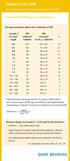 The sensitive marker for glomerular filtration rate (GFR) Estimation of GFR from Serum Cystatin C: The good correlation allows close estimation of GFR Cystatin C GFR GFR in serum estimated* measured* n
Professional Certificate in Primary Care Psychology
 Professional Certificate in Primary Care Psychology The NAPPP Primary Care Psychology Certificate training program requires the completion of 10 courses. Each course awards 15 CE credit hours. NAPPP is
EEAEAA - DRUG AND ALCOHOL USE BY AND TESTING FOR DRIVERS WITH A COMMERCIAL DRIVER S LICENSE (CDL)
 EEAEAA - DRUG AND ALCOHOL USE BY AND TESTING FOR DRIVERS WITH A COMMERCIAL DRIVER S LICENSE (CDL) APPLICABILITY In accordance with federal law and regulations, all bus operators and other District drivers
Case No IV/M.457 - LA ROCHE / SYNTEX. REGULATION (EEC)No 4064/89 MERGER PROCEDURE. Article 6(1)(b) NON-OPPOSITION Date: 20.06.1994
 EN Case No IV/M.457 - LA ROCHE / SYNTEX Only the English text is available and authentic. REGULATION (EEC)No 4064/89 MERGER PROCEDURE Article 6(1)(b) NON-OPPOSITION Date: 20.06.1994 Also available in the
Nursing 113. Pharmacology Principles
 Nursing 113 Pharmacology Principles 1. The study of how drugs enter the body, reach the site of action, and are removed from the body is called a. pharmacotherapeutics b. pharmacology c. pharmacodynamics
CANON-MCMILLAN SCHOOL DISTRICT
 No. 227.1 SECTION: PUPILS CANON-MCMILLAN SCHOOL DISTRICT TITLE: DRUG/ALCOHOL TESTING FOR EXTRACURRICULAR ACTIVITIES/STUDENT DRIVERS ADOPTED: April 23, 2007 REVISED: 227.1. DRUG/ALCOHOL TESTING FOR EXTRACURRICULAR
INTERPRETATION INFORMATION SHEET
 Creative Testing Solutions 2424 West Erie Dr. 2205 Highway 121 10100 Martin Luther King Jr. St. No. Tempe, AZ 85282 Bedford, TX 76021 St. Petersburg, FL 33716 INTERPRETATION INFORMATION SHEET Human Immunodeficiency
DHHS POLICIES AND PROCEDURES
 DHHS POLICIES AND PROCEDURES Section V: Human Resources Current Effective Date: 9/1/11 Revision History: 7/1/03, 4/1/04; 4/6/09; 9/1/11 Original Effective Date: 8/1/89 Purpose The purpose is to establish
How To Test For Drugs And Alcohol
 PARSONS CONSTRUCTORS INC. ALCOHOL/DRUG FREE WORKPLACE POLICY 1.0 INTRODUCTION The Parsons Constructors Inc. (PCI) Drug and Alcohol-Free Workplace Policy is a standardized construction contractor substance
The War on Drugs: Methamphetamine, Public Health and Crime. Carlos Dobkin, Nancy Nicosia
 The War on Drugs: Methamphetamine, Public Health and Crime Carlos Dobkin, Nancy Nicosia Government Has Three Strategies to Curb Illegal Drug Use Prevention: Education and community action Discourage people
The Role of Urine Drug Testing In Chronic Pain Management: 2013 Update
 PRINTER-FRIENDLY VERSION AVAILABLE AT PAINMEDICINENEWS.COM The Role of Urine Drug Testing In Chronic Pain Management: 2013 Update LYNN R. WEBSTER, MD President, American Academy of Pain Medicine Medical
The potential of oral fluid as a specimen in various drug testing programs
 The potential of oral fluid as a specimen in various drug testing programs *Christine Moore, Cynthia Coulter, Katherine Crompton, Warren Rodrigues, Michael Vincent, James Soares Immunalysis Corporation,
Practical Aspects of Drug Testing in Human Hair
 Practical Aspects of Drug Testing in Human Hair Laboratory Perspective James A. Bourland, Ph.D., DABFT FOR INTERNAL USE ONLY. NOT FOR PRINT OR DISTRIBUTION Overview of Collection Process FOR INTERNAL USE
How To Test For Illegal Drugs And Alcohol
 DRUG AND ALCOHOL TESTING POLICY Policy This policy applies to all persons who are applicants for or who are employed in positions with duties or activities that involve the requirement of a commercial
Forensic Drug Testing For Opiates. V. Urine Testing for Heroin, Morphine, and Codeine With Commercial Opiate Immunoassays
 Forensic Drug Testing For Opiates. V. Urine Testing for Heroin, Morphine, and Codeine With Commercial Opiate Immunoassays Edward J. Cone* and Sandra Dickerson P.O. Box 5180, Addiction Research Center,
Fact Sheet for Health Care Providers: Interpreting Results from the Aptima Zika Virus Assay. June 17, 2016
 Dear Health Care Provider: Fact Sheet for Health Care Providers: Interpreting Results from the Aptima Zika Virus Assay June 17, 2016 The U.S. Food and Drug Administration (FDA) has issued an Emergency
DUI in Southern Ohio MATT 2006
 DUI in Southern Ohio MATT 2006 Laureen J. Marinetti, M.S., Ph.D. Chief Toxicologist Montgomery County Coroner s s Office & Miami Valley Regional Crime Lab (MVRCL) Dayton, Ohio Region The MVRCL is a regional
ILLINOIS DEPARTMENT OF CENTRAL MANAGEMENT SERVICES CLASS SPECIFICATION FORENSIC SCIENTIST SERIES
 ILLINOIS DEPARTMENT OF CENTRAL MANAGEMENT SERVICES CLASS SPECIFICATION FORENSIC SCIENTIST SERIES CLASS TITLE POSITION CODE EFFECTIVE FORENSIC SCIENTIST TRAINEE 15897 5/1/10 FORENSIC SCIENTIST I 15891 5/1/10
REACH AIR MEDICAL SERVICES SUBSTANCE ABUSE POLICY FOR APPLICANTS APPLYING FOR SAFETY-SENSITIVE POSITIONS
 EFFECTIVE DATE: 06/01/2013 REACH AIR MEDICAL SERVICES SUBSTANCE ABUSE POLICY FOR APPLICANTS APPLYING FOR SAFETY-SENSITIVE POSITIONS (FOR TESTING TO BE CONDUCTED IN CALIFORNIA [excluding the City of San
PATHOLOGY. HercepTestTM. Product Information
 PATHOLOGY HercepTestTM Product Information CLINICAL TRIALS HercepTest The First and Foremost Dako s pharmdx HercepTest was the first FDA-approved assay developed exclusively to aid physicians in identifying
LAKE TRAVIS ISD POLICY FOR RANDOM STUDENT DRUG TESTING
 LAKE TRAVIS ISD POLICY FOR RANDOM STUDENT DRUG TESTING STATEMENT OF NEED AND PURPOSE Lake Travis ISD has a vital interest in maintaining a positive learning environment that is safe and healthy for all
USING CLSI GUIDELINES TO PERFORM METHOD EVALUATION STUDIES IN YOUR LABORATORY
 USING CLSI GUIDELINES TO PERFORM METHOD EVALUATION STUDIES IN YOUR LABORATORY Breakout Session 3B Tuesday, May 1 8:30 10 am James Blackwood, MS, CLSI David D. Koch, PhD, FACB, DABCC, Pathology & Laboratory
Oral Fluid Testing: Promises and Pitfalls
 Clinical Chemistry 57:6 805 810 (2011) Q&A Oral Fluid Testing: Promises and Pitfalls Moderator: Marilyn A. Huestis 1* Experts: Alain Verstraete, 2 Tai C. Kwong, 3 Jorg Morland, 4 Michael J. Vincent, 5
VITAMIN C AND INFECTIOUS DISEASE: A REVIEW OF THE LITERATURE AND THE RESULTS OF A RANDOMIZED, DOUBLE-BLIND, PROSPECTIVE STUDY OVER 8 YEARS
 39 Chapter 3 VITAMIN C AND INFECTIOUS DISEASE: A REVIEW OF THE LITERATURE AND THE RESULTS OF A RANDOMIZED, DOUBLE-BLIND, PROSPECTIVE STUDY OVER 8 YEARS Maxine Briggs TABLE OF CONTENTS I. Review of the
Vaginal ph Test (ph Hydrion TM Paper 4.5-7.5)
 University of California, San Francisco Department of Laboratory Medicine San Francisco General Hospital 1001 Potrero Avenue, San Francisco CA 94110 Clinical Laboratory Eberhard Fiebig, M.D., Director
Drug and Alcohol Testing for Department of Transportation (DOT) Regulated Employees
 Drug and Alcohol Testing for Department of Transportation (DOT) Regulated Definitions Alcohol Screening Test: An analytic procedure to determine whether an employee may have a prohibited concentration
Drug and Alcohol Testing for Bus Drivers
 Drug and Alcohol Testing for Bus Drivers School bus drivers who operate a motor vehicle requiring a commercial driver's license are subject to a drug and alcohol testing program that fulfills the requirements
Development and Validation of In Vitro Diagnostic Tests. YC Lee, Ph.D. CEO
 Development and Validation of In Vitro Diagnostic Tests YC Lee, Ph.D. CEO 1 Validation of In Vitro Diagnostic Tests Validated d Diagnostic Test should: Provides test results that identify if positive i
SAMPLE PROCEDURE 1029-3, 09/11
 SAMPLE PROCEDURE This Sample Procedure is not intended as a substitute for your facility s Procedure Manual or reagent labeling, but rather as a model for your use in customizing for your laboratory s
PtProtect Pain Medication Management Program Monitors Patient Compliance
 PHYSICIAN UPDATE 2013 Edition PtProtect Pain Medication Management Program Monitors Patient Compliance The PtProtect (Patient Protect) program offers pain medication management panels designed to improve
LIAISON XL HBsAg Quant
 Hepatitis and Retrovirus LIAISON XL HBsAg Quant Reliable detection of HBsAg mutants and genotypes for accurate differential diagnosis of the stage of infection FOR OUTSIDE THE US AND CANADA ONLY LIAISON
CLINICAL TRIALS SHOULD YOU PARTICIPATE? by Gwen L. Nichols, MD
 CLINICAL TRIALS SHOULD YOU PARTICIPATE? by Gwen L. Nichols, MD Gwen L. Nichols, M.D., is currently the Oncology Site Head of the Roche Translational Clinical Research Center at Hoffman- LaRoche. In this
Prepublication Requirements
 Issued Prepublication Requirements The Joint Commission has approved the following revisions for prepublication. While revised requirements are published in the semiannual updates to the print manuals
ADULT FOSTER HOME INSPECTION REPORT SECTION Y N P NA PLAN/DATE OF CORRECTION
 ADULT FOSTER HOME INSPECTION REPORT 11-148-15 CARE OF FOSTER RESIDENT: The number of foster adults cared for does not exceed two, unless allowed under 321.11.2, HRS. 11-148-16 RECORD: (a) & (b)(1) A current
Premarital Screening Standard. Premarital Screening and Counseling Program. Version 1.1
 Premarital Screening Standard Premarital Screening and Counseling Program Version 1.1 July 2013 Table of Contents Page Table of Contents 1 Table of Appendixes 2 Abbreviation list 3 Introduction 4 PS.1