
USA HOCKEY OFF-ICE OFFICIATING MANUAL SIXTH EDITION
|
|
|
- Annabelle Flynn
- 9 years ago
- Views:
Transcription
1 USA HOCKEY OFF-ICE OFFICIATING MANUAL SIXTH EDITION

2

3 TABLE OF CONTENTS Introduction... 1 Role of the Off-Ice Officials... 3 Communicating With On-Ice Officials... 5 Off-Ice Officials For Lower Levels... 7 Game Timekeeper... 7 Official Scorer... 9 Penalty Bench Attendants Off-Ice Officials For Advanced Levels Goal Judges Penalty Timekeeper Assistant Scorer(s) Public Address Announcer Proper Authorities Appendix I: Basic Rules of Hockey Appendix II: Official Signals Appendix III: Penalty Situations Copyright 2007, USA Hockey, Inc. ALL RIGHTS RESERVED No part of this publication may be reproduced, stored in a retrieval system, or transmitted, in any form or by any means, electronic, mechanical, photocopying, recording, or otherwise, without the prior permission of USA Hockey.

4

5 INTRODUCTION Off-ice officials are considered an extension of the on-ice officiating team. In order for the game to run smoothly, a good group of off-ice officials are necessary to assist the on-ice crew. In keeping with our role as teachers, the on-ice officials need to work effectively with the off-ice officials who, oftentimes, are volunteers who have minimal knowledge of the intricacies of the rules. This handbook will explain the responsibilities of the off-ice officials, at the grassroots levels, in an attempt to better prepare you as an off-ice official to have a better understanding of your role. As an off-ice official, you may wish to join the USA Hockey Officiating Program as an affiliated (non-skating) member. Although affiliated members are not eligible to serve as an on-ice official, they are entitled to many of the Officiating Program educational materials that may benefit them in performing their duties as an off-ice official. The USA Hockey Official Playing Rules, USA Hockey Magazine, STRIPES Newsletter, USA Hockey membership card and the open book rules exam are just some of the benefits an affiliated member receives. In addition, as an affiliated member, the Officiating Program s educational materials such as the Officiating Manual Series are also available upon request. These additional educational materials will supplement this handbook quite well and will allow you to master your role as an off-ice official. However, prior to getting started, USA Hockey would like to thank you for your dedication and willingness to volunteer your time as an off-ice official. It is the commitment of parents, families and fans, like you, who play a major role in creating a positive hockey environment for all participants. Your efforts have not gone unnoticed. Enjoy the handbook and your role as an off-ice official! USA Hockey Off-Ice Officiating Manual 1

6

7 ROLE OF THE OFF-ICE OFFICIALS Every hockey game requires the participation of numerous people. Players, coaches, and officials make up the most visible faction of a youth hockey game. Slightly less visible, but equally important, members of the officiating team include the off-ice officials. The game could not take place without someone willing to keep score, operate the time clock or monitor penalty situations. Previously, these dedicated volunteers were known as minor officials. However, it is USA Hockey s belief that the individuals who dedicate their time at the rink to serving in these capacities play an important role in the efficient conducting of the game. In reality, they are an extension of the on-ice officiating team. Even though their powers are limited, their responsibilities are a necessary part of successfully playing a game. In essence, they are assisting the on-ice officials in the overall conducting of the game. With this in mind, we prefer to refer to them as off-ice officials and when working in coordination with the on-ice officials, they form the officiating team. One of the less glamorous roles of the off-ice officials is to serve as a liaison between the officials and the teams both before and after the game. The off-ice officials will be responsible for securing the game rosters from each team prior to the start of the game. After the game, they will ensure the scoresheet is properly completed and signed by the officials and will distribute a copy to each team, with the appropriate copy going to the league office. Any questions that may arise concerning the length of the game, suspension of players or variations to the rules should also be addressed by the off-ice officials. In this role, the off-ice officials are contributing to the on-ice officials ability to avoid conflicts or perceived bias towards one team or the other. Of course, the on-ice officials will be willing and available to offer assistance or answer questions, when necessary. As part of the game officiating team, it is important for the off-ice officials to remain impartial at all times. This is difficult to do, especially since a family member or close friend may be participating in the game. However, impartiality must be maintained at all times in order to dispel any notions of favoritism and to create the positive playing environment. If you have difficulty in accomplishing this, you may wish to review your USA Hockey Off-Ice Officiating Manual 3

8 involvement as an off-ice official. We certainly expect the on-ice officials to remain impartial and teams should expect the same standard from office officials. Another important role of the off-ice official is to monitor behavior in and around the area known as the penalty benches and scorer s bench. Players who have been penalized, may behave in an unsportsmanlike manner by trying to incite an opponent, use obscene or vulgar language or be disrespectful to the off-ice officials. In addition, these penalized players may be harassed by spectators leaning over the glass. In many instances, this action may be unobserved by the on-ice officials. It is the responsibility of the off-ice officials to report these incidents to the on-ice officials during the next stoppage of play. The on-ice officials are then charged to take the appropriate action, including possible assessment of additional penalties. Finally, the role of the off-ice official includes undivided attention to the game in progress. The game clock must be stopped and started at the appropriate times and special attention should be paid as to whether the clock is functioning properly. Goals, assists and penalties, as reported by the referee, must be recorded accurately and quickly in order to minimize unnecessary delays. Penalty expiration situations must also be handled smoothly and efficiently in order to create a fair playing environment. If there is any questions or uncertainty regarding a situation, the issue must be addressed with the on-ice officials as soon as possible. All of these special tasks require the complete attention of the off-ice officials for the duration of the game. Failure to do so may result in a less than totally positive game environment for all of the game participants. Although the frequency of having to remove an off-ice official from his/her duties is minimal, the on-ice officials do have the authority to do so, when necessary. Most often, this occurs when the off-ice official becomes emotionally involved with the game, which effects his/her ability to perform the duties expected of him/her. In this case, the off-ice official has become a distraction to the officiating team and the players. When this occurs, the on-ice officials are instructed to politely ask the off-ice official to relinquish his/her position. This position must then be filled immediately by a representative from the team who is responsible for appointing the removed individual. The game cannot commence until this has been accomplished. 4 USA Hockey Off-Ice Officiating Manual

9 COMMUNICATING WITH ON-ICE OFFICIALS Since we have established that the off-ice officials are working together with the on-ice officials as a team, it becomes obvious that communication between the two groups is vital. Failure to effectively communicate before, during or after the game will only create confusion and put into question the competency of the entire officiating team. Successful communication will play an important role in developing a positive hockey environment for all participants. Here are some tips that will help off-ice officials successfully communicate with their on-ice partners. Address any questions or concerns you may have with the on-ice officials prior to the start of the game. This may include any questions regarding your responsibilities or last minute rules questions that may need to be clarified. This can be done during the on-ice warm-up or, if necessary, the on-ice officials can be approached in their dressing room prior to the start of the game. A positive rapport can easily be established during this period. When approaching the on-ice officials in their dressing room, be sure to knock on the door and wait to be invited in after identifying yourself. Be courteous as you address your questions or concerns and keep the small talk to a minimum. This allows the officials to finalize physical and mental preparations for the upcoming game. Applying common courtesy in this situation will go a long way in earning the officials respect and developing a professional and positive rapport. You should expect that same courtesy from the on-ice officials. Once the game has started do not blow the horn to get the officials attention other than to signal the end of the period or game. This practice draws unnecessary attention to the officiating crew as a whole and could make a tough situation even more difficult. Instead, be subtle in grabbing the official(s) attention during a stoppage or even while the official is skating by during play. A simple stop here at the next stoppage while the official is in the vicinity alerts the official to potential problems. Remember, in many situations (except in cases where players leave the penalty bench prematurely), the on-ice official does not have the authority USA Hockey Off-Ice Officiating Manual 5

10 to stop play for a situation that can be addressed during the next normal stoppage. Patience, in this case, is a must for any off-ice official. If a situation or explanation is unclear, don t hesitate to ask for clarification from the on-ice officials. The most common situations that tend to cause confusion are multiple penalty situations, delayed penalty situations and penalty termination as the result of a goal being scored. In each of these cases, if the official has not made the procedure clear or if you are unsure as to what should happen, ask the on-ice official(s) as soon as possible. Officials have been instructed to be clear and specific with their instructions. However, in the heat of the moment they oftentimes forget they are working with off-ice officials who may not be as knowledgeable regarding the rules. The game will operate much more smoothly with less confusion when these types of situations are handled correctly versus a mistake being made because a situation was not fully explained. Support your on-ice teammates by offering your version of any incident, only when asked. Report any misconduct in the penalty bench area at the next stoppage of play and be specific when describing the incident. Avoid questioning an officials judgment or showing displeasure with a particular call. If you feel the official is misapplying a rule (for example: terminating the wrong penalty as a result of a goal being scored), discreetly bring the discrepancy to the official s attention by asking Are you sure? This practice may trigger the official to rethink the situation and then respond accordingly. Questioning the official in a more direct manner or pointing out that the official is wrong will only put the official on the defensive and give the impression that you are not supporting his/her decision. This may be a good time to include his/her on-ice partner(s) in the discussion as well. Be courteous and professional at all times. Respect the final decisions of the on-ice officials. Expect the same attitude and approach from the on-ice officials. Your job will be more fun and you will definitely notice a difference when a strong rapport is developed between the on-ice and off-ice officials. 6 USA Hockey Off-Ice Officiating Manual

11 OFF-ICE OFFICIALS FOR LOWER LEVELS USA Hockey recognizes that the need for off-ice officials varies depending on the level of the competition. Lower levels of hockey require the bare minimum of off-ice personnel in order to successfully complete the game while advanced levels of competition (including tournaments) may require a larger off-ice staff. In many cases, somewhere in between is a good place to start when appointing an off-ice officiating staff. The next two sections will identify the various off-ice official positions necessary for the various levels of hockey and will thoroughly outline the responsibilities of each position. Most amateur hockey games will require an off-ice officiating crew of four individuals. These include the timekeeper, scorekeeper and two penalty box attendants. Their duties and responsibilities are outlined in the following sections. GAME TIMEKEEPER The game timekeeper is responsible for operating the game clock. In most cases during lower level hockey games, the game timekeeper will also keep track of penalty times on the official game clock. The duties of the game timekeeper are as follows: Prior to the start of the game, check the game clock to ensure it is operating properly, including the penalty clocks. When operating a clock for the first time, the game timekeeper should familiarize himself/herself with clock operations prior to the teams appearing on the ice in order to minimize any unnecessary delays once the game has started. Prior to the teams entering the ice, the game timekeeper should place the appropriate warm-up time on the clock and start this time immediately once the teams have entered the ice. At the conclusion of the warm-up period, the horn should be sounded and the appropriate time for the first period should be placed on the clock. The clock should be started upon execution of the face-off and should be stopped each time the whistle is blown. Prior to the center ice face-off to start each period, the referee will check with USA Hockey Off-Ice Officiating Manual 7

12 the game timekeeper to ensure he/she is ready to start. A simple nod of the head or thumbs up will signal to the referee that you are ready to go. Some leagues or games may have situations where running time is used. In this case, the clock is started upon execution of the face-off to start the period and is only stopped in situations when a goal is scored, a penalty is assessed or there is an injured player or other unusual delay (rink defect, etc.). When time has been stopped under these conditions, the clock shall be restarted upon completion of the ensuing face-off. If for some reason the clock is not stopped or started at the appropriate time, the game timekeeper should immediately do so when it has been brought to his/her attention. A mental note should be made as to an estimate of how much time elapsed and this information should be relayed to the on-ice officials for the proper determination as to what adjustments need to be made to the time. These adjustments should be made in a timely manner to minimize the delay. All penalties which require a team to play shorthanded should be placed on the penalty clocks for the appropriate length of time immediately upon being assessed. This excludes coincident penalties and misconduct penalties. The game timekeeper should be familiar with the rules pertaining to coincident penalties, misconduct penalties, delayed penalties and penalty termination. Examples and explanations of theses situations are outlined in Appendix III. When a goal is scored which results in the termination of a penalty appearing on the clock, the game timekeeper shall remove this time prior to play commencing. The horn should be sounded at the conclusion of each period. The horn should not be used during play or normal stoppages as a means of grabbing the on-ice officials attention. Necessary equipment for a game timekeeper should include a stop watch, whistle, pencil and note paper and directions on the operation of the clock. The stop watch may be necessary if the game clock malfunctions or is not operating properly. In this case, the game timekeeper may be required to keep track of time using 8 USA Hockey Off-Ice Officiating Manual

13 DISTRIBUTION: WHITE League Offices; YELLOW Home Team; PINK Visiting Team; GOLD Referee GOAL TYPES: EV Even Strength; PP Power Play; SH Shorthanded; EN Empty Net; EA Extra Attacker; PS Penalty Shot the stop watch and the whistle is necessary to indicate the completion of the period when the horn does not sound properly. The pencil and note paper can be used to make notes pertaining to penalty times and other pertinent information. Finally, a manual on the operation of the clock and information (length of periods, penalty times, curfew time, etc.) pertaining to the game should also be readily accessible. OFFICIAL SCORER The official scorer is the individual who is responsible for the completion of the game scoresheet. In some cases, the official scorer may also serve as the P.A. announcer. The game scoresheet is the official record of that game and will be sent to the league office upon completion while copies are distributed to each team. The duties of the game scorekeeper are as follows: The following examples of scoresheets are of some that are commonly used. Although there may be some minor differences in format, the principles of completing a scoresheet remain the same. Prior to the Game Well in advance of the game, the official scorer should make sure an official scoresheet is available. Official scoresheets should be available through the league the teams are participating in and often times are in the hands of the team manager. If all else fails, USA Hockey does have official scoresheets available through their merchandise supplier. USA HOCKEY OFFICIAL SCORESHEET HOME VISITOR TIER I TIER II GIRLS/WOMEN HIGH SCHOOL HOUSE/REC. ADULT HOME VISITOR TEAM NAME TEAM NAME POS. NO. PLAYERS SCORING DATE: / / GAME NO. DIVISION: SCORING POS. NO. PLAYERS NO. PER. TIME G ASSIST TYPE TIMES: Start End Curfew NO. PER. TIME G ASSIST TYPE 1 1 ARENA: SURFACE: PRINTED NAMES Official Scorer Referee Signature Official (R or L) Level Official (R or L) Level 9 Official (R or L) Level 10 OFFICIALS NOTE: All on-ice officials must make a brief written statement of all Game Misconduct 11 and Match Penalties on the back side of the top copy of this scoresheet. 12 SCORING BY PERIODS OT TOTAL 14 HOME 15 VISITORS 16 PENALTIES PENALTIES PER. NO. OFFENSE MIN. OFF START ON PER. NO. OFFENSE MIN. OFF START ON TEAM OFFICIALS TEAM OFFICIALS HEAD COACH: HEAD COACH: (sign) CEP LEVEL: CEP NO.: YEAR: COACH: CEP LEVEL: CEP NO.: YEAR: COACH: CEP LEVEL: CEP NO.: YEAR: COACH: CEP LEVEL: CEP NO.: YEAR: GOALKEEPING SHOTS SAVES JERSEY MIN. NO OT TOTAL OT TOTAL PLAYED HEAD COACH: HEAD COACH: (sign) CEP LEVEL: CEP NO.: YEAR: COACH: CEP LEVEL: CEP NO.: YEAR: COACH: CEP LEVEL: CEP NO.: YEAR: COACH: CEP LEVEL: CEP NO.: YEAR: GOALKEEPING SHOTS SAVES JERSEY MIN. NO OT TOTAL OT TOTAL PLAYED TOTALS TOTALS USA Hockey Off-Ice Officiating Manual 9

14 Approximately one half hour prior to the start of the game, the official scorer should obtain the game roster from the visiting and home teams and transfer that information to the appropriate areas on the scoresheet. Only players who are dressed and ready to participate in the game should be listed on the scoresheet. A player who is late can be listed on the scoresheet prior to the start of the game, but his/her name should be crossed out if they do not show up and participate. No player can be added to the scoresheet once play commences unless the player was inadvertently left off of the scoresheet, less than 20 persons are on the roster (no deletions are permitted) and the team is willing to be assessed a bench minor penalty. The scoresheet roster should include the player s number, last name and at least their first initial. USA Hockey rules do not require a team to designate a starting line-up, although space is provided on the scoresheet to do so for situations where the starting line-ups will be announced. In addition, the manager of HOME Charging Zebras VISITOR POS. NO. PLAYERS G 1 Chris Milles LW 2 Tony Mariconda D 4 Owen Thompson C 6 Larry Cote D 7 Mario Pusateri D 8 Mike Shapey C RW 9 Bill Spohn C 10 Bob McMann RW 12 Matt Leaf A G 35 Greg Lucker LW 14 Mark Wilkins D 17 Steve Tatro C 20 Jim Dewhirst LW 21 Dave LaBuda RW 24 Roy Finger Captains Alternate Captains HOME Raging Bench Generals VISITOR POS. NO. PLAYERS G 1 Tom Kehr C 2 Mark Tabrum C LW 4 Chris Bonnell D 5 Al Bloomer A D 6 Chuck Gridley C 7 Frank Golembrosky RW 8 TC Lewis RW 9 Bill Switaj A D 10 Tony Celeste D 12 Jim Cooney RW 14 Mark Brooks LW 15 Lloyd Ney LW 17 Bob Levin G 30 Kevin Connelie C 99 Dan Brennan HEAD COACH: TEAM OFFICIALS Jeremy Kennedy HEAD COACH: TEAM OFFICIALS Bob O Connor HEAD COACH: (sign) CEP LEVEL: CEP NO.: YEAR: Bill Leslie COACH: CEP LEVEL: CEP NO.: YEAR: COACH: CEP LEVEL: CEP NO.: YEAR: COACH: CEP LEVEL: CEP NO.: YEAR: HEAD COACH: (sign) CEP LEVEL: CEP NO.: YEAR: Lou Vairo COACH: CEP LEVEL: CEP NO.: YEAR: COACH: CEP LEVEL: CEP NO.: YEAR: COACH: CEP LEVEL: CEP NO.: YEAR: 10 USA Hockey Off-Ice Officiating Manual

15 the team and the coaches of the team should also be listed in this section, including their CEP number, CEP level and the year the level was attained. This information is important when issues involving the game arises. The example below shows a typical roster portion of a scoresheet properly completed. The captain, and alternate captains, up to a maximum of two for each team, shall be designated on the scoresheet next to their names with either a C or an A. The other pertinent information relating to the game (such as the date, level of play, rink in which the game is played and curfew time) should also be filled out prior to the start of the game. A section for this type of information is found at the top of the scoresheet. During the Game During the course of the game, the official scorer will record information on the game scoresheet, such as goals and assists and penalties, as reported to him/her by the on-ice officials. The official scorer is also responsible for recording saves (and/or shots on goal). They may ask the penalty bench attendants for assistance with this duty as each one can be responsible for one team s shots or saves. TIER I TIER II GIRLS/WOMEN HIGH SCHOOL HOUSE/REC. ADULT U12 3:00pm 5:00pm DATE: / / GAME NO. DIVISION: TIMES: Start End Curfew TEAM OFFICIALS ARENA: Anywhere SURFACE: HEAD COACH: HOME VISITORS SCORING BY PERIODS OT TOTAL HEAD COACH: (sign) CEP LEVEL: CEP NO.: YEAR: COACH: CEP LEVEL: CEP NO.: YEAR: COACH: CEP LEVEL: CEP NO.: YEAR: HOME SCORING NO. PER. TIME G ASSIST TYPE 1 1 2:14 7 9, 4 E 2 1 7: , 2 E : E 4 3 1: , 24 PP VISITOR SCORING NO. PER. TIME G ASSIST TYPE 1 2 4: PP COACH: CEP LEVEL: TEAM CEP NO.: OFFICIALS YEAR: HEAD COACH: HOME GOALKEEPING HEAD COACH: (sign) SHOTS SAVES JERSEY MIN. CEP NO. LEVEL: OT CEP TOTAL NO.: OT YEAR: TOTAL PLAYED COACH: :10 CEP 35 LEVEL: CEP 10NO.: YEAR: 10 17:50 TOTALS COACH: CEP LEVEL: CEP NO.: YEAR: COACH: CEP LEVEL: CEP NO.: YEAR: VISITOR GOALKEEPING SHOTS SAVES JERSEY MIN. NO OT TOTAL OT TOTAL PLAYED : :30 TOTALS USA Hockey Off-Ice Officiating Manual 11

16 When recording information, the general rule is to record the time based on the amount of time that has expired in the period. For example, if a goal was scored with 10 minutes remaining in a 15 minute period, the goal would be recorded as occurring at the 5:00 minute mark of the period. Although this method is most commonly used, the recording the time remaining in the period is also acceptable and is used by some leagues or governing bodies. The league that governs the teams involved will usually follow one of these procedures consistently throughout the league. When recording goals and assists, be sure to specify the period in which the goal was scored, the time of the goal and the numbers of the players who have been credited with the goal and the assists, as reported to you by the on-ice official. Once reported by the referee, no changes can be made to who gets credit for goals and assists without the approval of the on-ice officials. An example of the goals and assists section of the scoresheet, along with other information, is shown above. The number of goals scored per period and the shots (and/or saves) on goal for each team should be recorded in the appropriate section at the conclusion of each period, as demonstrated above. The official scorer will also record penalties, as reported to them by the referee, on the scoresheet. This information should include the period, number of the player, the type (minor, major, misconduct, etc.) or the length (2:00, 5:00, 10:00, etc.) of the penalty and the actual infraction assessed. An example of a properly completed penalty section is at right. Period Infraction PENALTIES Assessment Time PER. NO. OFFENSE MIN. OFF START ON 1 21 Slashing 2:00 3:39 3:39 4: Interference 2:00 7:19 7:19 9: Holding 2:00 10:27 10:27 12: Check from Behind 2:00 1:13 1:13 3: CFB Misconduct 10:00 1:13 3:13 13: Delay of Game 2:00 6:48 6:48 8: Roughing 2:00 11:29 11:29 12: Cross Check 2:00 2:27 2:27 3: Unsportsmanlike 2:00 2:27 3:19 5: Charging 2:00 6:06 6:06 8: High Sticking 2:00 6:37 6:37 8: Elbowing 2:00 7:17 8:06 10: Roughing 2:00 15: Time Player Returned to Ice 15 Player Length of Penalty Actual Penalty Start Time 12 USA Hockey Off-Ice Officiating Manual

17 The time when the penalty is assessed is recorded in the section with the TIME heading. This is the actual stoppage of play when the penalty is assessed and recorded. As with goals, the standard practice is to record the time expired from the start of the period on the scoresheet, although recording time remaining may be the preferred method in some leagues. In some cases, the penalty may not begin at the time it is assessed. For this reason, there may be a heading on the scoresheet that specifies when the penalty actually started. In the case of a goal scored as the result of a penalty shot, the goal is recorded in the normal manner by entering the period, time and the player who scored the goal. In this case, the goal will always be unassisted and the type of goal would be labeled ps for penalty shot. There may also be a heading ( ON ) that specifies when the penalized player returned to the ice. In most cases, this time will be when the penalty has been served in its entirety and the player is eligible to return to the ice. However, if a goal is scored in a power play situation, the penalized player will be allowed to return to the ice immediately as a result of the goal. In this case, the ON time is designated as the time the goal was scored. The official scorer must be alert during penalty situations in order to keep track of all of the appropriate information. In some cases, a separate penalty recording sheet may be used in an effort to help keep the official scoresheet neat and accurate. The official scorer also needs to work closely with the penalty bench attendants to ensure penalized players are released at the appropriate times. There are some special penalty situations the official scorer should be aware of when properly completing the official scoresheet. For example, when a player is assessed two penalties during the same stoppage of play, these penalties should be recorded separately (example A, p.16). In this case, the second penalty will not start until the first penalty has expired or terminated as the result of a goal. This same principle holds true for misconduct penalties that are assessed in addition to other penalties as shown in example B. Player #20 was assessed a minor penalty plus a misconduct for USA Hockey Off-Ice Officiating Manual 13

18 checking from behind. The misconduct penalty will not start until after the minor penalty has ended. In this case, a substitute player will have to serve #20 s minor penalty and will be entitled to return to the ice when the penalty expires or is terminated. Player #20 will have to remain on the penalty bench until the first stoppage of play after the expiration of the misconduct penalty. PENALTIES Example B MISCONDUCT STARTS WHEN MINOR EXPIRES. #20 RETURNS AT 1 ST STOPPAGE. Example A 2 ND PENALTY STARTS AS A RESULT OF GOAL. PER. NO. OFFENSE MIN. OFF START ON 1 21 Slashing 2:00 3:39 3:39 4: Interference 2:00 7:19 7:19 9: Holding 2:00 10:27 10:27 12: Check from Behind 2:00 1:13 1:13 3: CFB Misconduct 10:00 1:13 3:13 13: Delay of Game 2:00 6:48 6:48 8: Roughing 2:00 11:29 11:29 12: Cross Check 2:00 2:27 2:27 3: Unsportsmanlike 2:00 2:27 3:19 5: Charging 2:00 6:06 6:06 8: High Sticking 2:00 6:37 6:37 8: Elbowing 2:00 7:17 8:06 10: Roughing 2:00 15: Example D 1 ST STOPPAGE AFTER PENALTY EXPIRES. Example C #20 S PENALTY STARTS WHEN #3 S EXPIRES. 15 Penalty shots are also recorded in the penalty section. In this instance, the offense will simply be recorded as a penalty shot along with the period, time and the player who committed the infraction. A penalty shot will be recorded in the goals section, but only if a goal is actually scored during the penalty shot. The delayed penalty situation is also one that causes confusion for all participants. In example C, #20 s minor penalty cannot start until #3 s penalty expires or terminates. Even though #20 s penalty was assessed at 7:17, there are already two visiting team minor penalties being served, therefore #20 s minor penalty cannot start until the first minor penalty being served expires or is terminated as the result of a goal. In this case, #20 s minor penalty will actually start at 8:06, the time #3 s penalty expires. Player #3 will have to remain on the penalty bench (example D) until the first stoppage of play after his/her penalty expires or when his/her team is entitled to another player on the ice (when #27 s penalty expires, in which case #3 would return to the ice and #27 would remain on the bench until a stoppage of play). Additional penalty situations, including termination of penalties, are provided in Appendix III. 14 USA Hockey Off-Ice Officiating Manual

19 After the Game The official scorer s duties do not end at the conclusion of the game. Some very important details must be attended to in order to make the official scoresheet complete and accurate. Once the game has been completed, the official scorer should check the scoresheet completely for accuracy and neatness. Any last minute information must be recorded on the scoresheet prior to it being signed. This includes goals per period, shots on goal (or saves), last minute subtractions from the game rosters (those player(s) who did not dress and participate in the game) and any notes regarding special awards (hat trick, playmaker, shut-out) or suspensions that need to be included on the scoresheet. The official scoresheet then should be signed by the official scorer in the appropriate place prior to inspection by the on-ice officials. The on-ice officials should cross out all of those portions of the scoresheet that have not been used. This is done to prevent any information from being added to the scoresheet after the officials have properly signed the document. Once satisfied that the scoresheet is accurate and complete, the officials will sign the scoresheet and retain their copy(s). USA HOCKEY OFFICIAL SCORESHEET TIER I TIER II GIRLS/WOMEN HIGH SCHOOL HOUSE/REC. ADULT U12 3:00pm 5:00pm Anywhere DATE: / / GAME NO. DIVISION: TIMES: Start End Curfew ARENA: SURFACE: TEAM OFFICIALS PRINTED NAMES HEAD COACH: SCORING BY PERIODS Helen HEAD Fenlon COACH: (sign) OT TOTAL Official Scorer Referee Signature CEP LEVEL: CEP NO.: YEAR: HOME Ron Foyt 4 VISITORS CEP LEVEL: Official COACH: (R or L) YEAR: Level Mike Catalano CEP NO.: 4 Official (R or L) Level HOME SCORING VISITOR SCORING COACH: Gene Baske 4 TEAM OFFICIALS PER. TIME G ASSIST TYPE NO. PER. TIME G ASSIST TYPE Official CEP LEVEL: (R or L) CEP NO.: Level YEAR: NO. 1 2:14 7 9, 4 E 2 4: PP HEAD COACH: 1 1 OFFICIALS NOTE: COACH: All on-ice officials must make a brief written statement of all Game Misconduct 1 7: , 2 E and Match Penalties on the back side of the top copy of this scoresheet. HEAD COACH: (sign) CEP LEVEL: CEP NO.: YEAR: : E HOME CEP GOALKEEPING NO.: 3 3 CEP LEVEL: YEAR: 3 1: , 24 PP 4 4 COACH: SHOTS SAVES JERSEY MIN. 5 5 CEP NO. 1 TOTAL TOTAL LEVEL: 2 3 OT CEP NO.: OT YEAR: 6 6 COACH: : CEP 35 LEVEL: CEP 10NO.: YEAR: 10 17: COACH: TOTALS 9 9 CEP LEVEL: CEP NO.: YEAR: VISITOR GOALKEEPING SHOTS SAVES JERSEY MIN. NO OT TOTAL OT TOTAL PLAYED : : TOTALS USA Hockey Off-Ice Officiating Manual 15

20 The official scorer will distribute a copy of the scoresheet to each team and answer any questions regarding penalties and suspensions. He/She should also make sure the original scoresheet gets into the proper hands in order to be forwarded to the league administrators. PENALTY BENCH ATTENDANTS The Penalty Bench Attendants (2) are responsible for operating the penalty bench area. Their duties include the following: Opening and closing the door for penalized players. Especially at younger levels, players should not be expected to hop over the boards or shut the door behind them when they vacate the penalty bench area. An attendant at each penalty bench will open the door to allow the penalized player in and then will release the penalized player when the penalty expires. The penalty bench door should be closed immediately after the penalized player enters the penalty bench. The penalty bench attendants should work closely with the game timekeeper and the official scorer to ensure penalty situations are handled correctly. The penalty bench attendants should report to the referee, at the next stoppage of play, any violation of the rules or misbehavior by a penalized player. He/She may also be asked by the referee to give his/her version of any incident that may occur during the course of the game. When penalized players are entitled to be released from the penalty bench during a stoppage of play at the conclusion of coincident penalties, the penalty bench attendants should not release these players until the on-ice officials are aware that they are going to be released. This practice will help prevent any additional altercations from occurring. The penalty bench attendants may also be asked to assist the official scorer by keeping track of shots on goal or saves. This can be done by making each attendant responsible for the data on one team. 16 USA Hockey Off-Ice Officiating Manual

21 OFF-ICE OFFICIALS FOR ADVANCED LEVELS In addition to the off-ice officials position detailed in the previous section, there are several other off-ice roles which need to be filled for higher levels of hockey. These roles are vital to the overall success of the game and, when properly completed, will help the game run smoothly without incident. This next section will outline the additional roles and the responsibilities of each position. However, we must first learn about the pre-game meeting with the on-ice officials. PRE-GAME MEETING As mentioned previously, the off-ice officials are an extension of the onice officiating team. Communication, cooperation and teamwork are important aspects to any officiating team s success. For this reason, USA Hockey recommends that a pre-game meeting between the on-ice officials and the off-ice officials occurs prior to every higher level game. This meeting will generally take place in the officials dressing room well in advance of the game and will allow the officiating team to address any last minute issues, questions or concerns while fostering communication. The referee will generally chair the pre-game meeting and each referee may handle this process somewhat differently. During the pre-game meeting, the Referee may remind each off-ice official of their key responsibilities. The following suggestions are some good reminders that will help prevent problems later. Official Scorer Review the game roster and starting line-ups. Discuss any special circumstances pertaining to the game (suspensions, etc.). Timekeeper Reminder not to blow the horn to get officials attention. Review the procedures used during intermissions to notify teams and officials. USA Hockey Off-Ice Officiating Manual 17
22 Penalty Box Attendants Review procedure for releasing players receiving coincidental penalties (wait for Linesman to escort players). Review the procedure for altercations (always shut door after player enters, watch for players coming off of the bench, allow one team at a time to exit ice after ejected). Goal Judges Never use any hand gestures. Review the procedure for disputed goals (go to neutral area where you can communicate, give version briefly only when asked and avoid gestures of any kind, report to Official s room during intermission to discuss further). Only determination is whether puck completely crossed the goal line. Penalty Timekeeper Review the penalty assessment procedure used by the Referee (if referee does not stop, a single minor penalty is assessed). Review the coincident penalty and penalty expiration interpretations. In addition, the off-ice officials should be prepared to ask any questions they may have during the pre-game meeting. A successful pre-game meeting will help ensure a smooth running and incident free game. GOAL JUDGES The fast paced nature of the game of ice hockey makes it difficult for the on-ice officiating team to always have the best view of the action around the net. The players are bigger, skate faster and shoot harder than ever before. Throw in the fact that the puck may be deflected and change directions instantaneously, and you can see why the goal judges can play an important role in assisting the on-ice officials. In modern day facilities, the goal judges will sit directly behind each goal in an area that is designated just for them. This space allows them to clearly see the goal and the goal line. In addition, many rinks are equipped with an electronic lighting system that requires the goal judge to flip a 18 USA Hockey Off-Ice Officiating Manual
23 switch to turn on a red light when a goal has been scored. In some cases, a green light will automatically come on whenever the game clock has been stopped, which signifies that a goal cannot be scored. The duties of the goal judges are outlined below: The goal judges will each be responsible for one goal and they do not switch ends at anytime during the game. They will position themselves in their proper position prior to the start of each period. Prior to the face-off, the referee will signal to each goal judge to confirm their readiness. The goal judges will respond by turning on their light which also confirms their equipment is functioning properly. The main responsibility of the goal judges is to turn on their light when the puck completely crosses the goal line and enters the goal. In order for a goal to be scored, the puck MUST completely cross the goal line. If any part of the puck is in contact with the goal line extended (to the top of the goal), a goal has not been scored and the light should not be turned on. It is not the goal judge s responsibility to determine whether the puck crossed the line prior to play being stopped, whether the puck was kicked into the goal or played with a high stick, or whether an attacking player was in the crease prior to the goal being scored. Although the goal judge may be asked his/her version by the referee, the ultimate decision maker in these cases is the referee. Therefore, even though the goal judge may have thought the goal should be disallowed, he/she should simply turn on the goal light when the puck crosses the goal line. Goal judges should be patient and only react when certain the puck has crossed the goal line. If a goal judge turns on the goal light to signal a goal prematurely, the light should immediately be turned off and play will most likely continue. During the next stoppage of play, the referee will have the Public Address Announcer announce to the audience that the puck did not enter the goal and the light was turned on prematurely. Goal judges should avoid using hand gestures or facial expressions at all costs. Pointing or raising his/her hand will only draw unnecessary attention and undermine the judgment of the USA Hockey Off-Ice Officiating Manual 19
24 on-ice officials. If the referee has a question or concern regarding a situation he/she wants to address, they will establish verbal communication with the goal judge. When verbalizing with the referee, only give information that was asked by the referee. Be brief, decisive and to the point when answering questions. As mentioned before, do not use hand gestures or facial expressions. Typical dialogue between a referee and the goal judge may go like this: Referee: Did the puck enter the goal? Goal Judge: Yes. It hit the back of the net and bounced out. Referee: Are you absolutely sure? Goal Judge: Yes. I am positive. Referee: Thank you for your help. In the case where a controversial situation involving a goal occurs, the goal judge should plan on meeting with the on-ice officials during the next intermission. This will allow the situation to be resolved in the privacy of the officials dressing room and will clarify any differences in interpretation. In some areas, depending on the layout of the rink and the structure of the off-ice officiating team, goal judges may be asked to serve as the liaison between the game timekeeper and the teams. This responsibility would include notifying the teams and officials of the time remaining during the intermission and when they should return to the ice. Many leagues have a set schedule and procedure that needs to be followed and the goal judges may be asked to familiarize themselves with these procedures and serve as the messenger regarding time remaining. PENALTY TIMEKEEPER The penalty timekeeper actually serves a dual role; as an assistant to the official scorer and as an assistant to the game timekeeper. Both of these roles become increasingly difficult during higher level hockey games when more penalties are called and complicated penalty situations arise. In addition, the penalty timekeeper will assume the role of the official scorer in working closely with the penalty bench attendants to ensure players serve the proper penalty time. A detailed description of the duties of the penalty timekeeper is provided below. 20 USA Hockey Off-Ice Officiating Manual
25 The penalty timekeeper will record all penalties and keep track of all penalty situations. This is generally done on a separate penalty summary worksheet, as shown. The penalty timekeeper will then work closely with the official scorer to ensure the information is transferred to the official scoresheet accurately and neatly. The penalty timekeeper will also assist the game timekeeper in posting accurate penalty times on the game clock. Only those penalties which effect the on-ice strength of either team shall be posted on the clock. The penalty timekeeper must be familiar with penalty situations (such as coincident penalties, misconduct penalties, termination of penalties and delayed penalties) and their proper interpretations. Some of these situations are described in the section on the official scorer while others can be found in Appendix III. The penalty timekeeper will work closely with the penalty bench attendants to ensure penalized players serve the appropriate penalty times and are released at the proper time. He/She should ask the referee any questions he/she may have regarding penalty situations when the penalties are assessed or during the next normal stoppage of play. In addition, the penalty timekeeper should assist the referee in correcting any discrepancies or disputes involving penalty expiration or termination. ASSISTANT SCORER(S) The position of assistant scorer(s) will serve various purposes, depending on the needs and requirements of the league. In some cases, the demands of the official scorer may require more than one assistant. For the most part, the assistant scorer(s) will help the official scorer in the conducting of his/her duties. Some of the additional information required by various high level leagues, which may fall into the responsibility of the assistant scorer(s), include the following: USA Hockey Off-Ice Officiating Manual 21
26 Saves and/or shots on goal. During a higher level game, there are many different things happening at once that require the full attention of the off-ice officials staff. In this case, it may be beneficial to have one assistant scorer dedicated to simply recording shots on goal and/or saves. This frees up the official scorer to pay full attention to his/her other duties. Plus/minus information may also be required by the league or the teams. Some scoresheets even include a section designed specifically for this information. An assistant scorer who is recording plus/minus information is responsible for identifying each player who is on the ice for each team when a goal is scored. Those players who were on the ice for the team that scored would get a plus one credited towards their season plus/minus statistics. Those on the ice for the team scored upon, would get a minus one. In some cases, the assistant scorer(s) may also be responsible for distributing information during intermissions to the teams and/or media so they can have accurate information on an up-to-theminute basis. PUBLIC ADDRESS ANNOUNCER The Public Address Announcer serves as the verbal communication link between the game officials and the spectators. They will announce, over the public address system, information as it pertains to the game. Although his/her responsibilities are usually limited to verbal communication, his/her role is oftentimes the most visible of the off-ice officials. Obviously, the announcer must work closely with the official scorer in order to obtain the necessary information. Here are some important things to consider when serving as an announcer. The announcer will be responsible for announcing goals, assists, penalties and other pertinent information as it pertains to the game. These announcements are generally made during a stoppage of play in order to minimize distractions for the game. A good announcer will oftentimes check with representative of each team prior to the start of the game to go over any difficult names to pronounce or clarifications regarding enunciation. This will allow the announcing to occur during the game with minimal confusion and mistakes. 22 USA Hockey Off-Ice Officiating Manual
27 Prior to the start of the game, the announcer may be required to make some special announcements pertaining to sportsmanship or other information regarding the league or the teams in addition to announcing the line-ups for each team. When doing so, it is generally accepted to announce the visiting team line-up first, followed by the home team. It is always a nice touch to introduce your officiating partners, both on-ice and off-ice, as well. A national anthem may be played after the line-ups are announced and upon it s conclusion, the game is ready to begin. When announcing goals and assists, it is important to only announce the players who are actually being credited with the goal and assist(s) as reported by the referee. The general information that needs to be announced is the time of the goal, the number and name of the goal scorer and the number(s) and name(s) of the player(s) being credited with the assist(s). If the goal was unassisted, the announcer would specify that during his/her announcement. An example of announcing a goal is given below: Announcer: The Midtown Zebra goal at 13:12 of 1st period was scored by #7, Chris Milles, with an assist to #8, Bob Hayden. Milles from Hayden at 13:12. When announcing penalties, the time, team, number and name of the penalized player, the type of penalty (minor, major, misconduct) and the infraction all need to be announced. This announcement should be accurate and reflect only the information that was provided by the referee. An example follows: Announcer: A minor penalty plus a misconduct was assessed to West Side player # 20, Jeff Marten, for checking from behind. Time of the penalty is 1:13 of the 2nd period. Marten, checking from behind at 1:13. At the end of each period, the announcer will announce the score and the shots on goal and/or saves for each team. This is done to keep the spectators up-to-date with interesting information. The following is an example of how this may be done: USA Hockey Off-Ice Officiating Manual 23
28 Announcer: The score after two periods is the Midtown Zebras 3, the West Side Generals 1. Saves for the second period; for Pete Anderson in goal for Midtown, 10 saves for a two period total of 18 and for Ken Asplund of the West Side Generals, 11 saves for a two period total of 26. The announcer may be required to recite other important messages throughout the game when asked. These could include recognizing sponsors, providing scores and other special situations as they arise. In some cases, the announcer may also be responsible for playing music during stoppages and intermissions. When doing so, it is important to stop the music prior to play resuming. PROPER AUTHORITIES The term Proper Authorities appears in the USA Hockey Official Playing Rules on several occasions and oftentimes causes confusion. Although they may not be present at the game, the proper authorities could be considered part of the officiating team. They are the immediate governing body of the team or teams involved and are responsible for acting on any special circumstances occurring during the game. Scoresheets, game reports and information regarding special circumstances that occur during a game need to be forwarded to the proper authorities for their review. This would include incidents involving game suspensions, suspended games or situations that are not normally covered by the playing rules. In many cases, the off-ice officiating staff may be asked to give their version of an incident to the proper authorities. In cases where a match penalty is assessed, the on-ice officials are required to submit a written report to the proper authorities. The proper authorities are then responsible for conducting a hearing and imposing any additional suspensions. The one exception to this is when a match penalty is assessed for an assault of an official, in which case the hearing body becomes the affiliate organization of USA Hockey. Matters involving player eligibility, other than having more than the permitted players on the game roster, must be resolved by the Proper Authorities. On-ice and off-ice officials do not have the right to eject players for known suspension violations, etc. Such occurrences should be 24 USA Hockey Off-Ice Officiating Manual
29 noted on the scoresheet, the team allegedly violating the procedure should be notified when the situation becomes known, and if the team disputes the violation, the player should be permitted to participate. The proper authorities also have the ability to review incidents that occur before, during or after a game, regardless of whether a penalty was assessed or not. For additional information of how to conduct a hearing and the responsibilities of the proper authorities, please refer to the USA Hockey Official Playing Rules and the USA Hockey Annual Guide. USA Hockey Off-Ice Officiating Manual 25
30
31 APPENDIX I BASIC RULES OF HOCKEY The game of Ice Hockey is a rapidly growing sport that requires speed and skill. Skating, stick handling and shooting are all necessary skills for a player to be successful. There are a number of rules that govern the sport and we will attempt to briefly describe the rules of the game as outlined by the USA Hockey Official Playing Rules. SECTION ONE THE RINK The standard Ice Hockey Rink is 200 feet long and feet wide. The ice surface is divided into three parts by blue lines that are twelve inches wide. The portion of the ice surface in which the goal is situated is called the Defending Zone of the team defending that goal. The central portion is known as the Neutral Zone and the area farthest from the defended goal is called the Attacking Zone. Finally, there is a line that divides the rink in half which is called the Center Red Line. At each end of the rink, thirteen feet from the end boards and an equal distance from the side boards, a goal is placed that is six feet wide and four feet tall. A goal will be awarded to the attacking team when the puck crosses the goal line (a two inch red line that extends the entire width of the rink twelve to fifteen feet from the end boards) and enters the goal. SECTION TWO TEAMS Each team is composed of a maximum of twenty players, including goalkeepers. Six players are allowed to play on the ice at any one time and a team must have a minimum of six players in order to start the game. The six players are designated as such: Goalkeeper, Right Defense, Left Defense, Center, Right Wing and Left Wing. Players can be substituted for at anytime provided that the retiring player is off the ice before the replacement player participates in the play. SECTION THREE EQUIPMENT Each player is allowed to play with one stick for the purpose of playing the puck. The stick is made of wood or other approved materials, such as aluminum with a wooden blade, and is restricted in length, width and curvature of the blade. The goalkeeper s stick is slightly larger in width from an area just above the heel all the way down to the end of the blade. USA Hockey Off-Ice Officiating Manual 27
32 Protective equipment which is mandated to be worn by all youth players include a helmet, facemask, and hockey skates. The participants are also responsible for wearing other protective equipment which includes: shoulder pads, elbow pads, hockey gloves, protective cup or pelvic protector, padded hockey pants and shin guards. Goalkeepers wear special protective equipment with extra padding that enables them to protect the goal while also protecting themselves. There are two different pucks used for USA Hockey-sanctioned games. The standard puck is black in color and weighs between five-and-a-half to six ounces. A lightweight puck, which is blue in color and weighs between four and four-and-a-half ounces, is used in all games involving teams in the 8-or-Under classifications and is strongly recommended for the 10-or- Under age classifications and below. SECTION FOUR PENALTIES A penalty is imposed on any player or team official who violates one of the rules. Penalties are broken down into six main categories: Minor Penalty The player who committed the infraction will be ruled off the ice for two* minutes during which time no substitute will be permitted. Bench Minor Penalty A player will serve two* minutes for an infraction that occurs in the bench area. The offending team will play shorthanded for the duration of the two minutes. Major Penalties More severe infractions that are considered injury potential. In this case, the offending player will serve five* minutes in the penalty bench and the team will skate shorthanded. Misconduct Penalties The offending player will be ruled off the ice for a period of ten* minutes, but a substitute will be allowed to take his place on the ice. Game Misconduct penalties require removal from the game and possibly additional suspensions. Match Penalties Are assessed when a deliberate injury or attempted injury to an opponent occurs. The offending player will be removed from the game and additional suspensions may result. The team will also be required to skate shorthanded for five* minutes. 28 USA Hockey Off-Ice Officiating Manual
33 Penalty Shot This will be awarded when an infraction committed denies an opponent a reasonable scoring opportunity. A player from the non-offending team will be chosen to take a one-on-one shot against the goalkeeper. The shooting player will start at center ice and will be allowed to advance the puck towards the goalkeeper in an effort to take one shot. At the conclusion of the shot, either a goal is scored or play will resume after a face-off. If a goalkeeper is assessed one of these penalties (except those which require ejection from the game), the penalty time is served by a player who was on the ice when the infraction occurred. The goalkeeper is permitted to remain on the ice. * Penalty length may vary based on length of games and other factors. SECTION FIVE OFFICIALS Either two or three officials will be assigned to officiate each game. In the Two-Official system, each Referee will be responsible for calling all of the infractions that may occur. They work together as a team with the same basic responsibilities. The Three-Official system is more well defined in terms of positioning and responsibilities. One Referee is responsible for calling all of the penalty infractions while also awarding goals. The two Linesman are responsible for conducting all face-offs, calling all off-side and icing infractions in addition to assisting the Referee when asked to. A group of Off-Ice Officials are also necessary for each game. They include Goal Judges, Penalty Timekeeper, Official Scorer, Penalty Bench Attendants and Game Timekeeper. Most youth games are played with only the Game Timekeeper, Penalty Bench Attendants and Official Scorer serving as Off-Ice Officials. SECTION SIX PLAYING RULES The objective of ice hockey is to shoot the puck into your opponent s goal. The team scoring more goals at the end of the designated time is declared the winner. Teams that commit fewer infractions during the course of the game are generally those that win the majority of the games. At the start of the game or after a goal is scored, the puck will be faced-off with one player from each team at center ice. The Referee will conduct these faceoffs by dropping the puck between the sticks of two opposing players. After a stoppage of play, the face-off will take place at a location specified by the particular rule applied in the stoppage of play. USA Hockey Off-Ice Officiating Manual 29
34 Infractions or violations can be broken down into two categories; penalty infractions and non-penalty infractions. Examples of infractions that do not result in the assessment of a penalty include icing, off-sides, hand pass and playing the puck above the shoulder with the stick. These infractions result in a face-off being conducted after a territorial advantage is given to the non-offending team. Penalty infractions can also be broken down further into distinct categories. Aggressive penalty infractions include boarding, butt-ending, charging, checking from behind, cross-checking, elbowing or kneeing, fighting or roughing, head-butting, high sticking, kicking, slashing and spearing. Non-aggressive fouls include delaying the game, holding, hooking, interference, tripping and unsportsmanlike conduct. All penalty infractions include the removal of the offending player from the ice for a period of time in which his team will be required to play with one less player on the ice, giving the non-offending team a power play advantage. PENALTY INFRACTIONS Boarding Contacting an opponent in any manner that causes the opponent to be thrown violently into the boards. Body Checking (non-checking classifications) When a player deliberately body checks an opponent in a non-checking classification. In this case, no attempt to play the puck is made. Butt-Ending Driving the shaft end of the stick into an opponent, which directs the energy of the stick through a small cross-section. Charging Taking more than two strides to body check an opponent. Checking from Behind Body contact outside of the checked player s peripheral vision, which may often result in contact with the ice or boards. Cross-Checking The stick, held in both hands, is thrust out towards the checked player and the force of the contact is delivered through the stick. Delaying the Game A team or player causes an unnecessary stoppage of play or prevents a timely resumption of play. Elbowing Using the extended elbow as the primary contact point in the body check. 30 USA Hockey Off-Ice Officiating Manual
35 Equipment Violations Includes playing with a broken or illegal stick, playing with more than one stick, playing without a proper helmet or facemask and playing without a mouthpiece or other required protective equipment. Fighting A player deliberately strikes an opponent several times as to engage in fisticuffs. The officials are provided a very wide latitude in the penalties which may be imposed under this rule. This is done intentionally to enable him/her to differentiate between the obvious degrees of responsibility of the participants for either starting or continuing the altercation. Head-Butting Contacting an opponent head first, creating hard helmet contact to the checked player and self-inflicted injury potential for the checking player. Head Contact The action of a player intentionally or recklessly contacting a player in the head, including with the stick or by an illegal body check. High Sticking Using the stick above the normal height of the offending player s shoulders or making contact by means of the stick above the shoulders of the non-offending player. Holding Grabbing an opponent, generally using one or both arms, to impede the progress of an opponent. Holding the Face Mask Applying force with the fingers which are grabbing on to the facemask wire of an opponent. Hooking Using the stick like a hook to impede the progress of an opponent. Interference Contact with an opposing player that is not in possession of the puck. Kicking Pushing off of an opponent by using the skate blade or deliberately thrusting the skate blade in the direction of an opponent. Kneeing Using the extended knee as the primary contact point in the body check. Roughing Going above the standard of tolerable contact. Includes making primary contact with the opponent above the opponent s shoulder or making contact with an opponent after the whistle has sounded and USA Hockey Off-Ice Officiating Manual 31
36 there was an opportunity to avoid contact. Also includes penalizing a player who makes an avoidable late hit to a player who is no longer in possession and control of the puck. Slashing Swinging the stick at or in the direction of an opponent. Spearing Shoving the blade end of the stick forcibly into an opponent. Too Many Players on the Ice When a team has more players on the ice than they are entitled to according to the rules.. Tripping Using the stick or body to cause a player to trip or fall. Unsportsmanlike Conduct Assessed when a player shoots the puck after the whistle, challenges the rulings of an official, incites an opponent or creates a disturbance during the game. OTHER INFRACTIONS Hand Pass The puck cannot be directed to a teammate by the use of the hand or arm unless the hand pass occurs completely in the defensive zone of the team performing the hand pass. A violation of this rule results in a last play face-off. Icing This infraction occurs when the puck is advanced from a team s defending half of the ice, completely across the center red line, the attacking blue line and the attacking goal line. The icing will be nullified when the team advancing the puck is below the numerical strength of their opponent or an opponent has an opportunity to play the puck before it crosses the goal line. An icing violation calls for a end zone face-off in the defending zone of the offending team. Off -Sides The attacking team is not permitted to precede the puck over their attacking blue line. Exceptions to this rule include when a defending player carries or passes the puck back into his/her own defensive zone. A violation of this rule calls for a neutral zone face-off unless the off-sides was deemed to be intentional, in which case an end zone face-off in the defending zone of the offending team will take place. Playing the Puck Above the Shoulder With the Stick Imposed when a player plays the puck above the normal height of his/her shoulder with his stick and the puck goes directly to a teammate or to the player who committed the infraction. When this occurs, an end zone face-off in the defending zone of the offending team will take place. 32 USA Hockey Off-Ice Officiating Manual
37 GLOSSARY OF ADDITIONAL TERMS Assist A player who passes the puck to a teammate who then scores a goal will be credited with an assist, worth one point in his/her records. A maximum of two assists (one to each teammate who immediately played the puck prior to the player scoring a goal) may be credited on each goal. Coincident Penalties Coincident penalties occur when player(s) from each team receive penalties of equal duration during the same stoppage of play. When occurring, each team is allowed to place an immediate substitution on the playing surface for the penalized player(s). Curfew Game A curfew game is one in which the game must end by a certain time of day. Conversely, a non-curfew game is one in which will be played to clock time conclusion, regardless of how long the game lasts. Goal When a team scores, the player who propelled the puck into the opponent s goal shall be credited with a goal, worth one point in his/her records. Off-Ice Official Officials appointed to assist in the conduct of the game including the official scorer, game timekeeper, penalty timekeeper, penalty bench attendants (2) and goal judges (2). The referee has general supervision of the game and full control of all game officials, and in case of any dispute the referee s decision shall be final. On-Ice Official Officials appointed to officiate the game including the referee and the linesman (2). In many cases, the two official system will be used. The on-ice officials have general supervision of the game and will enforce the rules of the game as dictated in the official playing rules. Penalty Expiration The time when the penalty is fully served. In some cases, the penalized player may have to remain in the penalty bench until the next stoppage of play after his/her penalty has expired. Penalty Termination When a goal is scored upon a team who is below the numerical strength of their opponent as a result of minor or bench minor penalty, the first minor or bench minor penalty (non-coincidental) still being served shall be terminated and the penalized player is allowed to return to the ice. Proper Authorities The immediate governing body of the team or teams involved, except: USA Hockey Off-Ice Officiating Manual 33
38 1. In USA Hockey Tournaments and Play-offs, the body shall be the Discipline Committee of the Tournament or Play-Off. 2. In matters relating to assault of official, the body shall be the Affiliate Association of that team. 3. For Junior League play, this shall be the Junior Council sanctioned league. The proper authorities has the jurisdiction to conduct hearings, impose suspensions and review any incident that may occur during the course of the game. Roster The roster is the listing of registered players who are eligible to play with the competing team. Save When a goalkeeper prevents the puck from entering the goal as a result of the actions of the opponent, he/she shall be credited with a save. Shot on Goal When a team directs the puck towards its opponents goal, causing a goal to be scored or the opposing goalkeeper to make a save, the team shall be credited with a shot on goal. Suspensions When a player, coach or manager receives a game suspension(s), he/she shall not be eligible to participate in the next game(s) that were already on the schedule of that team before the incident occurs. Team Official Any person on the player s bench who is not on the game scoresheet as an eligible player or goalkeeper. All such persons must be registered in the current season as a coach with USA Hockey, and have attained the appropriate certification level as required by the District and/or Affiliate. One such person must be designated as a head coach. A player or goalkeeper on the roster who is unable to play, other than through suspension, may be on the players bench if wearing the team jersey and all required head and face protective equipment, without being considered a team official. 34 USA Hockey Off-Ice Officiating Manual
39 APPENDIX II - OFFICIAL SIGNALS Boarding Body Checking Butt-Ending Charging Checking From Behind Cross-Checking Delayed Calling Of Penalty Delaying The Game USA Hockey Off-Ice Officiating Manual 35
40 Elbowing Fighting (Roughing) Goal Scored Hand Pass Head Contact High Sticking Holding Holding The Facemask Hooking 36 USA Hockey Off-Ice Officiating Manual
41 Icing Interference Kneeing Match Penalty Misconduct Penalty Shot Slashing Delayed (Slow) Whistle USA Hockey Off-Ice Officiating Manual 37
42 Spearing Tripping Time-out and Unsportsmanlike Conduct Washout 38 USA Hockey Off-Ice Officiating Manual
43 APPENDIX III PENALTY SITUATIONS The following pages will provide some common penalty situations. These situations are broken down into three categories: coincident penalties, penalty termination and delayed penalties. Please review these situations carefully and the explanations accompanying them. If you have a basic understanding of these situations, you will be prepared, as an off-ice official, to tackle any penalty situation that may arise. COINCIDENT PENALTIES Coincident penalties occur any time player(s) from each team are assessed penalties of equal duration during the same stoppage of play. When coincident penalties are assessed, immediate substitution for the penalized player(s) will occur on the ice. Penalties deemed to be coincidental do not appear on the game clock. The players who are serving coincident penalties will remain in the penalty bench until the first stoppage of play after their penalty has expired. Following are some coincident penalty situations. Time Team A Team B Solution 4:00 X - 2 min. Z - 2 min. In this case, each minor penalty will cancel out the other. Each team will be allowed immediate subsitution on the ice (5 vs. 5 on-ice strength) and the penalized players will have to wait until the first stoppage after their penalties expire. 4:00 X - 2 min. Z - 2 min. Each minor penalty will cancel a minor Y - 2 min. W - 2 min. penalty from the other team and both teams will be allowed immediate substitution (5 vs. 5 on-ice strength). The penalized players will have to wait for the first stoppage of play after their penalties expire. 4:00 X - 2 min. Since the penalties were not assessed 4:15 Z - 2 min. at the same time, coincident penalties do not apply. USA Hockey Off-Ice Officiating Manual 39
44 Time Team A Team B Solution 4:00 X - 2 min. Z min. Even though Team A has two players Y - 2 min. penalized, the total number of penalties to number of penalties to each team are equal, therefore canceling each other out. Both teams will skate at full strength. Players X and Y will return at the first stoppage after two minutes while player Z will serve until the first stoppage after four minutes. 4:00 X min. Z min. Coincident minor penalties still applies because there is an equal number of minor penalties to each player. 4:00 X - 2 min. Z - 2 min. Player Z s penalty cancels out either X s or Y - 2 min. Y s penalty (captain s choice). Team A will skate shorthanded for two minutes or until a goal is scored. Player Z and either Player X or Y will remain in the penalty bench until the first stoppage of play after two minutes. 4:00 X min. Z - 2 min. Player Z s penalty will cancel out one of Player X s penalties. Team A will skate shorthanded (4 vs. 5 on-ice strength) for two minutes unless a goal is scored. Player Z will return to the ice at a stoppage after two minutes while Player X waits for a stoppage after the second minor penalty expires. Since Team A is entitled to another player on the ice after two minutes, they need to have an additional player enter the penalty bench to serve the minor penalty and enter the ice surface when it expires or a goal is scored. 4:00 X - 2 min. Z Since there is an equal number of penalties Y - 2 min. min. on each team, coincident penalties would W - 2 min. apply (5 vs. 5 on-ice strength). Player Z would be eligible to return during the first stoppage after six minutes. Players X, Y and W would return to the ice at the first stoppage after two minutes. 40 USA Hockey Off-Ice Officiating Manual
45 Time Team A Team B Solution 4:00 X - 5 min. Z - 5 min. Coincident penalties also apply to major penalties. 4:00 X - 5 min. Z - 2 min. Since the penalties are not equal, coincident penalties would not apply and the teams would skate shorthanded while the penalties are served in their entirety. 4:00 X - 5 min. Z min. Coincident penalties do apply in cases where an equal combination of major and/or minor penalties are assessed to each team. 4:00 X Z - 2 min. The 10 minute misconduct penalty does min. not apply to coincidental penalties, therefore the minor penalties would cancel each other out. However, in this case, Team A would not have to place an additional player in the penalty bench, but Player X would have to remain in the penalty bench until the first stoppage of play after 12 minutes. PENALTY TERMINATION When a team is below the numerical strength of their opponent (shorthanded) as a result of a minor or bench minor penalty and a goal is scored against them, the first minor or bench minor penalty then being served is terminated. In order to determine which minor penalty, if any, caused the team to be shorthanded, follow the sequence detailed below. When a goal is scored against a team that is shorthanded the following applies: If the only penalty currently being served is a major penalty, no penalties will terminate. A major penalty can never be terminated because a goal is scored. A minor penalty will only terminate when a goal is scored if the team scored upon is below the numerical strength of the other team. In this case, the minor or bench minor penalty with the least amount of time remaining on the clock (the first minor or bench minor [non-coincident] assessed) is the penalty that terminates. USA Hockey Off-Ice Officiating Manual 41
46 When two or more minor penalties expire at the same time, the Captain shall choose which penalty terminates. Anytime a goal is scored when penalties are being served, the officials should ask themselves the following questions to determine which penalty (if any) terminates. 1. Was the team scored upon shorthanded at the time of the goal? 2. Is there at least one non-coincident minor or bench minor penalty being served by the team that was scored upon? If the officials answer yes to questions 1 and 2, then the player s (first such minor or bench minor) penalty shall terminate as a result of the goal being scored. The following are examples of how we arrive at the termination of a penalty as a result of a goal being scored. Time Team A Team B Solution 4:00 X - 2 min. The only penalty being served is a minor 4:30 Goal penalty. Therefore, X is allowed to return to the ice as a result of the goal. 4:00 X - 2 min. In this case, the first penalty (Player X s) 4:30 Y - 2 min. which causes Team A to be short-handed 5:00 Goal terminates as a result of the goal. 4:00 X min. The first minor penalty to Player X would 5:00 Goal would terminate and Player X s second minor penalty would start. Therefore, Team A would remain shorthanded while Player X s second penalty is being served. 4:00 X - 2 min. At the time of the goal, both teams were 4:30 Z - 2 min. at equal strength (4 vs. 4) so no penalty 5:00 Goal would terminate as a result of the goal. 4:00 X - 2 min. Team A was shorthanded at the time of 4:30 Z - 2 min. the goal as a result of minor penalties. 4:45 Y - 2 min. Therefore, the first such minor penalty 5:00 Goal (Player X s) still being served terminates. 4:00 X - 2 min. Player X s penalty terminates as Team 4:30 Y - 2 min. A s first minor penalty still being served. 4:45 Z - 2 min. 5:00 Goal 42 USA Hockey Off-Ice Officiating Manual
47 Time Team A Team B Solution 4:00 X - 2 min. Since X and Y s penalties were assessed at Y - 2 min. the same time, Team A s Captain shall 5:00 Goal have the choice as to which penalty terminates. 4:00 X - 2 min. Z - 2 min. Since coincident penalties do not effect the 4:30 Y - 2 min. on-ice strength of either team and cannot 5:00 Goal be terminated as the result of a goal, Player Y s penalty would be terminated in this instance. 4:00 X min. Z - 2 min. Player Z s penalty is coincident with one of 4:30 Y - 2 min. Player X s. Player X s second penalty is the 5:00 Goal first minor penalty still being served. Therefore, Player X s penalty terminates and the substitute for Player X returns to the ice. 4:00 X - 5 min. Even though Player X s penalty is the first 4:30 Y - 2 min. penalty that caused Team A to be 5:00 Goal shorthanded, it cannot be terminated because it was a major penalty. Since Player Y s penalty was minor, it will be terminated as a result of the goal. 4:00 X - 2 min. Since Player Y s penalty is a major penalty, 4:30 Z - 2 min. it cannot terminate. In this case, Player X s 4:45 Y - 5 min. minor penalty would terminate as a result 5:00 Goal of the goal. 4:00 X - 5 min. Player Y s penalty would terminate as a 4:30 Y - 2 min. result of the goal because Player X s 4:45 Z - 2 min. penalty is a major penalty and cannot be 5:00 Goal terminated. 4:00 X - 5 min. Z - 5 min. No penalty would terminate as a result of 4:30 Y - 5 min. the goal because all penalties assessed 5:00 Goal were major penalties. 4:00 X min. No one returns because Player X s major 4:30 Goal penalty is served first and a major penalty cannot be terminated as the result of a goal. 4:00 X min. Player X would return to the ice because 9:30 Goal the major penalty has expired and the minor penalty is currently being served. USA Hockey Off-Ice Officiating Manual 43
48 DELAYED PENALTIES Delayed penalties occur when a team has been assessed additional penalties when minor or major penalties are already being served by two different players. A team is entitled to have a minimum of three skaters plus a goalkeeper on the ice at all times. Therefore, when more than two penalties are being served by different players on the same team and an additional penalty is assessed, the third penalty will not start until the first penalty has expired. If there is a fourth penalty, it cannot start until the second penalty has expired and so on. In this instance, the first player is not eligible to return to the ice (they are not entitled to an additional skater) until the next stoppage of play or until the next penalty expires and his/her team is entitled to another player on the ice. The general rule of thumb in these situations when penalties are expiring is the first player in will be the first player out. The following are some examples of delayed penalty situations and the proper procedure in handling them. Time Team A Team B Solution 4:00 X - 2 min. Player W s minor penalty will not start 4:30 Y - 2 min. until Player X s penalty has expired (the 5:00 W - 2 min. 6:00 mark). At that time, Player X would not be allowed to return to the ice until a stoppage or until Player Y s penalty expires and Team A is entitled to another player on the ice. 4:00 X - 2 min. Player X s penalty would terminate as a 4:30 Y - 2 min. result of the goal and Player W s penalty 5:00 W - 2 min. would start at the time of the goal. 5:30 Goal 4:00 X - 2 min. Player W s penalty would not start until Y - 2 min. Player X and Player Y s penalties expire 4:30 W - 2 min. (at the 6:00 mark). When X s and Y s penalties expire, only one (captain s choice) of them will be allowed to return to the ice because they are only entitled to one additional skater as a result of Player W s penalty. 44 USA Hockey Off-Ice Officiating Manual
49 Time Team A Team B Solution 4:00 X min. Player W s minor penalty will not start 4:30 Y - 2 min. until Player Y s penalty expires (at the 6:30 5:00 W - 2 min. mark) because Player X s second penalty starts immediately at the conclusion of his/her first penalty. Player Y may not return to the ice until the earlier of a stoppage of play at or after 6:30, or at 8:00 when the second penalty to Player X expires and Team A is entitled to an additional skater on the ice. 4:00 X - 2 min. Z - 2 min. Since Player X and Player Z s penalties are 4:30 Y - 2 min. coincident, this is not a situation where the 5:00 W - 2 min. delayed penalty rule would apply. Coincident penalties and misconduct penalties do not effect the on-ice strength of the teams and therefore are ignored as it applies to the delayed penalty rules. The previous examples that demonstrate coincident penalties, termination of penalties and delayed penalty situations are just some basic examples of these rules and are not intended to cover every possible situation. Onice officials are expected to be familiar with every possible penalty situation and they should be the authority in practicing the proper procedures. We hope the examples given here give you, the off-ice official, a better understanding of the rules pertaining to penalty situations and provide you with the basic rule knowledge to be successful. Additional penalty situations, for those who are interested, are covered in the USA Hockey Official Rules and Casebook of Ice Hockey. USA Hockey Off-Ice Officiating Manual 45
50 NOTES 46 USA Hockey Off-Ice Officiating Manual
51
52 USA Hockey, Inc Bob Johnson Drive Colorado Springs, CO usahockey.com
Officiating Program. Off-Ice Officials Handbook
 Hockey Canada Officiating Program Off-Ice Officials Handbook Table of Contents Introduction...ii Responsibilities of the Off Ice Officials... 1 General... 1 Responsibilities of the Official Scorer... 2
IIHF CASE BOOK. Copyright 2014 by the International Ice Hockey Federation (IIHF). All rights reserved.
 IIHF CASE BOOK Copyright 2014 by the International Ice Hockey Federation (IIHF). All rights reserved. Contents RULE 34 - HELMET... 3 RULE 41 MEASUREMENT OF A PLAYER S EQUIPMENT... 3 RULE 49 PUCK IN PLAY...
IIHF COACH DEVELOPMENT PROGRAM LEVEL I RULES AND REGULATIONS
 IIHF COACH DEVELOPMENT PROGRAM LEVEL I RULES AND REGULATIONS 24. RULES 24. Rules Like most organized sports, hockey is governed by a set of rules designed to ensure equality for all participants. As a
YOUTH 3ON3 HOCKEY LEAGUE
 CANLAN ICE SPORTS YOUTH 3ON3 HOCKEY LEAGUE RULE BOOK 2016 The following rules are for the benefit of all 3on3 participants Section I: Game Play Rules 1. NO intentional body contact allowed 2. All 3on3
Tab Ramos Sports Center Adult Roller Hockey Rules & Regulations
 Tab Ramos Sports Center Adult Roller Hockey Rules & Regulations 1) Leagues / Format: Sunday/Monday/Wednesday Men s Open will play 4v4 w/goalie & two 24 minute halves Tuesday Men s Over 30 will play 4v4
FLOOR HOCKEY RULES. Rule 1: Eligibility
 INTRAMURAL SPORTS Mission Statement The mission of the Department of Campus Recreation is to develop and provide high quality innovative fitness, recreation, and leadership programming to promote retention
R e f e r e e s G u i d e l i n e s Issued by Director of Refereeing
 Page 1 of 6 R e f e r e e s G u i d e l i n e s Issued by Director of Refereeing No one goes to a Sports Event to see the Referees. We are the people without fans But we have a commitment with the sport;
17 Basic Rules of Soccer
 17 Basic Rules of Soccer Soccer has 17 laws or rules by which the game is played. Most of these laws are easy to understand. The laws are designed to make soccer fun, safe, and fair for all participants.
Differences Between Box Lacrosse and Hockey
 Differences Between Box Lacrosse and Hockey Referees on the Floor Both referees on the floor have the same level of authority. o The more senior of the 2 officials will face off the ball at the beginning
17 Laws of Soccer. LAW 5 The Referee The referee enforces the 17 laws.
 17 Laws of Soccer The 17 laws explained below are the basic laws of soccer accepted throughout the world. These laws are usually altered slightly so the game is more fun and beneficial for young players.
Official League Rules
 Official League Rules 210 Hegenberger Loop Oakland, CA 94621 (510) 638-9097 [email protected] www.dryicehockey.com Updated: 7/20/2010 This rule book is based on the Official Rules of USA Inline
WARWICK. Official DEK Hockey Rules
 WARWICK Official DEK Hockey Rules House Rules 1. Ref Card, Start of game 2. Abuse to Official 3. Jerseys 4. Basic Rules 5. 8 Penalty Rule 6. Forfeits 1. Referee Card If a team does not supply the referee
Floor Hockey Rules and Regulations of Play
 Floor Hockey Rules and Regulations of Play RINK All games will be played at the Floor/Roller Hockey Rink 2 at Central Park in Morris Plains. EQUIPMENT Ø Sticks: NIS will provide sticks each night. Players
Michigan Technological University Intramural-Recreational Sports Services Women s and Men s Floor Hockey Rules
 Michigan Technological University Intramural-Recreational Sports Services Women s and Men s Floor Hockey Rules I. The Game A. Five players on the floor 4 players and a dressed goalie. Four players (3 players
Floor Hockey. Playing Area
 ARTICLE XIII Floor Hockey The following Special Olympics Canada (SOC) Sports Rules shall govern all CSO floor hockey competitions. The Floor Hockey Rules have been broken into the following sections: Section
2013-15 New USAV Rules. 1. 2013-2015 USAV Rules Changes. 1.1 Untitled Slide
 2013-15 New USAV Rules 1. 2013-2015 USAV Rules Changes 1.1 Untitled Slide In this presentation, the specific rules changes that are going to be in play in USAV for the 2013-14 season will be presented.
FIFA Laws of the Game U10-18
 FIFA Laws of the Game U10-18 Law 1: Field of Play Law 2: The Ball Field size for U6-U12 players is reduced for small- sided play. U14 U19 play on regulation size fields. U6 & U8 play with size 3 soccer
b. The playing surface shall be free from any projections which a player could encounter in the course of play.
 1 The Official Special Olympics Rules shall govern all Special Olympics Floor Hockey competitions. Special Olympics, Inc. is the International Governing Body for Floor Hockey. SECTION A - OFFICIAL EVENTS
FUTSAL RULES Below are additions and/or highlights to FIFA Futsal Rules For details on FIFA Rules, see Rules PDF.
 FUTSAL RULES Below are additions and/or highlights to FIFA Futsal Rules For details on FIFA Rules, see Rules PDF. Equipment & Uniforms Game balls are to be provided. Personal Futsal balls are allowed,
Youth League rules are subject to change at the discretion of the League Director at any time during the course of the season.
 Youth League Rule Handbook 6v6 / 7v7 / 8v8 Youth Leagues* *5v5 League Rules included in separate handbook Youth League rules are subject to change at the discretion of the League Director at any time during
Richmond Cosom Floor Hockey Rules and Regulations
 Cosom Floor Hockey: A regular season cosom hockey game consists of three (3) fifteen (15) minute periods with a two (2) minute rest break between periods. Teams play with a maximum of six (6) players on
National ICE Hockey Officials Association
 National ICE Hockey Officials Association 2012 OFFICIATING MECHANICS 2 Referees & 1 inesman 1 Face-off - Dropping the Puck The official dropping the puck shall set the players and hold the puck at the
INSTRUCTIONS FOR USE OF THE USA VOLLEYBALL OFFICIAL BEACH VOLLEYBALL SCORESHEETS
 INSTRUCTIONS FOR USE OF THE USA VOLLEYBALL OFFICIAL BEACH VOLLEYBALL SCORESHEETS 1. PRELIMINARY The following instructions are the procedures to be used if a scorer (separate from the referee) is assigned
(updated 10/21/2015 with 2013-17 USA Hockey, 2015-16 NFHS and 2014-16 NCAA Rule (Situation) Dif USA Hockey (HS & Below) N F H S N C A A
 SA Hockey Playing Rules Committee (updated 10/21/2015 with 2013-17 SA Hockey, 2015-16 FHS and 2014-16 CAA Rule (Situation) Dif SA Hockey (HS & Below) F H S C A A SECTIO 1 - RIK Goalkeeper warm-up area
Law 6 The Assistant Referee
 Law 6 The Assistant Referee Topics 2 Duties and Responsibilities Positioning & Teamwork Gestures Running Technique Signal Beep Flag Technique Duties and Responsibilities 3 Two assistant referees are appointed.
2013-2014 USA Volleyball REFEREE EXAM Form C
 2013-2014 USA Volleyball REFEREE EXAM Form C Although USA Volleyball (USAV) and PAVO collaborate in developing the referee examinations, for clarity and simplification, the Form A and Form B examinations
ANN ARBOR ICE CUBE ADULT HOCKEY LEAGUE RULES
 ANN ARBOR ICE CUBE ADULT HOCKEY LEAGUE RULES I. PURPOSE (January 2013) The Ann Arbor Ice Cube s Adult Hockey Leagues have been established to provide an enjoyable recreational experience with emphasis
Futures Hockey Championship Series Rules & Regulations
 Series Format: 1. Each team will receive a minimum of four games and a maximum of five games. The teams that make the championship game at both divisions will receive five games. 2. There will be two divisions
headed toward the goal. Violation - Major Penalty to be served by a team member on the floor. 2. Goalies may only be substituted for during a
 Floor Hockey 1. AREA OF PLAY A. All Floor Hockey matches will be played on the Multi-Activity Courts. B. The active playing area is designated as the entire court surface within the walled perimeter. C.
LEVEL I LEADERSHIP ROLE OF THE COACH. September 2007 Page 1
 ROLE OF THE COACH September 2007 Page 1 ROLE OF THE COACH In order to run a successful hockey program, the Coach must be prepared to fill various roles and accept many responsibilities. Coaching is much
USA Volleyball Scorer Test A
 Exam Instructions and Information: Read each question thoroughly and answer each question on the attached answer sheet using current 2011-13 USA Volleyball Domestic Competition Regulations and the Scoring
III. TEAM COMPOSITION
 Volleyball Rules I. GAME CHARACTERISTICS 1. Volleyball is a sport played by two teams on a playing court divided by a net. There are different, versions available for specific circumstances in order to
Chapter Three Laws of the Game Of the Greater Longview Soccer Association
 Chapter Three Laws of the Game Of the Greater Longview Soccer Association 3.1 General FIFA Laws of the Game as Modified (recommended 2016/2017, mandatory 2017/2018). The Rules of play for Adult and Youth
7 v 7 Outdoor Soccer - Rules
 G e o r g e M a s o n U n i v e r s i t y 7 v 7 Outdoor Soccer - Rules Each player must present a valid Mason G Card before each contest to be eligible to participate. No ID No Play No Exceptions! *Note:
Law 12 Fouls and Misconduct (Part 1 - Fouls)
 Law 12 Fouls and Misconduct (Part 1 - Fouls) Topics 2 Fouls Basis requirements for a foul Direct Free Kick Indirect Free kick Careless, reckless, using excessive force Charging an opponent Holding an opponent
NORTH AMERICAN ROLLER HOCKEY CHAMPIONSHIPS OFFICIAL PLAYING RULES
 NORTH AMERICAN ROLLER HOCKEY CHAMPIONSHIPS OFFICIAL PLAYING RULES Effective :April 1st, 2008 1 Table of Contents SECTION I - THE RINK... 5 RULE 101 - RINK...5 RULE 102 - GOAL POSTS AND NETS...5 RULE 103
GENERAL RULES OF PLAY ALL LEVELS AND AGES EXCEPTIONS AND ADDITIONS TO FIFA LAWS Updated 8.6.15 with changes from July 19, 2015 GBM
 GENERAL RULES OF PLAY ALL LEVELS AND AGES EXCEPTIONS AND ADDITIONS TO FIFA LAWS Updated 8.6.15 with changes from July 19, 2015 GBM Except as otherwise noted in these rules, FIFA Laws will govern the play
2013 RULE COMPARISON TABLE Side-by-side comparison of the Rules of Hockey and NCAA & NFHS modifications
 2013 RULE COMPARISON TABLE Side-by-side comparison of the Rules of Hockey and NCAA & NFHS modifications This comparison chart is meant to serve as a helpful reference for umpires officiating competitions
OFF ICE CONSIDERATIONS
 The Coed Adult League of Central Park Ice Hockey played at Lasker Rink uses USA Hockey rules and regulations. Some rules may be modified for the in-house league use listed below. All in-house rules are
November 2, 2015. Volleyball Canada Indoor Officials Frequently Asked Questions Updated: November 2015
 November 2, 2015 1 A - 1084 Rue Kenaston Street Ottawa, Ontario K1B 3P5 Tel: 613-748 - 5681 Fax: 613-748.5727 [email protected] www.volleyball.c a Volleyball Canada Indoor Officials Frequently Asked Questions
F. CONDUCT OF SPECTATORS
 RULES OF THE GAME A. SISTAS RULES: In general, our rules are governed by F.I.F.A. Please see our rules below for exceptions and clarification. A substitution may be requested after goals, goal kicks, during
Each player must present a Rowan ID card before each contest to be eligible to participate.
 5 on 5 Basketball Rules Each player must present a Rowan ID card before each contest to be eligible to participate. All intramural participants are responsible for their own medical expenses. Any student
Elite Street Hockey Manual
 Table of Contents Foreword.. 2 Introduction.. 3 Offsides and Floating Blue-Line System.. 4 Summary of ISBHF Playing Rules. 5 ISBHF International Competitions and Qualifications. 9 ISBHF Application. 11
2011 Part II Soccer Exam. Question #1. Question #2. Question #3. Question #4. Question #5. Question #6
 2011 Part II Soccer Exam Question #1 The Team A goalkeeper is dribbling the ball with his feet in his own penalty area when opponent B1 fairly charges and steals the ball. The referee penalizes B1 and
2012 RULE COMPARISON TABLE Side-by-side comparison of the Rules of Hockey and NCAA & NFHS modifications
 2012 RULE COMPARISON TABLE Side-by-side comparison of the Rules of Hockey and NCAA & NFHS modifications This comparison chart is meant to serve as a helpful reference for umpires officiating competitions
LEAGUE RULES AND INFORMATION GUIDE
 LEAGUE RULES AND INFORMATION GUIDE WWW.ACTIONDARTLEAGUE.COM TABLE OF CONTENTS ABOUT ACTION DART LEAGUE 1.0 PLAYER GUIDE 1.1 PLAYER PARTICIPATION 1.2 LEAGUE FEES 1.3 FEE AND INCENTIVE GUIDELINES 1.4 ABOUT
Why use Cross-ice or Small-area games in practice?
 Small-Area Games Why use Cross-ice or Small-area games in practice? It should not have escaped anyone s attention that over the past 10-15 years, Europeans have come to dominate the game of ice hockey
SECTION A OFFICIAL EVENTS
 1 The Official Special Olympics Sports Rules for Football (Soccer) shall govern all Special Olympics competitions. As an international sports program, Special Olympics has created these rules based upon
ICE HOCKEY FOR NAIRABET
 ICE HOCKEY FOR NAIRABET Ice hockey is a team sport played on ice in which skaters use sticks to shoot a hard rubber hockey called puck into their opponent's net to score points. A team consists of four
Laws of the Game. All full field divisions U19 and below.
 OBJECT OF THE GAME: To score more goals than your opponent. METHOD OF SCORING: A goal is scored when the entire ball, while in play, has passed completely over the goal line, between the goal posts and
INSIDE THE CREASE HOCKEY
 INSIDE THE CREASE HOCKEY Welcome to Inside the Crease Hockey (ITC). This is a table top simulation of the game of hockey using Fast Action Cards (FAC) and player cards that represent some of your favorite
PART 8: FLOOR HOCKEY TECHNICAL RULES
 2013 IDAF Rules 32 7.8 OFFICIALS 7.8.1 Minimum number. There shall be one head referee for the overall boccia tournament, one match referee for each match, and one scorekeeper for each match. The head
MEMORANDUM. Stefanie Sparks Smith Secretary-Rules Editor, NCAA Women s Lacrosse Rules Committee.
 MEMORANDUM September 25, 2015 VIA EMAIL TO: Head Women s Lacrosse Coaches and Officials. FROM: Julie Myers Chair, NCAA Women s Lacrosse Rules Committee. Stefanie Sparks Smith Secretary-Rules Editor, NCAA
To be considered a registered CAHL team for each season, team captains must complete the following prior to the stated deadline(s).
 CAHL LEAGUE HANDBOOK INTRODUCTION The OhioHealth Chiller welcomes you to an exciting and unique brand of adult recreational hockey programming for players of all skill levels ages 18 and older PHILOSOPHY
MVAA 4th - 5th Grade Boys Basketball Rules
 MVAA 4th - 5th Grade Boys Basketball Rules I. STATEMENT OF PURPOSE: The purpose of the MVAA Basketball program is to promote the sport of basketball in an environment that is both fun and educational for
USAV New Rules and Interpretations
 USA Volleyball 2013-14 USAV New Rules and Interpretations 1 2013-2015 FIVB Rule NOT in Effect Rule 9.2.4 - It is a fault, during the reception of service, to make a double contact or catch using overhand
ICE RINK. Goal Judge. and based on an ice rink size of 6000 cm length. 700 to 850 cm. Goal Crease. All measurements in this diagram are in cm
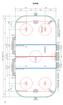 ICE RINK 1500 1500 800 700 700 800 Goal Judge Length = 5600 to 61 00 1/ 3 1/ 3 1/ 3 400 min. 1000 200 200 min. 1000 1000 150 400 1000 150 400 400 Player's Bench Team A Player's Bench Team B min. 150 min.
IIHF SPORT REGULATIONS
 IIHF SPORT REGULATIONS July 2007 IIHF SPORT REGULATIONS Preface The IIHF has produced and distributed the Sport Regulations to all IIHF member national associations to direct and guide the participating
Tab Ramos Sports Center ALL RULES ARE SUBJECT TO CHANGE
 Tab Ramos Sports Center ALL RULES ARE SUBJECT TO CHANGE Adult & High School 5 v 5 Youth Travel Recreational Soccer Tournament Tie Breakers ADULT & HIGH SCHOOL SOCCER RULES: ALL FIFA RULES APPLY EXCEPT
ACL Soccer 4 v 4 Small Sided Games (SSG s)
 KEY TO THE DIAGRAMS Introduction In recent years, the 4v4 method has rapidly increased in popularity however this method is certainly not a new one. The method was introduced by the Dutch Football Association
The Technical Committee of the Alberta Soccer Association wishes to thank
 The Technical Committee of the Alberta Soccer Association wishes to thank The St. Albert Soccer Association and Sherwood Park Soccer Association for their assistance with the development of the RULES for
Answers are either TRUE or False = A or B (on the answer sheet) Example: [ A ] [==] [ C ] [ D ]
![Answers are either TRUE or False = A or B (on the answer sheet) Example: [ A ] [==] [ C ] [ D ]](/thumbs/40/21170446.jpg "Answers are either TRUE or False = A or B (on the answer sheet) Example: [ A ] [==] [ C ] [ D ]") 2012 SCFOA Football Rules & Mechanics Examination Use a #2 pencil to COMPLETELY fill in the correct answer. To change your answer ERASE COMPETELY & CLEANLY and mark again. Make no extra marks on the answer
2012 SCFOA Football Rules & Mechanics Examination Use a #2 pencil to COMPLETELY fill in the correct answer. To change your answer ERASE COMPETELY & CLEANLY and mark again. Make no extra marks on the answer
Hockey IQ Quiz. player by answering a few multiple choice questions.
 Hockey IQ Quiz Ever wonder how your hockey sense or what I and others like to call hockey IQ compares to other hockey players? While size, strength, stickhandling and shot power are all skills that are
A Let Serve is allowed. It is when the serve touches the net and goes over the net.
 League Rules Please make sure that the scoresheet is correct and signed before you leave the court. I can only record score I see that are valid by both captains. Sitzmark Volleyball is COED sixes. Which
Player Information eligible to play on only one intramural soccer team per season. Illegal or Ineligible Penalty: Penalty: poor weather conditions
 Soccer Rules The following rules will govern play in Intramural Soccer. Rules not covered below are governed by FIFA (Federation International of Football Association) Rules. I. Player Information A. Player
I. PURPOSE a. The BAHA Adult Hockey Leagues are designed to promote an enjoyable recreational hockey experience. Since BAHA is a family based
 I. PURPOSE II. III. a. The BAHA Adult Hockey Leagues are designed to promote an enjoyable recreational hockey experience. Since BAHA is a family based organization and we are all adults, all hockey should
INTRODUCTION TO COACHING TEACHING SKILLS TEACHING/LEARNING. September 2007 Page 1
 TEACHING SKILLS September 2007 Page 1 TEACHING SKILLS Being a teacher is one of the main roles a coach fulfils for their players. The ability to teach effectively, especially the technical skills of ice
EAA In-House Basketball Rules. Grades 4-6
 Welcome to EAA Inhouse Basketball Parent, coach, and player conduct Player Code of Conduct Rules for all schools Referee Coordinator Referees Referee Timesheet Missing referee Misconduct Sportsmanship
Introduction. Below is a list of benefits for the 4v4 method
 KEY TO THE DIAGRAMS Introduction There are many debates on how best to coach the next generation of football players. This manual is putting forward the case for the 4v4 games method. In recent years,
Emerald Isle Parks & Recreation Adult Soccer Rules
 RULE I GENERAL RULES a. No profanity, regardless if you are playing in a game or not. Profanity will not be tolerated. You will get ONE WARNING then a YELLOW card and then a RED card. b. No fighting. Fighting
POLY HOCKEY. SOMI-Specific Information Sport season: September- November
 POLY HOCKEY Culminating State Event State Poly Hockey Events Offered Team Competition Individual Skills Contest Unified Team Competition SOMI-Specific Information Sport season: September- November Team
Advanced Volleyball Strategies
 Advanced Volleyball Strategies Training Module Presented By Jr. Calton Greater Toledo Area Volleyball Officials Association CURRENT YEAR CHANGES Signal Sequence change! R1 initiates call FIRST REFEREE
c. should request the tournament director mark the court so that servers will have 6 feet of space to serve 8 The substitution zone is the area: a.
 1 What should be done if a group of people in the stands are shaking bottles full of rocks while the opposing team is serving and during play? a. The administrator should be made aware of the situation
BEACH VOLLEYBALL LEAGUE Rules of the Game. Copyright 2015
 BEACH VOLLEYBALL LEAGUE Rules of the Game Copyright 2015 The rules governing sand volleyball are basically the same as those governing indoor volleyball with a few small yet significant differences. Listed
Age Groups Field Width Field Length Goal Size Adult All Ages Max. 80 yds. Max. 120 yds. 8ft. x24 ft.
 The following rule changes were passed at the 2016 Semi-AGM and become effective September 1, 2016: (Please note 3.14 and Tournament Rules changes are recommended 2016/2017; mandated 2017/2018) 3.14 NTSSA
Floor Hockey Rules and Regulations
 Floor Hockey Rules and Regulations Eligibility Below are the guidelines that participants must follow in order to be eligible to enroll or play in UREC intramurals. 1. Undergraduates/Graduate Students
NHSOA 2013 SOCCER EXAM
 NHSOA 2013 SOCCER EXAM 1. During their inspection of the field, the referees note that the portable goals are not secured, anchored or counterweighted. The home team s head coach says that this is the
Tiamo Festival Cup Tournament
 Tiamo Festival Cup Tournament General Information: July 16 to July 17 th, 2016 TOURNAMENT STRUCTURE AND RULES SHEET For Coaches/Officials/Convenors TOURNAMENT INFORMATION, RULES AND SPECTATOR CODE 1. Registration
The offensive team takes possession of the ball at its 5 yard line and has four
 RULES Scoring Touchdown: 6 Points PAT: 1 point from 3 yard line; 2 points from 10 yard line Team scoring a TD must declare 1 or 2 point decision immediately. The first declaration to the official will
www.llfhl.ca RULES AND REGULATIONS
 www.llfhl.ca RULES AND REGULATIONS Updated June 2015 Lower Lakes Female Hockey League Rules and Regulations Glossary Category means the OWHA competitive level within a Division, and includes AA, A, BB,
BROWARD COUNTY BASKETBALL OFFICIALS ASSOCIATION 3-MAN EVALUATION FORM
 BROWARD COUNTY BASKETBALL OFFICIALS ASSOCIATION 3-MAN EVALUATION FORM Official s Name: Evaluator: Competition Level: Date: GUIDELINES FOR EVALUATING OFFICIALS 5-Excellent 4-Above Average 3-Average 2-Follow
Law 14 The Penalty Kick
 Law 14 The Penalty Kick Topics 2 Cooperation Preparing for the Penalty Kick Infringements Kicks from the Penalty Mark Cooperation 3 Referee: manages prerequisites for the restart monitors infringements
Men s 7 on 7 Flag Football Rules
 Men s 7 on 7 Flag Football Rules THE CLOCK: Game Length: Games consist of two (2) twenty five (25)-minute halves with a running clock and two-minute warning at the end of the second half. Two-Minute Warning:
Clarington Recreational Hockey League
 Clarington Recreational Hockey League Coaches Handbook 2015-2016 CRHL Office 905-432-3001 WWW.Claringtonthunder.com WWW.Claringtonthunder.com DBOOK TENTS COACH S HANDBOOK TABLE OF CONTENTS COACH S HANDBOOK
COMPETITION RULES BY-LAWS AND RELATED PROCEDURES
 COMPETITION RULES BY-LAWS AND RELATED PROCEDURES VACT Competition By-Laws (2015) Page 1 of 14 Foreword Volleyball ACT Inc (VACT) conducts its competitions and matches according to FIVB Rules except as
4 on 4 Intramural Volleyball Rules
 4 on 4 Intramural Volleyball Rules COURT 1. NET HEIGHT: Men: 7'11", Women/Co-Rec: 7'4" 2. OUT AREA: The players have the right to play the ball in the out court. Where competition is being conducted on
Intramural Sports Policies, Rules and Regulations. Risk Statement
 Intramural Sports Policies, Rules and Regulations Individuals and teams participating in the intramural program of Texas Tech University imply their acceptance of the rules, regulations and interpretations
Bocce Ball Rules and Regulations of Play
 Bocce Ball Rules and Regulations of Play GAME TYPE: Ø Games are played to 16 points or a maximum of 1 hour. EQUIPMENT: Ø Players should wear the No Idea Sports Bocce Ball T-Shirts when playing. Ø The official
REFEREEING GUIDELINES
 MESSAGE FOR 2007 Once again it is my privilege to present the Beach Volleyball Refereeing Guidelines this time the 2007 edition. It is hoped that this document, which year after year is being updated in
Washington State Youth Soccer Association. Small-Sided Program Format Summary
 Washington State Youth Soccer Association Small-Sided Program Format Summary Field Size Goal Size Ball Size Field Players Roster Size Game Length Year of (w x l in yds) (max feet) (maximum) (maximum) Implementation
THE OFFICIAL RULES OF USA HOCKEY INLINE
 THE OFFICIAL RULES OF USA HOCKEY INLINE Typographer: Dana Ausec Illustrator: Mike Curti Front cover photo courtesy of USA Hockey InLine 2007 by USA Hockey InLine, a program of USA Hockey. All rights reserved.
RULES OF THE GAME FOR INTRAMURAL VOLLEYBALL Revised July 10, 2013
 RULES OF THE GAME FOR INTRAMURAL VOLLEYBALL Revised July 10, 2013 OFFICE OF INTRAMURAL SPORTS DEPARTMENT OF UNIVERSITY RECREATION DIVISION OF STUDENT AFFAIRS MISSISSIPPI STATE UNIVERSITY General Information
PLAYING RULES AND REGULATIONS
 PLAYING RULES AND REGULATIONS Football National Collegiate Athletic Association and UIL rules will be observed with the following modifications: The games for seventh and eighth grade will have eight-minute
The Laws of the Game Questions and Answers 2005
 The Laws of the Game Questions and Answers 2005 CONTENTS Questions and Answer 2005 Laws of the Game Law Answers Page 1 The Field of Play 1 7 4 2 The Ball 1 3 6 3 The Number of Players 1 29 7 4 The Players
The following rule changes where passed at the 2016 Semi-AGM and become effective September 1, 2016:
 The following rule changes where passed at the 2016 Semi-AGM and become effective September 1, 2016: 3.14 NTSSA RULES OF COMPETITION FIFA Laws of the Game as Modified (recommended 2016/2017; mandated 2017/2018)