
Calving and Handling Calving Difficulties
|
|
|
- Brittney Cooper
- 9 years ago
- Views:
Transcription
1 Calving and Handling Calving Difficulties R. G. Mortimer, MS, DVM Associate Professor Department of Clinical Sciences Colorado State University Fort Collins, Colorado Introduction The most common reason for calf losses in the beef cattle industry is still calving difficulty. Looking only at the effects of calving difficulty on the calf, we find the following four relationships well established in the literature. First, the more difficult the calving difficulty the greater risk for infectious disease. Typically, this is reflected by higher incidences and death loss associated with either diarrhea or respiratory disease. Second, the more difficult the calving difficulty, the harder it is for the calf to maintain it s body temperature following calving. This is illustrated in Graph 1: The third relationship with degree of calving difficulty is the decrease in absorption of protective antibodies with more difficult deliveries. The fourth relationship with calving difficulty that has been firmly established is the increased infertility losses in the dam. To these losses must be added the increased maternal deaths, treatment costs and diminished productivity of the dam. In a survey of the effects of dystocia on fertility in 1889 cows, Laster et al. (1973) found that cows which experienced calving difficulties had a delay in resuming estrus and showed 15.9% reduction in conception rate compared with cows which had calved normally. Commonly, producers and veterinarians alike, feel that successful dytocia management is achieved with a calf that is alive at birth. I would offer that the successful management of calving difficulty is achieved when we optimize calf survivability and dam reproductive performance. Thus, the goal of providing assistance is to minimize stress on the calf and dam. This article describes some useful guidelines and obstetrical techniques that can help you reduce the losses due to dystocia. Graph 1: Relationship between calving difficulty and body heat production of the calf The basics of normal calving The recognition of dystocia comes first from a basic understanding of normal calving. From this understanding, you can establish guidelines for frequency of observation of

2 cattle during calving and when to provide assistance during the delivery process. The rancher and/or his personnel must use good judgement in deciding when to intervene and when to call for professional help if calf losses are to be reduced. Calving is a complex process. Many mechanisms affect the process, but none completely control it. As the fetus matures and the uterus enlarges, the capacity of the placenta to respond to additional demands of the fetus may be surpassed. The placenta may begin to function less efficiently due to limiting morphologic changes, which occur during the latter part of pregnancy. These or other undefined stimuli cause a fetal stress reaction. In cattle, this results in an increased production of glucocorticoids such as cortisol and steroid precursors to estrogens from the fetal hypothalamopituitary adrenal systems. These steroids in turn enable the feto-placental unit to produce estrogens and prostaglandins. Endometrium layer in the uterus may also produce prostaglandins. Concurrently, production of progesterone is decreased, probably at least in part due to the luteolytic effect of the prostaglandins on the corpus luteum of the ovary. The estrogens and prostaglandins in turn stimulate maternal release of oxytocin, sensitize the uterus to the effects of oxytocin, and cause the cervix to dilate. The uterus is thus released from inhibition by progesterone and made sensitive to the stimulatory effects of prostaglandins and oxytocin, and to stimulation mediated through the autonomic nervous system. Uterine muscles, which have increased contractility in late pregnancy due to stretching, begin to contract regularly as the cervix dilates. When the cervix is dilated, fetal parts are forced into the birth canal. These produce point pressure in the vagina, further stimulating release of oxytocin and initiating the abdominal press. The process appears to have a cascade effect and is irreversible. The fetus must be delivered or death of either the fetus and/or the dam or both are likely to occur. Signs of labor From the practical viewpoint, the time sequences involved in calving are more important than the biological process. Prediction of time of calving would be of value under certain conditions, but it is difficult to predict time precisely on the basis of clinical signs. Criteria that have been used in attempts to identify the onset of labor in cattle include changes in body temperature, respiration and heart rates, "springing" or relaxation and enlargement of the vulva, udder changes including enlargement, tenseness and filling of the teats, changes in quantity and viscosity of vaginal secretions, relaxation of the sacro-sciatic ligaments, and dilation of the cervix. Two criteria, relaxation of the sacro-sciatic ligaments and cervical dilation, are more reliable, but difficult to apply on a practical basis for beef operators. Relaxation of the sacro-sciatic ligaments can be palpated best by inserting one hand into the rectum and placing the other on the caudal border of the ligament from the outside. Displacement of the ligament can be estimated when pressure is placed against it from the inside. Several days before term, the ligament can be displaced up to 2.5 cm (1 inch). This relaxation should not be confused with the progressive relaxation that occurs just before calving, allowing displacement of the ligaments 5 cm (2 inches) or more. Successive palpation will help define this stage, which indicates that calving will usually occur within 24 hours. Dilation of the cervix begins shortly before calving. It is usually closed prior to calving; although up to four fingers can be inserted part way in some cows. Normal dilation preceding calving can be identified by a progressive, conical dilation of the cervical

3 canal with the apex of the cone toward the internal Os. When uterine contractions begin, mechanical forces are applied to the internal Os and enlargement of the cervical canal proceeds throughout its length. Once cervical dilation is initiated, calving usually occurs within 24 hours, sometimes in as little as 6 hours in mature cows. Cervical dilation is very rapid in most cows after it has opened enough to allow passage of the hand. Normal calving is a continuous process, but is often divided into three stages for the purposes of description. These stages are arbitrary but fairly well defined. They usually follow one another in the sequence given, but sometimes, when dystocia is present, fetal membranes are expelled or at least freed from their maternal attachments before a dead fetus is delivered. Dystocia occurs when any stage is slow developing or fails to progress normally. Stage 1 Visible signs of labor may be scant or absent in mature cows, but more evident in the firstcalf heifers. The pastured cow will usually seek an isolated place and vaginal discharges increase in liquefaction and expulsion of the cervical plug. The cow (particularly first-calf heifers) will show signs of uneasiness and pain. Occasionally she will kick at her belly and wring her tail. Restlessness and a tendency to lie down and get up frequently are also often observed. Stage 1 begins with contraction of the longitudinal and circular muscle fibers of the uterus and ends when the cervix is fully dilated and fetal parts enter the birth canal. Uterine contractions first occur about every 15 minutes, but by the end of stage 1, they occur about every 3 minutes. As the first stage progresses, the contractions become strong enough to cause the cow to arch her back and strain slightly. In cattle, the normal duration of stage 1 is 2-6 hours, sometimes longer in heifers. What is happening inside the cow's uterus at this stage? Each time the uterus contracts, the cow feels a slight, sharp pain which produces her uneasiness. With each uterine contraction you have to realize that some separation of the normal strong attachment of the placenta to the cow's uterus is being weakened. Thus, the supply of oxygen may be decreasing with each uterine contraction. With each uterine contraction the cervix is also progressively dilating. Normally, the first water sac (chorioallantoic sac) is forced into the dilating cervix and breaks during stage 1 and the rancher may observe that the water has broken. Certain abnormal deliveries are characterized by a failure of the heifer or cow to progress into stage 2 and the calf may be dead before the decision for intervention is made. Thus, if you really suspect a heifer or cow has been in stage 1 too long and not progressed into Stage 2, intervention is recommended. Stage 2 Second stage labor begins when the cervix is fully dilated and the second water sac (amniotic sac), plus fetal parts enter the birth canal further stimulating stronger uterine contractions. The unbroken water sac is often forced through the vulva after the cow has been in labor a short time. For the producer, the observation of the water sac is probably the most practical indication the animal is in stage 2 labor. When point pressure is applied to the birth canal by fetal parts, the abdominal press accompanies its uterine contractions. The pains of uterine contraction at this point usually force most cows to lie down. The abdominal press is exerted more frequently as labor progresses until it occurs up to 1-3 times per minute. At this point it is appropriate to introduce the terms of presentation, position, and posture of the fetus during a delivery.

4 Presentation refers to whether the calf is coming frontward, backward, or transverse. Position refers to whether the calf is right side up or upside-down with only right side up being considered normal. Posture refers to the relationship of the calf's legs and head to its own body. The most frequent calf delivery is a frontward presentation, right side up position, and a normal posture of both front legs and head extended into the birth canal. Sometimes a backward presentation may occur and may be deliverable if we have right side up position and the posturing being with both hind limbs in the birth canal. Nevertheless, a backward presentation should be considered a high-risk delivery a grounds for intervention. All other presentations are considered abnormal. During delivery, a series of frequent abdominal presses followed by a short period of rest is characteristic. The greatest frequency and force is achieved when the fetal head is being forced through the birth canal and vulva. Following delivery of the head, a short period of rest may occur. Strong expulsive efforts are required again to force the shoulders and chest of the calf through the birth canal. Sometimes the cow will stop straining for a short time following delivery of the chest, allowing the rear legs to rest in the birth canal. At this point, usually the umbilical cord may be compressed shutting off the oxygen supply to the calf from the dam. It is not unusual to observe the calf establishing its own breathing at this point. Occasionally at this point, the sac is still over the head of the calf, and the calf could suffocate if the sac is not broken. Delivery of the hips and legs is usually uneventful; occurring soon after the chest passes through the vulva. Second stage labor lasts from.5 to 4 hours in the cow, but intervention guidelines suggest assistance at not over 2 hours, and earlier if it is not progressing normally. Stage 3 The placenta or fetal membrane is usually expelled within 8-12 hours after delivery of the calf. Recognizing deliveries that may need assistance At the time of calving all preventive procedures have been exhausted and the producer is left with human judgement as the biggest single factor in successful deliveries. Four managerial decisions that dramatically effect the outcome are: Frequency of observation When to intervene Can the calf be delivered by forced extraction, and When to call for professional assistance After a thorough understanding of the stages of labor involved in a normal delivery, it is possible to establish a recommended frequency of observation of cows and heifers during the calving season or period. It is recommended that frequency of observation be a minimum of three hours apart. This recommendation may need to be modified to fit within the economic restraints of the individual ranch operation, but should be weighed heavily in favor of calf survivability. Large cow/calf operations usually can provide almost full-time observation of their heifers, but may fall short of adequate in mature cows. Smaller operations may find it more difficult to have the level of observation that would be optimal. Nevertheless, efforts need to be made to come as close as possible to these guidelines if losses are to be decreased.

5 The decision to intervene should be made based on sound judgement. An understanding of the rational behind these guidelines is essential for all personnel who may be involved in the calving crew. Recommended guidelines based on stage of labor are: Stage 1 If you suspect the cow has been in stage 1 of labor for over 8 hours, intervention is indicated. Some abnormal deliveries do not allow the cow to progress into a normal stage 2 of labor. In other cases, the cow may be in a state of uterine inertia and will not go into stage 2 of labor. Stage 2 Intervention is indicated if any of the following conditions of stage 2 exists: If the water sac is visible for 2 hours and the cow is not trying. If the cow has been trying for over 30 minutes and making no progress. If the cow has quit trying for over a minute period of time after a period of progress. Breaks normally should not exceed 5 to 10 minutes unless fatigue or uterine inertia is involved. If the cow or calf is showing signs of excessive fatigue and stress--like swollen tongue of the calf or severe bleeding from the rectum of the cow. If from an observational standpoint you determine that you have an abnormal delivery from the presentation, position, and posture standpoint. Stage 3 If the cow has not passed fetal membranes within 12 hours of calving, intervention may be necessary. If they are retained, treatment may be indicated. In no instances, however, is manual removal of the fetal membranes advocated, as this is detrimental to subsequent reproductive performance. These specific guidelines for intervention in protracted labor will be adequate in most instances. However, the stockman should realize that interruption of normal progress of labor at any stage or time is sufficient justification for intervention. Early intervention appears to be of the greatest benefit for calf survivability and reproductive performance of the heifer or cow. Early intervention is defined as 30 minutes after presentation of the water sac with feet outside the vulva. Late intervention was 1 hour. This is particularly significant when a recent survey of national cattle producers revealed that they would not intervene in Stage 2 of labor until 3 hours had elapsed (Beef 97; NAHMS) Table 1: Effect of intervention time on calf survivability and cow reproductive performance Intervention time Early Late Calf vigor CD Score Postpartum Inter st Service CR % % Heat begin Breed. Season % Pregnant Bellows, RJ Physical facilities and equipment for handling dystocia The design of the physical facilities should allow easy entry of animals and minimize the

6 stress of handling and restraint during assistance. Preference on most operations, unless on very small herd size, is to have a separate delivery and post-delivery areas. This is advocated from both the physical handling of the delivery and the potential for build-up of disease producing organisms. For the calf, dam, and attendant providing assistance, protection from the elements is the most desirable. Being dry and warm will go a long way in encouraging the use of proper techniques in dystocia management. The delivery area should have a straightsided head catch with side gates that are hinged on each side of the head catch to swing freely to either side with sufficient room to the sides and rear to allow assistance with the needed personnel or fetal extractor. This allows the cow to go down and still breathe comfortably. These may be less traumatic to the fetus, but must be sanitized very carefully between deliveries. Fetal extractors are an essential component of the calving shed, but are a dangerous item of equipment if misused. How to examine the cow Keeping in mind: Obstetrics is a branch of surgery and therefore cleanliness, asepsis, and gentleness are of prime importance. Whereas the treatment must be humaneand should be carried out with adequate available help to realize the best outcome. Obstetric cases should always be regarded with urgency but the actual intervention requires patience, bearing in mind the normal duration of the different stages of labor. First, take time to scrub the hands and arms thoroughly with soap, warm water and antiseptic. Now wash the vulva and anal area plus an area lateral to both. Use of plastic palpation sleeves is recommended in most instances in the examination process-- especially in geographical areas with herds who have a Brucellosis problem. Figure 1: Suggested delivery restraint facility Handling dystocia in squeeze chutes is to be avoided. A cement floor is recommended for cleaning purposes with access to both hot and cold water preferred. This may seem like a luxury, but may make the difference in optimizing calf survival from the standpoint of accurate decision making during the delivery. Obstetrical chains are preferred to rope when traction is required because they are more easily sanitized. Also, handles are available which attach anywhere along the chains and make traction easier to apply. Nylon web obstetrical straps are available. Insert your hand slowly into the vagina, and don't rupture the water-sac unless the cervix is fully dilated. Use lubrication as necessary and determine the presentation, position, and posture of the calf. If the calf's presentation, position or posture is not normal, you may want to seek help particularly if you encounter a delivery you have not seen before. Then, the presentation, position, and posture of the fetus should be assessed and a determination made as to whether it can be handled within the capabilities of the assistant. Luckily, the handling of most dystocia problems is within the capabilities of the stockman. If assistance is to be provided,

7 it is essential that the assistant have a thorough understanding of the amount of traction, direction of pull, and limitations of assistance in the delivery process. If not, more qualified help should be sought immediately. The methods presented in the following paragraphs are for the Utrecht method of handling dystocia. Before attempting assistance it is best to determine if the calf is alive or dead and the relative strength of the calf before attempting correction and manipulations. The reflexes used for determining viability are: Withdrawal reflex- Pinching between the digits of the hoof, and the calf withdraws its limb in response. Suckle reflex- Placing hand in mouth you can feel mouth close or tongue move. Poke in eye- Calf usually responds by withdrawing head. Check for heartbeat- For a frontward calf, run hand down along side of the chest and feel for the heart beat, or in a backwards calf feel for pulsation in the umbilical cord. Rectal reflex- In backward calf, sticking finger in rectum should elicit contraction on the finger in a good strong calf. These reflexes themselves are helpful in determining if the calf is strong enough to withstand correction and/or delivery by forced extraction. They are generally unnecessary to apply if you have observed good observation times and intervene according to the given rules. The second point to be made relative to providing assistance in correction is to understand that the uterus has contracted down around the calf from all directions. This has decreased the amount of room within the uterus for corrective purposes. It is generally advantageous to apply lubrication liberally within the uterus of the cow before correction is started. In some instances, the use of 4 to 5 gallons of warm water with lubricant in it will also help distend the uterus to give you the extra room needed for correction. Lastly, the following guidelines are recommended to call for professional help to maximize the opportunity for a live calf. Professional assistance needs to be defined as someone who knows more about handling the problem than you do. The different level of experience among individuals will dictate what problems you are requiring assistance in. Regardless of the experience level, if these rules are followed the survivability opportunities of the calf and dam are increased. The suggested guidelines are: Don't know what problem they are dealing with! Know the problem and the solution, but know they are unable to handle the problem! Know the problem and the solution; have tried and simply made no progress in a 30-minute period! Further delays will simply put the calf in jeopardy. Causes of dystocia The most common cause of dystocia is a relatively oversized frontward-presented calf for the size of the birth canal. This calf is also in the normal position (right side up) and posture (both front legs and head presented in birth canal). This accounts for 90% or more of the assisted births at the producer level. Another 5% of dystocia are due to abnormal presentation, position, and posturing of the calf. The remaining 5% of dystocia is due to the cow herself and not the calf. This is in most instances uterine inertia due to fatigue, disease, or metabolic problems. Failure to follow recommended guidelines would result in more dystocia due to uterine inertia than would be expected.

8 Figure 2: Sequence of delivery by forced extraction of calf in frontward presentation with normal position and posturing Oversize calf The clinical diagnosis "oversize calf" includes "relative oversize" in which the calf is of normal dimension but the maternal pelvis is too small, "absolute oversize" in which the maternal pelvis is normal but the calf is abnormally large. In cases of oversize it may not be always be obvious to the obstetrician whether the calf is too large or the pelvis too small, but the technique of delivery is the same irrespective of the source of the trouble. Delivery of the frontward calf by forced extraction The question for the producer is whether the calf is deliverable by forced extraction or not. After examination and a determination that the calf is in the correct position and posture, chains or straps should be placed on both forelimbs. They may be placed either above the fetlock joint or bellow or above the hoof of the calf or a combination of the two. In most instances, it is recommended to place the chains above the fetlock and take a half hitch below the fetlock joint as well. In placing above the fetlock, please insure you are where the bone is decreasing in size on the leg so you are above the growth plate of the bone. Traction should only be applied when the cow is assisting with an abdominal press. You are now at a point to determine if delivery by forced extraction is possible. (Figures 2 & 3) This test for delivery is valid only if certain criteria are followed relative to position of cow, type and amount of traction, and direction of pull. Traction should only be applied when the cow is assisting with an abdominal press. In the frontward presentation with normal position and posture of the fetus, this guideline is whether both shoulders of the calf can pass through the pelvis of the cow using recommended traction techniques. To actually determine this, the cow should be down, on her right side, and traction should be applied to one leg at a time (unilateral traction) to walk the shoulders through the pelvis of the cow. Positioning of the cow on her right side allows the frontward calf to enter the pelvis of the cow relatively straight. In a difficult delivery, this is important. Type and amount of traction should be no more than the force of one person per leg and the direction of pull should be straight out. Research in England has demonstrated that direction of pull straight out reduces the amount of force need by about 30%. This is

9 Figure 3: Illustration of relationship between pelvic opening shape of the cow and cross-section of the hips of a calf during delivery process very advantageous in reducing stress to the calf. It is preferable to start with the down leg (left) of the calf. This usually comes through easily, so the actual test for delivery is if you can get the second shoulder past the cow's pelvis. You should be able to feel the shoulder move past the pelvis as you are applying traction. However, a suggested rule to determine if the shoulder of the calf is past the pelvis of the cow is if the calf fetlock joint is one hand's breadth or about 10 cm outside the vulva of the cow. Once the first shoulder is through the pelvis of the cow, it should be held in place and traction applied to the other leg. The amount of traction should be limited to the force of one man per leg. Two strong men can exert a force of from pounds while erroneous use of a fetal extractor could exceed 2000 pounds of pressure. Thus, good clinical judgement in the application of traction is important and necessary. Our goal is to deliver a live calf with the maximal opportunity for survival. Exceeding this rule may result in the delivery of the calf, but will markedly increase the chances for the loss of the calf during delivery or subsequently to disease, cold, or starvation. Once the shoulders of the calf are through the pelvis of the cow, delivery by forced extraction is possible. If not, call for professional assistance, as a C-section is recommended if you want a live calf. Bilateral traction can be exerted at this point to further pull the calf before the pelvis of the calf enters the pelvis of the cow. As in the normal delivery, this is when the umbilical cord is compressed and the cow usually takes a break for a short period of time. This is a point when the calf should be allowed to breathe on its own or oxygen can be administered. It is also a point with the oversized fetus where rotation of the calf should occur. This rotation is necessary to bring the widest part of the calf pelvis through the widest diameter of the cow s pelvis. Once breathing has been established, completion of delivery is possible in most instances. Occasionally, calves are lost because of failure to allow the calf to breathe. Constant pulling on the calf at this point will not allow the calf to expand its chest and take in any oxygen and it is possible to lose the calf if breathing is not allowed. Delivery of the backward calf by forced extraction The test for delivery of a calf in the backwards presentation but normal position and posture differ in that the fetus should be first rotated degrees by crossing the legs before attempting delivery to take

10 Figure 4: Sequence of delivery of calf in backward with normal position and posturing advantage of the widest diameter of the cow's pelvis. In addition, the direction of pull on the calf is in a direction that is slightly up from a line straight out from the back of the cow. (See Figures 3 & 4) Bilateral traction can be applied in the amount of two men and should be applied bilaterally (both legs at the same time). The test for delivery is if both hips of the calf can pass through the pelvis of the cow. This is determined in most instances by the extension of the hocks of the calf beyond the vulva. If this is easily accomplished, possible delivery can be made. However, now we have very little time left to accomplish rotation of the fetus to a right side up position for the chest of the calf to come through the pelvis of the cow and deliver the calf. We have probably no more than 2-3 minutes to complete the delivery. If the test fails in either case, call for professional assistance as surgical delivery is probably indicated. There is a common misunderstanding, that calves need to be pulled out very rapidly, otherwise they will die. One must remember that the calf's life will not be compromised until its umbilical cord becomes trapped against the maternal pelvis. In practical terms, therefore, traction should be slow and controlled until such time as the calf's tail head and anus begin to emerge from the cow's vulva. Once this point is reached, delay should be avoided. Common abnormal presentations, positions and postures Abnormal presentations, positions, and postures are best corrected while the cow is in the standing position. Once corrected, the tests for delivery can be applied as previously described. Try to carry out all these operations when the cow is not straining vigorously. Elbow lock posture If one or both of the forelimbs are not extended as they come into the pelvic inlet, Figure 5: Calf in elbow lock posturing the partly flexed elbows may lock on the brim of the pelvis and cause elbow lock. This is an easily corrected problem requiring repulsion of the body of the calf while simultaneous traction is exerted on the affected limb.(figure 5)

11 Deviation of the head If the head cannot be felt, do not assume that the calf is coming backward. The two front legs may be presented and the head deviated to the side or down between the front. Before pulling on the limbs, distinguish between forelimbs and hind limbs as described earlier. If the head is bent back into the right flank of the cow it will be easier to correct if the left hand is used and vice versa. By grasping the muzzle or by placing the thumb and middle finger in the eye sockets, the head can be raised and directed into the pelvis (Figures 6, 7, & 8). A loop of if the body of the calf is at the same time repelled further back into the uterus. This can be done by placing the hand between Figure 7: Correction of deviated head by swinging head into correct posture before extraction is attempted Figure 6: Correction of deviated head by grasping the muzzle or nose of calf soft rope or chain placed in the mouth and looped up around the poll of the head behind the ears will sometimes be helpful. The honda of the rope may be placed next to the mouth and the rope placed above the tongue of the calf. In some instances, looping the rope around the lower jaw may be used instead. However, it is easy to use excess traction and fracture the lower jaw, so this should be avoided unless absolutely necessary. In all these cases, the head can be brought up and straightened more easily the front legs and pushing back the chest while the head is being pulled into the pelvis at the same time. In some instances, it is necessary to create even more room to correct the head. This may require one of the front legs to be pushed back into the uterus to create a retained front leg that is flexed at the shoulder. In the case where the head is between the front legs this needs to be done first. This would allow you to manipulate the head into first a lateral deviation and then correct as previously described. It should be pointed out clinically that many of the calves with the head deviated between the front legs are dead or weak before you even start. In addition, many of the calves with a deviated head will still fail the test for delivery for using forced extraction once they are corrected.

12 Figure 8: Alternative use of gripping the orbits of the eye in correcting a head deviation generally slip a hand down the limb and grasp the hoof. It is necessary to cup the hoof such that you are providing protection for the uterus of the cow as you continue in the correction process. (Figures 9 & 10) Therefore, good judgement needs to be used before putting excess stress on the calf during assistance. Retention of one or both forelimbs The calf may have the head out, but one or both forelegs retained. Secure the head by placing a chain behind the poll and through Figure 10: Step 2 of correction. Simultaneous movement of hoof toward midline of calf and knee laterally before pulling leg into extended posture Figure 9: Correction of retained forelimb step 1. Slipping hand down below elbow to convert leg to flexed knee or carpus the mouth, then lubricate the head and push it back into the uterus. Then search for the limbs one at a time. If fully retained, the limb should be grasped just below the knee (carpus) and the limb be pulled until bent at the knee. Once this is accomplished you can To correct, now opposing forces need to be applied simultaneously. The knee should be repelled by one hand in a forward-upwardlateral direction and traction on the hoof in a medial-backward direction by the other hand. These directions are relative to the cow. It may be necessary to use a small rope or chain and place around the leg above the fetlock and between the digits of the hoof if getting both arms in the cow is a problem. If the other leg is retained, it is corrected in a similar fashion.

13 Retained hindlimb or Backward presentation, breech posture In some instances, the calf has to be repelled back into the uterus before correction can be made. Occasionally, it is difficult to get both hands into the cow for correction. In these instances, the use of a toilet plunger a repulsion device against the rump of the calf has worked effectively. (Figures 11,12, & 13) Figure 11: Retained hindlimb in flexed hock posture The correction of this abnormal posture is the same as the retained forelimb. First, you find the hock and pull it until it is in the flexed position. Then, you slip your one hand down to cup the hoof. The hock should be Figure 13: Correction of flexed hock by medial-posterior movement of hoof while lateral-forward repulsion of the hock Transverse presentation Figure 12: Step 1 in correction of retained hind limb. Sliding hand down leg to level of hock then converting limb to flexed hock Occasionally, calves lie with their back against the pelvic opening or with all four limbs extended into the birth canal. Determine the hind from the forelimbs and if possible, deliver hind limbs first so you don't have to worry about the head. Since the calf is on its side, it's easier to rotate the calf's body by the hind legs than the forelegs. This requires repulsion of the forelimbs of the calf and usually the trunk of the calf as well. In most instances, this is a difficult correction to make. (Figure 14) repelled by one hand in a forward-upwardlateral direction and traction on the hoof in a medial-backward direction by the other hand.

14 with a live calf and want to optimize calf survivability. In those cases where the calf is already dead, fetotomy is the method of choice due to optimal cow survivability. Remember, C-section is the most invasive of the two procedures. Figure 14: Calf in transverse presentation Twins If twins enter the vagina one at a time, there is generally no problem due to a smaller size. However, occasionally twins are presented together and block the birth canal. In most of these cases, one comes frontward and the other backward. Extract the closest twin first. If in doubt, first extract the twin presenting hind legs, after first repelling the other twin back into the uterus. (Figure 15) The reasons for surgery include the most causes of dystocia but analysis of published cases shows that the following five major indications account cumulatively for 90% of all C-section or fetotomy procedures: Fetal oversize Incomplete dilation of cervix Irreducible uterine torsion Fetal deformity or monsters Uncorrectable abnormal presentation, position or posture of fetus. It has been my observation that the success of the surgical procedure has been more due to the timely decisionmaking of the producer than to the surgical skills of the veterinarian. Therefore, I recommend you make the decision in a timely fashion for greatest survivability of the calf and the cow. Questions about the above procedures may be directed to the author at the aforementioned address or via FAX at (970) or [email protected] Figure 15: Twins with one each of frontward and backward presentation Good luck with your calving problems! C-section and fetotomy Cesarean section is now a routine obstetric procedure in cattle practice. It is the method of choice when you are dealing

What to expect when your mare is expecting - A Normal Foaling. By Ernie Martinez II, DVM
 What to expect when your mare is expecting - A Normal Foaling. By Ernie Martinez II, DVM The birth of a newborn foal is a very amazing experience to watch and to be a part of. As the pregnant mare approaches
A proper warm-up is important before any athletic performance with the goal of preparing the athlete both mentally and physically for exercise and
 A proper warm-up is important before any athletic performance with the goal of preparing the athlete both mentally and physically for exercise and competition. A warm-up is designed to prepare an athlete
General Guidelines. Neck Stretch: Side. Neck Stretch: Forward. Shoulder Rolls. Side Stretch
 Stretching Exercises General Guidelines Perform stretching exercises at least 2 3 days per week and preferably more Hold each stretch for 15 20 seconds Relax and breathe normally Stretching is most effective
Labor is work, and it is hard work. Labor is an end to pregnancy and a beginning for a new human life in a newly shaped family."
 LABOR AND DELIVERY "The way we give birth to our young is that the muscular organ (the uterus) in which the offspring has been nurtured for nine months begins to contract. The contractions work to open
Stretching in the Office
 Stretching in the Office Legs: Quads, Hamstrings, IT band, Hip flexors, Gluts, Calves Quads: Standing @ desk maintaining upright posture, grab one leg @ a time by foot or ankle and bring it towards backside
ANS 3319C Reproductive Physiology and Endocrinology Pregnancy Diagnosis via Rectal Palpation in Cattle and Horses
 ANS 3319C Reproductive Physiology and Endocrinology Pregnancy Diagnosis via Rectal Palpation in Cattle and Horses Objectives 1) To introduce the management practice of rectal palpation for pregnancy diagnosis
Range of Motion Exercises
 Range of Motion Exercises Range of motion (ROM) exercises are done to preserve flexibility and mobility of the joints on which they are performed. These exercises reduce stiffness and will prevent or at
Examination of the Fresh Cows
 I. Introduction Examination of the Fresh Cows Sheila McGuirk, DVM, PhD School of Veterinary Medicine University of WI-Madison The purpose of this outline is to review a process for examination of fresh
Knee Conditioning Program. Purpose of Program
 Prepared for: Prepared by: OrthoInfo Purpose of Program After an injury or surgery, an exercise conditioning program will help you return to daily activities and enjoy a more active, healthy lifestyle.
Obstetrical Emergencies
 Date: July 18, 2014 Page 1 of 5 Obstetrical Emergencies Purpose: To provide the process for the assessment and management of the patient with an obstetrical related emergency. Pre-Medical Control 1. Follow
Human Growth and Reproduction
 Human Growth and Reproduction Sperm reach ovum and cluster around it Only one sperm is allowed to penetrate egg When the sperm penetrates the egg, the egg immediately releases a chemical creating a hard
Kriya for Negative Mind
 Kriya for Negative Mind Bron: The Ten Light Bodies of Conciousness van Nirvair Singh Khalsa So So So So Hung Hung Hung Hung 3 MINUTES. Let s start with this pranayam. It s going to be a 4:4 breathing pattern.
COW/CALF MANAGEMENT Minimizing Calving Difficulty in Beef Cattle
 Beef Cattle COW/CALF MANAGEMENT Minimizing Calving Difficulty in Beef Cattle Pete Anderson Extension Beef Cattle Specialist Calving difficulty (dystocia) contributes heavily to losses in production in
Exercise 1: Knee to Chest. Exercise 2: Pelvic Tilt. Exercise 3: Hip Rolling. Starting Position: Lie on your back on a table or firm surface.
 Exercise 1: Knee to Chest Starting Position: Lie on your back on a table or firm surface. Action: Clasp your hands behind the thigh and pull it towards your chest. Keep the opposite leg flat on the surface
Spinal Exercise Program/Core Stabilization Program Adapted from The Spine in Sports: Robert G. Watkins
 Spinal Exercise Program/Core Stabilization Program Adapted from The Spine in Sports: Robert G. Watkins Below is a description of a Core Stability Program, designed to improve the strength and coordination
Artificial Insemination Technique. Dairy Integrated Reproductive Management. Dr. M.L. O Connor The Pennsylvania State University. Reproductive Anatomy
 Artificial Insemination Technique IRM-12 Dairy Integrated Reproductive Management Dr. M.L. O Connor The Pennsylvania State University Many dairy producers are artificially breeding their own cattle. A
Care at its Best! Foam Roller Exercise Program
 Foam Roller Exercise Program Foam rollers are a popular new addition the gym, physical therapy clinics or homes. Foam rollers are made of lightweight polyethyline foam. Cylindrical in shape, foam rollers
COMMON OVERUSE INJURIES ATTRIBUTED TO CYCLING, AND WAYS TO MINIMIZE THESE INJURIES
 COMMON OVERUSE INJURIES ATTRIBUTED TO CYCLING, AND WAYS TO MINIMIZE THESE INJURIES Listed are a few of the most common overuse injuries associated with cycling long distances. 1. Cervical and upper back
A Stretch-Break Program for Your Workplace! www.healthyworkplaceweek.ca
 www.healthyworkplaceweek.ca A Stretch-Break Program for Your Workplace! Why is stretching at work important? Sitting at a desk or computer; or standing at your work station for extended periods of time
Table of Contents. Summary of Tupler Technique Program... 2. How the Program Works... 3. Checking for Diastasis... 4. Splinting Tips...
 Tips Table of Contents Summary of Tupler Technique Program... 2 How the Program Works... 3 Checking for Diastasis... 4 Splinting Tips... 5-6 Exercise Tips... 7-8 Other Tips... 9 Ongoing Support with the
Passive Range of Motion Exercises
 Exercise and ALS The physical or occupational therapist will make recommendations for exercise based upon each patient s specific needs and abilities. Strengthening exercises are not generally recommended
What is Separation of the Abdominal Muscles after Childbirth (also known as Divarication of Rectus Abdominis)?
 What is Separation of the Abdominal Muscles after Childbirth (also known as Divarication of Rectus Abdominis)? Following your pregnancy and the birth of your baby your abdominal (tummy) muscles may have
Manual Handling- The Whole Story!
 Manual Handling- The Whole Story! For Responsible Managers and Assessors Course Notes Mark Mallen Group Health and Safety Manager July 2005 Course Content 1 What is Manual Handling? 2 What s the Problem?
Physical Agility Test Preparation and Safety
 Physical Agility Test Preparation and Safety TT DD CC JJ J How to Prepare for the PAT Prior to taking the Physical Agility Test, applicants should seek medical advice from their physician. The day of the
Fact sheet Exercises for older adults undergoing rehabilitation
 Fact sheet Exercises for older adults undergoing rehabilitation Flexibility refers to the amount of movement possible around a joint and is necessary for normal activities of daily living such as stretching,
Basic Stretch Programme 3. Exercise Circuit 4
 Basic Stretch Programme 3 Exercise Circuit 4 2 1 Calves Stand approximately 1 metre away from wall with legs straight and heels on floor. Step and lean forward and slowly push hips towards wall. Should
How To Stretch Your Body
 Exercise Module A New Leaf Choices for Healthy Living University of North Carolina at Chapel Hill 2007 Center for Health Promotion and Disease Prevention Physical Activity Exercises for Keeping Active
How To Improve Drainage
 Rehabilitation Home Program Edema Exercises To Improve Drainage You will improve your lymph flow by doing a few exercises each day. These exercises are an important part of your home program. They may
he American Physical Therapy Association would like to share a secret with you. It can help you do more with less effort breathe easier feel great.
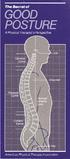 The Secret... T he American Physical Therapy Association would like to share a secret with you. It can help you do more with less effort breathe easier feel great. The secret is about good posture, which
BEACH VOLLEYBALL TRAINING PROGRAM
 2008 ELITE PERFORMANCE ATHLETE CONDITIONING BEACH VOLLEYBALL TRAINING PROGRAM Team BC 2008 Steve Van Schubert, CAT(C), CSCS Training Schedule General Outline Phase 1 2 Weeks Phase 2 3 Weeks Phase 3 3 Weeks
Range of Motion. A guide for you after spinal cord injury. Spinal Cord Injury Rehabilitation Program
 Range of Motion A guide for you after spinal cord injury Spinal Cord Injury Rehabilitation Program This booklet has been written by the health care providers who provide care to people who have a spinal
Always warm up before commencing any exercise. Wear the correct clothing and footwear; do not train if you are unwell or injured.
 SUGGESTED FITNESS PROGRAMME General Exercise Guidance Good exercise training advice is highly specific to the individual. It should be understood, therefore, that the advice provided here can only be general.
stretches and exercises
 stretches and exercises The enclosed sheets contain stretches and exercises which can be used to delay and minimise the development of contractures and deformities occurring in children with Duchenne muscular
Low Back Pain: Exercises
 Low Back Pain: Exercises Your Kaiser Permanente Care Instructions Here are some examples of typical rehabilitation exercises for your condition. Start each exercise slowly. Ease off the exercise if you
Accent on Health Obgyn, PC HERPES Frequently Asked Questions
 1. What is herpes? 2. How common is herpes? 3. Is there a cure for herpes? 4. What is oral herpes (cold sores)? 5. How is oral herpes spread? 6. What is genital herpes? 7. How is genital herpes spread?
LEVEL I SKATING TECHNICAL. September 2007 Page 1
 SKATING September 2007 Page 1 SKATING SKILLS The game of Ice Hockey is a fast-paced, complex, team sport, which demands quick thinking, fast reactions and special athletic skills. Skating is the most important
McMaster Spikeyball Therapy Drills
 BODY BLOCKS In sequencing Breathing and Tempo Flexibility / Mobility and Proprioception (feel) Upper body segment Middle body segment Lower body segment Extension / Static Posture Office / Computer Travel
HELPFUL HINTS FOR A HEALTHY BACK
 HELPFUL HINTS FOR A HEALTHY BACK 1. Standing and Walking For correct posture, balance your head above your shoulders, eyes straight ahead, everything else falls into place. Try to point toes straight ahead
Lameness in Cattle: Rules of Thumb David C. Van Metre, DVM, DACVIM College of Veterinary Medicine and Biomedical Sciences Colorado State University
 Lameness in Cattle: Rules of Thumb David C. Van Metre, DVM, DACVIM College of Veterinary Medicine and Biomedical Sciences Colorado State University Introduction Lameness remains a major cause of disease
Artificial Insemination in Cattle
 Artificial Insemination in Cattle Introduction This slide show is designed to introduce students to artificial insemination in cattle. However, it is only a brief overview and further training is necessary
Aquatic Exercises: Upper Body Strengthening
 Aquatic Exercises: Upper Body Strengthening These exercises will strengthen your muscles in your arms, shoulders, chest and neck. Exercising in water allows you to have less stress on your joints. When
Vaccination Programs for the Cow/Calf Operation
 Vaccination Programs for the Cow/Calf Operation Disease prevention is of utmost importance in a cow-calf operation because it is a low profit margin enterprise. Adequate nutrition, strategic deworming,
What Every Pregnant Woman Needs to Know About Cesarean Section. Be informed. Know your rights. Protect yourself. Protect your baby.
 Be informed. Know your rights. Protect yourself. Protect your baby. What Every Pregnant Woman Needs to Know About Cesarean Section 2012 Childbirth Connection If you re expecting a baby, there s a good
INSTRUCTIONAL MATERIALS: REFERENCES: a. PAEC School Safety Manual b. Any locally produced Back Injury pamphlet TRAINING AIDS:
 LESSON TOPIC: AVERAGE TIME: BACK INJURY PREVENTION 30 Minutes INSTRUCTIONAL MATERIALS: REFERENCES: a. PAEC School Safety Manual b. Any locally produced Back Injury pamphlet TRAINING AIDS: a. Handout #1
EGOSCUE CLINIC PAIN/POSTURE STRETCHES 1. Standing Arm Circles: Helps Restore Upper Body Strength
 EGOSCUE CLINIC PAIN/POSTURE STRETCHES 1. Standing Arm Circles: Helps Restore Upper Body Strength Two sets of 40 repetitions each. Stand with your feet pointed straight and hip-width apart. Place your fingertips
Cardiac Rehab Program: Stretching Exercises
 Cardiac Rehab Program: Stretching Exercises Walk around the room, step side to side, ride a bike or walk on a treadmill for at least 5 minutes to warm up before doing these stretches. Stretch warm muscles
Don t. Hamstrings. Calf Muscles. both legs 2-3 times. stretch is felt in the back of the calf. Repeat with both legs 2-3 times.
 Remember to: Warm-up your muscles first before stretching (e.g. stretch after walking). Stretch until you feel mild discomfort, not pain. Never bounce or force a stretch. Hold the stretch for 10-30 seconds
How To Choose Between A Vaginal Birth Or A Cesarean Section
 Be informed. Know your rights. Protect yourself. Protect your baby. What Every Pregnant Woman Needs to Know About Cesarean Section 2012 Childbirth Connection If you re expecting a baby, there s a good
Qigong. Ba Duan Jin. The Eight Pieces of Brocade
 Qigong Ba Duan Jin The Eight Pieces of Brocade by Col and g Hamilton Yiheyuan Martial Arts Contents Page Introduction 2 Preparation 2 1. Hold up the Sky 3 2. The Archer 4 3. Join Heaven and Earth 5 4a.
Functional rehab after breast reconstruction surgery
 Functional rehab after breast reconstruction surgery UHN A guide for women who had DIEP, latissimus dorsi with a tissue expander or implant, or two-stage implant based breast reconstruction surgery Read
Manual Handling. Procedure
 ` Manual Handling Procedure *All Forth Valley College Health, Safety and Welfare Procedures are covered under the overarching Health, Safety and Welfare Policy. Status: Date of version: Review Date: Reviewed
Self-mobilization methods
 Self-mobilization methods 5 Muscle energy techniques, as outlined in previous chapters, provide us with an excellent series of methods for relaxation and stretching of specific tight, shortened, contracted
SHOULDER PULL DOWNS. To learn efficient use of the shoulder blades and arms while maintaining a neutral spine position.
 SHOULDER INTRODUCT ION Welcome to your shoulder exercise program The exercises in the program are designed to improve your shoulder mobility, posture and the control of the muscles in your neck and shoulder
Exercises for Growing Taller
 1 Exercises for Growing Taller A Mini-Guide By Rodney Williams Copyright and Legal Notice 2 Published by: Copyright 2011. All Rights Reserved. No part of this publication may be reproduced or transmitted
Sheet 1A. Treating short/tight muscles using MET. Pectorals. Upper trapezius. Levator scapula
 Sheet 1A Treating short/tight muscles using MET Pectorals Once daily lie at edge of bed holding a half-kilo can, arm out sideways. Raise arm and hold for 10 seconds, then allow arm to hang down, stretching
Beef Showmanship Guide
 Beef Showmanship Guide A good showman is a person that has a sense or knack for an effective presentation of an animal. Showmanship is the one area of exhibiting beef cattle over which you have the most
FEMALE ANATOMY. the Functions of the Female Organs
 FEMALE ANATOMY the Functions of the Female Organs An educational video for every woman who is told she needs pelvic surgery, including exploratory surgery or removal of the uterus, fallopian tubes, or
Take a few minutes for yourself and incorporate some Office Yoga into your daily routine.
 OFFICE YOGA Working in an office or at a computer for prolonged periods of time can put strain on the neck, shoulder and back muscles which in turn can lead to tension and stiffness. This tension can cause
CHAPTER 3: BACK & ABDOMINAL STRETCHES. Standing Quad Stretch Athletic Edge - www.athleticedge.biz - (650) 815-6552
 CHAPTER : BACK & ABDOMINAL STRETCHES Standing Quad Stretch ) Stand and grasp right ankle with same hand, use a wall or chair to Lower maintain Back balance with left hand. Maintain an upright Stretches
Why Back Safety is Important
 Back Safety Why Back Safety is Important Back injuries are considered by OSHA (the Occupational Safety and Health Administration) as the nation's #1 workplace safety problem. Back Injuries are often: Very
Physical Capability Strength Test: One Component of the Selection Process
 Physical Capability Strength Test: One Component of the Selection Process One aspect of the Power Systems Institute selection process is to successfully complete and achieve a passing score on a physical
STANDARD OPERATING PROCEDURES (SOP) FOR COMPUTER WORK, DESK TOP
 STANDARD OPERATING PROCEDURES (SOP) FOR COMPUTER WORK, DESK TOP General Guidelines-Best Practices: The following guidelines are applicable to office workers who sit at a desk and/or work on computers.
X-Plain Neck Exercises Reference Summary
 X-Plain Neck Exercises Reference Summary Introduction Exercising your neck can make it stronger, more flexible and reduce neck pain that is caused by stress and fatigue. This reference summary describes
ARTIFICIAL INSEMINATION
 ARTIFICIAL INSEMINATION Artificial insemination is the deposition of male reproductive cells (spermatozoa) in the female reproductive tract by mechanical means rather than by natural mating. The success
Work & Pregnancy Do Mix...
 Work & Pregnancy Do Mix... www.beststart.org PREGNANT AND WORKING Most women continue to work during their pregnancy, whether they work from home, or travel to a workplace. If you are pregnant or planning
Engage: Brainstorming Body Systems. Record the structures and function of each body system in the table below.
 Engage: Brainstorming Body s Record the structures and function of each body system in the table below. Body Nervous Circulatory Excretory Immune Digestive Respiratory Skeletal Muscular Endocrine Integumentary
SUCCESSFUL FITTING AND GROOMING OF BEEF CATTLE Celina R. Johnson
 SUCCESSFUL FITTING AND GROOMING OF BEEF CATTLE Celina R. Johnson To be successful at fitting and grooming beef cattle for show requires hard work, dedication, and patience. Additionally, exhibitors must
Caring for your perineum and pelvic floor after a 3rd or 4th degree tear
 Caring for your perineum and pelvic floor after a 3rd or 4th degree tear Most women, up to nine in ten (90%), tear to some extent during childbirth. Most tears occur in the perineum, the area between the
Back Safety and Lifting
 Back Safety and Lifting Structure of the Back: Spine The spine is the part of the back that supports the trunk and head. It protects the spinal cord as well as giving flexibility to the body. Vertebrae
Placement of an indwelling urinary catheter in female dogs
 Female Dog Urinary Catheterization 1 of 6 Placement of an indwelling urinary catheter in female dogs Bernie Hansen DVM MS North Carolina State University College of Veterinary Medicine Materials Needed
Figure 1. Tail restraint for castrating older calves standing in a squeeze chute.
 PB 1664 page 3 Why Castrate? 3 When to Castrate 3 Restraint 4 Anatomy 4 Examining the Scrotum 4 Surgical Castration 5 Equipment 5 Opening the Scrotum 5 Removing the Testicles 6 Wound Treatment 6 Other
Rotator Cuff and Shoulder Conditioning Program. Purpose of Program
 Prepared for: Prepared by: OrthoInfo Purpose of Program After an injury or surgery, an exercise conditioning program will help you return to daily activities and enjoy a more active, healthy lifestyle.
Patient Information. and Physical Activity Diary. Wythenshawe Hospital Cardiac Rehabilitation. Name:... The ticker club Registered Charity No.
 Wythenshawe Hospital Cardiac Rehabilitation Patient Information Remember : Lifelong regular physical activity - 0 minutes, five times per week is important for your general health. I feel so much better
[Project name] Standard Operating Procedures. Body Mechanics
![[Project name] Standard Operating Procedures. Body Mechanics](/thumbs/27/11986346.jpg "[Project name] Standard Operating Procedures. Body Mechanics") [Project name] Standard Operating Procedures Body Mechanics PURPOSE. The purpose of this SOP is to provide information to minimize staff injuries with the focus on back injuries resulting from improper
[Project name] Standard Operating Procedures Body Mechanics PURPOSE. The purpose of this SOP is to provide information to minimize staff injuries with the focus on back injuries resulting from improper
DEPARTMENT OF HEALTH. Rheynn Slaynt. Jane Crookall Maternity Unit Noble s Hospital, Isle of Man INDUCTION OF LABOUR INFORMATION
 DEPARTMENT OF HEALTH Rheynn Slaynt Jane Crookall Maternity Unit Noble s Hospital, Isle of Man INDUCTION OF LABOUR INFORMATION Mr T. Ghosh, Consultant Obstetrician & Gynaecologist NH367 INDUCTION OF LABOUR
Reproductive System & Development: Practice Questions #1
 Reproductive System & Development: Practice Questions #1 1. Which two glands in the diagram produce gametes? A. glands A and B B. glands B and E C. glands C and F D. glands E and F 2. Base your answer
Good Golf For Bad Backs
 Good Golf For Bad Backs Golfer s Back! Playing golf is a challenge in itself, let alone with a bad back! Many golfers are however, injuring themselves unnecessarily on the course. The causes of injury
Exercises for older people
 Exercise for older people Exercises for older people Sitting Getting started If you ve not done much physical activity for a while, you may want to get the all-clear from a GP before starting. For the
ISOMETRIC EXERCISE HELPS REVERSE JOINT STIFFNESS, BUILDS MUSCLE, AND BOOSTS OVERALL FITNESS.
 ISOMETRIC EXERCISE HELPS REVERSE JOINT STIFFNESS, BUILDS MUSCLE, AND BOOSTS OVERALL FITNESS. By Askari A. Kazmi KazmisBioscienceLabs exercise helps reverse joint stiffness, builds muscle, and boosts overall
ERGONOMICS. Improve your ergonomic intelligence by avoiding these issues: Awkward postures Repetitive tasks Forceful exertions Lifting heavy objects
 ERGONOMICS The goal of ergonomics is to reduce your exposure to work hazards. A hazard is defined as a physical factor within your work environment that can harm your body. Ergonomic hazards include working
Info. from the nurses of the Medical Service. LOWER BACK PAIN Exercise guide
 Info. from the nurses of the Medical Service LOWER BACK PAIN Exercise guide GS/ME 03/2009 EXERCISE GUIDE One of the core messages for people suffering with lower back pain is to REMAIN ACTIVE. This leaflet
Strengthening Exercises - Below Knee Amputation
 Strengthening Exercises - Below Knee Amputation These exercises will help you strengthen your muscles to best use your prosthetic leg. Do these exercises as directed by your therapist or doctor. Do the
CHINESE QI GONG EXERCISES TAUGHT BY JAKE PAUL FRATKIN, OMD
 1 CHINESE QI GONG EXERCISES TAUGHT BY JAKE PAUL FRATKIN, OMD Doctor of Oriental Medicine MORNING ROUTINE SUMMATION 1. Joint Opening Exercises 2. Meridian Stretching Exercises 3. Qi Circulation Exercises
.org. Plantar Fasciitis and Bone Spurs. Anatomy. Cause
 Plantar Fasciitis and Bone Spurs Page ( 1 ) Plantar fasciitis (fashee-eye-tiss) is the most common cause of pain on the bottom of the heel. Approximately 2 million patients are treated for this condition
Female Reproductive System. Unit 8 Lesson 2 Continued
 Female Reproductive System Unit 8 Lesson 2 Continued Female Reproductive System Female Reproductive System Female produce ovum or egg cells. The egg (ovum) cell is the female sex cell. Female Reproductive
REPRODUCTION IN DONKEYS
 REPRODUCTION IN DONKEYS Stephen R. Purdy, DVM Department of Veterinary and Animal Science University of Massachusetts, Amherst, MA INTRODUCTION This is an overview of the practical aspects of male and
Living Room Bodyweight Workout Week 1 March or jog in place for 1 min to increase heart rate and lubricate joints.
 Warm Up- Living Room Bodyweight Workout Week 1 March or jog in place for 1 min to increase heart rate and lubricate joints. Protocol- All exercises will be done for 2 sets of 10 repetitions. After the
Shoulders (free weights)
 Dumbbell Shoulder Raise Dumbbell Shoulder Raise 1) Lie back onto an incline bench (45 or less) with a DB in each hand. (You may rest each DB on the corresponding thigh.) 2) Start position: Bring the DB
Axillary Lymph Node Dissection: Instructions/Exercises
 Axillary Lymph Node Dissection: Instructions/Exercises The following activities have been approved by your physician to help you increase the motion and strength of your shoulder and improve your posture
Prolapse of the Uterus, Bladder, Bowel, or Rectum
 Prolapse of the Uterus, Bladder, Bowel, or Rectum Broad bands of uterine ligaments provide structural support to the uterus and pelvis. The uterine ligaments may weaken, stretch, or spontaneously become
In many cases, the cause of a birth defect is not known. But sometimes a defect may be caused by one of the following:
 Common Birth Defects CHAPTER 12 119 TYPES OF BIRTH DEFECTS One out of every 100 or so babies is born with some kind of obvious defect or deformity. There are many different types. In this chapter we describe
Injury Prevention for the Back and Neck
 Injury Prevention for the Back and Neck www.csmr.org We have created this brochure to provide you with information regarding: Common Causes of Back and Neck Injuries and Pain Tips for Avoiding Neck and
SHOW STEER SELECTION. Darrell Rothlisberger Rich County Agent Utah State University Extension
 September 2005 (pr) A6/4HLivestock/2005-06 SHOW STEER SELECTION Darrell Rothlisberger Rich County Agent Utah State University Extension BREEDS OF CATTLE There are many breeds of cattle. Listed on this
Psoas Syndrome. The pain is worse from continued standing and from twisting at the waist without moving the feet.
 Psoas Syndrome The iliopsoas muscle is a major body mover but seldom considered as a source of pain. Chronic lower back pain involving the hips, legs, or thoracic regions can often be traced to an iliopsoas
JUNIPERO SERRA VOLLEYBALL OFF SEASON TRAINING SCHEDULE
 JUNIPERO SERRA VOLLEYBALL OFF SEASON TRAINING SCHEDULE 2007 OFF SEASON WORKOUT Our off season workout is centered around Speed, Agility & Quickness which are athletic attributes that are very trainable
ABOUT THE FUNCTIONAL FITNESS TEST: ABOUT THE AUTHORS:
 The Interactive Health Partner Wellness Program addresses fall prevention with assessments and outcomes tracking in an easy to use, comprehensive online system. Website: www.interactivehealthpartner.com
No Equipment Agility/Core/Strength Program for Full Body No Equip Trainer: Rick Coe
 No Equipment Agility/Core/Strength Program for Full Body No Equip Trainer: Rick Coe Introduction Program designed to be performed in a circuit. Perform exercises in sequence without rest 2-3 times. Increase
Tired, Aching Legs? Swollen Ankles? Varicose Veins?
 Tired, Aching Legs? Swollen Ankles? Varicose Veins? Healthy Legs 2006 http://healthylegs.com Page 1 Venous disorders are widespread Leg problems are widespread throughout the world, but what most people