
Through-mask Electro-etching for Fabrication of Metal Bipolar Plate Gas Flow Field Channels
|
|
|
- Shauna Nelson
- 9 years ago
- Views:
Transcription
1 991 Downloaded 23 Dec 21 to Redistribution subject to ECS license or copyright; see ECS Transactions, 33 (1) (21) / The Electrochemical Society Through-mask Electro-etching for Fabrication of Metal Bipolar Plate Gas Flow Field Channels H. McCrabb a, E.J. Taylor a, A. Lozano-Morales a, S. Shimpalee b, M. Inman a, J. W. Van Zee b a Faraday Technology, Inc., Clayton, OH 45315, USA b Department of Chemical Engineering, University of South Carolina, Columbia, SC 2928 Transition of PEM fuel cells to the commercial market requires low-cost components, materials and manufacturing processes. Considering that bipolar plate manufacturing currently contributes to a significant percentage of the total fuel cell manufacturing cost, an inexpensive bipolar plate manufacturing process must be realized for fuel cells to achieve prominence in the commercial energy sector. A through-mask electro-etching process for high volume manufacturing of stainless steel bipolar plate gas flow field channels is being developed using pulse and pulse reverse electric fields. It has been demonstrated that the process can achieve a uniform channel depth, exhibits good repeatability for multiple experiments performed under the same conditions and the undercut beneath the photoresist mask varies linearly with channel depth indicating that pattern design compensation prior to photoresist patterning of the substrate to achieve the dimensional accuracy of the gas flow field channels and ribs is possible. Introduction Inexpensive components, materials and manufacturing processes are necessary for successful implementation of PEM fuel cells into the commercial marketplace. The bipolar plate is one component that contributes significantly to the total PEM fuel cell manufacturing cost ( 1 ). While graphite has been widely researched as a candidate material for the fabrication of PEM fuel cell bipolar plates due to its adequate electrical conductivity, light weight and good corrosion resistance; machining the gas flow field channels into the graphite is difficult and expensive. In addition, there are mechanical issues, such as cracking of the graphite within the stack, that have lead to the exploration of different bipolar plate materials. Metallic bipolar plates are an attractive alternative to graphite providing the necessary electrical and thermal conductivity and offering good mechanical strength to support the forces within the stack. Stainless steel, which is relatively inexpensive, sufficiently conductive, corrosion resistant and offers high strength, has shown satisfactory performance as a bipolar plate for several thousand hours of testing (2); therefore there is an interest in inexpensive manufacturing processes for stainless steel bipolar plates. To meet the need for high volume stainless steel bipolar plate manufacturing, a through-mask electro-etching process is being developed. Through-mask electro-etching involves patterning a photoresist mask on the surface of the bare, flat stainless steel

2 992 Downloaded 23 Dec 21 to Redistribution subject to ECS license or copyright; see ECS Transactions, 33 (1) (21) substrate to protect specific areas during the etching process. An electric field is applied between the patterned bipolar plate substrate and a counter electrode, submerged in a benign solution, to electrochemically remove the exposed metal not protected by the photoresist mask. Once the etching process is complete, the photoresist is removed from the substrate surface to reveal the gas flow field channels. While the economic details for scale-up of through-mask electro-etching to high volume manufacturing are still being developed, preliminary analysis suggests that based upon batch manufacturing, the process should be cost-competitive and capable of meeting the DOE s 21 target of <$5/kW for bipolar plates. The shape of the applied electric field strongly influences the current distribution that develops on the surface of the patterned bipolar plate substrate during the through-mask electro-etching process, affecting the formation of the gas flow field channels. Pulse and pulse reverse (P/PR) electric fields are being used for the through-mask electro-etching process development in place of direct current (DC) electric fields. Pulse electric fields involve the application of an applied voltage that is periodically turned on and off for known period of times that can range from fractions of a second to seconds. In addition to turning the electric fields on and off, pulse reverse electric fields involve also periodically reversing the polarity of the substrate from anodic to cathodic during the electro-etching process. The application of P/PR electric fields instead of DC electric fields enables a higher level of process control through optimization of the pulse parameters (i.e. the frequency, pulse on-times and off-time and peak voltages). In the present work, through-mask electro-etching for fabrication of 34L and 43 stainless steel alloy (SS34L and SS43) bipolar plates is presented. The influence of the through-mask electro-etching processing parameters on material removal rates, surface finish, accuracy and dimensional control of the gas flow field channels is discussed. SS34L and SS43 were selected for experiments because they provide an adequate compromise between strength, corrosion resistance and material cost for bipolar plate applications. SS34L and SS43 are austenitic and ferritic stainless steel alloys respectively, and while these stainless steel alloys are not as corrosion resistant as others that have been researched for bipolar plates, such as SS316, they are less expensive. It is anticipated that regardless of which stainless steel alloy is used, a conductive coating will have to be applied to the bipolar plate surface due to the protective oxide layer that forms on the stainless steel. The oxide layer provides corrosion resistance but also increases contact resistance within the fuel cell stack, and a conductive, corrosion resistant coating (e.g. flash gold) enables some of the alloy corrosion resistance to be compromised to decrease contact resistance and minimize material cost. It should also be noted that the SS43 alloy has increased mechanical strength compared with 34L and was investigated because due to the hardness of the material, SS43 is not conducive to the stamping process for formation of bipolar plate gas flow field channels. Experimental Substrates of SS34L, and SS43 alloy measuring 1 cm x 1 cm x.3 and 1 cm x 1 cm x.2 cm respectively were patterned with a three channel serpentine gas flow field using standard UV photolithographic techniques. The flow field measured 5.6 cm x 5.1 cm and contained channels and ribs with designed widths of.8 mm and.9 mm respectively. A photograph of the patterned bipolar plate prior to through-mask electro-

3 993 Downloaded 23 Dec 21 to Redistribution subject to ECS license or copyright; see ECS Transactions, 33 (1) (21) Figure 1. Photograph of A patterned stainless steel bipolar plate substrate prior to through-mask electro-etching. etching is provided in Figure 1. The dark gray area is the photoresist and the light gray area is the exposed metal that will be electroetched into gas flow field channels. An insoluble counter electrode constructed of iridium oxide coated titanium was used for all experiments. The electrode spacing was experimentally optimized. Process parameters such as forward peak voltages, duty cycle, frequency and the addition of a reverse period by switching the polarity of the bipolar plate substrate with and without an off-time were explored in sodium nitrate (2 g/l). The forward and reverse pulsing parameters refer to an anodic bias and a cathodic bias respectively applied to the bipolar plate substrate. The period of the waveform is the summation of the forward on-time, the reverse on-time and the off-time. The forward duty cycle is the ratio of the forward on-time to the period and the reverse duty cycle is the ratio of the reverse on-time to the period. The frequency of the pulse waveform is the inverse of the period. Pulse and pulse reverse waveforms were generated with a TechNu pulse power supply, model SPR-3/1/48-3. The electrolyte solution temperature was maintained at constant ambient temperatures. Through-mask electro-etching experiments were conducted in an electrochemical cell designed to facilitate uniform flow across the surface of a flat substrate (3). A detailed description of the electrochemical cell has been provided for previous work (4). The surface profile from the top of the bipolar plate to the bottom of the bipolar plate flow field were measured with a Mitutoyo SJ4 contact profilometer. These results provided insight on the rib width and channel depth and uniformity of the two for each test. From the rib width and channel depth, the undercut beneath the photoresist and the etch factor, i.e. the ratio of the electroetching depth to undercut beneath the photoresist, was estimated. A schematic of a cross-section of the channel illustrating the undercut is provided in Figure 2.

4 994 Downloaded 23 Dec 21 to Redistribution subject to ECS license or copyright; see ECS Transactions, 33 (1) (21) Gas flow field channel Resist rib Etch depth Metal undercut Figure 2. Schematic illustration of a gas flow field channel illustrating the undercut beneath the photoresist that occurs during through-mask electro-etching. Results and Discussion Effect of Pulse and Pulse Reverse Waveform Parameters on Gas Flow Field Channels Pulse Reverse Waveform Experiments. Four pulse reverse waveform experiments were conducted to investigate the effect of temporarily switching the polarity of the bipolar plate on the formation of the gas flow field channels. The polarity of the forward pulse voltage is anodic to electroetch the gas flow field channels, and the reverse pulse voltage polarity is cathodic. The reverse pulse voltage is expected to breakdown the passive oxide layer that commonly forms on the surface of stainless steel and can slow down the electro-etching during anodic electrochemical metal removal processes. Table I provides the waveform parameters used for the experiments. TABLE I. Pulse reverse waveform parameters for through-mask electro-etching of stainless steel bipolar plate gas flow field channels. Forward Reverse Forward Reverse Experiment Material Peak Peak Duty Duty Frequency No. Voltage Voltage Cycle Cycle 1 SS34L High Low 2% 8% Low 15 2 SS43L High Low 5% 95% Low 1 3 SS34L High Low 5% 25% Low 82 4 SS34L High Low 5% 25% Low 16 Time (min) Experiments 1 and 2 used pulse reverse waveforms that did not utilize an off-time, i.e. the electric field polarity was switched periodically, but the electric field was not turned off during the experiment. Experiment 1 examined a forward duty cycle of 2%, meaning that the electric field was turned on for 2% of the experiment time. During processing, the photoresist began to delaminate from the surface of the substrate, exposing areas of the metal that were meant to be protected from the electro-etching process. This resulted in a loss of the pattern definition because both the channels and the ribs of the bipolar plate were electro-etched. It was determined that the photoresist delaminated because the lateral electro-etching rate for this experiment was too high and

5 995 Downloaded 23 Dec 21 to Redistribution subject to ECS license or copyright; see ECS Transactions, 33 (1) (21) an excessive amount of undercut occurred causing removal of the metal that the photoresist was adhered to. Experiment 2 used a similar waveform to Experiment 1, but the forward duty cycle was decreased to 5% in an attempt to decrease the lateral electroetching rate and thereby minimize the undercut beneath the photoresist to prevent photoresist delamination. Subsequent to electro-etching in Experiment 2, it was noticed an undesired substance, suspected to be iron oxide film, was present within the channels and minimal electro-etching of the SS43 substrate occurred. The iron oxide film adhered strongly to the channels surface. In this case, the time that the reverse voltage was applied was too long and likely caused deposition of the iron that was removed from the surface of the substrate during the forward portion of the waveform. Experiments 3 and 4 used pulse reverse waveforms that incorporated an off-time. The off-time was added to the waveforms in an attempt to eliminate the iron oxide from being deposited onto surface of the channels. The forward duty cycle was the same as Experiment 2 in each case. The reverse duty cycle was reduced to 25% and the off-time applied for the remaining 7% of the time. For Experiment 3, the off-time was applied after the forward pulse and before the reverse pulse. The waveform was designed to allow electro-etching to occur during the forward pulse, followed by the off-time to enable the metal by-products, e.g. iron hydroxide and iron ions, to be flushed from the surface of the substrate and then the reverse pulse was applied to remove the thin oxide layer from the surface that develops during anodic electrochemical metal removal processes. After processing, the photoresist was removed from the substrate using an alkaline solution, to reveal the serpentine gas flow field. The addition of the off-time between the forward and reverse pulse successfully prevented the iron oxide from adhering to the channel surfaces. A contact profilometer was used to obtain the channel profile for Experiment 3 down the centerline of the gas flow field (Figure 3). The gas flow field ribs and channels were used to calculate the average rib width and channel depth respectively. The standard deviation for the averages was calculated and the uniformity of the rib width and channel depth is reported as the coefficient of variation, CV. The CV was calculated by finding the quotient of the standard deviation of the average values divided by the average values. The channel depth, rib width and their uniformities as CV and the electro-etch rate for Experiment 3 are reported in Table II. The channel profile in Figure 3 and results presented in Table II show that the pulse reverse waveform used in Experiment 3 (conditions listed in Table I) provided good channel depth uniformity with a calculated CV of 5% for a channel depth of.443 mm, however the final rib width of.26mm suggests that the undercut is high and the rib width uniformity is low.

6 996 Downloaded 23 Dec 21 to Redistribution subject to ECS license or copyright; see ECS Transactions, 33 (1) (21) Table II. Impact of using an off-time between the forward and reverse pulse on gas flow field ribs and channels. Experiment No. Avg. Channel Depth (mm) Avg. Channel Depth CV (%) Avg. Rib Width (mm) Avg. Rib Width CV (%) Etch rate (μm/min) Figure 3. Channel profile plot showing the channel depth and rib width for the gas flow field etched in Experiment 3. The undercut beneath the photoresist can be determined by taking the difference of the initial photoresist width (.9 mm) and the average rib width and dividing by 2. Because each experiment yielded a different average channel depth, the etch factor, which is the ratio of the channel depth to the undercut is used to compare the vertical electro-etching to the lateral electro-etching for each experiment. To minimize the undercut beneath the photoresist, it is desirable to obtain a high etch factor, which indicates the vertical electro-etching rate is higher than the lateral electro-etching rate. The undercut and etch factor for Experiment 3 were calculated to be.32 mm and 1.4 respectively. Experiment 4 was performed using the same conditions as Experiment 3 except the waveform consisted of the forward pulse, followed by the reverse pulse and finally the off-time was applied. Changing the placement of the off-time significantly affected the formation of the gas flow field channels when compared with the results in Experiment 3. Minimal metal removal occurred during processing due to a significant amount of iron hydroxide precipitate blocking the surface of the channels. Without the off-time immediately following the forward pulse to flush away the iron hydroxide produced during the forward pulse, the reverse pulse deposited the iron hydroxide precipitate that was produced near the substrate surface during the forward pulse instead of removing the

7 997 Downloaded 23 Dec 21 to Redistribution subject to ECS license or copyright; see ECS Transactions, 33 (1) (21) thin passive oxide layer from the stainless steel surface. The result was minimal electroetching, however a mirror-like surface finish of the channels was achieved. Pulse Waveform Experiments. In an effort to reduce the channel electro-etching rate and decrease the undercut, the reverse pulse was removed so that only a forward anodic pulse and an off-time were used to electro-etch the gas flow fields. The forward pulse will electro-etch the gas flow field channels into the metal surface, and the off-time will allow for the iron hydroxide precipitate formed as a by-product during the forward pulse to be removed from the channel surface by forced convection and diffusion. Table III contains the pulse waveform parameters used for Experiments 5 and 6. TABLE III. Pulse waveform parameters for through-mask electro-etching of stainless steel bipolar plate gas flow field channels. Experiment No. Material Forward Peak Voltage Forward Duty Cycle Frequency Time(min) 5 SS43 High 2% Low 3 6 SS43 High 5% Low 12 Experiments 5 and 6 were operated at the same conditions except that the duty cycle of the waveform for Experiment 5 was 2% and the duty cycle of Experiment 6 was decreased to 5%. The channel profiles for these two experiments are provided in Figure 4 and the channel depths, rib widths and their uniformities as CV and the electro-etching rates are reported in Table IV. Table IV. Impact of pulse parameters with varying duty cycles on gas flow field ribs and channels. Experiment No. Avg. Channel Depth (mm) Avg. Channel Depth CV (%) Avg. Rib Width (mm) Avg. Rib Width CV (%) Etch rate (μm/min) Figure 4. Channel profile plot showing the channel depth and rib width for the gas flow field etched in Experiments 5 (left) and 6 (right) For a duty cycle of 2%, the exclusion of the reverse pulse led to an improved rib width uniformity compared with Experiment 3, however the uniformity of the channel

8 998 Downloaded 23 Dec 21 to Redistribution subject to ECS license or copyright; see ECS Transactions, 33 (1) (21) depth was compromised. Additionally, the undercut for Experiment 6 was the same as Experiment 3 at.32 mm, however the channel depth for Experiment 6 was more shallow, leading to an undesirable decrease in the etch factor to.8. By decreasing the duty cycle from 2 to 5 %, the undercut was reduced from.32 mm to.24 mm (a 25 % reduction) resulting in an average rib width of.42 mm for Experiment 6. In addition, because the channel depth for Experiment 6 was greater than that of Experiment 5, the etch factor increased from.8 to 1.5. The improvement in the vertical electro-etching rate is attributed to slowing down the electro-etching rate to provide a more controlled electro-etching process. The uniformity of the channel depth for Experiment 6 is greater than that of Experiment 5, though slightly lower than that of Experiment 3. The rib width uniformity is quite good at ~ 5% for Experiment 6. Cell Geometry to Control Uniformity of Channel Depth and Rib Width for Gas Flow Fields When electro-etching a substrate that is partially covered with an insulating material (e.g. a photoresist mask), it is well known that edge effects can cause the current density distribution to be nonuniform, even when the electrode is recessed slightly, due to the finite thickness of the insulating material. A common, practical and economic scenario is one in which a counter electrode is placed parallel to the working electrode at a relatively small distance, and the counter electrode is masked to improve uniformity. Faraday has previously studied the variation of counter electrode size to control current distribution in parallel plate cells (5), and this knowledge was used to improve the channel depth and rib width uniformity. The pulse waveform from Experiment 6 (Table III) was used for these experiments and the bipolar plate substrate was SS43. The anode to cathode ratio was held constant at For Experiment 7, the cathode (i.e. the counter electrode) was shifted 5 mm upwards from its original location in the electro-etching cell. The location of the cathode was determined by examining the channel profile obtained in Experiment 6 (Figure 5, top) and realizing that the channels ~ 5 mm from the bottom of the bipolar plate were etched too deep and the channels ~ 5 mm from the top of the bipolar plate were etched too shallow. Therefore shifting the cathode location upward for Experiment 7 should focus more of the current toward the top of the plate, while reducing the current focused at the bottom of the plate. Figure 5 shows the channel profile plots with schematic illustrations of the positioning of the cathode relative to the gas flow field pattern within the electrochemical cell for Experiments 6 and 7, and Table V provides the channel depths, rib widths and their uniformities as CV for these experiments. Table V. Impact of the placement of the cathode relative to the bipolar plate gas flow field pattern within the electrochemical cell during through-mask electro-etching. Experiment No. Avg. Channel Depth (mm) Avg. Channel Depth CV (%) Avg. Rib Width (mm) Avg. Rib Width CV (%)

9 999 Downloaded 23 Dec 21 to Redistribution subject to ECS license or copyright; see ECS Transactions, 33 (1) (21) -.1 Insulating tape Cathode Bottom of Bipolar plate Top of Bipolar plate -.1 Insulating tape Cathode Bottom of Bipolar plate Top of Bipolar plate Figure 5. Channel profile plots for Experiments 6 (top) and 7 (bottom) indicating the positioning of the cathode relative to the gas flow field pattern within the electrochemical cell used for the through-mask electro-etching experiments. By repositioning the cathode as described above, the channel depth profile changed noticeably. The channels at the bottom of the bipolar plate became shallower than the channels above and the channel depth at the top of the plate increased beyond the channels below. The overall uniformity of the channel depth and rib widths for Experiment 7 decreased when compared with Experiment 6. The undercut for Experiment 7 was.26 mm and the etch factor of 1.6 was comparable to Experiment 6. The cathode was again repositioned within the electrochemical cell for Experiment 8. It was shifted 3 mm down from where it was located in Experiment 7. The channel profile plot illustrating the positioning of the cathode relative to the gas flow field pattern within the electrochemical cell is provided in Figure 6.

10 1 Downloaded 23 Dec 21 to Redistribution subject to ECS license or copyright; see ECS Transactions, 33 (1) (21) Figure 6. Channel profile plots for Experiments 8 indicating the positioning of the cathode relative to the gas flow field pattern within the electrochemical cell used for the through-mask electro-etching experiments. The overall channel depth and rib width uniformity for Experiment 8 was better than Experiment 7 and similar to Experiment 6 (See Table V). The undercut for Experiment 8 was.25 mm and the etch factor was the same as Experiment 7 at 1.6 Effect of Experiment Time on Electro-etching Rate Channel Depth, Undercut and Etch Factor Effect of Experiment Time on Electro-etching SS43. The pulse waveform applied in Experiment 8 was applied for three additional experiments at various processing times to examine the effect of processing time on electro-etching rate, the channel depth, undercut and the etch factor using SS43 as the bipolar plate substrate. Figure 7 provides the channel profile plots Experiments 8-11 obtained at four different electro-etching times: 4 minutes (A), 82 minutes (B), 1 minutes (C) and 13 minutes (D). and Table VI provides the channel depths, rib widths and their uniformities as CV and the electroetching rates. Table VI. Impact of varying the electro-etching time during through-mask electro-etching for Experiments Avg. Avg. Avg. Rib Avg. Rib Experiment Time Channel Etch rate Channel Width Width CV No. (min) Depth CV (μm/min) Depth (mm) (mm) (%) (%)

11 11 Downloaded 23 Dec 21 to Redistribution subject to ECS license or copyright; see ECS Transactions, 33 (1) (21) A) -.7 B) C) D) Figure 7. Channel profile plots for Experiments 8 11 at various electro-etching times. A) Experiment 11 at 4 min., B) Experiment 8 at 82 min., C) Experiment 9 at 1 min. and D) Experiment 1 at 13 min. All channel depth profiles are nearly uniform across the SS43 bipolar plate and nearly flat. Further adjustments could be made to the cathode placement within the electrochemical cell if the fuel cell stack performance indicates a completely flat profile is required. It should be noted that the rib width uniformity seems to decrease with increasing electro-etching time, i.e. as the channel depth increases. Figure 8 shows a plot of the average channel depth and etch rate versus etching time after electro-etching Experiment The target channel depth is 55 μm, which was almost achieved after 13 min (average channel depth equals to 529 μm). The plot in Figure 8 shows that the channel depth varies linearly with time and the electro-etching rate decreases with time. The electro-etching rate was 5.2 μm/min at an average channel depth of 28 μm, decreasing slightly to 4.9 μm/min at an average channel depth of 43 μm. The etch rate decreased considerably from 4.9 μm/min to 4.3 μm/min at an average channel depth of 428 um, decreasing slightly to 4.1 μm/min at an average channel depth of 529 μm. Figure 9 shows the average channel depth and etch factor versus undercut after electro-etching in Experiments The average channel depth versus undercut data are linear with a correlation greater than.99. Moreover, the slope of the linear regression equals 1.6, which is consistent with the almost constant value of ~1.6 observed for the etch factor

12 12 Downloaded 23 Dec 21 to Redistribution subject to ECS license or copyright; see ECS Transactions, 33 (1) (21) 6 6. Channel depth, um Channel depth Target Channel Depth Etch rate Etch rate, um/min Time, min. Figure 8. Average channel depth and etch rate vs. etching time for Experiments Channel depth, um y = x R 2 =.9989 Undercut Etch Factor Undercut, um Etch Factor Figure 9. Average channel depth and etch factor vs. undercut for Experiments Effect of Experiment Time on Electro-etching SS34L. The pulse waveform applied in Experiment 8 was applied for three additional experiments at various processing times to examine the effect of processing time on electro-etching rate, the channel depth, undercut and the etch factor using SS34L as the bipolar plate substrate. Figure 1 provides the channel profile plots Experiments obtained at four different electroetching times: 4 minutes (A), 82 minutes (B), 1 minutes (C) and 13 minutes (D)., and Table VII provides the channel depths, rib widths and their uniformities as CV and the electro-etching rates.

13 13 Downloaded 23 Dec 21 to Redistribution subject to ECS license or copyright; see ECS Transactions, 33 (1) (21) A) B) C) D) Figure 1. Channel profile plots for Experiments at various electro-etching times. A) Experiment 12 at 4 min., B) Experiment 13 at 82 min., C) Experiment 14 at 1 min. and D) Experiment 15 at 13 min Table VII. Impact of varying the electro-etching time during through-mask electro-etching for Experiments Avg. Avg. Avg. Rib Avg. Rib Experiment Time Channel Channel Width Width CV No. (min) Depth CV Depth (mm) (mm) (%) (%) Etch rate (μm/min) Similarly to the SS43 electro-etched in Experiments 8 11, all of the channel profiles shown in Figure 1 are nearly uniform across the SS34L plate in Experiments Figure 11 shows a plot of the average channel depth versus etching time after electro-etching SS34L and SS43 bipolar plates in Experiments and 8 11 respectively. The electro-etching rate decreases for both materials. In addition, the electro-etching rate (and therefore etch depth at same time) is greater for SS43 compared with SS34L.

14 14 Downloaded 23 Dec 21 to Redistribution subject to ECS license or copyright; see ECS Transactions, 33 (1) (21) 6 Channel depth, um Channel depth (SS43) Channel depth (SS34) Time, min Figure 11. Average channel depth versus etching time after electro-etching SS 34L and 43 plates in Experiments and 8 11 respectively. Figure 12 shows the etch factor versus average channel depth after electro-etching SS34L and SS43 bipolar plates in Experiments and 8 11 respectively. The etch factor is about the same for both materials (i.e. 1.6). Similar to SS43, the average channel depth versus undercut data are linear with a correlation greater than.99. Moreover, the slope of the linear regression equals 1.6, which is consistent with the almost constant value of ~1.6 observed for the etch factor. Because the undercut beneath the photoresist mask varies linearly with channel depth for both materials, pattern design compensation prior to application of the photoresist to achieve the dimensional accuracy of the gas flow field channels and ribs is possible. Etch Factor Etch Factor (SS43) Etch Factor (SS34) Channel depth, um Figure 12. Etch factor versus channel depth after electro-etching SS34L and SS43 bipolar plates in Experiments and 8 11 respectively.

15 15 Downloaded 23 Dec 21 to Redistribution subject to ECS license or copyright; see ECS Transactions, 33 (1) (21) Process Repeatability Experiments 16 and 17 were performed under the exact same conditions as Experiment 13 to examine the process repeatability. Table VIII provides the channel depths, rib widths and their uniformities as CV and the electro-etching rates for these three tests. The results in Table VIII indicate that process repeatability is good, even after several experiments have been conducted in the same electrolyte. Figure 13 provides a plot of the channel depth vs. cumulative Amp hours per liter for the 2 g/l NaNO 3 electrolyte. The results in Table VIII and Figure 13 indicates that the electrolyte maintenance is minimal for the through-mask electro-etching, making it suitable for a high volume manufacturing process for stainless steel bipolar plates. Table VIII. Analysis of process repeatability for electro-etching SS34L for 82 minutes using a pulse waveform with a 5% duty cycle. Avg. Avg. Avg. Rib Avg. Rib Experiment Time Channel Etch rate Channel Width Width CV No. (min) Depth CV (μm/min) Depth (mm) (mm) (%) (%) Average channel depth, um Cumulative (A*hr)/L Figure 13. Plot of average channel depth vs. cumulative Amp hours per liter for the 2 g/l NaNO 3 for Experiments 13, 15 and 16. Conclusion For PEM fuel cells to be successfully implemented into the commercial marketplace, an inexpensive, high volume bipolar plate manufacturing process will need to be developed. This work described a through-mask electro-etching process for fabrication of gas flow field channels on stainless steel bipolar plates. Results of experiments showed that a pulsed electric field and optimal placement of the electrodes within the

16 16 Downloaded 23 Dec 21 to Redistribution subject to ECS license or copyright; see ECS Transactions, 33 (1) (21) electrochemical cell could provide good channel depth and rib width uniformity for both SS43 and SS34L bipolar plates. The etch factor, which is the ratio of the vertical electroetching depth to the undercut beneath the photoresist, remains constant for all channel depths investigated indicating that pattern design compensation prior to photoresist patterning of the substrate to achieve the dimensional accuracy of the gas flow field channels and ribs is possible. Process repeatability was demonstrated at various Amp hours per liter for the 2g/L NaNO 3 electrolyte suggesting that electrolyte maintenance would be low if the through-mask electroetching process is implemented into a manufacturing environment. Acknowledgments This material is based upon work supported by the DOE under Grant No. DE-FG2-8ER85112 and the NSF-Industry/University Cooperative Research Center for Fuel Cells (Grant # IIP 85655). Any opinions, findings, and conclusions or recommendations expressed in this material are those of the authors and do not necessarily reflect the views of the DOE or NSF. References 1. B. Cunningham and D. Baird, J. Mater. Chem., 16, 4385 (26). 2. D. P. Davis, P.L. Adcock, M. Turpin and S.J. Rowen, J. of Power Sources, 86, (2). 3. L. Gebhart, J. Sun, P. Miller, E.J. Taylor Electroplating cell with hydrodynamics facilitating more uniform deposition across a workpiece during plating, U.S. Patent No. 7,553,41 issued June 3, H. McCrabb, A. Lozano-Morales, S. Snyder, L. Gebhart, E.J. Taylor, Through Mask Electrochemical Machining, ECS Trans. 19 (26), 19 (29). 5. A. Lozano-Morales, H. McCrabb, E. J. Taylor, A. C. West, Variation of counterelectrode size to control current distribution in parallel plate cells, Manuscript submitted, J. Appl. Surf. Finish., (27).

Fabrication of Complex Circuit Using Electrochemical Micromachining on Printed Circuit Board (PCB)
 5 th International & 26 th All India Manufacturing Technology, Design and Research Conference (AIMTDR 2014) December 12 th 14 th, 2014, IIT Guwahati, Assam, India Fabrication of Complex Circuit Using Electrochemical
EXPERIMENT #9 CORROSION OF METALS
 EXPERIMENT #9 CORROSION OF METALS Objective The objective of this experiment is to measure the corrosion rate of two different metals and to show the effectiveness of the use of inhibitors to protect metals
North American Stainless
 North American Stainless Flat Products Stainless Steel Grade Sheet 310S (S31008)/ EN 1.4845 Introduction: SS310 is a highly alloyed austenitic stainless steel designed for elevated-temperature service.
North American Stainless
 Introduction: North American Stainless Flat Products Stainless Steel Grade Sheet 309S (S30908)/ EN1.4833 SS309 is a highly alloyed austenitic stainless steel used for its excellent oxidation resistance,
Sn-Cu Intermetallic Grain Morphology Related to Sn Layer Thickness
 Journal of ELECTRONIC MATERIALS, Vol. 36, No. 11, 2007 DOI: 10.1007/s11664-007-0270-x Ó 2007 TMS Special Issue Paper -Cu Intermetallic Grain Morphology Related to Layer Thickness MIN-HSIEN LU 1 and KER-CHANG
North American Stainless
 North American Stainless Long Products Stainless Steel Grade Sheet 2205 UNS S2205 EN 1.4462 2304 UNS S2304 EN 1.4362 INTRODUCTION Types 2205 and 2304 are duplex stainless steel grades with a microstructure,
Coating Technology: Evaporation Vs Sputtering
 Satisloh Italy S.r.l. Coating Technology: Evaporation Vs Sputtering Gianni Monaco, PhD R&D project manager, Satisloh Italy 04.04.2016 V1 The aim of this document is to provide basic technical information
Module 7 Wet and Dry Etching. Class Notes
 Module 7 Wet and Dry Etching Class Notes 1. Introduction Etching techniques are commonly used in the fabrication processes of semiconductor devices to remove selected layers for the purposes of pattern
Dissimilar Metal Corrosion
 PDHonline Course S118 (1 PDH) Dissimilar Metal Corrosion Instructor: D. Matthew Stuart, P.E., S.E., F.ASCE, F.SEI, SECB, MgtEng 2013 PDH Online PDH Center 5272 Meadow Estates Drive Fairfax, VA 22030-6658
Silicon-On-Glass MEMS. Design. Handbook
 Silicon-On-Glass MEMS Design Handbook A Process Module for a Multi-User Service Program A Michigan Nanofabrication Facility process at the University of Michigan March 2007 TABLE OF CONTENTS Chapter 1...
reduction ore = metal oxides metal oxidation
 Cathodic Protection and Interferences René Gregoor Madrid, June 18 th and 19 th 2009 1 Cathodic protection and interferences Corrosion Cathodic protection Protection criterion ON potential measurements
How compact discs are made
 How compact discs are made Explained by a layman for the laymen By Kevin McCormick For Science project at the Mountain View Los Altos High School Abstract As the major media for music distribution for
Atomic Structure. Atoms consist of: Nucleus: Electrons Atom is electrically balanced equal electrons and protons. Protons Neutrons
 Basics of Corrosion Performance Metals Sacrificial anode manufacturer Specialize in aluminum alloy anodes All products made in the USA (Berks county, PA) ISO9001/2001 Certified Quality System Also traditional
Improved Contact Formation for Large Area Solar Cells Using the Alternative Seed Layer (ASL) Process
 Improved Contact Formation for Large Area Solar Cells Using the Alternative Seed Layer (ASL) Process Lynne Michaelson, Krystal Munoz, Jonathan C. Wang, Y.A. Xi*, Tom Tyson, Anthony Gallegos Technic Inc.,
Electroplating with Photoresist Masks
 Electroplating with Photoresist Masks Revised: 2014-01-17 Source: www.microchemicals.com/downloads/application_notes.html Electroplating - Basic Requirements on the Photoresist Electroplating with photoresist
Mylar polyester film. Electrical Properties. Product Information. Dielectric Strength. Electrode Size. Film Thickness
 Product Information Mylar polyester film Electrical Properties Mylar offers unique design capabilities to the electrical industry due to the excellent balance of its electrical properties with its chemical,
Good Boards = Results
 Section 2: Printed Circuit Board Fabrication & Solderability Good Boards = Results Board fabrication is one aspect of the electronics production industry that SMT assembly engineers often know little about.
Vacuum Evaporation Recap
 Sputtering Vacuum Evaporation Recap Use high temperatures at high vacuum to evaporate (eject) atoms or molecules off a material surface. Use ballistic flow to transport them to a substrate and deposit.
INDUSTRIAL ROOFING CASE STUDY: The Advantages of Aluminized Stainless Steel. Roof Installed:
 INDUSTRIAL ROOFING CASE STUDY: Aluminized Type 409 and Aluminized Type 439 Roofing Panels were Installed in an Industrial Building Site in Place of Painted GALVALUME. Aluminized Type 2 Carbon Steel was
... complement Information for Processing
 AZ nlof 2xx Negative Resist... complement Information for Processing revised 25--7 General Information AZ nlof 2xx is a family of negative s, with the exposed remaining on the substrate after development.
Section 4: NiResist Iron
 Section 4: NiResist Iron Section 4 Ni-Resist Description of Grades...4-2 201 (Type 1) Ni-Resist...4-3 202 (Type 2) Ni-Resist...4-6 Stock Listings...4-8 4-1 Ni-Resist Description of Grades Ni-Resist Dura-Bar
Development of High-Speed High-Precision Cooling Plate
 Hironori Akiba Satoshi Fukuhara Ken-ichi Bandou Hidetoshi Fukuda As the thinning of semiconductor device progresses more remarkably than before, uniformity within silicon wafer comes to be strongly required
Supporting Information
 Supporting Information Wiley-VCH 2007 69451 Weinheim, Germany Methanol Behavior in Direct Methanol Fuel Cells Younkee Paik, Seong-Soo Kim, and Oc Hee Han * Experimental Section Preparation of MEA: Standard
Weld Cracking. An Excerpt from The Fabricators' and Erectors' Guide to Welded Steel Construction. The James F. Lincoln Arc Welding Foundation
 Weld Cracking An Excerpt from The Fabricators' and Erectors' Guide to Welded Steel Construction The James F. Lincoln Arc Welding Foundation Weld Cracking Several types of discontinuities may occur in welds
The Control of ph and Oxidation Reduction Potential (ORP) in Cooling Tower Applications By Charles T. Johnson, Walchem Corporation
 The Control of ph and Oxidation Reduction Potential (ORP) in Cooling Tower Applications By Charles T. Johnson, Walchem Corporation Introduction The importance of keeping cooling tower water in proper chemical
Paper No. 4071 APPLICATION OF EQCM TO THE STUDY OF CO2 CORROSION
 Paper No. 471 APPLICATION OF EQCM TO THE STUDY OF CO2 CORROSION Yang Yang, Bruce Brown and Srdjan Nešić Institute for Corrosion and Multiphase Technology, Department of Chemical and Biomolecular Engineering
Anodes and Misc Equipment
 Anodes and Misc Equipment Application: Platinised Titanium Anodes Platinised titanium anodes are recommended for use in the following electrolytic processes:- Precious metal electroplating - e.g. Au, Pt,
New Methods of Testing PCB Traces Capacity and Fusing
 New Methods of Testing PCB Traces Capacity and Fusing Norocel Codreanu, Radu Bunea, and Paul Svasta Politehnica University of Bucharest, Center for Technological Electronics and Interconnection Techniques,
Choosing a Stencil. By William E. Coleman, Ph.D. and Michael R. Burgess
 Choosing a Stencil Is a stencil a commodity or a precision tool? A commodity is something that can be purchased from many suppliers, with the expectation that the performance will be the same. A precision
Introduction to VLSI Fabrication Technologies. Emanuele Baravelli
 Introduction to VLSI Fabrication Technologies Emanuele Baravelli 27/09/2005 Organization Materials Used in VLSI Fabrication VLSI Fabrication Technologies Overview of Fabrication Methods Device simulation
The Electrical Control of Chemical Reactions E3-1
 Experiment 3 The Electrical Control of Chemical Reactions E3-1 E3-2 The Task In this experiment you will explore the processes of oxidation and reduction, in which electrons flow between materials, and
TABLE OF CONTENTS CHAPTER NO. TITLE PAGE NO. ABSTRACT
 vii TABLE OF CONTENTS CHAPTER NO. TITLE PAGE NO. ABSTRACT LIST OF TABLES LIST OF FIGURES LIST OF SYMBOLS AND ABBREVIATIONS iii xvii xix xxvii 1 INTRODUCTION 1 1.1 GENERAL 1 1.2 OBJECTIVES AND SCOPE OF
Solid Oxide Fuel Cell Gas Turbine Hybrid Power Plant. M. Henke, C. Willich, M. Steilen, J. Kallo, K. A. Friedrich
 www.dlr.de Chart 1 > SOFC XIII > Moritz Henke > October 7, 2013 Solid Oxide Fuel Cell Gas Turbine Hybrid Power Plant M. Henke, C. Willich, M. Steilen, J. Kallo, K. A. Friedrich www.dlr.de Chart 2 > SOFC
Sputtered AlN Thin Films on Si and Electrodes for MEMS Resonators: Relationship Between Surface Quality Microstructure and Film Properties
 Sputtered AlN Thin Films on and Electrodes for MEMS Resonators: Relationship Between Surface Quality Microstructure and Film Properties S. Mishin, D. R. Marx and B. Sylvia, Advanced Modular Sputtering,
Solutions without Boundaries. PCB Surface Finishes. Todd Henninger, C.I.D. Sr. Field Applications Engineer Midwest Region
 Solutions without Boundaries PCB Surface Finishes Todd Henninger, C.I.D. Sr. Field Applications Engineer Midwest Region 1 Notice Notification of Proprietary Information: This document contains proprietary
A NEW FRONTIER FOR DEPOSIT STRESS MEASUREMENTS
 A NEW FRONTIER FOR DEPOSIT STRESS MEASUREMENTS By Frank H. Leaman Specialty Testing and Development Company, Inc. York, PA USA ABSTRACT Internal stress exists as an inherent force within electroplated
TRANSPORT OF DANGEROUS GOODS
 Recommendations on the TRANSPORT OF DANGEROUS GOODS Manual of Tests and Criteria Fifth revised edition Amendment 1 UNITED NATIONS SECTION 38 38.3 Amend to read as follows: "38.3 Lithium metal and lithium
Keywords: polymer electrolyte membrane fuel cells; stack failure; gasket; indicators
 Description of Gasket Failure in a 7 Cell PEMFC Stack Attila Husar, Maria Serra, Cristian Kunusch* Institut de Robòtica i Informàtica Industrial, Parc Tecnològic de Barcelona. Edifici U C. Llorens i Artigas,
Eveready Carbon Zinc (Zn/MnO ² ) Application Manual
 Page 1 of 13 Eveready Carbon Zinc (Zn/MnO ² ) Application Manual Eveready carbon zinc batteries are marketed in two basic categories--classic and Super Heavy Duty. The Classic category, our least expensive
FLEXIBLE CIRCUITS MANUFACTURING
 IPC-DVD-37 FLEXIBLE CIRCUITS MANUFACTURING Below is a copy of the narration for DVD-37. The contents of this script were developed by a review group of industry experts and were based on the best available
SALT SPRAY AND IMMERSION CORROSION TESTING OF PM STAINLESS STEEL MATERIALS. W. Brian James Hoeganaes Corporation. Cinnaminson, NJ 08077
 SALT SPRAY AND IMMERSION CORROSION TESTING OF PM STAINLESS STEEL MATERIALS W. Brian James Hoeganaes Corporation Cinnaminson, NJ 08077 Leander F. Pease III Powder-Tech Associates Inc. Andover, MA 01845
CHAPTER 21 ELECTROCHEMISTRY
 Chapter 21: Electrochemistry Page 1 CHAPTER 21 ELECTROCHEMISTRY 21-1. Consider an electrochemical cell formed from a Cu(s) electrode submerged in an aqueous Cu(NO 3 ) 2 solution and a Cd(s) electrode submerged
Discovering Electrochemical Cells
 Discovering Electrochemical Cells Part I Electrolytic Cells Many important industrial processes PGCC CHM 102 Cell Construction e e power conductive medium What chemical species would be present in a vessel
sensors ISSN 1424-8220 www.mdpi.com/journal/sensors
 Sensors 2010, 10, 6395-05; doi:10.3390/s1006395 OPEN ACCESS sensors ISSN 1424-8220 www.mdpi.com/journal/sensors Article In-situ Monitoring of Internal Local Temperature and Voltage of Proton Exchange Membrane
MOS (metal-oxidesemiconductor) 李 2003/12/19
 MOS (metal-oxidesemiconductor) 李 2003/12/19 Outline Structure Ideal MOS The surface depletion region Ideal MOS curves The SiO 2 -Si MOS diode (real case) Structure A basic MOS consisting of three layers.
Evaluating Surface Roughness of Si Following Selected Lapping and Polishing Processes
 Applications Laboratory Report 86 Evaluating Surface Roughness of Si Following Selected Processes Purpose polishing of samples is a common application and required for a variety of manufacturing and research
LASER CUTTING OF STAINLESS STEEL
 LASER CUTTING OF STAINLESS STEEL Laser inert gas cutting is the most applicable process type used for cutting of stainless steel. Laser oxygen cutting is also applied in cases where the cut face oxidation
TECHNICAL DATA SHEET DURO HARD CHROME PLATING PROCESS
 TECHNICAL DATA SHEET Duro hard chrome plating process is a high-speed bath which employs a special mixed soluble catalyst and has been developed to meet the modern hard chrome plating requirements. Its
UN Manual of Tests and Criteria, Sub-section 38.3, Amendments to the 5 th edition, effective 2014 January 1 st
 1 UN Manual of Tests and Criteria, Sub-section 38.3, Amendments to the 5 th edition, effective 2014 January 1 st 38.3 Lithium metal and lithium ion batteries 38.3.1 Purpose This section presents the procedures
CHAPTER 6 WEAR TESTING MEASUREMENT
 84 CHAPTER 6 WEAR TESTING MEASUREMENT Wear is a process of removal of material from one or both of two solid surfaces in solid state contact. As the wear is a surface removal phenomenon and occurs mostly
ENIG with Ductile Electroless Nickel for Flex Circuit Applications
 ENIG with Ductile Electroless Nickel for Flex Circuit Applications Yukinori Oda, Tsuyoshi Maeda, Chika Kawai, Masayuki Kiso, Shigeo Hashimoto C.Uyemura & Co., Ltd. George Milad and Donald Gudeczauskas
A Remote Plasma Sputter Process for High Rate Web Coating of Low Temperature Plastic Film with High Quality Thin Film Metals and Insulators
 A Remote Plasma Sputter Process for High Rate Web Coating of Low Temperature Plastic Film with High Quality Thin Film Metals and Insulators Dr Peter Hockley and Professor Mike Thwaites, Plasma Quest Limited
Lecture 030 DSM CMOS Technology (3/24/10) Page 030-1
 Lecture 030 DSM CMOS Technology (3/24/10) Page 030-1 LECTURE 030 - DEEP SUBMICRON (DSM) CMOS TECHNOLOGY LECTURE ORGANIZATION Outline Characteristics of a deep submicron CMOS technology Typical deep submicron
The Electrical Properties of Materials: Resistivity
 The Electrical Properties of Materials: Resistivity 1 Objectives 1. To understand the properties of resistance and resistivity in conductors, 2. To measure the resistivity and temperature coefficient of
North American Stainless
 North American Stainless Flat Products Stainless Steel Grade Sheet 430 (S43000)/ EN 1.4016 Introduction: SS430 is a low-carbon plain chromium, ferritic stainless steel without any stabilization of carbon
Reaction Engineering of Polymer Electrolyte Membrane Fuel Cells
 Reaction Engineering of Polymer Electrolyte Membrane Fuel Cells A new approach to elucidate the operation and control of Polymer Electrolyte Membrane (PEM) fuel cells is being developed. A global reactor
North American Stainless
 North American Stainless Flat Product Stainless Steel Grade Sheet 316 (S31600)/EN 1.4401 316L (S31603)/ EN 1.4404 INTRODUCTION NAS provides 316 and 316L SS, which are molybdenum-bearing austenitic stainless
Performance of Carbon-PTFE Electrodes and PTFE Separators in Electrochemical Double Layer Capacitors (EDLCs)
 Performance of Carbon-PTFE Electrodes and PTFE Separators in Electrochemical Double Layer Capacitors (EDLCs) David Zuckerbrod, Robert Sassa, Marianne Szabo, Meagan Mizenko Abstract: W. L. Gore & Associates
Reactive Sputtering Using a Dual-Anode Magnetron System
 Reactive Sputtering Using a Dual-Anode Magnetron System A. Belkind and Z. Zhao, Stevens Institute of Technology, Hoboken, NJ; and D. Carter, G. McDonough, G. Roche, and R. Scholl, Advanced Energy Industries,
Lapping and Polishing Basics
 Lapping and Polishing Basics Applications Laboratory Report 54 Lapping and Polishing 1.0: Introduction Lapping and polishing is a process by which material is precisely removed from a workpiece (or specimen)
North American Stainless
 North American Stainless Flat Products Stainless Steel Grade Sheet 304 (S30400)/ EN 1.4301 304L (S30403) / EN 1.4307 304H (S30409) Introduction: Types 304, 304L and 304H are the most versatile and widely
Flex Circuit Design and Manufacture.
 Flex Circuit Design and Manufacture. Hawarden Industrial Park, Manor Lane, Deeside, Flintshire, CH5 3QZ Tel 01244 520510 Fax 01244 520721 [email protected] www.merlincircuit.co.uk Flex Circuit
North American Stainless
 North American Stainless Long Products Stainless Steel Grade Sheet AISI 316 UNS S31600 EN 1.4401 AISI 316L UNS S31630 EN 1.4404 INTRODUCTION NAS provides 316 and 316L SS, which are molybdenum-bearing austenitic
Chapter 5 - Aircraft Welding
 Chapter 5 - Aircraft Welding Chapter 5 Section A Study Aid Questions Fill in the Blanks 1. There are 3 types of welding:, and, welding. 2. The oxy acetylene flame, with a temperature of Fahrenheit is produced
ELEC 3908, Physical Electronics, Lecture 15. BJT Structure and Fabrication
 ELEC 3908, Physical Electronics, Lecture 15 Lecture Outline Now move on to bipolar junction transistor (BJT) Strategy for next few lectures similar to diode: structure and processing, basic operation,
European COMSOL Conference, Hannover, Germany 04.-06.11.2008
 Zentrum für BrennstoffzellenTechnik Presented at the COMSOL Conference 28 Hannover European COMSOL Conference, Hannover, Germany 4.-6.11.28 Modeling Polybenzimidazole/Phosphoric Acid Membrane Behaviour
The Effect of Forced Air Cooling on Heat Sink Thermal Ratings
 zpero 1 The Effect of Forced Air Cooling on Heat Sink Thermal Ratings By Paul Bachman, Fellow Engineer & Ronnie Haiduk, Applications Engineer, Crydom, Inc. ABSTRACT A heat sink s ability to dissipate thermal
Economic Mass Producible Mirror Panels for Solar Concentrators
 Abstract G, G. Burgess, K. Lovegrove and A. Luzzi Centre for Sustainable Energy Systems Australian National University, Canberra 2 Australia E-mail: [email protected] The Centre for Sustainable Energy
ELECTRIC FIELD LINES AND EQUIPOTENTIAL SURFACES
 ELECTRIC FIELD LINES AND EQUIPOTENTIAL SURFACES The purpose of this lab session is to experimentally investigate the relation between electric field lines of force and equipotential surfaces in two dimensions.
Development of New Inkjet Head Applying MEMS Technology and Thin Film Actuator
 Development of New Inkjet Head Applying MEMS Technology and Thin Film Actuator Kenji MAWATARI, Koich SAMESHIMA, Mitsuyoshi MIYAI, Shinya MATSUDA Abstract We developed a new inkjet head by applying MEMS
ZINCROLYTE VS DUPLEX 700
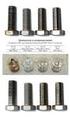 TEST REPORT Date: 03-05-2012 Reference: Duroc NV Corrosion Protection Moerelei 149 2610 Antwerp Belgium Written by: Ing. Martijn Wirken - [email protected] ZINCROLYTE VS DUPLEX 700 This document is not legally
CHAPTER 5. OVERVIEW OF THE MANUFACTURING PROCESS
 CHAPTER 5. OVERVIEW OF THE MANUFACTURING PROCESS 5.1 INTRODUCTION The manufacturing plant considered for analysis, manufactures Printed Circuit Boards (PCB), also called Printed Wiring Boards (PWB), using
CATHODIC PROTECTION SYSTEM DESIGN
 CATHODIC PROTECTION SYSTEM DESIGN Presented By DENIS L ROSSI P.E. CORROSION ENGINEER New England C P Inc. Corrosion Fundamentals What is corrosion? It is defined as the degradation or deterioration of
Rapid Prototyping and Development of Microfluidic and BioMEMS Devices
 Rapid Prototyping and Development of Microfluidic and BioMEMS Devices J. Sasserath and D. Fries Intelligent Micro Patterning System Solutions, LLC St. Petersburg, Florida (T) 727-522-0334 (F) 727-522-3896
MICROPOSIT LOL 1000 AND 2000 LIFTOFF LAYERS For Microlithography Applications
 Technical Data Sheet MICROPOSIT LOL 1000 AND 2000 LIFTOFF LAYERS For Microlithography Applications Regional Product Availability Description Advantages North America Europe, Middle East and Africa Latin
Lithium-Ion Battery Safety Study Using Multi-Physics Internal Short-Circuit Model
 Lithium-Ion Battery Safety Study Using Multi-Physics Internal Short-Circuit Model The 5th Intl. Symposium on Large Lithium-Ion Battery Technology and Application in Conjunction with AABC09 June 9-10, 2009,
Chapter 21a Electrochemistry: The Electrolytic Cell
 Electrochemistry Chapter 21a Electrochemistry: The Electrolytic Cell Electrochemical reactions are oxidation-reduction reactions. The two parts of the reaction are physically separated. The oxidation reaction
INJECTION MOLDING COOLING TIME REDUCTION AND THERMAL STRESS ANALYSIS
 INJECTION MOLDING COOLING TIME REDUCTION AND THERMAL STRESS ANALYSIS Tom Kimerling University of Massachusetts, Amherst MIE 605 Finite Element Analysis Spring 2002 ABSTRACT A FEA transient thermal structural
1.Introduction. Introduction. Most of slides come from Semiconductor Manufacturing Technology by Michael Quirk and Julian Serda.
 .Introduction If the automobile had followed the same development cycle as the computer, a Rolls- Royce would today cost $00, get one million miles to the gallon and explode once a year Most of slides
Lead & Magnet Wire Connection Methods Using the Tin Fusing Method Joyal A Division of AWE, Inc.
 Lead & Magnet Wire Connection Methods Using the Tin Fusing Method Joyal A Division of AWE, Inc. Abstract The technology for connecting lead and magnet wires for electric motors and electro mechanical devices
ECP Embedded Component Packaging Technology
 ECP Embedded Component Packaging Technology A.Kriechbaum, H.Stahr, M.Biribauer, N.Haslebner, M.Morianz AT&S Austria Technologie und Systemtechnik AG Abstract The packaging market has undergone tremendous
Coating Thickness and Composition Analysis by Micro-EDXRF
 Application Note: XRF Coating Thickness and Composition Analysis by Micro-EDXRF www.edax.com Coating Thickness and Composition Analysis by Micro-EDXRF Introduction: The use of coatings in the modern manufacturing
ENERGY CARRIERS AND CONVERSION SYSTEMS Vol. I - Alkaline Water Electrolysis - Isao Abe
 ALKALINE WATER ELECTROLYSIS Isao Abe Office Tera, Chiba, Japan Keywords: Water electrolysis, alkaline, hydrogen, electrode, diaphragm, high pressure high temperature electrolyser, cell, electrocatalyst
The full wave rectifier consists of two diodes and a resister as shown in Figure
 The Full-Wave Rectifier The full wave rectifier consists of two diodes and a resister as shown in Figure The transformer has a centre-tapped secondary winding. This secondary winding has a lead attached
Hydraulics Laboratory Experiment Report
 Hydraulics Laboratory Experiment Report Name: Ahmed Essam Mansour Section: "1", Monday 2-5 pm Title: Flow in open channel Date: 13 November-2006 Objectives: Calculate the Chezy and Manning coefficients
North American Stainless
 North American Stainless Flat Products Stainless Steel Sheet T409 INTRODUCTION NAS 409 is an 11% chromium, stabilized ferritic stainless steel. It is not as resistant to corrosion or high-temperature oxidation
Experiment: Crystal Structure Analysis in Engineering Materials
 Experiment: Crystal Structure Analysis in Engineering Materials Objective The purpose of this experiment is to introduce students to the use of X-ray diffraction techniques for investigating various types
Advanced VLSI Design CMOS Processing Technology
 Isolation of transistors, i.e., their source and drains, from other transistors is needed to reduce electrical interactions between them. For technologies
Improved PFC Boost Choke using a Quasi-Planar Winding Configuration Dave Shonts Schott Corporation 1000 Parkers Lake Road Wayzata, MN 55391
 Improved PFC Boost Choke using a Quasi-Planar Winding Configuration Dave Shonts Schott Corporation 1000 Parkers Lake Road Wayzata, MN 55391 Abstract- A novel approach to boost inductor design using a quasi-planar
Holes & Selective Laser Sintering
 SLS is one of the most accurate 3D printing processes. The process has a layer thickness of 0.1mm. This is the thickness with which a new layer is added to each part. In any direction therefore the maximum
NetShape - MIM. Metal Injection Molding Design Guide. NetShape Technologies - MIM Phone: 440-248-5456 31005 Solon Road FAX: 440-248-5807
 Metal Injection Molding Design Guide NetShape Technologies - MIM Phone: 440-248-5456 31005 Solon Road FAX: 440-248-5807 Solon, OH 44139 [email protected] 1 Frequently Asked Questions Page What
SELECTRON Oberflächentechnik
 1. General Process Description The Selectron process has been proved to be most useful in most branches of the industries: Applications in the tool manufacture industries, applications in mechanical engineering
The atomic packing factor is defined as the ratio of sphere volume to the total unit cell volume, or APF = V S V C. = 2(sphere volume) = 2 = V C = 4R
 3.5 Show that the atomic packing factor for BCC is 0.68. The atomic packing factor is defined as the ratio of sphere volume to the total unit cell volume, or APF = V S V C Since there are two spheres associated
Electrochemistry Revised 04/29/15
 INTRODUCTION TO ELECTROCHEMISTRY: CURRENT, VOLTAGE, BATTERIES, & THE NERNST EQUATION Experiment partially adapted from J. Chem. Educ., 2008, 85 (8), p 1116 Introduction Electrochemical cell In this experiment,
SELECTIVE DISSOLUTION AND CORROSION FATIGUE BEHAVIORS OF 2205 DUPLEX STAINLESS STEEL
 W.-T. Tsai, I.-H. Lo Department of Materials Science and Engineering National Cheng Kung University Tainan, Taiwan SELECTIVE DISSOLUTION AND CORROSION FATIGUE BEHAVIORS OF 2205 DUPLEX STAINLESS STEEL ABSTRACT