
Clinical Review Criteria
|
|
|
- Kathleen Lawson
- 9 years ago
- Views:
Transcription

1 Clinical Review Criteria Treatment of Varicose Veins Radiofrequency Catheter Closure Sclerotherapy Surgical Stripping Trivex System for Outpatient Varicose Vein Surgery VenaSeal Closure System VNUS Closure Device Group Health Clinical Review Criteria are developed to assist in administering plan benefits. These criteria neither offer medical advice nor guarantee coverage. Group Health reserves the exclusive right to modify, revoke, suspend or change any or all of these Review Criteria, at Group Health's sole discretion, at any time, with or without notice. Member contracts differ in their benefits. Always consult the patient's Medical Coverage Agreement or call Group Health Customer Service to determine coverage for a specific medical service. Criteria For Medicare Members Local Coverage Determination (LCD) Treatment of Varicose Veins of the Lower Extremities (L34010) For Non-Medicare Members I. For great saphenous vein or small saphenous vein ligation, stab phlebectomy, division, stripping, radiofrequency endovenous occlusion (VNUS procedure), Endovenous Radiofrequency Ablation Treatment (ERFA) and endovenous laser ablation of the saphenous vein (ELAS) (also known as endovenous laser treatment (EVLT) all of the following criteria must be met: A. The patient is symptomatic and has one, or more, of the following: 1. Pain or burning in the extremity 2. Recurrent episodes of superficial phlebitis 3. Non-healing skin ulceration 4. Bleeding from a varicosity 5. Stasis dermatitis 6. Refractory dependent edema B. Vein size is 4.5 mm or greater in diameter (not valve diameter at junction) C. Pre-operative doppler demonstrates reflux (reflux duration of 500 milliseconds (ms) or greater in the vein to be treated). D. In addition all of the following are true for ERFA and laser ablation: 1. Absence of aneurysm in the target segment. 2. Maximum vein diameter of 12 mm for ERFA or 20 mm for laser ablation. 3. Absence of thrombosis or vein tortuosity, which would impair catheter advancement. 4. The absence of significant peripheral arterial diseases. II. Sclerotherapy is covered for up to 6 months after a covered stab phlebectomy, endovenous ablation or a vein stripping. Sclerotherapy can be approved at these same venous sites if symptoms persist associated with persistent varicosities. No evidence to support coverage for: A. Treatment of reticular veins, spider veins or superficial telangiectasis by any technique (considered cosmetic) B. Procedures with devices not FDA-approved The following information was used in the development of this document and is provided as background only. It is not to be used as coverage criteria. Please only refer to the criteria listed above for coverage determinations. Background Superficial venous reflux occurs when the valves that keep blood flowing out of the veins in the leg become damaged or diseased. Primary symptoms are pain, swelling and varicose veins. The basic treatment is to re-route

2 blood flow through other healthy veins. This can be done using several techniques: stripping the greater damaged vein, using radiofrequency energy to heat and occlude the vein, and using irritant solution to obliterate the vein. The conventional treatment is stripping of the greater damaged vein. This procedure has favorable clinical outcomes (REF), but is associated with substantial post-operative morbidity, particularly pain and bruising. Recurrent reflux is possible with the existing treatments and the risk of recurrence increases over time. Rather than vein stripping, radiofrequency (RF) energy to heat and occlude the damaged vein. RF energy is delivered via collapsible catheter electrodes that are introduced into the vein lumen. The operator sets the target temperature, usually 85 o C. The temperature is monitored using a microprocessor-controlled bipolar generator. The procedure is performed on an outpatient basis, using either local or regional anesthesia. Sclerotherapy is the treatment of veins that are distended, lengthened and tortuous (i.e. varicose veins) by the injection of an irritant solution to encourage obliteration of the veins by thrombosis and subsequent scarring. The treatment of varicose veins and spider veins can be for either cosmetic purposes or for the improvement of clinical symptoms related to these conditions. In order to identify when the care will be covered a common set of clinical appropriateness criteria were developed. Evidence and Source Documents Radiofrequency Catheter Closure Trivex VenaSeal Clsoure System Medical Technology Assessment Committee (MTAC) Radiofrequency Catheter Closure in the treatment of varicose veins Superficial venous reflux occurs when the valves that keep blood flowing out of the veins in the leg become damaged or diseased. Primary symptoms are pain, swelling and varicose veins. The basic treatment is to re-route blood flow through other healthy veins. The conventional treatment is stripping of the greater damaged vein. This procedure has favorable clinical outcomes (REF), but is associated with substantial post-operative morbidity, particularly pain and bruising. Recurrent reflux is possible with the existing treatments and the risk of recurrence increases over time. The VNUS Closure System was proposed as a minimally invasive treatment for superficial venous reflux. Rather than vein stripping, the Closure system uses radiofrequency (RF) energy to heat and occlude the damaged vein. RF energy is delivered via collapsible catheter electrodes that are introduced into the vein lumen. The operator sets the target temperature, usually 85o C. The temperature is monitored using a microprocessor-controlled bipolar generator. The procedure is performed on an outpatient basis, using either local or regional anesthesia. The VNUS Closure System received FDA approval March /13/2003: MTAC REVIEW Radiofrequency Catheter Closure in the treatment of varicose veins Evidence Conclusion: The best, published evidence on the VNUS Closure system is a small RCT with n=33 (Rautio et al., 2002). This study found that patients had less pain and fewer sick days a mean of 50 days after the Closure procedure than patients who received the stripping operation. There was no significant difference in quality of life variables. Potential sources of bias in the Rautio RCT include lack of blinding, lack of intention to treat analysis and potential confounding. In addition, the RCT did not have long-term follow-up and did not address the issue of recurrent reflux. Also available are case series data from a multi-center registry (Merchant et al., 2002). 93% of patients had complete The use of Radiofrequency Catheter Closure in the treatment of varicose veins does not meet the Group Health Medical Technology Assessment Criteria. The following information was used in the development of this document and is provided as background only. It is not to be used as coverage criteria. Please only refer to the criteria listed above for coverage determinations. Group Health Cooperative. All Rights Reserved. Occlusion after the VNUS Closure procedure. Twelve months after treatment, among the patients with data available, 94% of those with complete occlusion had varicose veins absent and 100% had reflux absent. These findings could be biased because data were missing on 20% of the patients at 12 months. Although the Rautio study suggests short-term benefit of the Closure system compared to the stripping procedure, there is insufficient evidence on long-term effectiveness. Articles: The search yielded 12 articles. The best evidence was a recent case series taken from a multi-center registry and a small randomized controlled trial. The following studies were critically appraised: Rautio T, Ohinmaa A, Perala J. et al. Endovenous obliteration versus conventional stripping operation in the treatment of primary

3 varicose veins: A randomized controlled trial with comparison of the costs. J Vasc Surg 2002;35: See Evidence Table. Merchant RF, DePalma RG, Kabnick LS. Endovascular obliteration of saphenous reflux: A multicenter study. J Vasc Surg 2002;35: See Evidence Table. The use of Radiofrequency Catheter Closure in the treatment of varicose veins does not meet the Group Health Medical Technology Assessment Criteria. TriVex System for Outpatient Varicose Vein Surgery Because there are no published studies on the TriVex transluminated powered phlebectomy for outpatient varicose vein surgery, this was documented. Transilluminated phlebectomy is a minimally invasive surgical technique for removing varicose veins. The TriVex system was introduced by Smith & Nephew in The TriVex resector and TriVex illuminator are placed under the skin through small 2mm vertical incisions on either side of the varicosity. According to Smith & Nephew, one of the key features of the TriVex system is its ability to light the area beneath the skin. For the first time, the vein is clearly visible, allowing the surgeon to quickly and accurately remove it using a powered resector and then visually confirm its complete extraction. 08/08/2001: MTAC REVIEW TriVex System for Outpatient Varicose Vein Surgery Evidence Conclusion: There are no published studies on the TriVex System Transilluminated Powered Phlebectomy for outpatient varicose vein surgery. We were not given any unpublished data of sufficient quality to review as evidence. In conclusion, there is no evidence on which to base conclusions about the effect of this technology on health outcomes. Articles: No published articles were found. Literature from the manufacturer included conference abstracts that cannot be evaluated as evidence. Conclusion: There is no evidence on which to base conclusions about the effect of this technology on health outcomes. The use of TriVex in the treatment of Varicose Veins does not meet the Group Health Medical Technology Assessment Criteria. VenaSeal Closure System for Varicose Veins Chronic venous disorders of the lower limb are estimated to affect approximately 30 million adults or 35% of screened adults in the United States [1] and manifest most frequently like varicose veins. The mechanism underlying varicose veins can be explained by a dysfunctional valve inside the veins. The valves of the superficial veins and those of the Great Saphenous Vein (GSV) transferring blood toward the heart are defective leading to venous dilation and stasis. The accumulation of blood in the vein is responsible for the swelling, pain, chronic skin changes, spontaneous hemorrhage, leg ulcers and fatigue. The progression can be expressed by a reduction of quality of life (QoL) [2]. The management of varicose veins has undergone a shift and a number of treatment options have been described; these include surgery and minimal invasive therapies. Surgery which is represented by ligation and stripping and various surgical techniques are described and involve saphenous vein inversion and removal, high ligation of the saphenous vein, ambulatory phlebectomy, trans illuminated phlebectomy, conservative venous ligation (CHIVA), and perforator ligation. Although surgery improves symptoms and leads to patient satisfaction [3-6], this is associated with hematoma, paresthesia and high recurrence rate [7]. Other treatments reside in thermalbased techniques including endovenous thermal ablation (EVTA) by radiofrequency ablation (RFA) or laser ablation. These techniques are believed to have long-term success (vein closure) rates of 78 to 84 percent [8-10] and necessitate tumescent anesthesia. In contrast, new technique such as venaseal closure system (VSCS) does not seem to require tumescent anesthesia, and has recently been approved for treatment of the incompetent GSV in the European Union, Hong Kong, and Canada [2]. The VenaSeal Closure System (VSCS) permanently treats symptomatic varicose veins of the legs by closing the affected superficial veins with a cyanoacrylate-based adhesive. The VenaSeal System is composed of a catheter, guidewire, dispenser gun, dispenser tips, and syringes. A catheter is introduced through the skin into the varicose vein and a clear liquid (adhesive) is also injected. The insertion of the catheter and the delivery of adhesive are performed under ultrasound guidance. After the delivery of the adhesive, manual compression of the affected area begins and the adhesive changes into a solid to seal the varicose vein. The system is used for patients with venous reflux disease and it seals superficial varicose veins of the legs. Treating the diseased veins generally relieves symptoms. The VenaSeal System should not be used in patients with a known hypersensitivity to the

4 VenaSeal adhesive or cyanoacrylates, patients who have acute inflammation of the veins due to blood clots and patients with acute whole-body infection (FDA, 2015). 06/20/2014: MTAC REVIEW VenaSeal Closure System Evidence Conclusion: The search identified one study that compares VenaSeal Closure System (VSCS) with radiofrequency ablation (RFA). A non-randomized and a prospective studies assessing the efficacy and safety of VSCS were also identified but were not subject to evidence table since no comparison was made. Evidence Table 1: Randomized trial comparing cyanoacrylate embolization and radiofrequency ablation for incompetent great saphenous veins (VeClose) [2] This RCT aimed to demonstrate the non-inferiority of cyanoacrylate embolization (CAE) efficacy compared with radiofrequency ablation (RFA). The primary outcome was the total closure of the target great saphenous vein (GSV) defined as Doppler ultrasound examination (including color flow, compression, and pulsed Doppler) showing closure along the entire treated target vein segment with no discrete segments of patency exceeding 5 cm at the month 3 visit. Adverse events were also assessed. Patients were randomized to CAE performed with VenaSeal Sapheon Closure System or RFA. Patients returned to clinic at day 3, 1 and 3 months. Trial follow-up continues to 36 months after initial treatment. Vein closure was determined by Doppler ultrasound examination and confirmed by an independent vascular ultrasound core laboratory. On day 3, 100% of the GSVs treated were closed in both groups. At month 1, no patency of treated vein was identified with the VSCS vs. 15 patency observed with the RFA with closure rates of 100% and 86% respectively. The Venous Clinical Severity Score (VCSS) had improved by 3.5 points from baseline with no differences between groups. Aberdeen Varicose Vein Questionnaire (AVVQ) had improved by 8 points. Time trade-off (EQ-5D TTO) improved by 0.03 points with no differences between groups. Ecchymosis at day 3 was absent in significantly more subjects after VSCS than after RFA. Post treatment phlebitis was more frequent after VSCS. Most cases of phlebitis were mild. No difference was observed between the mean intraprocedural pain ratings of both groups (2.2 vs. 2.4 P=0.11). No deep vein thrombosis (DVT) or pulmonary embolism was observed. The authors concluded that VSCS was non inferior to RFA for the occlusion of symptomatic incompetent GSVs at 3 months.nevertheless, the study had some limitations: Patients were not blinding raising the concern of placebo effect and increasing the risk of bias. The duration of follow-up was also short. In addition, the study was funded by Sapheon and some authors had financial interest with Sapheon. Although the assessment of the primary endpoint was objective, patient s pain assessment was subjective resulting in reporting bias. Thus, the results should be interpreted with caution. Additional studies: A non-randomized study case series of 29 patients (fifty seven legs) [11] that evaluated the safety, efficacy and performance of endovenous cyanoacrylate (Sapheon Venaseal Closure System) by assessing the Great Saphenous Vein (GSV) occlusion, Venous clinical severity score (VCSS), Aberdeen Varicose Vein Questionnaire (AVVQ) and the Short Form Health Survey 36 Item (SF-36) questionnaires. Fifty seven legs were included and after one week of follow-up, obliteration was achieved in most patients. At month 1, VCSS, AVVQ and SF-36 physical and mental scores improved from 6.91, 23.66, 44.24, to 2.43, 6.10, 43.85, and respectively. The closure rates were 98.2% and 78.5% at week 1 and 1 year respectively. The authors conclude that VSCS was safe for the treatment of great saphenous vein reflux. A prospective study of 38 patients performed by Almeida et al [12] indicates that clinical efficacy of endovenous cyanoacrylate for closure of insufficient great saphenous veins was maintained over a period of 24 months. Conclusion: Based on low quality evidence, manufacturer sponsored trial, cyanoacrylate embolization (CAE) performed with the VSCS was non inferior to radiofrequency ablation (RFA). There is a lack of evidence to determine whether the VenaSeal Closure System (VSCS) for varicose veins treatment is effective and safe compared to other alternative treatments. Articles: The following article was selected for critical appraisal: Randomized trial comparing cyanoacrylate embolization and radiofrequency ablation for incompetent great saphenous veins (VeClose) See Evidence Table 1. The use of VenaSeal Closure System of Varicose Veins does not meet the Group Health Medical Technology Assessment Criteria. Date Created Date Reviewed Date Last Revised /04/2010 MDCRPC, 03/01/2011 MDCRPC, 01/03/2012 MDCRPC, 11/06/2012 MDCRPC, 07/05/ /03/2013 MPC, 01/07/2014 MPC, 07/01/2014 MPC, 06/02/2015 MPC, 05/03/2016 MPC MDCRPC Medical Director Clinical Review and Policy Committee MPC Medical Policy Committee

5 Revision Description History 09/08/2015 Revised LCD L /13/2016 Added CPT codes and stab phlebectomy language 06/20/2016 Added VenaSeal Closure System MTAC review Criteria Codes Revision History Codes Endovenous Laser Ablation , Ligation and Excision 37700, 37718, 37722, 37735, 37780, Sclerotherapy Telangiectasias Radiofrequency Ablation 36475, Laser Ablation , Sclerotherapy 36470, 36471, S2202 Stab Phlebectomy 37765, Subfascial Endoscopic Perforator Surgery (SEPS) 37500, 37760, 37761

Medicare C/D Medical Coverage Policy
 Varicose Vein Treatment Medicare C/D Medical Coverage Policy Origination Date: June 1, 1993 Review Date: September 16, 2015 Next Review: September, 2017 DESCRIPTION OF PROCEDURE OR SERVICE Varicose veins
Medicare C/D Medical Coverage Policy
 Varicose Vein Treatment Origination Date: June 1, 1993 Review Date: July 20, 2016 Next Review: July, 2018 Medicare C/D Medical Coverage Policy DESCRIPTION OF PROCEDURE OR SERVICE Varicose veins of the
PROVIDER POLICIES & PROCEDURES
 PROVIDER POLICIES & PROCEDURES SCLEROTHERAPY TREATMENT OF SUPERFICIAL VARICOSE VEINS OF THE LEGS The purpose of this document is to provide guidance to providers enrolled in the Connecticut Medical Assistance
Medical Coverage Policy Treatment for Varicose Veins-PREAUTH
 Medical Coverage Policy Treatment for Varicose Veins-PREAUTH Device/Equipment Drug Medical Surgery Test Other Effective Date: 9/1/2001 Policy Last Updated: 12/20/2011 Prospective review is recommended/required.
Yes when meets criteria below
 Vein Disease Treatment MP9241 Covered Service: Prior Authorization Required: Additional Information: Medicare Policy: BadgerCare Plus Policy: Yes when meets criteria below Yes None Dean Health Plan covers
Venous Reflux Disease and Current Treatments VN20-87-A 01/06
 Venous Reflux Disease and Current Treatments Leg Vein Anatomy Your legs are made up of a network of veins and vessels that carry blood back to the heart The venous system is comprised of: Deep veins Veins
Non-surgical treatment of severe varicose veins
 Non-surgical treatment of severe varicose veins Yasu Harasaki UCHSC Department of Surgery General Surgery Grand Rounds March 19, 2007 Definition Dilated, palpable, subcutaneous veins generally >3mm in
MEDICAL COVERAGE POLICY. SERVICE: Varicose Veins of the Lower Extremities. PRIOR AUTHORIZATION: Required.
 Page 1 of 5 MEDICAL COVERAGE POLICY Important note Even though this policy may indicate that a particular service or supply may be considered covered, this conclusion is not based upon the terms of your
Clinical Medical Policy Varicose Vein Treatment
 Benefit Coverage Covered Benefit for lines of business including: Health Benefits Exchange (HBE), Rite Care (MED), Children with Special Needs (CSN), Substitute Care (SUB), Rhody Health Partners (RHP),
MEDICAL COVERAGE POLICY SERVICE: Varicose Veins of the Lower Extremities. SERVICE: Treatment of Varicose Veins of the Lower Extremities
 Important note Even though this policy may indicate that a particular service or supply may be considered covered, this conclusion is not based upon the terms of your particular benefit plan. Each benefit
Surgical Options for Venous Disease. Sandra C Carr MD Vascular Surgery Meriter Wisconsin Heart
 Surgical Options for Venous Disease Sandra C Carr MD Vascular Surgery Meriter Wisconsin Heart Chronic Venous Disease Approximately 23% of adults in the US have varicose veins Estimated 22 million women
Local Coverage Determination (LCD): Varicose Veins of the Lower Extremities (L31796)
 Local Coverage Determination (LCD): Varicose Veins of the Lower Extremities (L31796) Contractor Information Contractor Name Palmetto GBA LCD Information Document Information LCD ID L31796 LCD Title Varicose
Effective Date: March 2, 2016
 Medical Review Criteria Varicose Vein Procedures Effective Date: March 2, 2016 Treatmetn Subject: Varicose Vein Procedures VeinTreatment of Varicose Policy: Veins HPHC covers specific non-experimental
Spotlight Series: Interventional Radiology. Varicose Veins and Venous Insufficiency
 Spotlight Series: Interventional Radiology Varicose Veins and Venous Insufficiency What is venous insufficiency? Spectrum of Disease Spider veins and telangiectasias Small reddish and purple veins near
Medical Coverage Policy Varicose Vein Treatment sad
 Medical Coverage Policy Varicose Vein Treatment sad EFFECTIVE DATE: 10 28 2001 POLICY LAST UPDATED: 05 07 2013 OVERVIEW Varicose veins are large superficial veins that have become swollen. These veins
RANDOMIZED CONTROL TRIALS (RCT s) on VARICOSE VEIN ENDOVENOUS TREATMENT
 RANDOMIZED CONTROL TRIALS (RCT s) on VARICOSE VEIN ENDOVENOUS TREATMENT M. PERRIN Lyon - France CONTROVERSIES AND UPDATES IN VASCULAR SURGERY JANUARY 19-21, 2012 Paris B. Eklof Helsingborg, Sweden Thirty
Treatment of Varicose Veins/Venous Insufficiency
 MEDICAL POLICY POLICY RELATED POLICIES POLICY GUIDELINES DESCRIPTION SCOPE BENEFIT APPLICATION RATIONALE REFERENCES CODING APPENDIX HISTORY Treatment of Varicose Veins/Venous Insufficiency Number 7.01.519
THE VEIN CENTER. State-of-the-Art Treatment for Varicose Veins and Spider Veins
 THE VEIN CENTER State-of-the-Art Treatment for Varicose Veins and Spider Veins Vein Disorders Nearly 50 percent of the adult population suffers from undesirable, sometimes painful vein disease. The most
Suffering from varicose veins? Patient Information. ELVeS Radial Minimally invasive laser therapy of venous insufficiency
 Suffering from varicose veins? Patient Information ELVeS Radial Minimally invasive laser therapy of venous insufficiency Do you suffer from heavy legs or visible veins? This makes diseases of the veins
treatment of varicose and spider veins patient information SAMPLE a publication by advancing vein care
 treatment of varicose and spider veins patient information a publication by advancing vein care Since most veins lie deep to the skin s surface, vein disorders are not always visible to the naked eye.
POLICY PRODUCT VARIATIONS DESCRIPTION/BACKGROUND RATIONALE DEFINITIONS BENEFIT VARIATIONS DISCLAIMER CODING INFORMATION REFERENCES POLICY HISTORY
 Original Issue Date (Created): 7/12/2003 Most Recent Review Date (Revised): 3/29/2016 Effective Date: 8/1/2016 I. POLICY Great or Small Saphenous Veins Treatment of the greater small saphenous veins by
Varicose Veins: Causes, Symptoms and Management. Andrew C. Stanley MD Section of Vascular Surgery
 Varicose Veins: Causes, Symptoms and Management Andrew C. Stanley MD Section of Vascular Surgery Circulation Heart (Pump)-MI, Sudden Death Arteries (Stroke, Aneurysms, Walking dysfunction, Limb loss) Veins
TREATMENT OF VARICOSE VEINS: CAN IT BE IMPROVED BY MECHANOCHEMICAL ABLATION USING THE CLARIVEIN DEVICE?
 TREATMENT OF VARICOSE VEINS: CAN IT BE IMPROVED BY MECHANOCHEMICAL ABLATION USING THE CLARIVEIN DEVICE? Michel MJP Reijnen Rijnstate Hospital, Arnhem The Netherlands [email protected] Disclosures
Patient Information Understanding Varicose Veins
 Patient Information Understanding Varicose Veins The Circulatory System Arteries carry oxygenated blood to your legs and the veins carry de-oxygenated blood away from your legs. The blood returns to the
LOWER EXTREMITY VENOUS DUPLEX ULTRASOUND:
 LOWER EXTREMITY VENOUS DUPLEX ULTRASOUND: Chronic Venous Insufficiency Phillip J Bendick, PhD William Beaumont Hospital Royal Oak, Michigan Prevalence: Carotid ASO ~ 3M Peripheral Arterial Dz ~ 5M + CAD
Treatment by LASER. Understanding Varicose veins and. Dr. Rajesh Mundhada (MD. DNB) Dr. Atul Rewatkar (MD)
 Understanding Varicose veins and Treatment by LASER Dr. Rajesh Mundhada (MD. DNB) Dr. Atul Rewatkar (MD) Orange city Hospital & Research Institute 19, Pandey Lay out, Veer Sawarkar Square, Nagpur 440015
CHINOOK VASCULAR - ENDOVENOUS LASER ABLATION PROCEDURE
 CHINOOK VASCULAR - ENDOVENOUS LASER ABLATION PROCEDURE Endovenous Laser Ablation is a minimally invasive option for treating great saphenous vein incompetence (leaky valves). The first stage of your surgery
Modern Varicose Vein Treatments: What Every Patient Should Know
 The Skin and Vein Center Oneonta Laser Derm & Day Spa Natural Good Looks and Leg Veins Our Specialty Dr Eric Dohner, MD 41-45 Dietz St Oneonta, NY 13820 607/431-2525 www.oneontalaserderm.com Modern Varicose
X-Plain Varicose Veins Reference Summary
 X-Plain Varicose Veins Reference Summary Introduction Varicose veins are very common, in both women and men. Varicose veins can be painful and unattractive. Vein doctors use non-invasive ultrasound imaging
Varicose Veins Operation. Patient information Leaflet
 Varicose Veins Operation Patient information Leaflet 22 nd August 2014 WHAT IS VARICOSE VEIN SURGERY (HIGH LIGATION AND MULTIPLE AVULSIONS) The operation varies from case to case, depending on where the
Varicose Vein Treatment (Endovenous Ablation of Varicose Veins)
 Scan for mobile link. Varicose Vein Treatment (Endovenous Ablation of Varicose Veins) Varicose vein treatment, also known as endovenous ablation, uses radiofrequency or laser energy to cauterize and close
Varicose Vein Therapy: An Introduction to Surgical and Endovascular Treatment
 Varicose Vein Therapy: An Introduction to Surgical and Endovascular Treatment Lower Extremity Venous Anatomy Deep, Superficial, Perforating, Reticular veins Located in two separate compartments (deep and
CHAPTER 15 SCLEROTHERAPY FOR VENOUS DISEASE
 Introduction CHAPTER 15 SCLEROTHERAPY FOR VENOUS DISEASE Original authors: Niren Angle, John J. Bergan, Joshua I. Greenberg, and J. Leonel Villavicencio Abstracted by Teresa L. Carman New technology has
DEBATE ON Management of primary Varicose Veins SURGERY. Adel Husseiny, Kamhawy Vascular Surgery Unit Tanta University
 DEBATE ON Management of primary Varicose Veins SURGERY Adel Husseiny, Kamhawy Vascular Surgery Unit Tanta University Efficacy of treatment alternatives Durability of results Cosmetically acceptable results
TREATMENT OF VARICOSE AND SPIDER VEINS Patient Info
 TREATMENT OF VARICOSE AND SPIDER VEINS Patient Info www.heartofthevillages.com TIRED & ACHING LEGS? If you suffer from varicose and spider veins, you are not alone. It is estimated that there are more
Peninsula Commissioning Priorities Group. Commissioning Policy Varicose Vein Referral
 NHS Devon NHS Plymouth Torbay Care Trust Peninsula Commissioning Priorities Group Commissioning Policy Varicose Vein Referral Varicose Vein Referral Guidelines 1. Description of service/treatment Most
Medical Affairs Policy
 Service: Varicose Vein Treatments PUM 250-0032 Medical Affairs Policy Implemented 04/04/14, 04/01/15, 4/1/16 Reviewed 12/12/14 Revised 12/12/14, 12/11/15 Developed Arise/WPS Policy 12/12/14, 12/11/15 Committee
The Treatment of Varicose Veins and Spider Veins
 The Treatment of Varicose Veins and Spider Veins St. Joseph Vein Center Surgical Specialists of St. Joseph, P.C. Glen H. Hastings, M.D., F.A.C.S. 820 Lester Ave., Suite 105 St. Joseph, MI 49085 (269) 983-3368
Recurrent Varicose Veins. Vineet Mishra, MD Director of Mohs Surgery and Procedural Dermatology University of Texas Health Science Center San Antonio
 Recurrent Varicose Veins Vineet Mishra, MD Director of Mohs Surgery and Procedural Dermatology University of Texas Health Science Center San Antonio Disclosures None Possible Causes of Recurrence DNA:
SEDICO Newsletter Issue 8. Varicose veins
 SEDICO Newsletter Issue 8 Definition: Varicose veins Varicose veins are veins that have become enlarged and twisted. The term commonly refers to the veins on the leg, although varicose veins occur elsewhere.
Varicose veins - 1 -
 Varicose veins - 1 - Varicose Veins About 3 in 10 adults develop varicose veins at some time in their life. Most people with varicose veins do not have an underlying disease and they usually occur for
Modern Management of Varicose Veins
 Modern Management of Varicose Veins GPCME 2008 David Ferrar Vascular and Endovascular Surgeon Vascular Ultrasound Specialist Multimodality treatment Compression stockings Sclerotherapy Ultrasound guided
Jose Almeida MD, FACS, RVT Jeff Raines PhD, RVT. Oliver Göckeritz MD Christian Wentzel MD. Tim Richards MD Daniel F. Hoheim, MD.
 Final Results 1 Jose Almeida MD, FACS, RVT Jeff Raines PhD, RVT Miami Vein Center Miami, Florida Oliver Göckeritz MD Christian Wentzel MD Venenzentrum Elserpark Leipzig, Germany John Kaufman MD Dotter
Emory Healthcare s model for a PA based vein clinic
 Emory Healthcare s model for a PA based vein clinic Stephen Konigsberg PA-C No relationships to disclose Society for Vascular Surgery 2011 Vascular Annual Meeting Chicago, IL June 17, 2011 Division of
Corporate Medical Policy Treatment of Varicose Veins/Venous Insufficiency. Medical Policy
 Corporate Medical Policy Treatment of Varicose Veins/Venous Insufficiency File name: Treatment of Varicose Veins/ Venous Insufficiency File code: UM.SURG.03 Origination: 9/01/2010 Last Review: 07/15/2010,
Provided by the American Venous Forum: veinforum.org
 CHAPTER 17 SURGICAL THERAPY FOR DEEP VALVE INCOMPETENCE Original author: Seshadri Raju Abstracted by Gary W. Lemmon Introduction Deep vein valvular incompetence happens when the valves in the veins (tubes
Endovenous Laser Therapy
 Information for patients Endovenous Laser Therapy Northern General Hospital You have been given this leaflet because you will be having Endovenous Laser Therapy (EVLT). This leaflet explains more about
Varicose veins and spider veins
 Varicose veins and spider veins Summary Varicose veins are knobbly, twisted and darkish-blue in appearance, and are most commonly found on people s legs. Varicose veins are caused by faulty valves within
Beaumont Hospital. Varicose Veins. and their TREATMENT. Professor Austin Leahy, MCh, FRCS, FRCSI WWW.VEINCLINICSOFIRELAND.COM
 Beaumont Hospital Varicose Veins and their TREATMENT Professor Austin Leahy, MCh, FRCS, FRCSI WWW.VEINCLINICSOFIRELAND.COM Department of Surgery Beaumont Hospital and Royal College of Surgeons in Ireland
VARICOSE VEINS. Information Leaflet. Your Health. Our Priority. VTE Ambulatory Clinic Stepping Hill Hospital
 VARICOSE VEINS Information Leaflet Your Health. Our Priority. Page 2 of 7 Varicose Veins There are no accurate figures for the number of people with varicose veins. Some studies suggest that 3 in 100 people
Recurrent Varicose Veins
 Information for patients Recurrent Varicose Veins Sheffield Vascular Institute Northern General Hospital You have been diagnosed as having Varicose Veins that have recurred (come back). This leaflet explains
Health Technology Assessment of Scheduled Surgical Procedures
 HTA of Scheduled Surgical Procedures April 2013 Health Technology Assessment of Scheduled Surgical Procedures Varicose Vein Surgery April 2013 Safer Better Care About the The (HIQA) is the independent
EndoVenous Laser Therapy (EVLT) Information Booklet. Dr. Dueck. Varicose Veins
 EndoVenous Laser Therapy (EVLT) Information Booklet Dr. Dueck Varicose Veins Varicose veins are abnormally large veins that protrude from under the skin in the legs. They can be associated with a brown
Prevalence and surgical outcomes of varicose veins at Regional Institute of Medical Sciences, Imphal
 ORIGINAL ARTICLE JIACM 2013; 14(3-4): 209-13 Prevalence and surgical outcomes of varicose veins at Regional Institute of Medical Sciences, Imphal Ksh Kala Singh*, A Surjyalal Sharma**, L Sunil Singh***,
New approaches for the treatment of varicose veins
 Surg Clin N Am 84 (2004) 1397 1417 New approaches for the treatment of varicose veins Theodore H. Teruya, MD, FACS a, Jeffrey L. Ballard, MD, FACS b,c, * a Division of Vascular Surgery, Loma Linda University,
National Medical Policy
 National Medical Policy Subject: Policy Number: Varicose Veins Surgical Interventions NMP148 Effective Date*: September 2003 Updated: July 2016 Please contact the Medical Policy Department for an archive
V03 Varicose Veins Surgery
 V03 Varicose Veins Surgery What are varicose veins? Varicose veins are enlarged and twisted veins in the leg. They are common and affect up to 3 in 10 people. More women than men ask for treatment, with
SURGICAL AND ABLATIVE PROCEDURES FOR VENOUS INSUFFICIENCY AND VARICOSE VEINS
 SURGICAL AND ABLATIVE PROCEDURES FOR VENOUS INSUFFICIENCY AND VARICOSE VEINS Protocol: SUR037 Effective Date: 5/1/2015 Table of Contents COMMERCIAL INDICATIONS FOR COVERAGE DEFINITIONS MEDICARE AND MEDICAID
AMERICAN VENOUS FORUM
 Revised Venous Clinical Severity Score AMERICAN VENOUS FORUM Pain : 0 Mild: 1 or other discomfort (ie, aching, heaviness, fatigue, soreness, burning) origin Occasional pain or other discomfort (ie, not
VARICOSE VEINS AND VENOUS INSUFFICIENCY
 VARICOSE VEINS AND VENOUS INSUFFICIENCY SURGICAL AND ABLATION TREATMENTS Policy Number: 2014M0064A Effective Date: September 1, 2014 Table of Contents: Page: Cross Reference Policy: POLICY DESCRIPTION
Do you have any of these varicose vein symptoms?
 Do you have any of these varicose vein symptoms? Heaviness Achiness Swelling Throbbing Itching HASTI Symptoms Ask your doctor if Varithena is right for you Varithena (polidocanol injectable foam) is a
THE RELATIONSHIP BETWEEN PATIENT STATUS AND RECURRENCY RATE FOLLOWING LASER SURGERY OF VARICOSE VEINS
 THE RELATIONSHIP BETWEEN PATIENT STATUS AND RECURRENCY RATE FOLLOWING LASER SURGERY OF VARICOSE VEINS Dr Imre Bihari PhD Budapest, Hungary What can influence laser surgery results? Instrument and method
this period, elimination of saphenous vein reflux was accomplished surgically (ie, with ligation and stripping)
 Radiofrequency Endovenous ClosureFAST versus Laser Ablation for the Treatment of Great Saphenous Reflux: A Multicenter, Single-blinded, Randomized Study (RECOVERY Study) Jose I. Almeida, MD, RVT, John
Veins. Zapping Varicose. Venous diseases affect many people and represent a major cost to the health-care system.
 Zapping Varicose Veins Improving the Quality of Life for Sufferers By Jeannette Soriano, MD Venous diseases affect many people and represent a major cost to the health-care system. Hippocrates used compression
Spider and Varicose Veins
 KRAMES. PATIENT EDUCATION Procedures for Spider and Varicose Veins How Vein Problems Develop Easing Symptoms with Self-Care Minimally Invasive and Surgical Treatment Options , J ;Yf 'i Understanding Problem
Endovenous Treatment of Varicose Veins
 Supplement to Produced under an unrestricted educational grant from Diomed, Inc. November/December 2004 Endovenous A comprehensive guide to the techniques and technology necessary to establish and maintain
Varicose Veins and Spider Veins
 page 1 Varicose Veins and Spider Veins Q: What are varicose veins and spider A: Varicose (VAR-i-kos) veins are enlarged veins that can be blue, red, or fleshcolored. They often look like cords and appear
LASER TREATMENT FOR VARICOSE VEINS
 LASER TREATMENT FOR VARICOSE VEINS How can varicose veins be treated by laser? Laser treatment of varicose veins, Endovascular Laser Ablation (known as EVLA), is a minimally invasive procedure for treating
Treatment for Varicose Veins
 Treatment for Varicose Veins Your blood vessels are made up of arteries and veins. Arteries bring blood rich in oxygen from the heart to all parts of your body. Veins carry blood back to the heart where
LONG TERM FOLLOW-UP AFTER ENDOVENOUS LASER ABLATION
 LONG TERM FOLLOW-UP AFTER ENDOVENOUS LASER ABLATION Giorgio Spreafico Centro Multidisciplinare Day Surgery Azienda Ospedaliera Università Padova - Italy Faculty Disclosure I have no financial relationships
Dr Marc Vuylsteke Sint-Andriesziekenhuis Tielt Belgium
 Endovenous Laser Treatment of non-gsv truncs Dr Marc Vuylsteke Sint-Andriesziekenhuis Tielt Belgium Superficial venous insufficiency Very common Evolution to chronic venous insufficiency Varicose Disease
Venefit treatment for varicose veins
 Oxford University Hospitals NHS Trust Venefit treatment for varicose veins Information for patients Your consultant has recommended that we treat your varicose veins with a procedure known as Venefit radio
Microfoam Ultrasound-Guided Sclerotherapy of Varicose Veins in 100 Legs
 Microfoam Ultrasound-Guided Sclerotherapy of Varicose Veins in 1 Legs JOHN M. BARRETT, FRNZCGP, n BRUCE ALLEN, FRACR, n ANNE OCKELFORD, FRNZCGP, n AND MITCHEL P. GOLDMAN, MD w n Palm Clinic, Auckland,
Tired, Aching Legs? Swollen Ankles? Varicose Veins?
 Tired, Aching Legs? Swollen Ankles? Varicose Veins? Healthy Legs 2006 http://healthylegs.com Page 1 Venous disorders are widespread Leg problems are widespread throughout the world, but what most people
What are spider veins? What is the best treatment for spider veins?
 Laser Spider/Leg Vein Q & A What are spider veins? Millions of women and men are bothered by unsightly spider veins on their faces and legs. Spider veins or telangiectasias are those small red, blue and
Evidence review. Endovascular treatment of varicose veins CEP09017
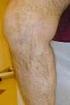 Evidence review Endovascular treatment of varicose veins CEP09017 August 2009 Contents 2 Summary... 3 Introduction... 4 Methods... 11 Evidence review... 19 Conclusions... 27 Acknowledgements... 28 Glossary...
Treatment of Varicose Veins
 Varicose Vein Treatment of Varicose Veins JMAJ 47(3): 146 151, 2004 Osamu SATO Associate Professor, Department of Surgery, Saitama Medical Center Abstract: Varicose vein is a condition that was first described
Varicose veins are a common disorder,
 Vol. 1 No. 1 An International Dialogue Management of venous disease is a dynamically changing field. At the start of the 21 st century, minimally invasive endovascular procedures are emerging as the dominant
Australian Safety and Efficacy Register of New Interventional Procedures Surgical. Rapid review ASERNIP-S REPORT NO. 66
 ASERNIP S Australian Safety and Efficacy Register of New Interventional Procedures Surgical Rapid review Treatments for varicose veins ASERNIP-S REPORT NO. 66 Australian Safety & Efficacy Register of New
The veins of the lower limbs can be subdivided into three subtypes: deep veins, superficial veins, and connecting veins (figure 1).
 VEIN DISEASE Vein disease may seem insignificant and harmless at first, but if left untreated, it can develop into a major problem. It occurs when veins have trouble transporting blood back to the heart
F REQUENTLY A SKED Q UESTIONS. and Spider Veins
 page 1 Varicose Veins moves up the legs. If the one-way valves become weak, blood can leak back into the vein and collect there. This problem is called venous insufficiency. Pooled blood enlarges the vein
SURGICAL AND ABLATIVE PROCEDURES FOR VENOUS INSUFFICIENCY AND VARICOSE VEINS
 CLINICAL POLICY SURGICAL AND ABLATIVE PROCEDURES FOR VENOUS INSUFFICIENCY AND VARICOSE VEINS Policy Number: OUTPATIENT 013.24 T2 Effective Date: July 1, 2014 Table of Contents CONDITIONS OF COVERAGE...
Muskegon Surgical Associates, P.C. 1316 Mercy Drive Muskegon, Michigan 49444 231-739-1932 231-739-9461 1-888-874-5892 (Toll Free) www.msapc.
 Muskegon Surgical Associates, P.C. 1316 Mercy Drive Muskegon, Michigan 49444 231-739-1932 231-739-9461 1-888-874-5892 (Toll Free) www.msapc.com www.msa-veincarecenter.com Welcome The Vein Care Center at
Patients First. Varicose Veins: Treatment Options. Deep veins, enclosed by muscle, lie deep in the legs and carry the most blood to the heart.
 Patient Education About your surgery Varicose Veins: Treatment Options Deep veins, enclosed by muscle, lie deep in the legs and carry the most blood to the heart. This handbook will help you understand