
Moisture Indicator Reference Book
|
|
|
- Kerry Reed
- 9 years ago
- Views:
Transcription
1 Moisture Indicator Reference Book

2 Contents Checking in Shipments Preparing IRROMETERS for Installation Selecting Locations for Installation Installation IRROMETER Charts Taking Readings Field Servicing Hand Vacuum Pump Protection of IRROMETERS Starting Irrigations Accuracy of IRROMETERS Interpreting IRROMETER Readings Irrigating with IRROMETERS Discontinuing Irrigations Waterlogged Soils Increasing Profits Saving Water/Energy Common Questions Storage of IRROMETERS Care of Ceramic Tips Vacuum Gauges Factory Service Warranty Registration INSIDE AND OUTSIDE BACK COVER

3 You have made an investment with your IRROMETER, which will repay its cost many times over. This reference book will give you information that will insure the maximum benefit from your investment. Hermetically Sealed Vacuum Gauge Cap Assembly Reservoir #0 Neoprene Stopper (PART OF CAP ASSEMBLY) Hermetically Sealed Vacuum Gauge Air Free Gauge Chamber IRROMETERS are manufactured of the highest quality materials and workmanship. Whether you are using IRROMETERS in research, in the turf and landscape or on the farm, adherence to the suggestions given on the following pages will assure you years of trouble-free, accurate and reliable service from these instruments. If you have questions that are not answered in this booklet, our staff is ready to assist you. Please call on us at any time. Body Tube Ceramic Tip REG. U.S. PAT. OFF. Moisture Indicator IRROMETER Co, Inc Palmyrita Ave. Riverside, CA PHONE FAX VISIT OUR WEBSITE 1

4 Checking In Shipments Shipments should be unpacked carefully and checked in immediately upon arrival. Do not remove the plastic tip covering until preparing for installation. Instruments are shipped dry and must be prepared for installation according to the instructions given below. Preparing IRROMETERS for Installation When instruments are received, it is necessary to prepare them for installation as outlined in steps 1 through 6 below. 1 Take the plastic wrappers off the tips and fill IRROMETERS with clean water. Do not handle the ceramic tip. Leave the instrument cap OFF and place the tip of the IRROMETER in clean water overnight (use clean non-rusting glass jar, plastic bucket or basin). Water in the instrument will drain through the tip and this operation may be repeated as often as time permits. After soaking and you are ready to install, protect the tip from air drying with wet paper towels, the plastic tip bag or insert into a bucket of wet sand while transporting to the installation site. 2 Prepare IRROMETER Field Solution as directed on the bottle label (a scant capful of concentrated IRROMETER Fluid to one gallon of clean, de-aired water, such as distilled, rainwater, boiled water that has cooled or tap water that has been allowed to sit). 3 Remove the filler cap and fill the instrument, including reservoir, with IRROMETER Field Solution or distilled water. If the tube does not completely fill, it may be due to an air lock which has formed at the tube filler hole at the bottom of the reservoir. Tap the top of the reservoir with the palm of your hand to break this air lock and facilitate complete filling of the tube. See picture. Using a plastic squeeze bottle makes filling easier as you can aim the flow of water into the body tube of the instrument. See picture. Apply a strong vacuum to the 40IRROMETER with the hand Filling Instrument vacuum pump. With the filler cap removed and the tip submerged in water or the bucket of wet sand, place the suction cup over the reservoir and pump vigorously until a reading of shows on the gauge, usually 5 or 6 quick pulls. (See page 9 -- Hand Vacuum Pump.) At higher elevations, maximum vacuum will be lower (i.e at 4000' above sea level). Release the vacuum slowly, using the finger release valve on the suction cup, to avoid gauge damage. Repeat the above procedure to remove all air from the gauge, usually 2-3 times is sufficient. Replace filler cap by tightening until the neoprene stopper makes 2 Soaking Tips Filling Instrument Breaking the air lock

5 contact with reservoir bottom, then turn the cap 1/4 turn. Do NOT over tighten, this can damage the IRROMETER gauge or stopper. Remove the plastic tip cover on the instrument, or 0remove 50from the bucket of sand, and install the IRROMETER in the prepared hole. See section INSTALLATION page 6. Pump the IRROMETER as illustrated each day for 3 to 6 days 60or until no further air bubbles appear. Tapping the side of the instrument with cap assembly will facilitate air release. Refill the reservoir as necessary and replace filler cap. A well de-aired instrument increases sensitivity and reduces water use in maintaining reading. NOTE: Small champagne type bubbles of air which appear during de-airing are not of concern. If de-airing is more conveniently accomplished before installation, place the instruments in a large plastic container half filled with water and follow the above steps. Be sure to protect the tip from air drying when transporting IRROMETERS to installation site. See Note 2. CAUTION for LT & MLT with models LT and MLT carefully pull a vacuum to a reading of 30 to 35 on the gauge and be careful to bleed vacuum slowly. These gauges are very sensitive and can be damaged by a rapid release of vacuum or over-pumping. The MLT uses a syringe style vacuum pump, refer to supplemental instructions. See picture. MODEL MLT FILL & AIR REMOVAL INSTRUCTIONS 1. Remove cap, tip protector and plastic bag covering tip. 2. Place tip in clean water and soak overnight you do NOT need to fill the instrument. Step 5 below will complete the filling process. 3. Make IRROMETER field solution by adding one drop of IRROMETER fluid to a cup of clean water. 4. Fill syringe half full with IRROMETER field solution. 5. To fill, place syringe tip loosely in O-ring seal (located in cap opening), depress syringe plunger to squirt water into the body tube of the MLT. Do not seat the syringe to the O- ring in this step as it could force the gauge needle against the stop. (RSU units do Filling MLT NOT have a gauge needle). 6. To remove air, place syringe tip in O-ring seal (located in cap opening), press in firmly to make a seal. With instrument at 45 angle (gauge or RSU down or on the underside), PULL GENTLY on syringe to create a partial vacuum on the gauge or RSU (on gauge model, do NOT exceed full scale of gauge or 40 kpa/cb) and release slowly. Pumping this way several times will get most of the air out of the gauge or RSU. 7. Remove syringe by slowly twisting while pulling out to avoid a rapid release of vacuum, fill instrument cap opening with water. 8. Replace cap tighten until gauge needle moves toward De-airing in the Ground De-airing Instrument De-airing MLT 3

6 stop. 9. Tip (body) of instrument can be removed by pulling out from the top housing. Be sure to remove the cap before attempting to pull the tip (body) out to avoid damaging the gauge. Replacement tips (bodies) are available. CAUTION for RSU use the Test Pump service unit pump (with the gauge attached), as this model IRROMETER does not have a gauge. With the model RSU carefully pull a vacuum to a reading of 80 to 85 for standard (white tip) IRROMETERS, 30 to 35 for LT (blue tip) IRROMETERS and 10 to 12 for MLT (miniature blue tip) IRROMETERS. Be very careful to bleed vacuum slowly. The transducer diaphragm is very sensitive and can be damaged by a rapid release of vacuum or over-pumping. Selecting Locations for Installation Careful selection of key locations for installation is of utmost importance with IRROMETERS, as with all other methods of soil moisture measurement. Except where there is very level, uniform soil and subsoil and very uniform distribution of water as with sprinklers do not install the instruments in a checkerboard pattern. Almost invariably such factors as productivity in good and poor sections, topography, infiltration rate and water holding capacity of varying types of soil and subsoil will govern the location of stations. With furrow or basin irrigation, instruments are usually placed near the lower end of the run. In very long furrows, a second station of instruments is sometimes installed at the upper end or at some intermediate point in the run. If, after an irrigation cycle or two, the appearance of the crop indicates that more critical areas exist, either move some of the instruments to these areas or install additional instruments. The IRROMETERS should always be installed in the root zone of a vigorous plant or tree. Also, where the plants are large enough to shade part of the ground, it is Zone of moisture control with two IRROMETERS. customary to install all instruments in locations on the sunny side of the plant where ground surface evaporation losses are greatest. When crops have a root system exceeding about 18", instruments should be installed at two depths one at about 25% of root zone depth and one at about 75% depth. In making an initial installation, concentrate more instruments than you think will ultimately be required in a relatively small area. Later, instruments can be moved to other areas if they are not needed. Otherwise, leave instruments in permanent locations for the entire growing season, so there will be continuity in the seasonal chart curves. Most of the value of the charts is lost when instruments are moved. In starting out it is better to do a thorough job in a small area than to scatter a few instruments over the entire acreage. NOTE: Due to many infield variations of soil types, it is best to use two locations in a single irrigation block. Then average the readings for a better overall picture. 4

7 Placement of IRROMETERS in Furrow Irrigation Place IRROMETERS approximately 2/3 of the way down the run with tips angled slightly towards the furrow. In tree crops the IRROMETERS are generally placed on the side of the tree which gets the afternoon sun. In row crops they would normally be placed in the row. Since lateral movement of water varies widely with different soils, the closer the tip is located to the side of the furrow, the more representative the results will be. Placement of IRROMETERS in Flood or Border Irrigation In flood or border method of irrigation, IRROMETERS are normally placed approximately 2/3 of the way down the run as this generally is the point most critical for adequate penetration. The general rule of locating at the drip line of the tree in tree crops or in the row for row crops, is best. It is also best to order IRROMETERS at least 6" longer than desired for placement so that the gauges can be set higher, above the water level when irrigating. In some cases it has proved beneficial to place IRROMETERS on the border itself, at an angle, so that the tips are located in the root zone of field crops. Placement of IRROMETERS in Sprinkler Irrigation In sprinkler irrigation IRROMETERS are normally located on the side of the tree where the afternoon sun shines. Again, placement should be at the drip line of the tree. Special care should be exercised in tree crops to insure that limbs or heavy foliage do not obstruct the sprinkler pattern to the IRROMETER location or that they are not located beyond the normal pattern of the sprinkler. In row crops IRROMETERS are located in the row. Placement of IRROMETERS in Drip Irrigation In drip irrigation, IRROMETERS are normally located on the sunny side of the tree and essentially at the drip line of the tree. IRROMETERS are generally placed 12"-18" away from the emitter (24"-36" from the micro sprinkler or spray) to insure that they are in the wetted area. In newly planted trees, the shallow IRROMETERS should be placed in root ball of the tree regardless of emitter location. In row crops the IRROMETERS should be placed in the row. Additional IRROMETERS may be used to measure water movement away from the emitter but controlling IRROMETERS should be placed in representative locations 12" to 18" from the water source and in the root mass area. 5

8 Installation A good contact between the buried portion of the IRROMETER and the soil is essential in order to obtain accurate readings. If air is permitted to follow down the plastic tube, due to an oversize hole and reach the ceramic tip, false readings on the high side will occur. If free water falls/follows down the tube, false readings on the low side will occur. The specific suggestions below are offered to prevent either of these conditions. In very loose soil, the shorter instruments can sometimes be installed by simply pushing them into the ground, without subjecting them to undue strain. This results in good contact with the soil and minimum disturbance to the soil structure and root system. In most cases, however, it is necessary to prepare a hole before making installation. While IRROMETERS may be installed at any time, it is usually easier to prepare the hole when the soil is fairly moist. Poor Installation The diameter of the IRROMETER tube is 7/8" (22 mm). A pointed 7/8" (22 mm) steel rod or a standard piece of 1/2" galvanized pipe usually makes the most convenient installation tool and makes a hole the exact size of the IRROMETER. This assures good soil contact with minimum disturbance to roots or soil structure. Drive it into the ground to the exact depth at which the ceramic tip is to be installed. Avoid drilling the hole too deep as this permits air and water to collect in the hole below the tip and affects the accuracy of the readings. A variety of installation tools are available which make installation easier in hard or rocky soil and with deep depths. For very coarse or gravelly soils, an oversized hole (1" 1.25" [25 mm - 32 mm]) may be needed to prevent abrasion damage to the sensor membrane. In this case, auger a hole to the Drive to exact depth of tip desired depth and make a thick slurry with the soil and some water. Fill the hole with this slurry and then install the sensor. This will grout in the sensor to ensure a snug fit. After the instruments are installed to the proper depth, the surface of the soil should be banked up around the plastic tube and packed to a depth of 3 or 4 inches, to ensure good contact between the soil and the instrument, and provide drainage for surface water away from the IRROMETER. NOTE: In very light (coarse) soils, the access hole depth can be made 2" less than full depth. Pour some water in the access hole, set the instrument in hole and bear down on top of cap (NOT GAUGE) to push tip the last 2" into the soil. This helps establish a snug fit between tip and soil. Handle the instruments carefully when installing or removing from the ground. Do not put a strain on the gauge connection by pushing or pulling on the gauge. Push straight down on the filler cap when installing. When removing from the ground, rotate the instrument first to break it loose from the soil. NOTE: Always rotate IRROMETERs with threaded tips clockwise to avoid loosening the tips. Then grasp the Pushing on cap Proper Installation 6

9 main tube and pull straight up. Always avoid a lever or a crow bar action. It puts a strain on the ceramic tip connection. Specify instruments of suitable lengths. There should be a minimum clearance of about 1 inch between the bottom of the gauge and the soil. This allows the gauge diaphragm to expand and contract freely with temperature fluctuations. Also, not more than about six inches of the main tube should project above ground to avoid damage. In some cases, it is desirable to install the IRROMETERS at an angle. This allows the tip to be placed at specific depths without having too much of the IRROMETER body exposed above ground. In orchards, this helps to keep the exposed portion of the instrument under the canopy which offers better protection. Instrument bodies can even be bent to certain angles to make such installation easier. Consult factory for details. Always set the instrument so the gauge is in a downward position. After installation, fill the reservoir with IRROMETER Fluid, and release any air that may have accumulated below the reservoir. (See section on SERVICING. ) Installation of instruments invariably disturbs the normal soil structure and root system to some extent, yet in most soils IRROMETERS give an accurate indication of soil moisture content a few hours after installation. In rocky soils or when an oversize hole is drilled, it may take an irrigation to settle the soil normally around the ceramic tip and insure precise readings. De-airing the instruments thoroughly during the first 3-6 days after installation insures maximum sensitivity and accuracy. IRROMETER Charts Just as a thermostat in your home guides you in maintaining the desired temperature, the IRROMETER guides you in maintaining desired soil moisture content. And just as you need to know when and how much fuel is needed to keep a safe reserve on hand to meet varying climatic conditions, it is necessary to know when and how much to irrigate to maintain soil moisture content within the desired range. This requires planning irrigations in advance based on seasonal use in the past. TODAY S READINGS PROJECTED READING DETERMINES IRRIGATION IN ADVANCE The IRROMETER charts provide the simplest method of keeping records for this purpose. Special pocket size chart forms are included with each IRROMETER Service Unit. Readings are plotted directly in the field. The resulting curves give a picture of the rapidly fluctuating soil moisture conditions throughout the root zone, in each section, that can be visualized in no other way. Rate of change may be the best indicator of WHEN to irrigate. That is, if the reading increases centibars (kpa) in just a few days, the soil is drying rapidly. Thus the charts provide a complete original record with an absolute minimum of clerical work. Projecting the seasonal curves for each section makes it easy for the grower, or executive in charge of larger operations, to plan irrigations in advance. 7

10 Reference to past charts makes it possible to maintain the most desirable soil moisture content in each section, year after year. The charts are a very important factor in IRROMETER irrigation control, and it is strongly recommended that they be kept up to date. The charts are also useful to keep rainfall information, fertilizer applications and unusual weather conditions posted with moisture readings for future reference. Use of dataloggers makes such record keeping easy and automatic. IRROMETERS are available with electronic outputs for use with datalogging equipment. Taking Readings The frequency of charting readings depends upon how fast the soil dries out. In sandy soils or in hot weather, readings should be charted two or three times a week. In moderate climates, charting readings once a week is usually adequate. Even less frequent readings may be required in wet weather. After a few irrigation cycles, the charts will indicate how often readings are required in each section. It is best to chart the readings just before and just after an irrigation so that the maximum and minimum readings are recorded. In areas where there are extreme daily fluctuations in temperature, readings should be taken the first thing in the morning. Especially during peak water use, readings can climb during the day and then drop back at night. Thus, early a.m. readings are usually most accurate. Tap the gauge lightly before taking a reading. The slight movement of the pointer will indicate whether the soil is drying out or soaking up moisture. Usually the instruments are serviced on the same round that readings are taken. Readings should always be taken before servicing. Field Servicing It is normal for the fluid level just below the reservoir to fall as the soil dries out. A vacuum is created in this space. Following an irrigation, this vacuum draws moisture back out of the soil causing the fluid level to rise almost to its original level by the time the gauge reading indicates field capacity. However, with each cycle a little air is drawn in from the soil and collects below the reservoir. This air slows up response of the instrument to variations in soil moisture. It also tends to result in slightly lower than accurate readings. The purpose of servicing tensiometers is to remove the entrapped air in order to maintain optimum accuracy. Servicing is simple with IRROMETERS. Loosening the cap allows air to escape by bubbling up out of the reservior, whose water then drains back down to refill the instrument body. Fluid in the reservoir should be replaced as necessary. The instrument will not hold the same water it was installed with; it will have to be periodically refilled. Unscrew the cap slowly with a slight downward pressure, whenever there is a high vacuum reading on the gauge, so that the pointer does not slap back against the stop, causing shock to the gauge. The large cap and resilient stopper make control of this operation easy. To re-seal, it is not necessary to exert excessive pressure to get a positive seal with this closure. The resiliency of the stopper can be prolonged by tightening the cap only about 1/4 turn after the stopper makes contact with the bottom of the reservoir. If the stopper hardens, replace with a new stopper. When relatively moist soil conditions are maintained, very little air is drawn into the instrument and the supply of fluid in the reservoir usually lasts for several months. Where very high gauge readings occur, 8

11 and especially if they continue over considerable periods, much more frequent servicing is required. The maximum reading that can be reached is about 85. As this point is approached, a greater amount of air is drawn into the instrument. In this range, the instruments should be serviced and the reservoir should be filled, if necessary, about once a week. If servicing is not performed, eventually all the water will be drawn out of the instrument and the vacuum will be lost, giving a FALSE zero reading. For most field applications, less frequent refilling of the reservoir is required and satisfactory results are obtained by servicing only when air is visible in the portion of the instrument above ground, after gauge readings have dropped following an irrigation. In research work, maximum accuracy and sensitivity are obtained if instruments are serviced every few days. This practice is also recommended for field use under saline conditions, as it ensures that almost all movement of fluid is outward. It thus reduces the amount of soluble salts drawn into the instrument from the soil, following an irrigation. Provided IRROMETERS are kept in an upright position, the fluid seal on the gauge prevents air from entering the gauge, even though servicing is neglected for considerable periods. However, some air may accumulate in the pores of the ceramic tips or on the walls of the plastic, so the hand vacuum pump should be used in the field about every 30 to 60 days particularly on instruments installed at an angle to ensure that the instruments are maintained entirely air free. Tapping the reservoir lightly while the instrument is under vacuum from the pump helps to release any air present. Make sure that there is considerable soil moisture, at ceramic tip depth, when using the hand vacuum pump and apply the vacuum for only a few seconds. (Excessive vacuum applied when the soil is dry, draws air into the instrument.) Systematic servicing is essential to accuracy and quick response to irrigations. If this is done just after charting readings, the extra time required is almost negligible. Hand Vacuum Pump This pump has a universal suction cup that fits all standard size models of the IRROMETER. Remove the IRROMETER filler cap and apply the hand vacuum pump. Four or five quick strokes of the piston will produce an 80 to 85 gauge reading, the maximum vacuum. The pump will then adhere to the instrument hands-off. This is a great convenience, as it leaves one hand free to release air bubbles by tapping the main tube lightly. Refer to NOTES on page 3 regarding LT, MLT and RSU IRROMETERS. Always release the vacuum slowly so as to prevent shock to the gauge movement. The suction cup of the pump has a built-in finger release valve to facilitate slow release of the vacuum. Push the tip of the release valve gently in any direction to bleed off the vacuum slowly. Periodic cleaning of the pump parts can be accomplished by disassembling the pump and flushing all parts with clean water. After drying, all parts, particularly the ball valve, should be lubricated with a silicone lubricant spray. NOTE: See TEST PUMP option on page 18. Air removal Release valve 9

12 Protection of IRROMETERS Growers find that they protect their investment by protecting the instruments. The purposes of protection are: 1. To prevent accidental damage to the instruments resulting from field operation. 2. To facilitate taking readings by keeping the gauge crystal clean. 3. To inhibit the growth of algae by keeping out of sunlight. 4. To provide a measure of frost protection. In areas where temperatures drop only a few degrees below freezing for short periods, protection makes it possible to keep the instruments in the ground all through the winter. In this case, mineral wool, straw or other insulation should be packed around the instrument. 5. To minimize temperature fluctuations which have a slight effect on gauge readings. With tree crops or in other permanent installations where furrow or flood irrigation is used, sections of steel, concrete or PVC pipe, or wood boxes are recommended. The cover may either be a waterproof fertilizer sack or a wood lid. When used is pastures, IRROMETERS should be protected with a heavy concrete or steel pipe and the instruments installed at an angle so that the tips extend beyond the protective covering. Wherever IRROMETERS are installed, it is advisable to mark them plainly with a flag or stake to minimize the danger of accidental damage and to locate them easily when taking readings. Starting Irrigations It is impossible to give specific instructions as to when to start irrigations for all crops, all soils, all climatic conditions and all methods of irrigation. You will learn the best time to start irrigations for your particular crop and local conditions by following your charts after a few irrigation cycles. If you have not used IRROMETER control the following suggestions are offered as a starting point. For most crops, a rule-of-thumb recommendation is to start irrigations at a gauge reading of about 50 (except with drip or low volume irrigation see below). In order to do this properly, you will need to allow a reserve of soil moisture as a safety factor, as few growers can wait until the last minute to irrigate. The following are typical of adjustments in irrigation treatments. In hot, dry climates, irrigations start at the following readings for most crops: in sandy soils / in medium soils / in fine textured soils In cool humid climates coastal areas, for example it is often safe to delay irrigations until readings are 10 to 15 points higher in each case. The concept of drip irrigation is to apply low volumes of water very frequently to maintain readily available water to the plant. To accomplish this, the IRROMETER located 12"-18" from the water source should be maintained at or near field capacity (3-20 reading on the gauge). This will assure outward and downward water movement in the soil as in a blotting action. IT IS IMPORTANT when the emitter wets the entire root zone of a newly planted tree or plant that soil not be saturated (0-5 reading) for extended periods. 10

13 It is possible to grow some crops in some fine soils at even higher readings and get good yields. However, we know of no cases where yields or quality have been increased by starting irrigations at higher readings during the vegetable period of growth. On the other hand, there is considerable evidence that this practice results in a substantial loss of yield and delayed maturity with most crops. In any case, the above adjustments should not be confused with the Soil Calibrations required with other methods of measuring available soil moisture. The purpose of these adjustments is to maintain available moisture in accordance with the requirements of the particular crop and allow a safety factor in the event of delayed irrigations. This is necessary with every method of irrigation control. The use of Soil Calibration charts involves an additional operation and complication. NOTE: The trend or rate of change can be as important as the IRROMETER reading in making irrigation decisions, as discussed under IRROMETER Charts. Accuracy of IRROMETERS Exhaustive tests by leading soil scientists have demonstrated that IRROMETER type instruments provide the most accurate and most sensitive method of measuring soil moisture in the range in which most crops are grown. In fact, they are widely used as reference instruments to check the accuracy of soil moisture determinations made by other methods. The slightest variations in available soil moisture resulting from soil type or compaction, root density or other factors variations too small to be measured easily by other methods are automatically evaluated and registered on the IRROMETER gauge. This feature is very valuable in many research applications where precise measurement of soil moisture is required. However, the same accuracy of control may not be practical nor necessary under field conditions. For example, if the objective is to start irrigations at a reading of 50, variations of 10 to 15 points in either direction are to be expected on instruments in various areas due to the extreme sensitivity of the IRROMETER. Soil moisture will still be maintained well within the range for the optimum crop growth. Even greater variations may occur for short periods without loss of yield or quality. Interpreting IRROMETER Readings The IRROMETER measures energy directly the energy, that is, the roots must exert to extract moisture from the soil whereas other methods of making soil moisture determinations measure the total amount of soil moisture and then in effect, convert it into root energy for each type of soil by means of soil calibration charts. Obviously then, the IRROMETER requires an entirely different unit of soil moisture measurement. The IRROMETER gauge is graduated 0-100, the graduations representing hundredths of an atmosphere. The unit of measurement is centibars or kilopascals, with a gauge reading of 50 representing 1/2 atmosphere or about 7 pounds of negative pressure (vacuum). This reading is a direct measurement of how hard the root system has to work to extract water. If this seems complicated, think of your IRROMETER readings as you would a thermostat and schedule irrigations to maintain soil moisture within the desired comfort range. NOTE: Low Tension (LT & MLT) IRROMETERS have a gauge which is graduated from 0-40 centibars (kilopascals). This provides for better resolution in the very wet end of the soil water spectrum. Average Percentage of Moisture Extraction from Normal Root Zones 1st Quarter 40% 2nd Quarter 30% 3rd Quarter 20% 4th Quarter 10% 11

14 Irrigating with IRROMETERS Your charts enable you to determine how soon and how much to irrigate after a rain. Most growers find surprising differences in penetration in different areas, due to variations in soil type and topography. Even in the same areas, infiltration rates often vary considerably depending upon how recently the soil has been cultivated and how wet the soil happens to be at the time rainfall occurs. Wilt starts at the roots. By the time the leaves indicate stress, plant growth has either stopped or slowed. Unless the stress is severe, growth will resume following an irrigation, but some loss of production and delayed maturity will result. For this reason, most research workers recommend that irrigations start well before there is any evidence of stress. Be sure to maintain plenty of soil moisture in the vital feeder root zone. Note that about 70% of the plants moisture requirements are taken from the upper half of the root zone. Adequate soil moisture in the lower root zone helps to tide over temporary periods of stress but is not sufficient to promote maximum growth. IRROMETERS installed at two or more depths register soil moisture conditions at different root horizons and thus give a more accurate picture of the moisture profile than composite soil samples taken with a soil tube or auger. With crops grown for the seeds or fruit, the same recommendation applies during the period of vegetative growth. For instance, research has demonstrated that yields with corn are reduced materially by even short periods of stress from seeding up through the dough stage. With some of these crops, research work indicates that irrigations should be reduced during the ripening period of growth. The amount that irrigation is reduced varies with the crop and climatic conditions. With seasonal crops, you can expect to effect marked improvement the first year with IRROMETER control. With tree and perennial crops, that are in poor condition, it may take longer. In any case, you will find that IRROMETER control eliminates the most important variable affecting production irrigation. This enables you to concentrate on improving other cultural practices that may be necessary to improve production. Finally if you have been irrigating by rule of thumb methods, based on the calendar, acre inches of water per crop or per year or any of the older concepts, be prepared to make very radical changes. They are usually indicated. The degree of change is often an index of the degree of improvement. You can rely upon the accuracy of your IRROMETERS in making these changes. Discontinuing Irrigations As soon as irrigation water penetrates to the ceramic tips, gauge readings will go down. Discontinue irrigations when the readings on the shorter instruments drop to the 0-15 range and readings on the 36" to 48" instruments drop to the range. It is not necessary to continue irrigating until the readings reach 0. In poorly drained soils, discontinuing irrigations at reading of about 30 is advisable to avoid any possibility of water logged soils. The gauge readings should begin to rise after gravity water has had time to seep down and the roots begin to take up moisture from the soil. Continuous readings in the 0-20 range indicate poor drainage and saturated soil. Irrigations should be discontinued or reduced until this condition is corrected. Waterlogged Soils Where there is poor drainage, three IRROMETERS per station are used in critical areas. The third IRROMETER is of extra length and usually extends below the normal root zone. It provides a continuous check on the water table and helps to prevent over irrigation and waterlogged soils. Increasing Profits Investigate the possibility of using IRROMETER control to increase plant population per acre with your particular crops. Various agricultural experiment stations have demonstrated that this is possible with 12

15 a number of crops provided there is increased fertilization and proper irrigation. With corn, for example, increased fertilization alone produced no benefits, but with increased and controlled irrigation, yields were more than doubled. Controlled irrigation is just as beneficial in increasing quality and insuring early maturities as in increasing yields. IRROMETERS are used extensively by the United States Department of Agriculture, state experiment stations, and large commercial growers with fruits and vegetables, sugar cane, tobacco and other crops. In one project with sweet corn, yield was improved and the crop was ready for market two weeks earlier by increasing fertilization and maintaining readily available soil moisture during the critical early period of growth. We are continually collecting data on progress in these fields which is available upon request. Saving Water/Energy It is never recommended that a direct attempt be made to save water by reducing soil moisture below optimum conditions for plant growth. The proper use of IRROMETERS allows you to eliminate the guesswork involved in irrigation scheduling and usually results in reducing irrigation cost. Wetting soil might be compared to wetting a sponge. The sponge will hold only so much water and will absorb that water in a few seconds. Holding it under the faucet for an hour will neither cause it to absorb more water nor hold that water longer. Soils take longer to absorb water but the same principle applies. Any excess water applied is wasted by deep percolation or run-off. By far the greatest waste is usually due to percolation because this loss is not visible. Probably the greatest saving in water affected by IRROMETER control results from saving unnecessary and excessively heavy irrigations. Most growers find that they had previously been holding certain sections under the faucet far longer than necessary at times, while other sections may have been short of water. Correcting these conditions using water where, when and in the amount needed often results in surprisingly large net savings of water at the end of the year. However, it is not unusual to find that more water is required, in some sections, during some periods. In soils where there is a very slow rate of infiltration, seepage to the level of the ceramic tip on the deep instrument may take two or three days. The drop in gauge readings will be delayed accordingly. Under these conditions, a substantial saving in water can be effected by applying half the water used previously and waiting to see whether this brings gauge readings on the deep instruments down to field capacity, instead of continuing to irrigate right up to the time that penetration is registered on the gauge. Experience over two or three irrigation cycles will indicate the minimum amount of water required to insure penetration to the lower root zone. Also in these soils, there is usually a material saving in water, if irrigations start while there is still considerable moisture in the soil. Water penetrates moist soil much more rapidly than dry soil, so less water is required to infiltrate to the lower root zone. It is usually found that gauge readings on the shallow instrument rise much faster than on the deep instrument, due to higher plant use of water in the feeder root zone and to surface evaporation. If readings on the deep instrument indicate that there is adequate soil moisture at this level, water is saved by applying only enough water to bring down the readings on the shallow instruments. Under some conditions, water is saved by irrigating alternate furrows, during at least part of the irrigation season. In hillside plantings, IRROMETERS placed at upper and lower locations frequently indicate 13

16 unsuspected run off or subsoil drainage. Radical reduction or even discontinuance of irrigations in the lower sections during some periods often results in material saving in water and at the same time maintains better soil moisture content for crop growth. In soils containing rock or gravel, frequent soil sampling is often either impractical or the cost is prohibitive, yet these are the soils where irrigation control is needed most. They dry out quickly in hot weather and to ensure adequate moisture, much water is often wasted to deep percolation by guesswork irrigation. Charting IRROMETER readings frequently even daily often results in material water savings and in better soil moisture conditions for plant growth. In many cases, the value of IRROMETER control goes far beyond cash savings on the monthly water bill. It makes a limited supply of water go farther and thus saves the investment required for developing new sources of supply. Common Questions The following are answers to questions that sometimes arise when IRROMETERS are used for the first time. INSTRUMENTS ALWAYS READ ZERO Soil is saturated from irrigation, rainfall or poor drainage. Instrument has no water or lost suction due to low water level in the IRROMETER. Refill IRROMETER. Check gauge calibration and fill the IRROMETER (gauge should read with vacuum applied by hand vacuum pump, less with LT, MLT). INSTRUMENTS DO NOT SEEM TO RECORD TRUE SOIL MOISTURE CONTENT This is by far the most common question. Almost invariably it is due to the fact that actual soil moisture content is very different from what you thought existed. Taking soil samples within about 6 of an IRROMETER station and at the exact depth of the ceramic tips with a soil tube auger or shovel will usually demonstrate the instrument readings are accurate. Refer to the sections on GAUGES and CERAMIC TIPS on page 17. INSTRUMENTS REQUIRE FREQUENT REFILLING This usually indicates under-irrigation readings in the upper range for periods of several days. Other occasional causes may be: Improper installation soil not properly packed around the instrument. A leaky seal at the closure. Replace rubber stopper if it has hardened. A leaky gauge connection. INSTRUMENTS RESPOND SLOWLY TO IRRIGATIONS This is usually due to a slow infiltration rate of the particular type of soil. Make sure that the instrument is full of fluid and free of air. See section on FIELD SERVICING on pages 8-9. Ceramic tips partially sealed with salts. See section on CERAMIC TIPS on page 16. Gauge movement sticky due to minor damage. Tap the gauge lightly before taking readings. If IRROMETERS are several years old or tip has been frequently dried by removing from the soil, factory reconditioning the IRROMETER is desirable. For a nominal cost, the IRROMETER tip, stopper and cap is replaced. The IRROMETER is returned to you as new. WIDE VARIATIONS IN RATE OF CHANGE OF INSTRUMENT READINGS This is to be expected. Almost all new users discover amazing variations in soil moisture content in different sections due to topography and different soil types. That is the reason that an adequate number of instruments is necessary for reliable irrigation control. Attempting to control irrigations on the basis of inadequate information can be misleading rather than helpful. 14

17 Storage of IRROMETERS When not in use When IRROMETERS are in continuous use, as with tree crops in moderate climates, they operate for years with no attention except for routine servicing. The few operating problems that have been experienced, have almost all occurred with instruments that have been used intermittently and have been improperly stored. Therefore, the following recommendations are very important. 1. Remove instruments from the ground immediately at the end of the growing season. This will prevent deposits of salts on the ceramic tip and frozen gauges. 2. Never let a ceramic tip partially air dry. Preparing a plastic container with 4" of fully saturated sand in the bottom provides for a convenient way of keeping tips wet while transporting them. Simply stick the instrument tip into the saturated sand with cap removed. Tips which are allowed to air dry usually will plug up badly and will require factory replacement. 3. See DRY Storage Instructions (next page). Transport instruments to shop area and begin by shaking out all fluid in the tube. Then begin cleaning and flushing operation under Dry storage. Temporary Storage When instruments are to be stored for only a few weeks, Wet storage is recommended. Fill and cap the instruments. Clean the exterior of the ceramic tips with a moist towel and immerse in IRROMETER Field Solution in a glass or plastic container. Do NOT store in rusty or oily container. Maintain the level in the container high enough to keep the tips completely submerged at all times. If evaporation takes place add distilled water. This maintains a uniform concentration of solution as the active ingredients in IRROMETER Fluid are not volatile. This method of storage keeps the instruments in operating condition and ready for immediate installation. Wet Storage Dry Storage (Important) When instruments are to be out of use for several months, Dry storage as described below is preferable. 1. Clean the surface of the ceramic tip carefully with a handful of Tip Cleaning wet soil or a stiff brush. Wash all plastic surfaces with soap solution, rinse thoroughly and drain. After cleaning, it is advisable to flush the tip by filling the IRROMETER with clean water, with cap removed, and allow water to gravity-flow through the tip. 2. Replace caps loosely. Hang and store in a clean dust-free location which is heated adequately to avoid freezing temperatures. 3. If a frost-free location is not available, wash and drain the instruments as above, then evacuate water from the gauges using the hand vacuum pump or other source of vacuum. Hold the instrument in a horizontal position with the gauge upright. Each gauge holds about a teaspoonful of water. 15

18 4. Prepare the instruments for re-installation the same as new instruments. If a week or so is allowed for the ceramic tips to become thoroughly saturated, subsequent operations will be facilitated. Care of Ceramic Tips If the above directions are followed, years of trouble-free operation can be expected from the ceramic tips. If salt deposits do clog the pores of the tip, the speed of response to irrigations will be slowed. This is when factory reconditioning is recommended. To check response, prepare the instrument for installation, wipe the ceramic tip dry with an absorbent paper towel. Visually check the response to drying to 50 cb, by keeping a dry portion of the towel on the ceramic tip, then immerse in water and return gauge to zero. This should be able to be accomplished in minutes. An additional test is to fill instrument with clean water to the very top of the reservoir and let drain for 24 hours with the cap removed. If a minimum of 1" of water drains through the tip in this period, the tip is responsive. If this drainage does not occur, the tips should be replaced at our factory. Vacuum Gauges The IRROMETER vacuum gauge will give years of trouble-free service with reasonable care. It is sealed against dirt and moisture. The IRROMETER filler cap and hand vacuum pump are specially designed to prevent harmful compression and strain on the gauge movement. But it should be remembered that the gauge has a delicate movement, similar to a watch, and care should be exercised in handling to avoid shock or jarring. Protect your gauges against freezing even more carefully than the radiator of your car. When short periods of cold weather start, the fluid in the instruments may already be at a relatively low temperature whereas the water in the radiator is likely to be hot. If you suspect a gauge has been damaged, check as follows: Remove the filler cap. The reading should drop to zero. With the instrument filled, apply the hand vacuum pump. It should be possible to obtain a gauge reading of with the hand vacuum pump (less with LT and MLT). If the gauge passes both of these tests it is working. At higher elevations the maximum reading will be lower (i.e. 3,500 ft. elevation, 75 cb). If the needle does not drop back within the box at zero or if it falls several points short of reaching 80-85, it indicates that the gauge has been jarred slightly out of calibration. A plus or minus correction may be made on the gauge crystal with wax pencil and appropriate adjustment made in recording future readings, if only a minor correction. This saves the cost of repair. 16 Dry Storage Drain Test Evacuating Gauge

19 If the gauge needle sticks in one location, or is too far out of calibration it indicates the gauge has either been frozen or damaged. The gauge should be returned to the factory for repair or replacement, as necessary. The presence of heavy condensation inside the gauge (under the plastic face cover) indicates the gauge seal has been broken. Reconditioning is advisable. NOTE: The Test Pump option affords the user the convenience of having a gauge mounted on the pump for comparing instrument gauges to the pump gauge. Assuming that the pump gauge is in good calibration, differences greater than 4-5 cb (kpa) between pump and instrument gauges should prompt factory service of gauges. The Test Pump Adaptor can be purchased to convert a standard pump to a test pump. Factory Service Our policy is to produce an instrument that will give years of trouble-free operation, rather than rely upon sales of parts and repairs as a source of income. Repairs are made at a very modest cost, much less than the cost of a new instrument. In case of accidental damage to an instrument, pack it carefully for shipment to the factory for repairs. This eliminates the possibility of damage to the gauge in transit. If only the gauge is needed, we supply a special pipe thread dope on the replacement. Be careful not to cross thread the gauge and use a 9/16 open end wrench to both remove and replace gauge. Thread the replaced gauge to the next to last thread. DO NOT FORCE. Your supplier can easily arrange for factory reconditioning of your instruments. Always allow 6-8 weeks lead time for this service, which is best accomplished over the winter when instruments are not being intensively used. NOTE: Test Pump gauges will be recalibrated at a discount from regular cost of gauge recalibration. 17

20 WARRANTY The IRROMETER COMPANY warrants its products against defective workmanship or materials under normal use for one year from date of purchase. Defective parts will be replaced at no charge for either labor or parts if returned to the manufacturer during the warranty period. The seller s or manufacturer s only obligation shall be to replace the defective part and neither seller nor manufacturer shall be liable for any injury, loss or damage, direct or consequential, arising out of the use of or inability to use the product. This warranty does not protect against abuse, shipping damage, neglect, tampering or vandalism, freezing or other damage whether intentionally or inadvertently caused by the user. When returning instruments to the factory for reconditioning or repair, ship them prepaid via United Parcel Service (UPS) to our street address: 1425 Palmyrita Avenue, Riverside, California If you do not have access to UPS, use the Postal Service (USPS), and address them to: 1425 Palmyrita Avenue, Riverside, California

21
22
23 THIS IS YOUR IRROMETER REGISTRATION CARD Clip out this warranty registration, fill it out completely and mail today. You must return this registration card to obtain factory service under the IRROMETER warranty. Consult Reference Book for complete IRROMETER instructions. IRROMETER WARRANTY REGISTRATION Date of Purchase: Month Day Year Purchaser s Name: Address City State Zip Dealer s Name: Address City State Zip Number of IRROMETERS purchased by lengths: 6" 12" 18" 24" 36" 48" 60" Crops IRROMETERS are to be used in:
24 THE IRROMETER COMPANY, INC Palmyrita Ave., Riverside, California PHONE FAX (2/15) #714 LITHO U.S.A. PLACE STAMP HERE IRROMETER COMPANY, INC Palmyrita Ave. Riverside, CA
GENERAL WATERING & CARE GUIDE
 GENERAL WATERING & CARE GUIDE Between 30-60 percent of water applied to lawns and gardens is never absorbed by the plants. Water is often wasted because it is applied too quickly and runs off, evaporates
Measuring Soil Moisture for Irrigation Water Management
 Measuring Soil Moisture for Irrigation Water Management FS 876 by Hal Werner, Extension irrigation engineer Irrigation water management requires timely application of the right amount of water. Competition
Chapter D9. Irrigation scheduling
 Chapter D9. Irrigation scheduling PURPOSE OF THIS CHAPTER To explain how to plan and schedule your irrigation program CHAPTER CONTENTS factors affecting irrigation intervals influence of soil water using
DryWeight BulkVolume
 Test Procedure for BULK SPECIFIC GRAVITY AND WATER ABSORPTION OF AGGREGATE TxDOT Designation: Tex-201-F Effective Date: January 2016 1. SCOPE 1.1 Use this method to determine the bulk specific gravity
Operators Manual SOIL COMPACTION TESTER
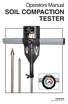 Operators Manual SOIL COMPACTION TESTER ENGLISH DOCU-M0116 03-10 Introduction THANK YOU for purchasing the Soil Compaction Tester. READ THIS MANUAL carefully to learn how to operate and service your Soil
METHOD A7 THE DETERMINATION OF THE MAXIMUM DRY DENSITY AND OPTIMUM MOISTURE CONTENT OF GRAVEL, SOIL AND SAND
 SCOPE METHOD A7 THE DETERMINATION OF THE MAXIMUM DRY DENSITY AND OPTIMUM MOISTURE CONTENT OF GRAVEL, SOIL AND SAND Definition The maximum dry density and optimum moisture content, as defined below, is
SunMor SM-V30 Solar Water Heater Installation Manual
 SunMor SM-V30 Solar Water Heater Installation Manual Rev. 1.02 Congratulations on the purchase of your new SunMor SM-V30 from Nature s Comfort LLC! You must read this entire instruction manual before beginning
8 plumbing. plumbing. 2010 PulteGroup, Inc. All Rights Reserved.
 8 90 2010 PulteGroup, Inc. All Rights Reserved. drains All the water you use leaves the home through a drain. Maintaining drains prevents clogging, overflows, water damage, and other problems. care and
Installation Instructions 4508 4508S
 SYMPHONY Spread Lavatory Faucet with Speed Connect Drain Congratulations on purchasing your American Standard faucet with Speed Connect drain, a feature found only on American Standard faucets. Speed Connect
Cooling system components, removing and installing
 Engine BHW Cooling system components, removing and installing Page 1 / 24 19-1 Cooling system components, removing and installing Warning! When doing any repair work, especially in the engine compartment,
The Water Cycle Now You See It, Now You Don t
 The Water Cycle Now You See It, Now You Don t Unit: Salinity Patterns & the Water Cycle l Grade Level: Elementary l Time Required: Introduction - 30 min. - Activity as groups 45min Wrap Up 20 min l Content
Operating Instructions & Maintenance Guidelines for Precision Vaporizers
 Operating Instructions & Maintenance Guidelines for Precision Vaporizers This page intentionally blank. Examination and Preparation for Use We want you to be completely satisfied with your vaporizer. Please
Virginia Gardener http://www.hort.vt.edu/envirohort
 The Virginia Gardener http://www.hort.vt.edu/envirohort Name Help Sheets: Seeds What Is a Seed? A seed is a very young plant that is in the dormant, or resting stage. It is very much alive. There are three
Tipping Bucket Rain Gauge Models 6011-A 6011-B
 Tipping Bucket Rain Gauge Models 6011-A 6011-B User s Manual 1165 National Drive Sacramento, CA 95834 800.824.5873 Table of Contents General Information... 1 Introduction... 1 Installation General... 2
Guidelines for Durable Driveways, Carports Patios, Walks, Garage Floors
 Guidelines for Durable Driveways, Carports Patios, Walks, Garage Floors The Right Concrete Mix Placing and Finishing Joints Correctly Spaced Curing for Durability "Concrete durability is the ability to
For all turfgrass areas. Now you can test soil reaction at different levels in the soil profile. Check Soil ph on:
 Turf-Tec ph Meter Test soil ph in the mat, thatch and above and below the root zone. ph can be checked, 0" to 4" inch level right on the turfgrass area. Simply insert probe to desired depth, allow to stand
A High Bill Usually Means a Leak
 A High Bill Usually Means a Leak Did you know that approximately 50 percent of all households have some kind of plumbing leak? Most of these leaks are due to worn out washers, flappers or faulty tank valves,
Moisture Sensor Agricultural Irrigation Design Manual
 ...simple tools for optimizing irrigation, worldwide. Moisture Sensor Agricultural Irrigation Design Manual COMPANY FOREWARD Since 1951 Irrometer Company, Inc. has been providing simple tools that help
USER INSTRUCTIONS FOR 10 LITRE PORTABLE DEHUMIDIFIER MODEL NO. DHMD102
 USER INSTRUCTIONS FOR 10 LITRE PORTABLE DEHUMIDIFIER MODEL NO. DHMD102 THANK YOU FOR CHOOSING YOUR NEW DEHUMIDIFIER. BEFORE USING THE UNIT READ THESE INSTRUCTIONS FULLY AND RETAIN THEM FOR FUTURE REFERENCE
Global Water Instrumentation, Inc.
 Global Water Instrumentation, Inc. 11390 Amalgam Way Gold River, CA 95670 T: 800-876-1172 Int l: (916) 638-3429, F: (916) 638-3270 6 Tipping Bucket: RG200 02/05/10 01-343 - 1 - Congratulations on your
CAST IRON THE BASICS. Heatline - Cast Iron Radiators SMOOTH FLAT FILE TO REMOVE ANY SWARF. ONE TIME. ASSEMBLY. JOINTS SHOULD BE TIGHTENED.
 CAST IRON THE BASICS 1. DO NOT LIFT ON YOUR OWN. 2. ONLY LIFT THE RADIATOR VERTICALLY. 3. DO NOT LIFT MORE THAN 8/10 SECTIONS AT ANY ONE TIME. 4. POSITION THE RADIATOR BEFORE FINAL ASSEMBLY. 5. THIS PRODUCT
FJ2. 2 Ton Trolley Floor Jack Assembly & Operating Instructions
 FJ2 2 Ton Trolley Floor Jack Assembly & Operating Instructions READ ALL INSTRUCTIONS AND WARNINGS BEFORE USING THIS PRODUCT. This manual provides important information on proper operation & maintenance.
EXPRESS STILL WARNING It is legal in New Zealand to own and operate a still for the purpose of producing alcohol for your own consumption.
 THE EXPRESS STILL This still represents the next generation in home distillation equipment. It eliminates the problem of having to spend all day processing a 25 litre wash. Taking 1 hour to heat up, then
Model 2128 AIR COMPRESSOR PUMP Operating Instructions
 Model 8 AIR COMPRESSOR PUMP Operating Instructions Assembly of pump Connection to cylinder and charging ) Connect the air hose to the air cylinder and tighten with spanner. Do not over tighten. Note; the
ETL listed for installations within 5 ft. (1.5M) of outer edge of water www.srsmith.com 79-15152-00 Rev E2 9.14 Page 1 of 10
 Color Light Streams Large Laminar Installation Manual (CLSLL) Input Power: Total Power: 12V AC 5W 4008814 ETL listed for installations within 5 ft. (1.5M) of outer edge of water 79-15152-00 Rev E2 9.14
Installation Manual. Solar Pool Heating System. Read the complete manual before beginning the installation
 Solar Pool Heating System Installation Manual Read the complete manual before beginning the installation 1. Sizing the System Visit www.techno-solis.com to size the system using the sizing calculator.
WHAT YOU DON T KNOW ABOUT ACCUMULATORS CAN KILL YOU!
 WHAT YOU DON T KNOW ABOUT ACCUMULATORS CAN KILL YOU! Atlanta (Monroe) GA 770-267-3787 [email protected] www.gpmhydraulic.com What You Don t Know About Hydraulic Accumulators Can Kill You TABLE OF CONTENTS
THERMOMETER INSTALLATION, OPERATION AND MAINTENANCE
 THERMOMETER INSTALLATION, OPERATION AND MAINTENANCE www.winters.com MANUFACTURER OF INDUSTRIAL INSTRUMENTATION Bi-Metal Thermometers Bi-Metal Thermometers Winters bi-metal thermometers are direct sensing
USER MANUAL. Bottom Loading Bottled Water Dispenser SAVE THIS MANUAL FOR FUTURE USE. Model # 900172
 Model # 900172: Page 1 USER MANUAL Bottom Loading Bottled Water Dispenser Model # 900172 TO REDUCE THE RISK OF INJURY AND PROPERTY DAMAGE, USER MUST READ THIS MANUAL BEFORE ASSEMBLING, INSTALLING & OPERATING
All About Your Peripherally Inserted Central Catheter (PICC)
 All About Your Peripherally Inserted Central Catheter (PICC) General Information Intravenous (IV) therapy is the delivery of fluid directly into a vein. An intravenous catheter is a hollow tube that is
Irrigation - How Best to Water Your Desert Trees
 Irrigation - How Best to Water Your Desert Trees John Eisenhower, ISA Certified Arborist WE-5213A Integrity Tree Service, Inc. 602-788-0005 www.itreeservice.com How much water do my trees need? How much
S&G Model 2937 Group 1 Combination Lock
 Installation and Combination Changing Instructions S&G Model 2937 Group 1 Combination Lock NOTE: READ COMPLETE INSTRUCTIONS BEFORE INSTALLATION These instructions should be followed when installing the
product manual 08.09 H-4210A PORTABLE STATIC CONE PENETROMETER
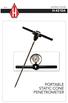 08.09 product manual H-4210A PORTABLE STATIC CONE PENETROMETER PORTABLE STATIC CONE PENETROMETER GENERAL INFORMATION The H-4210A Static Cone Penetrometer is an unparalleled device for measuring soil consistency.
Installation (Figure 1) (Figure 4) (Figure 5) (Figure 2) (Figure 3) (Figure 6)
 2 4 3 6 5 1 Installation Typically, Termite Bait Stations (TBS) are installed around a structure at intervals of 10 to 20 feet. For best practices, consider installing stations 10 feet apart (Figure 1).
Waters Corporation. Waters 2690/5 USER & TROUBLESHOOTING GUIDE
 Waters Corporation Waters 2690/5 USER & TROUBLESHOOTING GUIDE Contents 2690/5 Theory Setup procedures. Troubleshooting the 2690/5 User maintenance of the 2690/5 Spare Parts 2 2690/5 Theory 2690/5 Solvent
Soil Suction. Total Suction
 Soil Suction Total Suction Total soil suction is defined in terms of the free energy or the relative vapor pressure (relative humidity) of the soil moisture. Ψ = v RT ln v w 0ω v u v 0 ( u ) u = partial
MAINTENANCE OF SMALL WATER SUPPLY, SANITATION AND IRRIGATION SCHEMES
 MAINTENANCE OF SMALL WATER SUPPLY, SANITATION AND IRRIGATION SCHEMES John van Rijn INDEVELOPMENT MAINTENANCE OF SMALL WATER SUPPLY, SANITATION AND IRRIGATION SCHEMES Any part of this publication may be
SunMaxx Solar Filling Station Operating Instructions
 SunMaxx Solar Filling Operating Instructions Content 1. Declaration of conformity... 2 2. Introduction... 2 3. Transportation and unpacking... 4 4. Mounting and commissioning... 5 5. End of operation...
Rexroth Hydraulic Pump A10VO Series User Manual
 Rexroth Hydraulic Pump A10VO Series User Manual Rexroth Hydraulic pump A10VO Series User Manual Revised 5/1/2009 Page 1 of 12 Functional Purpose This pump is preferred over a fixed displacement (gear)
Tri-Homo Style Operation and Maintenance Instructions
 Tri-Homo Style Operation and Maintenance Instructions One Research Drive Stratford, CT 06615 (203) 375-0063 www.sonicmixing.com 1 Installation and Start-up Do not perform following adjustments without
Apr 17, 2000 LAB MANUAL 1302.0. 1302 PARTICLE SIZE ANALYSIS OF SOILS AASHTO Designation T 88 (Mn/DOT Modified)
 Apr 17, 2000 LAB MANUAL 1302.0 1302 PARTICLE SIZE ANALYSIS OF SOILS AASHTO Designation T 88 (Mn/DOT Modified) 1302.1 SCOPE This method describes a procedure for the quantitative determination of the distribution
Installation and Troubleshooting Instructions for Electric Tankless Residential Water Heaters.
 Model Number: Serial Number: Information Manual Installation and Troubleshooting Instructions for Electric Tankless Residential Water Heaters. ATTENTION: IF YOU ARE NOT A LICENSED PLUMBER OR A LICENSED
TUTORIAL. REbUILdING. REAR CALIpER O-RING CONVERSION CORVETTE 1965-82. Part #: HT-2
 Part #: HT-2 1965-82 CORVETTE O-RING CONVERSION REAR CALIpER REbUILdING TUTORIAL Choosing a Brake Caliper Rebuild Kit Standard Lip Seals vs. O-Ring Seals Lip seal design seals are used on 1965-1982 Corvette
ClearView 100. Instruction Manual
 ClearView 100 Instruction Manual Important Safeguards This appliance is not intended for use by children or infirm persons without supervision. Young children should be supervised to ensure that they do
PART I SIEVE ANALYSIS OF MATERIAL RETAINED ON THE 425 M (NO. 40) SIEVE
 Test Procedure for PARTICLE SIZE ANALYSIS OF SOILS TxDOT Designation: Tex-110-E Effective Date: August 1999 1. SCOPE 1.1 This method covers the quantitative determination of the distribution of particle
Standard Test Procedures Manual
 STP 206-4 Standard Test Procedures Manual Section: 1. SCOPE 1.1. Description of Test This method describes the procedure for determining the liquid limit, plastic limit and the plasticity index of coarse-grained
Installation PowerPoint for Grasscrete Formers
 Installation PowerPoint for Grasscrete Formers 1 This document describes the two single-use tools utilized to create the Grasscrete product. The original Former is a vacuum formed light gauge plastic mold
Soil Sampling for Nutrient Management
 Soil Sampling for Nutrient Management Nutrient Management Factsheet No. 2 in Series Revised September 2010 Order Reference No. 631-500-1 For nutrient management, soil sampling is done to collect a soil
Harvesting Dry Bean John Nowatzki, NDSU Extension Agricultural Machine Systems Specialist
 Harvesting Dry Bean John Nowatzki, NDSU Extension Agricultural Machine Systems Specialist Estimating Dry Bean Yield Dry bean yields can be estimated by knowing the number of seeds per pod, pods per plant
Cane Creek Double Barrel Instructions
 Cane Creek Double Barrel Instructions Congratulations on your purchase of the Cane Creek Double Barrel (CCDB) rear shock. Developed in partnership with Öhlins Racing, the Double Barrel brings revolutionary
Foundation Experts, LLC Specializes in Foundation Repair and Waterproofing
 1 Most basements show some signs of leaking and cracking. Through the years, problems with water, poor soils, grading, drainage and possible settling affect the integrity of a basement. Being able to recognize
WET/DAMP BASEMENTS ANSWER: BASEMENT WALLS AND FLOORS CAN BECOME WET BY A LEAK, CAPILLARY SUCTION OR CONDENSATION.
 WET/DAMP BASEMENTS PROBLEM. IS THIS BASEMENT LEAKING OR COULD WE HAVE ANOTHER PROBLEM? Water line arching up on wall in corners of basement. Water collecting on concrete floor starting in corners. ANSWER:
Cleaning & Sanitisation
 Cleaning & Sanitisation Notice: The information and/or procedures presented in the following demonstration(s) should be performed by a trained Water Cooler Service Technician only. Never attempt to service
Removing Moisture within Large Double Glazed Windows
 Removing Moisture within Large Double Glazed Windows Copyright: Max Cottrell www.mcottrell.co.uk This article gives the reasons and a method of removing accumulated moisture from double glazed windows,
SEE HOW TO MAKE LIME PLASTER WHY USE LIME? PATTI STOUTER, BUILD SIMPLE INC. FEBRUARY 2013
 SEE HOW TO MAKE LIME PLASTER PATTI STOUTER, BUILD SIMPLE INC. FEBRUARY 2013 WHY USE LIME? Lime plaster forms a light, clean, and durable surface that is resistant to weather and mold. A thin layer attaches
FASCINATION 700 HVLP TANNING PRO SYSTEM USER MANUAL
 FASCINATION 700 HVLP TANNING PRO SYSTEM USER MANUAL Congratulations on choosing the Fascination 700 HVLP Tanning Pro System! Your system includes the following items: 1 Fascination 700 HVLP Tanning Pro
Peasouper Operator s Manual
 Peasouper Operator s Manual Contact Information Le Maitre Special Effects, Inc. Canada 1960 Blue Heron Drive, London, ON. N6H 5L9 Phone Direct: (519) 659.7972 Phone Toll Free Direct: (800) 388.0617 Fax:
METHOD A10 (a) THE DETERMINATION OF THE IN-PLACE DRY DENSITY OF SOIL OR GRAVEL BY THE SAND REPLACEMENT METHOD
 METHOD A10 (a) THE DETERMINATION OF THE IN-PLACE DRY DENSITY OF SOIL OR GRAVEL BY THE SAND REPLACEMENT METHOD 1 SCOPE The in-place dry density of compacted soil or gravel, as defined below, is determined
TECHNICAL DATA. Dry 122a. November 12, 2013
 Dry 122a 1. PRODUCT DESCRIPTION The Viking is a quick-opening device. When installed with the required external Anti-flood Device, the assembly is designed to increase the operating speed of Viking Model
INSTRUCTIONS AND PARTS LIST FOR MODEL 70H & 75H HAND-OPERATED HYDRAULIC PRESS
 INSTRUCTIONS AND PARTS LIST FOR MODEL 70H & 75H HAND-OPERATED HYDRAULIC PRESS SETTING UP THE PRESS FOR OPERATION For shipping convenience, the gauge, pump handle, hoist crank, screw nose and base angles
WaterFarm. Assembly Guide
 WaterFarm Assembly Guide WATERFARM PARTS 1 2 3 4 5 6 7 8 9 10 11 WATERFARM PARTS: 1) Clay Pebbles (not included with WaterFarm Controller 8-Pack or Modular units) 2) Flora Series Nutrients (8oz bottles)
FLUSHOMETER - TANK SYSTEM
 Owner s Service Manual 501-A Series FLUSHOMETER - TANK SYSTEM 501-A Series FLUSHMATE 501-A SERIES (D) (E) (C) 2 3 (B) 1 4 (F) (A) 6 5 List of Components for 501-A Series*: 1. Lower Supply Group w/hose
Leak Detector Guide. Your Guide to Home Water Conservation
 E v e r y D r o p C o u n t s! Leak Detector Guide Your Guide to Home Water Conservation M i a m i - D a d e W a t e r a n d S e w e r D e p a r t m e n t A High Bill Usually Means a Leak Did you know
TUTORIAL. REbUILdING. front CALIpER O-RING CONVERSION CORVETTE 1965-82. Part #: HT-1
 Part #: HT-1 1965-82 CORVETTE O-RING CONVERSION front CALIpER REbUILdING TUTORIAL Choosing a Brake Caliper Rebuild Kit Standard Lip Seals vs. O-Ring Seals Lip seal design seals are used on 1965-1982 Corvette
Fiberstars Lighted Laminar Flow Fountain Installation Manual
 Fiberstars Lighted Laminar Flow Fountain Installation Manual 79-15037-00 REV Xx http://www.fiberstars.com Page 1 of 8 SAVE THESE DIRECTIONS! These directions are provided to ensure the proper installation
BUT PRECAUTIONS MUST BE TAKEN OR SERIOUS BURNS CAN RESULT.
 Cooling System Operation Below is an explanation of this system's operation Radiator The radiator is a device designed to dissipate the heat which the coolant has absorbed from the engine. It is constructed
Draining and filling cooling system
 Page 1 of 9 Draining and filling cooling system Special tools and workshop equipment required Adapter -V.A.G 1274/8- Pipe -V.A.G 1274/10- Drip tray -V.A.G 1306- or drip tray for workshop hoist -VAS 6208-
Step-by-step instructions:
 Spark plug thread repair for Ford Triton cylinder heads Step-by-step instructions: Identification Installation Verification Specifically designed and tested for 4.6L, 5.4L, and 6.8L 2 and 4 valve heads,
Inline Chlorinator Chlorine Chemical Feeder
 Inline Chlorinator Chlorine Chemical Feeder Instructions Page 1 Chlorine setting in P.P.M. for center tube and cap Hole #1 = 2 P.P.M. Hole #2 = 8 P.P.M. Hole #3 = 30 P.P.M. Hole #A = 3.5 P.P.M. Hole #B
Overview PARTS LIST. B. Lever mounting base C. Flush handle assembly D. Grey/Blue float stop E. Grey float (Full Flush) F. Flush valve washer
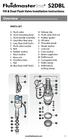 Overview READ ENTIRE INSTRUCTIONS BEFORE STARTING INSTALLATION PARTS LIST A. Flush valve B. Lever mounting base C. Flush handle assembly D. Grey/Blue float stop E. Grey float (Full Flush) F. Flush valve
Ceramic Glass Electric Galley Ranges
 Ceramic Glass Electric Galley Ranges OWNER S MANUAL Models # 65335, 65336, 75331, 75332 Read all instructions and warnings before operating. Force 10 Manufacturing Corporation Unit A 19169 21 st Ave Surrey,
ecomax Instructions for use Wall hung room sealed fan assisted condensing boilers For the user
 For the user Instructions for use ecomax Wall hung room sealed fan assisted condensing boilers ecomax 63/ E ecomax 68/ E ecomax 6/ E ecomax 635 E ecomax 84/ E ecomax 88/ E ecomax 835 E GB Table of contents
FULL COVERAGE IRRIGATION for tree & vine crops the facts.
 Handy Pocket Guide rotator technology save water, save energy and do a better job of irrigating. FULL COVERAGE IRRIGATION for tree & vine crops the facts. Copyright 2008 Nelson Irrigation Corporation 1
Air and Weather FOSS kit
 Air and Weather FOSS kit 2. E. 1 Understand patterns of weather and factors that affect weather. 2.E.1.1 Summarize how energy from the sun serves as a source of light that warms the land, air and water.
100 Series Maxi Internal Filters. Instruction Manual
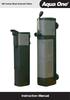 100 Series Maxi Internal Filters Instruction Manual Important Safeguards This appliance is not intended for use by children or infirm persons without supervision. Young children should be supervised to
Select Radiators Installation Guide
 Select Radiators Installation Guide Table of Contents Informational Symbols...3 Before You Begin...4 Select Rough-In... 5 Connection Installation...6 Optional Piping Arrangements...7 Conventional Wall
Sample Collection Procedures for Insulating Fluid Samples
 Sample Collection Procedures for Insulating Fluid Samples GENERAL Sampling electrical insulating oil for laboratory analysis requires care to ensure that the sample is representative of the product being
6. Base your answer to the following question on the graph below, which shows the average monthly temperature of two cities A and B.
 1. Which single factor generally has the greatest effect on the climate of an area on the Earth's surface? 1) the distance from the Equator 2) the extent of vegetative cover 3) the degrees of longitude
300 SERIES 331, 332, 333, 344, 356 AND 367 MODELS
 Section: MOYNO 500 PUMPS Page: 1 of 8 Date: March 1, 1998 SERVICE MANUAL MOYNO 500 PUMPS 300 SERIES 331, 332, 333, 344, 356 AND 367 MODELS Mechanical Seal Models Packing Gland Models MODELS DESIGN FEATURES
Operator Quick Guide EC SENSOR
 Operator Quick Guide EC SENSOR Revision G - 24/04/2008 General Information About This Guide The information in this guide has been carefully checked and is believed to be accurate. However, Hach Ultra
SIEVE ANALYSIS OF FINE AND COARSE AGGREGATES
 Test Procedure for SIEVE ANALYSIS OF FINE AND COARSE AGGREGATES TxDOT Designation: Tex-200-F Effective Date: January 2016 1. SCOPE 1.1 Use this test method to determine the particle size distribution of
LAB 24 Transpiration
 Name: AP Biology Lab 24 LAB 24 Transpiration Objectives: To understand how water moves from roots to leaves in terms of the physical/chemical properties of water and the forces provided by differences
Knowledge Domain: Plumbing Unit: Leaking Skill: Epoxy
 Knowledge Domain: Plumbing Unit: Leaking Skill: Epoxy Tools and Parts Required: 1) Jar 2) Oversized lid 3) Epoxy 4) Rubber tube 5) Soapy water 6) Safety goggles 7) Latex gloves 8) Scrap stick to mix epoxy
Cooling system components, removing and installing
 Volkswagen Touareg 3.2 - Cooling system components, removing and installing Page 1 / 24 19-1 Cooling system components, removing and installing Warning! Hot steam may escape when opening expansion tank.
Tips from the Drain Cleaning Pro s
 Tips from the Drain Cleaning Pro s Here are easy-to-follow instructions on how to unstop clogged drains, toilets and sewers. Read these instructions carefully before undertaking these jobs. If any part
Settlement of Foundations on Expansive Clays Due to Moisture Demand of Trees CIGMAT 2008
 Settlement of Foundations on Expansive Clays Due to Moisture Demand of Trees CIGMAT 2008 Kenneth E. Tand, P.E. Practicing Geotechnical Engineer FRIEND OR FOE Trees are our friends. They extract carbon
LEAK DETECTION GUIDE
 LEAK DETECTION GUIDE Your Guide to Home Water Conservation CITY OF BELLEVUE UTILITIES WATER & SEWER DEPARTMENTS LEAK DETECTION GUIDE PAGE: 1 WHERE TO START If you receive a high water bill, or think there
PLUMBING CARE AND REPAIR
 PLUMBING CARE AND REPAIR No special skills are required for any of the repairs described in this section. Plumbing repairs are seldom dangerous unless leaking water is soaking areas where there are electrical
SureSite Magnetic Liquid Level Indicator
 SureSite Magnetic Liquid Level Indicator Instruction Bulletin No. 177664-1 (Rev. E) Section 1: Weldments Thank you for purchasing the GEMS SureSite Magnetic Level Indicator. Please read this document prior
Volkswagen New Beetle 2.0 Liter 4-cyl General, Engine (Engine Code AEG) 17 Engine-Lubrication system (Page GR-17)
 17 Engine-Lubrication system (Page GR-17) Lubrication system components, removing and installing Oil pan, removing and installing Oil pressure and oil pressure switch, checking Dynamic oil pressure warning
INSTRUCTIONS FOR USE HUMIRA 40 MG/0.8 ML, 20 MG/0.4 ML AND 10 MG/0.2 ML SINGLE-USE PREFILLED SYRINGE
 INSTRUCTIONS FOR USE HUMIRA (Hu-MARE-ah) (adalimumab) 40 MG/0.8 ML, 20 MG/0.4 ML AND 10 MG/0.2 ML SINGLE-USE PREFILLED SYRINGE Do not try to inject HUMIRA yourself until you have been shown the right way
Indiana State Department of Health Construction Guidelines for Gravity and Flood-Dose Trench Onsite Systems
 Indiana State Department of Health Construction Guidelines for Gravity and Flood-Dose Trench Onsite Systems The septic tank-absorption field sewage treatment system is composed of two major elements; the
CONFER ABOVE GROUND CURVE STEP / ABOVE GROUND CURVE STEP SYSTEM ASSEMBLY AND INSTALLATION MANUAL
 SAVE THESE INSTRUCTIONS DEALER/INSTALLER: GIVE TO HOMEOWNER CONFER ABOVE GROUND CURVE STEP / ABOVE GROUND CURVE STEP SYSTEM ASSEMBLY AND INSTALLATION MANUAL Model CCX-AG Note: 40 lbs. of sand required!
Name: PLSOIL 105 & 106 First Hour Exam February 27, 2012. Part A. Place answers on bubble sheet. 2 pts. each.
 Name: PLSOIL 105 & 106 First Hour Exam February 27, 2012 Part A. Place answers on bubble sheet. 2 pts. each. 1. A soil with 15% clay and 20% sand would belong to what textural class? A. Clay C. Loamy sand
Bluelab Soil ph Meter Instruction Manual
 Instruction Manual www.getbluelab.com Table of Contents 1.0 Information about measuring the ph of soils/media. 2 2.0 Introduction to Bluelab Soil ph Meter 4 3.0 Preparing the Bluelab Soil ph Meter for
In this experiment, we will use three properties to identify a liquid substance: solubility, density and boiling point..
 Identification of a Substance by Physical Properties 2009 by David A. Katz. All rights reserved. Permission for academic use provided the original copyright is included Every substance has a unique set
Installers and specifiers seeking information and advice on radiator thermostats and their application will find no better source than Danfoss.
 DOMESTIC HEATING CONTROLS ARE EASY PART 5 - RADIATOR THERMOSTATS Fig.1. RAS-C 2 and RAS-D 2 radiator thermostats with RLV-D lockshield valve Radiator Thermostats (TRVs), the original and straight forward
Manual for GlobePharma Mini-Press II Rotary Tablet Press
 1 of 13 Preparing the Rotary Press 1. Make sure the rotary press is unplugged. 2. Open the bottom cabinet of the rotary press and take out the grey tool kit, and the beige box of punches and dies. 3. Take
Irrigation Scheduling for Corn Why and How
 NATIONAL CORN HANDBOOK WATER MANAGEMENT (IRRIGATION) Irrigation Scheduling for Corn Why and How F. M. Rhoads, University of Florida; and C. D. Yonts, University of Nebraska NCH-20 Reviewers J. E. Hook,
SECOND GRADE 1 WEEK LESSON PLANS AND ACTIVITIES
 SECOND GRADE 1 WEEK LESSON PLANS AND ACTIVITIES WATER CYCLE OVERVIEW OF SECOND GRADE WATER WEEK 1. PRE: Exploring the properties of water. LAB: Experimenting with different soap mixtures. POST: Analyzing