
|
|
|
- Horace McGee
- 9 years ago
- Views:
Transcription
1

2

3

4

5

6

7

8

9

10

11

12

13

14

15

16

17

18

19

20

21
22
23
24
25
26
27
28
29
30
31
32
33
34
35
36
37
38
39
40
41
42
43
44
45
46
47 Chainsaw Safety Manual STIH)
48 Contents English / USA Printed on chlorine-free paper. Printing inks contain vegetable oils; paper can be recycled. ANDREAS STIHL AG & Co. KG, M11. E4. CP. Printed in USA Some Important Safety Precautions for Chain Saw Users... 2 Safety Precautions... 4 Maintenance Chart Main Parts of the Saw STIHl This manual contains the safety precautions and recommended cutting techniques outlined in STIHL chainsaw Owner s Manuals. Even if you are an experienced chainsaw user, it is in your own interests to familiarize yourself with the latest rules and regulations regarding safe use of your chainsaw. Please note that the illustrations on pages 28 and 29 show the chainsaws STIHL MS 210, 230, 250. Other chainsaw models may have different parts and controls. You should therefore always refer to the Owner s Manual of your particular saw model. Because a chainsaw is a high-speed wood-cutting tool, some special safety precautions must be observed as with any other power saw to reduce the risk of personal injury. Careless or improper use may cause serious or even fatal injury. Read and follow all safety precautions in current Owner s Manual or Safety Manual. Always use two hands to operate the chainsaw. Avoid contact of bar tip with any object. This can cause the guide bar to kick suddenly up and back, which may result in serious or fatal injury. To reduce the risk of kickback injury STIHL recommends the use of STIHL green labeled reduced kickback bars and low kickback chains and a STIHL Quickstop chain brake. Contact your STIHL dealer or the STIHL distributor for your area if you do not understand any of the instructions in this manual. Chainsaw Safety Manual 1
49 English / USA Some Important Safety Precautions for Chain Saw Users A. A Summary of Warnings on kickback and other Selected Risks Taken Primarily from ANSI B (See also Safety Precautions section of this Owner s Manual) Kickback may occur when the nose or tip of the guide bar touches an object, or when the wood closes in and pinches the saw chain in the cut. Tip contact in some cases may cause a lightning fast reverse reaction, kicking the guide bar up and back towards the operator. Pinching the saw chain along the top of the guide bar may push the guide bar rapidly back towards the operator. Either of these reactions may cause you to lose control of the saw which could result in serious personal injury. Section 5.11 of ANSI B sets certain performance and design criteria related to chainsaw kickback. STIHL has developed a color code system using green and yellow to help you select a powerhead, bar and chain combination that complies with the kickback requirements of the ANSI Standard. See the sections entitled "Safety Precautions" and "Specifications" of this manual. Do not rely exclusively upon the safety devices built into your saw. As a chainsaw user, you should take several steps to keep your cutting jobs free from accident or injury. 1. With a basic understanding of kickback, you can reduce or eliminate the element of surprise. Sudden surprise contributes to accidents. 2. Keep a good firm grip on the saw with both hands, the right hand on the rear handle, and the left hand on the front handle, when the engine is running. Use a firm grip with thumbs and fingers encircling the chainsaw handles. A firm grip will help you reduce kickback and maintain control of the saw. Don't let go. 3. Make sure the area in which you are cutting is free from obstructions. Do not let the nose of the guide bar contact a log, branch, or any other obstruction that could be hit while you are operating the saw. 4. Cut at high engine speeds. 5. Do not overreach or cut above shoulder height. 6. Follow manufacturer's sharpening and maintenance instructions for the saw chain. 7. Only use replacement bars and chains specified by the manufacturer or the equivalent. 8. Reduced kickback bars and low kickback chains are designed to reduce the risk of kickback injury. Ask your STIHL dealer about these devices. B. Other Safety Precautions 1. Do not operate a chainsaw with one hand! Serious injury to the operator, helpers, bystanders, or any combination of these persons may result from one-handed operation. A chainsaw is intended to be used with two hands. 2. Do not operate a chainsaw when you are fatigued. 3. Use safety footwear; snug-fitting clothing; protective gloves; and eye, hearing, and head protection devices. 2 Chainsaw Safety Manual
50 English / USA 4. Use caution when handling fuel. Move the chainsaw at least 10 feet (3 m) from the fueling point before starting the engine. 5. Do not allow other persons to be near the chainsaw when starting or cutting with the chainsaw. Keep bystanders and animals out of the work area. 6. Do not start cutting until you have a clear work area, secure footing, and a planned retreat path from the falling tree. 7. Keep all parts of your body away from the saw chain when the engine is running. 8. Before you start the engine, make sure that the saw chain is not contacting anything. 9. Carry the chainsaw with the engine stopped, the guide bar and saw chain to the rear, and the muffler away from your body. 10. Do not operate a chainsaw that is damaged, improperly adjusted, or not completely and securely assembled. Be sure that the saw chain stops moving when the throttle trigger is released. 11. Shut off the engine before setting the chainsaw down. 12. Use extreme caution when cutting small size brush and saplings because slender material may catch the saw chain and be whipped toward you or pull you off balance. 13. When cutting a limb that is under tension be alert for springback so that you will not be struck when the tension in the wood fibers is released. 14. Keep the handles dry, clean, and free of oil or fuel mixture. 15. Operate the chainsaw only in wellventilated areas. 16. Do not operate a chainsaw in a tree unless you have been specifically trained to do so. 17. All chainsaw service, other than the items listed in the Owner's Manual maintenance instructions, should be performed by competent chainsaw service personnel.(for example, if improper tools are used to remove the flywheel or if an improper tool is used to hold the flywheel in order to remove the clutch, structural damage to the flywheel could occur and could subsequently cause the flywheel to burst). 18. When transporting your chainsaw, use the appropriate chain guard (scabbard). Other important safety precautions are contained in the body of the Owner's Manual especially in the General Safety Precautions. Note: When using a chainsaw for logging purposes, refer to the Code of Federal Regulations, Parts 1910 and Chainsaw Safety Manual 3
51 English / USA Safety Precautions The use of any chainsaw may be hazardous. The saw chain has many sharp cutters. If the cutters contact your flesh, they will cut you, even if the chain is not moving. At full throttle, the chain speed can reach 45 mph (20 m/s). It is important that you read, fully understand and observe the following safety precautions and warnings. Read the Owner's Manual and the Safety Precautions periodically. Pay special attention to the section on reactive forces. Reactive forces, including kickback, can be dangerous. Careless or improper use of any chainsaw may cause serious or fatal injury. All safety precautions that are generally observed when working with an axe or a hand saw also apply to the operation of chainsaws. However, because a chainsaw is a high-speed, fast-cutting power tool, special safety precautions must be observed to reduce the risk of personal injury. Have your STIHL dealer show you how to operate your chainsaw. Observe all applicable local safety regulations, standards and ordinances. Minors should never be allowed to use a chainsaw. Bystanders, especially children, and animals should not be allowed in the area where a chainsaw is in use. Never let the saw run unattended. Store it in a locked place away from children and empty the fuel tank before storing for longer than a few days. Do not lend or rent your chainsaw without the Owner`s Manual. Be sure that anyone using your saw reads and understands the information contained in this manual. These safety precautions and warnings apply to the use of all STIHL chainsaws. Different models may have different parts and controls. See the appropriate section of your Owner's Manual for a description of the controls and function of the parts of your model saw. Safe use of a chainsaw involves 1. the operator 2. the saw 3. the use of the saw. THE OPERATOR Physical Condition You must be in good physical condition and mental health and not under the influence of any substance (drugs, alcohol) which might impair vision, dexterity or judgement. Do not operate a chainsaw when you are fatigued. Be alert - If you get tired while operating your chainsaw, take a break. Tiredness may result in loss of control. Working with any chainsaw can be strenuous. If you have any condition that might be aggravated by strenuous work, check with your doctor before operating a chainsaw. Prolonged use of chainsaws (or other machines) exposing the operator to vibrations may produce whitefinger disease (Raynaud's phenomenon) or carpal tunnel syndrome. 4 Chainsaw Safety Manual
52 English / USA These conditions reduce the hand's ability to feel and regulate temperature, produce numbness and burning sensations and may cause nerve and circulation damage and tissue necrosis. All factors which contribute to whitefinger disease are not known, but cold weather, smoking and diseases or physical conditions that affect blood vessels and blood transport, as well as high vibration levels and long periods of exposure to vibration are mentioned as factors in the development of whitefinger disease. In order to reduce the risk of whitefinger disease and carpal tunnel syndrome, please note the following: Many STIHL models are available with an anti-vibration (AV) system designed to reduce the transmission of vibrations created by the engine and cutting attachment to the operator's hands. An AV system is recommended for those persons using chainsaws on a regular or sustained basis. Wear gloves and keep your hands warm. Heated handles, which are available on most STIHL powerheads, are recommended for cold weather use. Keep the saw chain sharp and the saw, including the AV system, well maintained. A dull chain will increase cutting time, and pressing a dull chain through wood will increase the vibrations transmitted to your hands. A saw with loose components or with damaged or worn AV buffers will also tend to have higher vibration levels. Maintain a firm grip at all times, but do not squeeze the handles with constant, excessive pressures. Take frequent breaks. All the above mentioned precautions do not guarantee that you will not sustain whitefinger disease or carpal tunnel syndrome. Therefore, continual and regular users should monitor closely the condition of their hands and fingers. If any of the above symptoms appear, seek medical advice immediately. The ignition system of your unit produces an electromagnetic field of a very low intensity. This field may interfere with some pacemakers. To reduce the risk of serious or fatal injury, persons with pacemaker should consult their physician and the pacemaker manufacturer before operating this tool. Proper Clothing To reduce the risk of injury, the operator should wear proper protective apparel. Clothing must be sturdy and snug-fitting, but allow complete freedom of movement. Avoid loosefitting jackets, scarfs, neckties, jewelry, flared or cuffed pants, unconfined long hair or anything that could become entangled with the saw or brush. Wear overalls or jeans with a reinforced cut retardant insert or cut retardant chaps. Protect your hands with gloves when handling saw and saw chain. Heavy-duty, nonslip gloves improve your grip and protect your hands. Good footing is most important in chainsaw work. Wear sturdy boots with nonslip soles. Steeltoed safety boots are recommended. Never operate a chainsaw unless wearing goggles or properly fitted safety glasses with adequate top and side protection complying with your national standard. Chainsaw Safety Manual 5
53 English / USA Wear an approved safety hard hat to protect your head. Chainsaw noise may damage your hearing. Always wear sound barriers (ear plugs or ear mufflers) to protect your hearing. Continual and regular users should have their hearing checked regularly. THE SAW Parts of the chainsaw; for illustrations and definitions of the parts see the chapter on "Main Parts of Saw". Never modify a chainsaw in any way. Only attachments and parts supplied by STIHL or expressly approved by STIHL for use with the specific STIHL saw models are authorized. Although certain unauthorized attachments are usable with the STIHL powerhead, their use may, in fact, be extremely dangerous. THE USE OF THE SAW Transporting the chainsaw Always stop the engine before putting a chainsaw down or carrying it. Carrying a chainsaw with the engine running is extremely dangerous. Accidental acceleration of the engine can cause the chain to rotate. During operation, the powerhead muffler and the material around it reach extremely high temperatures. Avoid touching the hot muffler, you could receive serious burns. By hand: When carrying your saw by hand, the engine must be stopped and the saw must be in the proper position. Grip the front handle and place the muffler away from the body. The chain guard (scabbard) should be over the chain and the guide bar, which should point backwards. When carrying your saw, the bar should be behind you. By vehicle: When transporting in a vehicle, keep chain and bar covered with the chain guard. Properly secure your saw to prevent turnover, fuel spillage and damage to the saw or vehicle. Preparation for the use of the saw Take off the chain guard and inspect for safety in operation. For assembly, follow the procedure described in the chapter "Mounting the Bar and Chain" of your Owner's Manual. STIHL Oilomatic chain, guide bar and sprocket must match each other in gauge and pitch. Before replacing any bar and chain, see the sections on "Specifications", "Kickback" and the "ANSI B chainsaw kickback standard" in this manual. 001BA115 KN 6 Chainsaw Safety Manual
54 English / USA Proper tension of the chain is extremely important. In order to avoid improper setting, the tensioning procedure must be followed as described in your manual. Always make sure the hexagonal nut(s) for the sprocket cover is (are) tightened securely after tensioning the chain. Never start the saw with the sprocket cover loose. Check chain tension once more after having tightened the nut(s) and thereafter at regular intervals (whenever the saw is shut off). If the chain becomes loose while cutting, shut off the engine and then tighten. Never try to adjust the chain while the engine is running! Fueling Your STIHL chainsaw uses an oil-gasoline mixture for fuel (see chapter "Fuel" of your Owner's Manual). Gasoline is an extremely flammable fuel. If spilled or ignited by a spark or other ignition source, it can cause fire and serious burn injury or property damage. Use extreme caution when handling gasoline or fuel mix. Fueling Instructions Do not smoke or bring any fire or flame near the fuel or the chainsaw. Note that combustible fuel vapors may be vented from the fuel system. Fuel your chainsaw in well-ventilated areas, outdoors only. Always shut off the engine and allow it to cool before refueling. Gasoline vapor pressure may build up inside the gas tank depending on the fuel used, the weather conditions, and the venting system of the tank. In order to reduce the risk of burns or other personal injury from escaping gas vapor and fumes, remove the fuel filler cap on the STIHL product carefully so as to allow any pressure build-up in the tank to release slowly. Never remove fuel filler cap while engine is running. Select bare ground for fueling and move at least 10 feet (3 m) from fueling spot before starting the engine. Wipe off any spilled fuel before starting your saw, and check for leakage. Check for fuel leakage while refueling and during operation. If fuel or oil leakage is found, do not start or run the engine until leak is fixed and spilled fuel has been wiped away. Take care not to get fuel on your clothing. If this happens, change your clothing immediately. Different models may have different fuel caps. Cap with Grip In order to reduce the risk of fuel spillage and fire from an improperly tightened fuel cap, correctly position and tighten the fuel cap in the fuel tank opening. To do this with this STIHL cap, raise the grip on the top of the cap until it is upright at a 90 angle. Insert the cap in the fuel tank opening with the triangular marks on the grip of the cap and on the fuel tank opening lining up. Using the grip, turn the cap firmly clockwise as far as it will go (approx. a quarter turn). Chainsaw Safety Manual 7
55 English / USA Fold the grip flush with the top of the cap. If the grip does not lie completely flush with the cap and the detent on the grip does not fit in the corresponding recess in the filler neck, the cap is not properly seated and tightened and you must repeat the above steps. Slotted Cap Unit vibrations can cause an improperly tightened fuel filler cap to loosen or come off and spill quantities of fuel. In order to reduce the risk of fuel spillage and fire, tighten fuel filler cap by hand with as much force as possible. The screwdriver end of the STIHL combination wrench or other similar tool can be used as an aid in tightening slotted fuel filler caps. See "Fueling" chapter in your Owner's Manual. Starting The chain brake must be engaged when starting the saw. Your chainsaw is a one-person saw. Do not allow other persons to be near the running chainsaw. Start and operate your saw without assistance. For specific starting instructions, see the appropriate section of the Owner's Manual. Proper starting methods reduce the risk of injury. Do not drop start. This method is very dangerous because you may lose control of the saw. There are two recommended methods for starting your chainsaw. With the first recommended method, the chainsaw is started on the ground. Make sure the chain brake is engaged (see "Chain Brake" chapter in your Owner's Manual) and place the chainsaw on firm ground or other solid surface in an open area. Maintain good balance and secure footing. 001BA113 KN Grip the front handlebar of the saw firmly with your left hand and press down. For saws with a rear handle level with the ground, put the toe of your right foot into the rear handle and press down. With your right hand pull out the starter grip slowly until you feel a definite resistance and then give it a brisk, strong pull. The second recommended method for starting your chainsaw allows you to start the saw without placing it on the ground. Make sure the chain brake is engaged, grip the front handle of the chainsaw firmly with your left hand. Keep your arm on the front handle in a locked (straight) position. Hold the rear handle of the saw tightly between your legs just above the knees. Maintain good balance and secure footing. Pull the starting grip slowly with your right hand until you feel a definite resistance and then give it a brisk, strong pull. 001BA114 KN 8 Chainsaw Safety Manual
56 English / USA Be sure that the guide bar and chain are clear of you and all other obstructions and objects, including the ground. When the engine is started, the engine speed with the starting throttle lock engaged will be fast enough for the clutch to engage the sprocket and, if the chain brake is not activated, turn the chain. If the upper quadrant of the tip of the bar touches any object, it may cause kickback to occur (see section on reactive forces). To reduce this risk, always engage the chain brake before starting. Never attempt to start the chainsaw when the guide bar is in a cut or kerf. When you pull the starter grip, do not wrap the starting rope around your hands. Do not allow the grip to snap back, but guide the starter rope slowly back to permit the rope to rewind properly. Failure to follow this procedure may result in injury to hand or fingers and may damage the starter mechanism. Important adjustments To reduce the risk of personal injury from loss of control or contact with the running chain, do not use a saw with incorrect idle adjustment. At correct idle speed, the chain should not rotate. For directions to adjust idle speed, see the appropriate section of your Owner's Manual. If you cannot set the correct idle speed, have your STIHL dealer check your saw and make proper adjustments or repairs. After adjusting a chain, start the saw, let the engine run for a while, then switch engine off and recheck chain tension. Proper chain tension is very important at all times. Catalytic converter Some STIHL chainsaw models are equipped with a catalytic converter, which is designed to reduce the exhaust emissions of the engine by a chemical process in the muffler. Due to this process, the muffler does not cool down as rapidly as conventional mufflers when the engine returns to idle or is shut off. To reduce the risk of fire and burn injuries, specific safety precautions must be observed. Since a muffler with a catalytic converter cools down less rapidly than conventional mufflers, never set your chainsaw down on or near dry brush, grass, wood chips or other combustible materials while it is still hot. Let the engine cool down sitting on concrete, metal, bare ground or solid wood (e.g. the trunk of a felled tree) away from any combustible substances. To reduce the risk of fire or burn injury, let the unit cool down before refueling your chainsaw after use. Never disassemble or modify your muffler. The muffler could be damaged and cause an increase in heat radiation or sparks, thereby increasing the risk of fire or burn injury. You may also permanently damage the engine. Have your muffler serviced and repaired by your STIHL Servicing Dealer only. Chainsaw Safety Manual 9
57 English / USA To reduce the risk of fire or burn injury, keep the area around the muffler clean. Remove all debris such as pine needles, branches or leaves. An improperly mounted or damaged cylinder housing or a damaged/ deformed muffler shell may interfere with the cooling effect of the catalytic converter. To reduce the risk of fire or burn injury, do not continue work with a damaged or improperly mounted cylinder housing or a damaged/ deformed muffler shell. Your catalytic converter is furnished with screens designed to reduce the risk of fire from the emission of hot particles. Due to the heat from the catalytic reaction, these screens will normally stay clean and need no service or maintenance. If you experience loss of performance and you suspect a clogged screen, have your muffler maintained by a STIHL Servicing Dealer. Working Conditions Operate the chainsaw under good visibility and daylight conditions only. Your chainsaw produces poisonous exhaust fumes as soon as the combustible engine is running. These gases (e.g. carbon monoxide) may be colorless and odorless. To reduce the risk of serious or fatal injury from breathing toxic fumes, never run the chainsaw indoors or in poorly ventilated locations. Ensure proper ventilation when working in trenches or other confined areas. Use of this product (including sharpening the saw chain) can generate dust, mists and fumes containing chemicals known to cause respiratory disease, cancer, birth defects, or other reproductive harm. If you are unfamiliar with the risks associated with the particular dust, mist or fume at issue, consult your employer, governmental agencies such as OSHA and NIOSH and other sources on hazardous materials. California and some other authorities, for instance, have published lists of substances known to cause cancer, reproductive toxicity, etc. Control dust (such as sawdust), mists (such as oil mist from chain lubrication) and fumes at the source where possible. In this regard use good work practices and follow the recommendations of OSHA / NIOSH and occupational and trade associations. When the inhalation of toxic dust, mists and fumes cannot be eliminated, the operator and any bystanders should always wear a respirator approved by NIOSH / MSHA for the type substance at issue. Breathing asbestos dust is dangerous and can cause severe or fatal injury, respiratory illness or cancer. The use and disposal of asbestos containing products have been strictly regulated by OSHA and the Environmental Protection Agency. Do not cut or disturb asbestos, asbestos containing products (e.g. asbestos containing drywall or other construction products), or products such as pipes which are wrapped or covered with asbestos insulation. If you have any reason to believe that you might be cutting asbestos, immediately contact your employer or a local OSHA representative. 10 Chainsaw Safety Manual
58 English / USA The muffler and other parts of the engine (e.g. fins of the cylinder, spark plug) become hot during operation and remain hot for a while after stopping the engine. To reduce risk of burns do not touch the muffler and other parts while they are hot. Don't work alone. Keep within calling distance of others in case help is needed. Your chainsaw is equipped with a chain catcher. It is designed to reduce the risk of personal injury in the event of a thrown or broken chain. From time to time the catcher may be damaged or removed. To reduce the risk of personal injury, do not operate a chainsaw with a damaged or missing catcher. Inspect buffers periodically. Replace damaged, broken or excessively worn buffers immediately, since they may result in loss of control of the saw. A "sponginess" in the feel of the saw, increased vibration or increased "bottoming" during normal operation may indicate damage, breakage or excessive wear. Buffers should always be replaced in sets. If you have any questions as to whether the buffers should be replaced, consult your STIHL servicing dealer. Take extreme care in wet and freezing weather (rain, snow, ice). Put off the work when the weather is windy, stormy or rainfall is heavy. Avoid stumbling on obstacles such as stumps, roots or rocks and watch out for holes or ditches. Clear the area where you are working. Be extremely cautious when working on slopes or uneven ground. There is increased danger of slipping on freshly debarked logs. To reduce the risk of serious or fatal injury to the operator or bystanders, never use the saw with one hand. You cannot control reactive forces and you may lose control of the saw, which can result in the skating or bouncing of the bar and chain along the limb or log. Even for those compact saws designed for use in confined spaces, one-handed operation is dangerous because the operator may lose control. Cutting Instructions Grip: Always hold the saw firmly with both hands when the engine is running. Place your left hand on front handle bar and your right hand on rear handle and throttle trigger. Left-handers should follow these instructions too. Wrap your fingers tightly around the handles, keeping the handles cradled between your thumb and forefinger. With your hands in this position, you can best oppose and absorb the push, pull and kickback forces of your saw without losing control (see section on reactive forces). Make sure your chainsaw handles and grip are in good condition and free of moisture, pitch, oil or grease. Do not operate your chainsaw with the starting throttle lock engaged. Cutting with the starting throttle lock engaged does not permit the operator proper control of the saw or chain speed. 001BA087 LÄ Chainsaw Safety Manual 11
59 001BA018 LA English / USA 001BA082 KN Never touch a chain with your hand or any part of your body when the engine is running, even when the chain is not rotating. The chain continues to rotate for a short period after the throttle trigger is released. Do not cut any material other than wood or wooden objects. Use your saw for chainsawing only. It is not designed for prying or shoveling away limbs, roots or other objects. When sawing, make sure that the saw chain does not touch any foreign materials such as rocks, fences, nails and the like. Such objects may be flung off, damage the saw chain or cause the saw to kickback. In order to keep control of your saw, always maintain a firm foothold. Never work on a ladder, or on any other insecure support. Never use the saw above shoulder height. Never work in a tree unless you have received specific, professional training for such work, are properly secured (such as tackle and harness system or a lift bucket), have both hands free for operating the chainsaw in a cramped environment and have taken proper precautions to avoid injury from falling limbs or branches. 001BA031 KN Position the chainsaw in such a way that your body is clear of the cutting attachment whenever the engine is running. Stand to the left of cut while bucking. Don't put pressure on the saw when reaching the end of a cut. The pressure may cause the bar and rotating chain to pop out of the cut or kerf, go out of control and strike the operator or some other object. If the rotating chain strikes some other object, a reactive force may cause the moving chain to strike the operator. Reactive forces including kickback Reactive forces may occur any time the chain is rotating. Reactive forces can be dangerous! In any chainsaw, 12 Chainsaw Safety Manual
60 English / USA the powerful force used to cut wood can be reversed (and work against the operator). If the rotating chain is suddenly stopped by contact with any solid object like a log or branch or is pinched, there active forces may occur instantly. These reactive forces may result in loss of control which may, in turn, cause serious or fatal injury. An understanding of the causes of these reactive forces may help you avoid loss of control. The most common reactive forces are kickback, pushback, pull-in. Kickback: 001BA093 LÄ Kickback may occur when the moving saw chain near the upper quadrant of the bar nose contacts a solid object or is pinched. The reaction of the cutting force of the chain causes a rotational force on the chainsaw in the direction opposite to the chain movement. This may fling the bar up and back in an uncontrolled arc mainly in the plane of the bar. Under some cutting circumstances the bar moves towards the operator, who may suffer severe or fatal injury. Kickback may occur, for example, when the chain near the upper quadrant of the bar nose contacts the wood or is pinched during limbing or when it is incorrectly used to begin a plunge or boring cut. 001BA035 KN The greater the force of the kickback reaction, the more difficult it becomes for the operator to control the saw. Many factors influence the occurrence and force of the kickback reaction. These include chain speed, the speed at which the bar and chain contact the object, the angle of contact, the condition of the chain and other factors. The type of bar and saw chain you use is an important factor in the occurrence and force of the kickback reaction. Some STIHL bar and chain types are designed to reduce kickback forces. STIHL recommends the use of reduced kickback bars and low kickback chains. ANSI B chainsaw kickback standard Section 5.11 of ANSI standard B , sets certain performance and design criteria related to chainsaw kickback. To comply with section 5.11 of ANSI B : Chainsaw Safety Manual 13
61 English / USA a) saws with a displacement of less than 3.8 cubic inches (62 cm³). must, in their original condition, meet a 45 computer derived kickback angle when equipped with certain cutting attachments. and must be equipped with at least two devices to reduce the risk of kickback injury, such as a chain brake, low kickback chain, reduced kickback bar, etc. b) saws with a displacement of 3.8 cubic inches (62 cm³) and above must be equipped with at least one device designed to reduce the risk of kickback injury such as a chain brake, low kickback chain, reduced kickback bar, etc. The computer derived angles for saws below 3.8 cubic inch (62 cm³) displacement are measured by applying a computer program to test results from a kickback test machine. The computer derived angles of 5.11 of ANSI B may bear no relationship to actual kickback bar rotation angles that may occur in real life cutting situations. In addition, features designed to reduce kickback injuries may lose some of their effectiveness when they are no longer in their original condition, especially if they have been improperly maintained. Compliance with 5.11 of ANSI B does not automatic-ally mean that in a real life kickback the bar and chain will rotate at most 45. In order for powerheads below 3.8 cubic inch (62 cm³) displacement to comply with the computed kickback angle requirements of 5.11 of ANSI B use only the following cutting attachments: bar and chain combinations listed as complying in the "Specifications" section of the Owner's Manual or other replacement bar and chain combinations marked in accordance with the standard for use on the powerhead or replacement chain designated "low kickback saw chain''. See the section on "Low kickback saw chain and reduced kickback bars" Devices for reducing the risk of kickback injury STIHL recommends the use of the STIHL Quickstop chain brake on your power-head with green labeled reduced kickback bars and low kickback chains. To reduce the risk of injury, stop using the saw immediately if the chain brake does not function properly. Take the saw to your local STIHL Service Center! Do not use the saw until the problem has been rectified (see the section "Chain Brake"). Quickstop chain brake STIHL has developed a chain stopping system designed to reduce the risk of injury in certain kickback situations. It is called a Quickstop chain brake. The Quickstop is available as standard equipment on your STIHL chainsaw and is available for installation on most older STIHL saws. Ask your dealer to retrofit your older model saw with a chain brake. 14 Chainsaw Safety Manual
62 English / USA When a kickback occurs, the guide bar may rotate around the front handle. If the cutting position is such that the operator's left hand is gripping the front handle behind the hand guard, and if the left hand rotates around the front handle and makes a sufficiently forceful contact with the front hand guard, which is the Quickstop activating lever, this contact will activate the Quickstop. The chain brake on most new model STIHL chainsaws can also be activated by inertia. See the chapter entitled "Chain Brake" of your Owner's Manual. 001BA036 KN Never operate your chainsaw without a front hand guard. In a kickback situation this guard helps protect your left hand or other parts of your body. In addition, removal of the hand guard on a saw equipped with a chain brake will deactivate the chain brake. No Quickstop or other chain brake device prevents kickback. These devices are designed to reduce the risk of kickback injury, if activated, in certain kickback situations. In order for the Quickstop to reduce the risk of kickback injury, it must be properly maintained and in good working order. See the chapter entitled "Chain Brake" and "Maintenance, Repair and Storing" of your Owner's Manual. In addition, there must be enough distance between the bar and the operator to ensure that the Quickstop has sufficient time to activate and stop the chain before potential contact with the operator. An improperly maintained chain brake may increase the time needed to stop the chain after activation, or may not activate at all. Never run the chainsaw above idle speed for more than 3 seconds when the chain brake is engaged or the chain is pinched or otherwise caught in the cut. Clutch slippage can cause excessive heat, leading to severe damage of the motor housing, clutch and oiler component and may interfere with the operation of the chain brake. If clutch slippage in excess of 3 seconds has occurred, allow the motor housing to cool before proceeding and check the operation of your chain brake as described in the chapter entitled "Chain Brake". Also make sure that the chain is not turning at idle speed (see above "Important Adjustments"). Low kickback saw chain and reduced kickback bars STIHL offers a variety of bars and chains. STIHL reduced kickback bars and low kickback chains are designed to Chainsaw Safety Manual 15
63 English / USA reduce the risk of kickback injury. Other chains are designed to obtain higher cutting efficiency or sharpening ease but may result in higher kickback tendency. STIHL has developed a color codesystem to help you identify the STIHL reduced kickback bars and low kickback chains. Cutting attachments with green warning decals or green labels on the packaging are designed to reduce the risk of kickback injury. The matching of green decaled powerheads under 3.8 cubic inch (62 cm³) displacement with green labeled bars and green labeled chains gives compliance with the computed kickback angle requirements of ANSI B when the products are in their original condition. Products with yellow decals or labels are for users with extraordinary cutting needs and experience and specialized training for dealing with kickback. STIHL recommends the use of its green labeled reduced kickback bars, green labeled low kickback chains and a STIHL Quickstop chain brake for both experienced and inexperienced chainsaw users. Please ask your STIHL dealer to properly match your powerhead with the appropriate bar/chain combinations to reduce the risk of kickback injury. Green labeled bars and chains are recommended for all powerheads. See your "STIHL Bar and Chain Information" leaflet for details. Use of other, non-listed bar/chain combinations may increase kickback forces and increase the risk of kickback injury. New bar/chain combinations may be developed after publication of this literature, which will, in combination with certain powerheads, comply with 5.11 of ANSI B Check with your STIHL dealer for such combinations. Reduced kickback bars and low kickback chains do not prevent kickback, but they are designed to reduce the risk of kickback injury. They are available from your STIHL dealer. Even if your saw is equipped with a Quickstop, a reduced kickback bar and/ or low kickback chain, this does not eliminate the risk of injury by kickback. Therefore, always observe all safety precautions to avoid kickback situations. Low kickback chain Some types of saw chain have specially designed components to reduce the force of nose contact kickback. STIHL has developed low kickback chain for your powerhead. "Low kickback saw chain" is a chain which has met the kickback performance requirements of of ANSI B (Safety Requirements for Gasoline-Powered ChainSaws) when tested in its original condition on a selected representative sample of chainsaws below 3.8 cubic inch (62 cm³) displacement specified in ANSI B There are potential powerhead and bar combinations with which low kickback saw chains can be used which have not been specifically certified to comply with the 45 computer derived kickback angle of 5.11 of ANSI B Some low kickback chains have not been tested with all powerhead and bar combinations. A dull or improperly sharpened chain may reduce or negate the effects of the design features intended to reduce 16 Chainsaw Safety Manual
64 English / USA kickback energy. Improper lowering or sharpening of the depth gauges or shaping of the cutters may increase the chance and the potential energy of a kickback. Always cut with a properly sharpened chain. Reduced kickback bar STIHL green labeled reduced kickback bars are designed to reduce the risk of kickback injury when used with STIHL green labeled low kickback chains. When used with other, more aggressive chains, these bars may be less effective in reducing kickback, and may result in higher kickback forces. Bow Guides Do not mount a bow guide on any STIHL chainsaw. Any chainsaw equipped with a bowguide is potentially very dangerous. The risk of kickback is increased with a bow guide because of the increased kickback contact area. Low kickback chain will not significantly reduce the risk of kickback injury when used on a bow guide. To avoid kickback The best protection from personal injury that may result from kickback is to avoid kickback situations: 1. Hold the chainsaw firmly with both hands and maintain a secure grip. 2. Be aware of the location of the guide bar nose at all times. 3. Never let the nose of the guide bar contact any object. Do not cut limbs with the nose of the guide bar. Be especially careful when cutting small, tough limbs, small size brush and saplings which may easily catch the chain. 4 Don't overreach. 5. Don't cut above shoulder height. 6. Begin cutting and continue at full throttle. 7. Cut only one log at a time. 8. Use extreme caution when reentering a previous cut. 9. Do not attempt to plunge cut if you are not experienced with these cutting techniques. 10. Be alert for shifting of the log or other forces that may cause the cut to close and pinch the chain. 11. Maintain saw chain properly. Cut with a correctly sharpened, properly tensioned chain at all times. 12. Stand to the side of the cutting path of the chainsaw. A A = Pull-in: Pull-in occurs when the chain on the bottom of the bar is suddenly stopped when it is pinched, caught or encounters a foreign object in the wood. The reaction of the chain pulls the saw forward and may cause the operator to lose control. Pull-in frequently occurs when the bumper spike of the saw is not held securely against the tree or limb and when the chain is not rotating at full speed before it contacts the wood. Use extreme caution when cutting small size brush and saplings which may easily catch the chain and pull you off balance. To avoid pull-in 1. Always start a cut with the chain rotating at full speed and the bumper spike in contact with the wood. 2. Pull-in may also be prevented by using wedges to open the kerf or cut. 001BA037 KN Chainsaw Safety Manual 17
65 English / USA B B = Pushback: Pushback occurs when the chain on the top of the bar is suddenly stopped when it is pinched, caught or encounters a foreign object in the wood. The reaction of the chain drives the saw straight back toward the operator and may cause loss of saw control. Pushback frequently occurs when the top of the bar is used for cutting. To avoid pushback 1. Be alert to forces or situations that may cause material to pinch the top of the chain. 2. Do not cut more than one log at a time. 3. Do not twist the saw when withdrawing the bar from a plunge cut or underbuck cut because the chain can pinch. 001BA038 KN Cutting Techniques Felling Felling is cutting down a tree. Before felling a tree, consider carefully all conditions which may affect the direction of fall, including: The intended direction of the fall. The natural lean of the tree. Any unusually heavy limb structure. Surrounding trees and obstacles. The wind direction and speed. Always observe the general condition of the tree. Inexperienced users should never attempt to cut trees which are decayed or rotted inside or which are leaning or otherwise under tension. There is an increased risk that such trees could snap or split while being cut and cause serious or fatal injury to the operator or bystanders. Also look for broken or dead branches which could vibrate loose and fall on the operator. When felling on a slope, the operator should stand on the uphill side if possible. 1 1/ / 2 001BA088 LÄ Felling Instructions: When felling, maintain a distance of at least 21/2 tree lengths from the nearest person. When felling in the vicinity of roads, railways and power lines, etc., take extra precautions. Inform the police, utility company or railway authority before beginning to cut. The noise of your engine may drown any warning call. There are a number of factors that may affect and change the intended direction of fall, e.g. wind, lean of tree, sloping ground, one-sided limb structure, wood structure, decay, snow load, etc. To reduce the risk of severe or fatal injury to yourself or others, look for these conditions prior to beginning the cut, and be alert for a change in direction while the tree is falling. 18 Chainsaw Safety Manual
66 English / USA B A B 001BA040 KN 001BA041 KN 001BA019 KN Escape path First clear the tree base and work area from interfering limbs and brush and clean its lower portion with an ax. Then, establish two paths of escape (B) and remove all obstacles. These paths should be generally opposite to the planned direction of the fall of the tree (A) and about at a 45 angle. Place all tools and equipment a safe distance away from the tree, but not on the escape paths. Buttress roots If the tree has large buttress roots, cut into the largest buttress vertically first (horizontally next) and remove the resulting piece. Gunning sight When making the felling notch, use the gunning sight on the shroud and housing to check the required direction of fall: : Position the saw so that the gunning sight points exactly in the direction you want the tree to fall. Chainsaw Safety Manual 19
67 English / USA A 001BA052 KN 001BA042 LÄ 001BA043 KN Conventional cut A = felling notch - determines the direction of the fall For a conventional cut: : Properly place felling notch perpendicular to the line of fall, close to the ground : Cut down at app. 45-degree angle to a depth of about 1/5 to 1/4 of the trunk diameter : Make second cut horizontal : Remove resulting 45-degree piece Open-face technique A = felling notch - determines the direction of the fall For an open-face cut: : Properly place felling notch perpendicular to the line of fall, close to the ground : Cut down at app. 50-degree angle to a depth of app.1/5 to 1/4 of the trunk diameter : Make second cut from below at app. 40 degree angle : Remove resulting 90-degree piece Making sapwood cuts : For medium sized or larger trees make cuts at both sides of the trunk, : at same height as subsequent felling cut. : Cut to no more than width of guide bar. This is especially important in softwood in summer - it helps prevent sapwood splintering when the tree falls. 20 Chainsaw Safety Manual
68 English / USA C B B C 001BA044 KN 001BA045 KN 001BA046 KN B = Felling cut Conventional and open-face technique: : Begin 1 to 2 inches (2,5 to 5 cm) higher than centre of felling notch : Cut horizontally towards the felling notch : Leave approx.1/10 of diameter uncut. This is the hinge : Do not cut through the hinge - you could lose control of the direction of the fall Drive wedges into the felling cut where necessary to control the fall. If the tip of the bar contacts a wedge, it may cause kickback. Wedges should be of wood or plastic - never steel, which can damage the chain. C = Hinge : Helps control the falling tree : Do not cut through the hinge -you could lose control of the direction of the fall In order to reduce the risk of personal injury, never stand directly behind the tree when it is about to fall, since part of the trunk may split and come back towards the operator (barber-chairing), or the tree may jump backwards off the stump. Always keep to the side of the falling tree. When the tree starts to fall, withdraw the bar, shut off the engine and walk away on the preplanned escape path. Watch out for falling limbs. Be extremely careful with partially fallen trees which are poorly supported. When the tree hangs or for some other reason does not fall completely, set the saw aside and pull the tree down with a cable winch, block and tackle or tractor. If you try to cut it down with your saw, you may be injured. Felling cut for small diameter trees: simple fan cut Engage the bumper spikes of the chainsaw directly behind the location of the intended hinge and pivot the saw around this point only as far as the hinge. The bumper spike rolls against the trunk. Chainsaw Safety Manual 21
69 English / USA Felling cut for large diameter trees: Felling a tree that has a diameter greater than the length of the guide bar requires use of either the sectioning felling cut or plunge-cut method. These methods are extremely dangerous because they involve the use of the nose of the guide bar and can result in kickback. Only properly trained professionals should attempt these techniques. Sectioning method For the sectioning method make the first part of the felling cut with the guide bar fanning in toward the hinge. Then, using the bumper spike as a pivot, reposition the saw for the next cut. 001BA047 KN 1 Avoid repositioning the saw more than necessary. When repositioning for the next cut, keep the guide bar fully engaged in the kerf to keep the felling cut straight. If the saw begins to pinch, insert a wedge to open the cut. On the last cut, do not cut the hinge. Plunge-cut method Timber having a diameter more than twice the length of the guide bar requires the use of the plunge-cut method before making the felling cut BA048 KN 001BA089 LÄ First, cut a large, wide felling notch. Make a plunge cut in the centre of the notch. The plunge cut is made with the guide bar nose. Begin the plunge cut by applying the lower portion of the guide bar nose to the tree at an angle. Cut until the depth of the kerf is about the same as the width of the guide bar. Next, align the saw in the direction in which the recess is to be cut. With the saw at full throttle, insert the guide bar in the trunk. Enlarge the plunge cut as shown in the illustration. There is an extreme danger of kickback at this point. Extra caution must be taken to maintain control of the saw. To make the felling cut, follow the sectioning method described previously. 22 Chainsaw Safety Manual
70 English / USA If you are inexperienced with a chainsaw, plunge-cutting should not be attempted. Seek the help of a professional. Limbing Limbing is removing the branches from a fallen tree. There is an extreme danger of kickback during the limbing operation. Do not work with the nose of the bar. Be extremely cautious and avoid contacting the log or other limbs with the nose of the guide bar. Do not stand on a log while limbing it - you may slip or the log may roll. Start limbing by leaving the lower limbs to support the log off the ground. When underbucking freely hanging limbs, a pinch may result or the limb may fall, causing loss of control. If a pinch occurs, stop the engine and remove the saw, by lifting the limb. Be extremely cautious when cutting limbs or logs under tension (spring poles). The limbs or logs could spring back toward the operator and cause loss of control of the saw and severe or fatal injury to the operator. Bucking Bucking is cutting a log into sections. 1. When bucking, do not stand on the log. Make sure the log will not roll downhill. If on a slope, stand on the uphill side of the log. Watch out for rolling logs. 001BA033 KN 001BA051 LÄ 2. Cut only one log at a time. 3. Shattered wood should be cut very carefully. Sharp slivers of wood may be caught and flung in the direction of the operator of the saw. 4. When cutting small logs, place log through "V" - shaped supports on top of a sawhorse. Never permit another person to hold the log. Never hold the log with your leg or foot. Chainsaw Safety Manual 23
71 English / USA 001BA050 LÄ 5. Logs under strain: Risk of pinching! Always start relieving cut (1) at compression side (A).Then make bucking cut (2) at tension side (B). If the saw pinches, stop the engine and remove it from the log. 6. Only properly trained professionals should work in an area where the logs, limbs and roots are tangled. Working in blow down areas is extremely hazardous. 7. Drag the logs into a clear area before cutting. Pull out exposed and cleared logs first. MAINTENANCE, REPAIR AND STORING Maintenance, replacement, or repair of the emission control devices and systems may be performed by any nonroad engine repair establishment or individual. However if you claim warranty for a component which has not been serviced or maintained properly or if nonapproved replacement parts were used, STIHL may deny warranty. Never operate a chainsaw that is damaged, improperly adjusted or not completely or securely assembled. Follow the maintenance and repair instructions in the appropriate section of your Owner's Manual, especially those in the chapters "Mounting the Bar and Chain", "Maintaining and Sharpening" and "Chain Brake". Use only STIHL replacement parts for maintenance and repair. Use of parts manufactured by others may cause serious or fatal injury. Always stop the engine and ensure that the chain is stopped before making any adjustments, maintenance or repair work, changing the saw chain or cleaning the saw. Do not attempt any maintenance or repair work not described in your Owner's Manual. Have such work performed at your STIHL service shop only. Never test the ignition system with ignition wire terminal removed from sparkplug or with unseated spark plug, since uncontained sparking may cause a fire. To reduce the risk of fire and burn injury, use only spark plugs authorized by STIHL. Always press spark plug boot snugly onto spark plug terminal of the proper size. (Note: If terminal has detachable SAE adapter nut, it must be attached.) A loose connection between spark plug terminal and ignition wire connector in the boot may create arcing that could ignite combustible fumes and cause a fire. Keep spark plug clean, and make sure ignition lead is in good condition. Do not operate your chainsaw if the muffler is damaged, missing or modified. An improperly maintained muffler will increase the risk of fire and hearing loss. Never touch a hot muffler or burn will 24 Chainsaw Safety Manual
72 English / USA result. If your muffler was equipped with a spark-arresting screen to reduce the risk of fire (e. g. in the USA, Canada and Australia), never operate your saw if the screen is missing or damaged. Remember that the risk of forest fires is greater in hot or dry weather. Keep the chain, bar and sprocket clean; replace worn sprockets or chains. Keep the chain sharp. You can spot a dull chain when easy-tocut wood becomes hard to cut and burn marks appear on the wood. Keep the chain at proper tension. Tighten all nuts, bolts and screws except the carburetor adjustment screws after each use. In order for the chain brake on your STIHL chainsaw to properly perform its function of reducing the risk of kickback and other injuries, it must be properly maintained. Like an automobile brake, a chainsaw chain brake incurs wear each time it is engaged. The amount of wear will vary depending upon usage, conditions under which the saw is used and other factors. Excessive wear will reduce the effectiveness of the chain brake and can render it inoperable. For the proper and effective operation of the chain brake the brake band and clutch drum must be kept free of dirt, grease and other foreign matter which may reduce friction of the band on the drum. For these reasons, each STIHL chainsaw should be returned to trained personnel such as your STIHL servicing dealer for periodic inspection and servicing of the brake system according to the following schedule: Heavy usage - every three months, Moderate usage - twice a year, Occasional usage - annually. The chainsaw should also be returned immediately for maintenance whenever the brake system cannot be thoroughly cleaned or there is a change in its operating characteristics. For any maintenance please refer to the maintenance chart and to the warranty statement near the end of this manual. Additionally, the daily maintenance schedule for your chainsaw set forth in your STIHL Owner's Manual should be strictly followed. Store chainsaw in a dry place and away from children. Before storing for longer than a few days, always empty the fuel tank (see chapter "Storing the Machine" in this manual). Chainsaw Safety Manual 25
73 English / USA Maintenance Chart Please note that the following maintenance intervals apply for normal operating conditions only. If your daily working time is longer than normal or cutting conditions are difficult (very dusty work area, resin-rich wood, tropical wood etc.), shorten the specified intervals accordingly. If you only use the saw occasionally, extend the intervals accordingly. before starting work after finishing work or daily after each refueling stop weekly monthly every 12 months if problem if damaged as required Complete machine Throttle trigger, trigger interlock, Master Control Chain brake 1) STIHL dealer 2) see "Chain brake" Visual inspection (condition, leaks) X X Clean X Check operation X X Check operation X X Check 1)2) Check X Pickup body/filter in fuel tank Clean, replace filter element X X Replace pickup body X X X Fuel tank Clean X Chain oil tank Clean X Chain lubrication Check X Saw chain Inspect, also check sharpness X X Check chain tension X X Sharpen Check (wear, damage) X Clean and turn over X Guide bar Deburr X Replace X X Chain sprocket Check X Air filter Clean X X Replace X Inspect X X AV elements (rubber buffers, springs) Replace 1) X Cooling inlets Clean X Cylinder fins Clean X X X X 26 Chainsaw Safety Manual
74 English / USA Please note that the following maintenance intervals apply for normal operating conditions only. If your daily working time is longer than normal or cutting conditions are difficult (very dusty work area, resin-rich wood, tropical wood etc.), shorten the specified intervals accordingly. If you only use the saw occasionally, extend the intervals accordingly. before starting work after finishing work or daily after each refueling stop weekly monthly every 12 months if problem if damaged as required Check idle adjustment chain must not rotate X X Carburetor Readjust idle X Spark plug Readjust electrode gap X All accessible screws and nuts (not adjusting screws) 2) Retighten X Spark arresting screen* in muffler Chain catcher 2) Firmly tighten cylinder base screws of professional saws (3.4 kw or more) after 10 to 20 hours of operation Inspect Clean or replace Check Replace X X X X * see Guide to Using this Manual Chainsaw Safety Manual 27
75 English / USA Main Parts of the Saw 1 Twist lock 14 2 Carburetor adjusting screws 3 Fuel pump (easy start*) Decompression valve* 5 Chain brake 6 Muffler 7 Chain sprocket 8 Chain sprocket cover 9 Chain catcher 10 Chain tensioner (side) BA003 KN 11 Chain tensioner (front) 12 Guide bar 13 Oilomatic saw chain 14 Adjusting wheel of quick tensioner* 15 Handle of wingnut* (quick chain tensioner) * see "Guide to Using this Manual" 28 Chainsaw Safety Manual
76 English / USA 16 Oil filler cap Bumper spike 18 Front hand guard 19 Front handle (handelbar) Starter grip 21 Spark plug boot # BA004 KN 22 Master Control lever 23 Fuel filler cap 24 Throttle trigger 25 Throttle trigger interlock 26 Rear handle 27 Rear hand guard # Serial number Chainsaw Safety Manual 29
77 English / USA Definitions 1 Twist Lock Lock for carburetor box cover. 2 Carburetor Adjusting Screws For fine tuning the carburetor. 3 Fuel Pump Fills carburetor with fuel to simplify starting. 4 Decompression Valve Releases compression pressure to make starting easier. 5 Chain Brake A device to stop the rotation of the chain if activated in a kickback situation by the operator's hand or by inertia. 6 Muffler Reduces engine exhaust noise and directs the exhaust gases. 7 Chain Sprocket The toothed wheel that drives the saw chain. 8 Chain Sprocket Cover Covers the clutch and the sprocket. 9 Chain Catcher Helps to reduce the risk of operator contact by a chain if it breaks or comes off the bar. 10 Chain Tensioner Permits precise adjustment of chain tension. 11 Chain Tensioner Permits precise adjustment of chain tension. 12 Guide Bar Supports and guides the saw chain. 13 Oilomatic Saw Chain A loop consisting of cutters, tie straps and drive links. 14 Adjusting Wheel Permits precise adjustment of chain tension. 15 Handle of Wingnut Must be released to allow chain to be tensioned with adjusting wheel. 16 Oil Filler Cap For closing the oil tank. 17 Bumper Spike Toothed stop for holding saw steady against wood. 18 Front Hand Guard Provides protection against projecting branches and helps prevent left hand from touching the chain if it slips off the handlebar. It also serves as the lever for chain brake activation. 19 Front Handle (Handlebar) Handlebar for the left hand at the front of the saw. 20 Starter Grip The grip of the starter, for starting the engine. 21 Spark Plug Boot Connects the spark plug with the ignition wire. 22 Master Control Lever Lever for choke control, starting throttle, run and stop positions. 23 Fuel Filler Cap For closing the fuel tank. 24 Throttle Trigger Controls the speed of the engine. 25 Throttle Trigger Interlock Must be depressed before the throttle trigger can be activated. 30 Chainsaw Safety Manual
78 English / USA 26 Rear Handle The support handle for the right hand, located at the rear of the saw. 27 Rear Hand Guard Gives added protection to operator's right hand. Guide Bar Nose The exposed end of the guide bar. (not illustrated, see chapter "Tensioning the Saw Chain") Clutch Couples engine to chain sprocket when engine is accelerated beyond idle speed (not illustrated). Anti-Vibration System The anti-vibration system includes a number of buffers designed to reduce the transmission of vibrations created by the engine and cutting attachment to the operator's hands (not illustrated). Chainsaw Safety Manual 31
79 English / USA 32 Chainsaw Safety Manual
80 ! WARNING! The engine exhaust from this product contains chemicals known to the State of California to cause cancer, birth defects or other reproductive harm englisch / English USA
Chain Saw Safety Manual
 { Contents Original Instruction Manual Printed on chlorine-free paper Printing inks contain vegetable oils, paper can be recycled. ANDREAS STIHL AG & Co. KG, 2009 0457-184-3021. M10.H09.CP. 0000000555_003_GB
Chain Saw Safety Manual
 Read and follow all safety precautions in the Safety Manual improper use can cause serious or fatal injury. To reduce risk of injury STIHL recommends the use of STIHL Quickstop chain brake on your powerhead
Chain Saw Safety Manual
 { Contents Original Instruction Manual Printed on chlorine-free paper Printing inks contain vegetable oils, paper can be recycled. Safety Precautions and Working Techniques 2 Maintenance and Care 14 Main
MODEL T-4 TRENCHER. Operators Manual
 DO NOT THROW AWAY IMPORTANT MANUAL MODEL TRENCHER Operators Manual P.O.BOX 290 San Bernardino, CA. 92402 Phone (909) 478-5700 (800) 922-4680 Fax (909) 478-5710 E-mail: [email protected] www.groundhoginc.com
Chainsaw Safety. This training will prepare you to safely operate chainsaws, as well as perform basic servicing and maintenance.
 Chainsaw Safety Photo taken by Ann Steele, SSAI This training will prepare you to safely operate chainsaws, as well as perform basic servicing and maintenance. Personal Protective Equipment ANSI approved
WARNING Read Rules for Safe Operation and Installation Carefully. Prevents Rotational Chain Saw Kickbacks when Properly Installed.
 INSTALLATION AND USE KICK GUARD WARNING Read Rules for Safe Operation and Installation Carefully Prevents Rotational Chain Saw Kickbacks when Properly Installed. X7503201804 89857139134 10/03 2 Contents
Guide to Safe Working with Timber and Chainsaws
 Guide to Safe Working with Timber and Chainsaws Our vision: A national culture where all commit to safe and healthy workplaces and the safe and sustainable management of chemicals. Introduction This guidance
Chain Saw Safety Manual
 { Contents Original Instruction Manual Printed on chlorine-free paper Printing inks contain vegetable oils, paper can be recycled. Safety Precautions and Working Techniques 2 Maintenance and Care 14 Main
15GAL STEEL OIL DRAIN WITH 110V PUMP
 15GAL STEEL OIL DRAIN WITH 110V PUMP OWNER S MANUAL WARNING: Read carefully and understand all ASSEMBLY AND OPERATION INSTRUCTIONS before operating. Failure to follow the safety rules and other basic safety
Petrol Hedge Trimmer - PHT8462
 Petrol Hedge Trimmer - SAFETY AND OPERATING MANUAL IMPORTANT: Read these instructions carefully and be sure you understand them. There is a risk of serious personal injury if you do not follow the instructions
Notes. Material 1. Tools the employee is expected to operate
 OSHA Standard29 CFR 1910.211-.247, Subpart O, Machinery and Machine Guarding, and Subpart P, Hand and Portable-Powered Tools and other Hand- Held Equipment. Hand Tool Safety Preparation 1. Read Applicable
CIRCULAR SAW SAFETY Reviewed 9/24/2007
 1. General Safety Rules CIRCULAR SAW SAFETY Reviewed 9/24/2007 DANGER -- Keep hands away from cutting area behind the saw blade since kickback could cause the saw to jump backwards over your hand. Keep
National- Spencer Inc.
 9-27-2010 National- Spencer Inc. 19.2V HEAVY DUTY GREASE GUN PRODUCT SPECIFICATION Charger Input Power 110 VAC Battery Output Power 19.2V Battery Capacity 1500 MAH Battery Pack Charge Time 1 Hour Maximum
the requirements for work instruction and a routine for communication between workers the requirement for a separate chainsaw room the requirements
 Supplement to the booklet "Working with Chain Saw" published by Swedish Forestry Board and which includes a summary of mandatory national regulations (AFS 2012:01) for the use of chainsaw and rules and
tire inflator with pressure gauge
 tire inflator with pressure gauge Model 95583 Assembly And Operation Instructions Due to continuing improvements, actual product may differ slightly from the product described herein. 3491 Mission Oaks
1000-LB. TRAILER JACK OWNER S MANUAL
 1000-LB. TRAILER JACK OWNER S MANUAL WARNING: Read carefully and understand all INSTRUCTIONS before operating. Failure to follow the safety rules and other basic safety precautions may result in serious
FJ2. 2 Ton Trolley Floor Jack Assembly & Operating Instructions
 FJ2 2 Ton Trolley Floor Jack Assembly & Operating Instructions READ ALL INSTRUCTIONS AND WARNINGS BEFORE USING THIS PRODUCT. This manual provides important information on proper operation & maintenance.
Mini Pallet Jack OWNER S MANUAL
 Mini Pallet Jack OWNER S MANUAL WARNING: Read carefully and understand all ASSEMBLY AND OPERATION INSTRUCTIONS before operating. Failure to follow the safety rules and other basic safety precautions may
Chain Saws with Chain Brake
 OPERATION MANUAL Chain Saws with Chain Brake Read and understand all of the instructions and safety information in this manual before operating or servicing this tool. Register this product at www.greenlee.com
IMPORTANT INFORMATION - PLEASE READ. Table of Contents. Introduction. General Information
 IMPORTANT INFORMATION - PLEASE READ Introduction Congratulations! Welcome to the world of the ELLIPTICAL CROSS TRAINER. The ELLIPTICAL CROSS TRAINER is one of the finest and most comprehensive pieces of
SBC90. Abrasive Blast Cabinet Assembly & Operating Instructions
 SBC90 Abrasive Blast Cabinet Assembly & Operating Instructions READ ALL INSTRUCTIONS AND WARNINGS BEFORE USING THIS PRODUCT. SAVE THESE INSTRUCTIONS FOR FUTURE REFERENCE. This manual provides important
Installation Instructions for Alarm Module Kit A043F059
 Instruction Sheet 07-2013 Installation Instructions for Alarm Module Kit A043F059 1 Introduction The information contained within is based on information available at the time of going to print. In line
THE NEWCASTLE UPON TYNE HOSPITALS NHS FOUNDATION TRUST SAFE USE AND STORAGE OF LIQUID NITROGEN AND SOLID CARBON DIOXIDE (DRY ICE)
 THE NEWCASTLE UPON TYNE HOSPITALS NHS FOUNDATION TRUST SAFE USE AND STORAGE OF LIQUID NITROGEN AND SOLID CARBON DIOXIDE (DRY ICE) GUIDANCE AND INFORMATION Effective: February 2007 Review February 2010
Auto Feed Screwdriver
 ENGLISH (Original instructions) INSTRUCTION MANUAL Auto Feed Screwdriver 684 00607 DOUBLE INSULATION IMPORTANT: Read Before Using. ENGLISH (Original instructions) SPECIFICATIONS Model 684 Screw strip 4
CUTTING TREES, PRE-COMMERCIAL THINNING AND SLASHING
 CUTTING TREES, PRE-COMMERCIAL THINNING AND SLASHING TABLE OF CONTENTS I 437-007-0800 General Requirements... I-1 437-007-0805 Mechanical Falling... I-3 437-007-0810 Manual Falling... I-4 437-007-0815 Wedges...
CAER Construction and Environmental Resource
 CAER Construction and Environmental Resource OLD COLONY HABITAT FOR HUMANITY WORK CREW SAFETY: Construction Safety Policy INTRODUCTION Safety is everybody's concern and is always an important consideration
Portable Ladder Safety
 Portable Ladder Safety Agenda Importance of Ladder Safety An Approved Ladder Controlling Hazards Inspecting the Ladder Set Up Use Importance of Ladder Safety Any fall can be serious, and a fall from the
ROUTER TABLE INSERT ASSEMBLY AND OPERATING INSTRUCTIONS
 ROUTER TABLE INSERT 94331 ASSEMBLY AND OPERATING INSTRUCTIONS 3491 Mission Oaks Blvd., Camarillo, CA 93011 Visit our Web site at http://www.harborfreight.com Copyright 2006 by Harbor Freight Tools. All
Cable Drum Machine. Operation Manual BC260 SERIES. Cleans 1 1/4" to 3" lines up to 50'
 Cable Drum Machine Operation Manual BC260 SERIES Cleans 1 1/4" to 3" lines up to 50' Used For: Sink, Shower & Floor Drains 42FM " WARNING - Read All Instructions, When Using Electric Tools, Basic Safety
Machine/Woodworking Shop The Basic Rules
 Machine/Woodworking Shop The Basic Rules 1. Eye protection or face shields are required when working in the shop. A selection of protective goggles and safety glasses are available in the shop. The eyeglasses
14 th Kildare Scouts Section
 Objectives The objective of this lesson it to teach you about the safe use of Knives, Axe s and Saws. These are essential tools for use while on camp or on Pioneering projects, however they can be very
GEORGIA INSTITUTE OF TECHNOLOGY ENVIRONMENTAL HEALTH AND SAFETY PERSONAL PROTECTIVE EQUIPMENT
 PURPOSE To protect the health and welfare of GEORGIA TECH employees in areas where there may be a risk of injury or exposure to hazardous substances or conditions employees who work in areas where physical
* 20 8 RN. 74 Guide Bars HERE S HOW THE OREGON SAW BAR. 12" 14" 18" 20" 36" (Etc.) 0=.050" 8=.058" 3=.063" 4=.043"
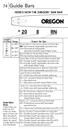 74 Guide Bars HERE S HOW THE OREGON SAW BAR * 20 8 RN Length in Inches 12" 14" 18" 20" 36" (Etc.) Gauge 0=.050" 8=.058" 3=.063" 4=.043" GUARD MATE HOLES These holes are built into the noses of certain
Model 854/856. Operating and Assembly Manual. Palmor Products Inc. 5225 Serum Plant Road Thorntown, IN 46071
 Model 854/856 Operating and Assembly Manual Palmor Products Inc. 55 Serum Plant Road Thorntown, IN 46071 3/31/2015 SAFETY RULES Remember, any power equipment can cause injury if operated improperly or
ZAPPY 3 OWNER S MANUAL. Read this manual completely before riding your Electric ZAPPY 3.
 ZAPPY 3 OWNER S MANUAL Read this manual completely before riding your Electric ZAPPY 3. TECHNICAL INFORMATION Model No. : ZAPPY 3 Product size Type of motor Motor power Battery type Battery Charger Charging
Responsibilities of a Volunteer Leader
 Responsibilities of a Volunteer Leader Inspecting tools for safe conditions. Removing unsafe tools from use and immediately notifying site supervisor. Teaching safe tool use to volunteers on your crew.
GoFit Platinum Power Vibe
 GoFit Platinum Power Vibe GFVT011 GoFit Platinum Pty Ltd Phone 1800 446 348 fax 1300 446 348 www.gofit.com.au IMPORTANT PRECAUTIONS When using an electrical appliance, the basic following precautions
Sport Ice Elektro 124
 Sport Ice Elektro 124 Operation Manual 2007/4 V2.1 Introduction The Sport Ice Elektro 124 is an ice resurfacing machine designed to be used on small ice surfaces. The machine has been designed to produce
Section 14. Forklift Safety Contents 14.1 Operator Safety
 Section 14. Forklift Safety Contents 14.1 Operator Safety... 14-1 14.2 Inspection and Maintenance... 14-2 14.3 Handling the Load... 14-3 14.4 Fueling Liquefied Petroleum (LP) Gas Forklifts... 14-3 14.5
Cylinder Leak- Down Tester
 Cylinder Leak- Down Tester Item 94190 INSTRUCTIONS AND PRECAUTIONS Visit our website at: http://www.harborfreight.com When unpacking, make sure that the product is intact and undamaged. If any parts are
MD 52 WASTE MANAGEMENT AUTHORITY CORPORATE HEALTH AND SAFETY PROGRAM
 UNSAFE ACTS AND CONDITIONS All accidents are the result of an unsafe act, an unsafe condition or a combination of both. Unsafe acts account for approximately 80% of all incidents/accidents, while unsafe
Tech Shop Safety Level 2 - FN000425. Tech Shop / Tool Safety Operations. (Fermilab machines not covered in course FN000258)
 Tech Shop Safety Level 2 - FN000425 Tech Shop / Tool Safety Operations (Fermilab machines not covered in course FN000258) Table of Contents Tech Shop / Tool Safety Operations 3 General Rules of Safety
TURN TABLES 1.5 TON CAPACITY / 2 PC. Model 45742
 TURN TABLES 1.5 TON CAPACITY / 2 PC. Model 45742 OPERATING INFORMATION 3491 Mission Oaks Blvd., Camarillo, CA 93011 Visit our Web site at http://www.harborfreight.com Copyright 2001 by Harbor Freight Tools.
Compressed Gas Cylinder Program
 Department of Environmental Health & Safety Procedures Compressed Gas Cylinder Program March 2010 Compressed Gas Cylinder Program Page 1 of 8 Table of Contents I. Introduction II. III. IV. Policy Scope
Tractor Safety Program
 Southwestern University Safety Office Tractor Safety Program A guide to safe tractor use and maintenance Program Contents Review of Safety Hazards Safety Guide / Orientation / Daily Checklist Safety Quiz
TEMPORARY EMPLOYEES SAFETY PROCEDURES
 TEMPORARY EMPLOYEES SAFETY PROCEDURES Temporary Agencies will ensure that any temporary employee sent to work at Modern will have received and understand the General Safety Rules. GENERAL SAFETY RULES
SAFETY in the work area is a broad topic because of the
 A Safe Place to Work SAFETY in the work area is a broad topic because of the many components of agricultural mechanics. Safety is protection from injury or loss. Injury can result from improper use of
Abrasive Wheel Grinder Safety
 Abrasive Wheel Grinder Safety One of the most common pieces of machinery in use in the maintenance shops on campus is the abrasive wheel grinder. These useful machines, used to remove metal from flat and
Operating Manual Please Read Before Operating Unit
 Operating Manual Please Read Before Operating Unit Model RT2S Wire Stripper & Component Lead Cleaner Service and All Spare Parts Available The Eraser Company, Inc. PO Box 4961/ Oliva Drive Syracuse, NY
INSTALLATION INSTRUCTIONS for Bifold Doors (JII103)
 Thank you for selecting JELD-WEN products. Attached are JELD-WEN s recommended installation instructions for premium composite, hollow and solid core molded Bifold Doors. Bifolds are designed for fast
Topics of the Presentation
 Drill Rig Safety Topics of the Presentation Personnel safety and monitoring PPE Health (Drugs and Alcohol) Drill Rig operation Safe set up procedures Safe operation of machine Safety related accidents
STIH) STIHL NG 7. Gebrauchsanleitung. Instruction Manual Notice d emploi Instrucciones de servicio Istruzioni d uso Instruções de serviço Handleiding
 STIH) STIHL Gebrauchsanleitung Instruction Manual Notice d emploi Instrucciones de servicio Istruzioni d uso Instruções de serviço Handleiding Contents English Guide to Using this Manual BA_SE_098_002_0_02.fm
EXCAVATOR SAFETY TRAINING
 EXCAVATOR SAFETY TRAINING INSPECTION CHECKLIST INSPECTION AREA INSPECTION RESULTS Sat. Unsat. N/A Comments Carrier & Car Body Rotation system Tracks Rollers Frame, welds, bolts Drive system Upper Structure
DO NOT OPERATE LANCELOT OR SQUIRE WITHOUT FIRST ADJUSTING THE SAFETY GUARD. ( See Below)
 Assembly Instructions - Lancelot and Squire King Arthur s Tools (KAT) is pleased to present the first tandem mounted saw chain accessories whereby differing combinations of Lancelot and Squire may be paired
PROCEDURES PREVENTION OF ACCIDENTAL IGNITION
 Page No: 1 of 7 6.0 PURPOSE (192.751) All possible precautions shall be exercised to prevent the accidental escape and ignition of gas. Whenever possible, potential sources of ignition should be eliminated
Operator s manual 395XP 395XPG. Please read the operator s manual carefully and make sure you understand the instructions before using the machine.
 Operator s manual 395XP 395XPG Please read the operator s manual carefully and make sure you understand the instructions before using the machine. English KEY TO SYMBOLS Symbols on the machine: WARNING
758 Heavy-duty Ratchet Guy Wire Cutter
 INSTRUCTION MANUAL 758 Heavy-duty Ratchet Guy Wire Cutter Read and understand all of the instructions and safety information in this manual before operating or servicing this tool. Register this product
PERSONAL PROTECTIVE EQUIPMENT FOR CALIFORNIA STATE UNIVERSITY, LOS ANGELES
 PERSONAL PROTECTIVE EQUIPMENT FOR CALIFORNIA STATE UNIVERSITY, LOS ANGELES OCTOBER 2007 PROGRAM APPROVAL AND AUTHORIZATION James M. Rosser, President Date TABLE OF CONTENTS TITLE Section PURPOSE...1.0
1 / 4 IN. FFL x 4 FT. 9 IN. 1 / 2 IN. ACME x 4 FT. 9 IN. Gauge Accuracy +/-2% Set includes Quick Disconnect Valves
 Specifications Blue (Low) Gauge 0-120 PSI Blue Hose 1 / 4 IN. FFL x 4 FT. 9 IN. Red (High) Gauge 0-500 PSI Red Hose 1 / 4 IN. FFL x 4 FT. 9 IN. Yellow Hose 1 / 2 IN. ACME x 4 FT. 9 IN. Gauge Accuracy +/-2%
Operation Manual. 15 Front Tine Tiller MODEL # 101571
 15 Front Tine Tiller MODEL # 101571 Operation Manual This safety alert symbol identifies important safety messages in this manual. Failure to follow this important safety information may result in serious
3/4 PIPE CLAMP WITH STAND
 3/4 PIPE CLAMP WITH STAND Model 94053 ASSEMBLY AND OPERATING INSTRUCTIONS (3/4 DIAMETER PIPE NOT INCLUDED.) 3491 Mission Oaks Blvd., Camarillo, CA 93011 Visit our Web site at: http://www.harborfreight.com
Operator s Manual. PUMP Model: PAC25 SAVE THIS MANUAL FOR FUTURE REFERENCE. Distributed by: Pacer Pumps
 Operator s Manual PUMP Model: PAC25 CAUTION: Before using this product, read this manual and follow all Safety Rules and Operating Instructions. SAVE THIS MANUAL FOR FUTURE REFERENCE Distributed by: Pacer
Safety Rules. Car Washes CORPORATE HEADQUARTERS 518 EAST BROAD STREET COLUMBUS, OHIO 43215 614.464.5000 STATEAUTO.COM
 TM Safety Rules Car Washes CORPORATE HEADQUARTERS 518 EAST BROAD STREET COLUMBUS, OHIO 43215 614.464.5000 STATEAUTO.COM TM Disclaimer: The information contained in this publication was obtained from sources
Curtain Guards Made of PVC and designed to protect the operator from the risk of airborne chips or tool fragments.
 Two General Safety Rule for CNC Machines Never operate a CNC machine without proper training or consulting the specific operator's manual for that particular machine and control type. Never attempt to
INSPECTION BEFORE RIDING
 INSPECTION BEFORE RIDING Check the following items before riding. ITEM Engine cum transmission oil Fuel Tyres Battery Speedometer Lighting Steering Throttle Clutch Brakes Wheels WHAT TO CHECK FOR Availability
CARING FOR YOUR WATER HEATER
 http://waterheatertimer.org/troubleshoot-rheem-tankless-water-heater.html Water Heater Inspections CARING FOR YOUR WATER HEATER Venting System (Direct Vent Only) The venting system should be inspected
Compressed Gas Cylinder Storage and Handling Guide
 Overview Compressed gas cylinders are used in many workplaces to store gases that vary from extremely flammable (acetylene) to extremely inert (helium). Many compressed gas cylinders are stored at extremely
Oxy-Fuel Gas Welding. Given a functional oxy-fuel gas unit, instruction and demonstration of use, each student will be able to:
 I. Competencies Oxy-Fuel Gas Welding Given a functional oxy-fuel gas unit, instruction and demonstration of use, each student will be able to: A. Identify the major parts of the oxy-fuel gas unit. B. Pass
OPERATOR S MANUAL 18 VOLT, 1 HOUR CHARGER
 OPERATOR S MANUAL 18 VOLT, 1 HOUR CHARGER P110 Your battery charger has been engineered and manufactured to Ryobi s high standard for dependability, ease of operation, and operator safety. When properly
OWNER S MANUAL Table Tennis Table Patent Pending
 OWNER S MANUAL Table Tennis Table Patent Pending Be sure to write your model number and serial number here for future reference. You can find these numbers printed on the bottom of the table. MODEL # T8179
8" BENCH GRINDER OWNER'S MANUAL
 8" BENCH GRINDER OWNER'S MANUAL WARNING: Read carefully and understand all INSTRUCTIONS before operating. Failure to follow the safety rules and other basic safety precautions may result in serious personal
WEEKLY SAFETY MEETING All Euramax Subsidiaries WELDING SAFETY / HOT WORK SAFETY. Safety Meeting Contents. Meeting Notice.
 Safety Meeting Contents Meeting Notice Leaders Guide Employee Handout Employee Quiz Meeting Sign-In Sheet Employee Puzzle PRIOR TO THE WEEKLY MEETING: - Post the meeting notice by the timeclock - Read
MODELS 93/693 By CO2 SEMI-AUTOMATIC
 O p e r a t i o n M a n u a l MODELS 93/693 By CO2 SEMI-AUTOMATIC.177 cal BB (4.5 mm) STEEL AIRGUN SHOT 12gm CO2 cylinder only WARNING: NOT A TOY. ADULT SUPERVISION REQUIRED. MISUSE OR CARELESS USE MAY
Powered Industrial Truck Safety Program
 Powered Industrial Truck Safety Program TABLE OF CONTENTS Forklift Safety Program 1.0 Overview... 3 2.0 Policy.....3 3.0 Requirements 3 4.0 Purpose. 3 5.0 Scope......4 6.0 Forklift Procedures 4 6.0 Responsibilities.....6
RC HELICOPTER INSTRUCTION MANUAL
 AGE 14+ RC HELICOPTER INSTRUCTION MANUAL 1. Smart R/C system 2. Full scale remote control 3. Omnidirectional flight 4. Smooth hover performance 5. Newly designed electricity saving functionality 6. Longer
Keys... 2-2 Master, submaster and valet key... 2-2 Key number... 2-2. Door locks... 2-3 Power door locking switches... 2-5
 Doors and locks Keys........................................................................... 2-2 Master, submaster and valet key..................................... 2-2 Key number...............................................................
Instruction Manual 137 / 142
 Instruction Manual 137 / 142 WARNING: Read and follow all Safety Rules and Operating Instructions before using this product. Failure to do so can result in serious injury. 530165144 2/8/05 IDENTIFICATION
COMPRESSED GASES. 1.2 The contents of each cylinder and container must be clearly identified (by tag or stamp) on the cylinder.
 Page 1 of 5 COMPRESSED GASES A compressed gas is defined as any mixture of gases in a container with a pressure exceeding 40 psi. at 70 o F, or 104 psi. at 130 o F; or any flammable liquid with an absolute
Voltmaster Trash Pumps Model TSP2, TSP3 and TSP4
 Model TSP2, TSP3 and TSP4 Owner s Manual July 2010 Table of Contents 1 Introduction...................................................... 1 1.1 Read before using..............................................
TECHNICAL BULLETIN. Meritor WABCO Cab Leveling Valves and Chassis Leveling Valves. How the Cab Leveling and Chassis Leveling Valves Work
 Revised 02-00 TECHNICAL BULLETIN Meritor WABCO Cab Leveling Valves and Chassis Leveling Valves This technical bulletin covers both cab and chassis leveling valves manufactured by Meritor WABCO. While the
staple gun with 5/16 Long staples
 staple gun with 5/16 Long staples Model 95718 Assembly And Operation Instructions Due to continuing improvements, actual product may differ slightly from the product described herein. 3491 Mission Oaks
HYDRAULIC LIFT TABLE CART 2200-LB.
 HYDRAULIC LIFT TABLE CART 2200-LB. OWNER S MANUAL WARNING: Read carefully and understand all MACHINE ADJUSTMENT AND OPERATION INSTRUCTIONS before operating. Failure to follow the safety rules and other
Example risk assessment for a motor vehicle mechanical repair workshop
 Example risk assessment for a motor vehicle mechanical repair workshop Setting the scene The garage manager did the risk assessment. The business employed 12 mechanics, including two apprentices who carried
TWO BURNER PROPANE CAMPING STOVE
 OWNER S MANUAL ASSEMBLY AND OPERATING INSTRUCTIONS TWO BURNER PROPANE CAMPING STOVE WARNING READ AND FOLLOW ALL WARNINGS AND INSTRUCTIONS IN THIS MANUAL TO AVOID PERSONAL INJURY OR PROPERTY DAMAGE. Propane
The Craft of Tree Felling
 The Craft of Tree Alan Hale 19 August 2008 Introduction Fence (Head Lean) Tree 34 D Side Heavy Lean Desired Head Barn Other Trees Presentation Objective Outline Techniques For Trees In A Different From
3620 W 11th Streetб Houston, TX 77008 Telephone: 713-635-6291 Email: [email protected] Website: www.kellogg-american.com
 Unpackaging & Handling Be sure to carefully inspect the unit before accepting the shipment. If any damage has occurred document it with the trucking company immediately. Contact your Kellogg Distributor
Basic Spring Motor Roller Shades
 Comprehensive Roller Shade Installation Guide Basic Spring Motor Roller Shades ATTENTION!!! READ CAREFULLY! This shade has a reliable long-lasting Spring Motor. The Spring Motor must have proper tension
365 SPECIAL 372 XP 372 XPG
 Operator s manual 365 SPECIAL 372 XP 372 XPG Please read the operator s manual carefully and make sure you understand the instructions before using the machine. English KEY TO SYMBOLS Symbols on the machine:
Tips for Eliminating and Controlling MSD Hazards
 Tips for Eliminating and Controlling MSD Hazards Force Gripping tools/equipment Provide tools that allow workers to grip the tool using a power grip Eliminate the use of pinch or key grips as much as possible
The regulations that impact outdoor space, surfacing, fall zones, equipment, entrapments, hazards and supervision are:
 Small Group, Large Group and School Age Child Care Licensing POLICY STATEMENT: Playground Safety 6.06 CMR 7.07(7); 7.07(16)(e); 7.07(13); 7.10(10) According to the U. S. Consumer Product Safety Commission
Hand Held Metal Detector
 Hand Held Metal Detector Model 97245 Set up And Operating Instructions Diagrams within this manual may not be drawn proportionally. Due to continuing improvements, actual product may differ slightly from
6 FUNCTION HAMMER DRILL
 6 FUNCTION HAMMER DRILL MODEL NO: CON1500RHD PART NO: 6479508 OPERATION & MAINTENANCE INSTRUCTIONS GC0712 INTRODUCTION Thank you for purchasing this CLARKE 6 Function Hammer Drill. Before attempting to
Waste Services Collection Service
 Waste Services Collection Service SSOW 03 - Safe System of Work: Waste Collection D DATE ISSUED: June 2013 PREVIOUS REVIEWS: November 2002, April 2010, June 2011, October 2015 ISSUED BY: Mick Wallis, Collections
Trimmer and Brushcutter Safety Manual
 Trimmer and Brushcutter Safety Manual { Contents Original Instruction Manual Printed on chlorine-free paper Printing inks contain vegetable oils, paper can be recycled. Safety Precautions and Working
MBSAW. Meat Cutting Band Saw With Meat Grinder Assembly & Operating Instructions
 06/2011 MBSAW Meat Cutting Band Saw With Meat Grinder Assembly & Operating Instructions READ ALL INSTRUCTIONS AND WARNINGS BEFORE USING THIS PRODUCT. This manual provides important information on proper