
Veteran Trees Initiative Specialist Survey Method
|
|
|
- Amanda Bryant
- 9 years ago
- Views:
Transcription
1 Veteran Trees Initiative Specialist Survey Method Designed by On behalf of TREEWORK Environmental Consultancy

2 TREEWORK Veteran Trees Initiative Specialist Survey Form Contents Table of Contents Page Page Page CONTENTS 1 INTRODUCTION 3 TREE DETAILS 7 TREE DATA 16 Hollowing: Trunk and Mature Crown Holes: Trunk and Mature Crown 14 SITE DETAILS 5 1 Tree Number 7 18 Water Pockets 14 A Site 5 B County 5 C Post Code 5 D Grid Reference 5 2 Grid Reference 7 3 Species 7 4 Dimensions 7 5 Number of Trunks 8 19 Rot Deadwood Attached Deadwood Fallen 15 TREE ASSOCIATES E Location 5 TREE FORM AND VIGOUR 22 Fungi 15 F Ownership 5 6 Tree Form 8 23 Epiphytes and Hemiparasites 15 G Site Records 5 7 Standing / Fallen Invertebrates 15 H Site Status 5 I Access and Visibility 6 J Site Notes 6 K Date 6 L Recorder 6 8 Live Growth 11 9 Crown Loss Epicormic Growth 12 TREE HABITAT 11 Bark Condition Birds and Mammals 16 TREE MANAGEMENT 26 Context Management Damage 16 M Organisation 6 12 Bark Fluxes Shade 17 N Map 6 13 Split Limbs Tears / Scars / Lightning Strikes Photographic Number Notes Live Stubs 13 FURTHER INFORMATION 17 1

3 TREEWORK Veteran Trees Initiative Specialist Survey Form Introduction Introduction English Nature launched the Veteran Trees Initiative in March 1996 to promote the management and continuity of England s veteran tree heritage. A key element of the Veteran Trees Initiative is to develop a comprehensive and consistent method of survey as an agreed standard for the recording of veteran trees. Survey information gathered through the Veteran Tree Recording System is to be entered onto a national database of veteran trees which will form a register of recorded sites. It is intended that the database will contribute to a greater understanding of the distribution, biology and ecology of veteran trees. The database should subsequently enable recorders to trace individual trees and assess changes associated with particular veteran specimens. Properties of Veteran Trees Woody plants have the unique ability to remain healthy and structurally sound by laying down new increments of wood and bark over older wood which may have been weakened through injury, disease or decay. The growth rate of the new wood is influenced by mechanical stress, so that relatively wide increments are laid down over areas where decay of the old wood has led to reduced strength. This adaptive growth sometimes enables trees to attain great mass and longevity, even though they may shed individual limbs. Tree wounds remove the protective covering of bark, exposing the underlying wood to the atmosphere and to colonisation by decay fungi and other micro-organisms. Partial drying of the wood allows some of these organisms, together with others which are present internally before wounding, to make use of the wood as a food source, thereby degrading it in a variety of ways. As a tree ages, the structure of its bark and wood becomes increasingly complex due to a combination of continued wounding, new growth and the progression of decay through many stages, culminating in cavity formation. The ability of a tree to continue laying down new annual increments over a partially degraded and complex core is important for biodiversity as well as for its own attainment of great size and age. The resulting structural complexity provides a wide range of internal and external environments which may host many specialised fungi, plants and animals. It is the appreciation of these diverse characteristics which is the focus of the recording process, so that the veteran tree is perceived as a living habitat, rather than as an isolated antique organism. The Recognition of Veteran Trees Veteran status is associated with late maturity. However, trees of different species approach late maturity at different ages. Although there is no precise definition of veteran status for the purposes of field work, knowledge of species longevity, size typically associated with old age and local conditions affecting tree growth contributes to the recognition of veteran trees in the field. Their special quality in the landscape is reflected in the view that these trees are of interest biologically, aesthetically, or culturally because of their age (see 'Guide to the care of ancient trees', Veteran Trees Initiative, English Nature 1996). Apart from obvious veteran candidates of massive scale and known antiquity, the surveyor is often likely to encounter uncertainty in the field as to the veteran status of certain trees. In such instances, reference should be made to the range of veteran attributes indicating habitat and associated flora and fauna addressed on the recording form, rather than tree size alone. If in doubt record the tree. Tree Safety It should be noted that whilst veteran trees may pose a safety risk, this survey is essentially a habitat assessment. This is not a safety assessment. Where there is suspected safety concern further specialist advice should be sought. The Veteran Tree Recording System English Nature hopes that the Veteran Tree Recording System will appeal to a wide range of people and will involve many who will not be expert. In order to take account of the different levels of specialist knowledge held by those who want to take part, three levels of survey have been devised. 3

4 TREEWORK Veteran Trees Initiative Specialist Survey Form Introduction 4 Level 1 is a simple, introductory level to veteran tree recording, using the Veteran Trees Introduction to surveying ancient trees Recording Card. Each card is used to survey a single tree. These Recording Cards are intended for use by schools and the non-specialist enthusiast. The Recording Cards are not contained within the Specialist Survey Booklet but may be obtained separately from English Nature. Level 2 is an intermediate Generic Survey of veteran trees, using this Specialist Survey Booklet and completing only the essential data sections which are unshaded on the Specialist Survey Forms. These are found at the back of the booklet. Level 3 is a comprehensive, Specialist Survey of veteran trees, using this Specialist Survey Booklet and completing all the sections of the specialist Survey Forms which are found at the back of the booklet. Survey Instructions for Levels 2 and 3 Use of the recording system The Veteran Tree Recording System employs a survey method using the forms, which are contained in this booklet together with guidance notes. Each Survey Form is individually numbered and double sided (Side 1 & 2). Side 1 contains Site Details and [Sections 1-21]. Side 2 contains and Notes [Sections 22-31]. Site details are entered in sections A to M at the top of side 1. Site Details (A-M) are to be completed for each new site or distinct location upon a site. Guidance notes and instruction for completion of this section are found on pages 5 and 6 of this booklet. Side 1: Side 2: Tree Data Sections 1-5 Tree Associates Sections Tree Form/Vigour Sections 6-10 Tree Management Sections Tree Habitat Sections Notes Section 31 Guidance notes and instructions for the completion of these sections are found on pages 7-17 of this booklet. Veteran trees are extremely variable in form and condition. It is important that the method of survey, explained through the Guidance Notes, should be followed as far as possible to ensure reasonable consistency. Plotting and Tagging of Trees Plotting and tagging of trees may be necessary on larger sites. Where trees are identified with an individual tag-number affixed to the tree, a method should be adopted which causes minimal damage to the tree and allows for tree growth (see 'Pollard and Veteran Tree Management II' Corporation of London 1996). In addition to tagging, wherever feasible all tree positions should be plotted on a plan and a copy of the plan kept with the recording forms. Filing and Documenting Upon completion of a survey the recorder or responsible organisation should keep the original documentation and file a separate copy for safe keeping. English Nature should be kept informed of progress and completion of recording and should be informed where documents are to be held. English Nature will be responsible for the overall co-ordination of survey results and their collation within a national database of veteran trees. Survey Precautions Surveyors should ensure that: Any necessary permissions are obtained from land owners or other relevant bodies prior to surveying. Surveyors should take all reasonable precautions to avoid risk of personal injury and if possible should not work alone. The survey is to be undertaken from ground level only. No damage to the tree or its surroundings should occur in the course of surveying. Conventions approved by English Nature associated with collection of sample material should be strictly observed. English Nature do not accept liability for any injury or loss sustained in the course of surveying.

5 TREEWORK Veteran Trees Initiative Specialist Survey Form A SITE This is the name or address of the estate, farm or wood etc eg Ashton Court Estate. A site may contain one or several identifiable locations (see E) where veteran trees may be found. B COUNTY Identify the postal county in which the site is located. Where a site spans more than one county, the county is taken to be the area where the majority of veteran tree locations may be found. C POST CODE Enter the post code of the site address if appropriate. eg Ashton Court Estate. The entry for this item will be B S J N. D GRID REFERENCE This is the conventional six-figure grid reference derived from reading a current Ordnance Survey map at 1:50,000 scale. Where feasible, the reference should be prefixed with the relevant two letter identifying code which indicates the 100 km square in which the site is found. The grid reference should identify the approximate central point of the site. eg Ashton Court Estate Enter grid reference of approximate centre of site - (eg ST ) E LOCATION Identify the designated area within the SITE wherein the veteran trees may be found. E LOCATION cont. This may be a vernacular title of local historic relevance, eg Hanging Wood, Clarkencombe or Waterley. This may also be a sub-compartment within a woodland. Where no location title is known a simple description of tree location can be entered under Section J (Site Notes). WHEREVER A LOCATION CHANGES, A NEW SURVEY FORM SHOULD BE USED. F OWNERSHIP This is the name of current owners of the land upon which the trees are standing. eg Sir John Smith, Bristol City Council, National Trust, MOD. G SITE RECORDS Do you know of any surveys and/or records which may have a bearing on the veteran trees on the site? If so which of the following categories of survey and/ or records are applicable? Ecological [1] Habitat [2] Botanical [3] Mycological [4] Invertebrate [5] Lichen [6] Fauna [7] Arboricultural [8] Other ecological Site Details G SITE RECORDS cont. Environmental [9] Soil [10] Geological [11] Hydrological [12] Atmospheric [13] Other environmental Historical Records [14] Land use [15] Estate records [16] Other historical records [X] Other relevant records [0] None known For ecological and environmental surveys only: If date of survey is known suffix the survey category as follows:- [A] Survey/record undertaken within past 5 years [B] " " 5-10yr [C] " " 10-20yr [D] " " 20-50yr [E] " " over 50 eg Mycological survey undertaken 1923 and 1996, estate records during start nineteenth century, enter [3AE, 15]. H SITE STATUS This is a planning or other legal designation indicating the constraints which may apply to the site and therefore affecting the trees which are present. Enter the appropriate two letter code. One or more designations may apply. [AO] Area of Outstanding Natural Beauty [CA ] Local Authority Conservation Area continued 5

6 Tree Site Details (Numbers refer to Specialist Survey Form Nos 1-31) Tree Site Details H SITE STATUS cont. [ES] Environmentally Sensitive Area [HC] Heritage Coast [NN] National Nature Reserve [NP] National Park [OA ] Other Ancient Monument or historic site [SA] Scheduled Ancient Monument [SL] Special Landscape Area [SS] Site of Special Scientific Interest [TP] Tree Preservation Order [WH] World Heritage Site [X] Other/unknown [O] None M ORGANISATION Where relevant enter the names of the organisation on whose behalf the survey is being undertaken. N MAP Does a map exist of the site? [Y] Yes [N] No [X] Don t know If so, are the trees inspected plotted on the map? [Y] Yes [N] No [X] Don t know I ACCESS AND VISIBILITY Is the site accessible to the public? [Y] Yes [N] No [X] Don t know Is/are the tree/s visible from a public route or place? [0] Not visible [1] Visible but not prominent [2] Prominent J SITE NOTES Briefly describe site location (eg In open field 200m W of Ashton Court House) and any special features of landscape interest about the site. K DATE This is the date of inspection entered as D M Y. L RECORDER Name of person who is inspecting the trees. 6
![Landscape Area [SS] Site of Special Scientific Interest [TP] Tree Preservation Order [WH] World Heritage Site [X] Other/unknown [O] None M ORGANISATION Where relevant enter the names of the](/docs-images/47/20993972/images/page_6.jpg "organisation on whose behalf the survey is being undertaken. N MAP Does a map exist of the site? [Y] Yes [N] No [X] Don t know If so, are the trees inspected plotted on the map?")
7 1 TREE NUMBER This is a numerical designation identifying individual trees by means of a number tag fixed to the trunk (see Pollard & Veteran Tree Management II Corporation of London 1996). This is optional. Number identification should be undertaken to guarantee that no duplication occurs for any site, by plotting numbers on the plan. 2 GRID REFERENCE Insert grid reference for individual tree. Minimum six figure grid reference as (D) omitting 100km letter code. 3 SPECIES Identify the type of tree (see TABLE below). If species unknown, collect sample of shoot or foliage and label with tree number for identification and insert code [XB] or [XC] as appropriate. SPECIES TABLE (Native and pre 1800 introductions) BROADLEAVES [CAR] Common alder (Alnus glutinosa) [CAP] Crab apple (Malus sylvestris) [AH] Ash (Fraxinus excelsior) [BE] Beech (Fagus sylvatica) [BEC] Beech cultivar (Fagus sylvatica cv.) [PBI] Downy birch (Betula pubescens) [SBI] Silver birch (Betula pendula) [BCH] Bird cherry (Prunus padus) [WCH] Wild cherry, gean (Prunus avium) [HCH] Horse chestnut (Aesculus hippocastanum) [SC] Sweet chestnut (Castanea sativa) [EM] Elm species (Ulmus sp.) [EEM] English elm (Ulmus procera) [WEM] Wych elm (Ulmus glabra) [HAZ] Hazel (Corylus avellana) [HAW] Hawthorn (Crataegus monogyna) [HOL] Holly (Ilex aquifolium) [HBM] Hornbeam (Carpinus betulus) [LI] Lime species (Tilia sp.) [CLI] Common lime (Tilia x europaea) [LLI] Large leafed lime (Tilia platyphyllos) [SLI] Small leafed lime (Tilia cordata) [MA ] Maple species (Acer sp.) [FM ] Field maple (Acer campestre) [SY] Sycamore (Acer pseudoplatanus) [OK ] Oak species (Quercus sp.) [EOK] Evergreen oak (Quercus ilex) [POK] Pedunculate oak (Quercus robur) [TOK] Turkey oak (Quercus cerris) [SOK] Sessile oak (Quercus petraea) [PO] Poplar species (Populus sp.) [ASP] Aspen (Populus tremula) [BPO] Black poplar (Populus nigra) [GPO] Grey poplar (Populus x canescens) [WPO] White poplar (Populus alba) [LPL] London plane (Platanus x hispanica) [ROW] Rowan (Sorbus aucuparia) [WHI] Whitebeam (Sorbus aria) [WST] Wild service tree (Sorbus torminalis) [WAL] Walnut (Juglans regia) [WL] Willow species (Salix sp.) [CWL] Crack willow (Salix fragilis) [WWL] White willow (Salix alba) [XB ] Other broadleaves (-) CONIFERS [CE] Cedar of Lebanon (Cedrus libani) [JU] Native juniper (Juniperus communis) [EL] European larch (Larix decidua) [SP] Scots pine (Pinus sylvestris) [NS] Norway spruce (Picea abies) [YEW] Common yew (Taxus baccata) [XC ] Other conifers (-) 4 DIMENSIONS 4.1 GIRTH The girth (circumference) of the tree is measured at 1.3m height above ground level, and is entered as an accurate measurement in metres to two decimal places, eg 10.54m. Where this is possible enter girth in column 4.1 and enter [1.3] in column Girth = 10.54m 4.2 MEASUREMENT HEIGHT - IRREGULARITIES If there are swellings, burrs, branches or other irregular features which occur at 1.3m height, then measure at the nearest point below, where the trunk is more regular. Where the height of the girth measurement is not taken at 1.3m, this should be noted by recording the measurement in column 4.2, eg if girth is 6.10 metres at a height above ground level of 0.8m, the entry would be: Column 4.1 = [6.10] Column 4.2 = [0.8] 4.2 Example 1.3m 1.3m Bulge Girth = 6.10m 0.8m Ht 7

8 4.2.1 MULTI-STEMMED above 1.3m If the specimen is multi-stemmed, and the multistem formation occurs above 1.3m height, observe conventions as for 4.1 or m MULTI-STEMMED below 1.3m Measure the largest stem at 1.3 metres, where a specimen is multi-stemmed from below 1.3m height Girth = 3.2m 1.3m Girth = 7.60m STUMPS If a stump is below 1.3m height, record girth at the nearest opportunity below 1.3m height and the height of this measurement as for irregular swellings (4.2) Example [6.35] at 0.8m ht. 4.3 BOLE HEIGHT Refers to pollard trees only, see 6 Tree Form. The bole is the trunk length from ground level to region where main pollard limbs originate. 5 NUMBER OF TRUNKS Trees may contain more than one trunk. (See Tree Forms 6.3, 6.4, 6.6 and 6.11). Count the number of stems over 0.3m diameter and arising from below 1.3m height. 6 TREE FORM There are many forms a veteran tree may have, depending on its growing conditions, past damage and management. The following describe a range of possible tree forms. What does the tree look like? Select from those below. Enter appropriate bracketed number [-] eg for a maiden tree (see 6.1) enter [1]. Note: More than one description may be applicable to a single tree. TREES 6.[1] Maiden Tree 6.[2] Shredded Tree [2] Maiden tree with side branches cut close to main stem throughout crown. 6.[3] Multi-stemmed [3] Trunk naturally divided into two or more principal stems giving the appearance of an integral crown. 6.[4] Coppice 1.3m 0.8m Girth = 6.35m If for any reason accurate girthing is still impossible, bracket measurement [ (6.35) ]. 8 [1] Free grown with unmodified natural crown. [4] Multi-stemmed from near ground level arising from past cutting of a maiden tree.
![3m height, record girth at the nearest opportunity below 1.3m height and the height of this measurement as for irregular swellings (4.2). 4.2.3 Example [6.35] at 0.8m ht. 4.3 BOLE HEIGHT Refers to pollard trees only, see 6 Tree Form.](/docs-images/47/20993972/images/page_8.jpg "The bole is the trunk length from ground level to region where main pollard limbs originate. 5 NUMBER OF TRUNKS Trees may contain more than one trunk. (See Tree Forms 6.3, 6.4, 6.6 and 6.11).")
9 6.[5] Stored Stem 6.[8] Managed Pollard / Re-pollard 6.[11] Coppard [5] Re-grown coppice subsequently recut, singling out a single stem to develop in maiden form. 6.[6] Bundle Planting [8] A maiden or previously pollarded tree subjected to truncation of crown framework or of main stem. Crown regrowth selectively cyclically managed for produce. 6.[9] Lapsed Pollard [11] Single tree previously managed as coppice, subsequently cut to form multi-stemmed pollards. 6.[12] Phoenix Regeneration Either [6] Multiple seed/seedling planting of single species developing in maturity with multi-stemmed trunk or crown form, partially or totally fused about areas of stem contact. 6.[7] Natural Pollard [9] Formerly managed pollard subsequently neglected, typically multi-stemmed heavy limbed, originating at similar crown level. 6.[10] Tiered Lapsed Pollard Or [7] Maiden type tree with major crown regrowth arising from natural catastrophic damage. [10] Lapsed pollard variably developing multi-level, multiple, limb structure as a result of major limb removal or natural loss at various levels about the crown. [12] Tree-form regrowth, possibly of layered origin arising from collapse of parent trunk or crown. 9
![[9] Lapsed Pollard [11] Single tree previously managed as coppice, subsequently cut to form multi-stemmed pollards. 6.](/docs-images/47/20993972/images/page_9.jpg "[12] Phoenix Regeneration Either [6] Multiple seed/seedling planting of single species developing in maturity with multi-stemmed trunk or crown form, partially or totally fused about areas of stem")
10 6 STUMPS 6.[13] 7.[2] 7.[6] 1m [13] Felled Stump (< 1m height) 6.[14] 4m [2] Leaning at a strong angle though apparently firmly rooted. 7.[3] [6] Collapsed, main trunk lying on ground (rootplate intact - partially attached to ground). 7.[7] [14] Shattered/fractured Stump (< 4m height) 6.[15] [7] Collapsed, main trunk lying on ground (root plate intact - entirely detached from ground). [3] Leaning with a loosened rootplate. 7.[8] Either 4m [15] Shattered/fractured Stump (> 4m height) [X] OTHER (refers to trees or stumps) 7.[4] Or 7 STANDING / FALLEN How upright is the tree? What is the position of the main trunk? 7.[1] [4] Collapsed, supported by an adjacent tree. 7.[5] [8] Fractured, collapsed trunk or main crown still attached to parent tree. 7.[9] [9] Fractured, collapsed and separated, rootplate attached to ground. 10 [1] More or less upright? [5] Collapsed. Main trunk propped clear of ground. [X] OTHER
![[8] Either 4m [15] Shattered/fractured Stump (> 4m height) [X] OTHER (refers to trees or stumps) 7.[4] Or 7 STANDING / FALLEN How upright is the tree? What is the position of the main trunk? 7.[1] [4] Collapsed, supported by an adjacent tree.](/docs-images/47/20993972/images/page_10.jpg "7.[5] [8] Fractured, collapsed trunk or main crown still attached to parent tree. 7.[9] [9] Fractured, collapsed and separated, rootplate attached to ground. 10 [1] More or less upright?")
11 8 LIVE GROWTH This assesses the current proportion of live growth about the tree (this does not take account of the shape of the tree, nor past crown collapse). 8.[4] Crown is dead. 9.[2] Nearly Full Crown Outline peak framework current framework 8.[1] Live, Mostly Full Canopy [4] The trunk has some live growth. [1] The crown is mostly covered with live growth. (Live growth occupies over 50% of current canopy outline.) 8.[2] Live Partial Canopy 8.[5] Entire Tree Dead [5] No live growth. [2] The tree has shed 25%-50% of likely peak crown framework. 9.[3] Partial Crown Outline peak framework current framework [2] The crown is fairly well covered with live growth. (Live growth occupies 25%-50% of actual crown outline.) 9 CROWN LOSS How much of the original crown of the tree has been shed? Crown loss is a comparison between its current veteran scale and shape and its likely former peak crown outline. 9.[1] Full Crown Outline peak framework current framework [3] The tree has shed 50%-75% of likely peak crown framework. 9.[4] Remnant Crown Outline 8.[3] Live Residual Canopy peak framework current framework [3] The crown has some/little live growth. (Less than 25% live crown occupies actual crown outline.) [1] The tree has shed less than 25% of its likely peak crown framework. [4] The tree has shed over 75% of likely peak crown framework. 11
![(Live growth occupies over 50% of current canopy outline.) 8.[2] Live Partial Canopy 8.[5] Entire Tree Dead [5] No live growth. [2] The tree has shed 25%-50% of likely peak crown framework. 9.](/docs-images/47/20993972/images/page_11.jpg "[3] Partial Crown Outline peak framework current framework [2] The crown is fairly well covered with live growth. (Live growth occupies 25%-50% of actual crown outline.")
12 10 EPICORMIC GROWTH This is twiggy growth apparently developing from the bark surface as a response to stress or environmental changes. In veteran trees strong epicormic presence may indicate vitality about different regions of the tree. 12 Is there strong, vigorous epicormic growth (twiggy shoots) present about the tree? If present where is this found? Enter the appropriate number code. [1] Base (B) [5] BC [2] Trunk (T) [6] TC [3] Crown (C) [7] BTC [4] BT [0] None present [B] [1] Base [2] Trunk 10.3 [T] 2m 2m [T] [C] [7] Base, Trunk and Crown [B] 11 BARK CONDITION Are there large areas greater than 30cm x 30cm (12" x 12") of dead, loosely attached, missing or flaking bark about the tree? If present where is this found? B Base (up to 2m height) T Trunk (above 2m height to base of crown) C Crown Enter the appropriate number code [1] B [5] BC [2] T [6] TC [3] C [7] BTC [4] BT [0] None present 12 BARK FLUXES (SAP RUNS) Emissions from within the tree leaking to the bark surface. Exudates include fluxing of liquid often under gas pressure within the tree resulting from bacterial and fungal activity. It may also include the bleeding of wounds and localised reactions to surface colonisation. These may be seen as wet surface discolourations of varying consistencies or areas of dry and encrusted deposits. Exudations may smell unpleasant or may have a pleasantly fermented smell. Fluxes may emerge from wounds, cracks or fissures without obvious signs of decay. This substrate provides a specialised habitat for insects and fungi. Assess the type of bark flux from the following table. Assess the number of fluxes. Prefix the type with the number. eg [2B] = 2 wet fluxes [3A] = 3 dry fluxes [0] = No fluxes apparent 12.1 Bark Flux Table 13 SPLIT LIMBS The process of gradual limb loss starts typically in a small proportion of upward curving limbs when the end weight transmits stress along the longitudinal axis causing fibres to part, buckle and tear (delamination) fulchrum 13.1 The limb may not be shed and the condition may remain stable for many years (termed Hazard Beam) Dry Wet Sticky Bubbly Other None [A] [B] [C] [D] [X] [O] A B Type of bark flux load 13.2 The limb may be supported within the crown or along the ground or it may further subside, rupturing tissue about the upper surface leaving a torn live limb suspended by the lower fibres.
![If present where is this found? Enter the appropriate number code. [1] Base (B) [5] BC [2] Trunk (T) [6] TC [3] Crown (C) [7] BTC [4] BT [0] None present 10.1 10.2 [B] [1] Base [2] Trunk 10.](/docs-images/47/20993972/images/page_12.jpg "3 [T] 2m 2m [T] [C] [7] Base, Trunk and Crown [B] 11 BARK CONDITION Are there large areas greater than 30cm x 30cm (12\" x 12\") of dead, loosely attached, missing or flaking bark about the tree?")
13 13 SPLIT LIMBS cont. Count the total number of split limbs (13.1 & 13.2) of greater than 15cm (6") diameter at point of fracture. Enter this total on the recording card. If none present enter [0]. Note: At stage (13.2) the split limb has also resulted in a parent stub (see 15 below). When the suspended limb eventually separates it will result in both a live stub and a tear wound (see 14, Tears/Scars) lightning scar 15.2 S S S S 14 TEARS / SCARS / LIGHTNING STRIKES 14.1 TEARS [T]: exposed woody tissue wounds usually elongated in shape, principally torn along (not across) the grain tear [T] Tears are associated with the recent shedding of live limb parts and result when attached fibres on the underside resist fracture from the parent stem SCAR [S]: an aged tear with exposed tissue surrounded with roll of callus. Record the number of tear and scar wounds in excess of 30cm (12") ie 2 hand lengths. eg 3 Tears and 2 Scars = [3T, 2S] callus scar [S] Enter tallies in column. If none present enter [0] LIGHTNING SCAR: an aggravated and extensive wound from a direct lightning strike to tree. This results in a longitudinal surface trunk wound with internal tissue fragmentation. Lightning scars should be recorded by suffixing the entry tally for scars with [*]. 15 LIVE STUBS Stubs are naturally fractured and truncated ends of live stems or branches. A stub is a result of a natural fracture and may follow the process described under splitting (see 13). It is measured near the point of fracture. Stubs greater than 15cm (6") diameter are counted and entered on the recording card A 1 A 15cm STUB A STUB B Stubs are measured from beyond the branch collar (A 1 -A) and are over 15cm (6" diameter). A and B are measured from close to point of fracture. S (S) = Stub Total number of stubs = [8] Note: A stub, may also be subtended by a tear or scar wound (see 14). If so stub, tear and scar wounds should be recorded separately. 16 HOLLOWING: TRUNK & MATURE CROWN Hollowing occurs through a combination of wounding and progressive decay which may develop into enlarged cavities. Hollowing may become continuous, leading to an entirely hollow stem or partial shell, providing a wide range of habitat. Hollowing may be readily visible or may be concealed within an apparently intact trunk or limb. Assess hollowing according to its character and location about the trunk and crown. This assessment addresses only clearly visible hollows and DOES NOT REQUIRE THE USE OF BORING IMPLEMENTS. S S S 13

14 16 HOLLOWING cont. Inspect the Base, Mid Section and Top Section of the main trunk. Identify which of the following schematic diagrams best defines the state of each trunk section [1]-[5]. [1] Apparently solid trunk With minor cavities (less than 15cm / 6" diameter). [2] Hollow trunk Entire circumference. Minor holes may be present on one or more sides. [3] Partially solid trunk Partial circumference with major cavities, large openings (>15cm) or merging apertures. [4] Remnant trunk With incomplete shell up to 30% of outer circumference missing. [5] Remnant trunk with more than 30% of outer circumference missing. 16 HOLLOWING cont Base of trunk Lowest third of trunk from ground level Middle section of trunk Occupies mid third of length of bole Top section of trunk Occupies upper third of length of bole where it loses its discernible continuity with the crown framework. THE CROWN 16.4 Mature crown hollowing Identify the number of hollows greater than 15cm (6") diameter about the mature branches. 17 HOLES: TRUNK & MATURE CROWN These are small apertures which may be round or irregular in shape and form entry points to hollows which themselves may be hidden. Holes may originate through small limb loss or bark wounds. Aperture expansion is facilitated principally by the activity of micro-organisms and invertebrates. Apertures between 5cm (2", thumb length) to 15cm (6" hand length) are counted. Count the number of holes about the trunk and crown separately and enter the tally in appropriate column. Holes may be occupied by bats or birds. Signs of use are indicated by imported mud or twigs, droppings and urine stains below the aperture (see 25 Birds/Mammals) WATER POCKETS Water pockets accumulate about the tree where there are hollows or natural depressions with an orientation which allows the collection of organic debris and the retention of water to form localised reservoirs at various heights. Typically water pockets are found at the union of major stems, at buttress depressions of major stems and may have intact bark. Internal decay may provide conduits between water pockets within the heart of the tree affording gradual prolonged flow after rainfall. This provides specialised habitats for fungi and insects. A water pocket containing settled rain water is distinct from a hollow with wet disintegrating rot (see 19 Rot). Count the number of water pockets and insert the tally in the recording card. If none present enter [0] basal water pocket water pocket between stems occasional overflow 14 THE TRUNK Locate the hollows about the trunk ( ) and record its character as [1]-[5]. Combinations may apply. hole
![[3] Partially solid trunk Partial circumference with major cavities, large openings (>15cm) or merging apertures. [4] Remnant trunk With incomplete shell up to 30% of outer circumference missing.](/docs-images/47/20993972/images/page_14.jpg "[5] Remnant trunk with more than 30% of outer circumference missing. 16 HOLLOWING cont. 16.1 Base of trunk Lowest third of trunk from ground level. 16.2 Middle section of trunk Occupies mid third of length of bole.")
15 19 ROT Following wounding and fungal activity wood may be digested to form rot. The broad characteristics of wood degradation may be described by reference to its colour, texture and moisture content. These are presented in Table 19.1 Rot Characteristics Rot Characteristics Table Colour Cubical Dry Fibrous Dry Fibrous Moist Soft / Moist Wet / Disintegrating White [A] [B] [C] [D] [E] Red / Brown Other None [F] [G] [H] [K] [M] [X] [O] Black [N] [P] [R] [S] [T] Assess the presence of predominant major rots about the trunk or main limbs. Rot areas up to 2 hand spans 30cm (12") x 15cm (6"). Qualify the predominant characteristics of each identifiable, major rot by reference to Table Identify the number of major rots by prefixing the type designations with the appropriate numbers. eg 2 sites of red/brown, dry cubical rot = [2F] 3 sites of white, dry fibrous rot = [3B] Where a site of rot is considered to be extensive ie greater than 2 hand spans, suffix Rot Characteristic entry with [*]. 20 DEADWOOD (ATTACHED TO TREE) Are there any dead branches or trunk sections attached to the tree greater than the thickness of your leg (15cm / 6" or over)? Each identified 1m (39") length (over 6" diameter) is measured as a single unit of deadwood. The number of deadwood units attached to the tree is measured and the tally entered in the recording card Note: Diameter is taken beyond collar swelling. Treat moribund branch as dead limb. 21 DEADWOOD (FALLEN) Are there any detached fallen deadwood units ie major branches or parts of trunk at least 1m (39") long and over 15cm (6") diameter, lying near the tree within its natural height scope? Each length of 1m = 1 unit of fallen deadwood. Assess the number of fallen deadwood units and enter the tally in the recording card. 22 FUNGI Assess the type/s of fungi present upon the tree and beneath the drip line of the crown on the ground. Identify the number of different fungal types and their location from Table Fungal Type / Location Table Fungi Tree Fallen Wood Ground Under Crown Bracket [A] [B] [C] Other None Skin-like Covering [D] [E] [F] [X] [O] Cap and Stalk [G] [H] [K] Slime 1m [1] [2] [3] Deadwood Units = [3] [M] [N] [P] 22 FUNGI cont. eg 2 types of bracket on tree + 1 type of bracket on fallen deadwood + 3 types of cap/stalk fungi on ground = [ 2A 1B 3K ]. 23 EPIPHYTES AND HEMIPARASITES Note the presence of epiphytes and hemiparasites upon the tree identified by the following codes. TYPE [A] Lichens [B] Moss [C] Polypody / Fern [D] Ivy [E] Mistletoe [X] Other - trees / shrubs / climber [0] None present If more than one type is present enter appropriate multiple code. Where more than one species is identified within a category, prefix category with species count. eg 3 Lichen species + 2 Moss + Ivy = [3A 2B D] Where epiphytic growth is exceptional, covering more than 30% of the main trunk, suffix the appropriate category entry/ies with [*] eg [3A*]. 24 INVERTEBRATES Evidence of invertebrate activity is indicated by the presence of bore/exit holes and frass (dry, powdery residue from tunnelling) about the wood, bark and sites of decay - such species are adapted to the deadwood habitat (ie saproxylic). Many are only found on veteran trees. Record indications of invertebrate activity by identifying the presence of burrows/exit holes and frass associated with the following substrates:- 15

16 24 INVERTEBRATES cont. [1] Rot Site: Enter appropriate category from Table 19.1 Rot Characteristic Table. [2] Deadwood [3] Bark [4] Fungi [X] Other [0] None 16 Enter the appropriate code/s on the recording card. 25 BIRDS AND MAMMALS Veteran trees present particularly valuable sites for bat roosts and bird nests. Indications of habitation may include modification to apertures of holes or fissures, feeding debris, distinctive droppings and bark urine streaks (dark staining). Feeding activity may also be observed from the chiselling of bark and wood about the tree. Observe the following: Identify signs of occupancy associated in holes about the tree. Record additional signs associated with feeding. Refer to the list below, record appropriate code/s. [1] Opening adapted with mud or twigs [2] Opening with smoothed lower lip [3] Bark streaks with blackish staining leading down from aperture or fissure. Additional signs [4] Chiselling of wood and bark. [5] Droppings, pellets or other distinctive debris. [6] Other nests or occupancy sites about the crown. [X] Other significant signs of bird and mammalian activity. [0] None observed. 26 CONTEXT This describes the landscape context within 2x height of the tree and is indicative of the setting and historic land use about the tree: [AR] Arable Field [AT] Ancient Track [AV] Avenue [BU] Old Buildings [BX] Recent Development (within 20 years) [CH] Churchyard [CL] Common Land [DP] Deer Park [FP] Footpath / bridleway [GD] Garden, small (domestic) [GO ] Grounds, large (ornamental) [HE] Heathland [HR] Hedgerow [HW] Highway [MO] Moorland [OR] Orchard [PB] Parish Boundary [PL] Parkland [PO] Pondside [PS] Pasture unimproved (low intensity grazing) [PX] High intensity grazing [RV] Riverside [UP] Urban Park [UT] Urban Tree [VG] Village Green [WL] Woodland (internal) [WE] Woodland Edge [X] Other The recorder will need to consult the context table for this and enter a code. One or more designations may apply. 27 MANAGEMENT This indicates a recent history of tree management over the past ten years. [1] Pollarding [2] Other arboricultural work [3] Weed control (within crown spread) [4] Management of competitive tree growth [5] Protective fencing (effective) [6] Protective fencing (ineffective) [7] Controlled public access [8] Planting: for veteran continuity [9] Planting: potentially competitive [X] Other [0] None known One or more designations may apply. 28 DAMAGE Record major damage and/or debilitation which has occurred to the tree or its associated flora and fauna. Only known causal agencies should be recorded. Select from the following: [1] Excessive browsing from stock/pests [2] Inappropriate tree surgery [3] Vandalism [4] Plant/machinery (impact/abrasion) [5] Lightning [6] Fire damage [7] Storm [8] Compaction [9] Ploughing/ditching/trenching [10] Chemical toxicity: herbicide or fertiliser application or identifiable pollution. [11] Virulent disease: arising from identified pathogen (eg DED, Honey Fungus). [X] Other MAJOR damage [0] None [*] Imminent fatal or structural debilitation threat

17 29 SHADE Is the tree shaded by other trees? Assess the extent of the shade and record from the list below. [0] Unshaded Unshaded, at present. [1] Light Shade Shaded on one or two sides but not from above. [2] Close Shade Shaded on three or four sides, not from above. [3] Heavy Shade Shaded from above and one or two sides. [4] Extensive Shade Shaded from above and all aspects. 30 PHOTOGRAPHIC NUMBER Where possible relate photographic identification number to tree number. eg If tree no. = Photo. no. = 00176A Where A = 1990 B = 1991 C = 1992 D = 1993 E = 1994 F = 1995 G = 1996 H = 1997 I = 1998 J = 1999 K = 2000 etc Z = 2015 AA = 2016 Tree Information Details FURTHER INFORMATION For advice, copies of Veteran Tree Survey Forms and Guidance Notes: The Veteran Trees Initiative (VTI/ SVY2/3) English Nature Northminster House PETERBOROUGH PE1 1UA Enquiry line: Fax line: For technical comments regarding survey methods and data collection communicate in writing to: Treework Environmental Consultancy TREEWORK Treework Services Ltd Cheston Combe Church Town Backwell BRISTOL BS48 3JQ Fax number: If this system is adopted enter appropriate letter code. If there is no systematic photographic record of the tree/s and none proposed enter: [0] None [X] If another record system is being used. 31 NOTES Where the recorder requires to make additional comments or to register a need for further assessment, limited scope is presented in the Notes Section on the recording card. 17
![[4] Extensive Shade Shaded from above and all aspects. 30 PHOTOGRAPHIC NUMBER Where possible relate photographic identification number to tree number. eg If tree no.](/docs-images/47/20993972/images/page_17.jpg "= 00176 Photo. no.")
18 Tree Notes Details (Numbers refer to Specialist Survey Form Nos 1-31) Notes 18

19 ACKNOWLEDGEMENTS The Veteran Tree recording system was initiated in 1996 by Neville Fay. Developed and designed by Neville Fay and Nigel de Berker of Treework, under contract to English Nature. The authors are grateful to all those who have assisted in the consultative process, particularly: David Clayden, Mike Edgington, Mike Ellison, Amanda Giles, Ted Green, Roger Key, David Lonsdale, Helen Read, Lawrence Sisitka and other members of the Ancient Tree Forum and English Nature s Veteran Tree Initiative. Layout and design by Christine Kirkley, Enterprise Computer Systems Ltd, 2 Brockway, Nailsea, Bristol BS48 1BZ Tel Printed on recycled paper. ISBN English Nature

20 TREEWORK A Site B County Veteran Trees Initiative Specialist Survey Form Side 1 C Post Code D Grid Reference E Location F Ownership G Site Records H Site Status I Access Visibility J Site Notes FOR OFFICE USE Form Number Key Essential K Date L Recorder M Organisation Non-Essential N Map Tree Data Tree Form / Vigour Tree Habitat

21 TREEWORK Veteran Trees Initiative Specialist Survey Form Side Notes Tree Associates Tree Management Please keep a copy and return a copy to English Nature marked (VTI/SVY2/3)
22 20 TREEWORK Environmental Consultancy Treework Services Ltd Cheston Combe Church Town Backwell BRISTOL BS48 3JQ Fax
Bradgate Park Landscape Tree Survey. Tree Schedule, Group Schedule, Woodland Schedule & Key to Schedule
 Bradgate Park Landscape Tree Survey Tree Schedule, Group Schedule, Woodland Schedule & Key to Schedule Appendix A of the Landscape Tree Survey Report On Behalf of The Bradgate Park Trust Bradgate Park
NATURAL DURABILITY OF DIFFERENT WOOD SPECIES RESULTS AFTER FIVE YEARS TESTING IN GROUND CONTACT
 NATURAL DURABILITY OF DIFFERENT WOOD SPECIES RESULTS AFTER FIVE YEARS TESTING IN GROUND CONTACT Flæte, P.O. 1, Evans, F.G. 2 & Alfredsen, G. 3 ABSTRACT Information given in EN 350-2 on natural durability
Guide to Healthy Trees
 Guide to Healthy Trees Al and Bri Seaton Front cover image: This magnifi cent tree is located on our property in Mansfi eld, Victoria. A few years ago it was suffering severely from drought, erosion and
Tree Strategy. Good Practice Guide 1 Tree Work
 Tree Strategy Good Practice Guide 1 Tree Work July 2009 Good Practice Guide 1 Tree Work 1. Purpose the guide 2. Introduction 3. Protected trees 4. Wildlife 5. Timing of pruning 6. Pruning Specifications
Tree Guidance Notes. Guidance Note 1: Guidance for Works to Trees
 Guidance Note 1: Guidance for Works to Trees Guidance Note 1: Guidance for Works to Trees A TREE STRATEGY FOR HUNTINGDONSHIRE 1 Purpose of the guide The aim of this guide is to provide information and
Electronic Communication. 1/2. Applicant s And Agent s Names And Addresses. 3. Tree Location. 4. Tree Ownership
 Application for Tree Works: Works to Trees Subject to a Tree Preservation Order (TPO) and/or Notification of Proposed Works to Trees in Conservation Areas (CA) Town and Country Planning Act 1990 Electronic
Application for Tree Works: Works to Trees Subject to a Tree Preservation Order (TPO)
 Application for Tree Works: Works to Trees Subject to a Tree Preservation Order (TPO) and/or Notification of Proposed Works to Trees in Conservation Areas (CA) Town and Country Planning Act 1990 When to
Guidance Notes on Tree Pruning
 Guidance Notes on Tree Pruning This information refers only to deciduous broadleaf trees in general, as evergreens and conifers often have different requirements. Also, it should be noted that even the
This leaflet gives advice on sensible precautions to help avoid the problem and the first steps to take if damage still occurs.
 PROTECTING YOUR HOME FROM SUBSIDENCE DAMAGE The shortage of rain experienced by much of the country during recent years has caused an increase in the amount of damage to buildings by subsidence. In extreme
Invasive Tree Species
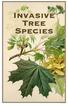 Invasive Tree Species A Contents Invasive Tree Species................. 1 Removal Permit Process.............. 2 Mitigation......................... 3 Identification Guide: Norway maple - Acer platanoides............
The Basics of Tree Pruning
 The Basics of Tree Pruning By John Ball, Forest Health Specialist and Aaron Kiesz, Urban and Community Forestry Specialist Until the end of the 19 th century, trees were not a common sight in many parts
Tree Management Policy
 Tree Management Policy This policy is designed to be a policy framework for the management of trees owned and managed by the Connect HA. It sets out the guiding principles for managing our stock, to assist
Tree Condition Survey for Proposed Taplow Footbridge at Ray Mill Island and Taplow Riverside, Mill Lane Taplow, Buckinghamshire
 Tree Condition Survey for Proposed Taplow Footbridge at Ray Mill Island and Taplow Riverside, Mill Lane Taplow, Buckinghamshire Tree Condition Survey for Proposed Taplow Footbridge at Ray Mill Island and
The UK Timber Resource and Future Supply Chain. Ben Ditchburn Forest Research
 The UK Timber Resource and Future Supply Chain Ben Ditchburn Forest Research Timber availability The landscape of timber availability in Great Britain and the United Kingdom is moving through a period
III. Hazard Tree Summary
 III. Hazard Tree Summary Methodology The sheer numbers of trees as well as the difficulty in determining precise tree ownerships has hampered hazard tree identification on the SVCA property. We did identify
1. Making Tree Preservation Orders 2. 2. Applications to carry out works to Trees covered by a Tree Preservation Order 3
 CONTENTS Page Number INTRODUCTION 1 LEGAL POSITION 1 WYRE FOREST PROCEDURES 2 1. Making Tree Preservation Orders 2 2. Applications to carry out works to Trees covered by a Tree Preservation Order 3 3.
GLOSSARY OF TREE TERMS
 GLOSSARY OF TREE TERMS Aeration providing air to the soil to alleviate compaction and improve structure. Arboriculture the practice and study of the care of trees and other woody plants. Arborist a professional
After the Storm: Caring for Your Trees
 Montana State University Extension Service Peter Kolb (PhD) MSU Extension Forestry Specialist School of Forestry, University of Montana,Missoula, MT 59812 Tel. (406) 243-4705; e-mail: [email protected]
The Roaches Asset Management Review. Draft Objectives for External Consultation. Fundamental Principles
 The Roaches Asset Management Review Draft Objectives for External Consultation Fundamental Principles the area of land under review is the Roaches Estate and Gradbach Car Park as shown on the attached
CP CHEMICAL INDUSTRY PALLETS Edition: 6
 April 00 CP CHEMICAL INDUSTRY PALLETS Edition: 6 Foreword The European chemical industry is using a large amount of wooden pallets for the distribution of goods. For environmental reasons there is a strong
It was my assignment to physically inspect the 8 trees on site near the proposed construction,
 July 11, 2013 Tariton Properties 2555 Park Blvd Palo Alto, CA 94306 Re: Tree Survey To Whom It May Concern: Assignment It was my assignment to physically inspect the 8 trees on site near the proposed construction,
Pruning Deciduous Trees
 Pruning Deciduous Trees By Robert S. Logan, Extension Forestry Specialist, and Steven B. Laursen, former Natural Resources Specialist MontGuide Nearly any question the homeowner may have about trees, especially
SECTION 7 LANDSCAPE RESTORATION
 SECTION 7 LANDSCAPE RESTORATION 27 7. Landscape and Restoration This section should be read in conjunction with Drawing No.CO8194/A010 Rev. B, Regeneration Strategy As Proposed which can be found at Section
November 2006. General Notes. Tree Protection. Tree Protection and New Development Guidance Note
 Tree Protection and New Development Guidance Note November 2006 General Notes The retention and planting of trees within a development can add to the character and aesthetic value of a site whilst maintaining
TREE HAZARD RISK ASSESSMENT REPORT
 TREE HAZARD RISK ASSESSMENT REPORT CLIENT: SITE: Mr Carl Denis Aylsham Manor care Home Norwich Road Norwich Norfolk NR11 6BN The grounds and gardens of Aylsham Manor Care Home Nick Coleman MSc (Arb) MArborA
12.16.070 - Forestry Division: Regulations and Specifications.
 12.16.070 - Forestry Division: Regulations and Specifications. A. Regulations and specifications known as the "Forestry Division: Regulations and Specifications" are set forth within the following subsections.
Identifying Pennsylvania Trees. Pennsylvania Forest Stewardship Program
 Identifying Pennsylvania Trees Pennsylvania Forest Stewardship Program Tree Identification In this presentation you will learn to identify trees using the Summer Key to Pennsylvania Trees. Trees can be
Pruning Mature Trees. Reasons for Pruning
 Pruning Mature Trees Pruning is the most common tree maintenance procedure. Although forest trees grow quite well with only nature's pruning, landscape trees require a higher level of care to maintain
Trees and Reliable Electric Service. Answers to Questions About Tree Pruning and Electric Power. We re connected to you by more than power lines.
 Trees and Reliable Electric Service Answers to Questions About Tree Pruning and Electric Power We re connected to you by more than power lines. How is Line Clearance Done? Pepco s tree contractor will
Making and using keys Teacher Guidance
 Teacher Guidance Activities in earlier sections should have laid foundations that lead children to these more complex activities, in which they apply their observation and sorting skills to the practical
Public Utility District #1 of Jefferson County Vegetation Clearance Policy And Specifications
 Jefferson County PUD Company Policy Policy No. Date: Public Utility District #1 of Jefferson County Vegetation Clearance Policy And Specifications Purpose The purpose of this policy statement and these
Post-Wildfire Clean-Up and Response in Houston Toad Habitat Best Management Practices
 Post-Wildfire Clean-Up and Response in Houston Toad Habitat Best Management Practices Purpose The purpose of this document is to provide guidance and recommendations for minimizing potential impacts to
Proper Pruning Basic Techniques and Tips. 2012 ECCFC Rocky Ford, CO
 Proper Pruning Basic Techniques and Tips 2012 ECCFC Rocky Ford, CO 1 The Pro-Active Pruner! Plan BEFORE Planting Select the Right Tree For the Right Place Begin pruning trees while they are young Common
Construction Damage to Trees
 Construction Damage to Trees When a building site is cleared, several large, well-established trees are often left to enhance the aesthetic value of the property. However, within about 2-8 years after
Design for: Het Groeilokaal. By Henk Eshuis. Online PDC 2015 given by Geoff Lawton
 Design for: Het Groeilokaal By Henk Eshuis Online PDC 2015 given by Geoff Lawton Project description Through facebook I got in contact with Astrid Huijbregts (http://www.hetgroeilokaal.nl/) who is starting
DO's and DON'Ts in Pruning
 DO's and DON'Ts in Pruning Introduction "Pruning is one of the best things an arborist can do for a tree but one of the worst things we can do to a tree" -Alex Shigo Pruning is the most common tree maintenance
runing & Orchard Renewal
 P runing & Orchard Renewal Richard G. St-Pierre, Ph.D. (January 2006) The Basics Of Pruning & Orchard Renewal Pruning is defined as the art and science of cutting away a portion of a plant to improve its
Why hire an arborist?
 Why hire an arborist? Spring is fast approaching and that means gardens to attend and flowers to plant, but what about your trees? Now is the best time to hire an arborist to maintain your trees before
Wildfire Damage Assessment for the 2011 Southeast Complex Fires
 Wildfire Damage Assessment for the 2011 Southeast Complex Fires Chip Bates & Mark McClure, Forest Health Management Background: On March 24, 2011, multiple wildfires began across southeast Georgia. Strong,
Can you see the difference between wind pollinated and insect pollinated flowers?
 Can you see the difference between wind pollinated and insect pollinated flowers? Age of Students 10 14 years Duration 1 hour Summary Pollination is a very effective factor in the evolution of plants and
Two Main Precautions Before You Begin Working
 Pruning Mango Trees Roy Beckford, Ag/Natural Resources Agent, UF/IFAS Lee County Two Main Precautions Before You Begin Working 1. Mango peel and sap contain urushiol, the chemical in poison ivy and poison
Integrated Weed Management in Portland Parks
 Urban Pest Management Course February 6, 2013 Integrated Weed Management in Portland Parks Commissioner Nick Fish www.portlandparks.org Director Mike Abbaté Commissioner www.portlandparks.org Jim Francecsconi
DEVELOPMENT GUIDELINES OAK TREES CARE AND MAINTENANCE
 DEVELOPMENT GUIDELINES OAK TREES CARE AND MAINTENANCE This guide will offer basic information for the preservation and maintenance of oak trees as a part of an overall landscape use. Unfortunately, oak
When you buy a high-quality tree, plant it correctly, and treat it properly, you and your tree will benefit greatly in many ways for many years.
 Buying High-Quality Trees When you buy a high-quality tree, plant it correctly, and treat it properly, you and your tree will benefit greatly in many ways for many years. When you buy a low-quality tree,
Tree Trimming Tips and Tricks
 Tree Trimming Tips and Tricks Start with Professionals Mistakes can be costly for you and your tree. Professionals who know about trees can help you get started with the right tree in the right place.
Tree Assessment Report Prepared for: Dr. Peter Giarrizzo 18 Franklin Place Pelham NY 10803
 Pelham Board of Education Tree Assessment Report Prepared for: Dr. Peter Giarrizzo 18 Franklin Place Pelham NY 10803 Prepared by: Ken Almstead, Certified Arborist NY 0335 Tree Risk Assessor Qualification
Can These Trees Be Saved?
 Can These Trees Be Saved? In cooperation with the USDA Forest Service and the International Society of Arboriculture. A storm can leave trees looking like there's no tomorrow. Major limbs may be broken
Caring for StormDamaged Trees
 QUICK GUIDES UCF 2010-1 Caring for StormDamaged Trees Information provided by the National Arbor Day Foundation and the International Society of Arboriculture In the Storm s Wake After a major storm, a
Urban and Community Forestry Agriculture & Natural Resources TIMELY INFORMATION Post Storm Tree Assessment; Guide to evaluating trees
 Urban and Community Forestry Agriculture & Natural Resources TIMELY INFORMATION Post Storm Tree Assessment; Guide to evaluating trees Post Storm Assessment: To assess trees in the aftermath of storms it
A GUIDE: DEVELOPING A STREET AND PARK TREE MANAGEMENT PLAN
 A GUIDE: DEVELOPING A STREET AND PARK TREE MANAGEMENT PLAN An introduction to the preparation of a strategic approach to the care and maintenance of your community forest USDA Forest Service Northeastern
Summary of the Heritage Tree Ordinance Updated July 2013
 Summary of the Heritage Tree Ordinance Updated July 2013 Purpose of the Ordinance See also: Chapter 13.24 of the Menlo Park Municipal Code (Available at www.menlopark.org or by calling 330-6740) The City
City of Bellingham Tree Planting Guide
 City of Bellingham Tree Planting Guide This guide provides you with resources for planting trees in the city. Using the right tree in the right place, and maintaining it correctly will provide healthy,
Walsall Council Validation Guide for submitting a Householder Planning Application
 Walsall Council Validation Guide for submitting a Householder Planning Application Householder Planning Application Guide Introduction This guide offers help to people who are submitting a Householder
Guideline Distances from Development to Trees
 Guideline Distances from Development to Trees Securing Space for Existing and New Trees Guidance retained from Residential Design Aid (4) Space About Dwellings (1989) and in Neighbourhoods For Living (2003)
Tree Removal Application
 Tree Removal Application PROPERTY INFORMATION Name of Property Owner(s): Site Address: Tax Parcel Number: Property Square Footage: Location of trees to be removed: Front Side Rear SUBMITTAL REQUIREMENTS
LANDSCAPE AND DEVELOPMENT CHECKLIST FOR MONMOUTHSHIRE COUNTY COUNCIL
 LANDSCAPE AND DEVELOPMENT CHECKLIST FOR MONMOUTHSHIRE COUNTY COUNCIL 1 Introduction It is to the advantage of the developer to treat the environmental aspects of development proposals seriously and take
building on success Trees and Basements Partial Review of the Core Strategy February 2014
 building on success Trees and Basements Partial Review of the Core Strategy February 2014 Regulation 19, Town and Country Planning (Local Planning) (England) Regulations 2012. 2 Contents 1. Introduction...
Tree Maintenance Practices
 OUTLINE. I. Pruning Methods a. Crown Raising.3 b. Structural Pruning...3 c. Thinning 4 d. Crown Reduction (drop crotch).4 e. Restoration...5 II. Pruning Cuts a. Types of Pruning Cuts.5-8 b. Principles,
LEVEL 2 AWARD IN CHAINSAW AND RELATED OPERATIONS (QCF) CS38 - CLIMB TREES AND PERFORM AERIAL RESCUE ASSESSMENT SCHEDULE
 BUILDING 500, ABBEY PARK, STARETON, WARWICKSHIRE, CV8 2LY Tel: 024 7685 7300 Fax: 024 7669 6128 Email: [email protected] LEVEL 2 AWARD IN CHAINSAW AND RELATED OPERATIONS (QCF) CS38 - CLIMB
CITRUS PRUNING. control, fruit production and size control
 CITRUS PRUNING Pruning techniques for tree health pest Pruning techniques for tree health, pest control, fruit production and size control Tree Shapes Citrus trees are generally pruned to a central leader
Dichotomous Keys for the Arboretum Walk. Plant List
 1 Dichotomous Keys for the Arboretum Walk Plant List Common name 1. Pin oak 2. Sweet gum 3. Red maple 4. Bur oak 5. River birch 6. Black cherry 7. Tulip poplar 8. Kentucky coffeetree 9. Catalpa 10. Honeylocust
Why Fruit Trees Die D. B. Meador, Extension Specialist (retired) University of Illinois
 Why Fruit Trees Die D. B. Meador, Extension Specialist (retired) University of Illinois Occasionally, fruit trees decline and often die. Diseases affecting the leaves, fruit, and twigs of fruit trees usually
Pruning Trees. Center for Landscape and Urban Horticulture. University of California Cooperative Extension Central Coast & South Region
 University of California Cooperative Extension Central Coast & South Region Center for Landscape and Urban Horticulture Pruning Trees Pruning Trees at Planting Landscape trees should not be pruned at planting
Symptoms Include: Stippled, bronzed or bleached appearance of leaves
 Common Tree Pests & Diseases Of Central Texas Lara Schuman City of Austin Urban Forestry Program Stress and Trees City life can be stressful, and trees feel stress too. Common urban tree issues include:
Care of Mature Backyard Apple Trees
 Education Center and Info Line practical solutions to everyday questions Toll free Info Line 1-877-398-4769 M-F 9 AM - 2 PM Care of Mature Backyard Apple Trees Introduction Backyard apple trees can be
The OPAL Biodiversity Survey
 The OPAL Biodiversity Survey By The Open University with Hedgelink Introduction Biodiversity is the variety of life. Hedgerows can be important havens for this, both in the countryside and in our cities.
H-GAC Debris Workshop 2: Mitigating Your Hazards Handout 1 Public Outreach Debris Mitigation Strategies
 H-GAC Debris Workshop 2: Mitigating Your Hazards Handout 1 Public Outreach Debris Mitigation Strategies This handout provides examples of debris mitigation initiatives for the public that communities have
Tree and forest restoration following wildfire
 Peter F. Kolb (PhD) MSU Extension Forestry Specialist Adj. Assistant Professor Forest Ecology School of Forestry, University of Montana, Missoula, MT 59808 Tel. (406) 243-4705, e-mail: [email protected]
Tree Work on District of West Vancouver Property
 CORPORATE POLICY Parks & Community Services File #2190-01-01 West Vancouver Property 1.0 Purpose This policy has three sections: 1.1 Section 1 ensures the safety of the residents of West Vancouver through
The land is allocated within the Westbury on Trym Conservation Area and the land is protected by a blanket TPO 340.
 SITE DESCRIPTION The site is occupied by a large single dwelling house which was built in 2007. The building is surrounded by large trees and has a substantial rear garden. The land is allocated within
INFORMATION SHEET ON TERMITES & TERMITE MANAGEMENT PROCEDURES
 INFORMATION SHEET ON TERMITES & TERMITE MANAGEMENT PROCEDURES IMPORTANT INFORMATION: The Australian Standard AS 3660.2 Protection of buildings from subterranean termites provides details for minimising
Determining the Age and Benefits of a Tree
 Grades: 6-8 Illinois State Science Standards: Determining the Age and Benefits of a Tree 11.A.3a Formulate hypotheses that can be tested by collecting data. 11.A.3c Collect and record data accurately using
ARBORIST REPORT FOR DEVELOPMENT APPLICATIONS
 ARBORIST REPORT FOR DEVELOPMENT APPLICATIONS City Planning / Parks, Forestry & Recreation The purpose of this form is to acquire preliminary information respecting trees on private and City property, in
TREE PROTECTION POLICY AND SPECIFICATIONS FOR CONSTRUCTION NEAR TREES
 ` Parks, Forestry & Recreation Urban Forestry Table of Contents TREE PROTECTION POLICY AND SPECIFICATIONS FOR CONSTRUCTION NEAR TREES 1. Introduction 2. Table 1 - Tree Protection Zones 3. Tree Protection
Broadmoor Public Golf Course TREE MANAGEMENT GUIDE
 Broadmoor Public Golf Course TREE MANAGEMENT GUIDE Conservation of the trees at the Broadmoor Public Golf Course is a priority for environmental, economic and human health reasons. Trees make a difference
SCHEDULE 2 TO THE DEVELOPMENT PLAN OVERLAY Shown on the planning scheme map as DPO2 WAVERLEY GOLF COURSE, LYSTERFIELD VALLEY
 SCHEDULE 2 TO THE DEVELOPMENT PLAN OVERLAY Shown on the planning scheme map as DPO2 WAVERLEY GOLF COURSE, LYSTERFIELD VALLEY 1.0 Conditions and requirements for permits A permit to use and develop the
What you need to know about the management of. the Emerald Ash. Borer (EAB) Guidelines for hiring tree care services to manage urban trees
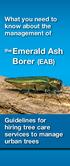 What you need to know about the management of the Emerald Ash Borer (EAB) Guidelines for hiring tree care services to manage urban trees What is an Emerald Ash Borer? This booklet has been designed for
FREQUENTLY ASKED QUESTIONS Biomass Harvest Guidelines
 FREQUENTLY ASKED QUESTIONS Biomass Harvest Guidelines What do Biomass Harvest Guidelines offer? They offer recommendations to manage forest-, brush- and open- land with the intent to protect water, timber,
How To Plan A Buffer Zone
 Backyard Buffers Protecting Habitat and Water Quality What is a buffer? A buffer (also called a riparian buffer area or zone) is the strip of natural vegetation along the bank of a stream, lake or other
Tree Integrated Pest Management. Dan Nortman Virginia Cooperative Extension, York County
 Tree Integrated Pest Management Dan Nortman Virginia Cooperative Extension, York County IPM Refresher Definition: The use of a combination of appropriate pest control tactics to reduce pest population
ASSESSMENT OF LANDCAPE PROVISIONS FOR PROPOSED PLAN CHANGE 1. Inner Business Zone. Outer Business Zone PALMERSTON NORTH CITY COUNCIL
 A division of Hudson Group Ltd ASSESSMENT OF LANDCAPE PROVISIONS FOR PROPOSED PLAN CHANGE 1 Inner Business Zone Outer Business Zone PALMERSTON NORTH CITY COUNCIL 1 2 A division of Hudson Group Ltd Prepared
STANDARDS FOR RANGELAND HEALTH ASSESSMENT FOR SAGEHEN ALLOTMENT #0208
 STANDARDS FOR RANGELAND HEALTH ASSESSMENT FOR SAGEHEN ALLOTMENT #0208 RANGELAND HEALTH STANDARDS - ASSESSMENT SAGEHEN ALLOTMENT #0208 STANDARD 1 - UPLAND WATERSHED This standard is being met on the allotment.
How To Prune Coniferous Evergreen Trees
 Bulletin No. 644 How To Prune Coniferous Evergreen Trees D. W. McConnell R. L. Mahoney W. M. Colt A. D. Partridge Cooperative Extension System 1 How To Prune Coniferous Evergreen Trees D. W. McConnell,
Introduction. Figure q
 CHAPTER DEvelopinG A PREVENTIVE PRUNING PROGRAM in your community: mature TREES PUBLICATION Nº ENH 1063 edward f. gilman amanda bisson Introduction A preventive pruning program should be designed to create
Development proposals will require to demonstrate, according to scale, type and location, that they:-
 Appendix 2 : Relevant Development Plan Policies Angus Local Plan Review 2009 Policy S1 : Development Boundaries (a) Within development boundaries proposals for new development on sites not allocated on
Tree Management Guidelines
 Tree Management Guidelines Overview Tree Management Guidelines The trees that make up Brisbane s urban forest create much of our subtropical landscape character and biodiversity. Almost half of the city
Portland State University. Campus Tree Care Plan
 Portland State University Campus Tree Care Plan 1. Purpose Portland State University (PSU) resides in a densely populated urban setting in downtown Portland, Oregon. With green space in short supply, maintaining
Begin forwarded message:
 From: To: Subject: Date: Attachments: Heather Scott Tully, Tania Fwd: Stalite Root Bridge Tuesday, November 17, 2015 8:58:01 AM Stalite_Root_Bridge_brochure[1].pdf Begin forwarded message: From: "Chuck