
BACHELOR OF COMPUTER APPLICATIONS (Semester: I IV) Session:
|
|
|
- Randall Lloyd
- 9 years ago
- Views:
Transcription
1 FACULTY OF ENGINEERING & TECHNOLOGY SYLLABUS FOR BACHELOR OF COMPUTER APPLICATIONS (Semester: I IV) Session: Part: III (Annual System) Examination: 2014 GURU NANAK DEV UNIVERSITY AMRITSAR Note: (i) Copy rights are reserved. Nobody is allowed to print it in any form. Defaulters will be prosecuted. (ii) Subject to change in the syllabi at any time. Please visit the University website time to time.

2 Eligibility: 1 Bachelor of Computer Applications a) +2 examination with 40% marks OR b) Any other examination with 40% marks recognized equivalent to (a) above by the Guru Nanak Dev University.

3 2 Bachelor of Computer Applications Semester I: SEMESTER SYSTEM SCHEME Paper No. Paper M. Marks Paper I Introduction to Programming C - I 75 Paper II Introduction to Computers and Information Technology 75 Paper III Mathematical Foundation of Computer Science 75 Paper IV Communication Skills I (Th.35+Pr.15) 50 Paper V Punjabi/Basic Punjabi (Mudhli Punjabi) (Compulsory) 50 Paper VI Practical I (MS Office 2010 and Basic C Programming) 75 Semester II: Paper No. Paper M. Marks Paper I Introduction to Programming C II 75 Paper II Principles of Digital Electronics 75 Paper III Numerical Methods & Statistical Techniques 75 Paper IV Communication Skills II (Th.35+Pr.15) 50 Paper V Punjabi/Basic Punjabi (Mudhli Punjabi) (Compulsory) 50 Paper VI Practical I (Advanced C Programming) 75 Semester III: Paper No. Paper M. Marks Paper I Paper II Paper III Computer Architecture Database Management System & Oracle C++ (OOP Language) Paper IV Environmental Studies I (Compulsory) 50 Paper V Programming Lab C++ 50 Paper VI Programming Lab Oracle

4 3 Bachelor of Computer Applications Semester IV: Paper No. Paper M. Marks Paper I Data Structure & File Processing 75 Paper II Information Systems 75 Paper III Internet Applications 75 Paper IV System Software 75 Paper V Environmental Studies II (Compulsory) 50 Paper VI Lab Data Structures implementation using C++ 50 Paper VII Lab Web Designing and use of Internet 50 Part III: ANNUAL SYSTEM Paper No. Paper Max. Marks Paper I Computer Networks 100 Paper II Software Engineering 100 Paper III Operating System 100 Paper IV Computer Graphics 100 Paper V Programming Lab (50+50) 100 Paper VI Project 300

5 4 Bachelor of Computer Applications (Semester I) Paper I: Introduction to Programming (C) - I Time: 3 Hours M. Marks: 75 Note: 1. Eight questions are required to be set giving equal weightage to all the units. The candidates will have to attempt any five. All questions carry equal marks. 2. The student can use only Non programmable & Non storage type Calculator. UNIT-I Logic Development and Program Development Tools: Data Representation, Flowcharts, Problem Analysis, Decision Trees/Tables, Pseudo code and algorithms. Fundamentals: Character set, Identifiers and Key Words, Data types, Constants, Variables, Expressions, Statements, Symbolic Constants. Operations and Expressions: Arithmetic operators, Unary operators, Relational Operators, Logical Operators, Assignment and Conditional Operators, Library functions. UNIT-II Data Input and Output: single character Input, single character output, entering input data, more about scan functions, writing output data, more about print functions, gets and puts functions, interactive programming. Control Statements: Preliminaries, While, Do while and For statements, Nested loops, If else, Switch, Break Continue statements. UNIT-III Functions: Brief overview, defining, accessing functions, passing arguments to function, specifying argument data types, function prototypes, recursion. Arrays: Defining, processing an arrays, passing arrays to a function, multi dimensional arrays. References: 1. Balaguruswamy: Programming in ANSI C. 2. Scaum Outline Series: Programming in C. 3. Dennis & Ritchie: Programming in C. 4. Stephen G. Kochar: C Programming.

6 5 Bachelor of Computer Applications (Semester I) Paper II: Introduction to Computers and Information Technology Time: 3 Hours M. Marks: 75 Note: 1. Eight questions are required to be set giving equal weightage to all the units. The candidates will have to attempt any five. All questions carry equal marks. 2. The student can use only Non programmable & Non storage type Calculator. UNIT-I Introduction to Computers and its Applications: Computer as a system, basic concepts, functional units and their inter relation. Milestones in Hardware and Software. Batch oriented / on line / real time applications. Application of computers. UNIT-II Interacting with the Computer: Input Devices: Keyboard, mouse, pens, touch screens, Bar Code reader, joystick, source data automation, (MICR, OMR, OCR), screen assisted data entry: portable / handheld terminals for data collection, vision input systems. Output Devices: Monitor, Serial line page printers, plotters, voice response units. Data Storage Devices and Media: Primary storage (Storage addresses and capacity, type of memory), Secondary storage, Magnetic storage devices and Optical Storage Devices UNIT-III MS Word: Overview, creating, saving, opening, importing, exporting and inserting files, formatting pages, paragraphs and sections, indents and outdents, creating lists and numbering. Headings, styles, fonts and font size Editing, positioning and viewing texts, Finding and replacing text, inserting page breaks, page numbers, book marks, symbols and dates. Using tabs and tables, header, footer and printing MS Power Point: Presentation overview, entering information, Presentation creation, opening and saving presentation, inserting audio and video Text/References: 1. Computer Fundamentals P.K. Sinha. 2. Introduction to Computers N. Subramanian. 3. Introduction to Computers Peter Norton Mcgraw Hill. 4. MS Office _ BPB Publications. 5. Windows Based Computer Courses Gurvinder Singh & Rachpal Singh, Kalyani Pub.

7 6 Bachelor of Computer Applications (Semester I) Paper III: Mathematical Foundation of Computer Science Time: 3 Hours Max. Marks: 75 Note: 1. Eight questions are required to be set giving equal weightage to all the units. The candidates will have to attempt any five. All questions carry equal marks. 2. The student can use only Non programmable & Non storage type Calculator. UNIT-I Matrices and Determinants: Introduction and definition of matrices, types of matrices, matrix addition and scalar multiplication, transpose and inverse of matrix, solution of system of linear equations using matrices and Cramer rule, definition and properties of determinants ( statement only ), characteristics polynomial, eigen values, nature of eigen values, certain types of matrices, Cayley Hamilton theorem. UNIT-II Set Theory, Relation: Elements of a set, methods of describing a set, types of sets, operation on sets union, intersection and difference of sets, Venn diagrams, statement problems, Associative laws, Distributive laws, DeMorgan s laws, duality, partitioning of a set. Basic definition of Relation and types of relations, graphs of relations, properties of relations (domain, range, inverse and composite relations). UNIT-III Differentiation and Integration: Laws of derivative, Chain rule, Differentiation using log, repeated derivatives, derivatives of implicit functions. Integration of algebraic, Logarithmic and Exponential function, Integration of functions using partial fraction (Simple form using properties), Integration of functions by parts, Definite integral Probability: Mathematical and Statistical probability, axiomatic approach to probability, Elementary events, Sample space, Compound events, Types of events, Mutually exclusive, Independent events, addition law of probability, Conditional probability, Multiplication theorem of probability, Baye s Theorem. Books Recommended: 1. Text Book of Engineering Mathematics by N.P. Bali 2. Higher Engineering Mathematics by B.S. Grewal

8 7 Bachelor of Computer Applications (Semester I) PAPER IV: COMMUNICATION SKILLS I Time: 3 Hours Max. Marks: 50 Theory Marks: 35 Practical Marks: 15 Contents: 1. Reading Skills: Reading Tactics and strategies; Reading purposes kinds of purposes and associated comprehension; Reading for direct meanings; Reading for understanding concepts, details, coherence, logical progression and meanings of phrases/ expressions. Activities: a) Active reading of passages on general topics b) Comprehension questions in multiple choice format c) Short comprehension questions based on content and development of ideas 2. Writing Skills: Guidelines for effective writing; writing styles for application, resume, personal letter, official/ business letter, memo, notices etc.; outline and revision. Activities: a) Formatting personal and business letters. b) Organsing the details in a sequential order c) Converting a biographical note into a sequenced resume or vice-versa d) Ordering and sub-dividing the contents while making notes. e) Writing notices for circulation/ boards 3. Listening Skills: Barriers to listening; effective listening skills; feedback skills. Attending telephone calls; note taking. Activities: a) Listening exercises Listening to conversation, News/TV b) Taking notes on a speech/lecture a. Speaking and Conversational Skills: Components of a meaningful and easy conversation; understanding the cue and making appropriate responses; forms of polite speech; asking and providing information on general topics. Activities: a) Making conversation and taking turns b) Oral description or explanation of a common object, situation or concept c) Giving interviews Recommended Books: 1. Oxford Guide to Effective Writing and Speaking by John Seely 2. A Course in Listening and Speaking I by V. Sasikumar et. al., Foundation Books. 3. The Written Word by Vandana R Singh, Oxford University Press.

9 8 Bachelor of Computer Applications (Semester I) Suggested Books: 1. Developing Communication Skills by Krishna Menon and Meera Bannerjee. Macmillan. 2. Business Communication; Theory and Practice by Swati Samantray and R.D.Bhushan. Sultan Chand 3. Business Communication: Techniques and Methods by Om Juneja and Aarti Majumdar. Orient Blackswan 4. Handbook of Practical Communication Skills; Clarissa Wright (Ed). JAICO Books 5. Spoken English: A Foundation Course (Part I and II) by Kamlesh Sadanand and Sushila Punitha. Orient Blackswan (for recorded conversation) Suggested Pattern of Question Paper: The question paper will consist of seven skill oriented questions from Reading and Writing Skills. Each question will carry 5 marks. The questions shall be phrased in a manner that students know clearly what is expected of them. There will be internal choice wherever possible. i) Multiple choice questions on the language and meanings of an unseen passage. ii) Comprehension questions with short answers on content, progression of ideas, purpose of writing etc. of an unseen passage. iii) Personal letter iv) Official/Business correspondence v) Making point-wise notes on a given speech/ technical report vi) Writing notices for public circulation on topics of professional interest vii) Do as directed (5x1=5 marks) (change of voice, narration, combination of 2 simple sentences into one, subject-verb agreement, using appropriate tense, forms of verbs. (7x5=35 marks)

10 9 Bachelor of Computer Applications (Semester I) Practical /Oral Testing Marks: 15 Contents: 1. Conversation with students or examiner. 2. Listening to any recorded or live material and asking oral questions for listening comprehension. Questions: 1. Students may be asked to engage in face-to-face conversation with other students or examiners on topics of general interest. 2. Students may be asked to prepare for one minute and then speak for one to two minutes on a simple topic with examiners as the audience 3. A teacher or examiner may read out a small passage and the students may be asked to answer a couple of comprehension questions. (recorded material may also be used) Note: Oral test will be conducted by external examiner with the help of internal examiner. The oral test examiner will be appointed from those teachers who are actually teaching the subject.

11 10 Bachelor of Computer Applications (Semester I) Paper-V: gzikph (bkiawh) ;wk L 3 xzn/ e[b nze L 50 gkm-eqw ns/ gkm-g[;sek 1H frnkb wkbk (ftfrnkbe s/ ;wki-ftfrnkbe b/yk dk ;zrqfj) (;zgh vkh ;fszdo f;zx, g'qh wfjzdo f;zx pbt?s), r[o{ BkBe d/t :{Bhtof;Nh, nzfwqs;o, 2007 b/y L gjhnk gqd{fd, Go{D jzfsnk d/ d/f ftu, Bkoh Fesh, tksktodh gqd{fd ns/ wb[`y, J/v} L fje rzgho ;zen. 2H gzikp d/ wjkb ebkeko (pbtzs rkorh), r[o{ BkBe d/t :{Bhtof;Nh, nzfwqs;o. b/y L nzfwqsk F/ofrb, e/hn?bh;fjrb, pv/ [bkw nbh yk, ;'Gk f;zx, fgqethoki eg{o, GkJh ;w[zd f;zx 3H g?oqk oubk 4H g?oqk gvq e/ gqfbk d/ T[`so. 5H (T) gzikph X[Bh ftt[_s L T[ukoB nzr, T[ukoB ;EkB s/ ftxhnk, ;to, ftnzib, ;[o. (n) GkFk tzbrhnk L GkFk dk Ne;kbh o{g, GkFk ns/ T[g-GkFk dk nzso, gzikph T[gGkFktK d/ gskd-fuzbq. 6H wks GkFk dk nfxnkgb (T) gfjbh GkFk d/ s"o T[`s/ (n) d{ih GkFk d/ s"o T[`s/ nze tzv ns/ gohfyne bjh jdkfjsk 1H fe;/ fbpzx dk ;ko ik T[;dk ftfk t;s{ (d' ftu'i fje). 10 nze 2H tkose o{g L o/yk fuso, BkfJe fpzp, ebkswe r[d, o/yk fuso ;kfjs ~ d/d 10 nze 3H g?oqk oubk L fszb ftffnk ftu'i fe;/ fje T[s/ g?oqk fbyd bjh 5 nze fejk ikt/. 4H g?oqk d/ e/ T[; pko/ gzi gqfbk d/ T[`so 5 nze 5H Bzpo 5 T[s/ fd`sh ftnkeod d/ nkxko s/ todbkswe gqfb 10 nze 6H Bzpo 6 ftu wks GkFk d/ gfjbh GkFk ns/ d{ih GkFk ti'_ nfxnkgb, wjzst ns/ ;wzf;nktk pko/ uko gqfb g[`s/ ikdr/, fibqk ftu'_ ftfdnkoeh B/ d' dk T[`so d/dk j't/rk. 5%2=10 nze

12 11 Bachelor of Computer Applications (Semester I) PAPER V: w[zybh gzikph (In lieu of Compulsory Punjabi) pwt-krm smw : iqmn GMty ku~l AMk : pmjwbi BwSw gurmuki ilpi gurmuki ilpi : bxqr Aqy qrqib 2. gurmuki AwrQogRw&I sírw di vmf Aqy aucwrn ivamjnw di vmf Aqy aucwrn 3. pmjwbi Sbd-bxqr Aqy rcnw swdwrn Sbd in~q vrqon di pmjwbi SbdwvlI 20 AMk 15 AMk 15 AMk XUint Aqy QIm: 1. pmjwbi BwSw : nwmkrx Aqy smkyp jwx pcwx, gurmuki ilpi : nwmkrx, gurmuki vrxmwlw; pynqi A~KrI, A~Kr krm, sír vwhk (a A e), lgw mwqrw, pyr ivc ibmdi vwly vrx, pyr ivc pyx vwly vrx, ibmdi, it~pi, A~Dk[ 2. gurmuki AwrQogRw&I Aqy aucwrn ; sírw di vmf Aqy aucwrn (lgu-dirg sír) ; sír Aqy lgw mwqrw ; ivamjnw di vmf Aqy aucwrn ; pyr ivc pyx vwly vrxw (h, r, v) dw aucwrn ; l Aqy L dw aucwrn ; B,D,F,J,G dw aucwrn; pyr ivc ibmdi vwly vrxw dw aucwrn[ 3. pmjwbi Sbd-bxqr Aqy rcnw: swdwrn Sbd; iek~lw sír (ijvyn Aw) ; sír Aqy ivamjn (ijvyn Awr) ; ivamjn Aqy sír (ijvyn pw) ; ivamjn sír ivamjn (ijvyn pwr) ; pmjwbi Sbd rcnw ; ilmg-puilmg, iek vcnbhu vcn; in~q vrqon di pmjwbi SbdwvlI; Kwx-pIx Aqy swkwdwri nwl smbmidq[ AMk-vMf Aqy priikak lei hdwieqw: 1. pihly XUint iv~con pmjwbi BwSw Aqy gurmuki ilpi di bxqr Aqy qrqib nwl sbmidq 5-5 AMkW dy cwr ivhwrk prsn pu~cy jwxgy[ AMkW di vmf A~goN iek-iek jw do-do AMkW dy Coty prsnw ivc kiqi jw skdi hy[ 2. dujy XUint iv~con gurmuki AwrQogRw&I Aqy aucwrn nwl sbmidq 5-5 AMkW dy iqmn ivhwrk prsn pu~cy jwxgy[ AMkW di vmf A`goN iek-iek jw do-do AMkW dy Coty prsnw ivc kiqi jw skdi hy[ 3. qijy XUint iv~con pmjwbi Sbd-bxqr Aqy Sbd rcnw nwl sbmidq 5-5 AMkW dy do ivhwrk prsn pu~cy jwxgy[ AMkW di vmf A`goN iek-iek jw do-do AMkW dy Coty prsnw ivc kiqi jw skdi hy[ 4. in`q vrqon di pmjwbi SbdwvlI nwl sbmidq iek-iek AMk dy pmj (AwbjYkitv) prsn pu~cy jwxgy[ 5. prsnw di BwSw srl Aqy spst r~ki jwvy[

13 12 Bachelor of Computer Applications (Semester I) Paper VI: Practical I (MS Office 2010 & Basic C Programming) M. Marks: 75 Operational Knowledge of: 1. C Programming 2. Windows Based Operating System 3. MS OFFICE (Word and Power Point)

14 13 Bachelor of Computer Applications (Semester II) Paper I: Introduction to Programming (C) - II Time: 3 Hours M. Marks: 75 Note: 1. Eight questions are required to be set giving equal weightage to all the units. The candidates will have to attempt any five. All questions carry equal marks. 2. The student can use only Non programmable & Non storage type Calculator. Strings: String declaration, string functions and string manipulation Program Structure Storage Class: Automatic, external and static variables, multiple programs, more about library functions. Structures & Unions: Defining and processing a structure, user defined data types, structures and pointers, passing structures to functions, self referenced structure, unions. Pointers: Fundamentals, pointer declaration, passing pointer to a function, pointer and one dimensional arrays, operation on pointers, pointers & multi dimensional arrays of pointers, passing functions, other functions, more about pointer declarations. Data Files: Opening, closing, creating, processing and unformatted data files. References: 1. Balaguruswamy: Programming in ANSI C. 2. Scaum Outline Series: Programming in C. 3. Dennis & Ritchie: Programming in C. 4. Stephen G. Kochar: C Programming.

15 14 Bachelor of Computer Applications (Semester II) Paper II: Principles of Digital Electronics Time: 3 Hours M. Marks: 75 Note: 1. Eight questions are required to be set giving equal weightage to all the units. The candidates will have to attempt any five. All questions carry equal marks. 2. The student can use only Non programmable & Non storage type Calculator. UNIT-I Number System: Introduction, number conversion system, binary arithmetic, representation of signed binary numbers, 1 s and 2 s complement, Codes: straight binary code, BCD Code Excess3 Code, Grey Code ASCII, Integer and floating point representation Logic Gates and Boolean Algebra: Logic gates, Universal Gates, Boolean algebra and Minimization techniques, canonical forms of Bookean expressions, K-Map UNIT-II Combinational Circuits: Adder, Subtracter, Multiplexer, Demultiplexer, Decoeer, Encoder Sequential Circuits: Flip-flops, clocks and timers, registers, counter UNIT-III Semiconductor memories: Introduction, Static and dynamic devices, read only & random access memory chips, PROMS and EPROMS Address selection logic. Read and write control timing diagrams for ICs References:. 1. Integrated Electronics by Millman, Halkias McGraw Hill. 2. Malvino: Digital Computer Electronics, McGraw Hill. 3. D.A. Hodges & H.G. Jackson, Analysis and Design of Integrated Circuits, International, Joph. F. Wakerley, Digital Principles and Practices. 5. Ujjenbeck, John: Digital Electronics: A Modern Approach, Prentice Hall, Mano, M. Morris: Digital Logic and Computer Design, Edition, 1993.

16 15 Bachelor of Computer Applications (Semester II) Paper III: Numerical Methods & Statistical Techniques Time: 3 Hours M. Marks: 75 Note: 1. Eight questions are required to be set giving equal weightage to all the units. The candidates will have to attempt any five. All questions carry equal marks. 2. The student can use only Non programmable & Non storage type Calculator. Note for Paper Setter: I. That the program for numerical and statistical methods are to be written in C. II. Paper setter indicating thereby that the greater weightage is to be given to exercises rather than theoretical derivation of all numerical and statistical methods. UNIT-I Introduction: 1. Numerical Methods, Numerical methods versus numerical analysis, Errors and Measures of Errors. 2. Non linear Equations, Iterative Solutions, Multiple roots and other difficulties, Interpolation methods, Methods of bi section, False position method, Newton Raphson Method. 3. Simultaneous Solution of Equations, Gauss Elimination Method Gauss Jordan Method. UNIT-II 4. Numerical Integration and different Trapezoidal Rule, Simpson s 3/8 Rule. 5 Interpolation and Curve Fitting, Lagrangian Polynomials, Newton s Methods: Forward Difference Method, Backward Difference Method Divided Difference Method. 6 Least square fit linear trend, Non linear trend. Y = ax b Y = ab x Y = ae x Polynomial fit: Y = a+bx+cn 2 UNIT-III Statistical Techniques: 1. Measure of Central Tendency, Mean Arithmetic, Mean geometric, Mean harmonic, Mean, Median, Mode. 2. Measures of dispersion, Mean deviation, Standard deviation, Co efficient of variation. 3. Correlation. Books Recommended: 1. V. Rajaraman: Computer Oriented Numerical Methods, Prentice Hall of India Private Ltd., New Delhi. 2. B.S. Grewal, Numerical Methods for Engineering, Sultan Chand Publication.

17 16 Bachelor of Computer Applications (Semester II) PAPER IV: COMMUNICATION SKILLS II Time: 3 Hours Max. Marks: 50 Theory Marks: 35 Practical Marks: 15 Contents: 1. Reading Skills: Reading Tactics and strategies; Reading purposes kinds of purposes and associated comprehension; Reading for information given and implied; Inferential reading, critical reading and interpretation; connotation and understanding tone; paraphrasing, gist and central idea; Activities: a) Active reading of learned passages on academic and professional topics b) Short comprehension questions on implied meanings c) Reading outcome including paraphrasing and summary writing. 2. Writing Skills: Guidelines for effective writing; writing styles for paragraphs/ short essays of expository and argumentative nature; academic and technical reports, style, arrangement, variety of illustrations, diagrams, tables, charts etc., main section, appendices, conclusion, list of references; outline, synopsis, revision. Activities: a) Writing of paragraph/ short essay on learned and professional topics b) Organising ideas/ arguments in a logical order c) Writing a brief report on the given data, diagram, chart etc. 3. Listening Skills: Barriers to listening; effective listening skills; feedback skills. Attending telephone interviews; transcoding and note taking. Activities: a) Listening exercise Listening to Conversation, News/TV, group discussion, long speech b) Making notes on conversation, group discussion and lectures. 4. Speaking and Discussion Skills: Components of an effective talk/ presentation; planning and organizing content for a talk/ presentation, use of visual aids, effective speaking skills, discussion skills. Activities: a) Making presentation to a group on a given topic. b) Participating in a group discussion. c) Making slides for PowerPoint presentation or other audio-visual aids

18 Recommended Books: 17 Bachelor of Computer Applications (Semester II) 1. Oxford Guide to Effective Writing and Speaking by John Seely 2. A Course in Listening and Speaking I by V. Sasikumar et. al., Foundation Books. 3. The Written Word by Vandana R Singh, Oxford University Press. Suggested Books: 1. Developing Communication Skills by Krishna Menon and Meera Bannerjee. Macmillan. 2. Business Communication; Theory and Practice by Swati Samantray and R.D.Bhushan. Sultan Chand 3. Business Communication: Techniques and Methods by Om Juneja and Aarti Majumdar. Orient Blackswan 4. Handbook of Practical Communication Skills; Clarissa Wright (Ed). JAICO Books 5. Spoken English: A Foundation Course (Part I and II) by Kamlesh Sadanand and Sushila Punitha. Orient Blackswan (for recorded conversation) Suggested Pattern of Question Paper: The question paper will consist of seven skill oriented questions from Reading and Writing Skills. Each question will carry 5 marks. The questions shall be phrased in a manner that students know clearly what is expected of them. There will be internal choice wherever possible. i) Short answer comprehension questions on an unseen passage on a learned topic ii) Making summary/ précis or paraphrasing of ideas of a given passage iii) Writing a paragraph of expository or argumentative nature on a given topic iv) Interpreting a given data, chart, diagram etc and making a brief report v) Transcoding (given dialogue to prose or given prose to dialogue) vi) Making given number of slides for a presentation on a given topic vii) Do as directed (5x1=5 marks) (change of voice, narration, combination of 2 simple sentences into one, subject-verb agreement, using appropriate tense, forms of verbs. (7x5=35 marks)

19 Contents: 18 Bachelor of Computer Applications (Semester II) Practical /Oral Testing Marks: Oral Presentation with/without audio visual aids. 2. Group Discussion. 3. Listening to any recorded or live material and asking oral questions for listening comprehension. Questions: 1. Oral Presentation will be of 5 to 10 minutes duration. (Topic can be given in advance or it can be of student s own choice). Use of audio visual aids is desirable. 2. Group discussion comprising 8 to 10 students on a familiar topic. Time for each group will be 15 to 20 minutes. Note: Oral test will be conducted by external examiner with the help of internal examiner. The oral test examiner will be appointed from those teachers who are actually teaching the subject.

20 19 Bachelor of Computer Applications (Semester II) PAPER V: gzikph (bkiawh) ;wk L 3 xzn/ e[b nze L 50 gkm-eqw ns/ gkm-g[;sek 1H 2H 3H 4H 5H 6H 7H frnkb wkbk (ftfrnkbe s/ ;wki-ftfrnkbe b/yk dk ;zrqfj) (;zgh vkh ;fszdo f;zx, g'qh wfjzdo f;zx pbt?s), r[o{ BkBe d/t :{Bhtof;Nh, nzfwqs;o, 2007 b/y L ;kfjs s/ b'e ;kfjs, nzyk, nu/sb dk r[d s/ ;[Gkn, ezfgt{no ns/ fjznob?`n, wb[`yh nfxeko. gzikp d/ wjkb ebkeko (pbtzs rkorh), r[o{ BkBe d/t :{Bhtof;Nh, nzfwqs;o. b/y L ;shf r[iokb, r[ouob f;zx, mke[o f;zx, pboki ;kjbh, ;[fozdo e"o. Fpd-pDso ns/ Fpd oubk L gfogkfk, w[`yb/ ;zebg Fpd Fq/DhnK g?oqk oubk g?oqk gvq e/ gqfbk d/ T[`so w[jkto/ ns/ nykd nze tzv ns/ gohfyne bjh jdkfjsk 1H fe;/ fbpzx dk ;ko ik T[;dk ftfk t;s{ (d' ftu'i fje). 10 nze 2H tkose o{g L o/yk fuso, BkfJe fpzp, ebkswe r[d, o/yk fuso ;kfjs ~ d/d 10 nze 3-4H 3-4 Bzpo T[`s/ fd`sh ftnkeod d/ nkxko s/ todbkswe gqfb. 10 nze 5H g?oqk oubk L fszb ftffnk ftu'i fe;/ fje T[s/ g?oqk fbyd bjh 5 nze fejk ikt/. 6H g?oqk d/ e/ T[; pko/ gzi gqfbk d/ T[`so 5 nze 7H Bzpo 7 ftu n`m nykd ns/ nzm w[jkto/ g[`s/ ikdr/, fibqk ftu'_ ftfdnkoeh B/ gzi-gzi ~ tkek ftu tos e/ noe ;gzfn eob/ j'dr/. 5O5= 10 nze

21 20 Bachelor of Computer Applications (Semester II) PAPER V: w[zybh gzikph (In lieu of Compulsory Punjabi) pwt-krm smw : iqmn GMty ku~l AMk : pmjwbi Sbd-bxqr smxukq Aqy imsrq Sbd in~q vrqon di pmjwbi SbdwvlI 2. pmjwbi vwk-bxqr swdwrn vwk : iksmw smxukq vwk : iksmw imsrq vwk : iksmw pmjwbi vwkw di vrqon dy ivibmn smwijk prsmg 3. prkwrji pmjwbi ic`ti p`qr pyrw rcnw AKwx Aqy muhwvry 20 AMk 15 AMk 15 AMk XUint Aqy QIm: 1. pmjwbi Sbd bxqr: smxukq Sbd ; smwsi Sbd (ijvyn lok sbw) ; dohry Sbd/duhrukqI (ijvyn DUV DwV/Br Br), imsrq SbdW di bxqr/isrjnw; AgyqrW rwhin (ijvyn aup-bwsw), ipcyqrw rwhin (ijvyn rmglw), pmjwbi Sbd rcnw; pvnwvin rup, ikiraw/shwiek ikiraw dy rup ; in~q vrqon di pmjwbi SbdwvlI ; ru~qw, mhiinaw, mosmw, igxqi nwl sbmidq[ 2. pmjwbi vwk-bxqr : krqw krm ikiraw; swdwrn vwk, ibawniaw, prsnvwck, AwigAwvwck; smxukq Aqy imsrq vwkw diaw iksmw ; suqmqr Aqy ADIn aupvwk ; smwn (qy/aqy) Aqy ADIn (jo/ik) XojkW di vrqon ; pmjwbi vwkw di vrqon dy ivibmn smwjk/sibawcwrk prsmg ; Gr ivc, bwzwr ivc, myly ivc, SOipMg mwl/isnmy ivc, ivawh ivc, Dwrimk sqwnw ivc, dosqw nwl Awid[ 3. ies XUint ivc ic~ti p~qr (in~ji/d&qri), pyrw rcnw Aqy AKwx muhwviraw di vrqon rwhin ividawrqi di BwSweI Xogqw nmu prikaw jwvygw[ AMk-vMf Aqy priikak lei hdwieqw: 1. pihly XUint iv~con pmjwbi Sbd bxqr Aqy Sbd rcnw nwl sbmidq 5-5 AMkW dy iqmn ivhwrk prsn pu~cy jwxgy[ AMkW di vmf A~goN iek-iek jw do-do AMkW dy Coty prsnw ivc kiqi jw skdi hy[ 2. in`q vrqon di SbdwvlI nwl sbmidq iek-iek AMk dy pmj (AwbjYkitv) prsn pu~cy jwxgy[ 3. dujy XUint iv~c pmjwbi vwk-bxqr nwl sbmidq 5-5 AMkW dy do ivhwrk prsn pu~cy jwxgy[ AMkW di vmf A`goN iek-iek jw do-do AMkW dy Coty prsnw ivc kiqi jw skdi hy[ 4. pmjwbi vwkw di ivhwrk vrqon nwl sbmidq 5 AMkW dw iek prsn pu~icaw jwvygw ijs ivc ividawrqi nmu iksy smwijk/sibawcwrk prsmg ivc vrqy jwdy pmj vwk ilkx lei ikhw jwvygw[ 5. ividawrqi nmu iksy iek ivsy qy in~ji jw d&qri ic~ti ilkx lei ikhw jwvygw[ 6. ividawrqi nmu iksy iek ivsy qy pyrw ilkx lei ikhw jwvygw[ 7. ividawrqi nmu iek-iek AMk dy pmj AKwxW jw muhwviraw nmu vwkw ivc vrq ky ArQ spst krn lei ikhw jwvygw[ 8. prsnw di BwSw srl Aqy spst r~ki jwvy[
22 21 Bachelor of Computer Applications (Semester II) Paper VI: Practical I (Advanced C Programming) M. Marks: 75 Operational Knowledge and Implementation of Numerical Methods & Statistical techniques using C language.
23 22 Bachelor of Computer Applications (Semester - III) Paper I: Computer Architecture Time: 3 Hours M. Marks: 75 Note: 1. In theory eight questions are to be set in all. The candidates are required to attempt five of them. All questions are to be of equal marks. The maximum marks of the paper is The student can use only Non programmable & Non storage type Calculator. UNIT-I Information Representation : Register Transfer, Various Registers, Implementing Common Bus Using Multiplexers: Logical; Arithmetic & Shift Micro operations. Basic Computer Design Instruction Codes, Interfacing various Registers, Computer Instructions, Timing Signals, Instruction Cycle, Design of a Basic Computer. UNIT-II CPU Design Stack Organized CPU, Instruction Formats, Addressing Modes, Program Control, Hardwired & Microprogrammed (Wilhe s Design) Control Unit. Memory Organization Memory Hierarchy, Designs & Concepts of Main Memory, Auxiliary Memory, Associative Memory, Cache and Virtual Memory. UNIT-III I/O Organization I/O Interface, Modes of Transfer, Program Interrupt, DMA & I/O Processor. Pipeline & Vector Processing Parallel Processing Pipelining, Parallel & Distributed Computers, SISD, SIMD & MISD, MIMD Machines, Vector Processing. References: Computer System Architecture: M.M. Mano (PHI) Computer Architecture: J.P. Hayes. Computer Architecture: Patterson & Hemessy.
24 23 Bachelor of Computer Applications (Semester - III) Paper II: Database Management System & Oracle Time: 3 Hours M. Marks: 75 Note 1: In theory eight questions are to be set in all. The candidates are required to attempt five of them. All questions are to be of equal marks. 2. The students can use only Non Programmable & Non Storage Type Calculators. UNIT-I Introduction to data, field, record, file, database, database management system. Structure of database system, Advantage and disadvantage, levels of database system, Relational model, hierarchical model, network model, comparison of these models, E R diagram, different keys used in a relational system, SQL. UNIT-II DBA, responsibilities of DBA, Relational form like INF, 2NF, 3NF, BCNF, 4 th NF, 5 th NF, DBTG, concurrency control and its management, protection, security, recovery of database. UNIT-III ORACLE 10g SQL *PLUS : Introduction to Oracle 8, SQL DDL, DML, DCL, Join methods & sub query, Union Intersection, Minus, Tree Walking, Built in Functions, Views, Security amongst users, Sequences, Indexing, Object Oriented Features of Oracle 10g. PL/SQL : Introduction to PL/SQL, Cursors Implicit & Explicit, Procedures, Functions & Packages Database Triggers. Books: 1. Introduction to Database System By C.J. Date. 2. Database Management System By B.C. Desai. 3. Database Concept by Korth. 4. Simplified Approach to DBMS Kalyani Publishers 5. Oracle Developer 2000 by Ivan Bayross. 6. Database System concepts & Oracle (SQL/PLSQ) AP Publishers.
25 24 Bachelor of Computer Applications (Semester - III) Paper III: C++ (OOP Language) Time: 3 Hours M. Marks: 75 Note 1: In theory eight questions are to be set in all. The candidates are required to attempt five of them. All questions are to be of equal marks. 2. The students can use only Non Programmable & Non Storage Type Calculators. UNIT-I 1 Getting Started 1.1. Introduction A brief history of C Variable, constant, Expression, Statements, Comments and keywords of C Operator: Arithmetic, Relational, Logical, Assignment, Increment/Decrement, Conditional, Precedence of Operators Data type, Type Conversion, library function. 2 Input / Output Statements 1.1. Inputting using in and outputting using cout statements Preprocessor directives Basic program construction A Complete C++ Program: Invoking Turbo C++, naming your program, using the editor, saving your program, compiling and linking, running the program Errors : Compiler, linker and runtime Other IDE Features : Compiling and linking shortcut exiting from IDE, examining files, opening an existing file, DOS shell. 3 Decision Making and Looping Statement 3.1. If Statement, If..else statement, nesting of if statement, switch statement, conditional operator statement While loop, do loop, for loop, nesting of loops, break and continue statement, go to statement. UNIT-II 1 Arrays 1.1. Defining an array, array type, array elements, Accessing and averaging array elements, initializing array Programming of C++ with array String handling, array of strings.
26 25 Bachelor of Computer Applications (Semester - III) 2 Functions 5.1. What is a function? 1.2. Declaring and defining function Local, global variables, execution of function Passing argument to function Return values Reference arguments Overloading functions Inline function and default parameter Variable and storage classes. 1 Object Oriented Programming UNIT-III 1.1. Objects & Classes Constructor & Destructor Operator overloading. a) Overloading unary operators. b) Overloading binary operators. c) Data conversion. d) Pitfalls operator overloading and conversion Inheritance a) Derived class and Base Class. b) Derived Class Constructors. c) Overriding member functions. d) Inheritance in the English distances class, class hierarchies. e) Public and Private inheritance. f) Level of inheritance Polymorphism a) Problems with single inheritance. b) Multiple inheritance. 2 Structures 7.1. A simple structure, specifying the structure, defining a structure variable Accessing Structure member Other structure features Structure within structure Structure and classes Arrays of structure. Books: 1. C++ & Graphics by Vijay Mukhi s 2. Turbo C++ by Robert Lafore. 3. Mastering C C++ Programming Language by Schaum s outline series.
27 26 Bachelor of Computer Applications (Semester - III) PAPER IV: ENVIRONMENTAL STUDIES-I Theory Lectures: 1.5 Hours/ Week Max. Marks: 50 Time of Examination: 3 Hours Section A (15 Marks): It will consist of five short answer type questions. Candidates will be required to attempt three questions, each question carrying five marks. Answer to any of the questions should not exceed two pages. Section B (20 Marks): It will consist of four essay type questions. Candidates will be required to attempt two questions, each question carrying ten marks. Answer to any of the questions should not exceed four pages. Section C (15 Marks): It will consist of two questions. Candidate will be required to attempt one question only. Answer to the question should not exceed 5 pages. 1. The multidisciplinary nature of environmental studies: Definition, scope & its importance. Need for public awareness. 2. Natural resources: Natural resources and associated problems: a) Forest Resources: Use of over exploitation, deforestation, case studies. Timber extraction, mining, dams and their effects on forests and tribal people. b) Water Resources: Use and over-utilization of surface and ground water, floods, drought, conflicts over water, dams-benefits and problems. c) Mineral Resources: Use and exploitation, environmental effects of extracting and using mineral resources, case studies. d) Food Resources: World food problems, change caused by agriculture and overgrazing, effects or modern agriculture, fertilizer-pesticide problem, salinity, case studies. e) Energy Resources: Growing of energy needs, renewable and non-renewable energy resources, use of alternate energy sources, case studies. f) Land Recourses: Land as a resource, land degradation, soil erosion and desertification. Role of an individual in conservation of natural resources. Equitable use of resources for sustainable lifestyles. 3. Ecosystem: Concept of an ecosystem. Structure and function of an ecosystem. Producers, consumers and decomposers. Energy flow in the ecosystem. Ecological succession. Food chains, food webs and ecological pyramids.
28 27 Bachelor of Computer Applications (Semester - III) Introduction, types, characteristic features, structure and function of the following ecosystems: a. Forest ecosystem b. Grassland ecosystem c. Desert ecosystem d. Aquatic ecosystems (ponds, streams, lakes, rivers, oceans, estuaries) 4. Social Issues and Environment: From unsustainable to sustainable development. Urban problems related to energy. Water conservation, rain water harvesting, watershed management. Resettlement and rehabilitation of people; its problems and concerns. Case studies. Environmental ethics: Issues and possible solutions. Climate change, global warning, acid rain, ozone layer depletion, nuclear accidents and holocause. Case studies. Wasteland reclamation. Consumerism and waste products. Environmental Protection Act: Air (prevention and Control of Pollution) Act. Water (prevention and Control of Pollution) Act. Wildlife Protection Act. Forest Conservation Act. Issues involved in enforcement of environmental legislation. Public awareness. References/Books: 1. Agarwal, K. C Environmental Biology, Nidhi Publications Ltd. Bikaner. 2. Bharucha, E Textbook of Environmental Studies, Universities Press, Hyderabad. 3. Down to Earth, Centre for Science and Environment, New Delhi. 4. Jadhav, H. & Bhosale, V. M Environmental Protection and Laws. Himalaya Pub. 5. Joseph, K. and Nagendran, R Essentials of Environmental Studies, Pearson Education (Singapore) Pte. Ltd., Delhi. 6. Kaushik, A. & Kaushik, C. P Perspective in Environmental Studies, New Age International (P) Ltd, New Delhi. 7. Miller, T. G. Jr Environmental Science, Wadsworth Publishing Co. 8. Sharma, P. D Ecology and Environment, Rastogi Publications, Meerut. 9. Booklet on Safe Driving. Sukhmani Society (Suvidha Centre), District Court Complex, Amritsar 10. Kanta, S., Essentials of Environmental Studies, ABS Publications, Jalandhar.
29 28 Bachelor of Computer Applications (Semester - III) Paper V (Programming Lab-I) Lab I: Based on C++ Programming Language : 50 Marks Paper VI (Programming Lab-II) Lab II: Practical in Oracle : 25 Marks
30 29 Bachelor of Computer Applications (Semester - IV) Paper I: Data Structures and File Processing Time: 3 Hours M. Marks: 75 Note 1: In theory eight questions are to be set in all. The candidates are required to attempt five of them. All questions are to be of equal marks. 2. The students can use only Non Programmable & Non Storage Type Calculators. UNIT-I Basic Data Structures: Introduction to elementary Data Organization and operations, complexity of Algorithms and Time space trade off, string processing. Arrays, Stacks, Queues, Linked Lists, Trees Binary Trees & Binary Search Trees. Graphs and Algorithms to manipulate them. UNIT-II Searching Techniques: Linear and Binary Search. Sorting Techniques: Bubble Sort, Selection Sort, Insertion Sort, Quick Sort, Merge Sort, Heap Sort. UNIT-III File Organization: Concept of field, record, file, blocking and compaction. File Organization Techniques: Sequential, indexed, indexed sequential, Direct, Hashing. Concept of master and transaction files. Text/References: 1. Data Structure Seymour Lipschutz, Schaum Outline Series. 2. File Structure & Data Structures by E. Loomis. 3. Data Structures by Trabley & Soreuson.
31 30 Bachelor of Computer Applications (Semester - IV) Paper II: Information Systems Time: 3 Hours M. Marks: 75 Note 1: In theory eight questions are to be set in all. The candidates are required to attempt five of them. All questions are to be of equal marks. 2. The students can use only Non Programmable & Non Storage Type Calculators. UNIT-I Fundamental aspects of Information, Capturing of Information, Converting Information to Computer readable form, source of Information, on line Information access and capture. UNIT-II What are systems? Information Systems? Categories of Information Systems, Development Life Cycle of Information system. Technologies for Information System: Latest trends in Hardware and Software. UNIT-III Various types of information systems: Transaction processing systems, office Automation systems, MIS and decision support system. Case studies of the Information System: Accounting Information systems, Inventory control systems & Marketing systems. References: 1. Information Systems by Mudride & Ross. 2. Business Information Systems, Muneesh Kumar. 3. Information Systems for Managers, Ashok Arora and A.K. Shaya Bhatia.
32 31 Bachelor of Computer Applications (Semester - IV) Paper III: Internet Applications Time: 3 Hours M. Marks: 75 Note 1: In theory eight questions are to be set in all. The candidates are required to attempt five of them. All questions are to be of equal marks. 2. The students can use only Non Programmable & Non Storage Type Calculators. UNIT-I Introduction: About internet and its working, business use of internet, services offered by internet, evaluation of internet, internet service provider (ISP), windows environment for dial up networking (connecting to internet), audio on internet, internet addressing (DNS) and IP addresses). E Mail Basic Introduction; Advantage and disadvantage, structure of an e mail message, working of e mail (sending and receiving messages), managing e mail (creating new folder, deleting messages, forwarding messages, filtering messages) Implementation of outlook express. UNIT-II Internet Protocol: Introduction, file transfer protocol (FTP), Gopher, Telnet, other protocols like HTTP and TCPIP. WWW: Introduction, working of WWW, Web browsing (opening, viewing, saving and printing a web page and bookmark), web designing using HTML, DHTML with programming techniques. UNIT-III Search Engine: About search engine, component of search engine, working of search engine, difference between search engine and web directory. Intranet and Extranet: Introduction, application of intranet, business value of intranet, working of intranet, role of extranet, working of extranet, difference between intranet and extranet. References: 1. Understanding The Internet, Kieth Sutherland, Butterworth-Heinemann; 1st Edition (October 31, 2000). 2. Internet Technologies, S. K. Bansal, APH Publishing Corporation (April 1, 2002). 3. Data Communications and Networking, Behrouz A. Forouzan, 3 rd Edition.
33 32 Bachelor of Computer Applications (Semester - IV) Paper IV: SYSTEM SOFTWARE Time: 3 Hours M. Marks: 75 Note 1: In theory eight questions are to be set in all. The candidates are required to attempt five of them. All questions are to be of equal marks. 2. The students can use only Non Programmable & Non Storage Type Calculators. UNIT-I Introduction to System Software Introduction to System Software and its components Translators, loaders, interpreters, compiler, assemblers UNIT-II Assemblers Overview of assembly process, design of one pass and two assemblers Macroprocessors Macro definition and expansion, concatenation of macro parameters, generations of unique labels, conditional macro expansion, Recursive macro expansion UNIT-III Compilers Phases of Compilation Process, Lexical Analysis, Parsing, Storage Management Optimization Incremental Compilers, Cross Compilers. Loaders and Linkage editors Basic loader functions. Relocation, program linking, linkage, editors, dynamic linking, Bootstrap loaders References: 1. Leland L. Beck: System Software, An Introduction to System Programming, Addison Wesley. 2. D.M. Dhamdhere: Introduction to System Software, Tata McGraw Hill. 3. D.M. Dhamdhere: System Software and Operating System, Tata McGraw Hill, Madrich, Stuarte: Operating Systems, McGraw Hill, Stern Nancy Assembler Language Programming for IBM and IBM Compatible Computers, John Wiley, 1991.
34 33 Bachelor of Computer Applications (Semester - IV) PAPER V: ENVIRONMENTAL STUDIES-II Theory Lectures: 1.5 Hours/ Week Max. Marks: 50 Time of Examination: 3 Hours Section A (15 Marks): It will consist of five short answer type questions. Candidates will be required to attempt three questions, each question carrying five marks. Answer to any of the questions should not exceed two pages. Section B (20 Marks): It will consist of four essay type questions. Candidates will be required to attempt two questions, each question carrying ten marks. Answer to any of the questions should not exceed four pages. Section C (15 Marks): It will consist of two questions. Candidate will be required to attempt one question only. Answer to the question should not exceed 5 pages. 1. Biodiversity and its Conservation: Definition: Genetic, species and ecosystem diversity. Biogeographical classification of India. Value of Biodiversity: Consumptive use; productive use, social, ethical, aesthetic and option values. Biodiversity of global, National and local levels. India as mega-diversity nation. Hot-spots of biodiversity. Threats to Biodiversity: Habitat loss, poaching of wild life, man wildlife conflicts. Endangered and endemic species of India. Conservation of Biodiversity: In situ and Ex-situ conservation of biodiversity. 2. Environmental Pollution: Definition, causes, effects and control measures of: a) Air Pollution b) Water Pollution c) Soil Pollution d) Marine Pollution e) Noise Pollution f) Thermal Pollution g) Nuclear Hazards h) Electronic Waste Solid Waste Management: Causes, effects and control measures of urban and industrial wastes. Role of an individual in prevention of pollution. Pollution case studies. Disaster Management: Floods, Earthquake, Cyclone and Landslides.
35 34 Bachelor of Computer Applications (Semester - IV) 3. Human population and the environment Population growth, variation among nations. Population explosion-family welfare programme. Environment and human health. Human rights. Value education. HIV/AIDS. Women and child welfare. Role of information technology in environment and human health. Case studies. Road Safety Rules & Regulations: Use of Safety Devices while Driving, Do s and Don ts while Driving, Role of Citizens or Public Participation, Responsibilities of Public under Motor Vehicle Act, 1988, General Traffic Signs. Accident & First Aid: First Aid to Road Accident Victims, Calling Patrolling Police & Ambulance. 4. Field Visits: Visit to a local area to document environmental assets river/forest/grassland/hill/ mountain. Visit to a local polluted site Urban/Rural/Industrial/Agricultural. Study of common plants, insects, birds. Study of simple ecosystems pond, river, hill slopes etc. Note: In this section the students will be required to visit and write on the environment of an area/ ecosystem/vi1lage industry/disaster/mine/dam/agriculture field/waste management/ hospital etc. with its salient features, limitations, their implications and suggestion for improvement. References/Books: 1. Agarwal, K. C Environmental Biology, Nidhi Publications Ltd. Bikaner. 2. Bharucha, E Textbook of Environmental Studies, Universities Press, Hyderabad. 3. Down to Earth, Centre for Science and Environment, New Delhi. 4. Jadhav, H. & Bhosale, V. M Environmental Protection and Laws. Himalaya Pub. 5. Joseph, K. and Nagendran, R Essentials of Environmental Studies, Pearson Education (Singapore) Pte. Ltd., Delhi. 6. Kaushik, A. & Kaushik, C. P Perspective in Environmental Studies, New Age International (P) Ltd, New Delhi. 7. Miller, T. G. Jr Environmental Science, Wadsworth Publishing Co. 8. Sharma, P. D Ecology and Environment, Rastogi Publications, Meerut. 9. Booklet on Safe Driving. Sukhmani Society (Suvidha Centre), District Court Complex, Amritsar 10. Kanta, S., Essentials of Environmental Studies, ABS Publications, Jalandhar.
36 35 Bachelor of Computer Applications (Semester - IV) Paper VI: LAB - I Time: 3 Hours M. Marks: 50 Lab Data Structure implementation using C++ Paper VII: LAB - II Time: 3 Hours M. Marks: 50 Lab Web Designing and use of Internet
37 36 Bachelor of Computer Applications (Part III) Paper I: Computer Networks Time: 3 Hours M. Marks: 100 Note 1: In theory eight questions are to be set in all. The candidates are required to attempt five of them. All questions are to be of equal marks. 2. The students can use only Non Programmable & Non Storage Type Calculators. 1. Introduction: Network Definition, Basic components of a network, network types and topologies, Uses of computer networks, network architecture. Transmission Media: Coaxial cable, twisted pair cable, fibre optics & satellites. OSI referable model, TCP/IP references model, comparison of OSI and TCP reference model. 2. Introduction to Analog and Digital Transmission: Telephone system, Modems, Types of modems, pulse code modulation. Transmission & Switching: Multiplexing, circuit switching packet switching, hybrid switching, ISDN service transmission. 3. Local Area Network Protocols: CSMA Protocols, BRAP, MLMA, IEEE standards 602, Token Bus, Token Ring, FDDI. 4. Data Link Layer Design Issues: Services provided to Network layer framing, error control, flow control, link management. Error detection & correction, Elementary Datalink Protocols. 5. Design Issues of Network Layer: Services provided to transport layer, routing, connection, internet & world wide web. 6. Network Security and Privacy: Brief Introduction to Cryptography. 7. Network Services: File transfer, Access & Management, Electronic Mail, Remote logic References: 1. Tannanium, A.S.: Computer Networks, Prentice Hall, 1982, 2 nd Edition. 2. Tannanium, A.S.: Computer Networks, Prentice Hall, 1992, 3 rd Edition. 3. Stgerllings, William: Local Networks: An Introduction: Macmillan Publishing Co. 4. Sterllings, William: Data Computer Communication, Macmillan Publishing Co. 5. Link, Data Network (PHI), 1968.
38 37 Bachelor of Computer Applications (Part III) Paper II: Software Engineering Time: 3 Hours M. Marks: 100 Note 1: In theory eight questions are to be set in all. The candidates are required to attempt five of them. All questions are to be of equal marks. 2. The students can use only Non Programmable & Non Storage Type Calculators. 1. Introduction to Software: Definition, Software characteristics, Software components, Software Applications. 2. Introduction to Software Engineering: Definition, Software Engineering Paradigms, waterfall method, prototyping, interactive Inhancement, The Spirit model, Fourth Generation Technique. 3. Software Metrics: Role of Metrics and measurement, Metrics for software productivity and quality, Measurement software, size oriented metrics, function oriented metrics, Metrics for software quality, Integrating metrics within the software engineering process. 4. Software Requirement Specification (SRS): Problem analysis, structuring information, Data flow diagram and data dictionary, structured analysis, Characteristics and component of (SRS), Metrics of SRS, function point, Number of errors and found, change request frequency. 5. Planning a Software Project: Cost estimation, uncertainties in cost estimation, Single variable model, COCOMO model, On software size estimation, Project scheduling and milestones, Software & Personal Planning, Rayleigh curve, Personal Plan, Quality Assurance Plan, Verification & Validation (V & V), inspection & review. 6. System Design: Design Objectives, Design Principles, problem, Partitioning, Abstraction, Top Down and Bottom up techniques, Structure Design, Structure Charts, Design Methodology, Design Review, Automated Cross Checking, Matrix, total number of modular, number of parameters. 7. Detailed Design: Module specification, Specifying functional module, specifying data abstraction, PDL and Logic/Algorithim Design. 8. Coding: Coding by Top down and Bottom up, Structured Programming, Information Hiding, Programming style, Internal Documentation. 9. Testing: Level of testing, Test cases and test criteria. Test Oracles, Psychology of Testing, Functional Testing, Structural Testing. References: 1. Software Engineering, Roger S. Pressman. 2. Integrated Approach to Software Engineering, Pankaj Jalote
39 38 Bachelor of Computer Applications (Part III) Paper III: Operating System Time: 3 Hours M. Marks: 100 Note 1: In theory eight questions are to be set in all. The candidates are required to attempt five of them. All questions are to be of equal marks. 2. The students can use only Non Programmable & Non Storage Type Calculators. 1. Introduction: Definition, Early Systems, Simple Batch system, Multi programmed Batch. Time Sharing Systems, Personal Computer System, Parallel Systems, Distributed Systems, Real time Systems. 2. Processes: Process concepts, Process Scheduling, threads. 3. CPU Scheduling: Basic concepts, scheduling criteria, scheduling algorithms, algorithm evaluation. 4. Process Synchronization: Background critical section, problem, seraphores, classical problem of synchronization. 5. Memory Management: Background, Logical v/s Physical address space, wapping, continuous allocation, paging, segmentation. 6. Virtual Memory: Background, demand paging, performance of demand paging, page replacement, page replacement algorithms, allocation of frames, threshing. 7. Secondary Storage Structures: Disk structures, Disk scheduling, Disk Reliability. 8. Deadlocks: System Model, Deadlock characterization, methods for handing deadlocks, Deadlocks Prevention, Deadlock avoidance, Deadlock detection, Recovery from deadlock, combined approach to deadlock handling. References: 1. Operating System Concepts, Fourth Edition by Silberschatz Galvin Addison Wesley. 2. Operating Systems: A Design Oriented Approach by Crowley, Published by Tata McGraw Hill. 3. Operating Systems Second Edition by Dietel, Addison Wesley.
40 39 Bachelor of Computer Applications (Part III) Paper IV: Computer Graphics Time: 3 Hours Total Marks: 100 Note 1: The paper setter is required to set eight questions in all and the candidates will be required to attempt any five. All questions carry equal marks. 2. The students can use only Non Programmable & Non Storage Type Calculators. Computer Graphics and their applications. Overview of Graphics system. Display Devices: CRT Monitors (Random Scan and Raster Scan, DVST, Plasma Panal Display, LED and LCD Monitors. Graphics Software. Elementary Drawing: Points and various line drawing Algorithms and their comparisons efficiency contact. Cycle generating algorithms Other objects like ellipses, arcs, section spirits. Two Dimensional Transformations: Basic Transformations.Ceiling, Translation, Rotation, Deflection, Sherw Matrix representation of Basic transformations and homogenous coordinates. Composite Transformations. Windowing and clipping. Windowing concedes, clipping and its algorithms. Window to view port transformations. Three Dimensional concepts. 3 D Coordinate Systems. 3 transformations. translation, scaling, rotation, projections, parallel projections. Perspective projection. Implementation in C : C programming for drawing 2 D objects line rectangle, arc., circle and ellipse. C Programming for 2 D and 3 D transformations which include translation, rotation, scaling, reflection and shear. References: 1. Computer Graphics by Donal Hearn M. Pardive Baker (PHI) Easter Economy Edition. 2. Computer Graphics by Roy A. Plastock and Gordon Kalley Schaum s Series. 3. Computer Graphics by Marc Berger.
41 40 Bachelor of Computer Applications (Part III) Paper V Programming Laboratory Time: 3 Hours Total Marks: 100 Lab I : Applications of Computer Graphics in C++/C Marks: 50 Lab II : Operational Knowledge of UNIX/Windows NT Marks: 50
42 41 Bachelor of Computer Applications (Part III) Paper VI PROJECT Max. Marks: 300 General Instructions: 1. A software module based on the work done in the entire course is to be developed. 2. The soft copy of the module shall be submitted to the College/Institute till January The software module shall be developed in groups, consisting of at most two students in a group. 4. The respective college shall depute guide(s)/supervisor(s) under whose supervision the software module shall be developed. The guide/supervisor shall clarify that the work done is original & authenticated. The certificate found to be incorrect at any stage shall attract the proceedings against all the stakeholders, as per the University rules. 5. The evaluation of the module shall be done by the following panel of examiners prior to the theory examination: a) Internal Examiner b) External Examiner (to be appointed by the University, as is done in the practicals) c) Head, Department of Computer Science & Engineering, Guru Nanak Dev University, Amritsar or his/her nominee.
B.SC. (INFORMATION TECHNOLOGY) (Semester: I IV) Session 2013-14
 FACULTY OF ENGINEERING & TECHNOLOGY SYLLABUS FOR B.SC. (INFORMATION TECHNOLOGY) (Semester: I IV) Session 2013-14 Part: III (Annual System) Examination: 2014 GURU NANAK DEV UNIVERSITY AMRITSAR Note: (i)
Bachelor in Commerce (B.Com.) (Pass & Hons.) (Semester I IV)
 FACULTY OF ECONOMICS & BUSINESS SYLLABUS FOR Bachelor in Commerce (B.Com.) (Pass & Hons.) (Semester I IV) Examinations: 2013-14 (Part III) (Old System) (Pass & Hons.) Examination: 2014 GURU NANAK DEV UNIVERSITY
GURU NANAK DEV UNIVERSITY AMRITSAR
 FACULTY OF ECONOMICS & BUSINESS Syllabus For BACHELOR OF BUSINESS ADMINISTRATION (BBA) (Semester I - VI) Session: 2015-16 GURU NANAK DEV UNIVERSITY AMRITSAR Note: (i) Copy rights are reserved. Nobody is
GURU NANAK DEV UNIVERSITY AMRITSAR
 FACULTY OF VISUAL ARTS & PERFORMING ARTS SYLLABUS FOR BACHELOR OF MULTIMEDIA (SEMESTER: I VIII) Examination: 2013-14 GURU NANAK DEV UNIVERSITY AMRITSAR Note: (i) Copy rights are reserved. Nobody is allowed
GURU NANAK DEV UNIVERSITY AMRITSAR
 FACULTY OF ECONOMICS & BUSINESS Syllabus For BACHELOR OF BUSINESS ADMINISTRATION (BBA) (Semester I - VI) Session: 2014-15 GURU NANAK DEV UNIVERSITY AMRITSAR Note: (i) Copy rights are reserved. Nobody is
PRESIDENCY UNIVERSITY CORE MODULE SYLLABUS FOR ENVIRONMENTAL STUDIES FOR UNDER GRADUATE COURSES OF ALL BRANCHES OF HIGHER EDUCATION
 PRESIDENCY UNIVERSITY CORE MODULE SYLLABUS FOR ENVIRONMENTAL STUDIES FOR UNDER GRADUATE COURSES OF ALL BRANCHES OF HIGHER EDUCATION Unit 1 : Multidisciplinary nature of environmental studies Definition,
THREE YEAR DEGREE (HONS.) COURSE BACHELOR OF COMPUTER APPLICATION (BCA) First Year Paper I Computer Fundamentals
 THREE YEAR DEGREE (HONS.) COURSE BACHELOR OF COMPUTER APPLICATION (BCA) First Year Paper I Computer Fundamentals Full Marks 100 (Theory 75, Practical 25) Introduction to Computers :- What is Computer?
KITES TECHNOLOGY COURSE MODULE (C, C++, DS)
 KITES TECHNOLOGY 360 Degree Solution www.kitestechnology.com/academy.php [email protected] [email protected] Contact: - 8961334776 9433759247 9830639522.NET JAVA WEB DESIGN PHP SQL, PL/SQL
B.Sc. (Computer Science) First Year
 B.Sc. (Computer Science) First Year Paper No. Title of Paper External Internal Assessment Maximum Pass Exam Durations Semester I I Computer Fundamentals & Programming 40 5 45 16 3hrs in C II Logical Organization
ALLIED PAPER : DISCRETE MATHEMATICS (for B.Sc. Computer Technology & B.Sc. Multimedia and Web Technology)
 ALLIED PAPER : DISCRETE MATHEMATICS (for B.Sc. Computer Technology & B.Sc. Multimedia and Web Technology) Subject Description: This subject deals with discrete structures like set theory, mathematical
BCS2B02: OOP Concepts and Data Structures Using C++
 SECOND SEMESTER BCS2B02: OOP Concepts and Data Structures Using C++ Course Number: 10 Contact Hours per Week: 4 (2T + 2P) Number of Credits: 2 Number of Contact Hours: 30 Hrs. Course Evaluation: Internal
I PUC - Computer Science. Practical s Syllabus. Contents
 I PUC - Computer Science Practical s Syllabus Contents Topics 1 Overview Of a Computer 1.1 Introduction 1.2 Functional Components of a computer (Working of each unit) 1.3 Evolution Of Computers 1.4 Generations
B.Sc.(Computer Science) and. B.Sc.(IT) Effective From July 2011
 NEW Detailed Syllabus of B.Sc.(Computer Science) and B.Sc.(IT) Effective From July 2011 SEMESTER SYSTEM Scheme & Syllabus for B.Sc. (CS) Pass and Hons. Course Effective from July 2011 and onwards CLASS
Information and Communications Technology Courses at a Glance
 Information and Communications Technology Courses at a Glance Level 1 Courses ICT121 Introduction to Computer Systems Architecture This is an introductory course on the architecture of modern computer
SECTION C [short essay] [Not to exceed 120 words, Answer any SIX questions. Each question carries FOUR marks] 6 x 4=24 marks
![SECTION C [short essay] [Not to exceed 120 words, Answer any SIX questions. Each question carries FOUR marks] 6 x 4=24 marks](/thumbs/35/17285180.jpg "SECTION C [short essay] [Not to exceed 120 words, Answer any SIX questions. Each question carries FOUR marks] 6 x 4=24 marks") UNIVERSITY OF KERALA First Degree Programme in Computer Applications Model Question Paper Semester I Course Code- CP 1121 Introduction to Computer Science TIME : 3 hrs Maximum Mark: 80 SECTION A [Very
UNIVERSITY OF KERALA First Degree Programme in Computer Applications Model Question Paper Semester I Course Code- CP 1121 Introduction to Computer Science TIME : 3 hrs Maximum Mark: 80 SECTION A [Very
Course Structure of Three Year Degree B.A Programme in Computer Application under Semester System of Dibrugarh University (General Programme)
 Course Structure of Three Year Degree B.A Programme in Computer Application under Semester System of Dibrugarh University (General Programme) COURSE LECTURE DURATION(LD) /paper SEMESTER-I 1. Course Code:CAN101
SCHEME OF EXAMINATION FOR B.A.(COMPUTER SCIENCE) SEMESTER SYSTEM (Regular Course) w.e.f. 2013-14 Scheme for B.A.-I. Semester-I.
 SCHEME OF EXAMINATION FOR B.A.(COMPUTER SCIENCE) SEMESTER SYSTEM (Regular Course) w.e.f. 2013-14 Scheme for B.A.-I Sr. No. Paper 1 Paper-I Computer And Programming Fundamentals Semester-I Internal Assessment
Bachelor of Games and Virtual Worlds (Programming) Subject and Course Summaries
 First Semester Development 1A On completion of this subject students will be able to apply basic programming and problem solving skills in a 3 rd generation object-oriented programming language (such as
Assessment Plan for CS and CIS Degree Programs Computer Science Dept. Texas A&M University - Commerce
 Assessment Plan for CS and CIS Degree Programs Computer Science Dept. Texas A&M University - Commerce Program Objective #1 (PO1):Students will be able to demonstrate a broad knowledge of Computer Science
Course Name: ADVANCE COURSE IN SOFTWARE DEVELOPMENT (Specialization:.Net Technologies)
 Course Name: ADVANCE COURSE IN SOFTWARE DEVELOPMENT (Specialization:.Net Technologies) Duration of Course: 6 Months Fees: Rs. 25,000/- (including Service Tax) Eligibility: B.E./B.Tech., M.Sc.(IT/ computer
FACULTY OF COMPUTER APPLICATION SYLLABUS DIPLOMA IN COMPUTER APPLICATIONS (DCA)
 FACULTY OF COMPUTER APPLICATION SYLLABUS DIPLOMA IN COMPUTER APPLICATIONS (DCA) JODHPUR NATIONAL UNIVERSITY JODHPUR DIPLOMA IN COMPUTER APPLICATIONS (DCA) Paper I Introduction to Information Technology
Glossary of Object Oriented Terms
 Appendix E Glossary of Object Oriented Terms abstract class: A class primarily intended to define an instance, but can not be instantiated without additional methods. abstract data type: An abstraction
Division of Mathematical Sciences
 Division of Mathematical Sciences Chair: Mohammad Ladan, Ph.D. The Division of Mathematical Sciences at Haigazian University includes Computer Science and Mathematics. The Bachelor of Science (B.S.) degree
2010-2011 Assessment for Master s Degree Program Fall 2010 - Spring 2011 Computer Science Dept. Texas A&M University - Commerce
 2010-2011 Assessment for Master s Degree Program Fall 2010 - Spring 2011 Computer Science Dept. Texas A&M University - Commerce Program Objective #1 (PO1):Students will be able to demonstrate a broad knowledge
COMPUTER SCIENCE (5651) Test at a Glance
 COMPUTER SCIENCE (5651) Test at a Glance Test Name Computer Science Test Code 5651 Time Number of Questions Test Delivery 3 hours 100 selected-response questions Computer delivered Content Categories Approximate
ANALOG & DIGITAL ELECTRONICS
 ANALOG & DIGITAL ELECTRONICS Course Instructor: Course No: PH-218 3-1-0-8 Dr. A.P. Vajpeyi E-mail: [email protected] Room No: #305 Department of Physics, Indian Institute of Technology Guwahati,
To familiarize the students with the basic concepts, tasks & responsibilities of understanding, analyzing, behaviour of individuals & groups.
 IV th SEMESTER COURSE B.B.AH -401 ORGANISATIONAL BEHAVIOUR s : To familiarize the students with the basic concepts, tasks & responsibilities of understanding, analyzing, behaviour of individuals & groups.
Semester-V. BCA 501-Software Engineering(BCA V) SDLC Models, Exploratory style and modern approaches of programming.
 Semester-V BCA 501-Software Engineering(BCA V) Syllabus for mid terms is italicized and highlighted. SDLC Models, Exploratory style and modern approaches of programming. Requirement Analysis: Statement
PART-A Questions. 2. How does an enumerated statement differ from a typedef statement?
 1. Distinguish & and && operators. PART-A Questions 2. How does an enumerated statement differ from a typedef statement? 3. What are the various members of a class? 4. Who can access the protected members
RARITAN VALLEY COMMUNITY COLLEGE ACADEMIC COURSE OUTLINE. CISY 105 Foundations of Computer Science
 I. Basic Course Information RARITAN VALLEY COMMUNITY COLLEGE ACADEMIC COURSE OUTLINE CISY 105 Foundations of Computer Science A. Course Number and Title: CISY-105, Foundations of Computer Science B. New
The Elective Part of the NSS ICT Curriculum D. Software Development
 of the NSS ICT Curriculum D. Software Development Mr. CHEUNG Wah-sang / Mr. WONG Wing-hong, Robert Member of CDC HKEAA Committee on ICT (Senior Secondary) 1 D. Software Development The concepts / skills
2. Advance Certificate Course in Information Technology
 Introduction: 2. Advance Certificate Course in Information Technology In the modern world, information is power. Acquiring information, storing, updating, processing, sharing, distributing etc. are essentials
2) What is the structure of an organization? Explain how IT support at different organizational levels.
 (PGDIT 01) Paper - I : BASICS OF INFORMATION TECHNOLOGY 1) What is an information technology? Why you need to know about IT. 2) What is the structure of an organization? Explain how IT support at different
Thomas Jefferson High School for Science and Technology Program of Studies Foundations of Computer Science. Unit of Study / Textbook Correlation
 Thomas Jefferson High School for Science and Technology Program of Studies Foundations of Computer Science updated 03/08/2012 Unit 1: JKarel 8 weeks http://www.fcps.edu/is/pos/documents/hs/compsci.htm
27. ENVIRONMENTAL STUDIES Total Marks : 100 PART-A SHORT ANSWER PATTERN 1. The Multidisciplinary nature of environmental studies.
 42 27. ENVIRONMENTAL STUDIES Total Marks : 100 PART-A SHORT ANSWER PATTERN 25 Marks 1. The Multidisciplinary nature of environmental studies. Definition, scope and importance.. Need for public awareness.
Bangalore University B.Sc Computer Science Syllabus ( Semester System)
 Bangalore University B.Sc Computer Science Syllabus ( Semester System) First Semester CSIT1: Computer Fundamentals and C Programming CSIP1: C Programming Lab Second Semester CSIIT1: Data Structures and
DE 6211 DISTANCE EDUCATION. M.Sc. (IT) DEGREE EXAMINATION, MAY 2013. PRINCIPLES OF INFORMATION TECHNOLOGY. (2002 onwards) PART A (10 3 = 30 marks)
 Ws 20 DE 6211 11 DISTANCE EDUCATION M.Sc. (IT) DEGREE EXAMINATION, MAY 2013. PRINCIPLES OF INFORMATION TECHNOLOGY (2002 onwards) Time : Three hours Maximum : 100 marks PART A (10 3 = 30 marks) Answer ALL
DEPARTMENT OF COMPUTER SCIENCE & ENGINEERING Question Bank Subject Name: EC6504 - Microprocessor & Microcontroller Year/Sem : II/IV
 DEPARTMENT OF COMPUTER SCIENCE & ENGINEERING Question Bank Subject Name: EC6504 - Microprocessor & Microcontroller Year/Sem : II/IV UNIT I THE 8086 MICROPROCESSOR 1. What is the purpose of segment registers
Domains and Competencies
 Domains and Competencies DOMAIN I TECHNOLOGY APPLICATIONS CORE Standards Assessed: Computer Science 8 12 I VII Competency 001: The computer science teacher knows technology terminology and concepts; the
ADVANCED SCHOOL OF SYSTEMS AND DATA STUDIES (ASSDAS) PROGRAM: CTech in Computer Science
 ADVANCED SCHOOL OF SYSTEMS AND DATA STUDIES (ASSDAS) PROGRAM: CTech in Computer Science Program Schedule CTech Computer Science Credits CS101 Computer Science I 3 MATH100 Foundations of Mathematics and
El Dorado Union High School District Educational Services
 El Dorado Union High School District Course of Study Information Page Course Title: ACE Computer Programming II (#495) Rationale: A continuum of courses, including advanced classes in technology is needed.
COMPUTER NETWORKS SECOND EDITION. ANDREW S.fjANENBAUM. Vrije Universiteit Amsterdam, The Netherlands. Nachrichtentechnische Bib'iothek THD Inv.
 COMPUTER NETWORKS SECOND EDITION ANDREW S.fjANENBAUM Vrije Universiteit Amsterdam, The Netherlands Nachrichtentechnische Bib'iothek THD Inv.-Ni,: tq(s ULB Darmstadt iiiiiir 17800787 =3JE Prentice-Hall
Information Technology Career Field Pathways and Course Structure
 Information Technology Career Field Pathways and Course Structure Courses in Information Support and Services (N0) Computer Hardware 2 145025 Computer Software 145030 Networking 2 145035 Network Operating
IT4504 - Data Communication and Networks (Optional)
 - Data Communication and Networks (Optional) INTRODUCTION This is one of the optional courses designed for Semester 4 of the Bachelor of Information Technology Degree program. This course on Data Communication
Java Application Developer Certificate Program Competencies
 Java Application Developer Certificate Program Competencies After completing the following units, you will be able to: Basic Programming Logic Explain the steps involved in the program development cycle
Progress Record. Course 21 (V) Associate of Applied Science in Computer Information Technology and Systems Management
 Progress Record Study your lessons in the order listed below. As graded examinations are returned to you, enter your grade in the space below. Set a schedule for yourself then watch your progress. Course
AQA GCSE in Computer Science Computer Science Microsoft IT Academy Mapping
 AQA GCSE in Computer Science Computer Science Microsoft IT Academy Mapping 3.1.1 Constants, variables and data types Understand what is mean by terms data and information Be able to describe the difference
Programming and Software Development (PSD)
 Programming and Software Development (PSD) Course Descriptions Fundamentals of Information Systems Technology This course is a survey of computer technologies. This course may include computer history,
TEACHING AND EXAMINATION SCHEME FOR
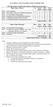 TEACHING AND EXAMINATION SCHEME FOR BACHELOR IN COMPUTER APPLICATIONS III YEAR (2011) Paper Name (Theory) Lec Exam Hours Min Marks Max Marks BCA 19 E-Commerce 3 3 18 50 BCA 20 Computer Networks & Mobile
Computing Concepts with Java Essentials
 2008 AGI-Information Management Consultants May be used for personal purporses only or by libraries associated to dandelon.com network. Computing Concepts with Java Essentials 3rd Edition Cay Horstmann
MSc Information Technology - E521
 MSc Information Technology - E521 1. Aims and Objectives This conversion programme targets non-engineering graduates with a view of preparing them for the employment market where up-to-date IT skills represent
DIABLO VALLEY COLLEGE CATALOG 2014-2015
 COMPUTER SCIENCE COMSC The computer science department offers courses in three general areas, each targeted to serve students with specific needs: 1. General education students seeking a computer literacy
Course Outline. [email protected] Faculty of Applied Sciences University of Sri Jayewardanepura. Information Technology
 Course Outline [email protected] Faculty of Applied Sciences University of Sri Jayewardanepura Information Technology Objectives Outcomes Course outline Examination & Certificate Overview of a Computer System
www.gr8ambitionz.com
 Data Base Management Systems (DBMS) Study Material (Objective Type questions with Answers) Shared by Akhil Arora Powered by www. your A to Z competitive exam guide Database Objective type questions Q.1
WORKSPACE WEB DEVELOPMENT & OUTSOURCING TRAINING CENTER
 WORKSPACE WEB DEVELOPMENT & OUTSOURCING TRAINING CENTER Course Outline (2015) Basic Programming With Procedural & Object Oriented Concepts (C, C++) Training Office# Road: 11, House: 1 A, Nikunja 2, Khilkhet,
Post Graduate Diploma In Computer Science (One Year Semester Scheme)
 DETAILED SYLLABUS FOR DISTANCE EDUCATION Post Graduate Diploma In Computer Science (One Year Semester Scheme) Post Graduate Diploma in Computer Science (PGDCS) 1 COURSE TITLE : POST GRADUATE DIPLOMA IN
PROBLEM SOLVING SEVENTH EDITION WALTER SAVITCH UNIVERSITY OF CALIFORNIA, SAN DIEGO CONTRIBUTOR KENRICK MOCK UNIVERSITY OF ALASKA, ANCHORAGE PEARSON
 PROBLEM SOLVING WITH SEVENTH EDITION WALTER SAVITCH UNIVERSITY OF CALIFORNIA, SAN DIEGO CONTRIBUTOR KENRICK MOCK UNIVERSITY OF ALASKA, ANCHORAGE PEARSON Addison Wesley Boston San Francisco New York London
Course Title: Software Development
 Course Title: Software Development Unit: Customer Service Content Standard(s) and Depth of 1. Analyze customer software needs and system requirements to design an information technology-based project plan.
DEGREE PLAN INSTRUCTIONS FOR COMPUTER ENGINEERING
 DEGREE PLAN INSTRUCTIONS FOR COMPUTER ENGINEERING Fall 2000 The instructions contained in this packet are to be used as a guide in preparing the Departmental Computer Science Degree Plan Form for the Bachelor's
Core Syllabus. Version 2.6 C OPERATE KNOWLEDGE AREA: OPERATION AND SUPPORT OF INFORMATION SYSTEMS. June 2006
 Core Syllabus C OPERATE KNOWLEDGE AREA: OPERATION AND SUPPORT OF INFORMATION SYSTEMS Version 2.6 June 2006 EUCIP CORE Version 2.6 Syllabus. The following is the Syllabus for EUCIP CORE Version 2.6, which
Govt. Holkar Science College, Indore Department of Computer Science B.Sc. Computer Science
 Govt. Holkar Science College, Indore Department of Computer Science B.Sc. Computer Science Session- 2014-2017 (Effective from July 2014 session for 2014-16 batch onwards) Marks Distributions B.Sc. I Semester
Eastern Washington University Department of Computer Science. Questionnaire for Prospective Masters in Computer Science Students
 Eastern Washington University Department of Computer Science Questionnaire for Prospective Masters in Computer Science Students I. Personal Information Name: Last First M.I. Mailing Address: Permanent
FLORIDA STATE COLLEGE AT JACKSONVILLE COLLEGE CREDIT COURSE OUTLINE
 Form 2A, Page 1 FLORIDA STATE COLLEGE AT JACKSONVILLE COLLEGE CREDIT COURSE OUTLINE COURSE NUMBER: CET 2600 COURSE TITLE: Network Fundamentals PREREQUISITE(S): CTS 1131 and CTS 1133 COREQUISITE(S): STUDENT
096 Professional Readiness Examination (Mathematics)
 096 Professional Readiness Examination (Mathematics) Effective after October 1, 2013 MI-SG-FLD096M-02 TABLE OF CONTENTS PART 1: General Information About the MTTC Program and Test Preparation OVERVIEW
INFORMATION TECHNOLOGY PROGRAM
 INFORMATION TECHNOLOGY PROGRAM The School of Information Technology offers a two-year bachelor degree program in Information Technology for students having acquired an advanced vocational certificate.
OKLAHOMA SUBJECT AREA TESTS (OSAT )
 CERTIFICATION EXAMINATIONS FOR OKLAHOMA EDUCATORS (CEOE ) OKLAHOMA SUBJECT AREA TESTS (OSAT ) FIELD 081: COMPUTER SCIENCE September 2008 Subarea Range of Competencies I. Computer Use in Educational Environments
Course Syllabus For Operations Management. Management Information Systems
 For Operations Management and Management Information Systems Department School Year First Year First Year First Year Second year Second year Second year Third year Third year Third year Third year Third
Embedded Systems. Review of ANSI C Topics. A Review of ANSI C and Considerations for Embedded C Programming. Basic features of C
 Embedded Systems A Review of ANSI C and Considerations for Embedded C Programming Dr. Jeff Jackson Lecture 2-1 Review of ANSI C Topics Basic features of C C fundamentals Basic data types Expressions Selection
B.C.A. DEGREE EXAMINATION, NOVEMBER 2010 Fifth Semester Computer Applications Elective WIRELESS APPLICATION PROTOCOL (CBCS 2008 onwards)
 AF-2415 BCA2EA B.C.A. DEGREE EXAMINATION, NOVEMBER 2010 Fifth Semester Computer Applications Elective WIRELESS APPLICATION PROTOCOL (CBCS 2008 onwards) Duration : 3 Hours Maximum : 75 Marks Part - A (10
Department of Computer Science
 Department of Computer Science Ali Sekmen, PhD 2, Chair 005, McCord Hall 615-963-5712 Faculty: K. Al Nasr, W. Chen, E. Erdemir, M. Hayes, H. Miao, T. Rogers, G. Shao, F. Yao General Statement: The Department
MATH BOOK OF PROBLEMS SERIES. New from Pearson Custom Publishing!
 MATH BOOK OF PROBLEMS SERIES New from Pearson Custom Publishing! The Math Book of Problems Series is a database of math problems for the following courses: Pre-algebra Algebra Pre-calculus Calculus Statistics
Krishna Institute of Engineering & Technology, Ghaziabad Department of Computer Application MCA-213 : DATA STRUCTURES USING C
 Tutorial#1 Q 1:- Explain the terms data, elementary item, entity, primary key, domain, attribute and information? Also give examples in support of your answer? Q 2:- What is a Data Type? Differentiate
STATE UNIVERSITY OF NEW YORK COLLEGE OF TECHNOLOGY CANTON, NEW YORK COURSE OUTLINE ESCI 101 - INTRODUCTION TO ENVIRONMENTAL SCIENCE
 STATE UNIVERSITY OF NEW YORK COLLEGE OF TECHNOLOGY CANTON, NEW YORK COURSE OUTLINE ESCI 101 - INTRODUCTION TO ENVIRONMENTAL SCIENCE Prepared By: Rajiv Narula, Ph.D. SCHOOL OF SCIENCE, HEALTH, AND CRIMINAL
WESTMORELAND COUNTY PUBLIC SCHOOLS 2011 2012 Integrated Instructional Pacing Guide and Checklist Computer Math
 Textbook Correlation WESTMORELAND COUNTY PUBLIC SCHOOLS 2011 2012 Integrated Instructional Pacing Guide and Checklist Computer Math Following Directions Unit FIRST QUARTER AND SECOND QUARTER Logic Unit
USTC Course for students entering Clemson F2013 Equivalent Clemson Course Counts for Clemson MS Core Area. CPSC 822 Case Study in Operating Systems
 USTC Course for students entering Clemson F2013 Equivalent Clemson Course Counts for Clemson MS Core Area 398 / SE05117 Advanced Cover software lifecycle: waterfall model, V model, spiral model, RUP and
Multiple Choice Questions(Computer)
 Multiple Choice Questions(Computer) 1. Which of the following is the product of data processing a. information b. data c. software program d. system 2. The process of putting data into a location is called
M.S. Computer Science Program
 M.S. Computer Science Program Pre-requisite Courses The following courses may be challenged by sitting for the placement examination. CSC 500: Discrete Structures (3 credits) Mathematics needed for Computer
ML for the Working Programmer
 ML for the Working Programmer 2nd edition Lawrence C. Paulson University of Cambridge CAMBRIDGE UNIVERSITY PRESS CONTENTS Preface to the Second Edition Preface xiii xv 1 Standard ML 1 Functional Programming
Oracle Database: SQL and PL/SQL Fundamentals
 Oracle University Contact Us: +966 12 739 894 Oracle Database: SQL and PL/SQL Fundamentals Duration: 5 Days What you will learn This Oracle Database: SQL and PL/SQL Fundamentals training is designed to
REGULATIONS FOR THE DEGREE OF BACHELOR OF SCIENCE IN BIOINFORMATICS (BSc[BioInf])
![REGULATIONS FOR THE DEGREE OF BACHELOR OF SCIENCE IN BIOINFORMATICS (BSc[BioInf])](/thumbs/29/13177944.jpg "REGULATIONS FOR THE DEGREE OF BACHELOR OF SCIENCE IN BIOINFORMATICS (BSc[BioInf])") 820 REGULATIONS FOR THE DEGREE OF BACHELOR OF SCIENCE IN BIOINFORMATICS (BSc[BioInf]) (See also General Regulations) BMS1 Admission to the Degree To be eligible for admission to the degree of Bachelor
820 REGULATIONS FOR THE DEGREE OF BACHELOR OF SCIENCE IN BIOINFORMATICS (BSc[BioInf]) (See also General Regulations) BMS1 Admission to the Degree To be eligible for admission to the degree of Bachelor
Computer Organization
 Computer Organization and Architecture Designing for Performance Ninth Edition William Stallings International Edition contributions by R. Mohan National Institute of Technology, Tiruchirappalli PEARSON
Digital Electronics Detailed Outline
 Digital Electronics Detailed Outline Unit 1: Fundamentals of Analog and Digital Electronics (32 Total Days) Lesson 1.1: Foundations and the Board Game Counter (9 days) 1. Safety is an important concept
University of Pune Revised Structure for the B. Sc. (Computer Science) Course (Second Year to be implemented from Academic Year 2014-2015)
 University of Pune Revised Structure for the B. Sc. (Computer Science) Course (Second Year to be implemented from Academic Year 2014-2015) S. Y. B. Sc. (Computer Science) No Paper Title: Semester I Title:
Chapter 11 I/O Management and Disk Scheduling
 Operating Systems: Internals and Design Principles, 6/E William Stallings Chapter 11 I/O Management and Disk Scheduling Dave Bremer Otago Polytechnic, NZ 2008, Prentice Hall I/O Devices Roadmap Organization
Oracle Database: SQL and PL/SQL Fundamentals NEW
 Oracle University Contact Us: 001-855-844-3881 & 001-800-514-06-97 Oracle Database: SQL and PL/SQL Fundamentals NEW Duration: 5 Days What you will learn This Oracle Database: SQL and PL/SQL Fundamentals
How To Get A Computer Science Degree At Appalachian State
 118 Master of Science in Computer Science Department of Computer Science College of Arts and Sciences James T. Wilkes, Chair and Professor Ph.D., Duke University [email protected] http://www.cs.appstate.edu/
Java EE Web Development Course Program
 Java EE Web Development Course Program Part I Introduction to Programming 1. Introduction to programming. Compilers, interpreters, virtual machines. Primitive types, variables, basic operators, expressions,
COURSE DESCRIPTION FOR THE COMPUTER INFORMATION SYSTEMS CURRICULUM
 COURSE DESCRIPTION FOR THE COMPUTER INFORMATION SYSTEMS CURRICULUM Course Code 2505100 Computing Fundamentals Pass/ Fail Prerequisite None This course includes an introduction to the use of the computer
Environmental Science
 Environmental Science UNIT I: Introduction to Environmental Science The student will demonstrate the ability to use scientific skills necessary to identify and analyze environmental issues. a. Define environmental
Oracle SQL. Course Summary. Duration. Objectives
 Oracle SQL Course Summary Identify the major structural components of the Oracle Database 11g Create reports of aggregated data Write SELECT statements that include queries Retrieve row and column data
Oracle Database: SQL and PL/SQL Fundamentals
 Oracle University Contact Us: 1.800.529.0165 Oracle Database: SQL and PL/SQL Fundamentals Duration: 5 Days What you will learn This course is designed to deliver the fundamentals of SQL and PL/SQL along
Computer Science. Computer Science 207. Degrees and Certificates Awarded. A.S. Computer Science Degree Requirements. Program Student Outcomes
 Computer Science 207 Computer Science (See Computer Information Systems section for additional computer courses.) We are in the Computer Age. Virtually every occupation in the world today has an interface
Files. Files. Files. Files. Files. File Organisation. What s it all about? What s in a file?
 Files What s it all about? Information being stored about anything important to the business/individual keeping the files. The simple concepts used in the operation of manual files are often a good guide
Instant SQL Programming
 Instant SQL Programming Joe Celko Wrox Press Ltd. INSTANT Table of Contents Introduction 1 What Can SQL Do for Me? 2 Who Should Use This Book? 2 How To Use This Book 3 What You Should Know 3 Conventions
Chapter 2 Logic Gates and Introduction to Computer Architecture
 Chapter 2 Logic Gates and Introduction to Computer Architecture 2.1 Introduction The basic components of an Integrated Circuit (IC) is logic gates which made of transistors, in digital system there are
01219211 Software Development Training Camp 1 (0-3) Prerequisite : 01204214 Program development skill enhancement camp, at least 48 person-hours.
 (International Program) 01219141 Object-Oriented Modeling and Programming 3 (3-0) Object concepts, object-oriented design and analysis, object-oriented analysis relating to developing conceptual models
The C Programming Language course syllabus associate level
 TECHNOLOGIES The C Programming Language course syllabus associate level Course description The course fully covers the basics of programming in the C programming language and demonstrates fundamental programming
AGARWAL COLLEGE & WEB SERVICES TRUST. In Collaboration with KARANATAKA STATE OPEN UNIVERSITY
 AGARWAL COLLEGE & WEB SERVICES TRUST In Collaboration with KARANATAKA STATE OPEN UNIVERSITY Syllabus of Post Graduate Diploma in Computer Application (PGDCA) Post Graduate Diploma in Computer Applications: