
Ultrasound Vascular Mapping for Preoperative Planning of Dialysis Access
|
|
|
- Osborn Davis
- 9 years ago
- Views:
Transcription
1 predialysisaccess.qxp_0616 6/29/16 3:58 PM Page 1 AIUM Practice Parameter for the Performance of Ultrasound Vascular Mapping for Preoperative Planning of Dialysis Access Parameter developed in collaboration with the American College of Radiology and the Society of Radiologists in Ultrasound by the American Institute of Ultrasound in Medicine

2 The American Institute of Ultrasound in Medicine (AIUM) is a multidisciplinary association dedicated to advancing the safe and effective use of ultrasound in medicine through professional and public education, research, development of parameters, and accreditation. To promote this mission, the AIUM is pleased to publish, in conjunction with the American College of Radiology (ACR) and the Society of Radiologists in Ultrasound (SRU), this AIUM Practice Parameter for the Performance of Ultrasound Vascular Mapping for Preoperative Planning of Dialysis Access. We are indebted to the many volunteers who contributed their time, knowledge, and energy to bringing this document to completion. The AIUM represents the entire range of clinical and basic science interests in medical diagnostic ultrasound, and, with hundreds of volunteers, the AIUM has promoted the safe and effective use of ultrasound in clinical medicine for more than 50 years. This document and others like it will continue to advance this mission. Practice parameters of the AIUM are intended to provide the medical ultrasound community with parameters for the performance and recording of high-quality ultrasound examinations. The parameters reflect what the AIUM considers the minimum criteria for a complete examination in each area but are not intended to establish a legal standard of care. AIUM-accredited practices are expected to generally follow the parameters with recognition that deviations from these parameters will be needed in some cases, depending on patient needs and available equipment. Practices are encouraged to go beyond the parameters to provide additional service and information as needed Sweitzer Ln, Suite 100 Laurel, MD USA American Institute of Ultrasound in Medicine

3 I. Introduction The clinical aspects contained in specific sections of this parameter (Introduction, Indications/Contraindications, Specifications of the Examination, and Equipment Specifications) were developed collaboratively by the American Institute of Ultrasound in Medicine (AIUM), the American College of Radiology (ACR), and the Society of Radiologists in Ultrasound (SRU). Recommendations for physician requirements, written request for the examination, procedure documentation, and quality control vary between the 3 organizations and are addressed by each separately. Mapping of arm vessels before surgical creation of dialysis access has been shown to be useful in helping achieve a higher percentage of arteriovenous fistula (AVF) placements as well as an increased fistula success rate. 1 6 This practice parameter is intended to help physicians in the performance of preoperative mapping, to guarantee a high-quality examination, and to help promote successful placement of the most preferred types of dialysis access. Kidney Disease Outcomes Quality Initiative (K/DOQI) guidelines 7 define an order of preference for placement of vascular access in patients with kidney failure who will become hemodialysis dependent: 1. The nondominant arm is usually preferable for dialysis access placement and is usually evaluated first. A forearm AVF is preferred over an upper arm AVF. A dominant forearm AVF may be preferred over a nondominant upper arm AVF, depending on surgical preference. 2. A forearm cephalic vein AVF (radial artery cephalic vein), followed by an upper arm cephalic vein AVF (brachial artery cephalic vein), is preferred. 3. If it is not possible to create either of these fistulae, access may be established using a basilic vein transposition AVF (brachial artery basilic vein), or other AVF configuration such as a brachial vein transpositon AVF (brachial artery-brachial vein). 4. If the vascular anatomy is not suitable for AVF placement, a graft of synthetic material (eg, polytetrafluoroethylene [PTFE]) may be placed. A forearm loop graft (brachial artery to antecubital vein) is preferred over an upper arm straight graft (brachial artery to basilic vein). If no other upper extremity access is possible, an upper arm loop graft (axillary artery to axillary vein) may be placed if the anatomy is suitable. 5. Thigh grafts (superficial femoral artery to great saphenous vein or common femoral vein) are the next usual site for access placement. 8,9 6. Placement of an upper extremity AVF or an arm or thigh graft is preferred to catheterbased hemodialysis due to increased catheter infection rates and often lower catheter flow rates compared to a graft or fistula II. Indications/Contraindications Indications for vascular mapping for preoperative planning of dialysis access include planning of vascular access for hemodialysis. There are no absolute contraindications for this examination.

4 III. Qualifications and Responsibilities of Personnel See for AIUM Official Statements including Standards and Guidelines for the Accreditation of Ultrasound Practices and relevant Physician Training Guidelines. 11 IV. Written Request for the Examination The written or electronic request for an ultrasound examination should provide sufficient information to allow for the appropriate performance and interpretation of the examination. The request for the examination must be originated by a physician or other appropriately licensed health care provider or under the provider s direction. The accompanying clinical information should be provided by a physician or other appropriate health care provider familiar with the patient s clinical situation and should be consistent with relevant legal and local health care facility requirements. 2 V. Specifications of the Examination The ultrasound examination for dialysis access planning is designed to gather information about both the arterial system and the venous system. It is important to understand the procedure and surgical techniques to be used by the local dialysis access surgeon(s) to obtain information tailored to the technique. Both arms can be mapped in their entirety, or a more focused preoperative mapping can be performed that concludes when vessels adequate for AVF formation are found. A. Arterial Examination The examination is done either on both arms or only on one arm, depending on laboratory preference. If a unilateral examination is chosen, the nondominant arm is examined first unless there is a known contraindication to the use of this arm. The artery used must be of sufficient size (diameter >0.20 cm) 4,12 to construct the fistula and to have adequate flow for maturation. This size may vary according to surgical preference. The artery is first evaluated with gray scale and spectral Doppler imaging. The internal luminal diameter of the artery is measured at the level of expected fistula creation. The presence of calcification is recorded and reported because the surgical anastomosis can be difficult if significant concentric calcification is present. Arterial spectral waveforms should be assessed to screen for inflow or outflow disease. For a forearm AVF, the diameter, presence of calcification, and peak systolic/end-diastolic velocities of the radial artery are assessed at the wrist. Ulnar arteries may be similarly assessed. For either AVF or graft creation, the brachial artery is assessed at the antecubital fossa for the diameter, presence of calcification, and peak systolic/end-diastolic velocities. An artery in the antecubital fossa that is smaller than expected, or the presence of 2 arteries at this site, is a clue that there is a high brachial artery bifurcation, a normal anatomic variant which occurs in approximately 10% of patients. 13 This anatomic variant should be confirmed by imaging the radial and ulnar arteries to determine at what level they arise from the brachial artery.

5 If noted, it should be reported because some surgeons will place an AVF, but not a graft, below a high brachial artery bifurcation. A modified duplex Allen test may be performed to evaluate flow to the hand (patency of the deep palmar arch). This is done by identifying the radial artery at the wrist and/or at the dorsum of the hand (posteriorly between the bases of the first and second metacarpals). The radial artery is compressed proximal to this site to occlude flow during insonation with spectral and color Doppler imaging. Reversal of blood flow distal to the proximal occlusion confirms patency of the palmar arch. 14 B. Venous Examination The nondominant arm is examined first unless there is a known contraindication to the use of that arm. The examination is focused first toward finding a vein suitable for AVF creation. If no suitable vein is found, veins suitable for graft creation are sought. The vein mapped to receive the arterial anastomosis should be measured after it is dilated. This measurement will more closely approximate the size of the arterialized vein after fistula formation. The vein is generally dilated by use of sequential tourniquet placement or an inflated blood pressure cuff on the arm. 15 Percussion in the region of the wrist after tourniquet placement for 2 to 3 minutes can increase the size of the veins, similar to starting an intravenous line. Other suitable dorsal or volar caudal forearm veins may be identified with this technique. The forearm vein most commonly used for AVF creation is the cephalic vein. The anastomosis is usually created at the wrist or in the lower third of the forearm. The cephalic vein is imaged at the site of the expected anastomosis at the wrist. It is assessed for compressibility, thrombus, and size. Measurements are obtained with a minimal diameter of 0.25 cm for all veins used for an AVF. 4,12 There may be variations in the diameter used based on clinical factors or surgical preference. The vein diameter is measured at the caudal, mid, and cranial forearm; at the antecubital fossa; and at the caudal, mid, and cranial upper arm, as applicable. The sites and length of any venous stenosis are noted. Veins that are borderline in size (within 0.05 cm of the desired size) are measured again after more focused percussion or after application of a warm compress for several minutes. If a sclerotic or thick-walled vein is seen, the diameter measured should be the inner luminal diameter and the abnormality noted. 3 The cephalic vein should be evaluated throughout the entire arm to its insertion into the subclavian vein. Focal narrowing of the vein at any level may preclude successful maturation of a created fistula. Note that the forearm cephalic vein may drain preferentially via a large antecubital vein into the basilic or brachial veins if the upper arm cephalic vein is too small or thrombosed. In this case, placement of a forearm fistula is still possible as long as diameter thresholds are maintained. Veins must be relatively superficial to be easily cannulated after placement of a fistula. The depth from the skin surface to the cephalic veins of adequate diameter may be measured to assess the need for a subsequent superficialization procedure. 16 If the cephalic vein in the forearm is inadequate for fistula creation, other veins in the forearm may be examined to determine whether they are adequate. These veins in general will need to

6 be transposed to a more easily accessible position in the anterior surface of the forearm. If no suitable vein is found in the forearm, the veins in the upper arm should be evaluated. The upper arm cephalic vein should be examined for upper arm fistula creation. If it is too small or thrombosed, the basilic vein is evaluated. The basilic vein needs to be of adequate size for at least 4 cm in length, caudal to the antecubital fossa or an adequate median cubital vein draining into the basilic vein, so there is enough vein length to create a basilic vein transposition AVF in the upper arm. If no suitable upper arm vein for AVF creation is found, the largest brachial vein and the axillary vein should be measured for potential graft placement as previously described. A vein with a diameter of at least 0.4 cm is needed for grafts. 4 Similar assessment techniques should be used for all veins (ie, vein dilatation before insonation, demonstration of adequate size and normal venous compressibility, and determination of adequate venous drainage). Large branches of veins near the site of a fistula can result in nonmaturation of the fistula. 17,18 The sites and sizes of vein branches may be noted. 4 The internal jugular and subclavian veins should be examined bilaterally to document symmetric respiratory phasicity and transmitted cardiac pulsatility as well as to exclude outflow stenosis. These veins should be evaluated with compression, if possible, with gray scale, spectral, and color Doppler imaging. Unilateral or bilateral monophasic waveforms or low-velocity venous waveforms are abnormal. 19,20 Abnormal waveforms in the jugular or subclavian veins should prompt further evaluation of the brachiocephalic veins and/or superior vena cava (SVC) by magnetic resonance imaging, computed tomography, or conventional venography if access placement on that side is desired. VI. Documentation Adequate documentation is essential for high-quality patient care. There should be a permanent record of the ultrasound examination and its interpretation. Images of all appropriate areas, both normal and abnormal, should be recorded. Variations from normal size should be accompanied by measurements. Images should be labeled with the patient identification, facility identification, examination date, and side (right or left) of the anatomic site imaged. An official interpretation (final report) of the ultrasound findings should be included in the patient s medical record. Retention of the ultrasound examination should be consistent both with clinical needs and with relevant legal and local health care facility requirements. Reporting should be in accordance with the AIUM Practice Parameter for Documentation of an Ultrasound Examination. 21

7 VII. Equipment Specifications Real-time imaging should be conducted at the highest clinically appropriate frequency, realizing that there is a trade-off between resolution and beam penetration. This should usually be at a frequency of 12 to 18 MHz, with the occasional need for a lower-frequency transducer. A linear transducer should be used. Flow analyses are performed with duplex sonography using pulsed Doppler imaging. Evaluation of the flow signals originating from within the lumen of the vessels should be conducted with a carrier frequency of 2.5 MHz or greater. A lower-frequency sector transducer placed in the sternal notch may be useful to look for venous stenosis in the brachiocephalic veins or SVC if central stenosis is suspected from abnormal subclavian and internal jugular vein waveforms. Images of the relevant gray scale, color, and spectral Doppler waveforms should be recorded and archived. Color Doppler imaging should be used for relevant portions of the procedure. VIII. Quality Control and Improvement, Safety, Infection Control, and Patient Education Policies and procedures related to quality control, patient education, infection control, and safety should be developed and implemented in accordance with the AIUM Standards and Guidelines for the Accreditation of Ultrasound Practices. 22 Equipment performance monitoring should be in accordance with the AIUM Standards and Guidelines for the Accreditation of Ultrasound Practices IX. ALARA Principle The potential benefits and risks of each examination should be considered. The ALARA (as low as reasonably achievable) principle should be observed when adjusting controls that affect the acoustic output and by considering transducer dwell times. Further details on ALARA may be found in the AIUM publication Medical Ultrasound Safety, Third Edition. Acknowledgments This parameter was revised by the American Institute of Ultrasound in Medicine (AIUM) in collaboration with the American College of Radiology (ACR) and the Society of Radiologists in Ultrasound (SRU) according to the process described in the AIUM Clinical Standards Committee Manual. Collaborative Committee Members represent their societies in the initial draft and final revision of this parameter.

8 AIUM Mark E. Lockhart, MD, MPH Leslie M. Scoutt, MD ACR Michelle L. Robbin, MD, Chair Raymond E. Bertino, MD Laurence Needleman, MD SRU John Pellerito, MD Nirvikar Dahiya, MD, MBBS 6 AIUM Clinical Standards Committee Joseph Wax, MD, Chair John Pellerito, MD, Vice Chair Susan Ackerman, MD Sandra Allison, MD Genevieve Bennett, MD Bryann Bromley, MD Rob Goodman, MB, BChir Resa Lewiss, MD David Paushter, MD Dolores Pretorius, MD Tatjana Rundek, MD, PhD Khaled Sakhel, MD Ants Toi, MD Isabelle Wilkins, MD Original copyright 2006; revised 2016, 2011 Renamed 2015

9 References 1. Allon M, Lockhart ME, Lilly RZ, et al. Effect of preoperative sonographic mapping on vascular access outcomes in hemodialysis patients. Kidney Int 2001; 60: Allon M, Robbin ML. Increasing arteriovenous fistulas in hemodialysis patients: problems and solutions. Kidney Int 2002; 62: Robbin ML, Gallichio MH, Deierhoi MH, Young CJ, Weber TM, Allon M. US vascular mapping before hemodialysis access placement. Radiology 2000; 217: Silva MB Jr, Hobson RW II, Pappas PJ, et al. A strategy for increasing use of autogenous hemodialysis access procedures: impact of preoperative noninvasive evaluation. J Vasc Surg 1998; 27: Wong CS, McNicholas N, Healy D, et al. A systematic review of preoperative duplex ultrasonography and arteriovenous fistula formation. J Vasc Surg. 2013;57(4): Ferring M, Claridge M, Smith SA, Wilmink T. Routine preoperative vascular ultrasound improves patency and use of arteriovenous fistulas for hemodialysis: a randomized trial. Clin J Am Soc Nephrol. 2010;5(12): Clinical practice guidelines for vascular access. Am J Kidney Dis. 2006;48 Suppl 1:S Khadra MH, Dwyer AJ, Thompson JF. Advantages of polytetrafluoroethylene arteriovenous loops in the thigh for hemodialysis access. Am J Surg 1997; 173: Little MD, Allon M, McNamara MM, et al. Risk Evaluation of Immediate Surgical Failure During Thigh Hemodialysis Graft Placement by Sonographic Screening. J Ultrasound Med. 2015;34(9): Lee T, Barker J, Allon M. Tunneled catheters in hemodialysis patients: reasons and subsequent outcomes. Am J Kidney Dis 2005; 46: American Institute of Ultrasound in Medicine. AIUM Physician Training Guidelines Sidawy AN, Spergel LM, Besarab A, et al. The Society for Vascular Surgery: clinical practice guidelines for the surgical placement and maintenance of arteriovenous hemodialysis access. J Vasc Surg. 2008;48(5 Suppl):2S-25S. 13. Kian K, Shapiro JA, Salman L, et al. High brachial artery bifurcation: clinical considerations and practical implications for an arteriovenous access. Semin Dial. 2012;25(2): Zimmerman P, Chin E, Laifer-Narin S, Ragavendra N, Grant EG. Radial artery mapping for coronary artery bypass graft placement. Radiology 2001; 220: Lockhart ME, Robbin ML, Fineberg NS, Wells CG, Allon M. Cephalic vein measurement before forearm fistula creation: does use of a tourniquet to meet the venous diameter threshold increase the number of usable fistulas? J Ultrasound Med 2006; 25: Robbin ML, Chamberlain NE, Lockhart ME, et al. Hemodialysis arteriovenous fistula maturity: US evaluation. Radiology 2002; 225: Beathard GA, Arnold P, Jackson J, Litchfield T. Aggressive treatment of early fistula failure. Kidney Int 2003; 64: Singh P, Robbin ML, Lockhart ME, Allon M. Clinically immature arteriovenous hemodialysis fistulas: effect of US on salvage. Radiology 2008; 246: Chin EE, Zimmerman PT, Grant EG. Sonographic evaluation of upper extremity deep venous thrombosis. J Ultrasound Med 2005; 24:

10 20. Patel MC, Berman LH, Moss HA, McPherson SJ. Subclavian and internal jugular veins at Doppler US: abnormal cardiac pulsatility and respiratory phasicity as a predictor of complete central occlusion. Radiology 1999; 211: AIUM Practice Parameter for Documentation of an Ultrasound Examination American Institute of Ultrasound in Medicine. AIUM Standards and Guidelines for the Accreditation of Ultrasound Practices. Approved October 31,

Diagnostic and Screening Ultrasound Examinations of the Abdominal Aorta in Adults
 AIUM Practice Parameter for the Performance of Diagnostic and Screening Ultrasound Examinations of the Abdominal Aorta in Adults Parameter developed in collaboration with the American College of Radiology
Documentation of an Ultrasound Examination
 AIUM Practice Guideline for Documentation of an Ultrasound Examination 2014 by the American Institute of Ultrasound in Medicine The American Institute of Ultrasound in Medicine (AIUM) is a multidisciplinary
Upper Extremity Vein Mapping for Placement of a Dialysis Access
 VASCULAR TECHNOLOGY PROFESSIONAL PERFORMANCE GUIDELINES Upper Extremity Vein Mapping for Placement of a Dialysis Access This Guideline was prepared by the Professional Guidelines Subcommittee of the Society
Vascular Ultrasound Examination for Postoperative Assessment of Dialysis Access
 AIUM Practice Parameter for the Performance of a Vascular Ultrasound Examination for Postoperative Assessment of Dialysis Access Parameter developed in collaboration with the American College of Radiology
Catheter Reduction Program: Creating the Ideal Vascular Access Culture. Presented by: Diane Peck, RN, CNN
 Catheter Reduction Program: Creating the Ideal Vascular Access Culture Presented by: Diane Peck, RN, CNN Fistula First Initiative The superiority of an AVF over an AVG is an accepted fact. For this reason
Dialysis Access Procedures
 2 Dialysis Access Procedures Khalid O. Khwaja Hemodialysis Introduction Surgical Procedures a) Radiocephalic Fistula b) Brachiocephalic Fistula c) Basilic Vein Transposition d) Forearm Loop Arteriovenous
Upper Extremity Arterial Duplex Evaluation
 VASCULAR TECHNOLOGY PROFESSIONAL PERFORMANCE GUIDELINES Upper Extremity Arterial Duplex Evaluation This Guideline was prepared by the Professional Guidelines Subcommittee of the Society for Vascular Ultrasound
Resection, Reduction, and Revision of Aneurysmal AV Fistulas
 Resection, Reduction, and Revision of Aneurysmal AV Fistulas Patrick R. Cook DO, FACS Timothy G. Canty Jr. MD Robert J. Hye MD, FACS Kaiser Permanente San Diego, CA Aneurysmal AVF Over last decade K-DOQI
Tunneled Hemodialysis Catheters: Placement and complications
 Tunneled Hemodialysis Catheters: Placement and complications Arif Asif, M.D. Director, Interventional Nephrology Associate Professor of Medicine University of Miami, FL Tunneled Hemodialysis Catheters:
Stenosis Surveillance 2009
 5 Diamond Patient Safety Program Stenosis Surveillance 2009 *This presentation was collaboratively developed by the Mid-Atlantic Renal Coalition (MARC) and the ESRD Network of New England for the 5-Diamond
Strategies to Reduce Catheter Use in 2014
 Strategies to Reduce Catheter Use in 2014 Timothy A. Pflederer, MD Chair, Network 10 MRB (I have no commercial affiliations or conflicts of interest to report) Fibrin Sheathing Central Venous Stenosis
Section 4: Your Vascular Access. What is vascular access?
 Section 4: Your Vascular Access What is vascular access? What is a fistula? Taking care of a new fistula What is a graft? Taking care of a new graft What is a hemodialysis catheter? Taking care of a hemodialysis
VFI Technology to Change the Way You Work
 Technology to Change the Way You Work Vascular Ultrasound Made Easier Vector Flow Imaging VFI VFI is a ground-breaking technology that can revolutionize the workflow for many Doppler ultrasound applications.
CMS Limitations Guide - Radiology Services
 CMS Limitations Guide - Radiology Services Starting October 1, 2015, CMS will update their existing medical necessity limitations on tests and procedures to correspond to ICD-10 codes. This limitations
EFSUMB EUROPEAN FEDERATION OF SOCIETIES FOR ULTRASOUND IN MEDICINE AND BIOLOGY Building a European Ultrasound Community
 MINIMUM TRAINING REQUIREMENTS FOR THE PRACTICE OF MEDICAL ULTRASOUND IN EUROPE Appendix 8: Vascular Ultrasound Level 1 Training and Practice Practical training should involve at least two half day ultrasound
IAC Standards and Guidelines for Vascular Testing Accreditation
 IAC Standards and Guidelines for Vascular Testing Accreditation 2015 Intersocietal Accreditation Commission. All Rights Reserved. Table of Contents All entries in Table of Contents are linked to the corresponding
Subclavian Steal Syndrome By Marta Thorup
 Subclavian Steal Syndrome By Marta Thorup Definition Subclavian steal syndrome (SSS), is a constellation of signs and symptoms that arise from retrograde flow of blood in the vertebral artery, due to proximal
Normal vascular variants of the upper extremity
 Normal vascular variants of the upper extremity Poster No.: C-1039 Congress: ECR 2014 Type: Educational Exhibit Authors: P. Paixao, A. P. Gomes, M. S. C. Sousa, I. Santiago, A. S. C. C. Germano; Amadora/PT
Vascular Laboratory Education and Training
 Vascular Laboratory Education and Training David L. Dawson, MD, RVT, RPVI Vascular laboratory professionals technologists and physicians have specific knowledge and expertise in the use of non- invasive
Vascular Technology (VT) Content Outline Anatomy & physiology 20% Cerebrovascular Cerebrovascular normal anatomy Evaluate the cerebrovascular vessels
 Vascular Technology (VT) Content Outline Anatomy & physiology 20% normal anatomy Evaluate the cerebrovascular vessels hemodynamics Evaluate the cerebrovascular vessels for normal perfusion normal anatomy
This means you! Appropriate training, supervision and procedural load is what determines outcome not clinician grade! Studies have shown that a clinic
 PROMOTING VESSEL HEALTH & PRESERVATION: The RIGHT trained clinician will insert: The RIGHT vascular device in the: The RIGHT vessel for the: The RIGHT patient at the: The RIGHT time This means you! Appropriate
Complications of Femoral Catheterization. Daniel Kaufman, MD University Hospital of Brooklyn December 16, 2005
 Complications of Femoral Catheterization Daniel Kaufman, MD University Hospital of Brooklyn December 16, 2005 Case Presentation xx yr old female presents with fever, chills, and painful swelling of R groin
Ultrasound - Vascular
 Scan for mobile link. Ultrasound - Vascular Vascular ultrasound uses sound waves to evaluate the body s circulatory system and help identify blockages and detect blood clots. A Doppler ultrasound study
Difficult Vascular Access Alternative Approaches & Troubleshooting Tips
 Difficult Vascular Access Alternative Approaches & Troubleshooting Tips Michelle Lin, MD Associate Professor of Clinical Emergency Medicine UC San Francisco - San Francisco General Hospital [email protected]
Ultrasound in Vascular Surgery. Torbjørn Dahl
 Ultrasound in Vascular Surgery Torbjørn Dahl 1 The field of vascular surgery Veins dilatation and obstruction (varicose veins and valve dysfunction) Arteries dilatation and narrowing (aneurysms and atherosclerosis)
Section Two: Arterial Pressure Monitoring
 Section Two: Arterial Pressure Monitoring Indications An arterial line is indicated for blood pressure monitoring for the patient with any medical or surgical condition that compromises cardiac output,
SCREENING COMPRESSION ULTRASOUND FOR LOWER EXTREMITY DVT
 SCREENING COMPRESSION ULTRASOUND FOR LOWER EXTREMITY DVT R. Eugene Zierler, M.D. The D. E. Strandness, Jr. Vascular Laboratory University of Washington Medical Center Division of Vascular Surgery University
Vascular Laboratory Fundamentals. Robert Mitchell MD, RPVI Duke University Medical Center 5/2/08
 Vascular Laboratory Fundamentals Robert Mitchell MD, RPVI Duke University Medical Center 5/2/08 Goals of Lecture Understand basic ultrasound principles Understand normal and abnormal arterial hemodynamics
Use of Ultrasound to Guide Vascular Access Procedures
 AIUM Practice Parameter for the Use of Ultrasound to Guide Vascular Access Procedures Parameters developed in conjunction with the American Academy of Physician Assistants (AAPA), the American Association
Dialysis Vascular Access Coverage, Coding and Reimbursement Overview Physician / Hospital / ASC
 Dialysis Vascular Access Coverage, Coding and Reimbursement Overview Physician / Hospital / ASC 2015 Edition All Reimbursement Amounts are Listed at National Rates and Do Not Include the 2% Sequestration
Guidelines for the Management of Patients Following Endoluminal Vein Dilation Procedures for the Treatment of Multiple Sclerosis
 Guidelines for the Management of Patients Following Endoluminal Vein Dilation Procedures for the Treatment of Multiple Sclerosis Report Submitted to the Minister of Health and Long-Term Care By the Ontario
Color Doppler and Duplex Sonography in 5 Patients With Thoracic Outlet Syndrome
 Case Series Color Doppler and Duplex Sonography in 5 Patients With Thoracic Outlet Syndrome Raju Wadhwani, DMRD, DNB, Nitin Chaubal, MD, Rajan Sukthankar, MD, Manu Shroff, MD, Sanjay Agarwala, MS Purpose.
Ultrasound Examination for Detection and Assessment of Developmental Dysplasia of the Hip
 hip.qxp_1115 12/1/15 3:16 PM Page 1 AIUM Practice Parameter for the Performance of an Ultrasound Examination for Detection and Assessment of Developmental Dysplasia of the Hip Parameter developed in conjunction
Doppler. Doppler. Doppler shift. Doppler Frequency. Doppler shift. Doppler shift. Chapter 19
 Doppler Doppler Chapter 19 A moving train with a trumpet player holding the same tone for a very long time travels from your left to your right. The tone changes relative the motion of you (receiver) and
Local Coverage Determination (LCD): Non-Invasive Peripheral Venous Vascular and Hemodialysis Access Studies (L35751)
 Local Coverage Determination (LCD): Non-Invasive Peripheral Venous Vascular and Hemodialysis Access Studies (L35751) Contractor Information Contractor Name Wisconsin Physicians Service Insurance Corporation
Why do we need Dedicated Subspecialists and Interventionalists?
 Optimal Hemodialysis Access Management and The Role of the Interventionalist Vascular Access Education Day May 2, 2009 Interior Health Authority Peter C. Gregory, MD Medical Director Vascular Access Center
Lower Extremity Arterial Segmental Physiologic Evaluation
 VASCULAR TECHNOLOGY PROFESSIONAL PERFORMANCE GUIDELINES Lower Extremity Arterial Segmental Physiologic Evaluation This Guideline was prepared by the Professional Guidelines Subcommittee of the Society
Arterio-Venous Fistula or Arterio-Venous Graft for Haemodialysis
 Department of Nephrology Care of your Fistula Nephrology Department Lower Lane Liverpool L9 7AL Tel:0151-525-5980 Arterio-Venous Fistula or Arterio-Venous Graft for Haemodialysis Haemodialysis access In
Hand Collateral Circulation and Fractional Artery
 Surgical implications of variations in hand collateral circulation: Anatomy revisited Permyos Ruengsakulrach, FRCST a Norman Eizenberg, MB, BS b Claude Fahrer, MB, BS b Marius Fahrer, FRACS b Brian F.
PRACTICE GUIDELINE TITLE: INTRAVENOUS LINE INSERTION: PERIPHERAL AND CENTRAL
 PRACTICE GUIDELINE Effective Date: 9-17-04 Manual Reference: Deaconess Trauma Services TITLE: INTRAVENOUS LINE INSERTION: PERIPHERAL AND CENTRAL PURPOSE: To outline the indications and options for intravenous
Measuring central venous pressure
 Elaine Cole Senior lecturer ED/Trauma, City University Barts and the London NHS Trust 1 Learning outcomes That the clinician can: Describe the sites of central venous catheterisation Understand why central
Endovascular Repair of an Axillary Artery Aneurysm: A Novel Approach
 Endovascular Repair of an Axillary Artery Aneurysm: A Novel Approach Bao- Thuy D. Hoang, MD 1, Jonathan- Hien Vu, MD 2, Jerry Matteo, MD 3 1 Department of Surgery, University of Florida College of Medicine,
Guidelines for Venous Access in Patients with Chronic Kidney Disease
 Guidelines for Venous Access in Patients with Chronic Kidney Disease A Position Statement from the American Society of Diagnostic and Interventional Nephrology 1 Clinical Practice Committee and the Association
Right Heart Catheterization from the Arm
 Right Heart Catheterization from the Arm Mauricio G. Cohen, MD, FACC, FSCAI Director, Cardiac Catheterization Lab Associate Professor of Medicine 1 Disclosure Statement of Financial Interest Within the
Lower Extremity Venous Duplex Evaluation
 VASCULAR TECHNOLOGY PROFESSIONAL PERFORMANCE GUIDELINES Lower Extremity Venous Duplex Evaluation This Guideline was prepared by the Professional Guidelines Subcommittee of the Society for Vascular Ultrasound
Recurrent Varicose Veins. Vineet Mishra, MD Director of Mohs Surgery and Procedural Dermatology University of Texas Health Science Center San Antonio
 Recurrent Varicose Veins Vineet Mishra, MD Director of Mohs Surgery and Procedural Dermatology University of Texas Health Science Center San Antonio Disclosures None Possible Causes of Recurrence DNA:
Renal Vascular Access Having a Fistula For Haemodialysis
 Renal Vascular Access Having a Fistula For Haemodialysis Delivering the best in care UHB is a no smoking Trust To see all of our current patient information leaflets please visit www.uhb.nhs.uk/patient-information-leaflets.htm
Objectives. AV Fistula Maturation, Cannulation, and Protection. What are the KDOQI guideline %s for fistula prevalence
 Objectives AV Fistula Maturation, Cannulation, and Protection Lesley C. Dinwiddie MSN, RN, FNP, CNN The learner will be able to: Define AV fistula maturation Describe the nephrology caregivers role in
Save the Vein: What Nurses Need to Know. Objectives. Importance of Vein Preservation. Why Focus on Vein Preservation? Chronic Kidney Disease
 Description: This program focuses on the importance of vein preservation in chronic kidney disease (CKD) patients. At the heart of this project is a silicone wristband that reads SAVE VEINS NO IV/LAB DRAWS.
CHAPTER 4 QUALITY ASSURANCE AND TEST VALIDATION
 CHAPTER 4 QUALITY ASSURANCE AND TEST VALIDATION CINDY WEILAND AND SANDRA L. KATANICK Continued innovations in noninvasive testing equipment provide skilled sonographers and physicians with the technology
PERIPHERALLY INSERTED CENTRAL CATHETERS (PICC) Fong So Kwan APN, Haematology unit Medical Department, QMH
 PERIPHERALLY INSERTED CENTRAL CATHETERS (PICC) Fong So Kwan APN, Haematology unit Medical Department, QMH 1 What is a PICC catheter? Primary vascular access device since their introduction in the mid-1970s,
Extracranial Cerebrovascular Duplex Ultrasound Evaluation
 VASCULAR TECHNOLOGY PROFESSIONAL PERFORMANCE GUIDELINES Extracranial Cerebrovascular Duplex Ultrasound Evaluation This Guideline was prepared by the Professional Guidelines Subcommittee of the Society
A PROCEDURAL GUIDE TO MIDLINE CATHETER INSERTION
 A PROCEDURAL GUIDE TO MIDLINE CATHETER INSERTION See Also CPG midline catheters for indications, contraindications and post insertion management What is a midline A midline catheter is an 8-12 cm catheter
Duplication Images in Vascular Sonography
 Article Duplication Images in Vascular Sonography Jonathan M. Rubin, MD, PhD, Jing Gao, MD, Keith Hetel, MD, Robert Min, MD Objective. The purpose of this study was to determine the characteristics and
Liau DW : Injuries and Liability Related to Peripheral Catheters: A Closed Claims Analysis. ASA Newsletter 70(6): 11-13 & 16, 2006.
 Citation Liau DW : Injuries and Liability Related to Peripheral Catheters: A Closed Claims Analysis. ASA Newsletter 70(6): 11-13 & 16, 2006. Full Text An anesthesiologist inserted a 14-gauge peripheral
Measure #195 (NQF 0507): Radiology: Stenosis Measurement in Carotid Imaging Reports National Quality Strategy Domain: Effective Clinical Care
 Measure #195 (NQF 0507): Radiology: Stenosis Measurement in Carotid Imaging Reports National Quality Strategy Domain: Effective Clinical Care 2016 PQRS OPTIONS FOR INDIVIDUAL MEASURES: CLAIMS, REGISTRY
Model Answer: Australasian College of Phlebology > Ultrasound in Phlebology > Advanced Course > Topic 4
 Ques?on 1: Compression sonography (lee image) is the gold standard for the diagnosis of DVT. Are there any advantages of color Doppler ultrasound (right image) over compression sonography in the diagnosis
Genesis 2 System for Reporting of Vascular Laboratory Results
 Genesis 2 System for Reporting of Vascular Laboratory Results Prospectus ^antegrade ultrasound solutions 65 MacFarlane Street, Hamilton East, Hamilton, New Zealand, www.antegrade.net The Philosophy behind
Adult Cardiology. Diagnosis of Arterial Disease of the Lower Extremities With Duplex Scanning: A Validation Study
 Adult Cardiology Diagnosis of Arterial Disease of the Lower Extremities With Duplex Scanning: A Validation Study Rosella S. Arellano, MD; Ma. Teresa B. Abola, MD. Background --- While standard x-ray arteriography
Understanding Your. Hemodialysis. Access Options
 Understanding Your Hemodialysis Access Options aakp American Association of Kidney Patients 3505 E. Frontage Road, Suite 315 Tampa, FL 33607 Toll-Free: 800-749-2257 Fax: 813-636-8122 www.aakp.org Overview
Dialysis Professional
 Weeks 1-2: Fistula Maturity Check Perform fistula maturity check at each treatment or when patient reports a change. Reinforce to patient the importance of daily fistula checks. to the patient. Were there
Ultrasound Guided Vascular Access
 Ultrasound Guided Vascular Access 9 Hamid Shokoohi, Ali Pourmand and Keith Boniface George Washington University Medical Center, Washington DC, USA 1. Introduction Vascular access is an important procedure
Imaging of Thoracic Endovascular Stent-Grafts
 Imaging of Thoracic Endovascular Stent-Grafts Tariq Hameed, M.D. Department of Radiology and Imaging Sciences, Indiana University School of Medicine, Indianapolis, Indiana Disclosures: No relevant financial
Sonographic Evaluation of Upper Extremity Deep Venous Thrombosis
 Image Presentation Sonographic Evaluation of Upper Extremity Deep Venous Thrombosis Eva E. Chin, MD, Peter T. Zimmerman, MD, Edward G. Grant, MD Objective. The purpose of this presentation is to review
Yes when meets criteria below
 Vein Disease Treatment MP9241 Covered Service: Prior Authorization Required: Additional Information: Medicare Policy: BadgerCare Plus Policy: Yes when meets criteria below Yes None Dean Health Plan covers
Hemodialysis Catheter Reduction. Janice Handley, RN, CNN, M.Ed Quality Support Specialist Fresenius Medical Care Kentucky Region
 Hemodialysis Catheter Reduction Janice Handley, RN, CNN, M.Ed Quality Support Specialist Fresenius Medical Care Kentucky Region Catheter patients initiating HD 65.3% in 1995 82% in 2006 Mortality Risk
Provided by the American Venous Forum: veinforum.org
 CHAPTER 17 SURGICAL THERAPY FOR DEEP VALVE INCOMPETENCE Original author: Seshadri Raju Abstracted by Gary W. Lemmon Introduction Deep vein valvular incompetence happens when the valves in the veins (tubes
American Society of Echocardiography 2014 Coding and Reimbursement Newsletter
 May American Society of Echocardiography Coding and Reimbursement Newsletter The ASE Coding and Reimbursement Newsletter is a resource for cardiovascular ultrasound procedures provided in the facility
The American Society of Diagnostic and Interventional Nephrology
 The American Society of Diagnostic and Interventional Nephrology Application for Registered Nurse (IVN-RN), Licensed Vocational Nurse (IVN-LVN), Licensed Practice Nurse (IVN-LPN) and Radiologic Technologist
How To Determine Pad
 Process Representation #1 : The PAD algorithm as a sequential flow thru all sections An exploded version of the above scoped section flow is shown below. Notes: The flow presupposes existing services (
Understanding Your Hemodialysis Access Options UNDERSTANDING YOUR HEMODIALYSIS ACCESS OPTIONS
 Understanding Your Hemodialysis Access Options UNDERSTANDING YOUR HEMODIALYSIS ACCESS OPTIONS What is a vascular access? A vascular access is a place on your body close to a vein and artery. This place
Vaxcel PICCs Valved and Non-Valved. A Patient s Guide
 Vaxcel PICCs Valved and Non-Valved A Patient s Guide Information about your Vaxcel PICC is available by calling the Navilyst Medical Vascular Access Information Line 800.513.6876 Vaxcel Peripherally Inserted
Coding Companion for Radiology. A comprehensive illustrated guide to coding and reimbursement
 Coding Companion for Radiology A comprehensive illustrated guide to coding and reimbursement 2013 Contents Getting Started with Coding Companion...i Diagnostic Radiology Head/Neck...1 Chest...38 Spine/Pelvis...51
An abdominal ultrasound produces a picture of the organs and other structures in the upper abdomen.
 Scan for mobile link. Ultrasound - Abdomen Ultrasound imaging of the abdomen uses sound waves to produce pictures of the structures within the upper abdomen. It is used to help diagnose pain or distention
Cannulation Camp: Basic Needle Cannulation Training for Dialysis Staff
 Deborah J. Brouwer, RN, CNN : Basic Needle Cannulation Training for Dialysis Staff This article reviews the basic skills needed by all dialysis staff to correctly cannulate an AV fistula or PTFE graft.
INTRAVENOUS CATHETERIZATION
 ONTARIO BASE HOSPITAL GROUP INTRAVENOUS CATHETERIZATION PART 2 2007 Ontario Base Hospital Group p. 1 of 42 INTRAVENOUS CATHETERIZATION AUTHORS Mike Muir AEMCA, ACP, BHSc Paramedic Program Manager Grey-Bruce-Huron
Minimally Invasive Mitral Valve Surgery
 Minimally Invasive Mitral Valve Surgery Stanford Health Care offers leading, superior options in cardiac surgery, including the latest techniques and research for Minimally Invasive Cardiac surgery. Advanced
Vascular Access. Chapter 3
 Vascular Access Chapter 3 Vascular Access Introduction Obtaining vascular access in infants and children can be difficult even under optimal conditions. Attempting emergent access in a hypotensive, struggling
Vascular Ultrasound: The Big Picture
 Vascular Ultrasound: The Big Picture Anne M. Jones BSN RVT RDMS FSVU Clinical Instructor in Neurology/Neurosciences Medical University of South Carolina-MUSC What is Vascular Ultrasound? The definition
Chapter 6. Hemorrhage Control UNDER FIRE KEEP YOUR HEAD DOWN
 Hemorrhage Control Chapter 6 Hemorrhage Control The hemorrhage that take[s] place when a main artery is divided is usually so rapid and so copious that the wounded man dies before help can reach him. Colonel
Doppler Ultrasound in the Management of Fetal Growth Restriction Chukwuma I. Onyeije, M.D. Atlanta Perinatal Associates
 Doppler Ultrasound in the Management of Fetal Growth Restriction Chukwuma I. Onyeije, M.D. Atlanta Perinatal Associates 1 For your convenience a copy of this lecture is available for review and download
Medical Education Policy: Central Venous Catheter (CVC) Placement
 Medical Education Policy: Central Venous Catheter (CVC) Placement Facility: CMC Origin Date: June 2015 Revision Date: Sponsor: GMEC 1. PURPOSE: Carilion Clinic is committed to excellent patient care, with
Nursing Management of Venous Access Devices: Peripheral IV lines
 Nursing Management of Venous Access Devices: Peripheral IV lines Mimi Bartholomay, RN, MSN, AOCN Denise Dreher,, RN, CRNI, VA-BC Theresa Evans, RN, MSN Susan Finn, RN, MSN, AOCNS Debra Guthrie, RN, CRNI
Ultrasound Technologies. PD1v. vascular pocket doppler. Operating Instructions
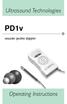 Ultrasound Technologies PD1v vascular pocket doppler Operating Instructions Before using your Pocket Doppler for the first time, please read these operating instructions carefully. 1 INTRODUCTION The UltraTec
Preparation iagnostic Medical Sonographer Overview"
 Diagnostic Medical Sonographer Overview The Field - Preparation - Specialty Areas - Day in the Life - Earnings - Employment - Career Path Forecast - Professional Organizations The Field Diagnostic imaging
Lesley C. Dinwiddie, MSN, RN, FNP,CNN
 The Vascular Access Coordinator: A Patient and Treatment Team s Best Friend Lesley C. Dinwiddie, MSN, RN, FNP,CNN Greetings and Thanks to Network 14 for this exciting opportunity! Purpose The purpose of
Central Venous Catheters and Upper Extremity DVT: Update, Diagnosis and Management
 Central Venous Catheters and Upper Extremity DVT: Update, Diagnosis and Management David Hahn, MD Interventional Radiology NorthShore University HealthSystem Objectives Discuss the epidemiology and clinical
Body cavities. Body Planes
 Body cavities Body Planes Directional terms http://homepage.smc.edu/wissmann_paul/anatomy1textbook/1anatomytextch1.html abdomen abdominal front of elbow antecubital arm brachial groin inguinal armpit axillary
Renal Artery Duplex Imaging
 VASCULAR TECHNOLOGY PROFESSIONAL PERFORMANCE GUIDELINES Renal Artery Duplex Imaging This Guideline was prepared by the Professional Guidelines Subcommittee of the Society for Vascular Ultrasound (SVU)
Majestic Trial 12 Month Results
 Majestic Trial 12 Month Results S.Müller-Hülsbeck, MD, EBIR, FCIRSE, FICA ACADEMIC HOSPITALS Flensburg of Kiel University Ev.-Luth. Diakonissenanstalt zu Flensburg Knuthstraße 1, 24939 FLENSBURG Dept.
An Overview of Transradial Patient Set-up. Susan R. Cooney RN,BSN,CCRN Durham VAMC Cardiac Catheterization Lab Duke University School of Nursing
 An Overview of Transradial Patient Set-up Susan R. Cooney RN,BSN,CCRN Durham VAMC Cardiac Catheterization Lab Duke University School of Nursing Advantages of the Transradial Approach from a Nursing Perspective!!
Hemodialysis catheter infection
 Hemodialysis catheter infection Scary facts In 2006, 82% of patients in the United States initiated dialysis via a catheter The overall likelihood of Tunneled cuffed catheters use was 35% greater in 2005
Vascular access flow reduction for arteriovenous fistula salvage in symptomatic patients with central venous occlusion
 Department of Surgery, College of Medicine, University of Oklahoma-Tulsa, Tulsa, OK -USA Department of Surgery, College of Medicine, University of Oklahoma-Tulsa, Tulsa, OK -USA J Vasc Access 2012; 13
Extremity Trauma. William Schecter, MD
 Extremity Trauma William Schecter, MD Approach to the Evaluation of the Patient with an Extremity Injury Blood Supply Skeleton Neurologic Function Risk for Compartment Syndrome? Coverage (Skin and Soft
Use of Stents and Stent Grafts to Salvage Angioplasty Failures in Patients with Hemodialysis Grafts
 Use of Stents and Stent Grafts to Salvage Angioplasty Failures in Patients with Hemodialysis Grafts Thomas M. Vesely, Mohammed Zaheer Amin, and Thomas Pilgram St. Louis, Missouri ABSTRACT To determine