
Pain in inevitable; Suffering is optional.
|
|
|
- Kenneth Peters
- 9 years ago
- Views:
Transcription
1 Pain in inevitable; Suffering is optional. Therapeutic applications of offered by Michael L. Ward Certified Anusara Yoga Instructor & RYT500 Neuromuscular Therapist & NC LMBT#4573

2 This handout is complied from manuals and/or words written and/or spoken by John Friend, founder of Anusara Yoga. Assume for copyright and plagiarizing purposes that this entire booklet/handout is paraphrased and/or directly quoted from John Friend s writings or from notes taken directly by Michael Ward during his trainings. As a certified Anusara Yoga Instructor, Michael Ward teaches yoga therapy based on Universal Principles of Alignment TM and claims no credit for these techniques, but does stand by their efficacy and healing potential. This is good stuff!

3 Remember the highest purposes of the practice throughout the process of applying these techniques: Connect to the Source so revelation is possible. Center yourself before performing any therapeutic application of yoga. Become clear with your own heart and your intention to stay plugged into and connected to the highest purposes of the practice. Remember to be kind and compassionate; act safely and with confidence. Perform your own breathing exercises, asana practice and center yourself BEFORE offering yourself into the service of healing facilitation. Always remember that you are the facilitator; the student/client is their own healer. Stay open to the big picture so your ego stays away from I can fix this. Adjustments are improvements, not fixes. A posture is never inherently bad or wrong, so don t go there. People should never be made to feel they are inadequate. Keep your own attitude in check at all times when working therapeutically. ALWAYS LOOK FOR THE GOOD FIRST, then offer refinement. Remember, you are supporting your friends. Be sensitive to them. The concept of Eagle Eye Vision is a must to maintain when working therapeutically with anyone. See the big picture. While an ailment may be specific, remember that yoga therapy is a big picture paradigm that treats the body as a whole and is a holistic practice.

4 Sequentially examine the following categories of those you assist: 1. Attitude, breath & intention 2. Outer form- structural placement of the body including foundation, shape, degree of evenness of curvature and overall symmetry of form 3. Muscular Action 4. Spirals & Loops 5. Organic Energy ALWAYS GO BACK TO ATTITUDE. WITHOUT AN OPEN ATTITUDE FOR THE POSSIBILITY OF HEALING, HEALING WILL NOT OCCUR. The most important principle of assisting friends, students, clients or patients with yoga therapy is: Sensitivity, Stabilize, then Adjust: SSA (Should you adjust first before taping into sensitivity and stabilizing your friend, then you re aligning with ASS don t do that )

5 Therapy for Common Structural Ailments & Misalignments Feet & Shins Common conditions: plantar fasciitis, bunions, shins splints, ankle sprain, Achilles tendon sprain (the 4 corners of the foot are the mound of the big toe, the inner heel, the mound of the little toe, and the outer heel) Walk in place while standing. After several seconds, stop and observe how the feet are positioned in the normal stance to become aware of the common tendency in foot placement. Which foot turns out more? Where is most of the weight (inner, outer edges or front/back)? Shape and quality of the toe placement, extension or contraction or soft/rigid, or tightly bound or spread? Is the foot drawn upward towards the hips (high arches; Muscular Energy) or melted down away from the hips (flat feet; Organic Energy)? Which way is the Ankle Loop flowing? What is the alignment of the shins? Corrective Alignment 1. Press the mound of the big toe and spread toes 2. Press inner heel, lengthen foot and gently squeeze the shins toward the mid-line 3. Press mound of little toe. Inner Spiral, broaden foot and widen out thighs 4. Press the outer heel Note: Lift toes to increase Muscular Energy & Soften toes to increase Organic Energy Poses to facilitate Feet & Shin Health:

6 Key Actions: 1.) Anchor four corners of the foot, 2). Strong Muscular Energy, 3). Ankle Loop- stretch calves Toes up the wall Adho Muka Svasana with bent knees (downward facing dog pose) Uttanasana with a blanket roll under metatarsals (standing forward fold) Parsvakonasana (side angle pose) Trikonasana with a blanket roll under metatarsals (triangle pose) Prasarita Padottanasana (wide legged forward fold) Virabhadrasana I (warrior I pose) Parsvottanasana Vajrasana & Virasana (sitting on heels or in between heels) Knees Conditions include: ligament and/or meniscus damage, popleteus sprain, hyperextensions, knock knees, bow legs 1. Observe the person standing with feel separated only a couple of inches apart. 2. Does one foot turn out more than the other? 3. Do the knees point in the same direction as the feet? 4. Are the knock-kneed or bow-legged? 5. Do the knees hyperextend? 6. Which shin bows out more- the one on the injured side? 7. Do the legs carry more Organic or Muscular Energy? 8. Is there swelling around the knee? 9. Is the soft tissue behind the knee puffy, swollen or sensitive? 10. What is the shape and quality of the calf muscle? 11. How much tighter and larger is the outer calf than the inner calf?

7 Palpate the knee and determine if the knee is too flexible/unstable or too tight/compressed. If too flexible/unstable, perform straight leg & 90 degree poses. If too tight/compressed, do more bent leg poses. Remember always to check adjacent joints when working with any joint ailment. Poses to facilitate Knee Health: Key Actions: 1.) Align foundation, 2.) Align foot with knee, 3.) Shins in, thighs out, 4.) Calf Loop Virasana & Vajrasana with blanket roll behind knees (seat between feet) Janu Sirsasana (head to knee pose) Uttanasana (forward fold) Lung Pose Parsvakonasana (side angle pose) Virabhadrasana I (warrior I pose) Trikonasana (triangle pose) Prasarita Padottanasana (wide legged forward fold) Ardha Chandrasana (half moon pose) Adho Mukha Svanasana (downward facing dog pose) Utkatasana (fierce or chair pose) Supta Padangustasana prep, knew toward chest (bent knee big toe pose) Eka Pada Bhekasana (thigh stretch on belly/hips) Eka Pada Rajakapotasana prep with thigh stretch (pigeon thigh stretch) Setubandasana (bridge pose)

8 Thighs Conditions include: Iliotibial band spasm, adductor strain, hamstring pain For quadriceps AND hamstring strains, emphasize Muscular Energy while stretching. For ITB problems, emphasize Inner Spiral and Organic Energy in backbends. Poses to facilitate Thigh Health: Key Actions: 1.) align four corners of foundations, 2.) Strong Muscular Energy in the legs, 3.) Shins in, thighs out- emphasizing the widen component of Inner Spiral Uttanasana (standing forward fold) Trikonasana (triangle pose) Prasarita Padottanasana (wide legged forward fold) Parsvakonasana (side angle pose) Ardha Chandrasana (half moon pose) Parivrtta Trikonasana (twisted triangle pose) Janu Sirsasana (head to knee pose) Paschimottanasana (seated forward fold) Upavista Konasana (seated wide legged forward fold) Hanumanasana (front/back leg splits)

9 Hips Conditions include: piriformis syndrome, sciatica, psoas/groin strain, hip subluxation 1. Look at the pelvis and hips in Tadasana (mountain pose) and observe from all sides. 2. Which hip is rolled forward and which is rolled backward? 3. Which pelvic bone is tipped forward, which is backward? 4. Which hip is higher, which is lower? 5. Where is the pelvis in relation to the midline? 6. Manually check the position of the greater trochanter in relation to the anterior superior iliac spine. Which side is broader, which is narrower? 7. Manually check top rim of pubic symphysis. Which side is elevated? Which side is forward? 8. Manually check ischial tuberosities. Which sitting bone is closer to the medial line? Which is posterior; which is anterior? 9. With the person lying in a resting pose (savasana), look at the alignment of the hips and legs. Which leg turns out the most? Palpate the inner thighs and quadriceps. Which leg is weaker, stronger, looser, tighter? 10. Note the general condition of all the hip, buttock and inner thigh muscles, their tone, strength and flexibility. Poses to facilitate Hip Health: Key Actions: 1.) strong Muscular Energy in the legs, 2.) strong Calf Loop, 3.) Inner Spiral- ground top of thighs, 4.) Outer Spiral- Pelvic Loops, 5.) Organic Energy out of the Focal Point in the pelvis Uttanasana (standing forward fold) Trikonasana (triangle pose) Parsvottanasana

10 L-pose at the wall with block; bent knees working towards straight Janu Sirsasana (head to knee pose) Eka Pada Rajakapotasana prep (pigeon pose) Eka Pada Bhekasana (thigh stretch on belly/hips) Adho Mukha Svanasana (downward facing dog pose) Supta Padangusthasana (big toe pose) Sputa Virasana- or half variation (sitting between feet, lying back) Setubandhasana & Urdhva Dhanurasana with a block (bridge and wheel poses) Lower Back Conditions include: disk damage, sacroiliace (SI) subluxation, spinal subluxation, muscular spasms Note: the lumbar spine has a lordotic curve and the coccyx (tailbone) has a kyphotic curve. L5-S1 is the most commonly injured spinal disk. 1. Observe lower back alignment with person standing in casual Tadasana. 2. Is lumbar too flat, too arched, crooked (S-curve), rotated or subluxated? 3. What is the alignment of the sacrum and the coccyx? 4. Check alignment of upper back and shoulders, since they are all interrelated. 5. Check thighbone alignment. If the thighbones are forward, then the alignment of the lower back will be negatively affected. Typically, the more the thighbones protrude, the flatter the curvature of the lower back. 6. Observe alignment while in Savasana and in Uttanasana.

11 Lumbar should be first arched, then elongated (Inner Spiral, then Outer Spiral). If the lower back is too flat, then Inner Spiral should be emphasized. Therapeutic poses in general include standing poses, inversion and forward bends (backbends are typically easier for those with flat lower backs). If the lower back is too arched, then Outer Spiral should be emphasized. Therapeutic poses in general include standing posers and backbends (forward folds are typically easier for those with hyper-lordotic backs). Sacroiliac Diagnostics: Check the SI with the person standing. Place tips of thumbs in the SI notch. Ask the person to step in place slowly. If the thumbs lift on the side that the leg is lifting, then the SI joint is out of place or subluxated. Pain can be experienced in the SI on the opposite side to the side of the subluxation due to torque pressure. Many times tightness in the front groin/psoas will cause a tight reaction in the upper rotator muscles which pull the sacrum out of alignment. SI Adjustment: 1. Loosen lower back and gluteal muscles though simple stretches. 2. Ask person to lie on stomach. Manually bring the legs parallel and turn the legs inward. Fold one leg at a time to bring foot ward buttock in order to stretch thigh and release gluteals. Use one hand on buttock to press down to keep Pelvic Loop and the sacrum/lower back lengthened. 3. Once gluteal muscles and lower back muscles are stretched and softened (don t rush this), bend knee on subluxated side to 90 degrees. Take hold of the base of thigh just above knee. Lift thigh until the top of sacrum tips gently down into

12 the body. Rotate tigh internally so back of pelvis broadens. Keeping leg elevated and rotated, pres down on buttock just to the side of the base of the sacrum. (in some cases, gently lift the thigh upward while pressing downward) Poses to facilitate Lower Back Health: Key Actions: 1.) Inner Spiral- creating proper lordotic curvature taking top of thighs back, 2.) Outer Spiral- creating proper lengthening in low back Uttanasana (standing forward fold) Trikonasana (triangle pose) Parsvakonasana (side angle pose) Supta Padangusthasana (big toe pose) Adho Mukha Svanasana (downward facing dog pose) Prasarita Padottanasana (wide legged forward fold) Janu Sirsanana (head to knee pose) Ardha Matsyendrasana (twist) Setubandhasana (bridge pose) Urdhva Dhanurasana (wheel pose) Shoulders & Upper Back Conditions include rotator cuff injury, bursitis 1. Observe Tadasana alignment while person is relaxed; compare sides. 2. Which side if further out of alignment in relation to the Optimal Blueprint? 3. Which shoulder is lower? While humerus is more internally rotated? 4. Which breast is lower?

13 5. Observe alignment of the and neck. Is the heck or head tipped to one side or forward? 6. Do you observe a difference in the shape on one side of the neck- are muscles sticking out? 7. Observe the flow of skin and muscles on the top of the chest. 8. Does it flow down from the collarbones to the breasts? Does it flow medially from outer collarbones to sternum? 9. Which shoulder blade sticks out more away from the back? Which shoulder blade is more elevated? 10. Touch thoracic spine. Check uniformity of curvature. Is the change in position from one vertebrae to another consistent? Does one vertebrae stick out more than another? If so, note the horizontal line on the upper back. Along this line is usually where shoulder blade and upper back muscles will be in spasm because of their weakness. 11. Check shape of sternum and its corresponding relationship in shape to the upper back. 12. Ask the person specifically to locate where the pain is in the shoulder. Ask which positions or movements make the pain worse. Have them demonstrate the movement of the arm and shoulder that cause pain. Particularly observe the position of the head of the humerus. How far forward in the socket does it move and when?

14 Neck: 1. Position head so neck has optimal curve (lordotic). Palpate both sides of neck simultaneously with one hand by lightly gripping the back of the neck with thumb on one side of the spine and the fingers on the other. Which is tighter? 2. Form behind, massage levator scapulae (upper should-blade up side of neck) with thumb tips. Observe which side is tighter. Shoulder Tests: 1. Stand to the side of the person, who is also standing. Ask them to relax. Place the heel of one of your palms with the fingers pointing up on the bottom, inner tips of the person s scapulae. Place your other hand on the front deltoid with the fingers pointing up. Use your torso to press the person s elbow slightly forward in order to keep the lower arm in the front plane. Lift the humerus up until it is square or level across with the clavicular notch. If the arm is rigid or in trama, then manually hold the armbone on the medial side just below the armpit and lift up until the head of the armbone is square with the collarbone. Press shoulder-blade flat onto the back with slow steady pressure. Then press head of armbone back as far as possible. The head of the humerus must move back directly so the arm does not medially rotate. Create Should Loop manually. Ask person to turn lungs to the opposite side away from the adjusted shoulder. Observe quality of stiffness of movement in the shoulder joint. What part of the shoulder seems particularly stiff (shoulder-blade, head of humerus, collarbone)? 2. Hold the upper arm strongly and externally rotate it while keeping the elbow in front place, the head of the humerus in the back plane, and the shoulder-blade flat on the back. To

15 increase the effect, instruct the person to turn the chest away from the arm. 3. Manually set the head of the humerus in position and then slowly move the arm in a radon range of motion while keeping the hand/wrist in the front plane. Poses to facilitate Shoulder / Upper Back Health: Key Actions: 1.) Muscular Energy along four sides of the arms and shoulders- take the head of the humerus back, move the outer shoulder-blade and the inner deltoid back at the same rate, 2.) Shoulder Loops, 3.) Organic Energy0 widening the shoulders and upper back Adho Mukha Svanasana (downward facing dog pose) Clasping hands behind back Uttanasana (standing forward fold) Parsvakonasana (side angle pose) Chaturanga Dandasana (stick pose) Bhujangasana (cobra pose) Slabhasana (backbend on belly straight legs) Vasihtasana (side plank pose) Elbows, Forearms, Wrists & Hands Conditions include: tennis elbow, bursitis, tendinitis, RSI (repetitive strain injury), carpal tunnel syndrome, ganglion 1. Check shoulder alignment and mobility 2. Check carrying angle of the arm in supination (palms face up). If the angle is large, then flexors will tend to be tighter. 3. Extend hand back and observe flexibility and the quality of the retinaculum.

16 4. Palpate flexors and extensors. Determine difference between the two in terms of tightness, laxity, and uniformity in tissue quality. 5. Palpate flexors at belly of forearm, while supinating forearms and flexing and extending forearm back and forth. Determine if movement is limited in any way, and if connective tissue hyper-contracts when arm is flexed. 6. While holding hand like shaking hands, manually squeeze ulna and radius toward each other, then lightly pull had from forearm. Poses to facilitate Arm Health: Key Actions for elbow issues: 1.) Muscular Energy in the arms- very strong along inner forearms, 2.) Forearms spiral in, upper arms spiral out ALL SHOULDER POSES Claw with your Paws (always claw the finger tips into the mat when weight bearing on the hands and wrists. When flat palmed, the index finger mount NEVER LIFTS) Adho Mukha Svanasana (downward facing dog pose) Bhujangasana (cobra pose) Vasihtasana (side plank pose) Virabhadrasana II (warrior II pose) Trikonasana (triangle pose) Key actions for hand and wrists issues: 1.) aligning the four corners of the hands as the foundation of the pose, 2.) Strong Muscular Energy- lifting the center of the palms, lifting the inner forearms ALL SHOULDER POSES

17 Claw with your Paws (always claw the finger tips into the mat when weight bearing on the hands and wrists. When flat palmed, the index finger mount NEVER LIFTS) Adho Mukha Svanasana (downward facing dog pose) Bhujangasana (cobra pose) Neck & Jaw Conditions include: cervical subluxation, headaches, vertigo, TMJ pain/dysfunction 1. Observe and palpate neck as described in the Shoulder section. 2. Manually check cervical alignment while person is upright. 3. TMJ is the most used joint in the body. Observe TMJ function when person opens and closes mouth. Does it track evenly? 4. Manually check TMJ function while person is in supine position. Place fingers at hinge of jaw and ask person to open and close the mouth a few times. Which side of the jaw is tighter? Poses to facilitate Neck & Jaw Health: Key actions: 1.) Shoulder Loop- creating proper cervical curve, 2.) Skull Loop ALL SHOULDER POSES Prasarita Padottanasana (wide legged forward fold) Trikonasana (triangle pose) Parivrtta Sukasana (twisted cross legged seated pose) Setubandasana (bridge pose) Savasana (corpse pose)

18 Optional asana sequence: remember curves before length Center and invocation Toes up the wall L-pose at the wall with block; bent knees working towards straight Lung Pose Adho Muka Svansana with bent knees (downward facing dog pose) Uttanasana with a blanket roll under metatarsals (standing forward fold) Clasping hands behind back Utkatasana (fierce or chair pose) Parsvakonasana (side angle pose) Prasarita Padottanasana (wide legged forward fold) Trikonasana with a blanket roll under metatarsals (triangle pose) Ardha Chandrasana (half moon pose) Chaturanga Dandasana (stick pose) Bhujangasana (cobra pose) Vasihtasana (side plank pose) Virabhadrasana I (warrior I pose) Virabhadrasana II (warrior II pose) Parsvottanasana Sputa Virasana- or half variation (sitting between feet, lying back) OR Virasana & Vajrasana with blanket roll behind knees (seat between feet) Eka Pada Bhekasana (thigh stretch on belly/hips) Eka Pada Rajakapotasana prep & with thigh stretch (pigeon & thigh stretch) Slabhasana (backbend on belly straight legs) Setubandhasana (bridge pose) Urdhva Dhanurasana with a block (bridge and wheel poses) Supta Padangustasana prep, knew toward chest (bent knee big toe pose) OR Supta Padangusthasana (big toe pose) Janu Sirsasana (head to knee pose) Ardha Matsyendrasana (twist) Parivrtta Sukasana (twisted cross legged seated pose) Savasana (corpse pose)

by Ellen Saltonstall and Dr. Loren Fishman
 10 Yoga Poses for Low Back Pain Prevention by Ellen Saltonstall and Dr. Loren Fishman Introduction This series of poses is designed to prevent future back pain and also to relieve back pain that you may
Yoga Teacher Training Home Study Course. Part 4. Teaching and Practicing Standing, Kneeling and Balance Postures
 Yoga Teacher Training Home Study Course Part 4 Teaching and Practicing Standing, Kneeling and Balance Postures Introduction This section will explain methods for teaching numerous standing, kneeling and
McMaster Spikeyball Therapy Drills
 BODY BLOCKS In sequencing Breathing and Tempo Flexibility / Mobility and Proprioception (feel) Upper body segment Middle body segment Lower body segment Extension / Static Posture Office / Computer Travel
Stretching in the Office
 Stretching in the Office Legs: Quads, Hamstrings, IT band, Hip flexors, Gluts, Calves Quads: Standing @ desk maintaining upright posture, grab one leg @ a time by foot or ankle and bring it towards backside
CHAPTER 3: BACK & ABDOMINAL STRETCHES. Standing Quad Stretch Athletic Edge - www.athleticedge.biz - (650) 815-6552
 CHAPTER : BACK & ABDOMINAL STRETCHES Standing Quad Stretch ) Stand and grasp right ankle with same hand, use a wall or chair to Lower maintain Back balance with left hand. Maintain an upright Stretches
Psoas Syndrome. The pain is worse from continued standing and from twisting at the waist without moving the feet.
 Psoas Syndrome The iliopsoas muscle is a major body mover but seldom considered as a source of pain. Chronic lower back pain involving the hips, legs, or thoracic regions can often be traced to an iliopsoas
Yoga practice and Rheumatoid Arthritis a case study by Hilla Arnon
 Yoga practice and Rheumatoid Arthritis a case study by Hilla Arnon What is Rheumatoid Arthritis (RA) Rheumatoid Arthritis is an autoimmune disease in which the body's immune system attacks cells and tissues
DSM Spine+Sport - Mobility
 To set yourself up for success, practice keeping a neutral spine throughout all of these movements. This will ensure the tissue mobilization is being applied to the correct area, and make the techniques
EGOSCUE CLINIC PAIN/POSTURE STRETCHES 1. Standing Arm Circles: Helps Restore Upper Body Strength
 EGOSCUE CLINIC PAIN/POSTURE STRETCHES 1. Standing Arm Circles: Helps Restore Upper Body Strength Two sets of 40 repetitions each. Stand with your feet pointed straight and hip-width apart. Place your fingertips
Care at its Best! Foam Roller Exercise Program
 Foam Roller Exercise Program Foam rollers are a popular new addition the gym, physical therapy clinics or homes. Foam rollers are made of lightweight polyethyline foam. Cylindrical in shape, foam rollers
Lower Body Exercise One: Glute Bridge
 Lower Body Exercise One: Glute Bridge Lying on your back hands by your side, head on the floor. Position your feet shoulder width apart close to your glutes, feet facing forwards. Place a theraband/mini
A proper warm-up is important before any athletic performance with the goal of preparing the athlete both mentally and physically for exercise and
 A proper warm-up is important before any athletic performance with the goal of preparing the athlete both mentally and physically for exercise and competition. A warm-up is designed to prepare an athlete
Exercise 1: Knee to Chest. Exercise 2: Pelvic Tilt. Exercise 3: Hip Rolling. Starting Position: Lie on your back on a table or firm surface.
 Exercise 1: Knee to Chest Starting Position: Lie on your back on a table or firm surface. Action: Clasp your hands behind the thigh and pull it towards your chest. Keep the opposite leg flat on the surface
Exercises for Growing Taller
 1 Exercises for Growing Taller A Mini-Guide By Rodney Williams Copyright and Legal Notice 2 Published by: Copyright 2011. All Rights Reserved. No part of this publication may be reproduced or transmitted
Self-Myofascial Release Foam Roller Massage
 How it works. Self-Myofascial Release Foam Roller Massage Traditional stretching techniques simply cause increases in muscle length and can actually increase your chances of injury. Self-myofascial release
Spine Conditioning Program Purpose of Program
 Prepared for: Prepared by: OrthoInfo Purpose of Program After an injury or surgery, an exercise conditioning program will help you return to daily activities and enjoy a more active, healthy lifestyle.
Low Back Pain: Exercises
 Low Back Pain: Exercises Your Kaiser Permanente Care Instructions Here are some examples of typical rehabilitation exercises for your condition. Start each exercise slowly. Ease off the exercise if you
Exercises for Low Back Injury Prevention
 DIVISION OF AGRICULTURE RESEARCH & EXTENSION University of Arkansas System Family and Consumer Sciences Increasing Physical Activity as We Age Exercises for Low Back Injury Prevention FSFCS38 Lisa Washburn,
COMMON OVERUSE INJURIES ATTRIBUTED TO CYCLING, AND WAYS TO MINIMIZE THESE INJURIES
 COMMON OVERUSE INJURIES ATTRIBUTED TO CYCLING, AND WAYS TO MINIMIZE THESE INJURIES Listed are a few of the most common overuse injuries associated with cycling long distances. 1. Cervical and upper back
Lumbar/Core Strength and Stability Exercises
 Athletic Medicine Lumbar/Core Strength and Stability Exercises Introduction Low back pain can be the result of many different things. Pain can be triggered by some combination of overuse, muscle strain,
The Santa Monica Orthopaedic and Sports Medicine Research Foundation. The PEP Program: Prevent injury and Enhance Performance
 The Santa Monica Orthopaedic and Sports Medicine Research Foundation The PEP Program: Prevent injury and Enhance Performance This prevention program consists of a warm-up, stretching, strengthening, plyometrics,
Range of Motion. A guide for you after spinal cord injury. Spinal Cord Injury Rehabilitation Program
 Range of Motion A guide for you after spinal cord injury Spinal Cord Injury Rehabilitation Program This booklet has been written by the health care providers who provide care to people who have a spinal
Cardiac Rehab Program: Stretching Exercises
 Cardiac Rehab Program: Stretching Exercises Walk around the room, step side to side, ride a bike or walk on a treadmill for at least 5 minutes to warm up before doing these stretches. Stretch warm muscles
Healing (and Preventing) Wrist Injuries
 { asana solutions } Healing (and Preventing) Wrist Injuries Proper alignment of the hands and balanced muscle tone in the forearms can protect vulnerable wrists. By doug keller Few things put the brakes
Knee Conditioning Program. Purpose of Program
 Prepared for: Prepared by: OrthoInfo Purpose of Program After an injury or surgery, an exercise conditioning program will help you return to daily activities and enjoy a more active, healthy lifestyle.
SAMPLE WORKOUT Full Body
 SAMPLE WORKOUT Full Body Perform each exercise: 30 secs each x 2 rounds or 2-3 sets of 8-12 reps Monday & Wednesday or Tuesday & Thursday Standing Squat Muscles: glutes (butt), quadriceps (thigh) Stand
Exercises for the Hip
 Exercises for the Hip Gluteal Sets: Lie on your back, tighten buttocks and hold for 3-5 seconds. Repeat 20 times. Supine Hip ER/IR: Lie on your back with legs straight. Gently rotate knees out and in limited
CORRECTIVE CHIROPRACTIC EXERCISES
 CORRECTIVE CHIROPRACTIC EXERCISES J O W E T T & M O U L T O N C h i r o p r a c t o r s introduction This booklet, presented by Jowett and Moulton Chiropractors, is designed to provide you with a general
Spinal Exercise Program/Core Stabilization Program Adapted from The Spine in Sports: Robert G. Watkins
 Spinal Exercise Program/Core Stabilization Program Adapted from The Spine in Sports: Robert G. Watkins Below is a description of a Core Stability Program, designed to improve the strength and coordination
Low Back Pain Exercises Interactive Video Series Transcript July 2013
 Introduction Low Back Pain Exercises Interactive Video Series Transcript July 2013 ** Note: If an exercise causes an increase in your pain, stop the exercise.** [Music introduction; Dr. John Sheehan onscreen]
Yoga Teacher Training Home Study Course. Part 3b. Teaching and Practicing Sun Salutations
 Yoga Teacher Training Home Study Course Part 3b Teaching and Practicing Sun Salutations Sun Salutations (Surya Namaskar) A sun salutation is a graceful sequence of positions performed as one continuous
KNEE EXERCISE PROGRAM
 KNEE PROGRAM INTRODUCT ION Welcome to your knee exercise program. The exercises in the program are designed to improve your knee stability and strength of the muscles around your knee and hip. The strength
Basic Stretch Programme 3. Exercise Circuit 4
 Basic Stretch Programme 3 Exercise Circuit 4 2 1 Calves Stand approximately 1 metre away from wall with legs straight and heels on floor. Step and lean forward and slowly push hips towards wall. Should
Shoulders (free weights)
 Dumbbell Shoulder Raise Dumbbell Shoulder Raise 1) Lie back onto an incline bench (45 or less) with a DB in each hand. (You may rest each DB on the corresponding thigh.) 2) Start position: Bring the DB
try Elise s toning exercise plan
 try Elise s toning exercise plan Whether you want to start things off slow and gradually build up your fi tness, or begin with a challenge, Elise s toning exercise programme is designed for all levels.
TIPS and EXERCISES for your knee stiffness. and pain
 TIPS and EXERCISES for your knee stiffness and pain KNEE EXERCISES Range of motion exercise 3 Knee bending exercises 3 Knee straightening exercises 5 STRENGTHENING EXERCISES 6 AEROBIC EXERCISE 10 ADDITIONAL
are you reaching your full potential...
 T h e r e s n o s u c h t h i n g a s b a d e x e r c i s e - j u s t e x e r c i s e d o n e b a d l y FIT for sport are you reaching your full potential... These tests are a series of exercises designed
SELF-MASSAGE HANDOUTS
 SELF-MASSAGE HANDOUTS Self-Massage for the Head and Face Self-Massage for the Low Back and Buttocks Self-Massage for Runners Self-Massage for the Neck Self-Massage for the Feet Self-Massage for the Arms
Flexibility Assessment and Improvement Compiled and Adapted by Josh Thompson
 Flexibility Assessment and Improvement Compiled and Adapted by Josh Thompson Muscles must have a full and normal range of motion in order for joints and skeletal structure to function properly. Flexibility
Exercises for older people
 Exercise for older people Exercises for older people Sitting Getting started If you ve not done much physical activity for a while, you may want to get the all-clear from a GP before starting. For the
General Guidelines. Neck Stretch: Side. Neck Stretch: Forward. Shoulder Rolls. Side Stretch
 Stretching Exercises General Guidelines Perform stretching exercises at least 2 3 days per week and preferably more Hold each stretch for 15 20 seconds Relax and breathe normally Stretching is most effective
BEACH VOLLEYBALL TRAINING PROGRAM
 2008 ELITE PERFORMANCE ATHLETE CONDITIONING BEACH VOLLEYBALL TRAINING PROGRAM Team BC 2008 Steve Van Schubert, CAT(C), CSCS Training Schedule General Outline Phase 1 2 Weeks Phase 2 3 Weeks Phase 3 3 Weeks
How To Improve Drainage
 Rehabilitation Home Program Edema Exercises To Improve Drainage You will improve your lymph flow by doing a few exercises each day. These exercises are an important part of your home program. They may
7Sciatica has a long (and painful!) history. As far back as the 5th
 ASANASOLUTIONS Soothe Your Sciatica These seven simple poses target the tight muscle that often causes sciatic pain. By Doug Keller Burning and tingling in the back of the thigh are signs of sciatica.
Kelly Corso MS, ATC, CES, FMSC, CSST
 ACL Injury Prevention Program Kelly Corso MS, ATC, CES, FMSC, CSST What is the ACL??? The ACL or anterior cruciate ligament, attaches the front top portion of the shin bone (tibia) to the back bottom portion
Yoga Routine. Khun Reinhard. (www.khunreinhard.com)
 Yoga Routine by Khun Reinhard (www.khunreinhard.com) Yoga-Routine Khun Reinhard - 2 - December 2013 Introduction This yoga routine has been taught by the author of this paper over many years to more than
How To Stretch Your Body
 Exercise Module A New Leaf Choices for Healthy Living University of North Carolina at Chapel Hill 2007 Center for Health Promotion and Disease Prevention Physical Activity Exercises for Keeping Active
Self-mobilization methods
 Self-mobilization methods 5 Muscle energy techniques, as outlined in previous chapters, provide us with an excellent series of methods for relaxation and stretching of specific tight, shortened, contracted
Chair Exercises For Older Adults
 Chair Exercises For Older Adults Many of these exercises were adapted from these sources: National Institute on Aging, Exercise: A Guide from the National Institute on Aging, 2001, http://www.nia.nih.gov/healthinformation/publications/exerciseguide/.
Passive Range of Motion Exercises
 Exercise and ALS The physical or occupational therapist will make recommendations for exercise based upon each patient s specific needs and abilities. Strengthening exercises are not generally recommended
Fact sheet Exercises for older adults undergoing rehabilitation
 Fact sheet Exercises for older adults undergoing rehabilitation Flexibility refers to the amount of movement possible around a joint and is necessary for normal activities of daily living such as stretching,
Living Room Bodyweight Workout Week 1 March or jog in place for 1 min to increase heart rate and lubricate joints.
 Warm Up- Living Room Bodyweight Workout Week 1 March or jog in place for 1 min to increase heart rate and lubricate joints. Protocol- All exercises will be done for 2 sets of 10 repetitions. After the
Injury Prevention for the Back and Neck
 Injury Prevention for the Back and Neck www.csmr.org We have created this brochure to provide you with information regarding: Common Causes of Back and Neck Injuries and Pain Tips for Avoiding Neck and
Clasp hands behind hips and stretch arms down towards floor. Roll shoulder back to open chest. Do not let back arch. Power Skips
 Warm Up Exercises Jump Rope Ankle Bounces Jumping Jacks Using a fast twirl, rapidly jump up and down using spring in the feet and ankles, not in knees. V-Jumps Rapidly jump up and down using spring in
PERFORMANCE RUNNING. Piriformis Syndrome
 Piriformis Syndrome Have you started to experience pain in your hip or down your leg while beginning or advancing your fitness program? This pain may be stemming from the piriformis muscle in your hip.
Don t. Hamstrings. Calf Muscles. both legs 2-3 times. stretch is felt in the back of the calf. Repeat with both legs 2-3 times.
 Remember to: Warm-up your muscles first before stretching (e.g. stretch after walking). Stretch until you feel mild discomfort, not pain. Never bounce or force a stretch. Hold the stretch for 10-30 seconds
stretches and exercises
 stretches and exercises The enclosed sheets contain stretches and exercises which can be used to delay and minimise the development of contractures and deformities occurring in children with Duchenne muscular
The Eight Principles of Movement
 The Eight Principles of Movement At Functional Synergy we follow eight principles of movement to help maintain focus and ease. Based on the natural concepts of anatomy, physiology, and kinesiology, they
Sheet 1A. Treating short/tight muscles using MET. Pectorals. Upper trapezius. Levator scapula
 Sheet 1A Treating short/tight muscles using MET Pectorals Once daily lie at edge of bed holding a half-kilo can, arm out sideways. Raise arm and hold for 10 seconds, then allow arm to hang down, stretching
THE BENJAMIN INSTITUTE PRESENTS. Excerpt from Listen To Your Pain. Assessment & Treatment of. Low Back Pain. Ben E. Benjamin, Ph.D.
 THE BENJAMIN INSTITUTE PRESENTS Excerpt from Listen To Your Pain Assessment & Treatment of Low Back Pain A B E N J A M I N I N S T I T U T E E B O O K Ben E. Benjamin, Ph.D. 2 THERAPIST/CLIENT MANUAL The
Range of Motion Exercises
 Range of Motion Exercises Range of motion (ROM) exercises are done to preserve flexibility and mobility of the joints on which they are performed. These exercises reduce stiffness and will prevent or at
Hip Conditioning Program. Purpose of Program
 Prepared for: Prepared by: OrthoInfo Purpose of Program After an injury or surgery, an exercise conditioning program will help you return to daily activities and enjoy a more active, healthy lifestyle.
Massage and Movement
 Massage and Movement Incorporating Movement into Massage Part One: Theory and Technique in Prone With Lee Stang, LMT NCBTMB #450217-06 1850 West Street Southington, CT 06489 860.747.6388 www.bridgestohealthseminars.com
Do you sit at a desk all day? Does your 9 to 5 leave no time for structured exercise..?
 Do you sit at a desk all day? Does your 9 to 5 leave no time for structured exercise..? Staying healthy at work is easier than you might think: Try building the following desk based exercises into your
Rehabilitation after shoulder dislocation
 Physiotherapy Department Rehabilitation after shoulder dislocation Information for patients This information leaflet gives you advice on rehabilitation after your shoulder dislocation. It is not a substitute
EXERCISE INSTRUCTIONS 1
 EXERCISE INSTRUCTIONS 1 Contents ANKLE TOUCHES... 4 BACK EXTENSIONS... 4 BACK REVERSE FLYES... 4 BALL ROLL... 4 BASKETBALL SQUATS... 4 BEAR CRAWL... 4 BICEP CURL (Resistance Band)... 4 BOXING JABS... 5
NETWORK FITNESS FACTS THE HIP
 NETWORK FITNESS FACTS THE HIP The Hip Joint ANATOMY OF THE HIP The hip bones are divided into 5 areas, which are: Image: www.health.com/health/static/hw/media/medical/hw/ hwkb17_042.jpg The hip joint is
Physical & Occupational Therapy
 In this section you will find our recommendations for exercises and everyday activities around your home. We hope that by following our guidelines your healing process will go faster and there will be
A small roller with a big effect. The mini roller for massaging, strengthening, stretching and warming up
 A small roller with a big effect The mini roller for massaging, strengthening, stretching and warming up Suva Preventative products P. O Box, 6002 Lucerne Enquiries Tel. 041 419 58 51 Orders www.suva.ch/waswo
Coccydynia. (Coccyx Pain) Information for patients. Outpatients Physiotherapy Tel: 01473 703312
 Information for patients Coccydynia (Coccyx Pain) Outpatients Physiotherapy Tel: 01473 703312 DPS ref: 4508-12(RP) Issue 1: February 2013 Review date: January 2016 The Ipswich Hospital NHS Trust, 2013.
Preventing Falls. Strength and balance exercises for healthy ageing
 Preventing Falls Strength and balance exercises for healthy ageing Exercise should be comfortable and fun. To get the most out of your home exercise book, join a class for older people to check your exercises
9 exercises to rehab a torn ACL without surgery
 MENU Search foxnews.com Health Home Men's Health Women's Health Children's Health Alternative Medicine Diabetes Heart Health Allergies HEALTH 9 exercises to rehab a torn ACL without surgery By Julie Wilcox
Pilates for Kyphosis A BASI Pilates program designed to help correct thoracic kyphosis
 Pilates for Kyphosis A BASI Pilates program designed to help correct thoracic kyphosis 1 Lucy Penrose 19/01/2014 Wimbledon UK, April 2013 Abstract Kyphosis refers to an exaggerated curve in the thoracic
THE BIG SIX. Six Best Volleyball Strength Training Exercises. By Dennis Jackson, CSCS www.strength-and
 THE BIG SIX Six Best Volleyball Strength Training Exercises By Dennis Jackson, CSCS www.strength-and and-power power-for for-volleyball.com THE SQUAT What it is The two most common squatting exercises
Sutton & Cheam Swimming Club. Land Training for Swimming and Water Polo
 Sutton & Cheam Swimming Club Land Training for Swimming and Water Polo Why do we need to perform land work? Many of the basics for swimming and water polo can be gained by experiencing activities out
Basic Training Exercise Book
 Basic Training Exercise Book Basic Training Exercise Book Instructions The exercises are designed to challenge the major muscles groups every day, approximately every 2 to 3 hours., for a total of 6 times
COMPUTER-RELATED MUSCLE, TENDON, AND JOINT INJURIES
 CHAPTER ELEVEN COMPUTER-RELATED MUSCLE, TENDON, AND JOINT INJURIES To reduce the risk of pain in your neck and shoulders, stay within these recommended ranges of movement: Neck Flexion: 0 o -15 o (bending
Info. from the nurses of the Medical Service. LOWER BACK PAIN Exercise guide
 Info. from the nurses of the Medical Service LOWER BACK PAIN Exercise guide GS/ME 03/2009 EXERCISE GUIDE One of the core messages for people suffering with lower back pain is to REMAIN ACTIVE. This leaflet
During the breathing exercises, it is important not to use your neck or shoulder muscles. Generally, ten breath cycles per session is adequate.
 Cool-Down Breathing Exercises Overview Breathing exercises help make use of the entire lung and keep the chest muscles active. They allow for more oxygen with each breath and to breathe with less effort.
Qigong. Ba Duan Jin. The Eight Pieces of Brocade
 Qigong Ba Duan Jin The Eight Pieces of Brocade by Col and g Hamilton Yiheyuan Martial Arts Contents Page Introduction 2 Preparation 2 1. Hold up the Sky 3 2. The Archer 4 3. Join Heaven and Earth 5 4a.
HELPFUL HINTS FOR A HEALTHY BACK
 HELPFUL HINTS FOR A HEALTHY BACK 1. Standing and Walking For correct posture, balance your head above your shoulders, eyes straight ahead, everything else falls into place. Try to point toes straight ahead
Easy Yogic Breathing for a Restful Sleep
 YOGA POSES Enliven your days with the benefits of yoga. Discover physical and breathing poses to complement your mood, calm your mind and achieve balance in your body. Easy Yogic Breathing for a Restful
Lower Back Pain An Educational Guide
 Lower Back Pain An Educational Guide A publication from the Center of Pain Medicine and Physiatric Rehabilitation 2002 Medical Parkway Ste 150 1630 Main St Ste 215 Annapolis, MD 21401 Chester, MD 21619
The Lose-the-Last-1o-Pounds Workout
 Printable Workout: www.myfitstation.com The Lose-the-Last-1o-Pounds Workout From The Women s Health Big Book of Exercises Phase 1) Week 1-4 It s time to finish off that fat for good! This 8-week plan from
12 Week Do-it-Yourself Fitness Program
 12 Week Do-it-Yourself Fitness Program Created by Brad Awalt, MS, ACSM Assistant Manager, Health Plus [email protected] January 2011 Do you have a goal to begin an exercise routine, but not sure
Strength Training for the Runner
 Strength Training for the Runner Strength Training for the Runner What? The goal of resistance training for runners is not necessarily adding muscle mass but 1. improving muscular strength, 2. improving
Workout Routine - Dumbbells - Full Body Printed on Apr 28 2011
 Workout Routine - Dumbbells - Full Body Printed on Apr 28 2011 Workout Routine Snapshot 2 Workout Days 0 Cardio Exercises 14 Strength Training 0 Stretching Exercises 2 Abs 2 Back 2 Chest 2 Shoulders 2
Stretching for Young Athletes. Shawn P. Anderson, SPT Duke University Doctor of Physical Therapy
 Stretching for Young Athletes Shawn P. Anderson, SPT Duke University Doctor of Physical Therapy Sports and exercise are usually integral parts of many adolescents life. Whether they play at school or in
Whole Hand Activities
 Activities Walk & Flip 5 Baton Twirl Rotate the pencil in, around and between all your fingers like it was a baton. 10 Walk your fingers up the pencil (your index will look like an inchworm climbing the
Lower Body Strength/Balance Exercises
 Compliments of (Medical Group Name & Phone # to be inserted here) Lower Body Strength/Balance Exercises Hip Flexion Strengthens thigh and hip muscles. Use ankle weights, if you are ready to. Stand to the
Anatomy and Physiology 121: Muscles of the Human Body
 Epicranius Anatomy and Physiology 121: Muscles of the Human Body Covers upper cranium Raises eyebrows, surprise, headaches Parts Frontalis Occipitalis Epicranial aponeurosis Orbicularis oculi Ring (sphincter)
Muscular System. Student Learning Objectives: Identify the major muscles of the body Identify the action of major muscles of the body
 Muscular System Student Learning Objectives: Identify the major muscles of the body Identify the action of major muscles of the body Structures to be identified: Muscle actions: Extension Flexion Abduction
No Equipment Agility/Core/Strength Program for Full Body No Equip Trainer: Rick Coe
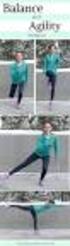 No Equipment Agility/Core/Strength Program for Full Body No Equip Trainer: Rick Coe Introduction Program designed to be performed in a circuit. Perform exercises in sequence without rest 2-3 times. Increase
Muscle Movements, Types, and Names
 Muscle Movements, Types, and Names A. Gross Skeletal Muscle Activity 1. With a few exceptions, all muscles cross at least one joint 2. Typically, the bulk of the muscle lies proximal to the joint it crossed
How To Roll Out
 THE GUIDE: ROLLING OUT WHAT IS THE MYOFASCIAL SYSTEM? The Myofascial System is a superficial fascia (a thin sheath of silvery tissue) that wraps around the outer surface of muscles and individual muscle
This document fully describes the 30 Day Flexibility Challenge and allows you to keep a record of your improvements in flexibility.
 Welcome to the StretchTowel 30 Day Flexibility Challenge! You can Be More Flexible in 30 days by following our stretching program for 10 minutes a day. The best part is that you can stretch using the StretchTowel
TRE TM Template for Level I Trainees June 2013
 TRE TM Template for Level I Trainees June 2013 THIS DOCUMENT IS TO BE PROVIDED TO TRE LEVEL I TRAINEES WHO ARE: ENROLLED IN THE TRE ENROLLMENT WEBSITE AND WORKING WITH A LEVEL III TRAINER WITHIN THE TRE
Have a ball SWISS BALL EXERCISES SWISS BALL TRAINING
 Have a ball SWISS BALL EXERCISES SWISS BALL TRAINING 2 Swiss Ball training is an excellent way to build 'core body strength' and have some fun at the same time. Training on the Ball forces you to use muscles