
CLINICAL PRESENTATION OF PSORIASIS
|
|
|
- Joanna Wilcox
- 9 years ago
- Views:
Transcription
1 CLINICAL PRESENTATION OF PSORIASIS F. AYALA Division of Dermatology, Department of Systematic Pathology, University of Naples Federico II, Naples, Italy SUMMARY Psoriasis is a chronic, inflammatory disease affecting 1-3% of the world s population. Joints can be affected in up to 30% of patients. About one third of patients have either severe or moderate (involving more than 10% of body surface area) disease. Patients affected with extensive psoriasis have an impaired quality of life. Psoriasis has a large spectrum of clinical features and evolution, so no complete agreement on the classification of the clinical variants exists. Plaque psoriasis is the commonest form (more than 80% of affected patients). The course of plaque psoriasis varies. Spontaneous resolution is possible, but rarely occurs. Plaques tend to remain static or slowly enlarge. Flexural (inverse, intertriginous) psoriasis manifests with lesions thinner than those of plaque form with no or minimal scaling, and is localized in the skin folds. Guttate (eruptive) psoriasis has frequently a sudden onset and frequently appears abruptly after a bacterial or viral febrile episode of inflammation of the upper ways. Pustular and erythrodermic psoriasis are the most severe clinical variants. In the diffuse pustular form recurrent episodes of fever occur, followed by new outbreaks of pustules. Erythrodermic psoriasis corresponds to the generalized form of the disease. The entire skin is bright red and is covered by superficial scales. Fatigue, myalgia, shortness of breath, fever and chills may also occur. In sebopsoriasis (seborrheic dermatitis + psoriasis) the lesions tend to occur at the same sites as seborrheic dermatitis; greasy scales predominate, but silvery scales can be found in some areas. Nail psoriasis shows various features: nail pits; oil spots; subungual hyperkeratosis; onycholysis. Rare forms include psoriasis circinata, lip psoriasis and oral psoriasis. Differential diagnosis includes many other dermatological conditions. Key words: Psoriasis, nail, quality of life Psoriasis is a chronic, disabling, relapsing and remitting, inflammatory disease affecting 1-3% of the world s population. The onset can occur at any age; nevertheless, many patients are diagnosed, on average, during their 20s. Type I psoriasis, occurring before the age of 40 years, and type II, presenting later with a peak at years, have been identified by some authors (1). The disorder affects males and females equally. Severity is variable, ranging from one or several cutaneous patches to severe exfoliation involving the entire skin (2). Psoriasis tends to be a symmetrical eruption. Joints can be affected in up to 30% of patients (3). As extension of the cutaneous lesions is concerned, about one third of patients have severe (involving more than 20% of body surface area [BSA] or moderate (involving 10-20% of BSA) disease; remainders have a mild form, involving less than Corresponding author: Fabio Ayala, MD Clinica Dermatologica Università di Napoli Federico II Via Pansini, Napoli, Italy [email protected] 10% of BSA. Moderate to severe psoriasis is nearly always associated with impaired quality of life. Psoriasis developing after injury of normal-appearing skin corresponds to the so-called Koebner phenomenon (or Koebner reaction): psoriatic, round or linear, lesions can occur a few days or weeks after different kinds of injury (excoriations, bites, burns, acupuncture, incisions, pressure, rubbing, linear scratches) as well as after different skin disorders (eczema, photosensitive disorders, herpes zoster, etc.). Psoriasis has a large spectrum of clinical features and evolution (4, 5). No complete agreement on the classification of the clinical variants exists (6). Some authors believe that various patterns of presentation could represent separate diseases, as is the case of palmoplantar pustular psoriasis. PLAQUE PSORIASIS This is the commonest form of psoriasis that occurs in more than 80% of affected patients. In this form discoid, round or irregularly oval, well de-

2 Clinical presentation of psoriasis 41 The course of plaque psoriasis varies. Spontaneous resolution is possible, but rarely occurs. Plaques tend to remain static or slowly enlarge. On clearing, a temporary hypopigmentation is frequent in the healed cutaneous areas. Stable (stationary, inactive) psoriasis often shows a plaque-type pattern. Plaques then remain the same size even for months or years in patients undergoing no therapy. They are usually located in the above-mentioned areas of predilection. Figure 1 - Plaque psoriasis of the elbows; large lesions possibly derive from the confluence of small plaques, which are present on the forearms in this figure. Silvery scales and red edges characterize this chronic, stationary form. FLEXURAL (INVERSE, INTERTRIGINOUS) PSORIASIS Plaques are thin, unlike the typical thick plaque form, and this variety is localized in the skin folds (axillae, submammary regions, groins, natal cleft). Scaling is usually absent or negligible and the lesions show a glossy, sharply demarcated erythema. Maceration rarely occurs. SCALP PSORIASIS Figure 2 - Diffuse plaque psoriasis, showing confluent scaly lesions with typical morphology. marcated raised plaques covered with silvery scales occur (Fig. 1). The underlying skin has a glossy, erythematous appearance. The plaque color may vary from red to white, according to the amount of scales. If untreated, a grayish white colour is sometimes observed. Lesions vary in size from 0.5 cm in diameter to large confluent areas (Fig. 2). They can appear anywhere on the cutaneous surface; scalp, extensor surfaces of elbows and knees, lumbar area are the most frequent sites. Plaques can derive from the confluence of small lesions (papules), sometimes resembling a land map, therefore the ancient term of geographic psoriasis. Lesions tend to spare the face. An expanding, active rim accompanied by partial or total central clearing corresponds to the form called annular psoriasis, which tends to imply a better prognosis. Plaques typically form on the scalp and along the hair margin. This is the commonest involved area and many patients discover they have psoriasis because of a dandruff-like desquamation of the scalp. There may be only one plaque or the disease can cover the entire scalp with thick, silvery scales on an erythematous base. Alopecia never ensues, even in the most diffuse forms. A particular variety, called pseudotinea amiantacea (Fig. 3) because of the resemblance of the scales to those seen in asbestos objects, is more frequent in children; scales are thicker than usually, moist at times, lacking the Figure 3 - Scalp psoriasis in a child, where the clinical aspect is that of pseudotinea amiantacea.

3 42 F. Ayala Figure 4 - Guttate psoriasis. Figure 5 - Pustular psoriasis of the palms. characteristic silvery aspect. Scalp psoriasis doesn t assume a follicular distribution. Differently, psoriasis involving hair follicles of the trunk and limbs (follicular psoriasis) has a follicular pattern; children are more frequently affected. GUTTATE (ERUPTIVE) PSORIASIS Sudden onset is frequently reported by patients affected with this form of psoriasis. The small (<1 cm in diameter) lesions usually occur over the upper trunk and proximal extremities (Fig. 4) and vary in number from a few scattered papules to hundreds. It typically affects children, adolescents and young adults, 2 to 4 weeks after a bacterial (or viral), febrile episode of inflammation of the upper ways. A preceding streptococcal infection (pharyngitis) is found in more than 50% of patients. It must be distinguished from the common, small plaque form, corresponding to the relapse of the disorder after different therapies. If that is the case, the starting lesions often reappear in the same areas of the previously healed plaque lesions. PUSTULAR PSORIASIS Generalized pustular psoriasis (von Zumbush) is a rare, serious, acute variant of psoriasis. It may either be preceded by plaque psoriasis or arise de novo, but this form can be also triggered by local irritants (i.e. ultraviolet light from sunlight or phototherapy), withdrawal of systemic steroids, infections of the upper respiratory tract, drugs, etc. Many sterile, discrete, tiny pustules, 2- to 3-mm in diameter, evolve from an erythematous base, eventually coalescing in some areas into lakes of pus, Figure 6 - Acrodermatitis continua of Hallopeau. Pustules on an erythematous base, nail dystrophy and recurrence in the same area are characteristic of this peculiar, acral type of psoriasis. particularly in more severe cases. Pustules are easily ruptured. Usually recurrent episodes of fever occur, followed by new outbreaks of pustules. Weakness and weight loss are frequent systemic signs, often accompanied by leukocytosis and high erythrocyte sedimentation rate (ESR). Localized pustular psoriasis (Barber) is the palmoplantar variant (Fig. 5). Acrodermatitis continua (Hallopeau) is a rare form that usually affects fingers (Fig. 6) and toes around the nails and nail beds. Nail dystrophy and paronychial redness are often seen. Pustules tend to recur insistently in the same skin area. This form is particularly resistant to treatment. ERYTHRODERMIC PSORIASIS Erythroderma (i.e. erythema involving the entire skin) can be of psoriatic origin and corresponds to

4 Clinical presentation of psoriasis 43 also occur. Erythrodermic psoriasis tends to revert to extensive plaque disease. Generalized pustular psoriasis may revert to erythrodermic psoriasis when pustule formation stops. Abrupt withdrawals of systemic corticosteroids or methotrexate have been suggested, among others (e.g. sunburn), as possible trigger factors. ACRAL PSORIASIS Figure 7 - Head and neck of a patient affected by psoriatic erythroderma. The entire skin was involved by intensely scaling erythema. the generalized form of the disease, even if some authors believe that psoriasis involving more than 90% of the skin surface area can be referred to as erythroderma. The skin is bright red and is covered by superficial scales (Fig. 7), which are quite different from the thick, adherent scales of classical, chronic plaque psoriasis. Erythema involving diffusely all the skin areas derives from generalized vasodilation, leading sometimes to excessive heat loss with consequent hypothermia. Extravasation of proteins into the tissues due to vasodilation may cause edema of the limbs in patients with long-standing erythroderma. Fatigue, myalgia, shortness of breath, fever and chills may The palms and soles may be the only sites involved in the manifestation of the disease, or they may be involved as part of a diffuse eruption or erythroderma. Hyperkeratosis (Fig. 8) is the main sign in some patients and is particularly evident at the margin of the heel areas, where rhagades can be seen. Redness is variable. SEBORRHEIC PSORIASIS In sebopsoriasis (seborrheic dermatitis + psoriasis) the lesions tend to occur at the same sites as seborrheic dermatitis: scalp, along the hair margin, eyebrows, nose, nasolabial folds (Fig. 9), pre-sternal and intertriginous areas. Because of its similarity in morphology, sometimes it may difficult to distinguish this peculiar form of psoriasis, especially when typical psoriatic plaques are not detectable in other skin areas. Nevertheless, even if greasy scales predominate, silvery scales can be found in some areas, helping in making a correct clinical diagnosis. This form corresponds to a typical Koebner phenomenon, seborrheic dermatitis leading to the occurrence of psoriasis in the same areas. Figure 8 - Psoriasis of the palm, with marked hyperkeratosis and rhagades. Figure 9 - Seborrheic psoriasis. In this patient a greasy appearance of the scales was evident over the forehead and the hair margin, too.

5 44 F. Ayala Figure 10 - Psoriasis of the toenails, manifesting as subungual hyperkeratosis. In these cases, mycology tests are needed to distinguish between psoriasis and fungal infections. Figure 12 - Small plaque of psoriasis on the glans penis. NAIL PSORIASIS Nail changes are frequent (up to 50% of fingernails and 35% of toenails) in psoriasis (7). Nail involvement ranges from minor alterations in the nail plate to severe defects, up to loss of the nail plate in pustular forms of psoriasis. Proximal nail fold, nail matrix, nail bed and hyponychium can be involved, leading to different clinical aspects. Involved nails show various features depending on the location of the psoriatic process: nail pits (as a thimble); oil spots (yellowish or light brown, translucent discolorations under the nail plate); subungual hyperkeratosis (thickening of the nail plate with hyperkeratosis of the nail bed) (Fig. 10), onycholysis (separation of the distal nail plate from the nail bed); different, more or less severe onychodystrophy not easily classifiable. Rarely, nail psoriatic changes may occur without any skin lesion. RARE FORMS AND SOME SPECIFIC SITES Circinate psoriasis (Lapière) is a rare variant of the annular form, in which a figurate pattern is characteristic (arciform, serpiginous, geographic ) (Fig. 11). Figure 13 - Psoriasis of the lips. Figure 11 - Circinate psoriasis of the genital area in an infant. Figure 14 - Psoriasis in the form of denuded areas over the dorsal surface of the tongue. This patient had also plaque psoriasis involving the entire scalp, and acral psoriasis.

6 Clinical presentation of psoriasis 45 If psoriasis only affects the glans, the commonest site of involvement is the proximal part (Fig. 12). The patches have a shiny appearance due to the ab- Psoriasis (type/skin area) Plaque Flexural Scalp Guttate Pustular Erythrodermic Acral (palmoplantar) Nail Main differential diagnoses Discoid (nummular) eczema Lupus erythematosus, discoid Mycosis fungoides (plaque type) Pityriasis rubra pilaris Candidiasis Contact dermatitis Erythrasma Seborrheic eczema Tinea corporis Lupus erythematosus, discoid Tinea capitis Seborrheic eczema Pityriasis lichenoides Pityriasis rosea Seborrheic eczema Syphilis, secondary Tinea corporis Impetigo Infected eczema (palmoplantar) Migratory necrolytic erythema Subcorneal pustular dermatosis All other forms of erythroderma: atopic eczema, cutaneous T cell lymphoma (Sezary syndrome), pityriasis rubra pilaris, actinic reticuloid, etc Chronic endogenous eczema Contact dermatitis Palmoplantar keratoderma Palmoplantar pustulosis Reiter s disease Tinea manuum et pedis Eczema (skin involvement around the nails) Lichen planus Onycholysis (idiopathic, traumatic) Onychomycosis sence of scales, as is the case of flexural psoriasis. In circumcised males, some superficial scaling is sometimes present. It must be differentiated from erythroplasia of Queyrat, which is a form of epidermal carcinoma in situ. If the lips are involved, silvery scales are often present on the vermilion (Fig. 13). Discoid lupus erythematosus and desquamative cheilitis must be differentiated. Involvement of the oral cavity is still debated. Different clinical aspects have been reported (Fig.14), but geographic tongue seems to be the most frequent form, especially in patients with generalized pustular psoriasis. The differential diagnosis depends on the form of psoriasis and the skin area involved (5). REFERENCES 1. Henseler T, Christophers E. Psoriasis of early and late onset: characterization of two types of psoriasis vulgaris. J Am Acad Dermatol 1985; 13: Lebwohl M. Psoriasis. The Lancet 2003; 361: Scarpa R, Ayala F, Caporaso N et al. Psoriasis, psoriatic arthritis, or psoriatic disease? J Rheumatol 2006; 33: Fry L. Sites and clinical patterns. In: The encyclopedia of visual medicine series. An atlas of psoriasis. 2 nd edn. London and New York: Taylor & Francis, 2004; Psoriasis. In: Pathology of the skin with clinical correlations (McKee PH, Calonje E, Granter SR eds). 3 nd edn. Philadelphia, USA: Elsevier Mosby, 2005; Griffiths CEM, Christophers E, Barker JNWN et al. A classification of psoriasis vulgaris according to phenotype. Br J Dermatol 2007; 156: Farber EM, Nall ML. The natural history of psoriasis in 5,600 patients. Dermatologica 1974; 148: 1-18.

Highlights on Clinical Picture of Psoriasis
 Highlights on Clinical Picture of Psoriasis PROF DR DOAA MAHGOUB CAIRO UNIVERSITY 1 Chronic Plaque Psoriasis Symmetric distribution of sharply defined, erythematous, scaly plaques. The scalp, elbows, knees
A Psoriasis. Clinical Presentation. 2 Types of Psoriasis. Plaque Psoriasis. 1 Introduction
 Clinical Presentation A Psoriasis Jennifer Soung, Mark Lebwohl Contents 1 Introduction 67 2 Types of Psoriasis 67 Plaque Psoriasis 67 Guttate Psoriasis 68 Pustular Psoriasis 69 Inverse Psoriasis 70 Erythrodermic
Psoriasis. Psoriasis. Mark A. Bechtel, M.D. Director of Dermatology The Ohio State University College of Medicine
 Psoriasis Mark A. Bechtel, M.D. Director of Dermatology The Ohio State University College of Medicine Psoriasis Psoriasis is a chronic skin disorder resulting from a polygenic predisposition combined with
Leukocytoclastic Vasculitis and Stasis Dermatitis With Id Reaction
 Id Reaction December 01, 2007 By David L. Kaplan, MD [1] A Photo Quiz to Hone Dermatologic Skills Case 1: A slightly pruritic eruption developed on the lower legs of a 39-year-old woman after she had an
What is Psoriasis? Common Areas Affected. Type Who Does it Affect Characteristics
 What is? is a term derived from the Greek word psōra which means itch and is a common, long lasting, inflammatory skin condition which affects 1-3% of the UK population and about 80 million people worldwide.
X-Plain Psoriasis Reference Summary
 X-Plain Psoriasis Reference Summary Introduction Psoriasis is a long-lasting skin disease that causes the skin to become inflamed. Patches of thick, red skin are covered with silvery scales. It affects
Phenotypes and Classification of Psoriasis
 Rheumatology 2010 Birmingham 21 April 2010 Phenotypes and Classification of Psoriasis Christopher E.M. Griffiths Abbott Centocor Incyte Galderma Janssen-Cilag Leo Pharma Lynxx Novartis Pfizer Schering-Plough
Spongiotic reaction pattern Spongiosis = Intercellular edema Elongation of bridges vesiculation, bullae?mechanism unclear Fluid comes from dermis Impo
 Spongiotic Reaction Pattern and review Nathan C. Walk, M.D. Spongiotic reaction pattern Spongiosis = Intercellular edema Elongation of bridges vesiculation, bullae?mechanism unclear Fluid comes from dermis
Psoriasis. Student's Name. Institution. Date of Submission
 Running head: PSORIASIS Psoriasis Student's Name Institution Date of Submission PSORIASIS 1 Abstract Psoriasis is a non-contagious chronic skin disease that is characterized by inflammatory and multiplying
Psoriasis and lichen planus. Department of Dermatology SRM MCH & RC
 Psoriasis and lichen planus Department of Dermatology SRM MCH & RC WHAT IS PSORIASIS Psoriasis is a common, chronic, disfiguring, inflammatory and proliferative condition of the skin; in which both genetic
Psoriasis Can be Cured with Homoeopathy
 Homoeopathy Clinic http://www.homoeopathyclinic.com Psoriasis Can be Cured with Homoeopathy Case Report / General Information What you should Know about Psoriasis? It is not a contagious disease. Psoriasis
FastTest. You ve read the book... ... now test yourself
 FastTest You ve read the book...... now test yourself To ensure you have learned the key points that will improve your patient care, read the authors questions below. Please refer back to relevant sections
CLINICAL MANIFESTATIONS OF PSORIATIC NAIL AT THE NATIONAL HOSPITAL OF DERMATOLOGY AND VENEREOLOGY (NHDV)
 Southeast-Asian J. of Sciences: Vol. 2, No 1 (2013) pp. 101-107 CLINICAL MANIFESTATIONS OF PSORIATIC NAIL AT THE NATIONAL HOSPITAL OF DERMATOLOGY AND VENEREOLOGY (NHDV) Nguyen Huu Sau and Nguyen Minh Thu
GENETIC ANALYSIS OF PSORIASIS AND PSORIATIC ARTHRITIS Department of Dermatology, University of Michigan
 GENETIC ANALYSIS OF PSORIASIS AND PSORIATIC ARTHRITIS Department of Dermatology, University of Michigan SELF ASSESSMENT FORM FOR STUDY SUBJECTS AND CONTROLS Accession Number (will be filled in by lab)
Common Skin Conditions in Children. Liz Moore and Emma King Dermatology Nurse Consultants
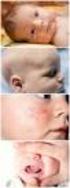 Common Skin Conditions in Children Liz Moore and Emma King Dermatology Nurse Consultants Diagnosis? Nummular Dermatitis Disc pattern rash (discoid eczema) Clearly demarcated edges Occurs at any age Can
the psoriasis and psoriatic arthritis pocket guide
 the psoriasis and psoriatic arthritis pocket guide Treatment algorithms and management options www.psoriasis.org Authored by: Abby Van Voorhees, M.D. Steven R. Feldman, M.D., Ph.D. John Y. M. Koo, M.D.
Cutaneous Lymphoma FAST FACTS
 Cutaneous Lymphoma FAST FACTS What is Cutaneous Lymphoma? Cutaneous lymphomas are types of non-hodgkin s lymphomas (NHL) that originate in the lymphocytes (white blood cells). Unlike most other types of
PSORIATIC ARTHRITIS. Chryssanthie Kafkala, M.D. INTRODUCTION:
 PSORIATIC ARTHRITIS Chryssanthie Kafkala, M.D. INTRODUCTION: Psoriatic arthritis is a disease with generally good prognosis. Both ocular and systemic involvement is usually benign, however, the following
Accurate diagnosis of the generalized
 The Generalized Rash: Part II. Diagnostic Approach JOHN W. ELY, MD, MSPH, and MARY SEABURY STONE, MD University of Iowa Carver College of Medicine, Iowa City, Iowa Although it is important to begin the
Syphilis: Aid to Diagnosis
 STD, HIV, AND TB SECTION Syphilis: Aid to Diagnosis This document contains extremely graphic images. These images are intended to help health care professionals identify and diagnose syphilis. All images
Nail Psoriasis. A positive approach. to psoriasis and. psoriatic arthritis
 Nail Psoriasis A positive approach to psoriasis and psoriatic arthritis What is psoriasis? Psoriasis (Ps) is a long-term (chronic) scaling disease of the skin, which affects 2% 3% of the UK population.
Is Monotherapy Treatment of Etanercept Effective Against Plaque Psoriasis?
 Philadelphia College of Osteopathic Medicine DigitalCommons@PCOM PCOM Physician Assistant Studies Student Scholarship Student Dissertations, Theses and Papers 2011 Is Monotherapy Treatment of Etanercept
B. Disorders of sebaceous glands
 Go Back to the Top To Order, Visit the Purchasing Page for Details B. Disorders of sebaceous glands 1. Acne vulgaris It most frequently occurs on the face of adolescent men and women. Comedones, folliculitis,
 More details >>> HERE
 Psoriasis. Medical Bulletin. Introduction. Clinical Features. Pathology and Pathogenesis. Dr. King-man HO
 Dr. King-man HO MBBS (HK), MRCP (UK), FHKCP, FHKAM (Medicine), FRCP (Glasgow, Edin), Dip Derm (London), Dip GUM (LAS) Consultant Dermatologist, Social Hygiene Service, CHP Specialist in Dermatology and
1g cream or ointment contains 1 mg methylprednisolone aceponate.
 CONSUMER MEDICINE INFORMATION ADVANTAN 1g cream or ointment contains 1 mg methylprednisolone aceponate. What is in this leaflet Please read this leaflet carefully before you start using ADVANTAN. It will
TOPICAL TREATMENTS FOR PSORIASIS
 TOPICAL TREATMENTS FOR PSORIASIS What are the aims of this leaflet? Patients with psoriasis are usually treated with preparations that are applied to the skin. This leaflet has been written to help you
Newborn Skin Rashes. References
 Newborn Skin Rashes COMPETENCIES: The resident should be able to: Recognize presenting signs and symptoms of a neonatal herpes simplex virus infection Recognize erythema toxicum and characteristics of
Topical Tacrolimus or Pimecrolimus for the treatment of mild, moderate or severe atopic eczema. Effective Shared Care Agreement
 Topical Tacrolimus or Pimecrolimus for the treatment of mild, moderate or severe atopic eczema. Effective Shared Care Agreement A Copy of this page signed by all three parties should be retained in the
Psoriasis Treatment Transition Pathway
 Psoriasis Treatment Transition Pathway A Treatment Support Tool Adapted from Circle Nottingham NHS Treatment Centre Psoriasis Pathway (under consultation) with support from Abbvie Ltd Treatment Pathways
PSORIASIS THE RELATIONSHIP BETWEEN NAIL CHANGES, THE EVOLUTION AND THE CLINICAL FORM OF THE DISEASE
 STUDII CLINICE ªI EXPERIMENTALE PSORIASIS THE RELATIONSHIP BETWEEN NAIL CHANGES, THE EVOLUTION AND THE CLINICAL FORM OF THE DISEASE MARIA ROTARU*, FLORINA POPA**, GABRIELA IANCU* Sibiu Summary Psoriatic
VITILIGO Charles Camisa, MD 1/24/12. Vitiligo is a common autoimmune skin disease that causes gradual loss of the natural
 VITILIGO Charles Camisa, MD 1/24/12 What is vitiligo? Vitiligo is a common autoimmune skin disease that causes gradual loss of the natural brown pigment in the skin called melanin. It affects about 1%
History and Physical Examination for Rheumatic Disease for MUSC Students
 History and Physical Examination for Rheumatic Disease for MUSC Students Inflammatory vs. non-inflammatory arthritis Inflammatory Prolonged stiffness after rest Stiffness improved with use Warmth Prolonged
M05.9 Rheumatoid arthritis with rheumatoid factor, unspecified M06.00 Rheumatoid arthritis without rheumatoid factor, unspecified site M06.
 Rheumatology ICD-9 ICD-10 V58.69 Z79.3 Long term (current) use of hormonal contraceptives Z79.891 Long term (current) use of opiate analgesic Z79.899 Other long term (current) drug therapy 714.0 M05.40
Cervical lymphadenopathy
 Cervical lymphadenopathy Introduction There are various classifications of lymphadenopathy, but a simple and clinically useful system is to classify lymphadenopathy as "generalized" if lymph nodes are
EVALUATING THE PATIENT WITH AN ACUTE, GENERALIZED VESICULAR OR PUSTULAR RASH ILLNESS AND DETERMINING THE RISK OF SMALLPOX
 EVALUATING THE PATIENT WITH AN ACUTE, GENERALIZED VESICULAR OR PUSTULAR RASH ILLNESS AND DETERMINING THE RISK OF SMALLPOX Many rash illnesses can present with vesicles and pustules. The purpose of this
NURS 821 Alterations in the Musculoskeletal System. Rheumatoid Arthritis. Type III Hypersensitivity Response
 NURS 821 Alterations in the Musculoskeletal System Margaret H. Birney PhD, RN Lecture 12 Part 2 Joint Disorders (cont d) Rheumatoid Arthritis Definition: Autoimmune disorder occurring in genetically sensitive
Juvenile Dermatomyositis Joseph Junewick, MD FACR
 Juvenile Dermatomyositis Joseph Junewick, MD FACR 10/11/2015 History Child with several month history of weakness, arthralgias and palpable abnormalities at the knee Diagnosis Juvenile Dermatomyositis
 Additional details >>> HERE
 Additional information >>> HERE <<< How To scalp psoriasis treatment philippines Scam or Work?
 Additional information >>> HERE http://urlzz.org/psoriasis7/pdx/fph1
www.healthoracle.org 1
 How does hair grow and should it recycle? A single hair follicle grows its hair strand over a period of four to six years (the anagen phase). It then rests for two to four months (the telogen phase), after
Nurse Practitioner, Dermatology
 Melissa O Neill, O MS, APRN Nurse Practitioner, Dermatology Three Types of Skin Cancer > Basal Cell Carcinoma > Squamous Cell Carcinoma > Malignant Melanoma Basal Cell Carcinoma > Most common skin cancer
Color Atlas of Skin Diseases
 Color Atlas of Skin Diseases Table of Contents 1. Acne Rosacea 2. Bacterial Infections Folliculitis Impetigo 3. Benign Neoplasms Seborrheic Keratoses Granuloma Pyogenicum Lentigo Simplex 4. Childhood Infectious
SKIN DISORDERS AND DISEASES Date:
 SKIN DISORDERS AND DISEASES Date: TOPIC 1: UNDERSTANDING SKIN DISORDERS 9 Rating: Text Pages: 184 205 1 Esthetics and dermatology are services that ideally complement one anotherthe esthetician should
Smoothbeam Laser Treatment of Acne Vulgaris. Emerging Applications
 Smoothbeam Laser Treatment of Acne Vulgaris Emerging Applications About Acne Vulgaris Very common - Affects 80% of population Almost every person experiences acne Most common reason to visit dermatologist
 More information >>> HERE
 High Impact Rheumatology
 High Impact Rheumatology Rheumatology at a Glance Osteoarthritis: Typical hand Hard boney enlargements Heberden s nodes at the DIP joints Bouchard s nodes at the PIP joints Often have squared first CMC
Psoriasis. Background
 Psoriasis Plaque psoriasis is a chronic inflammatory disease with an unknown cause and no cure. Much research is based on the theory that psoriasis is a T cell mediated disorder. This review suggests that
Betnovate -C 0.1% / 3% w/w Cream Betamethasone (as valerate) and Clioquinol
 [GSK Logo] Package Leaflet: Information for the User Betnovate -C 0.1% / 3% w/w Cream Betamethasone (as valerate) and Clioquinol Read all of this leaflet carefully before you start using this medicine
Nail psoriasis in Germany: epidemiology and burden of disease M. Augustin, K. Reich,* C. Blome, I. Schäfer, A. Laass and M.A.
 EPIDEMIOLOGY AND HEALTH SERVICES RESEARCH BJD British Journal of Dermatology Nail psoriasis in Germany: epidemiology and burden of disease M. Augustin, K. Reich,* C. Blome, I. Schäfer, A. Laass and M.A.
GP Symposium Dermatology Dr Seow Hoong Foo Dr Shireen Velangi March 6th 2014
 Psoriasis : It s not just skin de eep NICE Guidelines and Quality Standards: a collaboration to deliver quality care GP Symposium Dermatology y p gy Dr Seow Hoong Foo Dr Shireen Velangi March 6th 2014
Additional details >>> HERE <<<
 Additional details >>> HERE http://dbvir.com/ringworm12/pdx/comw23/ Tags:
It is worth noting that people with psoriasis can also develop other forms of arthritis such as rheumatoid arthritis and osteoarthritis.
 Psoriatic Arthritis Main Colour - pantone 2597u Research - pantone 206u Children - pantone 123 4 What is psoriatic arthritis? Psoriatic arthritis is an inflammatory joint disease associated with psoriasis.
THE SKIN PHYSICAL EXAMINATION
 INTRODUCTION THE SKIN PHYSICAL EXAMINATION Among the many aspects of the physical examination, the diagnosis of skin disorders requires a unique approach. It demands the diagnostician s ability not only
Most skin diseases occur in people of
 treating skin of color NATIONALLY-RECOGNIZED DERMATOLOGIST CHARLES E CRUTCHFIELD III MD DISCUSSES SOME COMMON SKIN DISORDERS OBSERVED IN SKIN OF COLOR. Most skin diseases occur in people of all nationalities,
PSORIASIS AND ITS. Learn how vitamin D medications play an important role in managing plaque psoriasis
 PLAQUE PSORIASIS AND ITS TREATMENTS Learn how vitamin D medications play an important role in managing plaque psoriasis 2 Understanding Plaque Psoriasis WHAT CAUSES PLAQUE PSORIASIS? No one knows exactly
COMMITTEE FOR MEDICINAL PRODUCTS FOR HUMAN USE (CHMP)
 European Medicines Agency Evaluation of Medicines for Human Use London, 18 November 2004 CHMP/EWP/2454/02 corr COMMITTEE FOR MEDICINAL PRODUCTS FOR HUMAN USE (CHMP) GUIDELINE ON CLINICAL INVESTIGATION
Statement of Principles concerning PRURITUS ANI
 Instrument No.41 of 1996 Determination of Statement of Principles concerning PRURITUS ANI ICD CODE: 698.0 Veterans Entitlements Act 1986 1. This Statement of Principles is determined by the Repatriation
Psoriasis is a chronic inflammatory disease that. A Red, Scaly Rash: How to Recognize and Treat Psoriasis. Psoriasis
 Psoriasis A Red, Scaly Rash: How to Recognize and Treat Psoriasis Case Study and Commentary, Sabrina L. Martin, BA, Tushar S. Dabade, MD, and Steven R. Feldman, MD, PhD Abstract Objective: To review the
MANAGEMENT OF THE PATIENT WITH BLISTERS Dr Regina K Curley
 MANAGEMENT OF THE PATIENT WITH BLISTERS Dr Regina K Curley INTRODUCTION Blisters (definition: an elevated cutaneous lesion filled with clear fluid) have very many potential causes, and as always a good
Understanding Rheumatoid Arthritis
 Understanding Rheumatoid Arthritis Understanding Rheumatoid Arthritis What Is Rheumatoid Arthritis? 1,2 Rheumatoid arthritis (RA) is a chronic autoimmune disease. It causes joints to swell and can result
PACT. PACT Nail Fungus Therapy Treatment Instructions. Photodynamic therapy for nail fungus using light, safely and gently.
 PACT PACT Nail Fungus Therapy Treatment Instructions Photodynamic therapy for nail fungus using light, safely and gently. PACT Nail Fungus Therapy Treatment Instructions Contents 1. Introduction 2. Nail
LCD for Erythrocyte Sedimentation Rate (ESR)
 LCD for Erythrocyte Sedimentation Rate (ESR) Applicable CPT Code(s): 85651 Sedimentation Rate, Erythrocyte; Non-Automated 85652 Sedimentation Rate, Erythrocyte; Automated ICD-9 Codes that Support Medical
Nail disorders. Prof. MUDr. Petr Arenberger, DrSc, MBA
 Nail disorders Prof. MUDr. Petr Arenberger, DrSc, MBA Baseline Nail Disease in Patients with Moderate-to-Severe Psoriasis and Response to Treatment with Infliximab over One Year Phoebe Rich, Christopher
Development and Validation of a Screening Questionnaire for Psoriatic Arthritis
 Development and Validation of a Screening Questionnaire for Psoriatic Arthritis Dafna D. Gladman 1, Catherine T. Schentag 1, Brian D. Tom 2, Vinod Chandran 1, Cheryl F. Rosen 1 Vernon T. Farewell 2 1 University
Nail Psoriasis. A positive approach. to psoriasis and. psoriatic arthritis
 Nail Psoriasis A positive approach to psoriasis and psoriatic arthritis What are the aims of this leaflet? This leaflet has been written to help you understand what nail psoriasis is, what changes can
Case Scenarios. Case Scenario 1 Group A
 Case Scenarios Prior to the workshop please work through the following scenario and be prepared to present this to the rest of the group. You can work in groups of 3-4. Specialist nurses, phototherapy
Acne. Sofia Chaudhry M.D. Histology of an inflamed comedo. Bolognia, 2008.
 Acne Sofia Chaudhry M.D. Histology of an inflamed comedo. Bolognia, 2008. Acne Vulgaris (Common Acne) Multifactorial disorder of pilosebaceous unit Affects 40-50 million individuals annually in U.S. alone
Acne (Acne Vulgaris) A common type of bacteria that lives on the skin, known as Propionibacterium acnes, sometimes
 Acne (Acne Vulgaris) Acne, clinically known as acne vulgaris, is the most common skin disease. It affects 85% of teenagers, some as young as 12, and often continues into adulthood. It is also called pimples,
(Intro to Arthritis with a. Arthritis) Manager of Education & Services for the Vancouver Island Region of The Arthritis Society
 Arthritis 101 (Intro to Arthritis with a Focus on Rheumatoid Arthritis) by Cari Taylor by Cari Taylor Manager of Education & Services for the Vancouver Island Region of The Arthritis Society What You Will
Psoriasis Field Tests
 Psoriasis Field Tests Human Test Results Phillips Company www.phillipscompany.4t.com For more information, please see http://psoriasisplus.yolasite.com Page 1 Contents Foreward... 2 A discovery -- Dermoneen
Common Dermatological Problems
 Slide 1 Common Dermatological Problems Papulosquamous Diseases Papulosquamous diseases are a group of disorders characterized by scaly papules and plaques. These entities have little in common except the
DERMATOLOGY FOR PRIMARY CARE
 DERMATOLOGY FOR PRIMARY CARE Scottsdale, Arizona The Phoenician February 13 15, 2015 Participating Faculty Jennifer Krejci-Manwaring, MD Assistant Professor, University of Texas Health Science Center Staff