
Chapter 3: DISCRETE RANDOM VARIABLES AND PROBABILITY DISTRIBUTIONS. Part 3: Discrete Uniform Distribution Binomial Distribution
|
|
|
- Neil Webb
- 9 years ago
- Views:
Transcription
1 Chapter 3: DISCRETE RANDOM VARIABLES AND PROBABILITY DISTRIBUTIONS Part 3: Discrete Uniform Distribution Binomial Distribution Sections 3-5, 3-6 Special discrete random variable distributions we will cover in this chapter: Discrete Uniform Bernoulli Binomial Geometric Negative Binomial Hypergeometric Poisson A random variable (r.v.) following any of these distributions is limited to only discrete values. 1
2 Some of these special distributions have mass (i.e. positive probability) at only a finite number of values, such as {1, 2, 3, 4, 5} or {0.10, 0.15, 0.20}. Some of these distributions have mass at a countably infinite number of values, like {0, 1, 2, 3,...} Discrete Uniform Distribution A random variable X has a discrete uniform distribution if each of the n values in its range, say x 1, x 2,..., x n, has equal probability. Then, f(x i ) = 1 n where f(x) represents the probability mass function (PMF). One example for n = 10: 2
3 Example: Let X represent a random variable taking on the possible values of {0, 1, 2, 3, 4, 5, 6, 7, 8, 9}, and each possible value has equal probability. This is a discrete uniform distribution and the probability for each of the 10 possible value is P (X = x i ) = f(x i ) = 1 10 =
4 Mean and Variance of a Discrete Uniform Distribution Suppose X is a discrete uniform random variable on the consecutive integers a, a + 1, a+2,..., b for a b. The mean of X is µ = E(X) = b+a 2 The variance of X is σ 2 = (b a+1) If you compute the mean and variance by their definitions (using the possible x-values and their probabilities), you will derive the above formulas. But for the common distributions, you just need to know how to use the formulas to get the mean and variance. 4
5 Example: What is the mean and variance of the random variable X described on the previous page? X is distributed uniform discrete on {0, 1, 2, 3, 4, 5, 6, 7, 8, 9}. 5
6 Binomial Distribution Section 3-6 Suppose a trial has only two outcomes, denoted by S for success and F for failure with P (S) = p and P (F ) = 1 p. For example, a coin toss where a Head is a success and a Tail is a failure. Such a trial is called a Bernoulli trial. If we perform a random experiment by repeating n independent Bernoulli trials, then the random variable X representing the number of successes in the n trials has a binomial distribution. The possible values for binomial random variable X depends on the number of Bernoulli trials independently repeated, and is {0, 1, 2,..., n}. 6
7 Example: Suppose 40% of a large population of registered voters favor the candidate Obama. A random sample of n=5 voters will be selected, and X, the number favoring Obama out of 5, is to be observed. What is the probability of getting no one who favors Obama (i.e. P (X = 0) )? Because drawing one person at random out of this HUGE population will not substantially change the probabilities on subsequent draws, we assume each pick is independent of the other picks. We ll consider picking someone who favors Obama a success and X is the number of successes. (The terms success and failure are just labels). p = P (success) = p = P (failure) =
8 Either Yes or No on each of 5 draws. X (the number out of 5 favoring Obama) follows a binomial distribution. P (X = 0) = (0.6)(0.6)(0.6)(0.6)(0.6) No No No No No = (0.6) 5 = What is the probability of getting 1 person who favors Obama? (5 configurations...) P (X = 1) = (0.4)(0.6)(0.6)(0.6)(0.6) Y No No No No + (0.6)(0.4)(0.6)(0.6)(0.6) No Y No No No... + (0.6)(0.6)(0.6)(0.6)(0.4) No No No No Y = ( 5 1 ) (0.4) 1 (0.6) 4 =
9 What is the probability of getting 2 persons who favors Obama? P (X = 2) =? How many configurations of 2 Yes and 3 No s can we have? We have 5 slots to fill. probability 5 """"""""5!" """="""""""""""""="10" 2""""""""""2!"3!" ("")" Y"""Y""N""N""N" Y"""N""Y""N""N"."."." N""N""N""Y"""Y" (0.4)(0.4)(0.6)(0.6)(0.6)" (0.4)(0.6)(0.4)(0.6)(0.6)"."."." (0.6)(0.6)(0.6)(0.4)(0.4)" P (X = 2) = ( 5 2 ) 10 configurations (0.4) 2 (0.6) 3 = 10 (0.4) 2 (0.6 3 ) =
10 We ll finish out the probability distribution for X... P (X = 3) = ( 5 3 ) (0.4) 3 (0.6) 2 = 10 (0.4) 3 (0.6) 2 = P (X = 4) = ( 5 4 ) (0.4) 4 (0.6) 1 = 5 (0.4) 4 (0.6) 1 = P (X = 5) = ( 5 5 ) (0.4) 5 (0.6) 0 = 1 (0.4) 5 = Note: 5 i=0 P (X = i) = 1 as this is a legitimate discrete probability distribution. 10
11 Binomial Distribution A random experiment consists of n Bernoulli trials such that 1. The trials are independent 2. Each trial results in only two possible outcomes labeled as success and failure (dichotomous) 3. The probability of a success in each trial denotes as p, remains constant The random variable X that equals the number of trials that result in a success is a binomial random variable with parameters p and n and 0 < p < 1 and n = 1, 2,.... The probability mass function (PMF) of X is ( ) n f(x) = p x x (1 p) n x for x = 0, 1, 2,..., n 11
12 Example: Sampling water Each sample of water has a 10% chance of containing a particular organic pollutant. Assume that the samples are independent with regard to the presence of the pollutant. Let X =the number of samples that contain the pollutant in the next 18 samples analyzed. Then X is a binomial random variable with p = 0.10 and n = Find the probability that in the next 18 samples, exactly 2 contain the pollutant. 12
13 2. Find the probability that 3 X Find the probability that X 2. 13
14 Mean and Variance of Binomial Distribution If X is a binomial random variable with parameters p and n, then µ = E(X) = np σ 2 = V (X) = np(1 p) NOTATION: If X follows a binomial distribution with parameters p and n, we sometimes just write X Bin(n, p) 14
15 Example: Returning to the sampling water random variable X... Compute the expected value and variance of X with X Bin(18, 0.10). E(X) = V (X) = If X follows a binomial distribution, X is a discrete random variable. What does the distribution look like? (next slide shows a few different binomial distributions) 15
16 X Bin(10, 0.5) X Bin(10, 0.2) equal chance of small chance of success/failure success probability probability x x X Bin(10, 0.8) X Bin(10, 0.9) large chance of even larger chance success of success probability probability x x 16
3.4. The Binomial Probability Distribution. Copyright Cengage Learning. All rights reserved.
 3.4 The Binomial Probability Distribution Copyright Cengage Learning. All rights reserved. The Binomial Probability Distribution There are many experiments that conform either exactly or approximately
Chapter 5. Random variables
 Random variables random variable numerical variable whose value is the outcome of some probabilistic experiment; we use uppercase letters, like X, to denote such a variable and lowercase letters, like
WHERE DOES THE 10% CONDITION COME FROM?
 1 WHERE DOES THE 10% CONDITION COME FROM? The text has mentioned The 10% Condition (at least) twice so far: p. 407 Bernoulli trials must be independent. If that assumption is violated, it is still okay
Chapter 4 Lecture Notes
 Chapter 4 Lecture Notes Random Variables October 27, 2015 1 Section 4.1 Random Variables A random variable is typically a real-valued function defined on the sample space of some experiment. For instance,
Ch5: Discrete Probability Distributions Section 5-1: Probability Distribution
 Recall: Ch5: Discrete Probability Distributions Section 5-1: Probability Distribution A variable is a characteristic or attribute that can assume different values. o Various letters of the alphabet (e.g.
For a partition B 1,..., B n, where B i B j = for i. A = (A B 1 ) (A B 2 ),..., (A B n ) and thus. P (A) = P (A B i ) = P (A B i )P (B i )
 Probability Review 15.075 Cynthia Rudin A probability space, defined by Kolmogorov (1903-1987) consists of: A set of outcomes S, e.g., for the roll of a die, S = {1, 2, 3, 4, 5, 6}, 1 1 2 1 6 for the roll
Random variables, probability distributions, binomial random variable
 Week 4 lecture notes. WEEK 4 page 1 Random variables, probability distributions, binomial random variable Eample 1 : Consider the eperiment of flipping a fair coin three times. The number of tails that
Section 5 Part 2. Probability Distributions for Discrete Random Variables
 Section 5 Part 2 Probability Distributions for Discrete Random Variables Review and Overview So far we ve covered the following probability and probability distribution topics Probability rules Probability
The Binomial Probability Distribution
 The Binomial Probability Distribution MATH 130, Elements of Statistics I J. Robert Buchanan Department of Mathematics Fall 2015 Objectives After this lesson we will be able to: determine whether a probability
Math 461 Fall 2006 Test 2 Solutions
 Math 461 Fall 2006 Test 2 Solutions Total points: 100. Do all questions. Explain all answers. No notes, books, or electronic devices. 1. [105+5 points] Assume X Exponential(λ). Justify the following two
ST 371 (IV): Discrete Random Variables
 ST 371 (IV): Discrete Random Variables 1 Random Variables A random variable (rv) is a function that is defined on the sample space of the experiment and that assigns a numerical variable to each possible
STAT 315: HOW TO CHOOSE A DISTRIBUTION FOR A RANDOM VARIABLE
 STAT 315: HOW TO CHOOSE A DISTRIBUTION FOR A RANDOM VARIABLE TROY BUTLER 1. Random variables and distributions We are often presented with descriptions of problems involving some level of uncertainty about
MAS108 Probability I
 1 QUEEN MARY UNIVERSITY OF LONDON 2:30 pm, Thursday 3 May, 2007 Duration: 2 hours MAS108 Probability I Do not start reading the question paper until you are instructed to by the invigilators. The paper
You flip a fair coin four times, what is the probability that you obtain three heads.
 Handout 4: Binomial Distribution Reading Assignment: Chapter 5 In the previous handout, we looked at continuous random variables and calculating probabilities and percentiles for those type of variables.
Practice problems for Homework 11 - Point Estimation
 Practice problems for Homework 11 - Point Estimation 1. (10 marks) Suppose we want to select a random sample of size 5 from the current CS 3341 students. Which of the following strategies is the best:
An Introduction to Basic Statistics and Probability
 An Introduction to Basic Statistics and Probability Shenek Heyward NCSU An Introduction to Basic Statistics and Probability p. 1/4 Outline Basic probability concepts Conditional probability Discrete Random
10.2 Series and Convergence
 10.2 Series and Convergence Write sums using sigma notation Find the partial sums of series and determine convergence or divergence of infinite series Find the N th partial sums of geometric series and
Normal distribution. ) 2 /2σ. 2π σ
 Normal distribution The normal distribution is the most widely known and used of all distributions. Because the normal distribution approximates many natural phenomena so well, it has developed into a
Chapter 5. Discrete Probability Distributions
 Chapter 5. Discrete Probability Distributions Chapter Problem: Did Mendel s result from plant hybridization experiments contradicts his theory? 1. Mendel s theory says that when there are two inheritable
Lecture 5 : The Poisson Distribution
 Lecture 5 : The Poisson Distribution Jonathan Marchini November 10, 2008 1 Introduction Many experimental situations occur in which we observe the counts of events within a set unit of time, area, volume,
Math 431 An Introduction to Probability. Final Exam Solutions
 Math 43 An Introduction to Probability Final Eam Solutions. A continuous random variable X has cdf a for 0, F () = for 0 <
Practice Problems #4
 Practice Problems #4 PRACTICE PROBLEMS FOR HOMEWORK 4 (1) Read section 2.5 of the text. (2) Solve the practice problems below. (3) Open Homework Assignment #4, solve the problems, and submit multiple-choice
Probability Calculator
 Chapter 95 Introduction Most statisticians have a set of probability tables that they refer to in doing their statistical wor. This procedure provides you with a set of electronic statistical tables that
6.2. Discrete Probability Distributions
 6.2. Discrete Probability Distributions Discrete Uniform distribution (diskreetti tasajakauma) A random variable X follows the dicrete uniform distribution on the interval [a, a+1,..., b], if it may attain
5. Continuous Random Variables
 5. Continuous Random Variables Continuous random variables can take any value in an interval. They are used to model physical characteristics such as time, length, position, etc. Examples (i) Let X be
2. Discrete random variables
 2. Discrete random variables Statistics and probability: 2-1 If the chance outcome of the experiment is a number, it is called a random variable. Discrete random variable: the possible outcomes can be
DETERMINE whether the conditions for a binomial setting are met. COMPUTE and INTERPRET probabilities involving binomial random variables
 1 Section 7.B Learning Objectives After this section, you should be able to DETERMINE whether the conditions for a binomial setting are met COMPUTE and INTERPRET probabilities involving binomial random
2WB05 Simulation Lecture 8: Generating random variables
 2WB05 Simulation Lecture 8: Generating random variables Marko Boon http://www.win.tue.nl/courses/2wb05 January 7, 2013 Outline 2/36 1. How do we generate random variables? 2. Fitting distributions Generating
Chapter 4. Probability and Probability Distributions
 Chapter 4. robability and robability Distributions Importance of Knowing robability To know whether a sample is not identical to the population from which it was selected, it is necessary to assess the
ECE302 Spring 2006 HW4 Solutions February 6, 2006 1
 ECE302 Spring 2006 HW4 Solutions February 6, 2006 1 Solutions to HW4 Note: Most of these solutions were generated by R. D. Yates and D. J. Goodman, the authors of our textbook. I have added comments in
STT315 Chapter 4 Random Variables & Probability Distributions KM. Chapter 4.5, 6, 8 Probability Distributions for Continuous Random Variables
 Chapter 4.5, 6, 8 Probability Distributions for Continuous Random Variables Discrete vs. continuous random variables Examples of continuous distributions o Uniform o Exponential o Normal Recall: A random
IEOR 6711: Stochastic Models I Fall 2012, Professor Whitt, Tuesday, September 11 Normal Approximations and the Central Limit Theorem
 IEOR 6711: Stochastic Models I Fall 2012, Professor Whitt, Tuesday, September 11 Normal Approximations and the Central Limit Theorem Time on my hands: Coin tosses. Problem Formulation: Suppose that I have
Probability: Terminology and Examples Class 2, 18.05, Spring 2014 Jeremy Orloff and Jonathan Bloom
 Probability: Terminology and Examples Class 2, 18.05, Spring 2014 Jeremy Orloff and Jonathan Bloom 1 Learning Goals 1. Know the definitions of sample space, event and probability function. 2. Be able to
Lecture 3: Continuous distributions, expected value & mean, variance, the normal distribution
 Lecture 3: Continuous distributions, expected value & mean, variance, the normal distribution 8 October 2007 In this lecture we ll learn the following: 1. how continuous probability distributions differ
4.1 4.2 Probability Distribution for Discrete Random Variables
 4.1 4.2 Probability Distribution for Discrete Random Variables Key concepts: discrete random variable, probability distribution, expected value, variance, and standard deviation of a discrete random variable.
1.1 Introduction, and Review of Probability Theory... 3. 1.1.1 Random Variable, Range, Types of Random Variables... 3. 1.1.2 CDF, PDF, Quantiles...
 MATH4427 Notebook 1 Spring 2016 prepared by Professor Jenny Baglivo c Copyright 2009-2016 by Jenny A. Baglivo. All Rights Reserved. Contents 1 MATH4427 Notebook 1 3 1.1 Introduction, and Review of Probability
Lecture 10: Depicting Sampling Distributions of a Sample Proportion
 Lecture 10: Depicting Sampling Distributions of a Sample Proportion Chapter 5: Probability and Sampling Distributions 2/10/12 Lecture 10 1 Sample Proportion 1 is assigned to population members having a
Some special discrete probability distributions
 University of California, Los Angeles Department of Statistics Statistics 100A Instructor: Nicolas Christou Some special discrete probability distributions Bernoulli random variable: It is a variable that
Question: What is the probability that a five-card poker hand contains a flush, that is, five cards of the same suit?
 ECS20 Discrete Mathematics Quarter: Spring 2007 Instructor: John Steinberger Assistant: Sophie Engle (prepared by Sophie Engle) Homework 8 Hints Due Wednesday June 6 th 2007 Section 6.1 #16 What is the
Math 370/408, Spring 2008 Prof. A.J. Hildebrand. Actuarial Exam Practice Problem Set 2 Solutions
 Math 70/408, Spring 2008 Prof. A.J. Hildebrand Actuarial Exam Practice Problem Set 2 Solutions About this problem set: These are problems from Course /P actuarial exams that I have collected over the years,
Binomial Probability Distribution
 Binomial Probability Distribution In a binomial setting, we can compute probabilities of certain outcomes. This used to be done with tables, but with graphing calculator technology, these problems are
Stats on the TI 83 and TI 84 Calculator
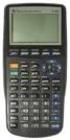 Stats on the TI 83 and TI 84 Calculator Entering the sample values STAT button Left bracket { Right bracket } Store (STO) List L1 Comma Enter Example: Sample data are {5, 10, 15, 20} 1. Press 2 ND and
UNIT I: RANDOM VARIABLES PART- A -TWO MARKS
 UNIT I: RANDOM VARIABLES PART- A -TWO MARKS 1. Given the probability density function of a continuous random variable X as follows f(x) = 6x (1-x) 0
Chapter 5 Discrete Probability Distribution. Learning objectives
 Chapter 5 Discrete Probability Distribution Slide 1 Learning objectives 1. Understand random variables and probability distributions. 1.1. Distinguish discrete and continuous random variables. 2. Able
4. Continuous Random Variables, the Pareto and Normal Distributions
 4. Continuous Random Variables, the Pareto and Normal Distributions A continuous random variable X can take any value in a given range (e.g. height, weight, age). The distribution of a continuous random
Binomial random variables (Review)
 Poisson / Empirical Rule Approximations / Hypergeometric Solutions STAT-UB.3 Statistics for Business Control and Regression Models Binomial random variables (Review. Suppose that you are rolling a die
Lecture 6: Discrete & Continuous Probability and Random Variables
 Lecture 6: Discrete & Continuous Probability and Random Variables D. Alex Hughes Math Camp September 17, 2015 D. Alex Hughes (Math Camp) Lecture 6: Discrete & Continuous Probability and Random September
0 x = 0.30 x = 1.10 x = 3.05 x = 4.15 x = 6 0.4 x = 12. f(x) =
 . A mail-order computer business has si telephone lines. Let X denote the number of lines in use at a specified time. Suppose the pmf of X is as given in the accompanying table. 0 2 3 4 5 6 p(.0.5.20.25.20.06.04
Statistics and Random Variables. Math 425 Introduction to Probability Lecture 14. Finite valued Random Variables. Expectation defined
 Expectation Statistics and Random Variables Math 425 Introduction to Probability Lecture 4 Kenneth Harris [email protected] Department of Mathematics University of Michigan February 9, 2009 When a large
Introduction to Probability
 Introduction to Probability EE 179, Lecture 15, Handout #24 Probability theory gives a mathematical characterization for experiments with random outcomes. coin toss life of lightbulb binary data sequence
CHAPTER 6: Continuous Uniform Distribution: 6.1. Definition: The density function of the continuous random variable X on the interval [A, B] is.
![CHAPTER 6: Continuous Uniform Distribution: 6.1. Definition: The density function of the continuous random variable X on the interval [A, B] is.](/thumbs/40/21160284.jpg "CHAPTER 6: Continuous Uniform Distribution: 6.1. Definition: The density function of the continuous random variable X on the interval [A, B] is.") Some Continuous Probability Distributions CHAPTER 6: Continuous Uniform Distribution: 6. Definition: The density function of the continuous random variable X on the interval [A, B] is B A A x B f(x; A,
Some Continuous Probability Distributions CHAPTER 6: Continuous Uniform Distribution: 6. Definition: The density function of the continuous random variable X on the interval [A, B] is B A A x B f(x; A,
Bayes Theorem. Bayes Theorem- Example. Evaluation of Medical Screening Procedure. Evaluation of Medical Screening Procedure
 Bayes Theorem P(C A) P(A) P(A C) = P(C A) P(A) + P(C B) P(B) P(E B) P(B) P(B E) = P(E B) P(B) + P(E A) P(A) P(D A) P(A) P(A D) = P(D A) P(A) + P(D B) P(B) Cost of procedure is $1,000,000 Data regarding
The sample space for a pair of die rolls is the set. The sample space for a random number between 0 and 1 is the interval [0, 1].
![The sample space for a pair of die rolls is the set. The sample space for a random number between 0 and 1 is the interval [0, 1].](/thumbs/40/21161256.jpg "The sample space for a pair of die rolls is the set. The sample space for a random number between 0 and 1 is the interval [0, 1].") Probability Theory Probability Spaces and Events Consider a random experiment with several possible outcomes. For example, we might roll a pair of dice, flip a coin three times, or choose a random real
Probability Theory Probability Spaces and Events Consider a random experiment with several possible outcomes. For example, we might roll a pair of dice, flip a coin three times, or choose a random real
Statistics 100A Homework 4 Solutions
 Problem 1 For a discrete random variable X, Statistics 100A Homework 4 Solutions Ryan Rosario Note that all of the problems below as you to prove the statement. We are proving the properties of epectation
Discrete Mathematics and Probability Theory Fall 2009 Satish Rao, David Tse Note 13. Random Variables: Distribution and Expectation
 CS 70 Discrete Mathematics and Probability Theory Fall 2009 Satish Rao, David Tse Note 3 Random Variables: Distribution and Expectation Random Variables Question: The homeworks of 20 students are collected
The normal approximation to the binomial
 The normal approximation to the binomial The binomial probability function is not useful for calculating probabilities when the number of trials n is large, as it involves multiplying a potentially very
Binomial random variables
 Binomial and Poisson Random Variables Solutions STAT-UB.0103 Statistics for Business Control and Regression Models Binomial random variables 1. A certain coin has a 5% of landing heads, and a 75% chance
Tenth Problem Assignment
 EECS 40 Due on April 6, 007 PROBLEM (8 points) Dave is taking a multiple-choice exam. You may assume that the number of questions is infinite. Simultaneously, but independently, his conscious and subconscious
Notes on Continuous Random Variables
 Notes on Continuous Random Variables Continuous random variables are random quantities that are measured on a continuous scale. They can usually take on any value over some interval, which distinguishes
LECTURE 16. Readings: Section 5.1. Lecture outline. Random processes Definition of the Bernoulli process Basic properties of the Bernoulli process
 LECTURE 16 Readings: Section 5.1 Lecture outline Random processes Definition of the Bernoulli process Basic properties of the Bernoulli process Number of successes Distribution of interarrival times The
REPEATED TRIALS. The probability of winning those k chosen times and losing the other times is then p k q n k.
 REPEATED TRIALS Suppose you toss a fair coin one time. Let E be the event that the coin lands heads. We know from basic counting that p(e) = 1 since n(e) = 1 and 2 n(s) = 2. Now suppose we play a game
What is Statistics? Lecture 1. Introduction and probability review. Idea of parametric inference
 0. 1. Introduction and probability review 1.1. What is Statistics? What is Statistics? Lecture 1. Introduction and probability review There are many definitions: I will use A set of principle and procedures
SOLUTIONS: 4.1 Probability Distributions and 4.2 Binomial Distributions
 SOLUTIONS: 4.1 Probability Distributions and 4.2 Binomial Distributions 1. The following table contains a probability distribution for a random variable X. a. Find the expected value (mean) of X. x 1 2
Lecture 2: Discrete Distributions, Normal Distributions. Chapter 1
 Lecture 2: Discrete Distributions, Normal Distributions Chapter 1 Reminders Course website: www. stat.purdue.edu/~xuanyaoh/stat350 Office Hour: Mon 3:30-4:30, Wed 4-5 Bring a calculator, and copy Tables
Random variables P(X = 3) = P(X = 3) = 1 8, P(X = 1) = P(X = 1) = 3 8.
 Random variables Remark on Notations 1. When X is a number chosen uniformly from a data set, What I call P(X = k) is called Freq[k, X] in the courseware. 2. When X is a random variable, what I call F ()
E3: PROBABILITY AND STATISTICS lecture notes
 E3: PROBABILITY AND STATISTICS lecture notes 2 Contents 1 PROBABILITY THEORY 7 1.1 Experiments and random events............................ 7 1.2 Certain event. Impossible event............................
6 PROBABILITY GENERATING FUNCTIONS
 6 PROBABILITY GENERATING FUNCTIONS Certain derivations presented in this course have been somewhat heavy on algebra. For example, determining the expectation of the Binomial distribution (page 5.1 turned
PROBABILITY AND SAMPLING DISTRIBUTIONS
 PROBABILITY AND SAMPLING DISTRIBUTIONS SEEMA JAGGI AND P.K. BATRA Indian Agricultural Statistics Research Institute Library Avenue, New Delhi - 0 0 [email protected]. Introduction The concept of probability
Math 425 (Fall 08) Solutions Midterm 2 November 6, 2008
 Math 425 (Fall 8) Solutions Midterm 2 November 6, 28 (5 pts) Compute E[X] and Var[X] for i) X a random variable that takes the values, 2, 3 with probabilities.2,.5,.3; ii) X a random variable with the
MASSACHUSETTS INSTITUTE OF TECHNOLOGY 6.436J/15.085J Fall 2008 Lecture 5 9/17/2008 RANDOM VARIABLES
 MASSACHUSETTS INSTITUTE OF TECHNOLOGY 6.436J/15.085J Fall 2008 Lecture 5 9/17/2008 RANDOM VARIABLES Contents 1. Random variables and measurable functions 2. Cumulative distribution functions 3. Discrete
Summary of Formulas and Concepts. Descriptive Statistics (Ch. 1-4)
 Summary of Formulas and Concepts Descriptive Statistics (Ch. 1-4) Definitions Population: The complete set of numerical information on a particular quantity in which an investigator is interested. We assume
Section 6.1 Discrete Random variables Probability Distribution
 Section 6.1 Discrete Random variables Probability Distribution Definitions a) Random variable is a variable whose values are determined by chance. b) Discrete Probability distribution consists of the values
6. Let X be a binomial random variable with distribution B(10, 0.6). What is the probability that X equals 8? A) (0.6) (0.4) B) 8! C) 45(0.6) (0.
 Name: Date:. For each of the following scenarios, determine the appropriate distribution for the random variable X. A) A fair die is rolled seven times. Let X = the number of times we see an even number.
Chapter 4. Probability Distributions
 Chapter 4 Probability Distributions Lesson 4-1/4-2 Random Variable Probability Distributions This chapter will deal the construction of probability distribution. By combining the methods of descriptive
Binomial Distribution n = 20, p = 0.3
 This document will describe how to use R to calculate probabilities associated with common distributions as well as to graph probability distributions. R has a number of built in functions for calculations
Homework 4 - KEY. Jeff Brenion. June 16, 2004. Note: Many problems can be solved in more than one way; we present only a single solution here.
 Homework 4 - KEY Jeff Brenion June 16, 2004 Note: Many problems can be solved in more than one way; we present only a single solution here. 1 Problem 2-1 Since there can be anywhere from 0 to 4 aces, the
FEGYVERNEKI SÁNDOR, PROBABILITY THEORY AND MATHEmATICAL
 FEGYVERNEKI SÁNDOR, PROBABILITY THEORY AND MATHEmATICAL STATIsTICs 4 IV. RANDOm VECTORs 1. JOINTLY DIsTRIBUTED RANDOm VARIABLEs If are two rom variables defined on the same sample space we define the joint
Statistics 100A Homework 4 Solutions
 Chapter 4 Statistics 00A Homework 4 Solutions Ryan Rosario 39. A ball is drawn from an urn containing 3 white and 3 black balls. After the ball is drawn, it is then replaced and another ball is drawn.
Lecture 7: Continuous Random Variables
 Lecture 7: Continuous Random Variables 21 September 2005 1 Our First Continuous Random Variable The back of the lecture hall is roughly 10 meters across. Suppose it were exactly 10 meters, and consider
Experimental Design. Power and Sample Size Determination. Proportions. Proportions. Confidence Interval for p. The Binomial Test
 Experimental Design Power and Sample Size Determination Bret Hanlon and Bret Larget Department of Statistics University of Wisconsin Madison November 3 8, 2011 To this point in the semester, we have largely
Discrete Mathematics and Probability Theory Fall 2009 Satish Rao, David Tse Note 18. A Brief Introduction to Continuous Probability
 CS 7 Discrete Mathematics and Probability Theory Fall 29 Satish Rao, David Tse Note 8 A Brief Introduction to Continuous Probability Up to now we have focused exclusively on discrete probability spaces
Overview of Monte Carlo Simulation, Probability Review and Introduction to Matlab
 Monte Carlo Simulation: IEOR E4703 Fall 2004 c 2004 by Martin Haugh Overview of Monte Carlo Simulation, Probability Review and Introduction to Matlab 1 Overview of Monte Carlo Simulation 1.1 Why use simulation?
WEEK #23: Statistics for Spread; Binomial Distribution
 WEEK #23: Statistics for Spread; Binomial Distribution Goals: Study measures of central spread, such interquartile range, variance, and standard deviation. Introduce standard distributions, including the
Binomial lattice model for stock prices
 Copyright c 2007 by Karl Sigman Binomial lattice model for stock prices Here we model the price of a stock in discrete time by a Markov chain of the recursive form S n+ S n Y n+, n 0, where the {Y i }
MATH 10: Elementary Statistics and Probability Chapter 5: Continuous Random Variables
 MATH 10: Elementary Statistics and Probability Chapter 5: Continuous Random Variables Tony Pourmohamad Department of Mathematics De Anza College Spring 2015 Objectives By the end of this set of slides,
Cardinality. The set of all finite strings over the alphabet of lowercase letters is countable. The set of real numbers R is an uncountable set.
 Section 2.5 Cardinality (another) Definition: The cardinality of a set A is equal to the cardinality of a set B, denoted A = B, if and only if there is a bijection from A to B. If there is an injection
Section 5-3 Binomial Probability Distributions
 Section 5-3 Binomial Probability Distributions Key Concept This section presents a basic definition of a binomial distribution along with notation, and methods for finding probability values. Binomial
Normal Approximation. Contents. 1 Normal Approximation. 1.1 Introduction. Anthony Tanbakuchi Department of Mathematics Pima Community College
 Introductory Statistics Lectures Normal Approimation To the binomial distribution Department of Mathematics Pima Community College Redistribution of this material is prohibited without written permission
Unit 4 The Bernoulli and Binomial Distributions
 PubHlth 540 4. Bernoulli and Binomial Page 1 of 19 Unit 4 The Bernoulli and Binomial Distributions Topic 1. Review What is a Discrete Probability Distribution... 2. Statistical Expectation.. 3. The Population
e.g. arrival of a customer to a service station or breakdown of a component in some system.
 Poisson process Events occur at random instants of time at an average rate of λ events per second. e.g. arrival of a customer to a service station or breakdown of a component in some system. Let N(t) be
STAT 3502. x 0 < x < 1
 Solution - Assignment # STAT 350 Total mark=100 1. A large industrial firm purchases several new word processors at the end of each year, the exact number depending on the frequency of repairs in the previous
Normal Distribution as an Approximation to the Binomial Distribution
 Chapter 1 Student Lecture Notes 1-1 Normal Distribution as an Approximation to the Binomial Distribution : Goals ONE TWO THREE 2 Review Binomial Probability Distribution applies to a discrete random variable
The Binomial Distribution. Summer 2003
 The Binomial Distribution Summer 2003 Internet Bubble Several industry experts believe that 30% of internet companies will run out of cash in 6 months and that these companies will find it very hard to
Probability Distributions
 Learning Objectives Probability Distributions Section 1: How Can We Summarize Possible Outcomes and Their Probabilities? 1. Random variable 2. Probability distributions for discrete random variables 3.
Binomial Random Variables
 Binomial Random Variables Dr Tom Ilvento Department of Food and Resource Economics Overview A special case of a Discrete Random Variable is the Binomial This happens when the result of the eperiment is
Math 151. Rumbos Spring 2014 1. Solutions to Assignment #22
 Math 151. Rumbos Spring 2014 1 Solutions to Assignment #22 1. An experiment consists of rolling a die 81 times and computing the average of the numbers on the top face of the die. Estimate the probability
University of California, Los Angeles Department of Statistics. Random variables
 University of California, Los Angeles Department of Statistics Statistics Instructor: Nicolas Christou Random variables Discrete random variables. Continuous random variables. Discrete random variables.
Joint Exam 1/P Sample Exam 1
 Joint Exam 1/P Sample Exam 1 Take this practice exam under strict exam conditions: Set a timer for 3 hours; Do not stop the timer for restroom breaks; Do not look at your notes. If you believe a question