
Christianity and the Roman Empire
|
|
|
- Jayson Thompson
- 9 years ago
- Views:
Transcription
1 Christianity and the Roman Empire Within a few hundred years, the small, often hated religious movement called Christianity became the dominant religion of Europe and the Western world. By becoming the state religion of the Roman Empire, Christianity became the largest and most influential religion in the world. Scholars still debate why and how this occurred, but it is clear that it was one of the most important transformations in history. The Growth of Early Christianity Christianity was spread through the Roman Empire by the early followers of Jesus. Although saints Peter and Paul are said to have established the church in Rome, most of the early Christian communities were in the east: Alexandria in Egypt, as well as Antioch and Jerusalem. Christianity gained adherents among both Jews and non-jews, bringing them together with a message of unity before God. Because Christianity was so diffuse, and also illegal and therefore kept underground, it is hard to speak of a united Christianity in this period. A more accurate statement might be that there were Christianities, that is, various forms of Christianity, with different takes on the religion and its message. Gnostics, Montanists, Docetists, and others, debated about the true nature of Christ, salvation, and the life of a Christian. Still, several important Christian writers, called Fathers of the Church men such as Tertullian, Justin Martyr, Clement of Alexandria, and Clement of Rome helped define, in a broad sense, the doctrines of Christianity as they would be recognized in the future. Their writings also helped sway people to adopt Christianity. They were mostly opposed by the Roman authorities, who sought to suppress Christianity. Why Were Christians Persecuted? The idea of a mystery religion that offered salvation to its initiates was not alien to the Romans. Several such religions, like the Cult of Isis and Mithraism, were imported to the Roman world. Most were tolerated, though some were suppressed like the Cult of Bacchus, because it involved sexual rites. The Christian religion, however, was largely unacceptable to conservative Romans of the time. The Romans were a religious people, but many saw Christianity as a threat to their religious system. Unlike members of other new religions, Christians refused to sacrifice to the gods, proclaiming instead that there was only one God. Pagan Romans were not only offended by this, but also felt it threatened their society. They believed that society was protected by the pax deorum: the peace, or agreement, with the gods. The gods protected cities, towns, and empires in exchange for sacrifice and worship. Since Christians refused to do these things, the pagans believed that the Christians endangered themselves and everyone around them. In addition, because Christians refused to worship or sacrifice to the emperor, they were suspected of treason. Christians held that the emperor was only a man, and that worship had to be reserved for God and Christ, but to pagans and representatives of the Roman state this seemed very suspicious. This was not helped by the fact that Christians Page 1 of 6

2 gathered together for church services and excluded non-christians from such services. These services seemed like secret meetings held by possible traitors. Many rumors spread about Christians. They were accused, perhaps due to garbled understandings of the Eucharist, of being cannibals. Early Christians celebrated the agape, a love feast. While such feasts celebrated brotherly and sisterly love among all members of the church, rumors spread that the Christians were practicing open sex and incest. History of Persecutions of Christians Nonetheless, most emperors preferred to turn a blind eye toward Christianity. If Christians stirred up trouble, especially by publicly refusing to worship the gods, they would be punished, but for the most part, emperors and their officials had much more important matters occupying their time. There were of course sporadic persecutions. The first took place very early on in Rome, in 64 AD, when Emperor Nero cracked down on the Christians of the city. He had some Christians thrown to the beasts, and he had others burned alive some, supposedly, in his garden, to act as torches at night. But Nero seems to have been using the Christians as scapegoats for the Great Fire of Rome, which consumed much of the city, and which the populace suspected Nero of having started. For the next century or so, persecutions of Christians were sporadic and fairly rare. When Pliny the Younger, a Roman author and magistrate, toured the eastern provinces for Emperor Trajan and asked how to deal with Christians, the emperor advised him not to seek out Christians, but only to punish those who stand accused by their neighbors based on hard evidence. Some Christians were executed, but rooting out Christianity was not a major concern of the state. Some persecution also probably happened on the local level in times of hardship or disaster, when the Christian refusal to sacrifice to the gods made them easy scapegoats. In the third century, as the Roman Empire entered a period of crisis, persecution of Christians intensified. Barbarians broke through the borders of the empire, plague ravaged the cities, and the Roman economy went into a sharp decline. This period also saw a rapid turnover of emperors, as political instability, civil war, and bloody battles resulted in the death of many emperors before they had a chance to rule for very long. Some of the short-lived emperors in this period were friendly toward Christianity. Philip the Arab, for example, seems to have been interested in the religion and corresponded with Christian intellectuals. His successor, Decius, however, was far less tolerant. Blaming the catastrophes afflicting the empire on Christianity, Decius instituted the first empire-wide persecution of Christians. In 250 AD, Decius required all citizens of the empire to sacrifice to the emperor, and receive a certificate to prove that they had done this. Those without a certificate could be executed. Decius persecution was short lived, however, and failed to stamp out Christianity. The Crisis of the Third Century came to an end with the reign of Emperor Diocletian, who reorganized and strengthened the empire by creating the tetrarchy, a system of four ruling emperors. Diocletian and one of his tetrarchs, Galerius, agreed to persecute Christians, because part of their project of reunifying the empire involved uniting all Romans behind a shared belief in the old gods. This persecution often called The Great Persecution began in 303 AD. Several thousand Christians were killed, including many Page 2 of 6

3 Christian leaders. This was one of the most trying times for Christianity, but the religion was able to survive and eventually triumph. Reasons for Christianity s Growth Since Christians were increasingly persecuted by the state, and ostracized by their pagan neighbors for not worshipping the gods, it is difficult to understand how the religion became dominant in the Roman Empire. There are a number of factors to account for the growing popularity of Christianity in the Roman Empire, though it is hard to tell which factors were the most important. First, of course, is genuine faith and conviction. Many seem to have been genuinely attracted to Christianity s message of salvation, forgiveness, and eternal life. At the same time, the era of the early church, especially the third century, was a time of chaos and upheaval. The same events that led some to blame Christianity for disaster may have encouraged others to accept Christianity. As plague and barbarian invasions made life short and uncertain, the promises of Christianity may have seemed particularly appealing. In addition, Christians seem to have taken better care of the sick, especially plague victims, whom others avoided out of concern for their own health. This altruism may have encouraged converts, especially among those who were successfully healed. Christians also showed great generosity to the poor, who were largely overlooked by the Roman state. Many of the poor probably became very loyal to Christianity because of the support they received from Christians. Indeed, the Christian message of faith, charity, and equality before God likely appealed to the dispossessed in Roman society. The second-century pagan writer Celsus criticized Christianity for being a religion of women, slaves, and children. Women, in particular, were given status in the early church that they did not usually enjoy in ancient society, and in many regards they were treated as equals of men. Women could serve as deaconesses, and Christianity seems to have been particularly popular among women. Since women tended to do the majority of the child rearing in ancient households, the popularity of Christianity among women may have led to it being passed on to future generations. Another important factor in the spread of Christianity may have been the persecutions themselves. Christians often made spectacles of their unwillingness to worship the gods in public trials, and used these events to voice Christian doctrine. When they were sentenced to be executed, the Christians faced their deaths with fearless resolve, which may have provided an example to the populace of the power of the faith and the conviction of its adherents. One of the most famous accounts of martyrdom is that of Perpetua, who was killed in the late second century. She was a young Roman noblewomen and nursing mother who wrote down an account of her arrest and imprisonment, which describes her father s visits to the prison and his pleas for her to renounce her faith so as to be spared, her dreams of battling the devil in the amphitheatre and winning a crown from God, and a vision of her deceased brother in heaven. A final section, written by someone else, records how Perpetua and her slave Felicity, who had also recently given birth, were thrown to the beasts, survived, and ultimately killed by the sword. Perpetua supposedly helped guide the trembling hand of Page 3 of 6

4 the executioner to her own neck. This vivid display of her contempt for death and her expectation of eternal reward would not only have affected those watching at the amphitheatre it was also spread in written form for potential converts to read and to become inspired. Constantine and Christianity Despite its growing popularity, Christianity may never have become the dominant religion of the Roman Empire had it not eventually found imperial support. Under Emperor Constantine the Great, Christianity went from a persecuted faith to the most important religion in the Roman Empire. Constantine s support for Christianity was slow in its development, and far from a predictable occurrence. Constantine came to power when a series of civil wars at the beginning of the fourth century destroyed the tetrarchy established by Diocletian. The system fell apart as each of the four emperors battled the others for control. In the western half of the empire, Constantine battled a rival, Maxentius, for Rome. In 312 AD, shortly before Constantine s army marched against the much larger force of Maxentius, Constantine supposedly had a vision. He is said to have seen a cross in the sky, and a message written out: In Hoc Signo Vinces, In this sign, you will conquer. Later, he had a dream in which he was told to put the labarum (or Chi Rho, an overlapping XP, which were the first two letters of Christ s name in Greek) on the shields of his soldiers. He did so, and his soldiers triumphed against Maxentius in a battle at the Milvian Bridge outside Rome. Believing that he had been helped by the intervention of Christ, in 313 AD Constantine met with Licinius the eastern emperor at Milan, and there they issued the Edict of Milan. The Edict of Milan made Christianity legal, removed all restrictions on Christian worship, and returned all property confiscated from the Church during the Great Persecution. Licinius eventually reneged on the Edict of Milan as he came into conflict with Constantine over control of the empire. In another war, Constantine defeated Licinius, which reaffirmed his belief that the Christian God was on his side, and allowed him to legalize Christianity throughout the empire. He built a new capital city in the east, Constantinople, filled with churches and dedicated to the Christian God. Scholars continue to debate the extent and nature of Constantine s Christianity. As emperor, he legalized Christianity, he sponsored the construction of new churches, promoted Christians to high offices in the government, and gave special rights, such as tax exemptions, to the Christian clergy. At the same time, however, he issued coins with images of pagan gods, and the statue of him at Constantinople depicted him as the sun god. It seems that Constantine s Christianity changed over the course of his life as he became more knowledgeable about the religion. His mother Helena may have been a Christian since he was a child, and therefore imparted information on the faith to Constantine. However, even after his vision at the Milvian Bridge, Constantine may have wanted to worship Christ along with other gods. To someone brought up in the world of traditional Roman religion, Christ could be worshipped equally with the other gods, or the Christian god could even be considered the supreme God, while the other gods would still have been worshipped as lesser gods. Nonetheless, it seems that Constantine, as time went on, took a stricter and Page 4 of 6

5 stricter view that there was but one God, the Christian God. Eventually he patronized only Christianity. But even as Constantine legalized and sponsored Christianity, he faced difficulties. As we know, in the period of the early church there was no singular Christianity, but several Christianities with different beliefs and traditions. As Constantine tried to create a universal, empire-wide church, he found that there was a great deal of debate over Christian beliefs. In Africa, for example, a group of Christians called the Donatists split off from the main church because many of the bishops had denied their faith during the Great Persecution, and the Donatists refused to follow the lapsed clergy. They would clash with the official church in Africa for decades to come. More serious was a doctrinal dispute that started in Egypt, but soon spread far and wide. The dispute was over the true nature of Christ. The bishop of Alexandria had said that Christ was God, while one of his priests, named Arius, disagreed, claiming that Christ was similar to but different from God, and that Christ was a creation of God. Priests and bishops debated the issue, and soon laypeople became involved as well. Riots and street fighting broke out in several cities over what became known as the Arian Controversy (after the priest Arius). In 325 AD, Constantine called the First Ecumenical Council, an empire-wide meeting of bishops, to resolve the issue. Constantine presided over the council, calling himself the bishop of all things outside the church. This council took place in the city of Nicaea, and declared that the doctrine of Arius was a heresy. Nicene Christianity, as defined at the council, held that Christ and God were equal and of the same substance. This was declared the orthodox, or true, belief. Constantine died in 337 AD. He was only officially baptized on his deathbed. This was probably because he waited to be baptized until the last minute so that as many sins as possible would be wiped clean. After his death, he was buried at the Church of the Holy Apostles in Constantinople, and in his tomb he was represented as the Thirteenth Apostle. Christianity and the Empire after Constantine Christianity continued to spread within the Roman Empire after the death of Constantine, but it still faced difficulty and conflict. Though the Council of Nicaea was supposed to solve the Arian Controversy, the theological debates continued. Arianism remained a powerful force within the Roman Empire until the end of the fourth century, in part because several of Constantine s successors, including his son Constantius II, supported Arianism. Constantine s nephew, Julian, succeeded Constantius II. He was secretly a pagan, and hostile toward Christianity. Once he became emperor, he made his pagan beliefs public and tried to return the empire to paganism. His attempt was short lived, however, as he was killed in battle and replaced by a Christian general. There would never be another pagan emperor. Christianity slowly became the dominant religion and cultural force in the Roman Empire. In 379 AD, Emperor Valens, an Arian, was killed in battle against invading Goths, and he was succeeded by Theodosius, a Roman general. Theodosius was a firm believer in the Council of Nicaea, and he set out on a policy of spreading Nicene Christianity throughout the empire. He cracked down on Arianism, and passed severe laws against all Christian sects Page 5 of 6

6 he deemed heretical. He made Nicene Christianity the official religion of the Roman Empire. He also closed pagan temples, and passed laws against celebrating pagan rites (though many of these pagan rites may already have become relics of the past). By the time of Emperor Theodosius death in 395, Christianity had truly triumphed, and the Roman Empire, once hostile towards the religion, had become a thoroughly Christian state. Even as the Roman Empire collapsed, its Christian legacy would live on, as Christianity remained central to European culture. Summary: Christianity spread throughout the Roman world, especially the eastern Mediterranean, in the years after the death of Christ. Because Christian communities were spread out, in sporadic contact, and forced underground by the Roman state, many forms of Christianity flourished in different areas. The Romans persecuted Christianity because they felt that the Christians endangered their cities and the whole Roman state by refusing to give the gods their sacrifices. They also feared that the Christians were traitors, since they did not worship the emperor and met in secret. There were also a variety of rumors about strange Christian behavior. Besides the persecution of Christians in Rome by Nero in 64 AD, the Roman state only persecuted Christians sporadically for a long time. By the third century, as disasters befell the empire and Christians were blamed for not sacrificing to the gods, persecutions became harsher and more common, until they reached a height with The Great Persecution, under Diocletian. Despite the persecution, many found the Christian message appealing. To some, it offered hope in a bleak and violent time, and Christian charity may have caused others to embrace the religion. Christianity seems to have appealed especially to the poor and women, and was also spread through the spectacle of martyrdom. Emperor Constantine, after a dream and a vision before the Battle of Milvian Bridge, slowly adopted Christianity. He legalized the faith with the Edict of Milan, issued in 313 AD, and patronized the religion, sponsoring the construction of churches, promoting Christians to high offices in the government, and giving special rights, such as tax exemptions, to the Christian clergy. Constantine s efforts to create a universal church were hampered by disagreements over Christian belief. He tried to settle the most severe disagreement, the Arian Controversy, at the Council of Nicaea in 325 AD, which created a definition of Nicene Christianity, but the controversy continued to rage for the rest of the century. Christianity became more established within the Roman Empire after the death of Constantine, and under Emperor Theodosius I, Nicene Christianity became the official religion of the Roman Empire, while Arianism, other heresies, and paganism were suppressed. Page 6 of 6

GRADES: 4-5. Be like the stars of our faith-help care for the church! Tithe. to tithe is to share to tithe is to care
 GRADES: 4-5 Be like the stars of our faith-help care for the church! Tithe to tithe is to share to tithe is to care Dear Student, As Orthodox Christians, we care about our faith and our church. One way
Unit 9 Lesson 5 Popes, Kings and Challenges to the Church
 Unit 9 Lesson 5 Popes, Kings and Challenges to the Church Lesson 5 Popes, Kings and Challenges to the Church Directions Read each False statement below. Replace each underlined word with one from the word
Soul-Winning Commitment Day. Sunday School/ Small Group Lessons. Soul-Winning. Commitment Day
 Sunday School/ Small Group Lessons Soul-Winning Commitment Day Purpose of Lesson: This guide is for the purpose of preparing older children through adult Sunday school members to understand the importance
We Too Want to Live in Love, Peace, Freedom and Justice
 We Too Want to Live in Love, Peace, Freedom and Justice A Response to A Common Word Between Us and You Peace We appreciate how you urge in your letter the fact that this world needs peace and that members
How did the histories of the Byzantine Empire and Western Europe differ during the era of third-wave civilizations?
 How did the histories of the Byzantine Empire and Western Europe differ during the era of third-wave civilizations? Western Europe. Frankish Kingdoms. Roman Catholic Church. Holy Roman Empire. Eastern
New Series: The Acts of the Apostles. 12 Peter. Acts 13-28. Paul
 New Series: The Acts of the Apostles Acts 1-121 12 Peter Acts 13-28 Paul 1 Summary Statements: The word of God continued to spread; the number of the disciples increased greatly in Jerusalem, and a great
THEME: We should take every opportunity to tell others about Jesus.
 Devotion NT307 CHILDREN S DEVOTIONS FOR THE WEEK OF: LESSON TITLE: Paul Goes Before Agrippa THEME: We should take every opportunity to tell others about Jesus. SCRIPTURE: Acts 25:13 26:32 Dear Parents
THEME: Jesus sent the Holy Spirit to indwell and empower us.
 Devotion NT285 CHILDREN S DEVOTIONS FOR THE WEEK OF: LESSON TITLE: The Day of Pentecost THEME: Jesus sent the Holy Spirit to indwell and empower us. Dear Parents SCRIPTURE: Acts 2:1-41 Dear Parents, Welcome
LIFE OF CHRIST from the gospel of. Luke. Lesson 13 Journey to the Cross: Jesus is Arrested/ Peter Denies Jesus
 LIFE OF CHRIST from the gospel of Luke Lesson 13 Journey to the Cross: Jesus is Arrested/ Peter Denies Jesus Luke 22:31-34;47 34;47-71 71 Mission Arlington/Mission Metroplex Curriculum/Life of Christ/Gospel
WELCOME TO GOD S FAMILY
 WELCOME TO GOD S FAMILY To all who received him, to those who believed in his name, he gave the right to become children of God children born not of natural descent, nor of human decision or a husband
WILL WE BE MARRIED IN THE LIFE AFTER DEATH?
 Explanatory Notes: WILL WE BE MARRIED IN THE LIFE AFTER DEATH? Series title: Topic: Marriage in heaven / heaven as a marriage Table of Contents: Message 1: What is the Life after Death Like? p. 1 Message
Village Green Baptist Church January - May 2015 Teacher:Dillon Evans
 Village Green Baptist Church January - May 2015 Teacher:Dillon Evans 1 Chapter 2 Balancing The past with the present AD 100-300 What s in this Session? You will learn Who the Gnostics were, and what they
The Church 02. 1 P a g e
 The Church 02 In the creed, we say that we believe in one, holy, catholic and apostolic Church. These four properties or characteristics were seen as so essential to the nature of the Church that they
Unit 4 Lesson 8 The Qin and Han Dynasties
 Unit 4 Lesson 8 The Qin and Han Dynasties Directions Read the False statements below. Replace each underlined word with one from the word bank that makes each sentence True. Word Bank Ying Zheng army copper
UNIQUENESS OF JESUS CHRIST: HIS DEATH 1 PETER 1:3
 UNIQUENESS OF JESUS CHRIST: HIS DEATH 1 PETER 1:3 Jesus Christ is unique and last week I talked about THE UNIQUENESS OF JESUS: HIS LIFE and this week THE UNIQUENESS OF JESUS: HIS DEATH. Jesus death was
Chapter 4 Paul s Life from His Conversion to the 1 st Missionary Journey
 Paul s Life from His Conversion to the 1 st Missionary Journey 1 Chapter 4 Paul s Life from His Conversion to the 1 st Missionary Journey A. PAUL PREACHES IN DAMASCUS (SYRIA) 1. Damascus references a.
Primary History Resource: The Romans - Roman Emperors
 BC 27 AUGUSTUS Augustus was the first Emperor of Rome. His name was Octavian before he became emperor, and changed it to Augustus in 27 BC. He came out on top after years of civil war that followed the
Rome: Rise and Fall Of An Empire: Julius Caesar (Disc 1.3)
 1 Name Date 1. What was the condition of Rome when Julius Caesar was born in 100 B.C.E.? 2. Why was Young Caesar kidnapped? 3. What kind of captor was Caesar? 4. How and why did Caesar enter politics in
Political/Military Events. Cultural/Religious Events
 Historical Timeline This timeline is limited to the major events that are directly related to the timeframe and the overall theme of the exhibition. Because the relationships between polytheistic religions,
SERIES: THE LOVE OF GOD MESSAGE: BIBLICAL DEFINITION OF GOD S LOVE Part 3 1 John 4:7-11 August 16, 2015
 SERIES: THE LOVE OF GOD MESSAGE: BIBLICAL DEFINITION OF GOD S LOVE Part 3 1 John 4:7-11 August 16, 2015 INTRODUCTION: I read an article from Danny Akins commentary about love through the eyes of children.
THE REQUIREMENTS OF COMMITTED MEMBERS Part 2
 THE REQUIREMENTS OF COMMITTED MEMBERS Part 2 We need to give strong support. We cannot give strong support unless we become mighty men. None of us should fail because this is God s plan. God wants us to
21. What was the original sin? A. It was Adam and Eve=s sin of pride and disobedience to God=s law. 22. When did you receive a share in God=s life
 92 Questions 1. How many Gods are there? A. One. 2. How many Persons are there in God? A. Three persons in God. 3. Who are they? What are their names? A. God the Father, God the Son, and God the Holy Spirit.
Chapter 5 Test: Roman Rebublic/Empire
 Chapter 5 Test: Roman Rebublic/Empire Matching (1pt each) Match the terms to the descriptions. a. latifundia f. Virgil b. republic g. mercenaries c. Ptolemy h. legion d. heresy i. Augustine e. dictator
Ancient Rome Unit Plan Unit Overview Rationale Goals and Essential questions Objectives
 Ancient Rome Unit Plan Name: Laura Johnson Unit Overview This unit will focus on Ancient Rome, the rise of the Roman Republic, the transition of that republic to an empire, and the fall of that empire.
PRAYER OF THE FAITHFUL 27 th Sunday in Ordinary Time October 6/7, 2007
 27 th Sunday in Ordinary Time October 6/7, 2007 Celebrant: My sisters and brothers, trusting in the love and mercy of Almighty God, we bring all our needs before him: 1. For Pope Benedict and all bishops,
IMPACT OF THE CRUSADES DBQ
 IMPACT OF THE CRUSADES DBQ This task is based on the accompanying documents. Some of these documents have been edited for the purpose of this task. This task is designed to test your ability to work with
KNOWING GOD PERSONALLY
 KNOWING GOD PERSONALLY These four points explain how you can enter into a personal relationship with God and experience the life for which you were created... GOD LOVES YOU AND CREATED YOU TO KNOW 1HIM
Bible Survey, part 3 The New Testament (The Gospels & The Acts of the Apostles)
 Bible Survey, part 3 The New Testament (The Gospels & The Acts of the Apostles) OVERVIEW OF THE BIBLE WHAT each book is about WHEN each one was written HOW they are all interconnected Enhanced CD contains:
Jesus, the Promised Messiah
 28 Who Jesus Is LESSON 2 Jesus, the Promised Messiah Promises are part of our lives. Parents promise to do things for children. Politicians, business people, and friends make promises. We have all had
FROM REPUBLIC TO EMPIRE
 C.J. LYES FROM REPUBLIC TO EMPIRE ROME S PERSECUTION OF THE CHRISTIANS Christians were subject to very unsystematic treatment until the middle of the third century, for much of the early empire there is
The Sacrament of Extreme Unction is now called what sacrament? (Anointing of the Sick)
 Sacraments Questions Anointing the Sick The Sacrament of Extreme Unction is now called what sacrament? (Anointing of the Sick) True or False: The priest anoints the sick person with holy water. (False)
Faith is the Victory In Overcoming Sin
 FAITH Faith is the Victory In Overcoming Sin 1 Faith is the Victory In Overcoming Sin 1 John 5:4-5 INTRODUCTION: A. The theme of this series is Faith is the Victory!, with our basic text found in 1 John
Course Name: [ The Book of 1 John ] Lesson One: [ Twelve Things You Need To Know about the Apostle John ]
![Course Name: [ The Book of 1 John ] Lesson One: [ Twelve Things You Need To Know about the Apostle John ]](/thumbs/40/20812765.jpg "Course Name: [ The Book of 1 John ] Lesson One: [ Twelve Things You Need To Know about the Apostle John ]") Course Name: [ The Book of 1 John ] Lesson One: [ Twelve Things You Need To Know about the Apostle John ] 1. John s hometown was Bethsaida, Galilee. He was the son of Zebedee. 2. John was in the fishing
Course Name: [ The Book of 1 John ] Lesson One: [ Twelve Things You Need To Know about the Apostle John ] 1. John s hometown was Bethsaida, Galilee. He was the son of Zebedee. 2. John was in the fishing
How To Understand The Nature Of God
 The Nature of God Teleological argument (intelligent design) Order and complexity via intelligent design by God. From Greek word telos meaning purpose suggests that the world has been designed for a purpose.
The Sacraments. The two great sacraments given by Christ to his Church are Holy Baptism and the Holy Eucharist. Holy Baptism
 The Sacraments What are the sacraments? The sacraments are outward and visible signs of inward and spiritual grace, given by Christ as sure and certain means by which we receive that grace. What is grace?
The Gospel Plan of Salvation
 The Gospel Plan of Salvation GOD S PART 1. The great love of God for man (John 3:16) 2. He gave His Son, Jesus Christ, as the Saviour (Luke 19:10) 3. Sent the Holy Spirit as a guide (John 16:13) 4. Gave
Why Do I Need to Evangelize (1) By Victor Beshir
 Why Do I Need to Evangelize (1) By Victor Beshir There are many reasons why we should reach out and evangelize or get involved in some missionary work. Some of these reasons are as follows: 1. Our Lord
Egyptian History 101 By Vickie Chao
 Egyptian History 101 By Vickie Chao 1 A long time ago, before Egypt was a united country, there were two kingdoms -- Upper Egypt and Lower Egypt. Upper Egypt was in the south. It controlled the areas along
Change Cycle. Contact us at [email protected]
 Change Cycle Change often involves a process. The Bible describes five significant stages of change that are important to understand. They include Rebellion, Realization, Remorse, Repentance, and Restoration.
Devotion NT267 CHILDREN S DEVOTIONS FOR THE WEEK OF: LESSON TITLE: The Second Coming. THEME: Jesus is coming again. SCRIPTURE: Matthew 24:27-31
 Devotion NT267 CHILDREN S DEVOTIONS FOR THE WEEK OF: LESSON TITLE: The Second Coming THEME: Jesus is coming again. SCRIPTURE: Matthew 24:27-31 Dear Parents Welcome to Bible Time for Kids. Bible Time for
PRAYING FOR OTHER PEOPLE
 PRAYING FOR OTHER PEOPLE SESSION ONE HOW TO PRAY FOR OTHER PEOPLE When friends get together, they talk about their problems. Sometimes your friends will share with you about their own personal difficulties
Introduction. In Chapter 37, you learned how the emperor
 Introduction In Chapter 37, you learned how the emperor Constantine moved his capital from Rome to the ancient city of Byzantium in 330 C.E. This city eventually became known as Constantinople. After Constantine
Tri-State Senior Camp Bible Quiz 2015 The Book of John
 Tri-State Senior Camp Bible Quiz 2015 The Book of John Who is the author of John John the Apostle Quote John 1:1 In the beginning was the Word, and the Word was with God and the Word was God Who was sent
Revelation: A New Testament Apocalypse
 Revelation: A New Testament Apocalypse By Marielle Frigge, OSB The Greek name of the book of Revelation, Apocalypse, is probably the most important clue to interpreting this last book of the New Testament.
0Holy Week Spin the Bottle Game
 0Holy Week Spin the Bottle Game Materials: empty plastic soda bottle, egg timer, basket, Holy Week Question Cards Directions: Have the students sit in a circle on the floor. Put the Holy Week Question
Bible for Children. presents WISE KING SOLOMON
 Bible for Children presents WISE KING SOLOMON Written by: Edward Hughes Illustrated by: Lazarus Adapted by: Ruth Klassen Produced by: Bible for Children www.m1914.org 2007 Bible for Children, Inc. License:
Devotion NT347 CHILDREN S DEVOTIONS FOR THE WEEK OF: LESSON TITLE: The Hall of Faith. THEME: God wants us to trust Him. SCRIPTURE: Hebrews 11:1-40
 Devotion NT347 CHILDREN S DEVOTIONS FOR THE WEEK OF: LESSON TITLE: The Hall of Faith THEME: God wants us to trust Him. SCRIPTURE: Hebrews 11:1-40 Dear Parents Welcome to Bible Time for Kids! This is a
The importance of Prayer life
 The importance of Prayer life Prayer means communication with God. Prayer will lead us into dependence upon God. A person completely declared before God I am nothing and God is supreme. And declare without
Reformation Lesson Plan. Central Historical Question: Why did Luther challenge the Catholic Church?
 Reformation Lesson Plan Central Historical Question: Why did Luther challenge the Catholic Church? Materials: Reformation PowerPoint Copies of Documents A and B Copies of Reformation: Guiding Questions
YE SHALL BE FREE INDEED JOHN 8:31-36
 YE SHALL BE FREE INDEED JOHN 8:31-36 Text: John 8:36 John 8:36 36 If the Son therefore shall make you free, ye shall be free indeed. Introduction: As we celebrate America s Independence we need to be very
Prayers for a Virtual Pilgrimage with Pope Francis
 Prayers for a Virtual Pilgrimage with Pope Francis Tuesday, September 22 Washington, DC As our shepherd Pope Francis begins his pilgrimage to the United States, please pray for the Church in our country.
Jesus Came to Earth to Destroy the Works of the Devil JOHN PIPER Why Christmas Happened Jesus Incarnation and Our Regeneration The Great Love of God
 Jesus Came to Earth to Destroy the Works of the Devil JOHN PIPER Why Christmas Happened Two times in 1 John 3:1-10 we are told why Christmas happened that is, why the eternal, divine Son of God came into
NATIONAL BIBLE INSTITUTE
 NATIONAL BIBLE INSTITUTE NBI'S FREE QUIZ... "BIBLE: Basic Information Before Leaving Earth" Please answer all questions contained in the test. You will be contacted within a few days with your results.
I. Micah 7:14-20 A. This is a prophecy of the Messianic Kingdom (the church).
 When Did Miracles Cease? - 1 Introduction: 1. Have you ever heard someone say it s a miracle!? a. This has become a cliché, a phrase which someone uses in order to convey that they didn t think a certain
JOHN, THE DISCIPLE WHOM JESUS LOVED Text: John 21:20, 24
 JOHN, THE DISCIPLE WHOM JESUS LOVED Text: John 21:20, 24 INTRO: John, in his account of the gospel, never mentions himself by name. He refers to himself & to his brother James in 21:2 as the sons of Zebedee.
What is the Church? Matthew 16:18
 THE CHURCH What is the Church? 1 What is the Church? Matthew 16:18 INTRODUCTION: A. Matthew 16:18... And on this rock I will build My church. What is the church? 1. The prophets of old prophesied about
The sea protected the city on three sides. A huge wall protected the fourth. A chain was stretched across the north harbor for even more protection.
 Constantinople: The City of Constantine Constantine I was dissatisfied with Rome as his capital. He rebuilt Istanbul and renamed it Constantinople. Rome, Latin speaking, and pagan began its slow decline.
The Revelation of Jesus Christ: A commentary by John F. Walvoord The Victory of the Lamb and His Followers Chapter 14
 The Revelation of Jesus Christ: A commentary by John F. Walvoord The Victory of the Lamb and His Followers Chapter 14 Vs. 1 We are seeing, through John s eyes, the end of the Tribulation period. The 144,000
Note Taking Study Guide THE BYZANTINE EMPIRE
 SECTION 1 Note Taking Study Guide THE BYZANTINE EMPIRE Focus Question: What made the Byzantine empire rich and successful for so long, and why did it finally crumble? As you read this section in your textbook,
SSWH3 THE STUDENT WILL EXAMINE THE POLITICAL, PHILOSOPHICAL, AND CULTURAL INTERACTION OF CLASSICAL MEDITERRANEAN SOCIETIES FROM 700 BCE TO 400 CE.
 SSWH3 THE STUDENT WILL EXAMINE THE POLITICAL, PHILOSOPHICAL, AND CULTURAL INTERACTION OF CLASSICAL MEDITERRANEAN SOCIETIES FROM 700 BCE TO 400 CE. A. COMPARE THE ORIGINS AND STRUCTURE OF THE GREEK POLIS,
Mark Scheme (Results) June 2011. GCSE Religious Studies (5RS16) Mark s Gospel
 Mark Scheme (Results) June 2011 GCSE Religious Studies (5RS16) Mark s Gospel Edexcel is one of the leading examining and awarding bodies in the UK and throughout the world. We provide a wide range of qualifications
Describe the contribution and impact of The Council of Nicea to the Church. Name: Iain A. Emberson (55440)
 Describe the contribution and impact of The Council of Nicea to the Church Name: Iain A. Emberson (55440) Date: 23 November 2009 1 Outline 1. Introduction 2. Background 3. The Council's Proceedings 4.
International Bible Lessons Commentary
 International Bible Lessons Commentary Romans 3:21-31 New International Version International Bible Lessons Sunday, July 17, 2016 L.G. Parkhurst, Jr. The International Bible Lesson (Uniform Sunday School
The Book of Ephesians
 The Book of Ephesians A study using 18 questions per chapter The purpose of this study is to find out What the Bible says. THE WORD FOR THE WORLD STUDIES IN THE NEW TESTAMENT by Bill DeLaughter Bill DeLaughter
Unity in Christ September 16, 2012 Ephesians 2:11-22
 I. Introduction Unity in Christ September 16, 2012 Ephesians 2:11-22 Since, as a whole, the Jews in Ephesus wanted nothing to do with Paul and his so-called Messiah, the church in Ephesus was made up largely
The Four Marks of the Church Study Guide
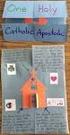 6 The Four Marks of the Church Study Guide THE CREED We believe in one God, the Father, the Almighty, maker of heaven and earth, of all that is, seen and unseen. We believe in one Lord, Jesus Christ, the
Bible Study 70. The Mystery of God
 The Mystery of God The word mystery means an unspoken secret. God had an unspoken secret that He kept to Himself for 4,000 years. It was the biggest and best secret of all time, and it s about you and
Schedule 3 Alternative Great Thanksgivings Alternative Great Thanksgiving A (alternative to Thanksgiving of the People of God)
 The Lord is here. God s Spirit is with us. Lift up your hearts. We lift them to the Lord. Schedule 3 Alternative Great Thanksgivings Alternative Great Thanksgiving A (alternative to Thanksgiving of the
International Bible Lessons Commentary 1 Corinthians 1:9-18; 3:1-9
 International Bible Lessons Commentary 1 Corinthians 1:9-18; 3:1-9 International Bible Lessons Sunday, June 29, 2014 L.G. Parkhurst, Jr. The International Bible Lesson (Uniform Sunday School Lessons Series)
Acts: Seeing the Spirit at Work Sunday Morning Bible Study Lesson Three Acts 3:1-4:31
 Acts: Seeing the Spirit at Work Sunday Morning Bible Study Lesson Three Acts 3:1-4:31 Jesus has returned to heaven before the very eyes of the astounded disciples. Matthias has been chosen to replace Judas.
UNDERSTANDING OTHER RELIGIONS Week 3: Islam 1. LEADER PREPARATION
 This includes: 1. Leader Preparation 2. Lesson Guide UNDERSTANDING OTHER RELIGIONS Week 3: Islam 1. LEADER PREPARATION LESSON OVERVIEW When you look at the major world religions, Islam is one of the youngest.
Your Strength Comes from God
 Your Strength Comes from God Through God s Word, we are allowed the opportunity to see several Bible characters go through difficult times in their lives. Even Jesus, Himself, experienced challenging times
Introduction to Orthodox Christianity. A Three Session Class for Inquirers
 Introduction to Orthodox Christianity A Three Session Class for Inquirers Class Purpose Provide a basic introduction to Orthodox Christianity Diocese of the Midwest - Orthodox Church in America 2 Questions
GOD S PLAN FOR YOUR LIFE!
 GOD S PLAN FOR YOUR LIFE! Did you know that God is a great planner? Sure! Just take a look at the intricacies of His creation. Every cell, every living organism was designed and built according to His
Home work. Fill in the Blanks Use your study sheet to find the correct answers. BETWEEN ANCIENT AND MODERN
 Date: 1 BETWEEN ANCIENT AND MODERN The Middle Ages is the period between a and m history. The early period of the Middle Ages is known as the D Ages because the great c of G and R had fallen. Life during
KEY QUESTIONS Lesson 1 - Creation and the Environment
 KEY QUESTIONS Lesson 1 - Creation and the Environment What do you like/dislike about your environment? How would you care for... e.g. a friend, a pet? What makes a person/thing special? What does the Bible
KJV. King James Bible Study Correspondence Course An Outreach of Highway Evangelistic Ministries 5311 Windridge lane ~ Lockhart, Florida 32810 ~ USA
 BAPTISM Lesson 3 Return pages 6 & 7 11 "Now That I Am Saved, Where Do I Start? Water baptism is an important step of obedience in the life of a Christian. At the beginning of this study, one must realize
The Walls Came Tumbling Down The Story, Chapter 7: Joshua Sunday, October 19, 2014 Lakeside Lutheran Church Almost every Sunday morning, I post an
 The Walls Came Tumbling Down The Story, Chapter 7: Joshua Sunday, October 19, 2014 Lakeside Lutheran Church Almost every Sunday morning, I post an invitation on Lakeside s Facebook page about what will
General Association of Regular Baptist Churches Baptist Distinctives
 General Association of Regular Baptist Churches Baptist Distinctives GARBC Baptist Distinctives Out of all the available options, which church should I attend? People often choose a church based on the
Jesus Parables in Chronological Order. Parable #46 ~ Matthew 25:31-46 ~ The Sheep and the Goats ~ Scripture
 Jesus Parables in Chronological Order Parable #46 ~ Matthew 25:31-46 ~ The Sheep and the Goats ~ Scripture 31 When the Son of Man comes in his glory, and all the angels with him, he 32 will sit on his
LESSON TITLE: Jesus is the Way, the Truth, and the Life
 Devotion NT271 CHILDREN S DEVOTIONS FOR THE WEEK OF: LESSON TITLE: Jesus is the Way, the Truth, and the Life THEME: We can always trust Jesus. SCRIPTURE: John 14:1-6 Dear Parents Welcome to Bible Time
Sermon Easter5b 2015:Evangelism is the love of God in Action to Change the World
 Sermon Easter5b 2015:Evangelism is the love of God in Action to Change the World Introduction One of the reasons that the season of Easter goes well beyond Easter Day Is because we as a church, as followers
Living the Truth in Love. At the Threshold of the Apostles
 Living the Truth in Love At the Threshold of the Apostles At regular intervals, every bishop is required to make an ad limina visit to meet with the Pope and to give him an account of the bishop's particular
BUILDING ON A STRONG, FIRM FOUNDATION
 A Sermon BUILDING ON A STRONG, FIRM FOUNDATION presented by James Garubanda June 1, 2008 St. Matthew s Episcopal Church, 2136 Carter Avenue, Saint Paul, MN 55108 I greet you all in the name of Jesus Christ.
Role of husbands and wives in Ephesians 5
 Role of husbands and wives in Ephesians 5 Summary The aim of this study is to help us think about relationships between men and women. It is meant to get us thinking about how we should behave in intimate
Lesson 35. The Tabernacle. Exodus 25 26. God lives among his people
 Gospel Story Curriculum (OT) PRESCHOOL Lesson 35 The Tabernacle Exodus 25 26 Bible Truth God lives among his people l e s s o n snapshot 1. Opening Activity and Introduction.... 5 min Supplies: Nine sheets
A PRAYER IN THE GARDEN
 BOOK 3, PART I, LESSON 4 A PRAYER IN THE GARDEN THE BIBLE: Luke 22:39-53, Mark 14:32-50 THEME: We remember that Jesus taught about love and showed love in everything he did. During Lent and Easter we remember
What is Meant by the New Testament Church?
 THE CHURCH What is Meant by the New Testament Church? 1 What is Meant by the New Testament Church? Matthew 16:13-19 INTRODUCTION: A. Matthew 16:13-18 When Jesus came into the region of Caesarea Philippi,
THE ORDER OF THE MASS
 THE ORDER OF THE MASS The first part of the Mass is about getting to know everyone and welcoming everyone to God s house. It s called the INTRODUCTORY RITES. Entrance Song We sing to celebrate that we
Late Medieval Period (WHI.12)
 Name Late Medieval Period (WHI.12) Label on Map: England, France, Spain, Russia, Holly Roman Empire, Paris, Rome, Mediterranean Sea, English Channel, Atlantic Ocean Term: Nation-state Describe: Draw: 1
Chapter 10 Paul s Two-Year Imprisonment in Caesarea. Acts 23:33 27:2. Acts 24
 Paul s Two-Year Imprisonment in Caesarea 1 Chapter 10 Paul s Two-Year Imprisonment in Caesarea Acts 23:33 27:2 A. Arrival in Caesarea. Acts 23:33-35 1. The letter was delivered to the governor. Acts 23:35
(Leader and Reader Text) Vigil Service for a Deceased Serran with Lay Leader
 (Leader and Reader Text) Vigil Service for a Deceased Serran with Lay Leader Prayers, readings and the quotes below are taken from Order of Christian Funerals, approved for use in the Dioceses of the United
LESSON TITLE: Jesus Heals Blind Bartimaeus
 Devotion NT257 CHILDREN S DEVOTIONS FOR THE WEEK OF: LESSON TITLE: Jesus Heals Blind Bartimaeus THEME: Jesus always has time for us! SCRIPTURE: Mark 10:46-52 Dear Parents Welcome to Bible Time for Kids!
Section #7: NOAH: A MAN OF FAITH
 21 Discussion Guide Section #7: NOAH: A MAN OF FAITH 1. How did Noah show his faith in God? 2. How specific were the instructions God gave? 3. Describe the size of the ark. Read to the Group: Since the
Greetings, Blessings, Scott DeWitt Director of Spiritual Outreach Casas por Cristo
 Team Devotional Greetings, Welcome to Casas por Cristo! If you are reading this, then more than likely you are embarking on a week-long adventure serving our Lord and Savior along the U.S. / México border
World Youth Day USA Krakow Kickoff July 7, 2015 Bishop Frank J Caggiano s Opening Remarks (Video Clip 1)
 World Youth Day USA Krakow Kickoff July 7, 2015 Bishop Frank J Caggiano s Opening Remarks (Video Clip 1) Thank you for coming here this afternoon to inaugurate the Pilgrim Year of Preparation for World
Grace to you and peace, from God our Father and from our Lord Jesus Christ.
 Whiplash 1 Matthew 16:21-28 (NRSV) From that time on, Jesus began to show his disciples that he must go to Jerusalem and undergo great suffering at the hands of the elders and chief priests and scribes,
said or meant? Maybe in the area of miscommunication it was your fault and you have said the exact opposite of what you really wanted to say.
 1 MISUNDERSTANDING GOD BY JAN SHRADER Have you ever miscommunicated with someone? Misunderstood what someone said or meant? Maybe in the area of miscommunication it was your fault and you have said the
JESUS PREDICTS HIS DEATH AGAIN Luke 18:31-34 JESUS REPEATED PREDICITON OF HIS DEATH (18:31-34)
 1 JESUS PREDICTS HIS DEATH AGAIN Luke 18:31-34 Jesus mission is about to come to an end. He has prepared His disciples for His impending death by instructing them about a life of faith. He now reminds
CONTENTS. Chapter 9 Closing the Door When the Serpent Knocks...65. Chapter 12 The Serpent in Eternal Humiliation...85
 CONTENTS session 1: Chapter 1 Putting the Devil in His Place...5 session 2: Chapter 2 The Star that Bit the Dust...13 session 3: Chapter 3 There Is a Serpent in Our Garden...21 session 4: Chapter 4 The