
UK AIRSPACE Introduction
|
|
|
- Verity Andrews
- 9 years ago
- Views:
Transcription
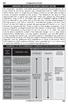
1 UK AIRSPACE Introduction The UK has now adopted the ICAO system for naming of airspace types from A to G. However in the UK there is at present no Class C airspace. Classes A to E are called Controlled airspace, Classes F and G, uncontrolled airspace. The airspace is summarised in the diagram below:

2 Controlled Airspace Class A Airspace VFR flight is not permitted in Class A airspace, but in a CTR (Control Zone) Special VFR flight is permitted. Thus for all Class A airspace other than in Control Zones, flight must be conducted under IFR and the pilot in command must have a valid instrument rating (not IMC rating). An ATC service is provided to all traffic in this airspace, and all flights are separated from each other. A flight plan must be filed, and a clearance obtained from ATC. The clearance and any other ATC instructions must be followed. Two-way communications are required. Class A airspace forms: The London Control Zone (CTR) around London Heathrow Airport and the Channel Islands Control Zone (CTR) The TMAs (Terminal Control Areas) around London and Manchester All of the UK airway system up to FL245 except those airways lying within the Belfast CTR/TMA and the Scottish TMA. The CTAs of Daventry, Cotswold & Worthing Class B Airspace, but due to its altitude it is of little practical concern to light aircraft. An ATC service is provided to all traffic in this airspace, and all flights are separated from each other. A flight plan must be filed, and a clearance obtained from ATC. The clearance and any other ATC instructions must be followed. Two-way communications are required. In the UK, all Class B airspace forms the UIR (Upper Flight Information Region) which extends from FL245-FL660. Class C Airspace No airspace in the UK is currently designated as Class C, however in Ireland, USA and other countries, much of the controlled airspace is Class C.

3 Class D Airspace An ATC service is provided to all traffic in this airspace, and IFR flights are separated from each other. Information on conflicting VFR flights is provided by ATC to IFR traffic. Information is provided to VFR flights about other VFR and IFR flights, to enable pilots to effect their own separation. A flight plan must be filed (although this may usually be done by passing flight details over the radio before entering), and a clearance obtained from ATC. The clearance and any other ATC instructions must be followed. Two-way communications are required. Class D airspace is established in the form of CTRs and CTAs around the larger airfields in the UK, such as Aberdeen, Birmingham, Bournemouth, Brize Norton, Cardiff, Edinburgh, Glasgow, London Gatwick, Luton, London Stansted, Newcastle, Solent and Tees-side. Class E Airspace An ATC service is provided to all IFR traffic and communicating VFR traffic in this airspace. All IFR flights are separated from each other. Information on conflicting VFR flights is provided by ATC to IFR traffic. ATC separation not provided to VFR traffic. Traffic information is provided on request to VFR flights about other VFR and IFR flights, to enable pilots to effect their own separation. For IFR flights a flight plan must be filed (although this may usually be done by passing flight details over the radio before entering), and a clearance obtained from ATC. The clearance and any other ATC instructions must be followed. For VFR flights, there are no requirements, but pilots are encouraged to contact ATC and comply with instructions. Two-way communications are required for IFR flights only Very little Class E airspace is established in the UK. These areas are the Belfast TCA, the Scottish TMA and a small part of the Tees-side CTR.

4 Uncontrolled Airspace Class F Airspace An Air Traffic Services (ATS) service is provided to participating IFR traffic and to communicating VFR traffic as appropriate in this airspace. Participating IFR flights are separated from each other. For participating IFR flights a flight plan must be filed (although this may usually be done by passing flight details over the radio before entering), and a clearance obtained from ATC. The clearance and any other ATC instructions must be followed. For VFR flights, there are no requirements. However if a pilot wishes to use the airspace under VFR he should file a flight plan. He will then receive an advisory service. Two-way communications are required for participating IFR flights only Class F airspace is established in the UK in the form of Advisory Routes (ADRs). These are similar to airways, having a width of 10Nm. They are established in areas where traffic levels are not high enough to warrant an airway, but where regular scheduled services still operate (eg Scottish Highlands). Class G Airspace An Air Traffic Services (ATS) service is provided to traffic as appropriate in this airspace. This usually means a flight information service only. No traffic separation is normally provided. However some ATC units are able to provide a separation between known traffic in Class G airspace. No communications are required in the open FIR (eg outside Aerodrome Traffic Zones (ATZs). Class G airspace forms the remainder of the UK airspace, including many (ATZs) and Military Aerodrome Traffic Zones (MATZs). Class G airspace also forms the airspace above FL660.

5 Control Zones (CTRs) A control zone (CTR) is an area of controlled airspace extending from the surface to a notified upper altitude or flight level. They are usually established around busier airfields, and can be of Class A, D or E Control Areas (CTAs) A control area (CTA) is an area of controlled airspace extending upwards from a notified lower altitude or flight level to a notified upper level. They are usually established around and above busier airfields, and can be of Class A, D or E. The main CTAs are the airway system (Class A), the CTAs of Daventry, Worthing and Cotswold (Class A), the CTAs of smaller airfields such as Aberdeen, Birmingham, Bristol, Cardiff, Isle of Man, Gatwick etc (Class D), and the CTAs of Belfast and Scottish (Class E). Two types of CTA have special names: Airways An airway is in fact a Control Area (CTA) in the shape of a corridor along which IFR flights proceed. They are nearly always of Class A airspace, and are straight lines, usually between two radio-navigation aids or waypoints. They are 10Nm in width and extend from a notified lower level to a notified upper level or FL245. They are named using a letter and a number, for example B1 (Bravo One) or G715 (Golf Seven One Five). Where an airway enters a TMA, CTR or CTA that is not Class A, then the airway adopts the class of airspace of that area (Belfast & Scottish CTR/TMAs). Above FL245 they become upper airways and their name will be prefixed by a U. For example UA25 (Upper Alfa Two Five). Upper airways are always Class B airspace.

6 Terminal Control Areas (TMAs) These CTAs used to be called Terminal Manoeuvring Areas, hence the abbreviation. They are formed around the busiest airfields in the UK where many airways meet and much IFR traffic is climbing and descending to and from the main airports. At present in the UK there are 4 TMAs: London (Class A from 6000 to FL245) Manchester (Class A) Belfast (Class E) Scottish (Class E up to 6000, Class D above) Other types of airspace are: Aerodrome Traffic Zones (ATZs) An ATZ is an area of airspace that is established around most UK civil and military airfields. They extend from the surface to an altitude of 2000 above aerodrome level (aal). They are centred on the mid-point of the longest runway and have a radius of either 2 or 2.5 Nm. If the longest runway is 1850m or less in length, then the radius is 2 Nm, over 1850m then 2.5 Nm. If the end of any runway is less than 1.5 Nm from the edge of the ATZ, then its radius is usually extended to 2.5 Nm. An ATZ is not allocated a particular class of airspace, they simply adopt the same airspace as that around them. Thus the ATZ for London Heathrow would be Class A and that for Blackbushe or Redhill would be Class G. Rule of the Air 39 states that An aircraft shall not fly, take off or land within the ATZ of an aerodrome... unless the commander of the aircraft has obtained the permission of the ATC unit at the aerodrome... or flight information unit... or air/ground unit at that aerodrome to enable the flight to be conducted with safety. Thus although the ATZ may be in Class G airspace and as such be uncontrolled, permission is still required to operate within.

7 Military Aerodrome Traffic Zones (MATZs) A MATZ is an area of airspace that is established around most UK military airfields. They extend from the surface to an altitude of 3000 above aerodrome level (aal). They are centred on the mid-point of the longest runway and have a radius of either 5 Nm. The MATZ may have one or more stubs projecting from the circular area extending from altitude 1000 aal to 3000 aal extending out to 10Nm and of width 4 Nm and aligned with a runway final approach path. A MATZ is not allocated a particular class of airspace, it simply adopts the same airspace as that around it, usually Class G. Inside the MATZ is an ATZ. MATZs rarely operate 24 hours a day, but the ATZ within is usually active 24 hrs. Although it is not compulsory to ask permission before entering a MATZ, permission must always be sought before entering the ATZ inside.

WHICH AIR TRAFFIC CONTROLLER TO CONTACT
 WHICH AIR TRAFFIC CONTROLLER TO CONTACT 1. Introduction This article is written in order to explain to all beginners in the IVAO network the basics for any pilot to contact the correct air traffic controller.
Airspace classification change
 Airspace classification change With effect from 06 March 2014 the airspace classification and configuration of the Channel Islands Airspace will be changed: The Channel Islands Control Zone (CTR) will
Information to VFR pilots
 Information to VFR pilots Information to VFR pilots This publication has been prepared by Naviair with the purpose of focusing on flight safety and clarifies topics, which are important to know for VFR
LONDON SOUTHEND AIRPORT CLASS D CONTROLLED AIRSPACE GUIDE
 CLASS D CONTROLLED AIRSPACE GUIDE Introduction From the 2 nd of April 2015 London Southend Airport (LSA) will be implementing Class D (CAS). This airspace is made up of a Control Zone (CTR) and Control
CHAPTER 7. AIRSPACE 7.1 AFFECTED ENVIRONMENT
 CHAPTER 7. AIRSPACE 7.1 AFFECTED ENVIRONMENT 7.1.1 Definition of Resource Airspace management is defined as directing, controlling, and handling flight operations in the volume of air that overlies the
NAMIBIAN RADIO LICENSE VALIDATION
 NAMIBIAN RADIO LICENSE VALIDATION Introduction This procedure is provided as a guide for applicants wishing to complete a Namibian Radio license validation, a requirement of a Namibian Pilot License Validation.
Training program for S2 (TWR) rating
 Training program for S2 (TWR) rating Introduction This is the official Vatsim Scandinavia training program for students training for the TWR (S2) Rating. Each mentor is expected to take his student through
Pilot Briefing Stockholm/Arlanda
 Pilot Briefing Stockholm/Arlanda INTRODUCTION Thank you for taking time to read the briefing for Stockholm/Arlanda Airport. The purpose of this document is not to teach pilots basic procedures and how
United Kingdom International Passenger Survey. David Savage Office for National Statistics
 United Kingdom International Passenger Survey David Savage Office for National Statistics Introduction History Sample Field work Issues Processing and weighting Issues Outputs History Introduced 1961 Aims:
LONDON SOUTHEND AIRPORT AIRSPACE CHANGE PROPOSAL. Executive Summary and About the Consultation Documents and Document Contents
 LONDON SOUTHEND AIRPORT AIRSPACE CHANGE PROPOSAL Introduction of Standard Instrument Departure Procedures to Routes in the London Terminal Control Area Sponsor Consultation 2016 Executive Summary and About
Airways New Zealand submission to the Civil Aviation Authority's 2016 Manawatu Airspace Review
 submission to the Civil Aviation Authority's 2016 Manawatu Airspace Review Prepared by: John Wagtendonk Policy, Standards and Safety Improvement 7 January 2016 1. Additional Ohakea CTA Airways request
AIRSPACE EXPLAINED. Separation of Traffic
 AIRSPACE EXPLAINED Airspace is an area of aeronautical knowledge that is commonly poorly demonstrated on airman practical tests. Even when airman applicants demonstrate knowledge of the airspace system
CTAF PROCEDURES GUIDE
 CTAF PROCEDURES GUIDE First Edition Updated on 02 December 2010 to correct minor errors. Information contained within this document is intended for simulation use only and should not be applied to real
Background on Airspace
 Background on Airspace There are six classifications of airspace in the United States; A, B, C, D, E, and G. Class A is the most restrictive and Class G the least restrictive. They can be categorized as:
Acceptable Means of Compliance and Guidance Material to the rules of the air
 European Aviation Safety Agency Acceptable Means of Compliance and Guidance Material to the rules of the air Initial Issue 17 July 2013 1 1 For the date of entry into force please refer to Decision 2013/013/R
Pilot Briefing for Helsinki-Vantaa Real Flight Event
 Pilot Briefing for Helsinki-Vantaa Real Flight Event INTRODUCTION It is finally time for the Helsinki Real Flight Event. This event will simulate the real operations and flights that go on every day at
Guide to Visual Flight Rules (VFR) in the UK
 Guide to Visual Flight Rules (VFR) in the UK 1. Introduction & Top Tips 2. Aeronautical Information 3. Airspace Classifications 4. Visual Flight Rules 5. Airspace subject to Flight Restrictions and Hazards
SECTION 2 - GENERAL. Callsign. Tower Control Service Tower _TWR Active Runway(s) & ATZ/CTR. Approach or Departure or Radar Area or Radar
 CHAPTER 1 - AIR TRAFFIC SERVICES OBJECTIVES SECTION 2 - GENERAL 1.1 The objectives of the Air Traffic Services are to: a) Prevent collisions between aircraft; b) Prevent collisions between aircraft moving
Safety and Airspace Regulation Group
 Safety and Airspace Regulation Group 27 April 2016 Policy Statement Policy for ATS Provision Within Controlled Airspace by Units not Notified as the Controlling 1 Introduction 1.1 The purpose of this policy
39 IFR AERONAUTICAL CHART SYMBOLS
 39 IFR AERONAUTICAL CHART SYMBOLS IFR Enroute Low/High Altitude (U.S. & Alaska Charts) AIRPORTS............................................... 40 RADIO AIDS TO NAVIGATION................................
Summer 2016 Destinations: Scheduled & Charter Services
 Summer 2016 Destinations: Scheduled & Charter Services = Denotes that the air service is direct from Jersey = Denotes that the air service is not direct from Jersey and will involve a connection or stop
Functional Hazard Assessment (FHA) Report for Unmanned Aircraft Systems
 Distribution: EUROCONTROL Ebeni Holger Matthiesen Hayley Burdett Unmanned Aircraft System (UAS) Safety Case Development Chris Machin Joanne Stoker Don Harris Alan Simpson Functional Hazard Assessment (FHA)
IFR AERONAUTICAL CHART SYMBOLS
 IFR AERONAUTICAL CHART SYMBOLS 42 IFR Enroute Low/High Altitude (U.S. & Alaska Charts) AIRPORTS............................................... 43 RADIO AIDS TO NAVIGATION................................
Flight Plan and related messages
 n Flight Plan and related messages Dear AFPEx User, We have produced this downloadable document in addition to the guidance available on the myafpex.co.uk website to provide the information available there
Tauranga, Bay of Plenty
 19/12 720 NZZC Tauranga Aerodrome Airshow and Restricted Area NZR286 Effective: 28 to 29 JAN 12 PORTAVEX 2012 and CLAIC OF THE KY will be held at Tauranga AD during the period 27 to 29 JAN 12. This event
Chapter 15. Airports Authority of India Manual of Air Traffic Services Part 1 15.1 EMERGENCY PROCEDURES
 Chapter 15 15.1 EMERGENCY PROCEDURES 15.1.1 General 15.1.1.1 The various circumstances surrounding each emergency situation preclude the establishment of exact detailed procedures to be followed. The procedures
IFR AERONAUTICAL CHART SYMBOLS
 IFR AERONAUTICAL CHART SYMBOLS 42 IFR Enroute Low/High Altitude (U.S. & Alaska Charts) AIRPORTS............................................... 43 RADIO AIDS TO NAVIGATION................................
New Zealand Airspace
 New Zealand Airspace New Zealand Airspace CONTENTS Designated Airspace...3 Special Use Airspace...9 Non-Mandatory Airspace...13 Visual Aeronautical Charts...14 Air Traffic Services...15 Conclusion...17
Airspace Change Communications and Consultation Protocol Protocol
 Airspace Change Communications and Consultation Protocol Protocol A voluntary protocol of the aviation industry June 2015 Preface The primary duty of the aviation industry in Canada is to ensure the safety
Airspace. Chapter 14. Introduction
 Chapter 14 Airspace Introduction The two categories of airspace are: regulatory and nonregulatory. Within these two categories there are four types: controlled, uncontrolled, special use, and other airspace.
VISITING PILOT S BRIEF
 VISITING PILOT S BRIEF All arrivals at RAF Halton are strictly PPR only; an approximate slot will be issued to you by the RAF Halton Operations Squadron (Ops Sqn). All non-halton based flying takes place
AIRSPACE INFRINGEMENTS
 AIRSPACE INFRINGEMENTS LEAFLET Highlights of the Belgian Airspace Infringement Reduction Plan (B/AIRP) Airspace Infringement Leaflet (B/AIRP) Edition 1, Summer 2013 1 S ince 2007 a steady increase of AIRSPACE
Oostwold Airshow 2015
 Oostwold Airshow 2015 Briefing visiting aircraft 25 th May 2015 Dear pilots This document deals with procedures to be employed during the Oostwold Airshow day on May 25 th 2015 only. The following procedures
BEFORE YOU GET STARTED
 is a small highly professional flight training organisation operating from the at Albion Park just 15 mins South of Wollongong City. is the Premier Flight Training Organisation on the NSW South Coast.
AVIATION TRAINING ACADEMY
 ATNS ATA Private Bag X 1 Bonaero Park South Africa 1622 Tel nr: +27(11) 961-0100; Fax nr: +27(11) 392-3868; Website: www.atns.co.za. AVIATION TRAINING ACADEMY AERODROME FLIGHT INFORMATION SERVICE COURSE
COMMUNICATIONS GROUND COMMUNICATIONS OUTLET (GCO)
 388 COMMUNICATIONS GROUND COMMUNICATIONS OUTLET (GCO) An automatic, remotely controlled, ground to ground communications device. Pilots at non-tower airports may contact the local Air Traffic Control (ATC)
EGTR ELSTREE EGTR AD 2.1 AERODROME LOCATION INDICATOR AND NAME EGTR AD 2.2 AERODROME GEOGRAPHICAL AND ADMINISTRATIVE DATA
 UNITED KINGDOM AIP AD 2.EGTR-1 8 Jan 2015 EGTR ELSTREE EGTR AD 2.1 AERODROME LOCATION INDICATOR AND NAME EGTR ELSTREE EGTR AD 2.2 AERODROME GEOGRAPHICAL AND ADMINISTRATIVE DATA 1 ARP coordinates and site
Providing Safety and Reliability with PBN Guy Greider HUGHES PROPRIETARY
 Providing Safety and Reliability with PBN Guy Greider Layout plan for integrated fully supported low level PBN airspace Providing Safety and Reliability with PBN Helicopter Accident Rate Vertical Flight
For the purpose of see-and-avoid, visual observers must be utilized at all times
 2009-WSA-92 WARNING: This correspondence may contain Sensitive Security Information and attachments that are controlled under 49 CFR 15 and 1520. No part of this correspondence may be disclosed to persons
SULAYMANIYAH INTERNATIONAL AIRPORT MATS CHAPTER 19. April 2012 Prepared By Fakhir.F. Mohammed Civil Aviation Consultant
 KURDISTAN REGIONAL GOVERNMENT SULAYMANIYAH INTERNATIONAL AIRPORT MATS CHAPTER 19 PROCEDURES RELATED TO EMERGENCIES, COMMUNICATION FAILURE AND CONTINGENCIES ( First Edition ) April 2012 Prepared By Fakhir.F.
IFR Communication Procedure
 1 I. IFR Flight Plan and Tower En-route Clearance A) Types of Flight Plan IFR Communication Procedure 1) IFR Flight Plans - File through FSS, requires center assistance and/or approach control facilities
IFR Operators Briefing Pack. May 2013
 IFR Operators Briefing Pack May 2013 Uncontrolled If Printed. Not Valid After 30/12/2012 Contents Introduction 4 Runways And Operation Modes 4 ATC Control Procedures 5 Arriving IFR Aircraft 5 Speed Control
International Civil Aviation Organization. The Third Meeting of the Regional ATM Contingency Plan Task Force (RACP/TF/3)
 International Civil Aviation Organization RACP/TF/3 WP06 12-15/11/2013 The Third Meeting of the Regional ATM Contingency Plan Task Force (RACP/TF/3) Bangkok, Thailand, 12 15 November 2013 Agenda Item 4:
CAAP 89W-1(0) Guidelines on provision of obstacle information for take-off flight planning purposes
 Civil Aviation Advisory Publication This publication is only advisory. It gives the preferred method for complying with the Civil Aviation Regulations (CAR 1988). It is not the only method, but experience
Airport Guide to Greenland
 2015 Airport Guide to Greenland Introduction The Reykjavik CTA covers over 5.5 million square kilometres of airspace between Scandinavia & Canada and the North Atlantic to the North Pole. Within this airspace
REPUBLIC OF INDONESIA MINISTRY OF TRANSPORTATION CIVIL AVIATION SAFETY REGULATION (C.A.S.R)
 REPUBLIC OF INDONESIA MINISTRY OF TRANSPORTATION CIVIL AVIATION SAFETY REGULATION (C.A.S.R) PART 170 AIR TRAFFIC RULES LAMPIRAN KEPUTUSAN MENTERI PERHUBUNGAN NOMOR : KM 14 Year 2009 TANGGAL : 16 Feb 2009
VDFP General Aviation Firefighting for Structural Firefighters
 VIRGINIA DEPARTMENT OF FIRE PROGRAMS Aviation Firefighting for Chapter 3 Communications 3-1 Learning Objectives Understand the correct radio procedures for talking to pilots or airport personnel List examples
The Mayor of London s Submission:
 Inner Thames Estuary Feasibility Study Response to Airports Commission Call for Evidence The Mayor of London s Submission: Supporting technical documents 23 May 2014 Title: Runway utilisation Author: Atkins
NOTAM. Pilots from Aboard. Flight Information Service
 Pilots from Aboard - You must file a flightplan, check if your flightplan is closed in at operations corner in the big white tent. - Customs is available during operations hours - Pilots coming from NON-Schengen
CIVIL AVIATION REQUIREMENTS SECTION 4 AERODROMES & AIR TRAFFIC SERVICES SERIES X PART IV 17 th OCTOBER 2007 EFFECTIVE : FORTHWITH
 GOVERNMENT OF INDIA OFFICE OF THE DIRECTOR GENERAL OF CIVIL AVIATION TECHNICAL CENTRE, OPP. SAFDARJUNG AIRPORT, NEW DELHI 110 003 CIVIL AVIATION REQUIREMENTS SECTION 4 AERODROMES & AIR TRAFFIC SERVICES
1.1 The circumstances of each aircraft emergency can vary to such an extent that detailed instructions cannot be given for every situation.
 Section 9 Chapter 1 Emergency Procedures Aircraft Emergencies 1 Introduction 1.1 The circumstances of each aircraft emergency can vary to such an extent that detailed instructions cannot be given for every
FINAL INVESTIGATION REPORT Loss of Altitude during cruise of M/s Jet Airways B777-300ER aircraft VT-JEL on 08.08.2014
 FINAL INVESTIGATION REPORT Loss of Altitude during cruise of M/s Jet Airways B777-300ER aircraft VT-JEL on 08.08.2014 1. Aircraft Type : Boeing Model : B777-300ER Nationality : Indian Registration : VT-JEL
CHAPTER 6 AIRSPACE OPERATIONS. 6.1.1. Federal Aviation Administration (FAA) Coordination.
 CHAPTER 6 6.1. Pre-mission Coordination. AIRSPACE OPERATIONS 6.1.1. Federal Aviation Administration (FAA) Coordination. 6.1.1.1. Responsibilities. The Air Traffic Control System Command Center (ATCSCC)
ACL is the coordinator of choice for 35 airports worldwide. We coordinate 2.8 million flights carrying over 300 million passengers each year.
 ACL Company Profile ACL is the coordinator of choice for 35 airports worldwide. We coordinate 2.8 million flights carrying over 300 million passengers each year. Airport Coordination Limited Capital Place
SAFETYSENSE leaflet 26
 SAFETYSENSE leaflet 26 VISITING MILITARY AERODROMES Part 1 Visiting during normal operating hours 3 PRE-FLIGHT 4 APPROACHING OR PASSING THE AERODROME 5 INSTRUMENT APPROACHES 6 CIRCUIT PROCEDURES 7 BARRIERS
ADS-B NRA deployment by DSNA
 Direction Générale Direction de la Technique et Systèmes bord de Présenté par DTI/SO/3ES ADSB NRA deployment by DSNA CASCADE Workshop ADSB implementation plans Operational implementation ADSB NRA in la
Table of Contents 1. INTRODUCTION 2 2. DEFINITION 4 3. UAS CLASSIFICATION 6 4. REGULATORY PRINCIPLES 16 5. INTERACTION WITH AIR TRAFFIC CONTROL 16
 FOREWORD Table of Contents 1. INTRODUCTION 2 2. DEFINITION 4 3. UAS CLASSIFICATION 6 4. REGULATORY PRINCIPLES 16 5. INTERACTION WITH AIR TRAFFIC CONTROL 16 6. SENSE AND AVOID ( required for applicants
MANUAL ON SIMULTANEOUS OPERATIONS ON PARALLEL OR NEAR-PARALLEL INSTRUMENT RUNWAYS (SOIR)
 Appendix APPENDIX DRAFT MANUAL ON SIMULTANEOUS OPERATIONS ON PARALLEL OR NEAR-PARALLEL INSTRUMENT RUNWAYS (SOIR) FIRST EDITION - 2004 Appendix A-2 FOREWORD In 1980 the Air Navigation Commission reviewed
Part 91. General Operating and Flight Rules. CAA Consolidation. 15 April 2016. Published by the Civil Aviation Authority of New Zealand
 Part 91 CAA Consolidation 15 April 2016 General Operating and Flight Rules Published by the Civil Aviation Authority of New Zealand DESCRIPTION Part 91 is an important rule as it forms the basis of general
PRESERVATION OF SLOTS FOR DOMESTIC SERVICES AT LONDON AIRPORTS
 Agenda Item 4 PRESERVATION OF SLOTS FOR DOMESTIC SERVICES AT LONDON AIRPORTS What this paper is about To update the meeting on the current situation with respect to regional services to/from London airports,
Oral Preparation Questions
 Oral Preparation Questions The oral section of the practical test is the time when you need to demonstrate your understanding of the various tasks listed in the practical test standards and the factors
You ll soon be arriving in Paris, thank you for choosing our airport for your arrival. This briefing was made to make your arrival as flawless and
 You ll soon be arriving in Paris, thank you for choosing our airport for your arrival. This briefing was made to make your arrival as flawless and fun as possible. We hope you will enjoy flying with us.
Aircraft Noise Control at London Luton Airport. August 2015
 Aircraft Noise Control at London Luton Airport August 2015 Aircraft Noise Control at London Luton Airport Foreword London Luton Airport (LLA) continues to place aircraft noise high on its agenda. We recognise
AD 2-LGML-1 GREECE 12 NOV 2015 LGML AD 2.1 AERODROME LOCATION INDICATOR AND NAME LGML - MILOS
 AD 2-LGML-1 GREECE 12 NOV 2015 LGML AD 2.1 AERODROME LOCATION INDICATOR AND NAME LGML - MILOS LGML AD 2.2 AERODROME GEOGRAPHICAL AND ADMINISTRATIVE DATA 1 ARP coordinates and site at AD 364149N 0242837E
Ref.: AN 13/2.5-09/45 19 June 2009
 International Civil Aviation Organization Organisation de l aviation civile internationale Organización de Aviación Civil Internacional Международная организация гражданской авиации Tel.: +1 (514) 954-6711
PUBLISHING AND NOTAM GUIDELINES FOR AERODROME OPERATORS
 Aeronautical Information Management Documentation PUBLISHING AND NOTAM GUIDELINES FOR AERODROME OPERATORS Airways New Zealand Publishing and NOTAM Guidelines for Aerodrome Operators Aeronautical Information
Aircraft incident to SE-DSO over Sjöbo, Skåne County, Sweden on 13 October 2009. The report is also available on our web site: www.havkom.
 ISSN 1400-5719 Report RL 2011:01e Aircraft incident to SE-DSO over Sjöbo, Skåne County, Sweden on 13 October 2009 Case L-16/09 The material in this report may be reproduced free of charge provided due
RULES OF THE AIR AND AIR TRAFFIC SERVICES
 Doc 4444-RAC/501 PROCEDURES FOR AIR NAVIGATION SERVICES RULES OF THE AIR AND AIR TRAFFIC SERVICES THIRTEENTH EDITION 1996 This edition incorporates all amendments approved by the Council prior to 12 March
OPERATIONS CIRCULAR. OC NO 2 OF 2014 Date: 1 st May 2014. Continuous Descent Final Approach (CDFA) 1. PURPOSE
 GOVERNMENT OF INDIA CIVIL AVIATION DEPARTMENT DIRECTOR GENERAL OF CIVIL AVIATION OC NO 2 OF 2014 Date: 1 st May 2014 OPERATIONS CIRCULAR Subject: Continuous Descent Final Approach (CDFA) 1. PURPOSE This
The business of Gatwick Airport Limited
 APPENDIX C The business of Gatwick Airport Limited C1 This appendix provides an overview of the current ownership and history of Gatwick and the business of Gatwick Airport Limited (GAL). In particular,
ICAO Standard Phraseology A Quick Reference Guide for Commercial Air Transport Pilots
 ICAO Standard Phraseology A Quick Reference Guide for Commercial Air Transport Pilots Communication error is the biggest causal factor in both level busts and runway incursions in Europe. This document
GHANA CIVIL AVIATION AUTHORITY EVALUATING AERONAUTICAL EFFECTS OF PROPOSED CONSTRUCTION ON AIR NAVIGATION & AIRSPACE PERMIT PROCEDURE
 GHANA CIVIL AVIATION AUTHORITY EVALUATING AERONAUTICAL EFFECTS OF PROPOSED CONSTRUCTION ON AIR NAVIGATION & AIRSPACE PERMIT PROCEDURE TABLE OF CONTENTS 1.0 INTRODUCTION 2.0 LEGISLATION AND REGULATORY FRAMEWORK
Título ponencia: Helicopter IFP. Point-in-Space (PinS)
 Título ponencia: Helicopter IFP. Point-in-Space (PinS) Organizado por: Index Introduction Helicopter IFP A/C Certification requirements GNSS Certified rotorcrafts Most relevant projects in Europe Introduction
FACT SHEET UNMANNED AIRCRAFT SYSTEMS (UAS)
 FAA News Federal Aviation Administration, Washington, DC 20591 Updated February 2015 Contact: Les Dorr or Alison Duquette Phone: (202) 267-3883 FACT SHEET UNMANNED AIRCRAFT SYSTEMS (UAS) Unmanned aircraft
Communication, Navigation, Surveillance (CNS) engineers and executives of Airports Authority of India
 Communication, Navigation, Surveillance (CNS) engineers and executives of Airports Authority of India CNS Officers Guild 1 Airports Authority of India (AAI) is entrusted with responsibility of providing
Contents VoxATC Reference... 31
 User Manual Contents Introduction... 5 Getting Started... 6 Example VFR Flight... 9 Example IFR Flight... 17 Example IFR with a SID and STAR... 22 Creating Flights For VoxATC... 27 Starting Enroute...
ENR 0.6 TABLE OF CONTENTS TO PART 2 - ENR
 AIP Australia 26 MAY 16 ENR 0.6-1 PART 2 - EN ROUTE (ENR) ENR 0. ENR 0.1 PREFACE - Not applicable ENR 0.2 RECORD OF AIP AMENDMENTS - Not applicable ENR 0.3 RECORD OF AIP SUPPLEMENTS - Not applicable ENR
AIP AMENDMENTS POST INTRODUCTION OF AFPEX (ASSISTED FLIGHT PLAN EXCHANGE SERVICE) UK AIP ENR 1.10
 c NATS Ltd UK Aeronautical Information Service Heathrow House Bath Road Hounslow Middlesex TW5 9AT Editorial: 020-8750 3778 Fax: 020-8750 3771 Distribution: 0870-8871410 Content: 01489 612227 (CACC) AFTN:
AVIATION INVESTIGATION REPORT A07A0025 LOSS OF SEPARATION
 AVIATION INVESTIGATION REPORT A07A0025 LOSS OF SEPARATION SERCO FACILITIES MANAGEMENT INC. GOOSE BAY, NEWFOUNDLAND AND LABRADOR 13 MARCH 2007 The Transportation Safety Board of Canada (TSB) investigated
HOW TO GET YOUR PRIVATE PILOT LICENCE
 REPUBLIC OF SINGAPORE FLYING CLUB FOUNDED 1928 HOW TO GET YOUR PRIVATE PILOT LICENCE 700 West Camp Road, #05-01 JTC Aviation One Seletar Aerospace Park, Singapore 797649 Tel: 65-64810200 Fax: 65-64814620
MANAGEMENT OF AIRSPACE CAPACITY AROUND UNCONTROLLED AERODROMES
 Number 2, Volume VIII, July 2013 MANAGEMENT OF AIRSPACE CAPACITY AROUND UNCONTROLLED AERODROMES Jakub Kraus 1, Karel Jeřábek 2 Summary: This article focuses at heavy traffic at uncontrolled aerodromes,
AVIATION INVESTIGATION REPORT A00O0057 MIDAIR COLLISION
 AVIATION INVESTIGATION REPORT A00O0057 MIDAIR COLLISION BETWEEN ISLAND AIR FLIGHT SCHOOL & CHARTERS INC. CESSNA 172 C-GSAR AND CESSNA 337 SKYMASTER C-GZYO TORONTO/CITY CENTRE AIRPORT 18 NM NE 13 MARCH
CHAPTER 2 AIR TRAFFIC CONTROLLER (AC) NAVPERS 18068-2F CH-64
 CHAPTER 2 AIR TRAFFIC CONTROLLER (AC) NAVPERS 18068-2F CH-64 Updated: October 2015 TABLE OF CONTENTS AIR TRAFFIC CONTROLLER (AC) SCOPE OF RATING GENERAL INFORMATION AIR TRAFFIC CONTROLLER CONTROL TOWER
http://www.nats.aero/rlat/
 Reduced Lateral Separation RLATSM, Airline Briefing This guidance brief highlights the key aspects and details appropriate official publications supporting RLatSM implementation. NATS has also produced
For Flight Simulation purposes only on the VATSIM Network.
 Compiled by Daniel A. Hawton, ZDC Training Administrator For Flight Simulation purposes only on the VATSIM Network. Introduction The goal of the document is to introduce you, the controller, to the appropriate
NATO Developments in UAS Airworthiness and Sense & Avoid Functional Requirements. Mr. Dave Seagle US HoD, NATO FINAS
 NATO Developments in UAS Airworthiness and Sense & Avoid Functional Requirements Mr. Dave Seagle US HoD, NATO FINAS International Council of the Aeronautical Sciences Seville, Spain 2007 Mission To recommend
PF3 ATC at its best Version History
 The latest version of this document and the PF3 User Guide can always be found in the...\pf3\help folder after any update. 30 th May 2016 Version 3.1.18 FIXED a problem that could occur if an emergency
17.1.2009 Official Journal of the European Union L 13/3
 17.1.2009 Official Journal of the European Union L 13/3 COMMISSION REGULATION (EC) No 29/2009 of 16 January 2009 laying down requirements on data link services for the single European sky (Text with EEA
SARPS about Emergency frequency. 12 May 2015
 SARPS about Emergency frequency 12 May 2015 Annex 6 3.1.5 If an emergency situation which endangers the safety of the aeroplane or persons becomes known first to the flight operations officer/flight dispatcher,
Polska Agencja Żeglugi Powietrznej Polish Air Navigation Services Agency
 Agenda: Introduction, Rules and functions of PANSA, Legal status of UAS (Europe and USA), UAS/UAV integration to polish airspace, PANSA cooperation with military and civil operators, Required solutions,
Amsterdam Schiphol. Real Flight Event 21 st of May 2016. Introduction. This document is provided by IVAO-NL Flight Operations Department.
 Amsterdam Schiphol Real Flight Event 21 st of May 2016 This document is provided by IVAO-NL Flight Operations Department. Introduction This document will brief the pilots flying the Schiphol Amsterdam
Minimum Safety Requirements for Helicopter Landing Areas used on Regular basis.
 GOVERNMENT OF INDIA OFFICE OF DIRECTOR GENERAL OF CIVIL AVIATION TECHNICAL CENTRE, OPP SAFDARJANG AIRPORT, NEW DELHI CIVIL AVIATION REQUIREMENTS SECTION 4 AERODROME STANDARDS & LICENSING SERIES 'B' PART