
Exclusive breastfeeding: The only water source young infants need
|
|
|
- Dustin Short
- 9 years ago
- Views:
Transcription
1 Benefits of breastfeeding Handout 2.3 Exclusive breastfeeding: The only water source young infants need FA Sheet 5 Frequently Asked uestions (FA) October 2002 Healthy newborns enter the world well hydrated and remain so if breastfed exclusively, day and night, even in the hottest, driest climates. Nevertheless, the practice of giving infants water during the first six months the recommended period for exclusive breastfeeding persists in many parts of the world, with dire nutritional and health consequences. This FA discusses these consequences and the role of breastfeeding in meeting an infant s water requirements. Why is exclusive breastfeeding recommended for the first six months? International guidelines recommend exclusive breastfeeding for the first six months based on scientific evidence of the benefits for infant survival, growth, and development. Breast milk provides all the energy and nutrients that an infant needs during the first six months. Exclusive breastfeeding reduces infant deaths caused by common childhood illnesses such as diarrhea and pneumonia, hastens recovery during illness, and helps space births. Is early supplementation with water a common practice? And if so, why? The reasons given for water supplementation of infants vary across cultures. Some of the most common reasons are: necessary for life quenches thirst relieves pain (from colic or earache) prevents and treats colds and constipation soothes fretfulness. Cultural and religious beliefs also influence water supplementation in early infancy. Proverbs passed down from generation to generation advise mothers to give babies water. Water may be viewed as the source of life a spiritual and physiological necessity. Some cultures regard the act of offering water to the newborn as a way of welcoming the child into the world. The practice of giving water and other liquids such as teas, sugar water, and juices to breastfed infants in the first months is widespread throughout the world, as illustrated in Figure 1. This practice often begins in the first month of life. Research conducted in the outskirts of Lima, Peru showed that 83 percent of infants received water and teas in the first month. Studies in several communities of the Gambia, the Philippines, Egypt, and Guatemala reported that over 60 percent of newborns were given sugar water and/or teas. BFHI Section 2: Course for decision-makers 2-35

2 Session 2 The advice of health care providers also influences the use of water in many communities and hospitals. For example, a study in a Ghanaian city found that 93 percent of midwives thought that water should be given to all infants beginning on the first day of life. In Egypt many nurses advised mothers to give sugar water after delivery. How do breastfed babies get enough water? Depending on temperature, humidity, and the infant s weight and level of activity, the average daily fluid requirements for healthy infants ranges from ml/kg in the first week of life to ml/kg between 3 6 months. These amounts are available from breast milk alone if breastfeeding is exclusive and unrestricted (on-demand day and night) for two reasons: Breast milk is 88 percent water. The water content of breast milk consumed by an exclusively breastfed baby meets the water requirements for infants and provides a considerable margin of safety. Even though a newborn gets little water in the thick yellowish first milk (colostrum), no additional water is necessary because a baby is born with extra water. Milk with higher water content usually comes in by the third or fourth day. Figure 2 shows the principal components of breast milk. Breast milk is low in solutes. One of the major functions of water is to flush out, through the urine, excess solutes. Dissolved substances (for example, sodium, potassium, nitrogen, and chloride) are referred to as solutes. The kidneys though immature up to the age of approximately three months are able to concentrate excess solutes in the urine to maintain a healthy, balanced body chemistry. Because breast milk is low in solutes, the infant does not need as much water as an older child or adult. What about infants in hot, dry climates? Water in breast milk exceeds the infant s water requirements in normal conditions and is adequate for breastfed infants in hot, dry climates. Studies indicate that healthy, exclusively breastfed infants in the first six months of life do not require additional fluids even in countries with extremely high temperatures and low humidity. Solute levels in the urine and blood of exclusively breastfed babies living in these conditions were within normal ranges, indicating adequate water intakes. Can giving water to an infant before six months be harmful? Offering water before the age of six months can pose significant health hazards. Water supplementation increases the risk of malnutrition. Displacing breast milk with a fluid of little or no nutritional value can have a negative impact on an infant s nutritional status, survival, growth, and development WHO/UNICEF

3 Benefits of breastfeeding Consumption of even small amounts of water or other liquids can fill an infant s stomach and reduce the baby s appetite for nutrient-rich breast milk. Studies show that water supplementation before the age of six months can reduce breast milk intake by up to 11 percent. Glucose water supplementation in the first week of life has been associated with greater weight loss and longer hospital stays. Water supplementation increases the risk of illness. Water and feeding implements are vehicles for the introduction of pathogens. Infants are at greater risk of exposure to diarrhea-causing organisms, especially in environments with poor hygiene and sanitation. In the least developed countries, two in five people lack access to safe drinking water. Breast milk ensures an infant s access to an adequate and readily available supply of clean water. Research in the Philippines confirms the benefits of exclusive breastfeeding and the harmful effect of early supplementation with non-nutritive liquids on diarrheal disease. Depending on age, an infant was two to three times more likely to experience diarrhea if water, teas, and herbal preparations were fed in addition to breast milk than if the infant was exclusively breastfed. Should water be given to breastfed infants who have diarrhea? In the case of mild diarrhea, increased frequency of breastfeeding is recommended. When an infant has moderate to severe diarrhea, caregivers should immediately seek the advice of health workers and continue to breastfeed, as recommended in the Integrated Management of Childhood Illness (IMCI) guidelines. Infants that appear dehydrated may require Oral Rehydration Therapy (ORT), which should only be given upon advice of a health worker. 2 How can programs address the common practice of water supplementation? To address the widespread practice of water supplementation in early infancy, program managers should understand the cultural reasons for this practice, analyze existing data, conduct household trials of improved practices, and develop effective communication strategies for targeted audiences. Health care providers and community volunteers need to be informed that breast milk meets the water requirements of an exclusively breastfed baby for the first six months. They may also require training on how to communicate messages and negotiate behavior change. Examples of messages developed in breastfeeding promotion programs that address local beliefs and attitudes about the water needs of infants are shown in the box. Providing accurate information, tailoring messages to address the beliefs and concerns of different audiences, and negotiating with mothers to try out a new behavior can help establish exclusive breastfeeding as a new community norm. 2 Oral Rehydration Solution (ORS), used in ORT, helps replace water and electrolytes lost during episodes of diarrhea. Super ORS, with a carbohydrate base of rice or cereal for better absorption, has been developed to improve treatment. BFHI Section 2: Course for decision-makers 2-37

4 Session 2 Communicating the Message Don t Give Water The following messages have been used in programs to convince mothers, their families, and health workers that exclusively breastfed infants do not need to be given water in the first six months. The most effective ways of communicating the messages depend on the audience and the practices, beliefs, concerns, and constraints to good practices in a particular setting. Make clear the meaning of exclusive breastfeeding Exclusive breastfeeding means giving only breast milk. This means no water, liquids, teas, herbal preparations, or foods through the first six months of life. (It is important to name the drinks and foods commonly given in the first six months. One program found that women did not think the advice do not give water applied to herbal teas or other fluids). Take ideas often associated with water and apply them to colostrum Colostrum is the welcoming food for newborns. It is also the first immunization, protecting a baby from illness. Colostrum cleans the newborn s stomach. Sugar water is not needed. Breast milk is 88 percent water. Explain why exclusively breastfed babies do not need water Every time a mother breastfeeds, she gives her baby water through her breast milk. Breast milk has everything a baby needs to quench thirst and satisfy hunger. It is the best possible food and drink that can be offered a baby so the baby will grow to be strong and healthy. Point out the risks of giving water Giving water to babies can be harmful and cause diarrhea and illness. Breast milk is clean and pure and protects against disease. An infant s stomach is small. When the baby drinks water, there is less room left for the nourishing breast milk that is necessary for the infant to grow strong and healthy. Link good breastfeeding practices to adequate fluid intake When a mother thinks her baby is thirsty, she should breastfeed immediately. This will give the baby all the water that is needed. The more often a woman breastfeeds, the more breast milk is produced, which means more water for the baby WHO/UNICEF

5 Benefits of breastfeeding What are the water needs of children after six months of age? complementary foods (0.6 kcal/g). Reducing the amount of water added to these foods could improve the nutritional status of children in this age group. Guidelines for water intake after six months are less clear than for the first half of infancy. At six months complementary foods foods given in addition to breast milk to meet an infant s increased nutrient requirements should be introduced. The types of foods a child consumes will affect the child s water needs. For the most part, the water requirements of infants 6 11 months can be met through breast milk. Additional water can be provided through fruits or fruit juices, vegetables, or small amounts of boiled water offered after a meal. Caution should be taken to ensure that water and other liquids do not replace breast milk. Water can also replace or dilute the nutrient content of energy-dense complementary foods. Gruels, soups, broths, and other watery foods given to infants usually fall below the recommended energy density for Related LINKAGES Publications Facts for Feeding: Birth, Initiation of Breastfeeding, and the First Seven Days after Birth, Facts for Feeding: Breastmilk: A Critical Source of Vitamin A for Infants and Young Children, Facts for Feeding: Recommended Practices to Improve Infant Nutrition during the First Six Months, uantifying the Benefits of Breastfeeding: A Summary of the Evidence, Recommended Feeding and Dietary Practices to Improve Infant and Maternal Nutrition, BFHI Section 2: Course for decision-makers 2-39

6 Session 2 References Almroth SG. and Bidinger P. No need for water supplementation for exclusively breastfed infants under hot and arid conditions. T Roy Soc Trop Med H 1990; 84: Armelini PA, Gonzalez CF. Breastfeeding and fluid intake in a hot climate. Clin Pediatr 1979; 18: Brown K, et al. (1989). Infant-feeding practices and their relationship with diarrheal and other diseases in Huascar (Lima), Peru. Pediatrics 1989 Jan;83(1): Glover J and Sandilands M. Supplementation of breastfeeding infants and weight loss in hospital. J Hum Lact 1990 Dec;6(4): Goldberg NM, Adams E. Supplementary water for breast-fed babies in a hot and dry climate not really a necessity.arch Dis Child 1983; 58: Hosssain M et al. Prelacteal infant feeding practices in rural Egypt. J Trop Pediatr 1992 Dec; 38(6): Popkin BM et al. Breast-feeding and diarrheal morbidity. Pediatrics 1990 Dec;86(6): Sachdev HPS et al. Water supplementation in exclusively breastfed infants during summer in the tropics. Lancet 1991 April; 337: Victora C et al. Infant feeding and deaths due to diarrhea: A case-control study. Am J Epidemiol 1989 May;129(5): World Health Organization. Breastfeeding and the use of water and teas. Division of Child Health and Development Update, No. 9 (reissued Nov. 1997). Exclusive Breastfeeding: The Only Water Source Young Infants Need: Frequently Asked uestions is a publication of LINKAGES: Breastfeeding, LAM, Related Complementary Feeding, and Maternal Nutrition Program, and was made possible through support provided to the Academy for Educational Development (AED) by the GH/HIDN of the United States Agency for International Development (USAID), under the terms of Cooperative Agreement No. HRN-A The opinions expressed herein are those of the author(s) and do not necessarily reflect the views of USAID or AED WHO/UNICEF

66% Breastfeeding. Early initiation of breastfeeding (within one hour of birth) Exclusive breastfeeding rate (4-5 months)
 56% Early initiation of breastfeeding (within one hour of birth) 29% Exclusive breastfeeding rate (4-5 months) 66% Timely complementary feeding rate (6-9 months) Egypt Demographic and Health Survey 2008
Position Statement on Breastfeeding
 ABN 64 005 081 523 RTO 21659 Applies to All ABA staff and volunteers Position statement The Australian Breastfeeding Association (ABA) endorses the following statement from the Joint WHO/ UNICEF Meeting
American Academy of Pediatrics Section on Breastfeeding. Ten Steps to Support Parents Choice to Breastfeed Their Baby
 American Academy of Pediatrics Section on Breastfeeding 1 2 3 4 5 6 7 8 9 10 Ten Steps to Support Parents Choice to Breastfeed Their Baby This practice enthusiastically supports parents plans to breastfeed
BREASTFEEDING; HOW? January 14 HELEN BORG, INFANT FEEDING MIDWIFE MATER DEI HOSPITAL
 BREASTFEEDING; HOW? January 14 HELEN BORG, INFANT FEEDING MIDWIFE MATER DEI HOSPITAL 1 THE IMMIGRANT MOTHER- BABY DYAD Challenges to Breastfeeding and Bonding Lack of Information How to enhance milk supply
Breastfed Babies in Child Care. Breastfeeding Works! How to Meet the Needs of
 Breastfeeding Works! How to Meet the Needs of Breastfed Babies in Child Care Massachusetts Department of Public Health Bureau of Family and Community Health Nutrition and Physical Activity Unit WIC Nutrition
Ear Infections Gastroenteritis gastroenteritis
 Ear Gastroenteritis Infections gastroenteritis Gastroenteritis can be caused by many different germs, and the effects of gastro on babies and children depend on several things including: the age of the
Presentation Prepared By: Jessica Rivers, BASc., PTS
 Presentation Prepared By: Jessica Rivers, BASc., PTS Presentation Outline Why should we care about our eating habits? Why is nutrition so important as we age? How do we know if we are eating healthy? What
BENEFITS OF BREASTFEEDING
 BENEFITS OF BREASTFEEDING There are many benefits to breastfeeding. Even if you are able to do it for only a short time, your baby's immune system can benefit from breast milk. Here are many other benefits
Infant Feeding Survey 2010: Summary
 Infant Feeding Survey 2010: Summary Authors: Fiona McAndrew, Jane Thompson, Lydia Fellows, Alice Large, Mark Speed and Mary J. Renfrew A survey carried out on behalf of the Health and Social Care Information
Breastfeeding. Nursing Education
 Breastfeeding AWHONN supports breastfeeding as the optimal method of infant nutrition. AWHONN believes that women should be encouraged to breastfeed and receive instruction and support from the entire
NUTRITIONAL REHABILITATION CENTRE
 NUTRITIONAL REHABILITATION CENTRE 1. Child under nutrition encompasses stunting (chronic malnutrition), wasting (acute malnutrition) and deficiencies of micronutrients (essential vitamins and minerals).
Water It s Crucial Role in Health. By: James L. Holly, MD
 Water It s Crucial Role in Health By: James L. Holly, MD After a two week hiatus, we return to our series entitled, Aging Well. It is often the case that in health we become so infatuated with the exotic,
Diarrhoea Treatment Guidelines
 Diarrhoea Treatment Guidelines Including new recommendations for the use of ORS and zinc supplementation for Clinic-Based Healthcare Workers Not yet field-tested This publication was made possible through
Managing Sick Days for Type 1 Diabetes
 Managing Sick Days for Type 1 Diabetes 1. Contact the Diabetes Program if you have questions about your diabetes management. We are here to help! 2. Take your insulin as prescribed. If you are at risk
Medication Guide. Serious loss of body fluid (dehydration) and changes in blood salts (electrolytes) in your blood.
 Medication Guide MoviPrep (moo-vee-prěp) (PEG 3350, sodium sulfate, sodium chloride, potassium chloride, sodium ascorbate, and ascorbic acid for oral solution) Read this Medication Guide before you start
Breastfeeding vs. Formula Feeding
 KidsHealth.org The most-visited site devoted to children's health and development Breastfeeding vs. Formula Feeding A Personal Decision Choosing whether to breastfeed or formula feed your baby is one of
cambodia Maternal, Newborn AND Child Health and Nutrition
 cambodia Maternal, Newborn AND Child Health and Nutrition situation Between 2000 and 2010, Cambodia has made significant progress in improving the health of its children. The infant mortality rate has
INTRODUCTION. Biocultural perspective. Mothers influenced by biomedicine and culture. Biological requirement Practices vary by cultures
 INFANT FEEDING PRACTICES AND BELIEFS: MALI, BRAZIL, AND THE UNITED STATES Megan Jamison Western State College of Colorado 2009 Graduate INTRODUCTION Biocultural perspective Biological requirement Practices
A guide to infant formula for parents who are bottle feeding
 A guide to infant formula for parents who are bottle feeding Introduction This document is designed to help parents who are not breastfeeding decide which infant formula to use to feed their baby. There
Suggested Open Ended Questions Suggested Affirming Statements Suggested Nutrition Education Statements
 Suggested Open Ended Questions Suggested Affirming Statements Suggested Nutrition Education Statements Caregiver: How did your baby s last check-up go? Primary Feeding: Tell me about the kind of formula
INFANTS AND YOUNG CHILD FEEDING (UPTO 2 YEARS)
 INFANTS AND YOUNG CHILD FEEDING (UPTO 2 YEARS) Breastfeeding is the best way to satisfy the nutritional and psychological needs of the baby. Mother s milk (breast milk, human milk) contains all nutrients
QDoes breastfeeding affect the mother s nutritional status?
 Breastfeeding and Maternal Nutrition Frequently Asked Questions (FAQ) FAQ SHEET 4 From the LINKAGES Project Updated July 2004 FAQ Sheet is a series of publications of Frequently Asked Questions on topics
VEGETABLES AND FRUIT Help your child to like them. A guide for parents of young children
 VEGETABLES AND FRUIT Help your child to like them A guide for parents of young children Vegetables and fruit: help your child to like them ISBN: 2-7380-1350-3 April 2014 HabEat Project (http://www.habeat.eu/)
MEDICATION GUIDE ACTOPLUS MET (ak-tō-plus-met) (pioglitazone hydrochloride and metformin hydrochloride) tablets
 MEDICATION GUIDE (ak-tō-plus-met) (pioglitazone hydrochloride and metformin hydrochloride) tablets Read this Medication Guide carefully before you start taking and each time you get a refill. There may
GESTATIONAL DIABETES. Diabete Gestazionale (Lingua Inglese)
 GESTATIONAL DIABETES Diabete Gestazionale (Lingua Inglese) CONTENTS DEFINITION 03 WHAT CAUSES AND HOW TO MANAGE GESTATIONAL DIABETES 04 HOW TO CONTROL DIABETES 06 CORRECT LIFESTYLE 08 DURING AND AFTER
Summary of sociocultural and epidemiological findings on infant and young child feeding in 11 countries
 U S A I D s I n f a n t & Y o u n g C h i l d Nu t r i t i o n P r o j e c t Summary of sociocultural and epidemiological findings on infant and young child feeding in 11 countries A u g u s t 2 0 11 Photos:
Routine care of a newborn baby
 Routine care of a newborn baby Slide NC-l,2 Introduction All mothers need help, support, and advice in the first few days after delivery to ensure proper care of their newly born babies. The care and help
Promoting Family Planning
 Promoting Family Planning INTRODUCTION Voluntary family planning has been widely adopted throughout the world. More than half of all couples in the developing world now use a modern method of contraception
2. What Should Advocates Know About Diabetes? O
 2. What Should Advocates Know About Diabetes? O ften a school district s failure to properly address the needs of a student with diabetes is due not to bad faith, but to ignorance or a lack of accurate
Oral Health Risk Assessment
 Oral Health Risk Assessment Paula Duncan, MD Oral Health Initiative January 22, 2011 I have no relevant financial relationships with the manufacturers of any commercial products and/or provider of commercial
Childhood Diseases and potential risks during pregnancy: (All information available on the March of Dimes Web Site.) http://www.modimes.
 Childhood Diseases and potential risks during pregnancy: (All information available on the March of Dimes Web Site.) http://www.modimes.org/ Fifth disease (erythema infectiosum) is a common, mild, childhood
How do Patients Take THE GIFT from Mother Earth, BEST FULVIC and Humic and Fulvic Based Supplements?
 How do Patients Take THE GIFT from Mother Earth, BEST FULVIC and Humic and Fulvic Based Supplements? Patients typically start taking THE GIFT from Mother Earth. THE GIFT from Mother Earth is a highly-concentrated
Dr. Barry Popkin The Beverage Panel The University of North Carolina at Chapel Hill
 The U.S. Diet and The Role of Beverages Dr. Barry Popkin Food and Beverage Trends The number of eating occasions is increasing Portion sizes of actual meals consumed is increasing Away from home eating
What s on the menu at the Ministry?
 What s on the menu at the Ministry? Dr Harriette Carr Public Health Medicine Specialist Ministry of Health PREPARED BY Dr Harriette Carr, Louise McIntyre, Diana O Neill, Virginia Mills, Martin Dutton,
Mother Support Groups
 Mother Support Groups Trainer s Manual Ethiopia April 2011 This document was produced through support provided by the United States Agency for International Development, under the terms of Cooperative
BREAST FEEDING AND BOTTLE FEEDING
 BREAST FEEDING AND BOTTLE FEEDING Choosing whether to breastfeed or formula feed your baby is one of the first decisions expectant parents will make. Although there's no right or wrong choice, the American
Sick Day Management for People with Type 2 Diabetes Using Insulin
 Sick Day Management for People with Type 2 Diabetes Using Insulin When you are sick, controlling your blood sugar (glucose) can be a challenge. Nausea, vomiting, illness and changes in eating will affect
A breastfed baby s bowel motions are soft, a bright yellow colour and often very frequent, but each baby is different. Breastfed babies don t usually
 2 A breastfed baby s bowel motions are soft, a bright yellow colour and often very frequent, but each baby is different. Breastfed babies don t usually get constipated, even though some babies only have
SUPPORT OF BREASTFEEDING FAMILIES IN NICU THE WOMEN S HOSPITAL AT JACKSON MEMORIAL
 SUPPORT OF BREASTFEEDING FAMILIES IN NICU THE WOMEN S HOSPITAL AT JACKSON MEMORIAL OBJECTIVES To verbalize the benefits of breast milk for preterm and critical ill infants To recognize how to assist mother
Healthy Start FAQ: How to Talk with Moms about Breastfeeding: Starting the Conversation
 Healthy Start FAQ: How to Talk with Moms about Breastfeeding: Starting the Conversation On May 12, 2015, Cathy Carothers facilitated the first part of a three-part webinar on breastfeeding. This first
NUTRITION ESSENTIALS A Guide for Health Managers
 NUTRITION ESSENTIALS A Guide for Health Managers WHO/BASICS/UNICEF 1999 ** Please note that this PDF version does not contain Figures 1-16 as described throughout the text. ACRONYMS ARI BASICS BCG BF BFHI
WHO/UNICEF JOINT STATEMENT
 WHO/UNICEF JOINT STATEMENT CLINICAL MANAGEMENT OF ACUTE DIARRHOEA Two recent advances in managing diarrhoeal disease newly formulated oral rehydration salts (ORS) containing lower concentrations of glucose
BuyNuezdelaIndia.com
 BuyNuezdelaIndia.com The information provided in this guide is intended for your general knowledge only and is not a substitute for professional medical advice or treatment for specific medical conditions.
Diet and haemodialysis
 Diet and haemodialysis This leaflet is for patients with kidney disease who are receiving haemodialysis treatment. If you have any further questions, please contact us using the details below and on the
Nutrition for Family Living
 Susan Nitzke, Nutrition Specialist; [email protected] Sherry Tanumihardjo, Nutrition Specialist; [email protected] Amy Rettammel, Outreach Specialist; [email protected] Betsy Kelley,
Everything You Need to Know About Sucralose
 S u c r a l o s e Everything You Need to Know About Sucralose With obesity rates among Americans at an all-time high, many people may think they have to give up sweets in order to lose weight. But there
Advising mothers on management of diarrhoea in the home
 CDD193.1 ORIGINAL ENGUSH 1 Advising mothers on management of diarrhoea in the home A GUIDE FOR HEALTH WORKERS Diarrh~eal Disease Control (CDD) Programme World Health Organization CONTENTS PAGE Introduction
Introduction to WIC. Objectives
 Objectives Introduction to WIC After completing this lesson, you will be able to: Describe the participants served by WIC. Describe how WIC improves the health of participants. Identify the history and
Having a companion you can lean on and who can support you during your labour can be helpful. It has been shown to reduce the need for pain relief.
 The pregnancy care planner Your NHS guide to having a baby www.nhs.uk/pregnancy My birth plan Name: Due date: Where to give birth You will have a choice about where to have your baby. Your midwife or doctor
Nutrition Education Competencies Aligned with the California Health Education Content Standards
 Nutrition Education Competencies Aligned with the California Health Education Content Standards Center for Nutrition in Schools Department of Nutrition University of California, Davis Project funded by
Protecting and improving the nation s health. Vitamin D. Information for healthcare professionals
 Protecting and improving the nation s health Vitamin D Information for healthcare professionals 1 Vitamin D: Information for healthcare professionals Why is vitamin D important? Some of the UK population
Maternal, Infant, and Young Child Nutrition in Malawi
 Maternal, Infant, and Young Child Nutrition in Malawi Community Nutrition Workers COUNSELING CARDS DECEMBER 2011 This document was produced through support provided by the United States Agency for International
FACT SHEET N 394 UPDATED MAY 2015. Healthy diet
 FACT SHEET N 394 UPDATED MAY 2015 Healthy diet KEY FACTS n A healthy diet helps protect against malnutrition in all its forms, as well as noncommunicable diseases (NCDs), including diabetes, heart disease,
Caring for your baby in the NICU: feeding
 C1 At birth, all newborns need a great deal of energy and nutrients from food to help their bodies grow, and to adjust to life outside the womb. Babies who are born early (premature) and/or with a very
CODE OF CONDUCT April 2014
 All correspondence to: The Breastfeeding Network PO Box 11126, Paisley PA2 8YB Tel: 0844 412 0995 e-mail: [email protected] www.breastfeedingnetwork.org.uk PURPOSE CODE OF CONDUCT April
Child and Maternal Nutrition in Bangladesh
 Child and Maternal Nutrition in Bangladesh KEY STATISTICS Nutrition % of the population Malnutrition, in children (birth to 59 months) Wasting (weight-for-height) 17.4 2 Stunting (height-for-age) 43.2
Nutrition Requirements
 Who is responsible for setting nutrition requirements in the UK? In the UK we have a set of Dietary Reference Values (DRVs). DRVs are a series of estimates of the energy and nutritional requirements of
Maternal and Neonatal Health in Bangladesh
 Maternal and Neonatal Health in Bangladesh KEY STATISTICS Basic data Maternal mortality ratio (deaths per 100,000 births) 320* Neonatal mortality rate (deaths per 1,000 births) 37 Births for women aged
A Guide to Monitoring Blood Glucose for Patients with diabetes in Care Homes
 A Guide to Monitoring Blood Glucose for Patients with diabetes in Care Homes 1. Summary... 1 2. Background... 2 3. Purpose 2 4. Responsibilities. 2 5. Blood Glucose Monitoring. 2 6. Resident Groups that
Discussion Paper: Clarification and Guidance on Inappropriate Promotion of Foods for Infants and Young Children
 BACKGROUND Discussion Paper: Clarification and Guidance on Inappropriate Promotion of Foods for Infants and Young Children 1. Appropriate feeding of infants and young children is central to health and
Heat Illness Prevention Program
 I. Policy Heat Illness Prevention Program Responsible Executive: Vice President for Administration and Finance Responsible Office: Environmental Health and Instructional Safety Originally Issued: February
CDC National Survey of Maternity Practices in Infant Nutrition and Care (mpinc)
 OMB #0920-0743 EXP. DATE: 10/31/2010 CDC National Survey of Maternity Practices in Infant Nutrition and Care (mpinc) Hospital Survey Conducted for Centers for Disease Control and Prevention National Center
(8 years or younger)
 What is iron? Iron deficiency in children (8 years or younger) Iron is a mineral found in food that your body needs. It is bound to hemoglobin, which is an important part of red blood cells. Iron helps
Common Concerns About Breastfeeding
 Patient Education Page 51 Caring for Yourself and Your New Baby Common Concerns About Breastfeeding Breastfeeding is healthy and natural. So are the questions and concerns that come with it. Whether you
Diarrhea National Digestive Diseases Information Clearinghouse
 Diarrhea National Digestive Diseases Information Clearinghouse National Institute of Diabetes and Digestive and Kidney Diseases NATIONAL INSTITUTES OF HEALTH Diarrhea Diarrhea loose, watery stools occurring
Breastfeeding Welcome Here. Helping to bridge the Gap between you, and one of your biggest potential customer bases nursing mothers
 Helping to bridge the Gap between you, and one of your biggest potential customer bases nursing mothers Breastfeeding Welcome Here The Breastfeeding Welcome Here Project is focused on helping nursing mothers
Social Marketing and Breastfeeding
 Global Journal of Management and Business Studies. ISSN 2248-9878 Volume 3, Number 3 (2013), pp. 303-308 Research India Publications http://www.ripublication.com/gjmbs.htm Social Marketing and Breastfeeding
Heat Illness Prevention Program
 Heat Illness Prevention Program I. Policy Employees working in outdoor places of employment or in other areas at times when the environmental risk factors for heat illness are present, are at risk for
C-IMCI Program Guidance. Community-based Integrated Management of Childhood Illness
 C-IMCI Program Guidance Community-based Integrated Management of Childhood Illness January 2009 Summary This document provides an overview of the Community-based Integrated Management of Childhood Illnesses
Women and Children s Directorate
 Women and Children s Directorate Gestational diabetes mellitus Milton Keynes Hospital NHS Foundation Trust Standing Way, Eaglestone, Milton Keynes, MK6 5LD Telephone: 01908 660033 Page 1 of 8 What is gestational
Calcium. 1995-2013, The Patient Education Institute, Inc. www.x-plain.com nuf40101 Last reviewed: 02/19/2013 1
 Calcium Introduction Calcium is a mineral found in many foods. The body needs calcium to maintain strong bones and to carry out many important functions. Not having enough calcium can cause many health
Krystal Revai, MD, FAAP. Written Testimony. Breastfeeding as Primary Obesity Prevention. Obesity Prevention Initiative Act Public Hearings
 Written Testimony Breastfeeding as Primary Obesity Prevention Obesity Prevention Initiative Act Public Hearings on behalf of the ILLINOIS CHAPTER, AMERICAN ACADEMY OF PEDIATRICS Submitted March 15, 2010
CENTRAL SURREY HEALTH BREASTFEEDING POLICY
 CENTRAL SURREY HEALTH BREASTFEEDING POLICY PRINCIPLES To ensure that all children receive a chance to grow and develop to their fullest potential, it is not enough simply to make breastfeeding possible;
Heat Illnesses. Common Heat Rash Sites
 Heat Illnesses Introduction Heat illnesses happen when the body becomes too hot and cannot cool itself. There are several different types of heat-related illnesses. This includes heat cramps, heat exhaustion,
Nutrient Reference Values for Australia and New Zealand
 Nutrient Reference Values for Australia and New Zealand Questions and Answers 1. What are Nutrient Reference Values? The Nutrient Reference Values outline the levels of intake of essential nutrients considered,
Indicators for assessing infant and young child feeding practices. PArt 3 Country profiles
 Indicators for assessing infant and young child feeding practices PArt 3 Country profiles Indicators for assessing infant and young child feeding practices PART 3 Country profiles WHO Library Cataloguing-in-Publication
New York State Ten Steps to a Breastfeeding Friendly Practice Implementation Guide June 2014
 Ten Steps to a Breastfeeding Friendly Practice 1. Develop and maintain a written breastfeeding friendly office policy. 2. Train all staff to promote, support and protect breastfeeding and breastfeeding
How To Care For A Sick Person
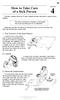 39 How to Take Care of a Sick Person Sickness weakens the body. To gain strength and get well quickly, special care is needed. Medicines are often not necessary. But good care is always important. The
SOUTHEAST MISSOURI STATE UNIVERSITY COURSE SYLLABUS. Title of Course: Child Health, Safety and Nutrition New: Fall 2000
 SOUTHEAST MISSOURI STATE UNIVERSITY COURSE SYLLABUS Department of: Human Environmental Studies Course No.: CF124 Title of Course: Child Health, Safety and Nutrition New: Fall 2000 I. Catalog Description
DRAFT. Report submitted to: The Food and Nutrition Technical Assistance (FANTA) Project
 DRAFT Development of a Behavior Change Communications Program to Prevent Malnutrition in the Central Plateau of Haiti: Results and Challenges from a Formative Research Study IFPRI-Cornell Research Team:
Nutrition and Chronic Kidney Disease
 Nutrition and Chronic Kidney Disease National Kidney Foundation s Kidney Disease Outcomes Quality Initiative (NKF-K/DOQI TM ) The National Kidney Foundation is developing guidelines for clinical care to
35-40% of GBS disease occurs in the elderly or in adults with chronic medical conditions.
 What is Group B Strep (GBS)? Group B Streptococcus (GBS) is a type of bacteria that is found in the lower intestine of 10-35% of all healthy adults and in the vagina and/or lower intestine of 10-35% of
Objectives. What is undernutrition? What is undernutrition? What does undernutrition look like?
 Objectives Basics Jean-Pierre Habicht, MD, PhD Professor Division of Nutritional Sciences Cornell University Types and causes Determinants Consequences Global occurrence and progress Way forward What is
Level 3. Applying the Principles of Nutrition to a Physical Activity Programme Level 3
 MULTIPLE CHOICE QUESTION PAPER Paper number APNU3.0 Please insert this reference number in the appropriate boxes on your candidate answer sheet Title MOCK PAPER Time allocation 50 minutes Level 3 Applying
Workshop 1. How to use Moringa leaves and other highly nutritious plants in a medical or nutritional context
 Workshop 1. How to use Moringa leaves and other highly nutritious plants in a medical or nutritional context Summary of discussions 1 Expected Results Product standards with acceptable range of variation
2. Incidence, prevalence and duration of breastfeeding
 2. Incidence, prevalence and duration of breastfeeding Key Findings Mothers in the UK are breastfeeding their babies for longer with one in three mothers still breastfeeding at six months in 2010 compared
SUMMARY TABLE OF FINDINGS Sudan Household Health Survey (SHHS) and Millennium Development Goals (MDG) indicators, Sudan, 2006
 SUMMARY TABLE OF FINDINGS Sudan Household Health Survey (SHHS) and Millennium Development Goals (MDG) indicators, Sudan, 2006 Topic CHILD MORTALITY Child mortality SHHS indicator number MDG indicator number
MILK It does a body good
 MILK It does a body good September 2007 In the early 90 s an ad campaign began that reminded Americans of the benefits of drinking milk. Besides the obvious benefits of strong teeth and bones milk provides
Super Baby Food Book Sample Chapter: Starting Solids: What Age? Which Food First? How Much? What Consistency?
 Super Baby Food Book Sample Chapter: Starting Solids: What Age? Which Food First? How Much? What Consistency? When Should I Start Feeding My Baby Solid Foods? The answer is: when your pediatrician tells
Maintaining Proper Bowel Elimination
 Peak Development Resources, LLC P.O. Box 13267 Richmond, VA 23225 Phone: (804) 233-3707 Fax: (804) 233-3705 After reading the newsletter, the nursing assistant should be able to: 1. Describe the normal
Organic Acid Disorders
 Genetic Fact Sheets for Parents Organic Acid Disorders Screening, Technology, and Research in Genetics is a multi-state project to improve information about the financial, ethical, legal, and social issues
DIETARY ADVICE FOR CONSTIPATION
 Leicestershire Nutrition and Dietetic Services DIETARY ADVICE FOR CONSTIPATION What is constipation? Constipation is one of the most common digestive complaints. Normal bowel habits vary between people.
Healthy Weight Loss Program
 Healthy Weight Loss Program NEW! SlimStyles PGX Granules SlimStyles PGX SlimStyx: Available in convenient single-serving Slimstyx packets (2.5 g each) All the products in this brochure are available at