
Connected Kids: Safe, Strong, Secure
|
|
|
- Loreen Gallagher
- 9 years ago
- Views:
Transcription
1 Connected Kids: Safe, Strong, Secure Dear Pediatrician, I am pleased to announce the launch of a new AAP program, Connected Kids: Safe, Strong, Secure. Surveys of pediatricians in 1998 and 2003 revealed that a majority of pediatricians want to counsel patients and their families about violence prevention and want the training and support that will enable them to do so. Connected Kids offers child health care providers a comprehensive, logical approach to integrating violence prevention efforts in their practices. Connected Kids brings an asset-based approach to anticipatory guidance, focusing on helping parents and families raise resilient children. Each counseling topic discusses the child s development, the parent s feelings and reactions in response to the child s development and behavior, and specific practical suggestions on how to encourage healthy social, emotional, and physical growth in an environment of support and open communication. This program evolved from efforts to prevent intentional injuries youth violence and child abuse. Extensive research, including focus groups with parents around the country, suggested that the most effective approach to these critical areas would be a positive one, an approach that supports the alliance between parents and pediatricians by providing specific, important advice about children and families throughout childhood. The program builds on TIPP The Injury Prevention Program in that information for parents and pediatricians is coordinated with scheduled health maintenance visits. Connected Kids supports these developmentally timed topics with counseling suggestions and with written handouts for parents and teens. Why is violence prevention important to the American Academy of Pediatrics? As increasing numbers of pediatricians report treating children for injuries related to child abuse, domestic violence, and community violence, it is clear that this issue requires the attention of all those who care for children. Just as we work to protect children from disease, disability, and unintentional injury, so must we help provide them with the tools to be safe from violence. Development of Connected Kids began with the 1999 report of the Task Force on Violence and ultimately involved extensive input from parents, teens, and more than 100 recognized experts in child health, mental health, and development as well as practicing general pediatricians. The three-year development process, which was supported by a grant from the US Department of Justice, has produced a program that is rooted in science, is responsive to the real-life challenges of parenting, incorporates many issues that pediatricians already include in their practices, and has been field-tested extensively. Read on for information about what s included in Connected Kids, how to obtain a copy of TIPP and Connected Kids on CD-ROM, and how to get started using Connected Kids in practice. I invite you to use the new Connected Kids resources in your practice and your community, joining the Academy and pediatricians nationwide in addressing this vitally important public health issue. Sincerely, Errol R. Alden, MD, FAAP Executive Director

2 How Do I Get Started Using Connected Kids? Connected Kids is a comprehensive program for use in well-child visits for all children from birth to age 21. Its organization follows the familiar TIPP model: there are suggestions for topics to introduce and reinforce at scheduled visits, supported by printed materials to give to parents and teens to reinforce your advice. Fortunately, Connected Kids is a user-friendly and flexible program for providers and families, and it was designed so that you can implement it at your own pace in a way that is comfortable for you. Here are some suggestions for getting started with Connected Kids, based on how field testers used this program. One or more of these ideas may help you begin: 1. Understand Connected Kids. The clinical guide introduces the building blocks of the program and provides suggestions for specific office visits. Connected Kids does not require you to practice in an entirely new way; instead, it provides a different way to think about much of what you already do in providing well-child care. You can use Connected Kids tools to frame your counseling in an asset-based philosophy that pediatricians and parents find to be appealing and successful. 2. Start small and build incrementally. Try implementing Connected Kids with one or two visits or topics at a time. You might want to pick a visit during which you already cover topics addressed in Connected Kids but for which you feel you are lacking appropriate tools. For example, maybe you already counsel parents never to shake their babies, but you could implement Connected Kids at the very first visit to help them anticipate that their babies will cry and help them find needed support at the beginning. Or, you could pick a topic that you have wanted to address but didn t because you did not have the needed If you are interested in receiving periodic updates about Connected Kids, please send an to [email protected] with updates in the subject line. information. For example, bullying is a hot topic, and Connected Kids could help you counsel families of bullies and children who are being bullied. 3. Be a leader. Successful use of Connected Kids will require the support of all practice staff. You can pave the way by serving as your practice s Connected Kids champion. You might want to hold a staff meeting to discuss how your practice can use Connected Kids. You can use the Connected Kids PowerPoint presentation (available on the Connected Kids Web site at to introduce your practice to the program. Share your vision for how the practice can implement Connected Kids while being open to ideas from everyone else, from the receptionist to your partners. 4. Share your experience and get ideas from others. Visit the Connected Kids Web site for success stories and suggestions from pediatricians around the country. Use the Web site to pose questions about Connected Kids and get information about how others have overcome barriers to implementing the program. Talk to local colleagues who have implemented Connected Kids about their experiences. 5. Be patient. Your practice won t be able to implement all of Connected Kids overnight. But Connected Kids field testers overwhelmingly felt that the program was easy to adapt to their own practice styles. Even experienced pediatricians found that once they started becoming more comfortable using Connected Kids it improved their counseling, their ability to address violence prevention, and their relationships with parents.

3 The Connected Kids Clinical Guide offers pediatricians comprehensive advice on how to implement the program in clinical practice. It provides counseling suggestions for each age and well-child visit, including information about important topics in each brochure, suggested scripts for assessment and anticipatory guidance, and practical hints about how to discuss sensitive topics. The Clinical Guide also includes several tools and worksheets that reinforce important messages and help connect families to valuable community resources. The Connected Kids Clinical Guide can be found on the AAP TIPP and Connected Kids on CD-ROM. Infancy and Early Childhood: Prenatal to 5-Year-Old Visits Visit Introduce Reinforce Brochures 2 Days to What Babies Do 1. Welcome to the 4 Weeks Parental Frustration World of Parenting! Parent Mental Health Parent Support 2 and 4 Child Care Parent Mental Health 2. Parenting Your Infant Months Family Parent Support Safe Environment Parenting Style Bonding and Attachment 6 and 9 Establishing Routines Parent Support 3. How Do Infants Learn? Months Discipline = Teaching Child Care 4. Your Child Is On the Firearms Safe Environment Move: Reduce the Risk Modeling Behavior Bonding and Attachment of Gun Injury 12 and 15 Child Development Parenting Style 5. Teaching Good Months and Behavior Firearms Behavior: Tips on Modeling Behavior How to Discipline Safe Environment 18 Months Child s Assets Parent Support 6. Playing Is How and 2 Years Guided Participation Firearms Toddlers Learn Media Child Development 7. Pulling the Plug on and Behavior TV Violence Establishing Routines 3 and 4 Peer Playing Modeling Behavior 8. Young Children Learn Years Safety in Others Homes Guided Participation a Lot When They Play Talking About Emotions Promoting Independence

4 Middle Childhood: 5- to 10-Year-Old Visits Visit Introduce Reinforce Brochures 5 Years Establishing Routines Child Development 9. Growing Independence: and Setting Limits and Behavior Tips for Parents of Child s Assets Young Children Safety in Others Homes Promoting Independence 6 Years Teaching Behavior Modeling Behavior 10. Bullying: It s Not OK Bullying Establishing Routines Out-of-School Time and Setting Limits 8 Years School Connections Firearms 11. Drug Abuse Alcohol and Drugs Promoting Independence Prevention Starts Interpersonal Skills Establishing Routines With Parents and Setting Limits 12. Friends Are Important: Tips for Parents 10 Years Child Mental Health Media 13. Everybody Gets Mad: School Performance Out-of-School Time Helping Your Child Cope with Conflict Adolescence Visit Introduce Reinforce Brochures Early: Family Time Together Firearms 14. Talking With Your Teen: 11 to 14 Peer Relationships Establishing Routines and Tips for Parents Years Support System Setting Limits 15. Staying Cool When Staying Safe Alcohol and Drugs Things Heat Up Teen Mental Health School Performance 16. Expect Respect: Conflict Resolution Skills Healthy Relationships Healthy Dating Gaining Independence 17. Teen Dating Violence: Tips for Parents Middle: Plans for the Future Alcohol and Drugs 18. Teen Suicide and Guns 15 to 17 Firearms and Suicide Peer Relationships 19. Next Stop Adulthood: Years Depression Healthy Dating Tips for Parents Resiliency Gaining Independence Late: Transition to Peer Relationships 20. Help Stop Teenage 18 to 21 Independence Plans for the Future Suicide Years Negotiating a Depression 21. Connecting With New Environment Your Community

5 Connected Kids Brochures Infancy and Early Childhood: Prenatal to 5-Year-Old Visits 1. Welcome to the World of Parenting! Provides new parents with information about normal newborn behaviors and development. It offers parents ways to cope with crying, fatigue, relationship changes, and other challenges of new parenthood. 2. Parenting Your Infant Continues themes of the first brochure, focusing on babies behaviors and personality development. It discusses common concerns such as colic, trouble sleeping, and clinging to parents, and gives advice on establishing new family routines. 3. How Do Infants Learn? Offers practical suggestions to parents on how to help their babies learn about the world through play, reading, exploration, and positive relationships. 4. Your Child is On the Move: Reduce the Risk of Gun Injury Discusses guns as a household safety issue, to be addressed with other household hazards. This brochure advises parents on how to protect their newly mobile babies from gun injury as they explore their surroundings. 5. Teaching Good Behavior: Tips on How to Discipline Gives specific suggestions on how to encourage good behavior and correct bad behavior in developmentally appropriate ways. It helps parents establish rules and limits and provides tips on alternatives to corporal punishment. 6. Playing Is How Toddlers Learn Helps parents understand normal toddler behavior and how to encourage learning through play. It offers ways to help toddlers learn to make friends and interact with others. 7. Pulling the Plug on TV Violence Informs parents about the influence of television violence on children and gives them specific suggestions on how to limit television s harmful effects. 8. Young Children Learn a Lot When They Play Discusses playing with peers and how parents can support their preschool-aged child s social development. This brochure gives tips on how to deal with common interpersonal problems, such as aggression and rejection. Middle Childhood: 5- to 10-Year-Old Visits 9. Growing Independence: Tips for Parents of Young Children Offers guidance to parents in helping their children begin to become independent. It focuses on establishing limits and daily routines, talking and listening, encouraging independence in daily tasks, teaching safety around other adults, and learning to be a friend. 10. Bullying: It s Not OK Offers facts about bullying and strategies for parents to help stop bullying, whether their child is a victim, a perpetrator, or a bystander. This brochure is useful in clinical settings or as a handout for school and community groups. 11. Drug Abuse Prevention Starts with Parents Highlights the connection between parent behavior and attitudes, media influences, parent/child communication, and children s subsequent use of drugs and alcohol. Major themes include parental role modeling and open communication. Adolescence 12. Friends Are Important: Tips for Parents Focuses on the importance of peer relationships as children become teenagers. It offers parents guidance on getting to know their child s friends, helping their child avoid risky situations, and getting their child involved in community service. 13. Everybody Gets Mad: Helping Your Child Cope with Conflict Describes children s anger and guides parents in giving their children specific strategies to avoid fighting when they are angry. It emphasizes communication and teaching children how to respond to their anger in appropriate ways. 14. Talking with Your Teen: Tips for Parents Helps parents understand the ways that their children s feelings and behaviors will change as they enter puberty and the teen years. It emphasizes the importance of continued communication and establishing reasonable limits to keep teens safe. 15. Staying Cool When Things Heat Up Acknowledges that it is normal for teens to get angry and helps them find ways to respond to their anger without fighting. Written for young adolescents, it offers methods of defusing conflict and helping other teens avoid fighting. 16. Expect Respect: Healthy Relationships Guides teens in avoiding abusive relationships and intimate partner violence. Written for adolescents, it describes signs of healthy and unhealthy relationships in an interactive quiz format and empowers teens to take steps to change or end an unhealthy relationship. 17. Teen Dating Violence: Tips for Parents Helps parents recognize signs that their teenager is involved in an abusive relationship. It offers parents advice on how to talk about potential problems and help their teenager deal with the relationship safely. 18. Teen Suicide and Guns Highlights the risk of having a gun in the home in the context of teen suicide prevention. It provides the facts about suicide attempts involving guns being deadly more often than attempts by other methods. 19. Next Stop Adulthood: Tips for Parents Helps parents and teenagers negotiate the complex relationship changes that occur as teenagers become more independent. It gives advice to parents on helping their teen learn to be a responsible adult while staying connected and having realistic expectations. 20. Help Stop Teenage Suicide Provides information about warning signs for suicide and dispels common myths about teen suicide. It offers practical suggestions to parents, peers, and others on how to respond if you are concerned that a teen may attempt suicide. 21. Connecting With Your Community Encourages teenagers to be actively involved in their communities as a way of growing into an independent and successful adult. It provides information on what adolescents can expect as their relationships with their parents and other adults change.

6 Internet For secure online ordering. NEW! TIPP and Connected Kids on CD-ROM: Injury and Violence Prevention Counseling Resources TIPP and Connected Kids on CD-ROM: Injury and Violence Prevention Counseling Resources includes Complete TIPP The Injury Prevention Program, which consists of 40 printable and age-related safety sheets, safety slips, and safety surveys NEW! Connected Kids: Safe, Strong, Secure violence intervention and prevention program, which consists of 21 child and adolescent violence prevention resources and handouts Plus additional TIPP and Connected Kids: Safe, Strong, Secure resources and implementation guides TIPP The Injury Prevention Program is a comprehensive and easy-to-use program to help parents prevent common childhood injuries from birth through age 12 years. Since the program was first introduced more than 20 years ago, more than 21 million TIPP handouts have been distributed on topics such as bicycle safety, car safety seats, fire prevention, first aid, poison prevention, water safety, and much more. NEW! Connected Kids: Safe, Strong, Secure is a new set of resources developed by the Violence Intervention and Prevention Program (VIPP). Connected Kids: Safe, Strong, Secure provides pediatricians with guidance and patient-oriented materials to take an asset-based approach to violence prevention. The CD-ROM includes 21 Connected Kids: Safe, Strong, Secure handouts on topics such as bullying, discipline, interpersonal skills, parenting, suicide, television violence, and much more. TIPP and Connected Kids on CD-ROM, 2006 X-CD0038 Price: $325 Member Price: $275 For multiple users or institutional site licensing, call 800/ , ext FOUR EASY WAYS TO ORDER Call Toll-free Fax 888/ / :00 am to 5:30 pm CST Include your credit card (Call 847/ outside number or POs. the US and Canada.) Do not mail confirming PO. BILLING ADDRESS PLEASE SEND Mail Send completed order to American Academy of Pediatrics Eagle Way Chicago, IL ITEM MEMBER ITEM DESCRIPTION NUMBER QUANTITY PRICE PRICE TOTAL TIPP and Connected Kids on CD-ROM X-CD0038 $325 $275 SUBTOTAL Name Member ID Organization Address City/State/ZIP Name Member ID Organization Address City/State/ZIP SHIPPING ADDRESS METHOD OF PAYMENT Check or money order (payable to the American Academy of Pediatrics) Charge: VISA MasterCard Discover AMEX if different than billing address IL RESIDENTS ADD 8.75% SALES TAX* CANADIAN ORDERS ADD 7% GST CANADIAN ORDERS ADD 8% HST ADD SHIPPING & HANDLING TOTAL * Illinois Residents: Sales tax applicable to all products except patient education materials. If you or your organization is tax-exempt, please provide us with a copy of your Tax-Exempt Certificate. If the publication(s) is for resale, please provide us with a copy of your Resale Certificate. HST affects provinces Nova Scotia, New Brunswick, Newfoundland, and Labrador. Allow 2 to 3 weeks for delivery. Prices subject to change. SHIPPING & HANDLING UNITED STATES OUTSIDE THE (FEDEX GROUND) CANADA US & CANADA CD-ROM ONLY $5.95 $7.95 $9.95 Card Number Expiration Date Authorized Signature CID Number Telephone Number System Requirements: Windows 95/98/ME/2000/XP/NT: Pentium processor, 64 MB RAM, 4X CD-ROM drive. Macintosh : PowerPC processor, Mac OS 9.1 or later, CarbonLib or later, 64 MB RAM, 4X CD-ROM drive. PROMO CODE P5525 FOR OFFICE USE ONLY Customer # Check #

EAP Pamphlet List. General Healthcare Section. What Everyone Should Know About Wellness. What You Should Know About Self-Esteem. Your Attitude And You
 EAP Pamphlet List Listed below are pamphlets that are in stock at the Employee Assistance Program. They cover a wide range of topics and are intended to be a source of general information. They are in
Grade 8 Lesson Stress Management
 Grade 8 Lesson Stress Management Summary This lesson is one in a series of Grade 8 lessons. If you aren t able to teach all the lessons, try pairing this lesson with the Weighing Risks to Make Decisions,
Facts for Teens: Youth Violence
 P.O. Box 6003 Rockville, MD 20849-6003 [email protected] www.safeyouth.org Facts for Teens: Youth Violence Introduction Many teenagers are concerned about youth violence, and with good reason. Each
A Parent s Guide. Talking with your child about alcohol and other drugs. Helping our Communities to be Healthier
 A Parent s Guide Talking with your child about alcohol and other drugs Helping our Communities to be Healthier ISBN # 978-1-55471-238-0 CNB - 6569 1. Introduction Most of our children do not end up abusing
Introduction to Healthy Family Dynamics
 Introduction to Parents & Families: Relationships are important to a satisfying life and learning about healthy relationships begins at home. Family provides the foundation for our sense of security and
WHY DO WE GET ANGRY? EVERYONE FEELS ANGRY SOMETIMES
 FEELING ANGRY? WHY DO WE GET ANGRY? There are lots of things that can make us angry. Here are a few examples... EVERYONE FEELS ANGRY SOMETIMES It s normal and healthy to get angry when there is a good
CLINICAL GUIDE. Connected Kids: Safe, Strong, Secure CLINICAL GUIDE
 CLINICAL GUIDE Acknowledgments We want to thank and acknowledge the many authors, reviewers, and consultants, in addition to the many other professionals and experts for their commitment and invaluable
Bullying: A Systemic Approach to Bullying Prevention and Intervention
 Bullying: A Systemic Approach to Bullying Prevention and Intervention Session 3 Educators and Teachers icare.ebrschools.org An Alcohol, An Alcohol, Drug Abuse Drug Abuse and Violence and Violence Prevention
Bullying Prevention. When Your Child Is the Victim, the Bully, or the Bystander
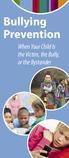 Bullying Prevention When Your Child Is the Victim, the Bully, or the Bystander What Is Bullying? Bullying is not a conflict or a fight. Bullying is physical, verbal, or emotional abuse that is deliberate,
Young Men s Work Stopping Violence & Building Community A Multi-Session Curriculum for Young Men, Ages 14 19 From HAZELDEN
 Young Men s Work Stopping Violence & Building Community A Multi-Session Curriculum for Young Men, Ages 14 19 From HAZELDEN What is Young Men s Work? Young Men s Work: Stopping Violence and Building Community
DOMESTIC VIOLENCE AND CHILDREN. A Children s Health Fund Report. January, 2001
 DOMESTIC VIOLENCE AND CHILDREN A Children s Health Fund Report January, 2001 Peter A. Sherman, MD Division of Community Pediatrics The Children s Hospital at Montefiore -1- Introduction Domestic violence
HELPING YOUNG CHILDREN COPE WITH TRAUMA
 HELPING YOUNG CHILDREN COPE WITH TRAUMA Disasters are upsetting to everyone involved. Children, older people, and/or people with disabilities are especially at risk. For a child, his or her view of the
Seminars and Trainings
 Seminars and Trainings CMG Associates specializes in providing customized training programs for businesses of every size and type. Rapid change and competing pressures are defining features of today s
Stress Management. comprehend stress, (2) manage it and (3) respond positively to stress management as it applies to their life and goals.
 xxx Lesson 22 Stress Management Overview: Stress Management is a lesson that helps learners to understand that stress is a part of everyone s life. This lesson focuses on how learners are feeling and what
supporting social-emotional needs
 supporting social-emotional needs supporting social-emotional needs. Understanding Social-Emotional Disorders. Exploring Emotions and the Brain. Modeling Control. Supporting Emotional Needs. Resources
NEW YORK STATE TEACHER CERTIFICATION EXAMINATIONS
 NEW YORK STATE TEACHER CERTIFICATION EXAMINATIONS TEST DESIGN AND FRAMEWORK September 2014 Authorized for Distribution by the New York State Education Department This test design and framework document
School-Based Health Education: Standards and Instruction for Real-Life Healthy Behaviors
 School-Based Health Education: Standards and Instruction for Real-Life Healthy Behaviors California Healthy Kids Resource Center (C.H.K.R.C.) Hello, and welcome to the School-Based Health Education: Standards
WORK & FAMILY CONSULTING, INC. CORRESPONDENCE COURSES
 WORK & FAMILY CONSULTING, INC. CORRESPONDENCE COURSES ENJOY 10% OFF ANY ORDER OF 4 OR MORE CLASSES! Work & Family Consulting, Inc. has been serving the training needs of early childhood staff since 1995.
In-service training available through Netflix
 In-service training available through Netflix Instructions: Request the video from Netflix, print out and complete the worksheet for that particular movie, and return the completed worksheet to your licensor.
Workforce Development Online Workshop Descriptions
 Workforce Development Online Workshop Descriptions Behavioral Health Service Delivery Workshops: The Effects of Violence Exposure on Children (1.5 hours) Regretfully, violence against children and youth
Bullying. Take Action Against. stealing money. switching seats in the classroom. spreading rumors. pushing & tripping
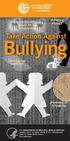 switching seats in the classroom stealing money Take Action Against Bullying spreading rumors pushing & tripping U.S. DEPARTMENT OF HEALTH & HUMAN SERVICES Substance Abuse and Mental Health Services Administration
Explaining Separation/Divorce to Children
 Explaining Separation/Divorce to Children By: Liana Lowenstein, MSW (Tel) 416-575-7836 (email) [email protected] (Web) www.lianalowenstein.com General Tips Prepare yourself before addressing the issue
Georgia Performance Standards. Health Education
 HIGH SCHOOL Students in high school demonstrate comprehensive health knowledge and skills. Their behaviors reflect a conceptual understanding of the issues associated with maintaining good personal health.
Restorative Parenting: A Group Facilitation Curriculum Activities Dave Mathews, Psy.D., LICSW
 Restorative Parenting: A Group Facilitation Curriculum Activities Dave Mathews, Psy.D., LICSW RP Activities 1. Framework of Resourcefulness 2. Identifying the Broken Contract Articles 3. The Process of
Cyber Bullying: A Prevention Curriculum for Grades 6-12 Scope and Sequence
 Cyber Bullying: A Prevention Curriculum for Grades 6-12 Scope and Sequence Cyber Bullying: A Prevention Curriculum for Grades 6-12 What is Cyber Bullying: A Prevention Curriculum for Grades 6-12? Cyber
Issue Brief. Teen Pregnancy, Parenting, And Dating Violence. Links Between Teen Dating Violence and Teen Pregnancy
 Issue Brief N O. 8 J U L Y 2 0 0 9 Teen Pregnancy, Parenting, And Dating Violence D ating violence and teen pregnancy are intricately linked. Research indicates that teen girls who are in abusive relationships
HEAD START PERFORMANCE STANDARDS W/ MENTAL HEALTH FOCUS
 HEAD START PERFORMANCE STANDARDS W/ MENTAL HEALTH FOCUS This list represents a variety of Head Start Performance Standards that include some aspect of mental health; however, it is not exhaustive of every
6864 NE 14th Street, Suite 5 Ankeny, IA 50023 800.277.8145 Toll free 515.289.4567 Dsm area www.ifapa.org Website ifapa@ifapa.
 About IFAPA The Iowa Foster and Adoptive Parents Association (IFAPA) is a non profit organization serving as a resource to foster, adoptive and kinship families in Iowa. Membership with IFAPA is free for
Overview of School Counselling
 EDPY 442: INTRODUCTION TO COUNSELLING School Counselling Guest Lecture: Dr. Carley Christianson Overview of School Counselling School counsellors are unique to their practice as they provide a wide array
EFFECTIVE DISCIPLINE
 PRACTICE GUIDE EFFECTIVE DISCIPLINE CHILD DEVELOPMENT 12 Months-Introduce 15 Months-Reinforce 2 Years-Reinforce FINDING OUTLETS FOR YOUR CHILD S AUTONOMY/TANTRUMS PROBLEM SOLVING A BEHAVIORAL ISSUE NORMAL
FAMILY INTERVENTION FOR UNACCOMPANIED HOMELESS YOUTH
 FAMILY INTERVENTION FOR UNACCOMPANIED HOMELESS YOUTH Family conflict is a major contributor to youth homelessness. The National Alliance to End Homelessness (Alliance) estimates that each year 550,000
Risk and Resilience 101
 Risk and Resilience 101 July 2004 Thirty years ago, most prevention efforts relied on fear. They tried to convince young people that smoking or using drugs would damage their health and ruin their futures.
Objective: Identify effects of stress on everyday issues and strategies to reduce or control stress.
 Lesson Plan: Dealing with Stress Objective: Identify effects of stress on everyday issues and strategies to reduce or control stress. Time: 45-60 minutes Structure: On-line homework before class (Stress
WORKSHOPS and PRESENTATIONS. Offered by the Employee Assistance Program and the Program of Assistance for Students
 WORKSHOPS and PRESENTATIONS Offered by the Employee Assistance Program and the Program of Assistance for Students WORKSHOPS EAP/PAS Workshops 2 Topic Page 1. Anger Management / Handling Emotions 3 2. Stress
Healthy and Safety Awareness for Working Teens Unit 5 Communicating Workplace Problems
 Healthy and Safety Awareness for Working Teens Unit 5 Communicating Workplace Problems Unit 5 Communicating Workplace Problems 1 Unit 5 Overview This purpose of this unit is to help students develop the
Underage Drinking. Underage Drinking Statistics
 Underage Drinking Underage drinking is a serious public health problem in the United States. Alcohol is the most widely used substance of abuse among America s youth, and drinking by young people poses
Outline Chapter 1 Child Psychology 211 Dr. Robert Frank. 1 What is child development, and how has its study evolved?
 Outline Chapter 1 Chapter 1: GUIDEPOSTS FOR STUDY 1 What is child development, and how has its study evolved? 2 What are six fundamental points about child development on which consensus has emerged? 3
Scottish Parliament Health and Sport Committee s Inquiry into Teenage Pregnancy in Scotland Evidence from CHILDREN 1 ST
 Scottish Parliament Health and Sport Committee s Inquiry into Teenage Pregnancy in Scotland Evidence from CHILDREN 1 ST February 2013 For over 125 years CHILDREN 1 ST has been working to build a better
Best Practices for Parent Education Programs Seeking to Prevent Child Abuse
 Best Practices for Parent Education Programs Seeking to Prevent Child Abuse Lisa C. Shannon, Ph.D. Extension Associate: Children, Youth, and Families North Carolina State University Cooperative Extension
Underage Drinking Facts and Tips for Parents
 Underage Drinking Facts and Tips for Parents Officer Michael Markunas Nether Providence Township Police Department A.S.D.S., Y.D.P. Instructor, Delaware County Delaware County Heroin Task Force / N.O.P.E.
Their stories are tragic. A new chapter starts now. now.
 ! Their stories are tragic. A new chapter starts now. now.! Bully is a movie that tells powerful stories about children and their families dealing with extreme pain and tragic consequences related to bullying.
Child Development. Caseworker Core Training Module VII: Child Development: Implications for Family-Centered Child Protective Services
 Child Development P R E - T R A I N I N G A S S I G N M E N T Caseworker Core Training Module VII: Child Development: Implications for Family-Centered Child Protective Services Developed by the Institute
Understanding healthy childhood sexual development plays a key role in child sexual abuse
 Awareness Month 2013 An overview of healthy childhood sexual Understanding healthy childhood sexual plays a key role in child sexual abuse prevention. Many adults are never taught what to expect as children
Social and Emotional Wellbeing
 Social and Emotional Wellbeing A Guide for Children s Services Educators Social and emotional wellbeing may also be called mental health, which is different from mental illness. Mental health is our capacity
Goodheart-Willcox Publisher
 Department of Education 2009-2010 State Textbook Adoption Correlations Subject Area: Family & Consumer Sciences Course: Parents and Their Children 2010 ISBN 978-1-59070-926-9 www.g-w.com Students take
Virtual Child Written Project Assignment. Four-Assignment Version of Reflective Questions
 Virtual Child Written Project Assignment Four-Assignment Version of Reflective Questions Virtual Child Report (Assignment) 1: Infants and Toddlers (20 points) Choose 7 or 8 questions whose total point
ACTION. What if Your Child IS the One Showing Bullying Behavior? PACER CENTER. So who does it? What is bullying? Bully versus child who bullies
 PACER CENTER ACTION INFORMATION SHEETS What if Your Child IS the One Showing Bullying Behavior? The word bullying often conjures up an image of a schoolyard scene, with a big, intimidating student towering
Introduction. Communities That Care
 Introduction Communities That Care Research-based prevention planning 4Research-Based Planning The programs, policies and practices in this guide will have the greatest impact in your community when implemented
Targeted Needs Training. Training Topics. Training Techniques
 Infant/Toddler Professional Caregiver Certificate (I/T 121) A formal online training series of six separate modules providing an opportunity to build Infant/Toddler training hours and earn a professional
SCHOOL SERVICES. Promoting learning through. behavioral supports for students. classroom management training for teachers
 SCHOOL SERVICES Promoting learning through n Academic, social, emotional and behavioral supports for students n Behavioral intervention and classroom management training for teachers Contact s student
Promoting Family Stability in a Down Economy Rae Jean Proeschold-Bell, Ph.D.
 Promoting Family Stability in a Down Economy Rae Jean Proeschold-Bell, Ph.D. Intuitively we know that families matter greatly. Families impact the well-being of their children and are the back-bone of
Bullying. Introduction
 Bullying 1 Introduction In recent years, bullying has become a topic of greater public concern. Research has shown the damaging long-term effects that bullying behavior can have on its victims. Approximately
Working with Youth to Develop Critical Thinking Skills On Sexual Violence and Dating Violence: Three Suggested Classroom Activities
 Working with Youth to Develop Critical Thinking Skills On Sexual Violence and Dating Violence: Three Suggested Classroom Activities The Southern Arizona Center Against Sexual Assault s Rape Prevention
A Guide for Parents. of Elementary and Secondary School Students
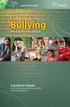 A Guide for Parents of Elementary and Secondary School Students The effects of bullying go beyond the school yard. As a parent, here s what to watch for, what you can do, and where you can go to get help.
THE CAUSES OF DRUG ADDICTION
 1 Statistical facts associated with addiction and substance abuse are concerning, but many men and women choose to ignore the dangers. By understanding the main causes of addiction to drugs, it is possible
State and National School Safety Resources Here you will find a summary of all of the resources listed throughout this guide.
 State and National School Safety Resources Here you will find a summary of all of the resources listed throughout this guide. This guide was adapted from the three national resources below: The Centers
Bullying Prevention: Steps to Address Bullying in Schools. Getting Started
 Bullying Prevention: Steps to Address Bullying in Schools Getting Started Bullying can threaten students physical and emotional safety at school and can negatively impact their ability to learn. The best
Sample Letters Death Announcements
 Sample Letters Death Announcements Sample Letter to Parents Dear Parents, As you may or may not be aware, our school (or district) has recently experienced (specify event, whether death, fire, etc.) which
WV Birth to Three. Comprehensive System of Personnel Development CORE COMPETENCIES FOR EARLY INTERVENTION AND SERVICE COORDINATION SPECIALISTS
 WV Birth to Three Comprehensive System of Personnel Development CORE COMPETENCIES FOR EARLY INTERVENTION AND SERVICE COORDINATION SPECIALISTS April, 2003 Revised May, 2008 Acknowledgments The WV Birth
The Fourth R. A school-based program to prevent adolescent violence and related risk behaviours. Hasslet, Belgium
 A school-based program to prevent adolescent violence and related risk behaviours Hasslet, Belgium Fourth R National Team David Wolfe, Ph.D. RBC Investments Chair in Developmental Psychopathology and
Adolescence Alcohol Drugs
 Adolescence Alcohol Drugs What parents need to know order code DA065 The adolescent years have always been challenging for both parents and youth. This is a time when a young person develops his or her
How Health Reform Will Help Children with Mental Health Needs
 How Health Reform Will Help Children with Mental Health Needs The new health care reform law, called the Affordable Care Act (or ACA), will give children who have mental health needs better access to the
PSYC-102 COURSE SYLLABUS FOR DEVELOPMENTAL PSYCHOLOGY
 Coffeyville Community College PSYC-102 COURSE SYLLABUS FOR DEVELOPMENTAL PSYCHOLOGY Kansas Regents Shared Number Courses Syllabus Statement Reapproved by the Kansas Council of Instructional Administrators,
THE ANGLO-AMERICAN SCHOOL OF MOSCOW. K-12 Health Education
 THE ANGLO-AMERICAN SCHOOL OF MOSCOW K-12 Health Education The Physical Education curriculum is designed to encourage a commitment to a lifelong healthy lifestyle. Our program promotes personal, social,
Family Engagement and Ongoing Child Assessment
 Family Engagement and Ongoing Child Assessment The partnership between parents and Head Start staff is fundamental to children s current and future success and their readiness for school. This relationship
Child and Youth Care Worker
 PROGRAM OBJECTIVES The Child and Youth Care Worker Program is designed to teach students the necessary practical skills and theory to work with adolescents, children and families with challenging needs
Grade K Health Education, Quarter 1, Unit 1 of 2. Mental and Emotional Health: You Think and Feel. Overview
 Grade K Health Education, Quarter 1, Unit 1 of 2 Mental and Emotional Health: You Think and Feel Overview Overall Days: 4-5 days (1 day = 30 minutes) Content to be learned Choose healthy behaviors. Identify
Talk To Your Baby Quiz
 Talk To Your Baby Quiz 1. When should you start talking to babies? a) From the moment they are born b) After six weeks c) When they smile at you 2. When does the majority of brain development occur in
How To Prevent Suicide In High School
 The Role of High School Teachers in Preventing Suicide Understand Why Suicide Prevention Fits with Your Role as a High School Teacher Ms. Gomez, a high school social studies teacher, was concerned about
Logic Model for ECCS Program: The Oklahoma Early Childhood Comprehensive Systems (ECCS) Statewide Plan/Smart Start Oklahoma INTERVENTION
 GRANTEE/ PROJECT CHARACTERISTICS (i.e., goals and description of the project, environment, description of population/case load and partner organizations): TOTAL FUNDS REQUESTED: (for the first year of
June 20, 2012. Testimony of. Vera F. Tait MD, FAAP. On behalf of the. American Academy of Pediatrics. Before the
 Testimony of Vera F. Tait MD, FAAP On behalf of the Before the Subcommittee on Personnel, Senate Armed Services Committee Department of Federal Affairs 601 13th Street NW, Suite 400 North Washington, DC
Role of Occupational Therapy With Infants, Toddlers, and Families in Early Intervention. The American Occupational Therapy Association, Inc.
 Role of Occupational Therapy With Infants, Toddlers, and Families in Early Intervention Occupational therapy promotes function and engagement in daily habits and routines. the occupation of life skills
SCREENING FOR INTIMATE PARTNER VIOLENCE IN THE PRIMARY CARE SETTING
 SCREENING FOR INTIMATE PARTNER VIOLENCE IN THE PRIMARY CARE SETTING Partner violence can affect one third of the patients cared for in the primary care setting. The primary care setting offers an opportunity
Section 2.2. Self-Esteem. Objectives. Compare the effects of high and low selfesteem
 Objectives Compare the effects of high and low selfesteem on health. Describe the changes in self-esteem that can occur as people age. Identify ways to achieve and maintain high self-esteem. Summarize
Child Protection. Be vigilant, report child abuse
 Child Protection Be vigilant, report child abuse Introduction All children have the right to live free of abuse. Most children grow up in families where they are safe and secure. Others may be abused
Raising Drug-Free Teens
 A Parent s Guide to Raising Drug-Free Teens Dear Parent, You are the single most important influence in keeping your children drug free. In fact, research shows that the number one reason teenagers don
Infusion of School Bullying Prevention Into Guidance Curriculum. Significance of Bullying Prevention Program
 Infusion of School Bullying Prevention Into Guidance Curriculum October, 29, 2007 Charleston, SC Insoo Oh, Ph.D. Assistant Professor University of South Carolina Significance of Bullying Prevention Program
AN ELECTRONIC PULBLICATION OF THE UNBC TASK FORCE ON SUBSTANCE ABUSE, THE CENTRE OF EXCELLENCE FOR CHLDREN AND ADOLESCENTS WITH SPECIAL NEEDS
 FEBRUARY, 2007 AN ELECTRONIC PULBLICATION OF THE UNBC TASK FORCE ON SUBSTANCE ABUSE, THE CENTRE OF EXCELLENCE FOR CHLDREN AND ADOLESCENTS WITH SPECIAL NEEDS. WINTER 2007, VOLUME 1, ISSUE 1 IN THIS ISSUE:
Trauma and the Family: Listening and learning from families impacted by psychological trauma. Focus Group Report
 Trauma and the Family: Listening and learning from families impacted by psychological trauma Focus Group Report A summary of reflections and remarks made by Baltimore City families impacted by trauma and
Walking a Tightrope. Alcohol and other drug use and violence: A guide for families. Alcohol- and Other Drug-related Violence
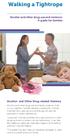 Walking a Tightrope Alcohol and other drug use and violence: A guide for families Alcohol- and Other Drug-related Violence Alcohol and other drug use and family violence often occur together. Families
2015-16. July 1 Dec. 31 for HIB Trainings and Programs Sept. 1 Dec. 31 for HIB Investigations and Incidents
 Harassment, Intimidation, and Bullying Investigations, Trainings and Programs (HIB-ITP) Data Collection 2015-16 Reporting Period 1 Reporting Period 2 July 1 Dec. 31 for HIB Trainings and Programs Sept.
A GUIDE TO MAKING CHILD-FOCUSED PARENTING TIME DECISIONS
 A GUIDE TO MAKING CHILD-FOCUSED PARENTING TIME DECISIONS 2 Prepared by The Court Services Advisory Committee of the Maine District Court This booklet is based on information from the Minnesota Supreme
What Can I Do To Help Myself Deal with Loss and Grief?
 What Can I Do To Help Myself Deal with Loss and Grief? There are certain tasks that help people adjust to a loss. Every person will complete these tasks in his or her own time and in his/her own way. The
Schizophrenia National Institute of Mental Health
 Schizophrenia National Institute of Mental Health U.S. DEPARTMENT OF HEALTH AND HUMAN SERVICES National Institutes of Health Schizophrenia Do you know someone who seems like he or she has lost touch with
Stories of depression
 Stories of depression Does this sound like you? D E P A R T M E N T O F H E A L T H A N D H U M A N S E R V I C E S P U B L I C H E A L T H S E R V I C E N A T I O N A L I N S T I T U T E S O F H E A L
The CMC- The Coming Home Contract
 During Resident breaks and before coming home the teen prepares to transition out of FMSLH and back into their community. With the help of FMSLH staff and weekly meetings the family is coached through
Family Matters PTIC Training Topics and Agendas
 RtI Family Matters PTIC Training Topics and Agendas Response to Intervention (RtI): Helping All Kids Succeed (Includes DVD on RtI) 1-Origin of RtI Within the IDEA and NCLB 2-Pyramid for Designing School-Wide
Eyes on Aggressive behaviours. You can help to manage them
 Eyes on Aggressive behaviours You can help to manage them Aggressive behaviours What do we know? From pregnancy to 6 months old n Children are better able to control their aggressive behaviours if their
PSHE at key stages 1 4 Guidance on assessment, recording and reporting
 PSHE at key stages 1 4 Guidance on assessment, recording and reporting October 2005 QCA/05/2183 Contents About this guidance...2 What is this guidance for?...2 Why is assessment important?...2 Who is this
THE EFFECTS OF FAMILY VIOLENCE ON CHILDREN. Where Does It Hurt?
 THE EFFECTS OF FAMILY VIOLENCE ON CHILDREN Where Does It Hurt? Child Abuse Hurts Us All Every child has the right to be nurtured and to be safe. According to: Family Violence in Canada: A Statistical Profile
Young people and drugs
 Young people and drugs Many parents worry about whether their son or daughter is taking illegal drugs, how they can tell, and what to do about it. While there s a lot of concern about illegal drugs in
[Sensitive topics can be difficult for many parents of adolescents to talk about]
![[Sensitive topics can be difficult for many parents of adolescents to talk about]](/thumbs/40/21844215.jpg "[Sensitive topics can be difficult for many parents of adolescents to talk about]") Parent Goal 8: Sensitive Topics [Sensitive topics can be difficult for many parents of adolescents to talk about] I. Eye-Catcher A. Video Messages from Stay-Connected: (see Appendix 8A). a. Be Available:
Parent Goal 8: Sensitive Topics [Sensitive topics can be difficult for many parents of adolescents to talk about] I. Eye-Catcher A. Video Messages from Stay-Connected: (see Appendix 8A). a. Be Available:
Health and Education
 Health and Education Working Together for all Children The Role of the School Health Nurse Summary Historically, the school nursing service has been perceived as one which offers advice to school age children