
Promoting Family Stability in a Down Economy Rae Jean Proeschold-Bell, Ph.D.
|
|
|
- Lionel Warner
- 9 years ago
- Views:
Transcription
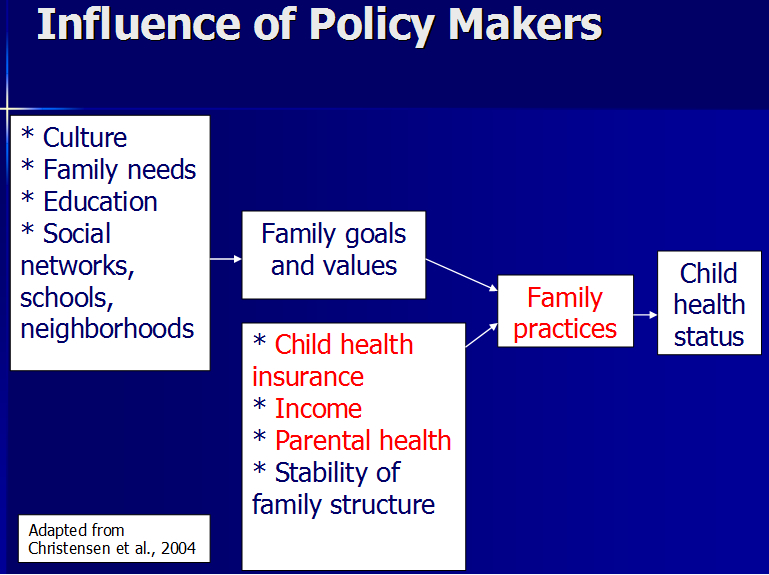
1 Promoting Family Stability in a Down Economy Rae Jean Proeschold-Bell, Ph.D. Intuitively we know that families matter greatly. Families impact the well-being of their children and are the back-bone of society. However, it can be difficult to know what policies will best support families, especially when families can be so different in terms of culture, who heads them, the ages of the children, and the health and employment needs of each family member. Policymakers would benefit by knowing whether there are common strategies that lead to the success of most families. How can policymakers promote family stability and family health? There are four ways in which policymakers can promote family stability, and therefore child health, because family stability is directly related to child health. 1. Provide continuous health insurance coverage for both children and parents; 2. Reduce parental stress; 3. Promote parental monitoring through programs such as Healthy Families Arizona; 4. Address parental substance abuse and depression quickly through continuous health insurance coverage and other policies. Policymakers can also support programs that meet family needs, such as the need for good education or housing, or programs that educate parents on healthy practices. Why is the health of parents so important? The health of family members is a vital resource for daily living. Parents who are healthy are able to earn a better living and give more time and energy to their children than parents who contend with poor health (Breslow, 1999). Children s health cannot be seen in isolation from their parents health. What is family stability and why does it matter? Given the diversity of cultures in Arizona and elsewhere, it is worth noting that family stability has been defined consistently across cultures. Family stability is generally considered to exist in families whose parents are healthy and earning incomes; whose members experience housing changes only infrequently; and whose family members stay together with infrequent divorce and remarriage, or few separations due to immigration and job-seeking reasons (Patterson & Yoerger, 2002). The benefits of family stability on children are numerous. Family stability results in more effective child supervision and parental monitoring, less family conflict, and more family cohesion (Robertson et al., 2008). Good parental monitoring, in particular, results in better child physical and mental health. Supporting child health through promoting parental monitoring Early research on families mapped out broad-strokes relationships between child health and poverty, between child health and parental depression, between child health and parental substance abuse, and so on. One key family practice that has been elucidated is parental monitoring. Parental monitoring has to do with the degree of supervision parents provide their children. Good parental monitoring has consistently been found to promote successful academic and social experiences in children. Conversely, poor parental monitoring has been found to result in high family stress; child abuse; child neglect; juvenile delinquency; and academic failure (Robertson et al., 2008). Given the dire outcomes of poor parental monitoring, it is logical to ask what promotes good parental monitoring. Parents free from serious illness, that is, healthy parents, make good parental monitors (Ashiabi & O Neal, 2007). Good mental health, in the form of not being depressed and not being addicted to substances, also enables parents to be good monitors 4

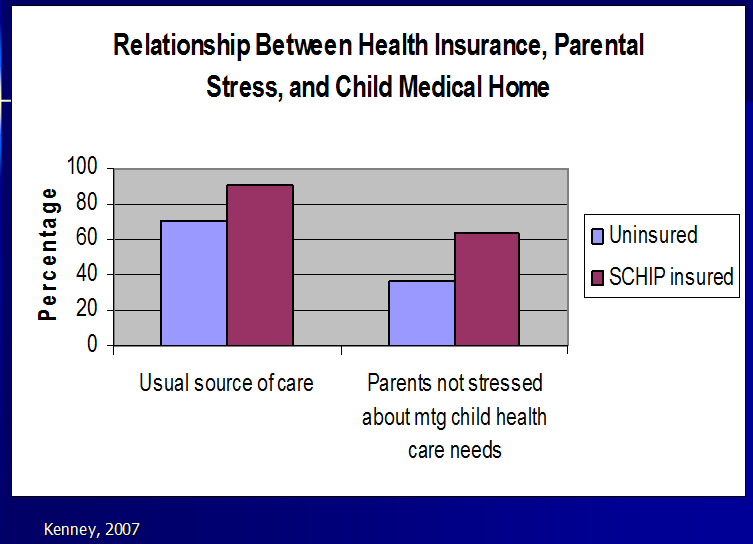
2 (Forgatch & DeGarmo, 2002, Johnson, 1996; Johnson et al., 1995; Patterson & Yoerger, 2002). Continuous health insurance for parents is therefore key in promoting parental monitoring, which in turn supports children. Surprisingly, almost anyone can be taught to be good at parental monitoring. The bad news is that people are not born knowing how to parent. Programs such as Healthy Families Arizona include education on parental monitoring. Supporting child health through continuous health insurance for parents and children Health insurance coverage in Arizona has significant gaps; only five states have higher proportions of uninsured residents than Arizona (Rissi et al., 2008). In 2008, among working adults ages in Arizona, 25% or 950,000 people lacked health insurance for at least part of the year (Rissi et al., 2008). Having health insurance directly translates into receiving needed medical care. In Arizona in the past year, over 30% of people without health insurance put off needed medical care, compared to 10% of people with insurance (Rissi et al., 2008). Health insurance for adults is critical to child health 1) because healthy adults are better parental monitors and 2) because health insurance allows parents to quickly treat their own depression or addiction when they experience it. However, as one might imagine, health insurance for children is also critical (Ashiabi & Neal, 2007; Ettner, 1996; Newacheck, 1992; Paul et al., 1998; Perrin et al., 1989; Stoddard et al., 1994; Wood et al., 1990). Uninsured children are more likely to: Have fewer doctor visits; Go a year without any doctor contact; Lack a medical home; Receive inadequate preventive care; Not go to the doctor when they have symptoms; and Have higher rates of hospitalization for illness or injuries due to lack of primary care. in developed countries--have chronic physical disorders (Cadman et al., 1987). Having a chronic health condition greatly impacts children, making them twice as likely to have a psychiatric disorder or maladjustment problems, and threatening their academic success (Cadman et al., 1987). How can policymakers decrease parental stress in order to support child health? Parental stress is a problem for children in two important ways. First, highly stressed parents do a poor job of monitoring their children, leading to the negative outcomes described above, including child abuse and neglect, academic problems, and juvenile delinquency. Second, highly stressed parents may become depressed or attempt to cope through substance abuse, both of which have negative consequences for children. Policymakers can decrease parental stress by supporting policies that provide continuous health insurance for children. Lack of health insurance for their children is a stressor for parents. For example, data show that parents whose children became enrolled in SCHIP reported significant decreases in their stress (Kenney, 2007). In addition, chronic health problems in their children also create parental stress and strap parents financial and emotional resources (King et al., 2005). Continuous health insurance enables parents to seek early treatment for their children and prevent health problems. 5 Health insurance for children is also needed to prevent child illness and physical disorders. Health insurance also helps in reducing complications and additional adverse consequences when illnesses and injuries do occur. A large number of children % of children

3 How does having a depressed parent affect children? Having a depressed parent negatively affects families in several ways. These families experience more conflict, less cohesion, less expressiveness, less organization, less child supervision, and more harsh and non-contingent discipline. Together, these elements serve as child health risk factors. Children with a depressed parent are twice as likely to have mental health problems and are more likely to have physical, social, and academic problems (Ofsun et al., 2003; Billings & Moos, 1983; Kern et al., 2004; Murray et al., 1999). Children of depressed parents are also more likely to use alcohol and drugs (Billings & Moos, 1983), possibly due to decreased parental monitoring. How can policymakers decrease parental depression? Depression can be prevented through fewer life stressors for parents. In particular, stable employment, housing, and health insurance can decrease parental stress. When parental depression does occur, early treatment can minimize the impact on families. Highly effective treatments for depression exist, and these work whether one is genetically predisposed to depression or not. How does having a parent who abuses substances affect children? Although it will come as no surprise that parental substance abuse is bad for children, the effects on children tends to be far more severe than is generally understood. Parents who abuse substances, including alcohol, provide their children with less parental monitoring. The effect is that their children are more likely to use substances, engage in sexual risk behavior, experience traumatic events, consort with deviant peers, and commit crimes (Richards et al., 2004; Robertson et al., 2008; Grellla, 2005; Robertson & Hussain, 2001). Children whose parents abuse substances are also at greater risk of child abuse and neglect (Ammerman et al., 1999; Dunn et al., 2002); 40%-80% of child welfare cases involve parental substance abuse. Child abuse and neglect result in numerous delinquent behaviors, including drug and alcohol use, risky sexual behaviors, minor crime, and violent crime (Semidei et al., 2001; Young et al., 1998; Bensley et al., 2000; Robertson et al., 2008; Young et al., 2007). How can policymakers decrease parental substance abuse? Substance abuse policy has a long history in the United States, and it is not possible to repeat it here. However, continual access of parents to health insurance is an important component of substance abuse treatment. Parents need help to be able to afford substance abuse treatment and access it quickly for minimal impact on the family. Very effective substance abuse treatments exist, and recent advances in pharmaceutical treatments have only improved treatment efficacy. Unfortunately, country-wide, over 60% of people who were admitted to the hospital for substance abuse treatment had no health insurance (SAMHSA, 1999). What happens to families during economic downturns? Family stress increases when they face job insecurity or loss. Job loss, or even just the stress related to job insecurity, can lead to greater parental depression and substance abuse. As outlined above, parental stress, depression, and substance abuse lead to less parental monitoring and put children at risk. 6

4 7 What policies should be considered to support families during economic downturns? Unfortunately, during times of economic stress, parental stress increases and threats to parental monitoring increase, too. Financial strain has been shown to increase both depression and substance use (for a review, see Peirce, et al., 1994). Evidenced-based ways to decrease parental stress and increase parental monitoring include: Providing uninterrupted health insurance to parents and their children; Making sure health insurance includes mental health and substance abuse treatment; Supporting programs that teach parents problemsolving strategies to decrease their stress, and that teach parents how to monitor their children. Example programs with strong research support are Healthy Families Arizona and Early Head Start. Programs currently in place in Arizona that improve child health Two programs that improve child health and increase parental monitoring are Healthy Families Arizona and Early Head Start. Healthy Families Arizona Healthy Families Arizona began in 1991 and is now in over 150 communities in Arizona. Families are enrolled during pregnancy or during the first 3 months after birth of a child; this child need not be their first child. In order to qualify for Healthy Families Arizona, families must have significant life stressors, such as poverty, unemployment, lack of education, history of abuse or neglect as a child, substance abuse, depression, or domestic violence. Families may receive services for up to 5 years, although the average length of services is 2 years. The service intensity is based on family need. Initially, families receive weekly 1-hour visits from a family support specialist who works to promote: Positive parent-child interaction; Home safety; Parental monitoring; Problem-solving and coping skills; Child development; Health and nutrition; and Parent education and work goals (Krysik & LeCroy, 2007). In addition, a strong component of Healthy Families Arizona is regular screening for child developmental milestones, in order to facilitate early intervention when needed. Family support workers also work with parents to make sure that children get regular medical checkups and any other medical care that they need (Krysik & LeCroy, 2007). Prenatal care is also an emphasis of Healthy Families Arizona. Evaluation research results on Healthy Families programs throughout the United States, and on Healthy Families Arizona in particular, have been positive. For Healthy Families Arizona, an independent evaluation found that the program had high quality assurance standards and good participant retention in which only 4% of families had terminated by 3 months, and 63% of families participated for more than 1 year (Krysik & LeCroy, 2007). Practically no program participants had substantiated CPS reports (only.3% did), despite weekly visits from family support specialists who are obligated to report any signs of abuse. Improvements were found in parental attachment, social support, sense of parenting competence, and parental depression (Krysik & LeCroy, 2007). In terms of direct medical outcomes, significantly higher percentages of Healthy Families Arizona children had received full immunization than the overall population of children in Arizona (Krysik & LeCroy, 2007). Higher immunization rates have also been found in all Healthy Families programs in the United States combined, compared to the population averages in their areas (Harding et al., 2007). In addition, numerous Healthy Families programs have significantly fewer low birth weight babies than control groups (Harding et al., 2007). Risks of cutting back on Healthy Families Arizona funding During difficult budget times, one option of policymakers is to maintain programs but cut their budgets. It is important to note that multi-site evaluations suggest that Healthy Families programs are only effective when instituted with optimal service delivery (Harding et al., 2007). Cutting back on services, increasing the caseloads of family support specialists, or decreasing the education level of family support specialists is likely to seriously compromise program effectiveness. The kinds of results that Healthy Families Arizona has achieved are difficult to achieve, and work with complex families requires resources. Healthy Families can be cost-saving Healthy Families programs address the root causes of problems that take years to surface; it therefore often takes a long time to see improvements in child health and the subsequent financial benefits to society. However, cost savings have been documented in cities that have given substantial funding to Healthy Families over a long period of time. For example, the city of Hampton, Virginia, attributes $11.2 million in savings between 1994 and 2004 to their Healthy Families program (Galano & Huntington, 2002).
5 Early Head Start Another program with strong research documentation of success in the areas of child and family health is Early Head Start. Early Head Start differs from Healthy Families in that the enrolled families must have a teenage parent having a child for the first time. Families are served from the birth of the child until the child is 3 years old. Families receive weekly home visits from family support specialists who do many of the same things as Healthy Families support specialists. Because teen parents can be isolated and because peer needs are so strong during adolescent years, Early Head Start includes group socialization activities. Early Head Start also has a strong emphasis on interdisciplinary teams working toward the health of the child and family. Teams include social workers, nurses, psychologists, and psychiatrists. Regular nursing visits are made to check on the health of the child. There is a strong evidence base for Early Head Start that includes randomized controlled trials, the gold standard of research, for 17 programs. In this multisite study, Early Head Start children did better than control children in cognitive development, language development, sustained attention, engaging with parents, and aggressive behavior (Love et al., 2005). Early Head Start parents did better than control parents in being more emotionally supportive, providing more learning stimulation, and spanking less. Immunization rates and child health status were similar for both Early Head Start and control group children, with trends toward better outcomes for Early Head Start children. It is possible that it takes more than 3 years to see substantial differences in child health status between groups. Regardless, the family environment fostered by Early Head Start increases parental monitoring, which is key to child health. Programming policy summary In sum, intervening with families is difficult and requires resources and well-trained staff. Programs with strong evidence bases currently exist in Arizona, most notably, Healthy Families Arizona and Early Head Start. Support for such programs is critical with the current economy, which is likely to increase family stress, depression, and substance abuse. Support for parents and their children is especially important now. Conclusion There are a number of things that policymakers can do to support family stability and child health. The adoption or support of multiple policies is likely to be more effective than any single policy alone. Policymakers can examine proposed programs and policies to see if they: provide continuous health insurance coverage for both children and parents; reduce parental stress; promote parental monitoring; and address parental substance abuse and depression. 8

Policy Perspective Treatment and Recovery for Individuals and Families Experiencing Addiction January 11, 2016
 Policy Perspective Treatment and Recovery for Individuals and Families Experiencing Addiction January 11, 2016 Addiction and Recovery in the 2016 political arena The issue of addiction has been addressed
Office of Adoption and Child Protection
 Office of Adoption and Child Protection Executive Summary Florida Child Abuse Prevention and Permanency Plan: July 2010 June 2015 The central focus of the Florida Child Abuse Prevention and Permanency
Workforce Development Online Workshop Descriptions
 Workforce Development Online Workshop Descriptions Behavioral Health Service Delivery Workshops: The Effects of Violence Exposure on Children (1.5 hours) Regretfully, violence against children and youth
Tier 3/4 Social Work Services
 Children s Services key guidelines 2010 Information from Southampton City Council The threshold criteria for accessing Tier 3/4 Social Work Services Introduction Information sharing is as important as
Social and Emotional Wellbeing
 Social and Emotional Wellbeing A Guide for Children s Services Educators Social and emotional wellbeing may also be called mental health, which is different from mental illness. Mental health is our capacity
Health Education Core ESSENTIAL QUESTIONS. It is health that is real wealth, and not pieces of gold and silver. Gandhi.
 Health Education Core ESSENTIAL QUESTIONS It is health that is real wealth, and not pieces of gold and silver. Gandhi Increased Focus Classroom Real Life Connection Student Reflection Student Assessment
Child Abuse and Neglect AAP Policy Recommendations
 Child Abuse and Neglect AAP Policy Recommendations When Inflicted Skin Injuries Constitute Child Abuse Committee on Child Abuse and Neglect PEDIATRICS Vol. 110 No. 3 September 2002, pp. 644-645 Recommendations
U.S. Bureau of Labor Statistics
 U.S. Bureau of Labor Statistics Social Workers Summary Social workers help people in every stage of life cope with challenges, such as being diagnosed with depression. 2012 Median Pay Entry-Level Education
Learners with Emotional or Behavioral Disorders
 Learners with Emotional or Behavioral Disorders S H A N A M. H A T Z O P O U L O S G E O R G E W A S H I N G T O N U N I V E R S I T Y S P E D 2 0 1 S U M M E R 2 0 1 0 Overview of Emotional and Behavioral
3.5 Guidelines, Monitoring and Surveillance of At Risk Groups
 3.5 Guidelines, Monitoring and Surveillance of At Risk Groups 3.5.6 Children of Parents who are Affected by Drug and Alcohol Misuse Background There is overwhelming evidence that the misuse of drugs and
http://www.bls.gov/oco/ocos060.htm Social Workers
 http://www.bls.gov/oco/ocos060.htm Social Workers * Nature of the Work * Training, Other Qualifications, and Advancement * Employment * Job Outlook * Projections Data * Earnings * OES Data * Related Occupations
BIRTH THROUGH AGE EIGHT STATE POLICY FRAMEWORK
 BIRTH THROUGH AGE EIGHT STATE POLICY FRAMEWORK The Birth Through Eight State Policy Framework is a tool, or roadmap, that anyone can use to guide policy in ways that will improve the health, learning,
Handout: Risk. Predisposing factors in children include: Genetic Influences
 Handout: Risk The more risk factors to which a child is exposed the greater their vulnerability to mental health problems. Risk does not cause mental health problems but it is cumulative and does predispose
Working together to improve outcomes for children and families. Needs, thresholds and pathways Guidance for Camden s children s workforce
 Working together to improve outcomes for children and families Needs, thresholds and pathways Guidance for Camden s children s workforce Universal, and Specialist Services: responding to the needs of Camden
Mental Health and Social Services District Questionnaire
 Form Approved OMB No: 0920-0445 Expiration Date: 09/30/2012 Mental Health and Social Services District Questionnaire School Health Policies and Practices Study 2012 Attn: Tonja Kyle/Alice Roberts, Project
How To Help A Pregnant Woman In Texas
 Public Health Nurse Home Visiting Programs Presented by Meredith Krugel, RN, LCSW Douglas County Public Health Nurse Home Visiting Oregon currently has four different nurse home visiting programs: Maternity
Assessing families and treating trauma in substance abusing families
 Children, Trauma and the impact of Substance abuse Day One Outpatient (874-1045) Amy Stevenson LCPC CCS ([email protected]) Don Burke LCPC CCS ([email protected]) Assessing families and treating trauma in
Overview of the Adverse Childhood Experiences (ACE) Study. Robert F. Anda, MD, MS Co-Principal Investigator. www.robertandamd.com
 Overview of the Adverse Childhood Experiences (ACE) Study Robert F. Anda, MD, MS Co-Principal Investigator www.robertandamd.com Death Early Death Disease, Disability and Social Problems Adoption of Health-risk
Georgia Performance Standards. Health Education
 HIGH SCHOOL Students in high school demonstrate comprehensive health knowledge and skills. Their behaviors reflect a conceptual understanding of the issues associated with maintaining good personal health.
Social Worker Overview The Field - Preparation - Day in the Life - Earnings - Employment - Career Path Forecast - Professional Organizations
 Social Worker Overview The Field - Preparation - Day in the Life - Earnings - Employment - Career Path Forecast - Professional Organizations The Field Social work is a profession for those with a strong
MODULE 1.3 WHAT IS MENTAL HEALTH?
 MODULE 1.3 WHAT IS MENTAL HEALTH? Why improve mental health in secondary school? The importance of mental health in all our lives Mental health is a positive and productive state of mind that allows an
Family and Parenting Support The role of public services
 Family and Parenting Support The role of public services ESN Survey on Family and Parenting Support December 2012 The European Social Network (ESN) brings together people who design, manage and deliver
The Longterm Effects of Childhood Trauma and Abuse. Andrew Robertson. University of Phoenix WH07UC12
 The Longterm Effects 1 The Longterm Effects of Childhood Trauma and Abuse Andrew Robertson University of Phoenix WH07UC12 COMM105 / Introduction to Effective Written Communication Dr. Lori Travis, PhD
Therapy and Professional Training Specialists. www.mifamilytherapy.com
 Therapy and Professional Training Specialists www.mifamilytherapy.com Help When it s Needed Everyone at some point is faced with challenges that require extra thought and attention. Most of the time people
Evidence Summary for Treatment Foster Care Oregon (formerly Multidimensional Treatment Foster Care, or MTFC)
 Top Tier Evidence Initiative: Evidence Summary for Treatment Foster Care Oregon (formerly Multidimensional Treatment Foster Care, or MTFC) HIGHLIGHTS: Intervention: A foster care program for severely delinquent
 Form Approved OMB No: 0920-0445 Expiration Date: 11/30/2008 Mental Health and Social Services State Questionnaire School Health Policies and Programs Study 2006 Attn: Beth Reed, Project Manager 126 College
Rhode Island KIDS COUNT Presents: Newport Data in Your Backyard ~~~
 For Immediate Release Contact: Raymonde Charles Day: (401) 351-9400, Ext. 22 [email protected] Rhode Island KIDS COUNT Presents: Newport Data in Your Backyard The percentage of Newport eighth graders
 Form Approved OMB No: 0920-0445 Expiration Date: 11/30/2008 Mental Health and Social Services School Questionnaire Mental Health and Social Services School Questionnaire Public Use Version Mental Health
P a g e 1. Ken Cuccinelli Mental Health Forum Responses
 P a g e 1 Ken Cuccinelli Mental Health Forum Responses 1) Virginians of all ages and situations in life can experience mental health problems. Almost a quarter million adults in Virginia live with co-occurring
Protection of the Rights of Children and Women Suffering from Drug Addiction in the Family and Society - Shelter Don Bosco, Mumbai, India -
 Protection of the Rights of Children and Women Suffering from Drug Addiction in the Family and Society - Shelter Don Bosco, Mumbai, India - Article 24 of the Convention on the Rights of the Child recognizes
Outline Chapter 1 Child Psychology 211 Dr. Robert Frank. 1 What is child development, and how has its study evolved?
 Outline Chapter 1 Chapter 1: GUIDEPOSTS FOR STUDY 1 What is child development, and how has its study evolved? 2 What are six fundamental points about child development on which consensus has emerged? 3
Healthy Families Florida Assessment Tool - Scoring Guidelines
 1) Inability to meet basic needs (no access to food, clothing, no access to any form of transportation) Definitions: Inability means not knowing how, where or from whom to obtain basic needs. Basic needs
Diploma In Child Protection Studies Block Two
 Diploma In Child Protection Studies Block Two 1 Neglect 2 Neglect Is. any act or omission that results in impaired physical functioning, injury, and/or development of a child or young person Types Of Neglect
GEORGIA DIVISION OF FAMILY AND CHILDREN SERVICES CHILD WELFARE POLICY MANUAL
 GEORGIA DIVISION OF FAMILY AND CHILDREN SERVICES CHILD WELFARE POLICY MANUAL Chapter: Policy Title: Policy Number: (10) Foster Care Comprehensive Child and Family Assessment (CCFA) 10.10 Effective Date:
Child Development. Caseworker Core Training Module VII: Child Development: Implications for Family-Centered Child Protective Services
 Child Development P R E - T R A I N I N G A S S I G N M E N T Caseworker Core Training Module VII: Child Development: Implications for Family-Centered Child Protective Services Developed by the Institute
VENTURA COUNTY ALCOHOL & DRUG PROGRAMS
 VENTURA COUNTY ALCOHOL & DRUG PROGRAMS women s services Helping women recover (805) 981-9200 1911 Williams Drive, Oxnard, CA 93036 www.venturacountylimits.org recovery VCBH ALCOHOL & DRUG PROGRAMS WOMEN
How Parents as Teachers Outcomes Align with Federal Home Visiting Initiative Benchmarks
 How Parents as Teachers Outcomes Align with Federal Home Visiting Initiative Benchmarks The table below highlights how Parents as Teachers outcomes, as outlined in the 2011 Parents as Teachers Logic Model,
Lisa R. Fortuna, MD, MPH Michelle V. Porche, Ed. D Sripallavi Morampudi, MBBS Stanley Rosenberg, PhD Douglas Ziedonis, MD, MPH
 CBT for Youth with Co-Occurring Post Traumatic Stress Disorder and Substance Disorders Lisa R. Fortuna, MD, MPH Michelle V. Porche, Ed. D Sripallavi Morampudi, MBBS Stanley Rosenberg, PhD Douglas Ziedonis,
Community and Social Services
 Developing a path to employment for New Yorkers with disabilities Community and Social Services Mental Health and Substance Abuse Social Workers... 1 Health Educators... 4 Substance Abuse and Behavioral
Scottish Parliament Health and Sport Committee s Inquiry into Teenage Pregnancy in Scotland Evidence from CHILDREN 1 ST
 Scottish Parliament Health and Sport Committee s Inquiry into Teenage Pregnancy in Scotland Evidence from CHILDREN 1 ST February 2013 For over 125 years CHILDREN 1 ST has been working to build a better
teensavers A Unique Approach to Treating Adolescent Substance Abuse, Emotional and Behavioral Issues transforming lives
 teensavers A Unique Approach to Treating Adolescent Substance Abuse, Emotional and Behavioral Issues transforming lives Teen_Brochure_v11.indd 1 8/26/09 9:51:38 AM transforming lives Teensavers offers
From Neurons to Neighborhoods: The Science of Early Childhood Development
 From Neurons to Neighborhoods: The Science of Early Childhood Development By Jack P. Shonkoff, MD This chapter explains the work of the Committee on Integrating the Science of Early Childhood Development
Substance Abuse and Mental Health Services Administration Reauthorization
 Substance Abuse and Mental Health Services Administration Reauthorization 111 th Congress Introduction The American Psychological Association (APA) is the largest scientific and professional organization
Fostering Changes: Addressing the mental health needs of fostered children in the UK
 Fostering Changes: Addressing the mental health needs of fostered children in the UK Dr Matt Woolgar Consultant Clinical Psychologist National Adoption & Fostering Service South London & Maudsley NHS Foundation
Logic Model for SECCS Grant Program: Florida Early Childhood Comprehensive Systems (ECCS) Statewide Plan INTERVENTION
 TOTAL FUNDS REQUESTED (for GRANTEE/ PROJECT CHARACTERISTICS (i.e., the first year of the project): goals and description of the project, $155,496 Infant Mental Health Association Updated Florida's statewide
FAMILY INTERVENTION FOR UNACCOMPANIED HOMELESS YOUTH
 FAMILY INTERVENTION FOR UNACCOMPANIED HOMELESS YOUTH Family conflict is a major contributor to youth homelessness. The National Alliance to End Homelessness (Alliance) estimates that each year 550,000
Psychology and Aging. Psychologists Make a Significant Contribution. Contents. Addressing Mental Health Needs of Older Adults... What Is Psychology?
 AMERICAN PSYCHOLOGICAL ASSOCIATION Psychologists Make a Significant Contribution Psychology and Aging Addressing Mental Health Needs of Older Adults... People 65 years of age and older are the fastest
The Field of Counseling. Veterans Administration one of the most honorable places to practice counseling is with the
 Gainful Employment Information The Field of Counseling Job Outlook Veterans Administration one of the most honorable places to practice counseling is with the VA. Over recent years, the Veteran s Administration
Behavioral Health Services for Adults Program Capacity Eligibility Description of Services Funding Dosage Phase I 33 hours
 Outpatient Substance Abuse Recovery (OSARP) Dual Diagnosis Behavioral Health Services for Adults Capacity Eligibility Description of Services Funding Dosage 35 at any Adults with Phase I 33 hours point
Implementation Plan for Needs Identified in the Community Health Needs Assessment for Spectrum Health Hospitals d/b/a Spectrum Health Grand Rapids
 Implementation Plan for Needs Identified in the Community Health Needs Assessment for Spectrum Health Hospitals d/b/a Spectrum Health Grand Rapids FY 2013-2015 Covered Facilities: Spectrum Health Hospitals
Anti-Social Personality Disorder
 Anti-Social Personality Disorder Definition Anti-Social Personality Disorder is a type of chronic mental condition in which a person's ways of thinking, perceiving situations and relating to others are
Children s Health and Nursing:
 Children s Health and Nursing: A Summary of the Issues What s the issue? The foundation for healthy growth and development in later years is established to a large degree in the first six years of life.
Guidance. Wigan s Threshold of Need. www.wiganlscb.com. Wigan Safeguarding Children Board
 Wigan Safeguarding Children Board Wigan s Threshold of Need Guidance Working to keep children and young people happy, healthy and safe. www.wiganlscb.com Contents Welcome.........................................................................Page
Essential Trauma Informed Practices in Schools. Shannon Cronn, N.C.S.P. Barb Iversen, M.C.
 Essential Trauma Informed Practices in Schools Shannon Cronn, N.C.S.P. Barb Iversen, M.C. Objectives: Participants attending this session will be able to: Define trauma Explain how trauma may impact child/teen
Suicide Risk Assessment
 Conducting a Suicide Risk Assessment For further information see also the following MIND Essentials resource Caring for the person who is suicidal. A full psychiatric assessment is recommended whenever
Neglected Children: Controversies and Challenges
 Neglected Children: Controversies and Challenges Tel Aviv, Israel June 2014 Howard Dubowitz, MD, MS, FAAP University of Maryland School of Medicine, USA Why is child neglect so important? It s common Maltreatment
Maternal Substance Use & Abuse
 Maternal Substance Use & Abuse A Charged and Complex Problem that Requires a Reasoned and Coordinated Response Across Agencies, Fund Sources & Systems The Scope of the Problem In the US: 9% of all children
Schizophrenia National Institute of Mental Health
 Schizophrenia National Institute of Mental Health U.S. DEPARTMENT OF HEALTH AND HUMAN SERVICES National Institutes of Health Schizophrenia Do you know someone who seems like he or she has lost touch with
The Field of Counseling
 Gainful Employment Information The Field of Counseling Job Outlook Veterans Administration one of the most honorable places to practice counseling is with the VA. Over recent years, the Veteran s Administration
3 DRUG REHAB FOR TEENAGERS
 4 4 5 5 6 7 8 10 11 12 3 DRUG REHAB FOR TEENAGERS Discovering that a teen is taking drugs or alcohol is worrisome. Parents not only worry about the impact on a child s health, but also the possible impact
How To Treat A Mental Illness At Riveredge Hospital
 ABOUT US n Riveredge Hospital maintains the treatment philosophy of Trauma Informed Care. n Our commitment to providing the highest quality of care includes offering Animal Assisted Therapy, and Expressive
Antisocial personality disorder
 Page 1 of 7 Diseases and Conditions Antisocial personality disorder By Mayo Clinic Staff Antisocial personality disorder is a type of chronic mental condition in which a person's ways of thinking, perceiving
PhD. IN (Psychological and Educational Counseling)
 PhD. IN (Psychological and Educational Counseling) I. GENERAL RULES CONDITIONS: Plan Number 2012 1. This plan conforms to the regulations of the general frame of the programs of graduate studies. 2. Areas
ANTISOCIAL PERSONALITY DISORDER
 ANTISOCIAL PERSONALITY DISORDER Antisocial personality disorder is a type of chronic mental illness in which your ways of thinking, perceiving situations and relating to others are dysfunctional. When
Social determinants of mental health in childhood a gene-environment perspective.
 Social determinants of mental health in childhood a gene-environment perspective. Anders Hjern, Centre for Health Equity Studies (CHESS), Karolinska Institutet/Stockholm University E-mail:[email protected]
Family Preservation Programs
 Family Preservation Programs Since the term "family preservation services" was coined in the 1980s, there has been considerable confusion about the essential elements of these services and which types
Substance-Exposed Newborns
 Substance-Exposed Newborns State of Oklahoma 2013 Substance-Exposed Newborns State of Oklahoma 2013 Legal Background Federal guidelines in the Child Abuse Prevention and Treatment Act (CAPTA) require states
MENTAL. Matters: SCDSB supports positive mental health
 MENTAL Matters: SCDSB supports positive mental health TABLE OF CONTENTS A) Ontario Strategy 2 B) Board Strategy 2 C) Vision, Mission, Values 3 D) What is Mental Health? 4 E) Resilience 5 F) Mental Health
Introduction. Communities That Care
 Introduction Communities That Care Research-based prevention planning 4Research-Based Planning The programs, policies and practices in this guide will have the greatest impact in your community when implemented
NATIONAL BABY FACTS. Infants, Toddlers, and Their Families in the United States THE BASICS ABOUT INFANTS AND TODDLERS
 NATIONAL BABY FACTS Infants, Toddlers, and Their Families in the United States T he facts about infants and toddlers in the United States tell us an important story of what it s like to be a very young
Test Content Outline Effective Date: October 25, 2014. Psychiatric and Mental Health Nursing Board Certification Examination
 Board Certification Examination There are 175 questions on this examination. Of these, 150 are scored questions and 25 are pretest questions that are not scored. Pretest questions are used to determine
The National Survey of Children s Health
 with Current Health Insurance, by Location 91.1 89.4.2.9 Current Health Insurance The survey asked parents if their children currently had coverage through any kind of health insurance, including private
Substance Abuse During Pregnancy
 Substance Abuse During Pregnancy Time for Policy to Catch up with Research Barry M. Lester, Ph.D. Infant Development Center, Brown Medical School National Conference of State Legislators Audio Conference
Drug Abuse Prevention Training FTS 2011
 Drug Abuse Prevention Training FTS 2011 Principles of Prevention Prevention programs should enhance protective factors and reverse or reduce risk factors (Hawkins et al. 2002). The risk of becoming a drug
Social inclusion. What are the roots of social exclusion? Children s development. The neuroscience of brain development
 Engaging all families and children: the role of early childhood education and care in supporting vulnerable children and their families Professor Frank berklaid Director, Royal Children s Hospital Melbourne
AGENCY OVERVIEW MFT & MSW* Intern-Trainee Program 2015-2016 Training Year
 AGENCY OVERVIEW MFT & MSW* Intern-Trainee Program 2015-2016 Training Year Non-profit mental health agency established in 1945 Recipient of the CAMFT School and Agency Award for 2009 Clients from diverse
Table of Contents. Preface...xv. Part I: Introduction to Mental Health Disorders and Depression
 Table of Contents Visit www.healthreferenceseries.com to view A Contents Guide to the Health Reference Series, a listing of more than 16,000 topics and the volumes in which they are covered. Preface...xv
Goals/Objectives FY 2010-2011
 Through Fiscal Year Ending September 30, 2011 Goals/Objectives SERVICE GOALS 1. Agency Capacity Desired Outcome: The service delivery network must have the capacity and ability to provide a high quality,
Delusions are false beliefs that are not part of their real-life. The person keeps on believing his delusions even when other people prove that the be
 Schizophrenia Schizophrenia is a chronic, severe, and disabling brain disorder which affects the whole person s day-to-day actions, for example, thinking, feeling and behavior. It usually starts between
Public Act No. 13-178
 Public Act No. 13-178 AN ACT CONCERNING THE MENTAL, EMOTIONAL AND BEHAVIORAL HEALTH OF YOUTHS. Be it enacted by the Senate and House of Representatives in General Assembly convened: Section 1. (NEW) (Effective
Care Programme Approach (CPA)
 Care Programme Approach (CPA) The Care Programme Approach (CPA) is used to plan many people s mental health care. This factsheet explains what it is, when you should get and when it might stop. The Care
The Mental Health Crisis in New Orleans: Need for Solutions
 The Mental Health Crisis in New Orleans: Need for Solutions Howard J. Osofsky, M.D., Ph.D. Kathleen & John Bricker Chair of Psychiatry LSU Health Sciences Center, New Orleans May 11, 2007 Background Howard
The Many Facets of Social Work
 The Many Facets of Social Work The scope of social work practice is remarkably wide. Social workers practice not only in the traditional social service agency, but also in elementary schools; in the military;
Local action on health inequalities: Good quality parenting programmes
 Local action on health inequalities: Good quality parenting programmes Health equity briefing 1a: September 2014 About PHE Public Health England exists to protect and improve the nation s health and wellbeing,
Eating Disorders. Symptoms and Warning Signs. Anorexia nervosa:
 Eating Disorders Eating disorders are serious conditions that can have life threatening effects on youth. A person with an eating disorder tends to have extreme emotions toward food and behaviors surrounding
27124Teen_c 2/11/11 12:19 PM Page 2 Teen Programs
 Teen Programs WE ARE THE ROCHESTER AREA S MOST EXPERIENCED ADOLESCENT TREATMENT PROVIDER. Research shows that treatment programs developed specifically for adolescents work best. At Unity Chemical Dependency,
HEAD START PERFORMANCE STANDARDS W/ MENTAL HEALTH FOCUS
 HEAD START PERFORMANCE STANDARDS W/ MENTAL HEALTH FOCUS This list represents a variety of Head Start Performance Standards that include some aspect of mental health; however, it is not exhaustive of every
Scope of Services provided by the Mental Health Service Line (2015)
 Scope of Services provided by the Mental Health Service Line (2015) The Mental Health Service line provides services to Veterans with a wide variety of mental health needs at its main facility in Des Moines