
Where Will my New Kidney Come From?
|
|
|
- Rebecca Cummings
- 9 years ago
- Views:
Transcription
1 Where Will my New Kidney Come From? The Organ Shortage There is a severe shortage of organs for transplant. This means that the wait for a kidney transplant can be many years. The UW Transplant Program has long been a leader in trying to find new ways to increase the number of good organs that can be used for transplant. When you are told you need a kidney transplant, you have options as to where your new kidney will come from. It is very important that you explore these options fully. Live Donor Kidney Donation A kidney from a living donor is the best choice and the only way to skip the long waiting time. There are some things to keep in mind when thinking about using a live donor. Is the person willing to donate? Is the donor healthy and medically able? There are many benefits from getting a living donor kidney. Better health: Because you were able to avoid a long wait time, you are more likely to be in better health when you receive your transplant. Better quality kidney: o Studies have shown better success with a living donor kidney transplant. o With a living donor, the health of the kidney is well known. The person is over 18 years of age and a healthy person who has had recent complete health testing. o Kidneys from living donors often start working right away. o Perhaps best of all, long-term outcomes are better with a living donor kidney. The five year success rates for people who have received a kidney from a living donor are about 10% higher than those who receive their kidney from a deceased donor. A better match: The donor has a series of health testing to make sure that they are in good health and that the kidney is healthy. Tests are done to check the matching between the donor and the recipient which allows the transplant team a chance to find the best match. Family members often match the best but anyone, friend or acquaintance can get tested for matching. Better prepared: The transplant can be planned for a time when both the donor and the recipient are in the best health for surgery.
2 Who can donate? Anyone can get tested as a living donor: family friend, church acquaintance, facebook friend, etc. Any living donor must be in good physical and mental health. They cannot have had chronic kidney stones, high blood pressure being treated with more than 2 medications, diabetes, or current cancer. Some health problems such as frequent kidney or bladder infections, heart disease, obesity, age, or other major health issues need to be looked at on a case by case basis. Related/Unrelated Live Donation The two most common living donors are someone who is blood related to the recipient: brother, sister, parent, child, aunt, uncle, cousin, niece or nephew; and someone who is very close to the patient: spouse, fiancés, in-laws and close friends. However, as mentioned before, a living donor can be found through your community, church, and through social media. Other Live Donor Options Humanitarian Donation There are times when a person comes forward and wants to donate a kidney but does not have a certain person in mind to receive the kidney. We have a system to closely assess these people to decide if they can donate. The donor has the option to start a chain of exchanges with other recipient and donor pairs and the chain would end with a patient from the waiting list, or donate directly to the first person on the waiting list who is a match.. The donor may remain unknown if they choose or can be known to the recipient. To learn more about Humanitarian Donation, and to speak with a program staff member, please call (608) Paired Exchange Live Donation There are instances when a person cannot donate a kidney to their friend, family member, or loved one because they are not a match. This may be because their blood types do not match, or there can be other tissue matching issues. The paired kidney donation exchange program gives a willing donor the opportunity to help their intended recipient receive a living donor kidney from another individual. If there is another recipient and donor in the same situation, the paired kidney donation exchange program can be an option. If medically appropriate, each donor could donate his or her kidney to the other recipient. In this way, both recipients would receive a matching kidney from an unrelated living donor. These exchanges can be as simple as 2 pairs or as complex as 6 or more pairs. Donors Recipients A B C D
3 We participate in the National Kidney Registry and the United Network for Organ Sharing (UNOS) Paired Kidney Exchange Programs. With these programs, a kidney from a live donor could be sent to UWHC for you, and your donor s kidney could be sent elsewhere in the United States. We also have our own internal UW Transplant Exchange Program. With these three options we increase the chances of finding you a matching kidney. For more information please go to speak directly to your transplant coordinator, or call the Paired Exchange Coordinator at Desensitization before Live Donation In some cases donors who do not match with the recipient because of ABO blood type or crossmatch testing may still be able to be donors. The UW Health Transplant Program kidney desensitization process uses immunosuppressant drugs and a plasma treatment to remove rejection-causing antibodies from the bloodstream. This process is done both in the week/days before and the days/weeks after transplant. It allows patients who would likely reject the kidney transplant to successfully receive their transplant. During this process harmful antibodies are removed from the blood stream of patients who do not match with their donor through either blood-type or tissue sensitivity. These tissue antibodies, which fight foreign tissues like those found on a donated organ, can cause the organ to reject. These types of antibodies are often produced after being exposed to foreign tissue, such as a past transplant, blood transfusion, or pregnancy. The antibody removal process is called plasmaphoresis, which is like hemodialysis. To learn more about this, and to speak with a program staff member, please call Deceased Donor Kidney Donation Some patients may not have a living donor. They will need to go on the list to wait for a deceased donor transplant. Deceased donor kidneys are offered to recipients according to the United Network for Organ Sharing (UNOS) guidelines. The Organ Procurement Organization (OPO) contacts the UW Transplant Program when a kidney is available and tells them who is number one on the UNOS list to receive the kidney. Below are the types of deceased donor kidneys that patients may be offered: Donation after Brain Death The most common type of organ donor is a person who suffered from a head injury that caused brain death. Brain death occurs when someone does not get enough oxygen, causing the brain to stop working. This is often due to trauma or a stroke. Doctors can tell when someone is brain dead by testing certain reflexes controlled by the brain and by using machines that look at blood flow to the brain. The brain controls breathing so people who are brain dead are in a hospital on a breathing machine called a ventilator. Because of the breathing tube and certain medicines, the person s body can function even after brain death. This allows the heart to keep beating and supply the kidneys and other organs with blood and oxygen until a transplant team removes the organ.
4 Donation after Cardiac Death (DCD) Sometimes a patient s trauma is so severe that doctors cannot save their life, but they do not meet the measures for brain death. The doctors then discuss with the patient s family whether or not to remove life support. If the family chooses to remove life support, the machines are turned off, and the patient is allowed to die peacefully. Sometimes these patients can be organ donors. Transplant teams are called and are present when the life support is turned off. After the patient s heart stops beating and is declared dead by their doctor, the transplant teams can remove the organs. This is called Donation after Cardiac Death (DCD). Because the heart has stopped beating in these donors, there is a lack of blood flow for a short time to the organs as they are removed. Because of this, kidneys from DCD donors may sometimes take a few days to start working after the transplant. But the outcomes for patients who receive a kidney from a DCD donor are the same as with a brain death donor. Donor Scoring-KDPI KDPI is a percentage score that ranges from zero to 100 percent. This score is based on transplant research and is associated with how long a kidney is likely to function. Kidneys with high KDPI scores are expected to function for a shorter amount of time than others. KDPI scores are calculated based on facts about the donor, such as: Age, height, weight, and ethnicity Cause of death due to loss of heart function, loss of brain function, or stroke History of high blood pressure History of diabetes Exposure to the Hepatitis C virus Kidney function (serum creatinine levels) What are the risks of getting a kidney with KDPI greater than 85%? Kidneys with KDPI of greater than 85 percent come from donors who may have one or more of the above medical factors (advanced age, obesity, diabetes, low kidney function, etc.). Possible risks involved in getting this type of kidney may include: A delay in the kidney working right away after transplant, may last from a couple of days to a couple of weeks. This is called delayed graft function. Since the kidney(s) may not work immediately, patients may need to receive dialysis treatments after transplant. Only about 1-2% of kidneys may never work adequately after transplant. The kidney may not last as long as kidneys with KDPI less than 85 percent. How long a kidney continues to work is called graft survival. Your provider will explain the differences in outcomes between kidneys with lower and higher KDPI scores. What are the benefits of getting a kidney with KDPI >85%? Agreeing to receive a kidney with KDPI greater than 85 percent increases your chances of getting a transplant sooner, which may extend your life. This may be especially beneficial for patients who have many health concerns and those having trouble with dialysis. Your waiting time may be decreased by accepting a kidney with a KDPI score of 85 percent or higher.
5 If I agree to be listed for a kidney with KDPI >85%, will I still be listed for other kidneys? Yes. When a deceased donor kidney becomes available, the KDPI score will be calculated. The appropriate patient list is run and a patient is chosen to receive the kidney. ALL patients on the list will be able to get a kidney from a donor with akdpi score less than 85 percent. ONLY those patients who sign a consent to accept a KDPI score of 85 percent or higher will be on the list for donor kidneys with a KDPI score of 85 percent or higher. Those who do not sign this consent form are not eligible to receive a kidney from a donor with a KDPI score of 85 percent or greater. Patients must sign a consent form that they are willing to accept a kidney from a donor with a KDPI > 85%. If you agree to receive a kidney with a KDPI > 85% you will be placed on the list for a kidney from a donor with any KDPI score from 0% to 100% whichever would become available first. Do you ever put in two kidneys? Yes. National data as well as our experience has shown that if you get 2 kidneys from a donor with a KDPI score of >85%, the function is similar to that of one kidney from a donor with a KDPI score of <85%. Therefore, you may be offered 2 >85% kidneys even if you did not consent to one >85% kidney. The two kidneys are placed on one side of the body. Your incision is the same as if you were getting one kidney. Another situation when 2 kidneys are used is when we have a younger or very small donor. This is referred to as en bloc because the kidneys are put in together on one side of your body. Statistics have shown that 2younger/smaller kidneys have similar outcomes of one adult sized kidney. Increased Risk Donors You may be offered an organ from a deceased donor that is thought to be at increased risk for spreading certain infections according to the Public Health Service 2013 Guidelines. Donors are considered increased risk because of high risk behaviors such as prostitution, intravenous drug use, or homosexuality. It is not the norm to accept organs from such donors unless we feel that the good far outweighs the would-be risk. Blood tests are done on potential donors to look for a virus such as HIV, Hepatitis B or Hepatitis C. However, no test is perfect. False negative results are possible, but very rare. Using data from organ, tissue, and blood donors we know there is a very small chance, 1 in 60,000 to 1 in 2,000,000, which a virus could be passed on. We believe that the risks of getting this type of kidney are very small or we would not suggest that you accept it. The transplant coordinator will inform you at the time that the kidney is offered if it is from an increased risk donor. You would then decide whether to accept this type of kidney. If you choose not to accept the kidney, you will not lose your place on the waiting list. What will I be told about my donor? Patient confidentiality laws limit how much we can tell you about your donor. We cannot tell you the donor s age, gender, or personal or health history. Guidelines for allocating kidneys are set by the United Network for Organ Sharing (UNOS). The Organ Procurement Organization (OPO) informs the UW Transplant Program when a kidney is found and who is number one on the UNOS list to receive the kidney. The OPO has a thorough screening for all would-be donors to attempt to find any illness that could affect the transplant organ or the patient who receives it.
6 Screening for such an illness can be limited by time constraints between the time that the donor was injured and the organ obtained. We use our best knowledge and judgment to attempt to ensure every organ we transplant will function and will in no way harm the patient who receives it. How do I choose? There are risks and benefits for each of the above types of kidney transplants. Members of the transplant team can provide more information about this topic. They can help you choose the type of transplant that may be best for your own case. Your health care team may have given you this information as part of your care. If so, please use it and call if you have any questions. If this information was not given to you as part of your care, please check with your doctor. This is not medical advice. This is not to be used for diagnosis or treatment of any medical condition. Because each person s health needs are different, you should talk with your doctor or others on your health care team when using this information. If you have an emergency, please call 911. Copyright 3/2016. University of Wisconsin Hospital and Clinics Authority. All rights reserved. Produced by the Department of Nursing. HF#6695
Saint Francis Kidney Transplant Program Issue Date: 6/9/15
 Kidney Transplant Candidate Informed Consent Education Here are educational materials about Kidney Transplant. Please review and read these before your evaluation visit. The RN Transplant Coordinator will
*6816* 6816 CONSENT FOR DECEASED KIDNEY DONOR ORGAN OPTIONS
 The shortage of kidney donors and the ever-increasing waiting list has prompted the transplant community to look at different types of organ donors to meet the needs of our patients on the waiting list.
Questions and Answers for Transplant Candidates about the New Kidney Allocation System
 TA L K I N G A B O U T T R A N S P L A N TAT I O N U N I T E D N E T W O R K F O R O R G A N S H A R I N G Questions and Answers for Transplant Candidates about the New Kidney Allocation System United
How does a kidney transplant differ from dialysis?
 TA L K I N G A B O U T T R A N S P L A N TAT I O N Frequently Asked Questions about Kidney Transplant Evaluation and Listing If your kidneys have stopped working properly, or may stop working soon, you
THE BENEFITS OF LIVING DONOR KIDNEY TRANSPLANTATION. feel better knowing
 THE BENEFITS OF LIVING DONOR KIDNEY TRANSPLANTATION feel better knowing your choice will help create more memories. Methods of Kidney Donation Kidneys for transplantation are made available through deceased
Kidneys. Kidney Failure4. Transplantation
 Kidneys & Kidney Failure4 Transplantation This booklet helps you understand the process of transplantation. It defines the criteria for a donor and the recipient. It also clearly explains the concepts
Is a kidney transplant right for me?
 Is a kidney transplant right for me? Your guide to the transplant process www.esrdncc.org Contents Introduction 3 What is a Transplant Center? 4 What is the Waiting List? 5 What Happens After the Surgery?
Living Donor Paired Exchange Registry. What is Living Kidney Donor Paired Exchange?
 Living Paired Exchange Registry What is Living Kidney Paired Exchange? The Living Paired Exchange Registry. At Canadian Blood Services, we are committed to helping Canadians help each other. By building
Kidney Transplant Program. Guide to Understanding Transplant
 Kidney Transplant Program Guide to Understanding Transplant The wonderful physicians and staff of the Stanford Kidney Transplant Program are always there to contact if I have a question or concern. They
Blood Transfusion. There are three types of blood cells: Red blood cells. White blood cells. Platelets.
 Blood Transfusion Introduction Blood transfusions can save lives. Every second, someone in the world needs a blood transfusion. Blood transfusions can replace the blood lost from a serious injury or surgery.
Why and how to have end-of-life discussions with your patients:
 Why and how to have end-of-life discussions with your patients: A guide with a suggested script and some basic questions to use The medical literature consistently shows that physicians can enhance end-of-life
Donating Life. The Workplace Partnership for Life Program
 The Workplace Partnership for Life Program Every day about 63 people receive an organ transplant, but another 16 people on the waiting list die because not enough organs are available. Approximately 80,000
Advance Health Care Planning: Making Your Wishes Known
 Page 1 of 26 Advance Health Care Planning: Making Your Wishes Known Page 2 of 26 What s Inside Why Health Care Planning Is Important... 2 What You Can Do... 4 Work through the advance health care planning
Is a Kidney Transplant Right for Me?
 Is a Kidney Transplant Right for Me? Network 8 Introduction What do singer Natalie Cole, actor Ken Howard, funny men Tracy Morgan and George Lopez and fashion reporter Steven Cojocaru have in common? They
Blood Transfusion. Red Blood Cells White Blood Cells Platelets
 Blood Transfusion Introduction Blood transfusions are very common. Each year, almost 5 million Americans need a blood transfusion. Blood transfusions are given to replace blood lost during surgery or serious
Frequently Asked Questions
 Frequently Asked Questions Who founded the American Red Cross? Clara Barton (1821-1912) dominates the early history of the American Red Cross, which was modeled after the International Red Cross. She did
Transplant Coordinator
 Have you signed your organ donor card? Hearts, kidneys, livers, and lungs can all be transplanted. When you die, one of your organs could help a critically ill patient live a longer life. What I do every
Kidney Transplantation
 ilearning about your health Kidney Transplantation www.cpmc.org/learning What is Kidney Failure? Normally, kidneys filter waste products from your blood, control the balance of salt and water in your body,
LIFE CARE planning. Advance Health Care Directive. my values, my choices, my care WASHINGTON. kp.org/lifecareplan
 Advance Health Care Directive WASHINGTON LIFE CARE planning kp.org/lifecareplan 60418811_NW All plans offered and underwritten by Kaiser Foundation Health Plan of the Northwest. 500 NE Multnomah St., Suite
Cardio-Pulmonary Resuscitation (CPR): A Decision Aid For. KGH Patients And Their Families
 Cardio-Pulmonary Resuscitation (CPR): A Decision Aid For KGH Patients And Their Families The goal of this pamphlet is to provide information about cardiopulmonary resuscitation (CPR) so you can be adequately
ADVANCE DIRECTIVE. Your Right to Make Health Care Decisions
 ADVANCE DIRECTIVE Your Right to Make Health Care Decisions 1 Saint Peter s University Hospital provides you with this booklet which explains your rights to decide about your health care under New Jersey
KIDNEY PRE-TRANSPLANT EDUCATION BOOK
 KIDNEY PRE-TRANSPLANT EDUCATION BOOK This book is to give information to you and your family about kidney transplant. Please keep this book handy in order to look back at it as you have questions. At the
HIV/AIDS: General Information & Testing in the Emergency Department
 What Is HIV? HIV/AIDS: General Information & Testing in the Emergency Department HIV is the common name for the Human Immunodeficiency Virus. HIV is a retrovirus. This means it can enter the body s own
GEORGIA ADV ANCE DIRECTIV E FOR HEALTH
 GEORGIA ADV ANCE DIRECTIV E FOR HEALTH CARE Advance Directives: Your Right To Decide Georgia law gives competent adults the right to make choices about their own health care. This includes the right to
Organ Donation Qatar. A gift that lasts a lifetime.
 Organ Donation Qatar A gift that lasts a lifetime. Table of Contents Introduction 2 Organ Donation 3 Types of Organ Donation 3 Deceased Donor 3 Live Organ Donation 4 Advantages of the Transplantation 4
Organ and Tissue Donation: An Overview
 Organ and Tissue Donation: An Overview E-learning module revised by LifeSource, 2012 This learning module is part of a series of e-learning modules designed to meet hospital education requirements for
LIVING KIDNEY DONATION
 LIVING KIDNEY DONATION 1 THE MICHIGAN DIFFERENCE Why Living Donation? As of May 2011, there were close to 2,500 individuals on the waiting list for a kidney transplant in the state of Michigan and more
TA L K I N G A B O U T T R A N S P L A N TAT I O N
 TA L K I N G A B O U T T R A N S P L A N TAT I O N UNITED NETWORK FOR ORGAN SHARING United Network for Organ Sharing (UNOS) is a private non-profit 501(c)(3) organization that operates the Organ Procurement
Candidates about Multiple Listing and Waiting Time Transfer
 TA L K I N G A B O U T T R A N S P L A N TAT I O N Questions & A n s we r s for Transplant Candidates about Multiple Listing and Waiting Time Transfer U N I T E D N E T W O R K F O R O R G A N S H A R
MANAGING ANEMIA. When You Have Kidney Disease or Kidney Failure. www.kidney.org
 MANAGING ANEMIA When You Have Kidney Disease or Kidney Failure www.kidney.org About the Information in this Booklet Did you know that the National Kidney Foundation (NKF) offers guidelines and commentaries
My Voice. Advance Care Plan
 My Voice Advance Care Plan A message from the Prince Edward Family Health Team... Since its beginning in 2006 the Prince Edward Family Health Team (PEFHT) has been striving to provide comprehensive, accessible
Introduction. Evaluation
 Introduction Most patients evaluated for kidney transplantation are already on dialysis, but this is not an absolute requirement. The evaluation process for a kidney transplant ensures that the patient
Transplant Options When You Don t Have a Good Match
 Transplant Options When You Don t Have a Good Match 1 Transplant Options When You Don t Have a Good Match Being told you need a transplant may bring about many feelings, including anxiety and uncertainty.
Georgia Advance Directive for Health Care
 Georgia Advance Directive for Health Care In order to have a legal document that expresses your wishes for the health care you want to receive at the end of your life, you should complete a Georgia Advance
GEORGIA ADVANCE DIRECTIVE FOR HEALTH CARE
 Page1 GEORGIA ADVANCE DIRECTIVE FOR HEALTH CARE By: Date of Birth: (Print Name) (mm/dd/yyyy) This advance directive for health care has four parts: PART ONE HEALTH CARE AGENT. This part allows you to choose
Health Care Proxy Appointing Your Health Care Agent in New York State
 Health Care Proxy Appointing Your Health Care Agent in New York State The New York Health Care Proxy Law allows you to appoint someone you trust for example, a family member or close friend to make health
LIVING DONATION. What You Need to Know. www.kidney.org
 LIVING DONATION What You Need to Know www.kidney.org 2 NATIONAL KIDNEY FOUNDATION TABLE OF CONTENTS About Living Donation.... 4 The Evaluation Process.... 6 Surgery and Recovery.... 12 After Donation....
Kidney Disease WHAT IS KIDNEY DISEASE? TESTS TO DETECT OR DIAGNOSE KIDNEY DISEASE TREATMENT STRATEGIES FOR KIDNEY DISEASE
 Kidney Disease WHAT IS KIDNEY DISEASE? Kidney disease is when your kidneys are damaged and not functioning as they should. When kidney disease is not going away it is called chronic kidney disease or CKD.
Information for Patients. Advance Health Care Directive Kit A guide to help you express your health care wishes
 Information for Patients Advance Health Care Directive Kit A guide to help you express your health care wishes Table of contents PART I - REQUIRED Selection of a decision maker Who will make health care
The New Kidney Allocation System: Resources for Protocols and Processes webinar.
 The New Kidney Allocation System: Resources for Protocols and Processes webinar. 1 Speakers for the webinar are: Dr. Richard Formica Associate Professor of Medicine and Surgery, Yale University School
Tuberculosis: FAQs. What is the difference between latent TB infection and TB disease?
 Tuberculosis: FAQs What is TB disease? Tuberculosis (TB) is a disease caused by bacteria (germs) that are spread from person to person through the air. TB usually affects the lungs, but it can also affect
FAQ s ABOUT THE ORGAN PROCUREMENT AND TRANSPLANTATION NETWORK (OPTN) KIDNEY PAIRED DONATION PILOT PROGRAM
 FAQ s ABOUT THE ORGAN PROCUREMENT AND TRANSPLANTATION NETWORK (OPTN) KIDNEY PAIRED DONATION PILOT PROGRAM What is Kidney Paired Donation? Kidney paired donation (KPD) helps donors who are medically able,
Heart transplantation
 Heart transplantation A patient s guide 1 Heart transplantation Heart transplantation has the potential to significantly improve the length and quality of life for patients with severe heart failure.
Bone Marrow (Stem Cell) Transplant for Sickle Cell Disease
 Bone Marrow (Stem Cell) Transplant for Sickle Cell Disease Bone Marrow (Stem Cell) Transplant for Sickle Cell Disease 1 Produced by St. Jude Children s Research Hospital Departments of Hematology, Patient
Deciding About. Health Care A GUIDE FOR PATIENTS AND FAMILIES. New York State Department of Health
 Deciding About Health Care A GUIDE FOR PATIENTS AND FAMILIES New York State Department of Health 1 A GUIDE FOR PATIENTS AND FAMILIES Introduction Who should read this guide? This guide is for New York
Learning about Hepatitis C and Chronic Kidney Disease
 Learning about Hepatitis C and Chronic Kidney Disease Hepatitis C and Chronic Kidney Disease If you have chronic kidney disease (CKD), you want to learn all you can about your disease and what you can
Deceased Organ Donor Potential in Canada
 Report December 2014 Factors Influencing Health Our Vision Better data. Better decisions. Healthier Canadians. Our Mandate To lead the development and maintenance of comprehensive and integrated health
Health Care Directive
 PATIENT EDUCATION Health Care Directive Honoring Choices My Health Care Directive I created this document with much thought to give my treatment choices and personal preferences if I cannot communicate
High Blood Pressure and Your Kidneys
 American Kidney Fund reaching out giving hope improving lives High Blood Pressure and Your Kidneys reaching out giving hope improving lives High Blood Pressure: The #2 Cause of Kidney Failure Your doctor
Power of Attorney for Health Care For
 Power of Attorney for Health Care For Name: Date of Birth: Address: Telephone: This document is on file at Copies of this document have been given to my health care agent(s) and: 1. 2. 3. 4. 5. Courtesy
2 North Meridian Street Indianapolis, Indiana 46204 March 1999 Revised May 2004 Revised July 1, 2013 ADVANCE DIRECTIVES YOUR RIGHT TO DECIDE
 2 North Meridian Street Indianapolis, Indiana 46204 March 1999 Revised May 2004 Revised July 1, 2013 ADVANCE DIRECTIVES YOUR RIGHT TO DECIDE The purpose of this brochure is to inform you of ways that you
What is a Living Will?
 What is a Living Will? With today s advances in medical technology, the process of dying can be prolonged by what are often referred to as artificial means. A Living Will can be used to let your healthcare
National Emphysema Treatment Trial (NETT) Consent for Screening and Patient Registry
 National Emphysema Treatment Trial (NETT) Consent for Screening and Patient Registry Instructions: This consent statement is to be signed and dated by the patient in the presence of a certified study staff
Red Blood Cell Transfusions for Sickle Cell Disease
 Red Blood Cell Transfusions for Sickle Cell Disease Red Blood Cell Transfusions for Sickle Cell Disease 1 Produced by St. Jude Children s Research Hospital, Departments of Hematology, Patient Education,
1. General Information About The Mitochondrial Disease Biobank
 Name and Clinic Number IRB # 09-002265 00 Consent form approved November 6, 2013; This consent valid through August 6, 2014; 1. General Information About The Mitochondrial Disease Biobank Study Title:
Get the Facts About Tuberculosis Disease
 TB Get the Facts About Tuberculosis Disease What s Inside: Read this brochure today to learn how to protect your family and friends from TB. Then share it with people in your life. 2 Contents Get the facts,
Advance Health Care Directive. A guide for outlining your health care choices
 Advance Health Care Directive A guide for outlining your health care choices Table of Contents Making Your Wishes Known 2 Part 1: Choosing a Health Care Agent 4 My Health Care Agent 5 My Health Care Agent
SAVE A LIFE... BY GIVING LIFE!
 SAVE A LIFE... BY GIVING LIFE! FOLLOW US ON: HÉMA-QUÉBEC PUBLIC CORD BLOOD BANK www.hema-quebec.qc.ca Scan this code with your smart phone to access the page Register to the Public Cord Blood Bank on the
Genomics and Family History Survey Questions Updated March 2007 Compiled by the University of Washington Center for Genomics & Public Health
 Genomics and Survey Questions Updated March 2007 Compiled by the University of Washington Center for Genomics & Public Health This publication is distributed free of charge and supported by CDC Grant #U10/CCU025038-2.
AN ADVANCE CARE DIRECTIVE A GIFT OF PREPAREDNESS
 Rhode Island Durable Power Of Attorney For Health Care AN ADVANCE CARE DIRECTIVE A GIFT OF PREPAREDNESS INTRODUCTION YOUR RIGHTS Adults have the fundamental right to control the decisions relating to their
H1N1 Flu Vaccine Available to All Virginia Beach City Public Schools Students
 V i r g i n i a B e a c h C i t y P u b l i c S c h o o l s apple-a-day F o r O u r F a m i l y o f I n t e r e s t e d C i t i z e n s Special Edition H1N1 Flu Vaccine Available to All Virginia Beach
High Blood Pressure and Your Kidneys
 High Blood Pressure and Your Kidneys About 65 million Americans have high blood pressure, but as many as one third or three in 10 don't even know it. There are usually no signs or symptoms that your blood
Respecting Patient Choices
 Respecting Patient Choices If we know your choices for future health care we are then able to respect them Advance Care Planning Information Booklet Take time to consider... Imagine the following: You
Managing Anemia When You Are on Dialysis. Stage 5
 Managing Anemia When You Are on Dialysis Stage 5 What is anemia? Anemia happens when your red blood cells are in short supply. Red blood cells carry oxygen from your lungs to all parts of your body, giving
Hydroxyurea Treatment for Sickle Cell Disease
 Hydroxyurea Treatment for Sickle Cell Disease Before hydroxyurea After hydroxyurea Hydroxyurea Treatment for Sickle Cell Disease 1 This document is not intended to take the place of the care and attention
The cure for blood cancer is in YOUR HANDS
 WE NEED YOU! If you are between the ages of 18 and 44 and have diverse ancestry, patients especially need you! Donors and patients who share the same ancestry are most likely to match. Not enough diverse,
Patient Support Guide
 Patient Support Guide to genetic testing for hereditary breast and ovarian cancer syndrome Testing for BRCA1 and BRCA2 is available from Quest Diagnostics. Quest Diagnostics Patient Support Guide to Genetic
APPENDIX B SAMPLE INFORMED CONSENT FORM
 APPENDIX B SAMPLE INFORMED CONSENT FORM B.1 INFORMED CONSENT TO PARTICIPATE IN A RESEARCH STUDY Umbilical Cord Blood Banking for Transplantation You are being asked to take part in a research study that
Where World-Class Expertise and Genuine Compassion Come Together. AT THE FOREFRONT OF TRANSPLANT CARE Kidney Combined Kidney-Pancreas Pancreas Islets
 Where World-Class Expertise and Genuine Compassion Come Together 0011000110100111100110111100000101010011000101100010111000010010000100010000100001011110101010101111000 000010111000101110011000110100111100110111100000101010011000101100010111000010010000100010000100
Common Questions and Answers About Severe Brain Injury
 Common Questions and Answers About Severe Brain Injury What you should know about severe brain injuries The purpose of this publication is to provide you with information about severe brain injuries. Such
NOTICE TO THE INDIVIDUAL SIGNING THE ILLINOIS POWER OF ATTORNEY FOR HEALTH CARE
 NOTICE TO THE INDIVIDUAL SIGNING THE ILLINOIS POWER OF ATTNEY F HEALTH CARE No one can predict when a serious illness or accident might occur. When it does, you may need someone else to speak or make health
DURABLE HEALTH CARE POWER OF ATTORNEY AND HEALTH CARE TREATMENT INSTRUCTIONS (LIVING WILL) PART I INTRODUCTORY REMARKS ON HEALTH CARE DECISION MAKING
 DURABLE HEALTH CARE POWER OF ATTORNEY AND HEALTH CARE TREATMENT INSTRUCTIONS (LIVING WILL) PART I INTRODUCTORY REMARKS ON HEALTH CARE DECISION MAKING You have the right to decide the type of health care
Known Donor Questionnaire
 Known Donor Questionnaire Your donor s answers to these questions will provide you with a wealth of information about his health. You ll probably need assistance from a health care provider to interpret
The Immune System. How your immune system works. Organs of the Immune System
 UW MEDICINE PATIENT EDUCATION The Immune System How your immune system works The immune system is a network of special cells, tissues, and organs that defend the body against attacks from foreign invaders,
Hepatitis C. Screening, Diagnosis and Linkage to Care
 Hepatitis C Screening, Diagnosis and Linkage to Care Diagnosis If your hepatitis C antibody test is reactive, a second test will be needed to diagnose and determine if you are currently infected. Screening
Narrator: Transplants using stem cells from the blood, bone marrow or umbilical cord blood
 [Track 2: What Is a Transplant?] Narrator: Transplants using stem cells from the blood, bone marrow or umbilical cord blood can be an effective treatment for people with blood cancers such as leukemia,
CRITICAL ILLNESS INSURANCE. ExtensiA. The ideal complement to your group insurance
 CRITICAL ILLNESS INSURANCE ExtensiA The ideal complement to your group insurance Peace of mind within your reach Today, progress in medicine and breakthroughs in research have significantly extended our
GFR (Glomerular Filtration Rate) A Key to Understanding How Well Your Kidneys Are Working
 GFR (Glomerular Filtration Rate) A Key to Understanding How Well Your Kidneys Are Working www.kidney.org National Kidney Foundation's Kidney Disease Outcomes Quality Initiative Did you know that the National
Advance Care Planning
 Advance Care Planning Planning for the future Having an Advance Care Plan for health care is a smart thing to do. Like all planning for the future, it involves thinking ahead. Most of us make plans for
Critical Illness Insurance. Second Chance for Children 30 days to 17 years
 Critical Illness Insurance Second Chance for Children 30 days to 17 years Second Chance for Children Protect your children in case of critical illness so you can afford to stay by their bedside If one
DIABETES. Eyes, Heart, Nerves, Feet, and Kidneys. www.kidney.org
 DIABETES Eyes, Heart, Nerves, Feet, and Kidneys www.kidney.org About the Information in this Booklet Did you know that the National Kidney Foundation (NKF) offers guidelines and commentaries that help
David Axelrod, MD, MBA. Associate Professor of Surgery Section Chief- Solid Organ Transplantation Dartmouth- Hitchcock Medical Center
 David Axelrod, MD, MBA Associate Professor of Surgery Section Chief- Solid Organ Transplantation Dartmouth- Hitchcock Medical Center Owner of XynManagement which produces software to track and improve
Patient Information Sheet
 Healthcare Worker exposure to a patient s blood What is a healthcare worker exposure? Patient Information Sheet Occasionally, health care workers come into contact with the blood or body fluids of their
HIGH BLOOD PRESSURE AND YOUR KIDNEYS
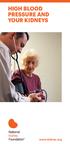 HIGH BLOOD PRESSURE AND YOUR KIDNEYS www.kidney.org About the Information in this Booklet Did you know that the National Kidney (NKF) Foundation offers guidelines and commentaries that help your healthcare