
Model 8709SC a n d model 8731sc Intrathecal Catheters
|
|
|
- Maryann Watts
- 9 years ago
- Views:
Transcription
1 Model 8709SC a n d model 8731sc Intrathecal Catheters Low Complication Catheter Implant Technique * Source: Follett KA, Burchiel K, Deer T, et al. Prevention of intrathecal drug delivery catheter-related complications. Neuromodulation. January 2003;6(1):32-41.

2 Introduction Based on retrospective analysis, this technical guide describes a low-complication catheter implant procedure for intrathecal drug delivery. These instructions are not intended to address all of the surgical options, potential complications, or individual patient requirements. However, the technique presented here may result in fewer catheter complications than other techniques. Before implanting a SynchroMed II, SynchroMed EL, or IsoMed Infusion System, please review technical manuals and other educational information available through your Medtronic representative. Model 8709SC & Model 8731SC Intrathecal Catheter Implant Technique This CD-ROM contains: Implant Video Catheter Complication Avoidance Animations Model 8709SC & Model 8731SC Intrathecal Catheter/Low-Complication Implant Technique PowerPoint Surgeon and Managing Physician Interview Videos (Drs. Kosek, Plunkett, Turner, and Ivanhoe) May 2007 Directions: Place CD in drive. Program will begin automatically. UC a EN1C NP56391a1C PNA27017 Medtronic, Inc All Rights Reserved Printed in USA 2

3 Technique overview Catheter tip Key points of the low-complication implant technique include: Paramedian oblique entry Reduces catheter fractures/breaks Eases catheter advancement V-wing anchor 5 cm of slack in catheter Paramedian oblique entry Strain-relief sleeve Dura puncture Thick wall proximal catheter Pump anchored using suture loops or mesh pouch Loop of excess catheter under pump Catheter connector which also functions as the primary anchor V-wing anchor at spinal entry point Reduces catheter dislodgements Catheter connector/primary anchor Reduces catheter dislodgements Strain-relief sleeve on catheter tubing Reduces catheter kinks and holes Loop of catheter under pump Reduces catheter kinks Slack in catheter by connector Reduces catheter kinks Thick wall pump segment catheter Reduces catheter kinks and holes Pump anchored using suture loops or mesh pouch Reduces catheter kinks and dislodgements Source: Data on file at Medtronic. 3

4 Prep the patient Prior to surgery, identify the pump pocket site. Mark the planned implant site with consideration of physical activities, comfort positioning, belt lines, wheelchair arms, prostheses, and other rehabilitation matters. Place the patient in a lateral position with the lumbar region slightly flexed. Position the table and drape the patient to allow fluoroscopic visualization of the spine in regions where the catheter will be inserted and where the catheter tip will be placed. Position the patient s hips, legs, and arms to avoid pressure points and interference with fluoroscopic imaging of the spine. Administer the appropriate anesthesia. Image courtesy of Dr. Joseph Dunn and Dr. Peter Kosek, Pain Consultants of Oregon, Eugene, OR. 4

5 Place the needle Pedicles Insert the spinal needle. A shallow, paramedian oblique insertion technique (approximately 30 off the spine) is recommended. Spinous Processes Needle In the paramedian oblique placement, the site of the needle entry through the skin is lateral to the spinous processes, and approximately / 2 vertebral levels below the interlaminar space selected for dural puncture. Under fluoroscopic monitoring, the lateral coordinate for skin entry is approximately parallel to the vertebral pedicle; the imaging target for the needle tip is the midline of the selected interlaminar space. The needle tip should enter the dura at the L2-3 or L3-4 level unless the patient s anatomy, disease process, previous surgery, or other unusual circumstances dictate otherwise. 5

6 Place the needle continued ~30 Use a shallow-angle (approximately 30 off the spine), paramedian oblique needle insertion trajectory. The entry point of the needle into the skin (or fascia if the needle insertion is performed through an open incision) should be approximately / 2 vertebral levels below the interlaminar space selected for dural puncture and 1 2 cm lateral to the midline, on the side of the intended pump pocket. The needle stylet should be kept in place during dural puncture, keeping the beveled needle tip oriented parallel to the longitudinal dural fibers. Advance the needle until the dura is penetrated. Remove the needle stylet and confirm needle location by observing cerebrospinal fluid (CSF) backflow. Replace the needle stylet to stop CSF flow. 6

7 Thread the catheter through the needle Make certain the catheter guide wire is seated completely, with its hub against the proximal end of the catheter. The guide wire should remain in place during all maneuvers to insert or position the catheter. Introducer Needle Catheter Orient the needle bevel cephalad, remove the stylet and thread the distal tip of the catheter through the needle to the desired location. Ensure that the needle hub is oriented cephalad to minimize catheter shearing. When the tip of the catheter reaches the curved point of the needle, a slight increase in advancement pressure will be noted and the most distal centimeter marking will be located at the needle hub. If the catheter must be retracted during positioning, do not withdraw the catheter through the introducer needle. The needle tip can damage the catheter, requiring additional surgery to repair or replace the catheter. Image Courtesy of Dr. Robert Plunkett, Dept. of Neurosurgery, SUNY at Buffalo, Buffalo General Hospital, Buffalo, NY. 7

8 Cut down to the lumbo-dorsal fascia If using the Model 8709SC catheter: Following placement of the spinal catheter segment and with the needle still in place, make an incision at the needle site to expose an area of the fascia that is large enough to place an anchor. If using the Model 8731SC catheter: Following placement of the spinal catheter segment and with the needle still in place, make an incision at the needle site to expose an area of the fascia that is large enough to place the V-wing anchor and tubing connector/anchor. Image Courtesy of Dr. Robert Plunkett, Dept. of Neurosurgery, SUNY at Buffalo, Buffalo General Hospital, Buffalo, NY. 8

9 Undermine the incision Undermine the edges of the incision to develop a smooth fascial plane for the anchoring hardware and to permit gentle bends in the catheter. Image Courtesy of Dr. Robert Plunkett, Dept. of Neurosurgery, SUNY at Buffalo, Buffalo General Hospital, Buffalo, NY. 9

10 Remove the needle and guide wire Carefully remove the needle from the fascia, ensuring the needle hub is orientated cephalad, and grasp the catheter near the exit site. Remove the needle and guide wire from the catheter simultaneously. Hold the catheter securely while the guide wire is being removed. Be careful not to pinch the catheter tightly between your fingers or with an instrument. Guide Wire Handle Introducer Needle To prevent catheter damage or dislodgement during guide wire removal, hold the catheter straight and securely at the exit site. Use minimal traction to avoid quick or sudden removal. If the catheter becomes twisted or if the guide wire seizes up, stop, let the catheter relax and return to its original shape, then slowly start again. Tie a purse string suture to close the ligament around the catheter. 10

11 Place the anchor (8709SC catheter) Place one of the following anchors on the catheter as close as possible to the fascia entry point using the technique described: 90-degree angle anchor Place the catheter in the groove of the anchor. Suture points Catheter Suture point Catheter Suture points (2) Catheter Straight anchor Place the catheter in the slit of the anchor. If the slit is not visible, pull on the suture tabs of the anchor until the slit opens. A significant amount of force may be required to open the slit. V-wing anchor Attach the v-wing anchor to the catheter by threading onto the end of the catheter. 90 angle anchor Straight anchor V-wing anchor Using rubber-tipped forceps, clamp the catheter to prevent CSF loss during tunneling and pocket formation. Secure the anchor to the surrounding fascia using heavy nonabsorbable sutures and the associated technique described: 90 degree angle anchor Suture through the suture holes and over the notched ends. Straight anchor Suture the two tabs through the suture holes so that the tabs are flat against each other. V-wing anchor Suture the anchor wings together at the notch with the wings flat against each other and suture the anchor wings together through the holes. Attach to the surrounding fascia. 11

12 Place the anchor (8731SC catheter) If using the 8731SC catheter: Attach the V-wing anchor to the catheter by threading the anchor onto the end of the spinal catheter. Place the V-wing anchor as close as possible to the fascia entry point. Clamp the end of the spinal catheter with a rubber-shod clamp to prevent CSF loss during tunneling and pocket formation. When unclamped, trim any damaged catheter. Secure the V-wing anchor to the lumbo-dorsal fascia, not to the subcutaneous fat, using heavy, non-absorbable sutures. The anchor wings must be sutured together at the notch. The wings must lie flat against each other to properly engage and grasp the catheter body. Image Courtesy of Dr. Robert Plunkett, Dept. of Neurosurgery, SUNY at Buffalo, Buffalo General Hospital, Buffalo, NY. 12

13 Prepare the pump pocket Prepare the subcutaneous pocket at the pump site that was identified and marked before surgery. The pocket should be large enough so that the incision does not lie over the pump and should be no more than 2.5 cm beneath the skin. The pocket should be positioned away from: The superior iliac crest and rib cage. The belt line to minimize discomfort. The site of current or future surgeries or radiation treatments. Image Courtesy of Dr. Robert Plunkett, Dept. of Neurosurgery, SUNY at Buffalo, Buffalo General Hospital, Buffalo, NY. 13

14 Tunnel and pass the catheter Tunnel the catheter as follows: If using the Model 8709SC catheter: Tunnel subcutaneously from the spinal incision site toward the pump implant site using the appropriate catheter passer. Pass the catheter from the spinal incision site to the pump implant site. Pass enough catheter to the pump pocket to allow for one or two complete catheter coils behind the pump. Note: If using a catheter passer with a non-removable handle, tunnel from the pump implant site toward the spinal incision site. If using the Model 8731SC catheter: Tunnel subcutaneously from the spinal incision site toward the pump implant site, using the appropriate catheter passer. Image courtesy of Dr. Joseph Dunn and Dr. Peter Kosek, Pain Consultants of Oregon, Eugene, OR. Pass the pump segment from the pump implant site to the spinal incision site. Leave enough catheter near the pump pocket to allow for one or two complete catheter coils behind the pump. 14

15 Trim the catheter If using the Model 8709SC catheter: Trim the pump end of the placed catheter as necessary. Leave enough catheter to allow for one or two complete catheter coils behind the pump. This will provide enough slack to allow for patient movement. Note that the catheter interface will add 7.6 cm of catheter to the catheter length. If using the Model 8731SC catheter: At the spinal incision site, trim the spinal catheter tubing as necessary, leaving approximately 5 cm outside the fascia to allow for patient movement and to prevent kinking. Save the trimmed catheter for catheter volume calculations. Image Courtesy of Dr. Robert Plunkett, Dept. of Neurosurgery, SUNY at Buffalo, Buffalo General Hospital, Buffalo, NY. 15

16 Anchor the connector pin (Part 1) Inserting the Connector Pin Model 8709SC Placed catheter Connector pin large ring Strain-relief sleeve (pre-attached) Inserting the Connector Pin Model 8731SC Catheter interface Sutureless connector Slide the transparent strain-relief sleeve, small end first, onto the previously placed spinal segment. Connect the spinal catheter tubing to the pump segment tubing. Insert the connector pin using one of the following methods: If using the Model 8709SC catheter: On the catheter interface, grasp the pre-attached strainrelief sleeve near the connector pin and insert the connector pin into the placed catheter until the catheter is against the connector pin large ring. Be careful not to disrupt the catheter placement in the spine. If using the Model 8731SC catheter: On the pump segment, grasp the pre-attached strainrelief sleeve near the connector pin and insert the connector pin into the spinal segment until the spinal segment is against the closest large pin ring. Be careful not to disrupt the catheter placement in the spine. Unclamp the catheter and confirm catheter patency by verifying CSF flow through the pump connector. Clamp the pump segment to prevent further CSF loss. Allow for slack between the secondary V-wing anchor and the connecting pin. 16

17 Anchor the connector pin (Part 2) Model 8709SC Slide the transparent strain-relief sleeve of the spinal segment towards the connector pin using one of the following methods: If using the Model 8709SC catheter: Model 8731SC Center section of the connector pin Slide the transparent strain-relief sleeve of the placed catheter towards the connector pin until the sleeve snaps into place. If using the Model 8731SC catheter: Slide the transparent strain-relief sleeve of the spinal segment towards the connector pin until the sleeve of the spinal segment snaps into place. Place a heavy nonabsorbable suture in each of the two grooves in the center of the connector pin and attach to the fascia. 17

18 Attach the sutureless pump connector to the pump Place nonabsorbable sutures in the pump pocket fascia. If using a pump with suture loops the location of the sutures should roughly correspond to the locations of the suture loops on the pump s perimeter. Catheter port on a SynchroMed II pump Oval on the sutureless pump connector Sutureless pump connector attached to a SynchroMed II pump Tapered portion With a thumb and forefinger, grasp the tapered portion of the sutureless pump connector. At the pump pocket site, position the catheter port of the pump in line with the opening of the sutureless pump connector. Attach the sutureless pump connector using one of the following methods: Method 1 Firmly press the pump connector onto the catheter port until the connector fully covers the catheter port. The connector snaps into place. Method 2 Firmly squeeze precisely on the oval marks of the pump connector. While squeezing, carefully press the pump connector onto the catheter port until the connector fully covers the catheter port. The connector snaps into place. Release the thumb and forefinger. 18

19 Place and suture the pump into the pocket Check to see that the sutureless pump connector is properly attached by grasping the tapered portion of the connector and tugging as if to remove the connector from the pump. The connection should feel firmly attached. Place pump into the pocket, coiling the excess catheter behind the pump. Place the pump in the pocket so that the catheter is not twisted or kinked and so that the catheter tubing will not be punctured by needles used to refill the pump. Securely anchor the pump to the fascia using either the suture loops or a mesh pouch. Image courtesy of Dr. Alessandro Dario, Centro di Neuromodulazione, Divisione di Neurochirurgia, Ospedale Macchi, Varese, Italy. If using the pump suture loops: Pull one suture through each suture loop and clamp. Coil the excess catheter behind the pump before tying knots in the sutures. Draw the pump into the pocket using all four sutures. Avoid entangling the catheter in the pump tie-down sutures. 19

20 SynchroMed II Drug Infusion System Brief Summary: Product technical manuals and the appropriate drug labeling must be reviewed prior to use for detailed disclosure. Indications: US: Chronic intraspinal (epidural and intrathecal) infusion of preservative-free morphine sulfate sterile solution in the treatment of chronic intractable pain, chronic intrathecal infusion of preservative-free ziconotide sterile solution for the management of severe chronic pain, and chronic intrathecal infusion of Lioresal Intrathecal (baclofen injection) for the management of severe spasticity; chronic intravascular infusion of floxuridine (FUDR) or methotrexate for the treatment of primary or metastatic cancer. Outside of US: Chronic infusion of drugs or fluids tested as compatible and listed in the product labeling. Contraindications: When infection is present; when the pump cannot be implanted 2.5 cm or less from the surface of the skin; when body size is not sufficient to accept pump bulk and weight; when contraindications exist relating to the drug. Do not use the Personal Therapy Manager accessory to administer opioid to opioid-naïve patients or to administer ziconotide. Warnings: Comply with all product instructions for initial preparation and filling, implantation, programming, refilling, and injecting into the catheter access port (CAP) of the pump. Failure to comply with all instructions can lead to technical errors or improper use of implanted infusion pumps and result in additional surgical procedures, a return of underlying symptoms, or a clinically significant or fatal drug under- or overdose. Refer to the appropriate drug labeling for specific under- or overdose symptoms and methods of management. Avoid using short wave (RF) diathermy within 30 cm of the pump or catheter. Diathermy may produce significant temperature rises in the area of the pump and continue to heat the tissue in a localized area. If overheated, the pump may over infuse the drug, potentially causing a drug overdose. Effects of other types of diathermy (microwave, ultrasonic, etc.) on the pump are unknown. An inflammatory mass that can result in serious neurological impairment, including paralysis, may occur at the tip of the implanted catheter. Clinicians should monitor patients on intraspinal opioid therapy carefully for any new neurological signs or symptoms. For intraspinal therapy, use only preservative-free sterile solution indicated for intraspinal use. Use only Medtronic components indicated for use with this system. Failure to firmly secure connections can allow drug or cerebrospinal fluid (CSF) leakage into tissue and result in tissue damage or inadequate therapy. A postoperative priming bolus should not be programmed if the pump is a replacement and the catheter has not been aspirated. Refer to appropriate drug labeling for indications, contraindications, warnings, precautions, dosage and administration information, and screening procedures. Physicians must be familiar with the drug stability information in the technical manual and must understand the dose relationship to drug concentration and pump flow rate before prescribing pump infusion. Implantation and ongoing system management must be performed by individuals trained in the operation and handling of the infusion system. Inform patients of the signs and symptoms of drug under- or overdose, appropriate drug warnings and precautions regarding drug interactions, potential side effects, and signs and symptoms that require medical attention. Instruct patients to notify their clinician of travel plans, to return for refills at prescribed times, avoid activities such as strenuous exercise or contact sports that jar, impact, twist, or stretch the body, to always carry their Medtronic device identification card, to avoid manipulating the pump through the skin, and to notify healthcare professionals of the implanted pump before medical tests/procedures. Patients must consult their physician before engaging in activities involving pressure or temperature changes (e.g., scuba diving, saunas, hot tubs, hyperbaric chambers, flights, skydiving, etc.) Inform patients that pump has an Elective Replacement Indicator (ERI) that sounds when the pump is nearing its end of service. When the alarm sounds, patients must contact their doctor to schedule pump replacement. Precautions: The pump is ethylene oxide sterilized. Do not use if the product or package is damaged, the sterile seal is broken, or the Use By date has expired. Do not reuse or resterilize the pump; it is intended for single use only. Do not expose the pump to temperatures above 43 C or below 5 C. Consider use of peri- and post-operative antibiotics for pump implantation, for any subsequent surgical procedure, or if infection is present. For patients prone to CSF leaks, clinicians should consider special procedures, such as a blood patch. Follow instructions for emptying and filling the pump during a replacement or revisions that require removal of the pump from the pocket. Explant the pump postmortem if incineration is planned (to avoid explosion), or if local environmental regulations mandate removal. Return explanted devices to Medtronic for analysis and safe disposal. Do not implant a pump dropped onto a hard surface or showing signs of damage. Implant the pump less than 2.5 cm from the surface of the skin. Ensure pump ports will be easy to access after implant, that the catheter is not kinked and secured well away from pump ports before suturing. Keep the implant site clean, dry, and protected from pressure or irritation. If therapy is discontinued for an extended period of time, fill the reservoir with preservative-free saline in intraspinal applications or appropriate heparinized solution (if not contraindicated) in vascular applications. The magnetic field or telemetry signals produced by the programmer may cause sensing problems and inappropriate device responses with an implantable pacemaker and/or defibrillator. Electromagnetic interference (EMI) is an energy field generated by equipment found in the home, work, medical, or public environments. Most EMI normally encountered will not affect the operation of the pump. Exceptions include: injury resulting from heating of the pump which can damage surrounding tissue (diathermy, MRI), system damage which can require surgical replacement or result in loss/change in symptom control (defibrillation, electrocautery, high-output ultrasonics, radiation therapy), and operational changes to the pump causing the motor to stop, loss of therapy, return of underlying symptoms, and require confirmation of pump function (diathermy, high magnetic field devices, hyperbaric/hypobaric conditions, magnetic resonance imaging (MRI)). MRI will temporarily stop the pump motor s rotor due to the magnetic field of the MRI scanner and suspend drug infusion during MRI exposure which will cause the pump alarm to sound. The pump should resume normal operation upon termination of MRI exposure. Prior to MRI, the physician should determine if the patient can safely be deprived of drug delivery. If not, alternative delivery methods for the drug can be utilized during the MRI scan. Prior to scheduling an MRI scan and upon its completion, pump status should be confirmed. Adverse Events: Include, but are not limited to, cessation of therapy due to end of device service life or component failure, change in flow performance due to component failure, inability to program the device due to programmer failure, CAP component failure; inaccessible refill port due to inverted pump, pocket seroma, hematoma, erosion, infection, post-lumbar puncture (spinal headache), CSF leak, radiculitis, arachnoiditis, bleeding, spinal cord damage, meningitis (intrathecal applications), anesthesia complications, damage to the pump, catheter and catheter access system due to improper handling and filling before, during, or after implantation; change in catheter performance due to catheter kinking, disconnection, leakage, breakage, occlusion, dislodgement, migration, or catheter fibrosis; body rejection phenomena, surgical replacement of pump or catheter due to complications; local and systemic drug toxicity and related side effects, complications due to use of unapproved drugs and/or not using drugs in accordance with drug labeling, or inflammatory mass at the tip of the catheter in patients receiving intraspinal morphine or other opioid drugs.!usa Rx Only United States of America Medtronic Neuromodulation 710 Medtronic Parkway Minneapolis, MN USA Internet: Tel Fax Toll-free Europe Medtronic International Trading Sàrl Route du Molliau 31 Case Postale CH-1131 Tolochenaz Switzerland Tel Fax Asia-Pacific Medtronic International, Ltd. Suite /F Manulife Plaza The Lee Gardens, 33 Hysan Avenue Causeway Bay Hong Kong Tel Fax Australia Medtronic Australasia Pty. Ltd. Unit 4/446 Victoria Road Gladesville NSW 2111 Australia Tel Fax Toll-free Canada Medtronic of Canada Ltd Kitimat Road Mississauga, Ontario L5N 1W3 Canada Tel Fax UC a EN NP5640a PNA22749 A Medtronic, Inc All Rights Reserved Printed in USA

Aspira* Peritoneal Drainage Catheter
 Aspira* Peritoneal Drainage Catheter Instructions For Use Access Systems Product Description: The Aspira* Peritoneal Drainage Catheter is a tunneled, long-term catheter used to drain accumulated fluid
X-Plain Subclavian Inserted Central Catheter (SICC Line) Reference Summary
 X-Plain Subclavian Inserted Central Catheter (SICC Line) Reference Summary Introduction A Subclavian Inserted Central Catheter, or subclavian line, is a long thin hollow tube inserted in a vein under the
Placement of Epidural Catheter for Pain Management Shane Bateman DVM, DVSc, DACVECC
 Placement of Epidural Catheter for Pain Management Shane Bateman DVM, DVSc, DACVECC Indications: Patients with severe abdominal or pelvic origin pain that is poorly responsive to other analgesic modalities.
Scout Vessel Guard. A cover for vessels during anterior lumbar spine surgery.
 Scout Vessel Guard. A cover for vessels during anterior lumbar spine surgery. Technique Guide Instruments and implants approved by the AO Foundation Table of Contents Introduction Scout Vessel Guard 2
 Epimed Would Like To Congratulate The 20th Annual Budapest Conference The New Shape of Pain Relief SmalleST. ThiNNeST. CoNTouRed design. Precision Novi is the world s smallest, thinnest 16 contact primary
Aspira* Pleural Drainage Catheter
 Aspira* Pleural Drainage Catheter Instructions For Use Access Systems Product Description: The Aspira* Pleural Drainage Catheter is a tunneled, long-term catheter used to drain accumulated fluid from the
Within the Scope of Practice/Role of APRN RN _ X_LPN CNA
 Wyoming State Board of Nursing 130 Hobbs Avenue, Suite B Cheyenne, WY 82002 Phone (307) 777-7601 Fax (307) 777-3519 E-Mail: [email protected] Home Page: https://nursing-online.state.wy.us/ OPINION:
Patient Information Guide Morpheus CT Peripherally Inserted Central Catheter
 Patient Information Guide Morpheus CT Peripherally Inserted Central Catheter IC 192 Rev C A measure of flexibility and strength. Table of Contents 1. Introduction 2. What is the Morpheus CT PICC? 3. What
Instructions for Use
 Pleural Effusion Shunt with External Pump Chamber Catalog No. 42-9005 Instructions for Use Denver Biomedical, Inc. Table of Contents Description 2 Indications 2 Contraindications 2 Warnings 4 Cautions
PICC & Midline Catheters Patient Information Guide
 PICC & Midline Catheters Patient Information Guide medcompnet.com 1 table of contents Introduction 4 What is a PICC or Midline Catheter? 4 How is the PICC or Midline Catheter Inserted? 6 Catheter Care
ON-Q * Catheters and Introducers
 Instructions For Use ON-Q * Catheters and Introducers MANUFACTURED BY: Kimberly-Clark 1400 Holcomb Bridge Road Roswell, GA 30076 USA Kimberly-Clark N.V. Da Vincilaan 1 1935 Zaventem, Belgium Figure 1 4
PICC and Midline Catheters
 PICC and Midline Catheters Infusion RN s Deb Bucher RN BSN CRNI Dawn Finch RN CRNI Marianne Hansen RN BSN CRNI Karman Youngblood RN BS CRNI Infusion Pharmacist Kathy Cimakasky Pharm D Tamara Migut RPh
Herniated Disk in the Lower Back
 Nader M. Hebela, MD Fellow of the American Academy of Orthopaedic Surgeons http://orthodoc.aaos.org/hebela Cleveland Clinic Abu Dhabi Cleveland Clinic Abu Dhabi Neurological Institute Al Maryah Island
Vaxcel PICCs Valved and Non-Valved. A Patient s Guide
 Vaxcel PICCs Valved and Non-Valved A Patient s Guide Information about your Vaxcel PICC is available by calling the Navilyst Medical Vascular Access Information Line 800.513.6876 Vaxcel Peripherally Inserted
INSERTABLE CARDIAC MONITORING SYSTEM. UNLOCK the ANSWER. Your heart and long-term monitoring
 INSERTABLE CARDIAC MONITORING SYSTEM UNLOCK the ANSWER Your heart and long-term monitoring UNLOCK the ANSWER Irregular heartbeats can be related to a variety of conditions, including unexplained fainting,
.org. Herniated Disk in the Lower Back. Anatomy. Description
 Herniated Disk in the Lower Back Page ( 1 ) Sometimes called a slipped or ruptured disk, a herniated disk most often occurs in your lower back. It is one of the most common causes of low back pain, as
PICCs and Midline Catheters
 Patient Education PICCs and Midline Catheters Patient s guide to PICC (peripherally inserted central catheter) and midline catheters What are PICCs and midline catheters used for? Any medicine given over
Objectives At the completion of this module, unlicensed assistive personnel (UAP) should be able to:
 Objectives At the completion of this module, unlicensed assistive personnel (UAP) should be able to: 1. administer medications by subcutaneous injections. 2. document medication administration in the client
Patient Information. Posterior Cervical Surgery. Here to help. Respond Deliver & Enable
 Here to help Our Health Information Centre (HIC) provides advice and information on a wide range of health-related topics. We also offer: Services for people with disabilities. Information in large print,
Percutaneous Leads. Directions for Use 91078744-02 REV A
 Percutaneous Leads Directions for Use CAUTION: Federal law restricts this device to sale, distribution and use by or on the order of a physician. 91078744-02 REV A Guarantees Boston Scientific Corporation
Epidurals for pain relief after surgery
 Epidurals for pain relief after surgery This information leaflet is for anyone who may benefit from an epidural for pain relief after surgery. We hope it will help you to ask questions and direct you to
31. Lumbar Puncture. PURPOSE: To diagnose central nervous system infections, subarachnoid hemorrhages, and many other neurologic pathologies.
 31. Lumbar Puncture PURPOSE: To diagnose central nervous system infections, subarachnoid hemorrhages, and many other neurologic pathologies. EQUIPMENT NEEDED (FIGURE 31-1): Spinal or lumbar puncture tray
Orthopaedic Spine Center. Anterior Cervical Discectomy and Fusion (ACDF) Normal Discs
 Orthopaedic Spine Center Graham Calvert MD James Woodall MD PhD Anterior Cervical Discectomy and Fusion (ACDF) Normal Discs The cervical spine consists of the bony vertebrae, discs, nerves and other structures.
I-140 Venipuncture for Blood Specimen Collection
 I-140 Venipuncture for Blood Specimen Collection Purpose Obtain a blood specimen by venipuncture for laboratory analysis using aseptic technique. Applies To Registered Nurses Licensed Practical/Vocational
Baclofen Pump Therapy for the Treatment of Spasticity
 Baclofen Pump Therapy for the Treatment of Spasticity A Guide for Patients and Families Physical Medicine & Rehabilitation Dear Patient and Family, In the United States, an estimated 500,000 people have
To maintain a port of entry to venous flow when all available peripheral ports have failed.
 I. Purpose: To maintain a port of entry to venous flow when all available peripheral ports have failed. II. General Comments: Since its development, these catheters have been used with increasing frequency
All About Your Peripherally Inserted Central Catheter (PICC)
 All About Your Peripherally Inserted Central Catheter (PICC) General Information Intravenous (IV) therapy is the delivery of fluid directly into a vein. An intravenous catheter is a hollow tube that is
PERCUTANEOUS PD CATHETER IMPLANTATION SYSTEM
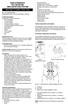 Place on Patient s Cranial Border of the Pubic Symphysis IMPLANTATION STENCIL Classic Exit Cuff Site PERCUTANEOUS PD CATHETER IMPLANTATION SYSTEM INSTRUCTIONS FOR USE VP 511 and VP-511M Implantation System
BARD MEDICAL DIVISION UROLOGICAL DRAINAGE. Foley Catheter Care & Maintenance. Patient Education Guide
 BARD MEDICAL DIVISION Foley Catheter Care & Maintenance Patient Education Guide WHAT IS A FOLEY CATHETER? Because of your medical problem, your body is having trouble completely emptying your bladder of
Epidural Continuous Infusion. Patient information Leaflet
 Epidural Continuous Infusion Patient information Leaflet April 2015 Introduction You may already know that epidural s are often used to treat pain during childbirth. This same technique can also used as
Caring for a Tenckhoff Catheter
 Caring for a Tenckhoff Catheter UHN A Patient s Guide What is a Pleural Effusion? There is a small space between the outside of your lung and the chest wall (ribs). This space is called the pleural space.
Open Discectomy. North American Spine Society Public Education Series
 Open Discectomy North American Spine Society Public Education Series What Is Open Discectomy? Open discectomy is the most common surgical treatment for ruptured or herniated discs of the lumbar spine.
Contraindications: Malign or benign strictures in the upper part of esophagus close to the cricopharyngeal muscle.
 Manufactured by: ELLA CS, s.r.o. Milady Horákové 504 500 06 Hradec Králové 6 Czech Republic Phone: +420 49 527 91 11 Fax: +420 49 526 56 55 E-mail: [email protected] Instructions for Use FerX-ELLA Esophageal
A4.7 Management of a totally occluded central catheter and persistent withdrawal occlusion (PWO)
 A4.7 Management of a totally occluded central catheter and persistent withdrawal occlusion (PWO) Types of Catheter Related Thrombotic A catheter-related thrombus may be intraluminal (inside the catheter)
PROCEDURE FOR SUBCUTANEOUS INSERTION, REMOVAL, MEDICATION ADMINISTRATION AND FLUID ADMINISTRATION FOR COMMUNITY PALLIATIVE CARE PATIENTS
 PROCEDURE FOR SUBCUTANEOUS INSERTION, REMOVAL, MEDICATION ADMINISTRATION AND FLUID ADMINISTRATION FOR COMMUNITY PALLIATIVE CARE PATIENTS Approved: February 2010 Date for review: February 2010 1 PROCEDURE
A. ADMINISTERING SUBCUTANEOUS MEDICATIONS INTERMITTENTLY/CONTINUOUSLY B. (SUBCUTANEOUS INFUSION) HYDRODERMOCLYSIS
 SUBCUTANEOUS THERAPY A. ADMINISTERING SUBCUTANEOUS MEDICATIONS INTERMITTENTLY/CONTINUOUSLY B. (SUBCUTANEOUS INFUSION) HYDRODERMOCLYSIS PARTS I. Purposes II. General Information III. Responsibilities IV.
Posterior Cervical Decompression
 Posterior Cervical Decompression Spinal Unit Tel: 01473 702032 or 702097 Issue 2: January 2009 Following your recent MRI scan and consultation with your spinal surgeon, you have been diagnosed with a
LOSS OF BLADDER CONTROL IS TREATABLE TAKE CONTROL AND RESTORE YOUR LIFESTYLE
 LOSS OF BLADDER CONTROL IS TREATABLE TAKE CONTROL AND RESTORE YOUR LIFESTYLE TALKING ABOUT STRESS INCONTINENCE (SUI) Millions of women suffer from stress incontinence (SUI). This condition results in accidental
PATIENT GUIDE. Understand and care for your peripherally inserted central venous catheter (PICC). MEDICAL
 PATIENT GUIDE Understand and care for your peripherally inserted central venous catheter (PICC). MEDICAL Introduction The following information is presented as a guideline for your reference. The best
Patient Information. PORT-A-CATH Implantable Venous Access Systems
 Patient Information PORT-A-CATH Implantable Venous Access Systems Your doctor has prescribed treatment that requires the frequent administration of medications or other fluids directly into your bloodstream
Baxter Elastomeric Pumps CLINICIAN GUIDE
 Baxter Elastomeric Pumps CLINICIAN GUIDE Portfolio Overview: Baxter Elastomeric Pumps are non-electronic medication pumps designed to provide ambulatory infusion therapy. Medication is delivered to the
Medications or therapeutic solutions may be injected directly into the bloodstream
 Intravenous Therapy Medications or therapeutic solutions may be injected directly into the bloodstream for immediate circulation and use by the body. State practice acts designate which health care professionals
Inferior Vena Cava filter and removal
 Inferior Vena Cava filter and removal What is Inferior Vena Cava Filter Placement and Removal? An inferior vena cava filter placement procedure involves an interventional radiologist (a specialist doctor)
MISSISSIPPI BOARD OF NURSING IV THERAPY COURSE FOR THE EXPANDED ROLE LICENSED PRACTICAL NURSE COURSE OUTLINE
 THEORY MINIMUM 40 HOURS COURSE OUTLINE UNIT TOPIC HOURS* I LEGAL ASPECTS AND PRACTICE OF IV THERAPY 1 II REVIEW OF ANATOMY AND PHYSIOLOGY 6 III FLUID AND ELECTROLYTE BALANCE 10 IV EQUIPMENT AND PROCEDURES
Managing Your Non-Tunneled (Percutaneous) Catheter: PICC, SICC, and JCC. What is a PICC catheter?
 Managing Your Non-Tunneled The staff of the Procedure, Vascular Access, Conscious Sedation Service has written this information to explain your new PICC (peripherally inserted central catheter), SICC (subclavian
POSSIBLE NURSING DIAGNOSIS: Pain Potential for Infection / Infection Fluid volume deficit
 1 Procedure for Subcutaneous Over-the-needle Cannula Insertion, Removal, Medication Administration, and Fluid Administration for the Individual in the Home PURPOSE: To provide medication via the subcutaneous
Placement of an indwelling urinary catheter in female dogs
 Female Dog Urinary Catheterization 1 of 6 Placement of an indwelling urinary catheter in female dogs Bernie Hansen DVM MS North Carolina State University College of Veterinary Medicine Materials Needed
Bard * PerFix * Plug. Technique Guide. A Modified Technique with the. Open Inguinal Hernia Repair
 A Modified Technique with the Bard * PerFix * Plug A quick and simple preperitoneal underlay Modified Technique for the repair of groin hernias Technique Guide Open Inguinal Hernia Repair This technique,
PATIENT GUIDE. Care and Maintenance Drainage Frequency: Max. Drainage Volume: Dressing Option: Clinician s Signature: Every drainage Weekly
 PATIENT GUIDE Care and Maintenance Drainage Frequency: Max. Drainage Volume: Dressing Option: Every drainage Weekly Clinician s Signature: ACCESS SYSTEMS Pleural Space Insertion Site Cuff Exit Site Catheter
Caring for Your PleurX Pleural Catheter
 Caring for Your PleurX Pleural Catheter A PleurX Pleural Catheter has been placed in your chest through a small incision in your skin into the pleural space (see picture below). This allows you to drain
Living with Your Pacemaker
 Brief Statement Additional Device Information An implantable pacemaker system relieves symptoms of heart rhythm disturbances. They do this by restoring normal heart rates. A normal heart rate provides
Headache after an epidural or spinal injection What you need to know. Patient information Leaflet
 Headache after an epidural or spinal injection What you need to know Patient information Leaflet April 2015 We have produced this leaflet to give you general information about the headache that may develop
Syringe. Product Usage Information: Precautions:
 Syringe Standard Draw Procedure In-Patient, Automated Retraction Non-Reusable. Prepare and give injection using aseptic technique according to institutional policy.. For injection into patients, continue
Guy s, King s and St Thomas Cancer Centre The Cancer Outpatient Clinic Central venous catheter: Peripherally inserted central catheter
 Guy s, King s and St Thomas Cancer Centre The Cancer Outpatient Clinic Central venous catheter: Peripherally inserted central catheter This information leaflet aims to help answer some of the questions
HUMULIN 70/30 KwikPen
 1 Instructions for Use HUMULIN 70/30 KwikPen (70% human insulin isophane suspension 30% human insulin injection [rdna origin]) Read the Instructions for Use before you start taking HUMULIN 70/30 and each
Your anaesthetist may suggest that you have a spinal or epidural injection. These
 Risks associated with your anaesthetic Section 11: Nerve damage associated with a spinal or epidural injection Your anaesthetist may suggest that you have a spinal or epidural injection. These injections
ANTERIOR LUMBAR INTERBODY FUSION (ALIF) Basic Anatomical Landmarks: Anterior Lumbar Spine
 (ALIF) Anterior In human anatomy, referring to the front surface of the body or the position of one structure relative to another Lumbar Relating to the loins or the section of the back and sides between
National Hospital for Neurology and Neurosurgery. Managing Spasticity. Spasticity Service
 National Hospital for Neurology and Neurosurgery Managing Spasticity Spasticity Service If you would like this document in another language or format, or require the services of an interpreter please contact
Physician Coding and Payment Guide 2015
 Targeted Drug Delivery Physician Coding and Payment Guide 2015 Flowonix Medical has compiled this coding information for your convenience. This information is gathered from third party sources and is subject
Morpheus SMART PICC CT Insertion Kit
 Morpheus SMART PICC CT Insertion Kit Peripherally Inserted Central Catheter INSTRUCTIONS FOR USE ANGIODYNAMICS, INC. 603 QUEENSBURY AVE. QUEENSBURY, NY 12804 U.S.A. TOLL FREE: 800-772-6446 PHONE: 518-798-1215
PATIENT GUIDE. Care and Maintenance Drainage Frequency: Max. Drainage Volume: Dressing Option: Clinician s Signature: Every drainage Weekly
 PATIENT GUIDE Care and Maintenance Drainage Frequency: Max. Drainage Volume: Dressing Option: Every drainage Weekly Clinician s Signature: ACCESS SYSTEMS Pleural Space Insertion Site Cuff Exit Site Catheter
X-Plain Trigeminal Neuralgia Reference Summary
 X-Plain Trigeminal Neuralgia Reference Summary Introduction Trigeminal neuralgia is a condition that affects about 40,000 patients in the US every year. Its treatment mostly involves the usage of oral
BD Saf-T-Intima. Hidden talents of BD Saf-T-Intima. BD SAF-T-Intima and SUBCUTANEOUS THERAPY REHYDRATION PALLIATIVE CARE. POST OPERATIVe PAIN RELIEF
 Hidden talents of BD Saf-T-Intima BD Saf-T-Intima SUBCUTANEOUS INFUSION REHYDRATION PALLIATIVE CARE BD SAF-T-Intima and SUBCUTANEOUS THERAPY PAEDIATRIC CARE POST OPERATIVe PAIN RELIEF BD Saf-T-Intima First
NeuroPace. RNS System Patient Manual
 NeuroPace RNS System Patient Manual CAUTION: Federal law restricts this device to sale by or on the order of a physician. 01/2013 DN 1013555 Rev 2 1 2013 NeuroPace, Inc. 2 This Manual supports: RNS Neurostimulator
A Patient s Guide to Minimally Invasive Abdominal Aortic Aneurysm Repair
 A Patient s Guide to Minimally Invasive Abdominal Aortic Aneurysm Repair Table of Contents The AFX Endovascular AAA System............................................ 1 What is an Abdominal Aortic Aneurysm
Hickman*, Leonard* and Broviac* Central Venous Catheters
 Bard Access Systems Hickman*, Leonard* and Broviac* Central Venous Catheters Long Term Instructions For Use Table of Contents Introduction Contents Page Introduction....................................
NIH Clinical Center Patient Education Materials Giving a subcutaneous injection
 NIH Clinical Center Patient Education Materials What is a subcutaenous injection? A subcutaneous injection is given in the fatty layer of tissue just under the skin. A subcutaneous injection into the fatty
Precision Spinal Cord Stimulator System Clinician Manual
 Precision Spinal Cord Stimulator System Directions for Use CAUTION: Federal law restricts this device to sale, distribution and use by or on the order of a physician. 90834026-10 REV B Precision Spinal
Does the pain radiating down your legs, buttocks or lower back prevent you from walking long distances?
 Does the pain radiating down your legs, buttocks or lower back prevent you from walking long distances? Do you experience weakness, tingling, numbness, stiffness, or cramping in your legs, buttocks or
Percutaneous Abscess Drainage
 Scan for mobile link. Percutaneous Abscess Drainage An abscess is an infected fluid collection within the body. Percutaneous abscess drainage uses imaging guidance to place a thin needle through the skin
URINARY CATHETER INSERTION - STRAIGHT OR INDWELLING CATHETER
 URINARY CATHETER INSERTION - STRAIGHT OR INDWELLING CATHETER PURPOSE To obtain a sterile urine specimen. To facilitate emptying bladder. To relieve bladder distention. To irrigate bladder. To measure residual
BRYAN. Cervical Disc System. Patient Information
 BRYAN Cervical Disc System Patient Information 3 BRYAN Cervical Disc System PATIENT INFORMATION BRYAN Cervical Disc System PATIENT INFORMATION 1 BRYAN Cervical Disc System This patient information brochure
INSTRUCTIONS FOR USE HUMIRA 40 MG/0.8 ML, 20 MG/0.4 ML AND 10 MG/0.2 ML SINGLE-USE PREFILLED SYRINGE
 INSTRUCTIONS FOR USE HUMIRA (Hu-MARE-ah) (adalimumab) 40 MG/0.8 ML, 20 MG/0.4 ML AND 10 MG/0.2 ML SINGLE-USE PREFILLED SYRINGE Do not try to inject HUMIRA yourself until you have been shown the right way
INSTRUCTIONS FOR USE HUMIRA 40 MG/0.8 ML SINGLE-USE PEN
 INSTRUCTIONS FOR USE HUMIRA (Hu-MARE-ah) (adalimumab) 40 MG/0.8 ML SINGLE-USE PEN Do not try to inject HUMIRA yourself until you have been shown the right way to give the injections and have read and understand
Care of your peripherally inserted central catheter
 Care of your peripherally inserted central catheter A guide for patients and their carers We care, we discover, we teach Contents What is a PICC?.... 1 How is it put in?.... 1 What are the benefits of
Policy and Procedure Flushing and / or Blood withdrawal Aspiration Procedure For PICC Line and Midline Catheters
 Policy and Procedure Flushing and / or Blood withdrawal Aspiration Procedure For PICC Line and Midline Catheters Purpose: Blood Withdrawal: To obtain blood samples for laboratory evaluation, eliminating
Chester Chest Model 2400 User s Manual
 Chester Chest Model 2400 User s Manual 308 South Sequoia Parkway, Canby, Oregon 97013 USA ph. 503.651.5050 fax 503.651.5052 email [email protected] Thank You For Your Purchase! Thank you for your purchase
Procedure -8. Intraosseous Infusion Adult and Pediatric EZIO. Page 1 of 7 APPROVED:
 Page 1 of 7 Intraosseous Infusion Adult and Pediatric APPROVED: EMS Medical Director EMS Administrator 1. Goals/Introduction: 1.1 Intraosseous (IO) infusion provides an effective alternative means of providing
Adult Forearm Fractures
 Adult Forearm Fractures Your forearm is made up of two bones, the radius and ulna. In most cases of adult forearm fractures, both bones are broken. Fractures of the forearm can occur near the wrist at
Knotilus TM. Anchor Instability Repair. Technique Guide
 Knotilus TM Anchor Instability Repair Technique Guide Instability Repair Using the Knotilus TM Anchor Introduction While the shoulder has more mobility than any other joint in the body, it is also the
TREATMENT 1. Control bleeding by applying pressure over wound with Gauze Pads (Surgical Supply-4). 2. Contact Surgeon for laceration repair options.
 Page 1 of 8 pages NOTE Contact Surgeon before giving any medication marked with an asterisk. In an emergency or during Loss of Signal, begin appropriate treatment; then call Surgeon as soon as possible.
Intrathecal Baclofen for CNS Spasticity
 Intrathecal Baclofen for CNS Spasticity Last Review Date: November 13, 2015 Number: MG.MM.ME.31bC5 Medical Guideline Disclaimer Property of EmblemHealth. All rights reserved. The treating physician or
Peripherally Inserted Central Catheter (PICC) Patient Instructions
 Patient Care Services 300 Pasteur Drive Stanford, CA 94305 Peripherally Inserted Central Catheter (PICC) Patient Instructions A Peripherally Inserted Central Catheter (PICC) is a soft flexible tube inserted
Lumbar Laminectomy and Interspinous Process Fusion
 Lumbar Laminectomy and Interspinous Process Fusion Introduction Low back and leg pain caused by pinched nerves in the back is a common condition that limits your ability to move, walk, and work. This condition
PERIPHERALLY INSERTED CENTRAL CATHETERS (PICC) Fong So Kwan APN, Haematology unit Medical Department, QMH
 PERIPHERALLY INSERTED CENTRAL CATHETERS (PICC) Fong So Kwan APN, Haematology unit Medical Department, QMH 1 What is a PICC catheter? Primary vascular access device since their introduction in the mid-1970s,
Neurostimulation: Orthopaedic Institute of Ohio 801 Medical Drive Lima, Ohio 45804 419-222-6622
 801 Medical Drive Lima, Ohio 45804 419-222-6622 Neurostimulation is the stimulation of the spinal cord by tiny electrical impulses. An implanted lead (a flexible insulated wire), which is powered by an
X-Plain Hip Replacement Surgery - Preventing Post Op Complications Reference Summary
 X-Plain Hip Replacement Surgery - Preventing Post Op Complications Reference Summary Introduction Severe arthritis in the hip can lead to severe pain and inability to walk. To relieve the pain and improve
Patient Information Booklet. Endovascular Stent Grafts: A Treatment for Abdominal Aortic Aneurysms
 Patient Information Booklet Endovascular Stent Grafts: A Treatment for Abdominal Aortic Aneurysms TABLE OF CONTENTS Introduction 1 Glossary 2 Abdominal Aorta 4 Abdominal Aortic Aneurysm 5 Causes 6 Symptoms
TABLE OF CONTENTS. Surgical Technique 2. Indications 4. Product Information 5. 1. Patient Positioning and Approach 2
 Surgical Technique TABLE OF CONTENTS Surgical Technique 2 1. Patient Positioning and Approach 2 2. Intervertebral Device Implanted 2 3. Buttress Plate Selection 2 4. Awl Insertion 2 5. Screw Insertion
Information for the Patient About Surgical
 Information for the Patient About Surgical Decompression and Stabilization of the Spine Aging and the Spine Daily wear and tear, along with disc degeneration due to aging and injury, are common causes
STANDARDIZED PROCEDURE BONE MARROW ASPIRATION
 I. Definition: This protocol covers the task of bone marrow aspiration by an Allied Health Professional. The purpose of this standardized procedure is to allow the Allied Health Professional to safely
Abdominal Pedicle Flaps To The Hand And Forearm John C. Kelleher M.D., F.A.C.S.
 Abdominal Pedicle Flaps To The Hand And Forearm John C. Kelleher M.D., F.A.C.S. Global-HELP Publications Chapter Eight: TECHNICAL REQUIREMENTS FOR FORMATION OF A TUBED PEDICLE FLAP Creating a tube pedicle
Get the Facts, Be Informed, Make YOUR Best Decision. Pelvic Organ Prolapse
 Pelvic Organ Prolapse ETHICON Women s Health & Urology, a division of ETHICON, INC., a Johnson & Johnson company, is dedicated to providing innovative solutions for common women s health problems and to
A PATIENT S GUIDE TO CARDIAC CATHETERIZATION
 A PATIENT S GUIDE TO CARDIAC CATHETERIZATION The science of medicine. The compassion to heal. This teaching booklet is designed to introduce you to cardiac catheterization. In the following pages, we will
Anterior Lumbar Interbody Fusion (ALIF). Instrument set supports placement of ALIF spacers using anterior or anterolateral approach.
 Anterior Lumbar Interbody Fusion (ALIF). Instrument set supports placement of ALIF spacers using anterior or anterolateral approach. Technique Guide Instruments and implants approved by the AO Foundation
Shoulder Arthroscopy
 Copyright 2011 American Academy of Orthopaedic Surgeons Shoulder Arthroscopy Arthroscopy is a procedure that orthopaedic surgeons use to inspect, diagnose, and repair problems inside a joint. The word
Normal bladder function requires a coordinated effort between the brain, spinal cord, and the bladder.
 .. Urinary Incontinence Urinary incontinence is not an inevitable part of aging, and it is not a disease. The loss of bladder control - called urinary incontinence - affects between 13 and 17 million adult
INFUSE Bone Graft. Patient Information Brochure
 INFUSE Bone Graft Patient Information Brochure This Patient Guide is designed to help you decide whether or not to have surgery using INFUSE Bone Graft to treat your broken tibia (lower leg). There are
Achilles Tendon Repair, Operative Technique
 *smith&nephew ANKLE TECHNIQUE GUIDE Achilles Tendon Repair, Operative Technique Prepared in Consultation with: C. Niek van Dijk, MD, PhD KNEE HIP SHOULDER EXTREMITIES Achilles Tendon Repair, Operative
Instructions for Use HUMALOG KwikPen insulin lispro injection (rdna origin)
 1 Instructions for Use HUMALOG KwikPen insulin lispro injection (rdna origin) Read the Instructions for Use before you start taking HUMALOG and each time you get a refill. There may be new information.